The fifth volume of the Theatrum Chemicum, the most significant compendium of alchemical writing to appear in print, and, not coincidentally, the collection Isaac Newton acquired when he began his own alchemical studies. First published in three volumes by Lazarus Zetzner in 1602, the Theatrum grew to five volumes by 1622 and six by 1659, assembling under one roof a library's worth of alchemical theory, practice, and pseudepigraphy that would otherwise require decades of patient hunting to gather. Complete sets have always been scarce; alchemical books, often present in working laboratories, fared poorly.
This fifth volume is of particular interest. It contains dozens of major texts, among them the Turba Philosophorum, one of the oldest known alchemical treatises, an imagined congress of ancient philosophers debating the art, as well as Petrus Bonus's Margarita novella, Michael Scotus's Quaestio curiosa de natura solis et lunae, pseudo-Aristotle's Tractatus ad Alexandrum Magnum, Roger Bacon's Epistolae de secretis operibus artis et naturae, pseudo-Thomas Aquinas's Tractatus sextus, the Clavis sapientiae, Christophorus Horn's De auro medico philosophorum, and the Dedicatio ad Roseae Crucis fratribus, which links the collection to the broader Rosicrucian ferment of the early seventeenth century.
The pen annotations on several leaves add a dimension that transforms this from a mere textual repository into evidence of use. The Theatrum Chemicum was not, for most of its owners, a book to be admired from a shelf.
[ZETZNER, Lazarus, heirs of, publisher]. Theatrum Chemicum, præcipuos selectorum auctorum tractatus de Chemiæ et Lapidis Philosophici antiquitate, veritate, jure præstantia, et operationibus continens. Volumen quintum. Argentorati [Strasbourg]: Sumptibus Hæredum Lazari Zetzneri, 1622.
Physical Description: 8vo (17 × 10 cm). [8], 1009, [31] pp. Engraved title vignette; engraved frontispiece (facing p. 219); engraved figures within text; engraved initials and head- and tailpieces throughout. Pages 210–224 counted as leaves.
Binding: Full vellum with hand-lettered spine.
Condition: Rubbing, bumping, wear, and some soiling to boards and spine. Two pairs of vellum ties formerly present, now missing or torn away. Pencil markings to front free endpaper. Pen inscriptions and ex libris stamp to title page. Pencil markings in table of contents. Pen annotations on pp. 214–215, 241–246, 263, 797–805, and 901–906 — including annotations by a working alchemist featuring alchemical symbols. Soiling and ink blots on pp. 51–52 and 231–235. Front free endpaper creased; pp. 437–439 and 955–956 also creased. Small hole at top of title page, not affecting text. One leaf in index section with bottom corner torn away, not affecting text. Bookworm holes to rear free endpaper and pastedown. Text and illustrations bright; binding solid.
Provenance: Ex libris stamp and pen inscriptions to title page (unidentified). Further investigation warranted.
The fifth volume of the Theatrum Chemicum, the most significant compendium of alchemical writing to appear in print, and, not coincidentally, the collection Isaac Newton acquired when he began his own alchemical studies. First published in three volumes by Lazarus Zetzner in 1602, the Theatrum grew to five volumes by 1622 and six by 1659, assembling under one roof a library's worth of alchemical theory, practice, and pseudepigraphy that would otherwise require decades of patient hunting to gather. Complete sets have always been scarce; alchemical books, often present in working laboratories, fared poorly.
This fifth volume is of particular interest. It contains dozens of major texts, among them the Turba Philosophorum, one of the oldest known alchemical treatises, an imagined congress of ancient philosophers debating the art, as well as Petrus Bonus's Margarita novella, Michael Scotus's Quaestio curiosa de natura solis et lunae, pseudo-Aristotle's Tractatus ad Alexandrum Magnum, Roger Bacon's Epistolae de secretis operibus artis et naturae, pseudo-Thomas Aquinas's Tractatus sextus, the Clavis sapientiae, Christophorus Horn's De auro medico philosophorum, and the Dedicatio ad Roseae Crucis fratribus, which links the collection to the broader Rosicrucian ferment of the early seventeenth century.
The pen annotations on several leaves add a dimension that transforms this from a mere textual repository into evidence of use. The Theatrum Chemicum was not, for most of its owners, a book to be admired from a shelf.
[ZETZNER, Lazarus, heirs of, publisher]. Theatrum Chemicum, præcipuos selectorum auctorum tractatus de Chemiæ et Lapidis Philosophici antiquitate, veritate, jure præstantia, et operationibus continens. Volumen quintum. Argentorati [Strasbourg]: Sumptibus Hæredum Lazari Zetzneri, 1622.
Physical Description: 8vo (17 × 10 cm). [8], 1009, [31] pp. Engraved title vignette; engraved frontispiece (facing p. 219); engraved figures within text; engraved initials and head- and tailpieces throughout. Pages 210–224 counted as leaves.
Binding: Full vellum with hand-lettered spine.
Condition: Rubbing, bumping, wear, and some soiling to boards and spine. Two pairs of vellum ties formerly present, now missing or torn away. Pencil markings to front free endpaper. Pen inscriptions and ex libris stamp to title page. Pencil markings in table of contents. Pen annotations on pp. 214–215, 241–246, 263, 797–805, and 901–906 — including annotations by a working alchemist featuring alchemical symbols. Soiling and ink blots on pp. 51–52 and 231–235. Front free endpaper creased; pp. 437–439 and 955–956 also creased. Small hole at top of title page, not affecting text. One leaf in index section with bottom corner torn away, not affecting text. Bookworm holes to rear free endpaper and pastedown. Text and illustrations bright; binding solid.
Provenance: Ex libris stamp and pen inscriptions to title page (unidentified). Further investigation warranted.

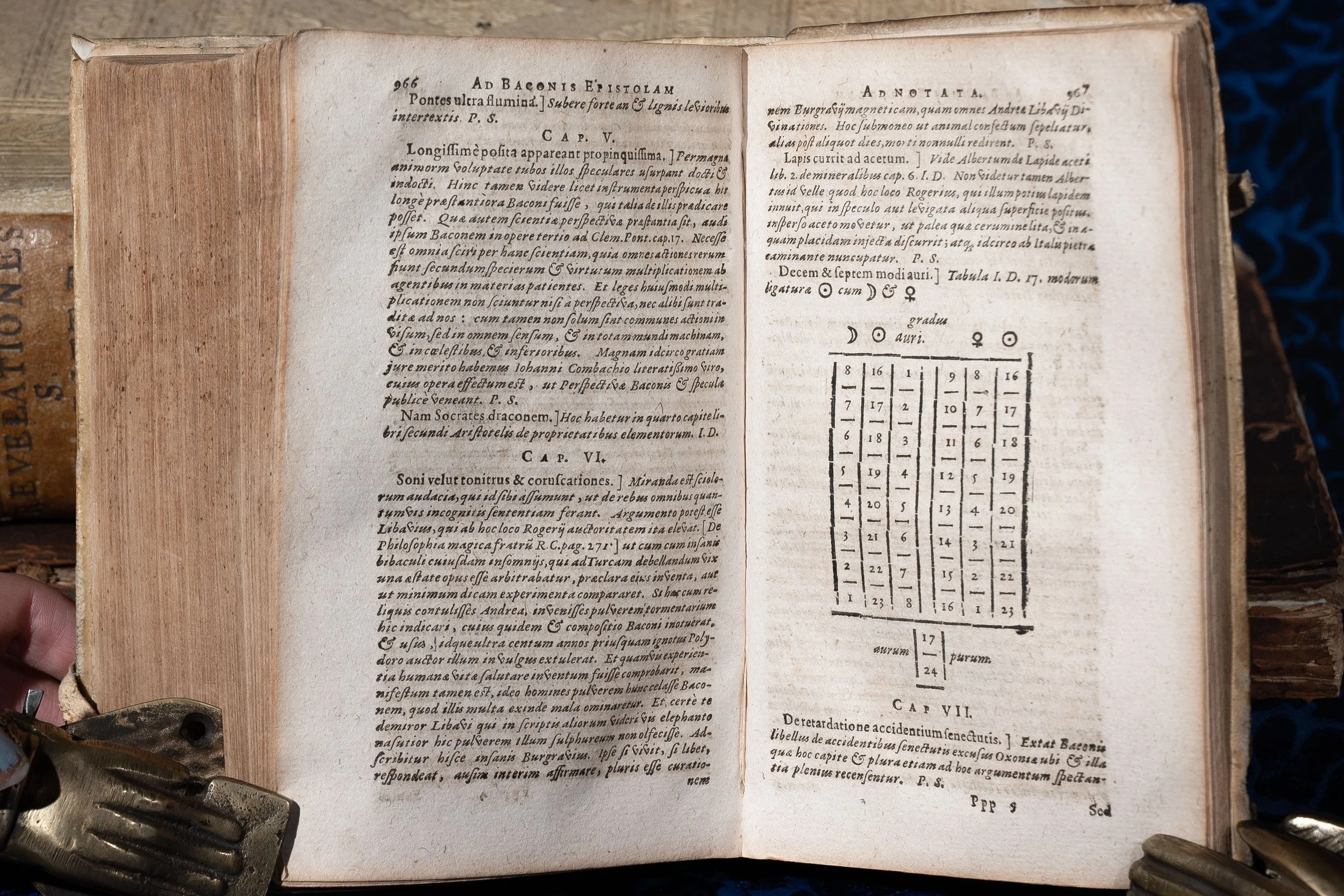 Image 1 of 9
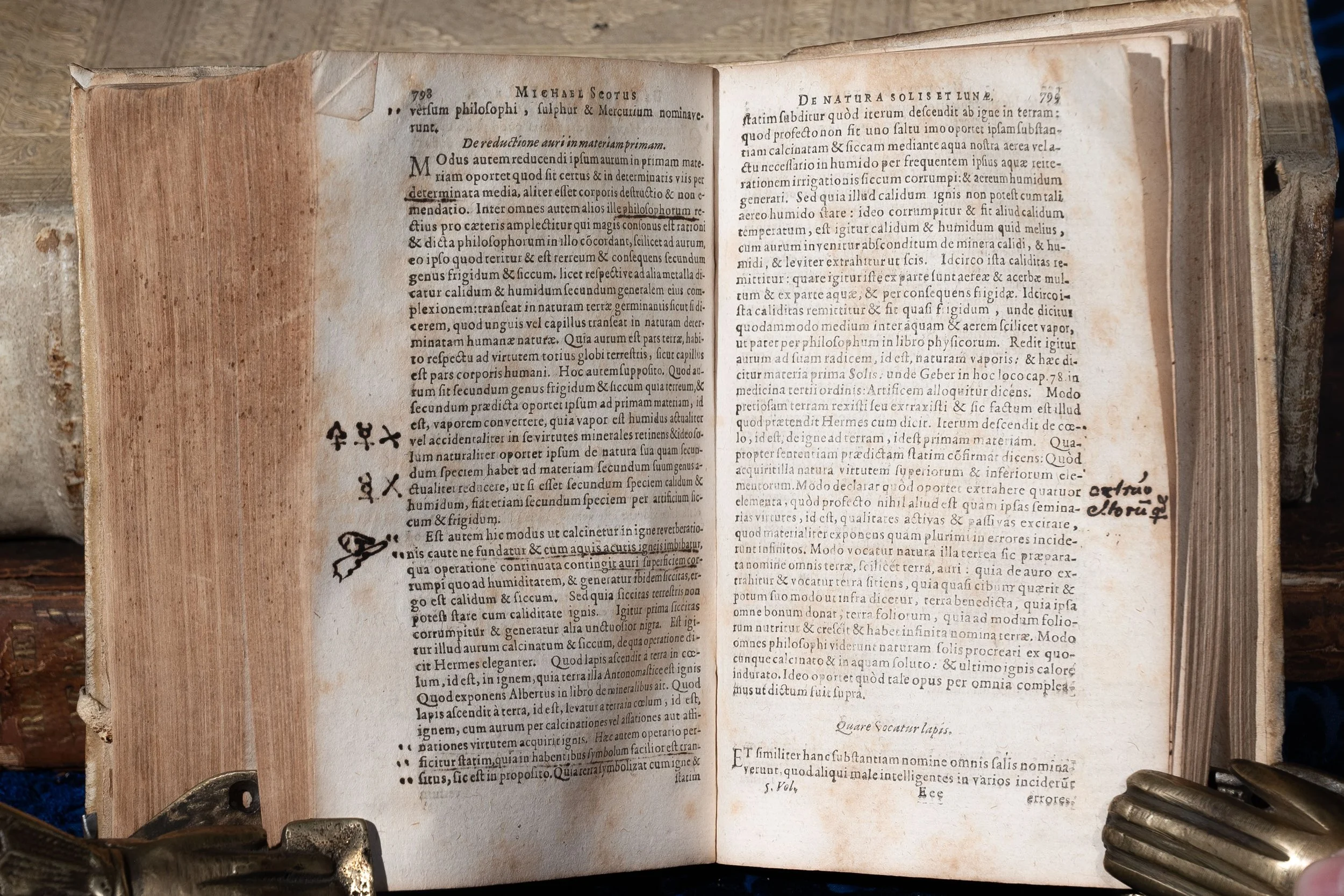 Image 2 of 9
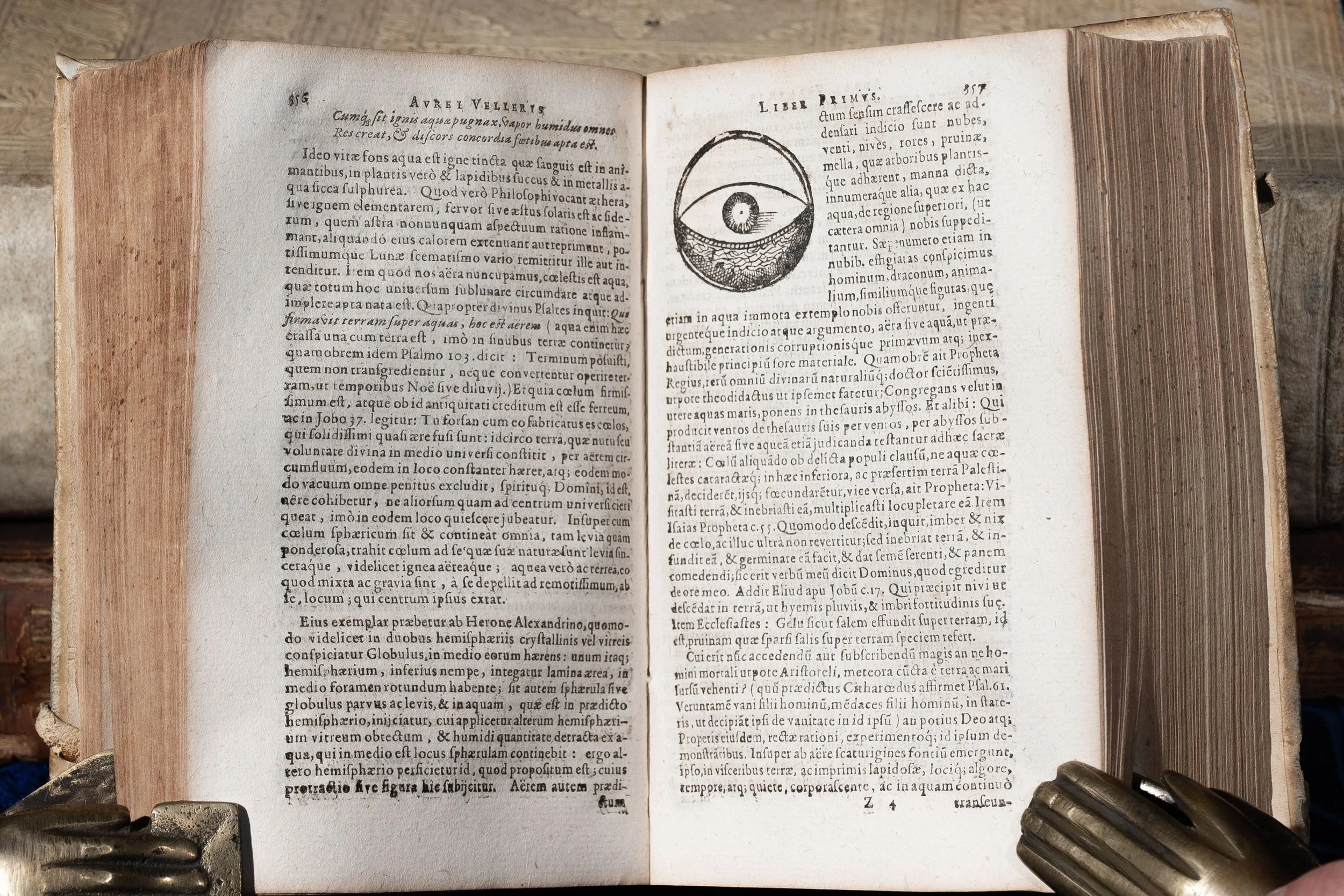 Image 3 of 9
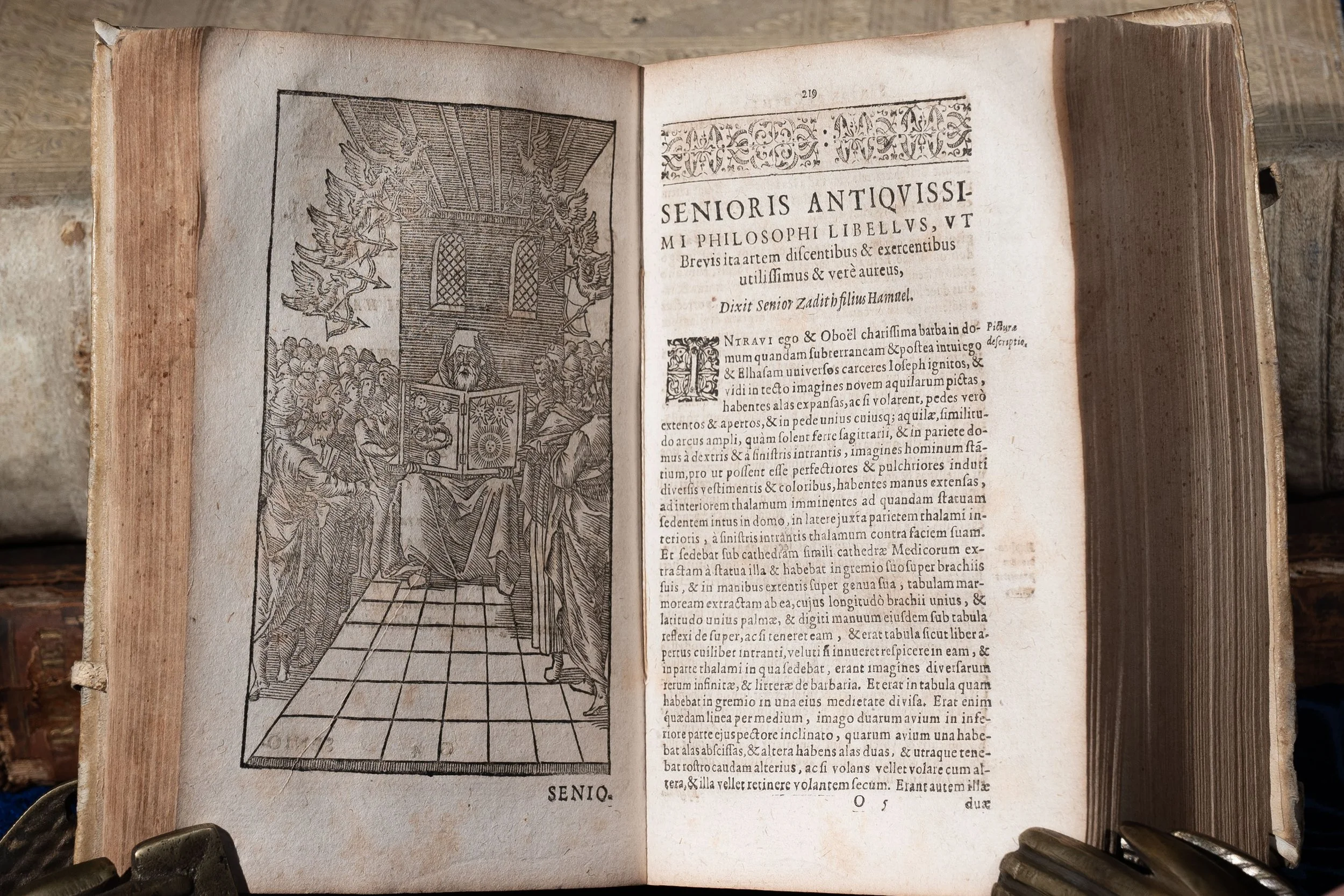 Image 4 of 9
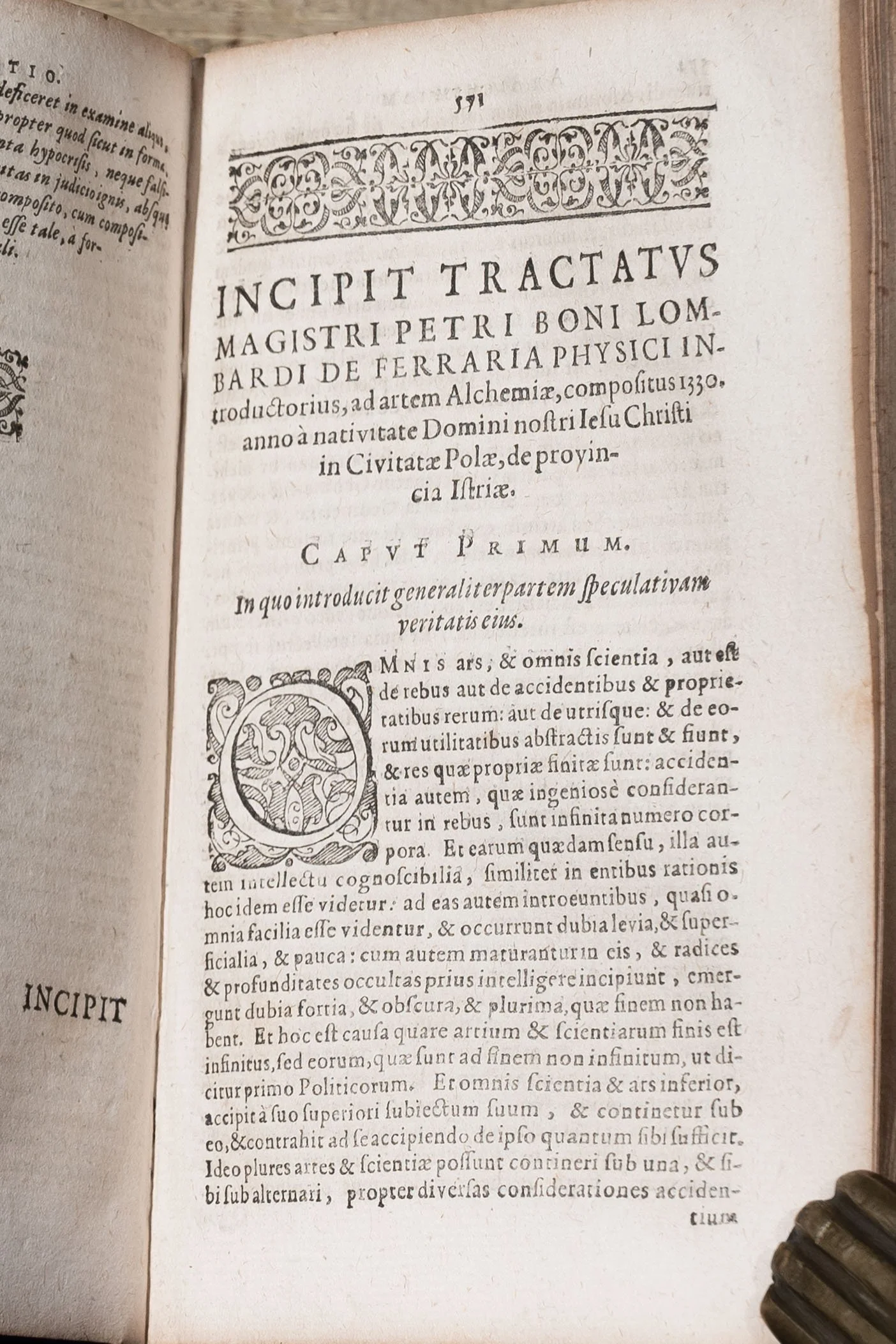 Image 5 of 9
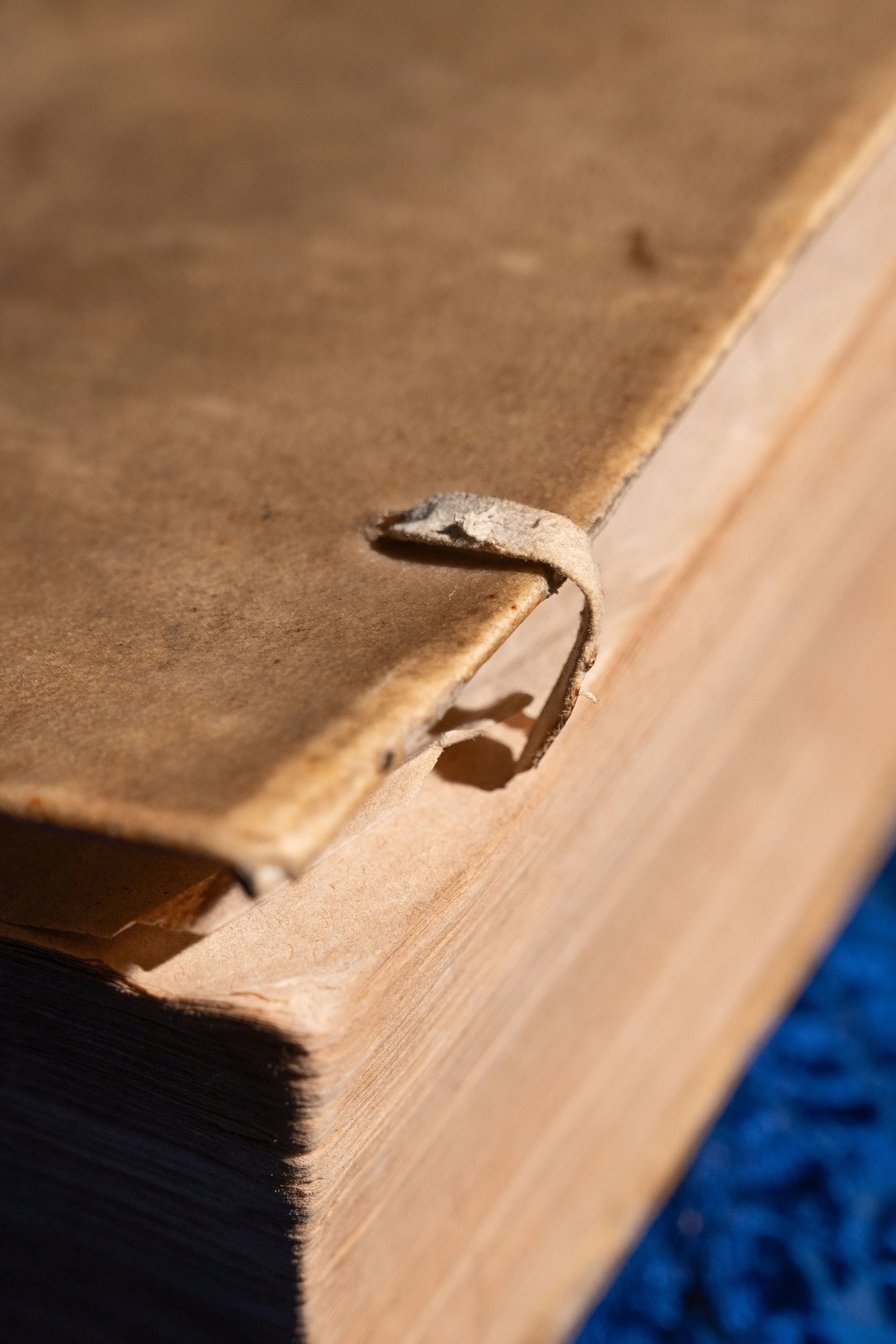 Image 6 of 9
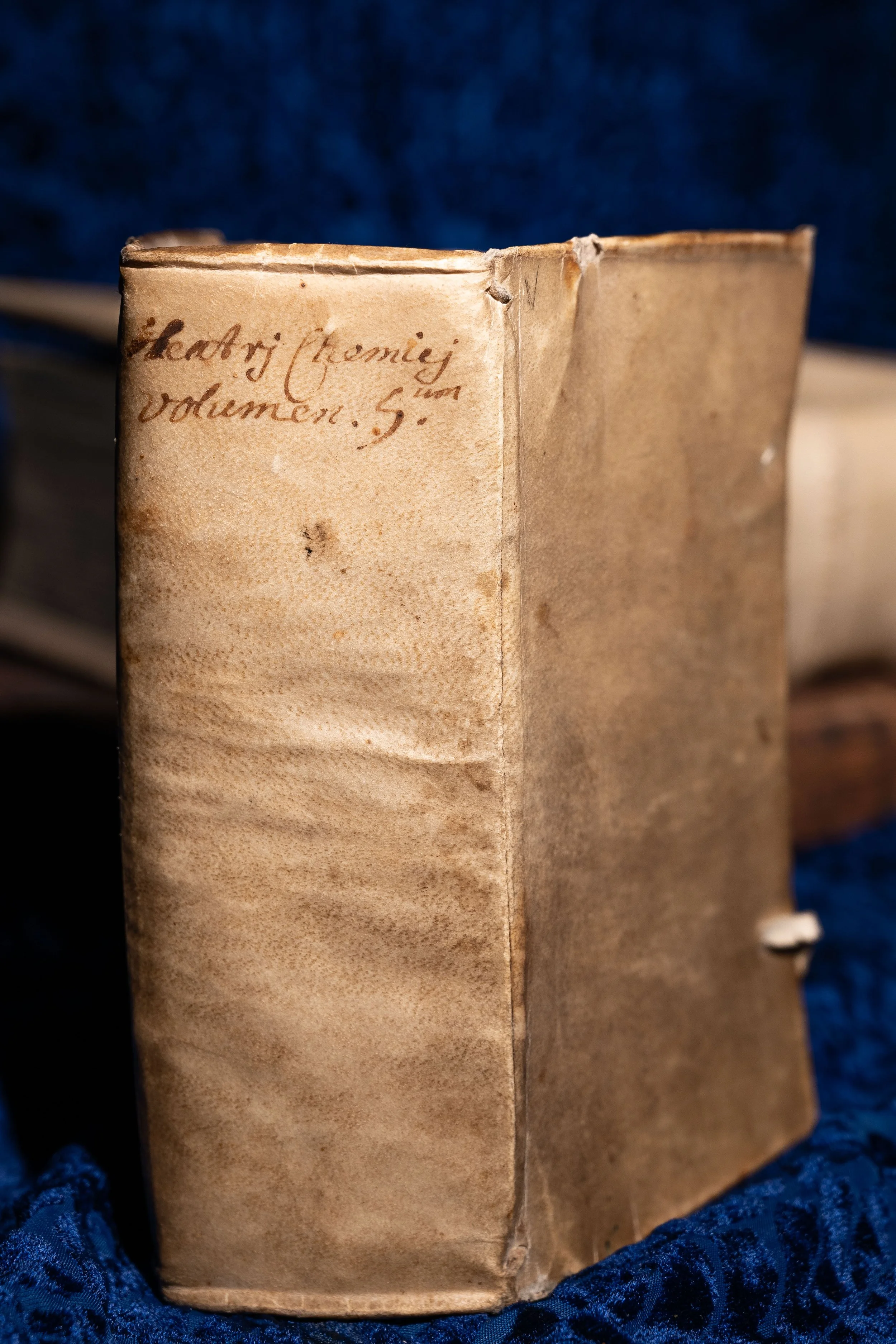 Image 7 of 9
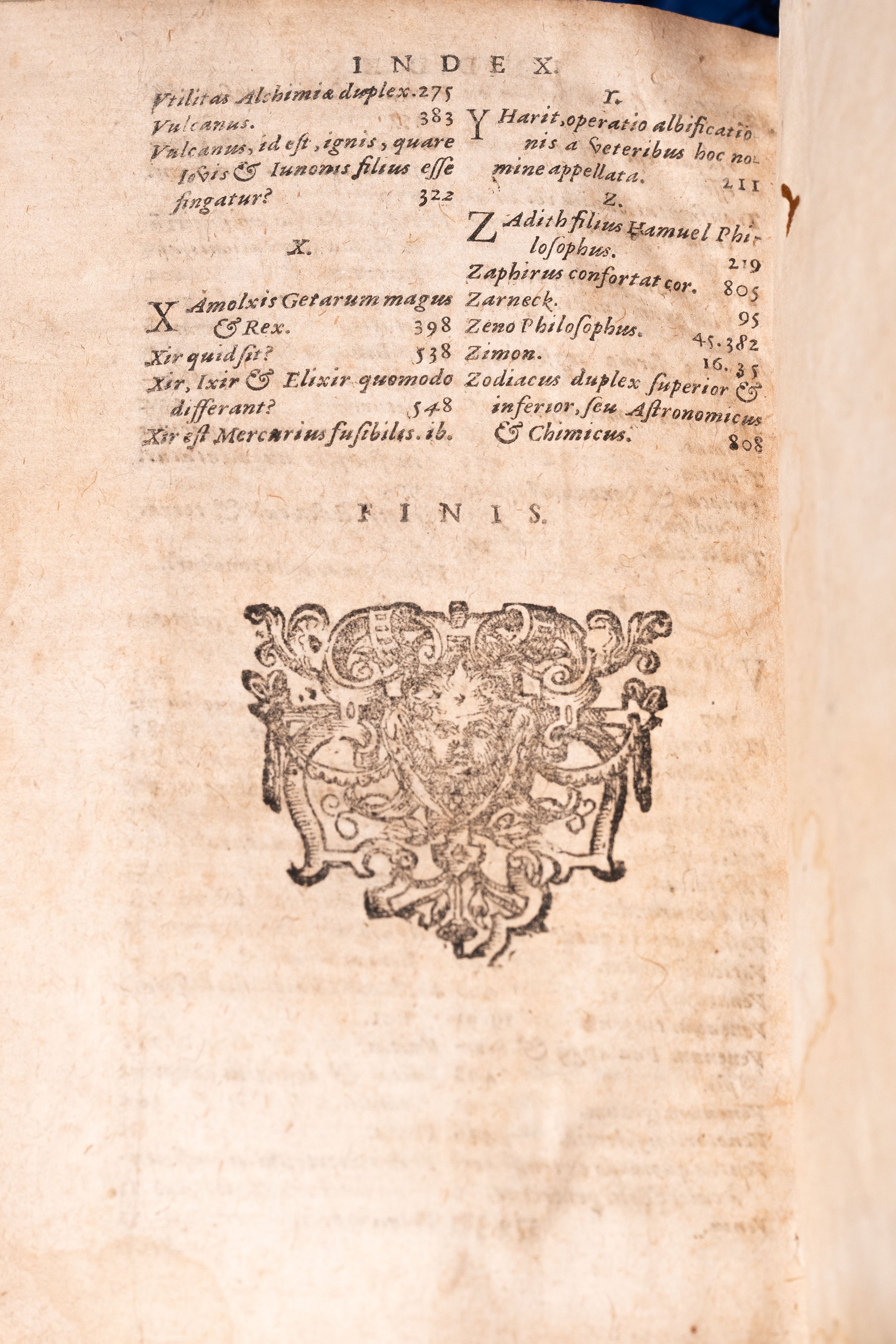 Image 8 of 9
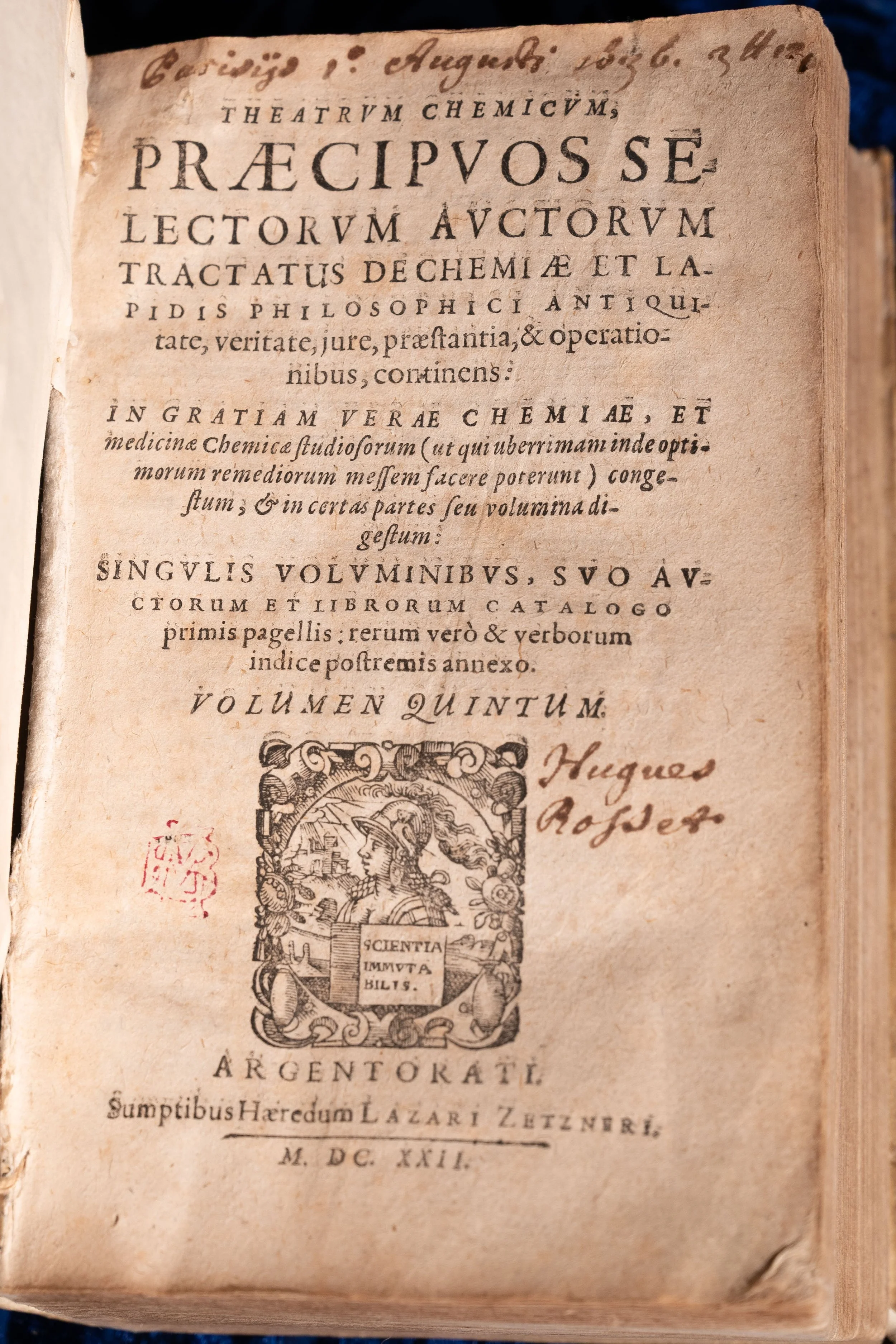 Image 9 of 9