
 Image 1 of 2
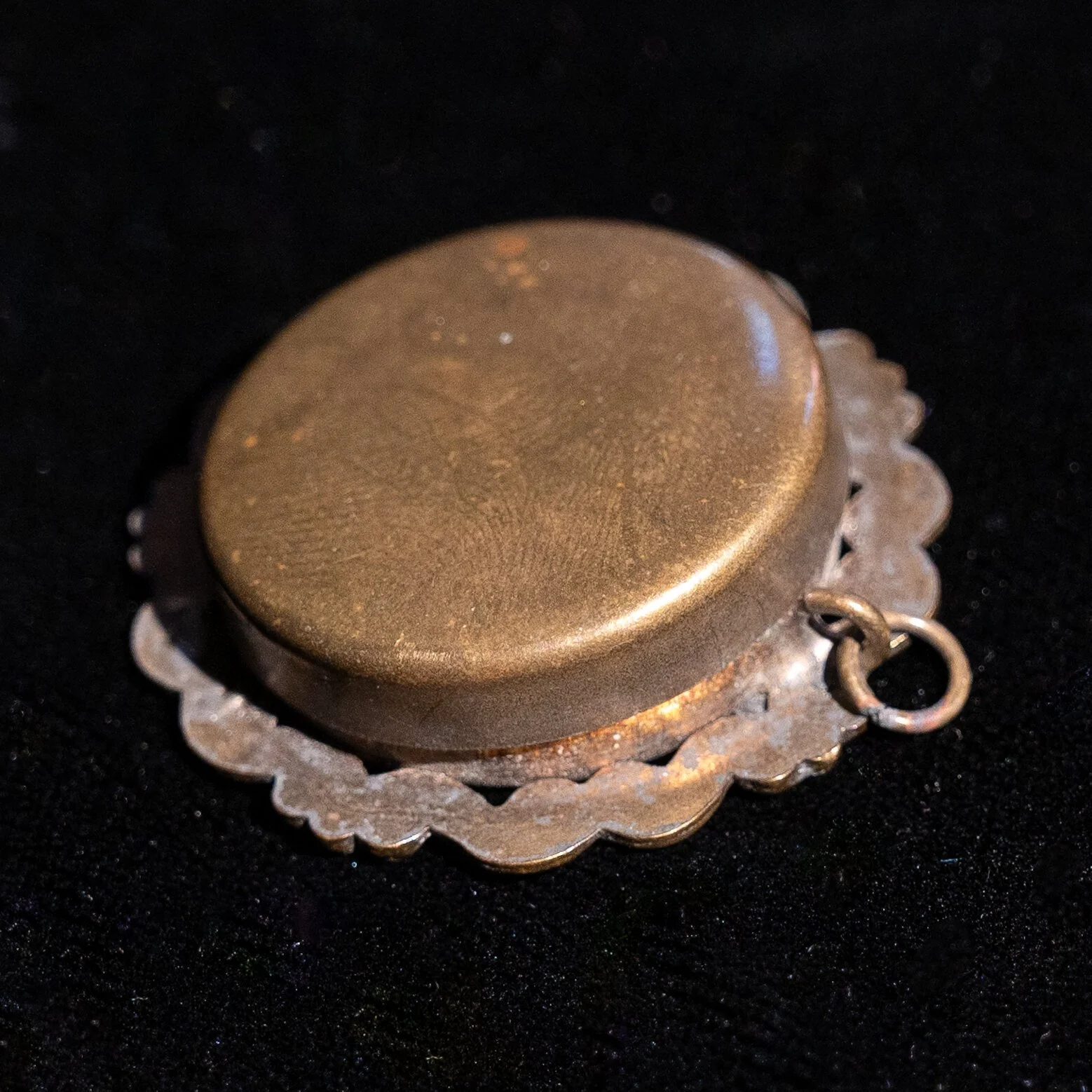 Image 2 of 2
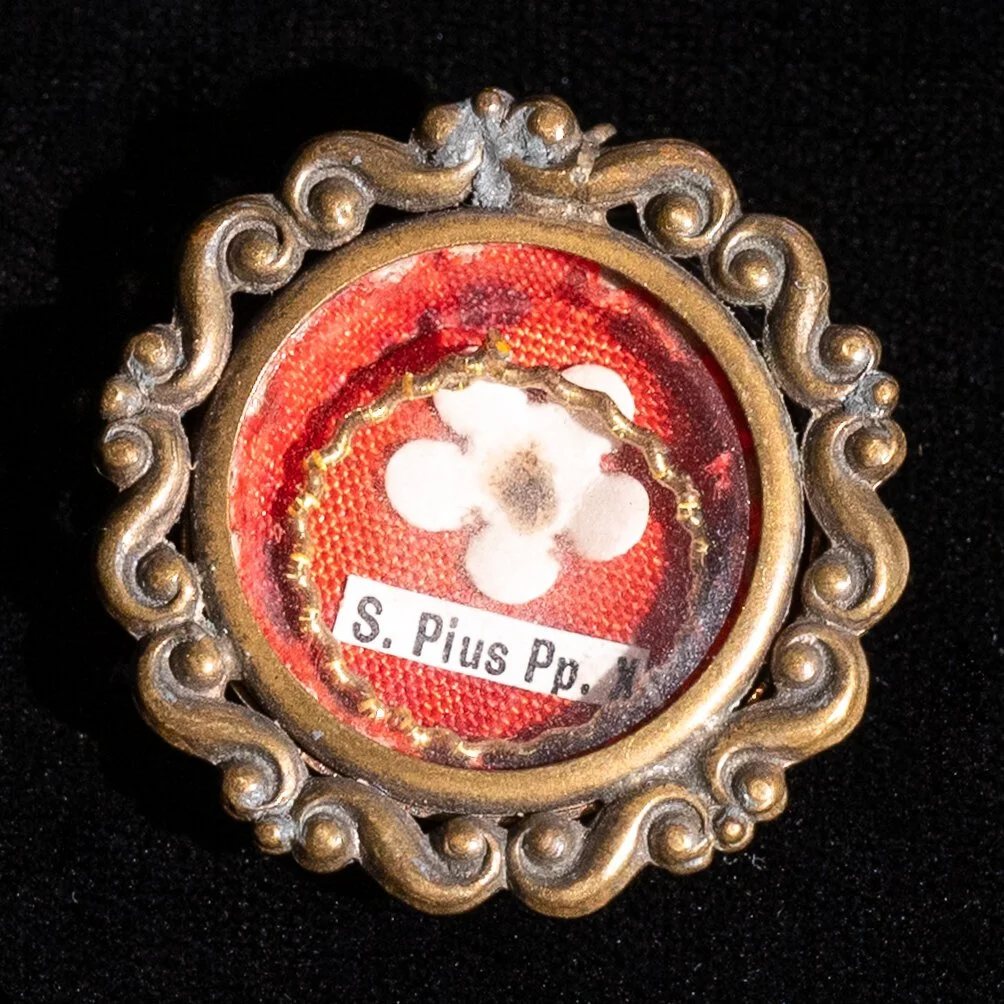
The paper label behind the glass reads “S. Pius Pp. X”: Saint Pius, Pope, the tenth of the name. Giuseppe Sarto was the son of a village postman in the Veneto, and he was elected pope in August 1903. Pius XII canonized him in May 1954, forty years after his death.
His reign is remembered for its campaign against Modernism. A decree of 1907 condemned sixty-five propositions, most of them drawn from the biblical critic Alfred Loisy, and the encyclical Pascendi called Modernism “the synthesis of all heresies.” From 1910 the clergy had to swear an oath against it. Pius X also restored Gregorian chant to the liturgy and lowered the age of first communion to seven.
Relics played their part in making him a saint. The miracle accepted for his beatification was the cure of a nun with bone cancer, during a novena, with a relic of Pius X laid on her chest. Many small cases like this one, with a fragment behind glass and a printed slip naming the saint, were issued in the years after the canonization.
Ours is a round case in a pierced brass frame of scrolls and beads, with a ring for a chain. Inside, a small dark fragment sits on a white paper quatrefoil, ringed with gold thread on a red cloth ground. A brass cap lifts off the back to show the case still closed with red wax over red threads. The price is for the case; the enclosed relic accompanies it as a gift for preservation and study.
SAINT PIUS X (Giuseppe Sarto, 1835–1914). Sealed reliquary pendant containing a relic of Saint Pius X, pope, with a printed cedula. After 1954.
Physical Description: Round glazed theca, 3.2 cm (1 1/4 inches) across, in a pierced brass frame of scrolls and beads, with a suspension ring. Inside, a small dark fragment on a white paper quatrefoil, within a ring of gold thread, on a red cloth ground, with a printed paper cedula reading “S. Pius Pp. X”. On the back, under a removable brass cap, a red wax seal over red threads, its impression worn and not legible.
Condition: Wear and darkening to the brass, with spots of oxidation on the frame and inside the cap. Some soiling to the cloth at the left edge; the right end of the label creased. Glass intact. Seal and threads intact.