
 Image 1 of 4
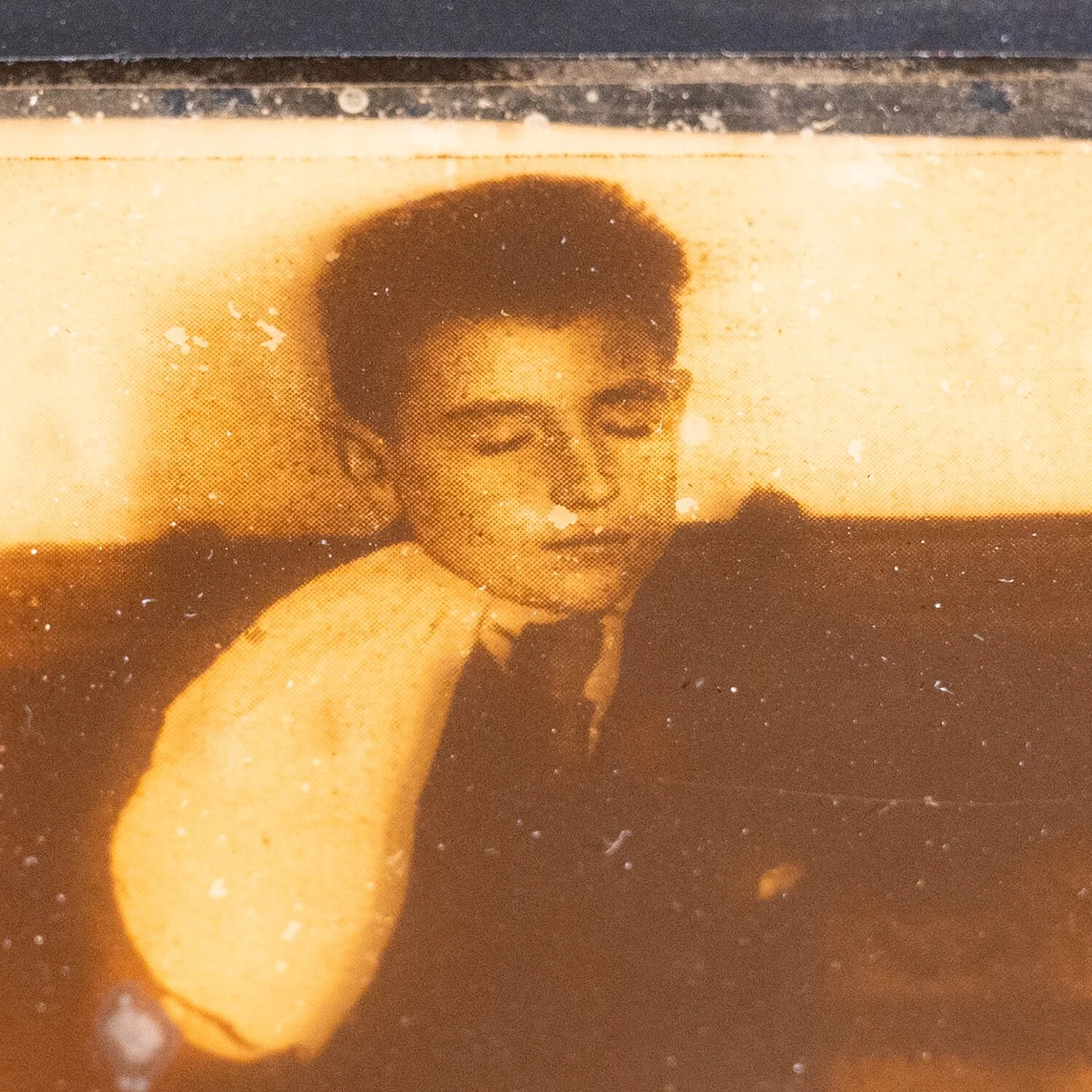 Image 2 of 4
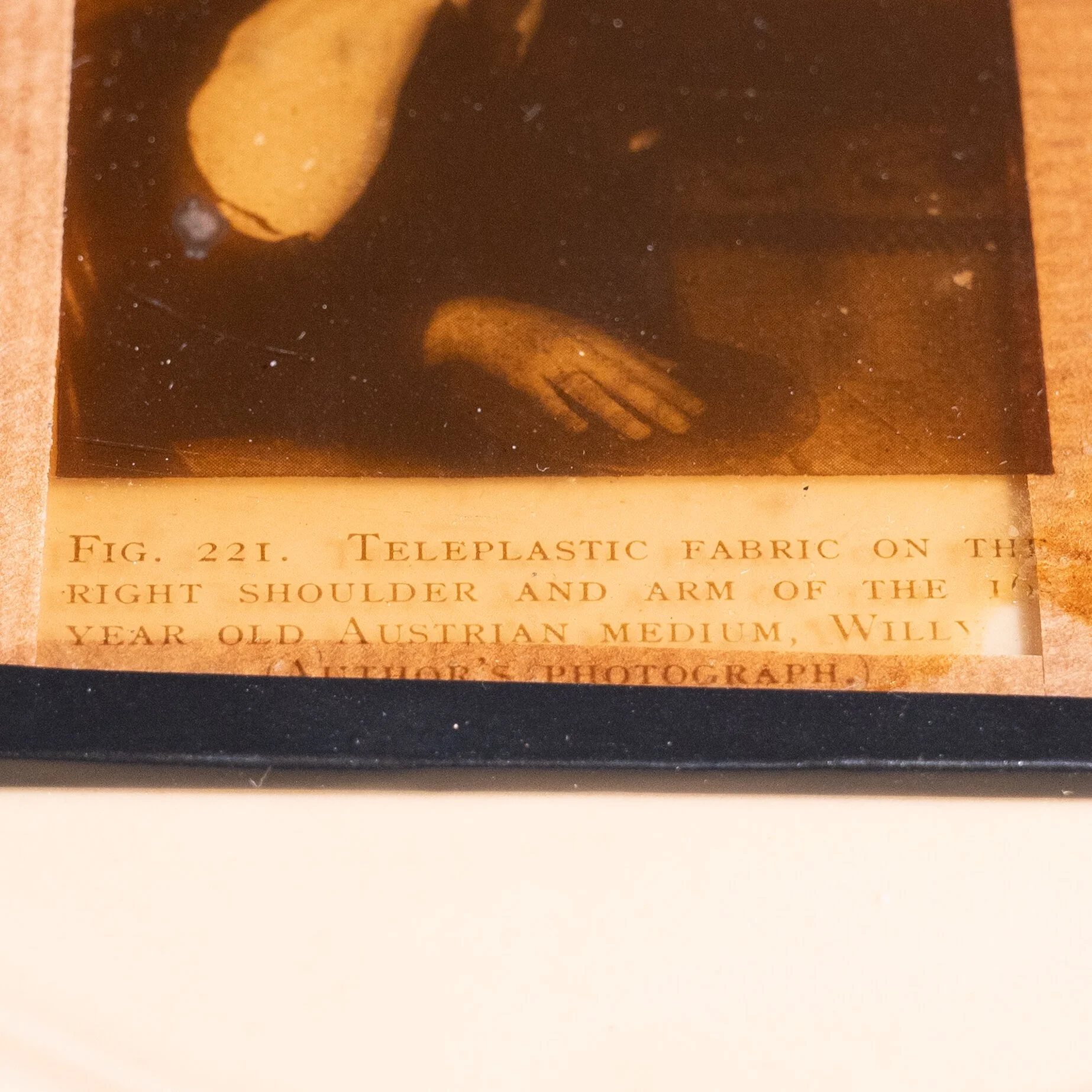 Image 3 of 4
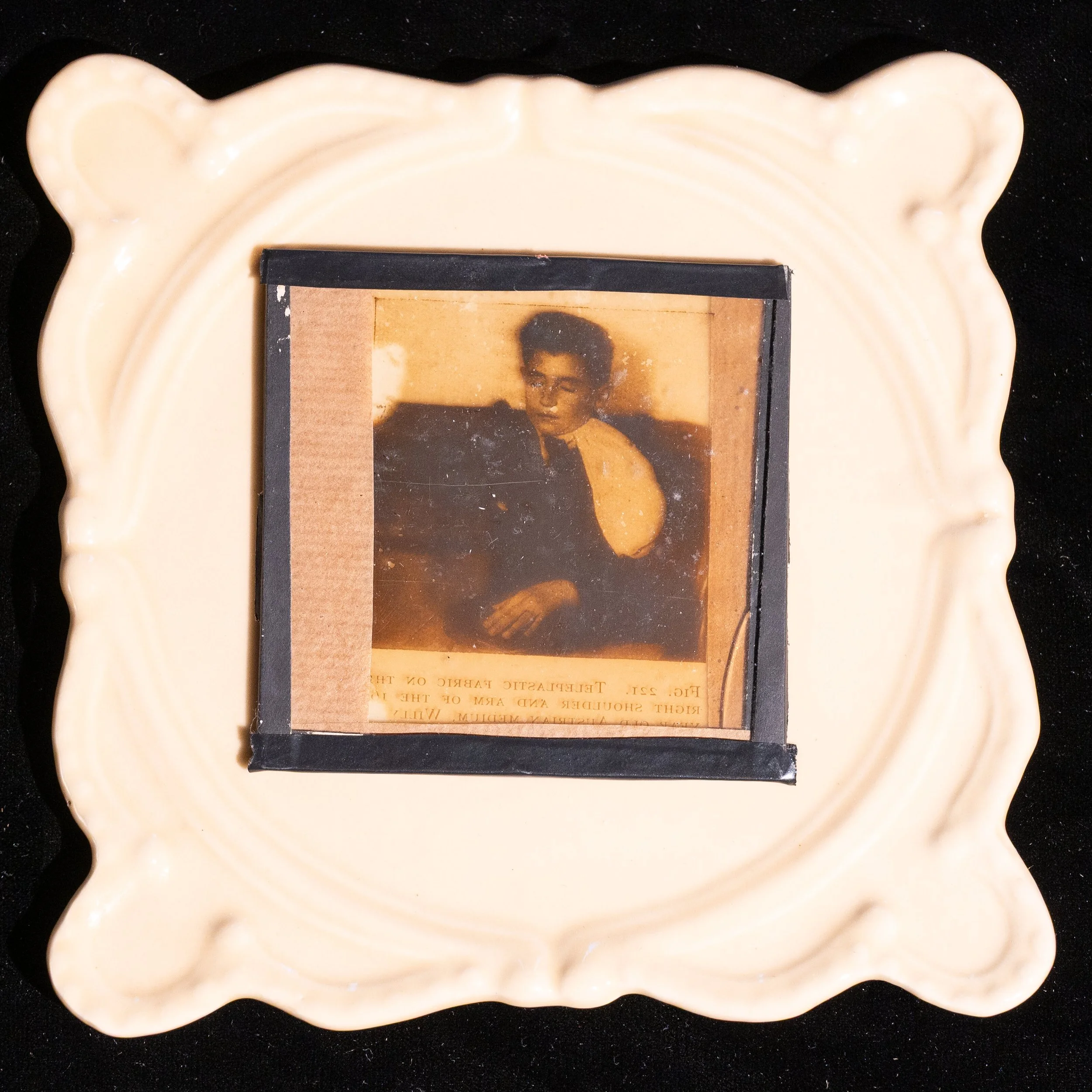 Image 4 of 4
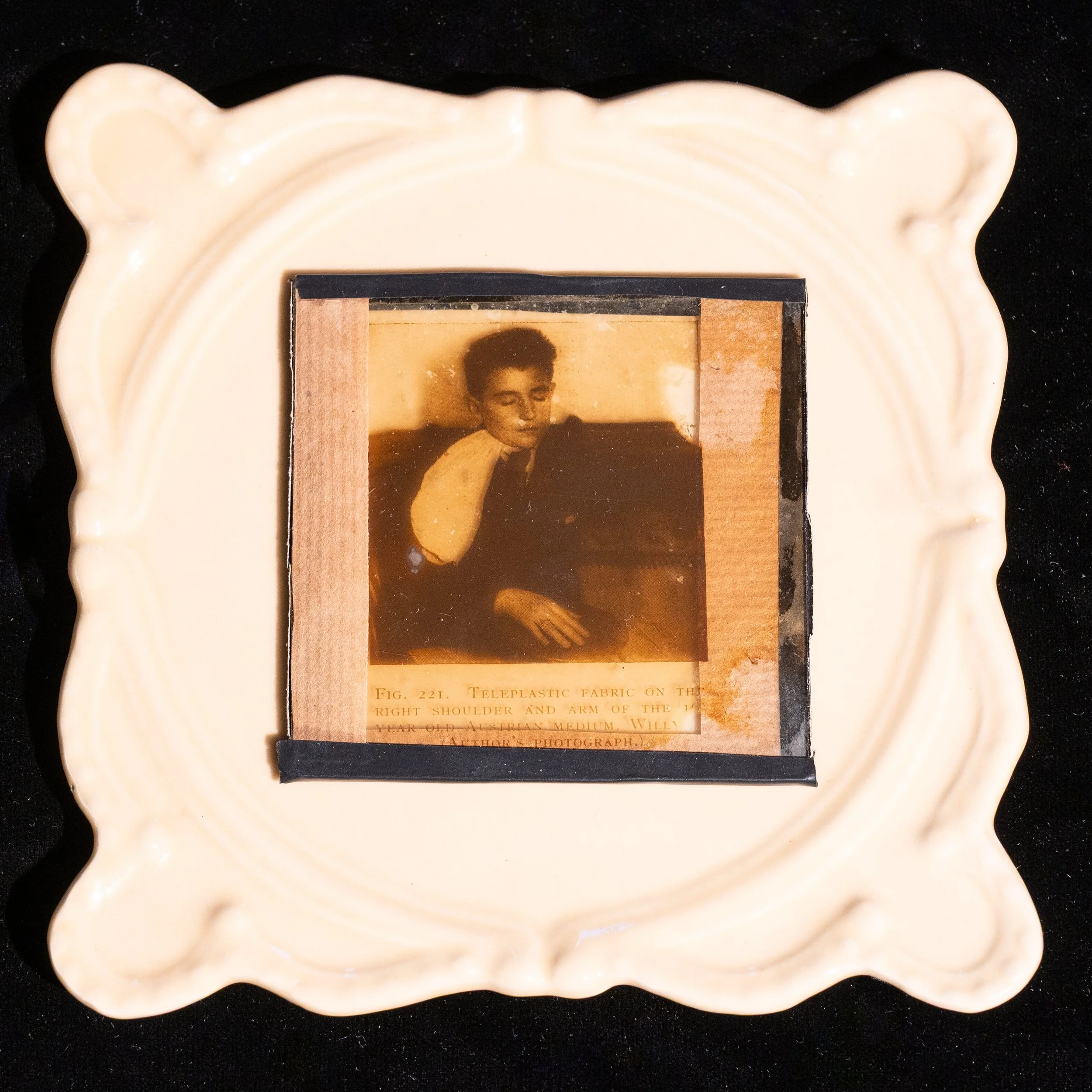
This glass lantern slide reproduces a photograph of the sixteen-year-old medium Willy Schneider, taken in Munich on October 26, 1919. A lantern slide is a transparent image projected onto a screen. Here Schneider sits with his eyes closed, a drawing board across his knees and a white mass at his shoulder. The photographer, the physician Albert von Schrenck-Notzing, described it with admirable plainness: “like a white napkin.”
Schrenck-Notzing investigated the material said to emerge from mediums’ bodies during séances. He called it “teleplastic” matter; spiritualists called it ectoplasm. His study appeared in German in 1914 and in English as Phenomena of Materialisation in 1920. The English edition included photographs of Schneider, identified in the captions as “Willy S.”
Schneider and his younger brother Rudi became subjects of sustained psychical investigation. The British investigators Harry Price and Eric Dingwall attended Willy’s sittings in Munich in 1922. Thomas Mann also attended séances at Schrenck-Notzing’s house and wrote about them in “Okkulte Erlebnisse,” or “Occult Experiences.” Such photographs gave investigators and audiences an image to examine, though a photograph alone could not settle what had happened in the séance room.
The image and English caption on this slide match figure 221 in the 1920 edition, giving it an earliest possible date of 1920. Even the halftone dots of the printed illustration are reproduced. The boy’s face remains sharp, and the white mass on his shoulder is the brightest part of the image. The binding tape is worn.
SCHRENCK-NOTZING, Albert von (photographer). Glass lantern slide of “Fig. 221. Teleplastic fabric on the right shoulder and arm of the 16 year old Austrian medium, Willy S. (Author’s photograph.)” From Phenomena of Materialisation: A Contribution to the Investigation of Mediumistic Teleplastics, translated by E. E. Fournier d’Albe. London: Kegan Paul, Trench, Trubner & Co.; New York: E. P. Dutton & Co., 1920. Slide undated and unsigned, made in 1920 or later.
Physical Description: Square glass lantern slide, 8.25 x 8.25 cm (3 1/4 in.), the standard British format. A monochrome halftone image in a warm amber tone, with the printed caption beneath it. Strips of brown paper mask the image at left and right. The right-hand mask clips the end of each caption line, so the slide reads “on th[e],” “the 1[6]” and “Will[y S.]”; the last line, “(Author’s photograph.),” runs partly under the lower binding tape. The ornamental stand in the photographs is a display prop and is not included.
Binding: Two glasses bound at the edges with black paper tape.
Condition: The black binding tape is worn throughout and lifting along the right edge, with losses. Brown staining to the right-hand paper mask, reaching the end of the caption. White spots and specks of dust scattered across the image. The glass is uncracked, and the image itself is clear and sharp.
This glass lantern slide reproduces a photograph of the sixteen-year-old medium Willy Schneider, taken in Munich on October 26, 1919. A lantern slide is a transparent image projected onto a screen. Here Schneider sits with his eyes closed, a drawing board across his knees and a white mass at his shoulder. The photographer, the physician Albert von Schrenck-Notzing, described it with admirable plainness: “like a white napkin.”
Schrenck-Notzing investigated the material said to emerge from mediums’ bodies during séances. He called it “teleplastic” matter; spiritualists called it ectoplasm. His study appeared in German in 1914 and in English as Phenomena of Materialisation in 1920. The English edition included photographs of Schneider, identified in the captions as “Willy S.”
Schneider and his younger brother Rudi became subjects of sustained psychical investigation. The British investigators Harry Price and Eric Dingwall attended Willy’s sittings in Munich in 1922. Thomas Mann also attended séances at Schrenck-Notzing’s house and wrote about them in “Okkulte Erlebnisse,” or “Occult Experiences.” Such photographs gave investigators and audiences an image to examine, though a photograph alone could not settle what had happened in the séance room.
The image and English caption on this slide match figure 221 in the 1920 edition, giving it an earliest possible date of 1920. Even the halftone dots of the printed illustration are reproduced. The boy’s face remains sharp, and the white mass on his shoulder is the brightest part of the image. The binding tape is worn.
SCHRENCK-NOTZING, Albert von (photographer). Glass lantern slide of “Fig. 221. Teleplastic fabric on the right shoulder and arm of the 16 year old Austrian medium, Willy S. (Author’s photograph.)” From Phenomena of Materialisation: A Contribution to the Investigation of Mediumistic Teleplastics, translated by E. E. Fournier d’Albe. London: Kegan Paul, Trench, Trubner & Co.; New York: E. P. Dutton & Co., 1920. Slide undated and unsigned, made in 1920 or later.
Physical Description: Square glass lantern slide, 8.25 x 8.25 cm (3 1/4 in.), the standard British format. A monochrome halftone image in a warm amber tone, with the printed caption beneath it. Strips of brown paper mask the image at left and right. The right-hand mask clips the end of each caption line, so the slide reads “on th[e],” “the 1[6]” and “Will[y S.]”; the last line, “(Author’s photograph.),” runs partly under the lower binding tape. The ornamental stand in the photographs is a display prop and is not included.
Binding: Two glasses bound at the edges with black paper tape.
Condition: The black binding tape is worn throughout and lifting along the right edge, with losses. Brown staining to the right-hand paper mask, reaching the end of the caption. White spots and specks of dust scattered across the image. The glass is uncracked, and the image itself is clear and sharp.