This is Agrippa's "On the Uncertainty and Vanity of the Sciences and Arts," first printed at Antwerp in 1530. Heinrich Cornelius Agrippa of Nettesheim also wrote the Occult Philosophy, a handbook of Renaissance magic. Here he takes aim at human learning, from grammar and medicine to astrology and alchemy; even theology comes under fire. His argument is that no human learning is certain and only faith reaches the truth. He included a retraction of his own magical writings, which had not yet even been printed. The theologians of Louvain and the Sorbonne condemned the book as scandalous, impious and heretical. Agrippa answered with an "Apologia" that gave no ground. Our copy is the Cologne printing of about 1540 with the text as Agrippa himself revised it and with the printed marginal notes that let a reader find the insults quickly. There’s also the famous woodcut portrait of the author in his flat cap.
Somebody in 1556 had this book bound with two others. The second is Johannes Indagine's "Introductiones apotelesmaticae," a handbook of palmistry, natural astrology and physiognomy, the reading of character from bodily features, printed at Frankfurt in 1551 with woodcut hands, faces and planet-gods, and later placed on the Roman Index. The third work is Heinrich Bebel’s Facetiae, a collection of Latin jests and humorous tales from the German Renaissance. Bebel was the poet laureate of Tübingen; the work is arranged in three books. This edition also includes selections from Poggio and Jakob Henrichmann’s parody almanac, advertised as valid for all time.
The binding itself is dated. The initials I W and the year 1556 are stamped in gold on the front board of blind-tooled pigskin over wooden boards, with two brass clasps that still close. The initials may belong to the binder or the first owner. The roll around the panels carries Christ as Savior, David, Paul and John. Inside, the ownership runs on for a century: Cyriacus Hildebrand signed the title, then a pastor, Jacob Heinrich Delanus, signed all three titles, two of them dated 1658, and a later collector added a crowned monogram stamp. An early reader worked through Agrippa systematically, numbering the opinions on the origin of the soul in the margin, flagging the pages on Trithemius’s Steganographia, his work on secret writing, and underlining the passage where Agrippa says he knows the secret of the philosophers' stone but is sworn not to tell it.
AGRIPPA VON NETTESHEIM, Heinrich Cornelius. Henrici Cornelii Agrippae ab Nettesheym, De incertitudine & vanitate scientiarum declamatio invectiva, denuo ab autore recognita, & marginalibus annotationibus aucta. [Cologne: Eucharius Cervicornus, about 1540.] Bound with: INDAGINE, Johannes (Johannes Rosenbach). Introductiones apotelesmaticae elegantes, in chyromantiam, physiognomiam, astrologiam naturalem, complexiones hominum, naturas planetarum. [Frankfurt: Cyriacus Jacob,] 1551. And with: BEBEL, Heinrich. Facetiarum Heinrici Bebelii, poetae a D. Maximiliano laureati, libri tres. His accesserunt selectae quaedam Poggii facetiae. His additae sunt & Alphonsi regis Arragonum & Adelphi facetiae. Item Prognosticon in omne aevum durans, Iacobi Henrichmanni. Tübingen: Ulrich Morhart, 1552. Three works in one volume.
Physical Description: Octavo (about 16.5 x 12 cm). Agrippa: 200 unnumbered leaves, with the woodcut portrait of Agrippa on the title and figured woodcut initials. Indagine: 144 unnumbered leaves (the last blank), with the woodcut portrait of Indagine on the title, numerous woodcuts of hands, faces and planetary figures in the text, and the printer's device (a crowned heart in a hand, dated 1551) at the end. Bebel: 128 numbered and 8 unnumbered leaves, title printed in red and black. Complete per VD16.
Binding: Contemporary German blind-tooled pigskin over wooden boards, dated 1556, both boards with a roll of Christ the Savior, David, Paul and John within fillets, the front board lettered in gilt I W 1556, two brass clasps on leather straps, both working; manuscript title on the spine ("Cornel. de vanitate scientiarum, Joa. de Indagine, Facetiae Bebelii").
Condition: Pigskin dust-soiled, rubbed and a little stained, the gilt oxidized to a dull brown; a few tiny wormholes to the spine; inner joints split but the boards firm. Text lightly browned, heavier toward the end; scattered small stains; the title pages with old ink inscriptions and a crowned monogram stamp; a small ink spot on the Indagine title. Extensive early underlining in red ink and marginal notes in brown ink through the Agrippa; occasional early notes elsewhere.
Provenance: Cyriacus Hildebrand, signature on the Agrippa title; "Ex libris M. Martini Lotz" (reading uncertain), faded inscription on the Agrippa title; M. Jacob Heinrich Delanus, V.D.M., signed and dated 1658 on the Agrippa and Indagine titles and signed, undated, on the Bebel; a crowned interlaced monogram stamp on the Agrippa title; the binder's or first owner's initials I W and the date 1556 on the front board. Reader's index on the front flyleaves and extensive early annotation in the Agrippa, in one sixteenth-century hand.
This is Agrippa's "On the Uncertainty and Vanity of the Sciences and Arts," first printed at Antwerp in 1530. Heinrich Cornelius Agrippa of Nettesheim also wrote the Occult Philosophy, a handbook of Renaissance magic. Here he takes aim at human learning, from grammar and medicine to astrology and alchemy; even theology comes under fire. His argument is that no human learning is certain and only faith reaches the truth. He included a retraction of his own magical writings, which had not yet even been printed. The theologians of Louvain and the Sorbonne condemned the book as scandalous, impious and heretical. Agrippa answered with an "Apologia" that gave no ground. Our copy is the Cologne printing of about 1540 with the text as Agrippa himself revised it and with the printed marginal notes that let a reader find the insults quickly. There’s also the famous woodcut portrait of the author in his flat cap.
Somebody in 1556 had this book bound with two others. The second is Johannes Indagine's "Introductiones apotelesmaticae," a handbook of palmistry, natural astrology and physiognomy, the reading of character from bodily features, printed at Frankfurt in 1551 with woodcut hands, faces and planet-gods, and later placed on the Roman Index. The third work is Heinrich Bebel’s Facetiae, a collection of Latin jests and humorous tales from the German Renaissance. Bebel was the poet laureate of Tübingen; the work is arranged in three books. This edition also includes selections from Poggio and Jakob Henrichmann’s parody almanac, advertised as valid for all time.
The binding itself is dated. The initials I W and the year 1556 are stamped in gold on the front board of blind-tooled pigskin over wooden boards, with two brass clasps that still close. The initials may belong to the binder or the first owner. The roll around the panels carries Christ as Savior, David, Paul and John. Inside, the ownership runs on for a century: Cyriacus Hildebrand signed the title, then a pastor, Jacob Heinrich Delanus, signed all three titles, two of them dated 1658, and a later collector added a crowned monogram stamp. An early reader worked through Agrippa systematically, numbering the opinions on the origin of the soul in the margin, flagging the pages on Trithemius’s Steganographia, his work on secret writing, and underlining the passage where Agrippa says he knows the secret of the philosophers' stone but is sworn not to tell it.
AGRIPPA VON NETTESHEIM, Heinrich Cornelius. Henrici Cornelii Agrippae ab Nettesheym, De incertitudine & vanitate scientiarum declamatio invectiva, denuo ab autore recognita, & marginalibus annotationibus aucta. [Cologne: Eucharius Cervicornus, about 1540.] Bound with: INDAGINE, Johannes (Johannes Rosenbach). Introductiones apotelesmaticae elegantes, in chyromantiam, physiognomiam, astrologiam naturalem, complexiones hominum, naturas planetarum. [Frankfurt: Cyriacus Jacob,] 1551. And with: BEBEL, Heinrich. Facetiarum Heinrici Bebelii, poetae a D. Maximiliano laureati, libri tres. His accesserunt selectae quaedam Poggii facetiae. His additae sunt & Alphonsi regis Arragonum & Adelphi facetiae. Item Prognosticon in omne aevum durans, Iacobi Henrichmanni. Tübingen: Ulrich Morhart, 1552. Three works in one volume.
Physical Description: Octavo (about 16.5 x 12 cm). Agrippa: 200 unnumbered leaves, with the woodcut portrait of Agrippa on the title and figured woodcut initials. Indagine: 144 unnumbered leaves (the last blank), with the woodcut portrait of Indagine on the title, numerous woodcuts of hands, faces and planetary figures in the text, and the printer's device (a crowned heart in a hand, dated 1551) at the end. Bebel: 128 numbered and 8 unnumbered leaves, title printed in red and black. Complete per VD16.
Binding: Contemporary German blind-tooled pigskin over wooden boards, dated 1556, both boards with a roll of Christ the Savior, David, Paul and John within fillets, the front board lettered in gilt I W 1556, two brass clasps on leather straps, both working; manuscript title on the spine ("Cornel. de vanitate scientiarum, Joa. de Indagine, Facetiae Bebelii").
Condition: Pigskin dust-soiled, rubbed and a little stained, the gilt oxidized to a dull brown; a few tiny wormholes to the spine; inner joints split but the boards firm. Text lightly browned, heavier toward the end; scattered small stains; the title pages with old ink inscriptions and a crowned monogram stamp; a small ink spot on the Indagine title. Extensive early underlining in red ink and marginal notes in brown ink through the Agrippa; occasional early notes elsewhere.
Provenance: Cyriacus Hildebrand, signature on the Agrippa title; "Ex libris M. Martini Lotz" (reading uncertain), faded inscription on the Agrippa title; M. Jacob Heinrich Delanus, V.D.M., signed and dated 1658 on the Agrippa and Indagine titles and signed, undated, on the Bebel; a crowned interlaced monogram stamp on the Agrippa title; the binder's or first owner's initials I W and the date 1556 on the front board. Reader's index on the front flyleaves and extensive early annotation in the Agrippa, in one sixteenth-century hand.

 Image 1 of 42
 Image 2 of 42
 Image 3 of 42
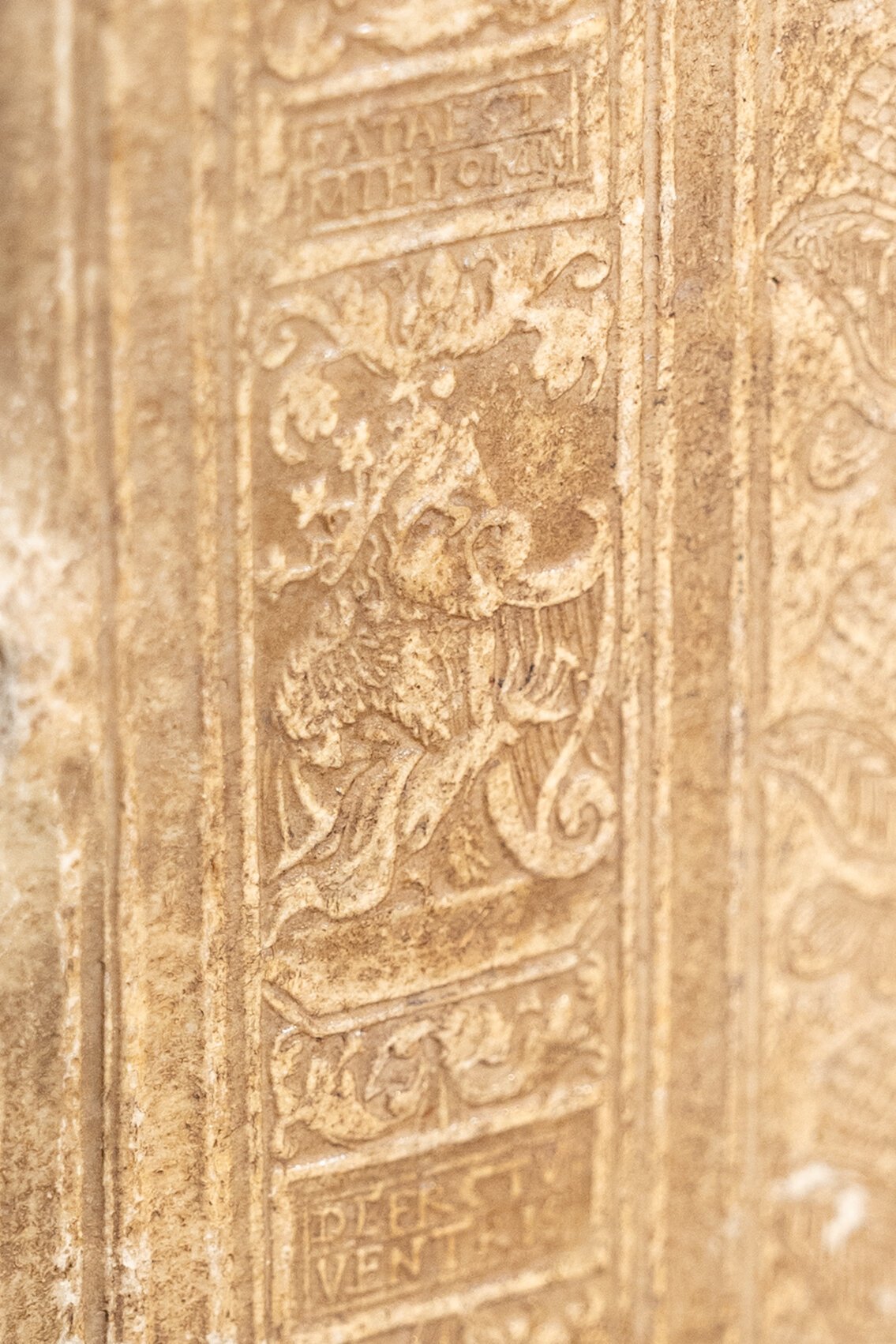 Image 4 of 42
 Image 5 of 42
 Image 6 of 42
 Image 7 of 42
 Image 8 of 42
 Image 9 of 42
 Image 10 of 42
 Image 11 of 42
 Image 12 of 42
 Image 13 of 42
 Image 14 of 42
 Image 15 of 42
 Image 16 of 42
 Image 17 of 42
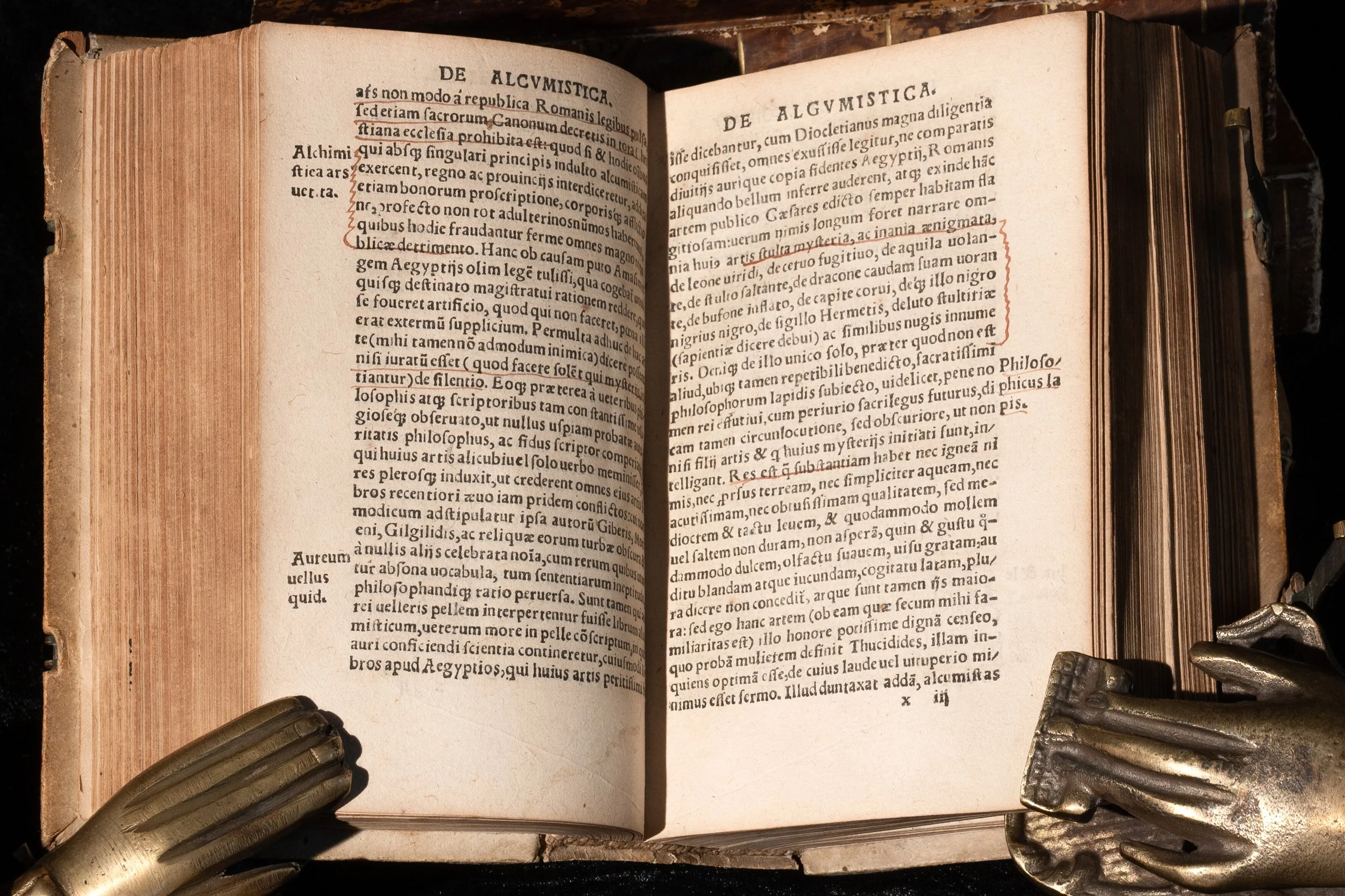 Image 18 of 42
 Image 19 of 42
 Image 20 of 42
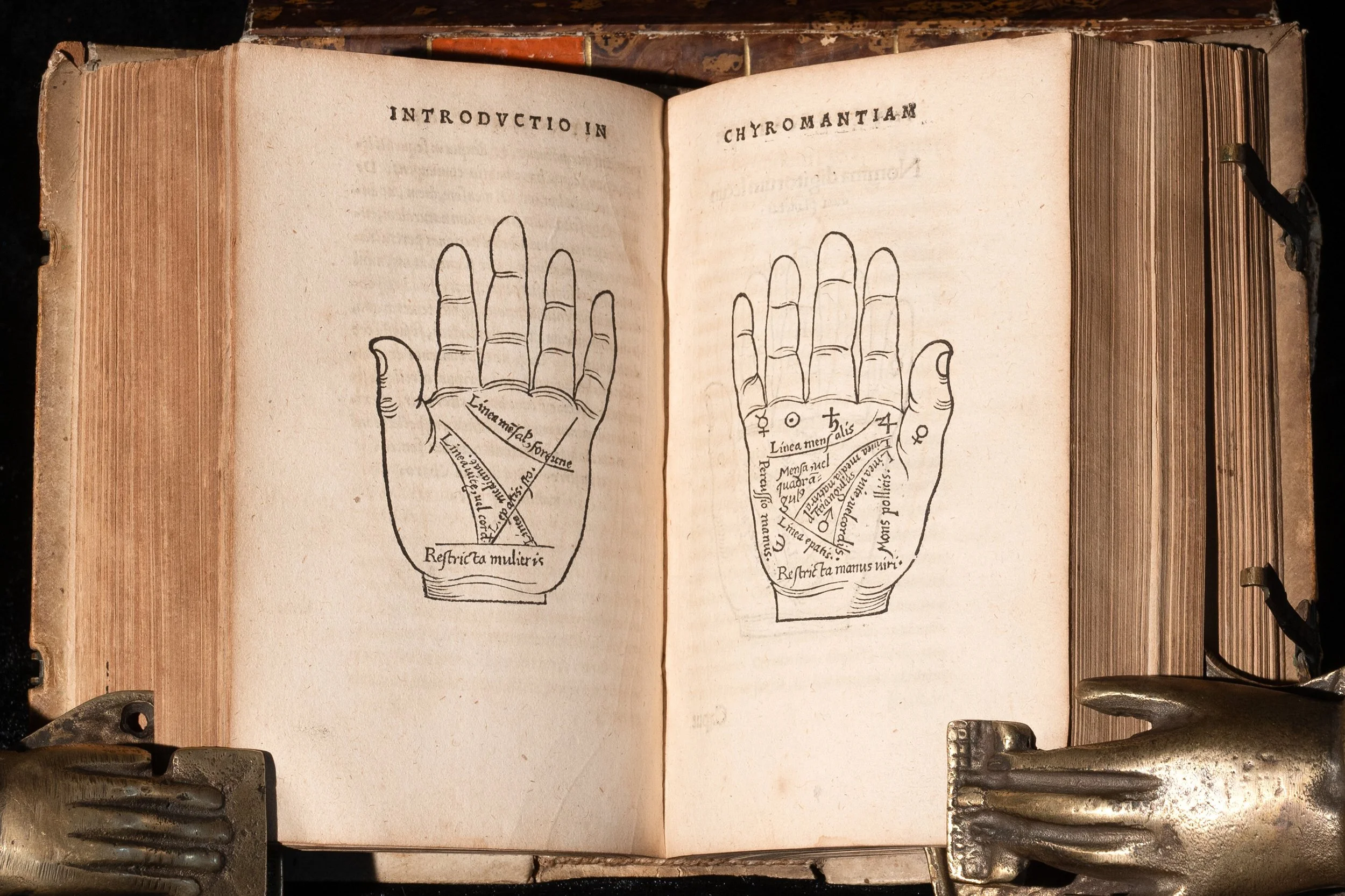 Image 21 of 42
 Image 22 of 42
 Image 23 of 42
 Image 24 of 42
 Image 25 of 42
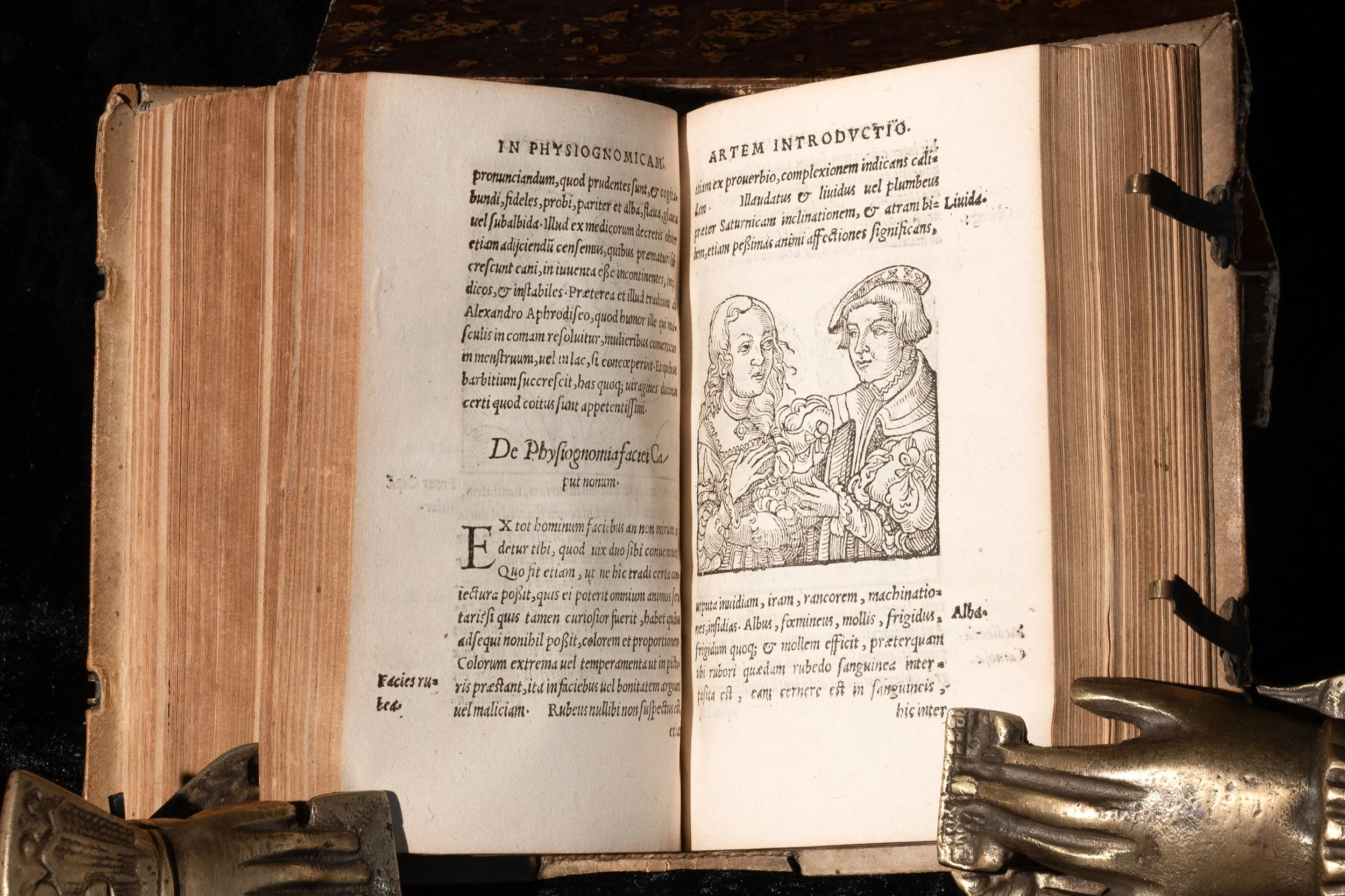 Image 26 of 42
 Image 27 of 42
 Image 28 of 42
 Image 29 of 42
 Image 30 of 42
 Image 31 of 42
 Image 32 of 42
 Image 33 of 42
 Image 34 of 42
 Image 35 of 42
 Image 36 of 42
 Image 37 of 42
 Image 38 of 42
 Image 39 of 42
 Image 40 of 42
 Image 41 of 42
 Image 42 of 42