The Enchiridion Leonis Papae is among the most widely circulated and enduring of the French grimoires, and this Bonaventure printing is arguably its most handsome incarnation. The legend behind it is irresistible even if entirely fictitious: Pope Leo III supposedly presented Charlemagne with a book of prayers so potent that mere possession would shield its owner from all earthly misfortune. No such manuscript has ever surfaced in the Vatican archives, and the earliest printed text dates only to 1633, but the story proved commercially durable for centuries of French printers.
The text occupies an instructive position at the boundary between orthodox devotion and folk magic. Its contents are prayers, orations, conjurations of aerial spirits, and "mystical secrets" for practical ends: stopping fires, healing burns, warding off wolves and foxes, ensuring safe travel, winning at games. The divine names invoked (Adonay, Agios, Théos, Ischyros, Athanatos, Tetragrammaton) draw on the same Judeo-Christian magical vocabulary found in more elaborate ceremonial texts, but the register here is distinctly popular. This is magic for the village, not the study. Its place among the Bibliothèque bleue grimoires marks it as part of that extraordinary current in French popular print culture that carried magical texts from Parisian presses to rural colporteurs and, eventually, to the French Caribbean, where works like the Enchiridion seeded the literary magical traditions still alive in Haitian and Antillean practice.
Bonaventure's edition, printed at the quai des Grands-Augustins in the 1850s, makes only the most perfunctory effort to disguise its origins: the title page claims Rome, 1740, while the colophon cheerfully names the Parisian printer and his address. The hand-colored plates, executed in delicate watercolor washes over crisp wood engravings, elevate this printing well above the typical cheap Bibliothèque bleue production. The cipher wheels, talismanic seals, magical alphabets, and the arresting Charlemagne portrait give the book the visual appeal of a devotional object, which, for many of its original purchasers, it effectively was. A copy found among the possessions of Marie Bosse at her arrest in 1679 during the Affaire des Poisons is perhaps the most famous instance of the text's association with working magical practice, though many owners doubtless kept it as a protective talisman rather than an operational manual.
This copy, in a contemporary binding with the plates in bright, unfaded coloring, represents the edition in appealing condition.
[PSEUDO-LEO III, POPE]. Enchiridion Leonis Papae Serenissimo Imperatori Carolo Magno in munus pretiosum datum, nuperrime mendis omnibus purgatum. [Title page states: Rome, MDCCXXXX (1740), but actually:] Paris: Jules Bonaventure, quai des Grands-Augustins, 55, [c. 1850s]. Physical Description: 12mo. 108 pp. Hand-colored wood-engraved plates on seven leaves bound between title and text, depicting talismanic figures, magical alphabets, cipher wheels, the Chi-Rho, a portrait of Charlemagne, and the Veil of Veronica, among other subjects. Wood-engraved floriated initials throughout.
Binding: Contemporary quarter calf over marbled boards, spine with raised bands and gilt floral tooling, black morocco label lettered "ENCHIRIDION" in gilt.
Condition: Binding rubbed, with wear to spine extremities and some cracking at joints; spine head slightly chipped. Interior clean and crisp, with bright, well-preserved hand coloring to plates.
The Enchiridion Leonis Papae is among the most widely circulated and enduring of the French grimoires, and this Bonaventure printing is arguably its most handsome incarnation. The legend behind it is irresistible even if entirely fictitious: Pope Leo III supposedly presented Charlemagne with a book of prayers so potent that mere possession would shield its owner from all earthly misfortune. No such manuscript has ever surfaced in the Vatican archives, and the earliest printed text dates only to 1633, but the story proved commercially durable for centuries of French printers.
The text occupies an instructive position at the boundary between orthodox devotion and folk magic. Its contents are prayers, orations, conjurations of aerial spirits, and "mystical secrets" for practical ends: stopping fires, healing burns, warding off wolves and foxes, ensuring safe travel, winning at games. The divine names invoked (Adonay, Agios, Théos, Ischyros, Athanatos, Tetragrammaton) draw on the same Judeo-Christian magical vocabulary found in more elaborate ceremonial texts, but the register here is distinctly popular. This is magic for the village, not the study. Its place among the Bibliothèque bleue grimoires marks it as part of that extraordinary current in French popular print culture that carried magical texts from Parisian presses to rural colporteurs and, eventually, to the French Caribbean, where works like the Enchiridion seeded the literary magical traditions still alive in Haitian and Antillean practice.
Bonaventure's edition, printed at the quai des Grands-Augustins in the 1850s, makes only the most perfunctory effort to disguise its origins: the title page claims Rome, 1740, while the colophon cheerfully names the Parisian printer and his address. The hand-colored plates, executed in delicate watercolor washes over crisp wood engravings, elevate this printing well above the typical cheap Bibliothèque bleue production. The cipher wheels, talismanic seals, magical alphabets, and the arresting Charlemagne portrait give the book the visual appeal of a devotional object, which, for many of its original purchasers, it effectively was. A copy found among the possessions of Marie Bosse at her arrest in 1679 during the Affaire des Poisons is perhaps the most famous instance of the text's association with working magical practice, though many owners doubtless kept it as a protective talisman rather than an operational manual.
This copy, in a contemporary binding with the plates in bright, unfaded coloring, represents the edition in appealing condition.
[PSEUDO-LEO III, POPE]. Enchiridion Leonis Papae Serenissimo Imperatori Carolo Magno in munus pretiosum datum, nuperrime mendis omnibus purgatum. [Title page states: Rome, MDCCXXXX (1740), but actually:] Paris: Jules Bonaventure, quai des Grands-Augustins, 55, [c. 1850s]. Physical Description: 12mo. 108 pp. Hand-colored wood-engraved plates on seven leaves bound between title and text, depicting talismanic figures, magical alphabets, cipher wheels, the Chi-Rho, a portrait of Charlemagne, and the Veil of Veronica, among other subjects. Wood-engraved floriated initials throughout.
Binding: Contemporary quarter calf over marbled boards, spine with raised bands and gilt floral tooling, black morocco label lettered "ENCHIRIDION" in gilt.
Condition: Binding rubbed, with wear to spine extremities and some cracking at joints; spine head slightly chipped. Interior clean and crisp, with bright, well-preserved hand coloring to plates.

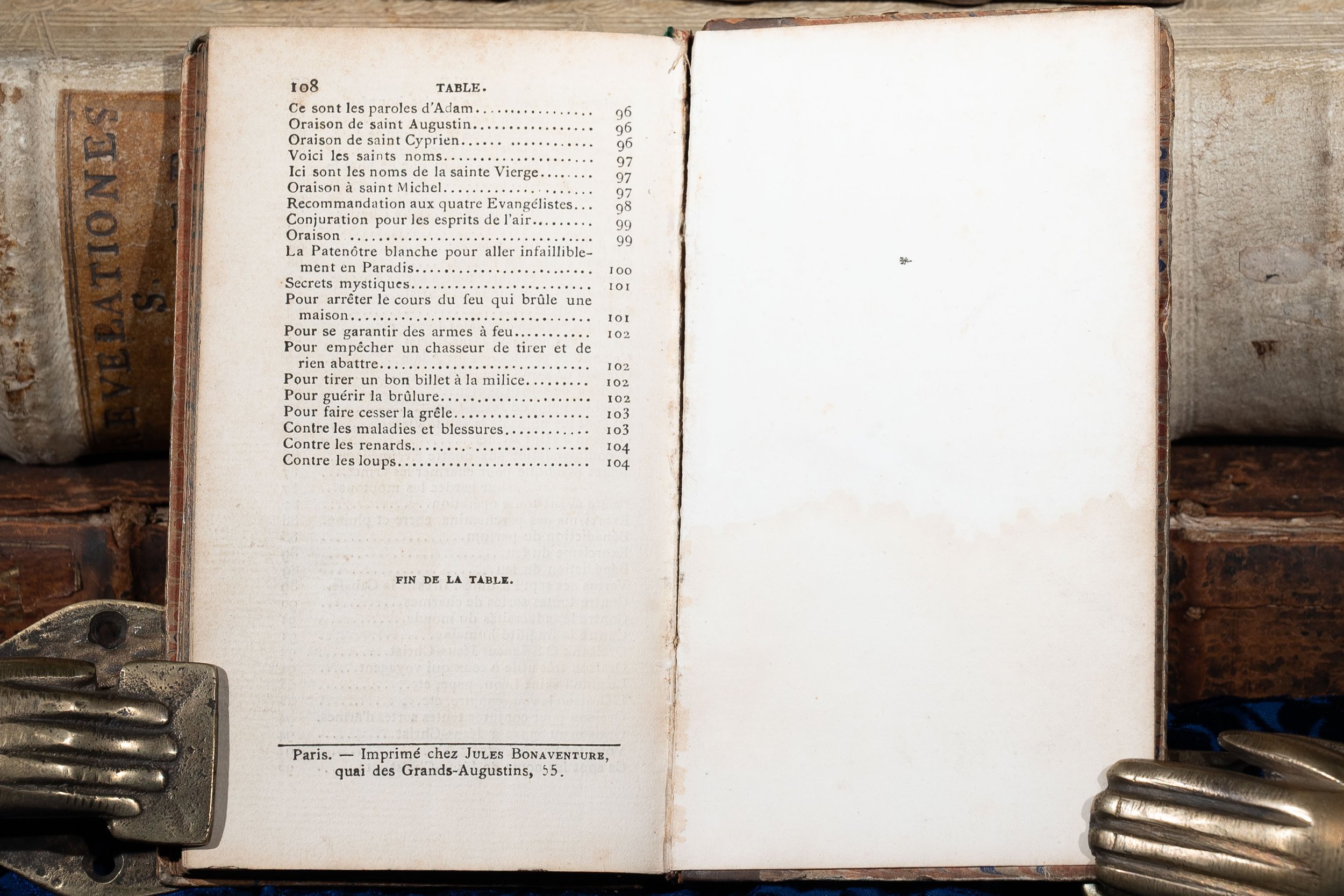 Image 1 of 14
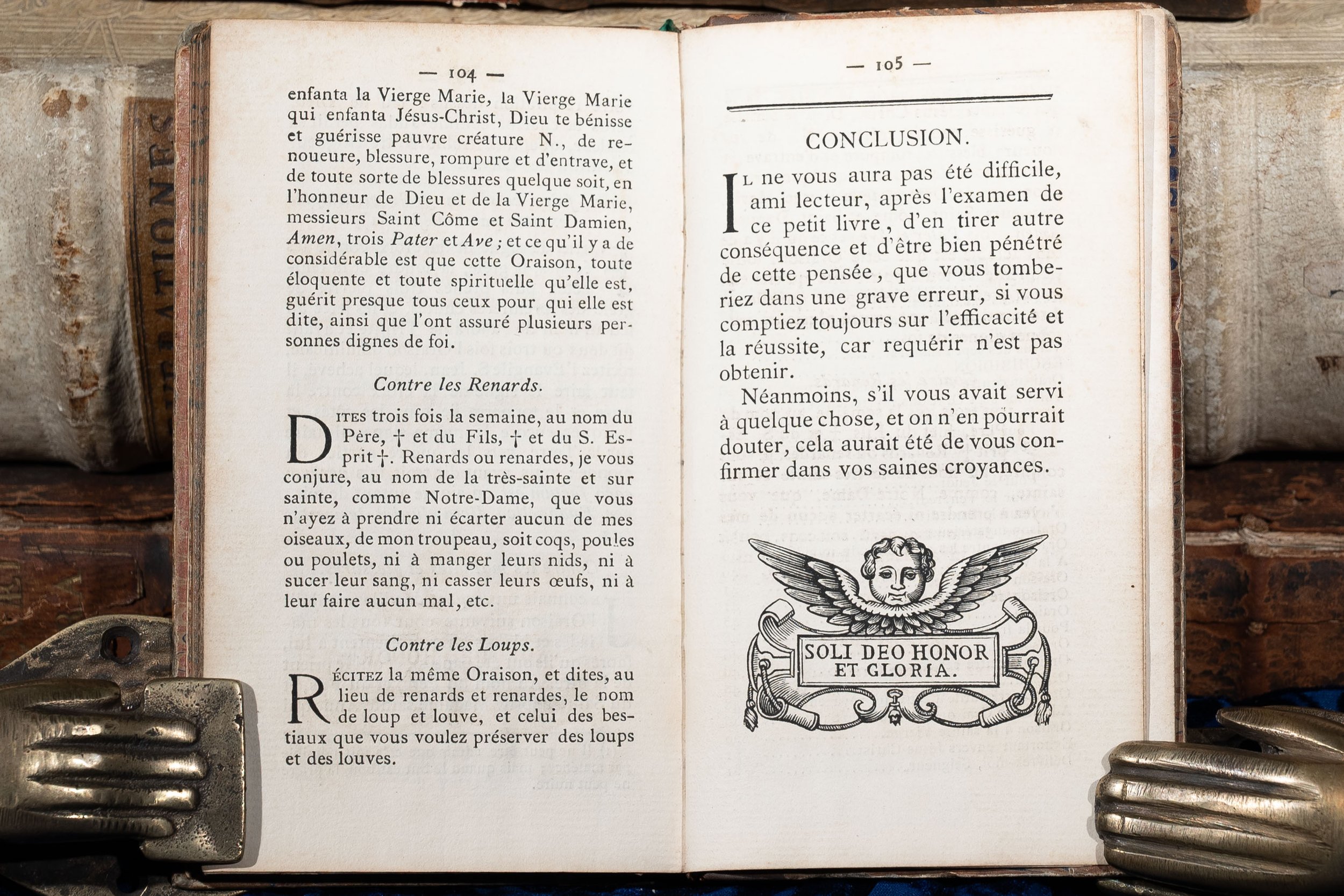 Image 2 of 14
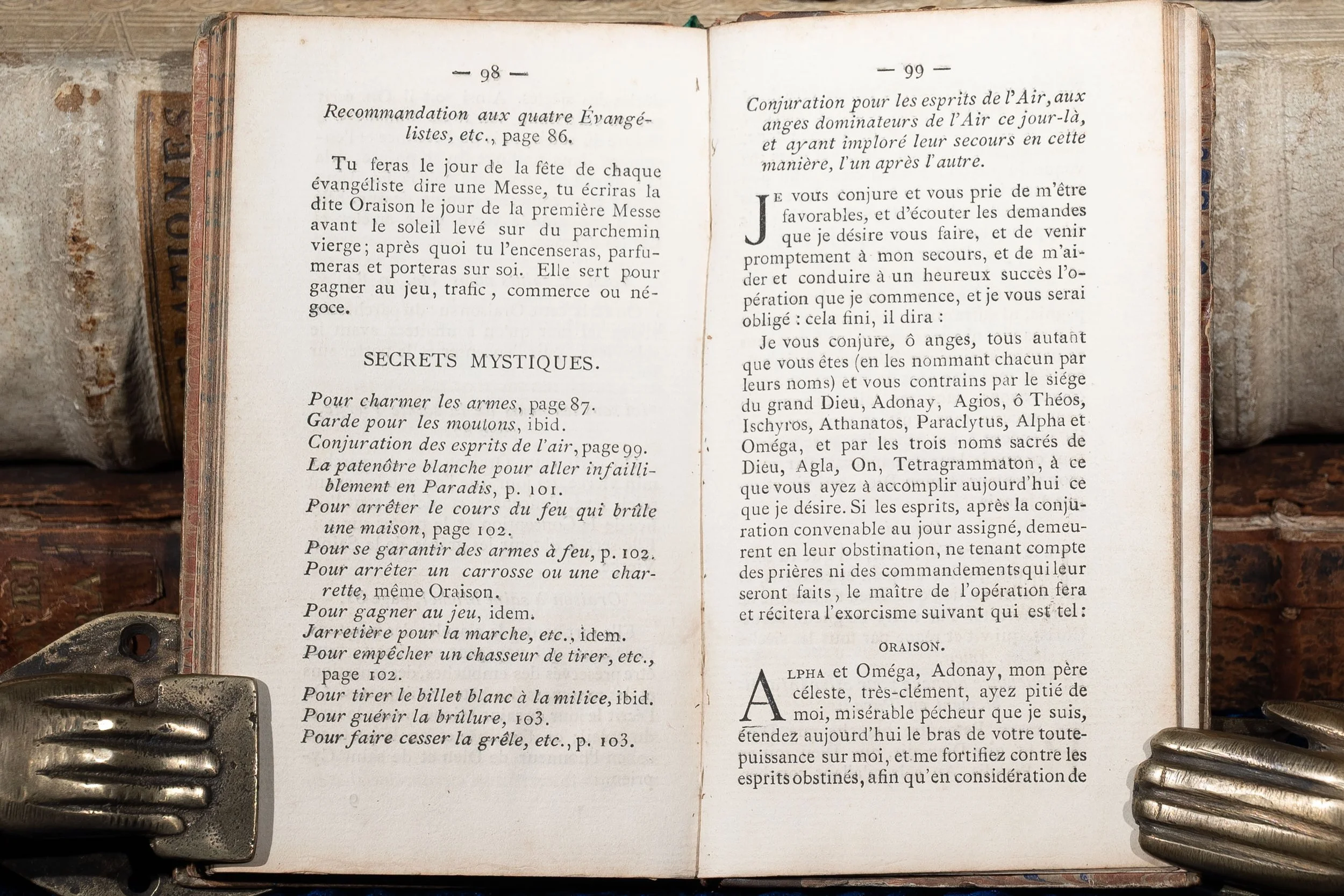 Image 3 of 14
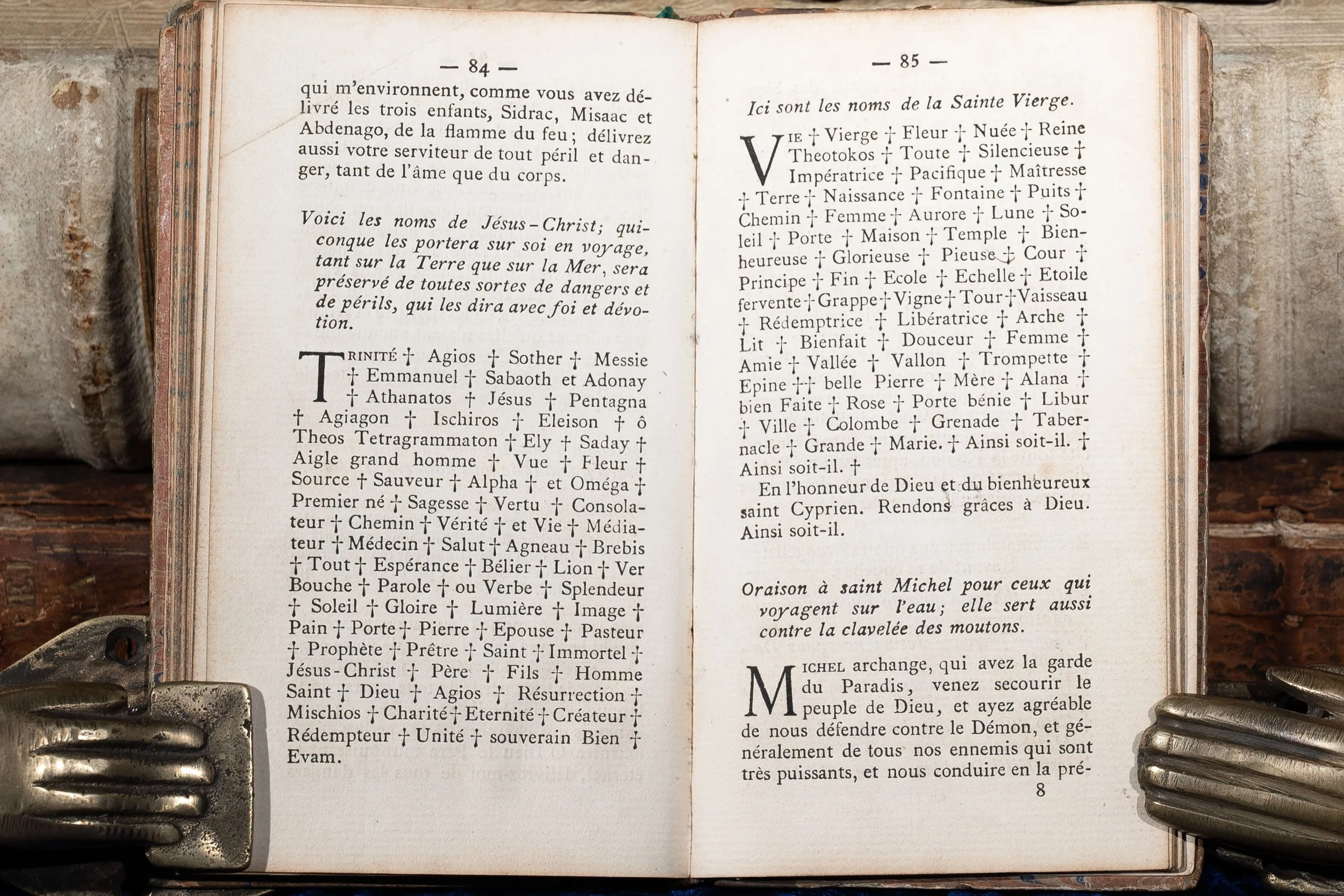 Image 4 of 14
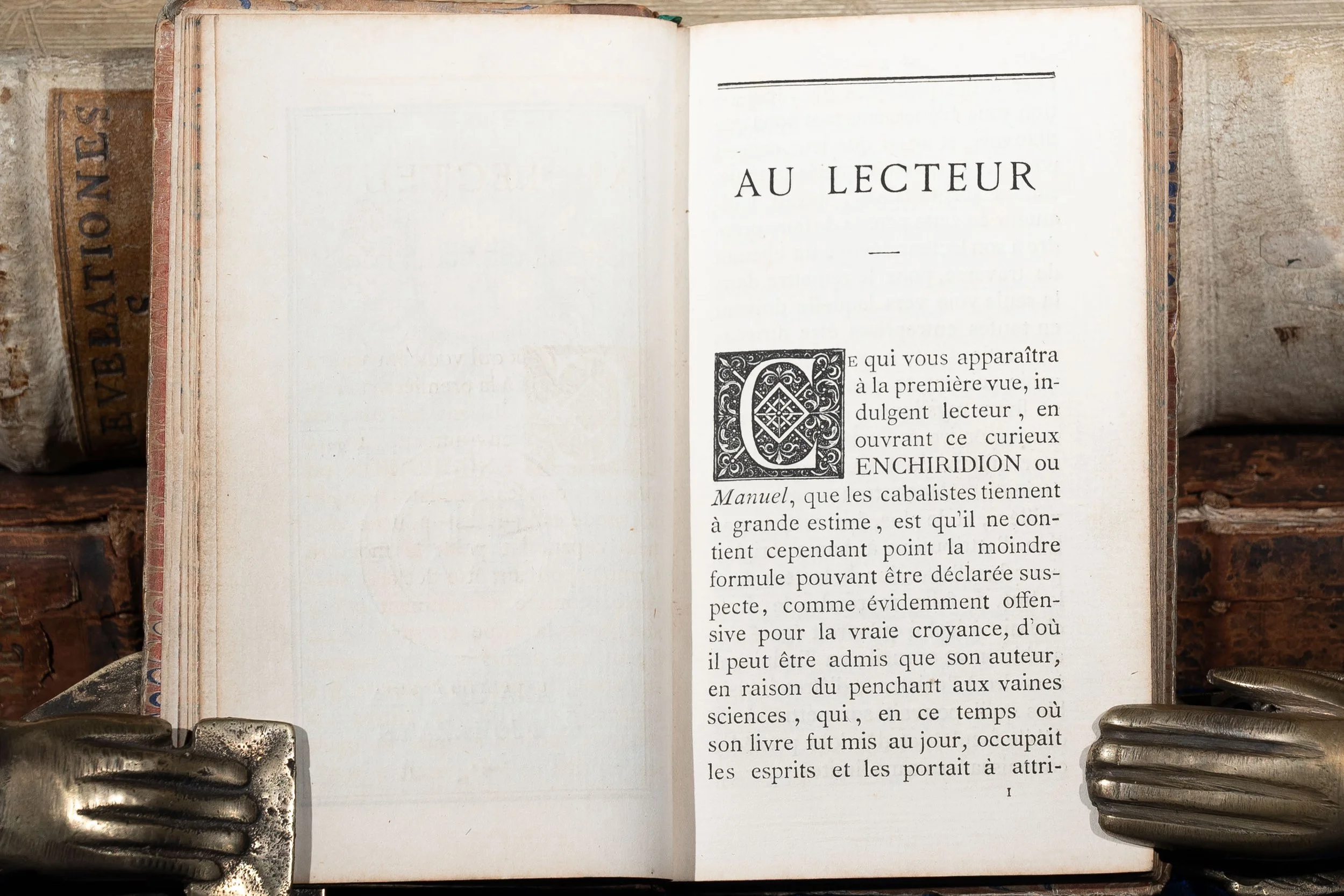 Image 5 of 14
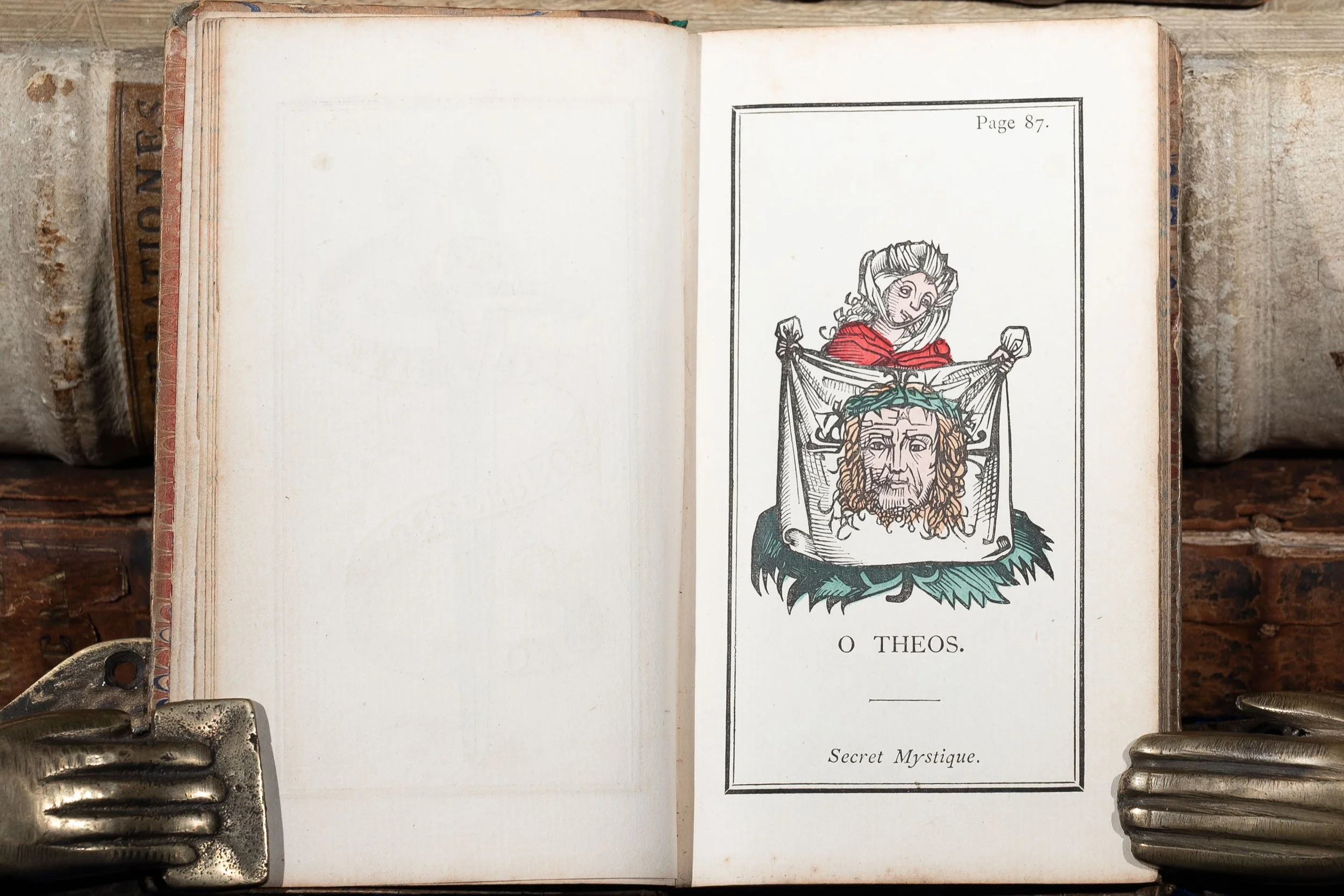 Image 6 of 14
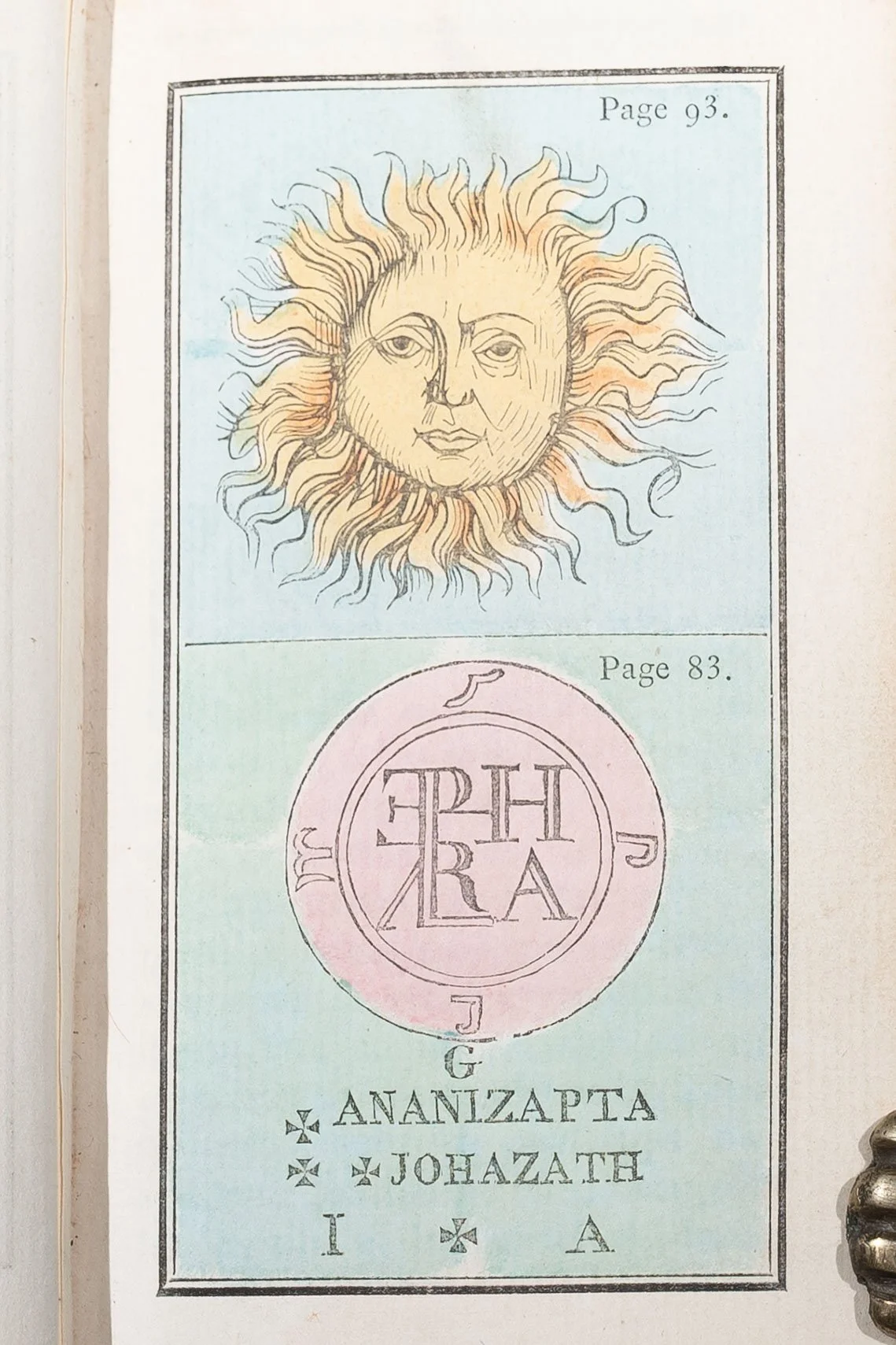 Image 7 of 14
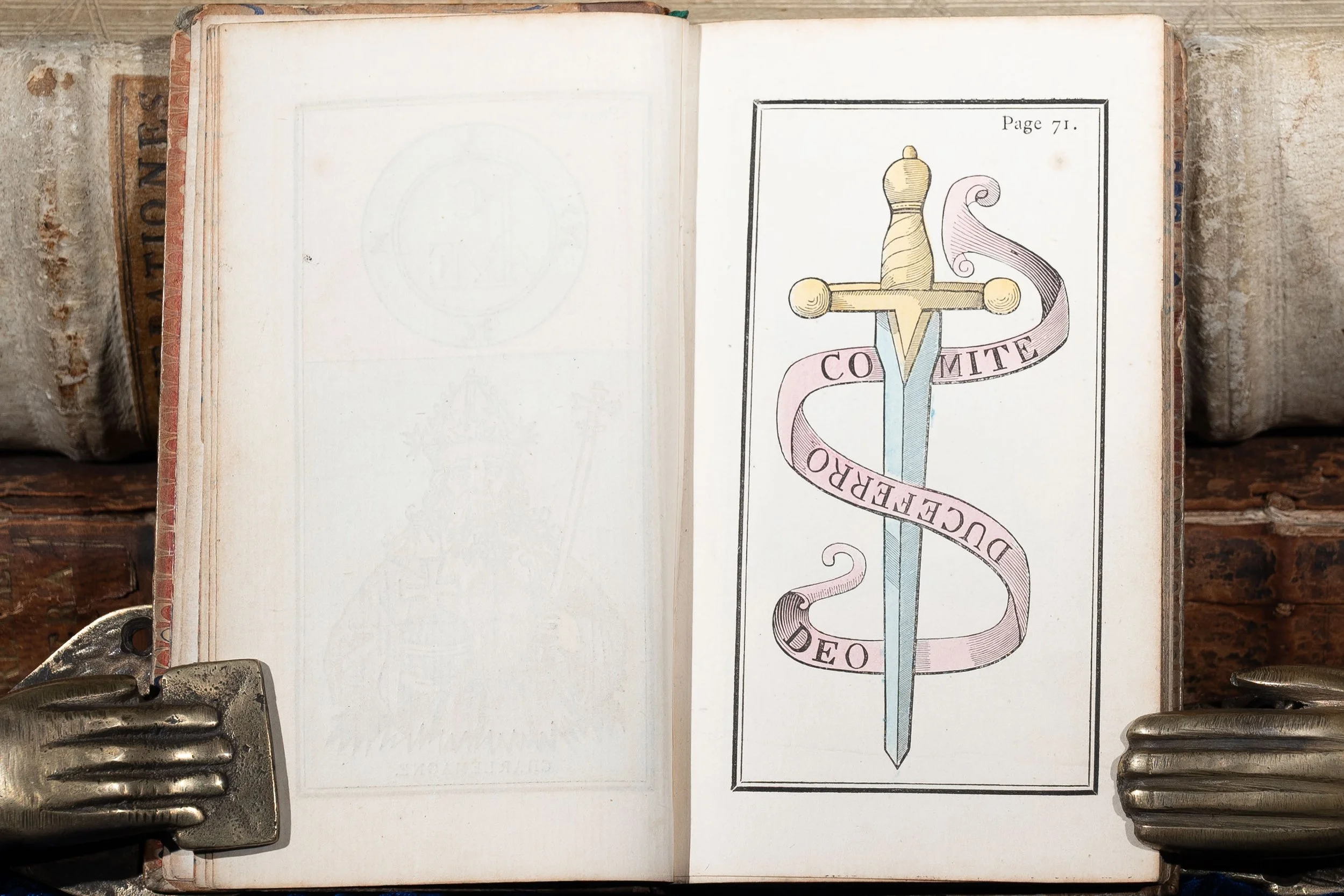 Image 8 of 14
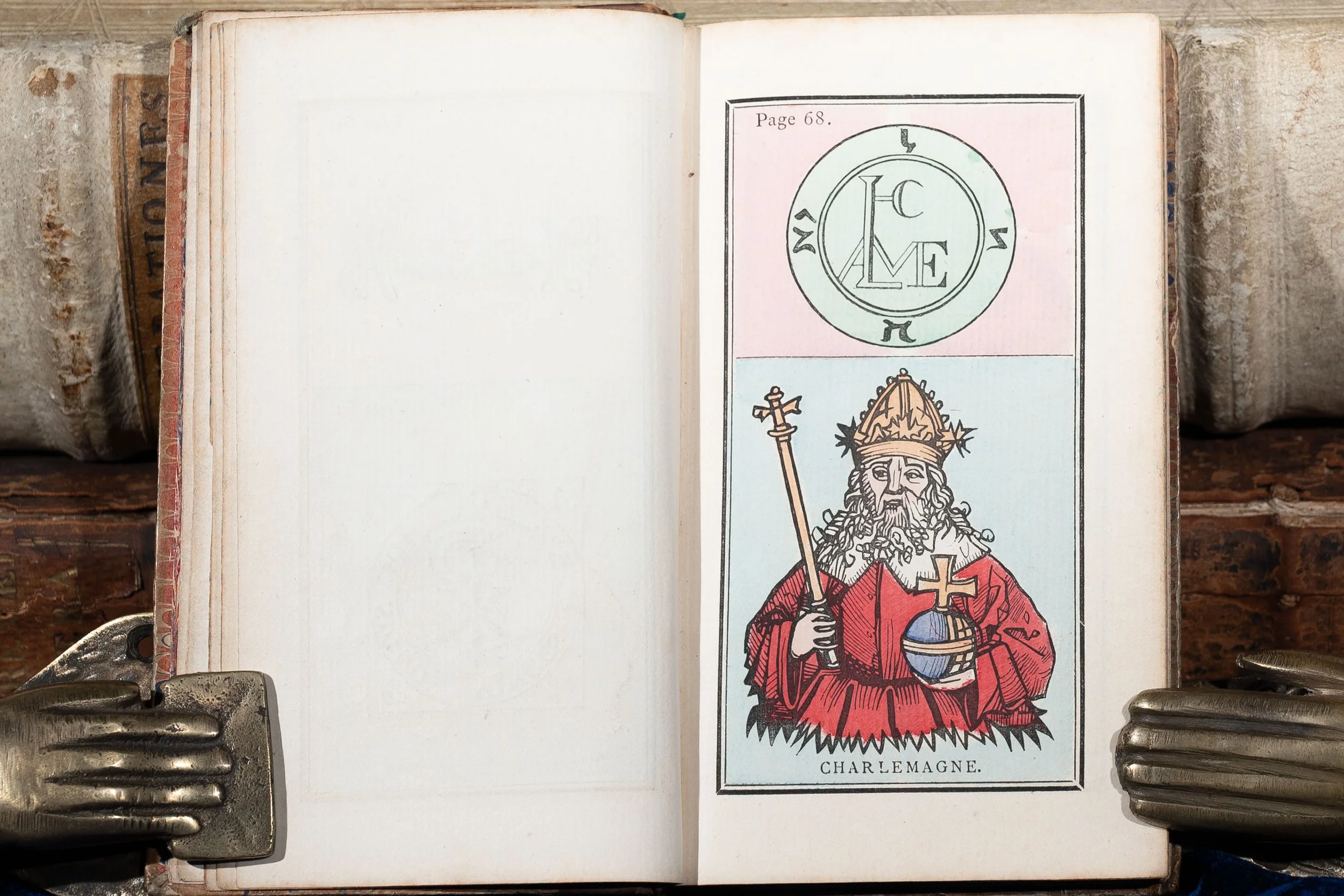 Image 9 of 14
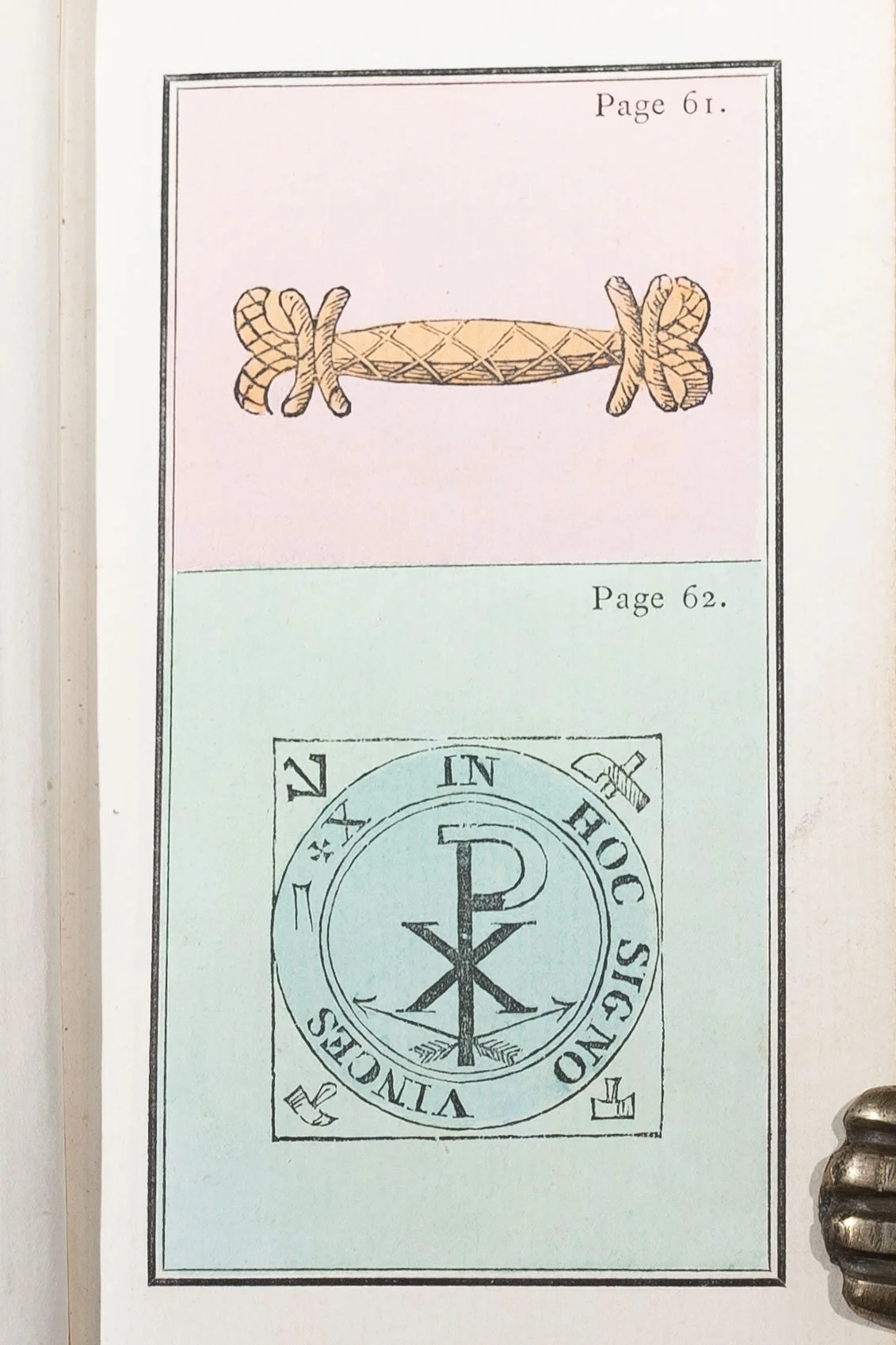 Image 10 of 14
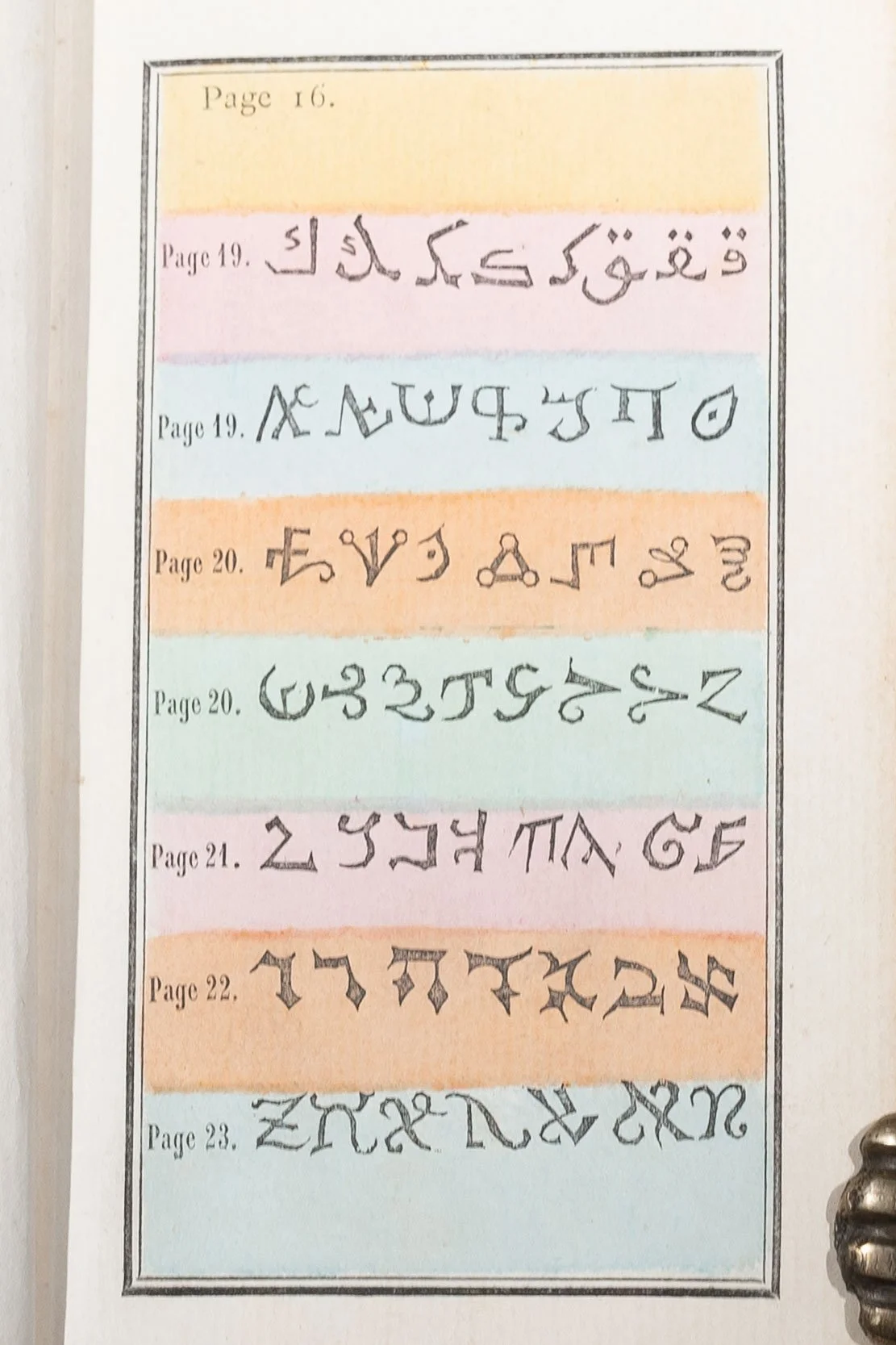 Image 11 of 14
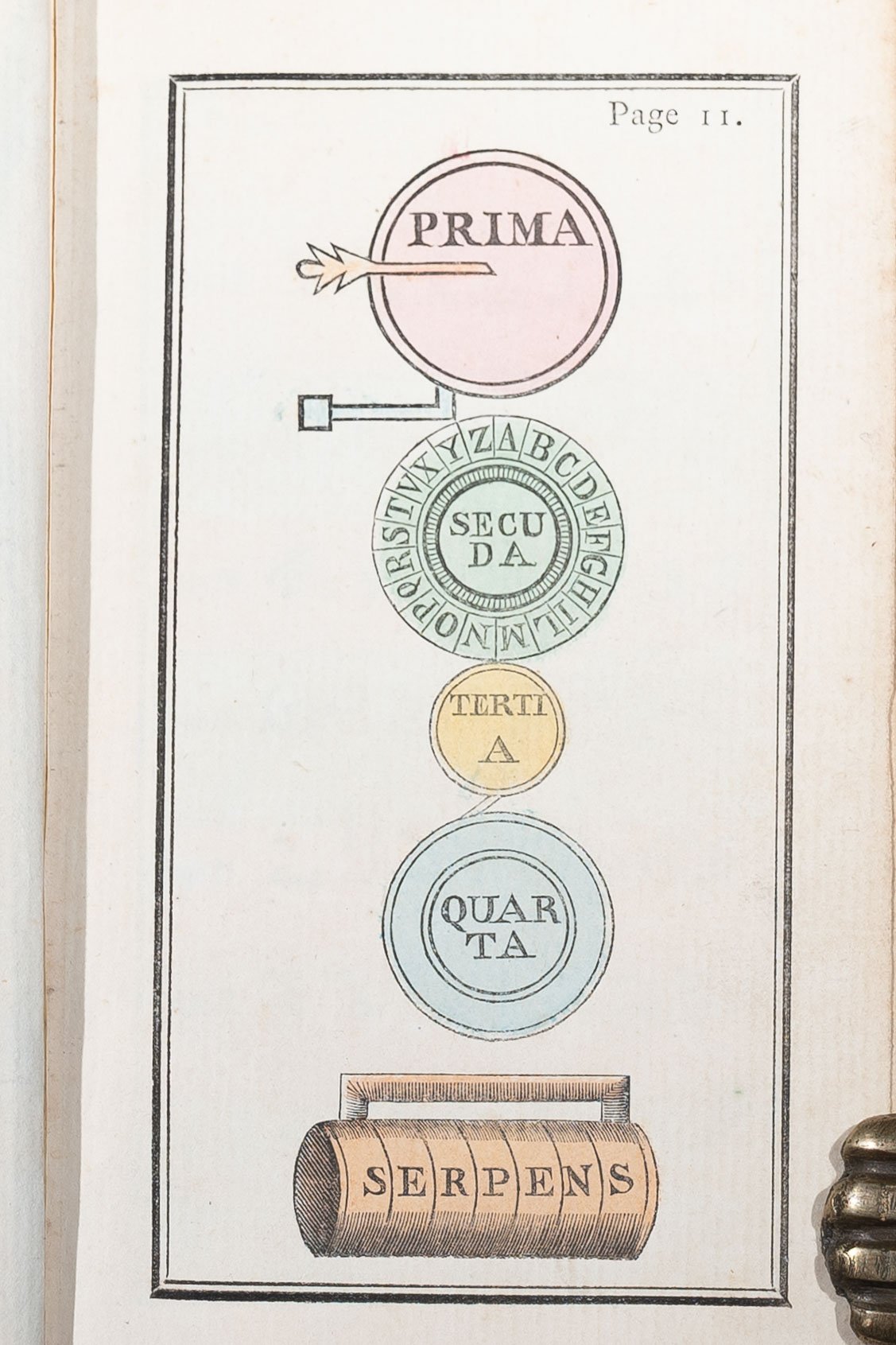 Image 12 of 14
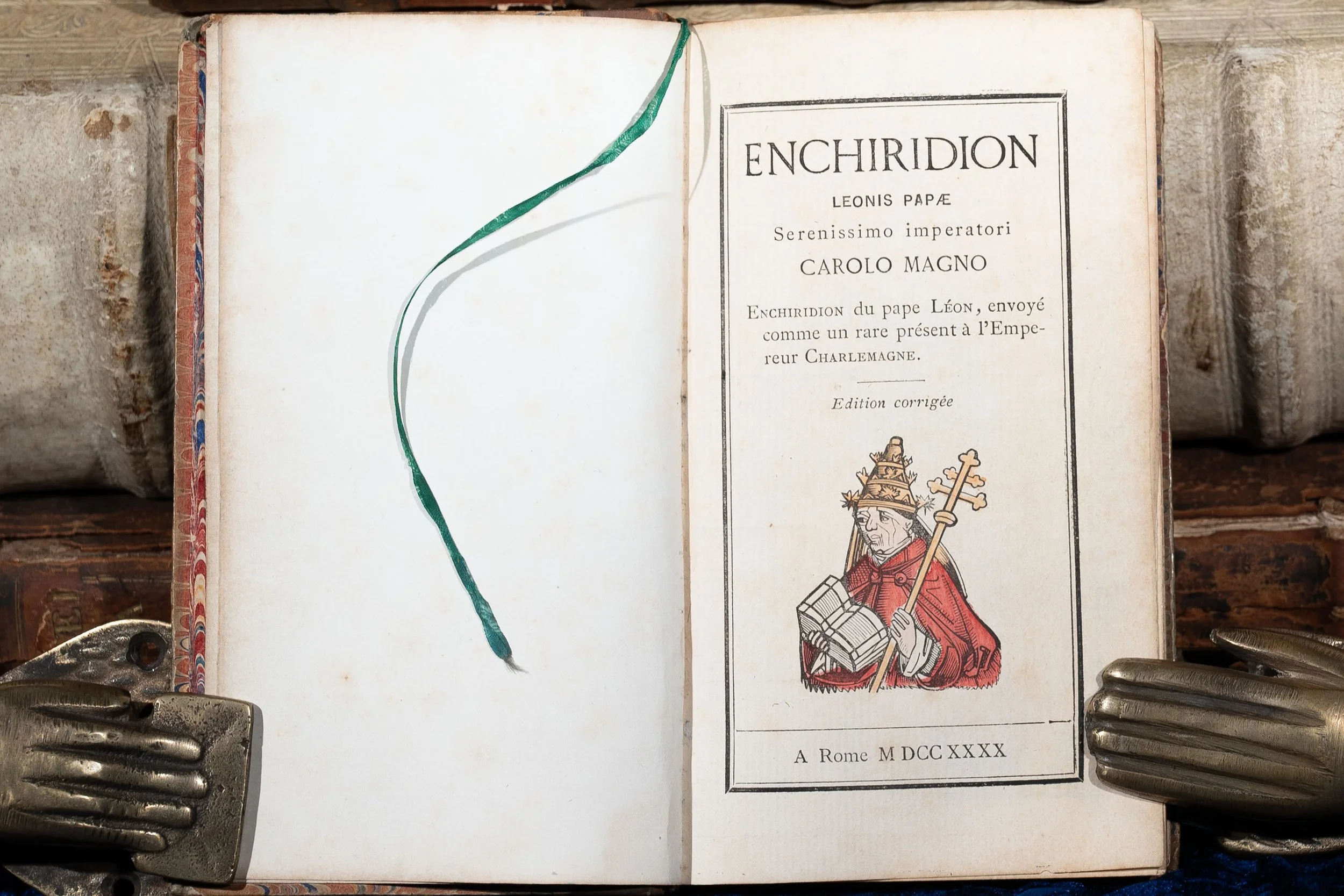 Image 13 of 14
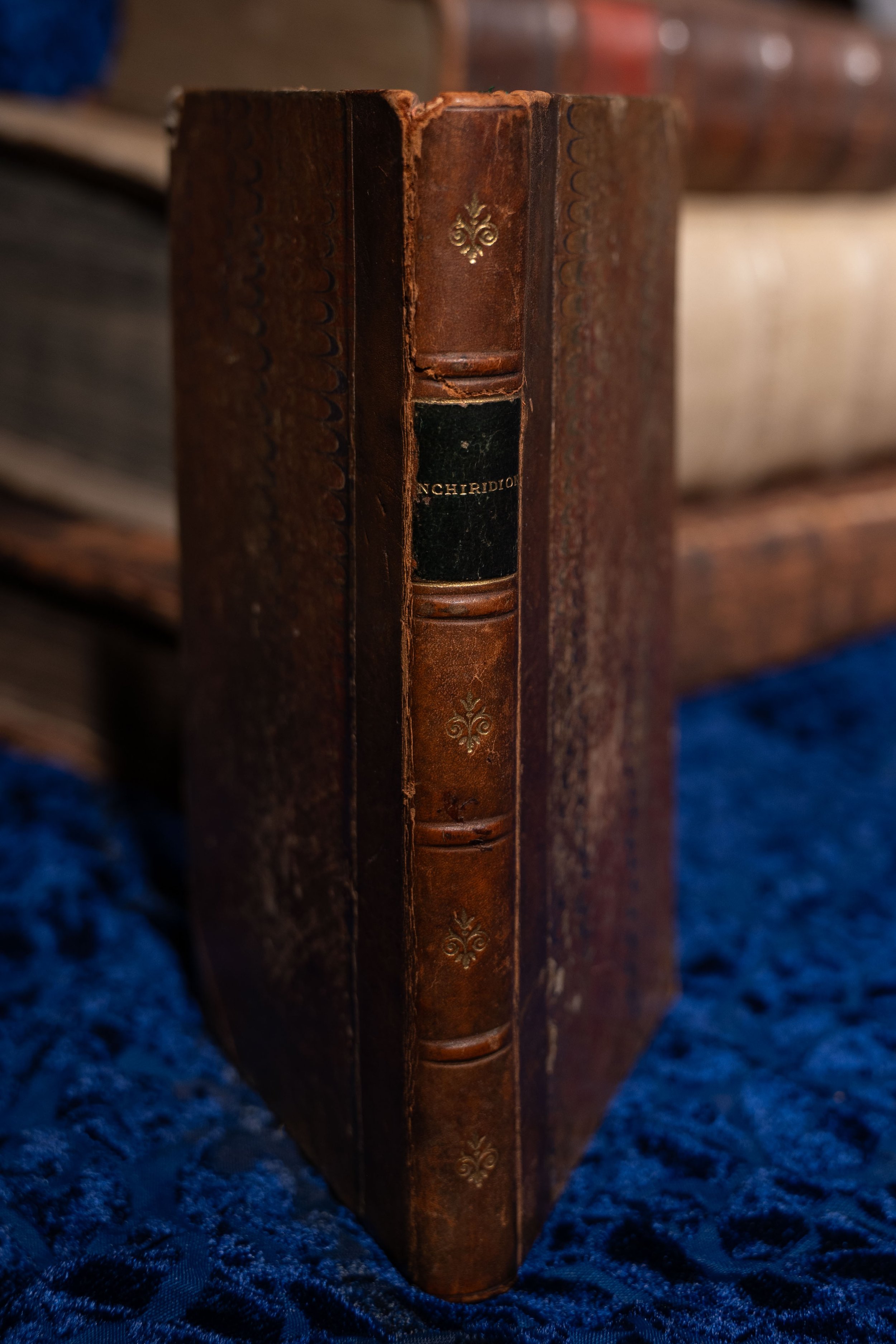 Image 14 of 14