The first thing we noticed was the wheel; it is why we bought the manuscript. Bound into this small Ottoman volume is a volvelle, a rotating cardboard dial, and it still turns. Paper instruments invite handling, which makes the survival of this one especially welcome.
The manuscript is a practical handbook of astrology and divination compiled in the Ottoman Empire in the early nineteenth century. Its opening section concerns the lunar mansions, the twenty-eight stations through which the moon passes each month, and offers guidance for such matters as planting and travel. The same system appears in the Picatrix, the work of astral magic that circulated in Arabic and later in Latin. Here the reader can see it among the everyday concerns of an Ottoman handbook.
The range of those concerns is considerable. A twelve-animal zodiac adapted for Turkish readers puts a crocodile in the dragon’s place. The weekday prognostications assign Cain’s killing of Abel to Tuesday, and the creation of deception to the same day. The later leaves move through dreams and bodily twitching to the divinatory use of the hoopoe and instructions for bloodletting. There was a good deal to consult before getting on with the day.
Two calendar sections give the volume a longer horizon. One begins with March, including the Flood of Noah alongside agricultural dates. The other extends across many years and includes sunrise and sunset times. The calendrical evidence is the basis of the present early nineteenth-century dating; the compiler remains unidentified.
The diagrams repay close attention as well. Full-page rosettes arrange rings of Ottoman script in green, blue, pink and yellow. A circular chart of the lunar mansions has small colored moons around its rim. The ink and pencil remain vivid despite extensive dampstaining, although some leaves are damaged or illegible. The full condition description records the limitations.
The later boards are covered with printed waste in Ottoman Turkish, Armenian, Greek and French. That mixture is a particularly good survival from the multilingual print culture of the late empire. Together with the modern spine, it records another stage in the care and use of this small working book.
[OTTOMAN ASTROLOGICAL COMPENDIUM]. Mecmuʻa on astrology, divination, lunar mansions, calendrics, and prognostication. Ottoman Empire, no place, early 19th century (ca. 1804–1807 CE, based on internal calendrical evidence). 8vo (120 × 170 mm). (52) pp., 2 blank ff., (5), 48, (2), (2 blank), (80) pp. Ottoman Turkish manuscript on polished paper. Text in black and red ink throughout. Numerous full-page color diagrams executed in colored ink and colored pencil, including a sketch of the Kaaba at Mecca. With an inserted volvelle on cardboard.
Boards (ca. 1900) covered with waste paper printed in Ottoman Turkish, Armenian, Greek, and French. Modern spine. The binding is a document in its own right: the multilingual waste paper testifies to the polyglot print culture of the late Ottoman Empire, where Turkish, Armenian, Greek, and French circulated in easy proximity. Visible in images: the front board shows Ottoman Turkish text at the top, Armenian text in the lower portion, a decorative medallion reading “NEON EMIA” with the French phrase “MARQUE DÉPOSÉE” (registered trademark), and red-printed text partially visible at the right edge. The rear pastedown shows Ottoman manuscript text with show-through of a printed medallion or stamp.
Signs of damp- and waterstaining throughout, visible in photographs as darkened areas particularly affecting the boards and several text leaves. A few leaves damaged or illegible. Binding noticeably stained; modern spine. The manuscript nonetheless retains its color diagrams in generally legible condition, with the colored pencil and ink work still vivid in the images examined.
The first thing we noticed was the wheel; it is why we bought the manuscript. Bound into this small Ottoman volume is a volvelle, a rotating cardboard dial, and it still turns. Paper instruments invite handling, which makes the survival of this one especially welcome.
The manuscript is a practical handbook of astrology and divination compiled in the Ottoman Empire in the early nineteenth century. Its opening section concerns the lunar mansions, the twenty-eight stations through which the moon passes each month, and offers guidance for such matters as planting and travel. The same system appears in the Picatrix, the work of astral magic that circulated in Arabic and later in Latin. Here the reader can see it among the everyday concerns of an Ottoman handbook.
The range of those concerns is considerable. A twelve-animal zodiac adapted for Turkish readers puts a crocodile in the dragon’s place. The weekday prognostications assign Cain’s killing of Abel to Tuesday, and the creation of deception to the same day. The later leaves move through dreams and bodily twitching to the divinatory use of the hoopoe and instructions for bloodletting. There was a good deal to consult before getting on with the day.
Two calendar sections give the volume a longer horizon. One begins with March, including the Flood of Noah alongside agricultural dates. The other extends across many years and includes sunrise and sunset times. The calendrical evidence is the basis of the present early nineteenth-century dating; the compiler remains unidentified.
The diagrams repay close attention as well. Full-page rosettes arrange rings of Ottoman script in green, blue, pink and yellow. A circular chart of the lunar mansions has small colored moons around its rim. The ink and pencil remain vivid despite extensive dampstaining, although some leaves are damaged or illegible. The full condition description records the limitations.
The later boards are covered with printed waste in Ottoman Turkish, Armenian, Greek and French. That mixture is a particularly good survival from the multilingual print culture of the late empire. Together with the modern spine, it records another stage in the care and use of this small working book.
[OTTOMAN ASTROLOGICAL COMPENDIUM]. Mecmuʻa on astrology, divination, lunar mansions, calendrics, and prognostication. Ottoman Empire, no place, early 19th century (ca. 1804–1807 CE, based on internal calendrical evidence). 8vo (120 × 170 mm). (52) pp., 2 blank ff., (5), 48, (2), (2 blank), (80) pp. Ottoman Turkish manuscript on polished paper. Text in black and red ink throughout. Numerous full-page color diagrams executed in colored ink and colored pencil, including a sketch of the Kaaba at Mecca. With an inserted volvelle on cardboard.
Boards (ca. 1900) covered with waste paper printed in Ottoman Turkish, Armenian, Greek, and French. Modern spine. The binding is a document in its own right: the multilingual waste paper testifies to the polyglot print culture of the late Ottoman Empire, where Turkish, Armenian, Greek, and French circulated in easy proximity. Visible in images: the front board shows Ottoman Turkish text at the top, Armenian text in the lower portion, a decorative medallion reading “NEON EMIA” with the French phrase “MARQUE DÉPOSÉE” (registered trademark), and red-printed text partially visible at the right edge. The rear pastedown shows Ottoman manuscript text with show-through of a printed medallion or stamp.
Signs of damp- and waterstaining throughout, visible in photographs as darkened areas particularly affecting the boards and several text leaves. A few leaves damaged or illegible. Binding noticeably stained; modern spine. The manuscript nonetheless retains its color diagrams in generally legible condition, with the colored pencil and ink work still vivid in the images examined.

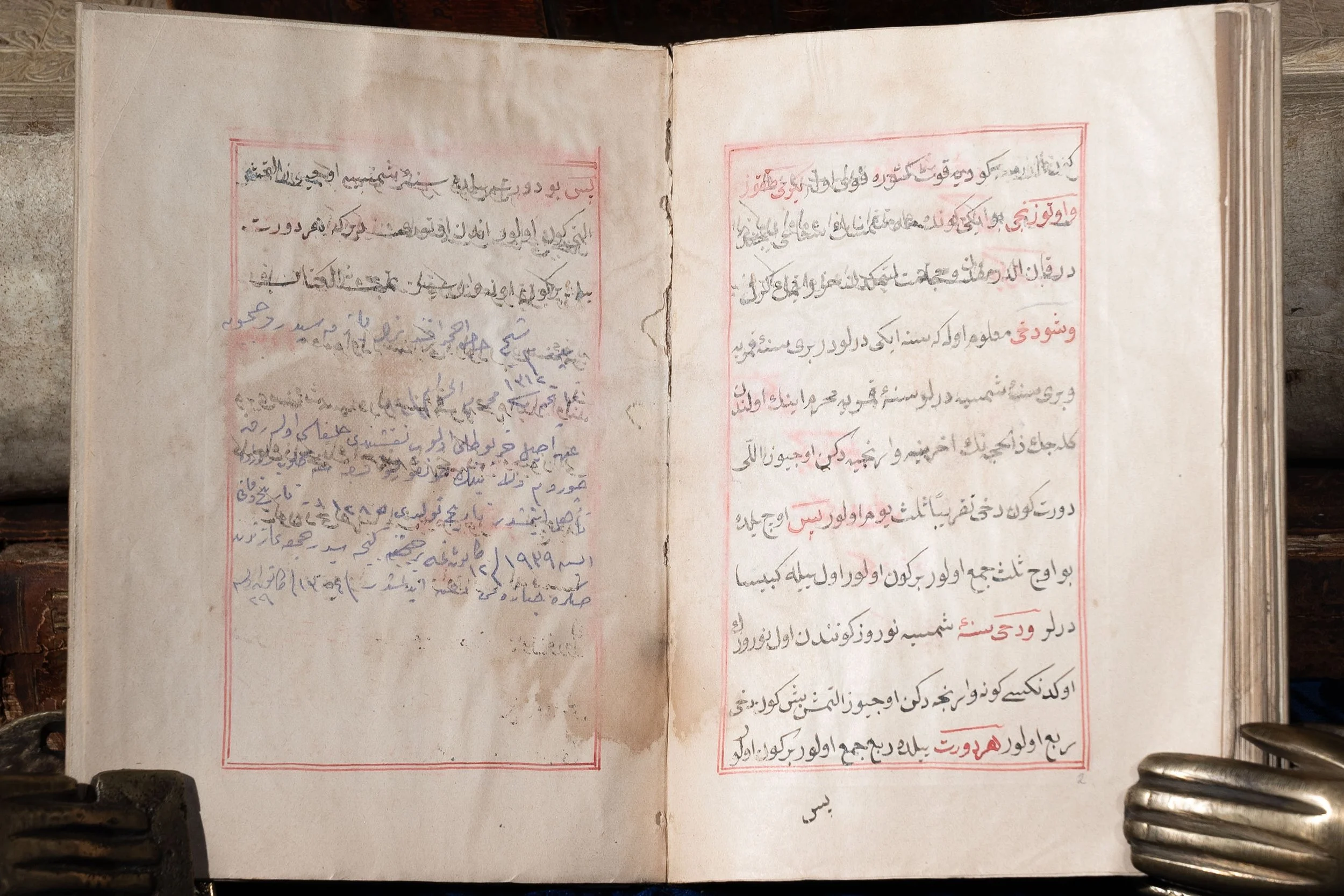 Image 1 of 12
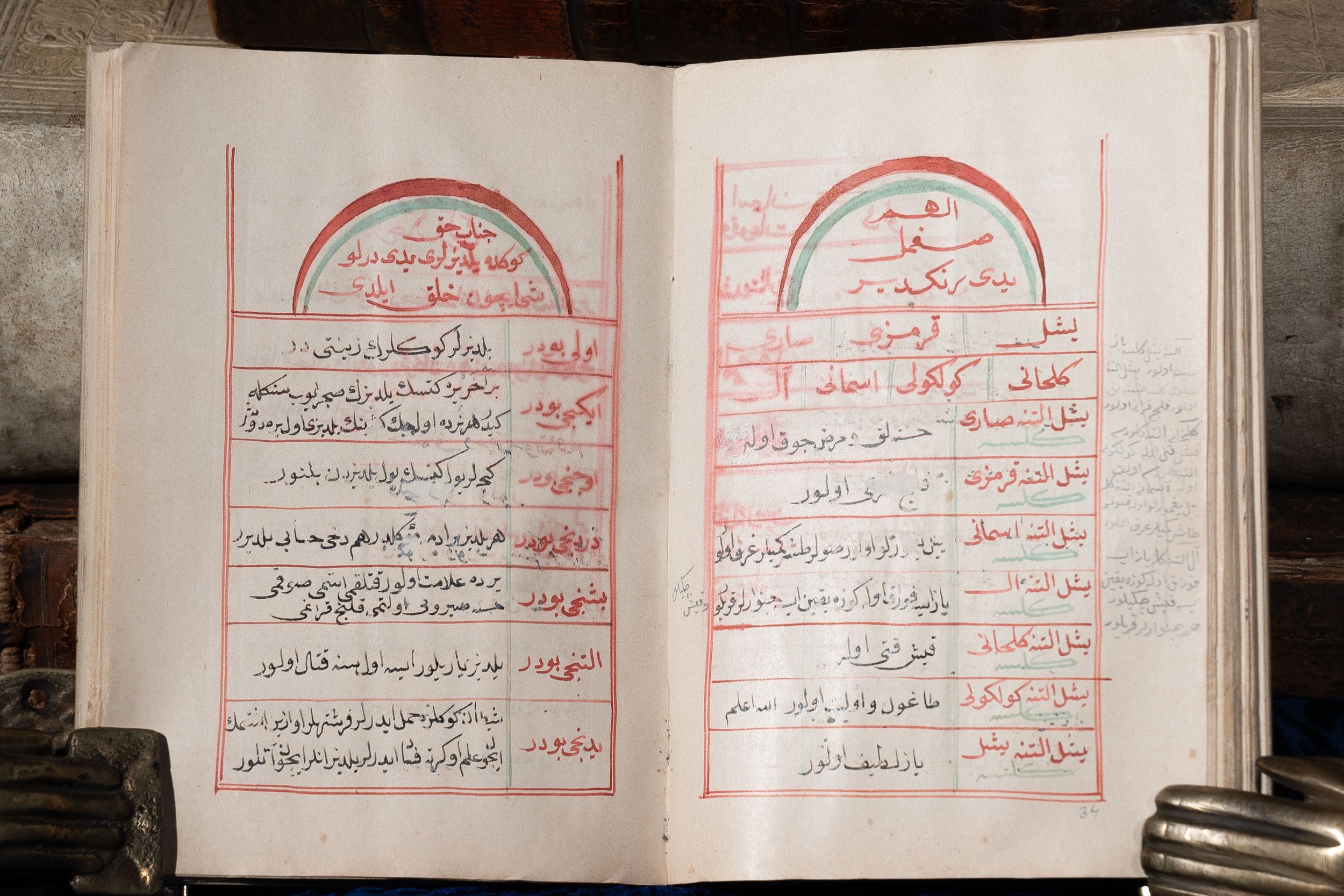 Image 2 of 12
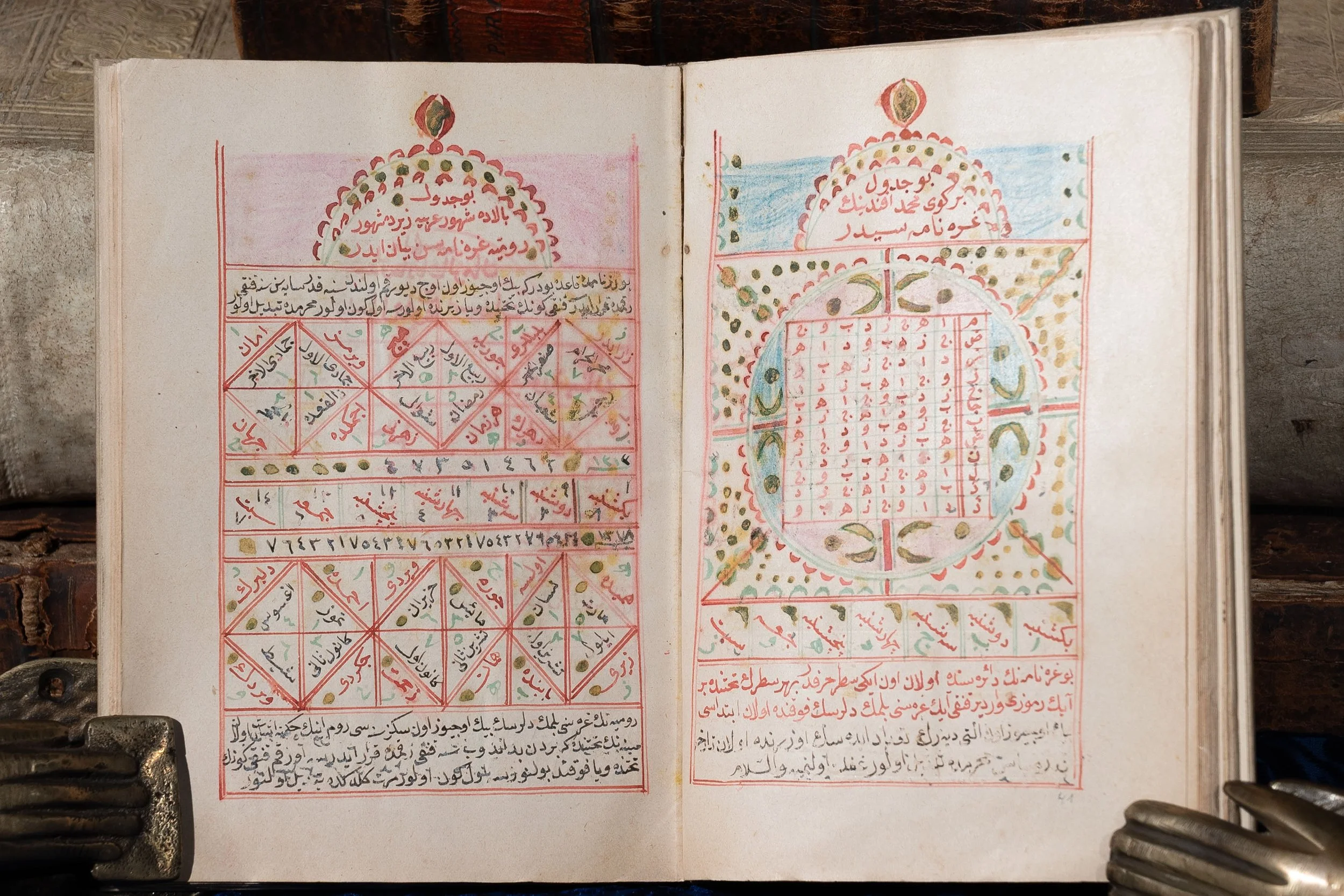 Image 3 of 12
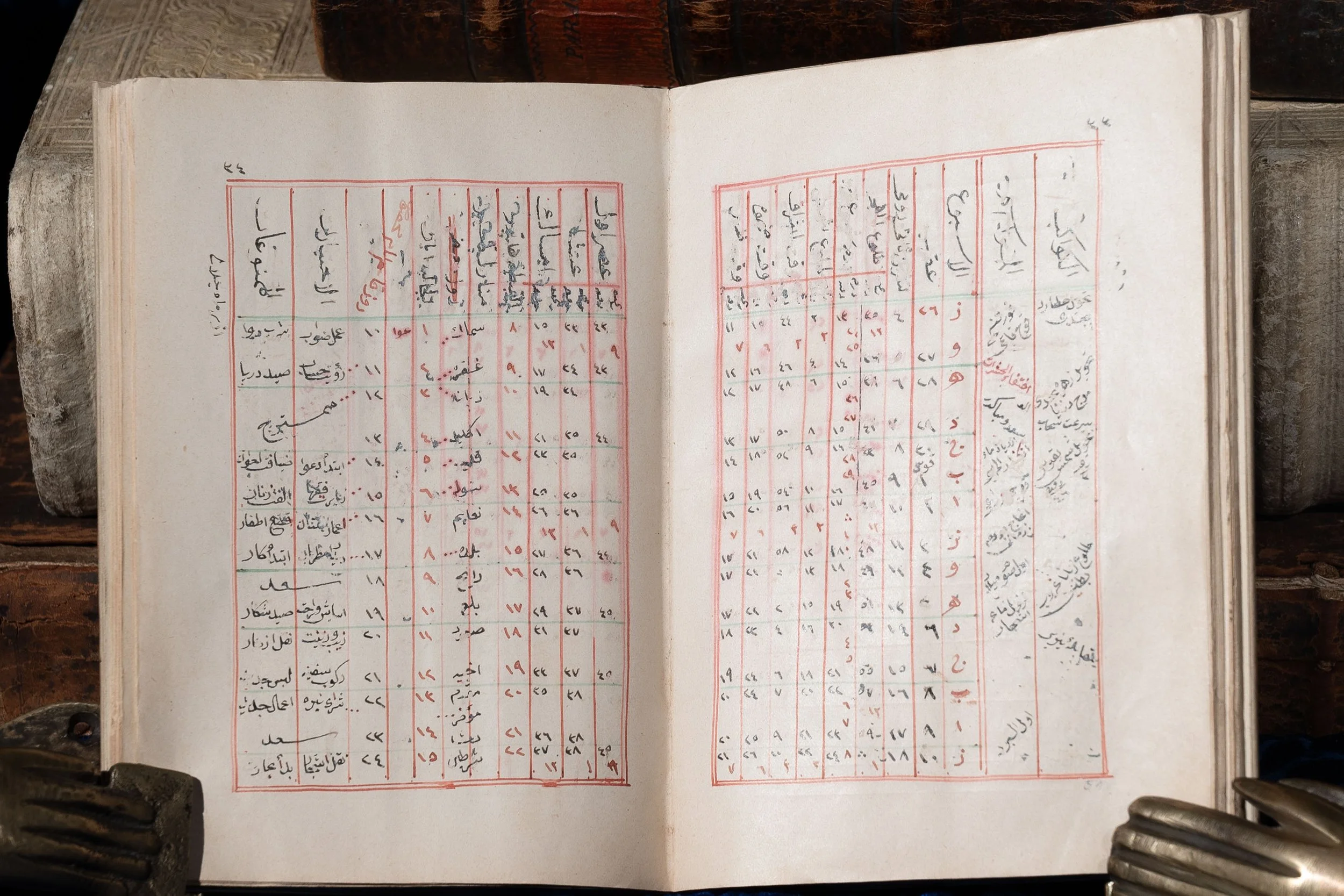 Image 4 of 12
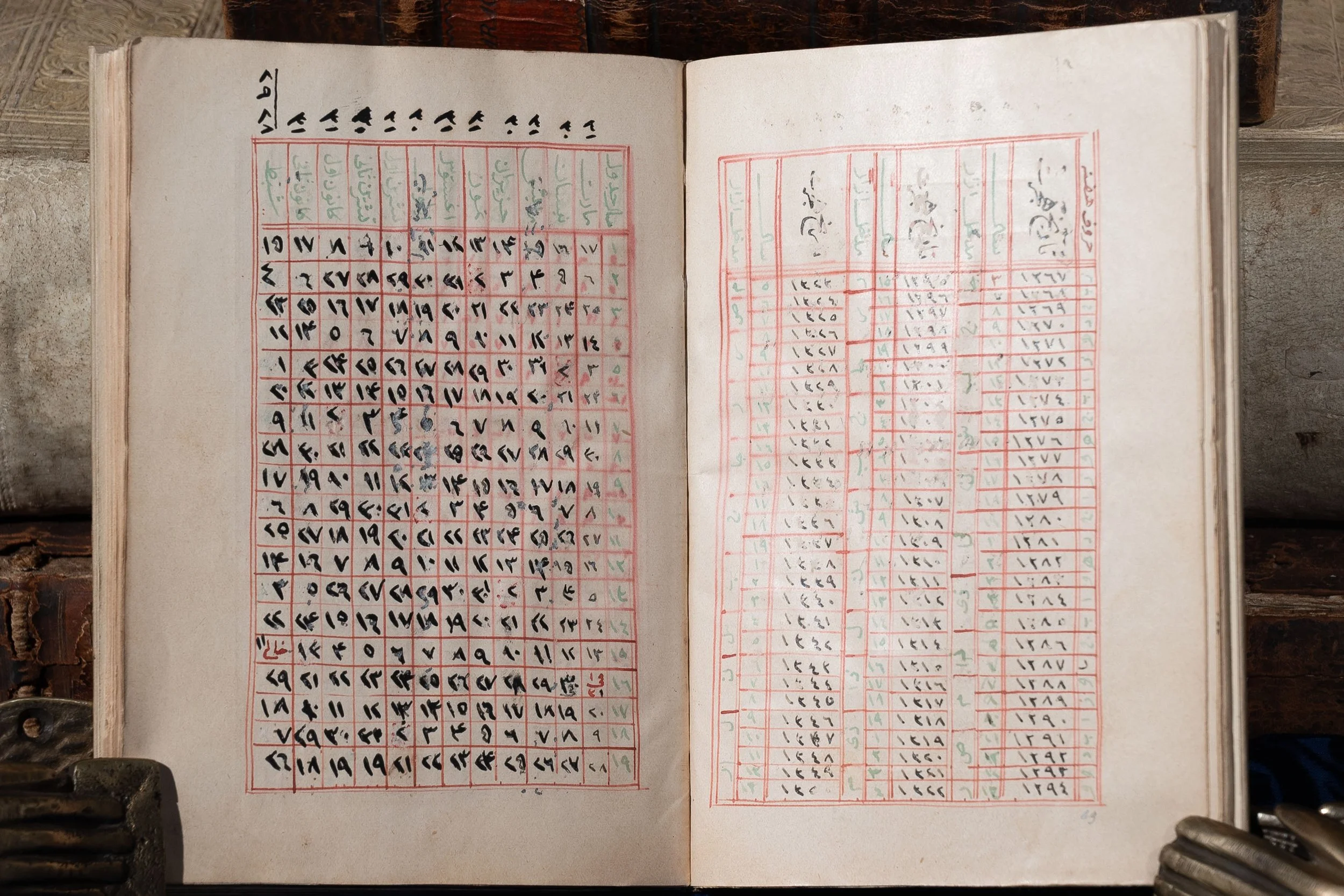 Image 5 of 12
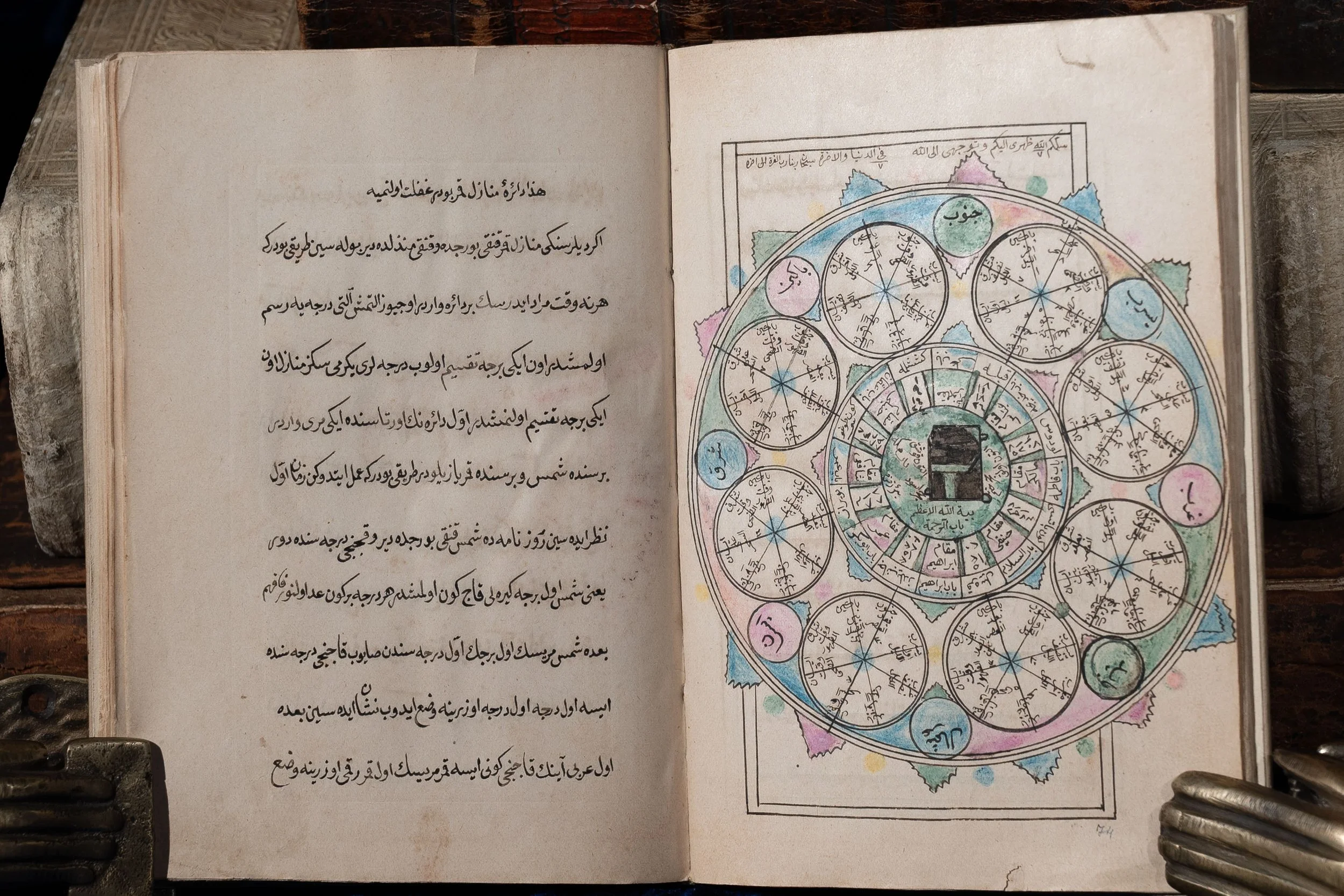 Image 6 of 12
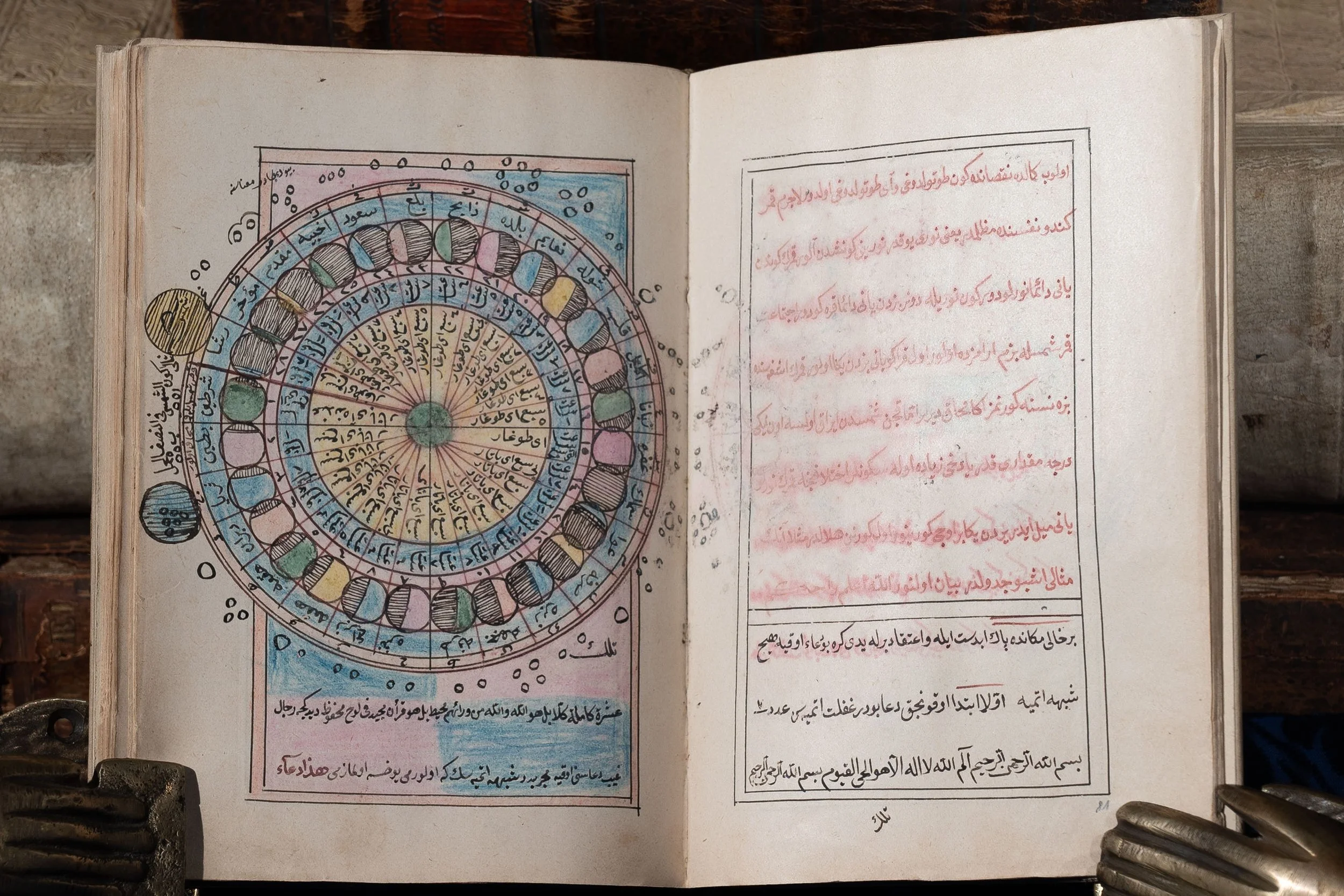 Image 7 of 12
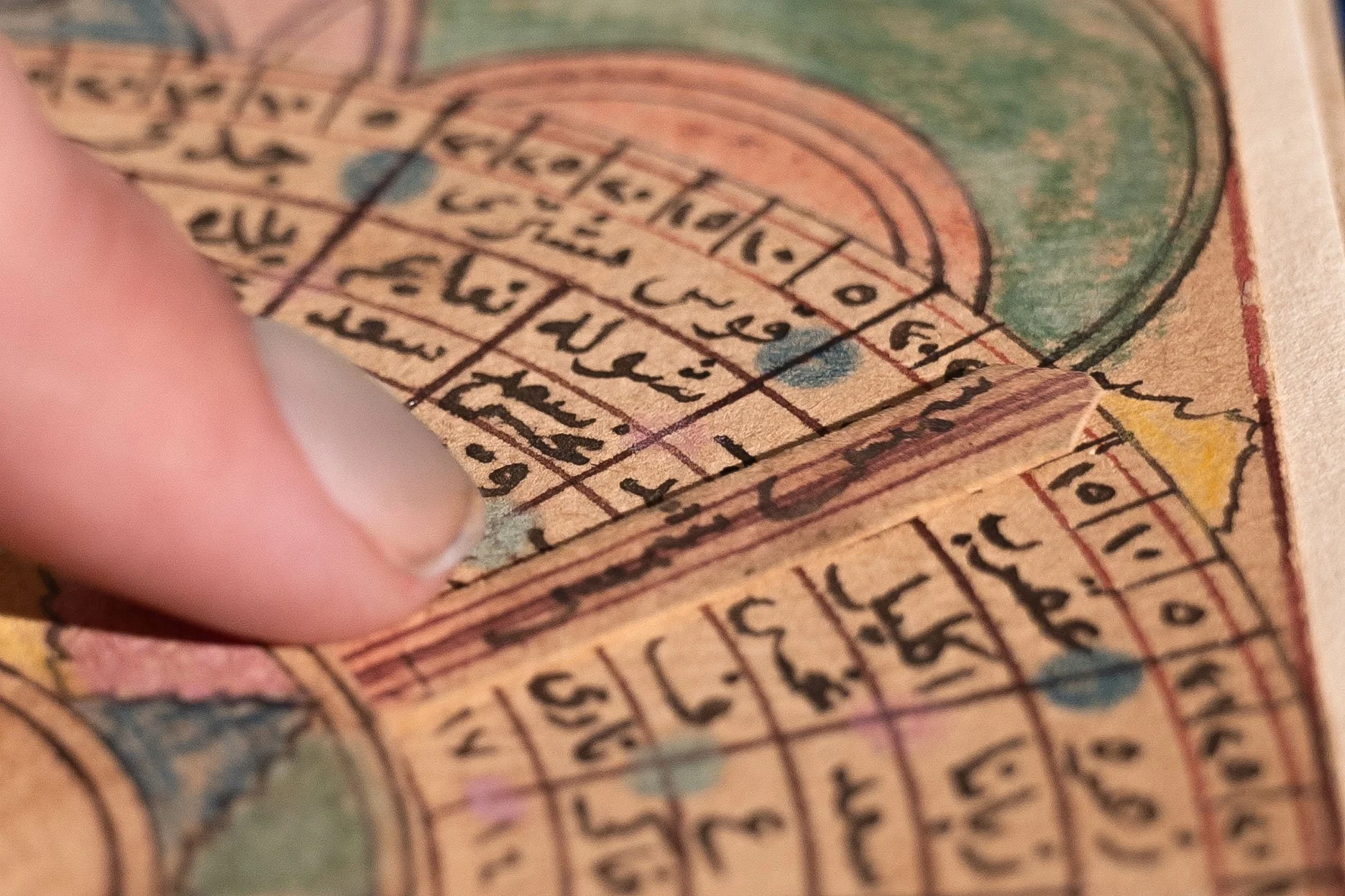 Image 8 of 12
 Image 9 of 12
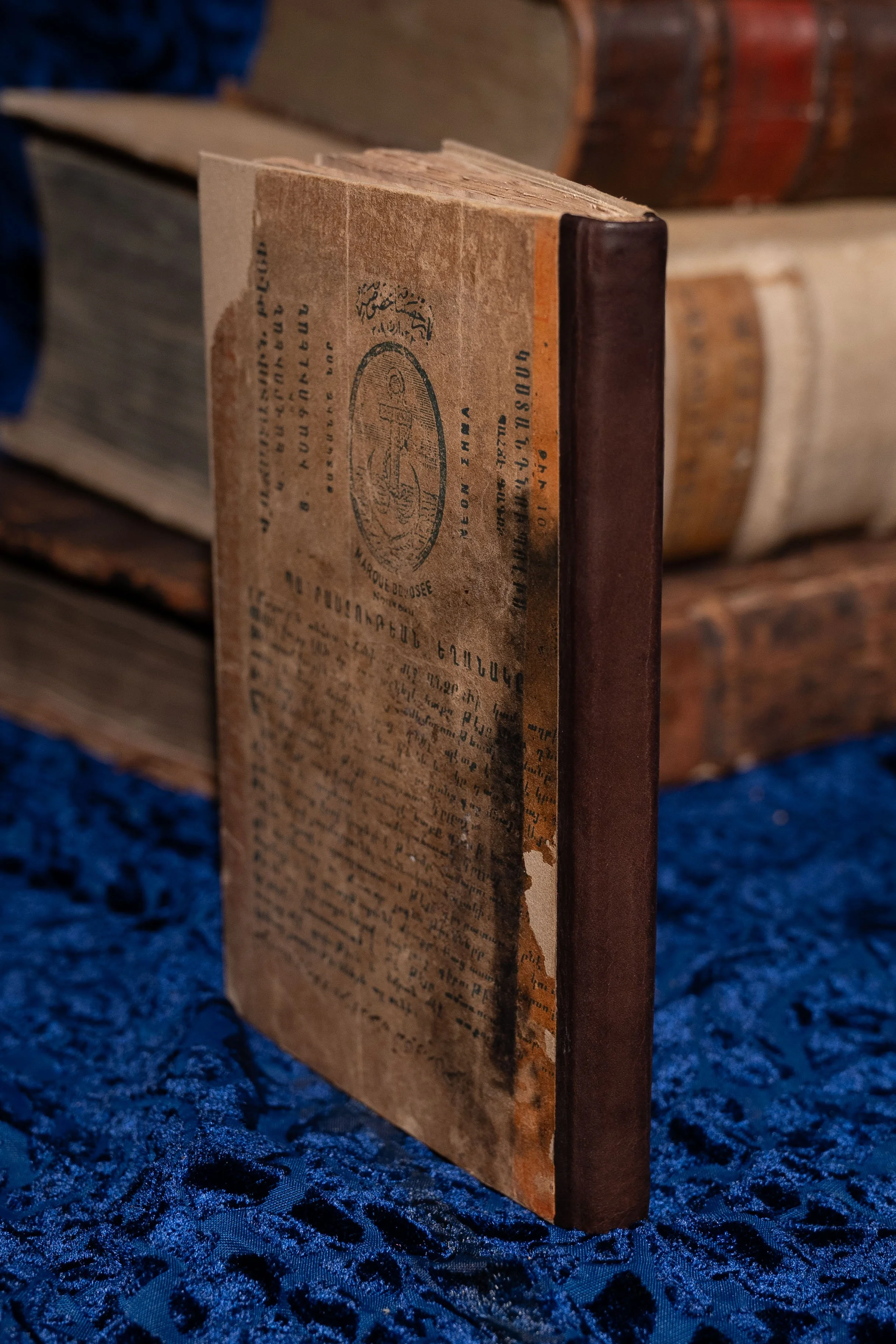 Image 10 of 12
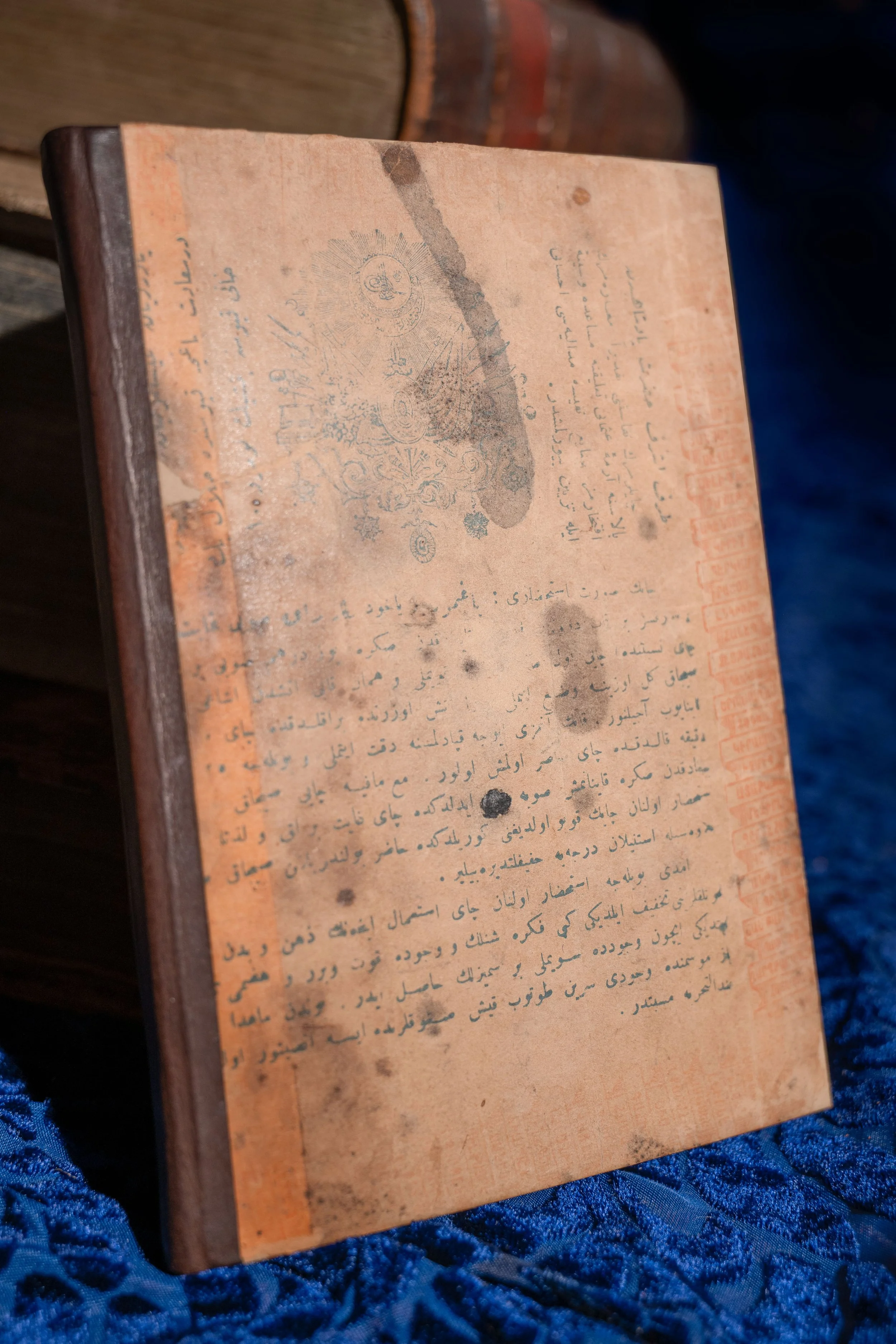 Image 11 of 12
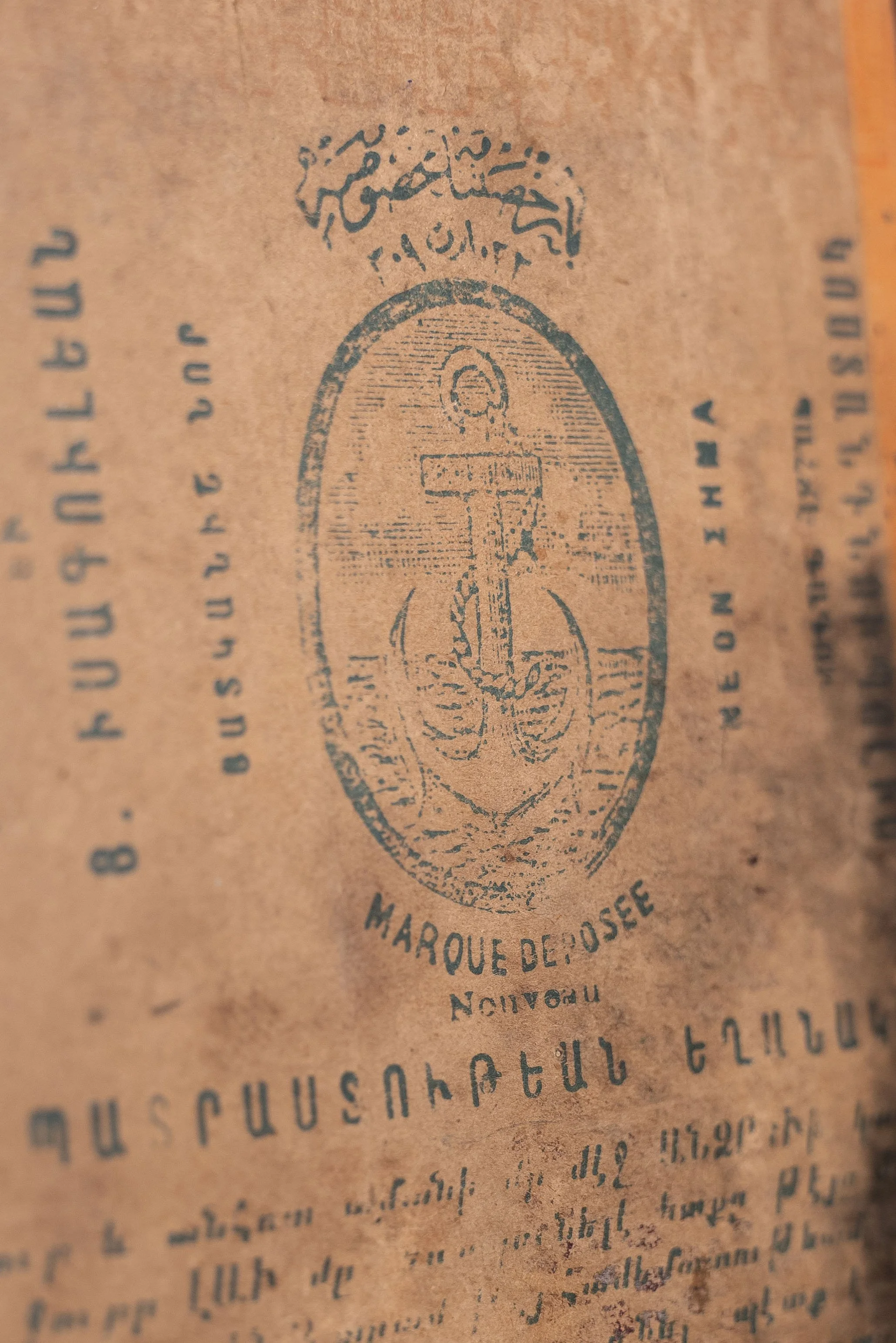 Image 12 of 12