These are leaves from a choir book of the Cistercians, the white monks of Cîteaux and Clairvaux. The book was a gradual, which holds the chants of the Mass through the church year, and it was printed large enough for a group of monks to sing from one copy open on a stand. It is probably the Graduale Cisterciense that Frédéric Léonard printed at Paris in 1696 on the authority of the abbot general of the order. Its short title, “Grad. Cist.,” is printed at the foot of several of these pages, where the printer marked the start of each new gathering of sheets.
The Cistercians ranked their feasts in their own way, by the lessons read at the night office and the Masses sung that day. Saint John the Evangelist is marked here “MM. maj.,” a major feast of two Masses, and Saint Anthony Abbot “xij. lect.,” a feast of twelve lessons. The January calendar also keeps Saint William of Bourges, a Cistercian abbot who became an archbishop and died in 1209.
The pages are printed in two colors. The four-line staves are red, and the square notes and the Latin words are black. The headings and the large capitals that open each chant are red as well, so each sheet went through the press twice. Two of the leaves have a woodcut initial set in foliage.
Seven leaves are offered here, each sold on its own. Four come from the saints’ feasts of late December and January. The other three come from a section numbered in roman numerals, which holds the Mass for the Dead and the chants that stay the same at every Mass. Choose a leaf from the menu. The photographs show both sides of each leaf, in the order of the list below.
The leaves:
Leaf 1 (pp. 365–366). The Chair of Saint Peter, January 18: the Gradual, Alleluia and Tract of the feast. The Alleluia and the Tract both set Christ’s words to Peter, “Tu es Petrus,” “Thou art Peter, and upon this rock I will build my church.”
Leaf 2 (pp. 359–360). Saint Thomas Becket, with the Communion “Ego sum pastor bonus,” “I am the good shepherd,” then Saint Sylvester and the first days of January. The back opens the Mass of the Holy Name of Jesus with a woodcut initial: “In nomine Jesu omne genu flectatur,” “At the name of Jesus every knee should bow.”
Leaf 3 (pp. cxxvii–cxxviii). From the chants sung at every Mass: the close of an Agnus Dei with the dismissal “Ite, missa est,” then the Kyrie, with a woodcut initial K, and the Gloria for feasts of twelve lessons and days within octaves. Old damp stain at the upper corner.
Leaf 4 (pp. 353–354). The end of Saint Stephen’s Mass, “Video caelos apertos,” “I see the heavens opened,” and the feast of Saint John the Evangelist, December 27. The Gradual for John sets the rumor reported at the end of his Gospel, that this disciple would not die.
Leaf 5 (pp. 363–364). Mid-January: Saint William of Bourges, Saint Hilary, Saint Maurus, Saint Marcellus and Saint Anthony Abbot. The Communion on the back comes from the parable of the talents, “Domine, quinque talenta tradidisti mihi,” “Lord, thou didst deliver to me five talents.”
Leaf 6 (pp. cxxi–cxxii). The Gloria sung on the octaves of the Blessed Virgin and on Saturdays, from “pax hominibus” to the Amen, and the opening of the Sanctus. Old damp stains at the upper corners.
Leaf 7, a double leaf (pp. cv–cvi and cxi–cxii). Two leaves still joined at the fold, four pages in all. The first holds the Mass for the Dead, with the Gradual “Requiem aeternam” and the responsory sung at the bier after a funeral Mass, “Libera me, Domine, de morte aeterna,” “Deliver me, O Lord, from eternal death.” The second holds the Credo from “descendit de caelis” to the Amen.
· · ·
Leaves from a large folio printed gradual for Cistercian use, printed in red and black, with the short title “Grad. Cist.” at the foot of the first page of each gathering. Probably Graduale Cisterciense, Paris: Frédéric Léonard, 1696. We have not compared the leaves with a complete copy.
Physical Description: Single leaves, each printed on both sides. Leaf 7 is a double leaf of four pages. Letterpress chant on red four-line staves with black square notation; Latin text in black, with headings, rubrics and large capitals in red. Woodcut initials on Leaves 2 and 3. Approx. 460 × 300 mm (sizes vary; some leaves approx. 420 × 270 mm). Laid paper, untrimmed edges.
Condition: The wear of a working choir book. Toning and light soiling; chipped and frayed edges with short marginal tears; tide-marks of old damp, heaviest at the upper corners of Leaves 3 and 6. The printing is sharp and legible on every leaf. See the photographs of the leaf you choose.
Provenance: From a large folio choir book dispersed after water damage, the same book as our earlier chant leaves. The originating institution is not established.
About our leaves. We sell leaves only from books that came to us already incomplete or damaged beyond reasonable restoration. We never break a complete copy. Each source book is an edition that survives in multiple copies in public collections. Anything of evidential value, such as a notable binding, an inscription or annotations, stays intact. We record the whole copy before it is dispersed. Where there is any doubt whether a book meets these standards, we consult an outside senior bookseller or conservator before proceeding. Source of these leaves: a large folio Cistercian gradual, probably Paris: Frédéric Léonard, 1696. The volume was broken up after water damage, and only a small number of its sheets could be saved.

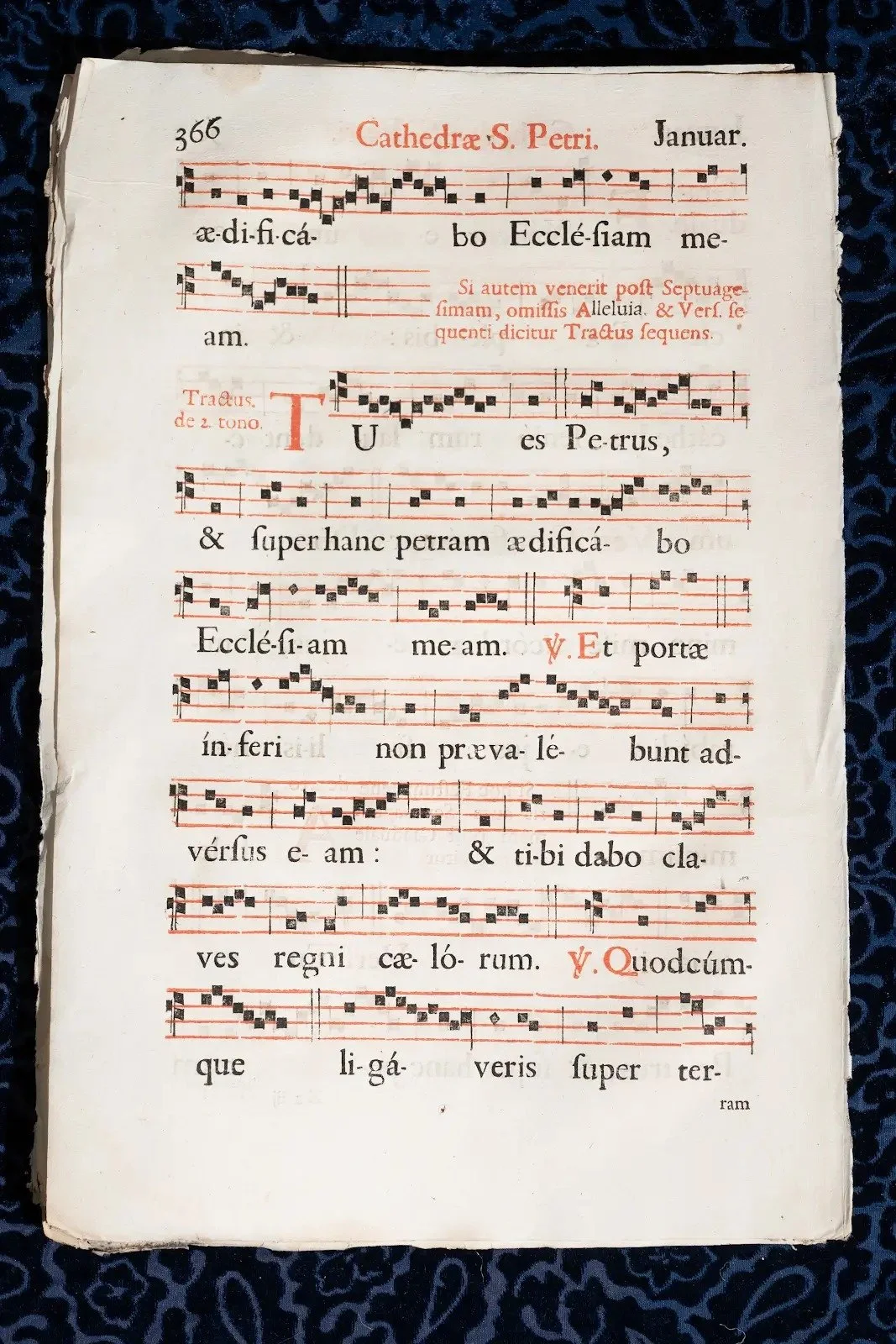 Image 1 of 15
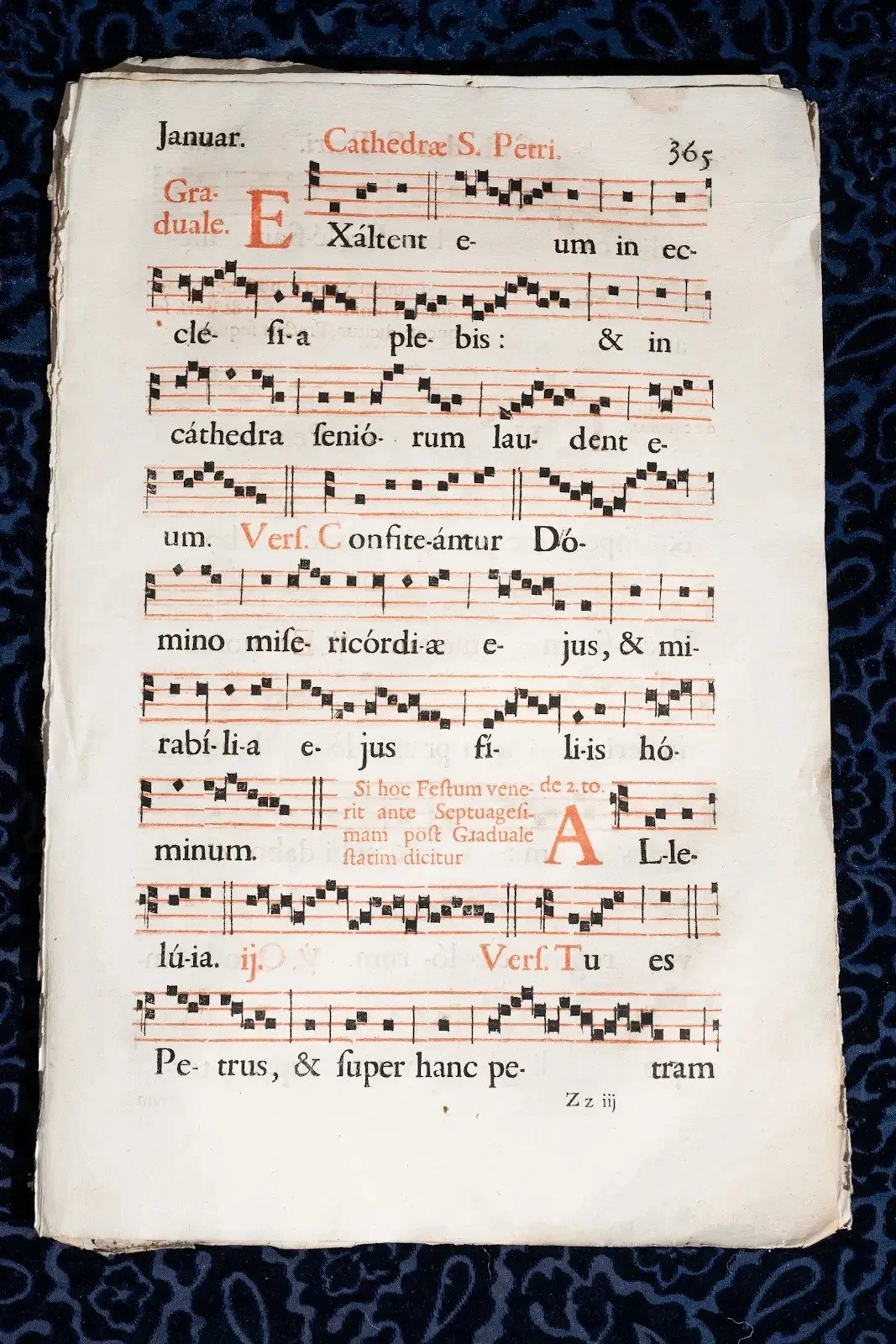 Image 2 of 15
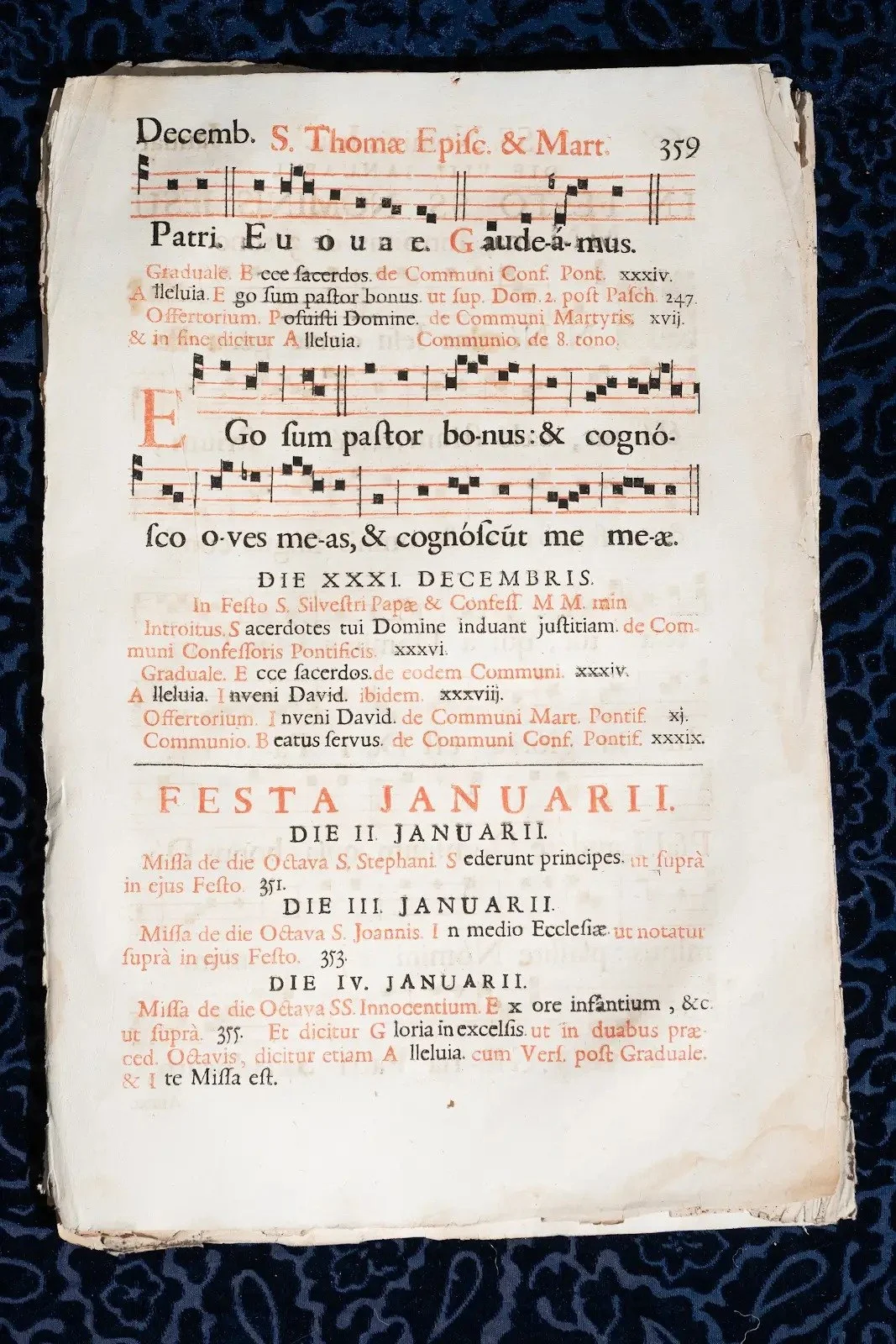 Image 3 of 15
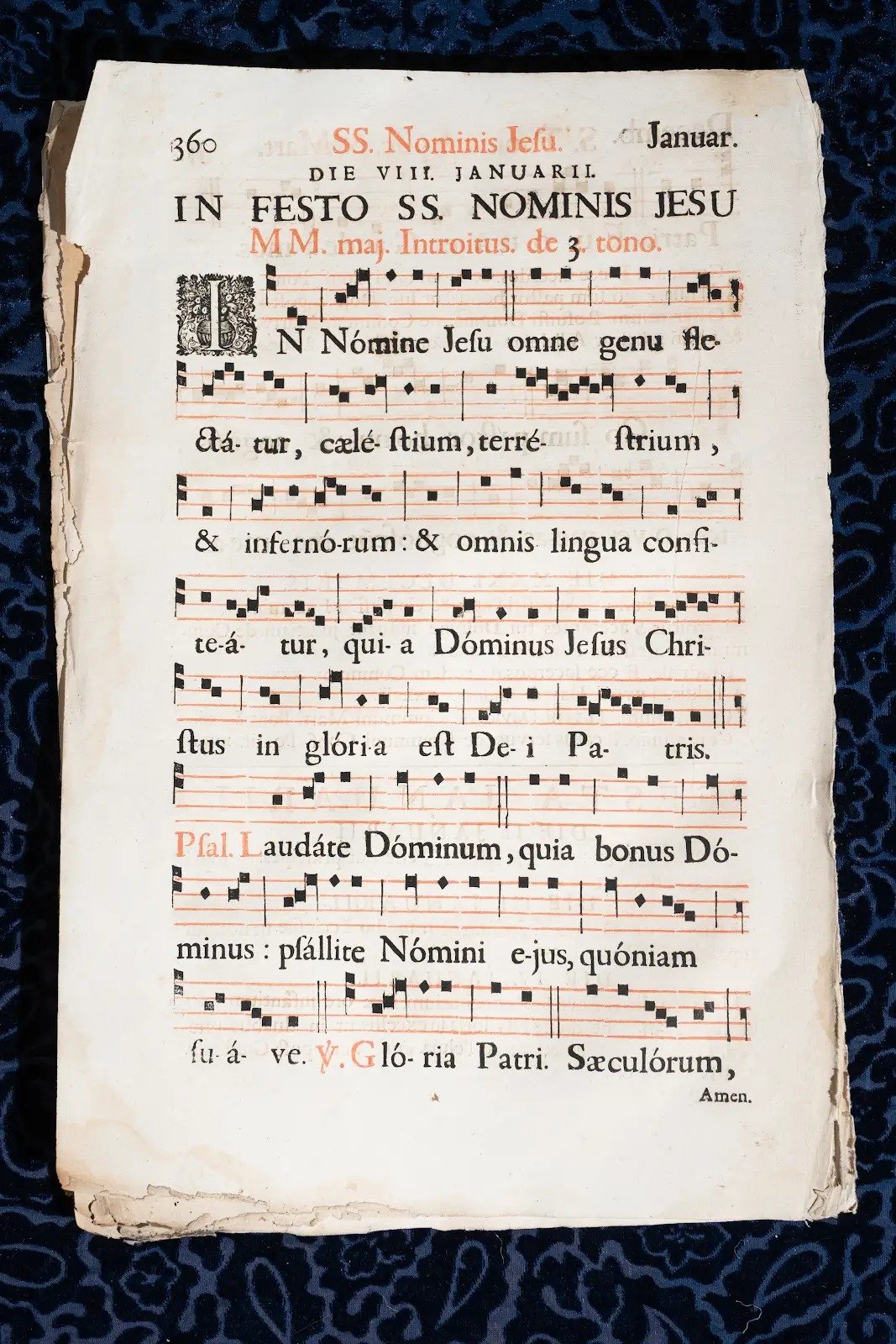 Image 4 of 15
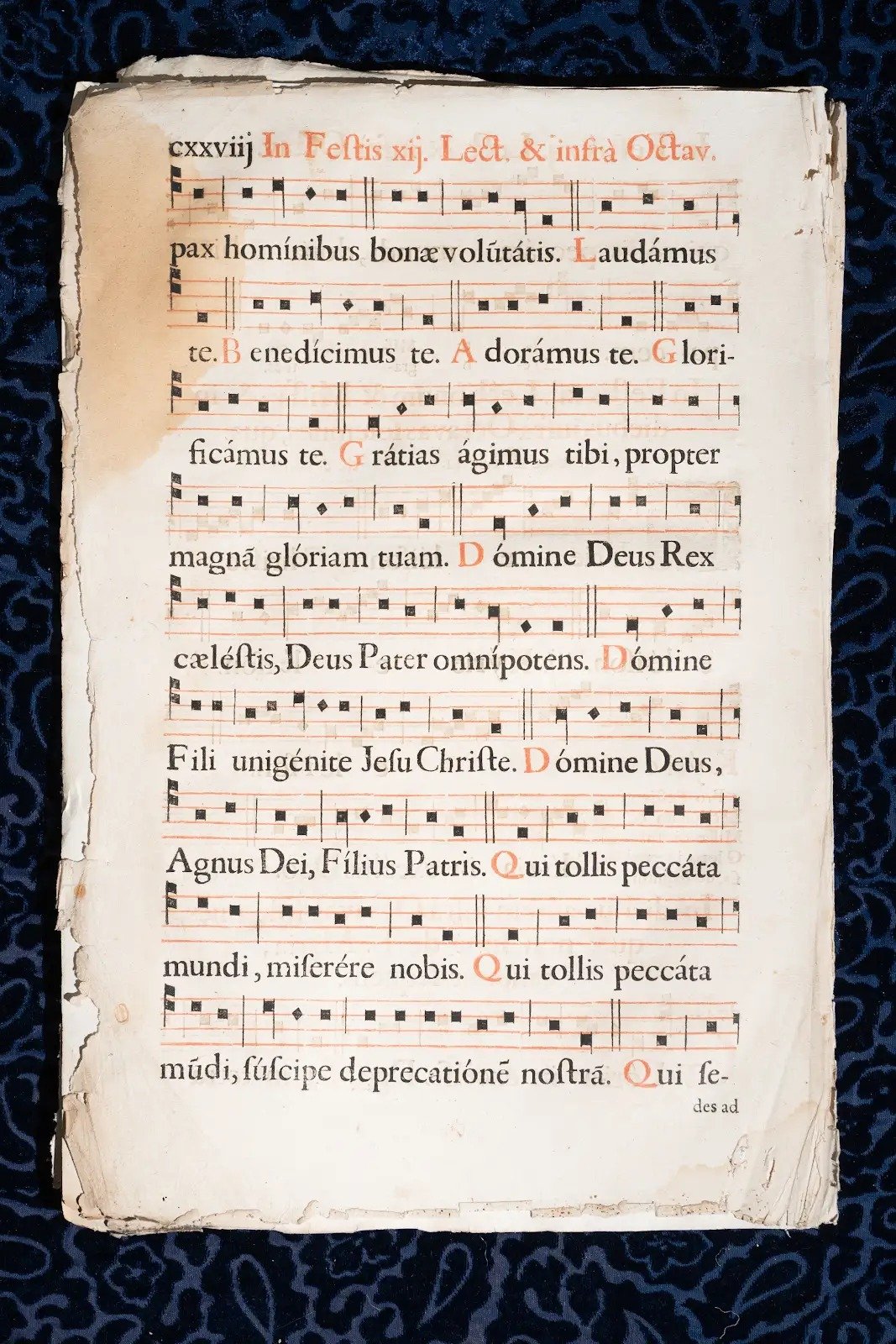 Image 5 of 15
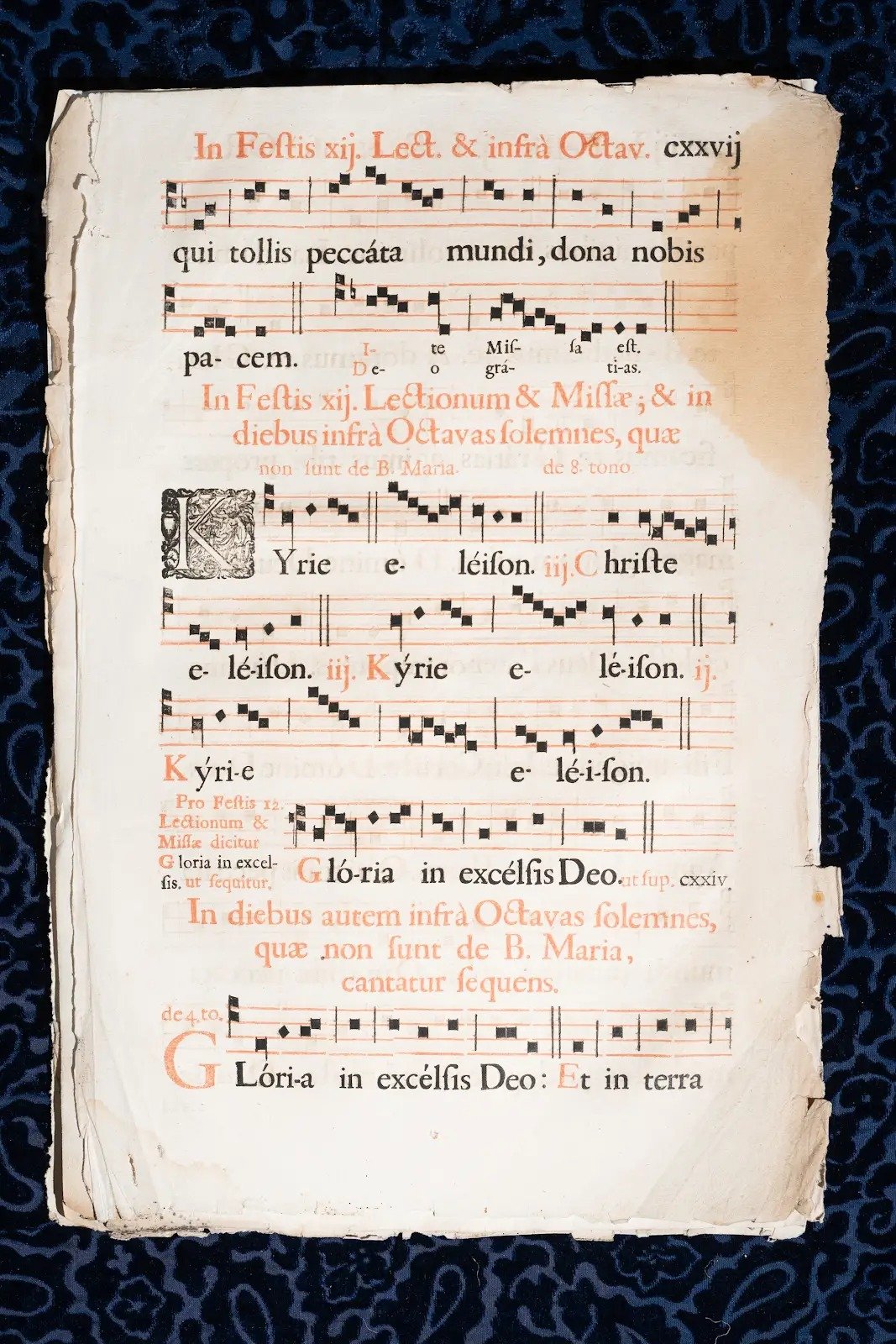 Image 6 of 15
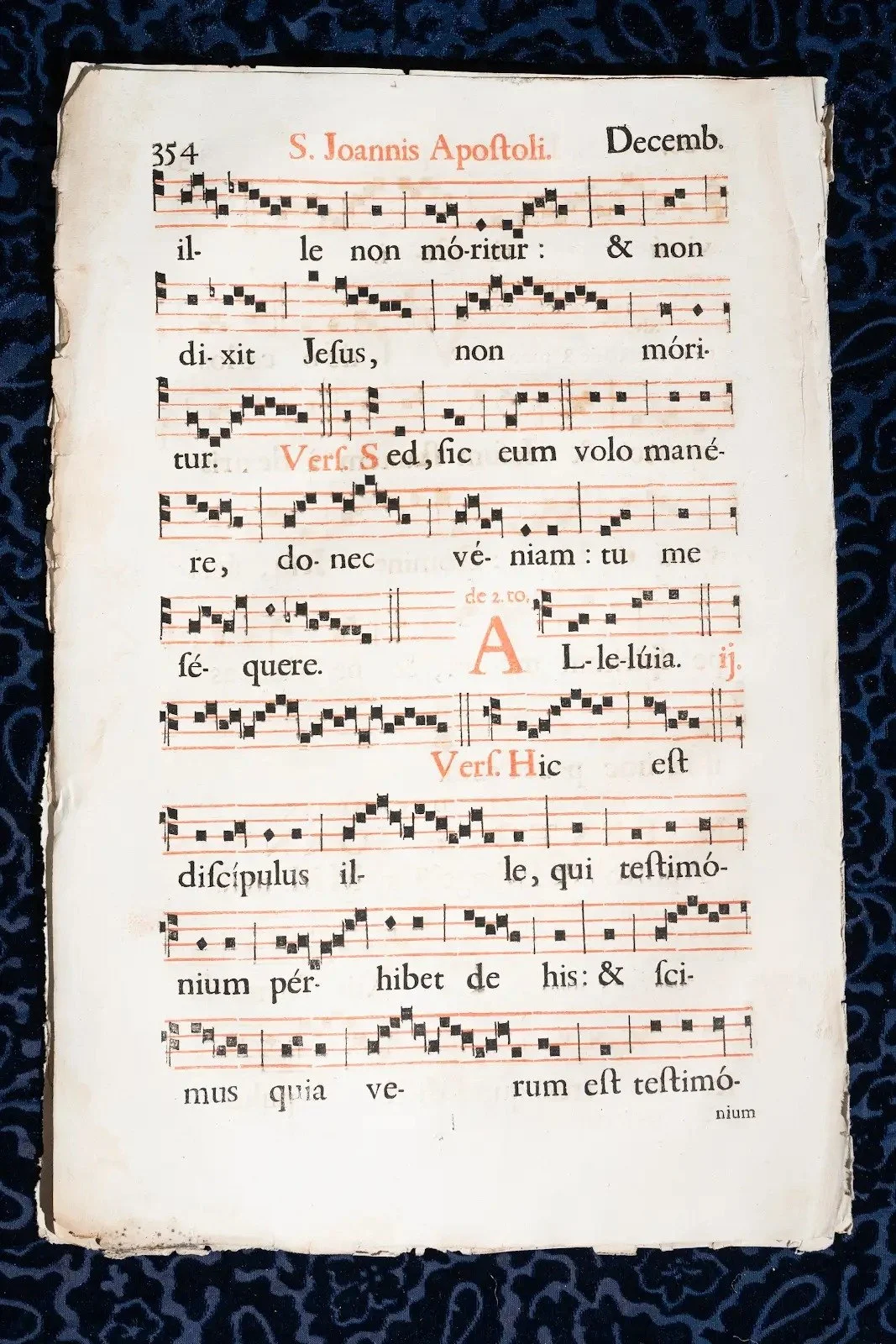 Image 7 of 15
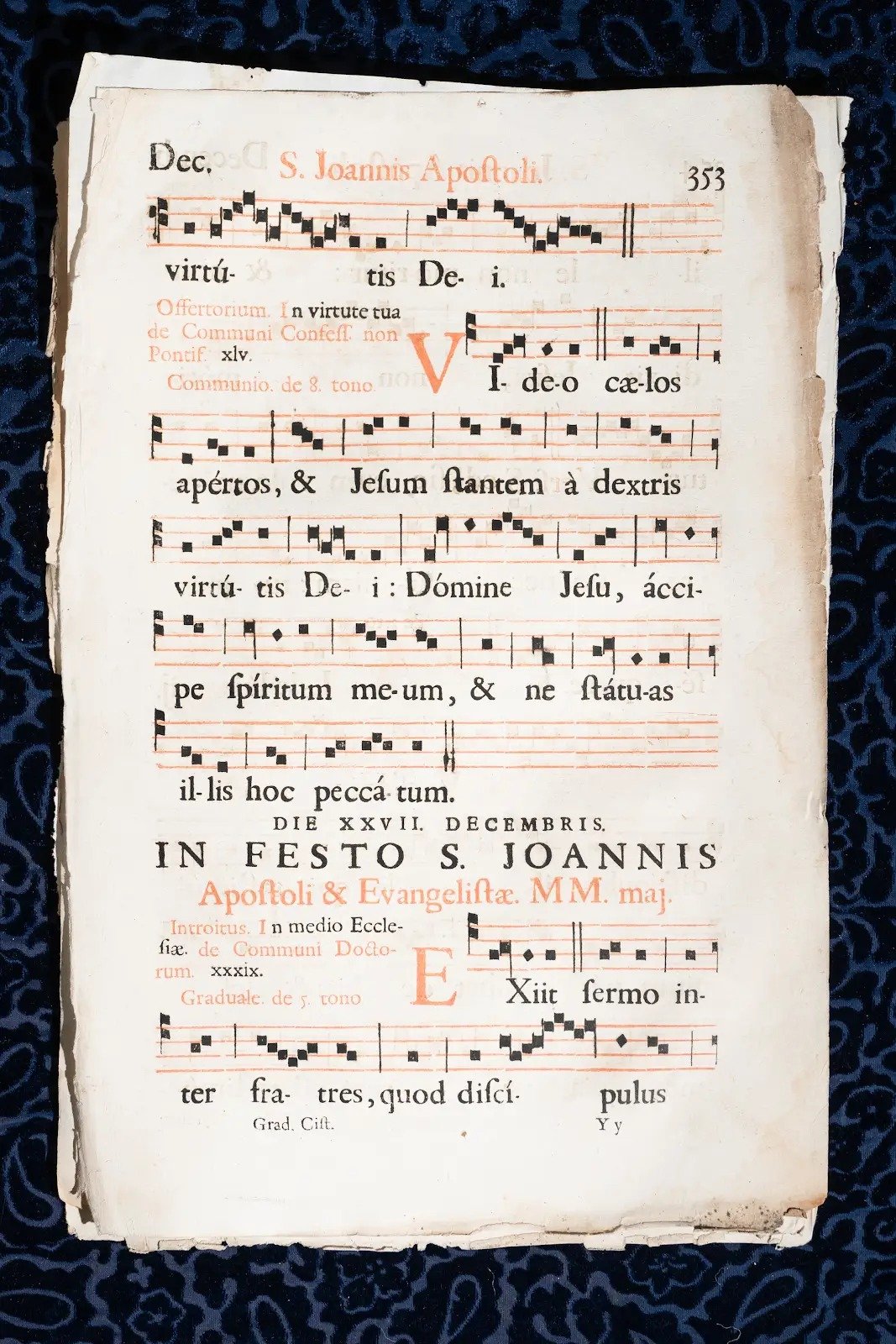 Image 8 of 15
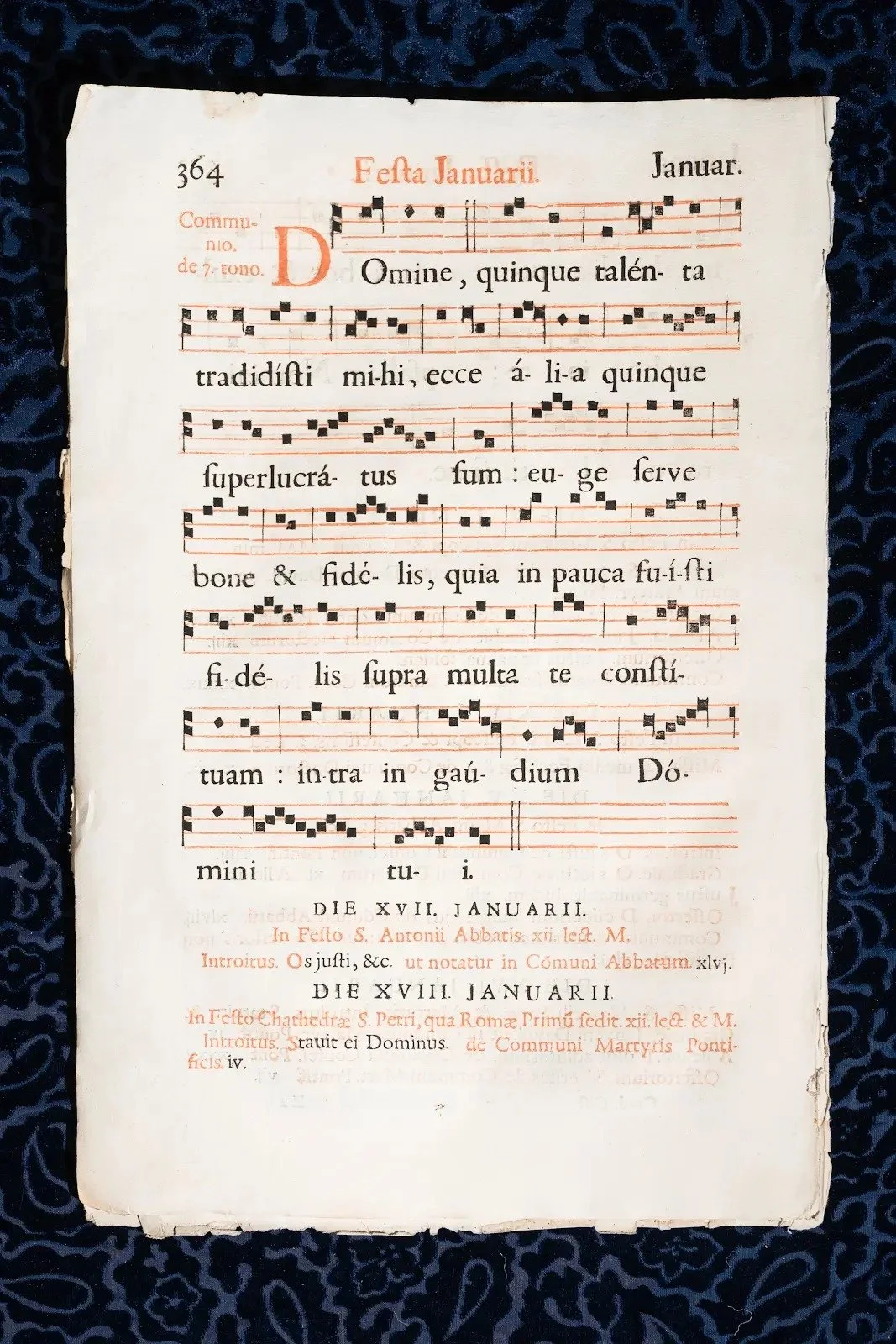 Image 9 of 15
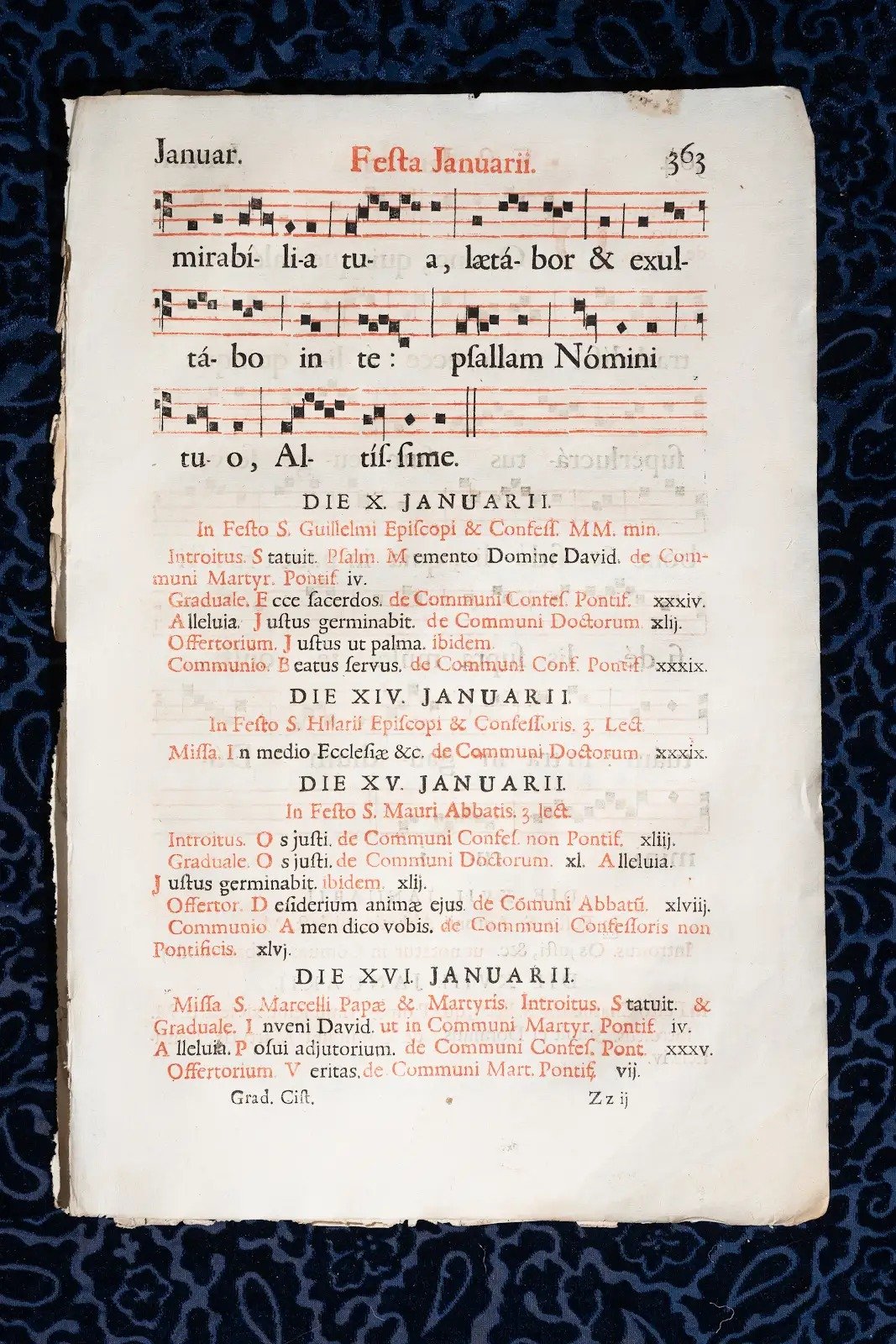 Image 10 of 15
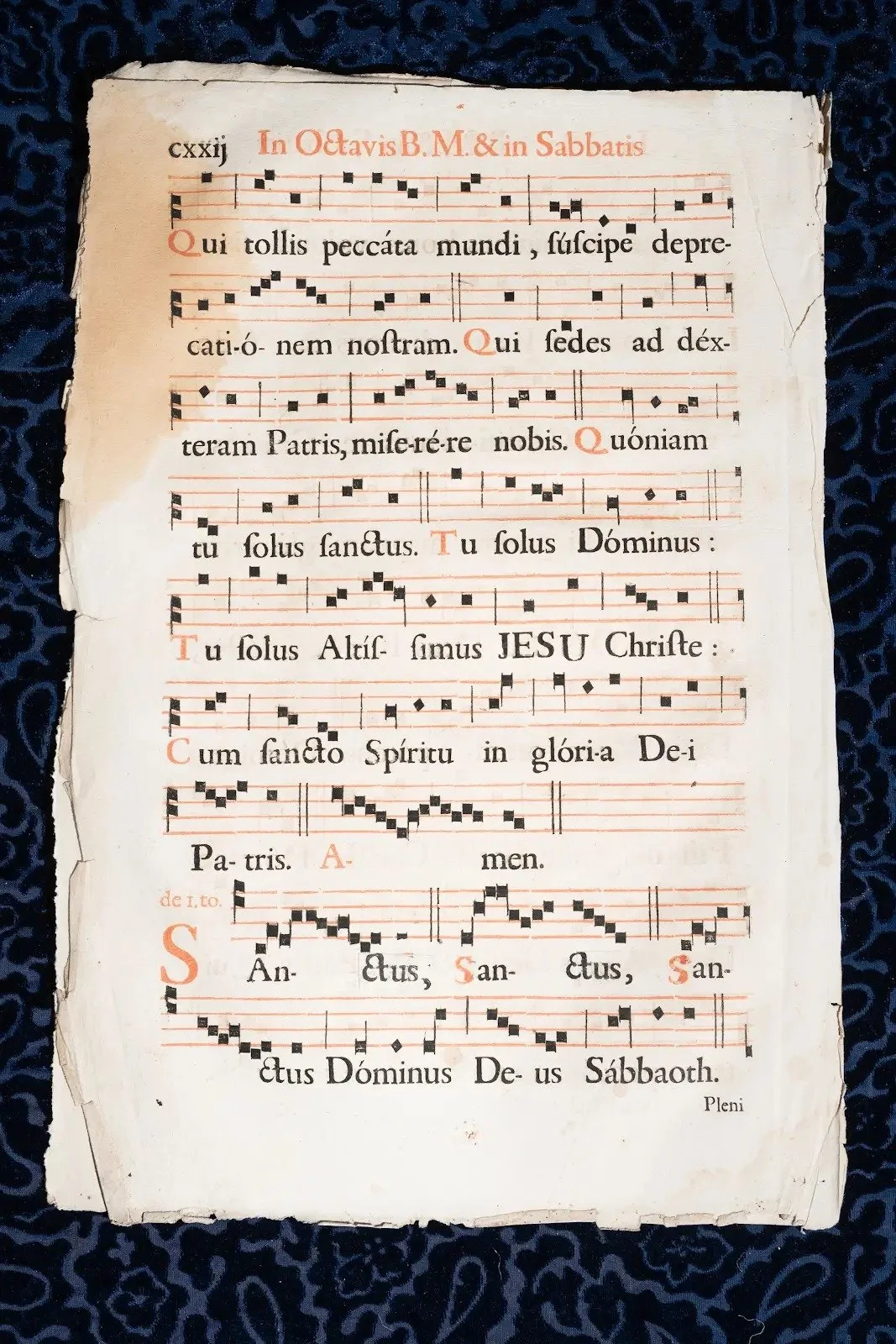 Image 11 of 15
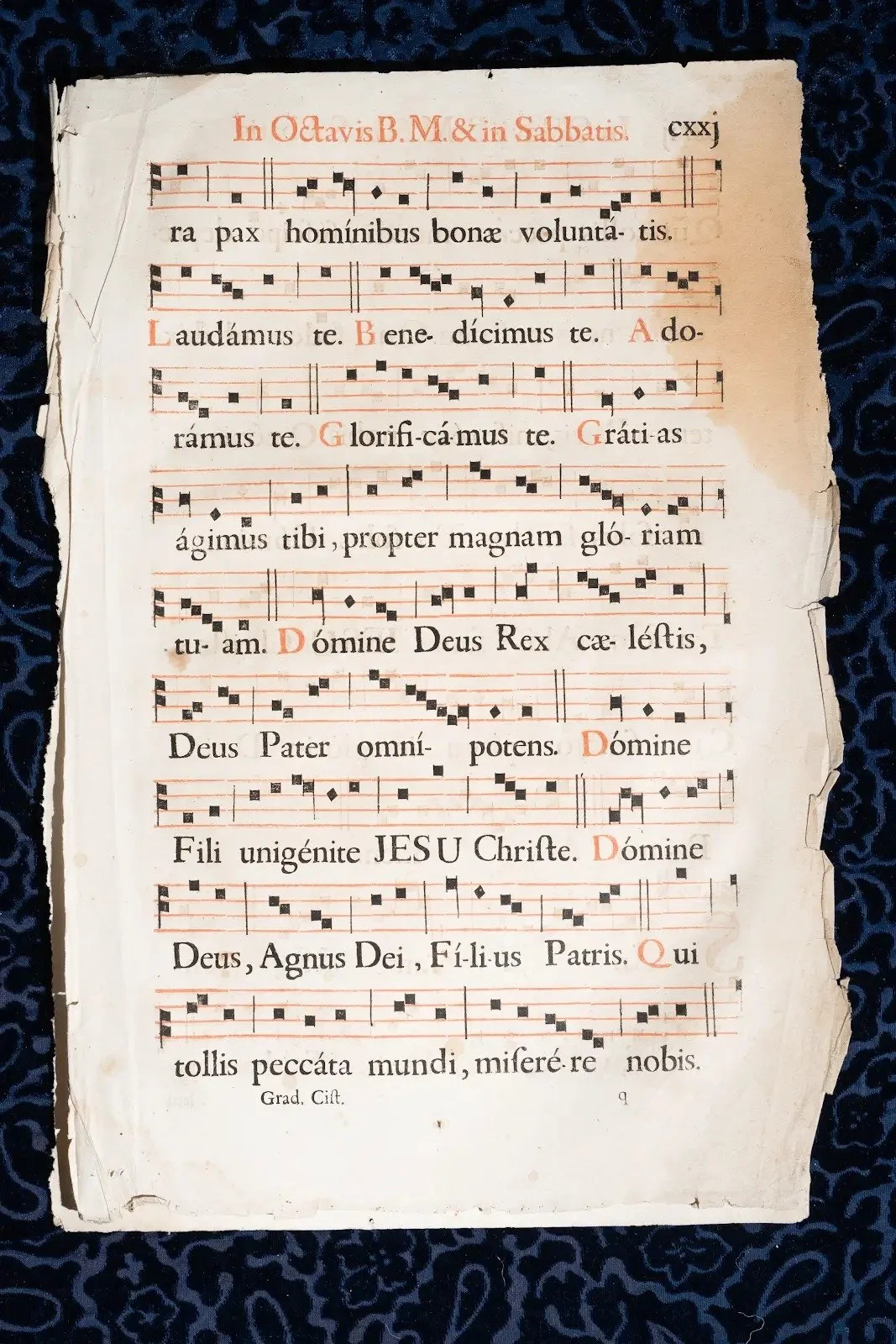 Image 12 of 15
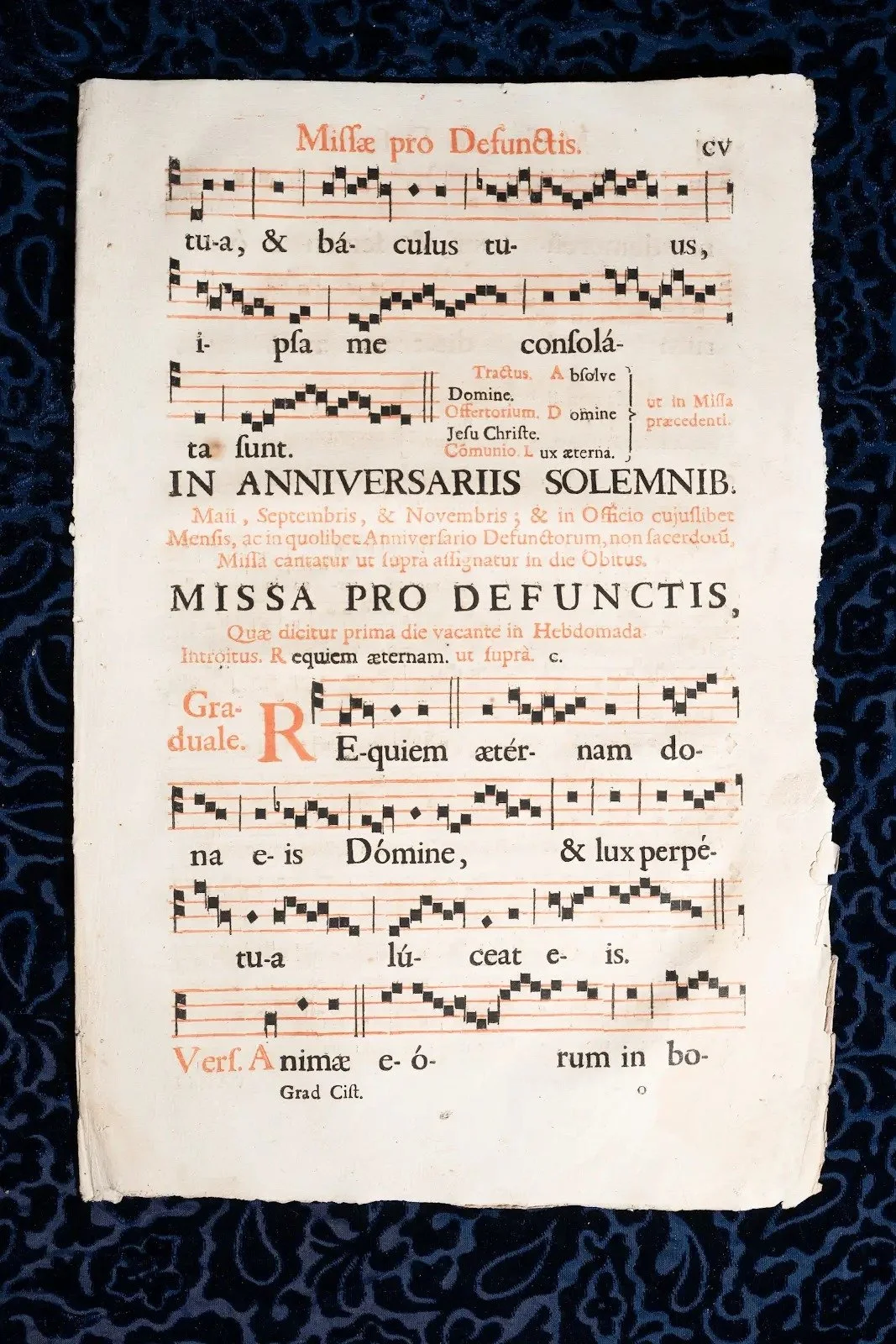 Image 13 of 15
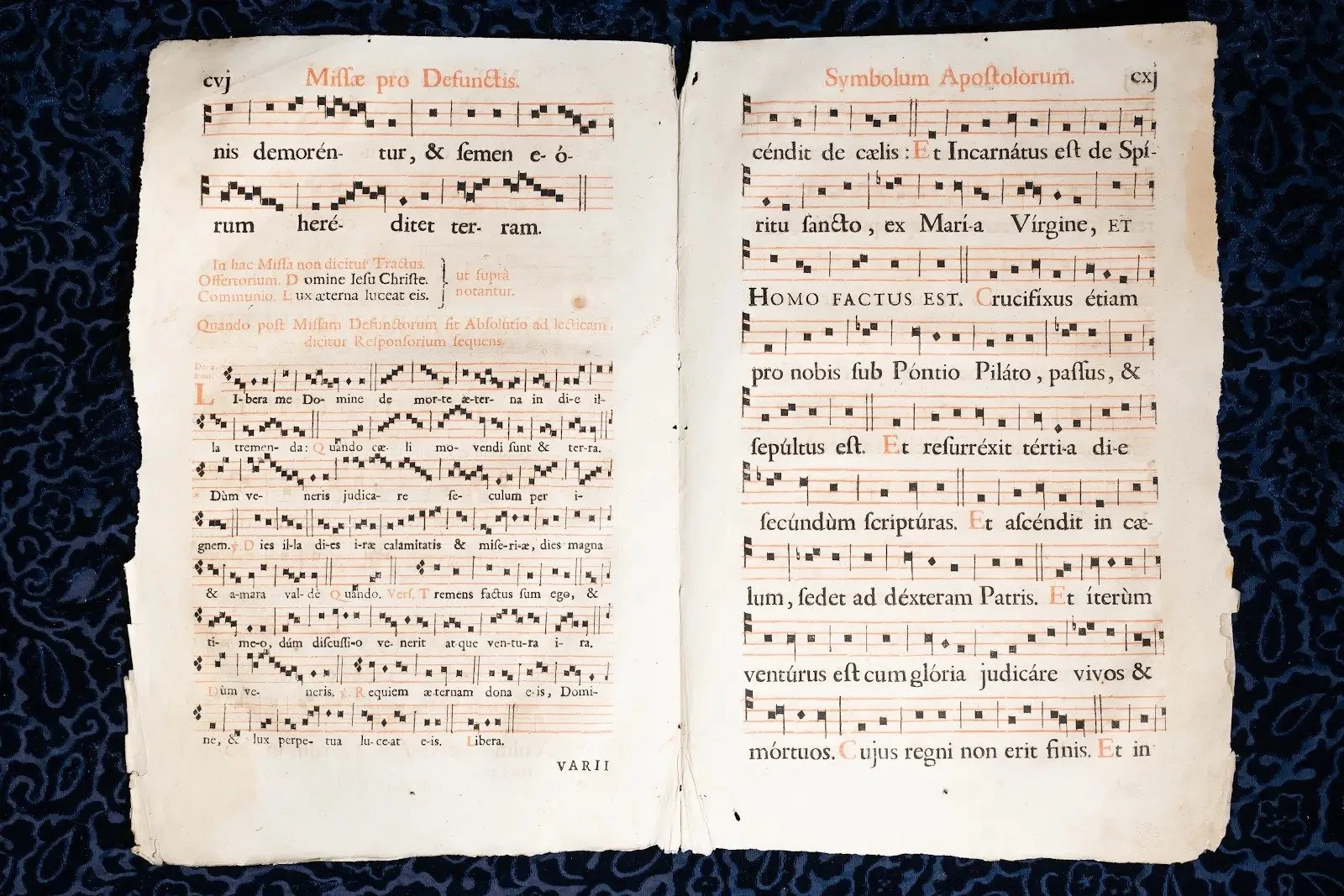 Image 14 of 15
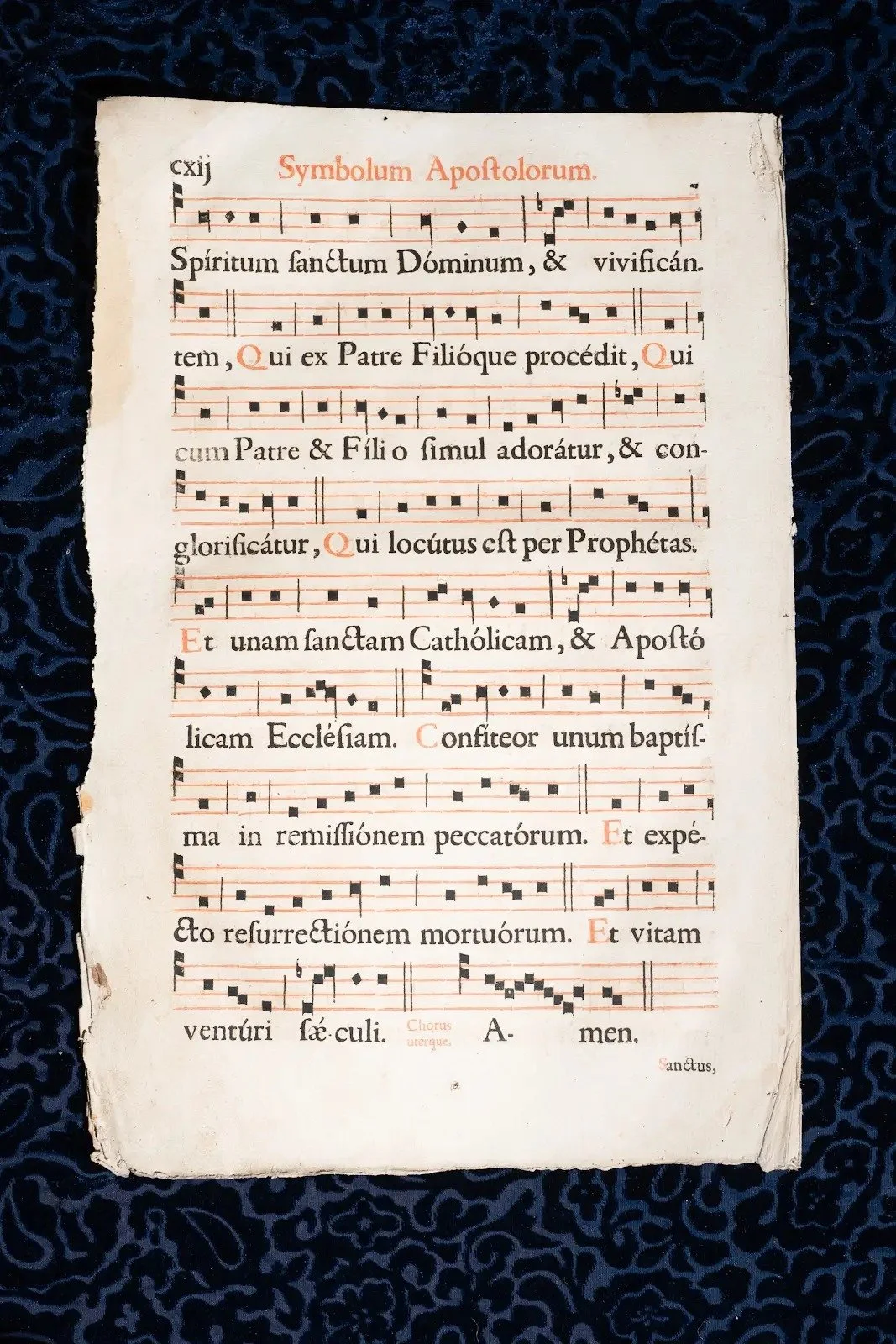 Image 15 of 15