In 1650 the Prince de Condé, victor of Rocroi and the most feared soldier in Europe, was locked in the keep of Vincennes, and someone sent him a poem to pass the time. It opens “À vous, la terreur de l’univers, / mon courrier apporte des vers / pour entretenir vostre Altesse / et pour divertir sa tristesse” (“To you, terror of the universe, my courier brings verses to entertain Your Highness and cheer your sadness”). Together with its sequel it runs to eighty-two pages, telling the prisoner everything he had missed. The Queen, Mazarin and the boy-king Louis XIV slipped out of Paris on the night of Epiphany 1649, “nuit des Roys, mais sans Roy passée” (“the Night of Kings, spent without a King”). Parisians weighed their bread in their hands. Five hundred pigs were escorted into the besieged city in battle order. Magistrates fled the Parlement complaining of headaches: “que de pisseurs, que de chieurs” (“what a lot of pissers and shitters”).
That poem, Le Courrier Burlesque envoyé à Monseigneur le Prince de Condé pour divertir Son Altesse durant sa prison, opens this manuscript, and it is the politest thing in it. What follows is around forty satires in verse from the Fronde, the civil war of 1648–1653, all copied out by hand. These are the mazarinades that Paris printed by the thousand and mostly threw away. Here someone kept them, and the volume is a fair picture of how the city talked in 1649:
The tax-farmers’ prayer to the Queen, set to the Salve Regina: “Ad te suspiramus,” sigh the financiers, “quand il faut rendre les deniers” (“when it is time to give the money back”).
The siege of Aubervilliers, fought among the market gardens by Captain Onion and the regiments of Beetroot, Cabbage and Jerusalem Artichoke, where “les canons estoient des navets, / et les bales estoient des pois” (“the cannons were turnips, and the cannonballs were peas”).
The pig battalion, “sage et discret,” which “laissoit un estron à regret” (“let fall a turd only with regret”).
Tax-farmers caught out before the Parlement: “l’un fait semblant de se moucher / pour dans son mouchoir se cacher; / un autre tousse par addresse, / un autre crache, un autre vesse” (“one pretends to blow his nose so he can hide in his handkerchief; another coughs on purpose, another spits, another farts”).
A poet on the flood of pamphlets: “j’en torcherois mon beau derriere, / veu le nombre qu’on en a faict” (“I would wipe my fine backside with them, there are so many”).
A swipe at Condé’s legitimacy: princes, “quoy qu’on en die, / peuvent bien naistre à treize mois” (“whatever people say, can be born after thirteen months”).
Also an assault on the chief justice’s beard, verses sent to the bedridden poet Scarron, early reactions to the execution of Charles I, and Latin Bible verses put into the mouths of every Fronde grandee.
And Nostradamus? Not the real one. On pages 275–282 is Les Triolets du temps, suivant les visions d’un Petit fils du grand Nostradamus, a song-cycle from the siege of 1649 by a self-appointed “grandson of the great Nostradamus”. He climbs up with “mes grandes lunettes” (“my big spectacles”) to read the sky over Paris and reports the news. Doctors should be happy, because the tax-farmers all have fever. To thieves he says: “songez à bien voler, / la saison en est fort commode” (“think about stealing well: the season is very convenient”). Nearby are a mock Almanach de la Cour pour l’an 1649 by “a great speculator in present things” and an oracle addressed to the Parlement. Then, about a decade later, the prophecy turns earnest: some thirty-five pages read Psalm 71 as a prophecy of the young Louis XIV, written around the time of his marriage and the Peace of the Pyrenees.
The last part of the book changes tone entirely. A heavier hand copies the documents of 1680–81, when Louis XIV and Pope Innocent XI fought over the régale, the crown’s claim to the revenues of vacant bishoprics. They include Parlement rulings and papal briefs, among them Rome’s ban on the faithful even reading a Parlement ruling, on pain of excommunication. There are the proceedings of the 1681 Assembly of the Clergy, with Bossuet among the bishops whose names are copied. The book ends with the protest of Jean Cerle, Vicar General of Pamiers, signed “dans le lieu de notre retraite” (“in the place of our retreat”) on 20 July 1681. He was writing from hiding.
The book is still in its first binding, limp vellum cut from a fifteenth-century legal manuscript. The name “Grosley” is written at the head of the first page in a different hand. A later flyleaf note calls it a “manuscrit curieux” that belonged to Pierre-Jean Grosley, the antiquary of Troyes. A young Swedish historian, Rütger Essén, bought it on the Quai de Conti in Paris on 13 December 1913 and paid four francs.
Why this costs what it does. Printed mazarinades survive by the thousands and are not expensive. This is something different: one reader’s own handwritten anthology of the Fronde, about forty pieces copied in fluent seventeenth-century hands, many with dated historical footnotes. It was gathered over thirty years, through the mock prophecies of 1649, the Sun King’s Psalm and the Pope’s quarrel with the King. It survives intact in its working binding, with a provenance running from a Troyes antiquary to a Swedish diplomat. A full photo-by-photo transcription is available to serious buyers on request.
RECUEIL DE PIÈCES HISTORIQUES, SATIRIQUES ET BURLESQUES sur les affaires de la Fronde et de la Régale (1648–1681). [Manuscript Miscellany of Fronde Satires, Mock Prophecies, and Documents of the Régale Crisis]. Place/Date: [France, likely Paris], c. 1648–1681, with compilation likely completed c. 1681.
Physical Description: Octavo. Manuscript on paper, paginated in three sequences: 82; 193–335; 86 pp. (pp. 83–192 never present), evidently assembled from separately produced sections into a single volume (earlier stab-holes visible at extreme inner margins confirm at least some sections circulated independently before binding). Written in at least two distinct seventeenth-century cursive hands. The principal hand, responsible for the bulk of the text, writes a fluent, professional secretary cursive consistent with legal or parliamentary scribal practice; a second hand appears in portions of the later material. Text arranged in single and double columns depending on content (verse sections frequently in two columns).
Binding: Contemporary limp vellum, composed of what appears to be medieval manuscript waste (fifteenth-century legal document) with visible laced-in sewing supports. Rear cover with manuscript text visible. Spine titled in a contemporary ink hand: Recueil ms. sur les affaires de la Fronde et de la Regale an 1648 a 1680. Binding sound but rustic, characteristic of archival or working-library preservation rather than presentation binding.
Condition: Text block generally sound and legible throughout. First leaf with lower margin replaced with old paper. Some oxidation and browning to ink typical of iron gall ink of the period; occasional light foxing, though clean overall. Covers soiled and somewhat bowed. Sewing supports visible and intact. Good.
Provenance:
1. Compiler unidentified. The professional hands and parliamentary material may suggest legal or administrative connections, but no original owner has been established.
2. A later hand attributes earlier ownership to Pierre-Jean Grosley (1718–1785): “Manuscrit Curieux ayant appartenu a Grosley.” Grosley was an antiquary and man of letters based in Troyes. The name “Grosley” is also written at the head of the first page, in a hand different from the text.
3. Rütger Essén (1890–1972): Swedish diplomat and historian (PhD, Uppsala, 1919). Inscribed on the flyleaf: purchased on the Quai de Conti, Paris, 13 December 1913. Price noted as Fr. 4.
Contents:
First sequence, pp. 1–82. Le Courrier Burlesque envoyé à Monseigneur le Prince de Condé pour divertir Son Altesse durant sa prison (pp. 1–41: from the royal flight of 5–6 January 1649 to the Peace of Rueil), and Suitte du Courier Burlesque… ce qui se passa à Paris en l’an 1648 au sujet de l’arrest d’Union (pp. 42–82: the Chambre Saint-Louis, Broussel’s arrest, the Barricades). Both are in two columns of verse with numbered, dated historical notes. The poem is attributed to Saint-Julien (cf. Moreau 814–815).
Second sequence, pp. 193–335 (pp. 83–192 never present). Souspirs François sur la paix Italienne; Complainte de la France; Priere des Financiers à la Reyne; Requeste des Partisans; Remonstrance burlesque au Parlement; Agreable et veritable recit… de l’enlevement du Roy; Lettre à Monsieur le Cardinal, burlesque; Lettre du Soldat François au Cavallier George; Les Regrets de l’absence du Roy; Le mauvais temps passé, ou le ministere de Mazarin; La Guerre civile; Plainte du Carnaval et de la Foire St Germain; Le Pour et contre de la Cour; La France irritée contre ses tyrans; L’Interprete des escrits du temps; Vers burlesques envoyés à Mr Scaron sur l’arrivée du Convoy à Paris; Le Rabais du Pain; Le Siege d’Aubervilliers; Le festin de la paix et de la Guerre interrompu; Dialogue… de la paix et de la Guerre; Les Roys sans Roy; Poesie sur la barbe du premier President; Justes Reproches de la France à Monsieur le Prince de Condé; Coq à l’asne, ou Lettre burlesque du Sieur Voiture ressuscité; Le voyage des Justes en Italie; Pasquin, ou dialogue à baston rompu; Les Triolets du temps, suivant les visions d’un Petit fils du grand Nostradamus (pp. 275–282); Au Prince du Sang surnommé la Cuirasse; Le Second and Le 3me Courier françois; Oracle à Messieurs du Parlement, epigrams and sonnets; Almanach de la Cour pour l’an 1649; La France ruinée par les favoris; Echo de Charenton; and finally Propheties divines tirées du Psalme LXXI et appliquées à la personne du Roy Louis 14me (pp. 300–335; c. 1660).
Third sequence, pp. 1–86 (1680–1681). Parlement rulings of 1680–81 on the briefs of Innocent XI concerning Pamiers and the convent of Charonne, with Denis Talon’s pleas and the clerk Dongois’s certifications; the papal briefs themselves; the ruling suppressing the Traité de la Régale (3 April 1680); Louis XIV’s declarations on the régale of 1673 and 1675; the Procès-verbal of the Extraordinary Assembly of the Clergy (March and May 1681), including Archbishop Le Tellier’s report and the copied names of the prelates; and the Acte de Protestation of Jean Cerle, Vicar General of Pamiers, 20 July 1681.
In 1650 the Prince de Condé, victor of Rocroi and the most feared soldier in Europe, was locked in the keep of Vincennes, and someone sent him a poem to pass the time. It opens “À vous, la terreur de l’univers, / mon courrier apporte des vers / pour entretenir vostre Altesse / et pour divertir sa tristesse” (“To you, terror of the universe, my courier brings verses to entertain Your Highness and cheer your sadness”). Together with its sequel it runs to eighty-two pages, telling the prisoner everything he had missed. The Queen, Mazarin and the boy-king Louis XIV slipped out of Paris on the night of Epiphany 1649, “nuit des Roys, mais sans Roy passée” (“the Night of Kings, spent without a King”). Parisians weighed their bread in their hands. Five hundred pigs were escorted into the besieged city in battle order. Magistrates fled the Parlement complaining of headaches: “que de pisseurs, que de chieurs” (“what a lot of pissers and shitters”).
That poem, Le Courrier Burlesque envoyé à Monseigneur le Prince de Condé pour divertir Son Altesse durant sa prison, opens this manuscript, and it is the politest thing in it. What follows is around forty satires in verse from the Fronde, the civil war of 1648–1653, all copied out by hand. These are the mazarinades that Paris printed by the thousand and mostly threw away. Here someone kept them, and the volume is a fair picture of how the city talked in 1649:
The tax-farmers’ prayer to the Queen, set to the Salve Regina: “Ad te suspiramus,” sigh the financiers, “quand il faut rendre les deniers” (“when it is time to give the money back”).
The siege of Aubervilliers, fought among the market gardens by Captain Onion and the regiments of Beetroot, Cabbage and Jerusalem Artichoke, where “les canons estoient des navets, / et les bales estoient des pois” (“the cannons were turnips, and the cannonballs were peas”).
The pig battalion, “sage et discret,” which “laissoit un estron à regret” (“let fall a turd only with regret”).
Tax-farmers caught out before the Parlement: “l’un fait semblant de se moucher / pour dans son mouchoir se cacher; / un autre tousse par addresse, / un autre crache, un autre vesse” (“one pretends to blow his nose so he can hide in his handkerchief; another coughs on purpose, another spits, another farts”).
A poet on the flood of pamphlets: “j’en torcherois mon beau derriere, / veu le nombre qu’on en a faict” (“I would wipe my fine backside with them, there are so many”).
A swipe at Condé’s legitimacy: princes, “quoy qu’on en die, / peuvent bien naistre à treize mois” (“whatever people say, can be born after thirteen months”).
Also an assault on the chief justice’s beard, verses sent to the bedridden poet Scarron, early reactions to the execution of Charles I, and Latin Bible verses put into the mouths of every Fronde grandee.
And Nostradamus? Not the real one. On pages 275–282 is Les Triolets du temps, suivant les visions d’un Petit fils du grand Nostradamus, a song-cycle from the siege of 1649 by a self-appointed “grandson of the great Nostradamus”. He climbs up with “mes grandes lunettes” (“my big spectacles”) to read the sky over Paris and reports the news. Doctors should be happy, because the tax-farmers all have fever. To thieves he says: “songez à bien voler, / la saison en est fort commode” (“think about stealing well: the season is very convenient”). Nearby are a mock Almanach de la Cour pour l’an 1649 by “a great speculator in present things” and an oracle addressed to the Parlement. Then, about a decade later, the prophecy turns earnest: some thirty-five pages read Psalm 71 as a prophecy of the young Louis XIV, written around the time of his marriage and the Peace of the Pyrenees.
The last part of the book changes tone entirely. A heavier hand copies the documents of 1680–81, when Louis XIV and Pope Innocent XI fought over the régale, the crown’s claim to the revenues of vacant bishoprics. They include Parlement rulings and papal briefs, among them Rome’s ban on the faithful even reading a Parlement ruling, on pain of excommunication. There are the proceedings of the 1681 Assembly of the Clergy, with Bossuet among the bishops whose names are copied. The book ends with the protest of Jean Cerle, Vicar General of Pamiers, signed “dans le lieu de notre retraite” (“in the place of our retreat”) on 20 July 1681. He was writing from hiding.
The book is still in its first binding, limp vellum cut from a fifteenth-century legal manuscript. The name “Grosley” is written at the head of the first page in a different hand. A later flyleaf note calls it a “manuscrit curieux” that belonged to Pierre-Jean Grosley, the antiquary of Troyes. A young Swedish historian, Rütger Essén, bought it on the Quai de Conti in Paris on 13 December 1913 and paid four francs.
Why this costs what it does. Printed mazarinades survive by the thousands and are not expensive. This is something different: one reader’s own handwritten anthology of the Fronde, about forty pieces copied in fluent seventeenth-century hands, many with dated historical footnotes. It was gathered over thirty years, through the mock prophecies of 1649, the Sun King’s Psalm and the Pope’s quarrel with the King. It survives intact in its working binding, with a provenance running from a Troyes antiquary to a Swedish diplomat. A full photo-by-photo transcription is available to serious buyers on request.
RECUEIL DE PIÈCES HISTORIQUES, SATIRIQUES ET BURLESQUES sur les affaires de la Fronde et de la Régale (1648–1681). [Manuscript Miscellany of Fronde Satires, Mock Prophecies, and Documents of the Régale Crisis]. Place/Date: [France, likely Paris], c. 1648–1681, with compilation likely completed c. 1681.
Physical Description: Octavo. Manuscript on paper, paginated in three sequences: 82; 193–335; 86 pp. (pp. 83–192 never present), evidently assembled from separately produced sections into a single volume (earlier stab-holes visible at extreme inner margins confirm at least some sections circulated independently before binding). Written in at least two distinct seventeenth-century cursive hands. The principal hand, responsible for the bulk of the text, writes a fluent, professional secretary cursive consistent with legal or parliamentary scribal practice; a second hand appears in portions of the later material. Text arranged in single and double columns depending on content (verse sections frequently in two columns).
Binding: Contemporary limp vellum, composed of what appears to be medieval manuscript waste (fifteenth-century legal document) with visible laced-in sewing supports. Rear cover with manuscript text visible. Spine titled in a contemporary ink hand: Recueil ms. sur les affaires de la Fronde et de la Regale an 1648 a 1680. Binding sound but rustic, characteristic of archival or working-library preservation rather than presentation binding.
Condition: Text block generally sound and legible throughout. First leaf with lower margin replaced with old paper. Some oxidation and browning to ink typical of iron gall ink of the period; occasional light foxing, though clean overall. Covers soiled and somewhat bowed. Sewing supports visible and intact. Good.
Provenance:
1. Compiler unidentified. The professional hands and parliamentary material may suggest legal or administrative connections, but no original owner has been established.
2. A later hand attributes earlier ownership to Pierre-Jean Grosley (1718–1785): “Manuscrit Curieux ayant appartenu a Grosley.” Grosley was an antiquary and man of letters based in Troyes. The name “Grosley” is also written at the head of the first page, in a hand different from the text.
3. Rütger Essén (1890–1972): Swedish diplomat and historian (PhD, Uppsala, 1919). Inscribed on the flyleaf: purchased on the Quai de Conti, Paris, 13 December 1913. Price noted as Fr. 4.
Contents:
First sequence, pp. 1–82. Le Courrier Burlesque envoyé à Monseigneur le Prince de Condé pour divertir Son Altesse durant sa prison (pp. 1–41: from the royal flight of 5–6 January 1649 to the Peace of Rueil), and Suitte du Courier Burlesque… ce qui se passa à Paris en l’an 1648 au sujet de l’arrest d’Union (pp. 42–82: the Chambre Saint-Louis, Broussel’s arrest, the Barricades). Both are in two columns of verse with numbered, dated historical notes. The poem is attributed to Saint-Julien (cf. Moreau 814–815).
Second sequence, pp. 193–335 (pp. 83–192 never present). Souspirs François sur la paix Italienne; Complainte de la France; Priere des Financiers à la Reyne; Requeste des Partisans; Remonstrance burlesque au Parlement; Agreable et veritable recit… de l’enlevement du Roy; Lettre à Monsieur le Cardinal, burlesque; Lettre du Soldat François au Cavallier George; Les Regrets de l’absence du Roy; Le mauvais temps passé, ou le ministere de Mazarin; La Guerre civile; Plainte du Carnaval et de la Foire St Germain; Le Pour et contre de la Cour; La France irritée contre ses tyrans; L’Interprete des escrits du temps; Vers burlesques envoyés à Mr Scaron sur l’arrivée du Convoy à Paris; Le Rabais du Pain; Le Siege d’Aubervilliers; Le festin de la paix et de la Guerre interrompu; Dialogue… de la paix et de la Guerre; Les Roys sans Roy; Poesie sur la barbe du premier President; Justes Reproches de la France à Monsieur le Prince de Condé; Coq à l’asne, ou Lettre burlesque du Sieur Voiture ressuscité; Le voyage des Justes en Italie; Pasquin, ou dialogue à baston rompu; Les Triolets du temps, suivant les visions d’un Petit fils du grand Nostradamus (pp. 275–282); Au Prince du Sang surnommé la Cuirasse; Le Second and Le 3me Courier françois; Oracle à Messieurs du Parlement, epigrams and sonnets; Almanach de la Cour pour l’an 1649; La France ruinée par les favoris; Echo de Charenton; and finally Propheties divines tirées du Psalme LXXI et appliquées à la personne du Roy Louis 14me (pp. 300–335; c. 1660).
Third sequence, pp. 1–86 (1680–1681). Parlement rulings of 1680–81 on the briefs of Innocent XI concerning Pamiers and the convent of Charonne, with Denis Talon’s pleas and the clerk Dongois’s certifications; the papal briefs themselves; the ruling suppressing the Traité de la Régale (3 April 1680); Louis XIV’s declarations on the régale of 1673 and 1675; the Procès-verbal of the Extraordinary Assembly of the Clergy (March and May 1681), including Archbishop Le Tellier’s report and the copied names of the prelates; and the Acte de Protestation of Jean Cerle, Vicar General of Pamiers, 20 July 1681.

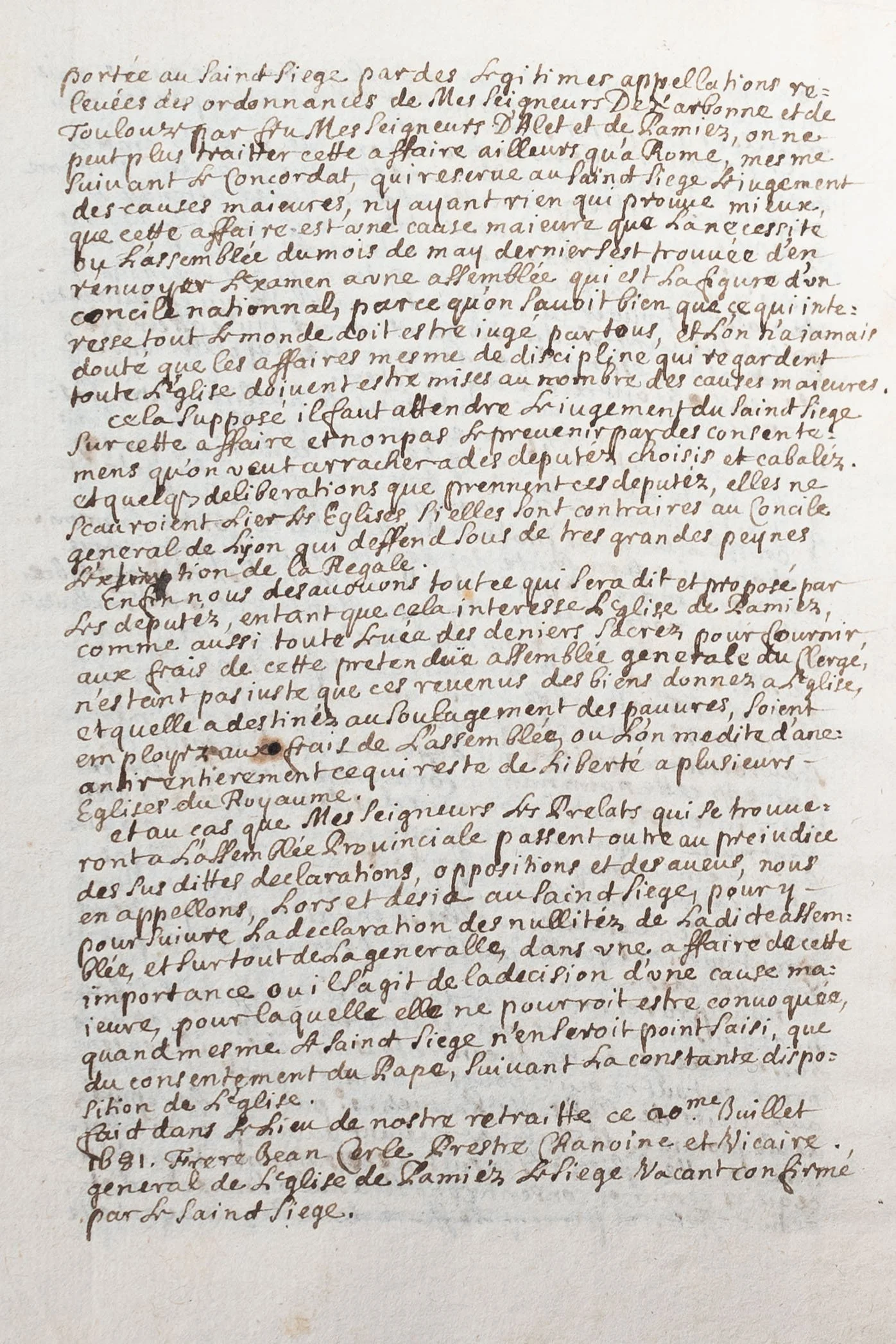 Image 1 of 40
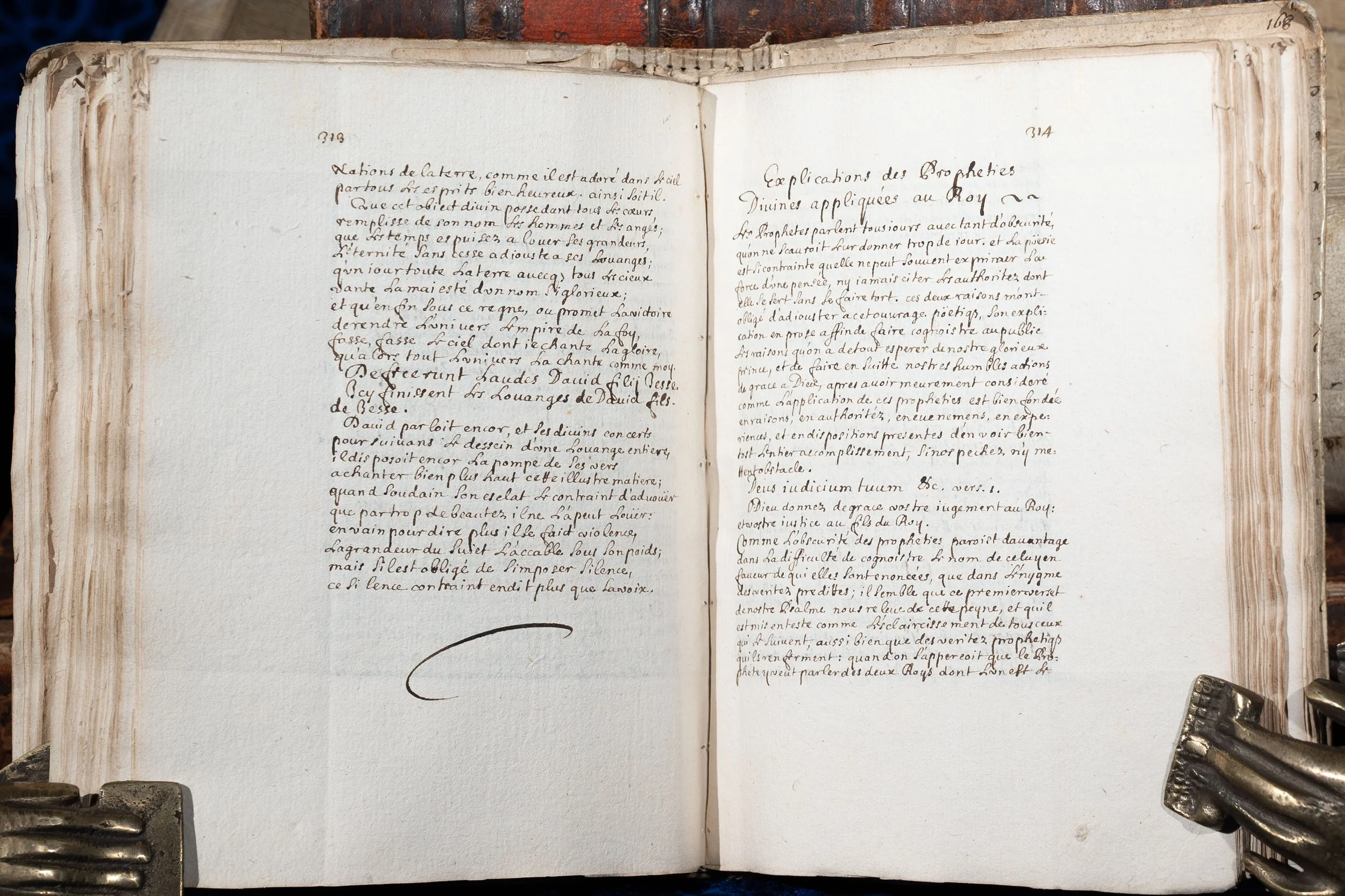 Image 2 of 40
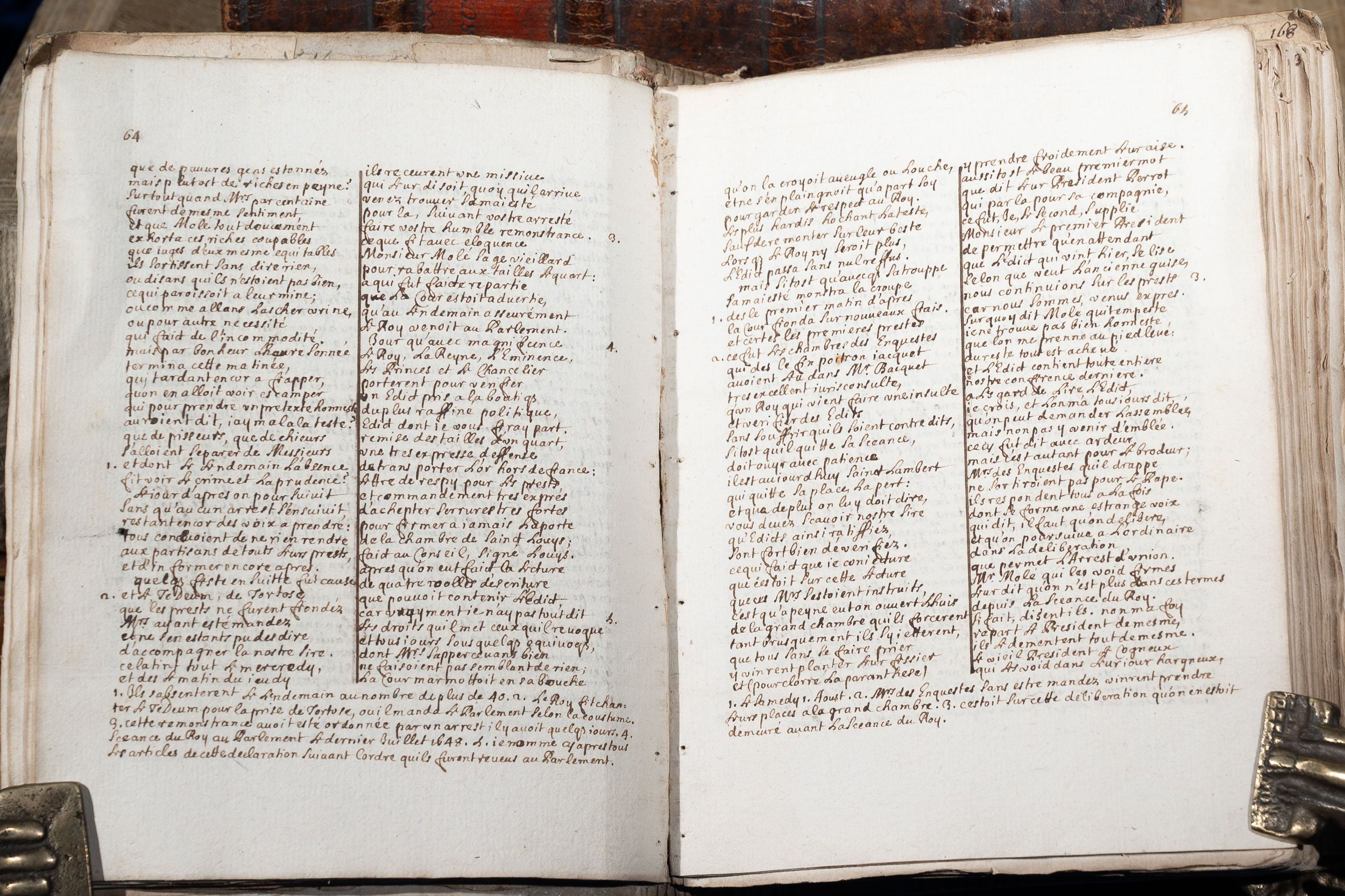 Image 3 of 40
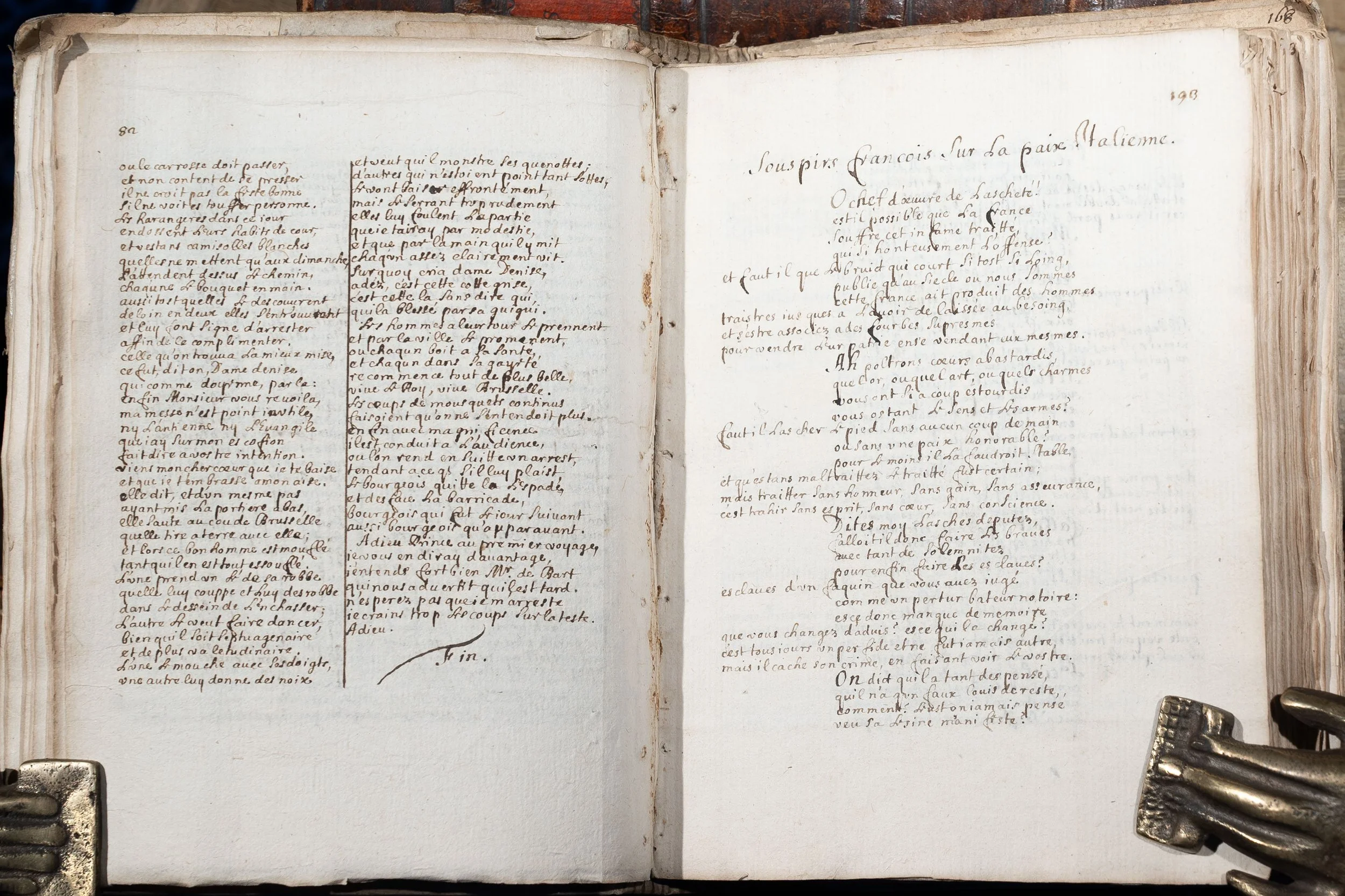 Image 4 of 40
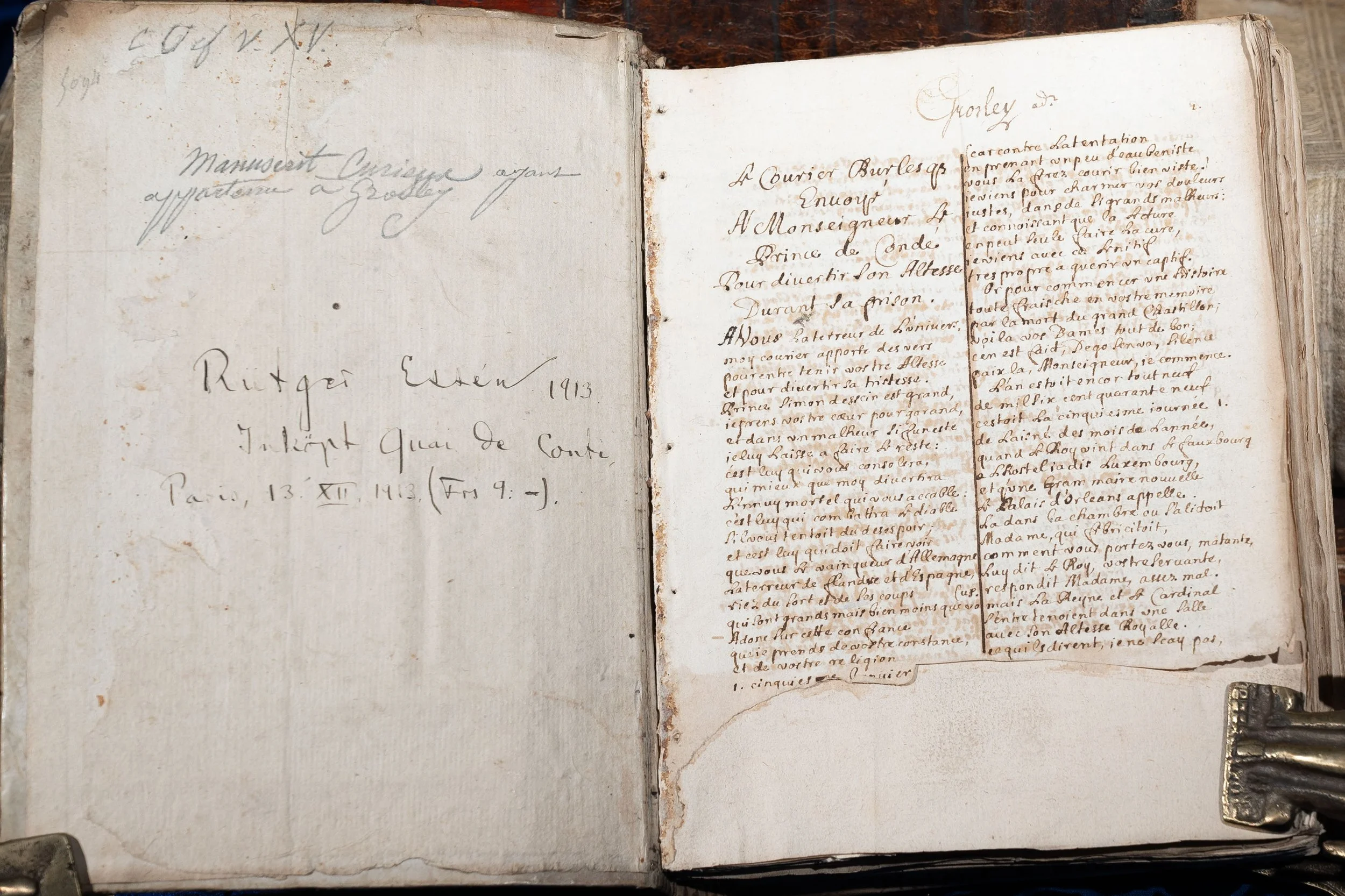 Image 5 of 40
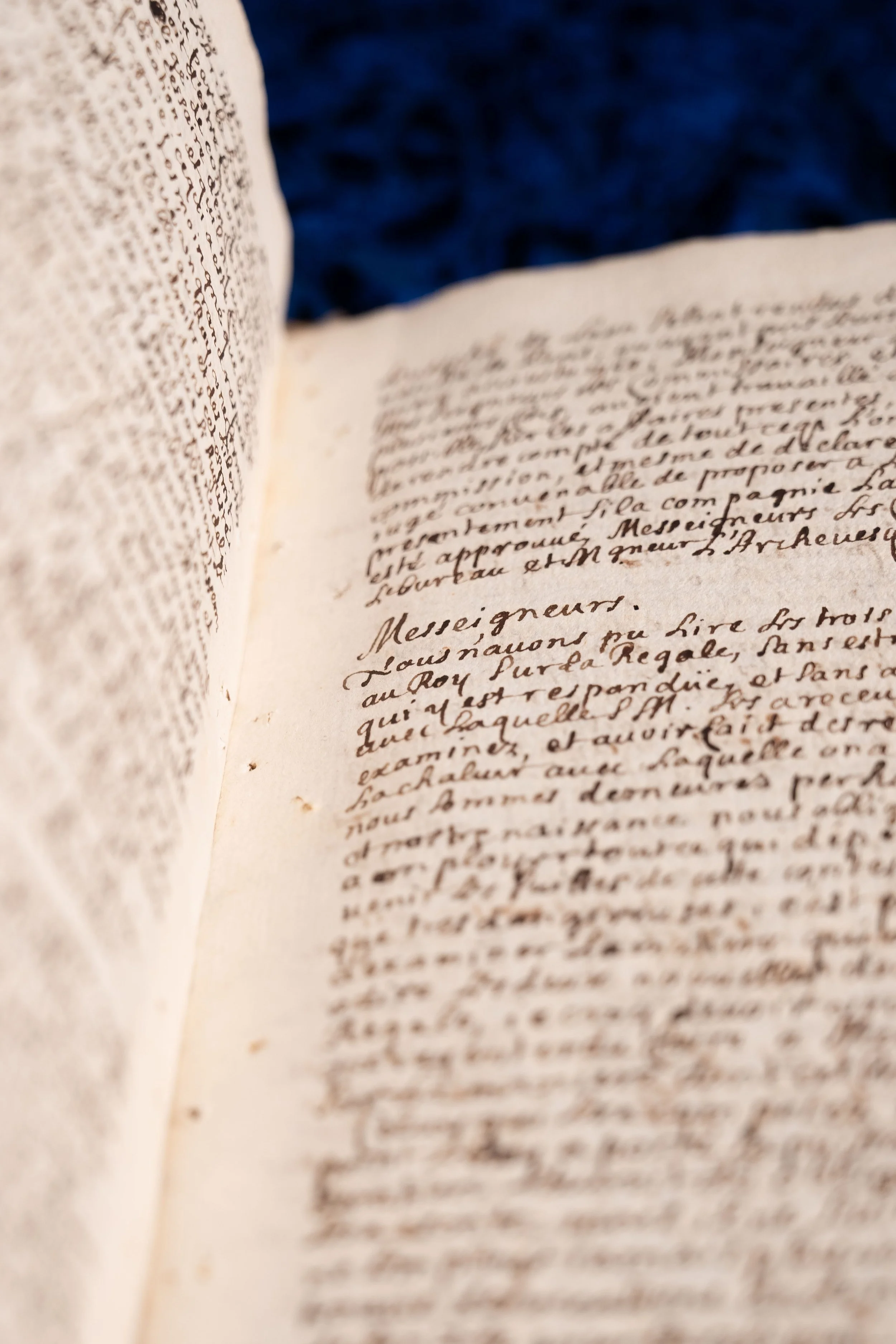 Image 6 of 40
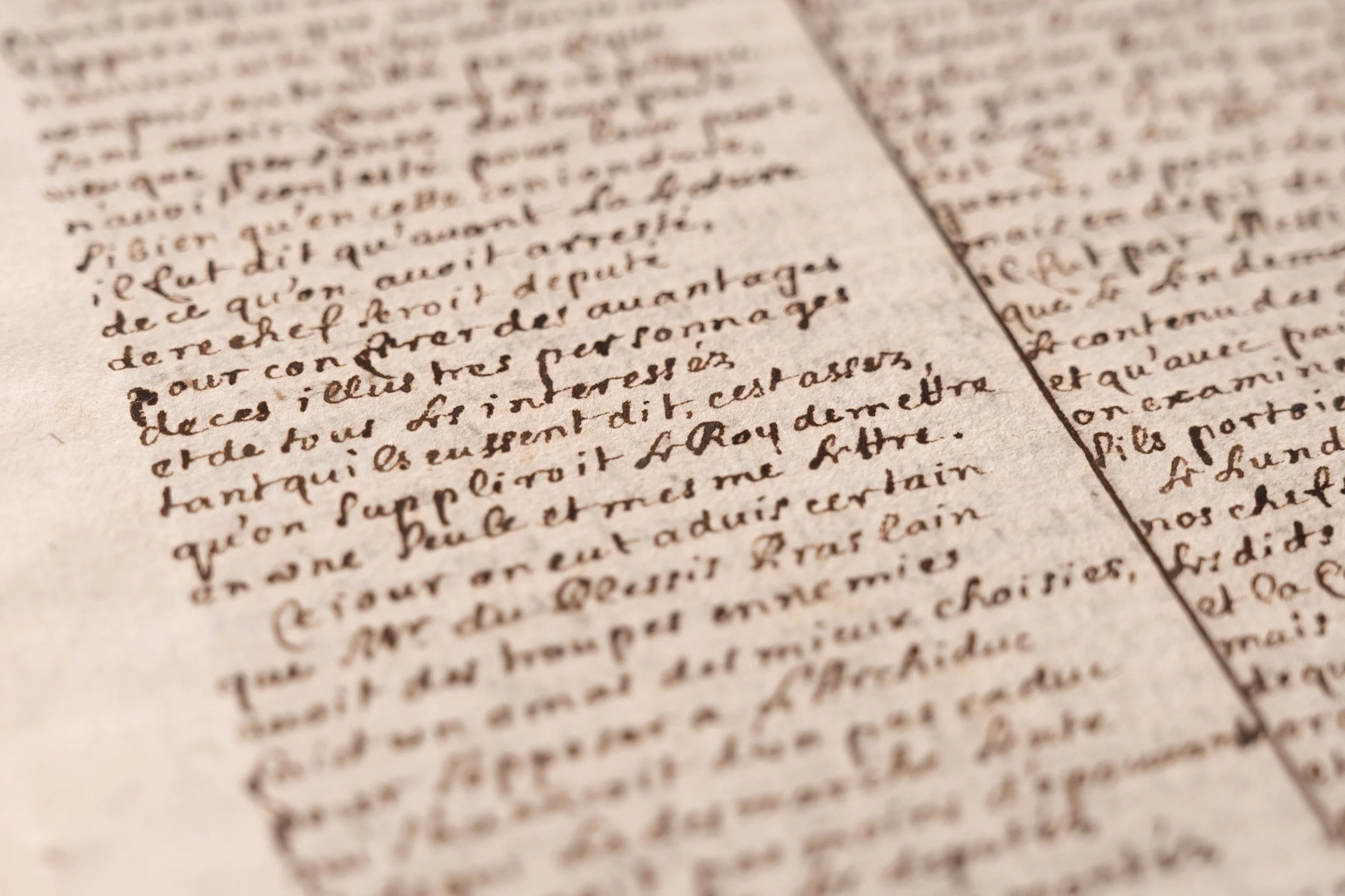 Image 7 of 40
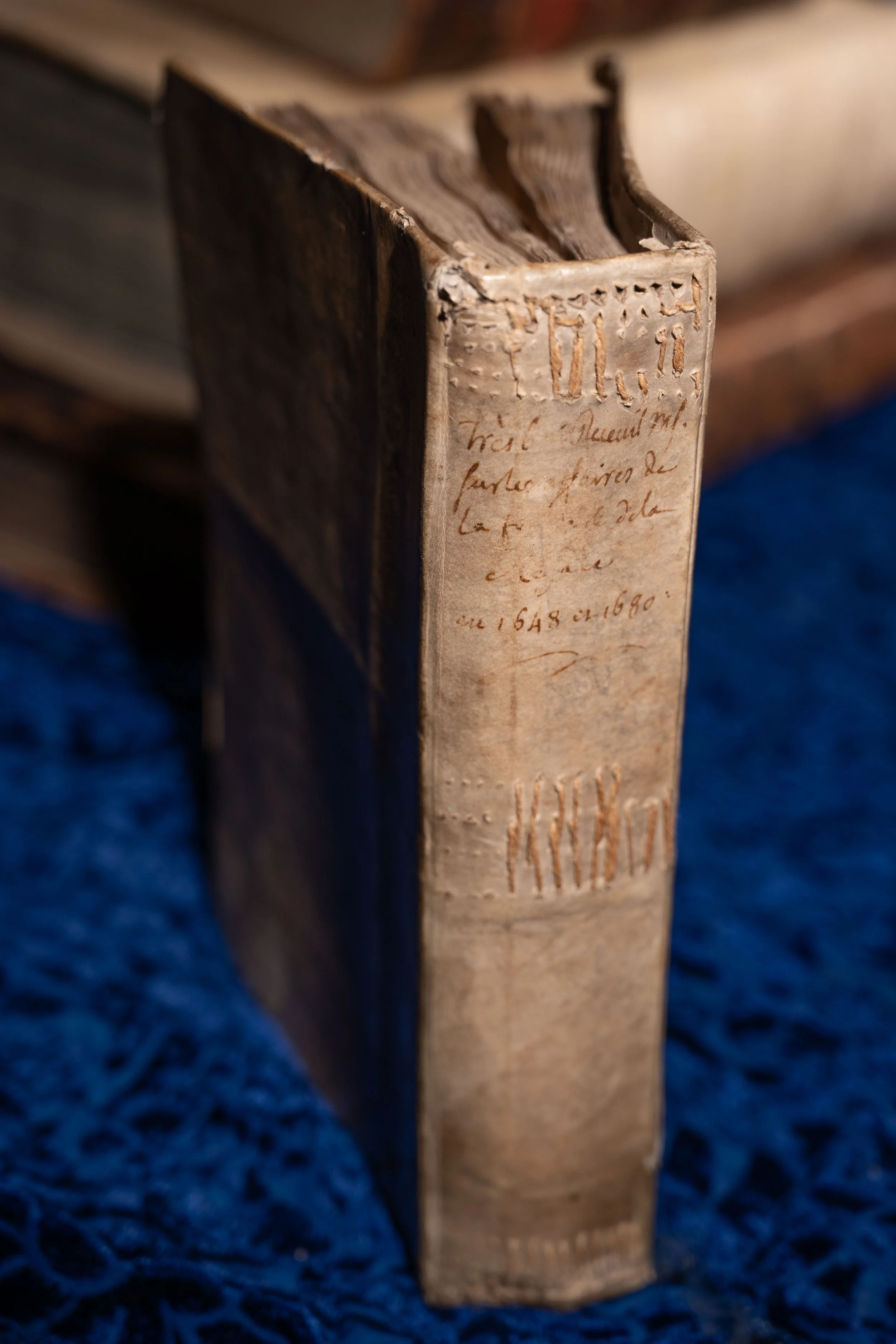 Image 8 of 40
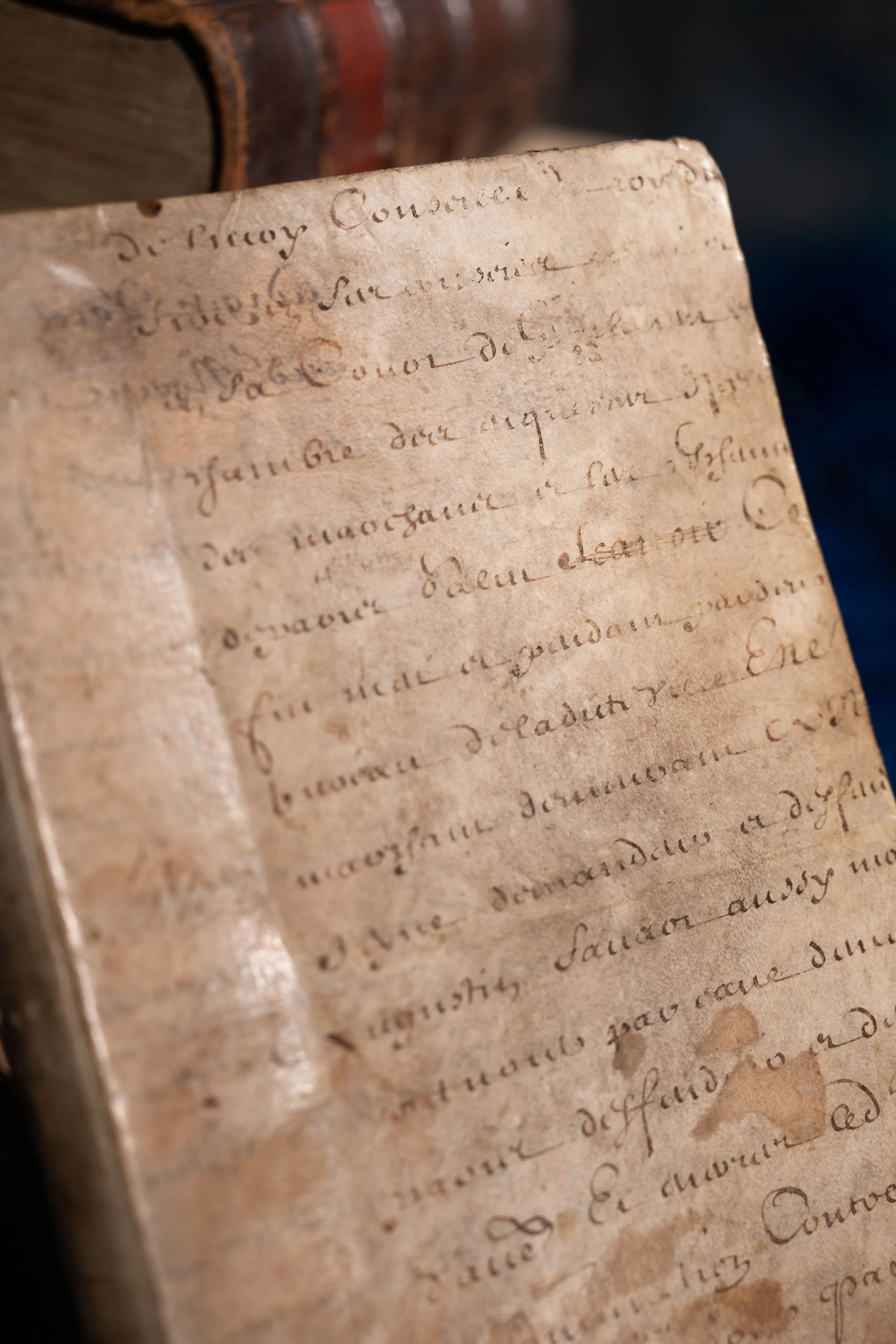 Image 9 of 40
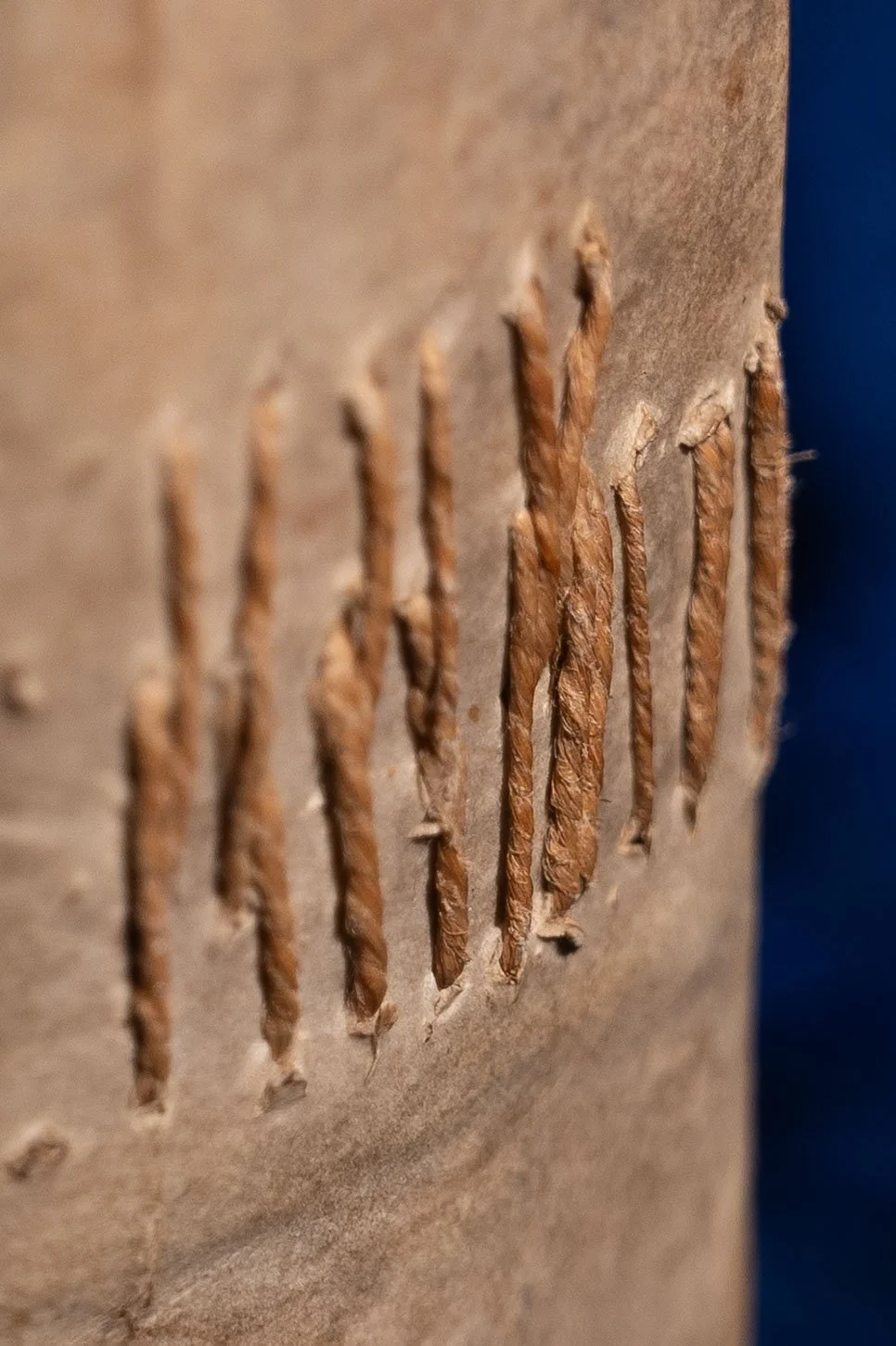 Image 10 of 40