Before Agrippa, the currents of Renaissance magic, Ficinian Neoplatonism, Reuchlin's Christian Kabbalah, the scattered traditions of natural philosophy, ran in separate channels. The De Occulta Philosophia Libri Tres (Vol. I) organized them into a single coherent system, ascending from elemental magic through celestial influences to the intellectual world of angels and divine names. It is less a contribution to the Western esoteric tradition than its architecture: the framework within which virtually all subsequent learned magic operated, from Dee to the Golden Dawn.
Yet Agrippa was no credulous enthusiast. His De incertitudine et vanitate scientiarum (Vol. II) offers a devastating skeptical deconstruction of all human learning, including the very magical arts he had so carefully systematized. To own the Opera Omnia is to hold both poles of Renaissance intellectual ambition: the Magus who constructed the cosmos and the Skeptic who dismantled it.
The Opera Omnia is considerably more than these two famous works, however, and it is the additional contents that make a complete set a working library of Renaissance magic rather than a pair of individual treatises. Volume I includes the Ars Notoria (beginning p. 582), a major text of ritual magic whose transmission history reaches back to the thirteenth century, as well as the Heptameron of Peter of Abano, a practical manual of planetary magic that circulated widely among early modern conjurors and remains one of the most frequently encountered texts in the grimoire tradition. Volume II contains Agrippa's De nobilitate et praecellentia foeminei sexus, his spirited defense of the superiority of women, a text with a genuine afterlife in the history of feminist thought; along with works on Raymond Lull and Hermes Trismegistus, orations, letters, and epigrams.
These volumes bear the false imprint "Per Beringos fratres," now attributed to the Zetzner press in Strasbourg. The bibliographic history of the undated Beringos editions is complex; once thought to be mid-sixteenth century, they are now generally placed at the beginning of the seventeenth. That Strasbourg printers found it commercially viable to issue Agrippa's collected works decades after his death, under a fictitious Lyon imprint that suggests some lingering caution about the content, speaks to the enduring demand for the De Occulta Philosophia among both scholars and practitioners well into the new century. Sets are uncommon, as the second volume appears to have been issued separately.
PROVENANCE
1. Ernest Brinck (c. 1582–1649): Vol. I with his autograph inscription "Ex libris Ernesti Brinck" on preliminary blank. Brinck was a Dutch diplomat, librarian to the gymnasium and Gelders University at Harderwijk, and served repeatedly as that city's burgomaster. He is best known for his three alba amicorum (friendship books), which preserve contributions from an extraordinary range of scholars and notables—including Galileo Galilei, who in 1614 inscribed Brinck's album with a sketch of Jupiter's moons. That Brinck possessed Agrippa's magical philosophy speaks to the penetration of occult learning into the highest tiers of Dutch Golden Age intellectual life.
2. Guillaume Prousteau (1628–1715): Vol. II with his ownership inscription "Hic lib. fuit Guil. Prousteau Antecessoris" and, below, "Aurel. nunc est usus Studios. oium" ("of Orléans; now for the use of all students"). Prousteau was docteur régent (professor of law) at the University of Orléans, who in 1714 donated his library to the city, thereby founding the public library of Orléans. The second inscription indicates that this volume was designated for the university's use—a notable instance of Agrippa's philosophy being formally preserved within a French legal institution rather than suppressed.
3. Unidentified armorial bookplate (Vol. I pastedown): Crowned shield, quartered, surrounded by laurel branches.
4. Guy Bechtel (20th century): Vol. I with his bookplate ("Bibliophobe Bechtel," with motto "In carcere meo liber"). Bechtel was a French historian, bibliographer, and collector specializing in demonology, witchcraft, and Western esoterica. His ownership situates this copy within a modern scholarly-collector context. Though these volumes travelled separate paths through the libraries of northern Europe and France, their similar bindings allow them to present as a harmonious set.
CONTEMPORARY ANNOTATIONS
Vol. I contains scholarly marginalia in a contemporary hand, including a note on the mystical properties of the number seven citing Macrobius (In Somnium Scipionis) and Aulus Gellius (Noctes Atticae III.10). These annotations demonstrate serious humanist engagement with the text, placing Agrippa's Neoplatonic synthesis within the broader tradition of classical learning.
AGRIPPA, Heinrich Cornelius von Nettesheim (1486–1535). Opera Omnia, In Duos Tomos Concinne Digesta... Quibus Post Omnium Editiones De novo accessit Ars Notoria... [Complete 2-Volume Set]. Lugduni [i.e., Strasbourg]: Per Beringos fratres [Eberhard Zetzner], "1600" [c. 1600–1630].
PHYSICAL DESCRIPTION
8vo (approx. 165 × 100 mm). Two volumes. )(–2)(4, A–2T8 [2T7 & 8 blank]; )(–2)(8, A–2T8, A–2F8, 2G6. Complete. [24], 668, [16], 1156 pp.
Portrait of Agrippa on )(1v; 9 folding tables (2 on one page); numerous text woodcuts and charts; decorated initials and tailpieces throughout. Printer's device to title pages: Vol. I with standing figure and motto Defendit Ab Annis; Vol. II with three pillars supporting a crown (according to Heitz, Elsässische Büchermarken, pl. li, no. 1, this device was used by Eberhard Zetzner in Strasbourg). Edges red.
BINDING
Both volumes in similar contemporary vellum with yapp fore-edges. Manuscript titles to spines: "Agrippae opera omnia I" and "II"; Vol. I with "MDC" at foot. Endpapers renewed.
CONDITION
Vellum sound and tight with expected age-toning and soiling but remaining supple. Yapp edges intact. Text blocks generally clean; some browning, lighter than usual for this edition. Folding tables present and in good condition. A handsome, honest set showing evidence of use and study rather than mere display.
Before Agrippa, the currents of Renaissance magic, Ficinian Neoplatonism, Reuchlin's Christian Kabbalah, the scattered traditions of natural philosophy, ran in separate channels. The De Occulta Philosophia Libri Tres (Vol. I) organized them into a single coherent system, ascending from elemental magic through celestial influences to the intellectual world of angels and divine names. It is less a contribution to the Western esoteric tradition than its architecture: the framework within which virtually all subsequent learned magic operated, from Dee to the Golden Dawn.
Yet Agrippa was no credulous enthusiast. His De incertitudine et vanitate scientiarum (Vol. II) offers a devastating skeptical deconstruction of all human learning, including the very magical arts he had so carefully systematized. To own the Opera Omnia is to hold both poles of Renaissance intellectual ambition: the Magus who constructed the cosmos and the Skeptic who dismantled it.
The Opera Omnia is considerably more than these two famous works, however, and it is the additional contents that make a complete set a working library of Renaissance magic rather than a pair of individual treatises. Volume I includes the Ars Notoria (beginning p. 582), a major text of ritual magic whose transmission history reaches back to the thirteenth century, as well as the Heptameron of Peter of Abano, a practical manual of planetary magic that circulated widely among early modern conjurors and remains one of the most frequently encountered texts in the grimoire tradition. Volume II contains Agrippa's De nobilitate et praecellentia foeminei sexus, his spirited defense of the superiority of women, a text with a genuine afterlife in the history of feminist thought; along with works on Raymond Lull and Hermes Trismegistus, orations, letters, and epigrams.
These volumes bear the false imprint "Per Beringos fratres," now attributed to the Zetzner press in Strasbourg. The bibliographic history of the undated Beringos editions is complex; once thought to be mid-sixteenth century, they are now generally placed at the beginning of the seventeenth. That Strasbourg printers found it commercially viable to issue Agrippa's collected works decades after his death, under a fictitious Lyon imprint that suggests some lingering caution about the content, speaks to the enduring demand for the De Occulta Philosophia among both scholars and practitioners well into the new century. Sets are uncommon, as the second volume appears to have been issued separately.
PROVENANCE
1. Ernest Brinck (c. 1582–1649): Vol. I with his autograph inscription "Ex libris Ernesti Brinck" on preliminary blank. Brinck was a Dutch diplomat, librarian to the gymnasium and Gelders University at Harderwijk, and served repeatedly as that city's burgomaster. He is best known for his three alba amicorum (friendship books), which preserve contributions from an extraordinary range of scholars and notables—including Galileo Galilei, who in 1614 inscribed Brinck's album with a sketch of Jupiter's moons. That Brinck possessed Agrippa's magical philosophy speaks to the penetration of occult learning into the highest tiers of Dutch Golden Age intellectual life.
2. Guillaume Prousteau (1628–1715): Vol. II with his ownership inscription "Hic lib. fuit Guil. Prousteau Antecessoris" and, below, "Aurel. nunc est usus Studios. oium" ("of Orléans; now for the use of all students"). Prousteau was docteur régent (professor of law) at the University of Orléans, who in 1714 donated his library to the city, thereby founding the public library of Orléans. The second inscription indicates that this volume was designated for the university's use—a notable instance of Agrippa's philosophy being formally preserved within a French legal institution rather than suppressed.
3. Unidentified armorial bookplate (Vol. I pastedown): Crowned shield, quartered, surrounded by laurel branches.
4. Guy Bechtel (20th century): Vol. I with his bookplate ("Bibliophobe Bechtel," with motto "In carcere meo liber"). Bechtel was a French historian, bibliographer, and collector specializing in demonology, witchcraft, and Western esoterica. His ownership situates this copy within a modern scholarly-collector context. Though these volumes travelled separate paths through the libraries of northern Europe and France, their similar bindings allow them to present as a harmonious set.
CONTEMPORARY ANNOTATIONS
Vol. I contains scholarly marginalia in a contemporary hand, including a note on the mystical properties of the number seven citing Macrobius (In Somnium Scipionis) and Aulus Gellius (Noctes Atticae III.10). These annotations demonstrate serious humanist engagement with the text, placing Agrippa's Neoplatonic synthesis within the broader tradition of classical learning.
AGRIPPA, Heinrich Cornelius von Nettesheim (1486–1535). Opera Omnia, In Duos Tomos Concinne Digesta... Quibus Post Omnium Editiones De novo accessit Ars Notoria... [Complete 2-Volume Set]. Lugduni [i.e., Strasbourg]: Per Beringos fratres [Eberhard Zetzner], "1600" [c. 1600–1630].
PHYSICAL DESCRIPTION
8vo (approx. 165 × 100 mm). Two volumes. )(–2)(4, A–2T8 [2T7 & 8 blank]; )(–2)(8, A–2T8, A–2F8, 2G6. Complete. [24], 668, [16], 1156 pp.
Portrait of Agrippa on )(1v; 9 folding tables (2 on one page); numerous text woodcuts and charts; decorated initials and tailpieces throughout. Printer's device to title pages: Vol. I with standing figure and motto Defendit Ab Annis; Vol. II with three pillars supporting a crown (according to Heitz, Elsässische Büchermarken, pl. li, no. 1, this device was used by Eberhard Zetzner in Strasbourg). Edges red.
BINDING
Both volumes in similar contemporary vellum with yapp fore-edges. Manuscript titles to spines: "Agrippae opera omnia I" and "II"; Vol. I with "MDC" at foot. Endpapers renewed.
CONDITION
Vellum sound and tight with expected age-toning and soiling but remaining supple. Yapp edges intact. Text blocks generally clean; some browning, lighter than usual for this edition. Folding tables present and in good condition. A handsome, honest set showing evidence of use and study rather than mere display.

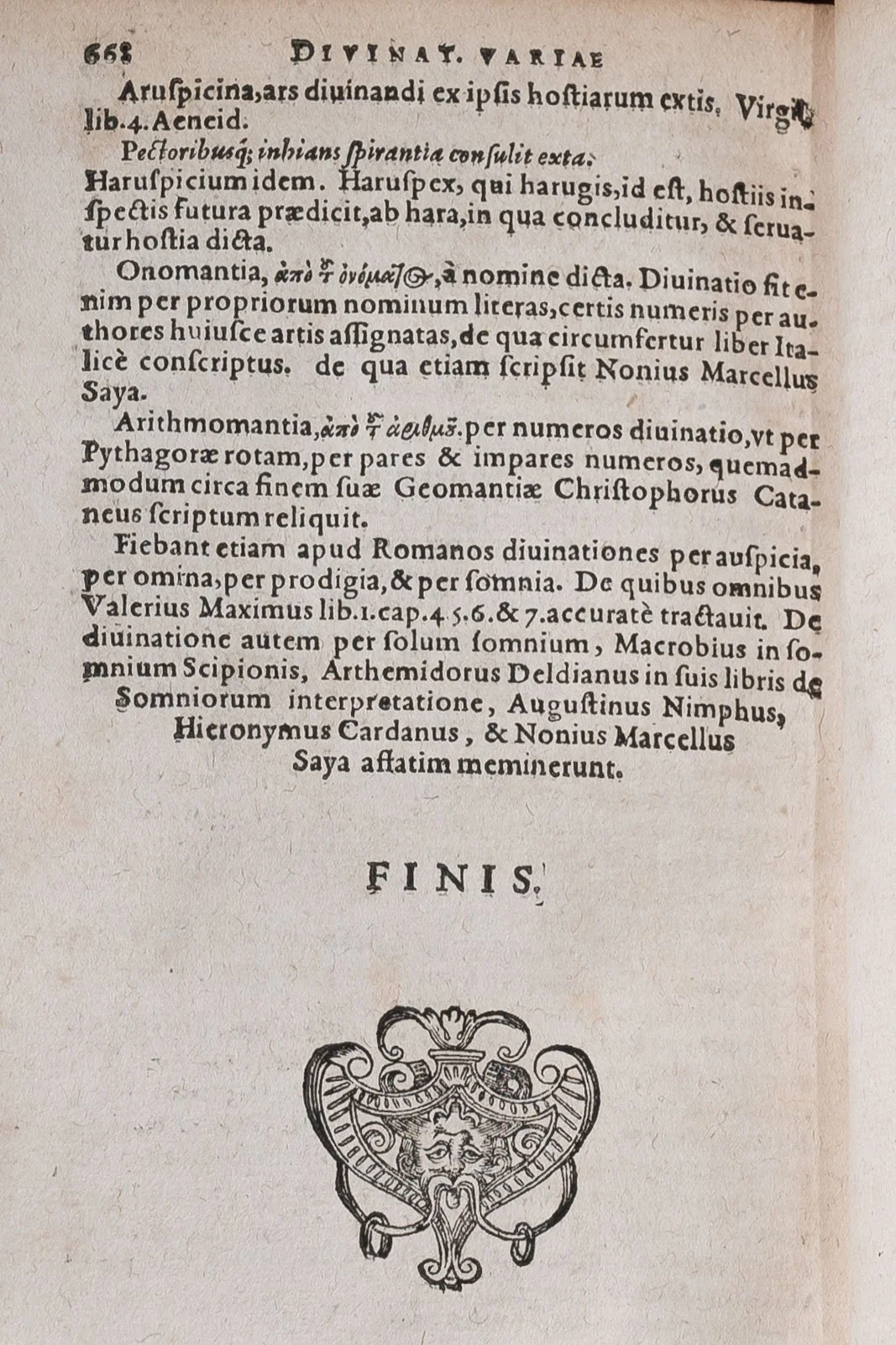 Image 1 of 33
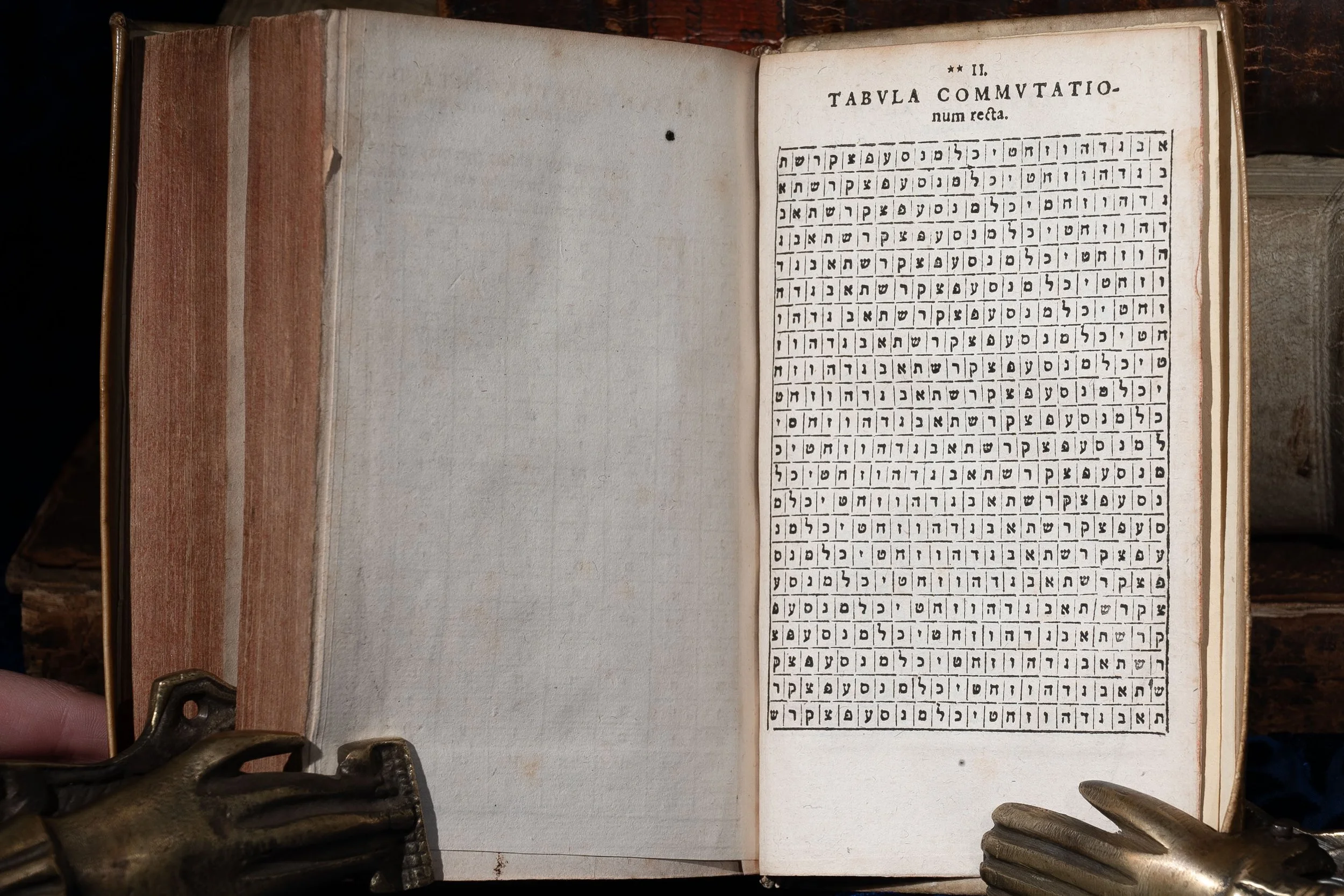 Image 2 of 33
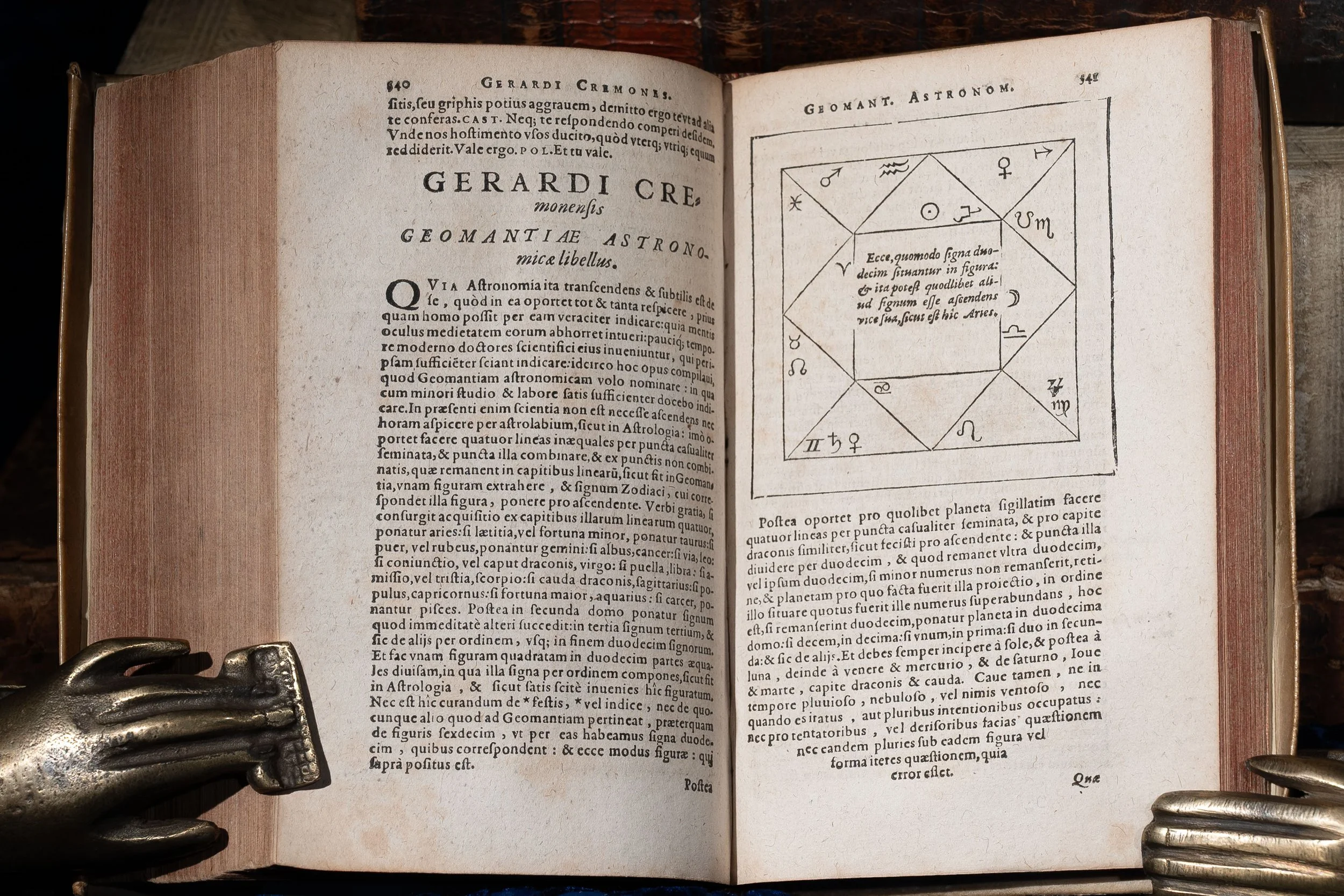 Image 3 of 33
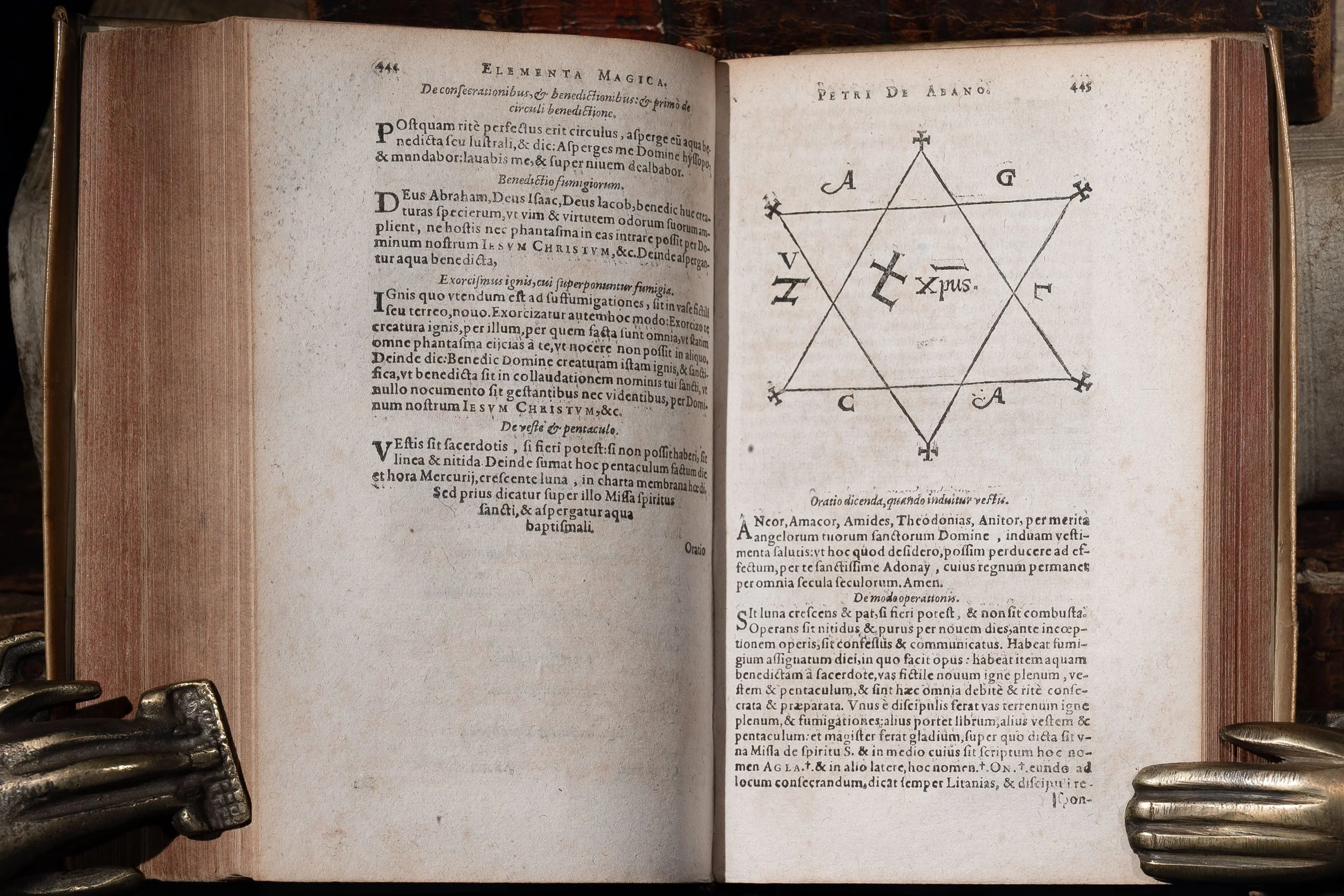 Image 4 of 33
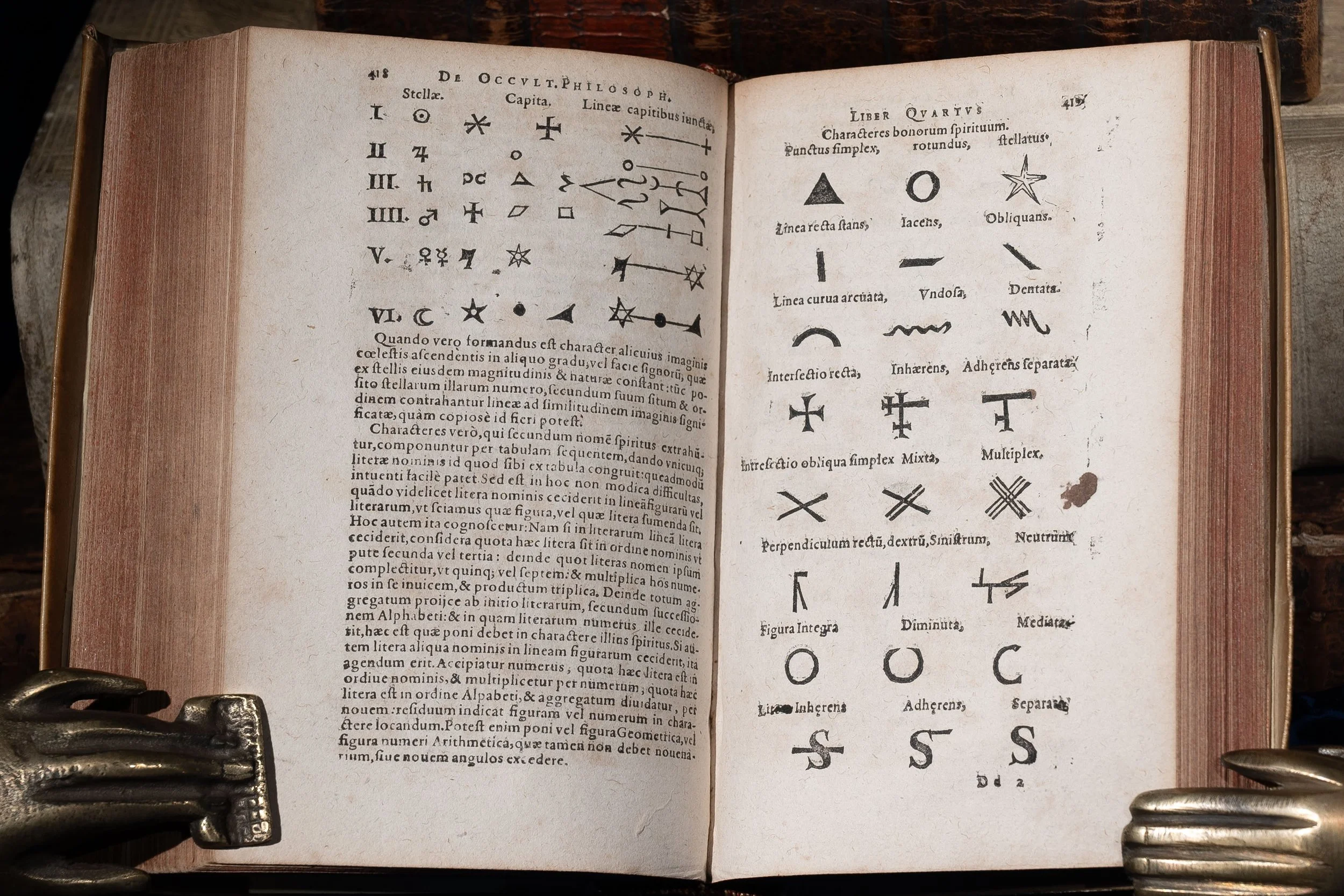 Image 5 of 33
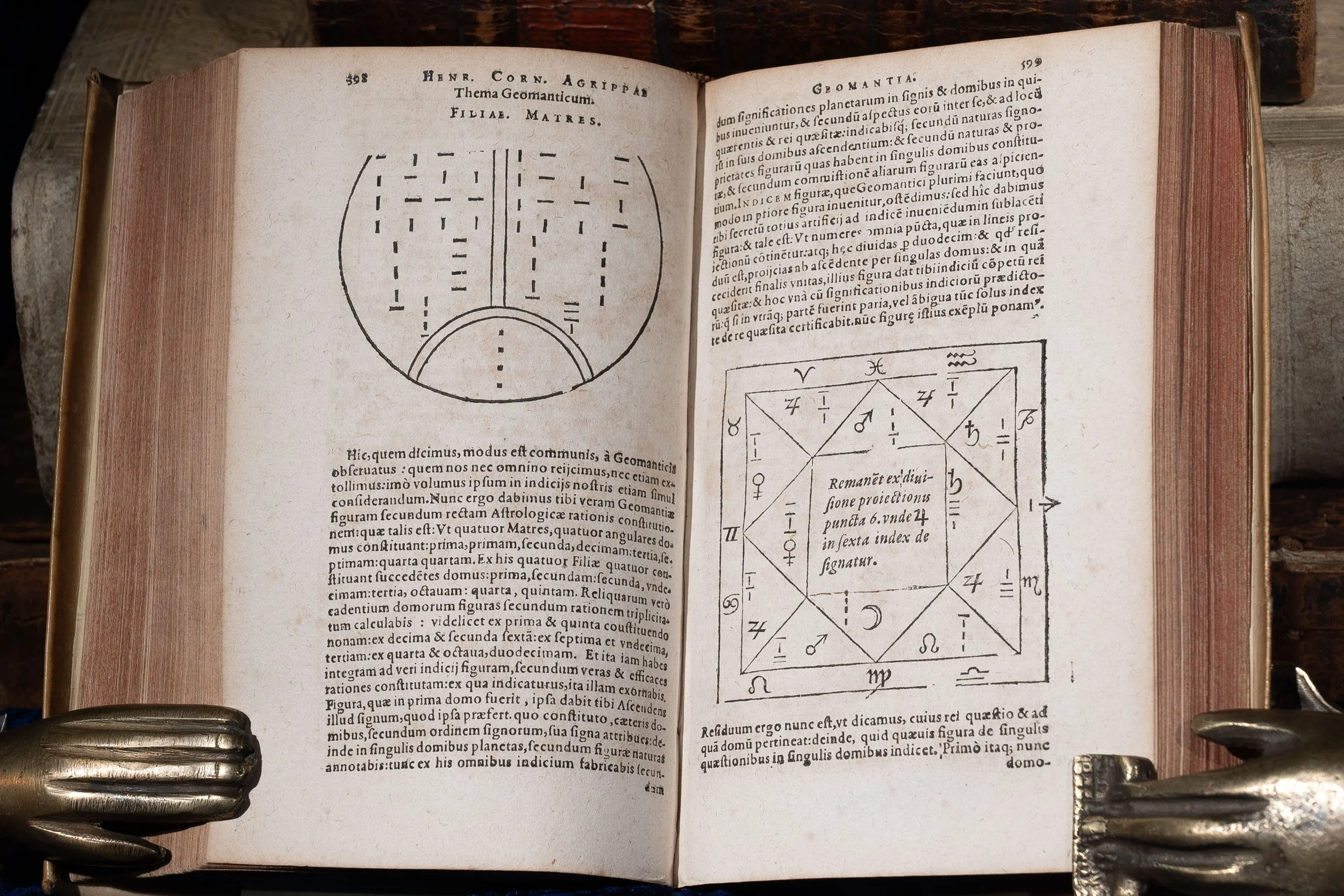 Image 6 of 33
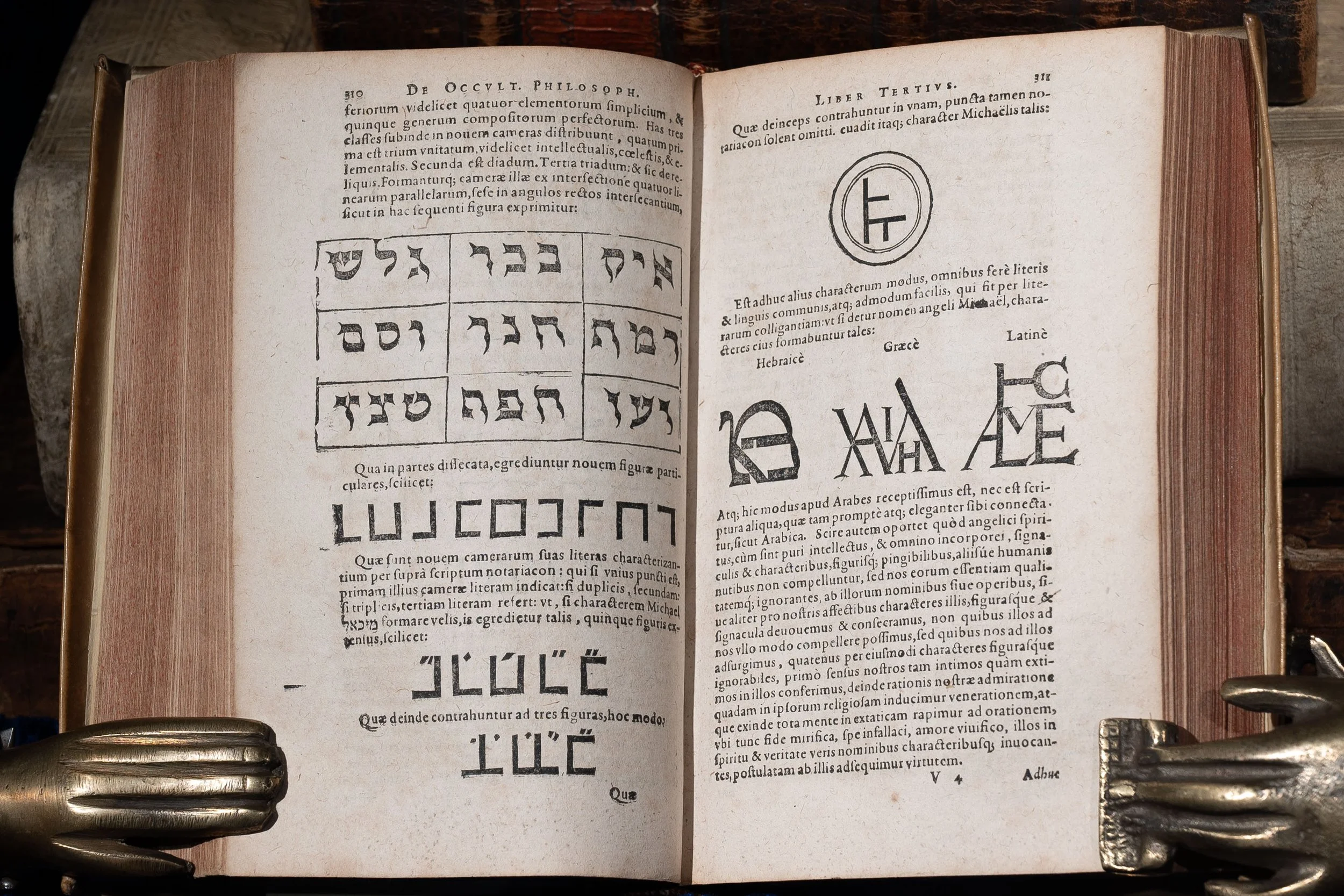 Image 7 of 33
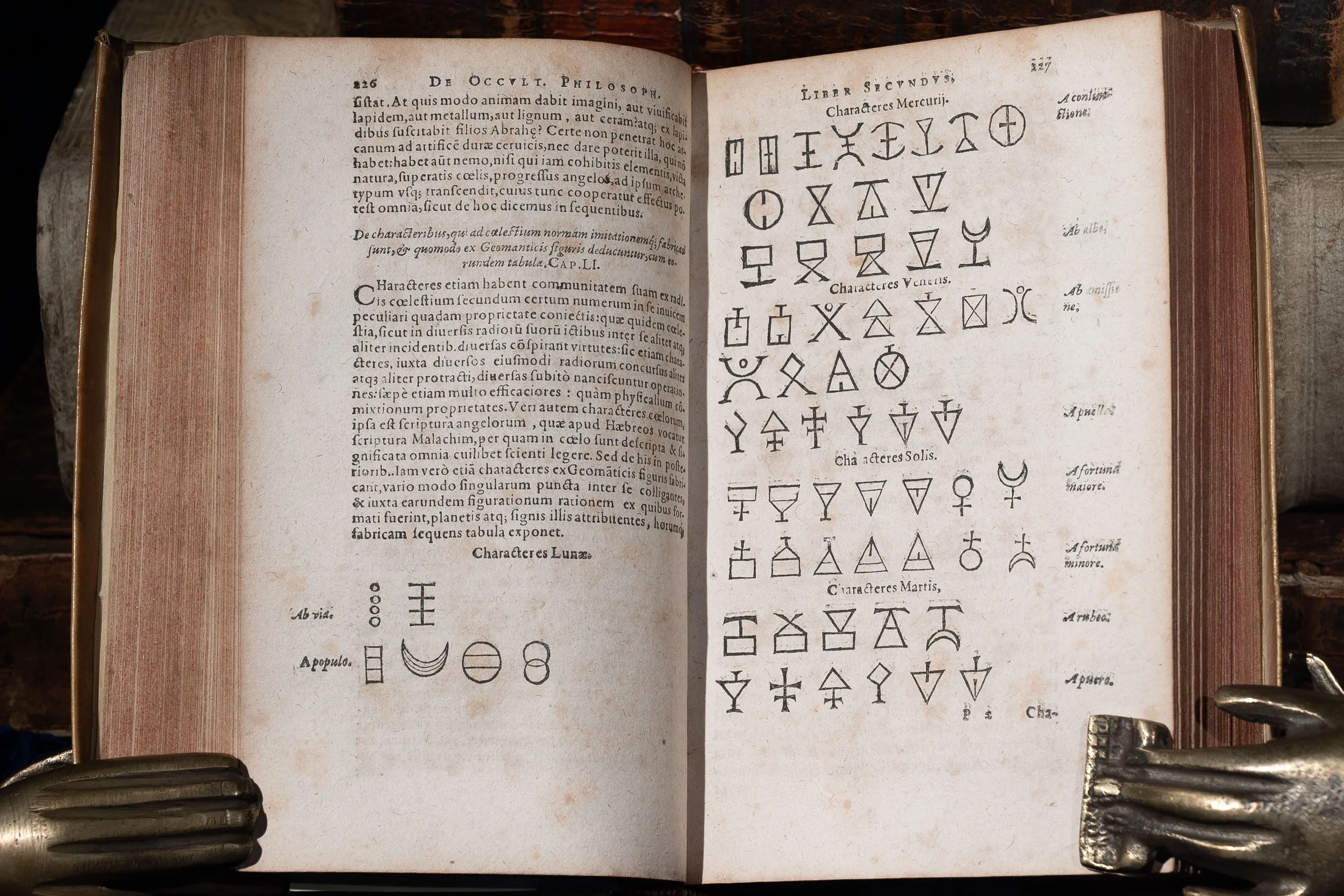 Image 8 of 33
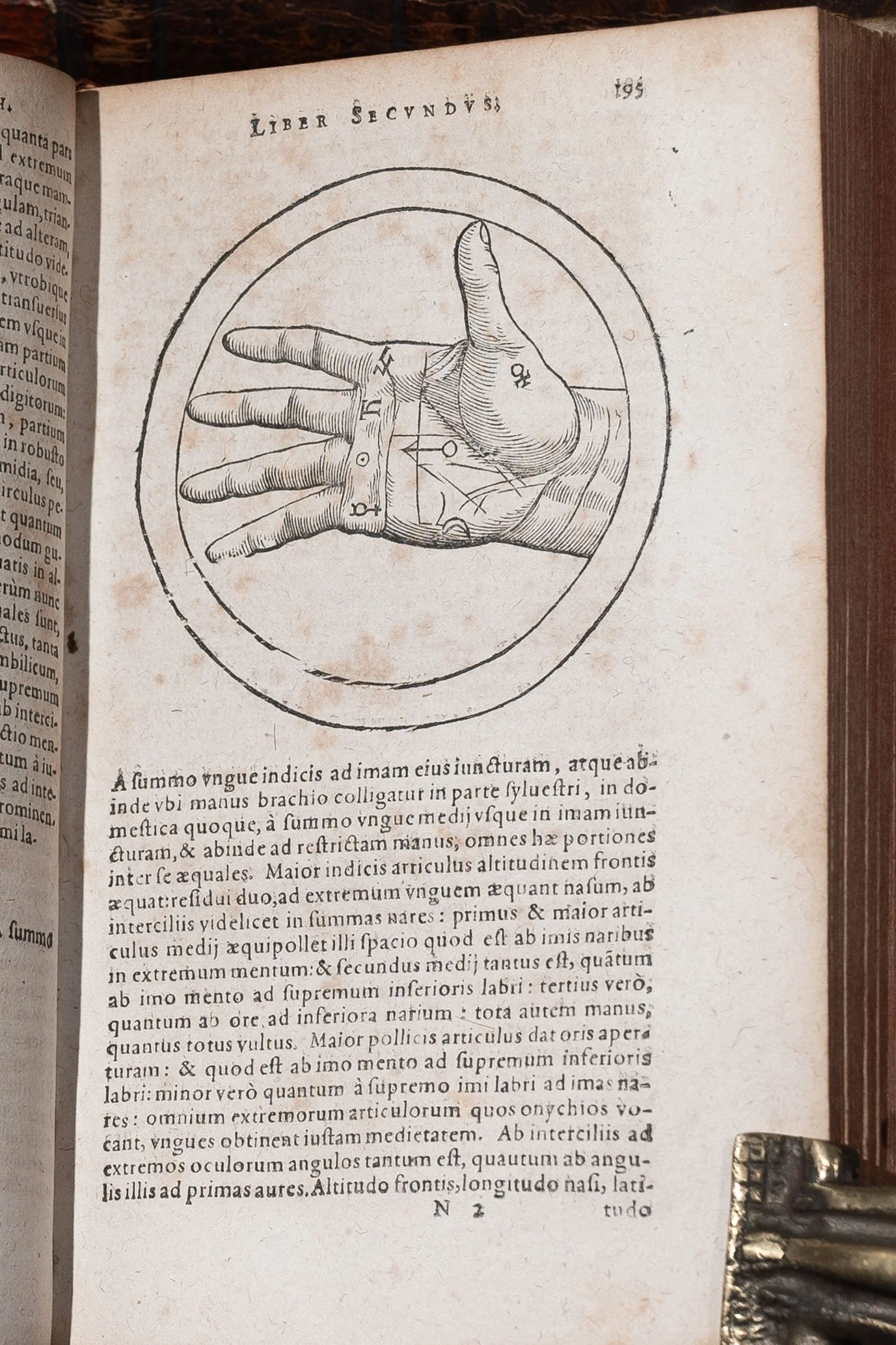 Image 9 of 33
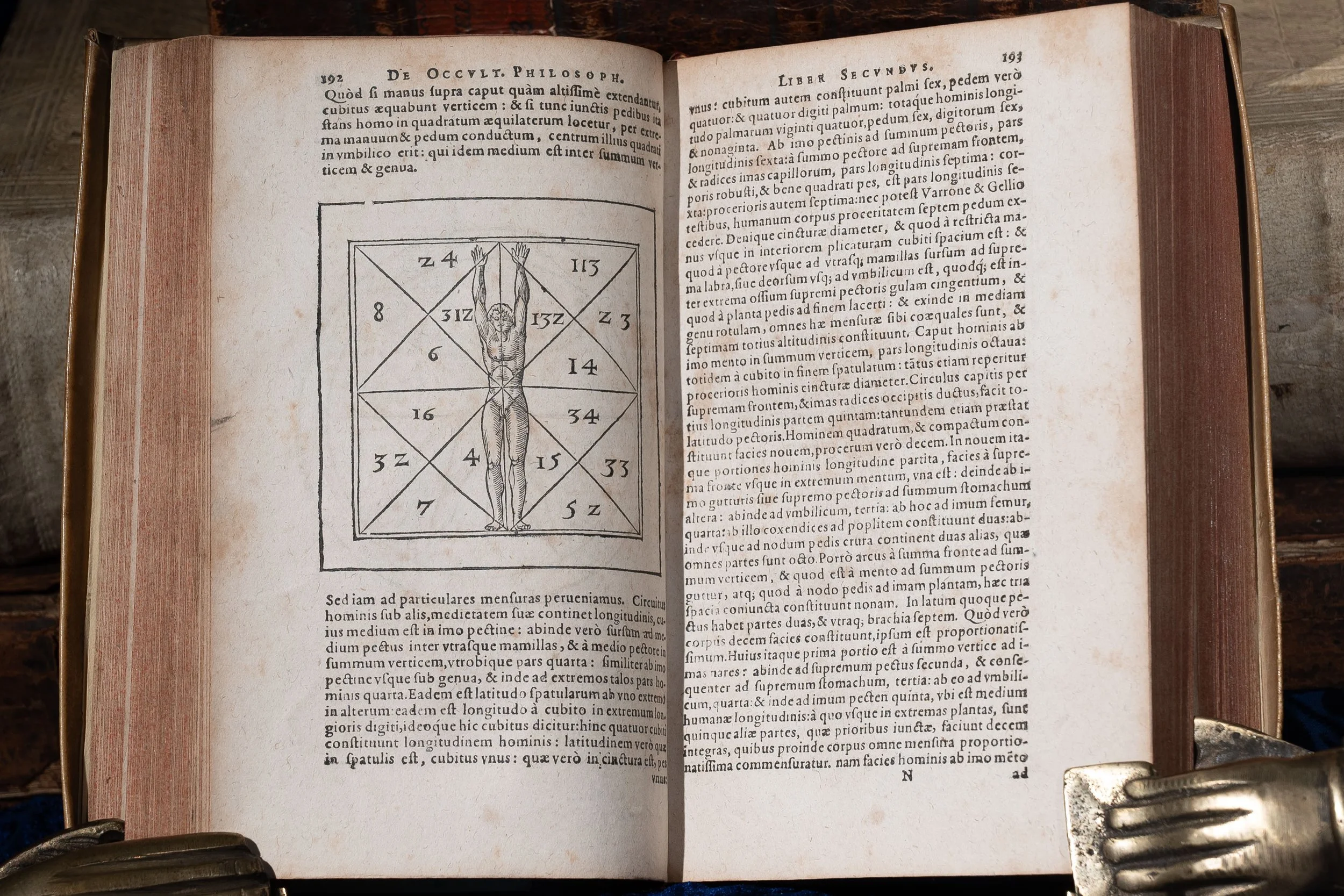 Image 10 of 33
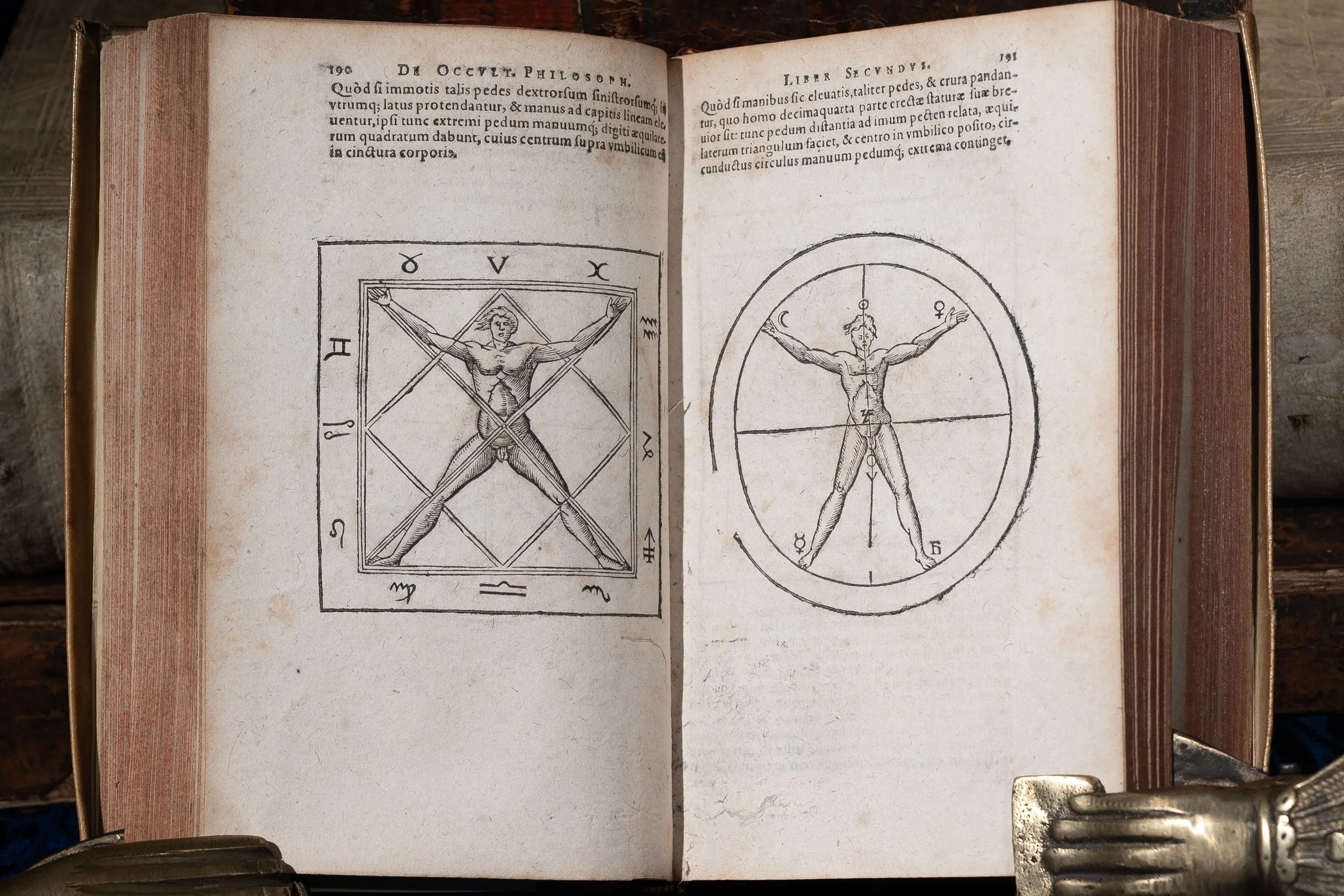 Image 11 of 33
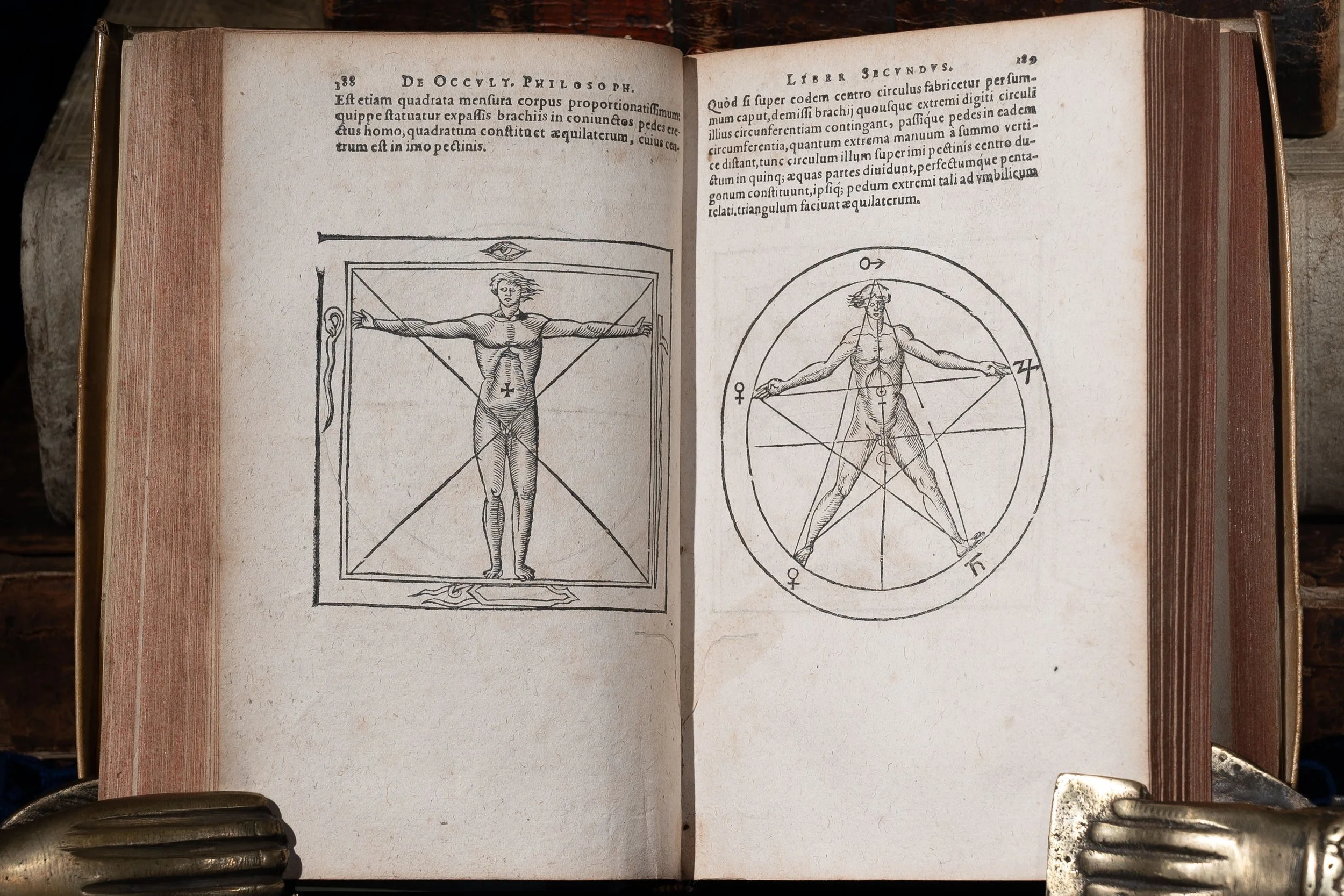 Image 12 of 33
 Image 13 of 33
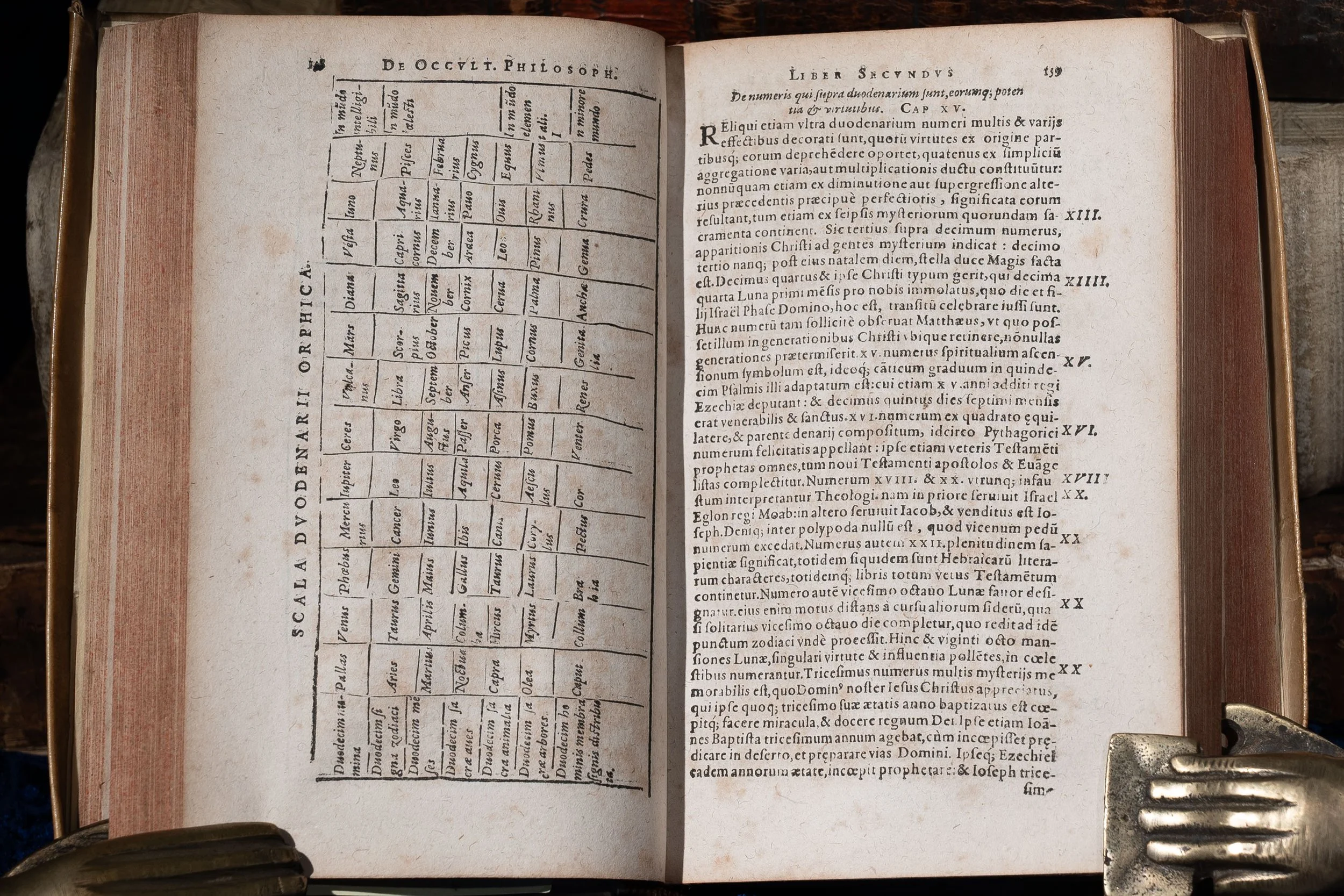 Image 14 of 33
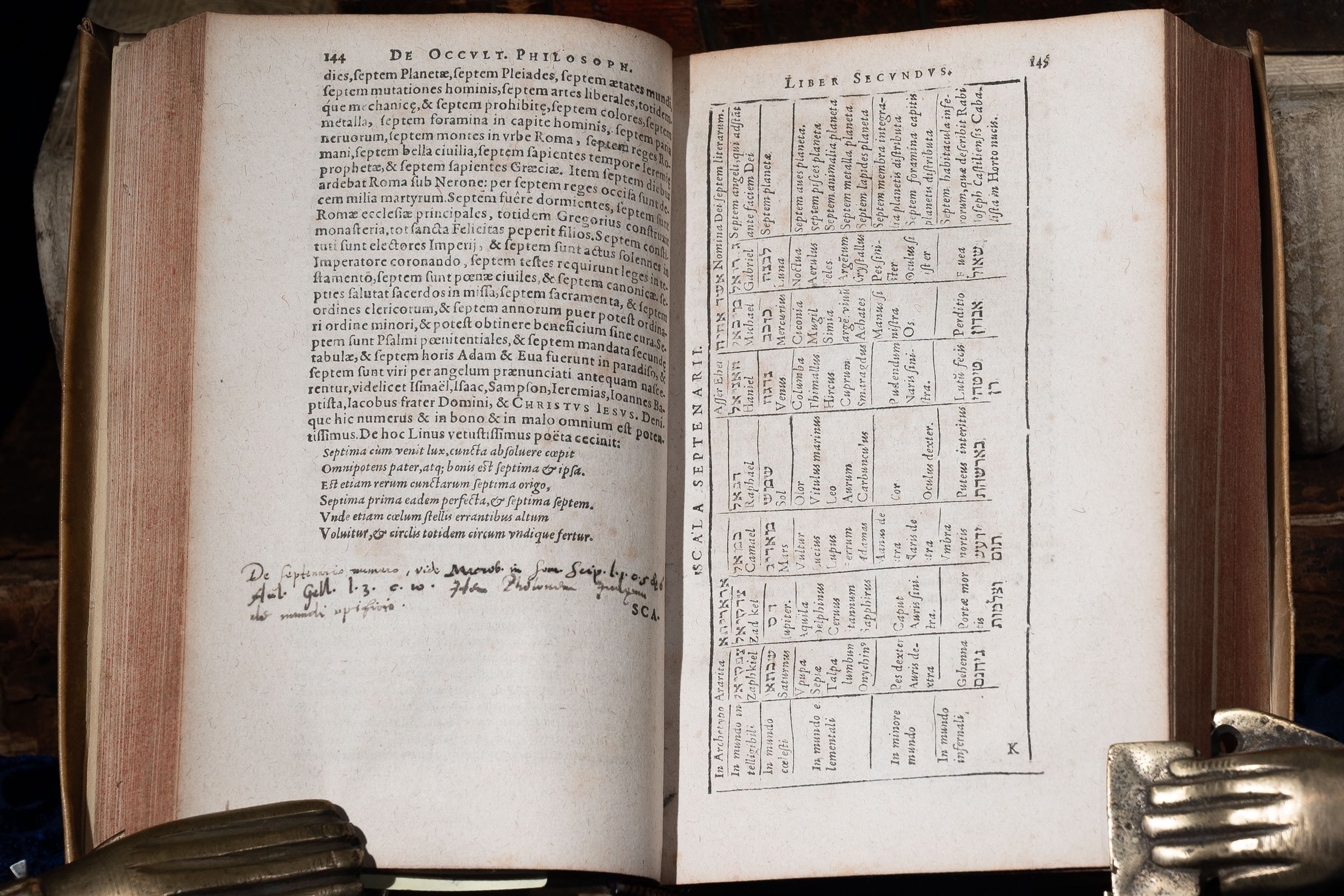 Image 15 of 33
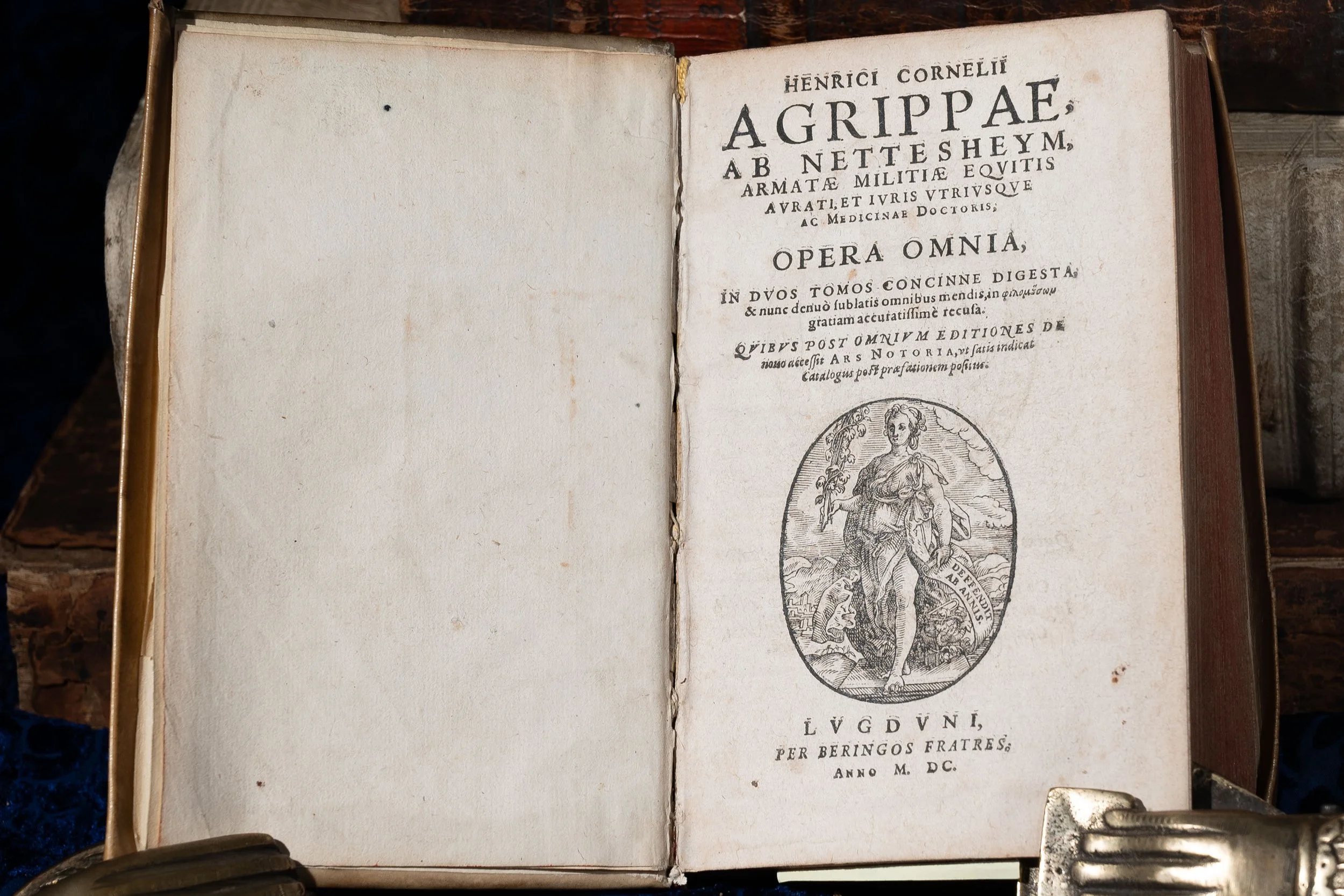 Image 16 of 33
 Image 17 of 33
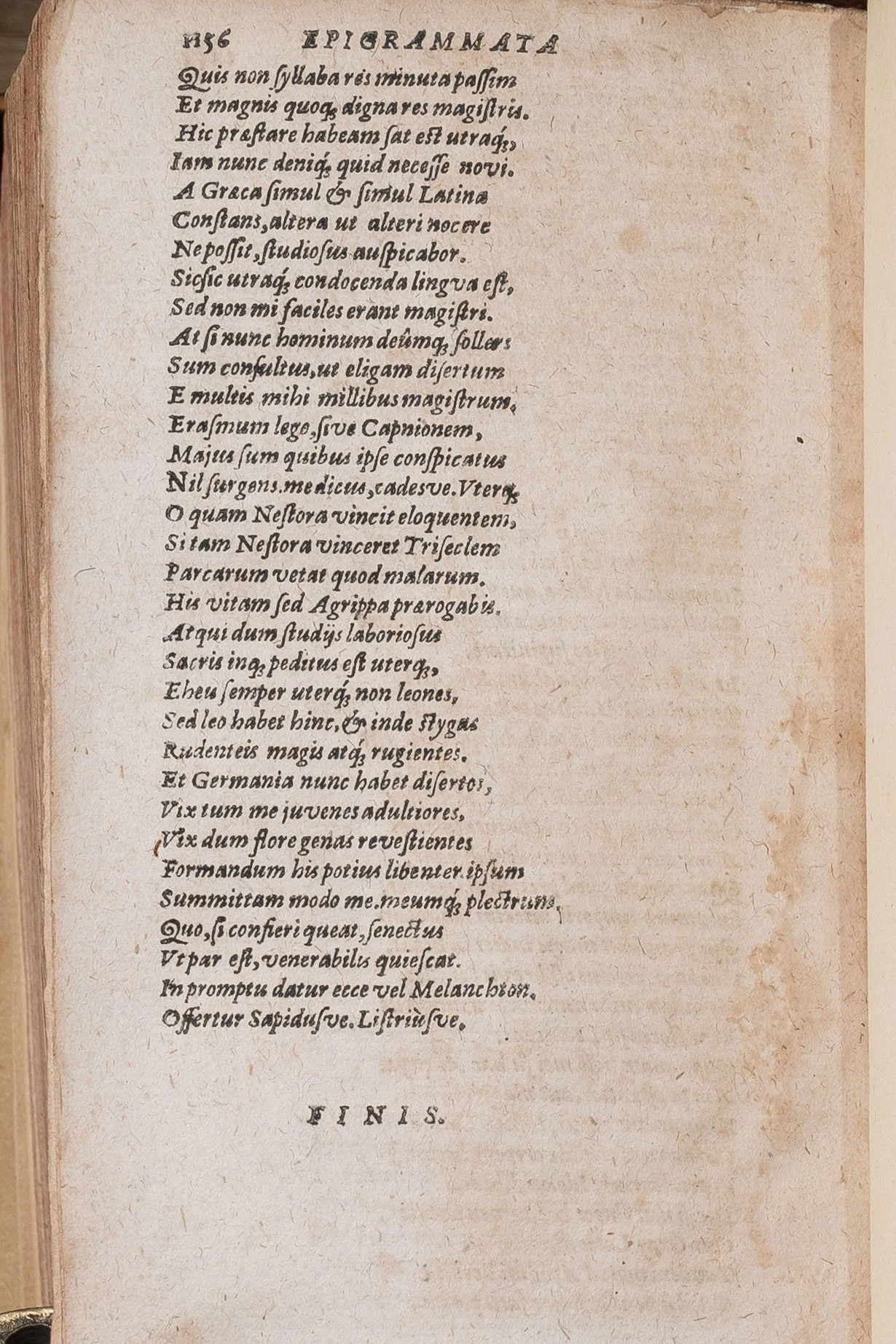 Image 18 of 33
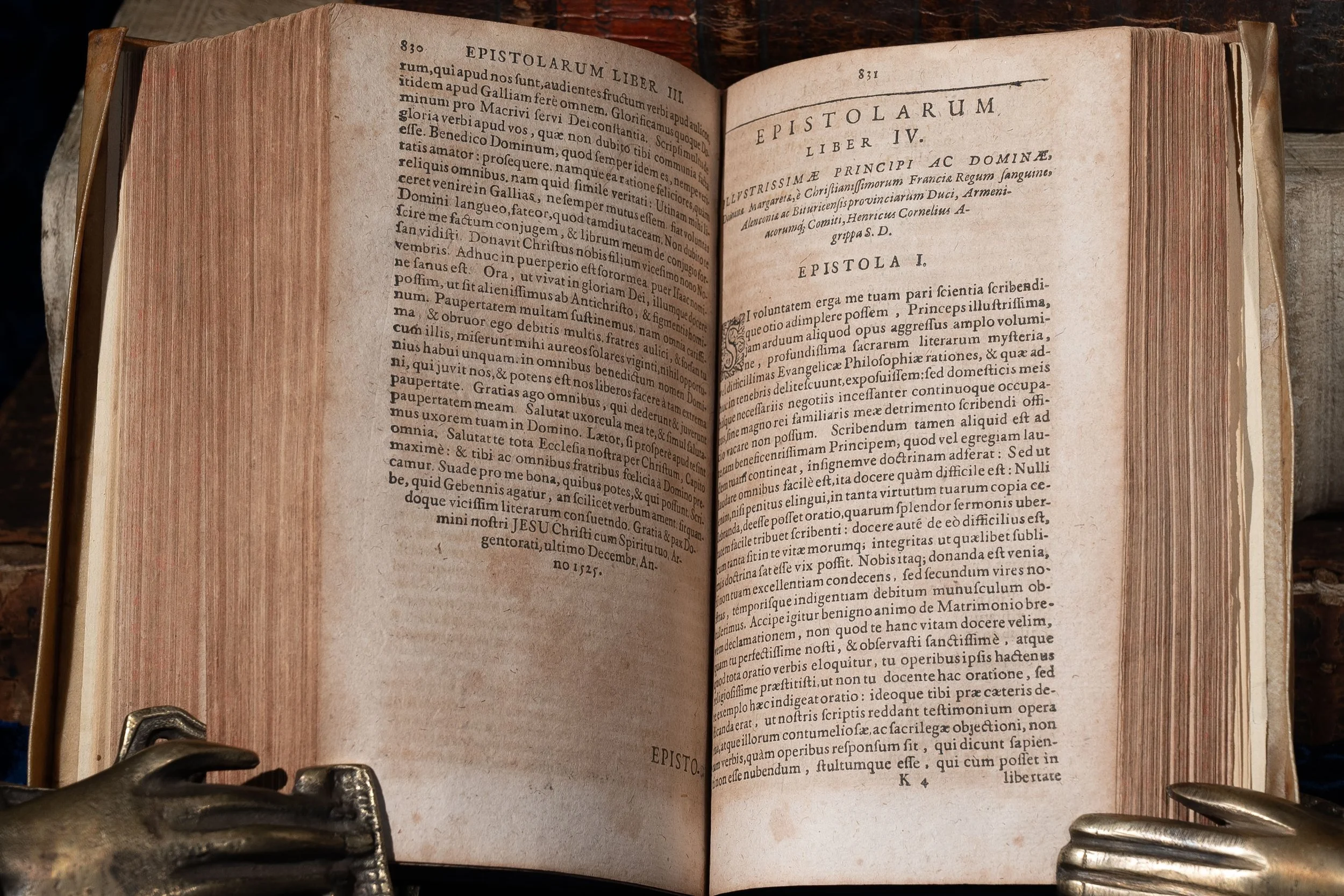 Image 19 of 33
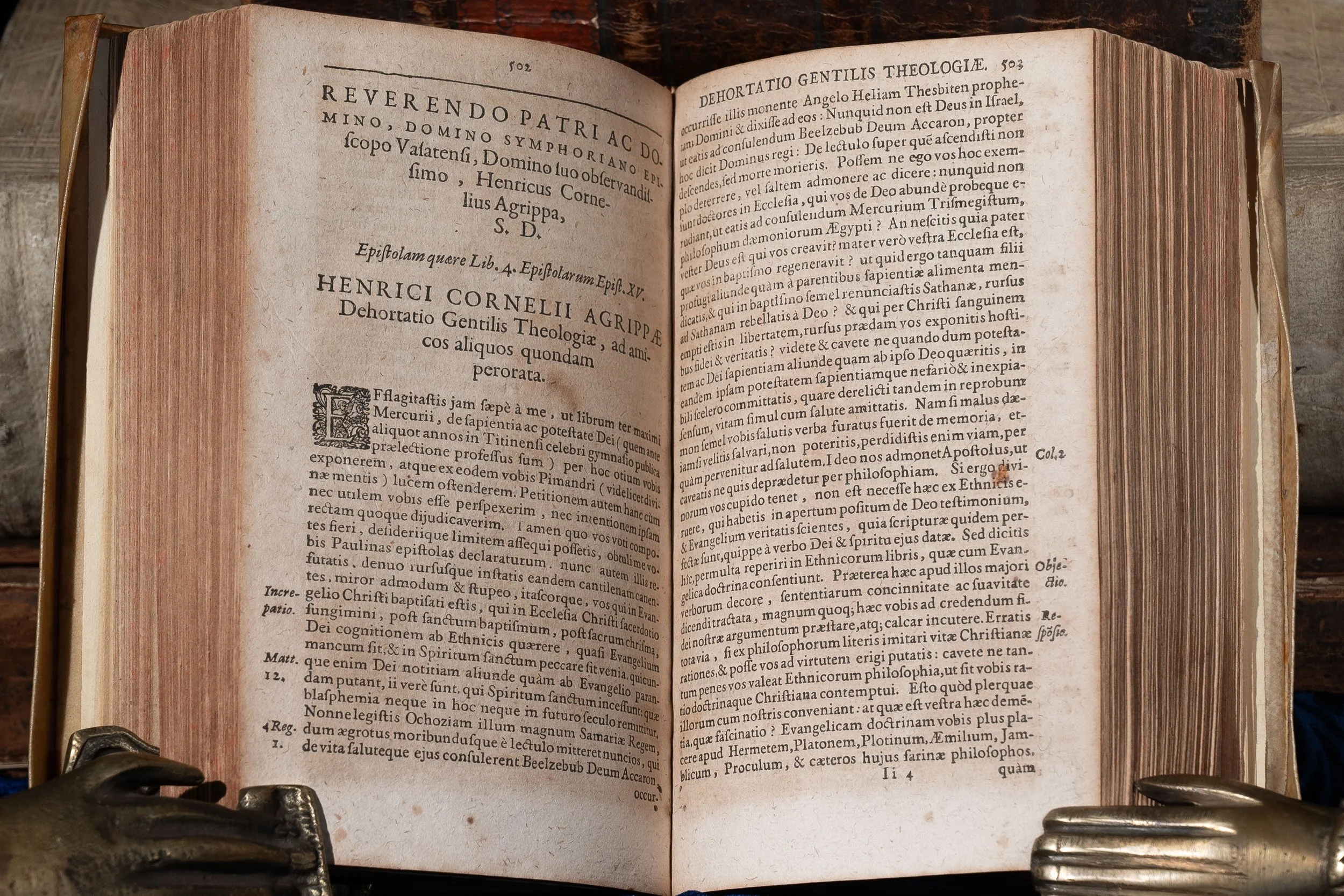 Image 20 of 33
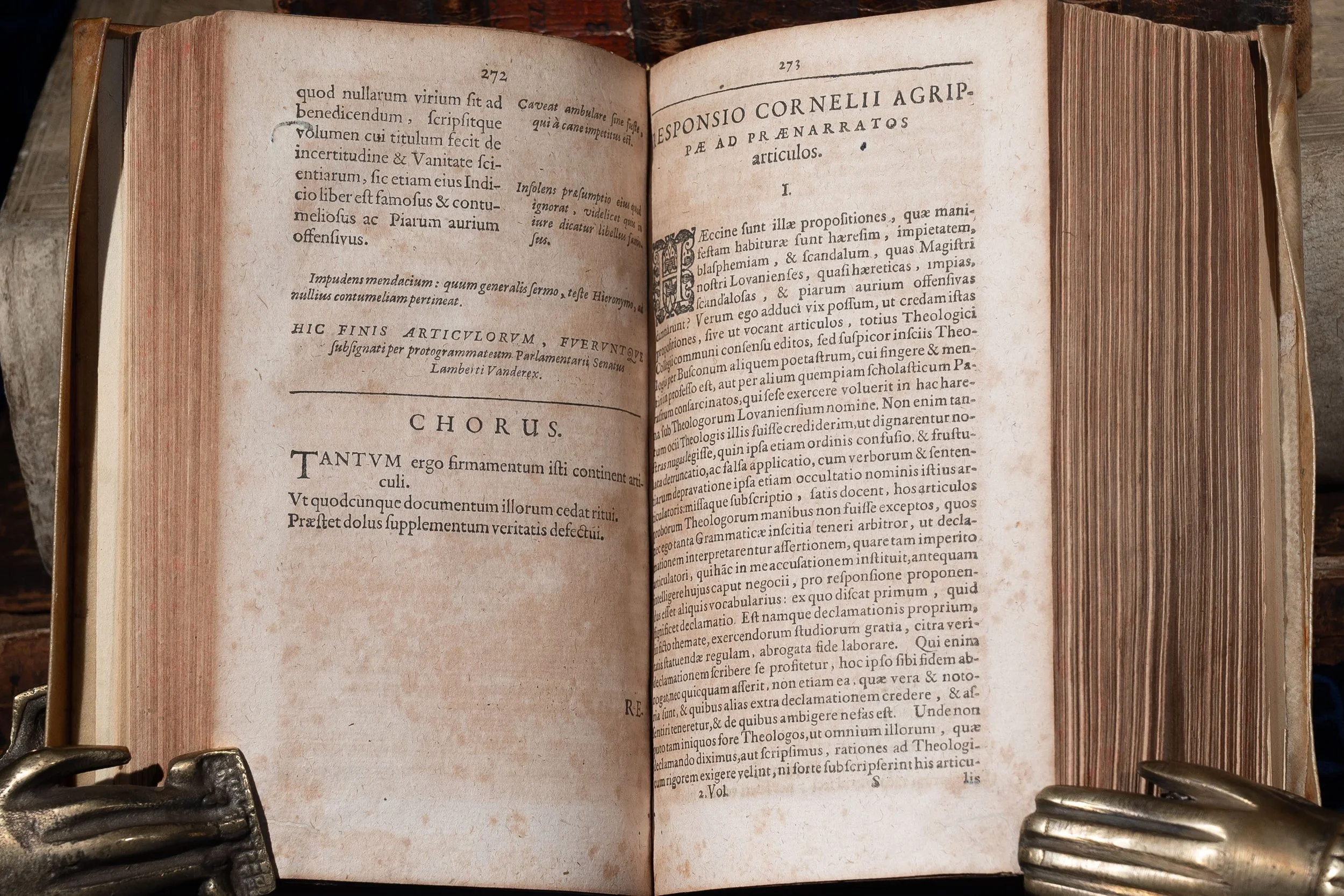 Image 21 of 33
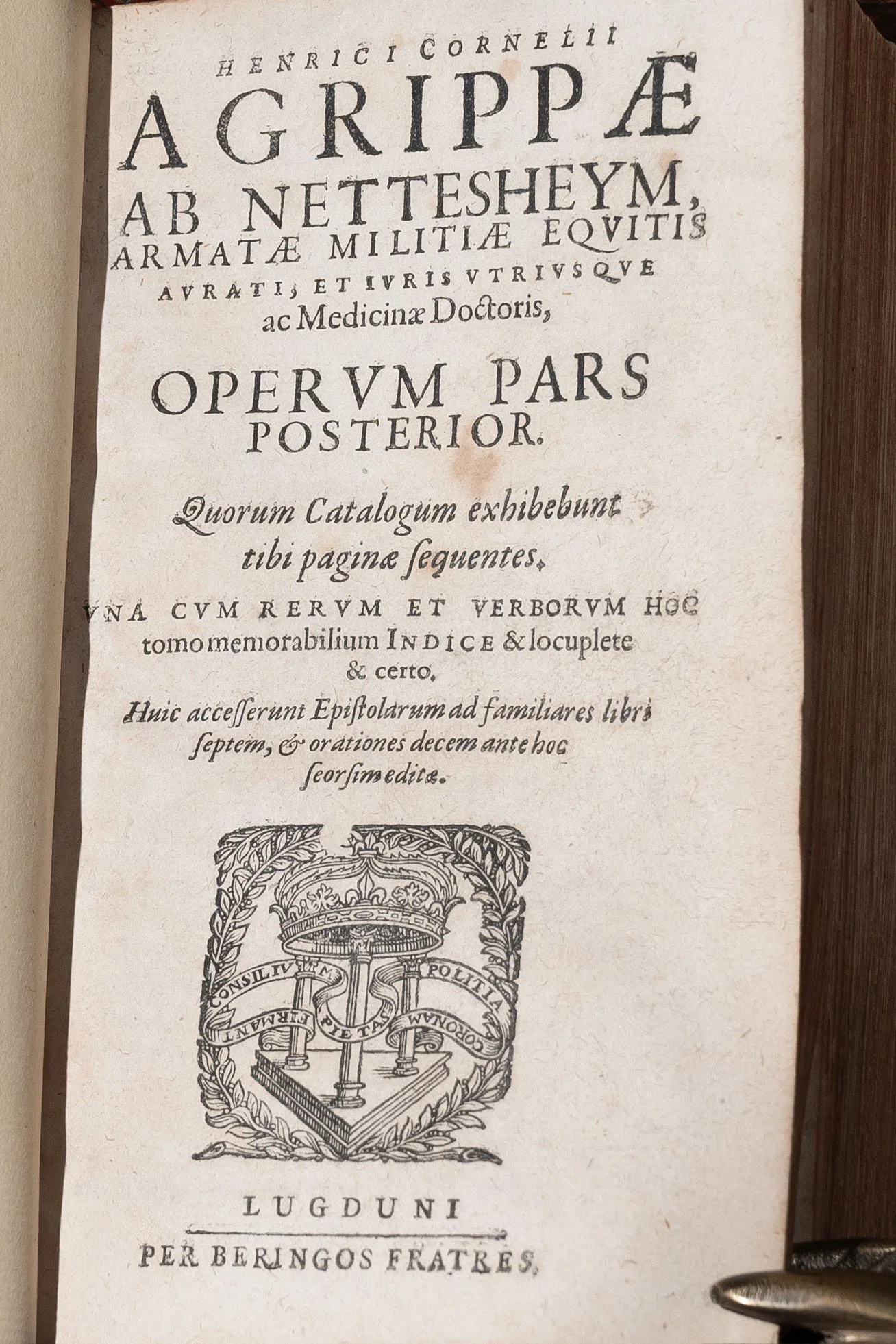 Image 22 of 33
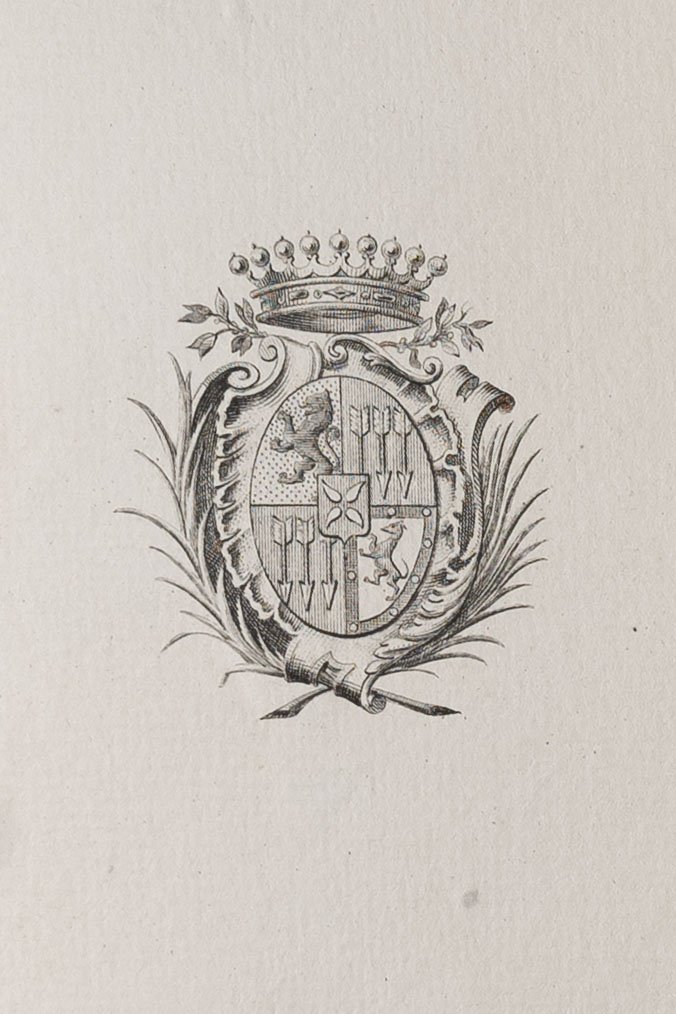 Image 23 of 33
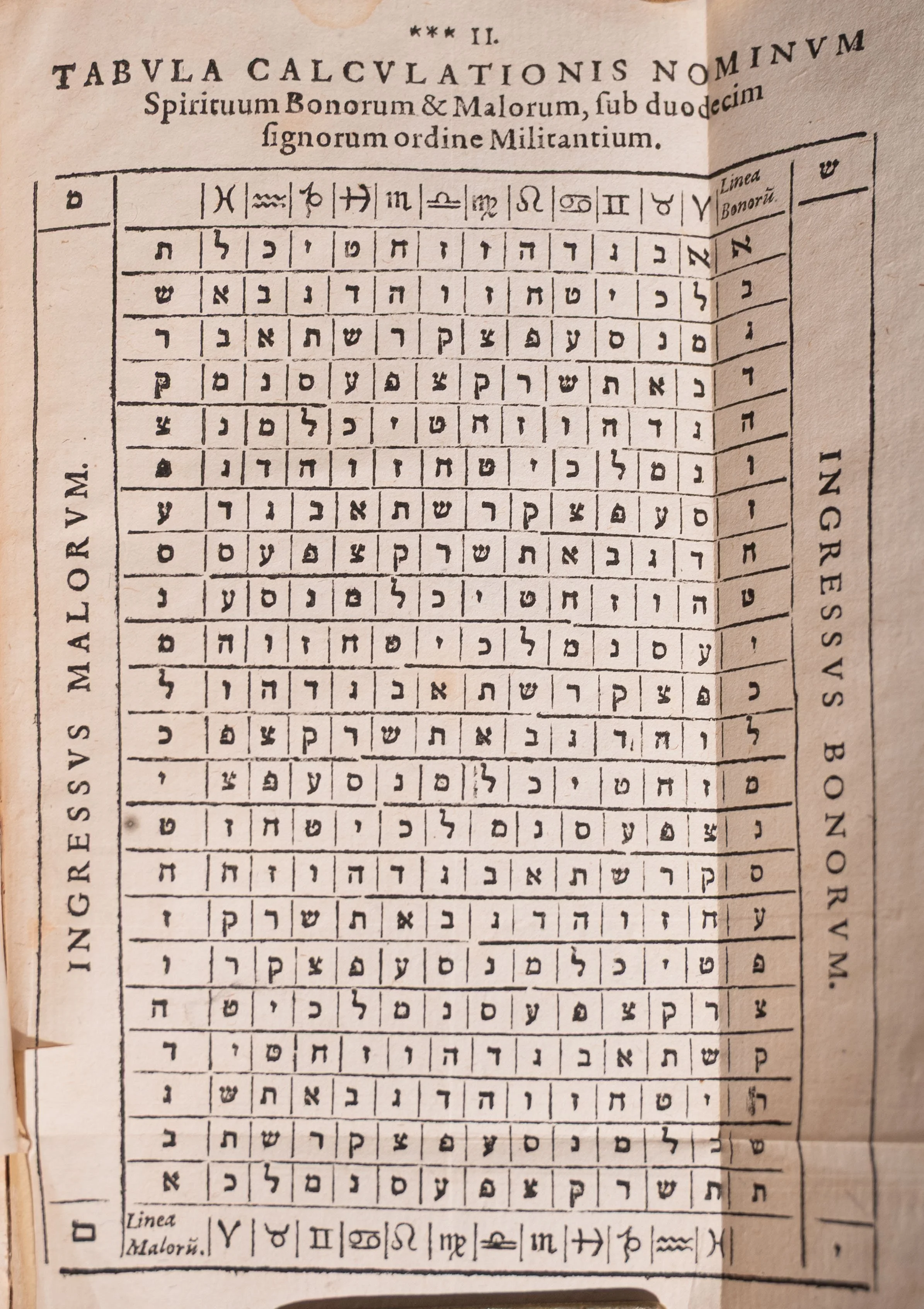 Image 24 of 33
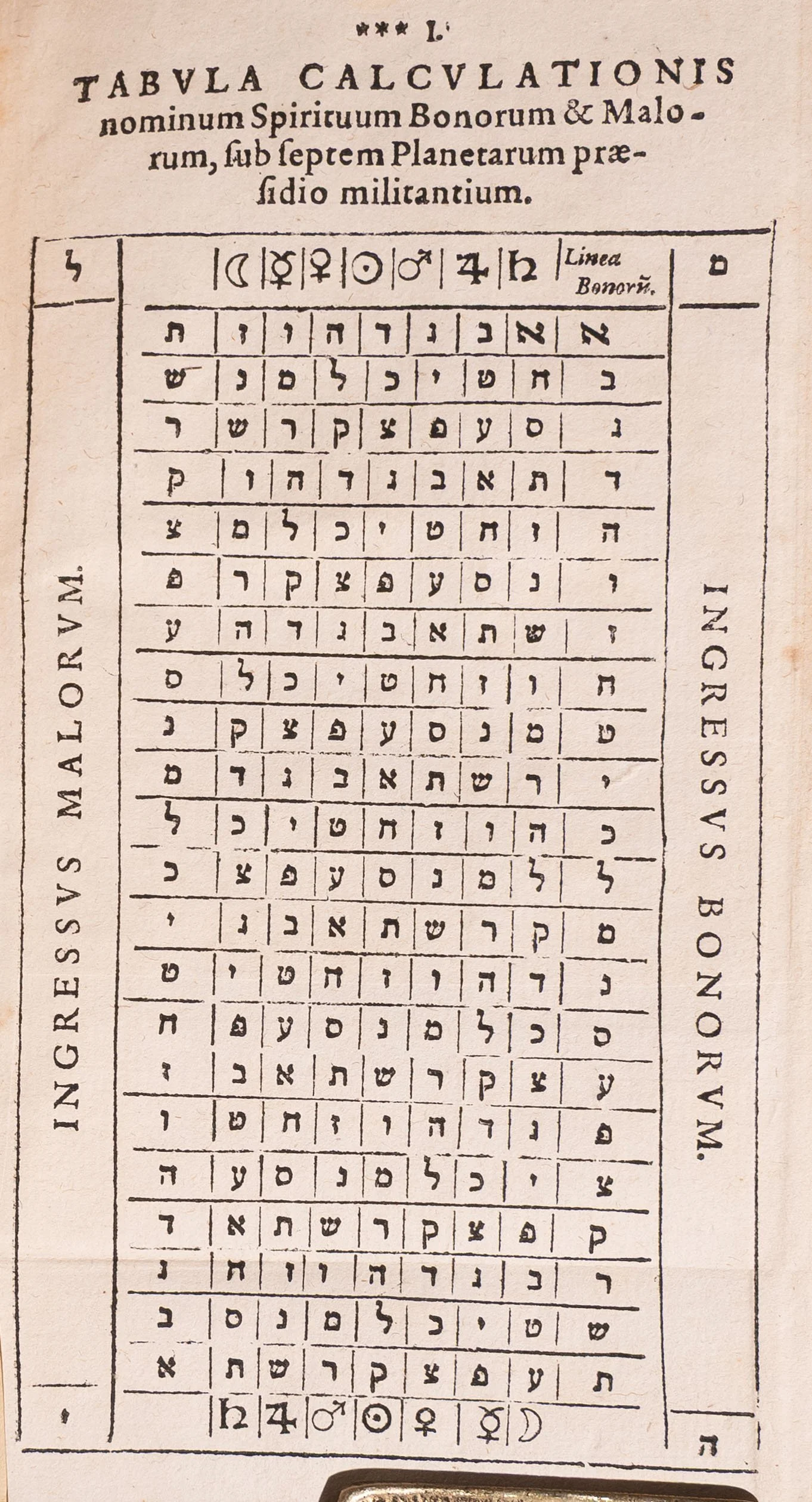 Image 25 of 33
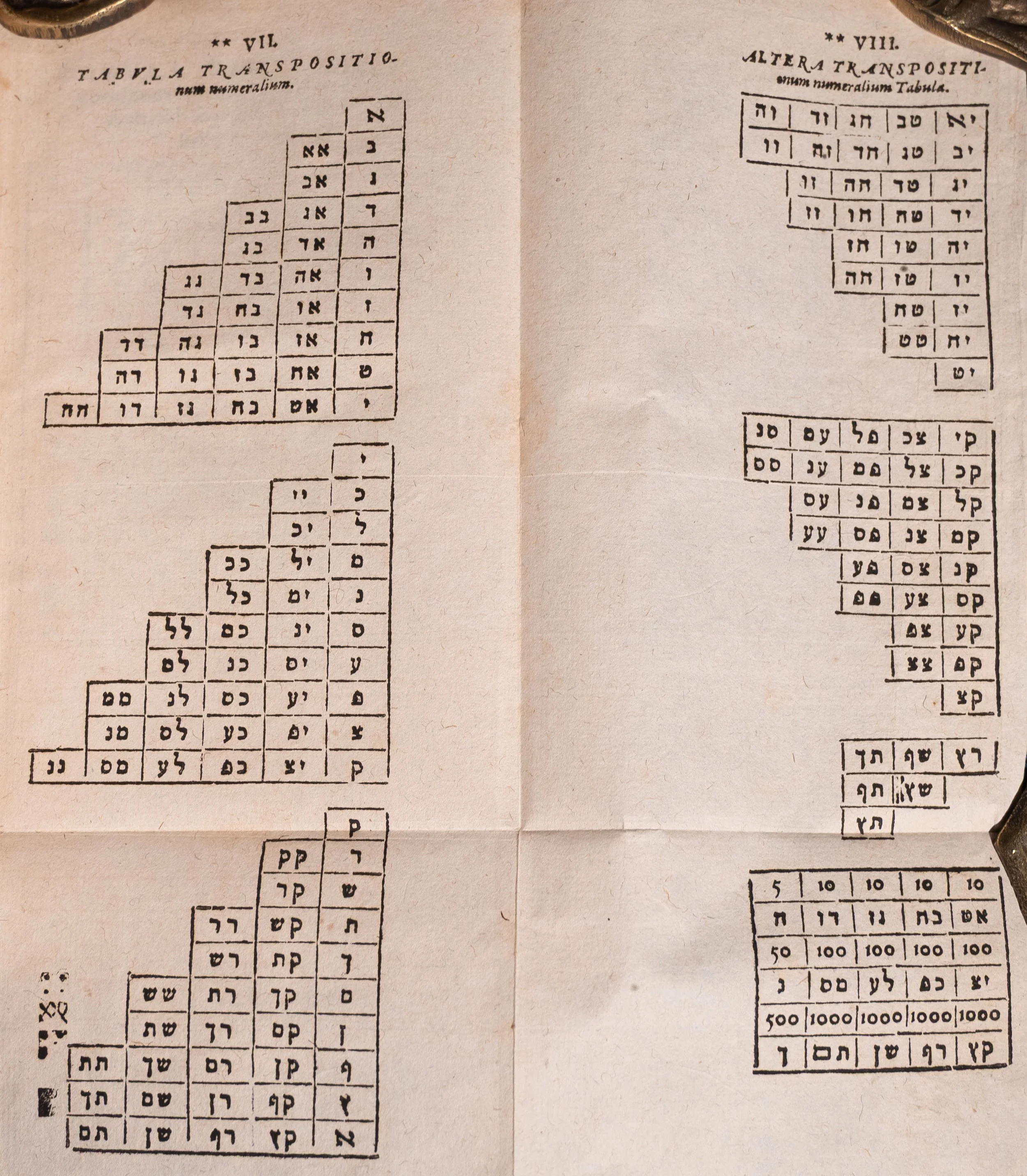 Image 26 of 33
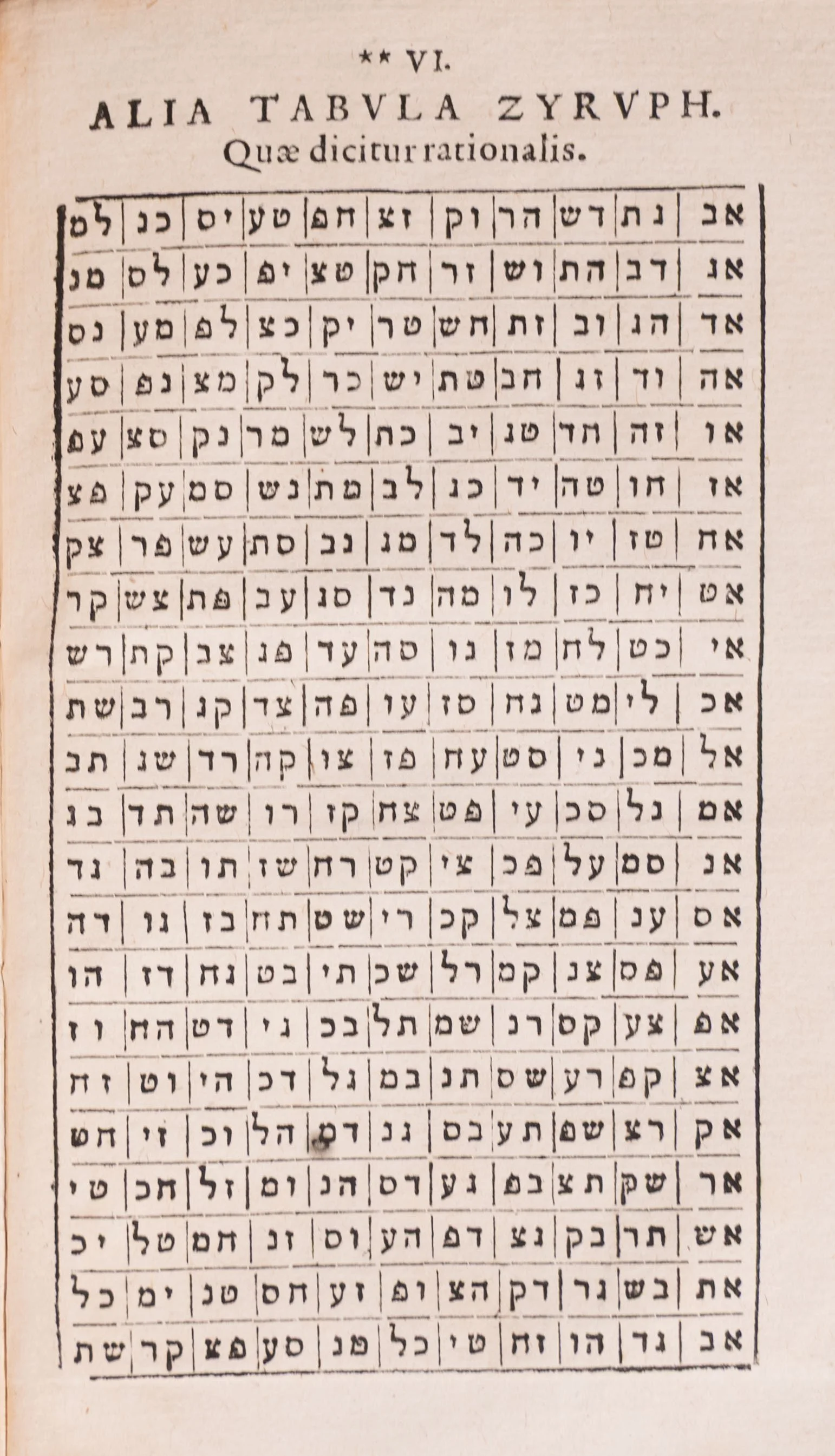 Image 27 of 33
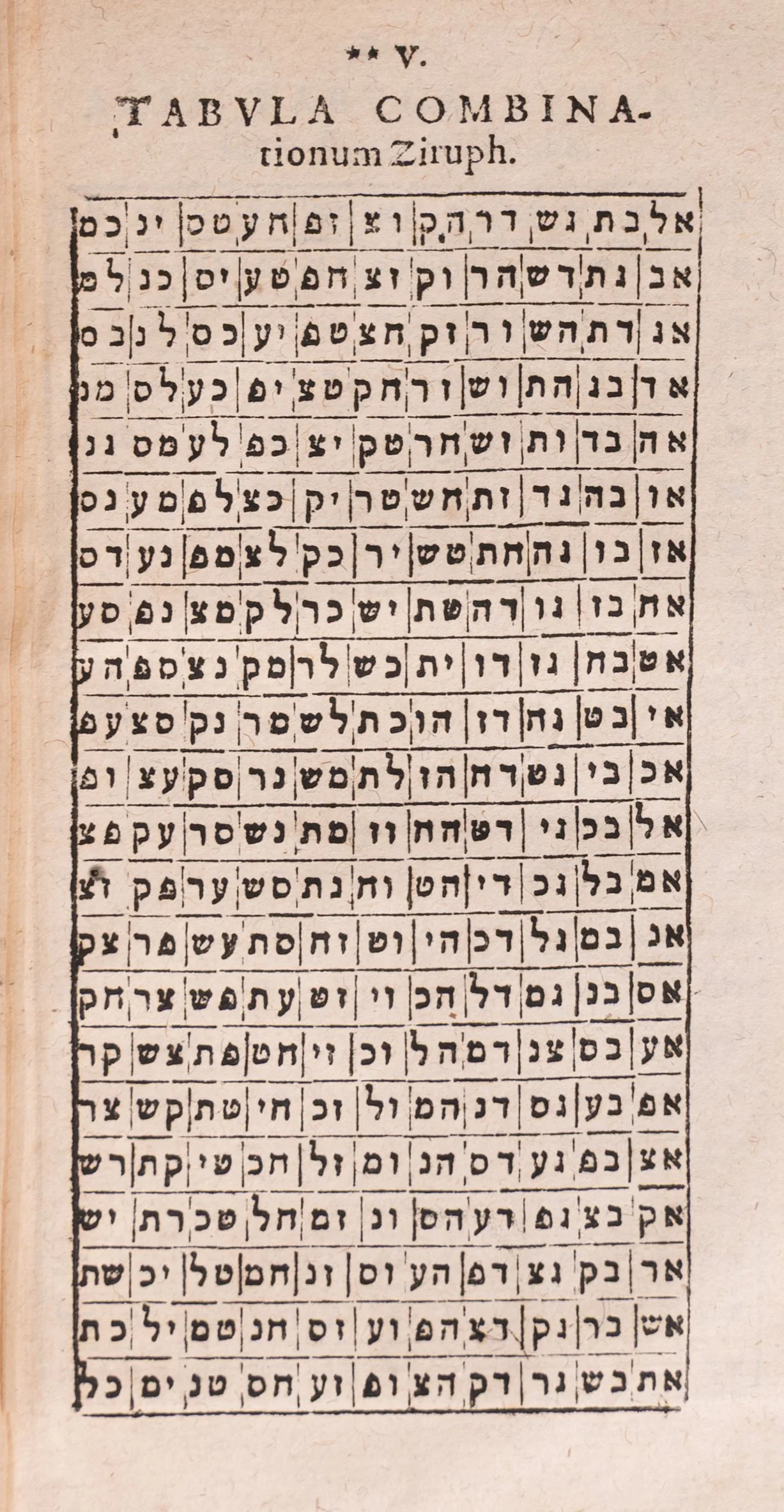 Image 28 of 33
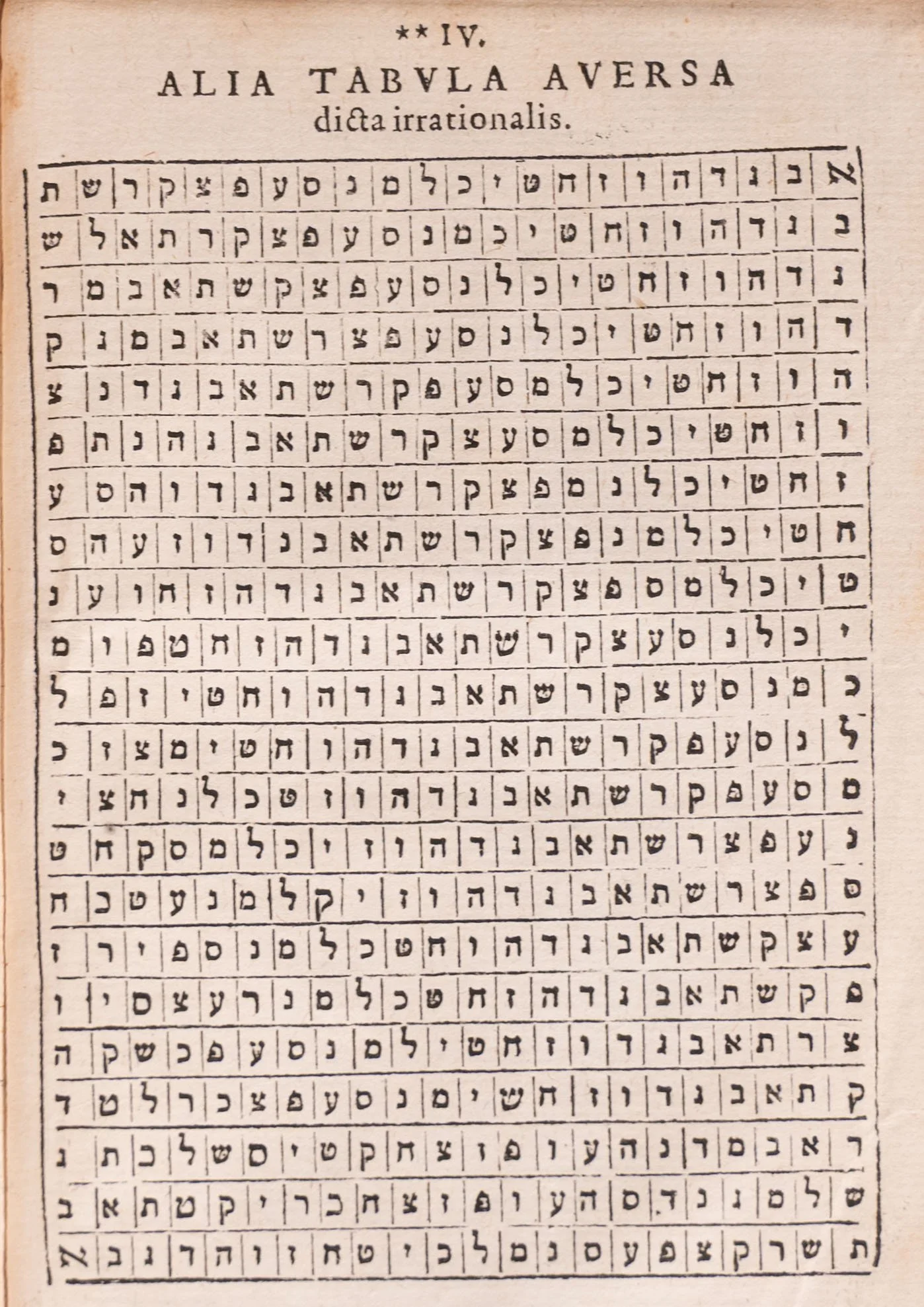 Image 29 of 33
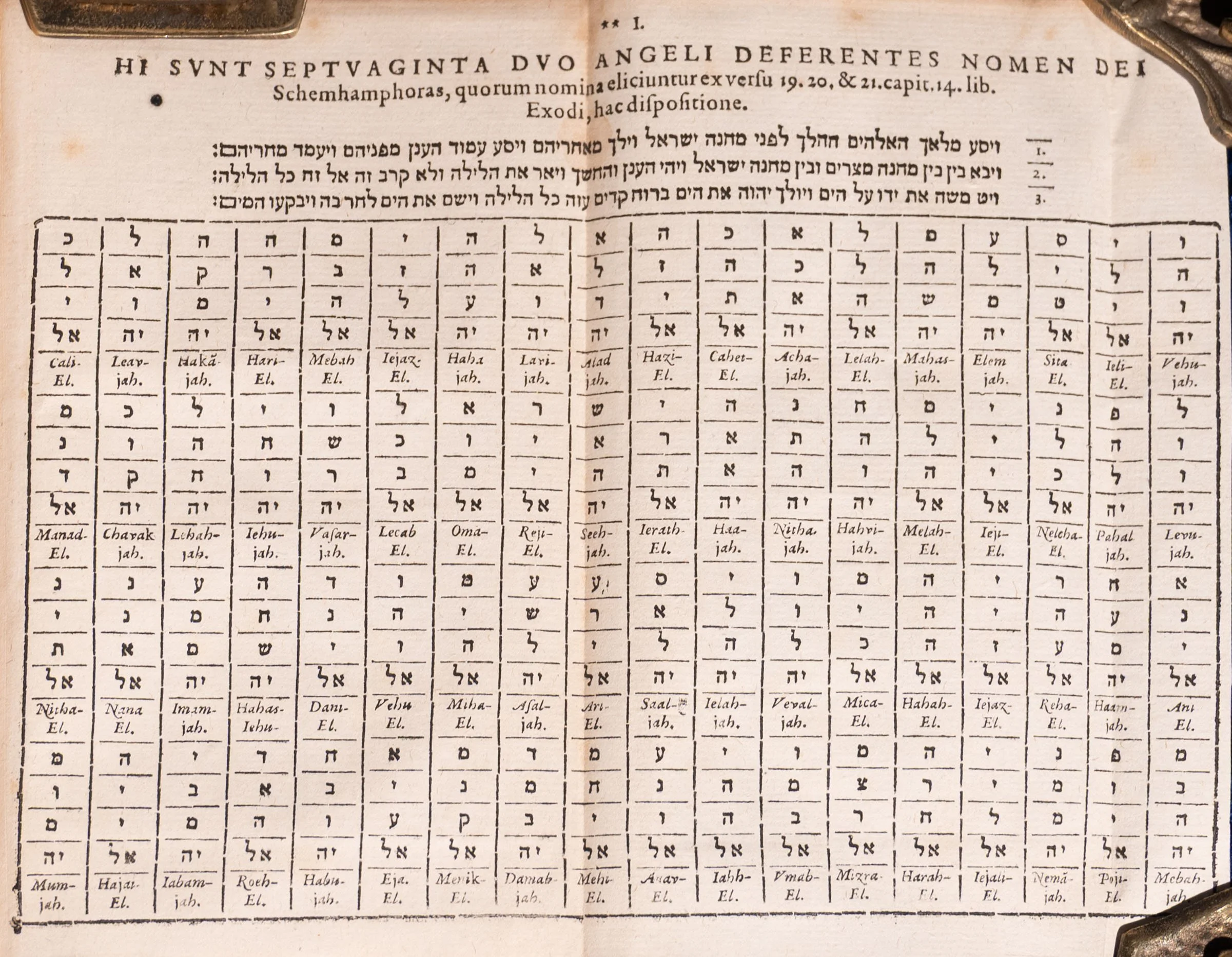 Image 30 of 33
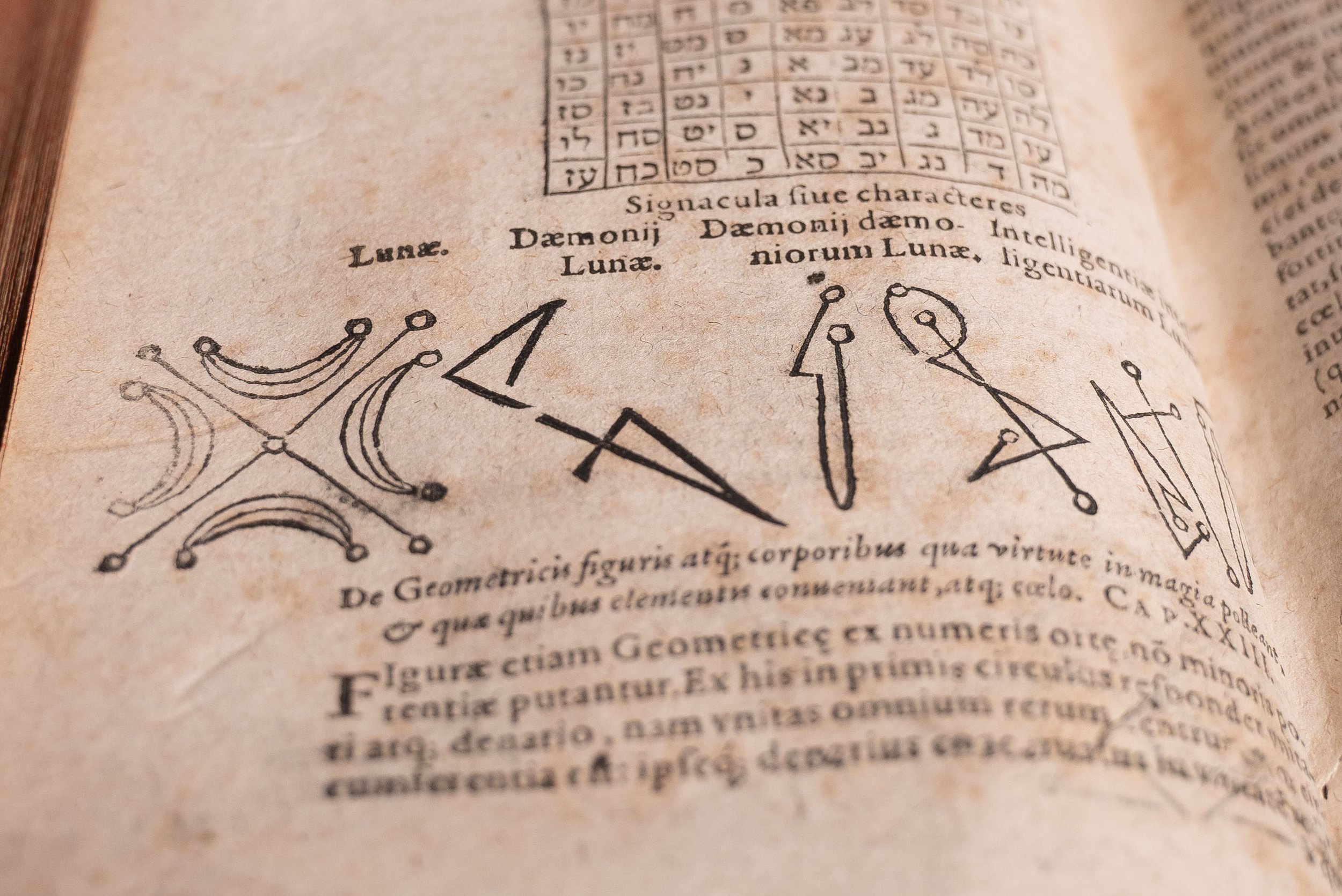 Image 31 of 33
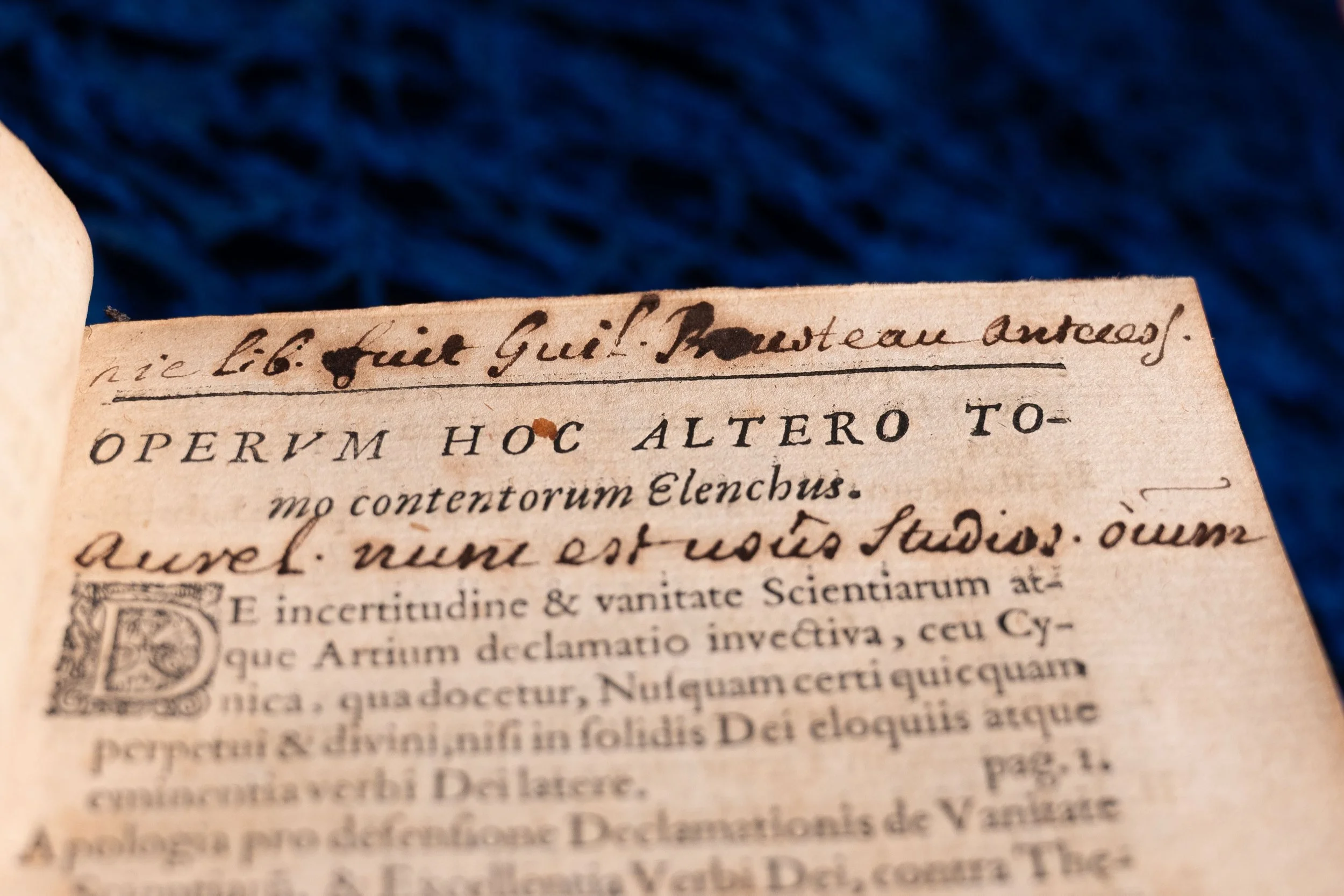 Image 32 of 33
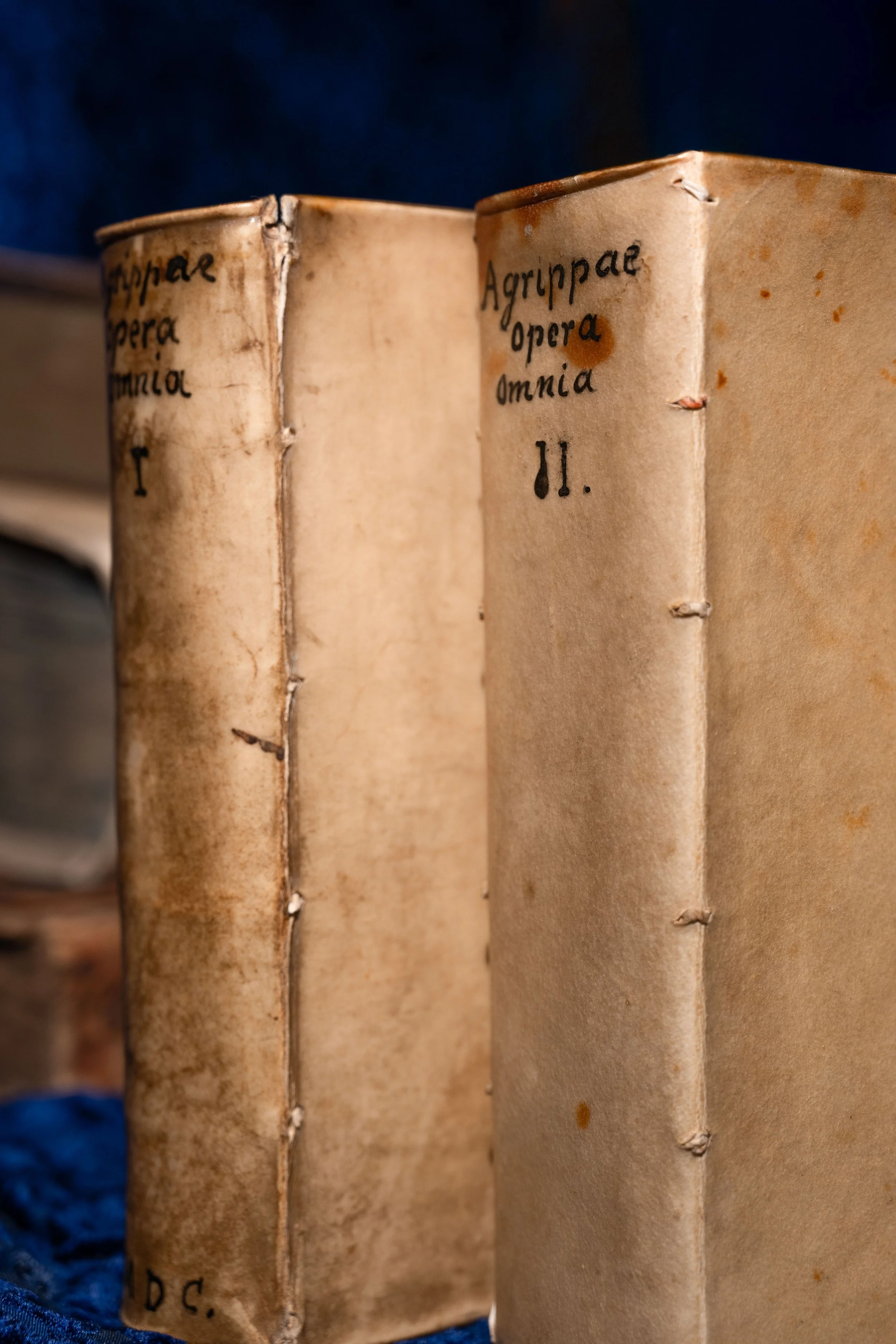 Image 33 of 33