For those interested in Western esotericism, Qohelet occupies a curious position. It was nearly excluded from the biblical canon, the Talmud records debates about whether it “defiles the hands” (i.e., possesses sanctity), and its stark skepticism about the afterlife, the value of wisdom, and the possibility of knowing anything with certainty made it an outlier among the Writings. Its reception history stretches from rabbinic commentary through medieval philosophy to the existentialist tradition; its influence on kabbalistic thought about the nature of hevel (breath, vapor, vanity) and the limits of human understanding has been noted by scholars from Gershom Scholem onward. A scroll of Qohelet is, in its way, the most honest object a biblical scribe can produce: a record of doubt, written with devotion.
A handwritten Hebrew scroll of Qohelet, Ecclesiastes, on genuine parchment, the most philosophically restless book in the Hebrew Bible rendered in the ancient medium of the scroll. Of the five megillot traditionally read aloud in the synagogue across the Jewish liturgical year, Qohelet belongs to Sukkot, the autumn harvest festival, where its meditations on transience and futility serve as a counterweight to the season’s celebrations of abundance. “Vanity of vanities,” says the Preacher; “all is vanity.” The pairing is deliberate: you sit in the sukkah, that most temporary of dwellings, and hear the most temporizing of biblical voices.
The scroll is written in the Ashkenazi “Beis Yosef” script, the standard scribal hand used in the Lithuanian and broader Ashkenazi tradition for sacred writings (STa”M—sifrei Torah, tefillin, and mezuzot). What makes this particular scroll immediately interesting is the visible presence of three distinct scribal hands, with the style shifting at approximately columns 4 and 8. Whether this represents three different scribes completing a single scroll, or, more likely, given the corrections concentrated in the early columns, a sofer in training progressing through the text with increasing confidence, the scroll is a material witness to the process of scribal formation. The first columns show the most corrections, the kind of careful emendation one associates either with a student’s work being reviewed or with a young hand finding its rhythm. By the later columns, the writing settles into greater fluency.
For collectors of Judaica and students of the scribal arts, this is a genuinely appealing object. Qohelet scrolls are far rarer in the market than Esther scrolls (the megillah most commonly encountered, given its central role in Purim observance). The parchment is real and well-prepared, the ink is dark and readable, and the text appears complete. The scroll is not sold as kosher, the multiple hands, the corrections, and the absence of any certification make this a display and study piece rather than a liturgically functional scroll. But that is precisely what gives it its distinctive character: this is the material evidence of how a sofer learns, of the long discipline of shaping each letter to exacting standards, of the tradition passing through the hand.
MEGILLAT QOHELET [Scroll of Ecclesiastes]. Hebrew manuscript on parchment (klaf). [Probably 20th century, Ashkenazi origin].
Physical Description: Scroll on animal parchment (klaf), 44 cm tall. Text written in iron gall ink in Ashkenazi “Beis Yosef” scribal script (ktav stam). The complete text of Qohelet (Ecclesiastes) arranged in columns. The scroll exhibits three distinct scribal hands: the script shifts noticeably at approximately column 4 and again at column 8, with differences in letter formation, stroke weight, and overall regularity between the three sections. Corrections and emendations are visible, particularly in the first four columns. No atzei chaim (wooden rollers) present.
Support: Genuine animal parchment, the hair-follicle pattern clearly visible on the verso. Individual sheets (yeriot) sewn together with sinew or thread. Some tearing at the bottom of the first sheet and at the points where rollers would normally be attached, not affecting the text. The parchment is generally clean and supple, in good condition overall.
Condition: Ink is dark and legible throughout. The parchment is clean and largely free of staining or foxing. Some minor tearing at the lower edge of the first klaf (sheet) and at both ends where atzei chaim would attach; these tears do not affect the written text. Corrections are present, chiefly in the opening columns, suggesting either emendation by a checking sofer or self-correction during the writing process. Overall, the scroll is in very good physical condition.
For those interested in Western esotericism, Qohelet occupies a curious position. It was nearly excluded from the biblical canon, the Talmud records debates about whether it “defiles the hands” (i.e., possesses sanctity), and its stark skepticism about the afterlife, the value of wisdom, and the possibility of knowing anything with certainty made it an outlier among the Writings. Its reception history stretches from rabbinic commentary through medieval philosophy to the existentialist tradition; its influence on kabbalistic thought about the nature of hevel (breath, vapor, vanity) and the limits of human understanding has been noted by scholars from Gershom Scholem onward. A scroll of Qohelet is, in its way, the most honest object a biblical scribe can produce: a record of doubt, written with devotion.
A handwritten Hebrew scroll of Qohelet, Ecclesiastes, on genuine parchment, the most philosophically restless book in the Hebrew Bible rendered in the ancient medium of the scroll. Of the five megillot traditionally read aloud in the synagogue across the Jewish liturgical year, Qohelet belongs to Sukkot, the autumn harvest festival, where its meditations on transience and futility serve as a counterweight to the season’s celebrations of abundance. “Vanity of vanities,” says the Preacher; “all is vanity.” The pairing is deliberate: you sit in the sukkah, that most temporary of dwellings, and hear the most temporizing of biblical voices.
The scroll is written in the Ashkenazi “Beis Yosef” script, the standard scribal hand used in the Lithuanian and broader Ashkenazi tradition for sacred writings (STa”M—sifrei Torah, tefillin, and mezuzot). What makes this particular scroll immediately interesting is the visible presence of three distinct scribal hands, with the style shifting at approximately columns 4 and 8. Whether this represents three different scribes completing a single scroll, or, more likely, given the corrections concentrated in the early columns, a sofer in training progressing through the text with increasing confidence, the scroll is a material witness to the process of scribal formation. The first columns show the most corrections, the kind of careful emendation one associates either with a student’s work being reviewed or with a young hand finding its rhythm. By the later columns, the writing settles into greater fluency.
For collectors of Judaica and students of the scribal arts, this is a genuinely appealing object. Qohelet scrolls are far rarer in the market than Esther scrolls (the megillah most commonly encountered, given its central role in Purim observance). The parchment is real and well-prepared, the ink is dark and readable, and the text appears complete. The scroll is not sold as kosher, the multiple hands, the corrections, and the absence of any certification make this a display and study piece rather than a liturgically functional scroll. But that is precisely what gives it its distinctive character: this is the material evidence of how a sofer learns, of the long discipline of shaping each letter to exacting standards, of the tradition passing through the hand.
MEGILLAT QOHELET [Scroll of Ecclesiastes]. Hebrew manuscript on parchment (klaf). [Probably 20th century, Ashkenazi origin].
Physical Description: Scroll on animal parchment (klaf), 44 cm tall. Text written in iron gall ink in Ashkenazi “Beis Yosef” scribal script (ktav stam). The complete text of Qohelet (Ecclesiastes) arranged in columns. The scroll exhibits three distinct scribal hands: the script shifts noticeably at approximately column 4 and again at column 8, with differences in letter formation, stroke weight, and overall regularity between the three sections. Corrections and emendations are visible, particularly in the first four columns. No atzei chaim (wooden rollers) present.
Support: Genuine animal parchment, the hair-follicle pattern clearly visible on the verso. Individual sheets (yeriot) sewn together with sinew or thread. Some tearing at the bottom of the first sheet and at the points where rollers would normally be attached, not affecting the text. The parchment is generally clean and supple, in good condition overall.
Condition: Ink is dark and legible throughout. The parchment is clean and largely free of staining or foxing. Some minor tearing at the lower edge of the first klaf (sheet) and at both ends where atzei chaim would attach; these tears do not affect the written text. Corrections are present, chiefly in the opening columns, suggesting either emendation by a checking sofer or self-correction during the writing process. Overall, the scroll is in very good physical condition.

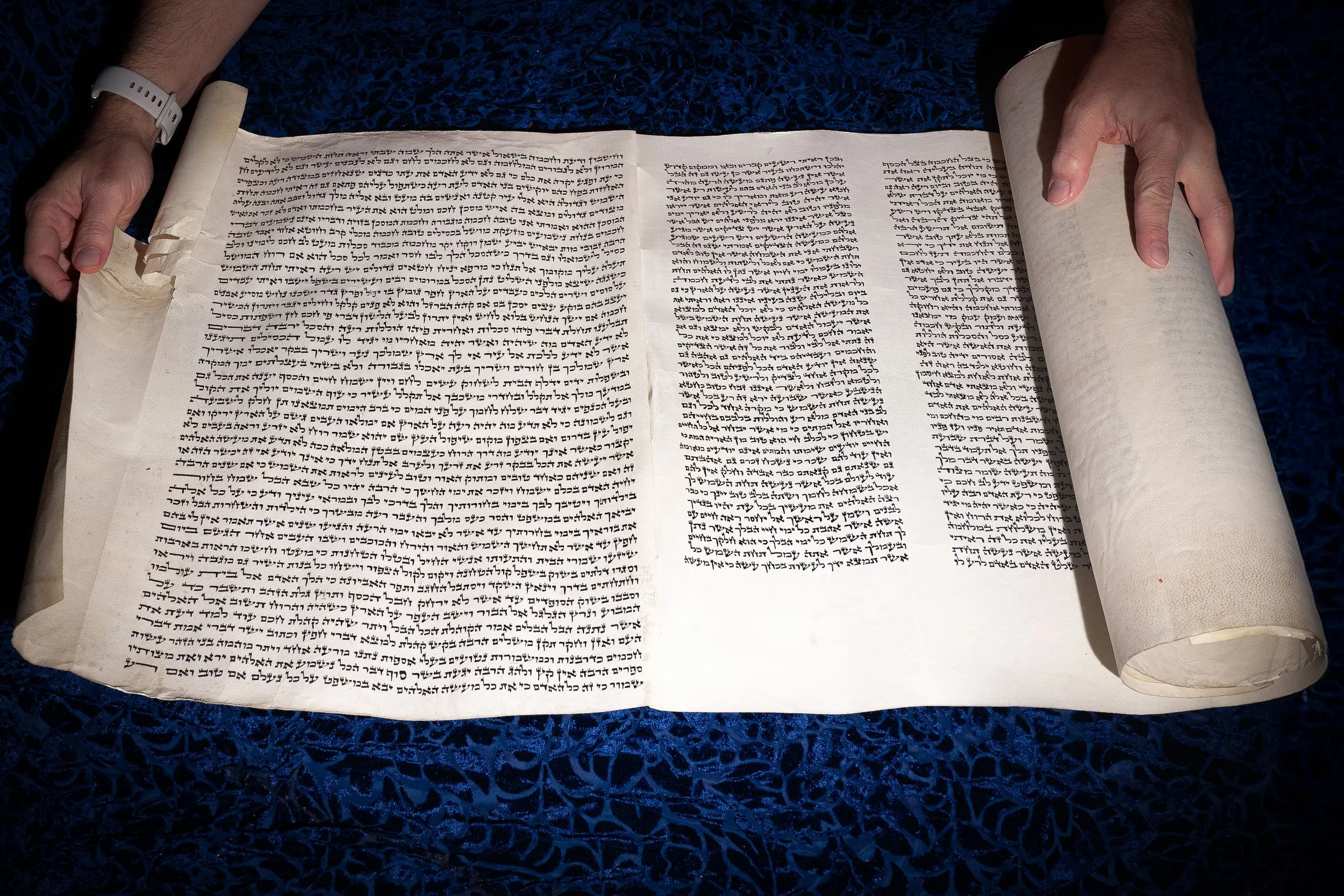 Image 1 of 6
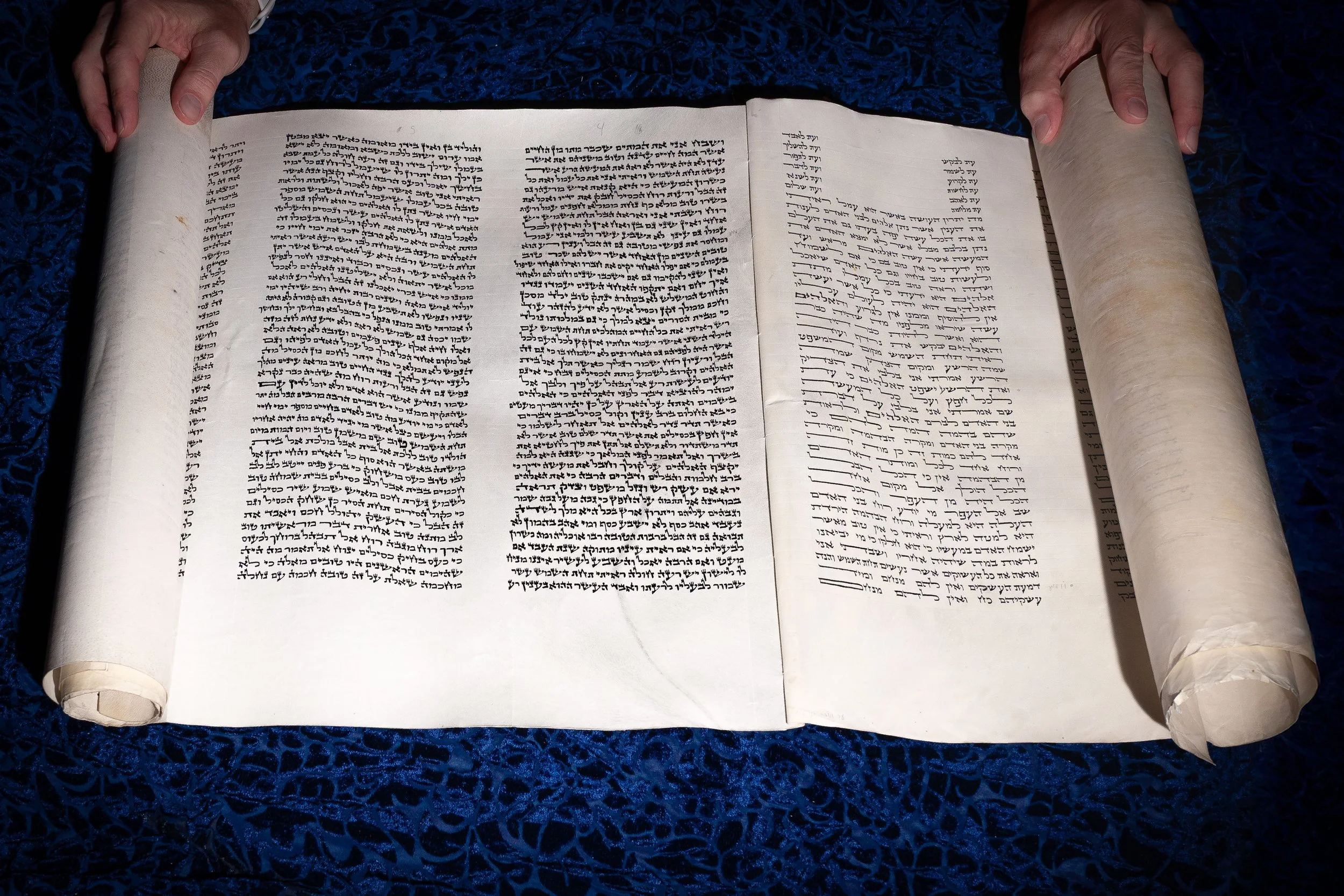 Image 2 of 6
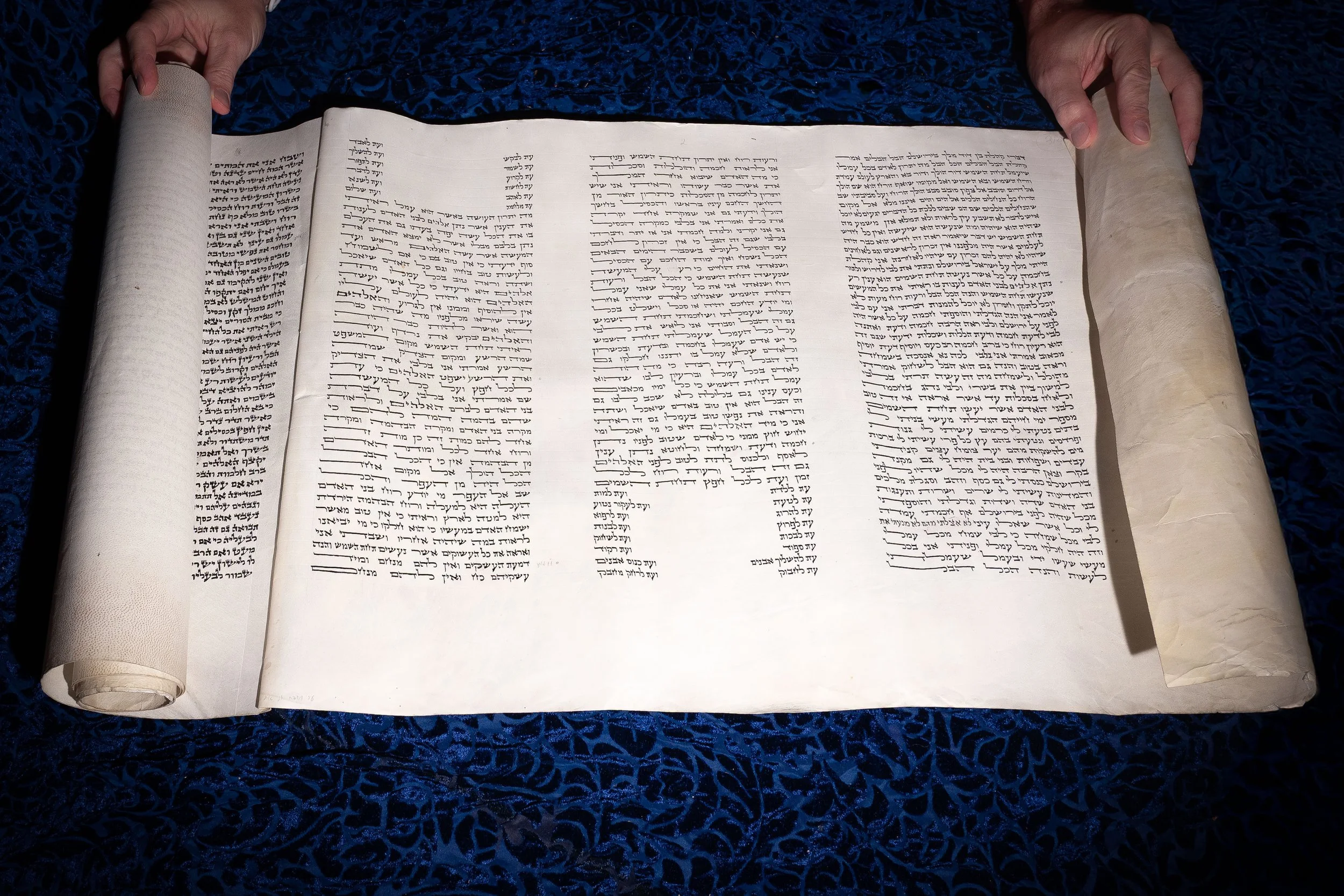 Image 3 of 6
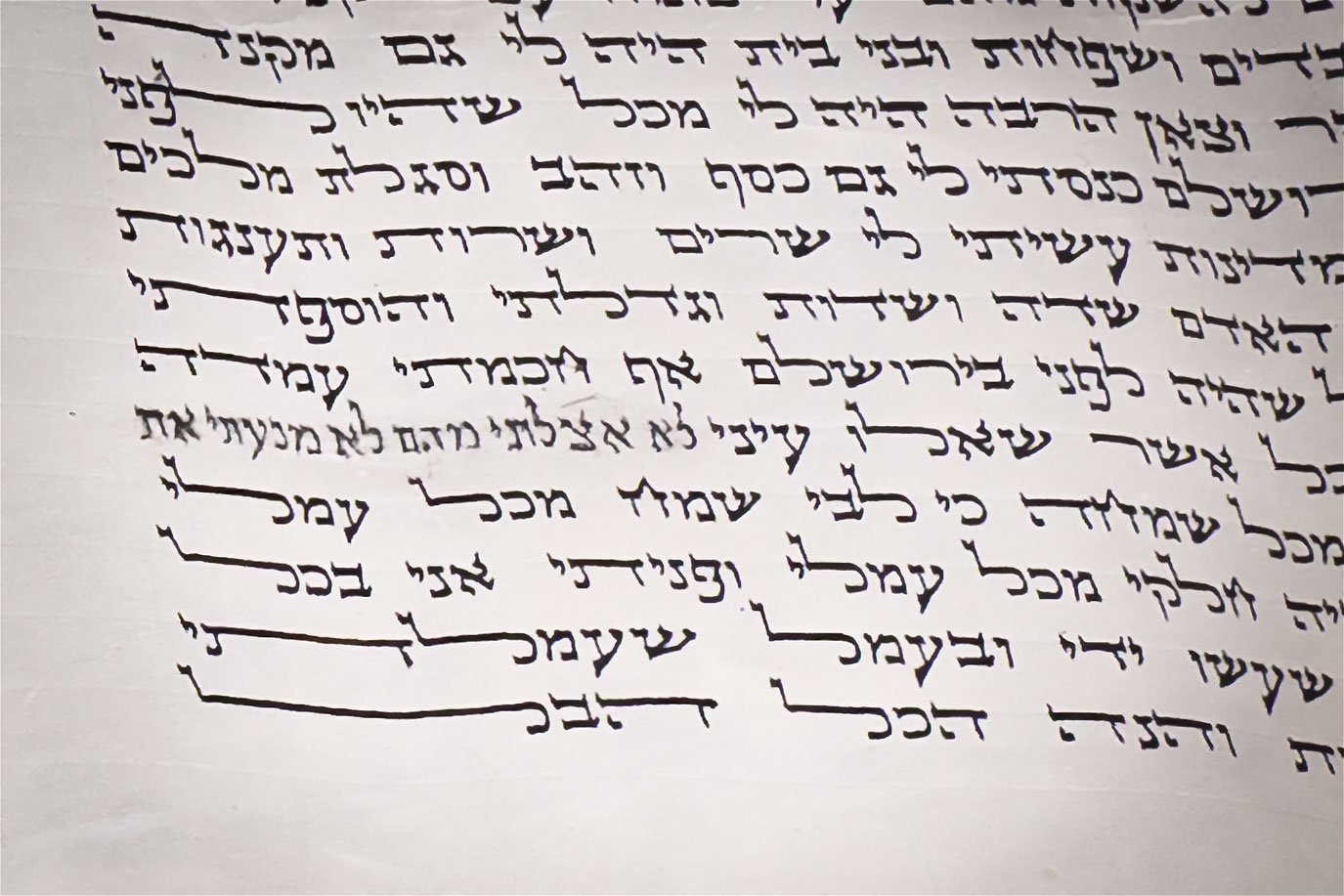 Image 4 of 6
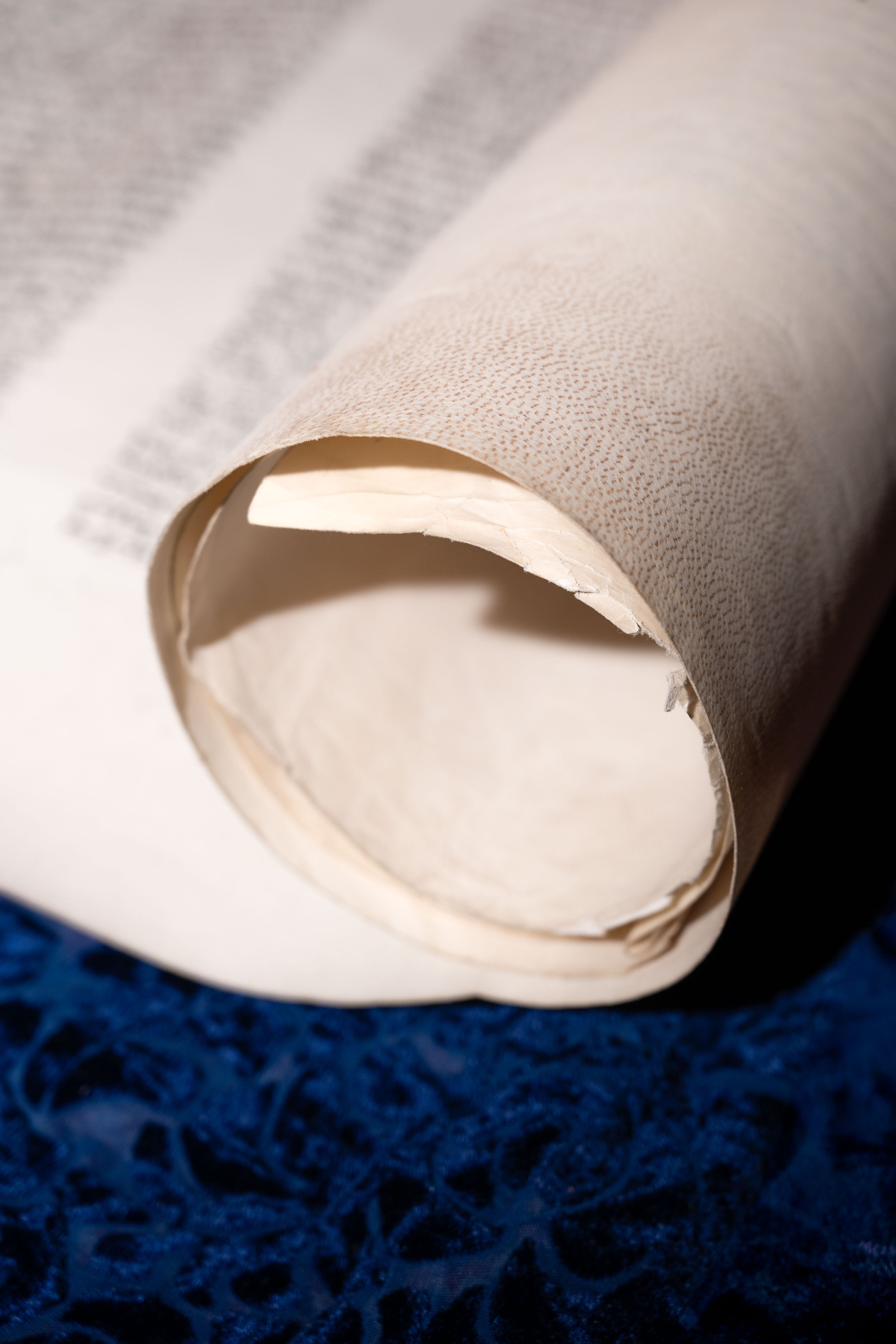 Image 5 of 6
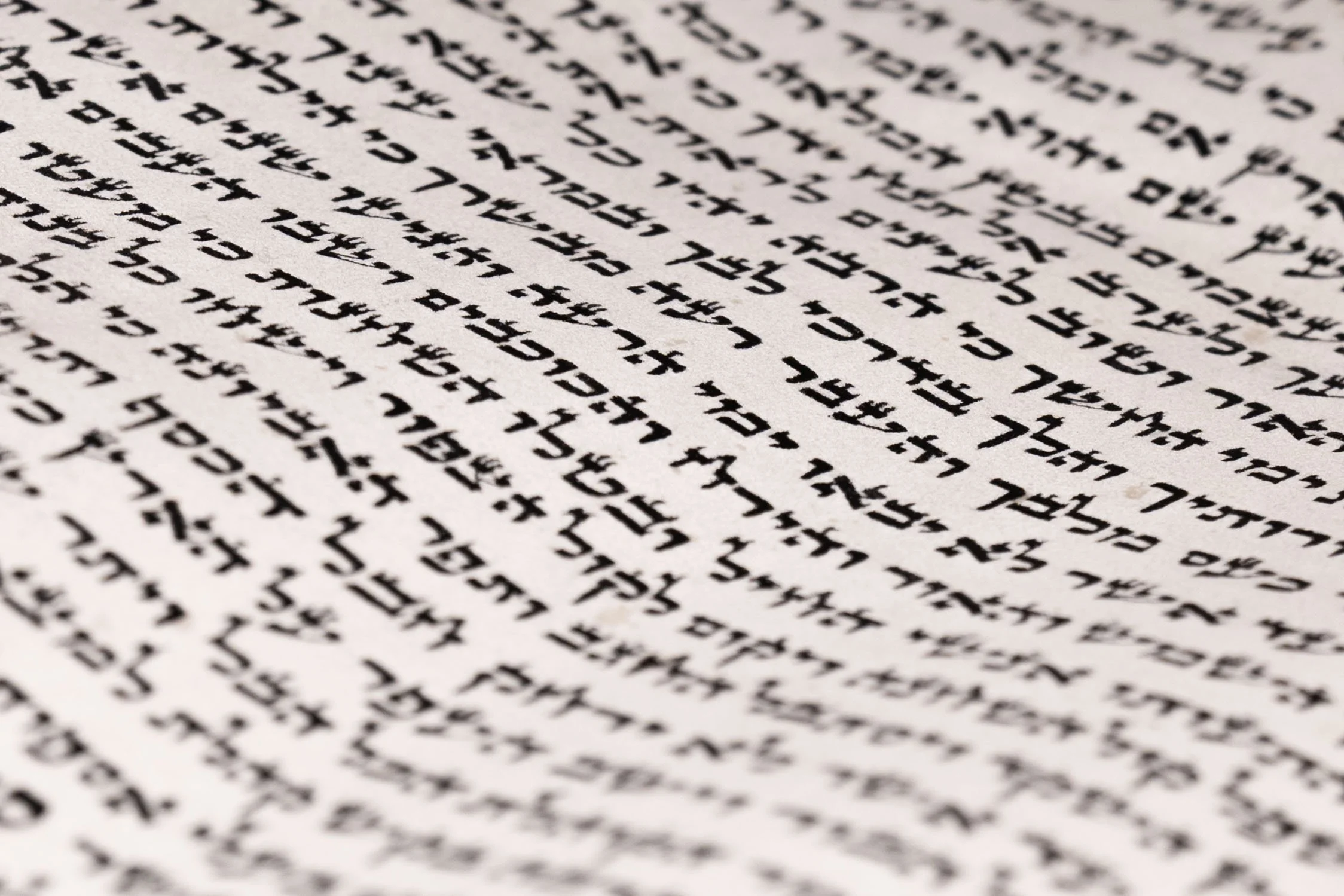 Image 6 of 6