The Grand Albert is a French book of secrets that peddlers sold through the countryside for generations. It claims to be the secrets of Albertus Magnus, the thirteenth-century Dominican who taught Thomas Aquinas, "drawn and translated from ancient manuscripts of the Author." Albert wrote none of it. The oldest parts go back to Latin texts that circulated under his name in the later Middle Ages, and later editors added to them. Its contents include the conception of women, the virtues of herbs, stones and animals, an abridged physiognomy, and a preservative against plague, malignant fevers, poison and infected air.
The imprint on the title page is false. It reads "at the heirs of Béringos Fratres, at the sign of Agrippa," and gives the year as 6518. The Beringen brothers were real printers in sixteenth-century Lyon, and they were long dead when this book was made. Their name had already been borrowed for collected editions of Cornelius Agrippa, which is presumably why the shop sign is his. It was then put on many cheap printings of the Grand Albert and its companion, the Petit Albert, and it kept the real printer out of sight.
This copy has the woodcut frontispiece of a scholar at work beneath the busts of his authorities, Aristotle among them, and three full-page woodcuts. An early reader added an ink note on the title page. Printings like this one are undated and were made from the eighteenth century through the nineteenth. The paper and type of this copy point to the nineteenth. Full details are below.
· · ·
[PSEUDO-ALBERTUS MAGNUS]. Les Admirables Secrets d'Albert le Grand, contenant plusieurs traités sur la conception des femmes, sur les vertus des herbes, des pierres précieuses et des animaux... Divisés en quatre livres. Ornés de figures. Lyon [i.e. France]: chez les Héritiers de Béringos Fratres, à l'enseigne d'Agrippa, "6518" [19th century].
Physical Description: 242 pp. Woodcut frontispiece and three full-page woodcuts. Table at the end.
Binding: Mottled calf, spine gilt in compartments.
Condition: Spine worn, chipped at the head; early ink annotation on the title.

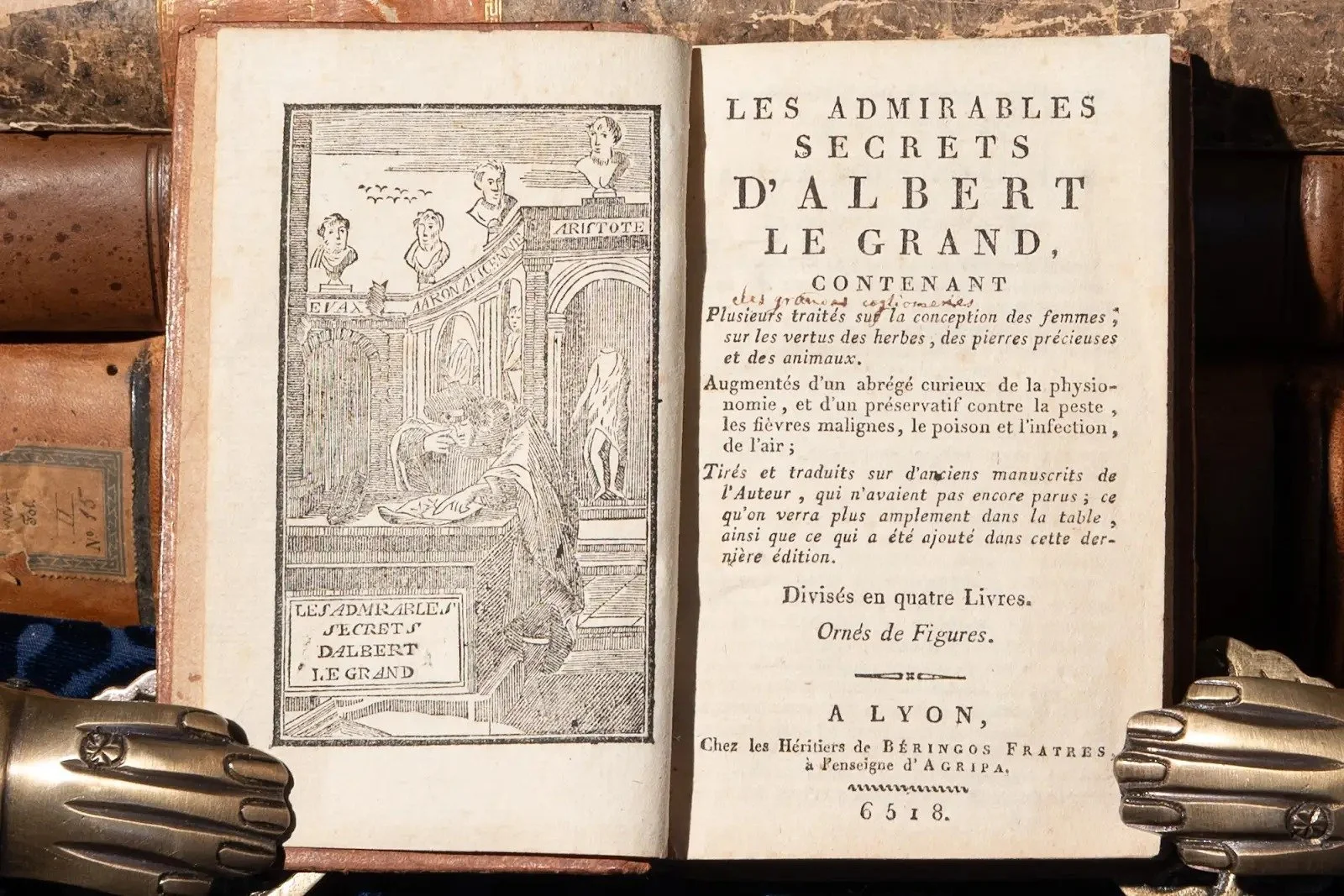 Image 1 of 17
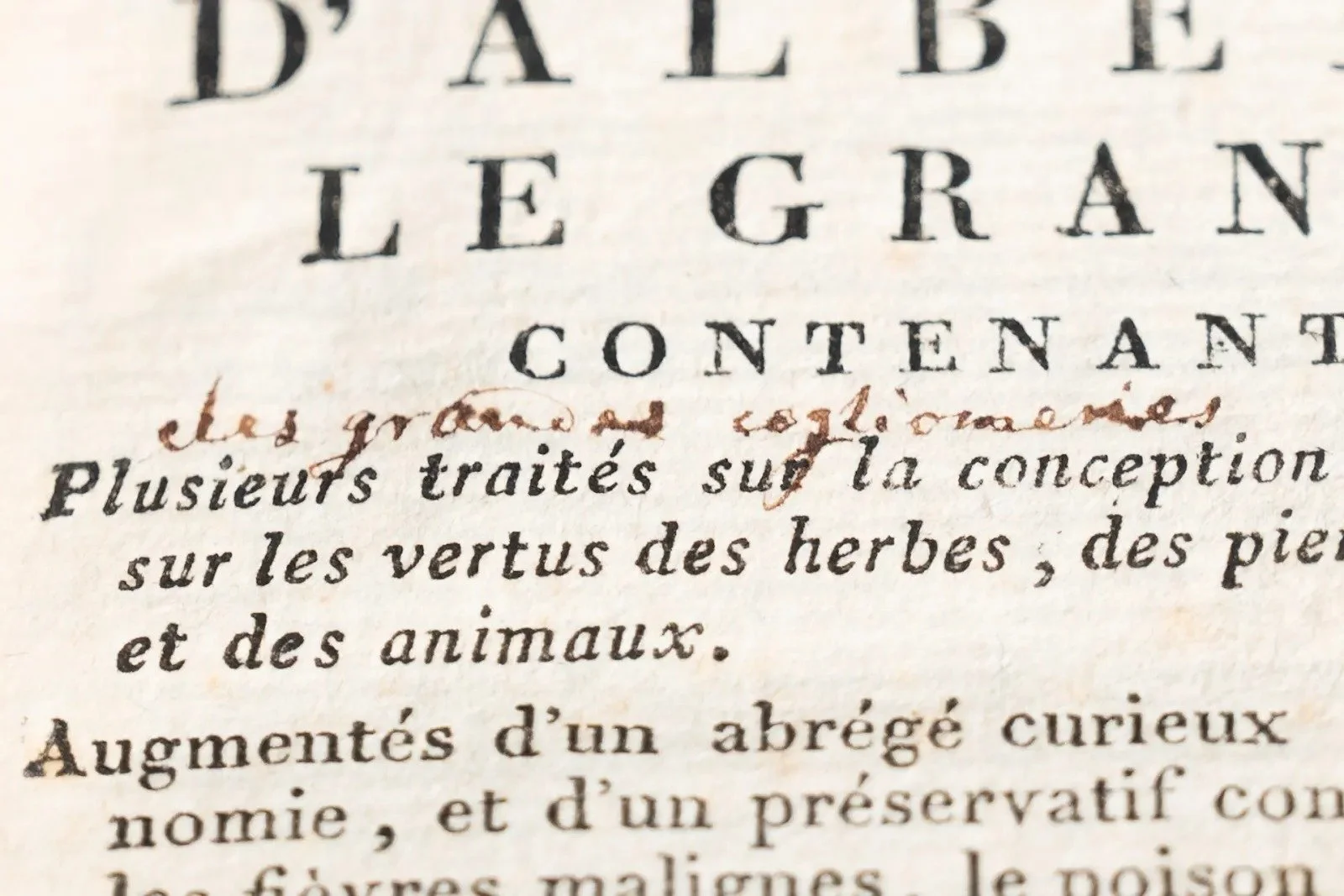 Image 2 of 17
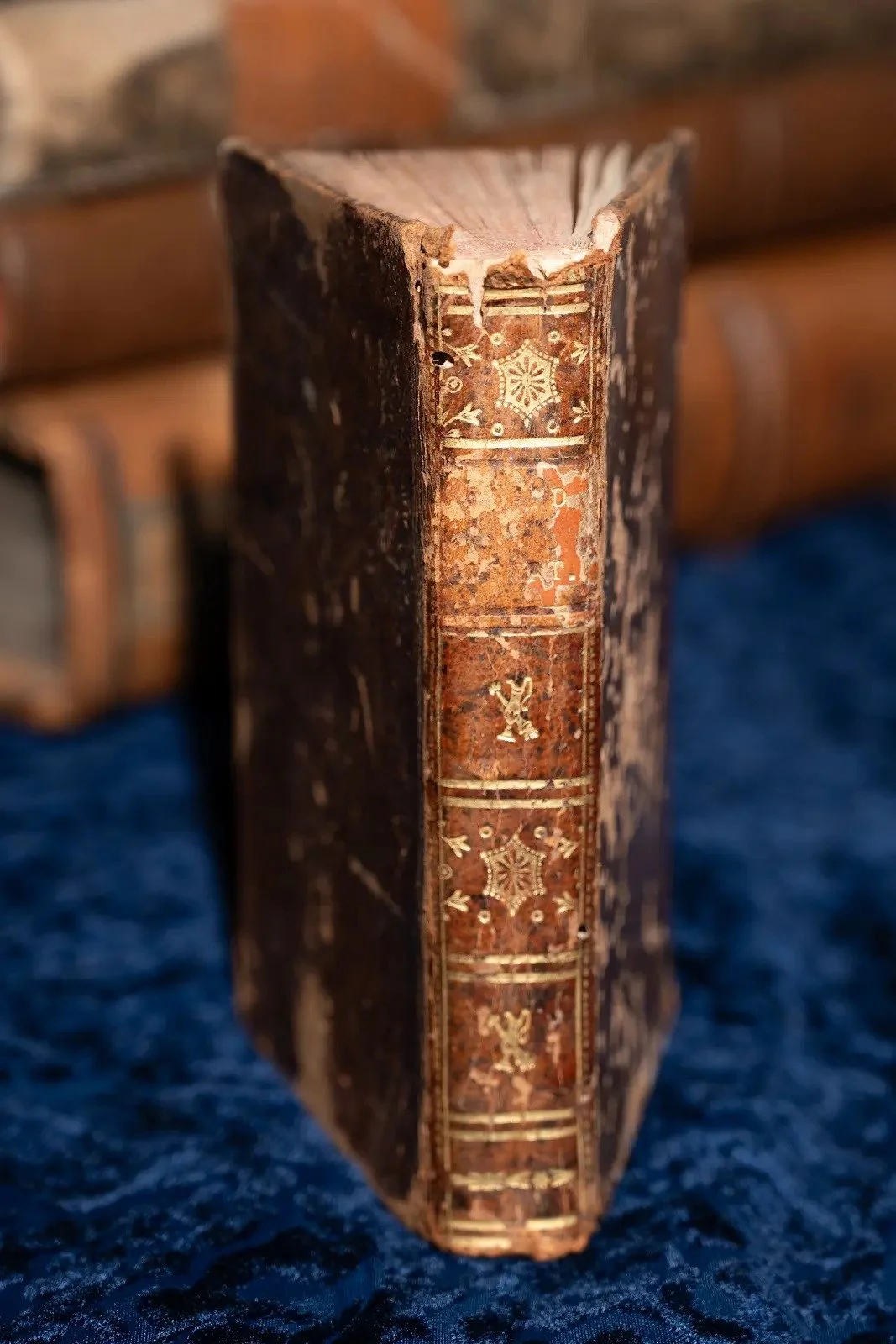 Image 3 of 17
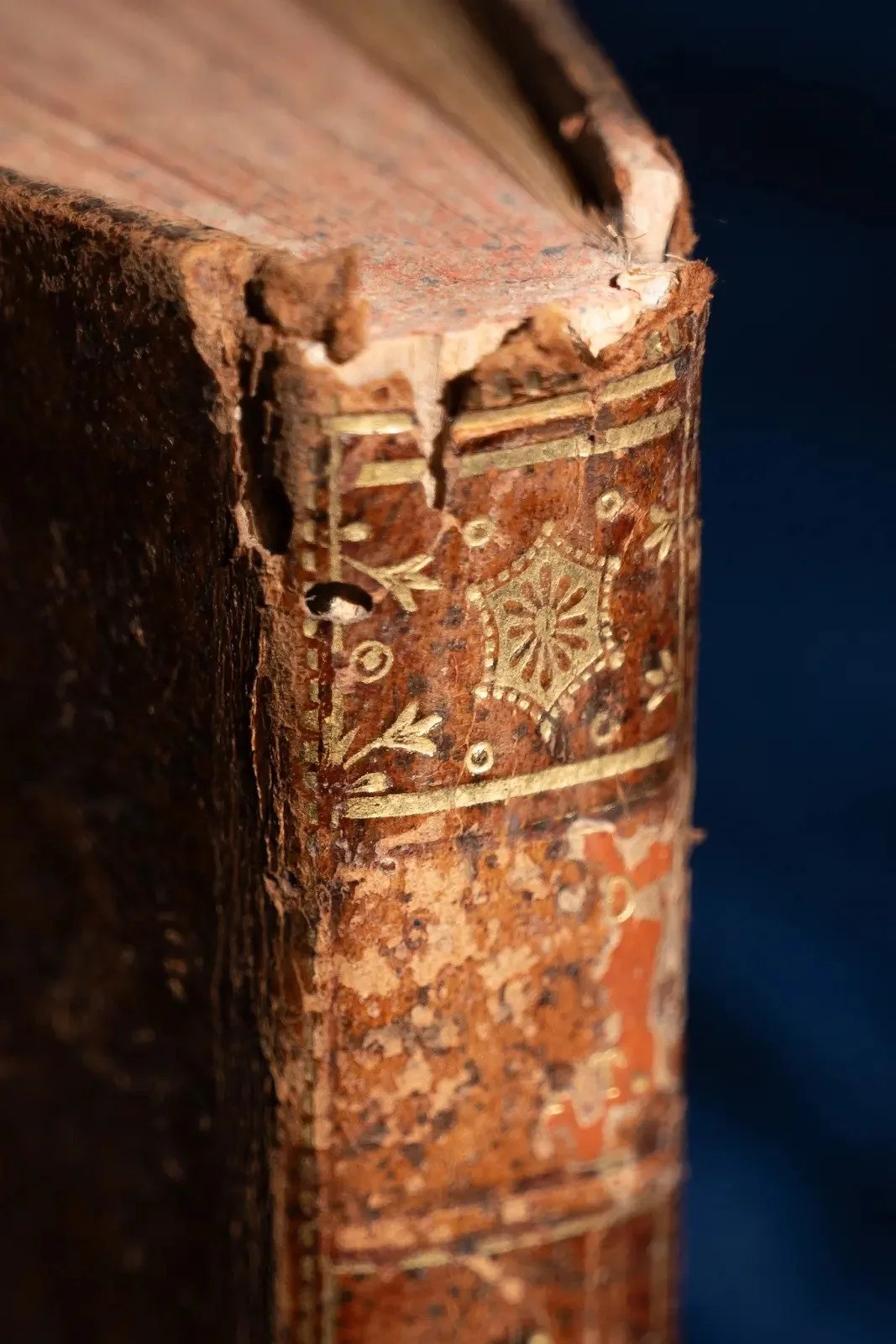 Image 4 of 17
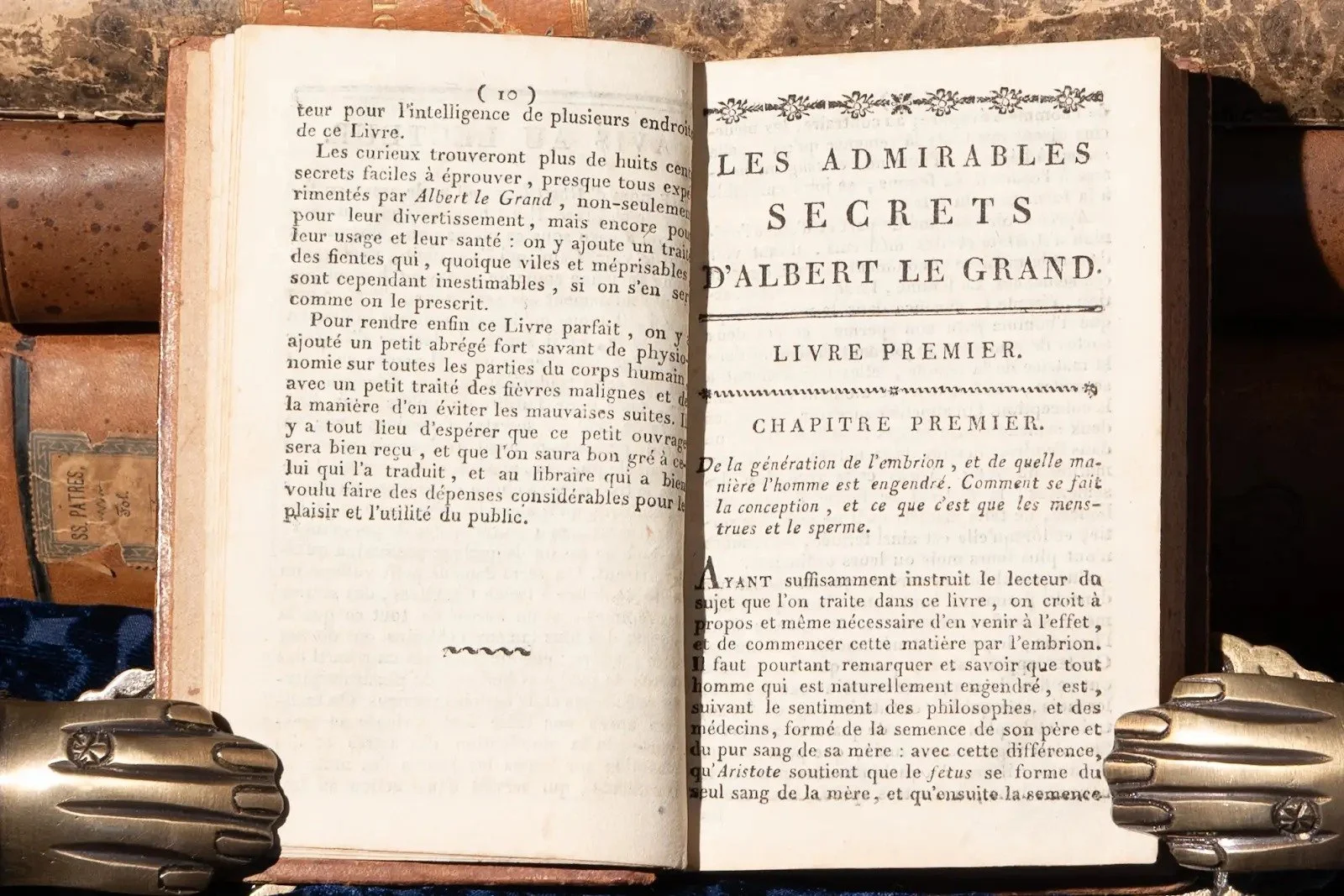 Image 5 of 17
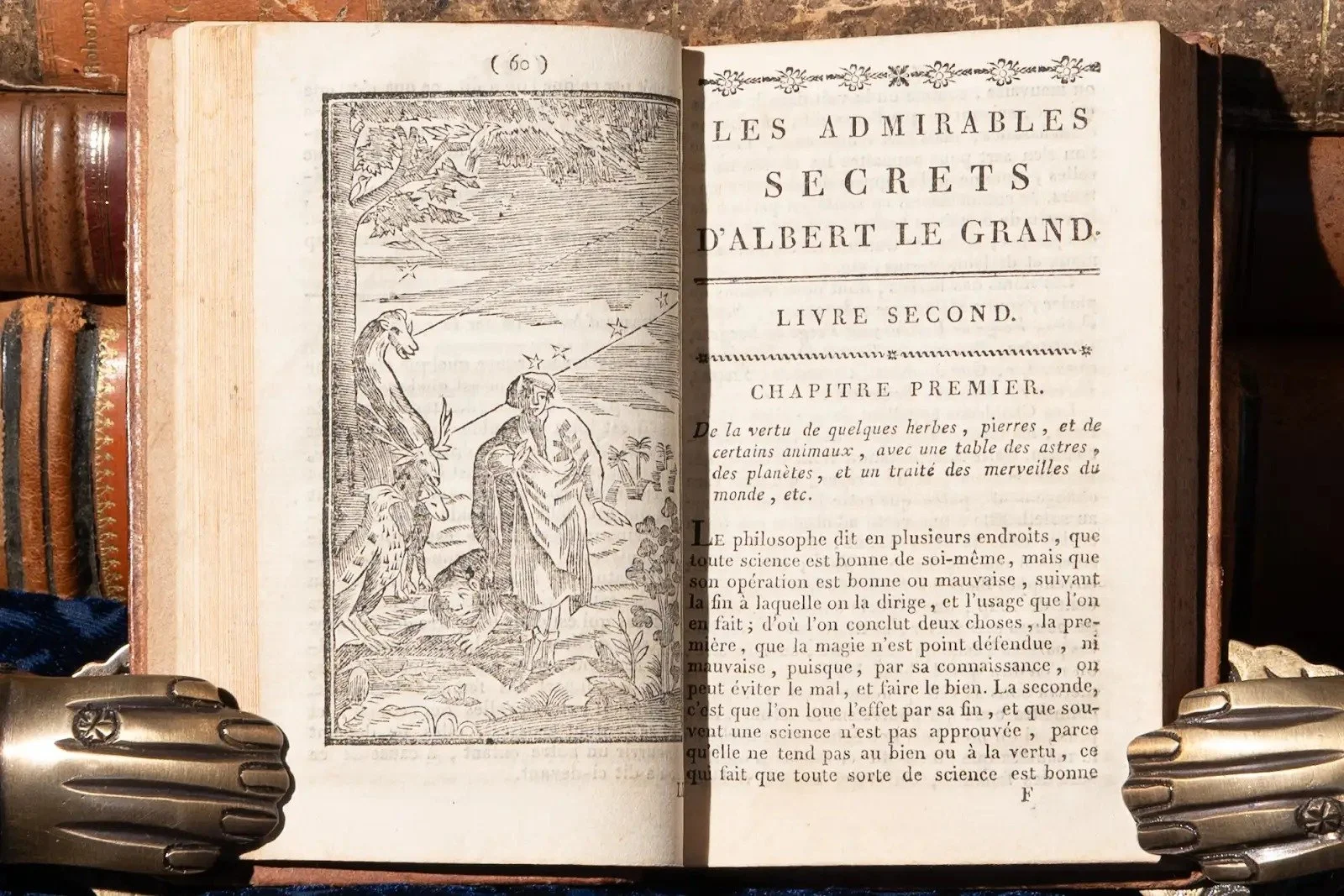 Image 6 of 17
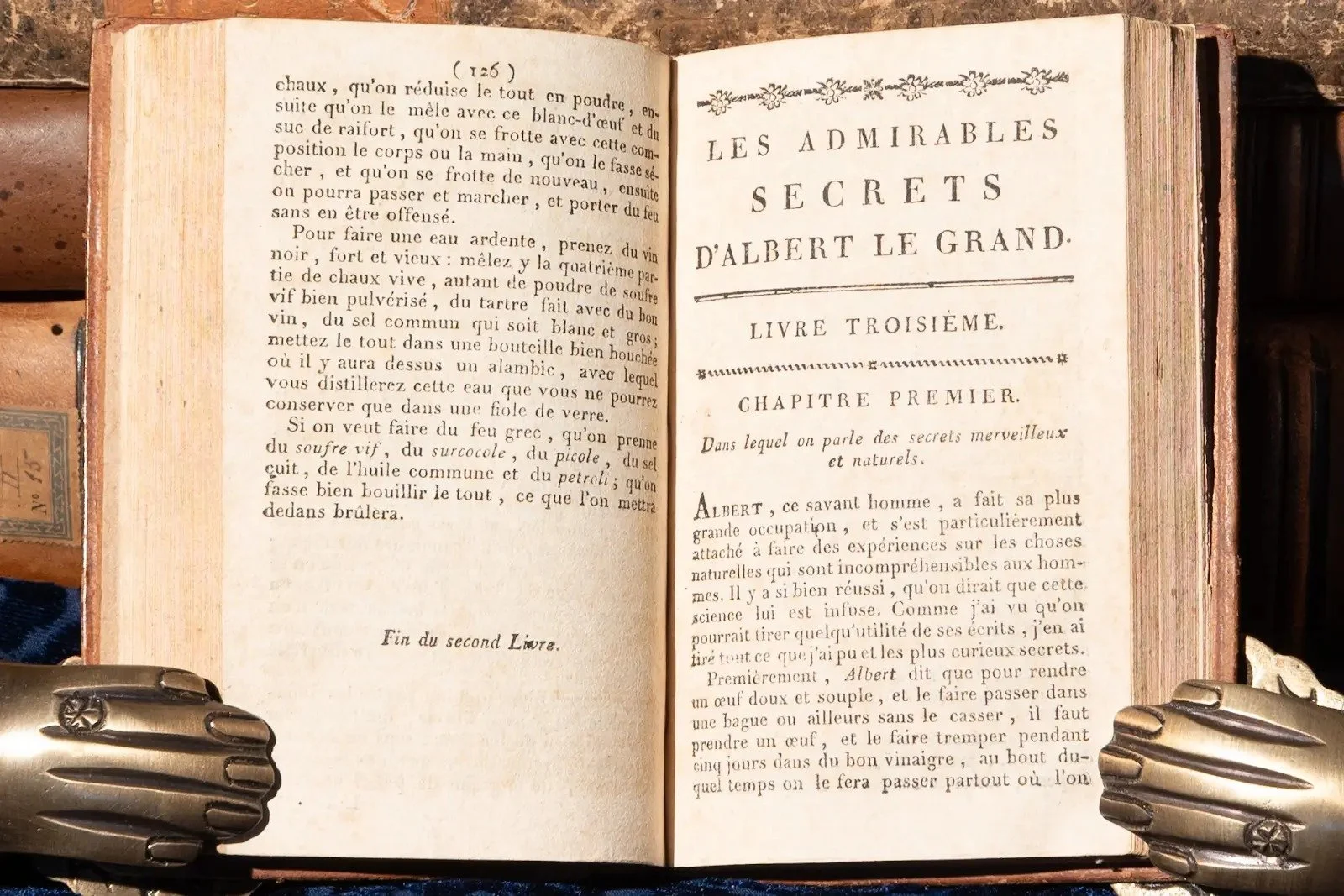 Image 7 of 17
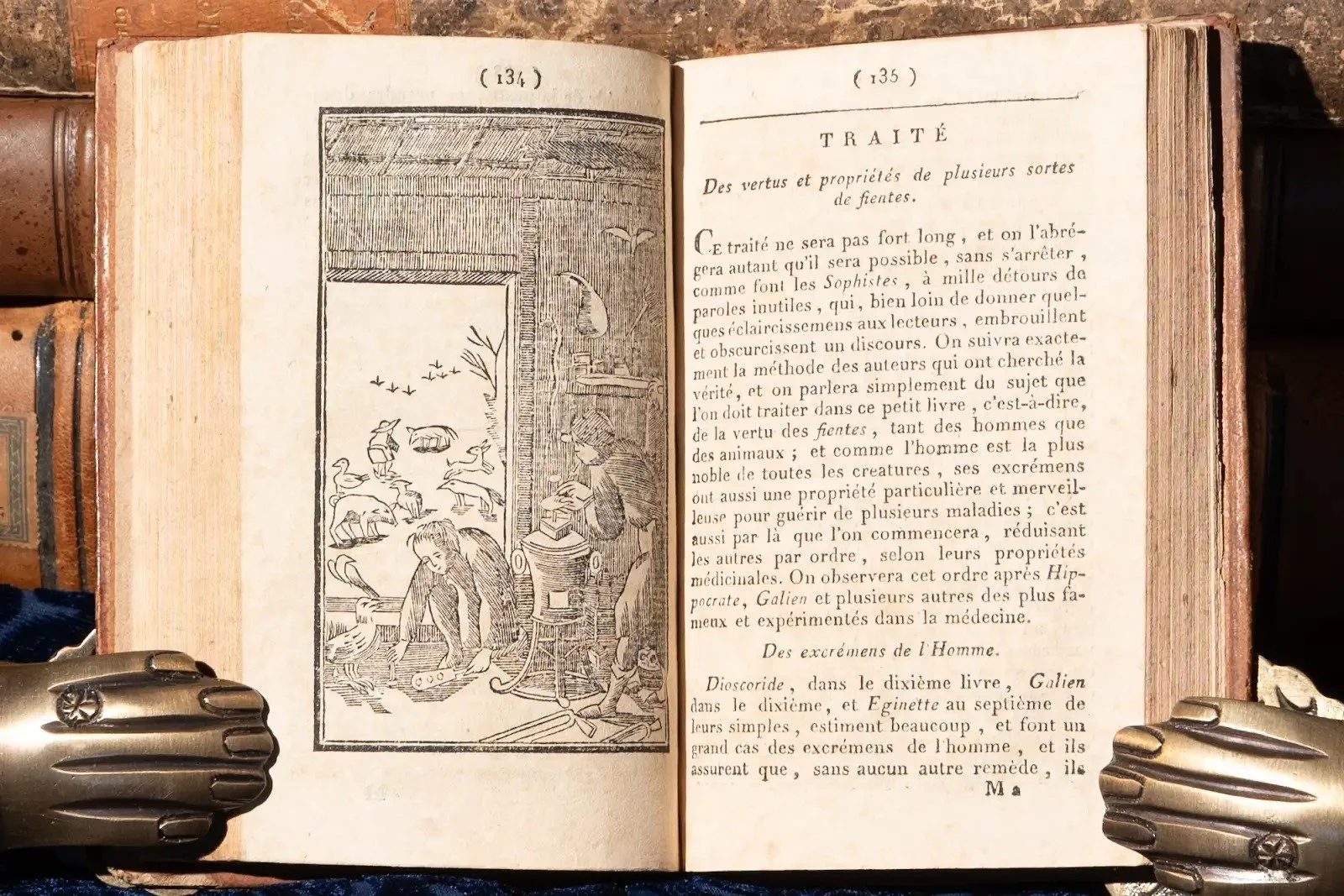 Image 8 of 17
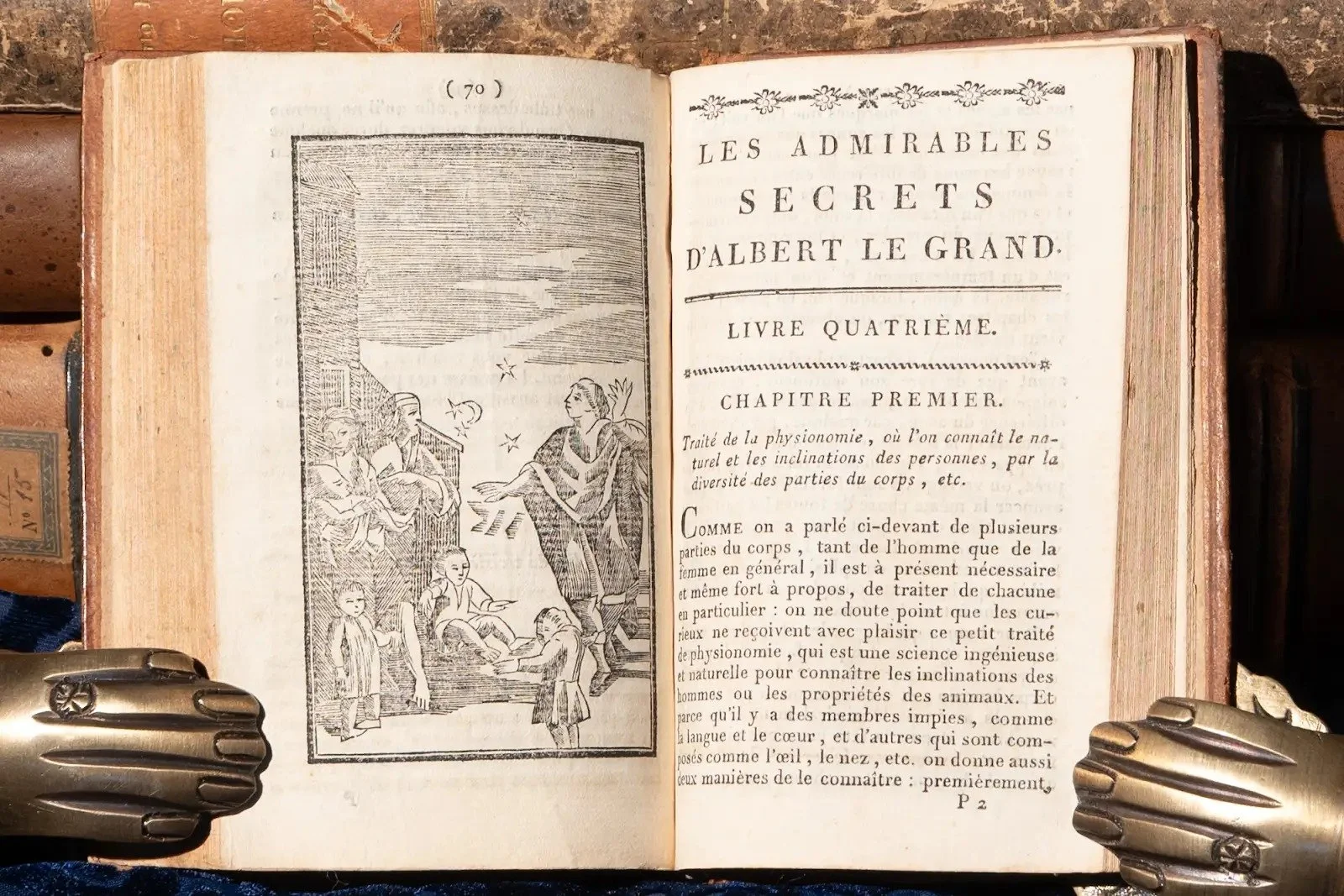 Image 9 of 17
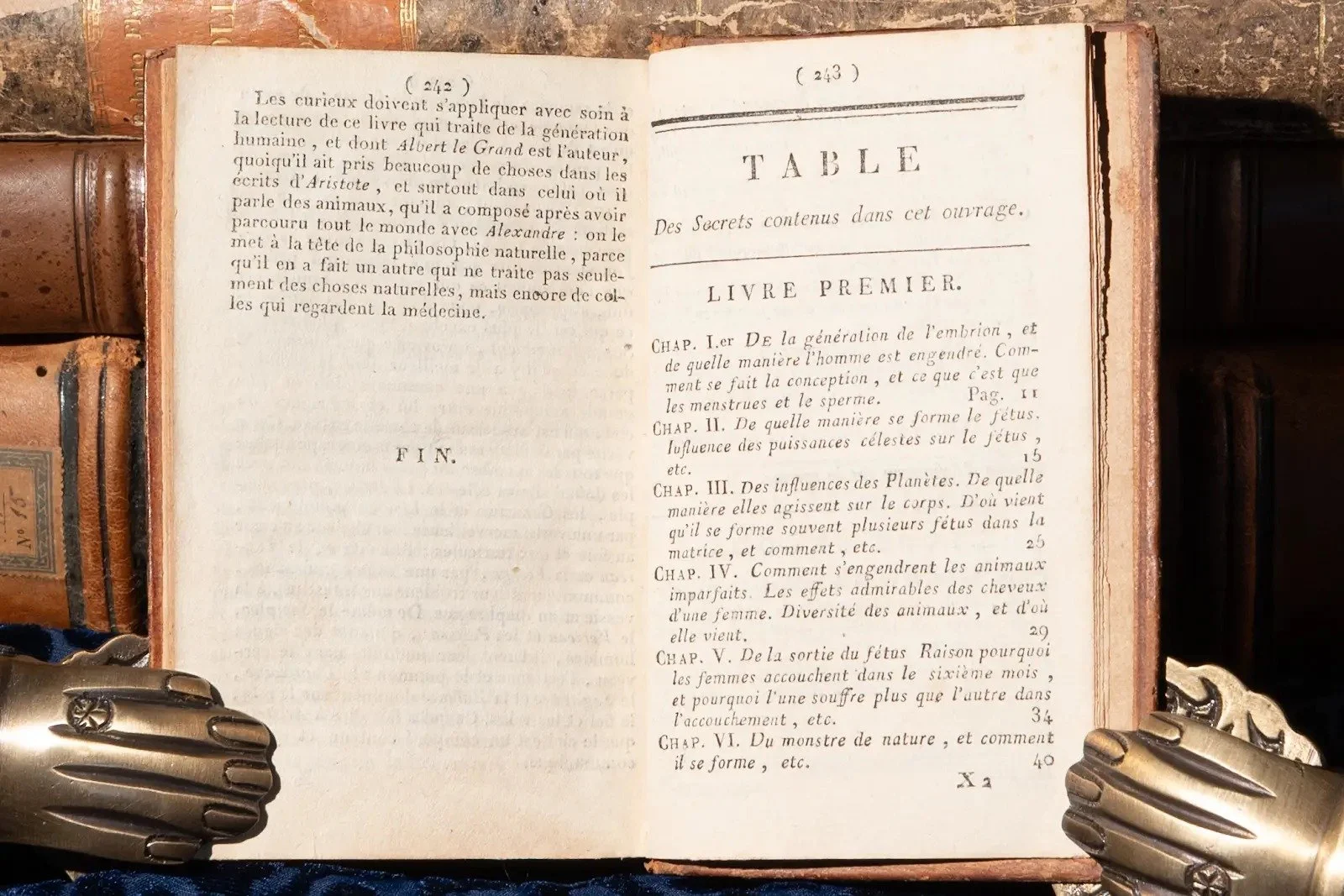 Image 10 of 17
 Image 11 of 17
 Image 12 of 17
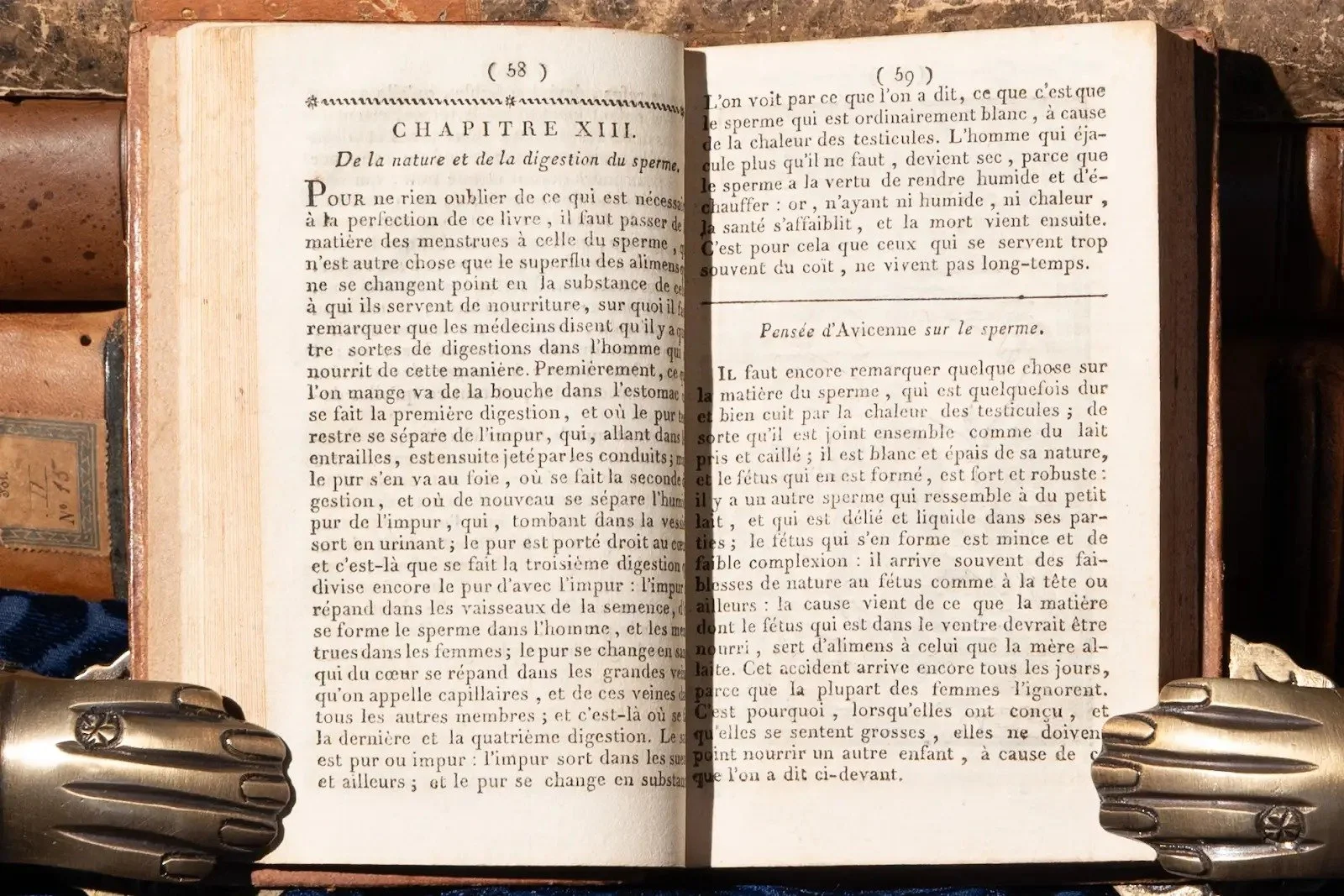 Image 13 of 17
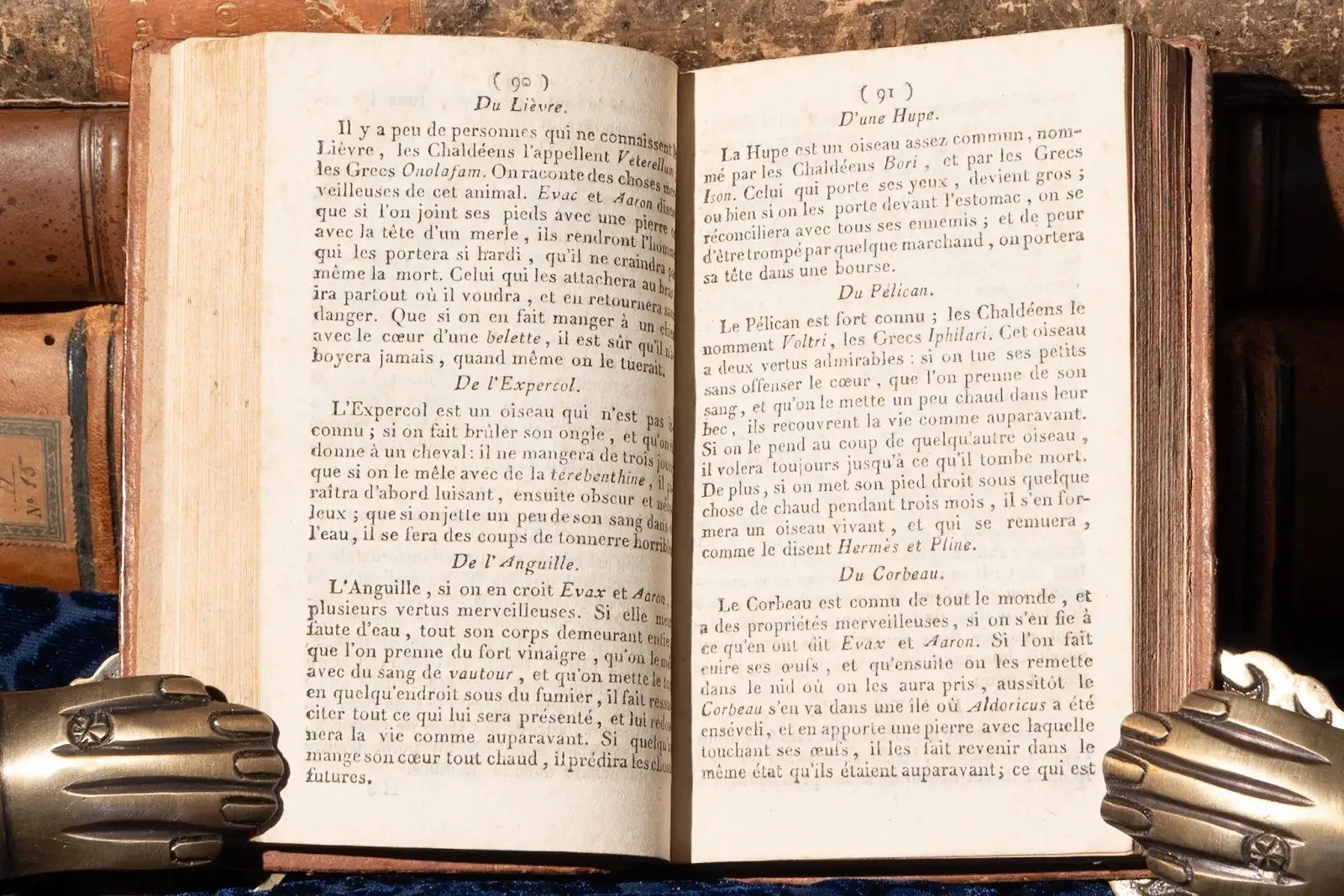 Image 14 of 17
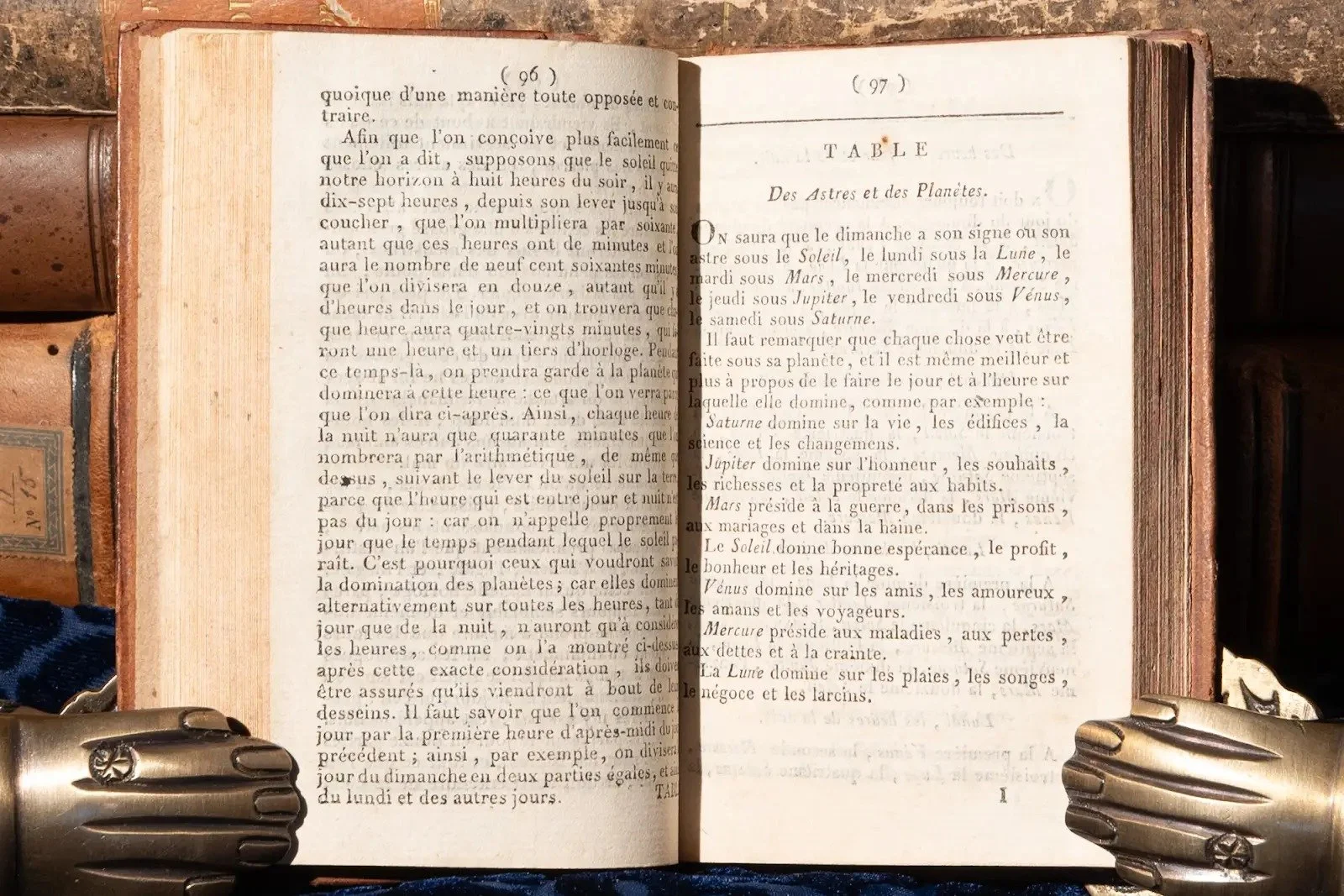 Image 15 of 17
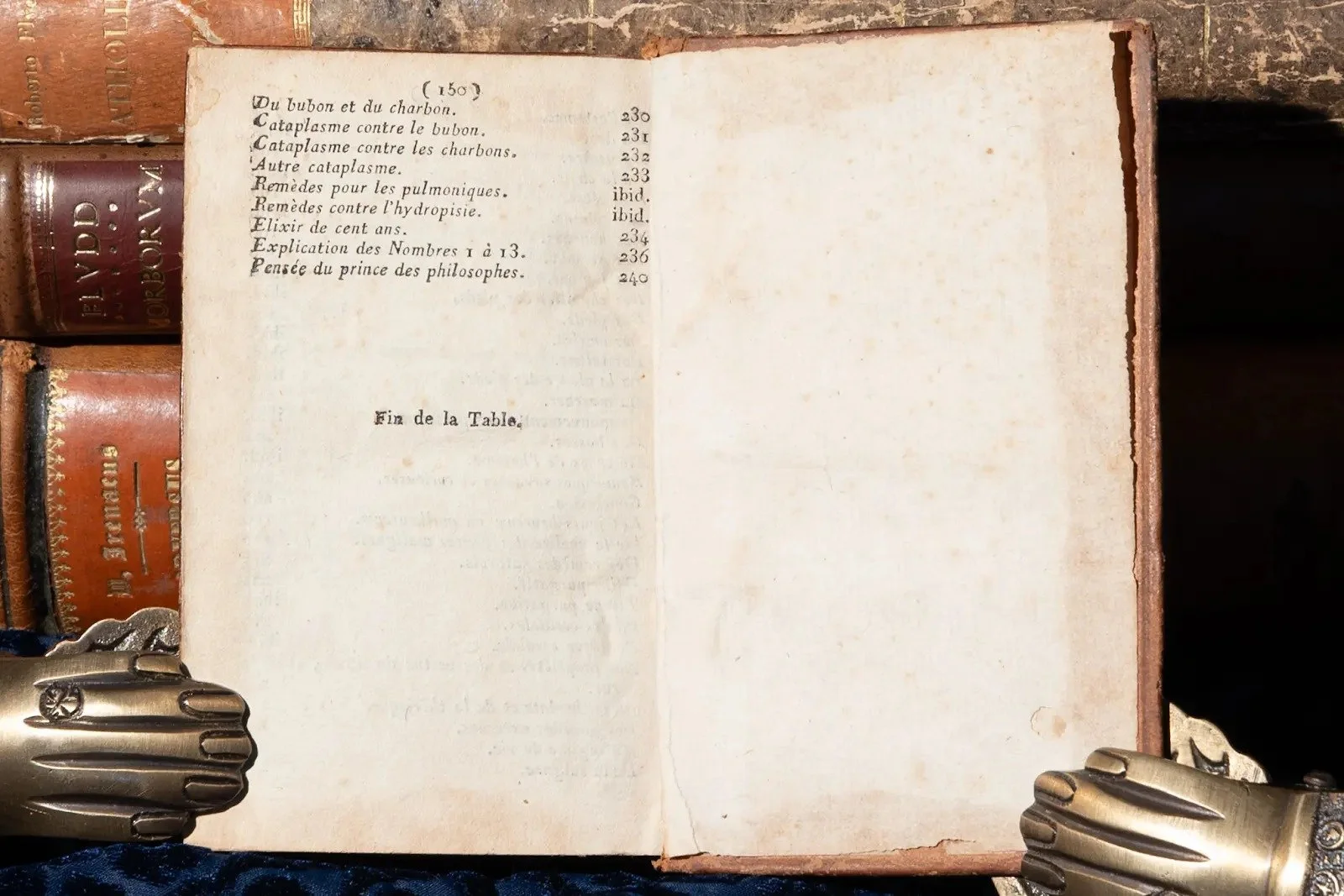 Image 16 of 17
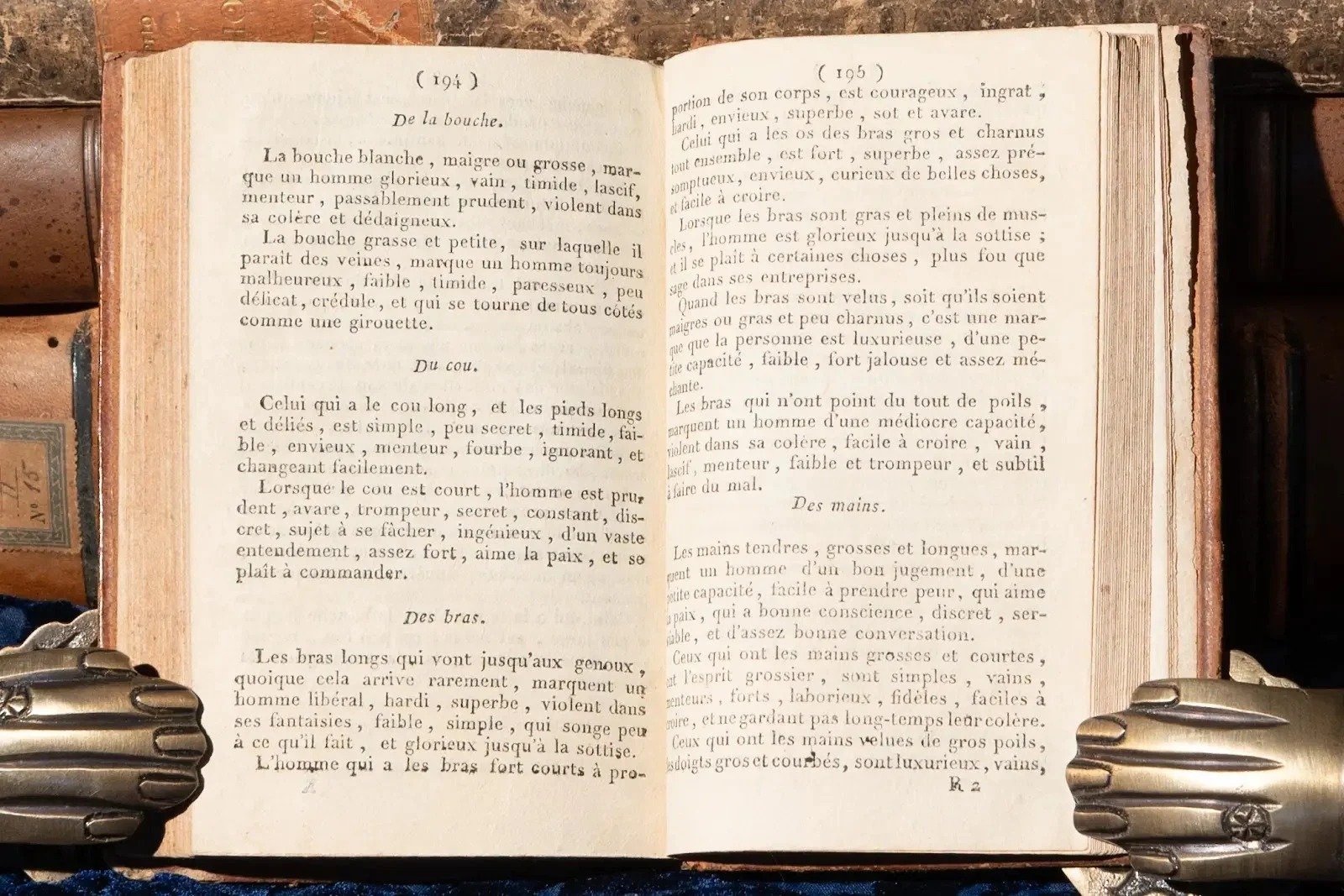 Image 17 of 17