When Aldous Huxley and Humphry Osmond were hunting for a word to name the drugs that opened the doors of perception, they traded rhyming couplets by post. Huxley offered "To make this mundane world sublime, take half a gram of phanerothyme." Osmond shot back "To sink in hell or soar angelic, you'll need a pinch of psychedelic." Osmond won, and "psychedelic" went on to sell everything from posters to rock bands. Lisa Bieberman titled this pamphlet after the word that lost, and her opening pages explain exactly why: by 1968 "psychedelic" had been so thoroughly commercialized that it had, in her phrase, lost its ability "to refer to an elusive and precious state of consciousness." She wanted a clean word for a serious thing.
Bieberman wrote from the center of the story. A Harvard student who volunteered in Timothy Leary's office, helped at Millbrook, and managed circulation for The Psychedelic Review, she opened the Psychedelic Information Center near Harvard Square in 1965 and ran its bulletin as a sober clearing-house for drug facts at the height of the panic. In 1966 she was convicted under federal law for mailing LSD. This pamphlet, issued from the Center at 26 Boylston Street and priced at seventy-five cents, is the distilled statement of her religious view, and it is a strikingly austere one. The "religion of phanerothyme," she insists, "is not drug religion," but the ordinary mysticism other contemplatives profess: a conviction of a divine Reality based on personal encounter, for which "the chemical is only a tool." She models its practice on the silent Quaker meeting rather than the light show, counsels that three or four sessions a year is the most one should use "without some erosion of its spiritual potency," and warns against the era's evangelism of mass dosing: "Today we know that this is not the answer."
Maybe the most delightful part of this polemic is its closing "Epilogue," a small piece of Cambridge prose-poetry in which Bieberman walks four miles from Harvard Square at the end of a session to watch the sun rise over Boston. She describes a half-real lane called Hay Road, owned, she says, "as Thoreau owned Baker Farm," guarded by spirits named for the families on the milk route, leading past the woods where "Harvard freak-outs" are warehoused at McLean Hospital. "LSD has made me conservative," she writes, and signs off with a benediction that has stuck with readers ever since: "May you find your road." It is a literate and genuinely odd document, and it anticipates the author's own path out of the movement: by the early 1970s she had become a Quaker, taken the name Alicia Kuenning, and turned to publishing classic Quaker texts.
The pamphlet survives as a thin saddle-stitched booklet in blue-grey textured wrappers lettered in black, the front cover carrying the title, the author, the subtitle, and the original "75c" in the lower corner. The present copy is clean, square, and bright, with only minor signs of age. Counter-culture ephemera of this kind was printed cheaply, read hard, and rarely kept, and the small Psychedelic Information Center imprints are now uncommon in the trade; this is a primary source for the religious and intellectual history of American psychedelia, by one of the few women who shaped it and one of the very few who approached it as a discipline rather than a party. It belongs in any serious collection of entheogens, 1960s Cambridge, or the Western mystical revival.
BIEBERMAN, Lisa (1941-2022; later Alicia/Licia Kuenning). Phanerothyme: A Western Approach to the Religious Use of Psychochemicals. Cambridge, Mass.: Psychedelic Information Center, 26 Boylston St., [1968]. First edition.
Physical Description: Slim 8vo pamphlet, 32 pp. Saddle-stitched (stapled). Original price 75 cents.
Binding: Publisher's printed blue-grey textured wrappers, lettered in black; "75c" to lower right of front cover.
Condition: Very good or better. Clean, square and bright; minor signs of age only.
When Aldous Huxley and Humphry Osmond were hunting for a word to name the drugs that opened the doors of perception, they traded rhyming couplets by post. Huxley offered "To make this mundane world sublime, take half a gram of phanerothyme." Osmond shot back "To sink in hell or soar angelic, you'll need a pinch of psychedelic." Osmond won, and "psychedelic" went on to sell everything from posters to rock bands. Lisa Bieberman titled this pamphlet after the word that lost, and her opening pages explain exactly why: by 1968 "psychedelic" had been so thoroughly commercialized that it had, in her phrase, lost its ability "to refer to an elusive and precious state of consciousness." She wanted a clean word for a serious thing.
Bieberman wrote from the center of the story. A Harvard student who volunteered in Timothy Leary's office, helped at Millbrook, and managed circulation for The Psychedelic Review, she opened the Psychedelic Information Center near Harvard Square in 1965 and ran its bulletin as a sober clearing-house for drug facts at the height of the panic. In 1966 she was convicted under federal law for mailing LSD. This pamphlet, issued from the Center at 26 Boylston Street and priced at seventy-five cents, is the distilled statement of her religious view, and it is a strikingly austere one. The "religion of phanerothyme," she insists, "is not drug religion," but the ordinary mysticism other contemplatives profess: a conviction of a divine Reality based on personal encounter, for which "the chemical is only a tool." She models its practice on the silent Quaker meeting rather than the light show, counsels that three or four sessions a year is the most one should use "without some erosion of its spiritual potency," and warns against the era's evangelism of mass dosing: "Today we know that this is not the answer."
Maybe the most delightful part of this polemic is its closing "Epilogue," a small piece of Cambridge prose-poetry in which Bieberman walks four miles from Harvard Square at the end of a session to watch the sun rise over Boston. She describes a half-real lane called Hay Road, owned, she says, "as Thoreau owned Baker Farm," guarded by spirits named for the families on the milk route, leading past the woods where "Harvard freak-outs" are warehoused at McLean Hospital. "LSD has made me conservative," she writes, and signs off with a benediction that has stuck with readers ever since: "May you find your road." It is a literate and genuinely odd document, and it anticipates the author's own path out of the movement: by the early 1970s she had become a Quaker, taken the name Alicia Kuenning, and turned to publishing classic Quaker texts.
The pamphlet survives as a thin saddle-stitched booklet in blue-grey textured wrappers lettered in black, the front cover carrying the title, the author, the subtitle, and the original "75c" in the lower corner. The present copy is clean, square, and bright, with only minor signs of age. Counter-culture ephemera of this kind was printed cheaply, read hard, and rarely kept, and the small Psychedelic Information Center imprints are now uncommon in the trade; this is a primary source for the religious and intellectual history of American psychedelia, by one of the few women who shaped it and one of the very few who approached it as a discipline rather than a party. It belongs in any serious collection of entheogens, 1960s Cambridge, or the Western mystical revival.
BIEBERMAN, Lisa (1941-2022; later Alicia/Licia Kuenning). Phanerothyme: A Western Approach to the Religious Use of Psychochemicals. Cambridge, Mass.: Psychedelic Information Center, 26 Boylston St., [1968]. First edition.
Physical Description: Slim 8vo pamphlet, 32 pp. Saddle-stitched (stapled). Original price 75 cents.
Binding: Publisher's printed blue-grey textured wrappers, lettered in black; "75c" to lower right of front cover.
Condition: Very good or better. Clean, square and bright; minor signs of age only.

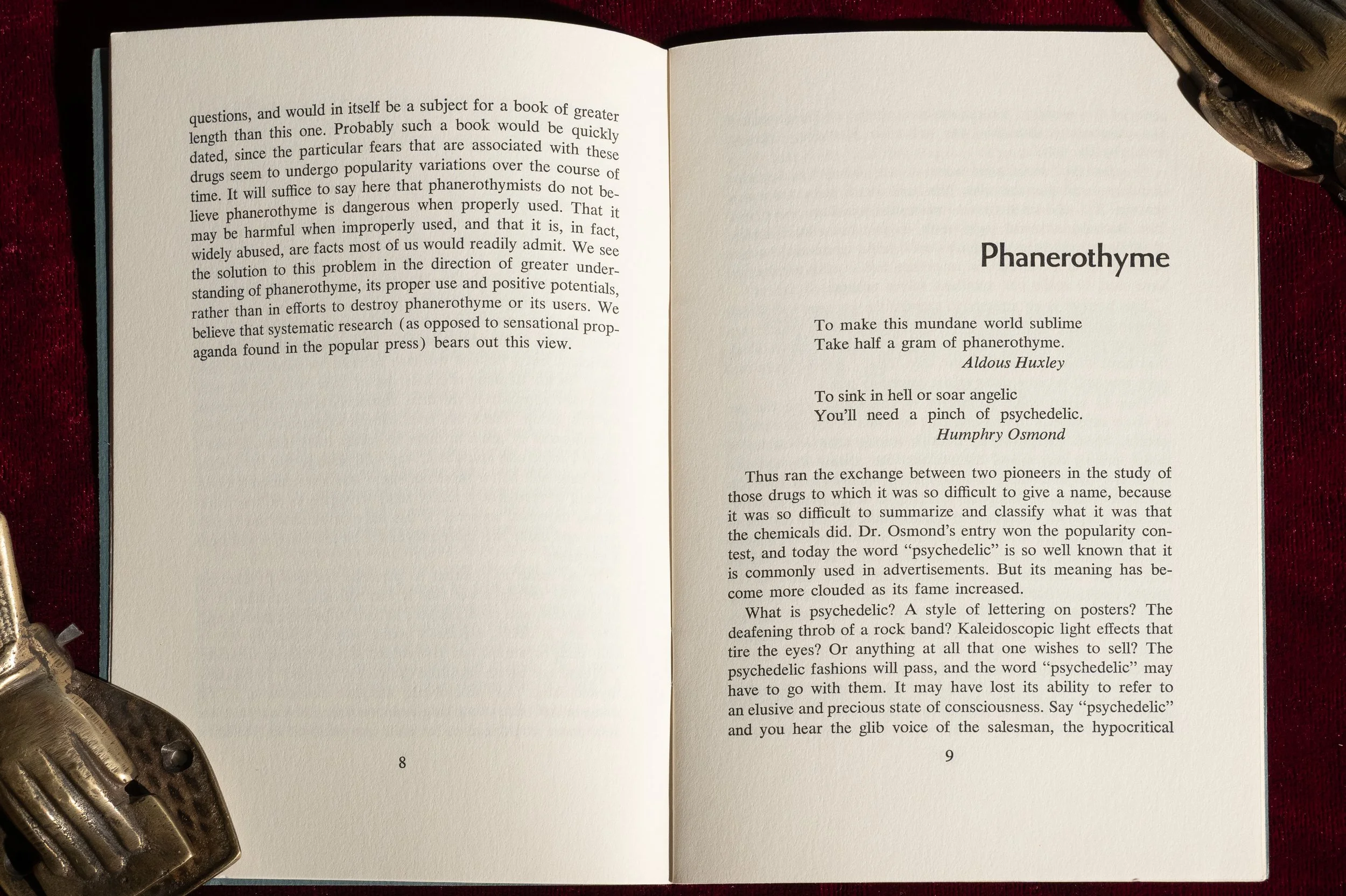 Image 1 of 7
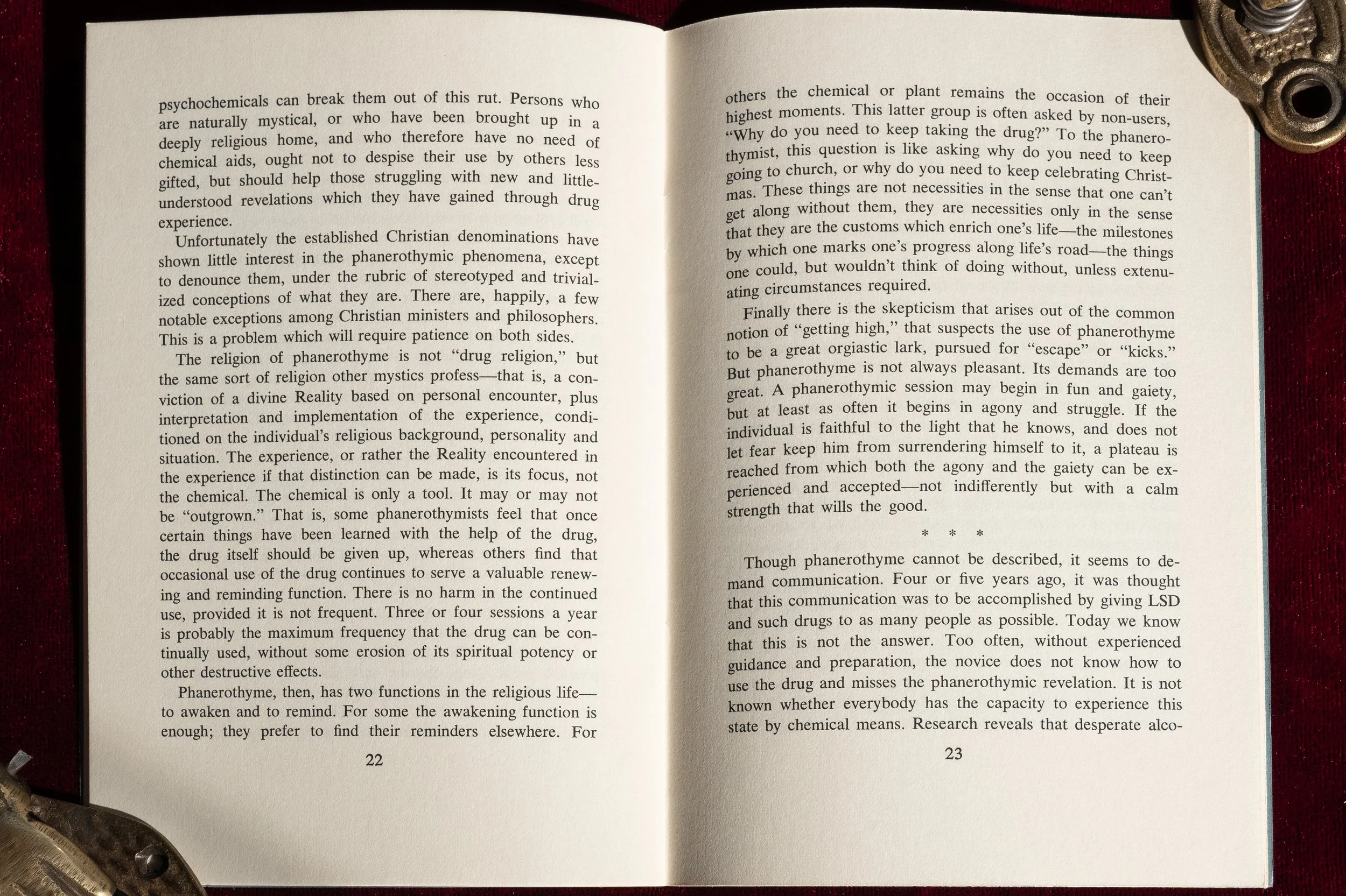 Image 2 of 7
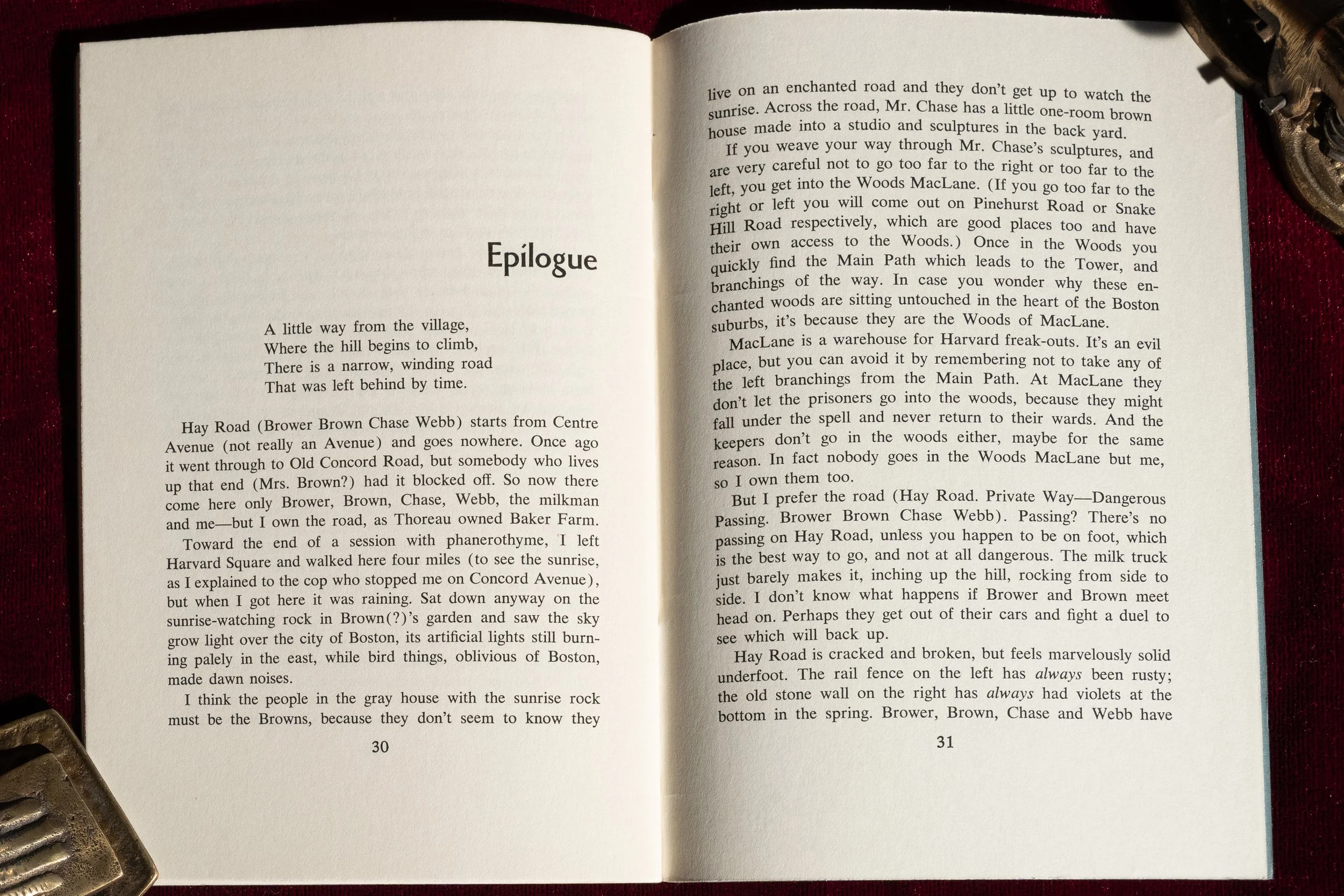 Image 3 of 7
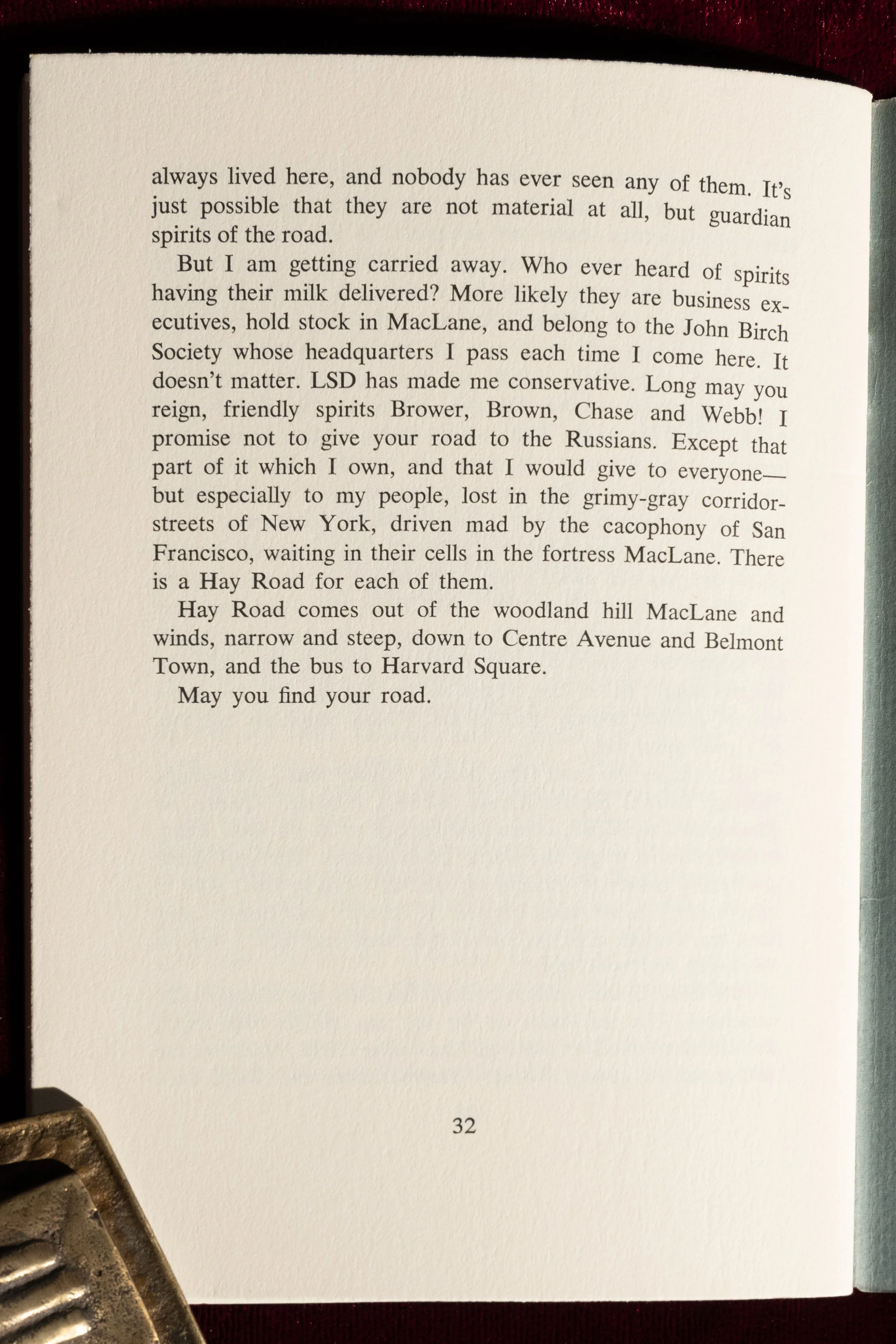 Image 4 of 7
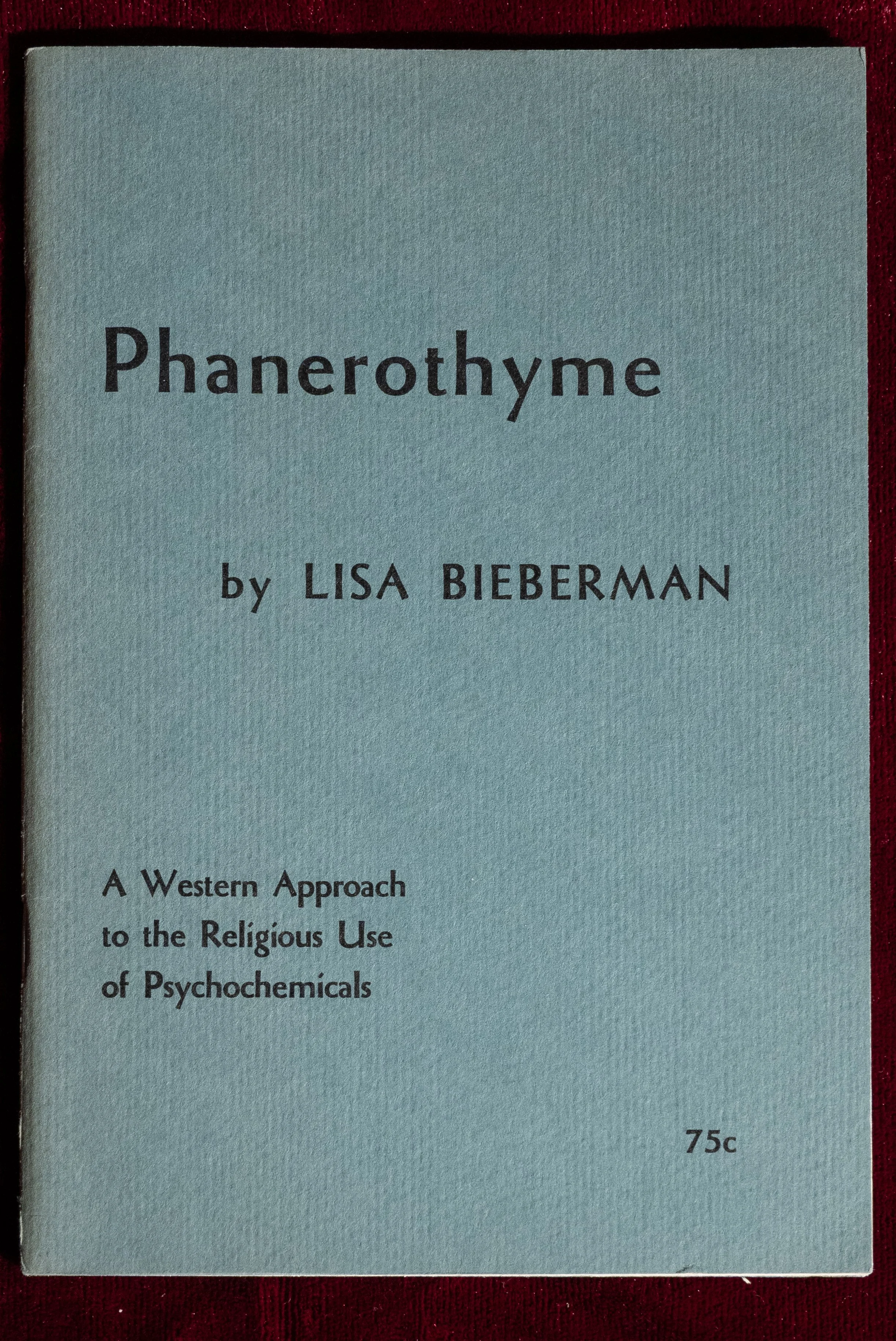 Image 5 of 7
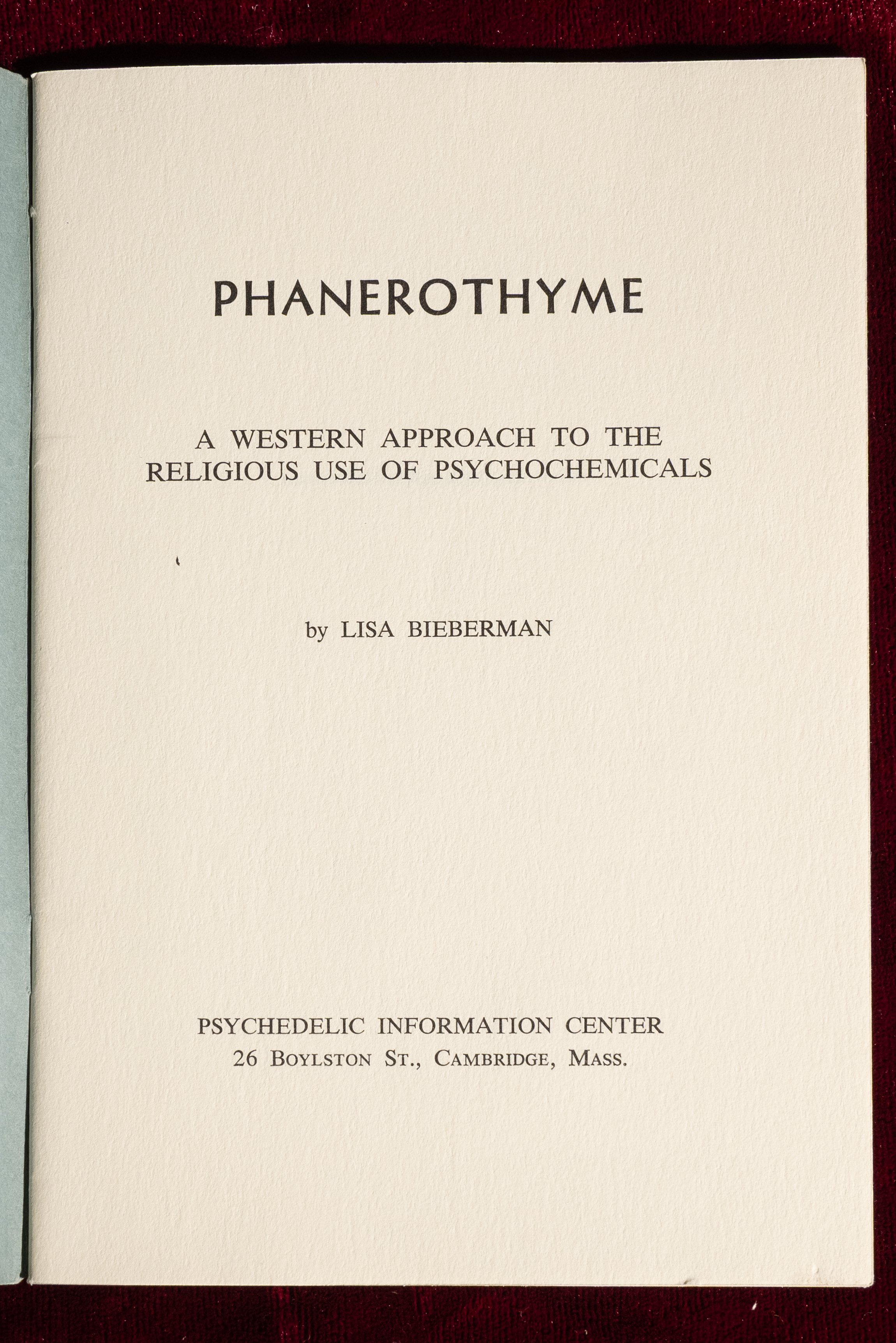 Image 6 of 7
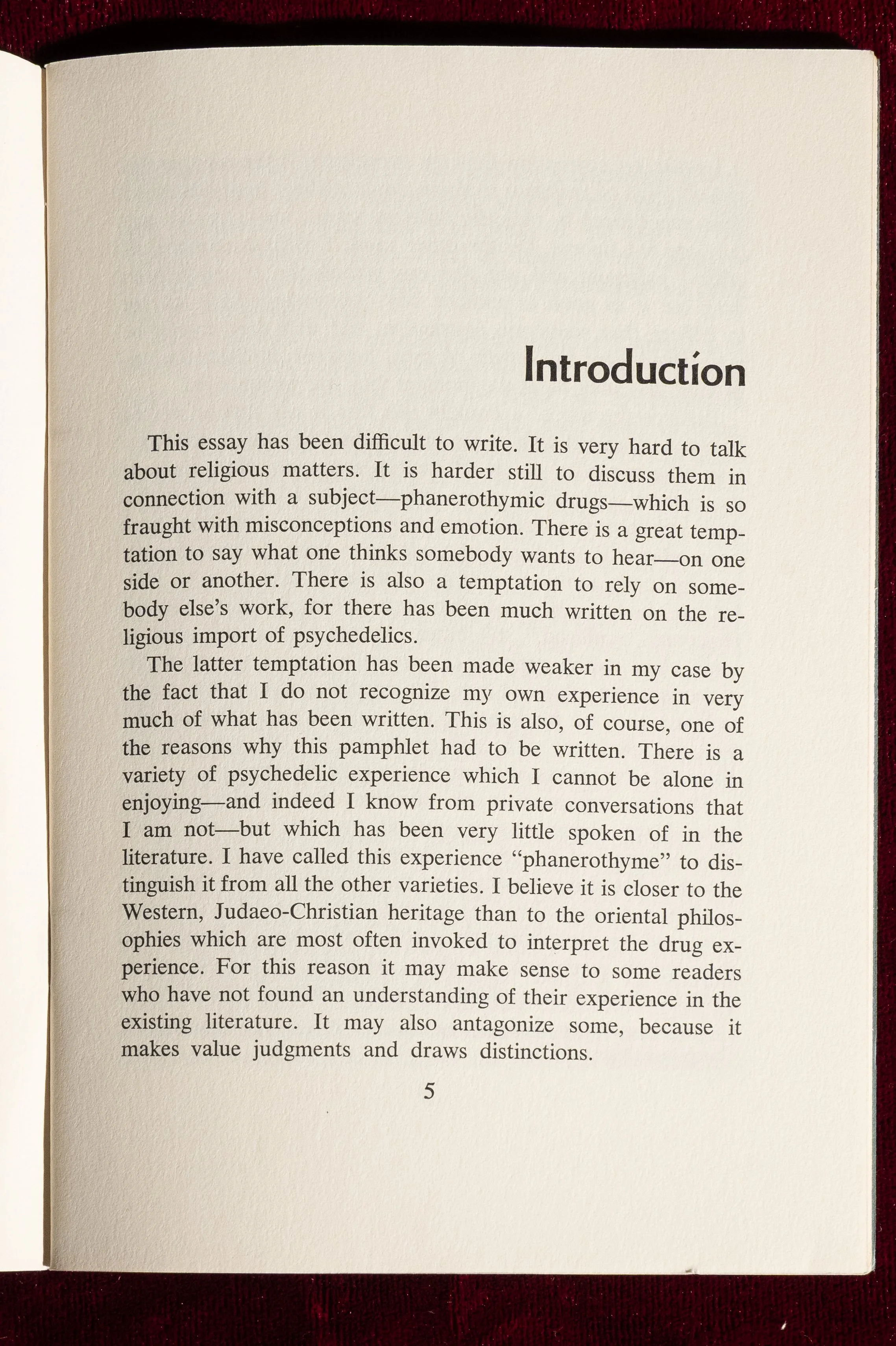 Image 7 of 7