Het Toppunt der Beschaving is a set of anti-German war cartoons by the Dutch artist Louis Raemaekers (1869–1956). The title means “The Height of Civilization,” and it is sarcastic. Raemaekers began drawing the German invasion of Belgium for the Amsterdam daily De Telegraaf in the first months of the First World War. The Netherlands was neutral, but he took sides from the start. From 1914 the Elsevier house in Amsterdam gathered his drawings into large folio series, each with twelve drawings in a wrapper printed with a cover design in color. Seven series appeared between 1914 and 1917. We have all seven, and each is offered on its own.
The seven covers make a Dance of Death for the First World War, drawn with the old Christian imagery of death and the devil. On the first, Death stands in a monk’s habit and drinks blood from a goblet, and the blood stains his robe and pools at his feet. On the fourth, poison gas crosses the fields as a serpent under the moon. On the fifth, a grinning purple devil leers beside the nailed feet of the crucified Christ. He wears a collar inscribed Gott mit uns, the motto of the German army. The seventh, on orange paper, shows a flaming skeleton falling from the sky. The other three covers show a German freight car dripping blood onto the platform, a dead mother and child, and a woman clinging to a wayside shrine before a ruined town. The freight car is marked “via Lüttich–Aachen,” the rail line out of occupied Liège.
The drawings made Raemaekers famous, and they put him at some risk. The neutral Dutch government confiscated his work more than once. In 1915 a story went around that Germany had put a price of 12,000 guilders on his head, dead or alive, though no official order has ever been found. He left for London that November. By October 1917 more than two thousand American newspapers had printed his cartoons.
Each series is complete with its twelve plates in its original wrapper. The seventh is marked “Eerste druk,” first printing, and the others state no printing either way. An early owner wrote “E.C.B. 1915” on the first three. The sixth still holds Elsevier’s small printed slip in red, which offers a cloth-flapped portfolio for the series published so far. Choose your series from the menu. Each is shown in the photographs, in order.
· · ·
RAEMAEKERS, Louis (1869–1956). Het Toppunt der Beschaving. Amsterdam: Uitgevers-Maatschappij “Elsevier,” 1914–1917. The seventh stated as the first printing; the others unstated. Folio.
Physical Description: Twelve reproductions of Raemaekers’s drawings on loose leaves, in a printed wrapper with a cover design in color halftone. About 39 x 30 cm (15 1/2 x 11 3/4 in.).
Condition: Wrappers toned and foxed, most heavily on series 1–3; edges chipped, with short tears at the fore-edges of several, notably series 4 and 6; series 5 creased throughout; a small stain on the front wrapper of series 4; series 7 with a creased upper corner.
Provenance: “E.C.B. 1915” on the front wrappers of series 1–3; publisher’s slip in series 6.

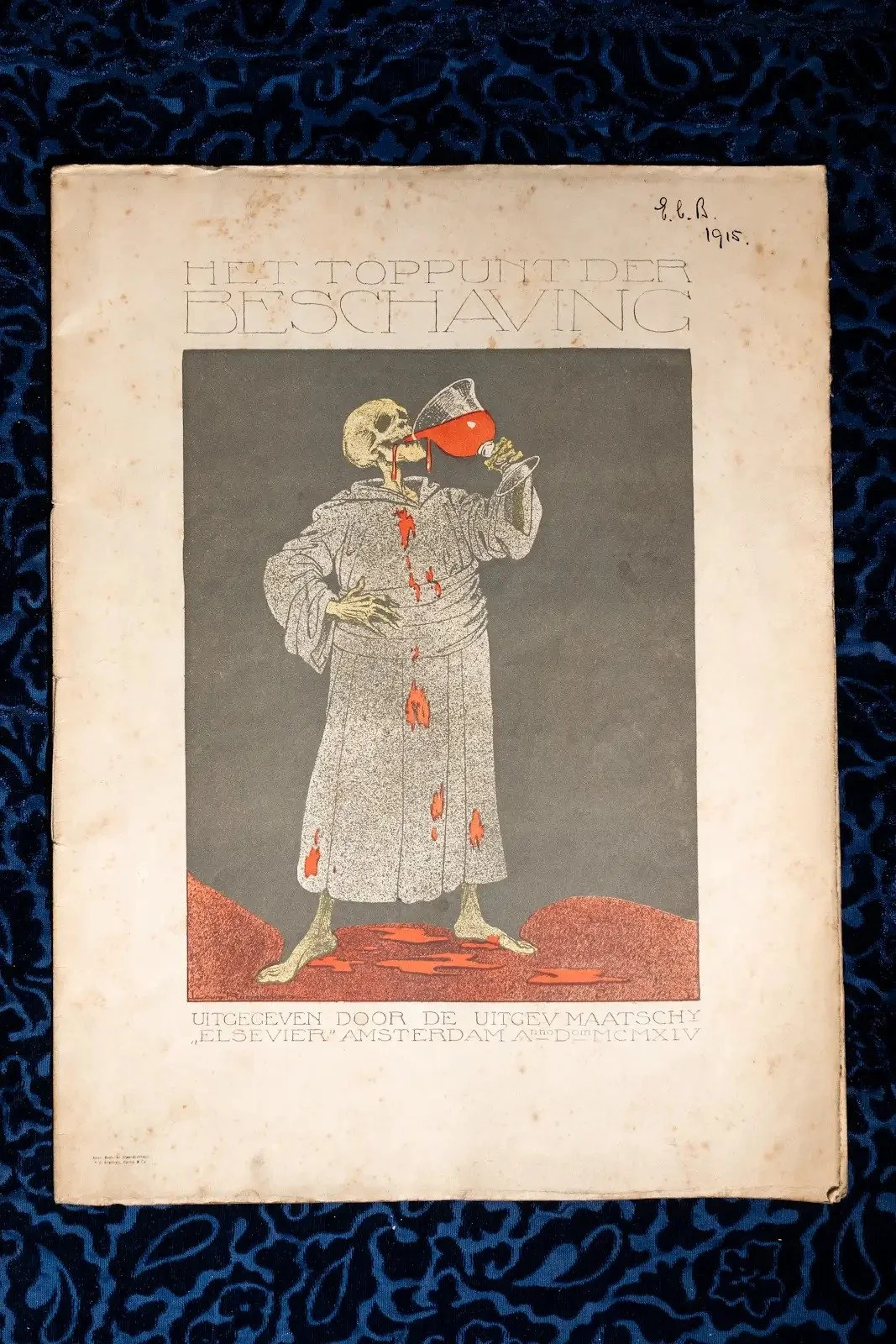 Image 1 of 57
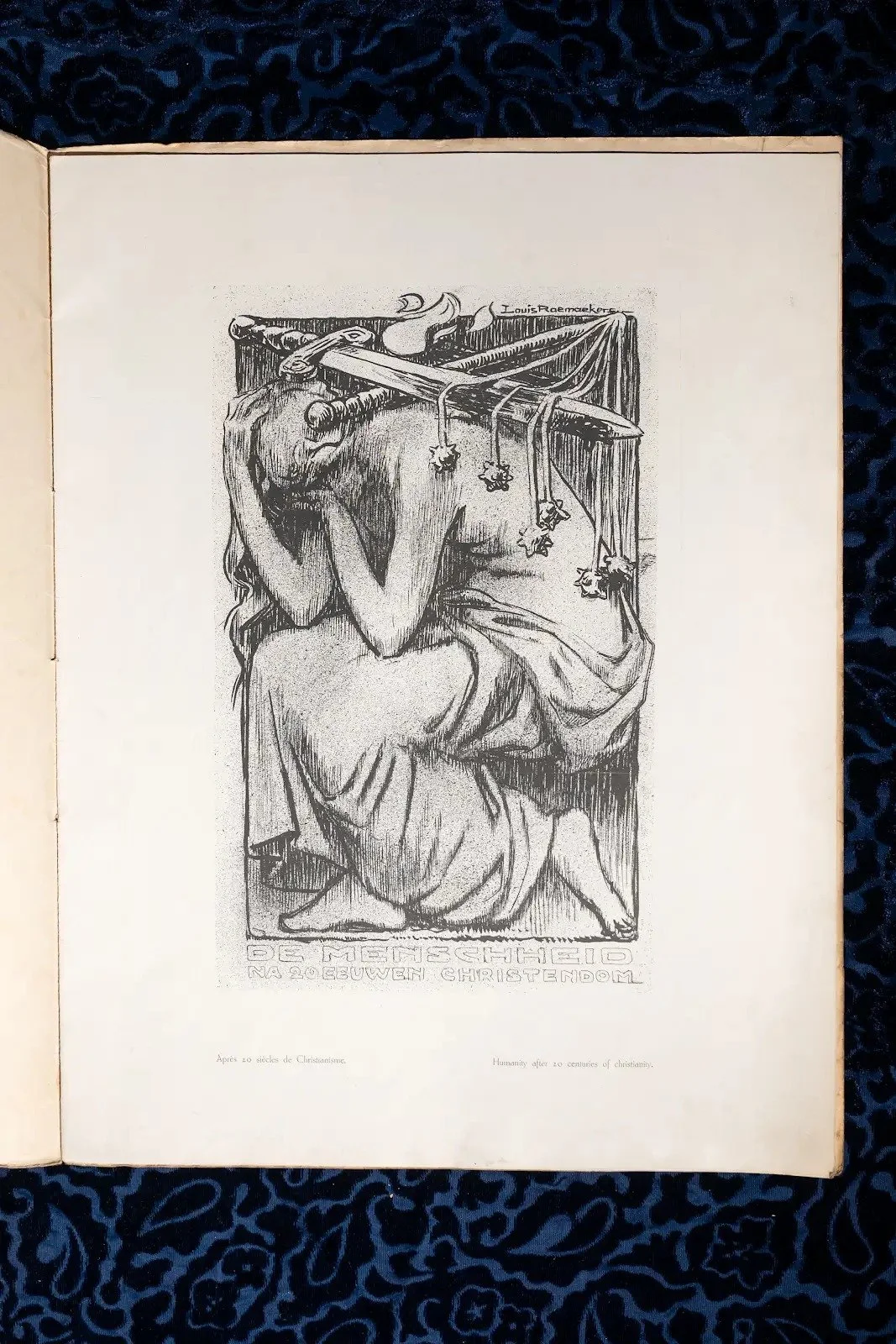 Image 2 of 57
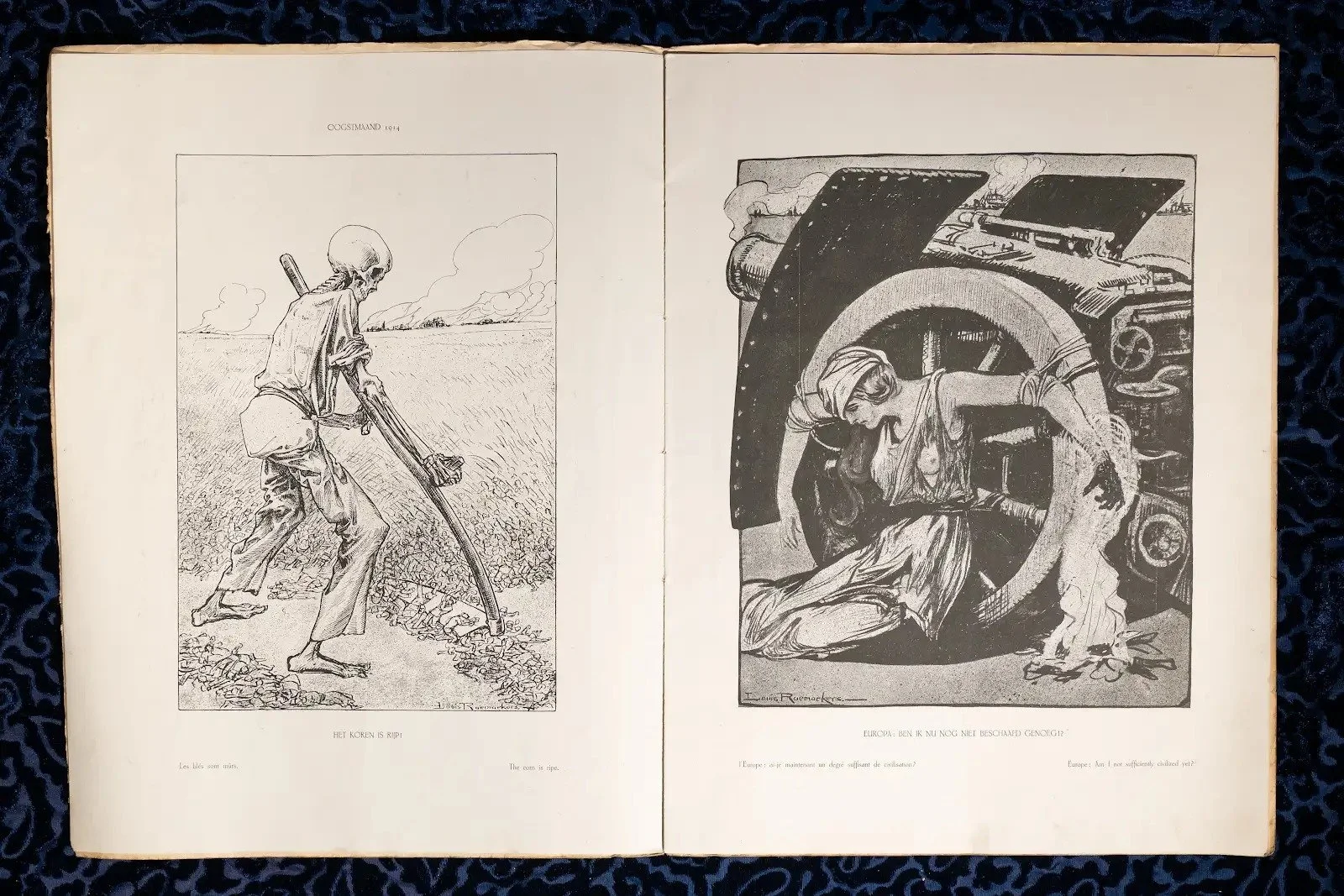 Image 3 of 57
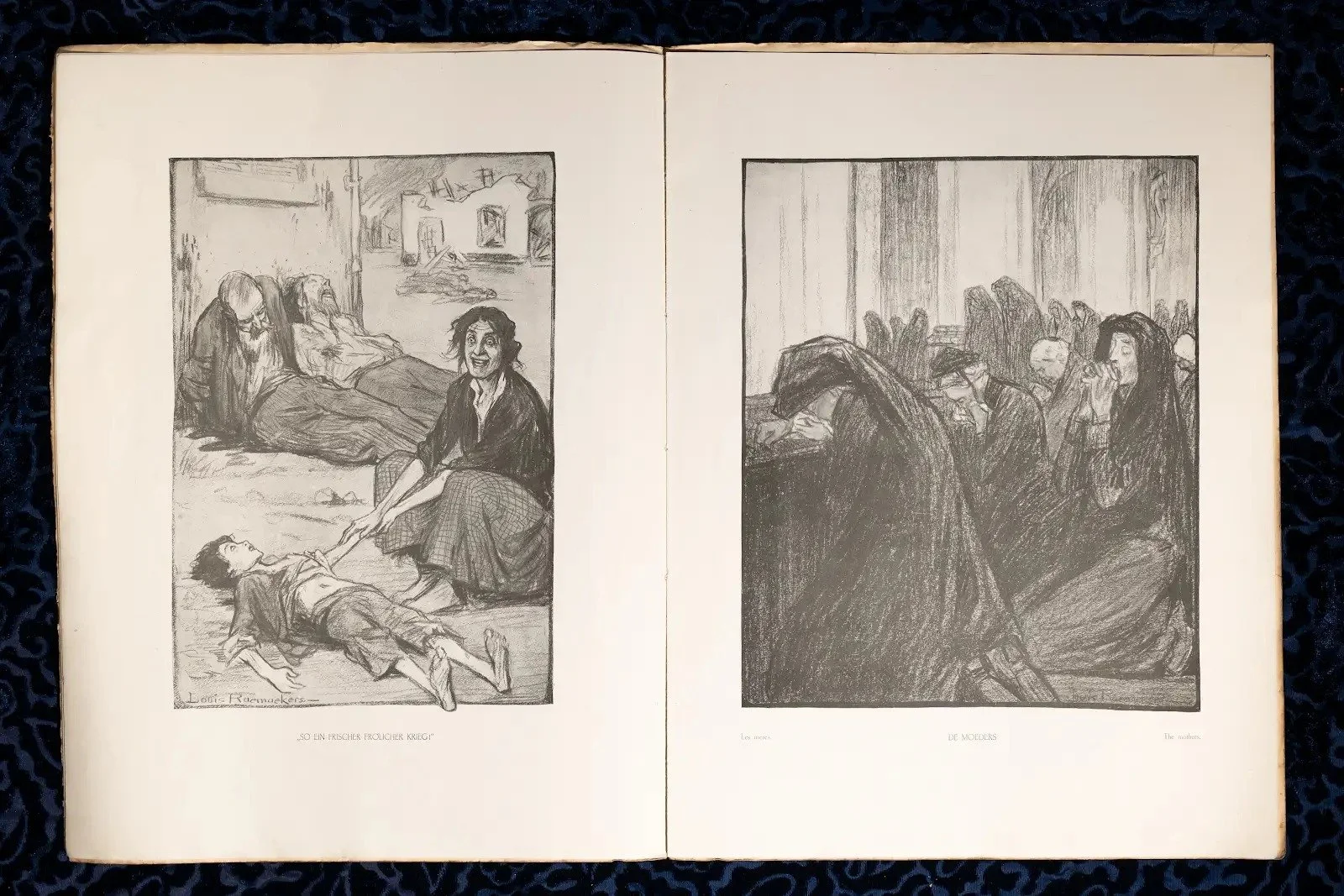 Image 4 of 57
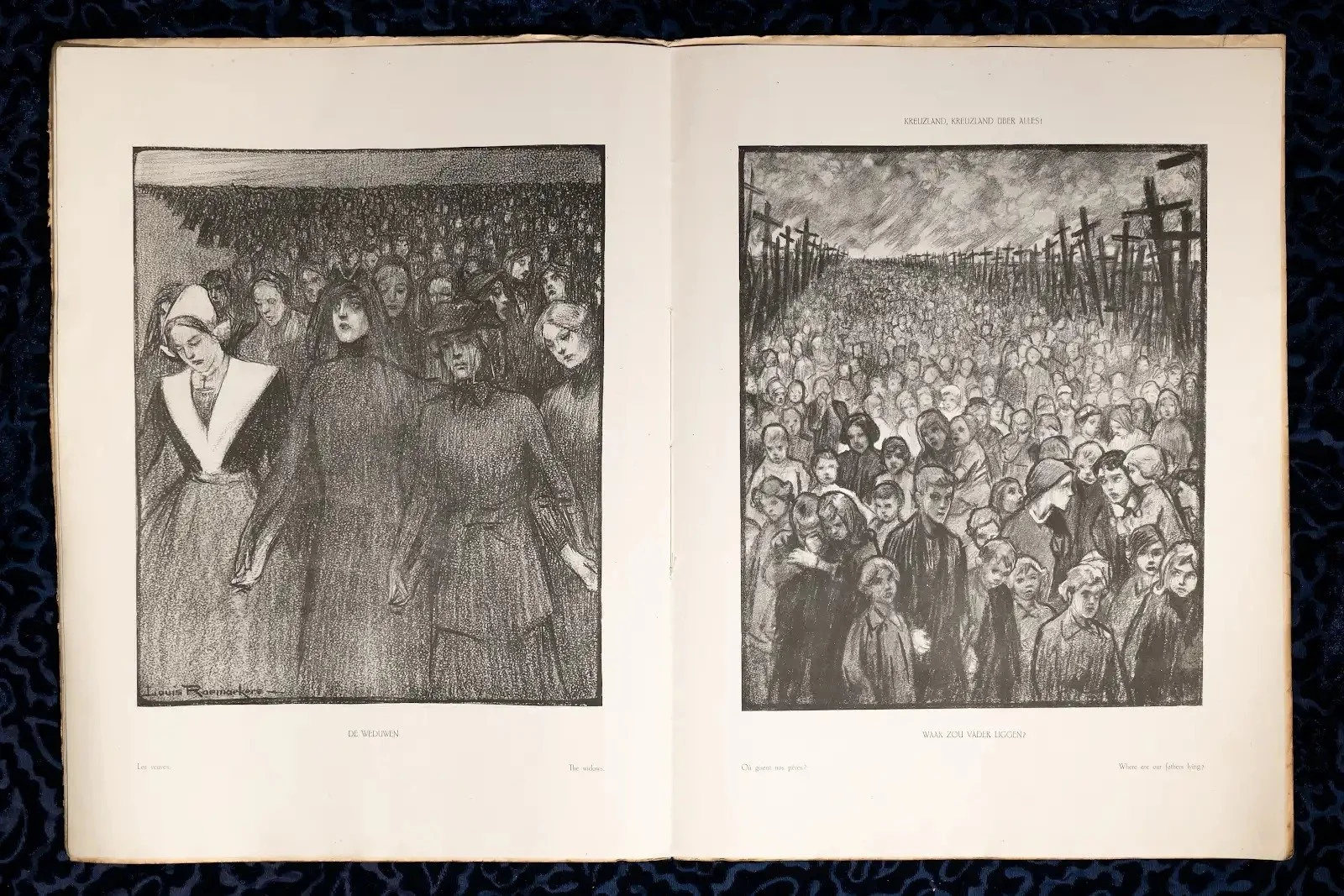 Image 5 of 57
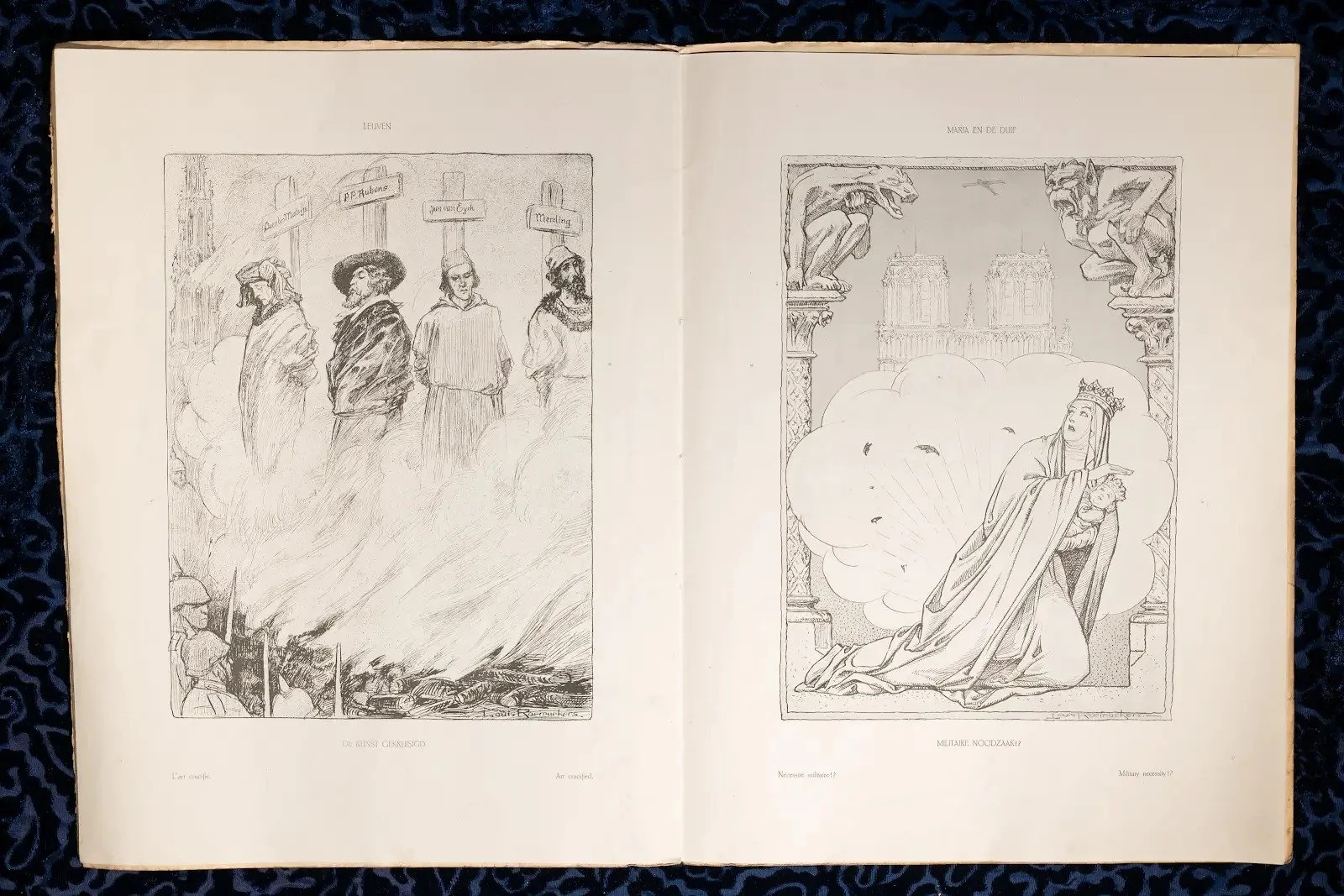 Image 6 of 57
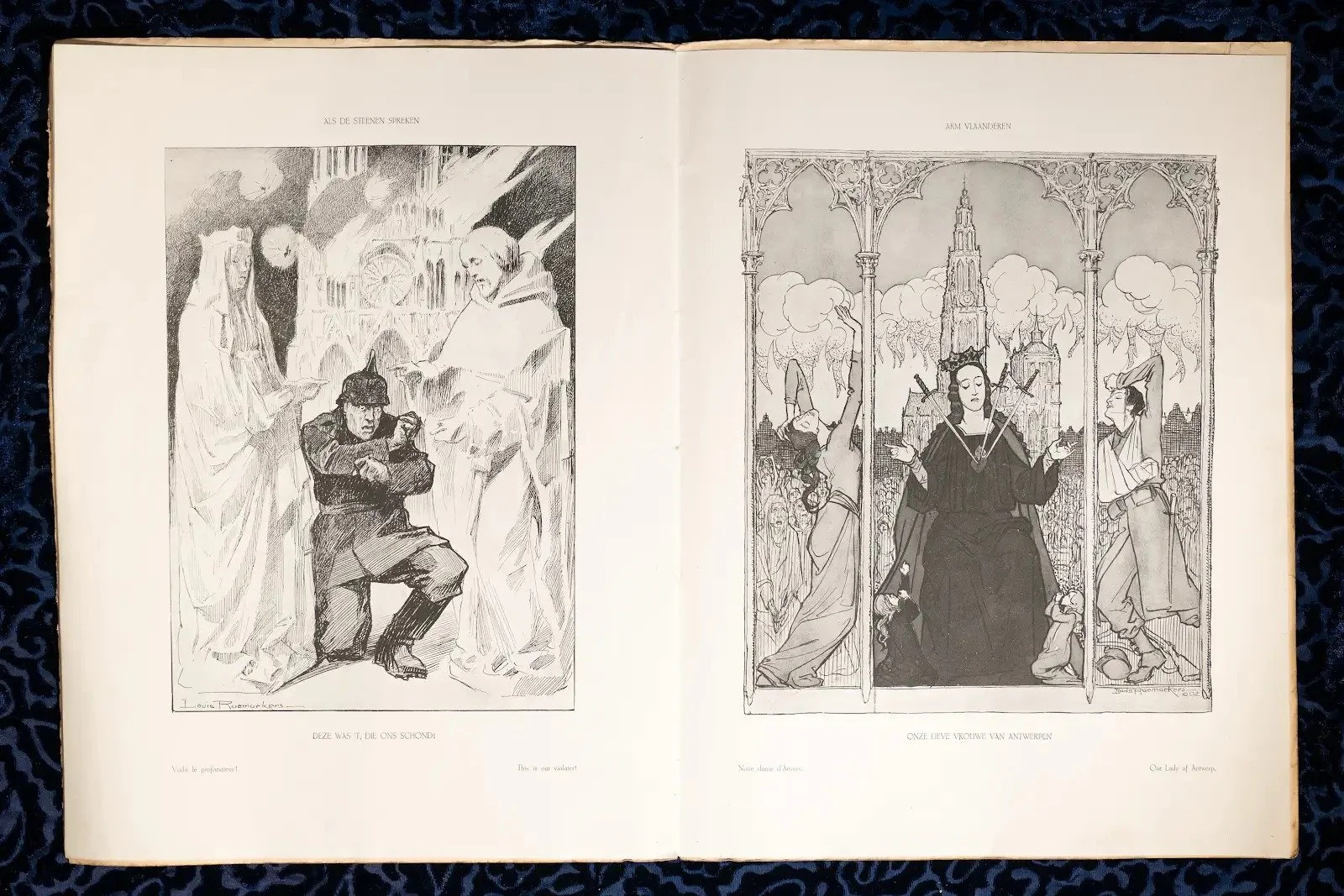 Image 7 of 57
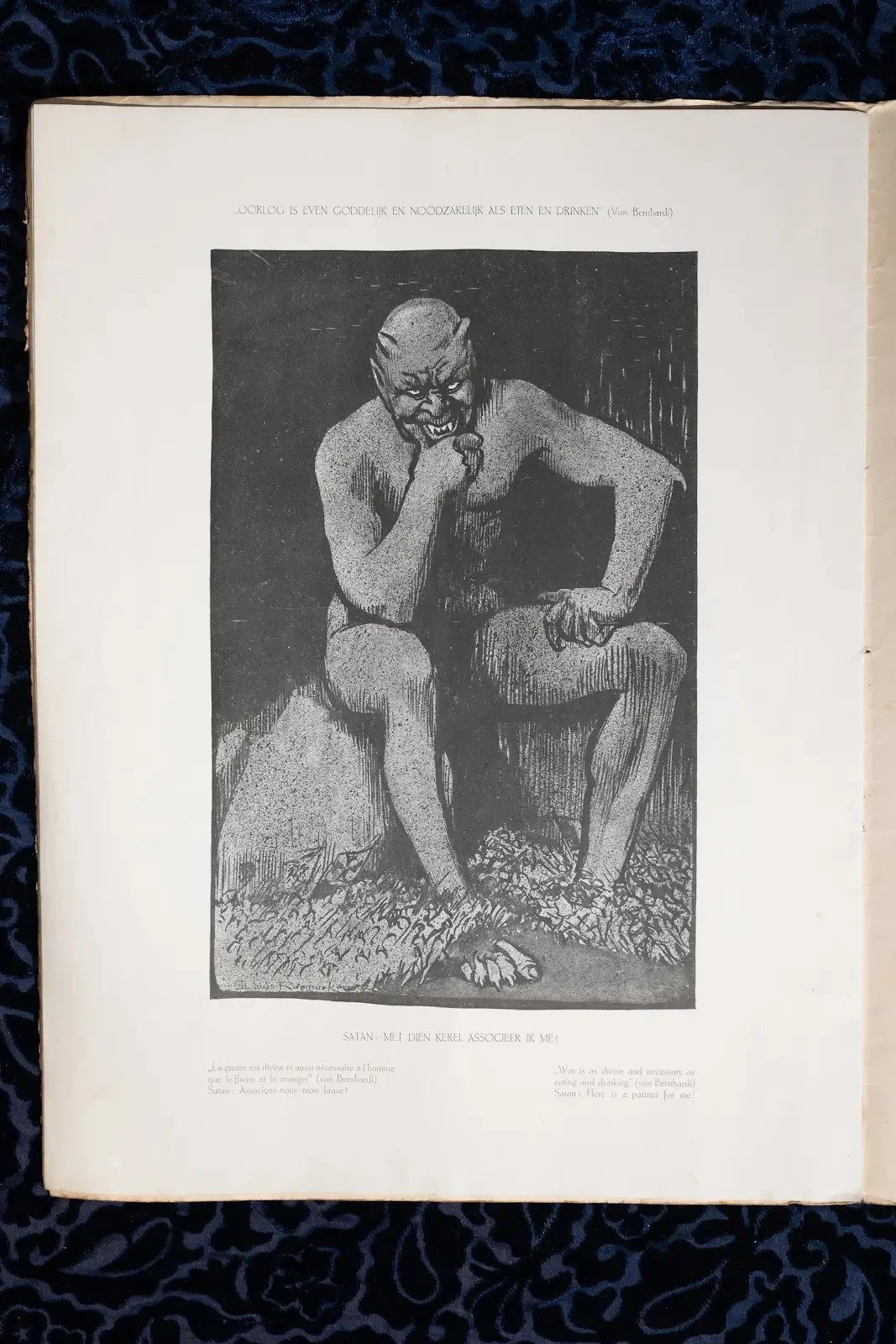 Image 8 of 57
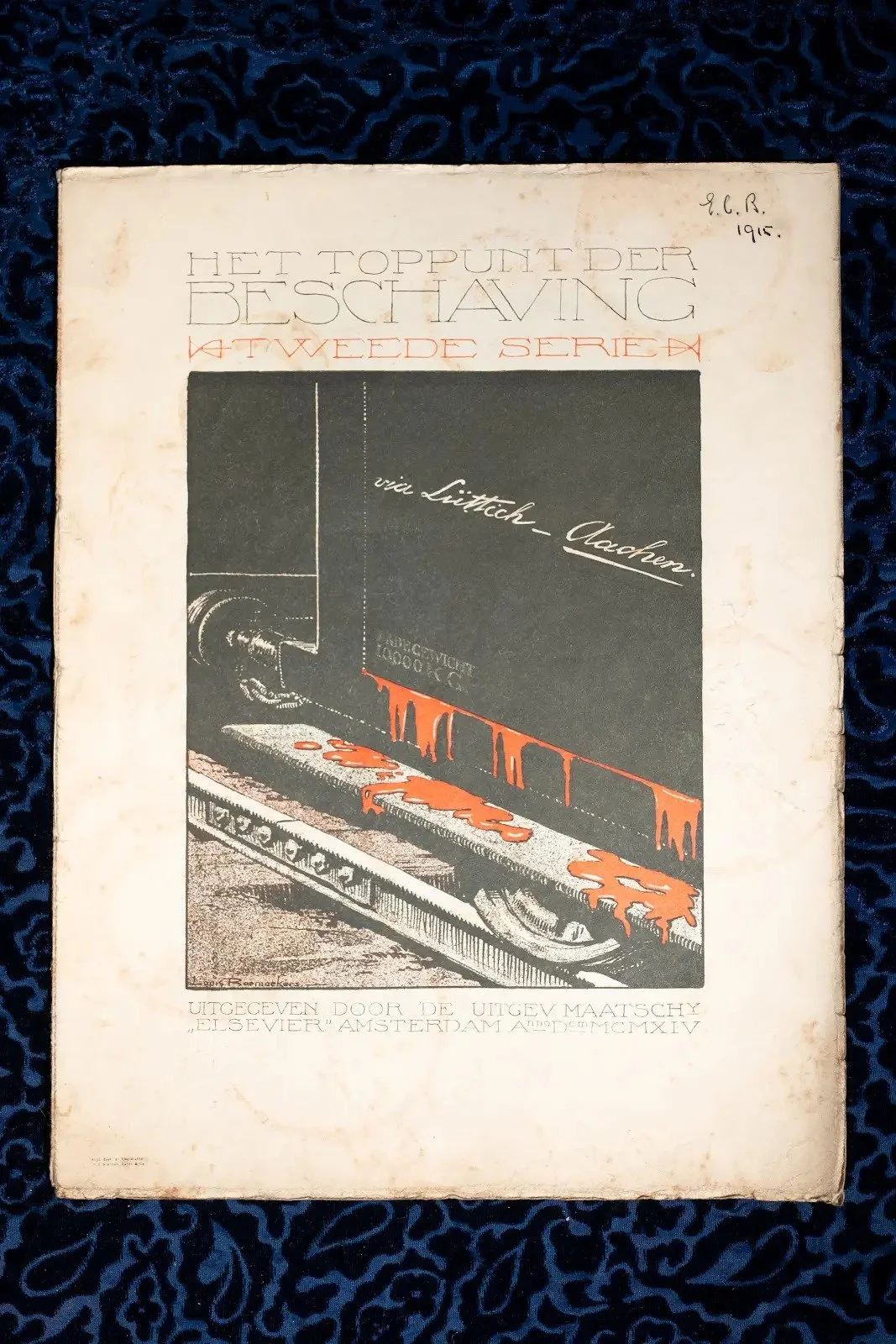 Image 9 of 57
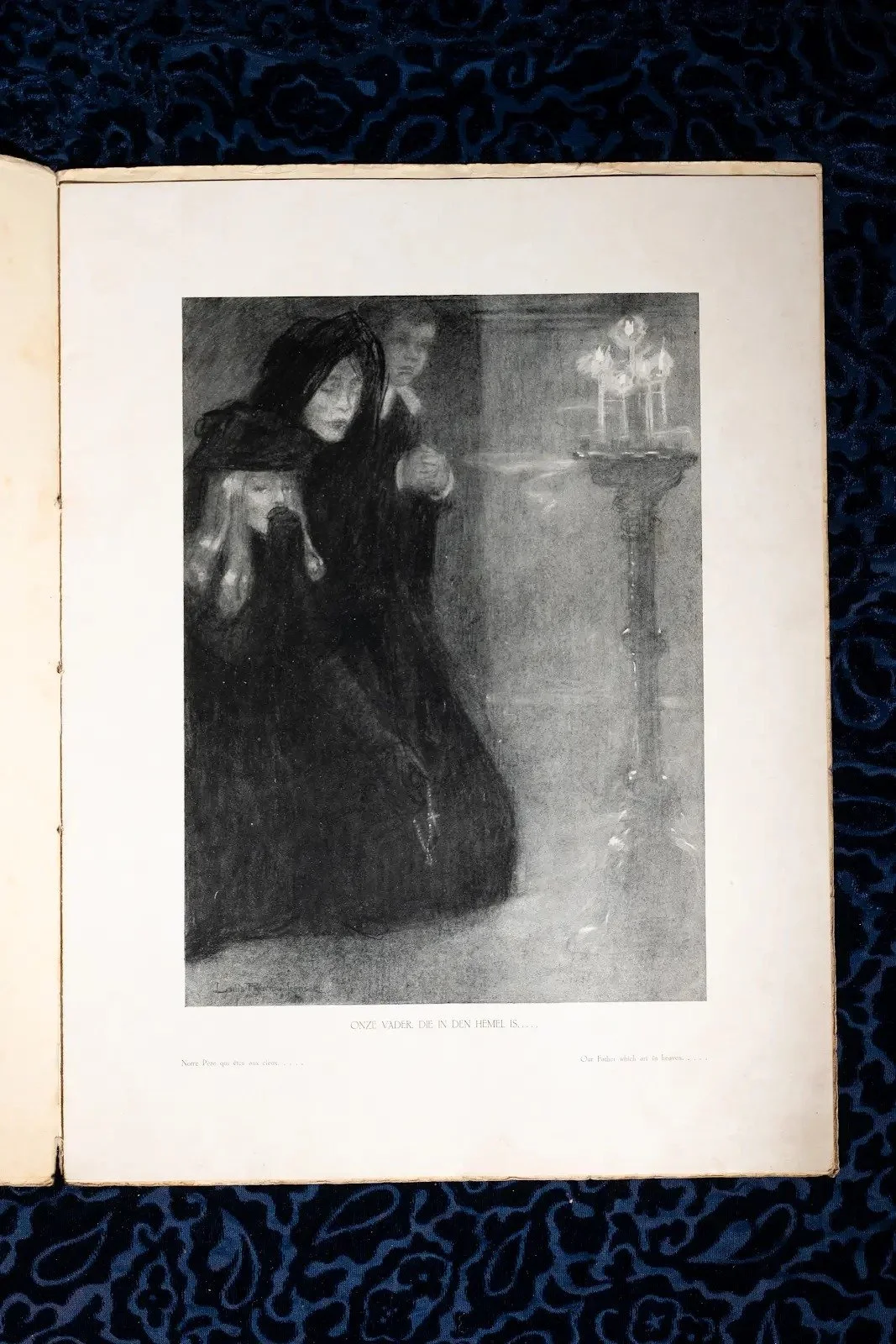 Image 10 of 57
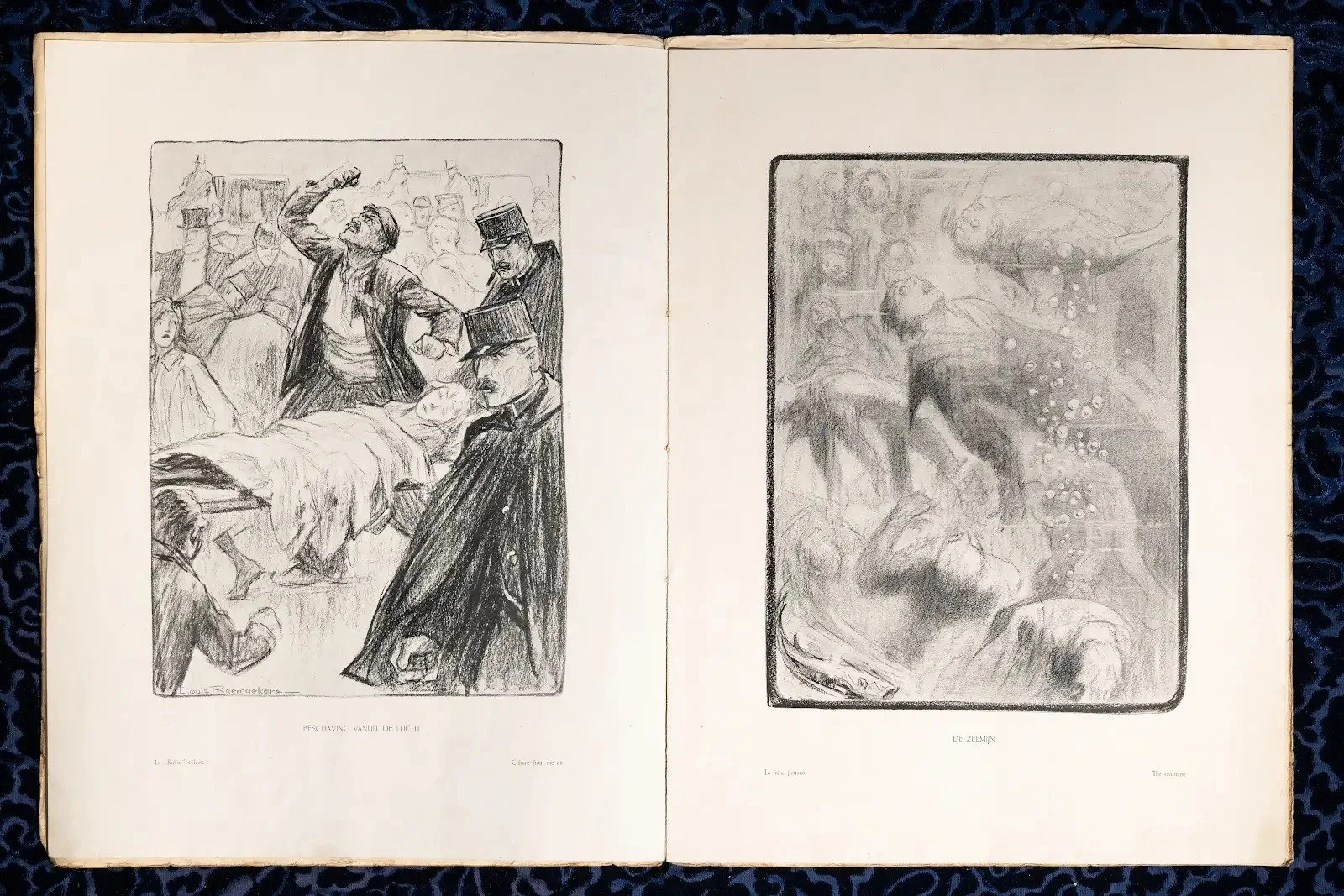 Image 11 of 57
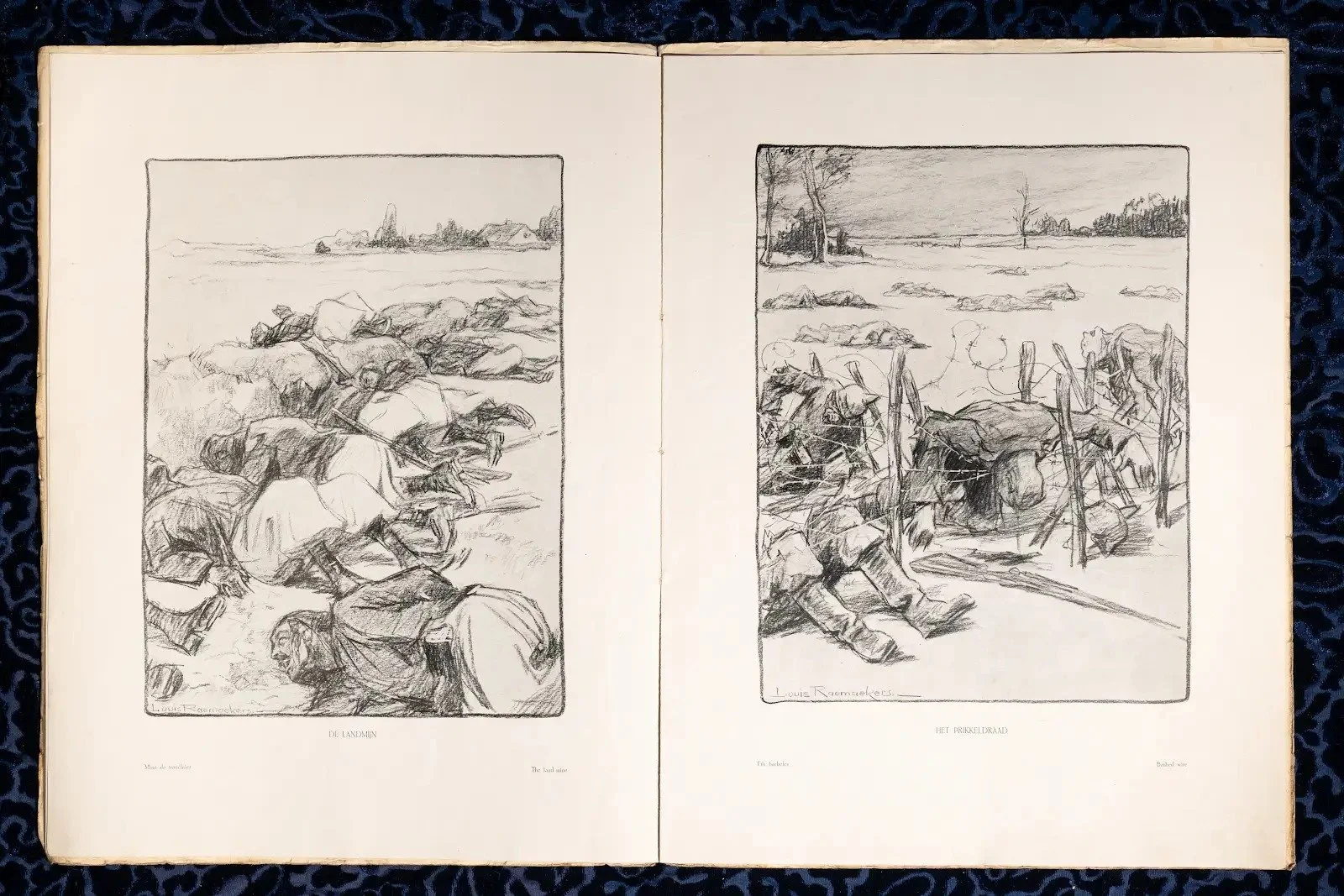 Image 12 of 57
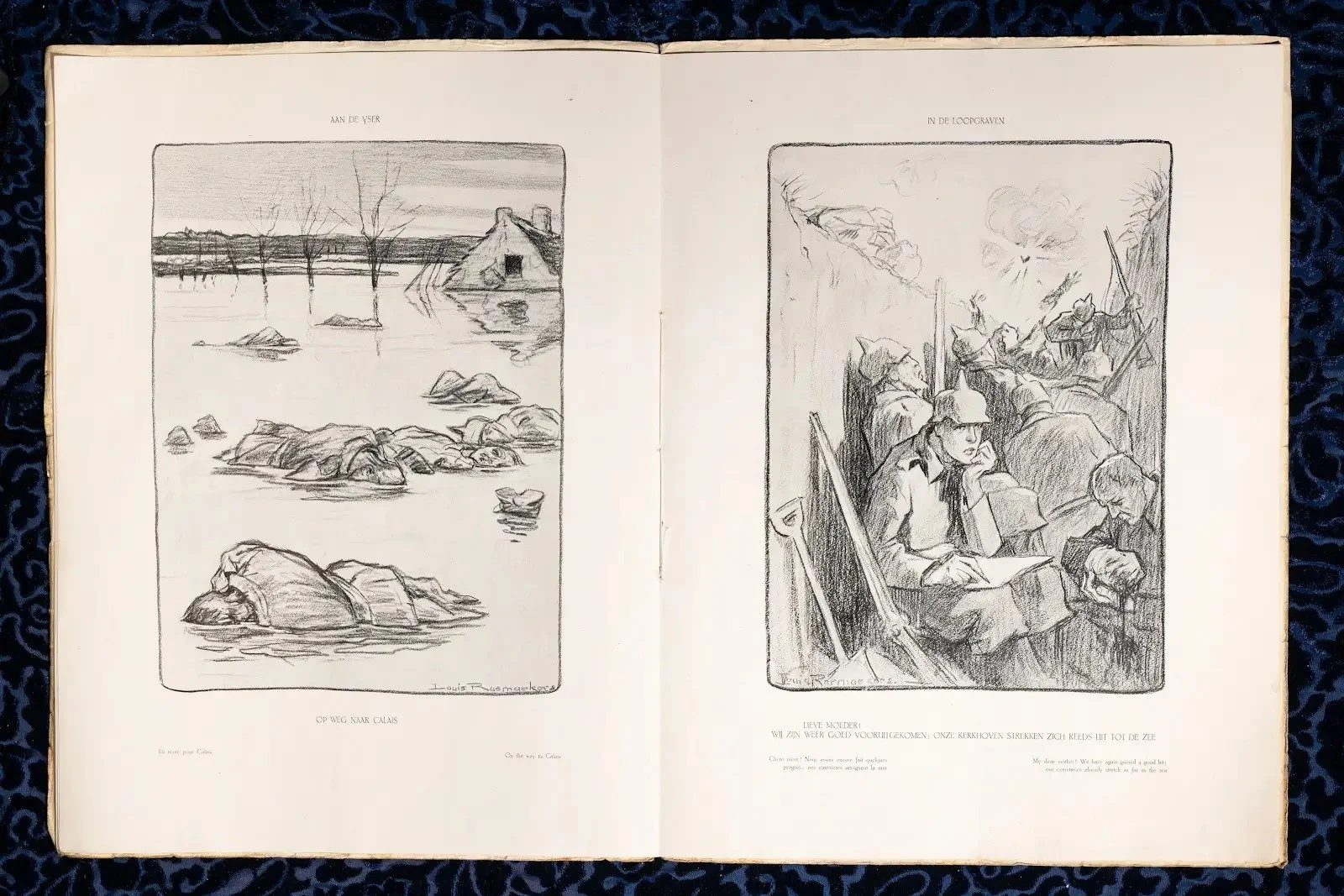 Image 13 of 57
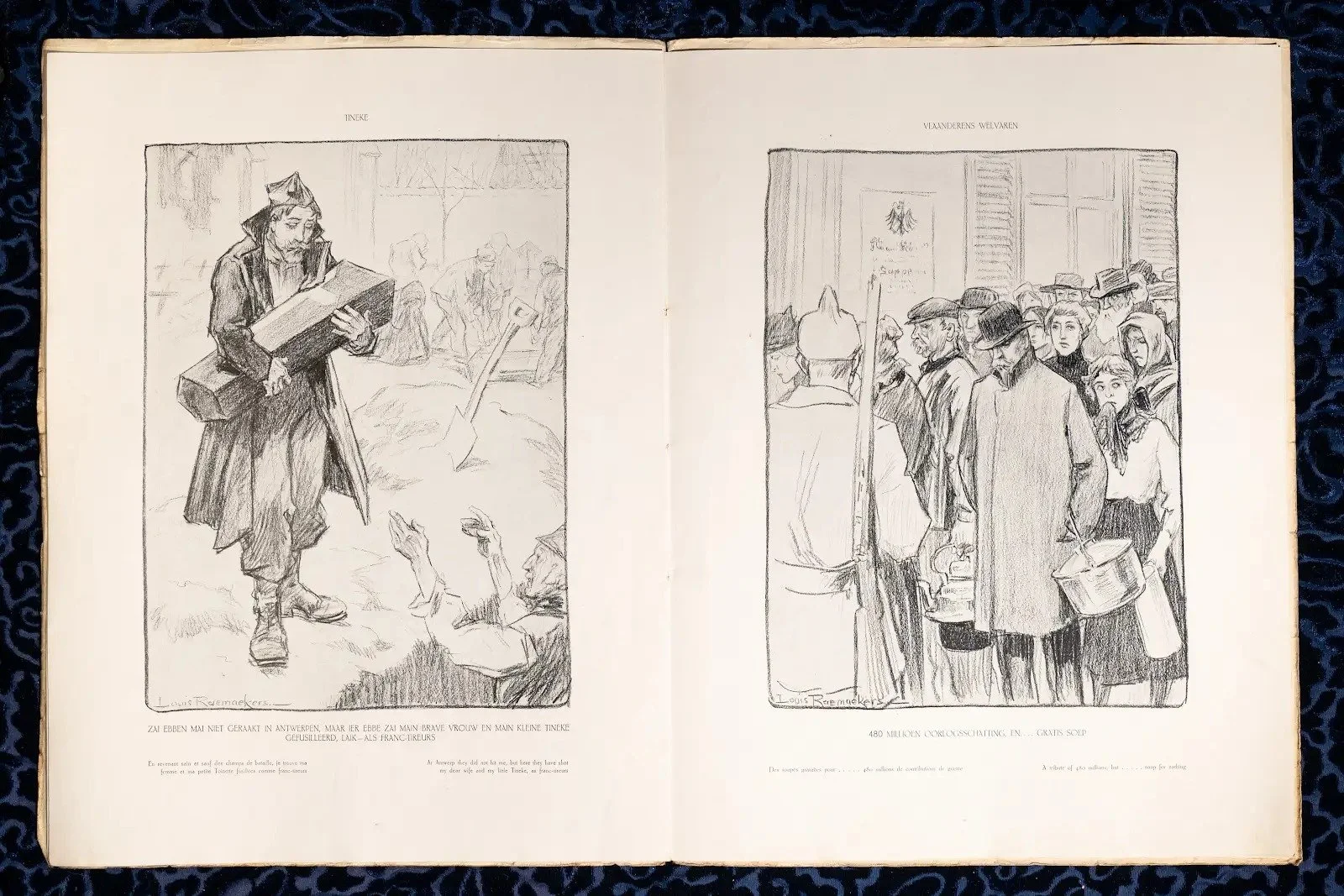 Image 14 of 57
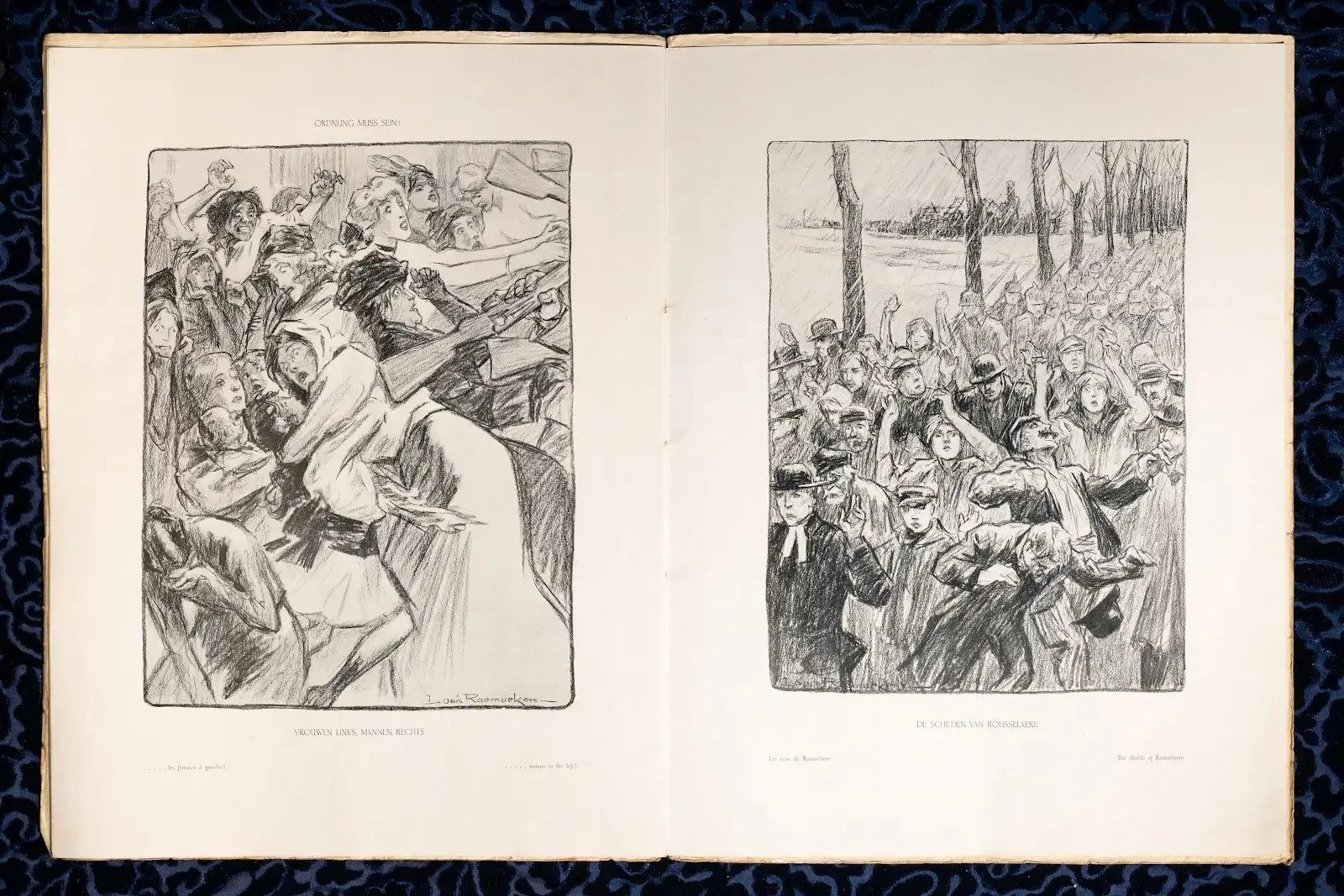 Image 15 of 57
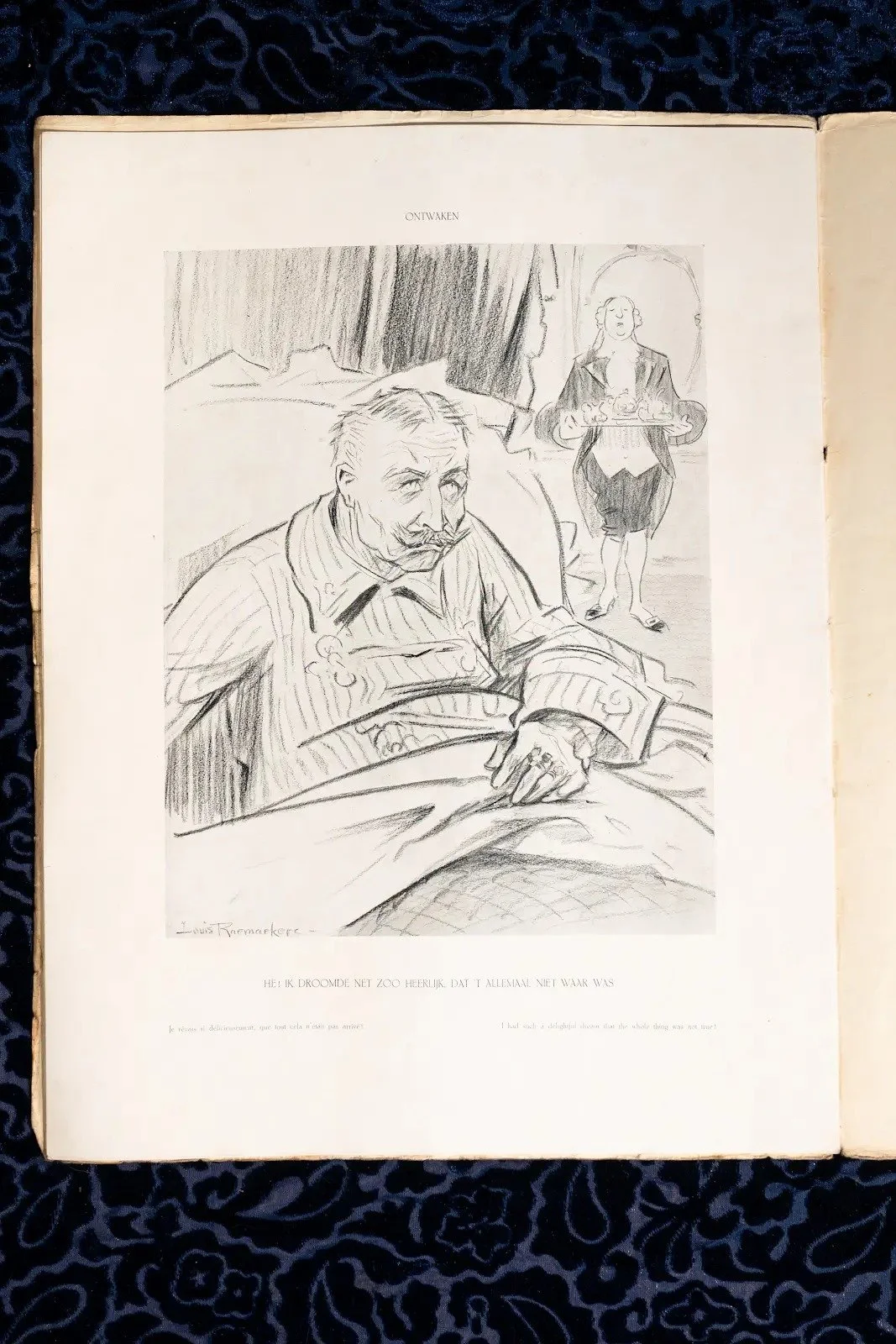 Image 16 of 57
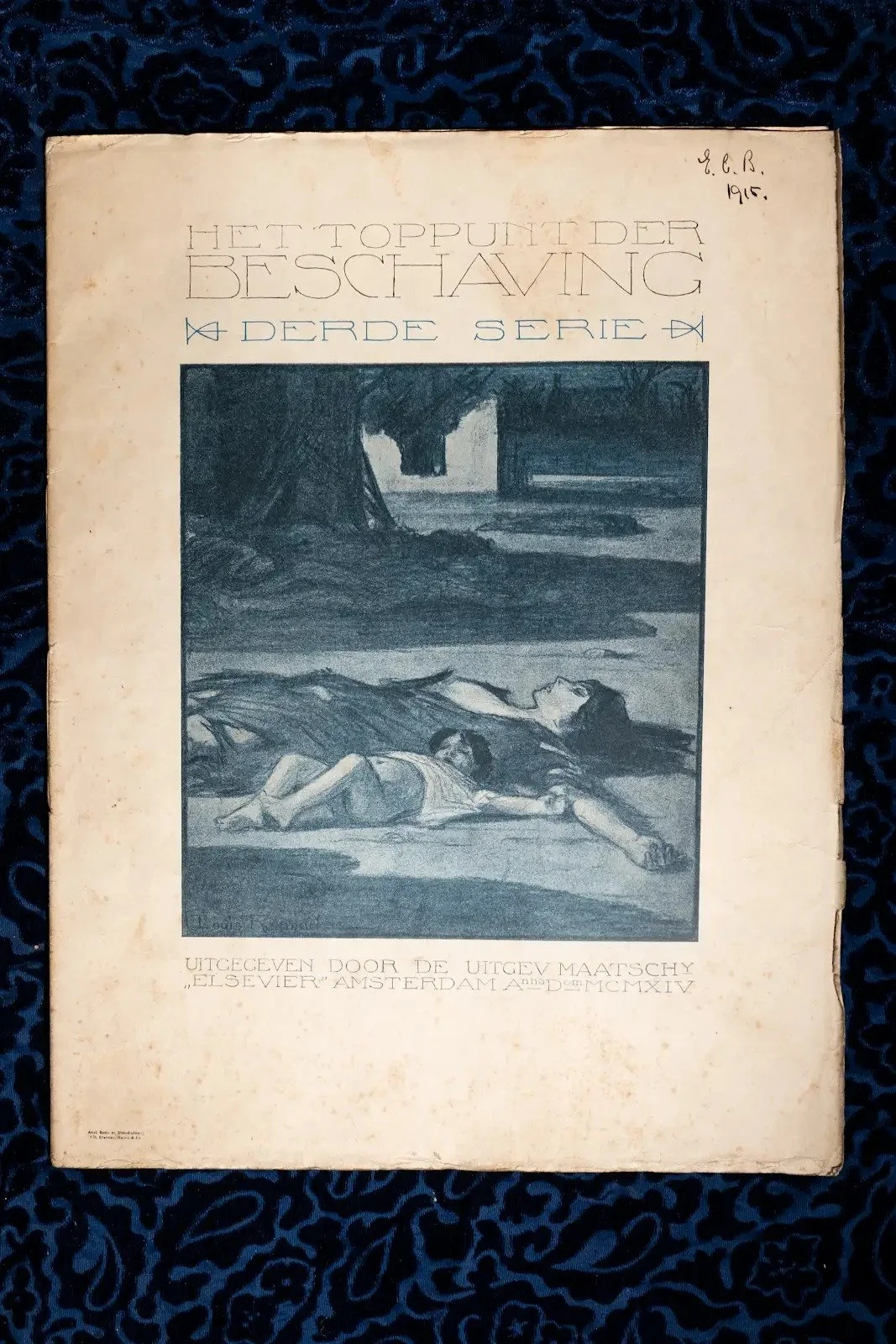 Image 17 of 57
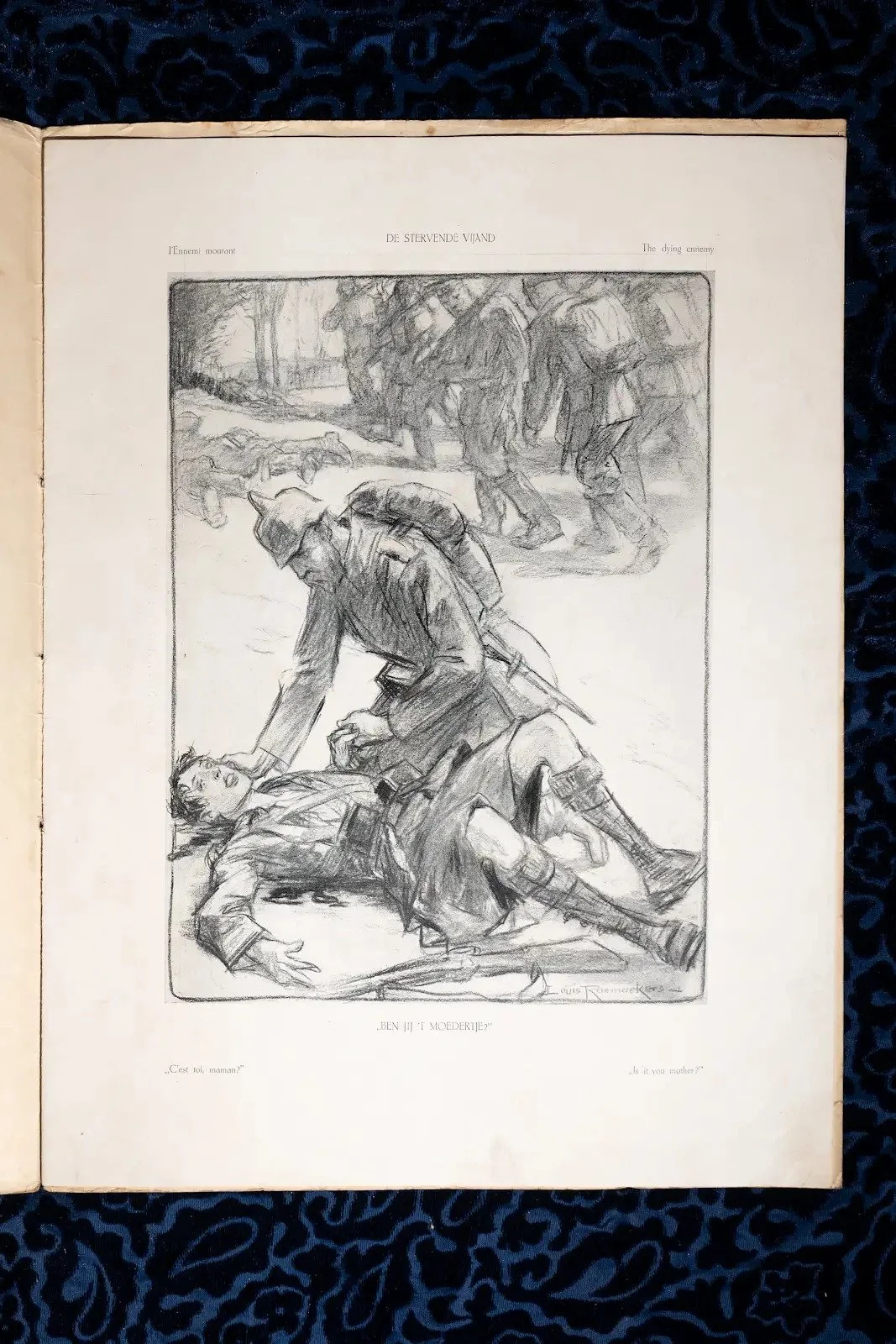 Image 18 of 57
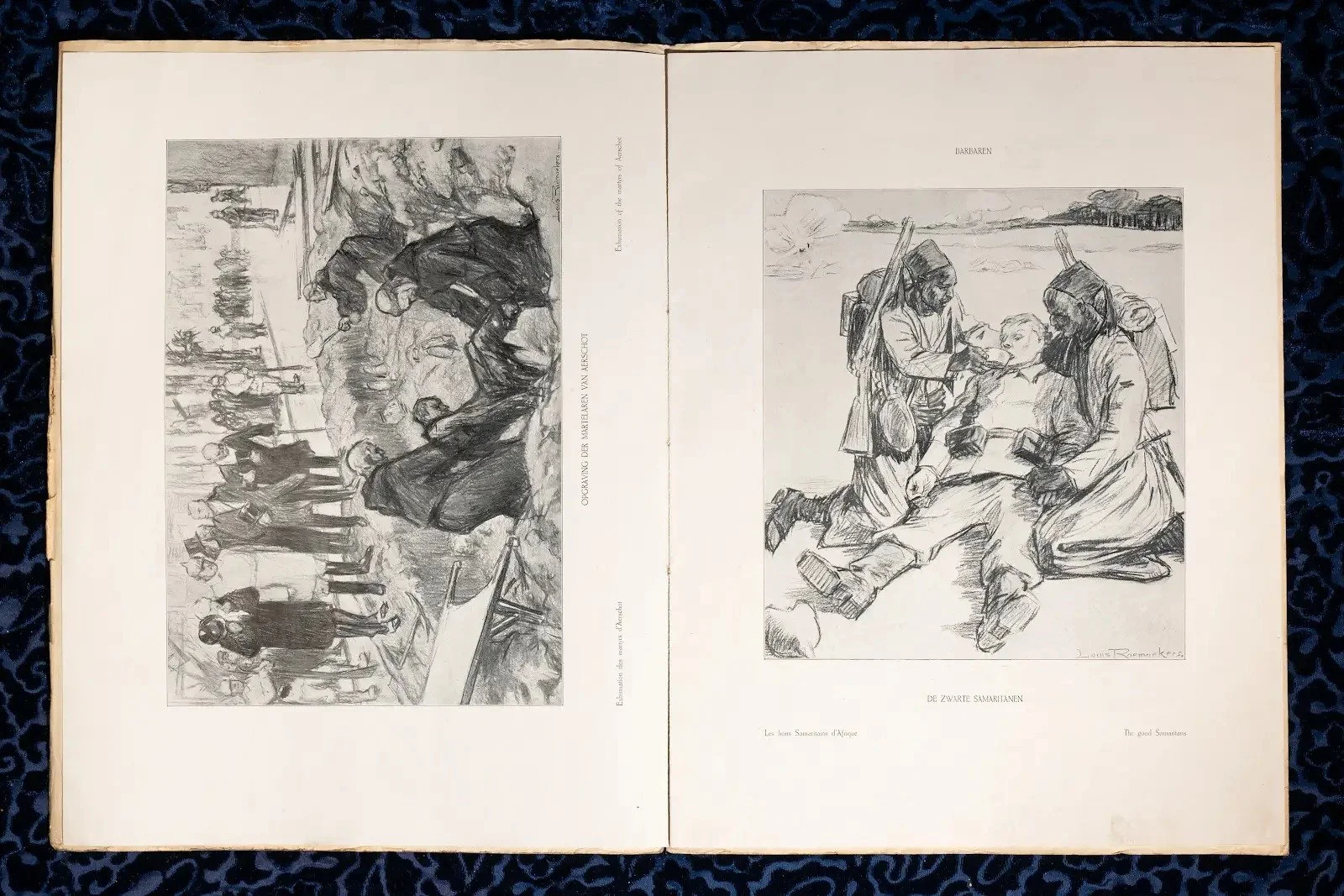 Image 19 of 57
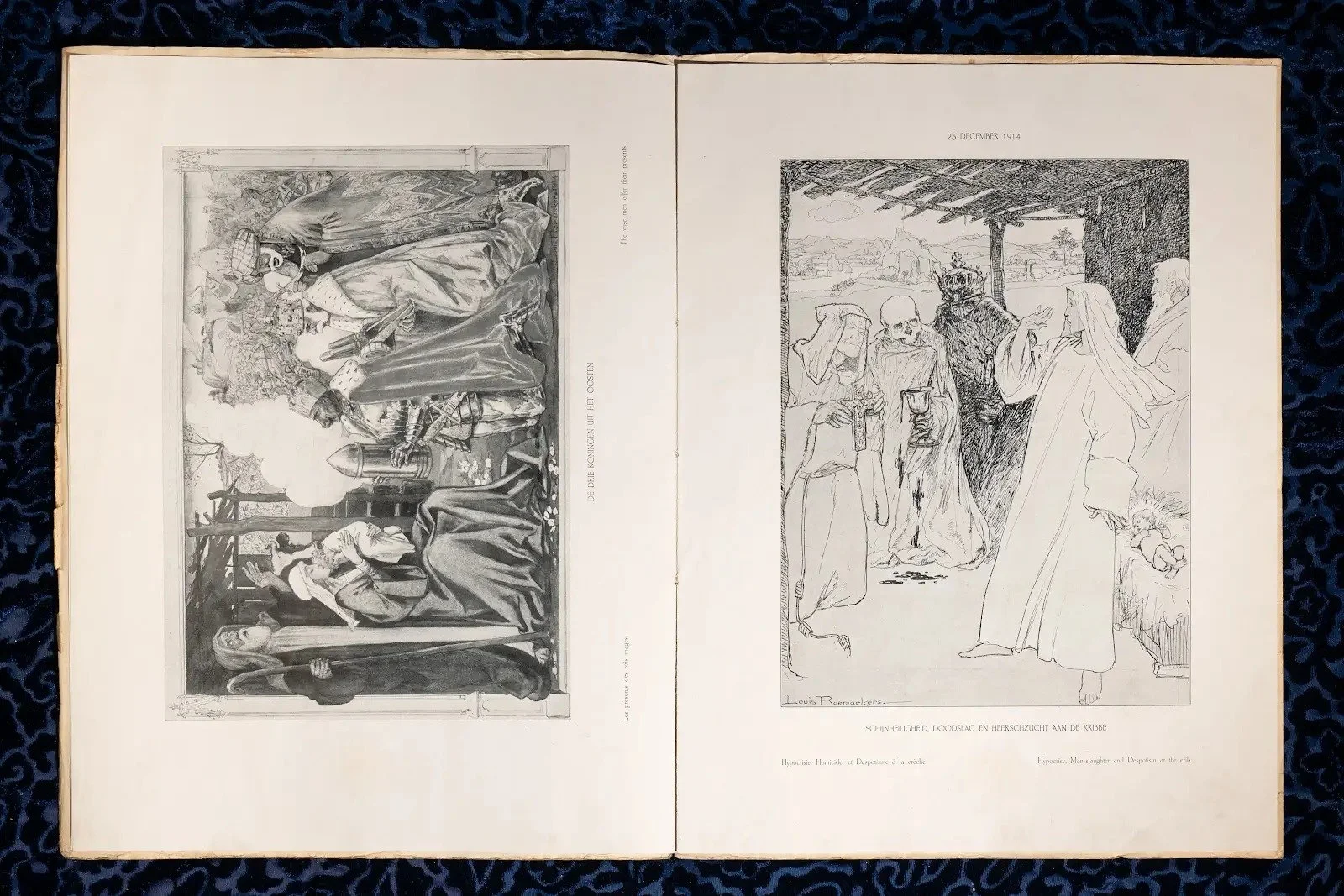 Image 20 of 57
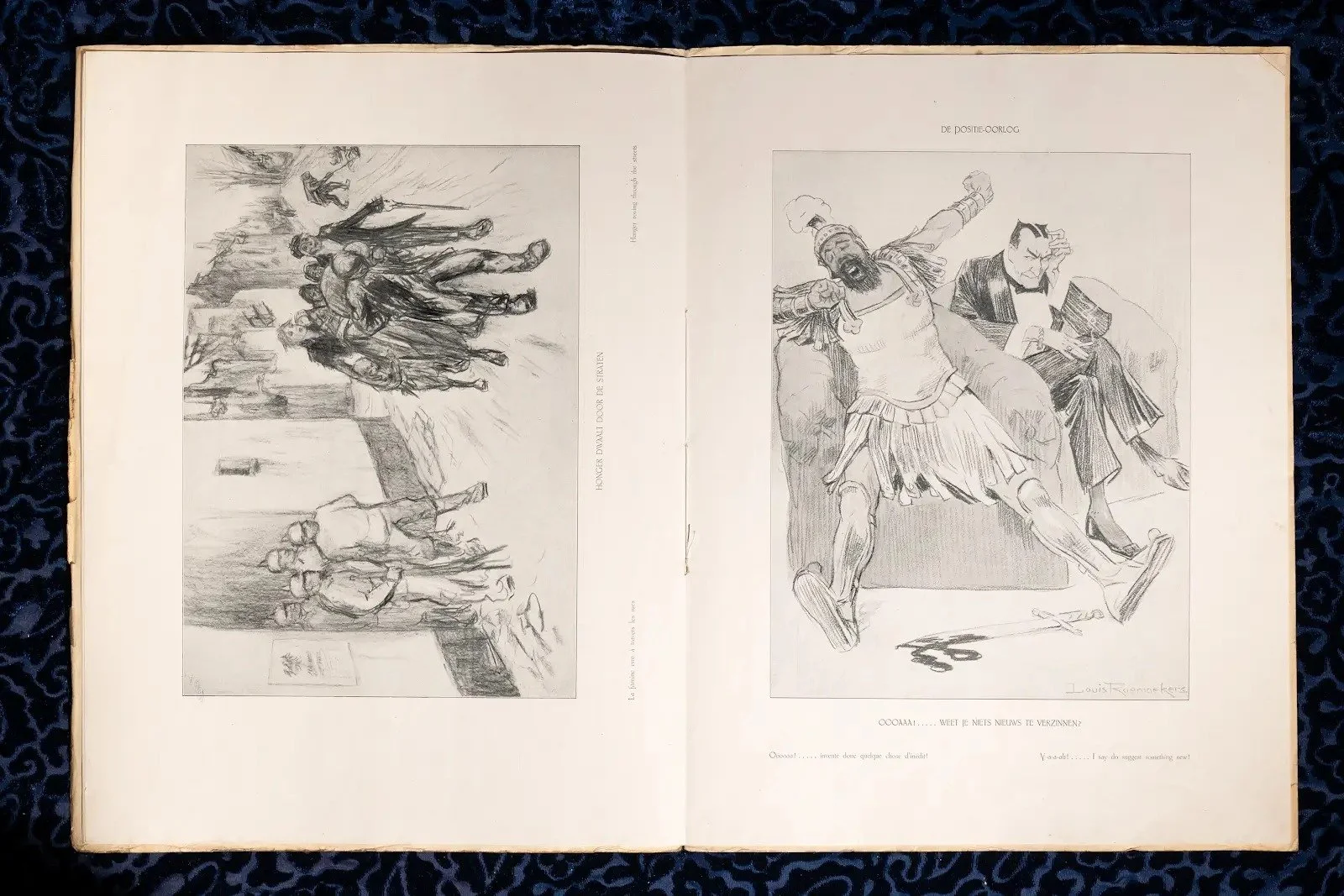 Image 21 of 57
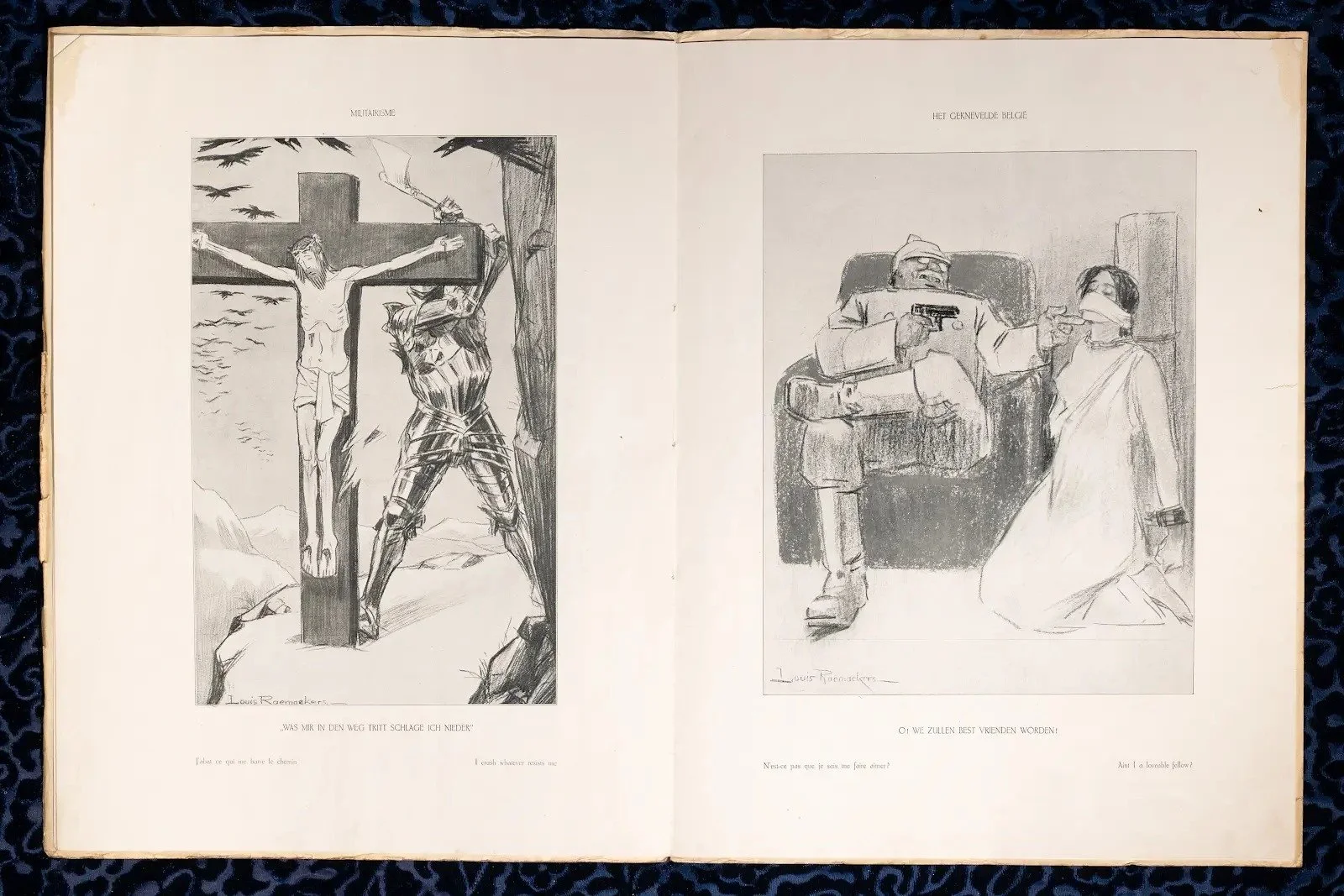 Image 22 of 57
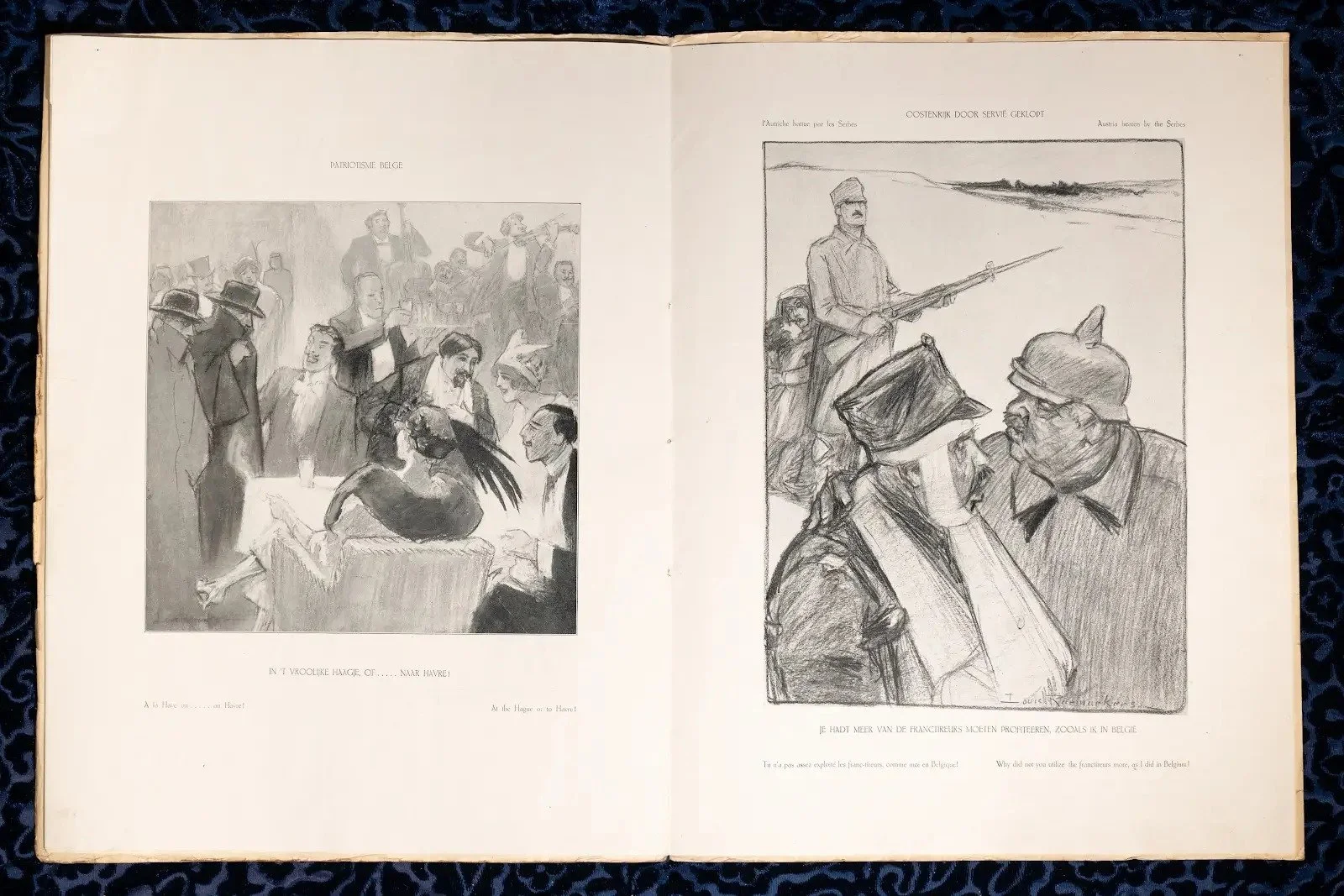 Image 23 of 57
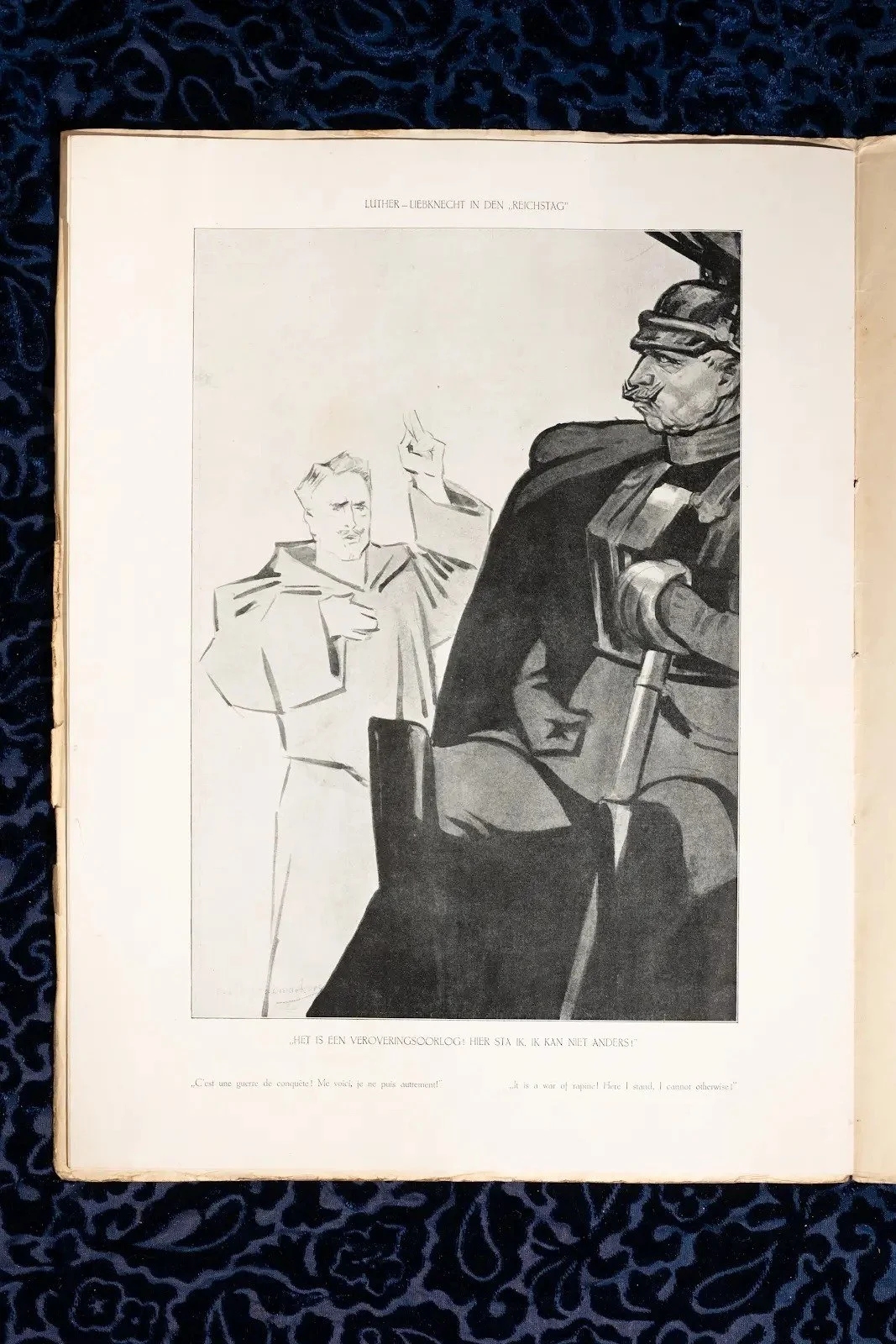 Image 24 of 57
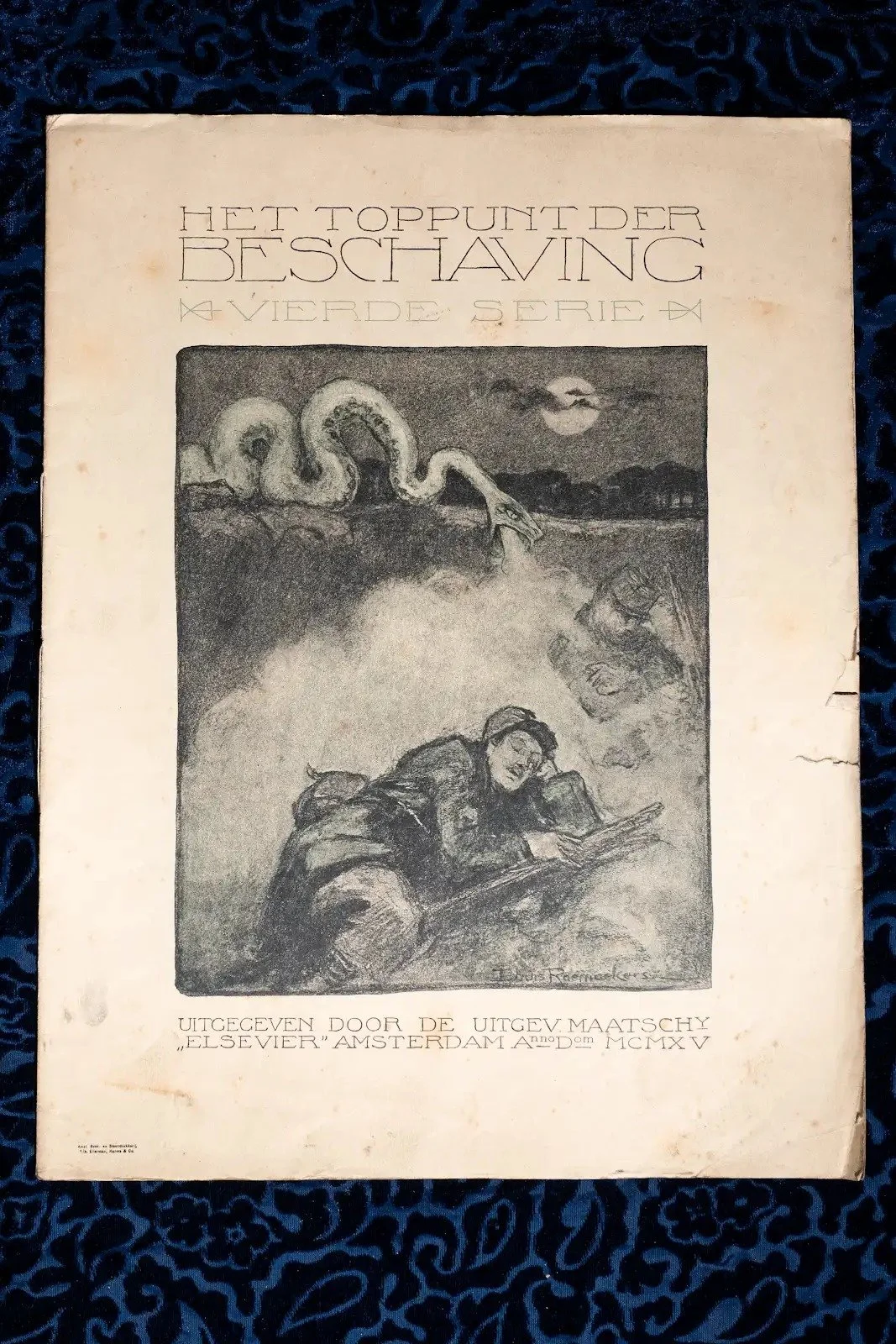 Image 25 of 57
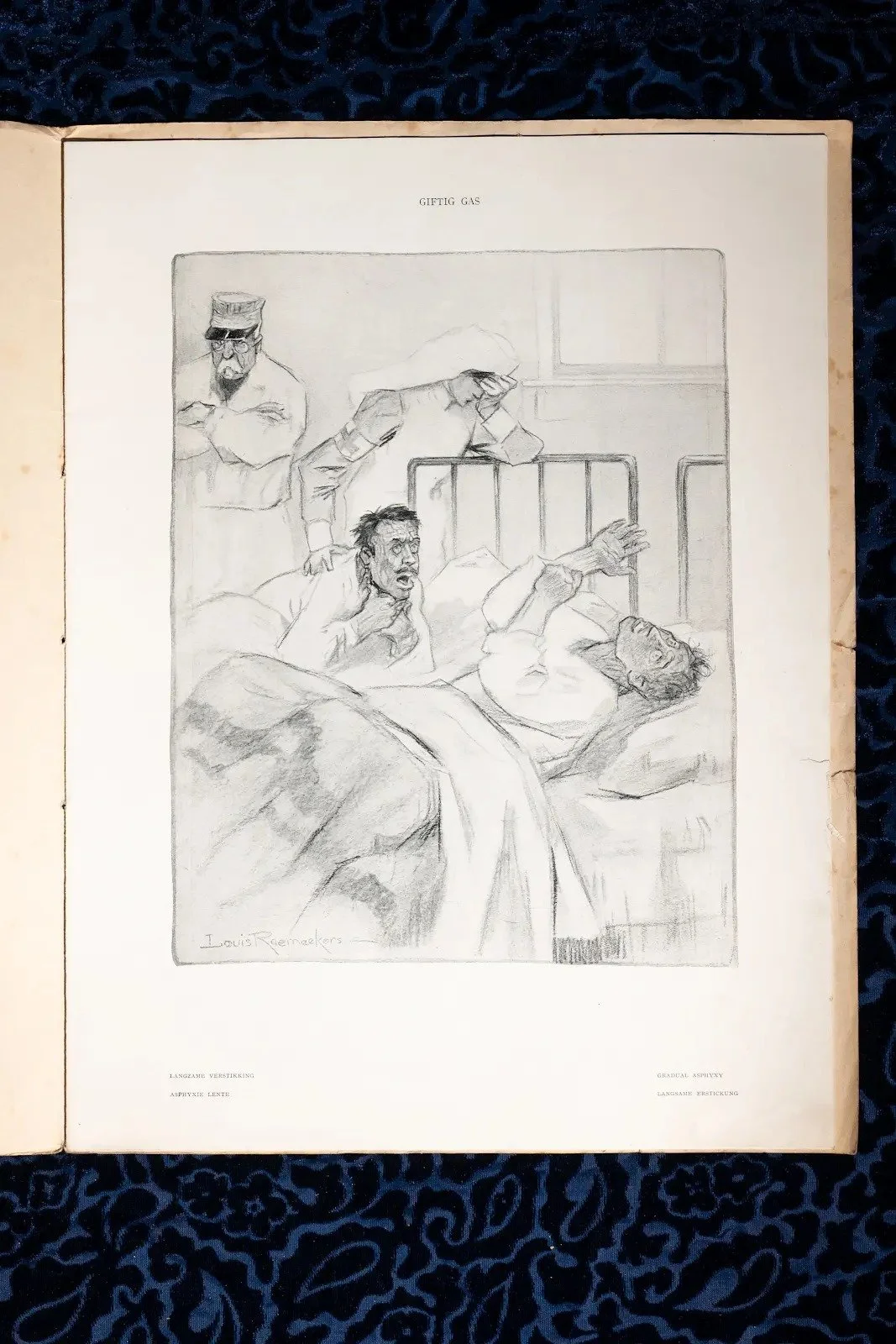 Image 26 of 57
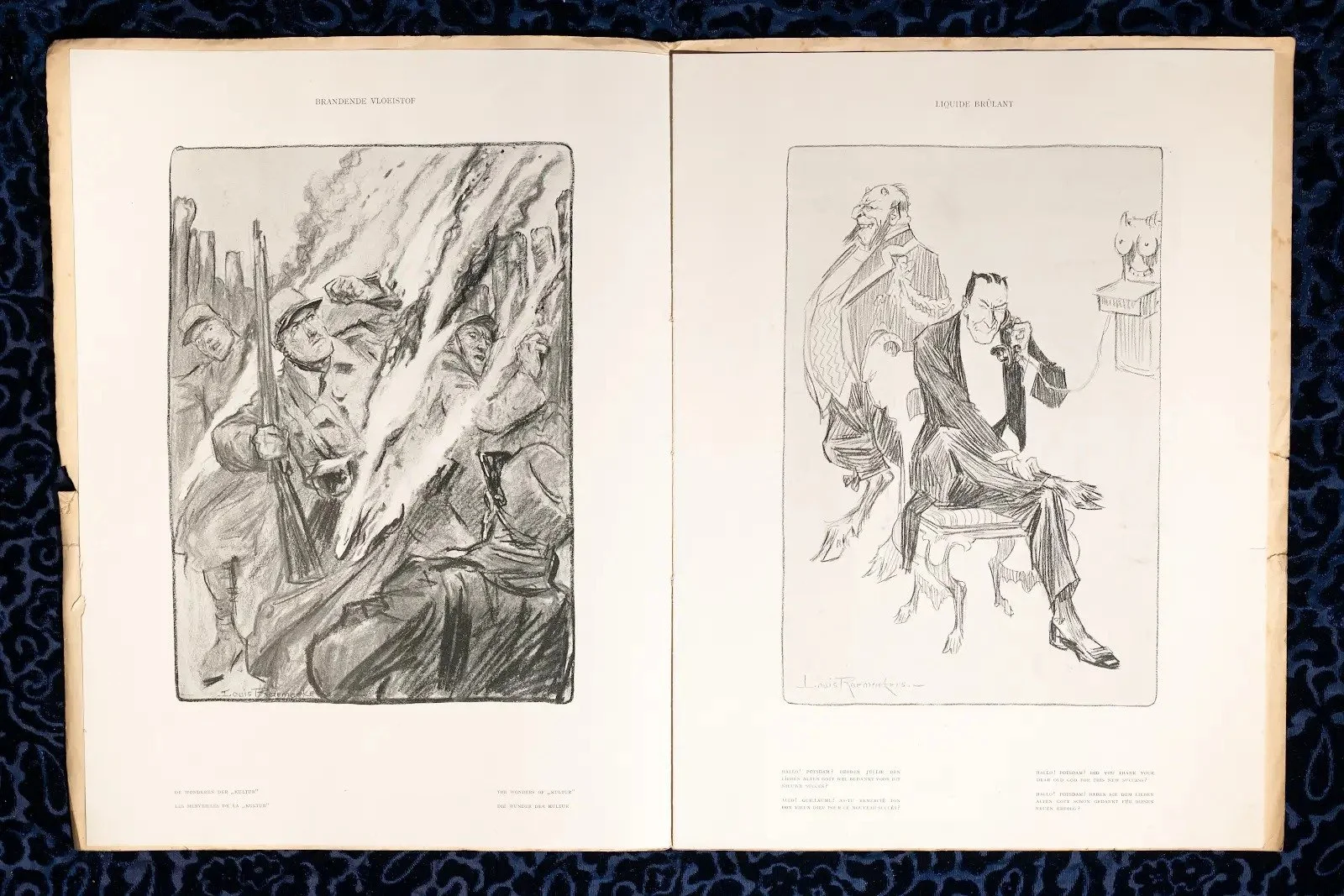 Image 27 of 57
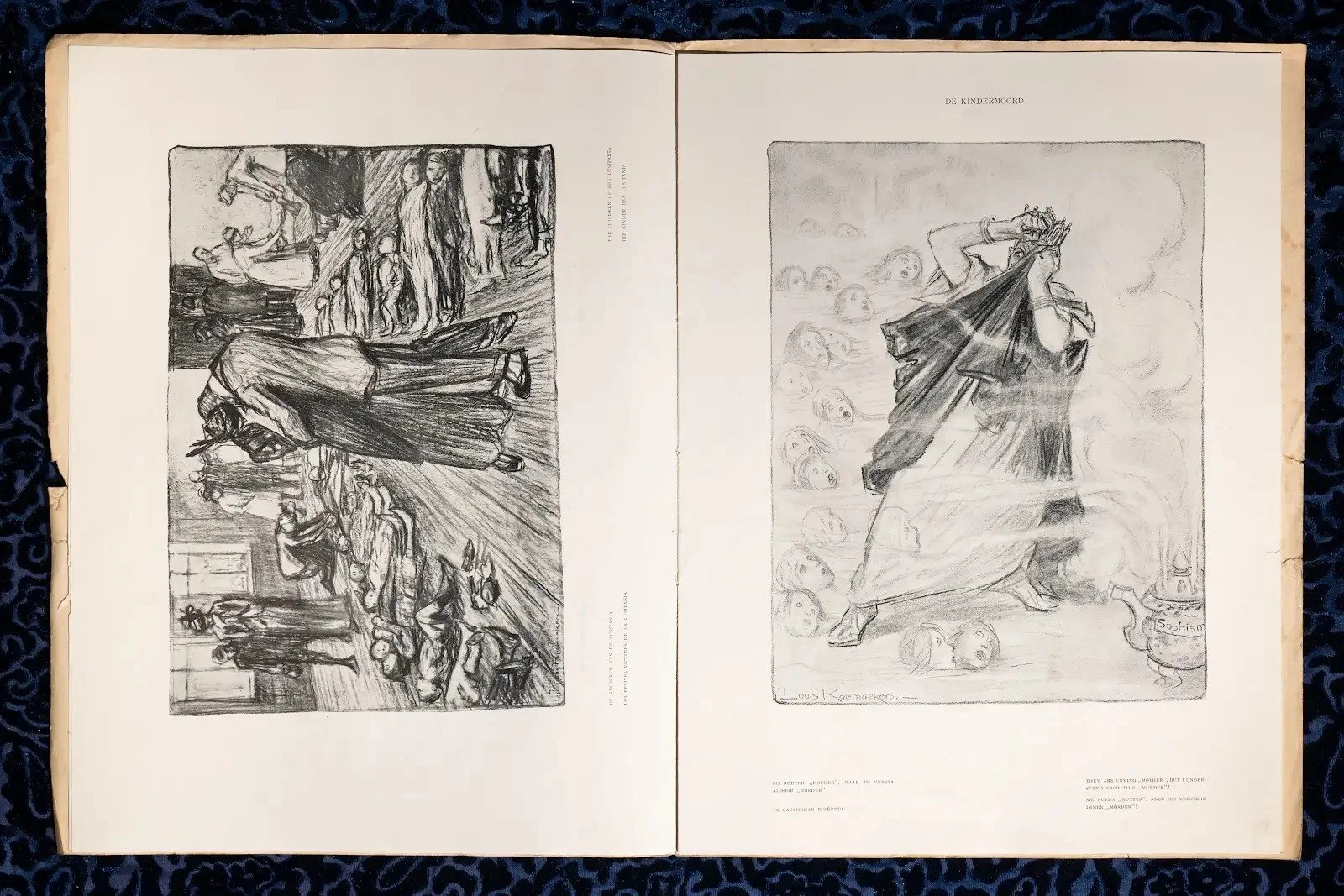 Image 28 of 57
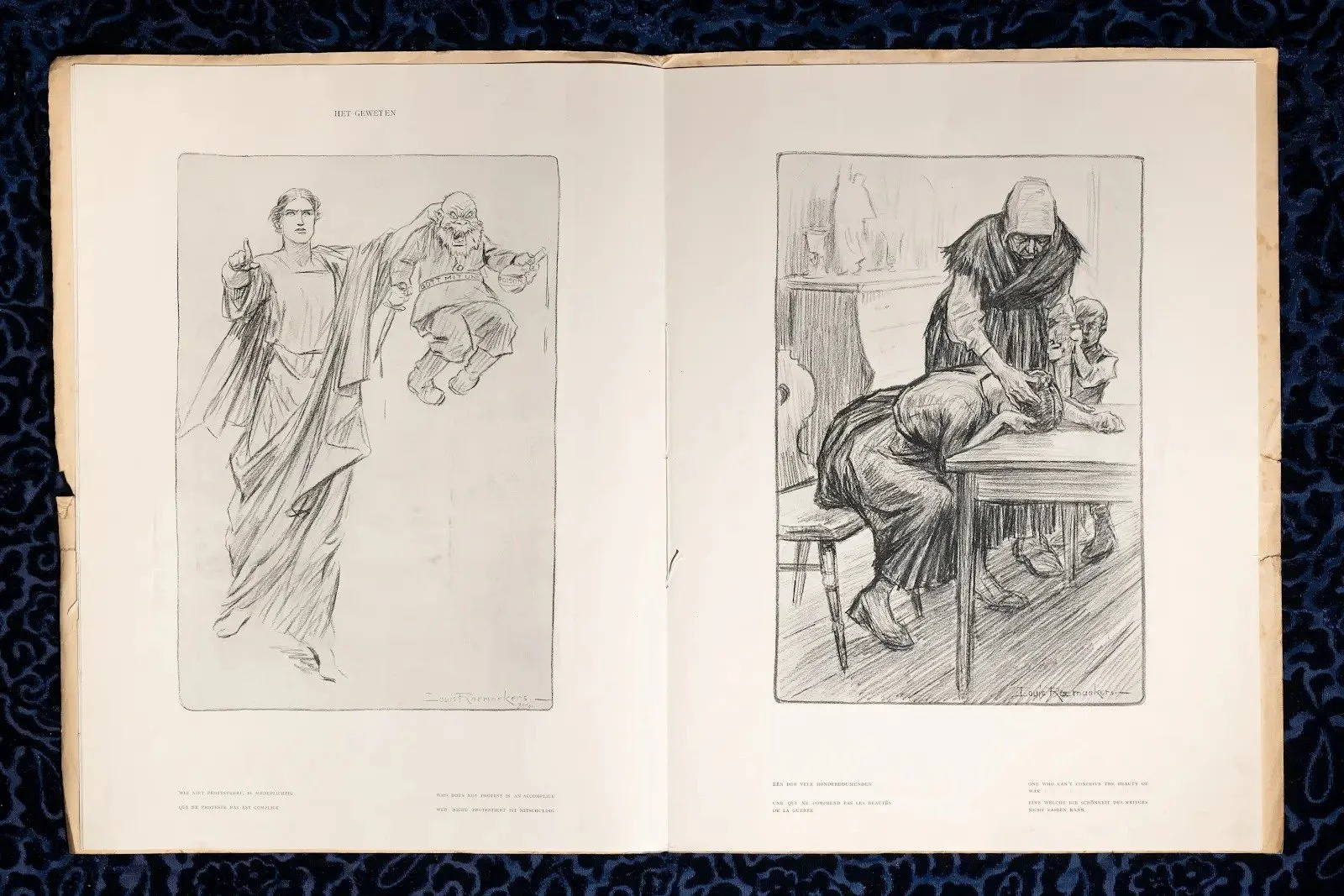 Image 29 of 57
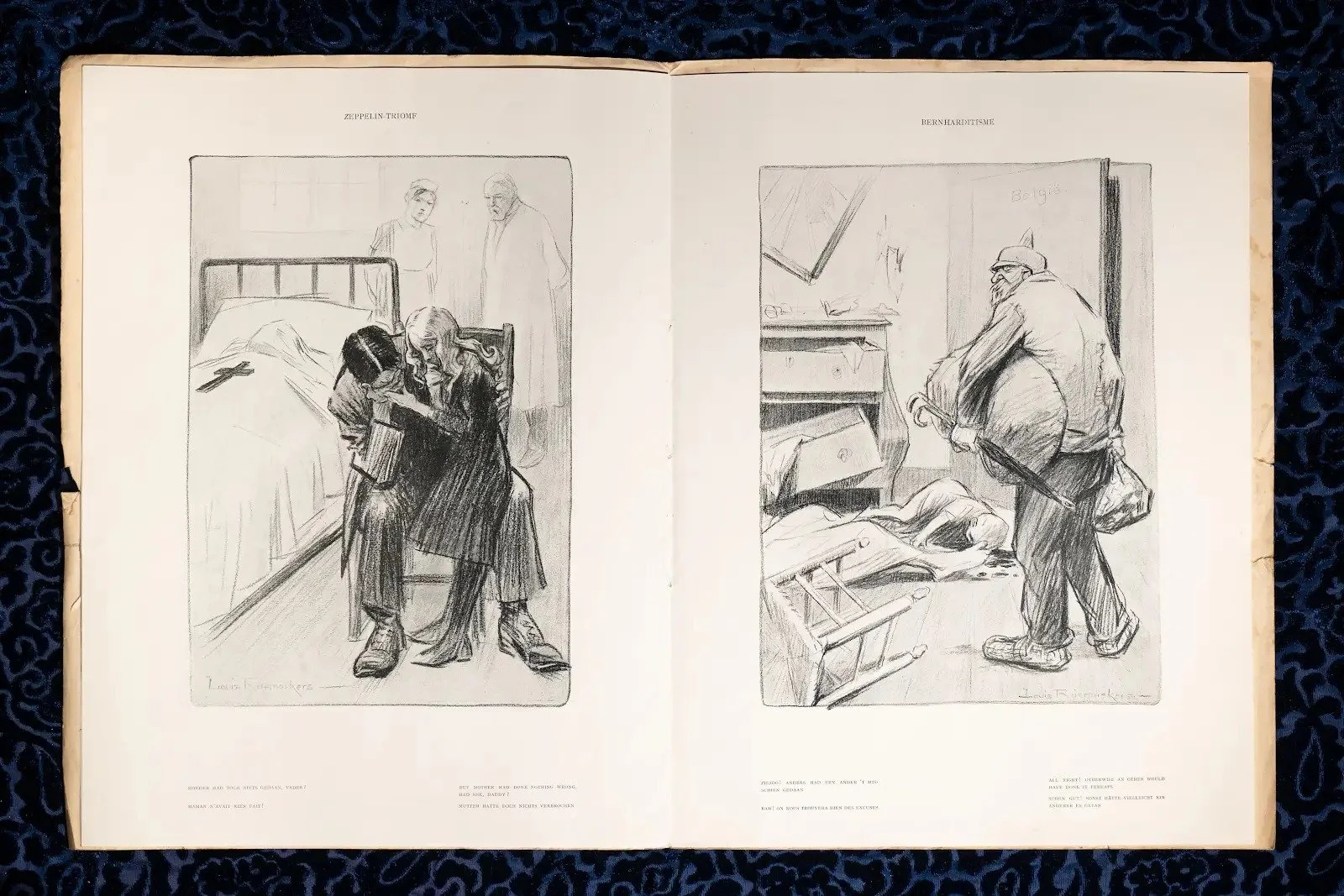 Image 30 of 57
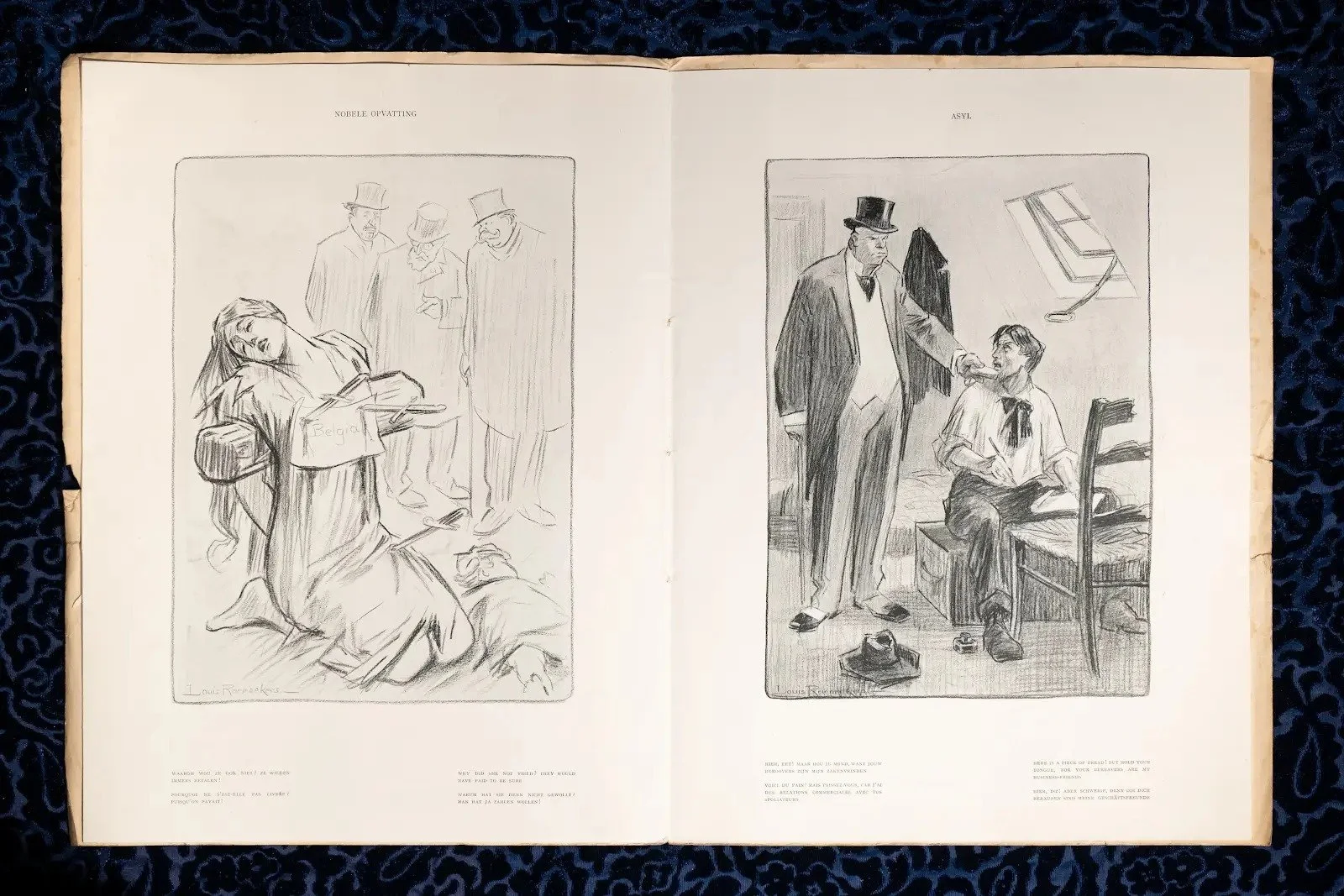 Image 31 of 57
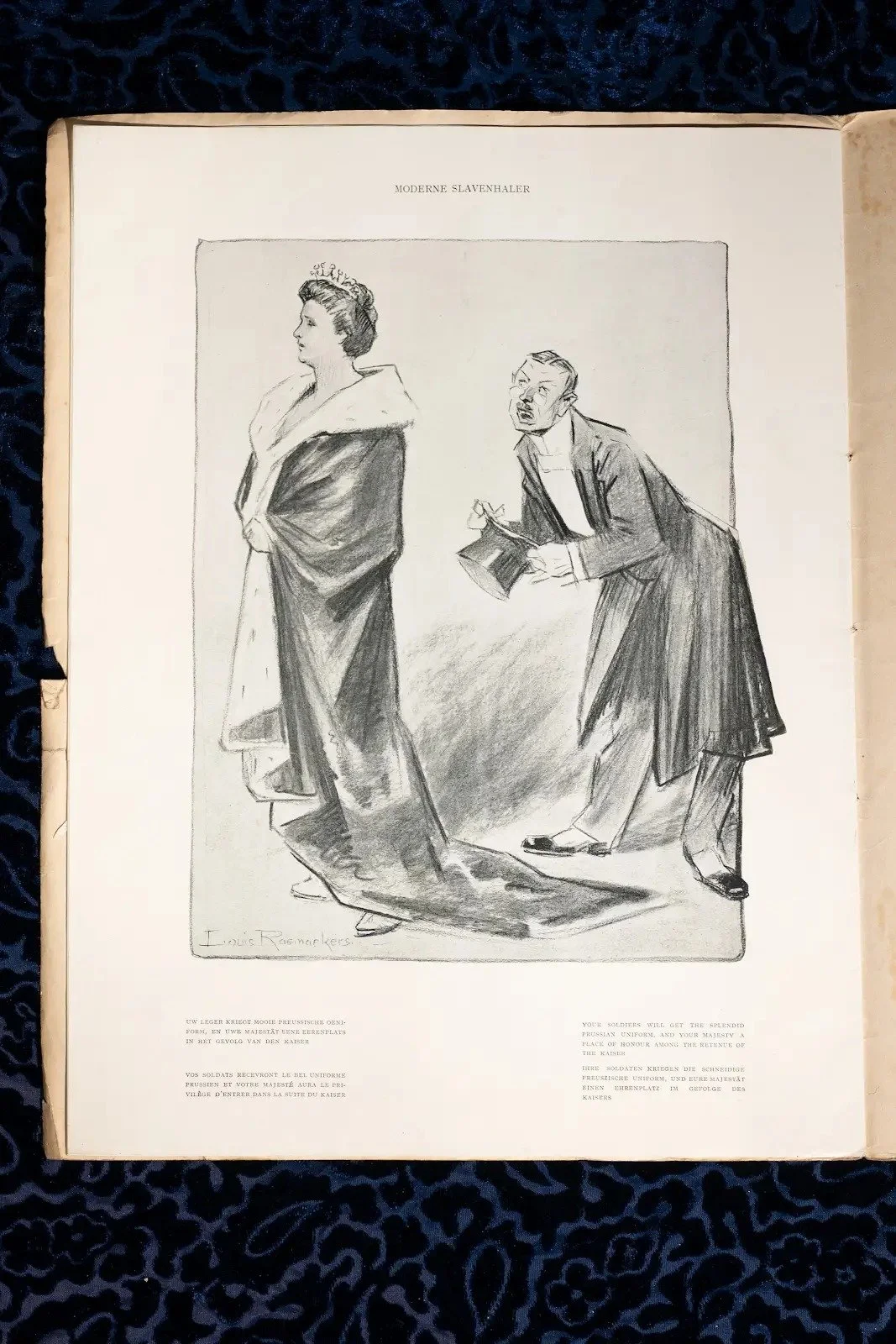 Image 32 of 57
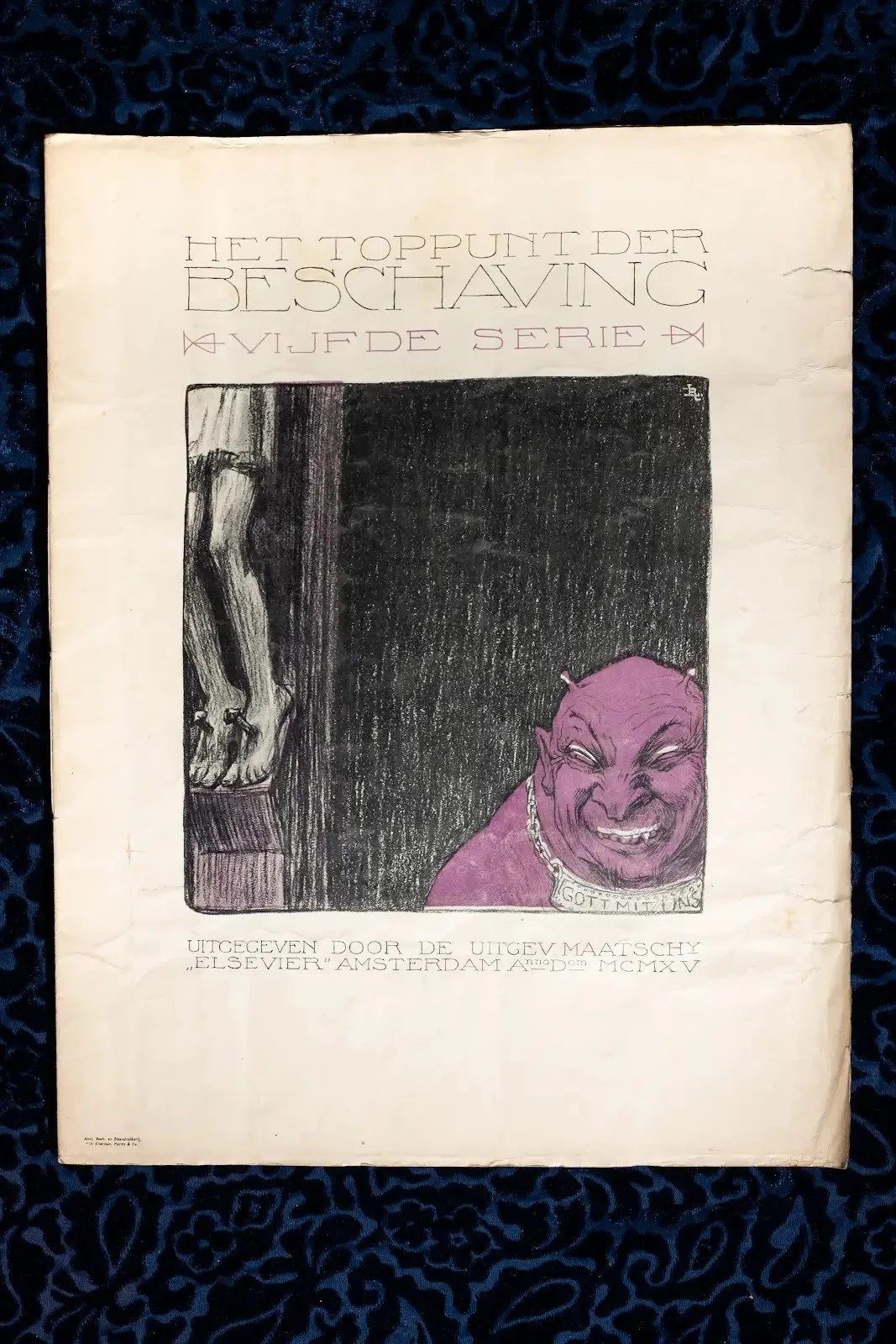 Image 33 of 57
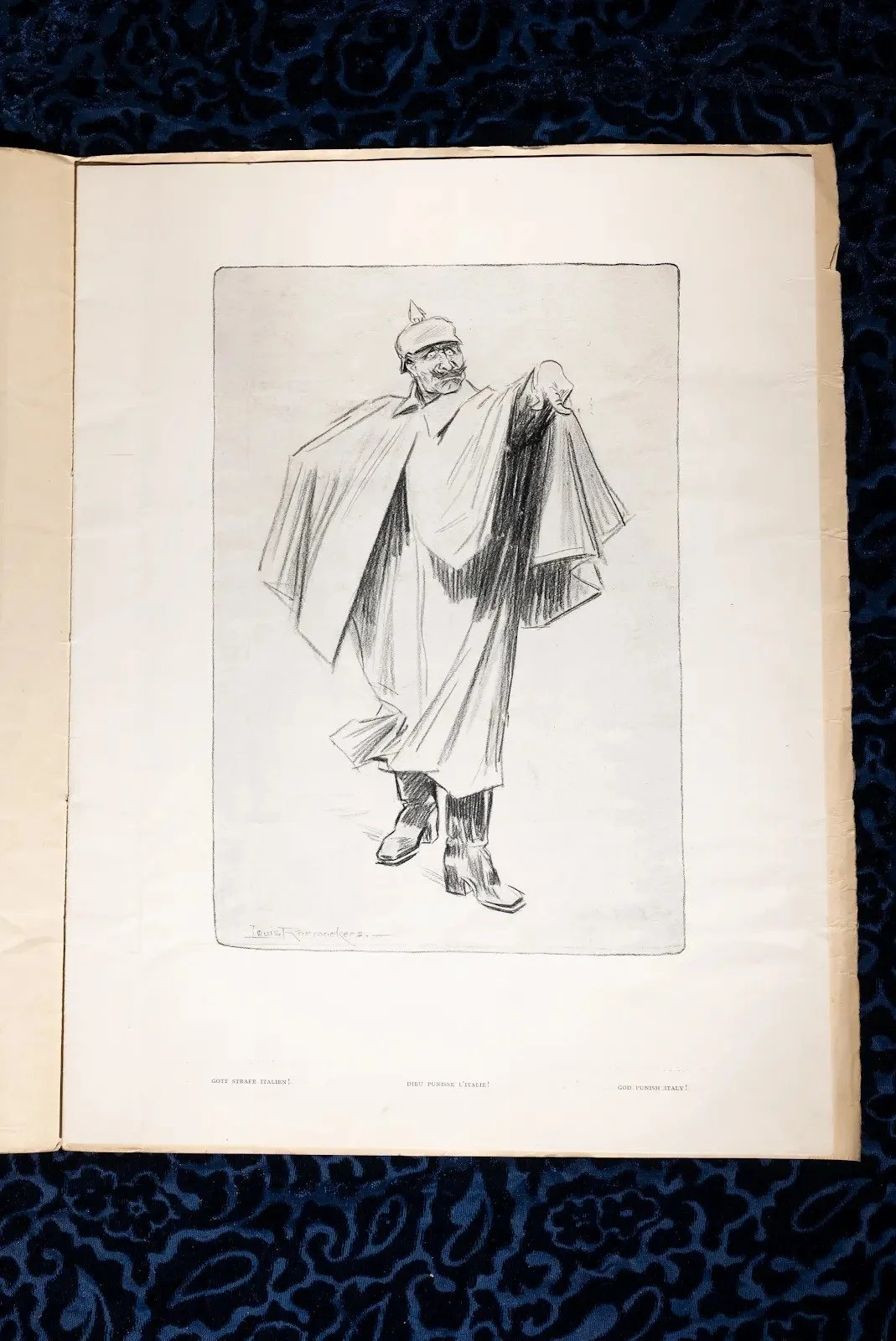 Image 34 of 57
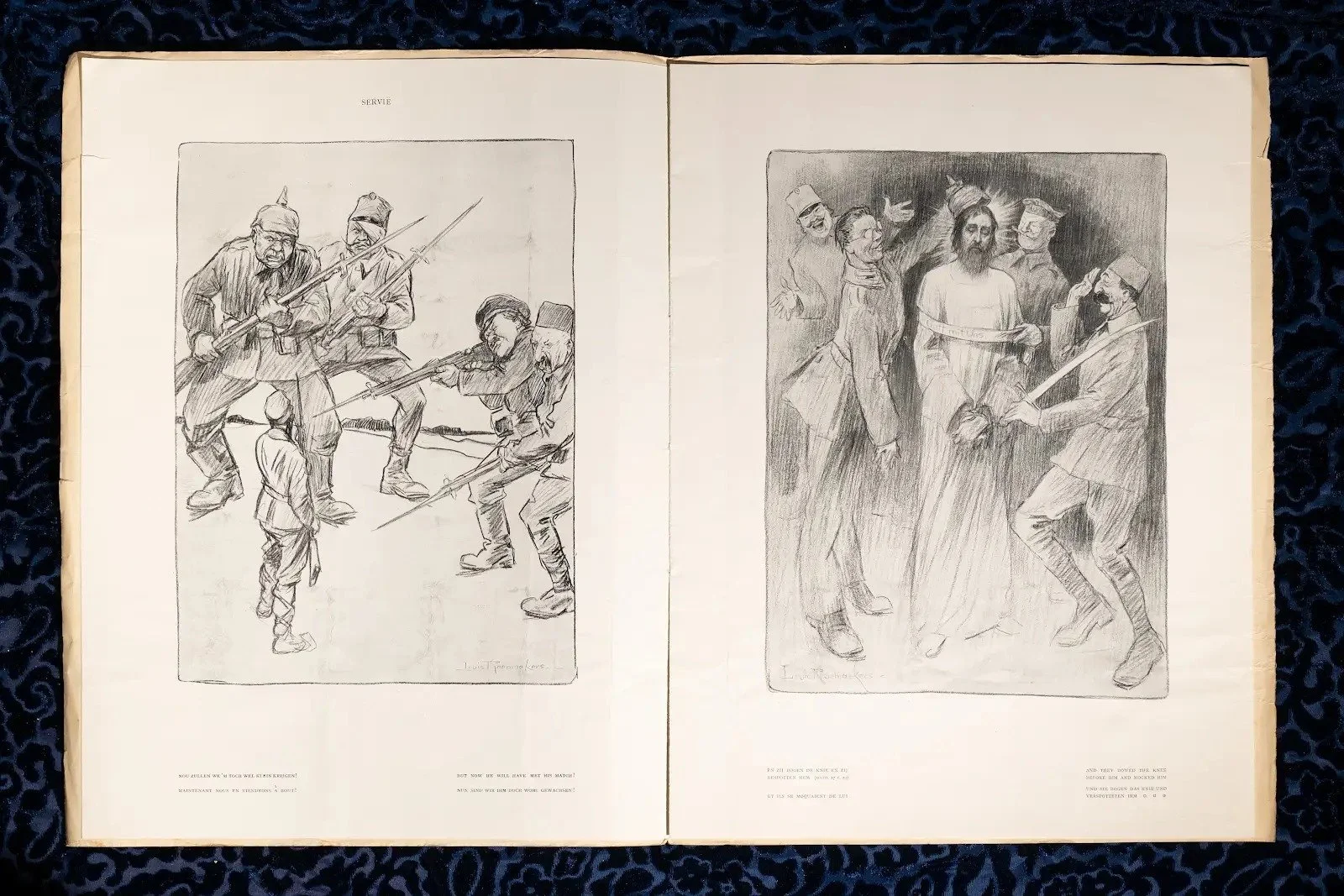 Image 35 of 57
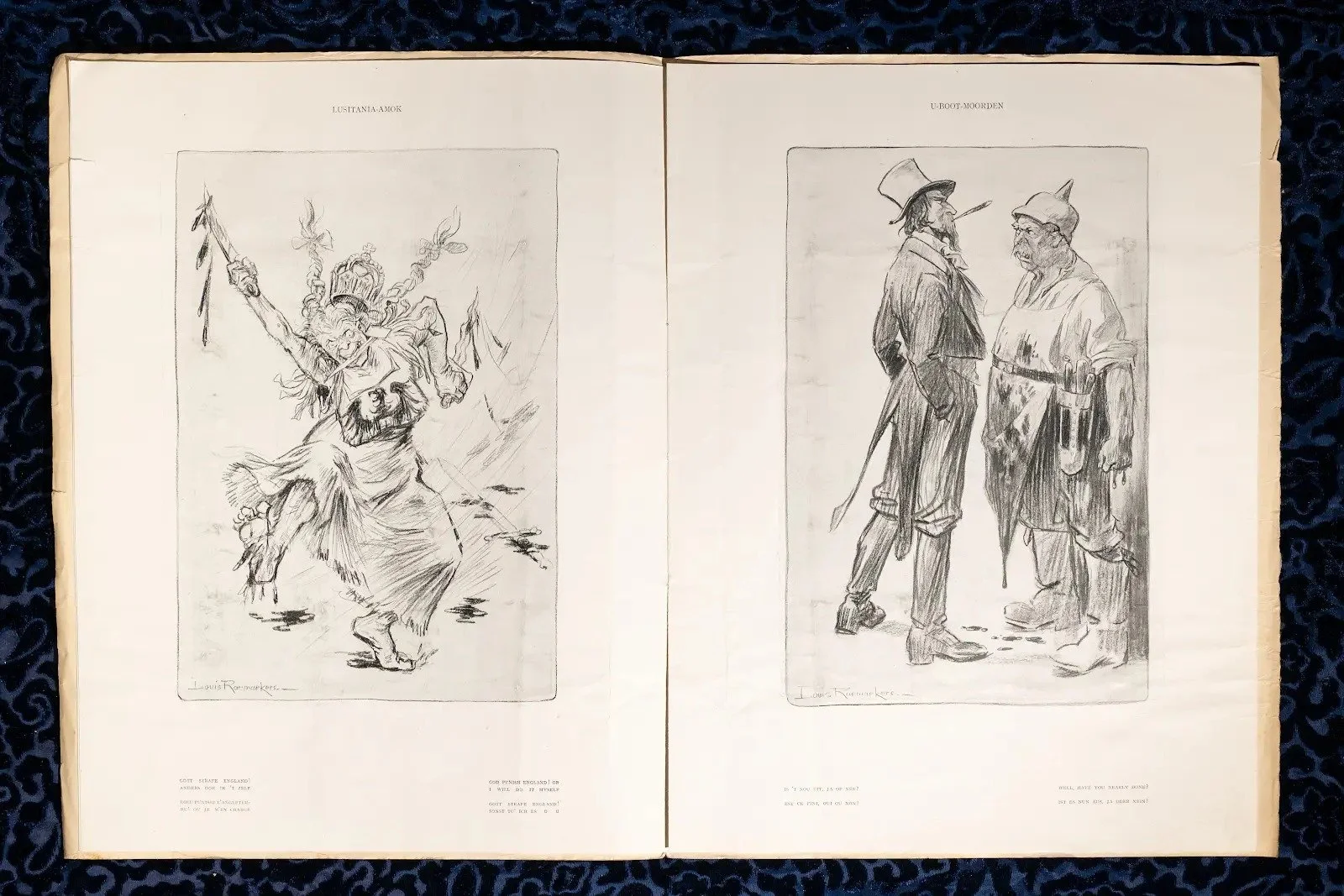 Image 36 of 57
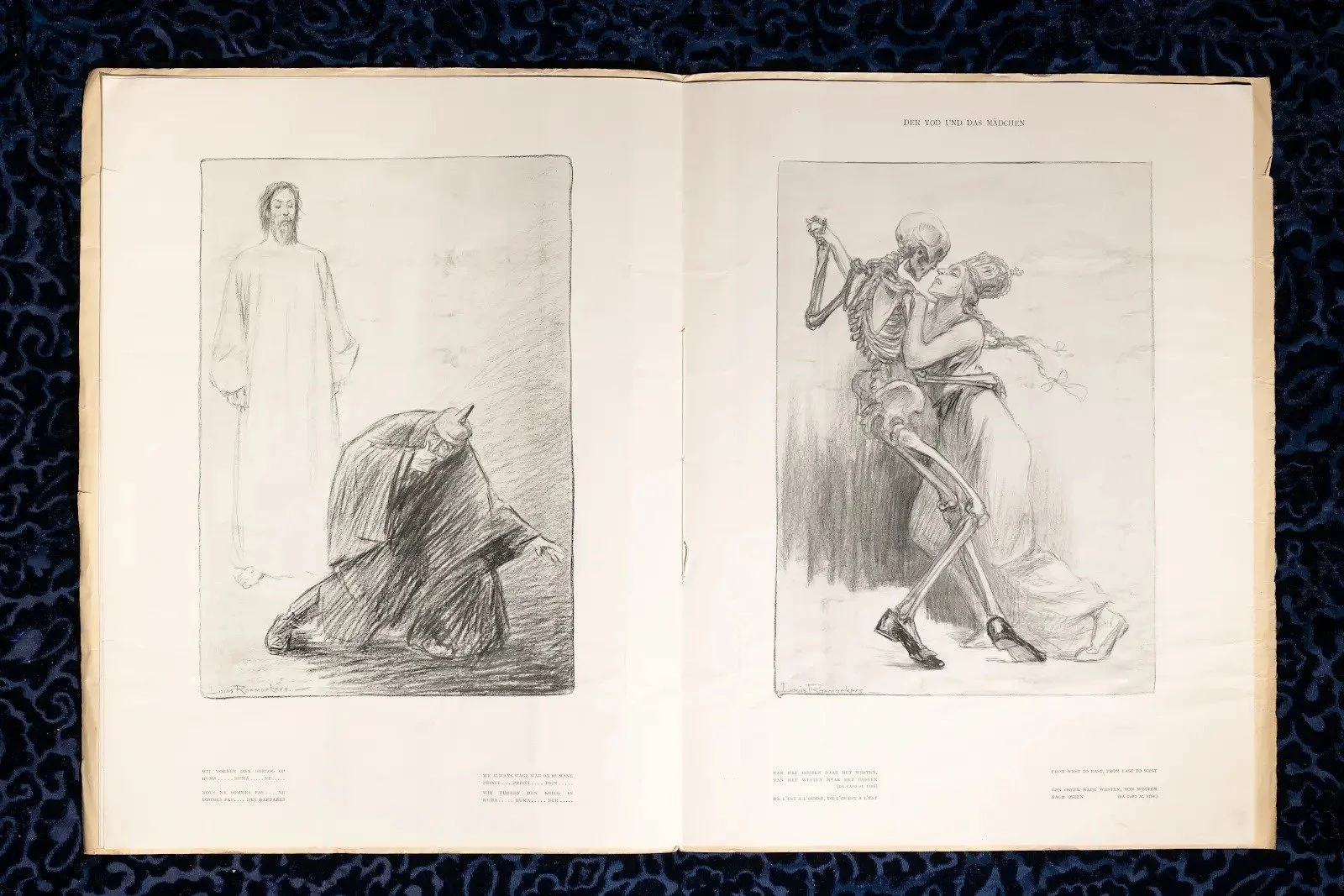 Image 37 of 57
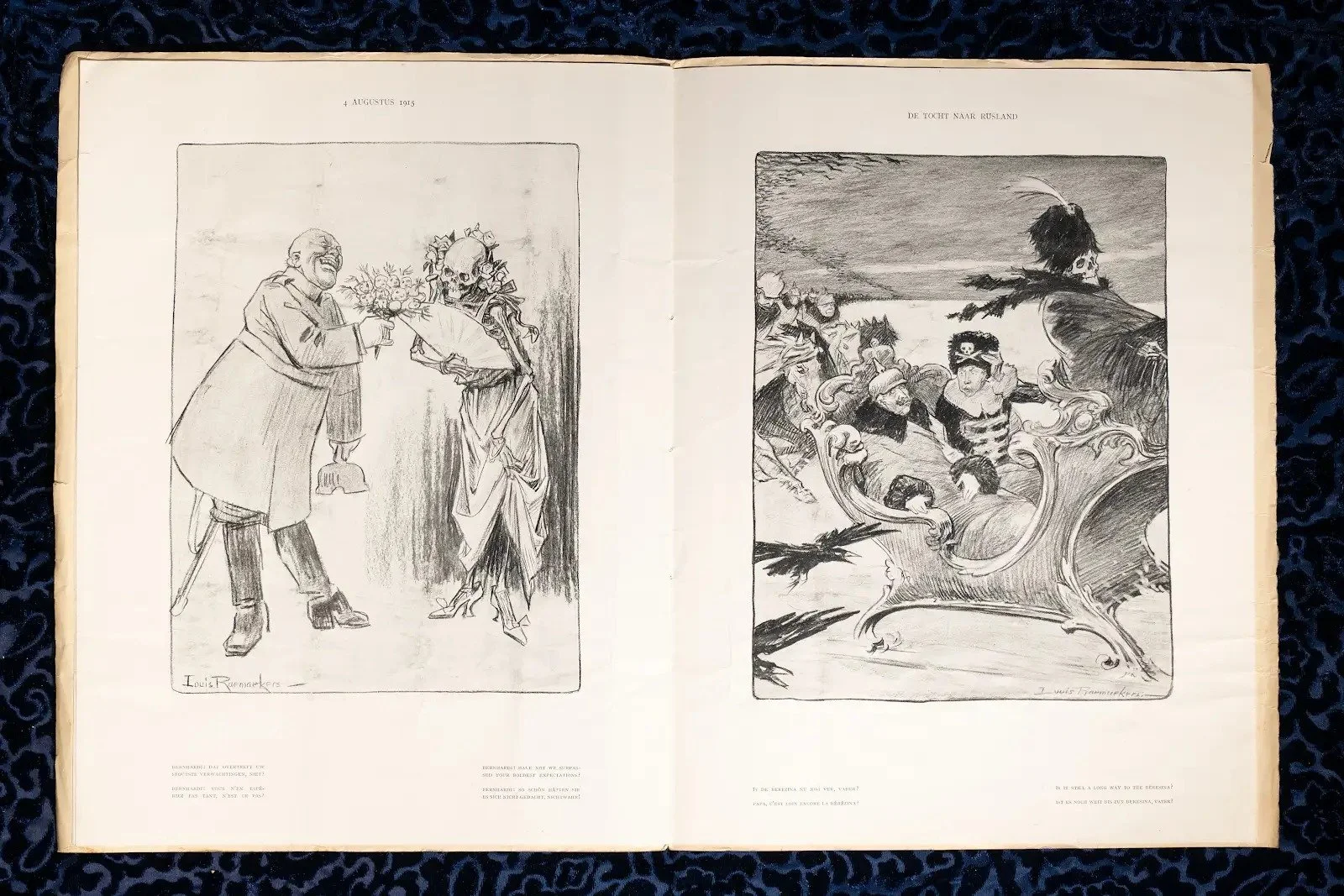 Image 38 of 57
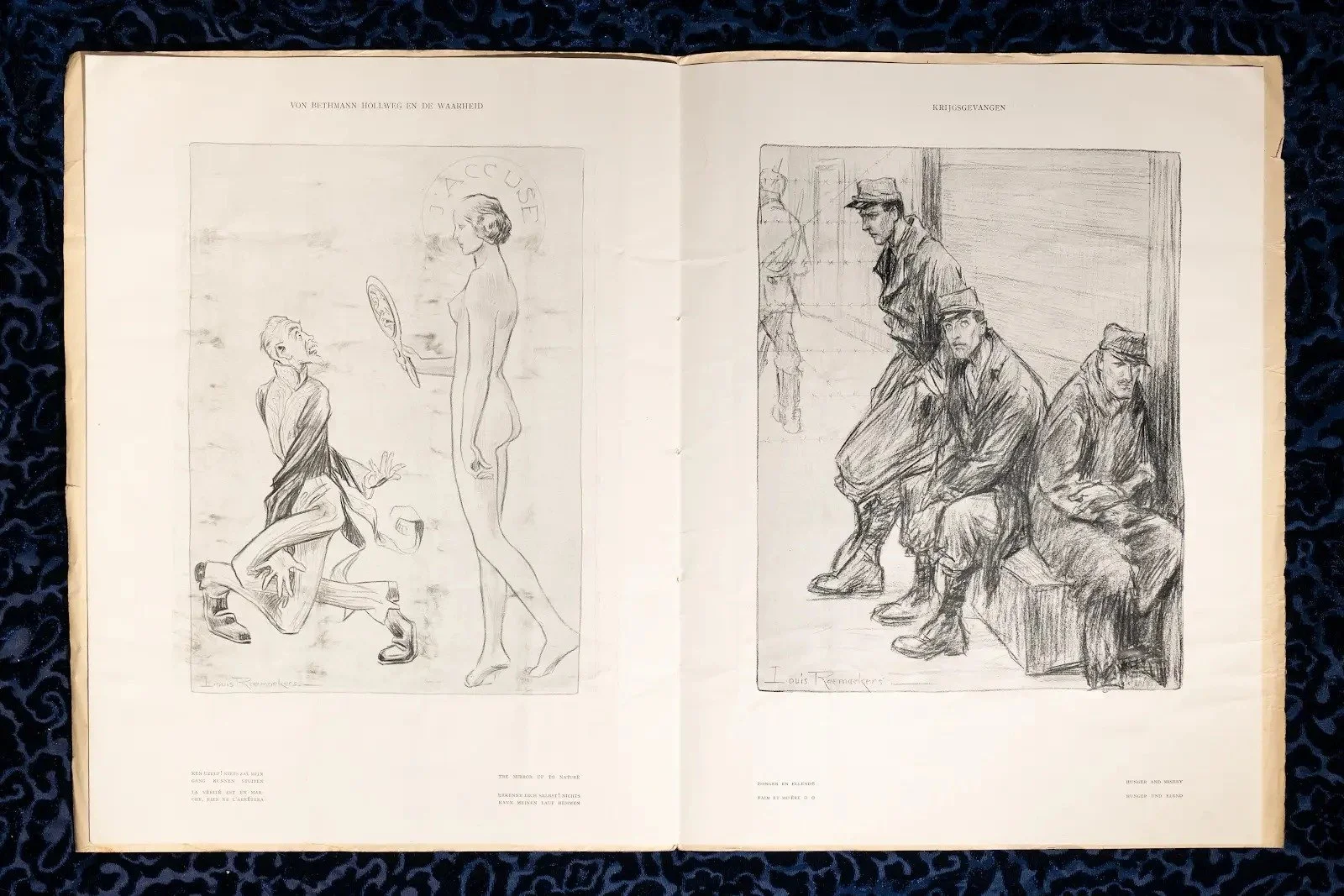 Image 39 of 57
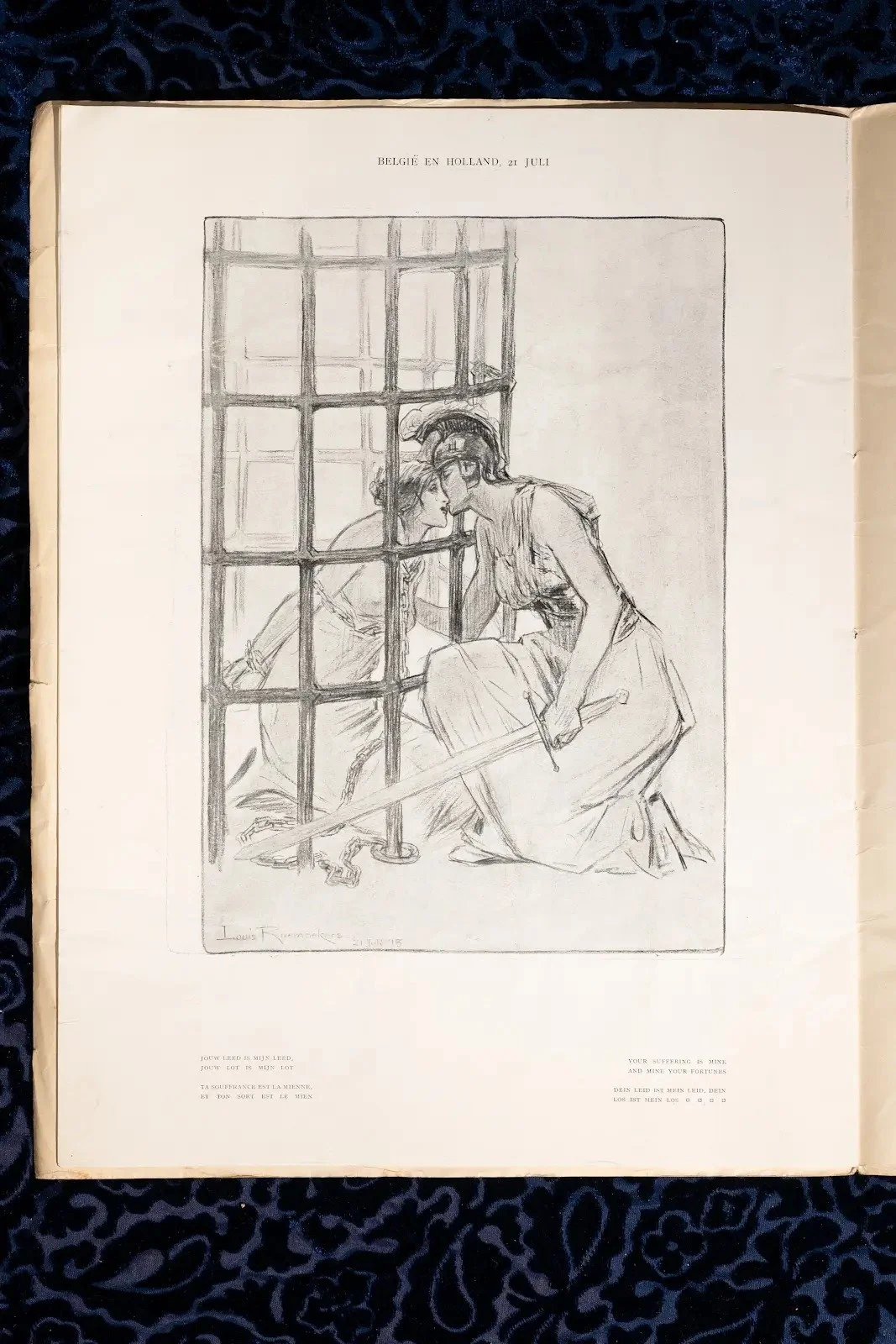 Image 40 of 57
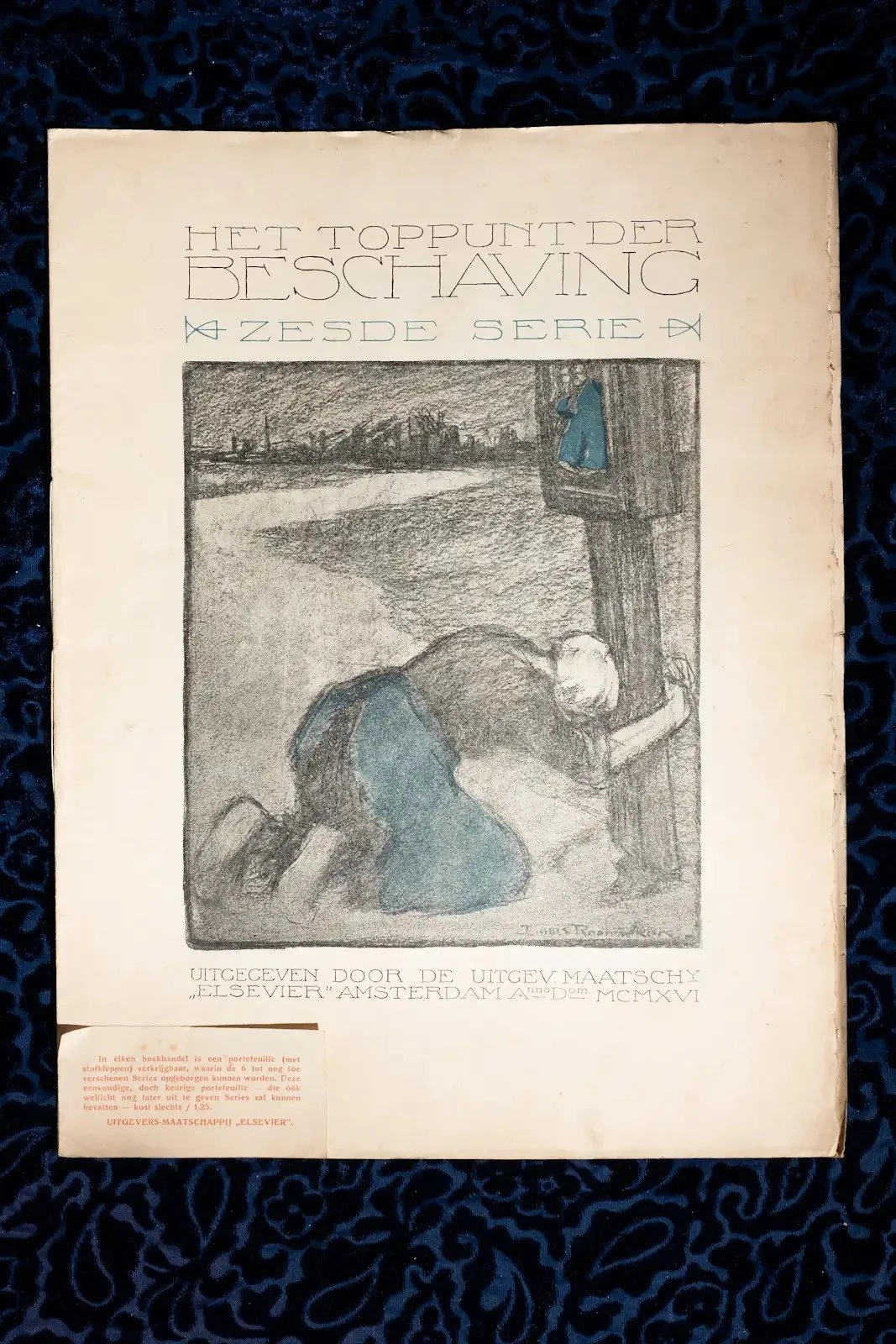 Image 41 of 57
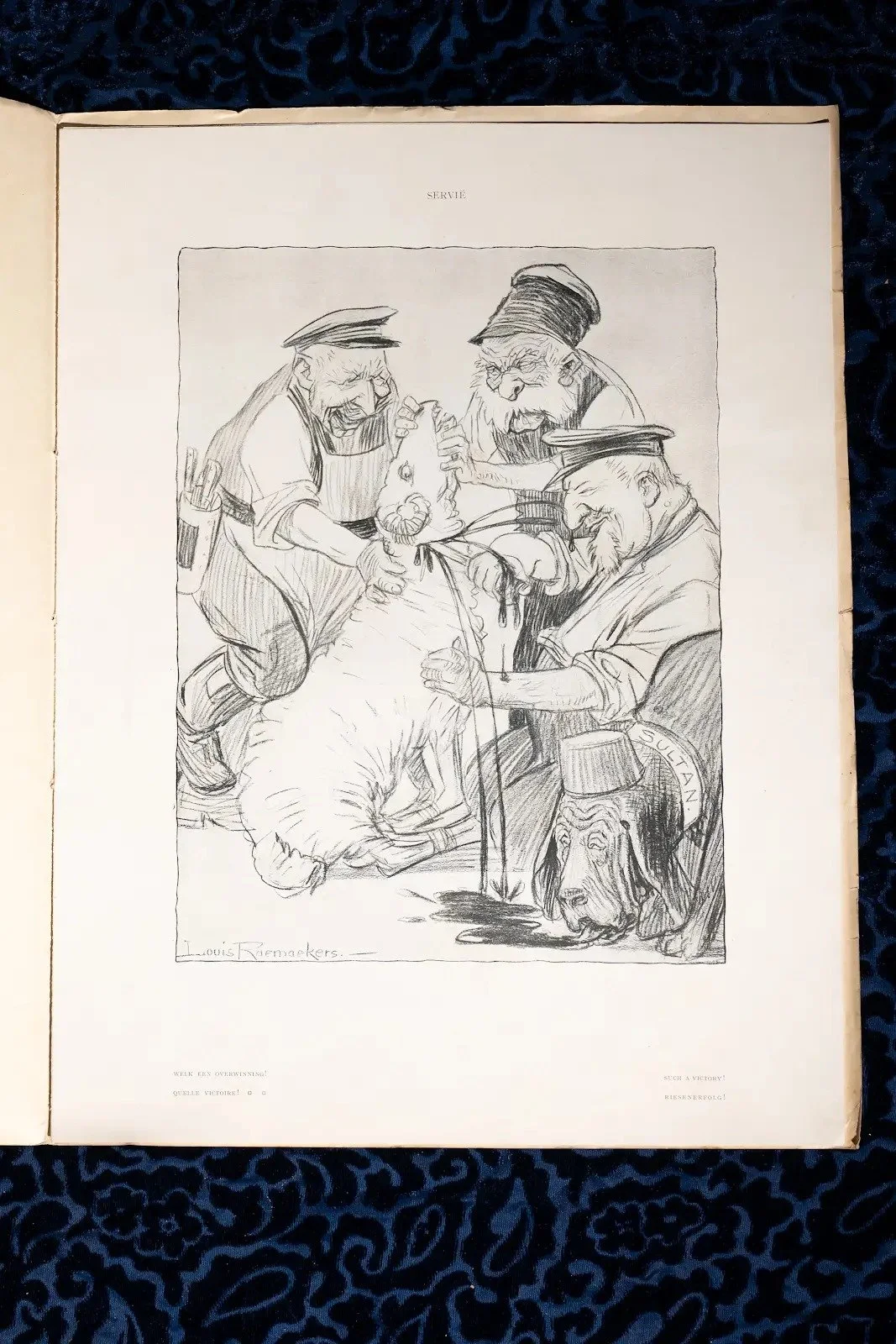 Image 42 of 57
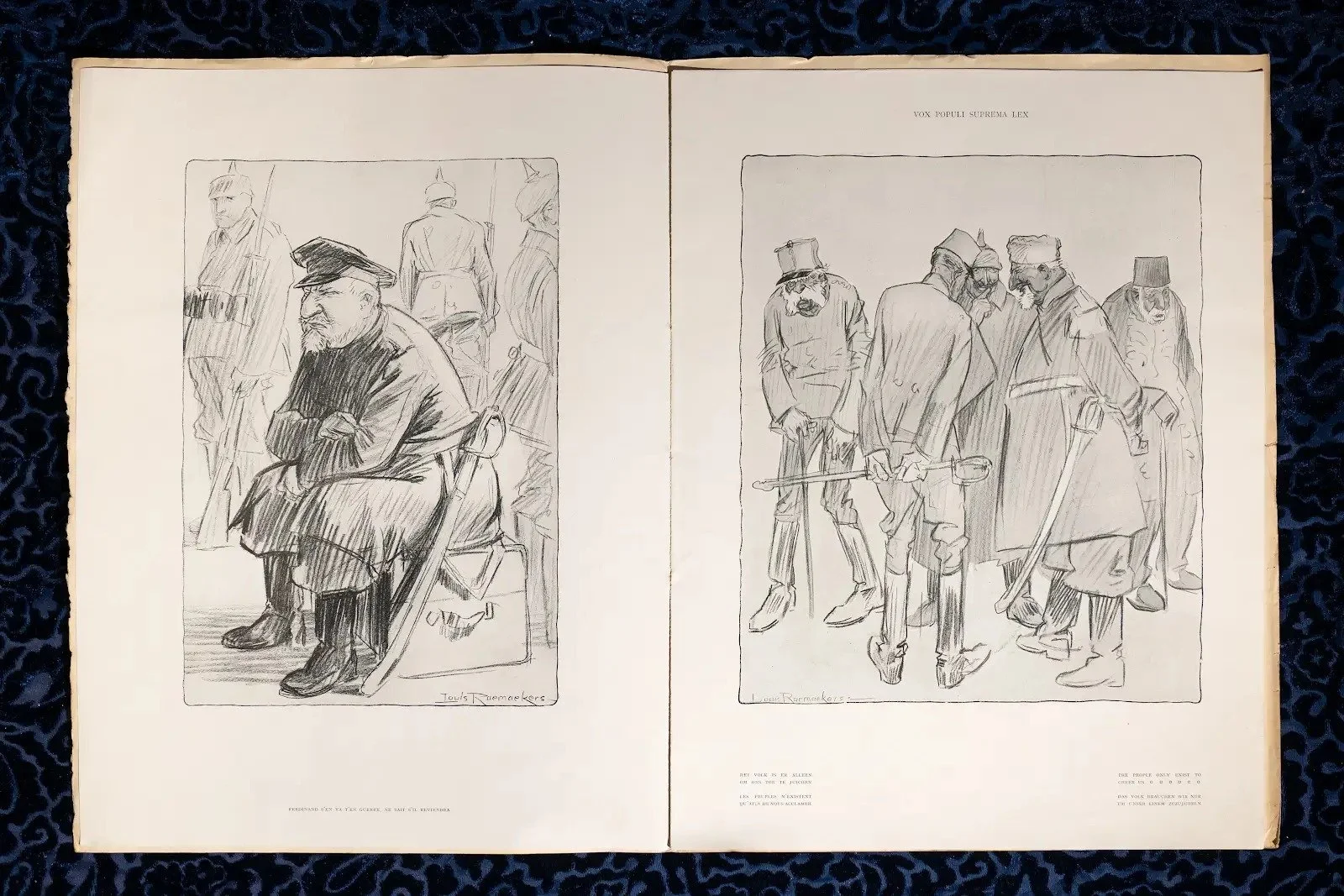 Image 43 of 57
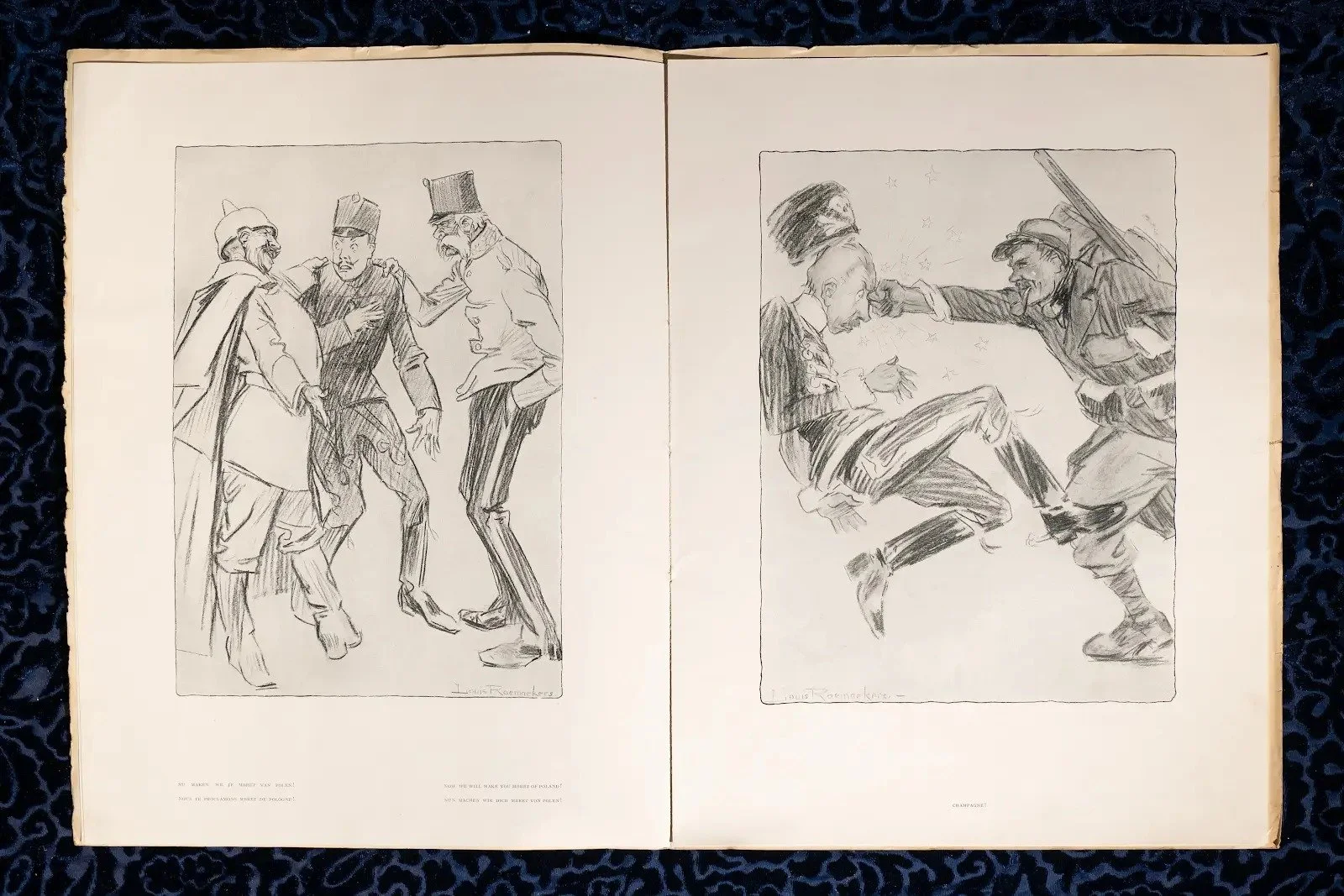 Image 44 of 57
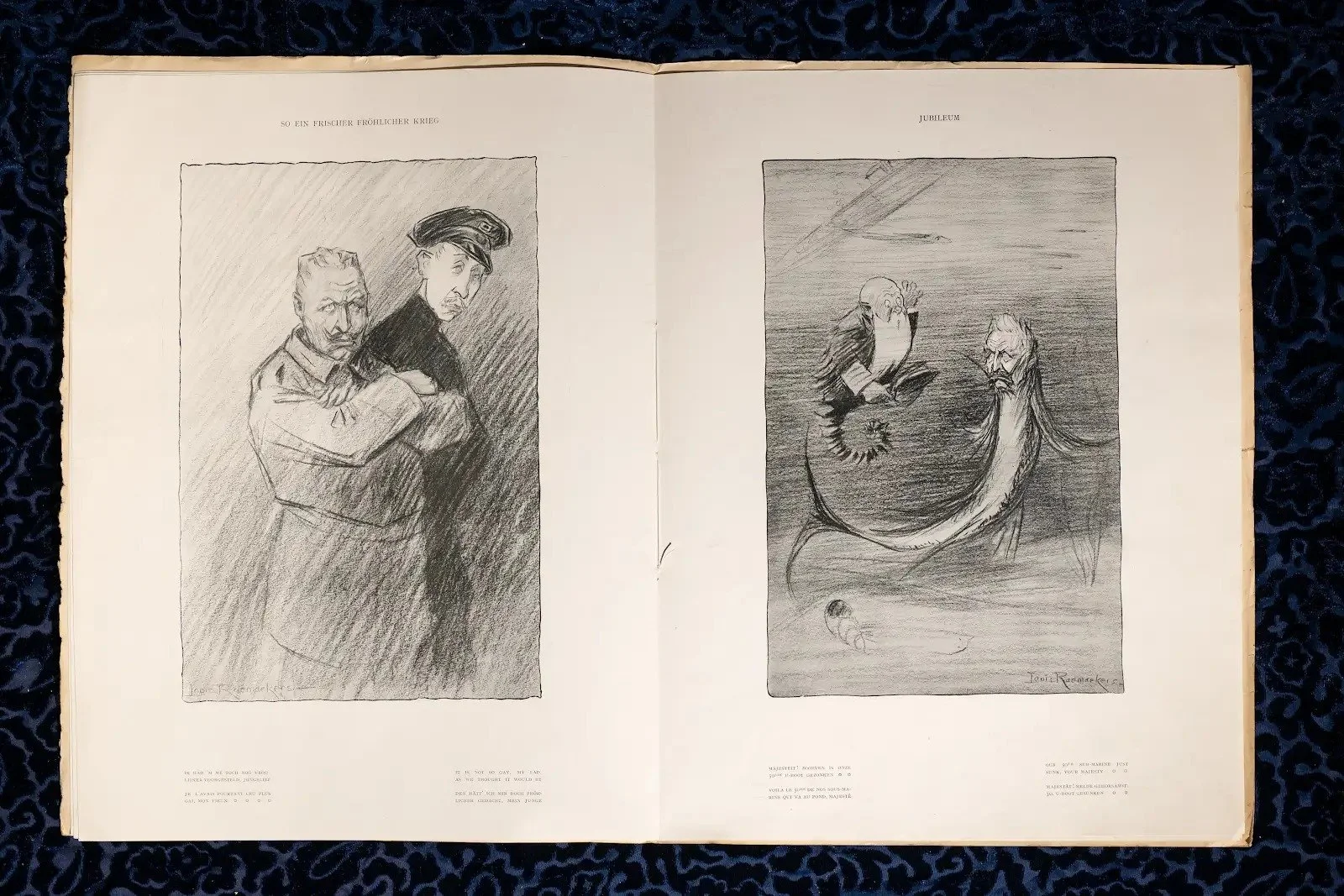 Image 45 of 57
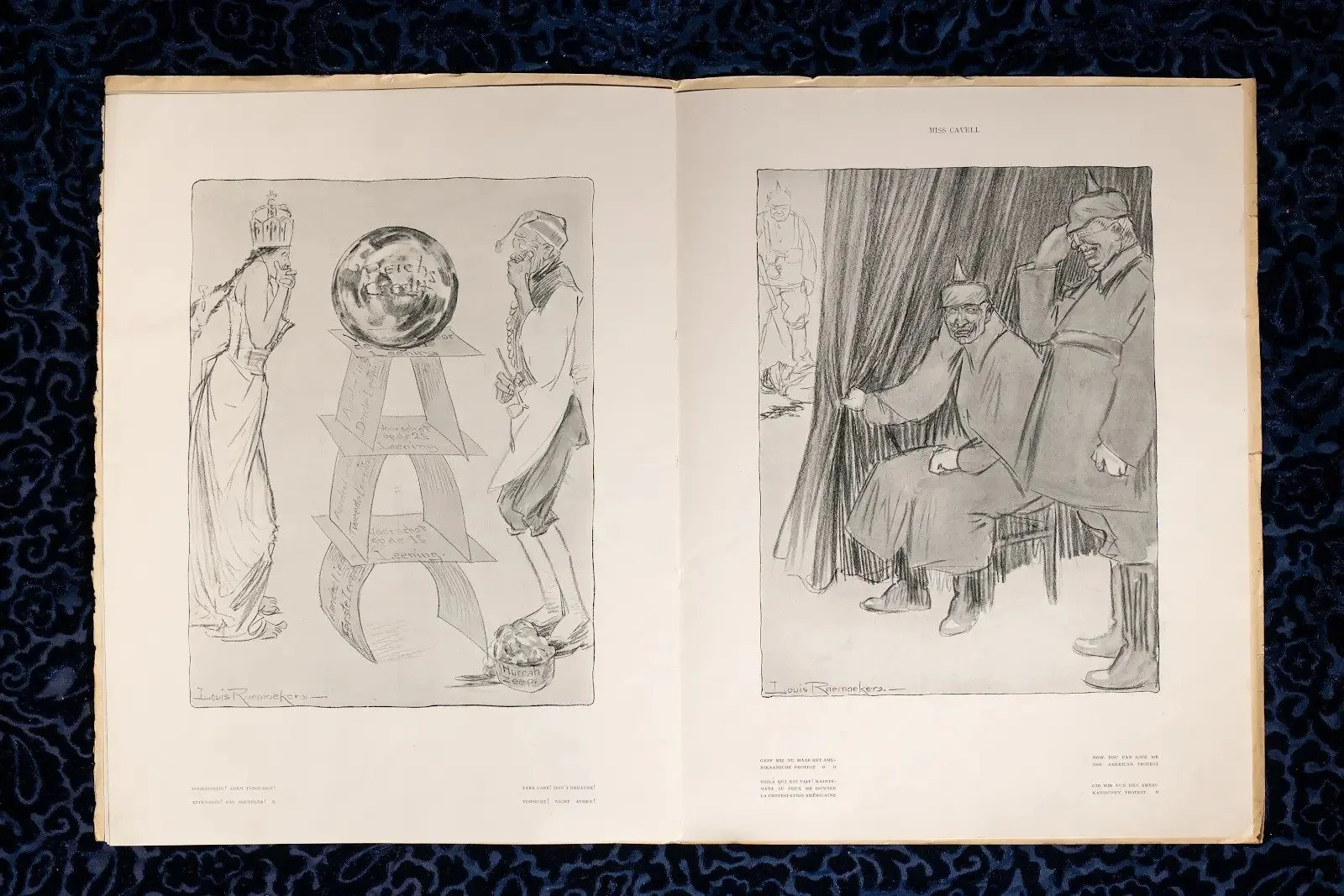 Image 46 of 57
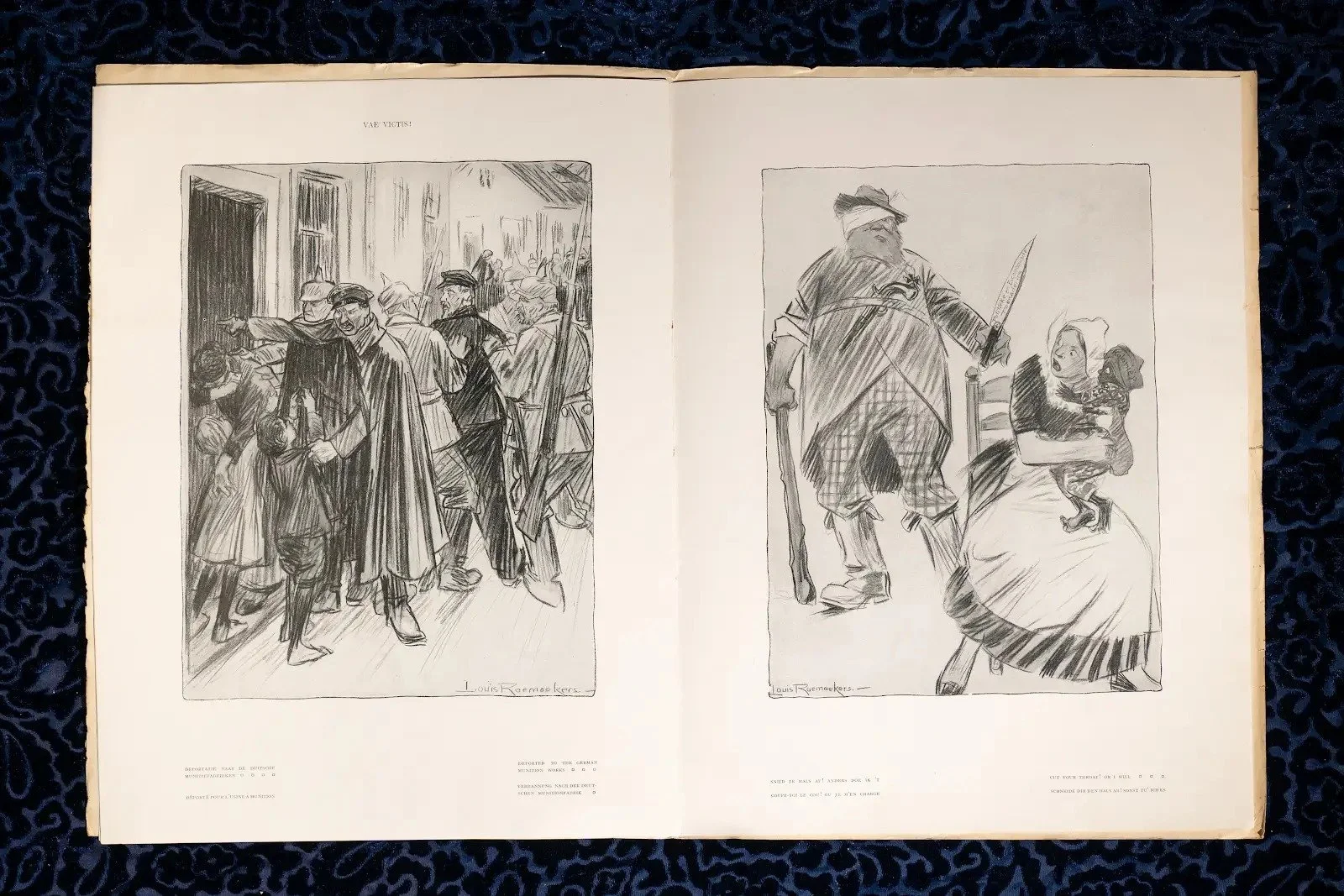 Image 47 of 57
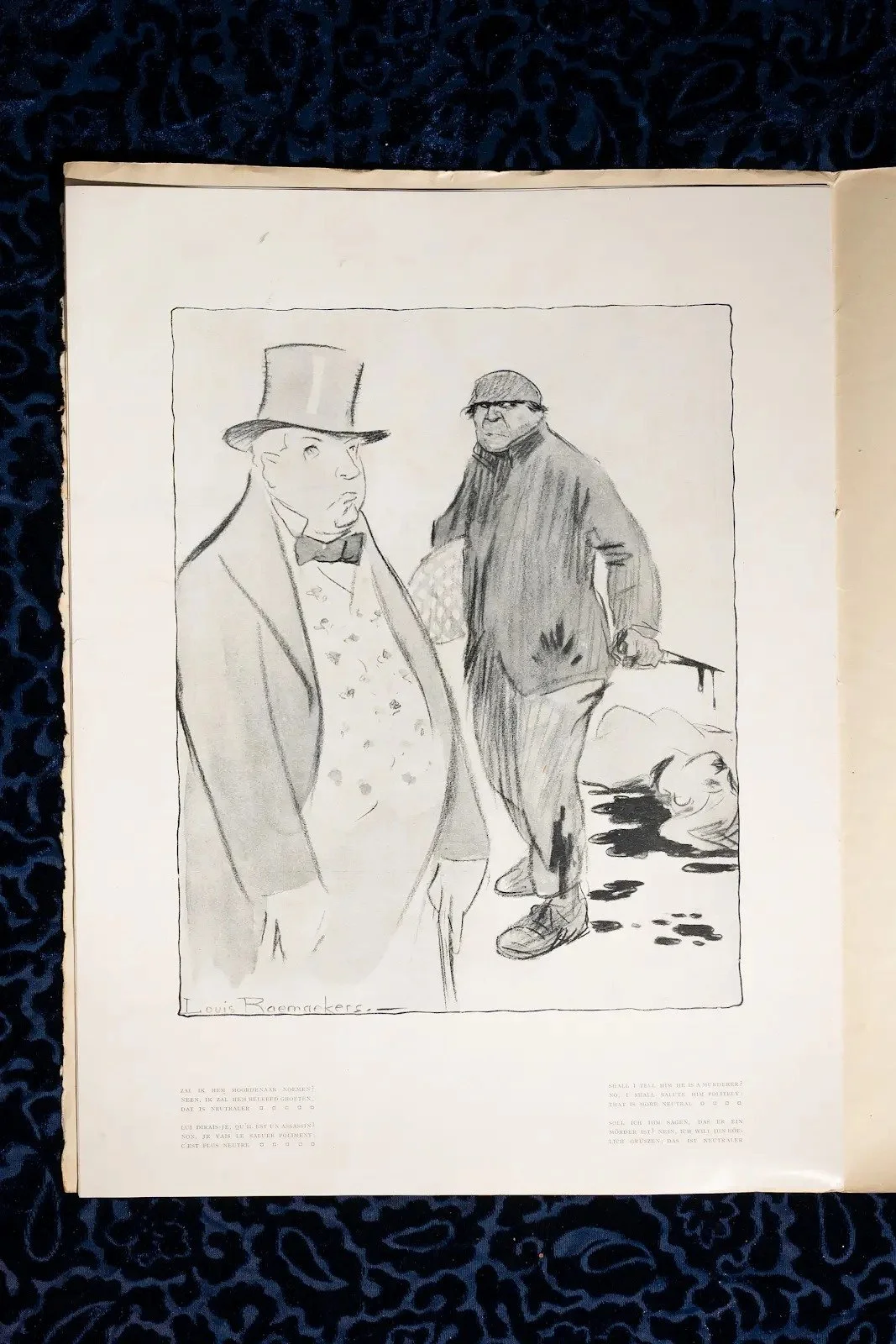 Image 48 of 57
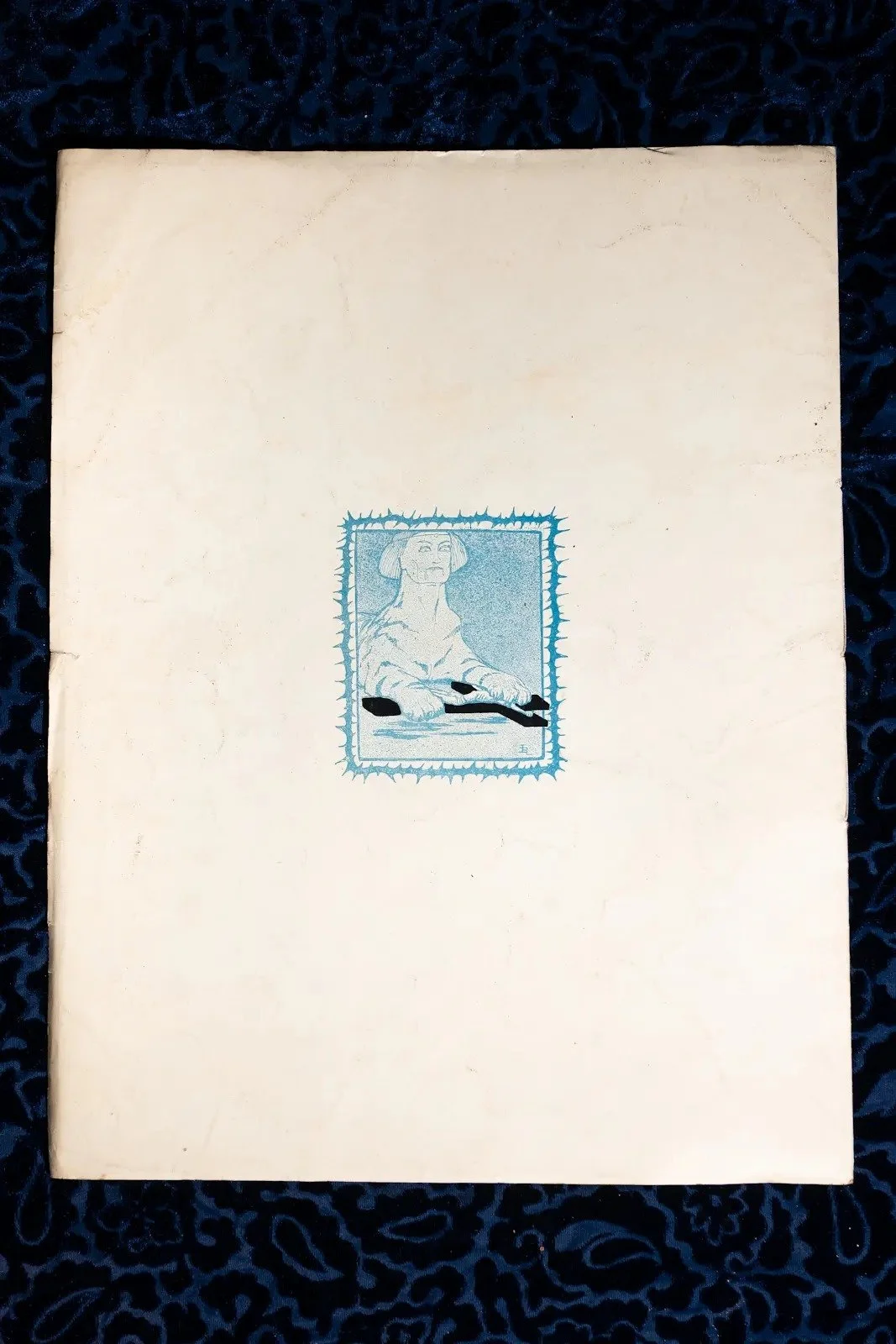 Image 49 of 57
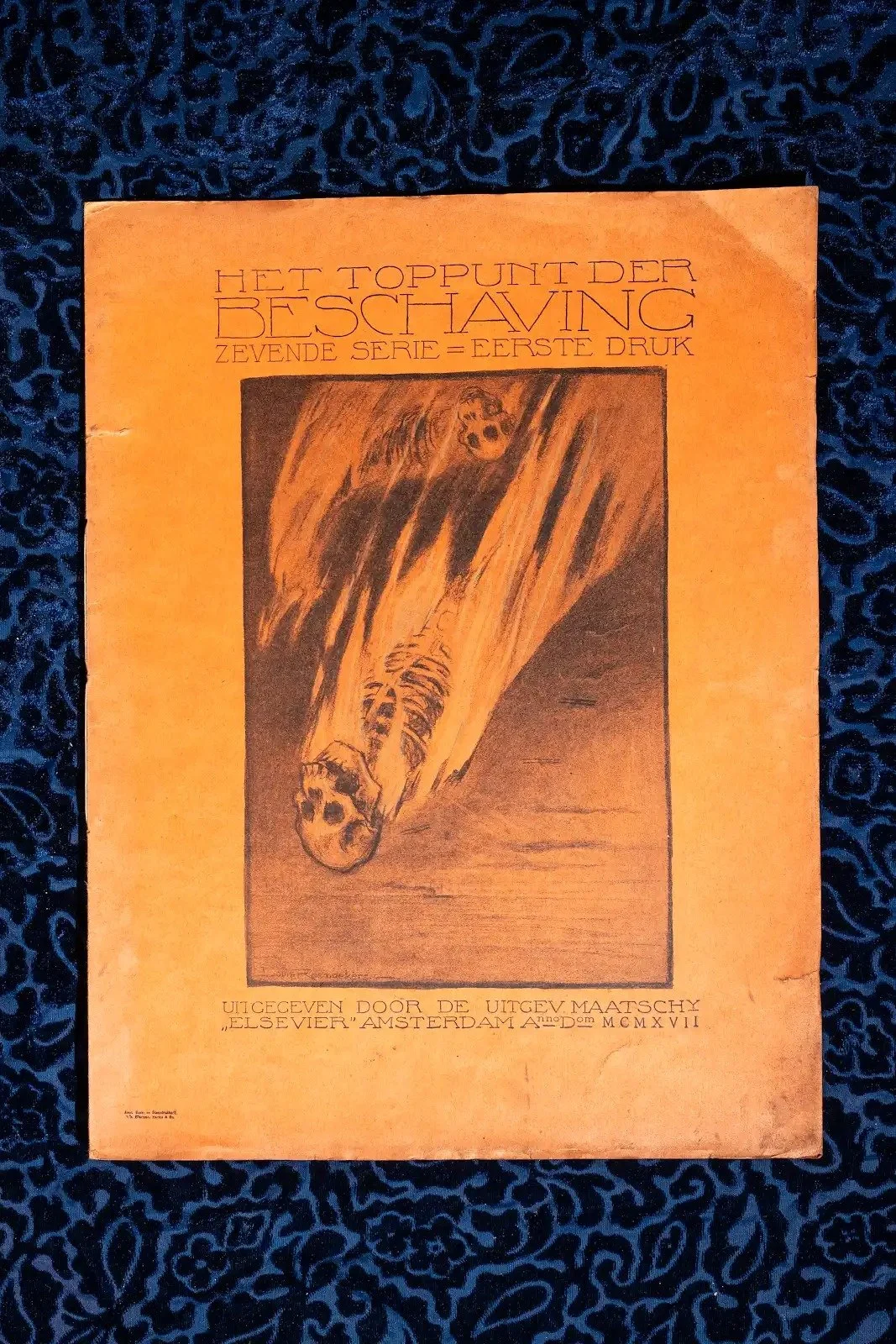 Image 50 of 57
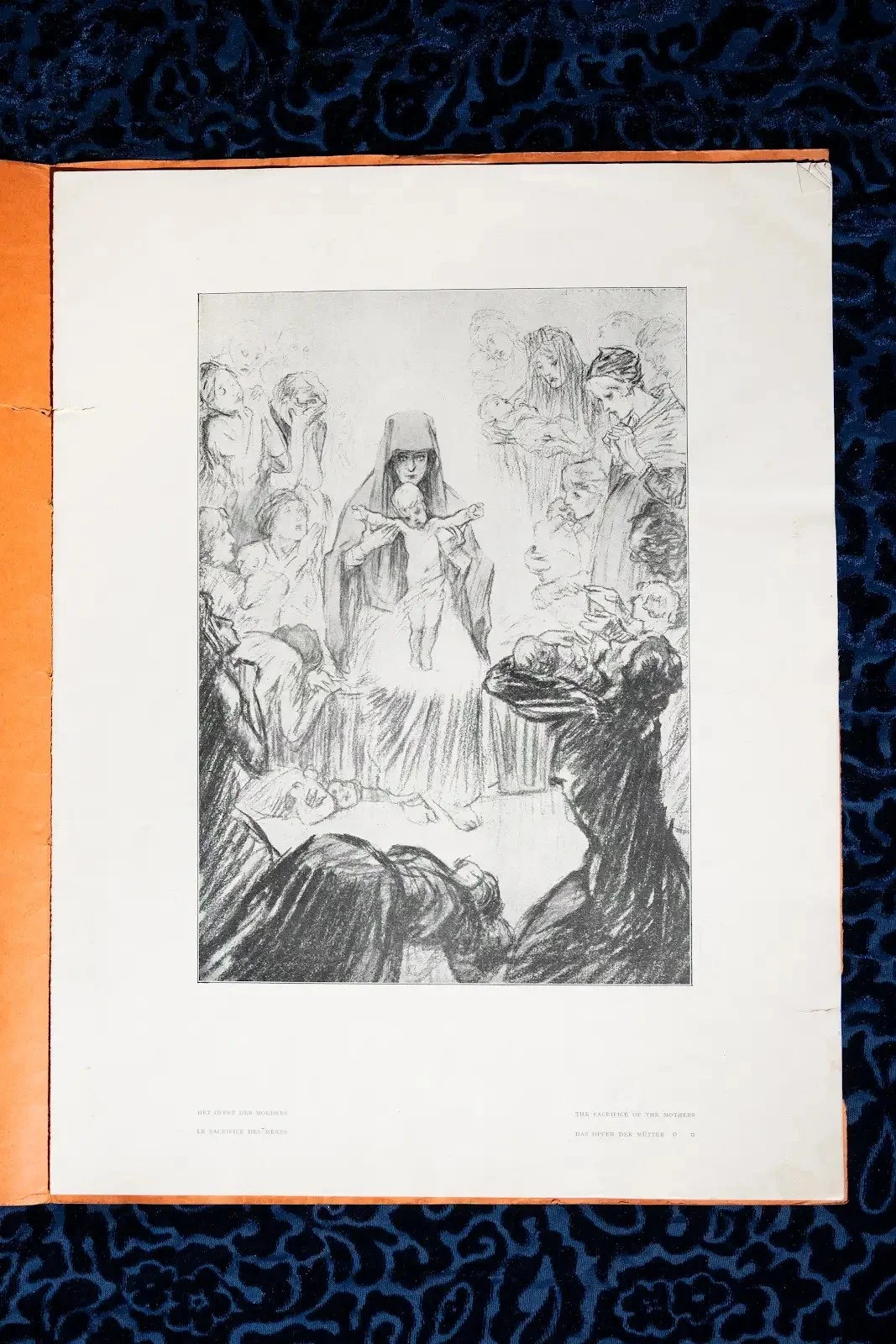 Image 51 of 57
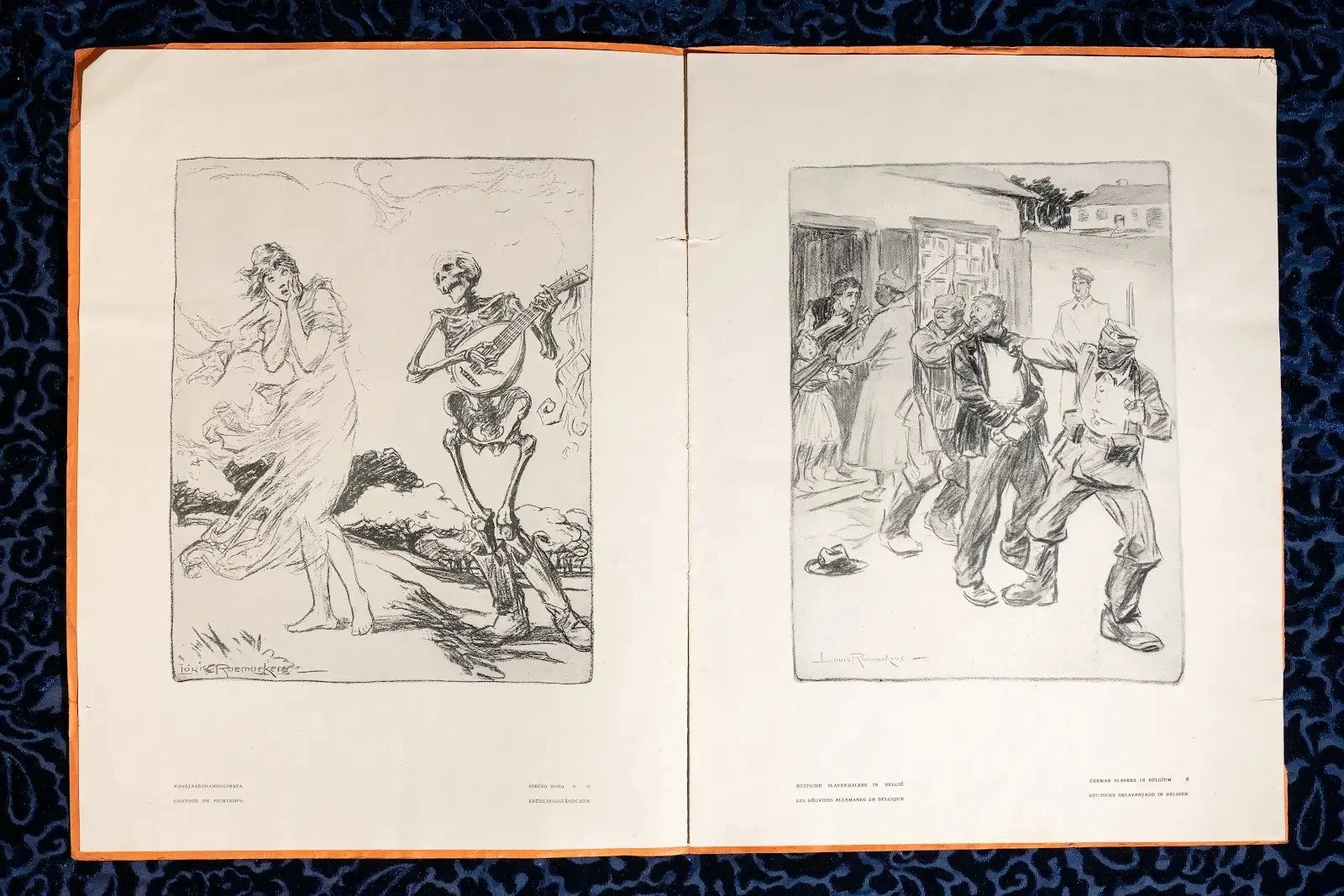 Image 52 of 57
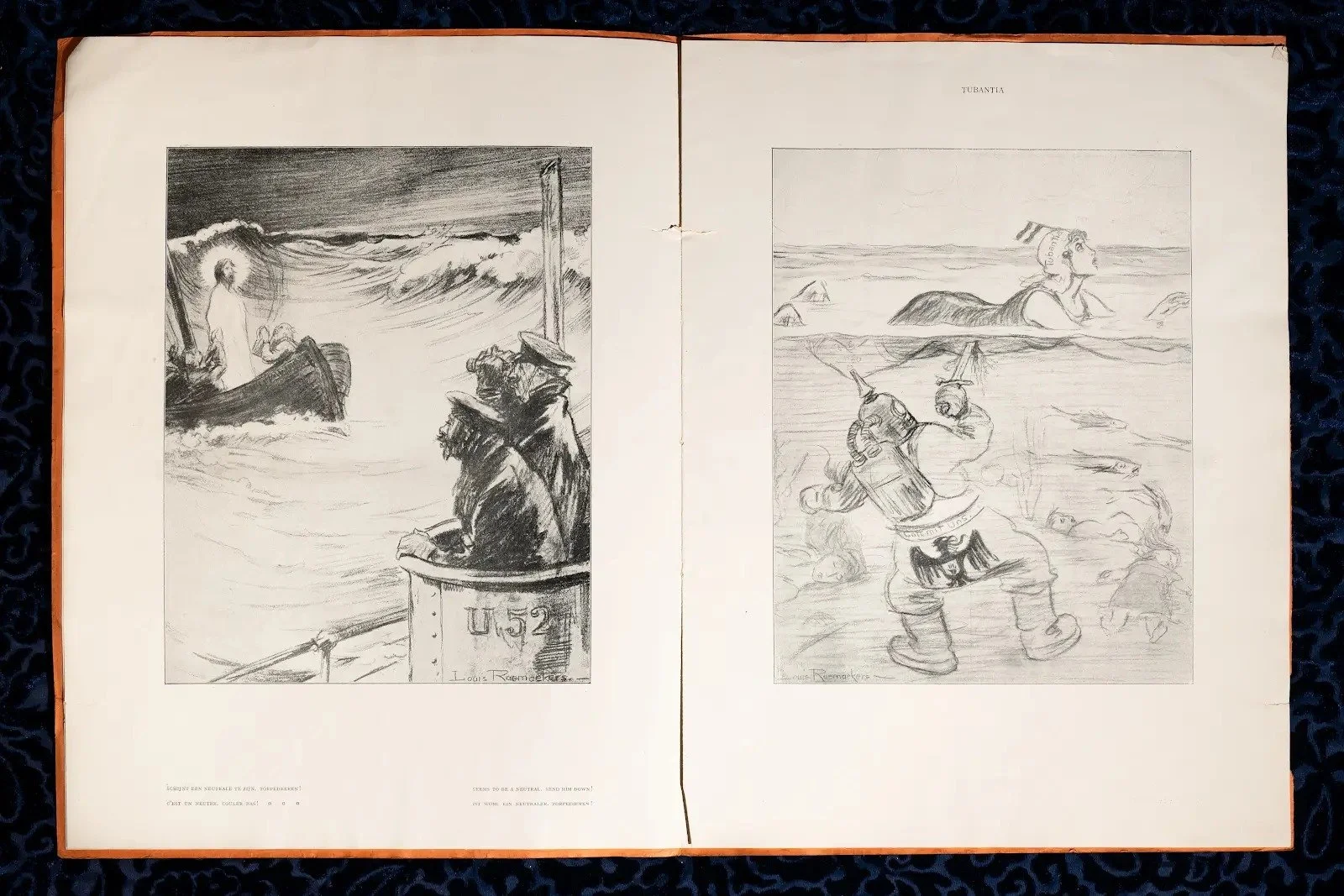 Image 53 of 57
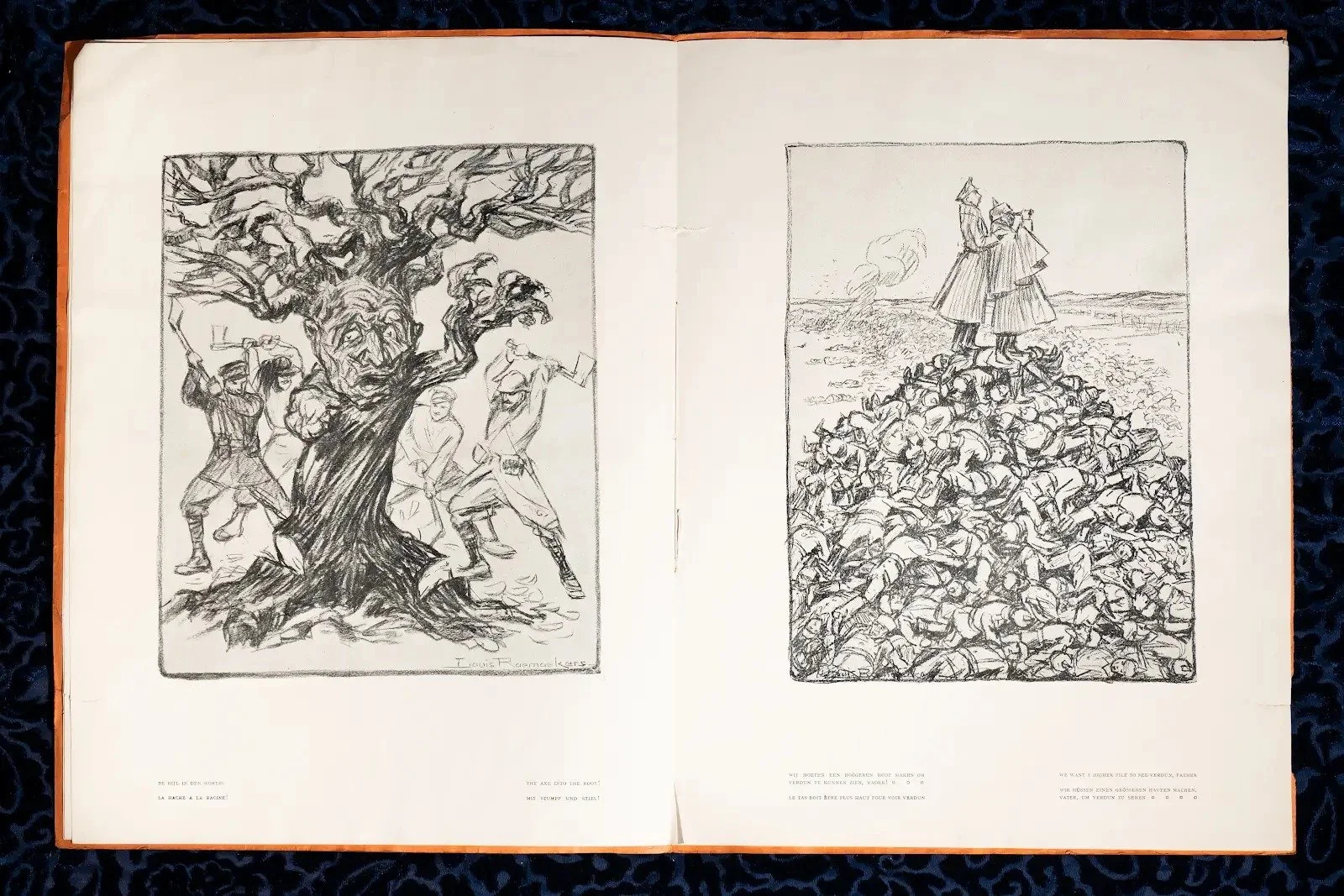 Image 54 of 57
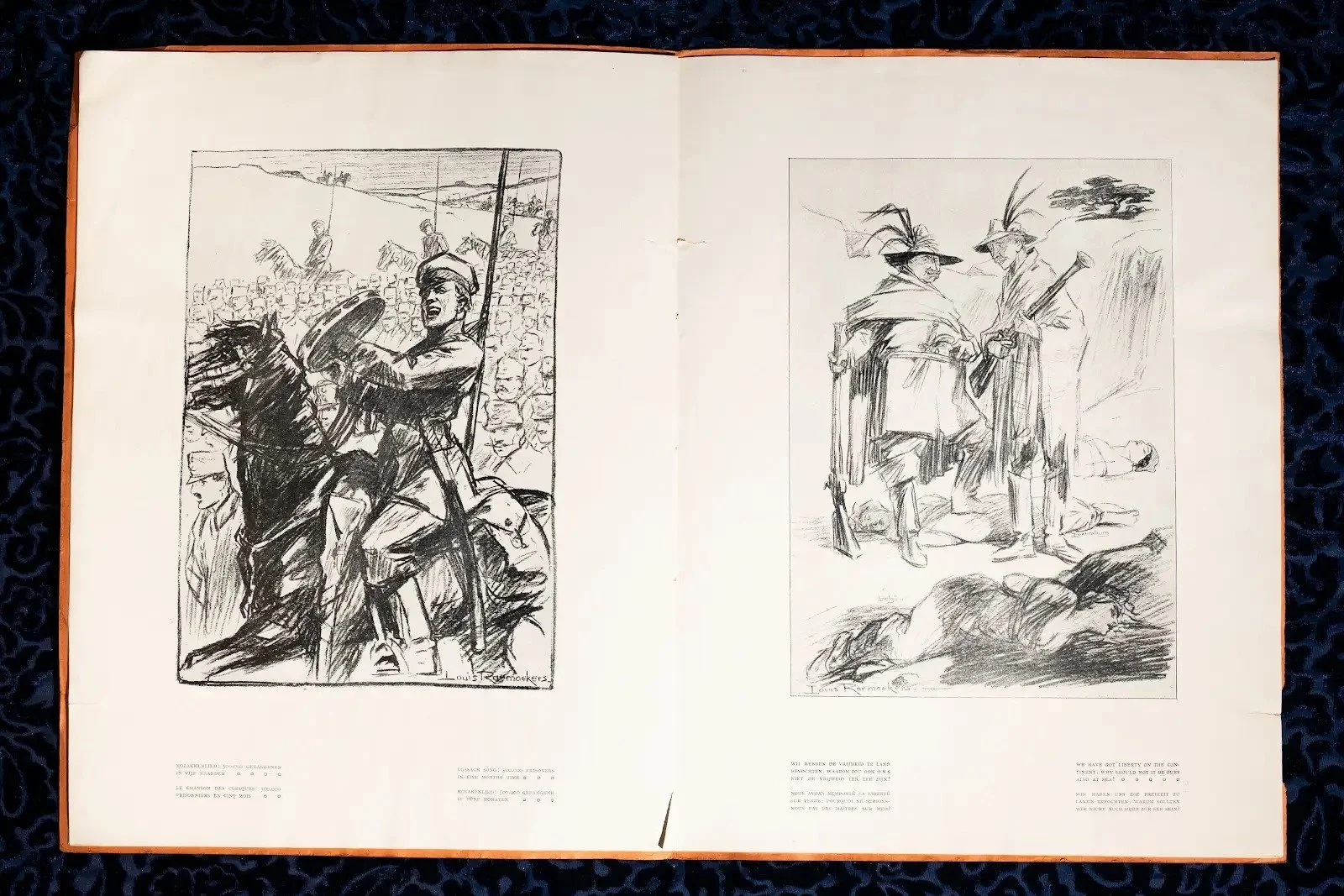 Image 55 of 57
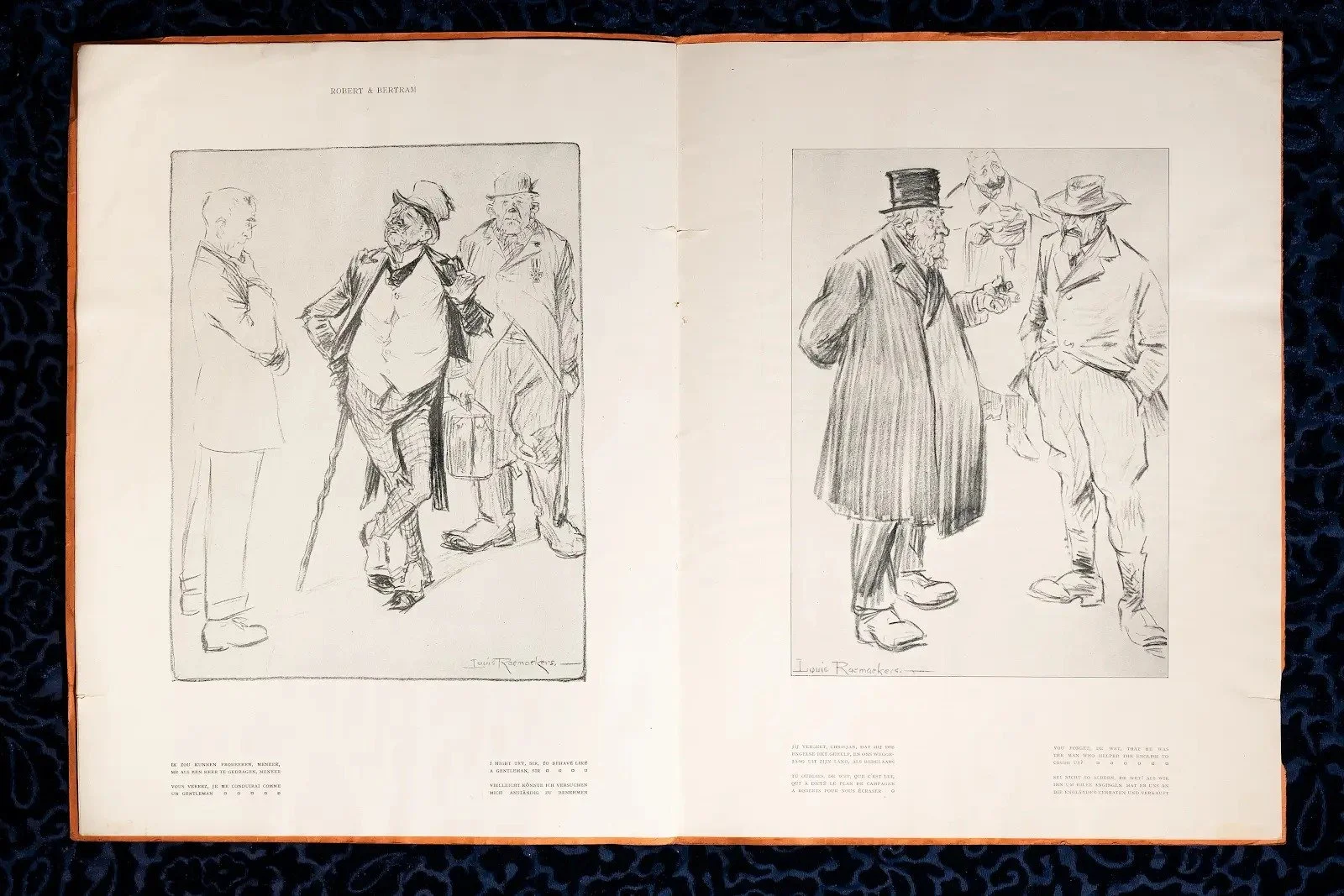 Image 56 of 57
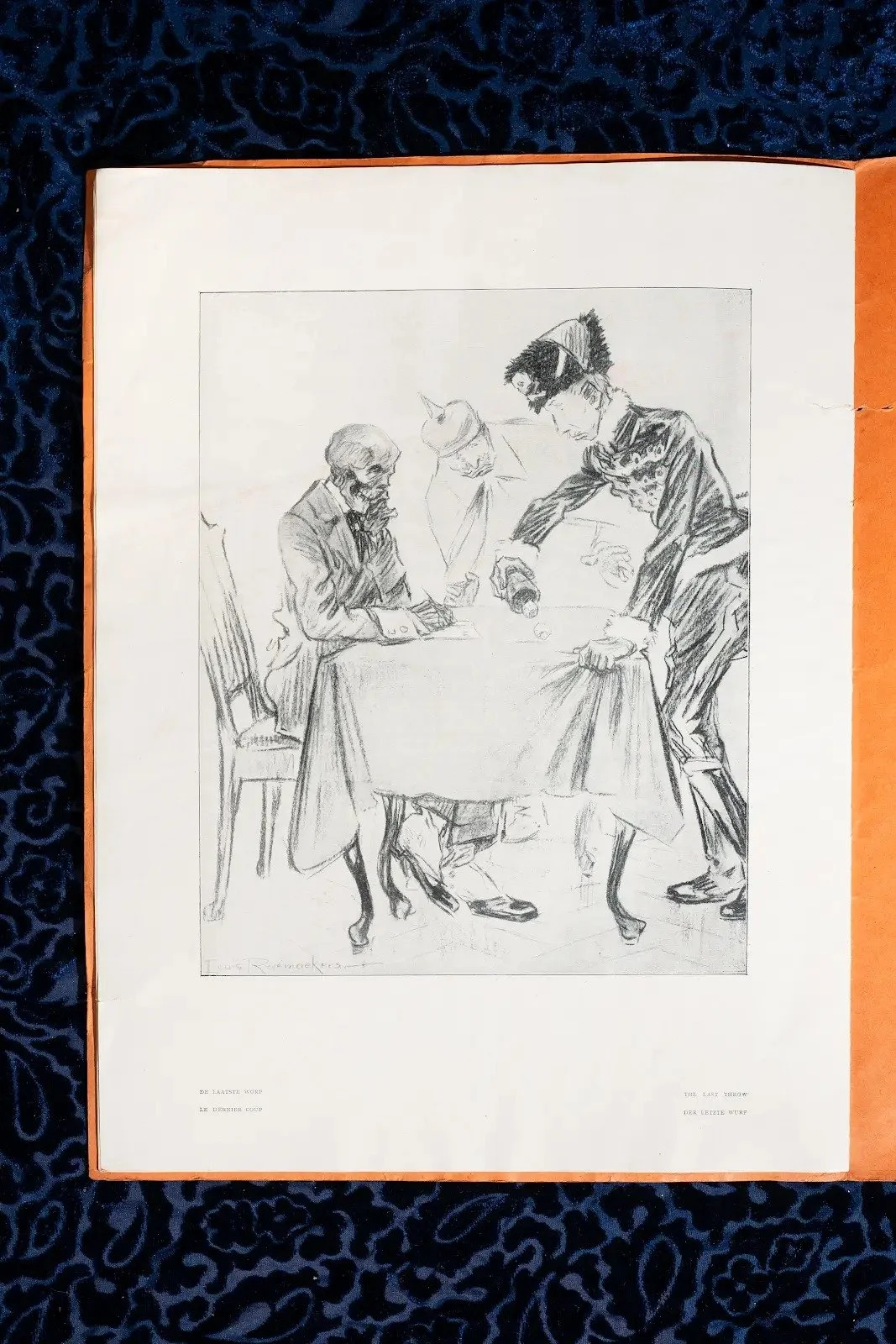 Image 57 of 57