A scarce and complete example of the Tarocco Piemontese from the twilight of the "Golden Age" of Italian card making. Printed in 1911 by the Turin firm of Maggio e C., this deck represents the final evolution of the traditional Italian tarot before the esoteric reforms of the 20th century fully transformed the landscape of cartomancy.
While Italy is the birthplace of Tarot (originating in the mid-15th century), the Piedmontese style is a fascinating hybrid. It originated from the re-importation of the French Tarot de Marseille back into Italy. This deck follows the Marseille design closely but features the distinct variations that collectors prize in the Piedmontese pattern:
Double-Ended Courts: Unlike the French decks, the court cards (King, Queen, Knight, Valet) are reversible, divided by a horizontal line (a specific marker distinguishing it from the diagonal line of French decks or the Genoese pattern).
The Fool (Il Matto): Numbered "0" and depicted chasing a butterfly—a significant iconographic shift from earlier designs where the Fool is pursued by a wild animal (dog or cat).
Italian Suits: Spade (Swords), Bastoni (Batons), Coppe (Cups), and Denari (Coins). The Ace of Cups features the characteristic "chalice filled with flowers."
This deck serves as a bridge between the folk tradition of card playing and the high ceremonial magic of the 19th-century occult revival. By the time this deck was printed in 1911, the theories of Etteilla, Éliphas Lévi, and Papus had already redefined the Tarot as the "Book of Thoth": a repository of ancient Egyptian wisdom and Kabbalistic truth.
While this deck was manufactured for the game of Tarocchi, it preserves the raw, pre-occult imagery that the French and English schools (like the Golden Dawn) sought to interpret. It stands as a "witness" to the era when the Tarot was transitioning from a gambling tool to a mystical artifact in the popular imagination.
Condition: Very Good. A used deck showing expected signs of play but remaining well-preserved. The chromolithographic colors are vibrant. The rounded corners are original (as issued). The fiscal stamp on the Ace of Coins is clearly legible, confirming the date and authenticity.
Tarocchi Piemontesi (Piedmontese Tarot) "The Book of Thoth" in the Italian Tradition – A Complete Divination Deck. Torino (Turin): Maggio e C.°, 1911. Format: 78 Tarot cards (108 x 60 mm), chromolithographic on cardstock. Collation: Complete. 22 Major Arcana (numbered 0–21) and 56 Minor Arcana. Backs: Decorated with geometric patterns in various shades of green. Provenance: Retains the original fiscal duty stamp ("Bollo") on the Ace of Coins: "REGNO D'ITALIA - CENTESIMI 50" with the profile of Mercury facing left (a stamp in use 1883–1914). Printer’s Imprint: Stamped on the Ace of Coins: "MAGGIO E C.O – TORINO - DEPOSITO VIA PALAZZO DI CITTÀ 2 - FABBRICA VIA S. GIOBBE N. 2 BIS E VIA FIOCCHETTO 14."
A scarce and complete example of the Tarocco Piemontese from the twilight of the "Golden Age" of Italian card making. Printed in 1911 by the Turin firm of Maggio e C., this deck represents the final evolution of the traditional Italian tarot before the esoteric reforms of the 20th century fully transformed the landscape of cartomancy.
While Italy is the birthplace of Tarot (originating in the mid-15th century), the Piedmontese style is a fascinating hybrid. It originated from the re-importation of the French Tarot de Marseille back into Italy. This deck follows the Marseille design closely but features the distinct variations that collectors prize in the Piedmontese pattern:
Double-Ended Courts: Unlike the French decks, the court cards (King, Queen, Knight, Valet) are reversible, divided by a horizontal line (a specific marker distinguishing it from the diagonal line of French decks or the Genoese pattern).
The Fool (Il Matto): Numbered "0" and depicted chasing a butterfly—a significant iconographic shift from earlier designs where the Fool is pursued by a wild animal (dog or cat).
Italian Suits: Spade (Swords), Bastoni (Batons), Coppe (Cups), and Denari (Coins). The Ace of Cups features the characteristic "chalice filled with flowers."
This deck serves as a bridge between the folk tradition of card playing and the high ceremonial magic of the 19th-century occult revival. By the time this deck was printed in 1911, the theories of Etteilla, Éliphas Lévi, and Papus had already redefined the Tarot as the "Book of Thoth": a repository of ancient Egyptian wisdom and Kabbalistic truth.
While this deck was manufactured for the game of Tarocchi, it preserves the raw, pre-occult imagery that the French and English schools (like the Golden Dawn) sought to interpret. It stands as a "witness" to the era when the Tarot was transitioning from a gambling tool to a mystical artifact in the popular imagination.
Condition: Very Good. A used deck showing expected signs of play but remaining well-preserved. The chromolithographic colors are vibrant. The rounded corners are original (as issued). The fiscal stamp on the Ace of Coins is clearly legible, confirming the date and authenticity.
Tarocchi Piemontesi (Piedmontese Tarot) "The Book of Thoth" in the Italian Tradition – A Complete Divination Deck. Torino (Turin): Maggio e C.°, 1911. Format: 78 Tarot cards (108 x 60 mm), chromolithographic on cardstock. Collation: Complete. 22 Major Arcana (numbered 0–21) and 56 Minor Arcana. Backs: Decorated with geometric patterns in various shades of green. Provenance: Retains the original fiscal duty stamp ("Bollo") on the Ace of Coins: "REGNO D'ITALIA - CENTESIMI 50" with the profile of Mercury facing left (a stamp in use 1883–1914). Printer’s Imprint: Stamped on the Ace of Coins: "MAGGIO E C.O – TORINO - DEPOSITO VIA PALAZZO DI CITTÀ 2 - FABBRICA VIA S. GIOBBE N. 2 BIS E VIA FIOCCHETTO 14."

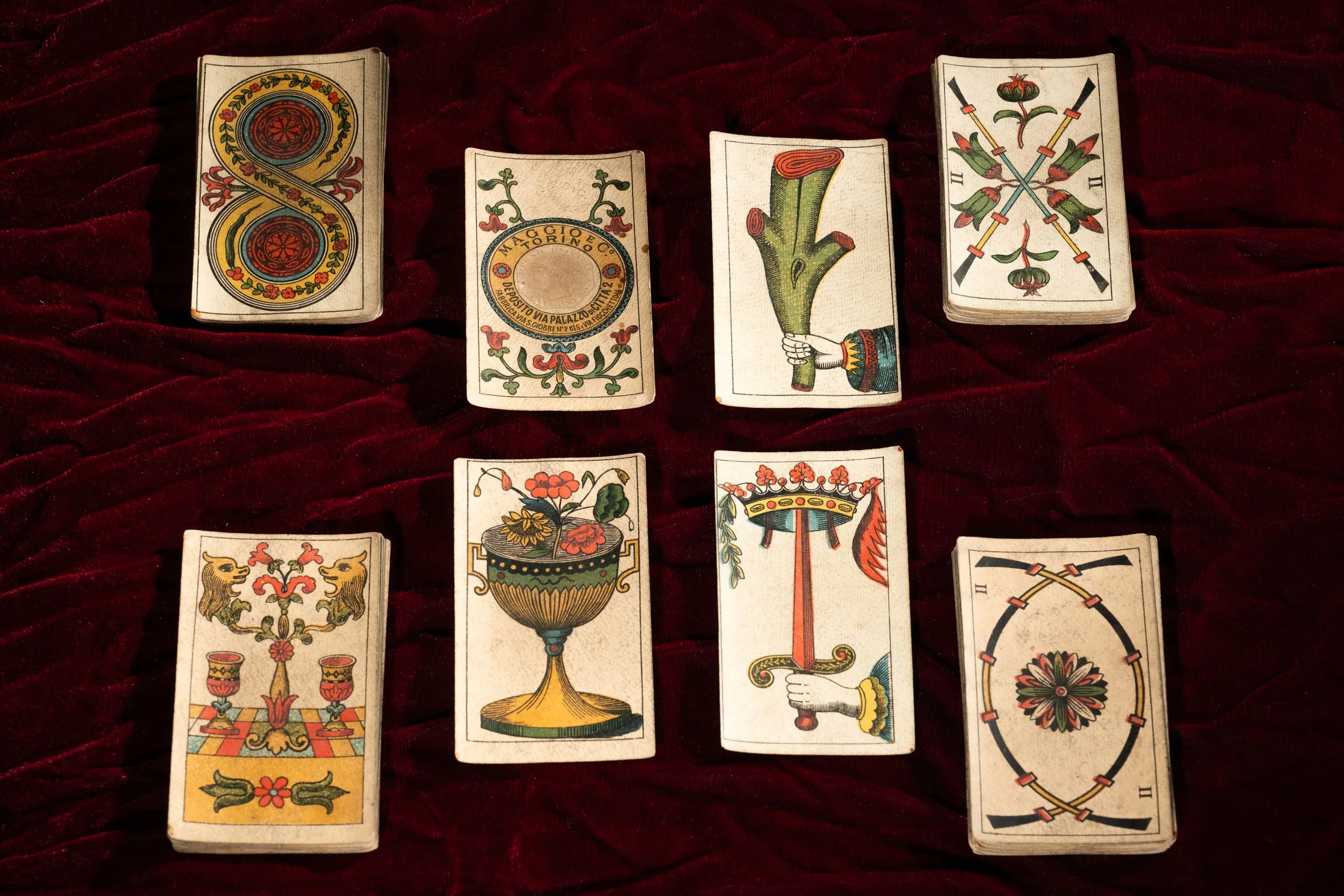 Image 1 of 7
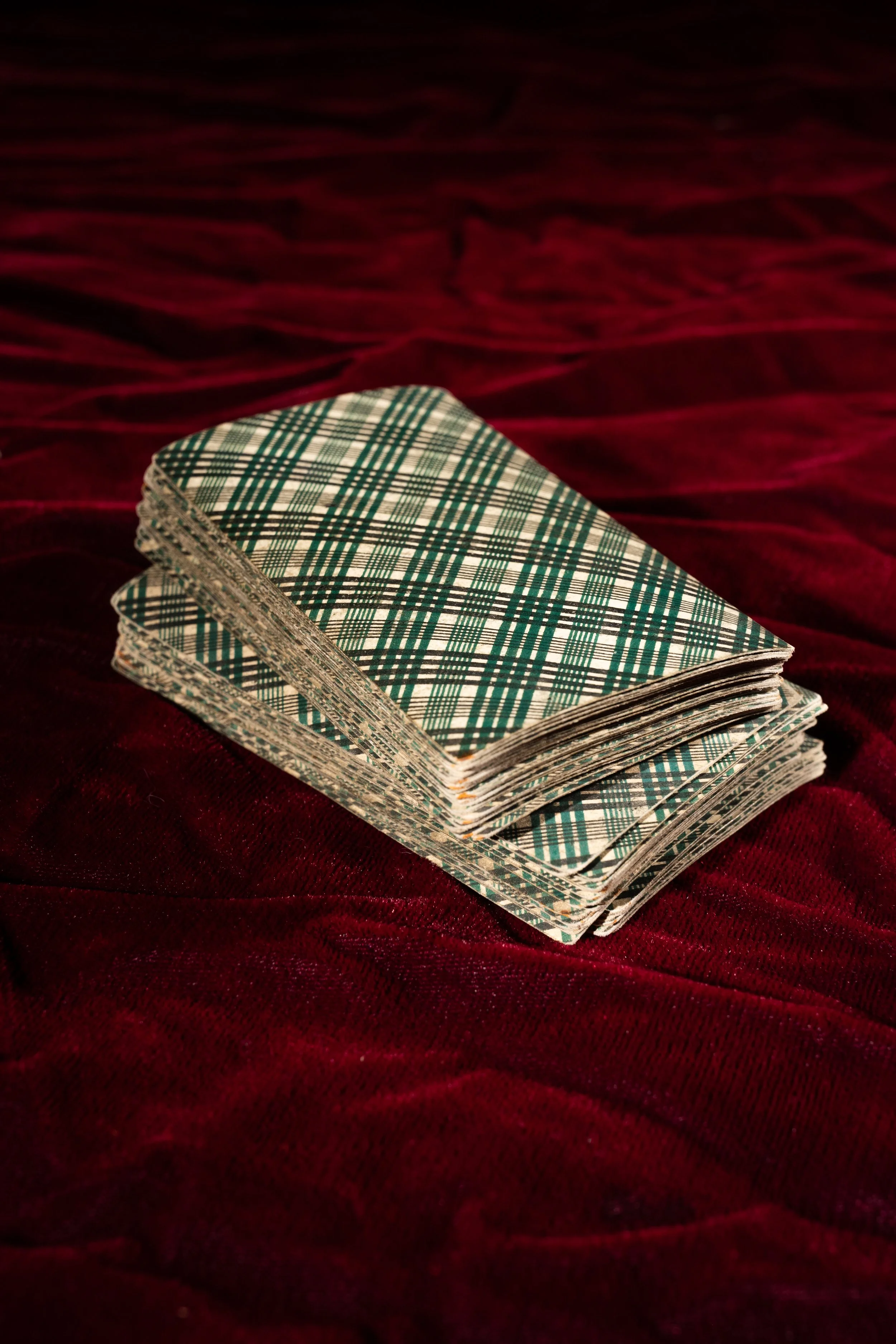 Image 2 of 7
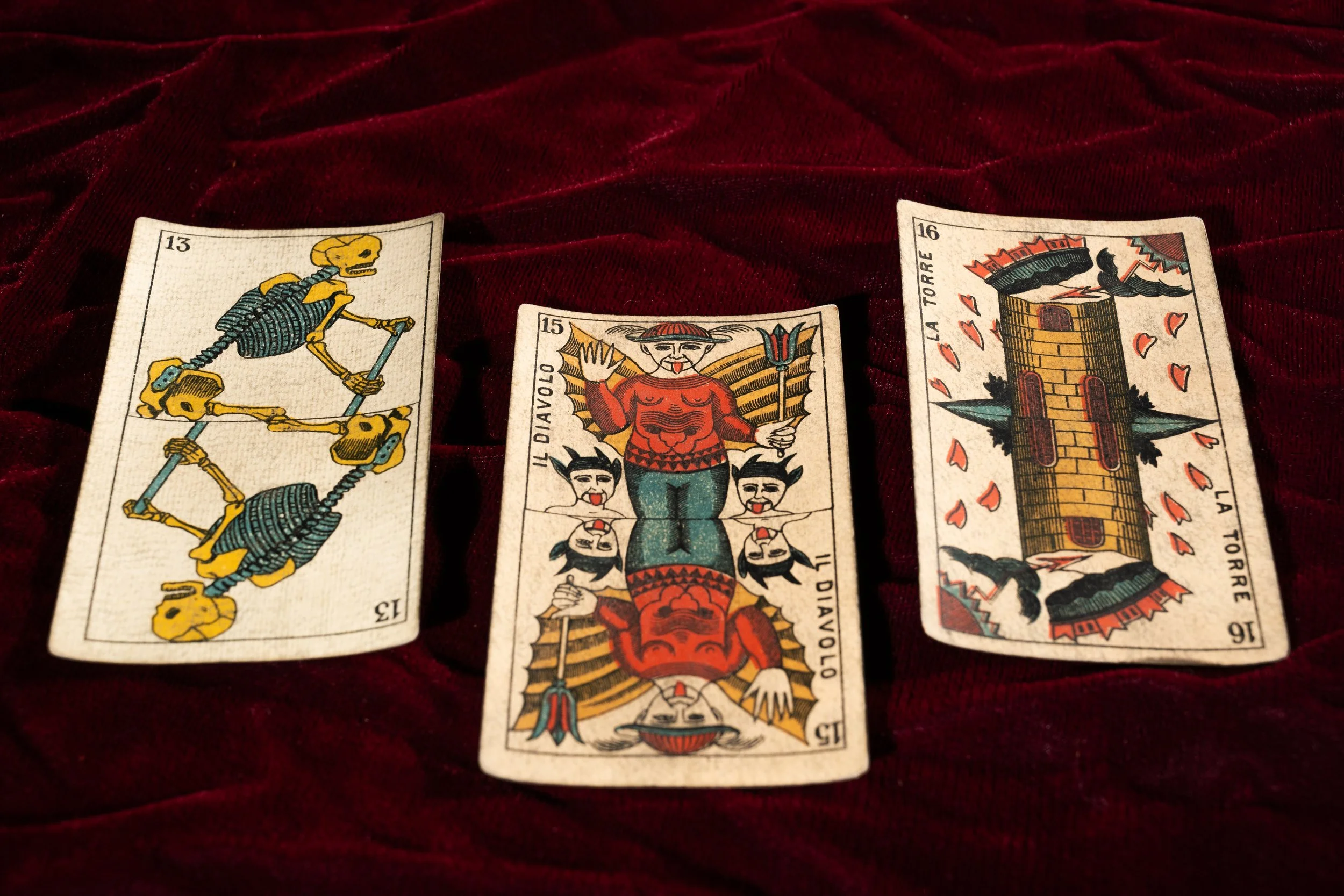 Image 3 of 7
 Image 4 of 7
 Image 5 of 7
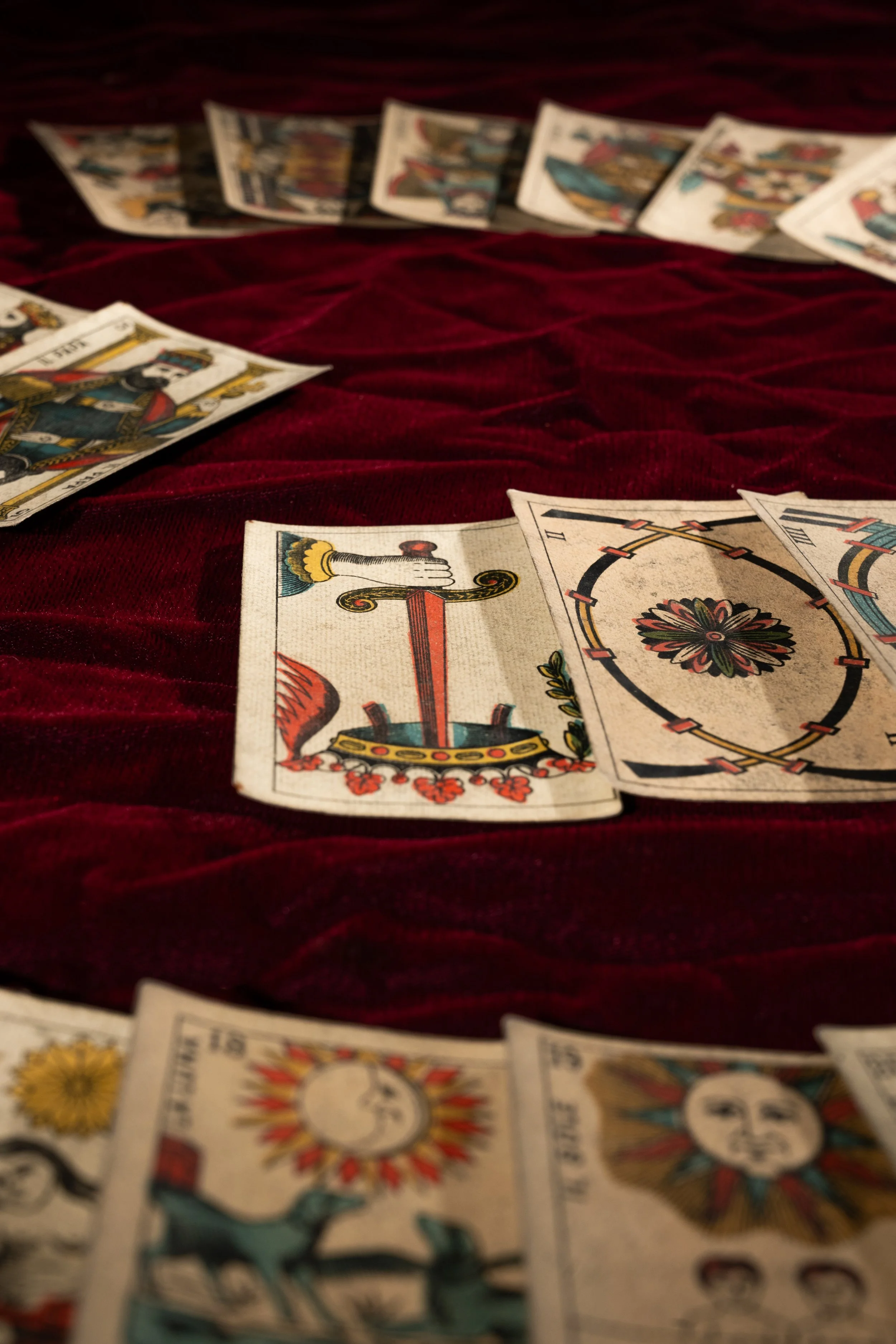 Image 6 of 7
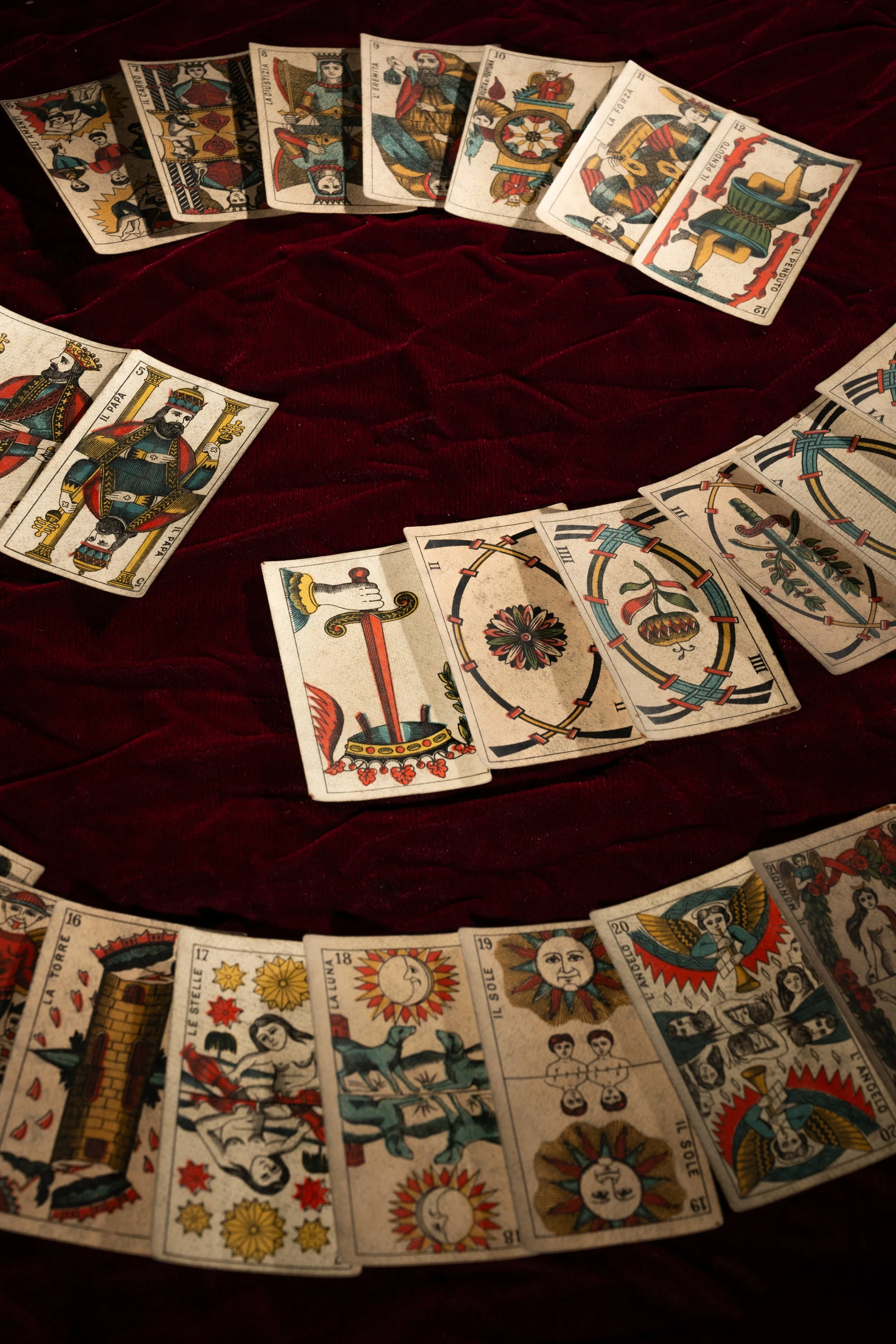 Image 7 of 7