
 Image 1 of 5
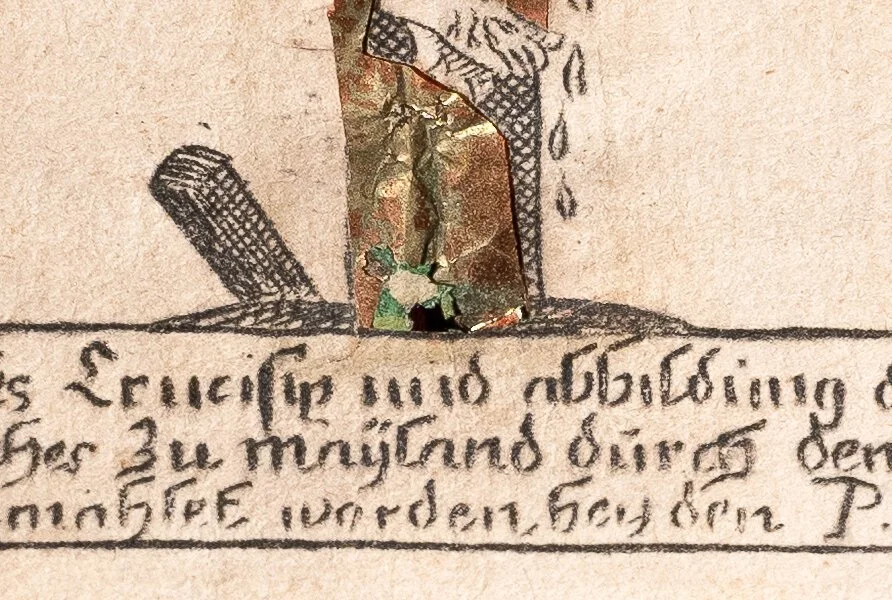 Image 2 of 5
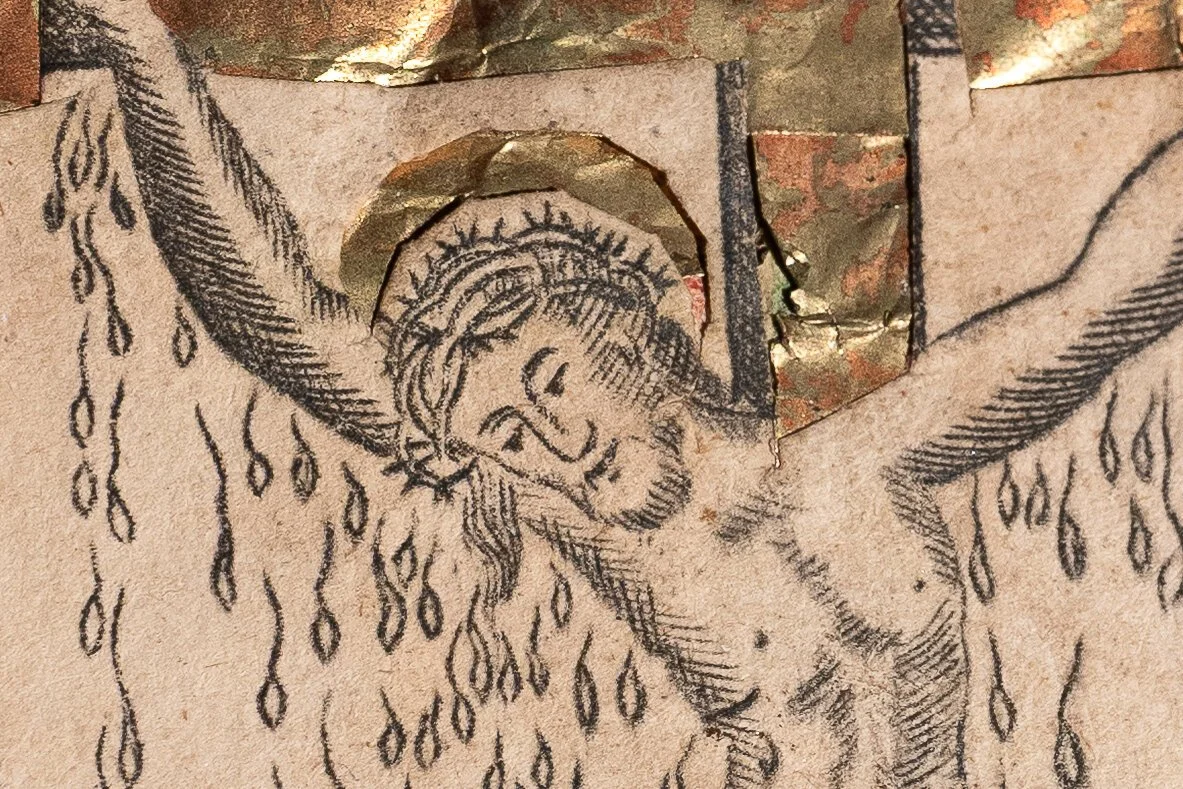 Image 3 of 5
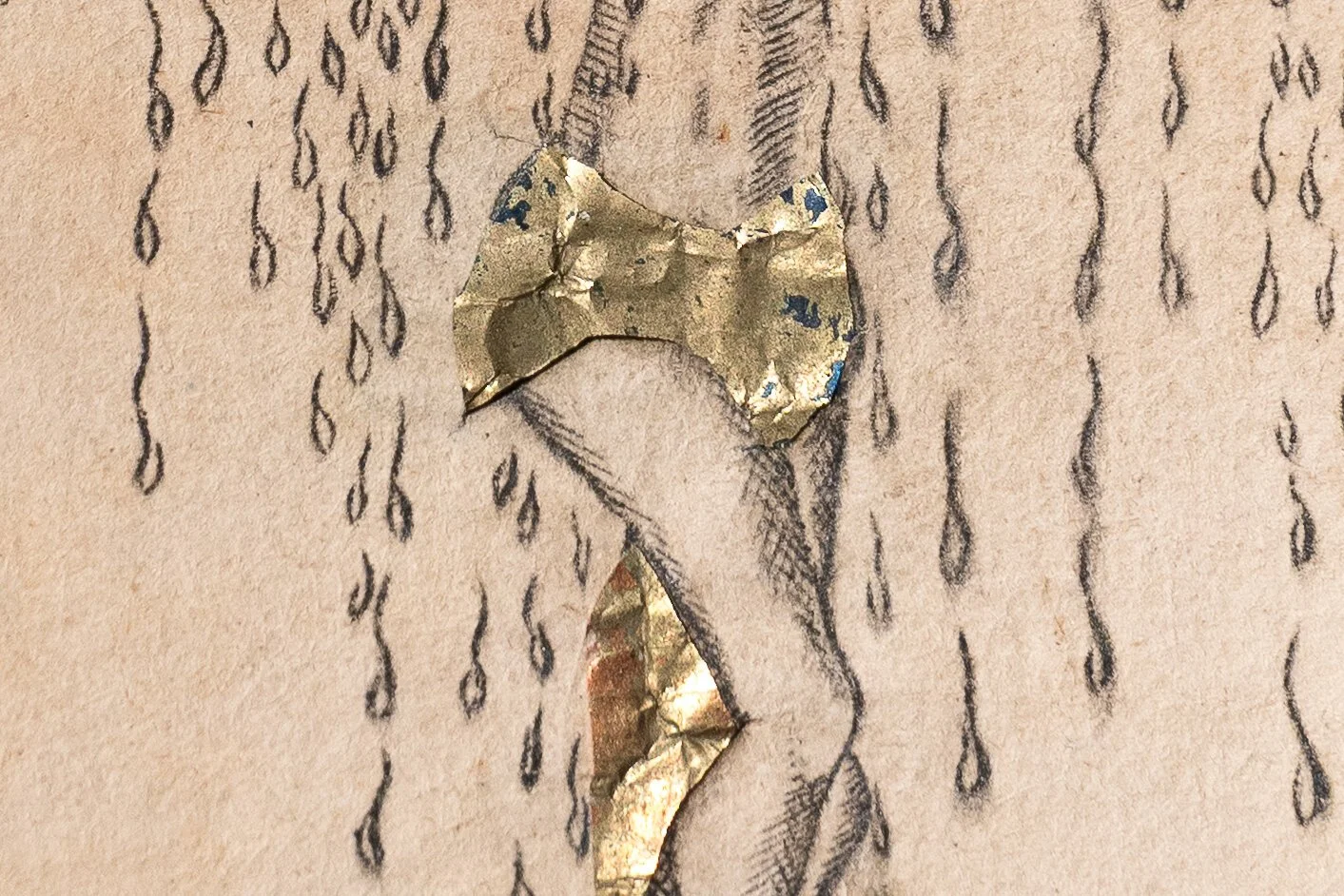 Image 4 of 5
 Image 5 of 5
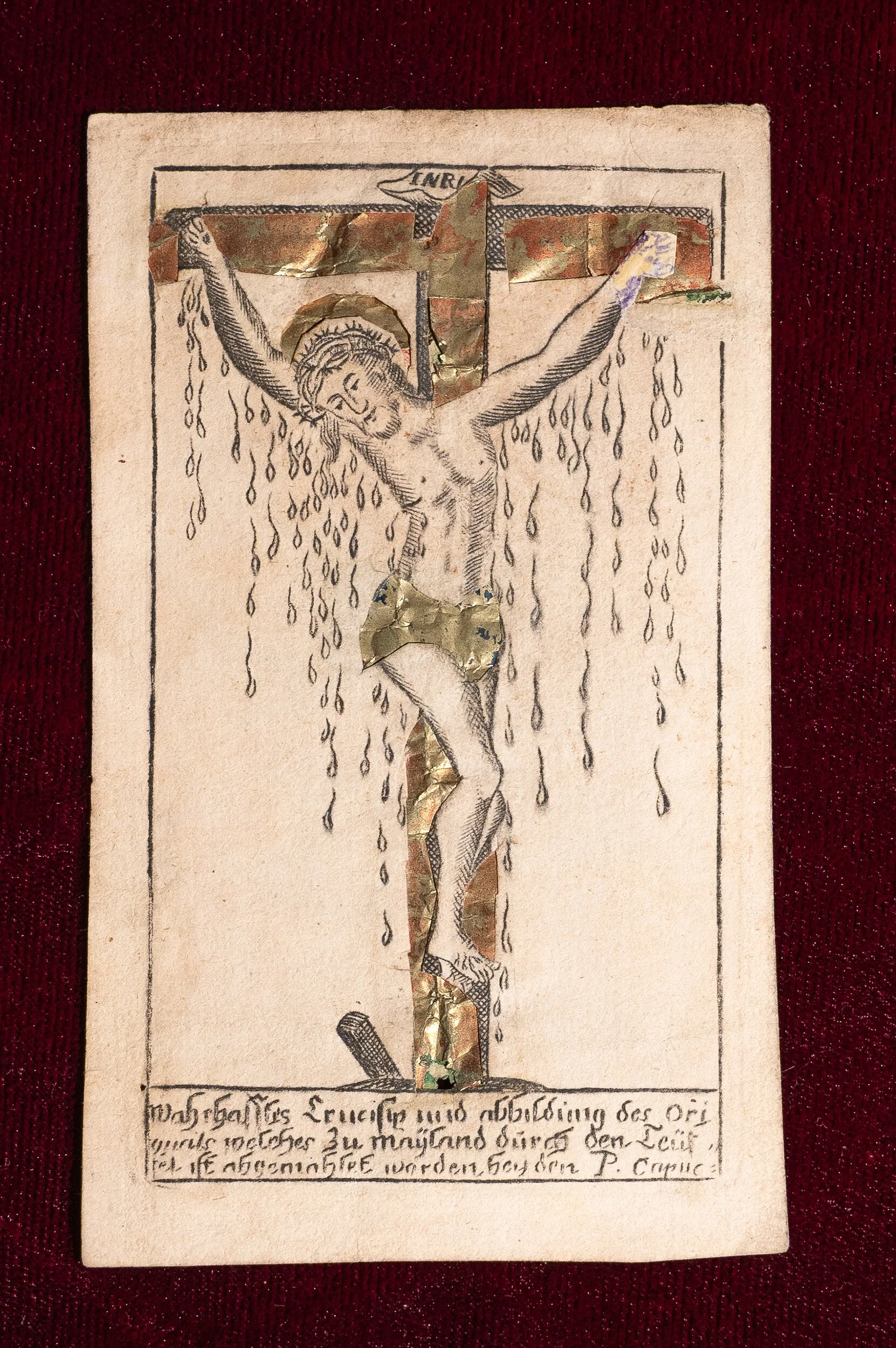
"True crucifix and image of the original, which was painted by the Devil in Milan, with the Capuchin Fathers." That is the whole caption, engraved in German under this small devotional print. It asks us to believe that the Capuchin friars of Milan kept a painting of the Crucifixion by Satan's own hand, and that this is a faithful copy of it.
The story behind the claim was told across Catholic Europe. It is first recorded in Spain in the thirteenth century, and people were still telling it in the nineteenth. In the version told at Rome, a young man who ran through his fortune decided to sell his soul, and he agreed to sign on one condition. Was the Devil present at the Crucifixion? He was. Then he could paint exactly what he saw. The Devil hesitated for a long time and finally produced the picture. The young man took one look at the bleeding body on the cross and fell to his knees, and the Devil vanished, leaving the contract and the painting behind. The Holy Office took charge of the painting and a copy went to the Capuchins of Rome. Our caption moves the painting to Milan and keeps the Capuchins.
The story traveled a long way. A painting made in Bolivia in the late 1700s, now in the Denver Art Museum, tells it in an inscription, with a woman in the young man's place and the original in Malta. There the Devil resists at first, afraid that the sight will convert her, and she is converted. This is why the caption can call our print a true crucifix. Catholic Europe prized true likenesses of Christ, the cloth of Veronica above all, and here was one from an eyewitness. Nobody would call the Devil a friendly witness, but the scriptures say he was there.
In Germany the story attached itself to Doctor Faust, the magician who signed his soul over to the Devil. In an old ballad, printed on a broadside at Cologne and collected in 1806 in Des Knaben Wunderhorn, the great anthology of German folk song, Faust came to Jerusalem on Good Friday. He sent his devil Mephistopheles for three ells of linen and ordered him to paint Christ on the cross, with all five wounds and the title over his head. If he painted it right, Faust said, he could go free. The Devil begged to be let off, because he could not write the holy name. The scene was on the stage by 1657. A painting of that year, now in the Germanisches Nationalmuseum in Nuremberg, is inscribed as a true image of the crucified Savior as Doctor Faust presented it "with his black art" in a play. Goethe, who published the first part of his own Faust in 1808, reviewed the Wunderhorn and gave the ballad one line: "Deep and thorough motifs, which could perhaps be better presented."
Our print shows the bleeding figure of the story. Christ hangs under the title INRI, and blood falls from his arms and body in heavy drops that fill the sheet. It is a startling little image, and it has been made to shine. The cross, the halo and the loincloth were cut away and the gaps backed with metal foil, so that the picture glitters as it moves in the light. Small devotional pictures worked up in this way, with cut-outs, applied fabric or foil, were popular in the Catholic German-speaking lands in the eighteenth century. Pictures like this were usually kept in a prayer book.
[Devotional engraving]. Wahrhafftes Crucifix und abbildung des Originals welches zu Maÿland durch den Teuffel ist abgemahlet worden bey den P. Capuc. [Southern Germany or Austria]: [n.p.], [second half of the 18th century].
Physical Description: Engraving, approximately 12.3 x 7.5 cm, cut out in places and backed with metal foil, laid down on paper.
Condition: Light toning and staining. An old, rough repair to Christ's left hand. A small hole at the foot of the cross.