The Secret Doctrine is the foundation stone of modern Theosophy and one of the most ambitious books of the nineteenth-century occult revival: Madame Blavatsky's attempt, as her title page announces, at "the synthesis of science, religion, and philosophy." Built around the cryptic "Stanzas of Dzyan," which she claimed to translate from an archaic manuscript older than any known language, the work moves from the birth of the cosmos (Cosmogenesis) to the birth and evolution of humanity (Anthropogenesis), drawing Hindu, Buddhist, Egyptian, Kabbalistic, and Hermetic sources into a single vast scheme. Few books have been more influential on what came after, from the Golden Dawn to the New Age, and few are read more closely by those who take it seriously. This copy was read about as closely as a book can be.
What makes this copy desirable is the reader. The volume is annotated in the hand of Phiroz Mehta (1902-1994), the Parsi-born, Cambridge-educated philosopher of religion who, from running the Colombo branch of the Theosophical Society at sixteen to leading his own circle of seekers in South London late in life, spent a lifetime inside exactly this material. Mehta worked the text in ink, ruling and underlining key passages, marking a striking meditation on time and memory with a firm red "N.B.," and pressing Blavatsky's claims against his own deep reading of Sanskrit sources, the Kabbalah, and scripture. Beside her account of cosmic time he tracks the argument; against the "Etymology of Sacrament" pages he follows her tangled Hebrew wordplay. The marginalia are those of a working scholar arguing with the author, not a passive admirer.
The most remarkable feature is at the back. Across the rear endpapers and a tipped-in leaf Mehta built his own running subject-index to the book, in blue and black ink with occasional red, a private concordance to the ideas that mattered to him. The entries read like a map of his mind: "Akāśa: the origin of existence... limitless Void & Conditioned Fulness, I.8"; "Kumāras: 4 exoteric & 3 esoteric, I.456/7"; "The Fall," "No-Thing," "Rebirth," "Soma: the fruit of the Tree of Knowledge," "Prometheus," "The Zodiac: antiquity: Kali Yuga's beginning." One long note distils a whole doctrine: "Space [= Akasha] is neither a 'limitless void' nor a 'conditioned fulness' but both." To turn these pages is to watch a serious twentieth-century mind metabolize Blavatsky step by step.
A word on the edition itself, plainly stated. This is the well-known photographic facsimile produced by the Theosophy Company of Los Angeles, the publishing arm of the United Lodge of Theosophists, which reproduces the original 1888 London edition page for page and binds Blavatsky's two volumes together in one for the convenience of students. The reproduced 1888 title page is therefore part of the facsimile, not evidence of a first edition. The Theosophy Company facsimile is itself a respected and faithful reading text, prized by students precisely because it preserves the original pagination, which is what makes Mehta's page-referenced index usable. It is bound in dark blue cloth, the upper cover blocked in gilt with the seal of the Theosophical Society, the serpent biting its tail enclosing the interlaced triangles, the ankh, and the swastika, and the spine lettered "THE SECRET DOCTRINE / BLAVATSKY / VOLS. I & II / COSMOGENESIS / ANTHROPOGENESIS / THEOSOPHY CO."
The book comes with the printed slip of The Phiroz Mehta Trust noting that it was "Annotated by Phiroz Mehta," which ties the marginalia firmly to him and to the dispersal of his library. The binding is honest and worked: the cloth rubbed and frayed at the spine ends and corners and the endpaper edges chipped, the text block sound and clean apart from Mehta's notes. It would make a fine cornerstone for a collection of Theosophy, of Blavatsky, or of twentieth-century comparative religion, valued for the man who held it as much as for the book he read.
BLAVATSKY, Helena Petrovna (1831-1891). The Secret Doctrine: The Synthesis of Science, Religion, and Philosophy. Vols. I (Cosmogenesis) and II (Anthropogenesis), bound in one. Los Angeles: The Theosophy Company, photographic facsimile of the original London edition of 1888 [printing n.d., mid-20th century]. The reproduced title pages read: London: The Theosophical Publishing Company Limited; New York: William Q. Judge; Adyar, Madras: The Manager of the Theosophist, 1888.
Physical Description: Thick 8vo, both original volumes reproduced and bound together in one. A page-for-page photographic facsimile preserving the original 1888 pagination (Vol. I Cosmogenesis; Vol. II Anthropogenesis, with the separate Vol. II title page reproduced internally).
Binding: Publisher's dark blue cloth, upper cover blocked in gilt with the seal of the Theosophical Society (ouroboros enclosing interlaced triangles, ankh, and swastika); spine lettered in gilt and imprinted "THEOSOPHY CO." at the foot.
Condition: Good, as a worked study copy. Cloth rubbed and frayed at spine ends and corners; with chipping to the endpaper edges; text block sound and clean. Extensively annotated in ink throughout by Phiroz Mehta, with his manuscript subject-index to the rear endpapers and a tipped-in leaf.
Provenance: Phiroz Mehta (1902-1994), philosopher of religion, with his ink annotations throughout; accompanied by the printed slip of The Phiroz Mehta Trust (47 Lillian Road, London SW13) recording that the book was annotated by him. Subsequently acquired by Esoterica Rare Books.
The Secret Doctrine is the foundation stone of modern Theosophy and one of the most ambitious books of the nineteenth-century occult revival: Madame Blavatsky's attempt, as her title page announces, at "the synthesis of science, religion, and philosophy." Built around the cryptic "Stanzas of Dzyan," which she claimed to translate from an archaic manuscript older than any known language, the work moves from the birth of the cosmos (Cosmogenesis) to the birth and evolution of humanity (Anthropogenesis), drawing Hindu, Buddhist, Egyptian, Kabbalistic, and Hermetic sources into a single vast scheme. Few books have been more influential on what came after, from the Golden Dawn to the New Age, and few are read more closely by those who take it seriously. This copy was read about as closely as a book can be.
What makes this copy desirable is the reader. The volume is annotated in the hand of Phiroz Mehta (1902-1994), the Parsi-born, Cambridge-educated philosopher of religion who, from running the Colombo branch of the Theosophical Society at sixteen to leading his own circle of seekers in South London late in life, spent a lifetime inside exactly this material. Mehta worked the text in ink, ruling and underlining key passages, marking a striking meditation on time and memory with a firm red "N.B.," and pressing Blavatsky's claims against his own deep reading of Sanskrit sources, the Kabbalah, and scripture. Beside her account of cosmic time he tracks the argument; against the "Etymology of Sacrament" pages he follows her tangled Hebrew wordplay. The marginalia are those of a working scholar arguing with the author, not a passive admirer.
The most remarkable feature is at the back. Across the rear endpapers and a tipped-in leaf Mehta built his own running subject-index to the book, in blue and black ink with occasional red, a private concordance to the ideas that mattered to him. The entries read like a map of his mind: "Akāśa: the origin of existence... limitless Void & Conditioned Fulness, I.8"; "Kumāras: 4 exoteric & 3 esoteric, I.456/7"; "The Fall," "No-Thing," "Rebirth," "Soma: the fruit of the Tree of Knowledge," "Prometheus," "The Zodiac: antiquity: Kali Yuga's beginning." One long note distils a whole doctrine: "Space [= Akasha] is neither a 'limitless void' nor a 'conditioned fulness' but both." To turn these pages is to watch a serious twentieth-century mind metabolize Blavatsky step by step.
A word on the edition itself, plainly stated. This is the well-known photographic facsimile produced by the Theosophy Company of Los Angeles, the publishing arm of the United Lodge of Theosophists, which reproduces the original 1888 London edition page for page and binds Blavatsky's two volumes together in one for the convenience of students. The reproduced 1888 title page is therefore part of the facsimile, not evidence of a first edition. The Theosophy Company facsimile is itself a respected and faithful reading text, prized by students precisely because it preserves the original pagination, which is what makes Mehta's page-referenced index usable. It is bound in dark blue cloth, the upper cover blocked in gilt with the seal of the Theosophical Society, the serpent biting its tail enclosing the interlaced triangles, the ankh, and the swastika, and the spine lettered "THE SECRET DOCTRINE / BLAVATSKY / VOLS. I & II / COSMOGENESIS / ANTHROPOGENESIS / THEOSOPHY CO."
The book comes with the printed slip of The Phiroz Mehta Trust noting that it was "Annotated by Phiroz Mehta," which ties the marginalia firmly to him and to the dispersal of his library. The binding is honest and worked: the cloth rubbed and frayed at the spine ends and corners and the endpaper edges chipped, the text block sound and clean apart from Mehta's notes. It would make a fine cornerstone for a collection of Theosophy, of Blavatsky, or of twentieth-century comparative religion, valued for the man who held it as much as for the book he read.
BLAVATSKY, Helena Petrovna (1831-1891). The Secret Doctrine: The Synthesis of Science, Religion, and Philosophy. Vols. I (Cosmogenesis) and II (Anthropogenesis), bound in one. Los Angeles: The Theosophy Company, photographic facsimile of the original London edition of 1888 [printing n.d., mid-20th century]. The reproduced title pages read: London: The Theosophical Publishing Company Limited; New York: William Q. Judge; Adyar, Madras: The Manager of the Theosophist, 1888.
Physical Description: Thick 8vo, both original volumes reproduced and bound together in one. A page-for-page photographic facsimile preserving the original 1888 pagination (Vol. I Cosmogenesis; Vol. II Anthropogenesis, with the separate Vol. II title page reproduced internally).
Binding: Publisher's dark blue cloth, upper cover blocked in gilt with the seal of the Theosophical Society (ouroboros enclosing interlaced triangles, ankh, and swastika); spine lettered in gilt and imprinted "THEOSOPHY CO." at the foot.
Condition: Good, as a worked study copy. Cloth rubbed and frayed at spine ends and corners; with chipping to the endpaper edges; text block sound and clean. Extensively annotated in ink throughout by Phiroz Mehta, with his manuscript subject-index to the rear endpapers and a tipped-in leaf.
Provenance: Phiroz Mehta (1902-1994), philosopher of religion, with his ink annotations throughout; accompanied by the printed slip of The Phiroz Mehta Trust (47 Lillian Road, London SW13) recording that the book was annotated by him. Subsequently acquired by Esoterica Rare Books.

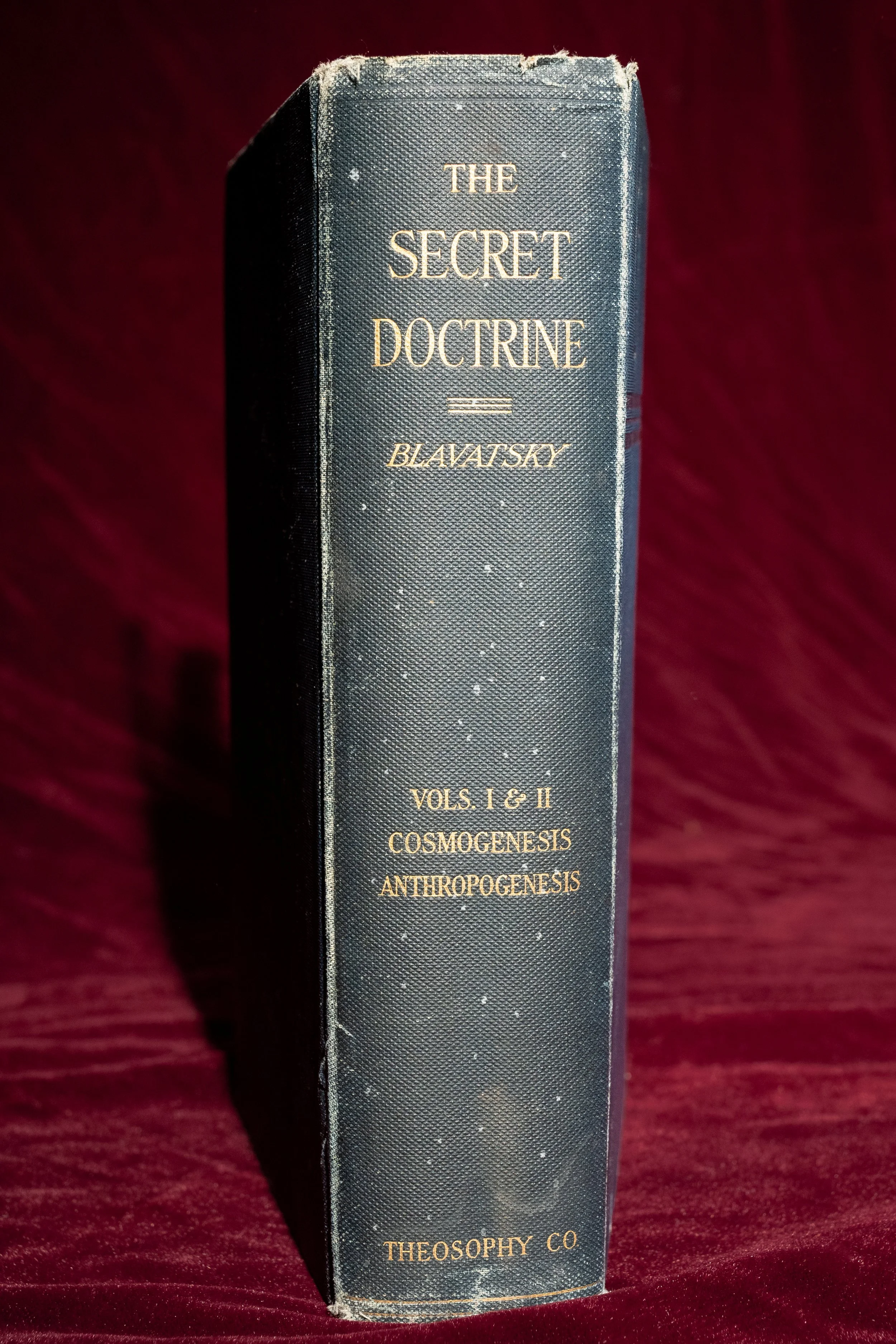 Image 1 of 15
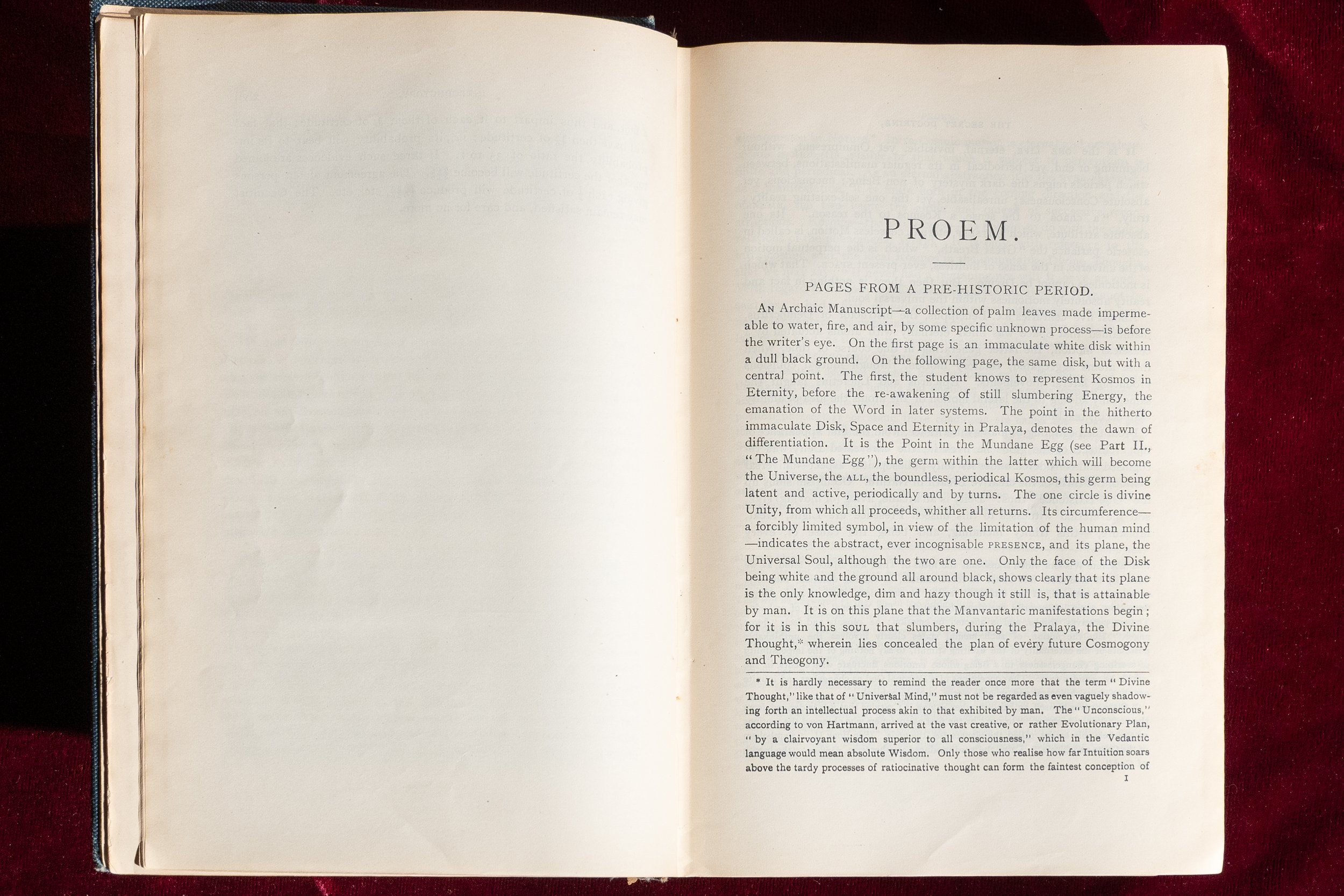 Image 2 of 15
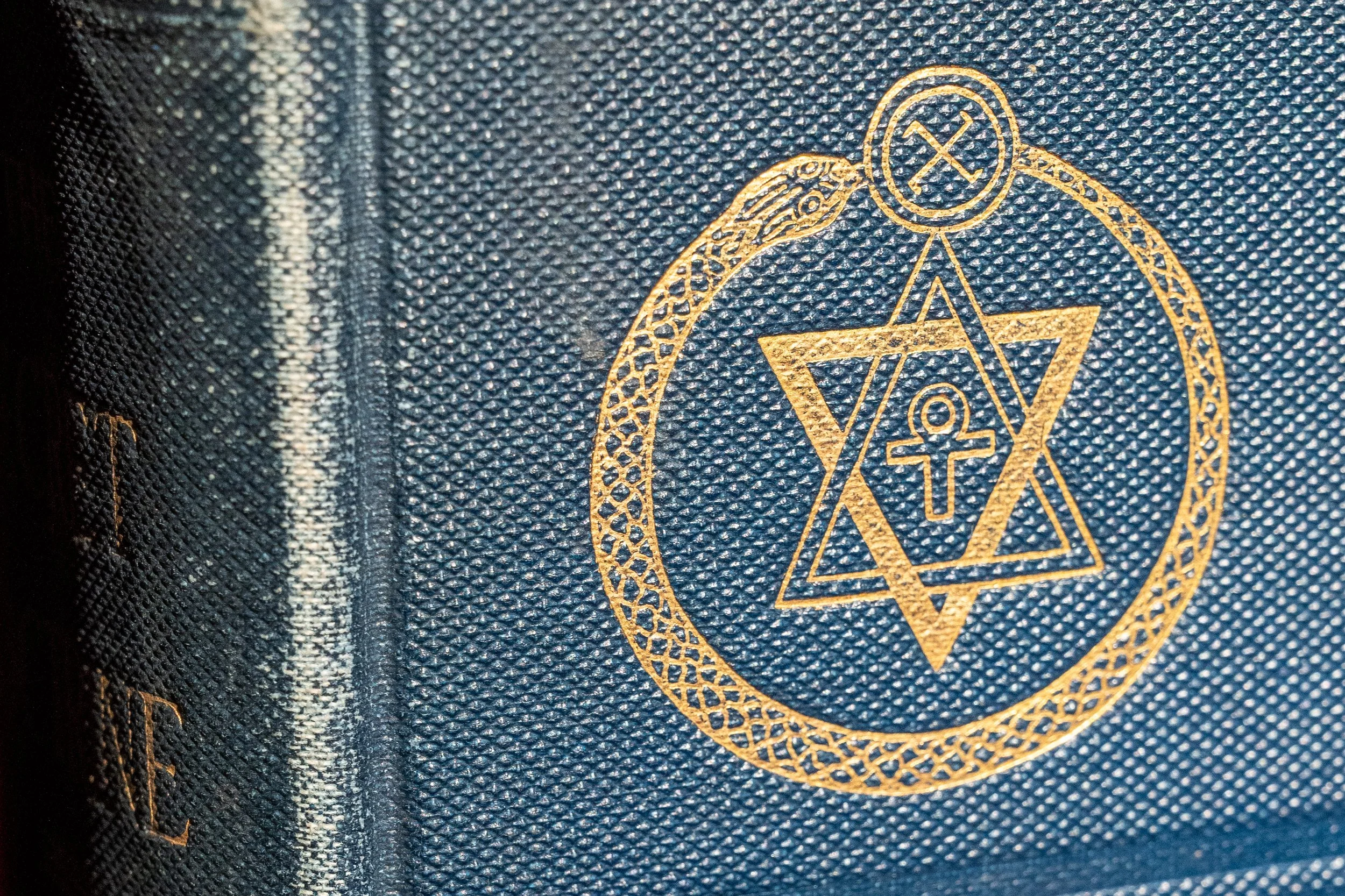 Image 3 of 15
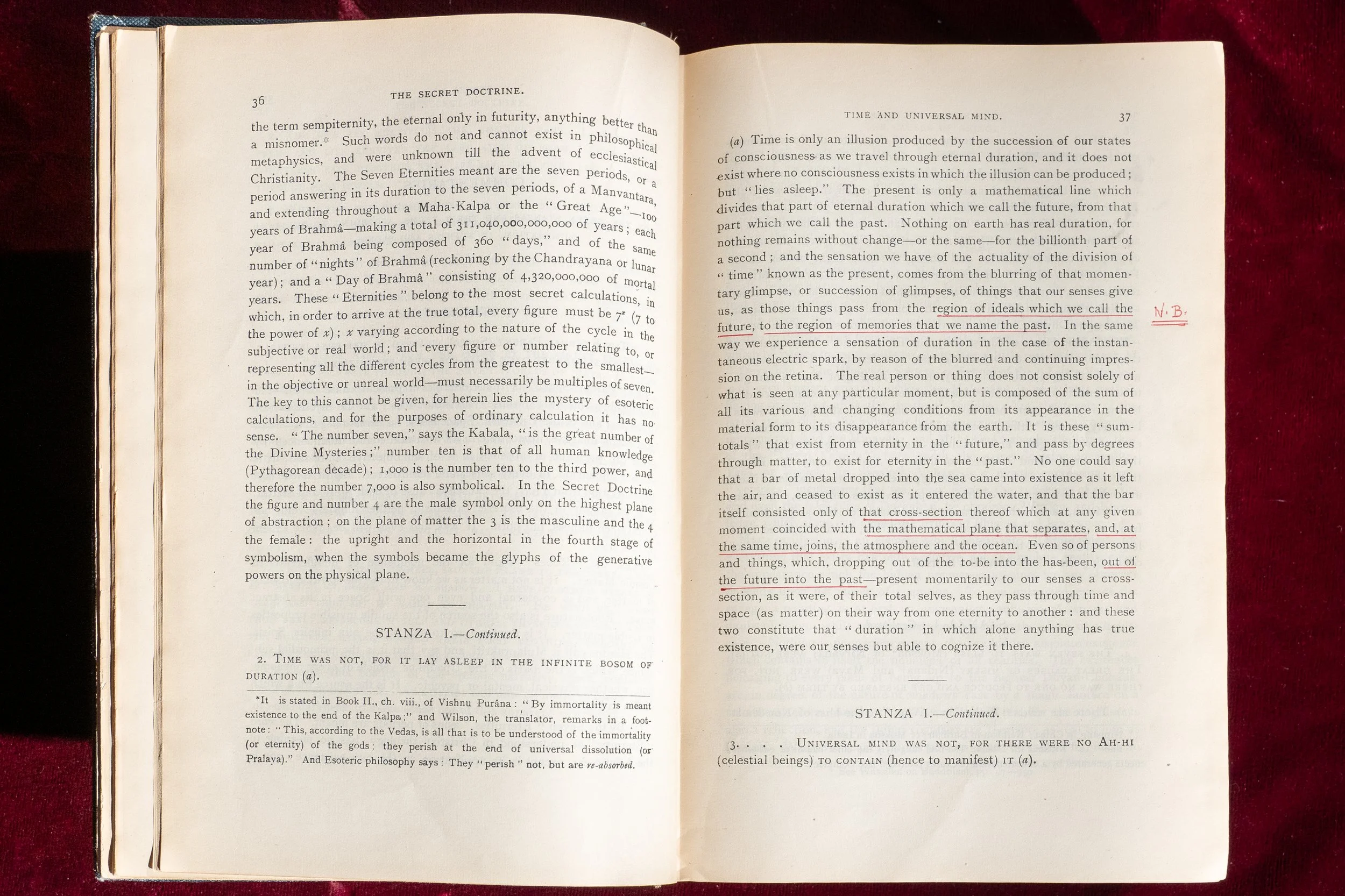 Image 4 of 15
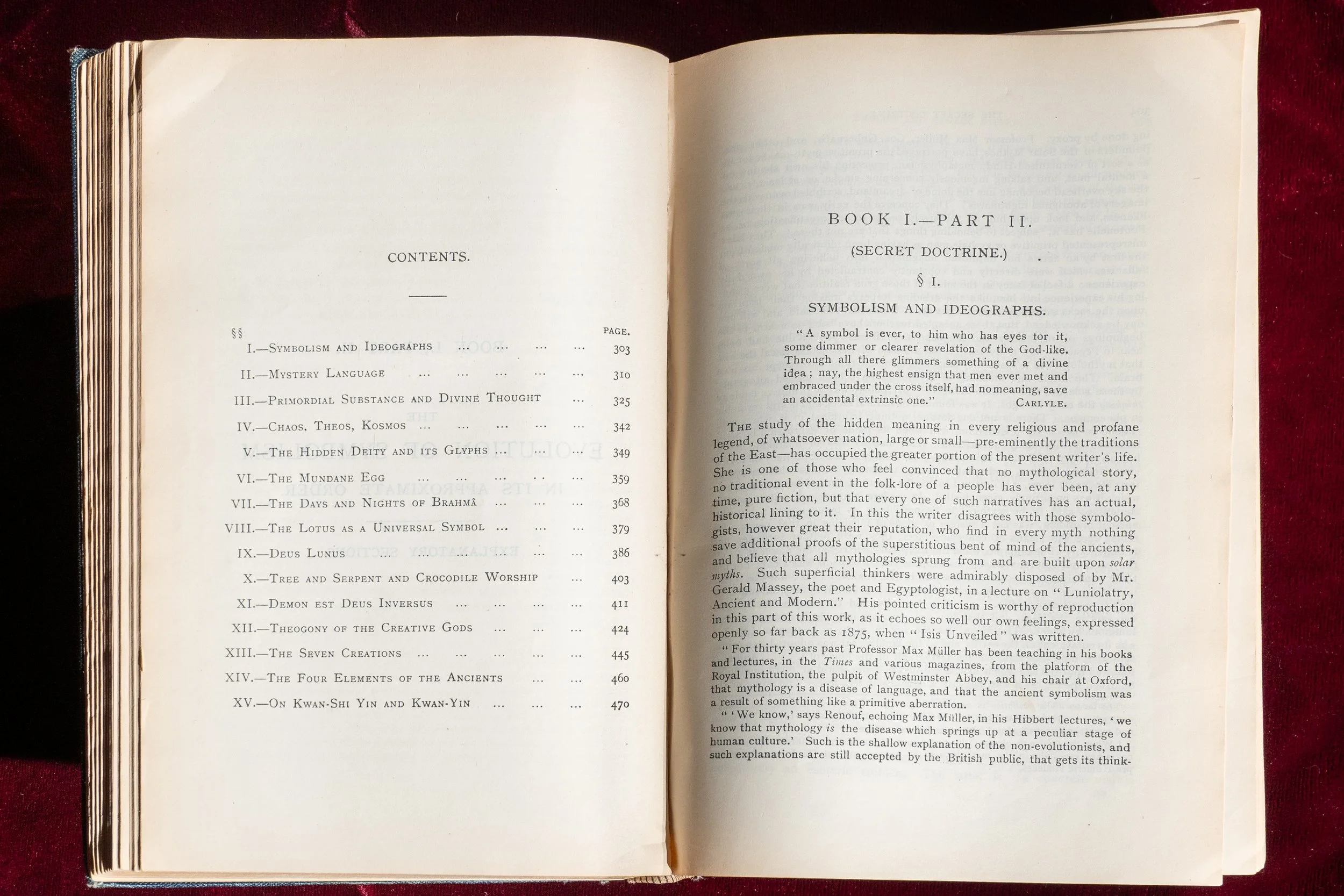 Image 5 of 15
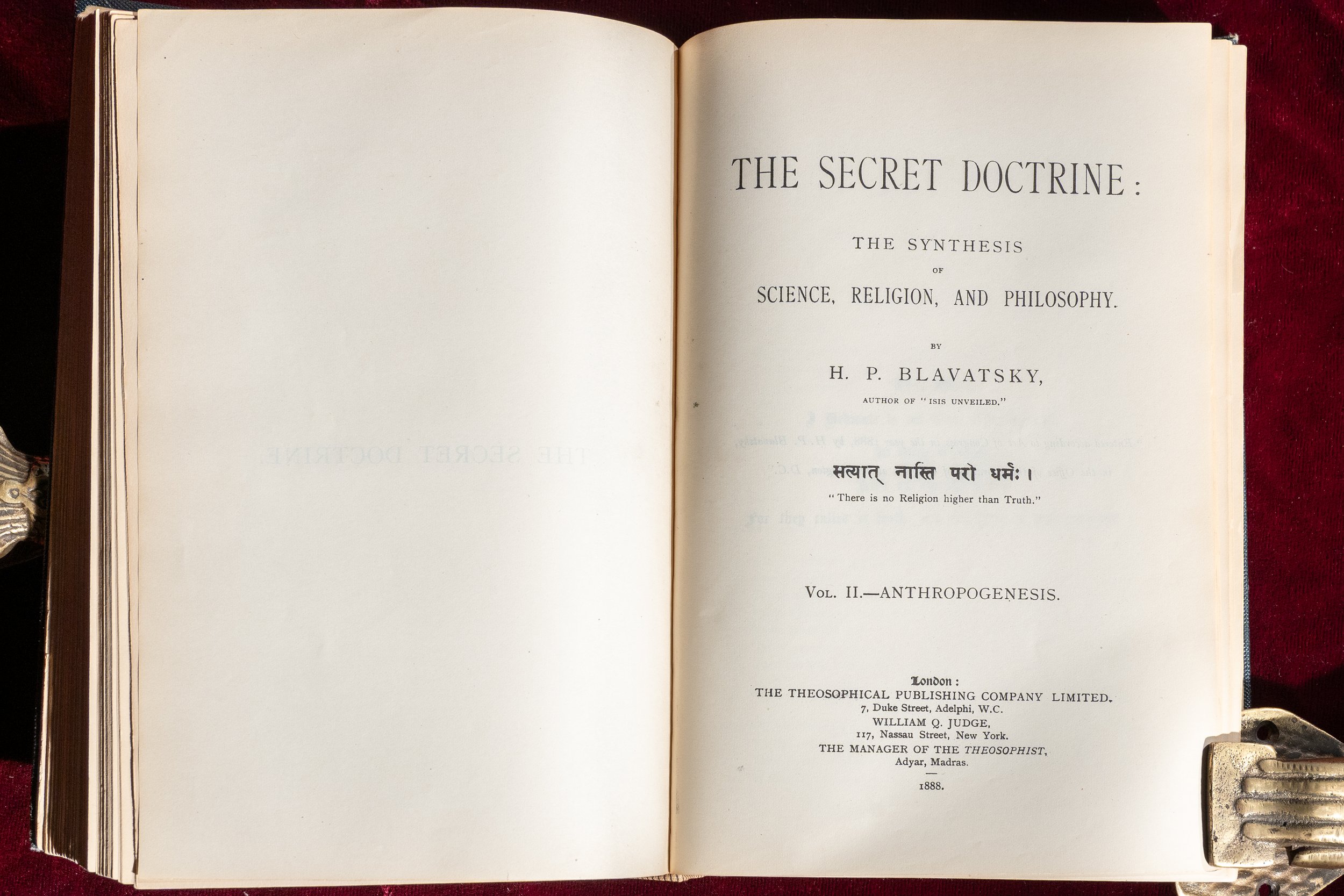 Image 6 of 15
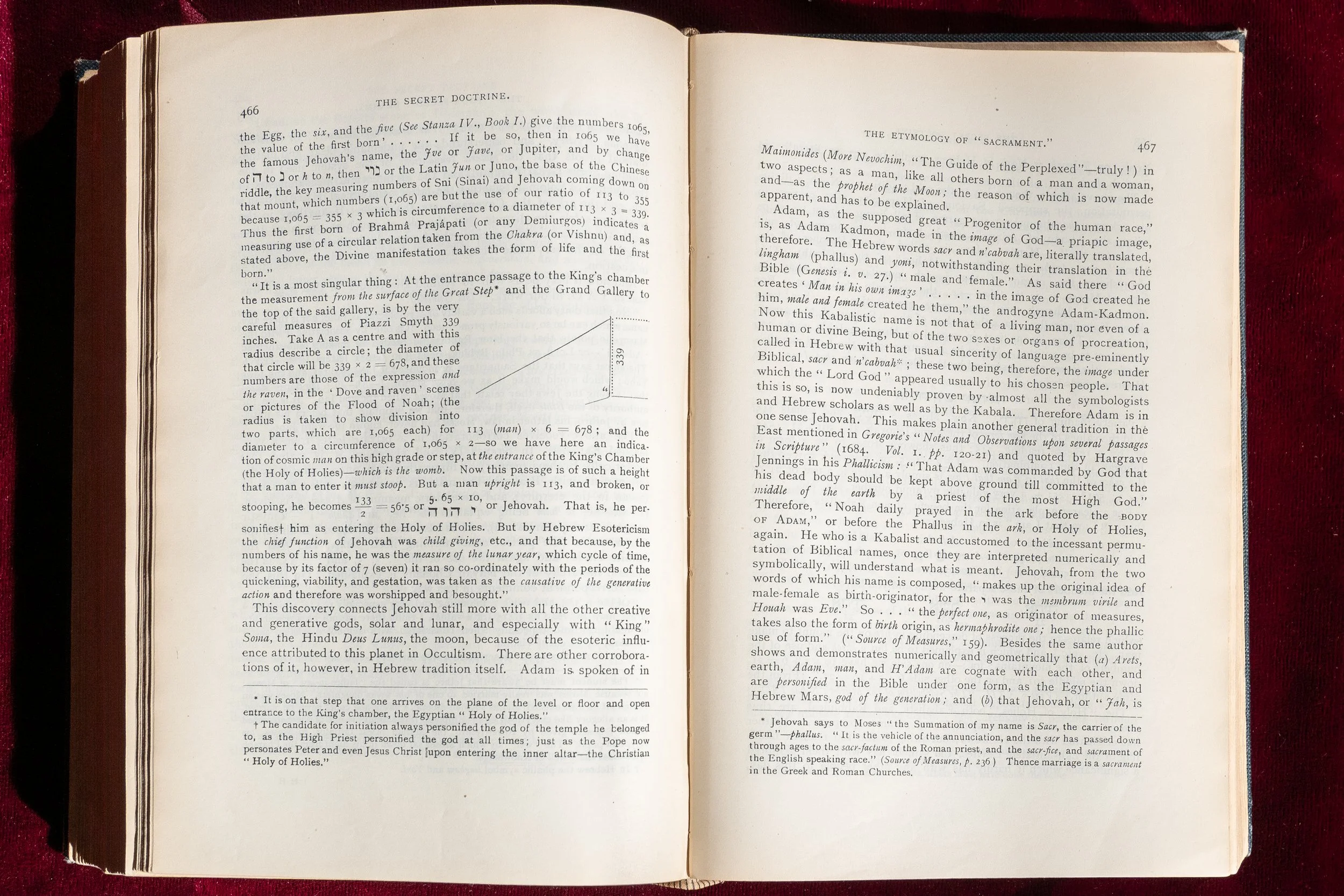 Image 7 of 15
 Image 8 of 15
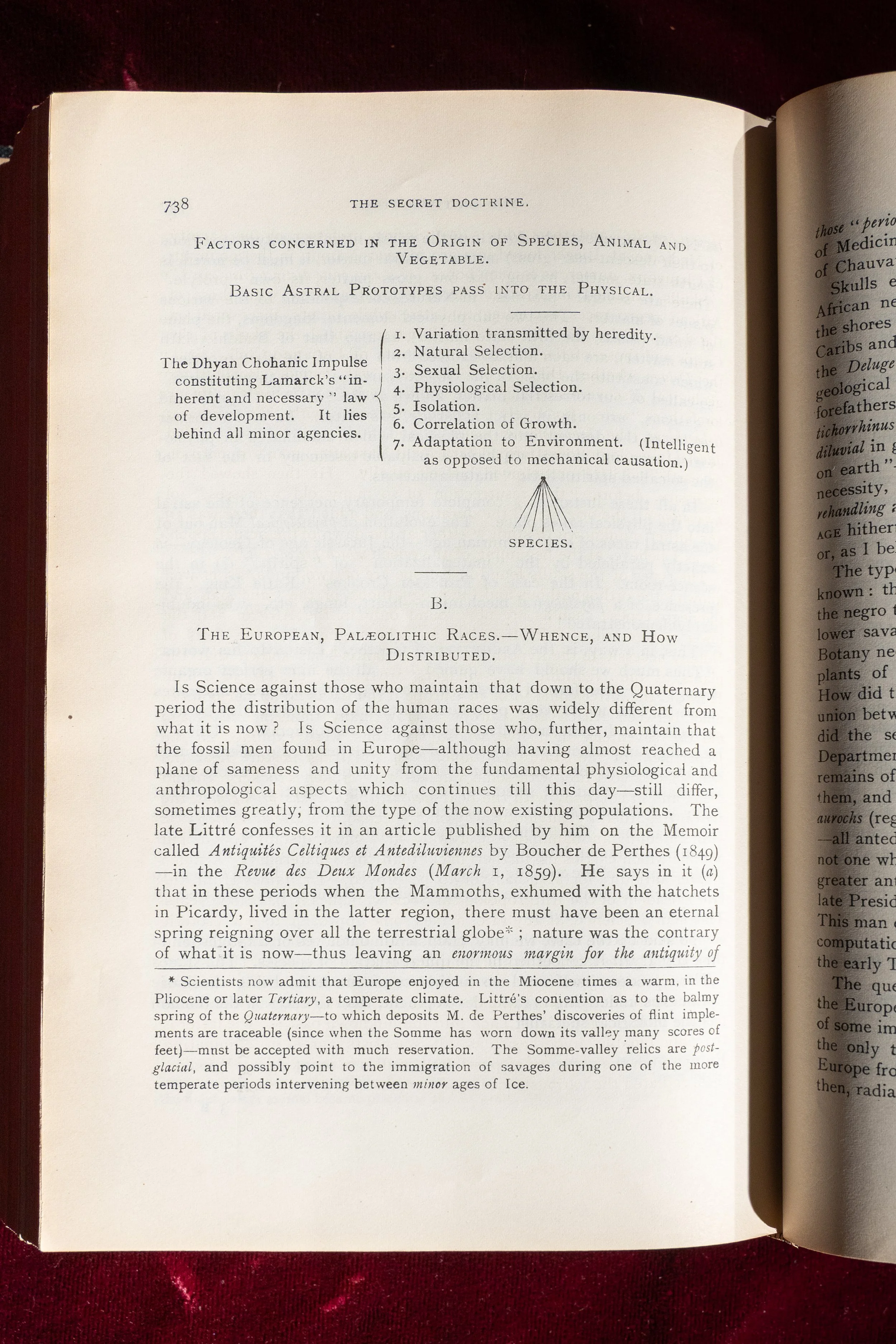 Image 9 of 15
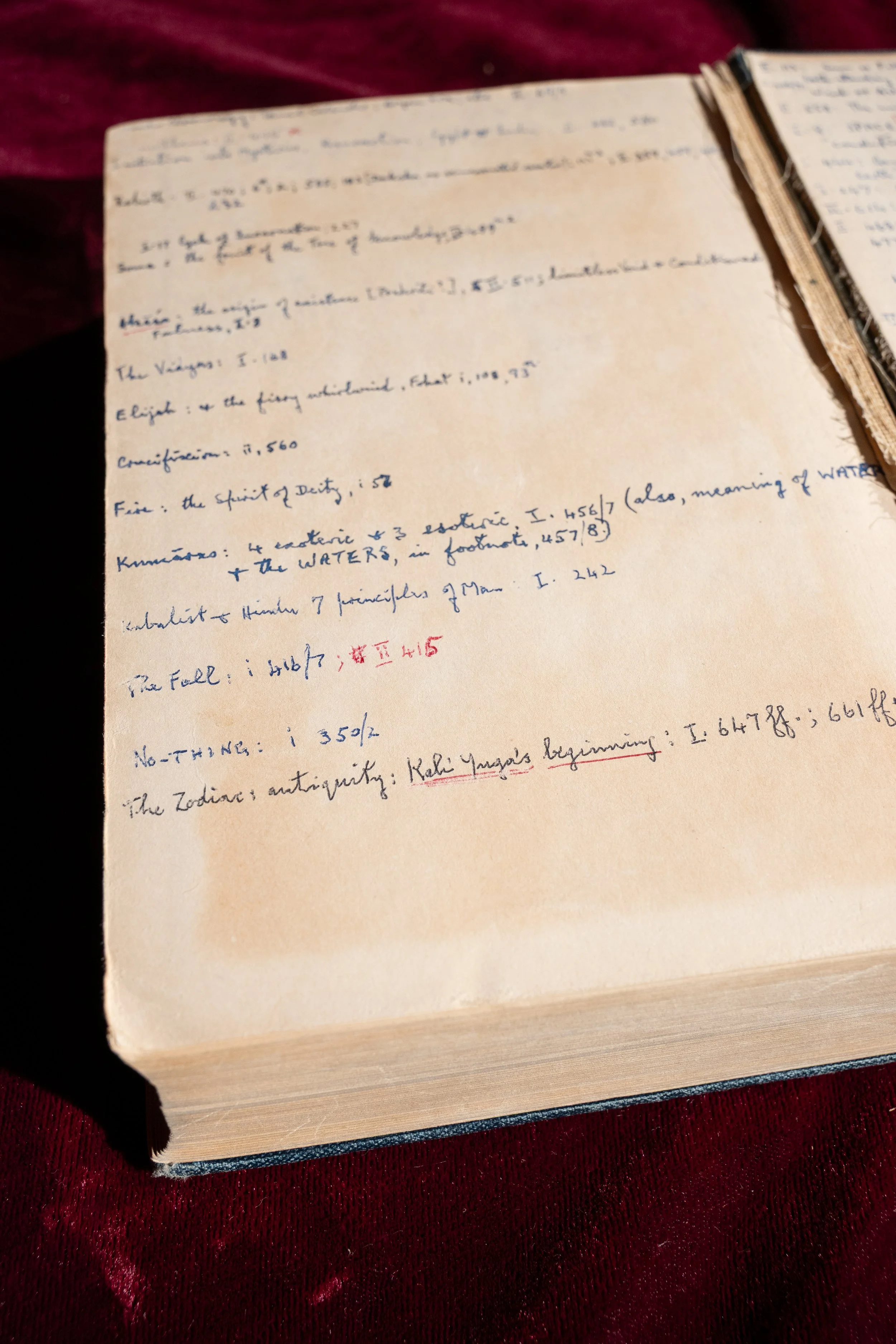 Image 10 of 15
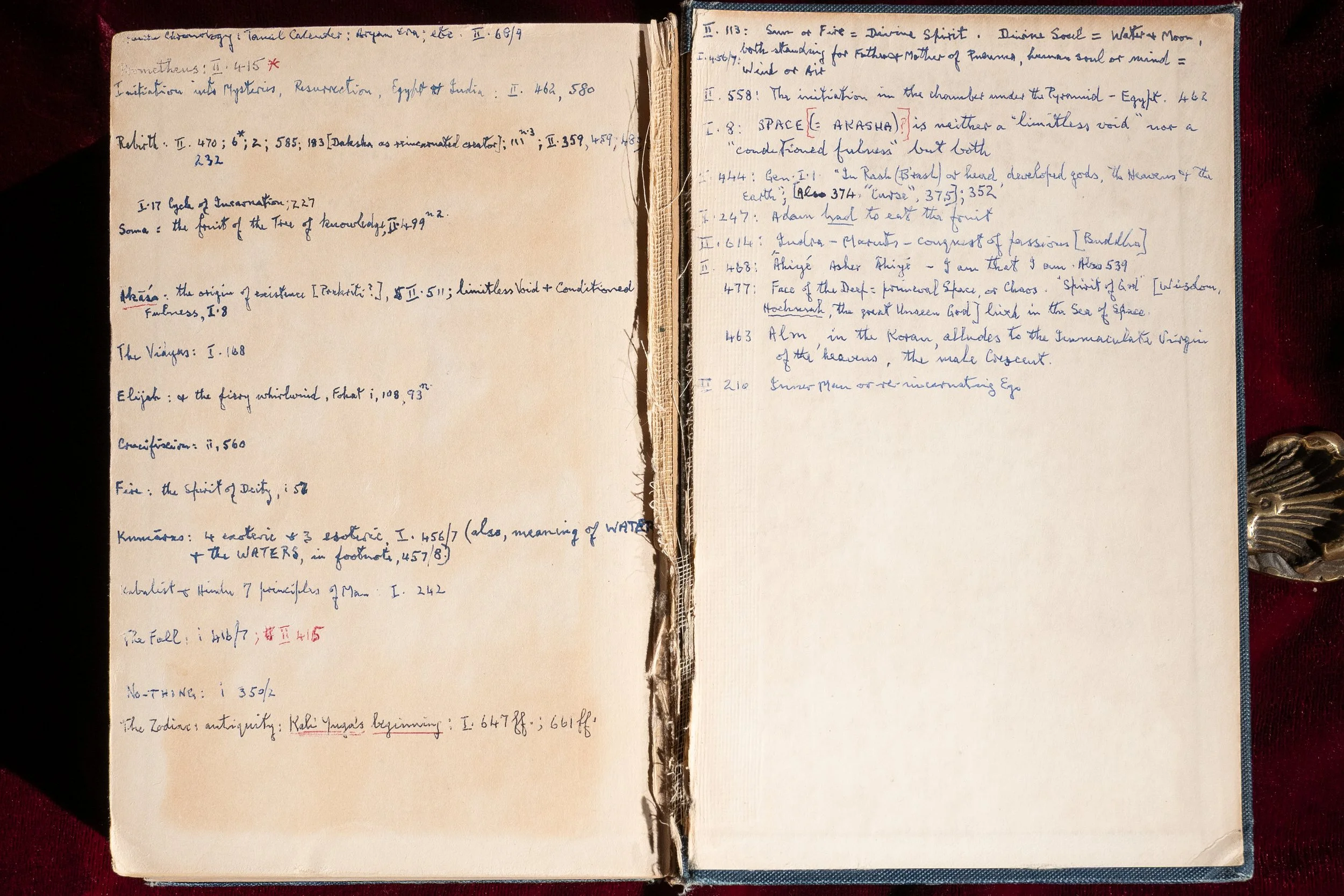 Image 11 of 15
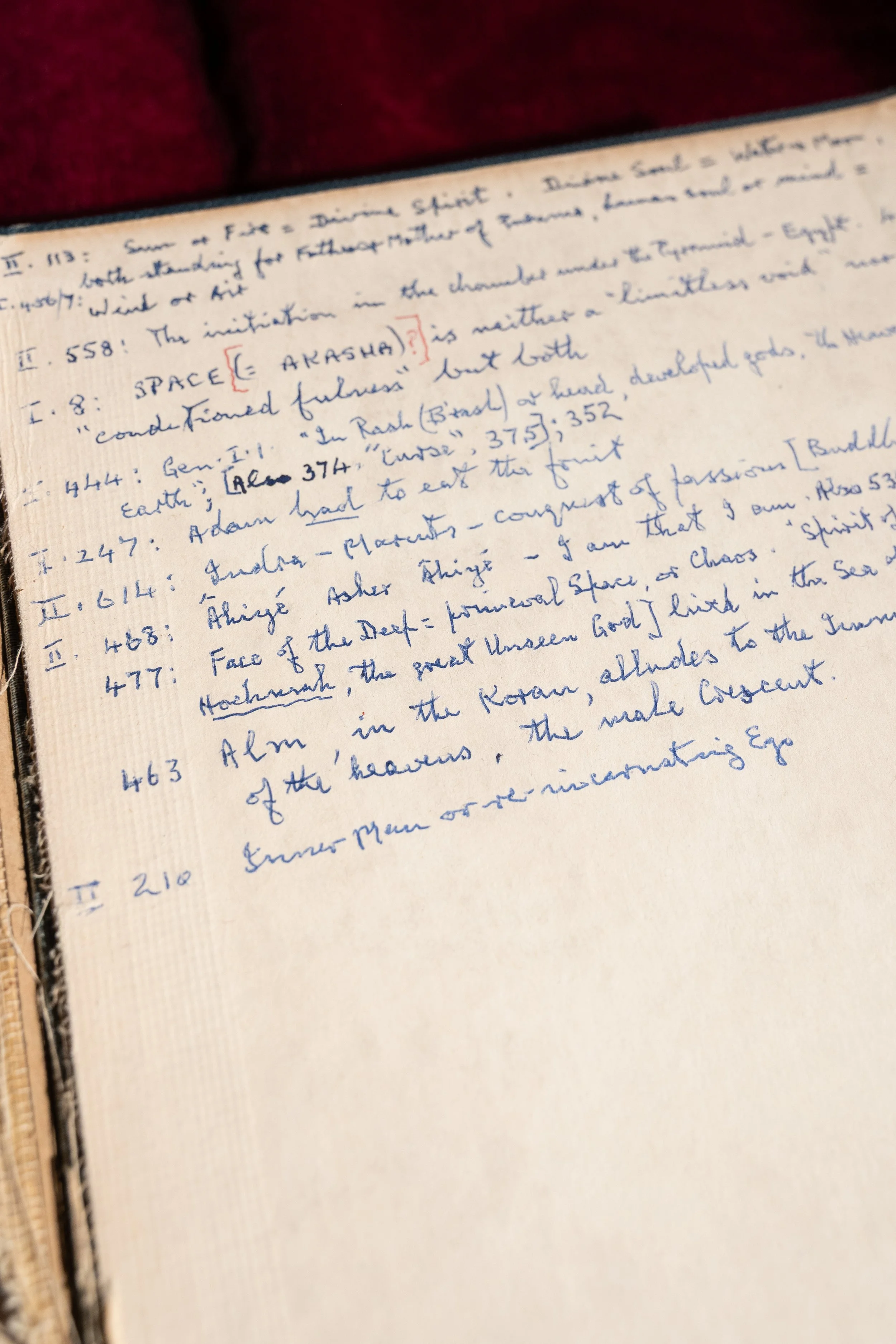 Image 12 of 15
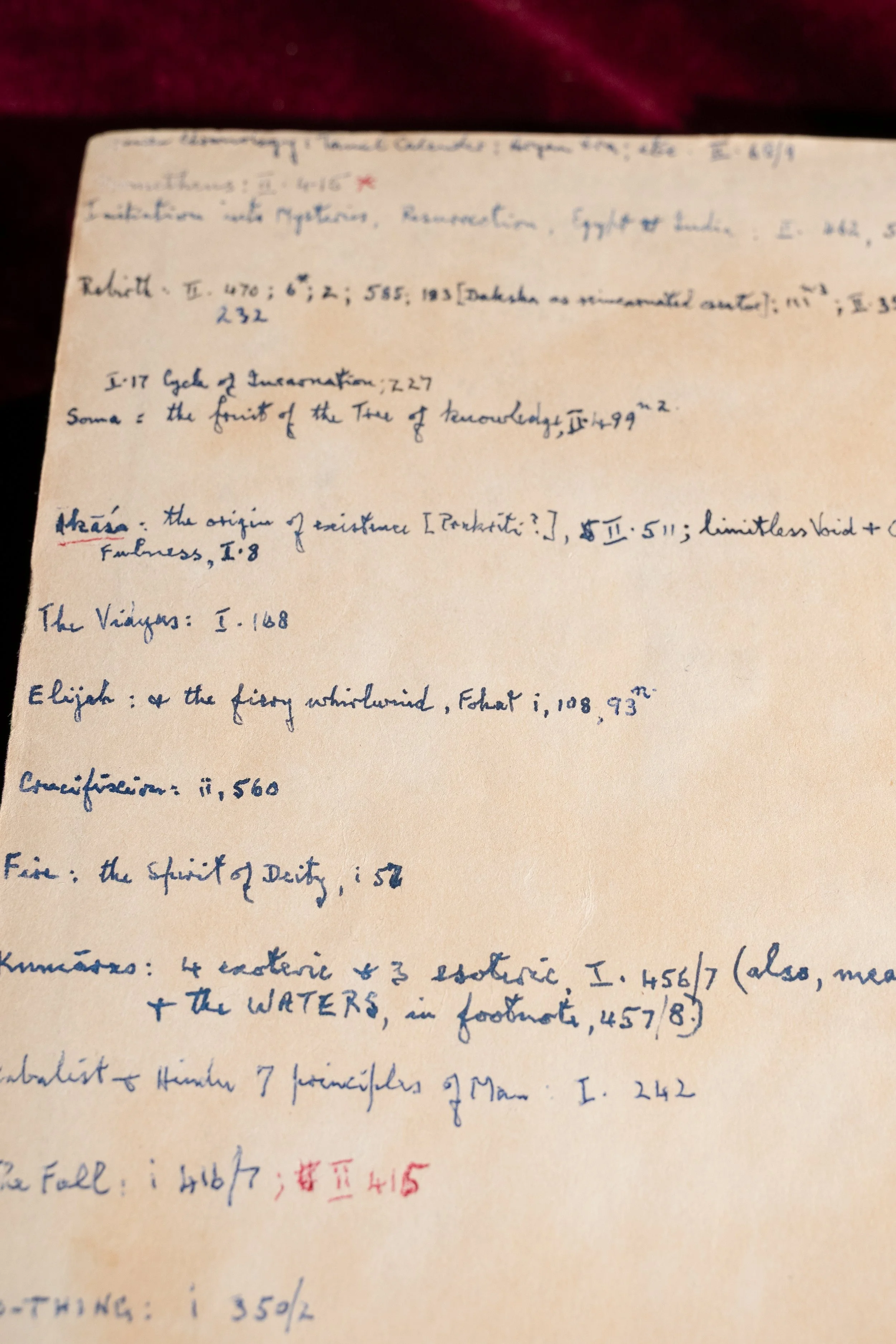 Image 13 of 15
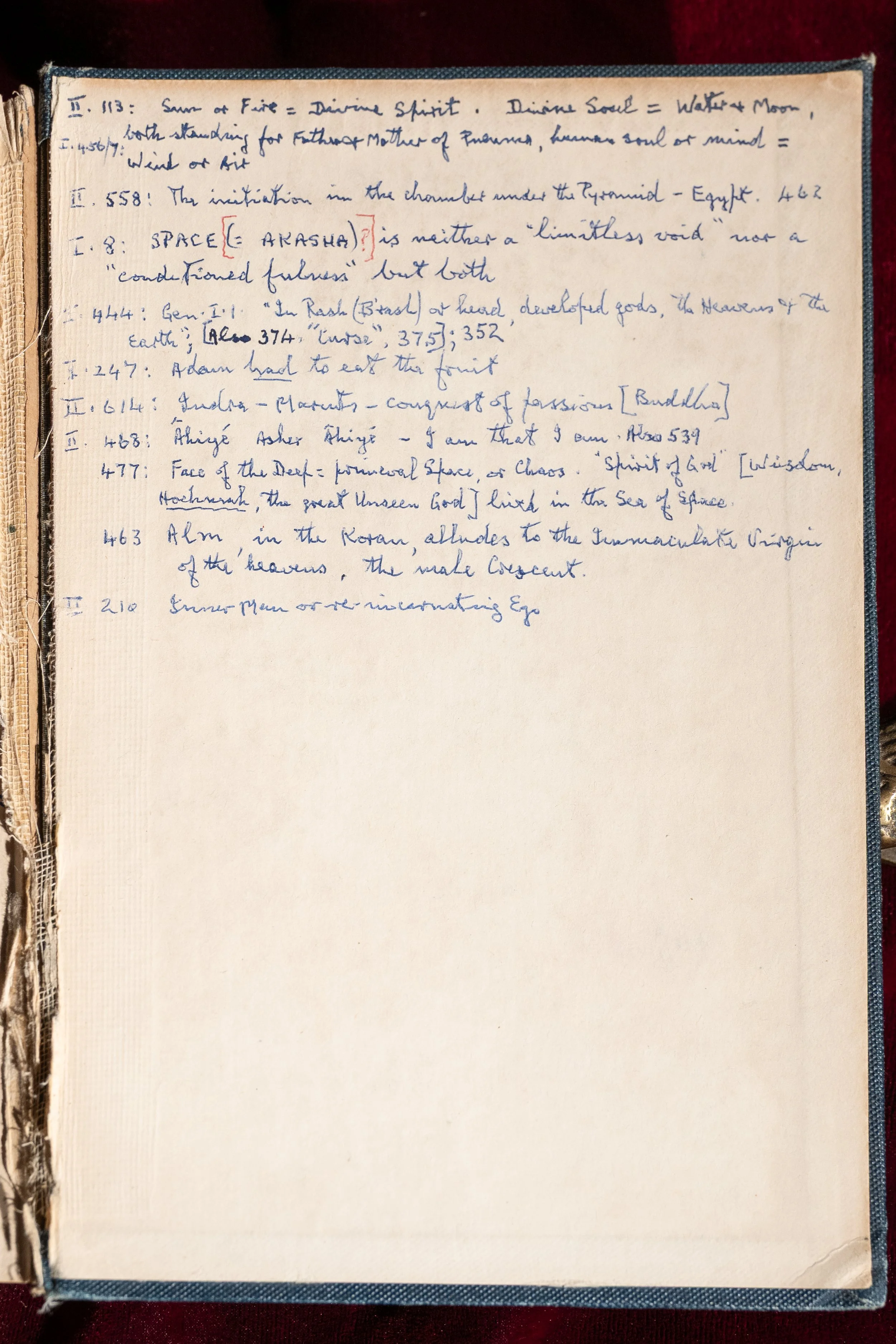 Image 14 of 15
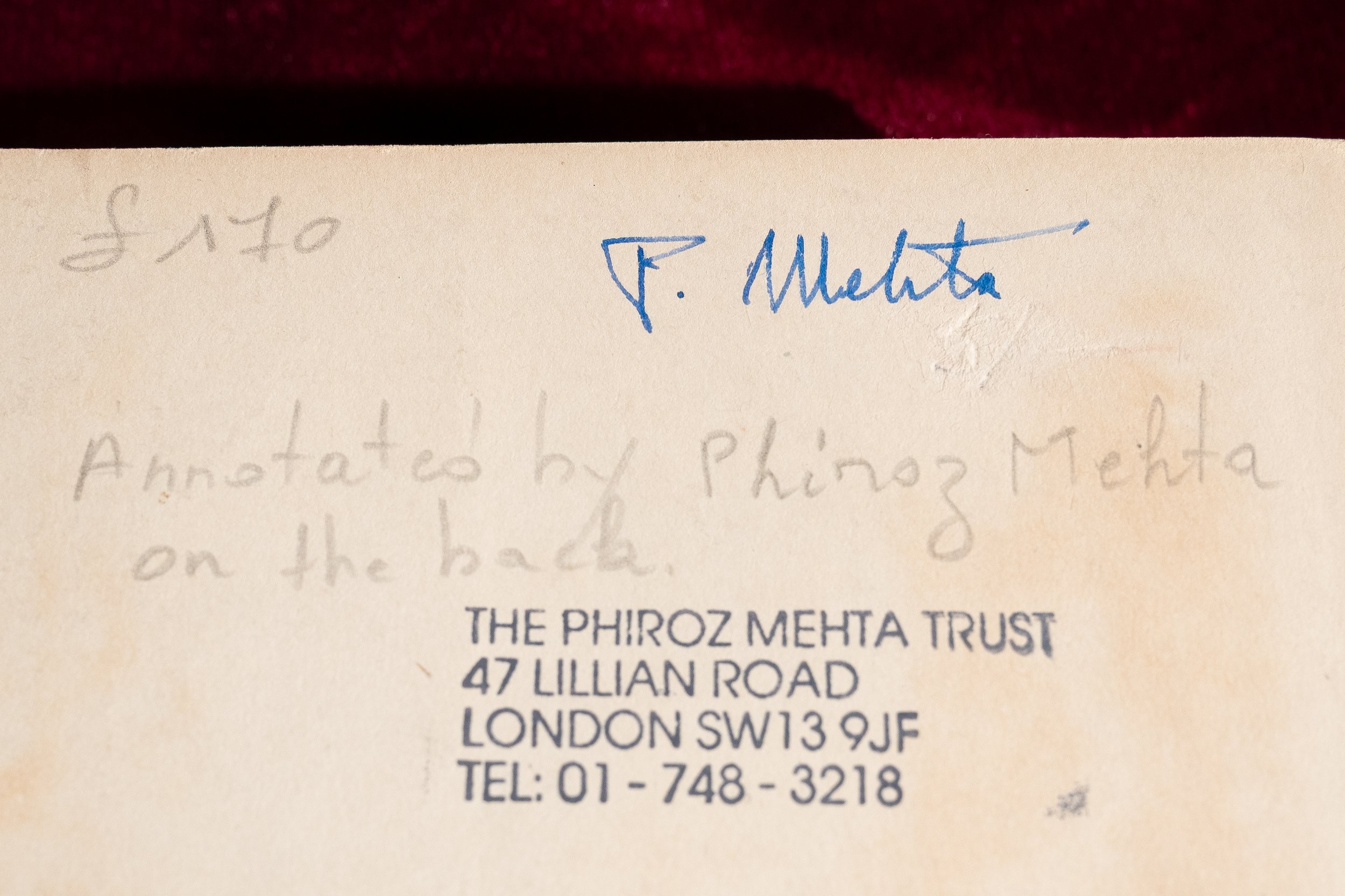 Image 15 of 15