Charles Kirkpatrick Sharpe was one of the great eccentrics of literary Edinburgh: an antiquary, artist, and caricaturist, born at Hoddam Castle in Annandale in 1781, and a friend and correspondent of Walter Scott. This is his survey of the belief in witchcraft in Scotland, a chronological ramble through the subject from the earliest chronicles to the eighteenth century. It first appeared in 1819, half-buried as the long preface to Robert Law’s Memorialls, and here, in 1884, it stands for the first time as a book in its own right, fronted by a biographical sketch of the author and rounded off with an editorial appendix. Its influence is out of all proportion to its modest length. When Walter Scott wrote his celebrated Letters on Demonology and Witchcraft in 1830, he leaned on Sharpe, and took from him the haunting image of the last witch burned in Scotland, an old woman put to death at Dornoch who, in Sharpe’s telling, “sat very composedly warming herself by the fire prepared to consume her while the other instruments of death were making ready.” Sharpe dated that execution to 1722 and said he had the story from the Countess of Sutherland; Scott accepted both the date and the chilling detail, and so the scene passed into the standard literature.
The book itself is a pleasure to browse. Sharpe moves from King Duffus, whose image a coven of hags roasted in wax over a slow fire to waste the king away, to the weird sisters of Macbeth and the witches burned at Forres; from the trials at Eyemouth to a gloriously cranky chapter inveighing “against bagpipes and fiddles,” where the Devil himself takes up the pipes at Alloway kirk and Burns’s Tam o’ Shanter is summoned as a witness. An appendix gathers the choicest curiosities: the conveyance of people through the air, the marks of a witch, familiar spirits, devilish charms, and “females in masculine attire.” It closes with something collectors prize in its own right: an eight-page “Short List of Books on Scottish Witchcraft and Superstition,” a working checklist of the rarities in the field, from Sinclair’s Satan’s Invisible World Discovered to Robert Kirk’s Secret Commonwealth and Telfair’s True Relation of an Apparition. A cornerstone of any Scottish witchcraft shelf and a direct source for Scott, the book is uncommon in nice state; this is an honest, well-read copy in the publisher’s red cloth, with the bonus of an old Ayrshire owner’s name penciled inside.
SHARPE, Charles Kirkpatrick (1781–1851). A Historical Account of the Belief in Witchcraft in Scotland. London: Hamilton, Adams & Co.; Glasgow: Thomas D. Morison, 1884. First separate edition (the text first published 1819 within Robert Law’s Memorialls). Physical Description: Crown 8vo. 268 pp., including half-title; with a Biographical Sketch of the author, the text, an Editorial Appendix (“Short List of Books on Scottish Witchcraft and Superstition,” 8 pp.), and index; publisher’s advertisements at the rear. Printed by Robert Maclehose, Printer to the University, Glasgow.
Binding: Publisher’s red cloth, printed paper title-label to spine.
Condition: Spine sunned and the label toned; cloth lightly worn and marked; hinges repaired. Internally clean and sound. A good, honest copy.
Provenance: Early pencil ownership inscription to a preliminary leaf, reading “Hawthorn, Darvel” (Darvel, the weaving town in Ayrshire).
Charles Kirkpatrick Sharpe was one of the great eccentrics of literary Edinburgh: an antiquary, artist, and caricaturist, born at Hoddam Castle in Annandale in 1781, and a friend and correspondent of Walter Scott. This is his survey of the belief in witchcraft in Scotland, a chronological ramble through the subject from the earliest chronicles to the eighteenth century. It first appeared in 1819, half-buried as the long preface to Robert Law’s Memorialls, and here, in 1884, it stands for the first time as a book in its own right, fronted by a biographical sketch of the author and rounded off with an editorial appendix. Its influence is out of all proportion to its modest length. When Walter Scott wrote his celebrated Letters on Demonology and Witchcraft in 1830, he leaned on Sharpe, and took from him the haunting image of the last witch burned in Scotland, an old woman put to death at Dornoch who, in Sharpe’s telling, “sat very composedly warming herself by the fire prepared to consume her while the other instruments of death were making ready.” Sharpe dated that execution to 1722 and said he had the story from the Countess of Sutherland; Scott accepted both the date and the chilling detail, and so the scene passed into the standard literature.
The book itself is a pleasure to browse. Sharpe moves from King Duffus, whose image a coven of hags roasted in wax over a slow fire to waste the king away, to the weird sisters of Macbeth and the witches burned at Forres; from the trials at Eyemouth to a gloriously cranky chapter inveighing “against bagpipes and fiddles,” where the Devil himself takes up the pipes at Alloway kirk and Burns’s Tam o’ Shanter is summoned as a witness. An appendix gathers the choicest curiosities: the conveyance of people through the air, the marks of a witch, familiar spirits, devilish charms, and “females in masculine attire.” It closes with something collectors prize in its own right: an eight-page “Short List of Books on Scottish Witchcraft and Superstition,” a working checklist of the rarities in the field, from Sinclair’s Satan’s Invisible World Discovered to Robert Kirk’s Secret Commonwealth and Telfair’s True Relation of an Apparition. A cornerstone of any Scottish witchcraft shelf and a direct source for Scott, the book is uncommon in nice state; this is an honest, well-read copy in the publisher’s red cloth, with the bonus of an old Ayrshire owner’s name penciled inside.
SHARPE, Charles Kirkpatrick (1781–1851). A Historical Account of the Belief in Witchcraft in Scotland. London: Hamilton, Adams & Co.; Glasgow: Thomas D. Morison, 1884. First separate edition (the text first published 1819 within Robert Law’s Memorialls). Physical Description: Crown 8vo. 268 pp., including half-title; with a Biographical Sketch of the author, the text, an Editorial Appendix (“Short List of Books on Scottish Witchcraft and Superstition,” 8 pp.), and index; publisher’s advertisements at the rear. Printed by Robert Maclehose, Printer to the University, Glasgow.
Binding: Publisher’s red cloth, printed paper title-label to spine.
Condition: Spine sunned and the label toned; cloth lightly worn and marked; hinges repaired. Internally clean and sound. A good, honest copy.
Provenance: Early pencil ownership inscription to a preliminary leaf, reading “Hawthorn, Darvel” (Darvel, the weaving town in Ayrshire).

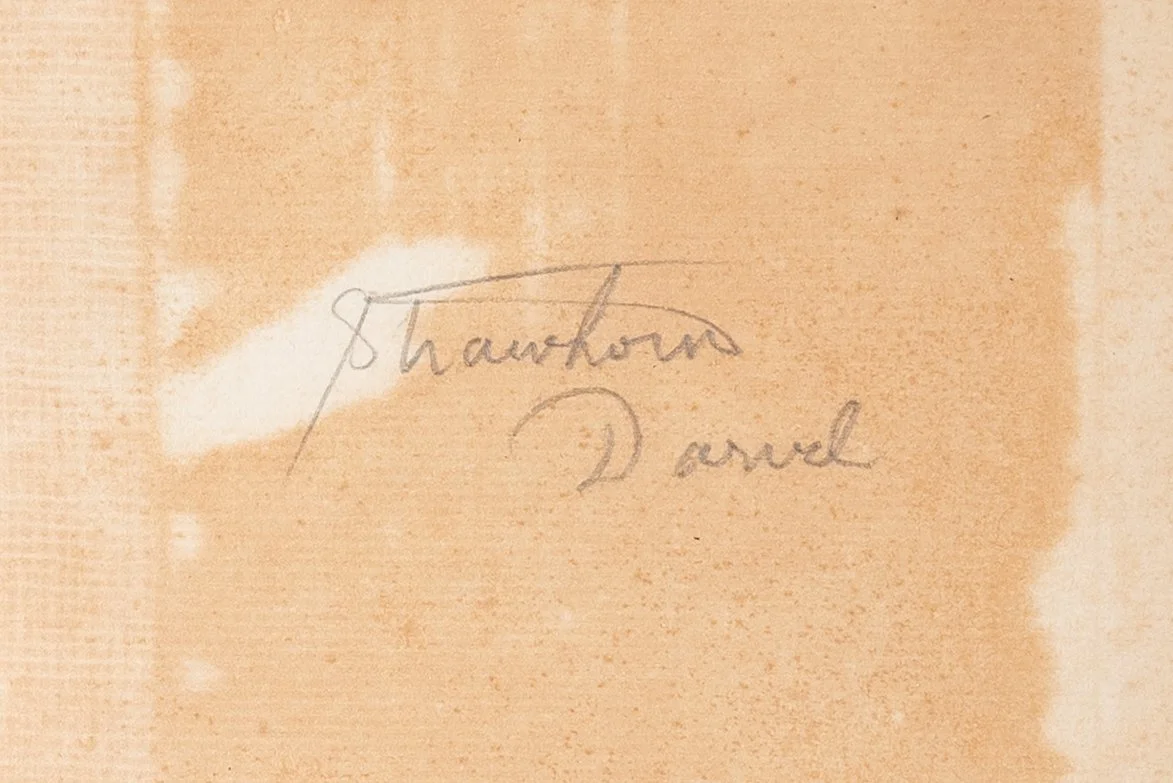 Image 1 of 10
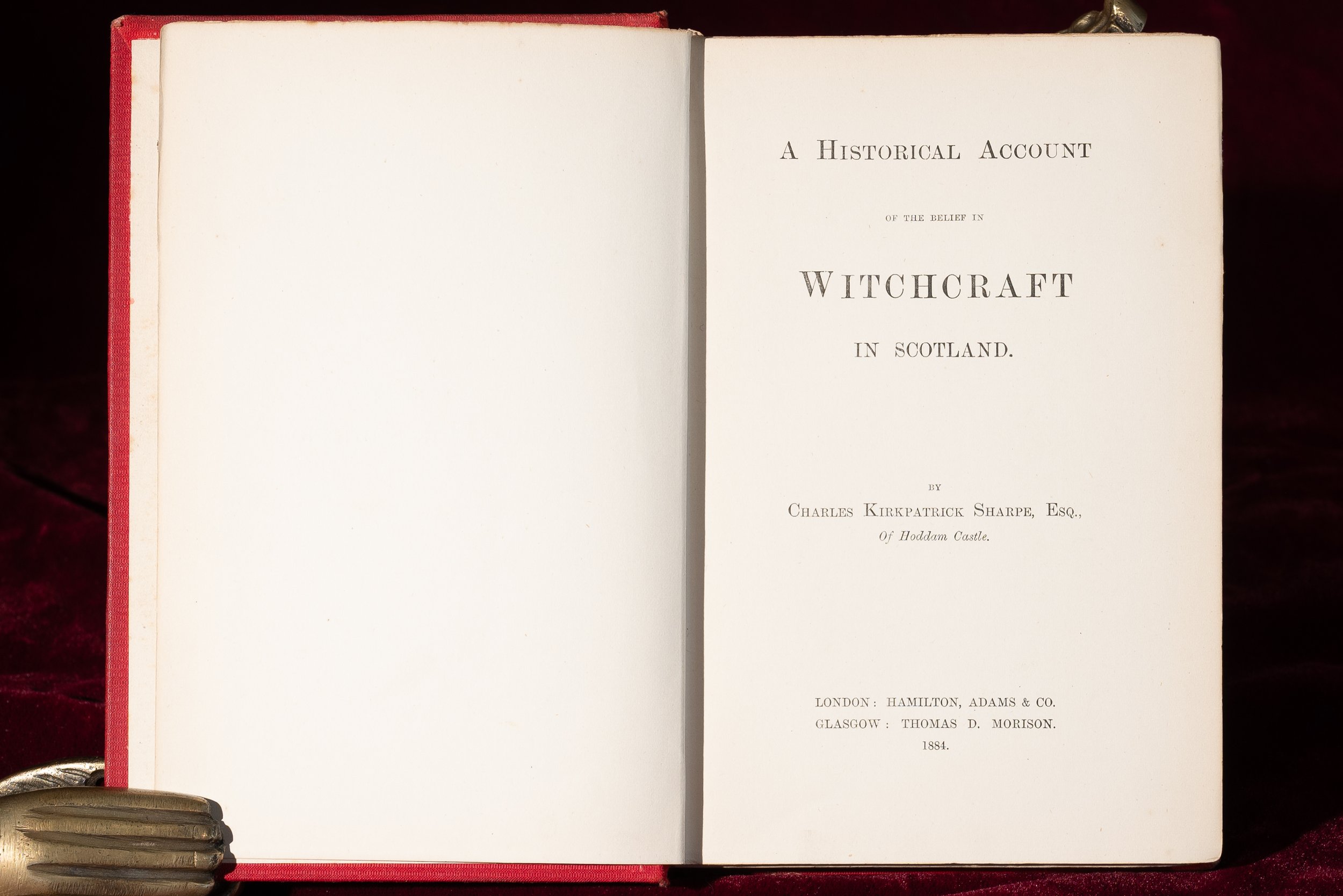 Image 2 of 10
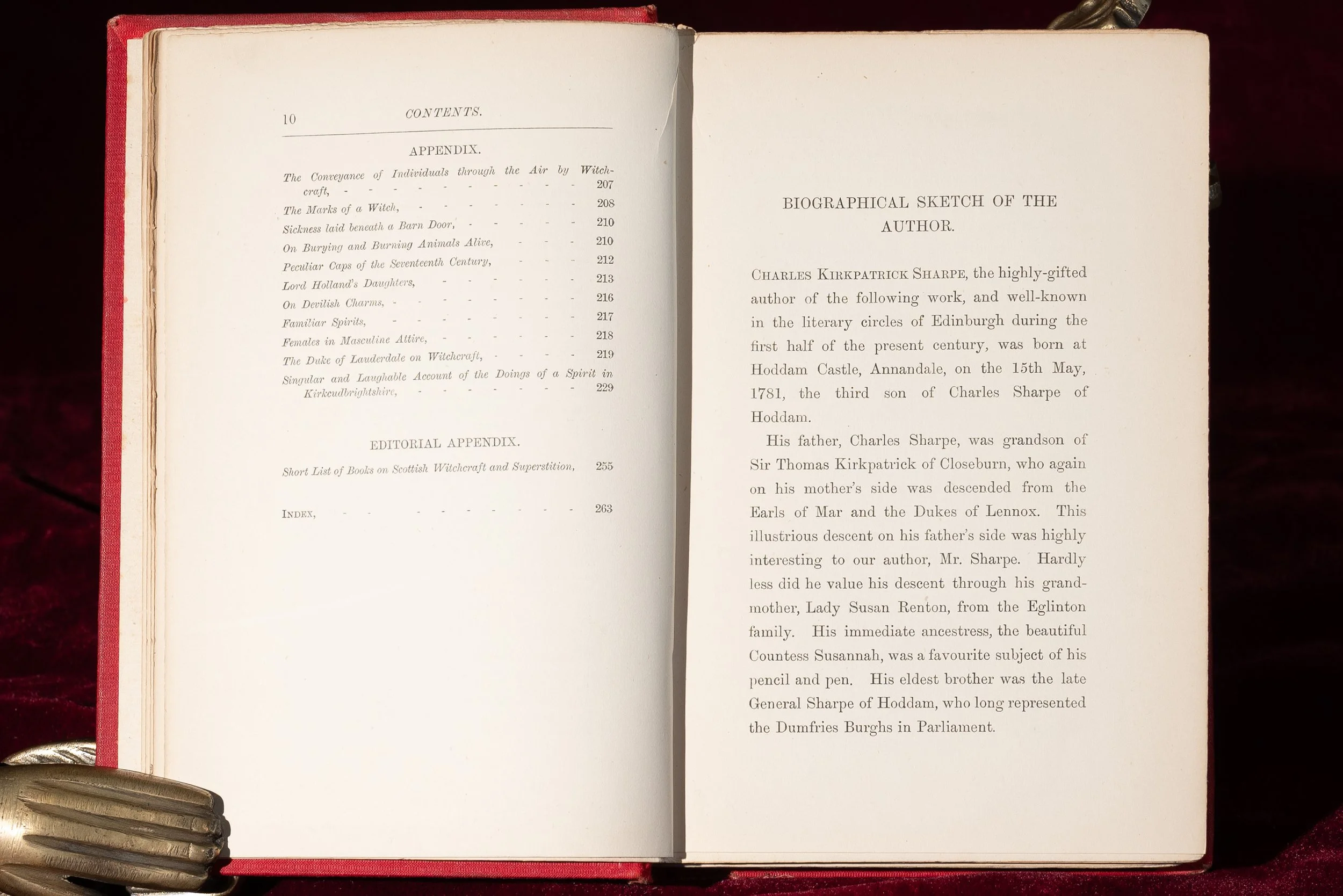 Image 3 of 10
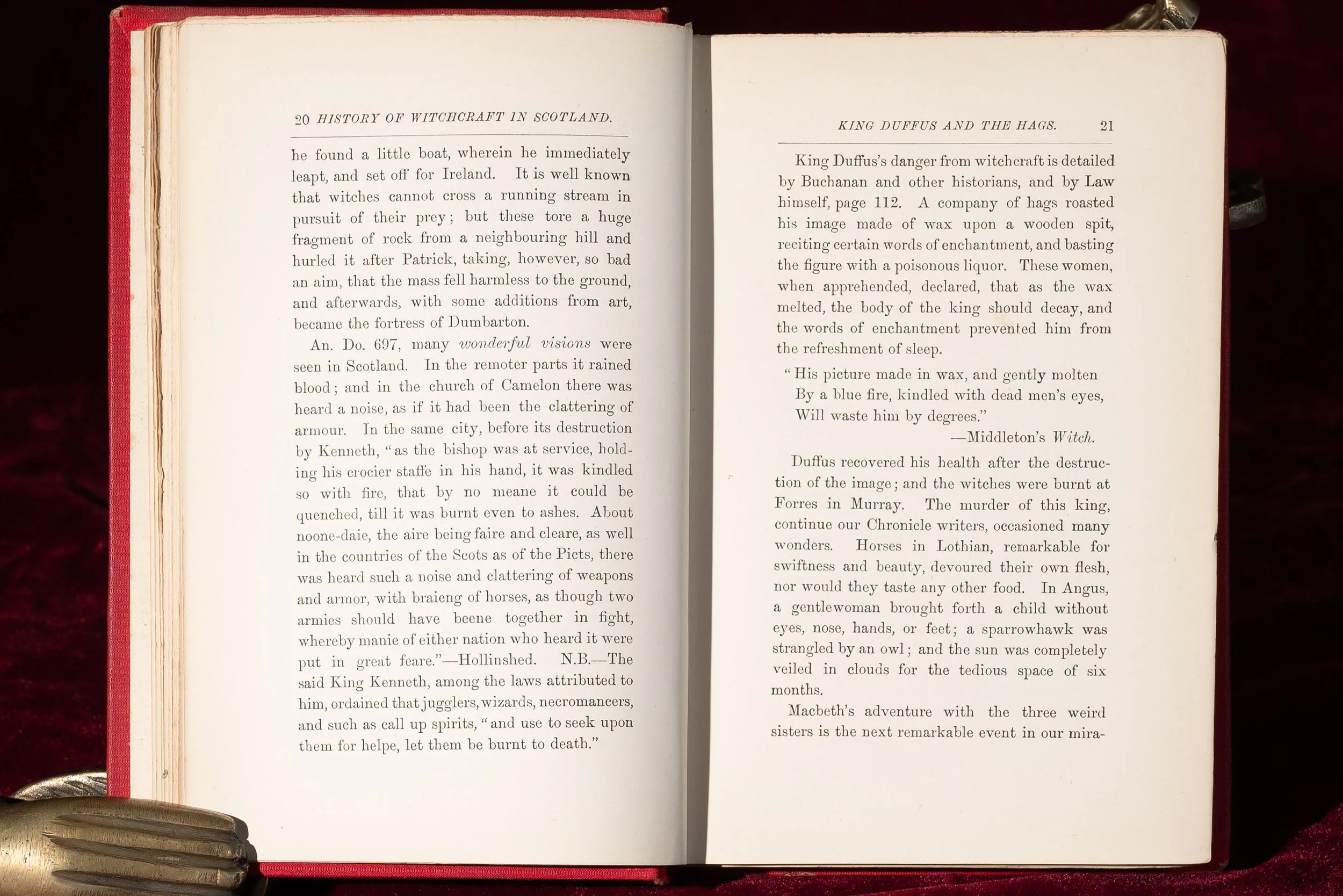 Image 4 of 10
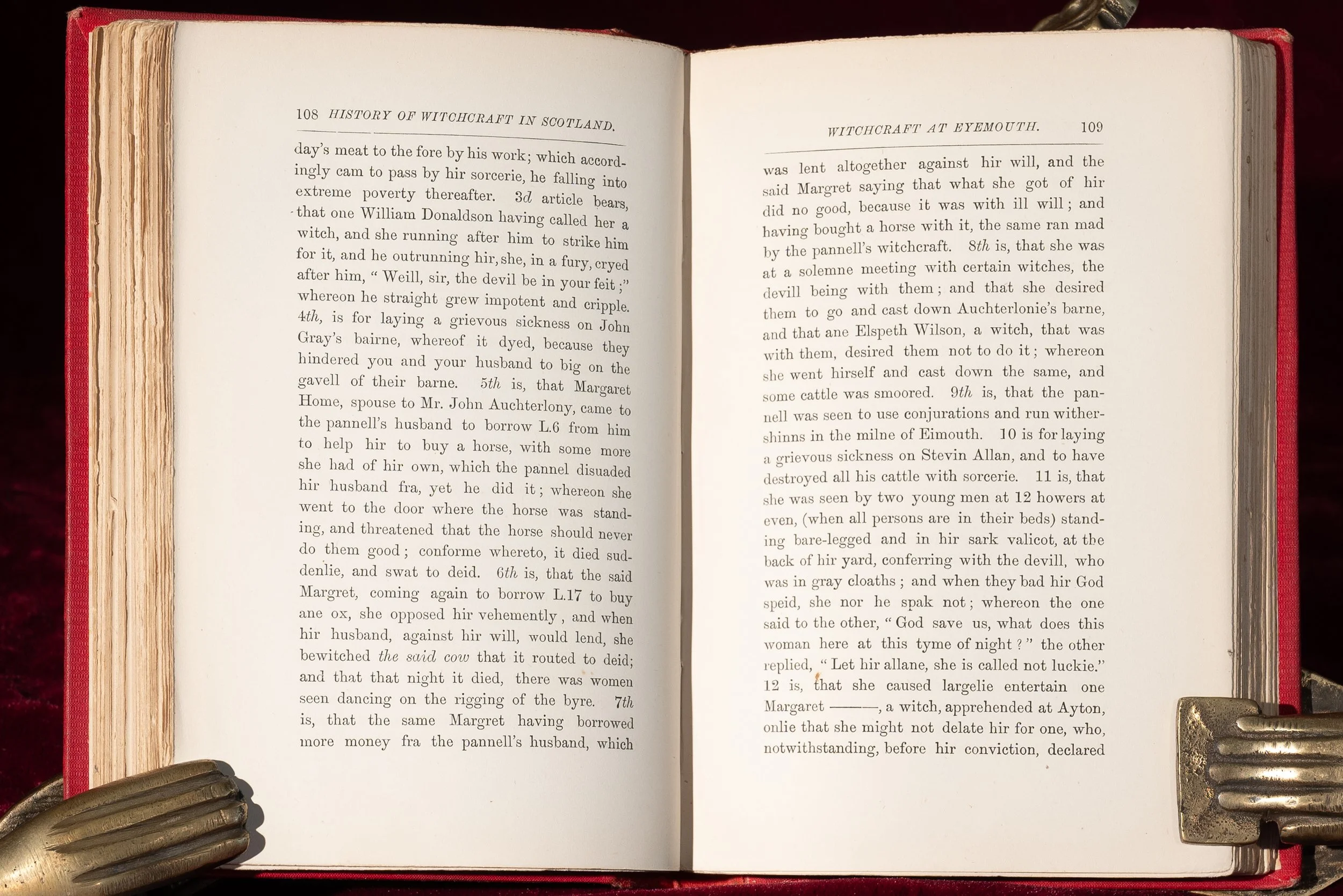 Image 5 of 10
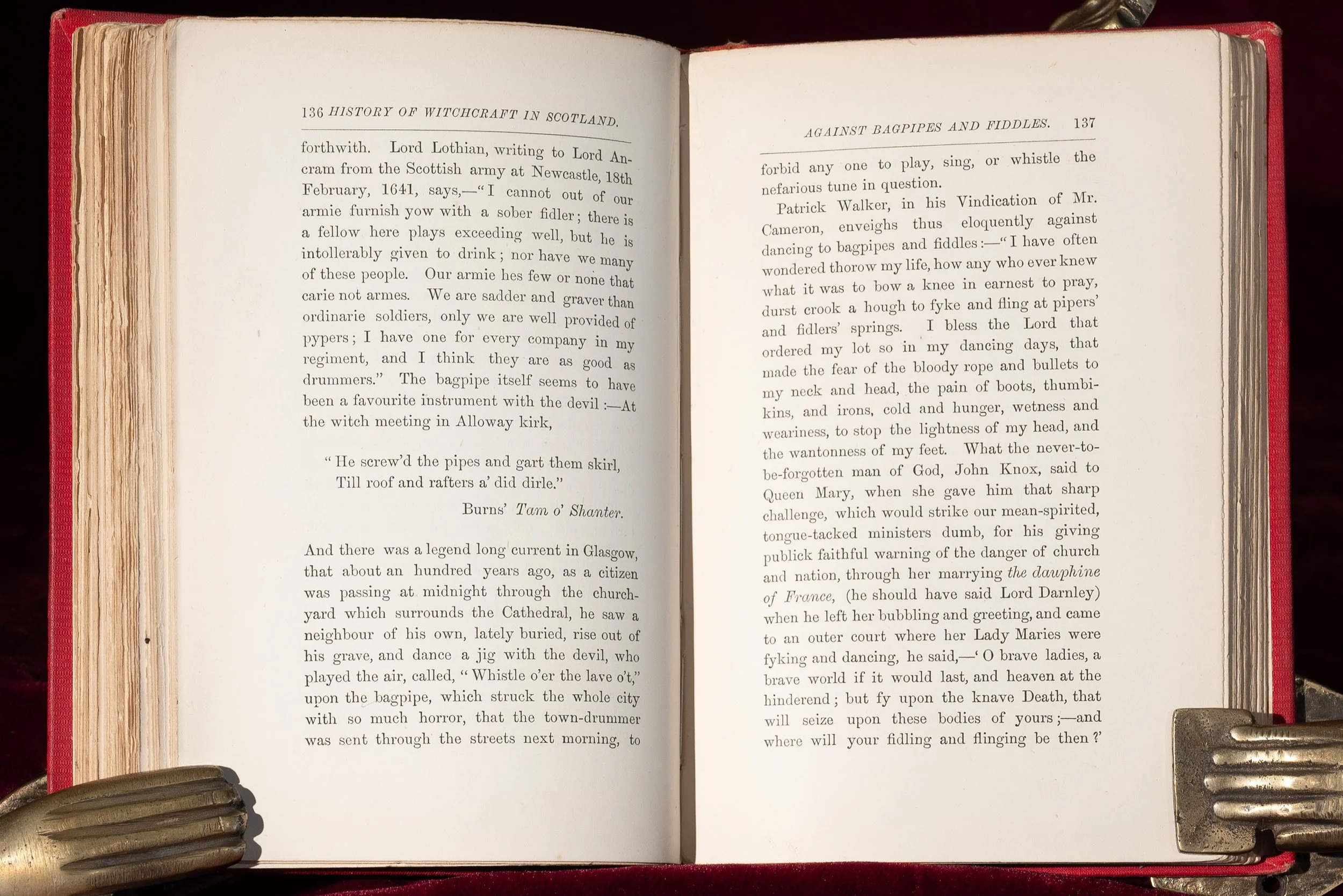 Image 6 of 10
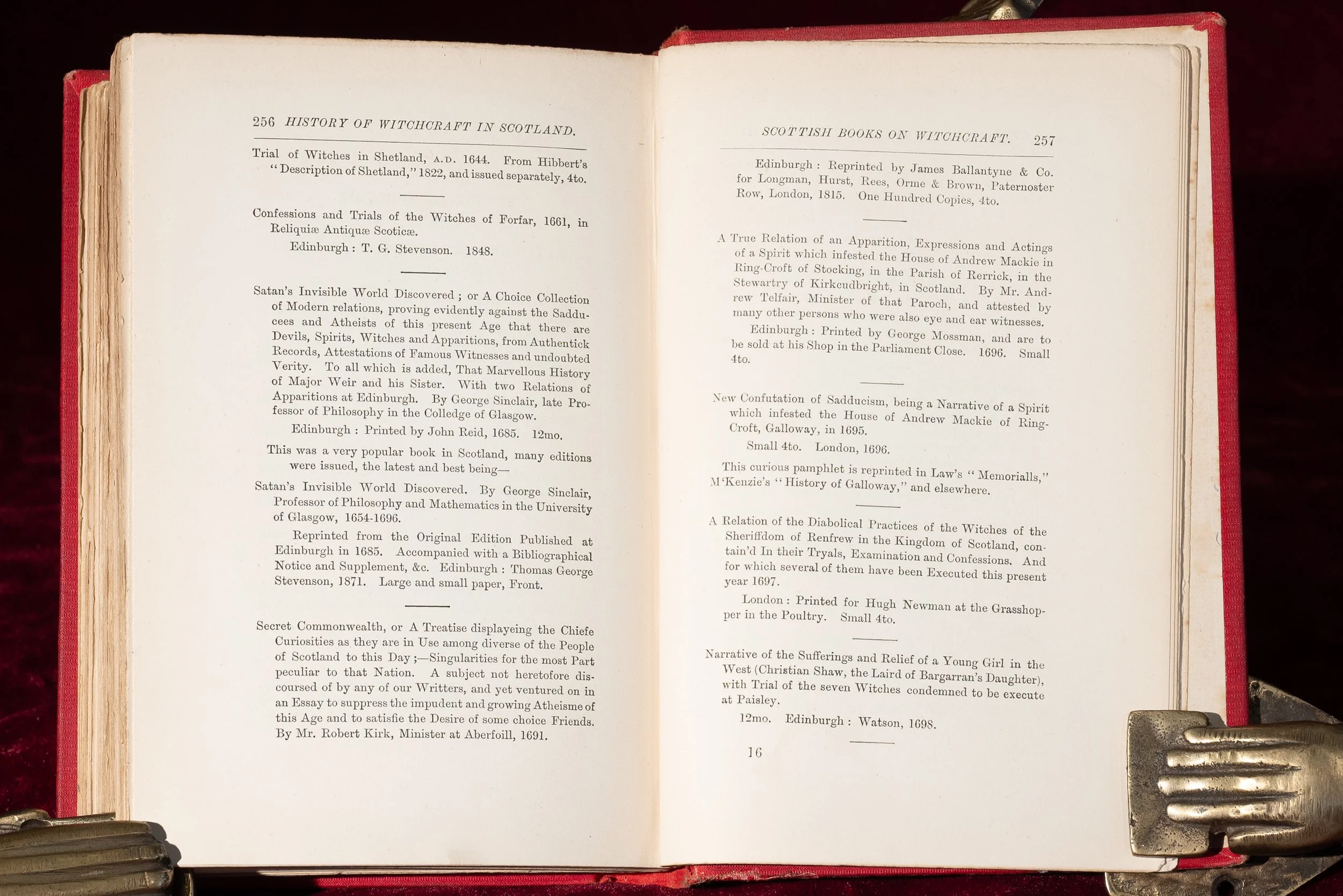 Image 7 of 10
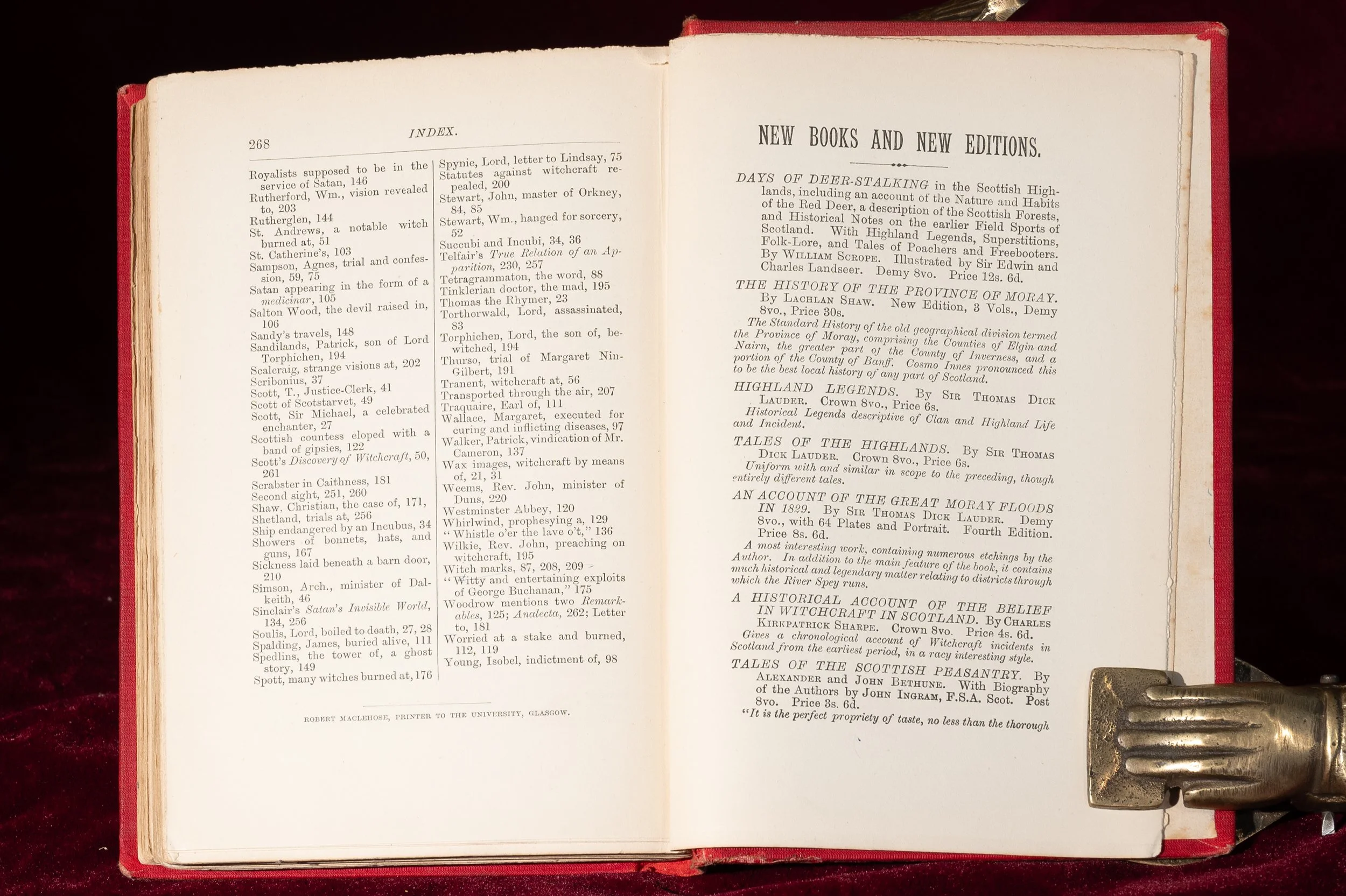 Image 8 of 10
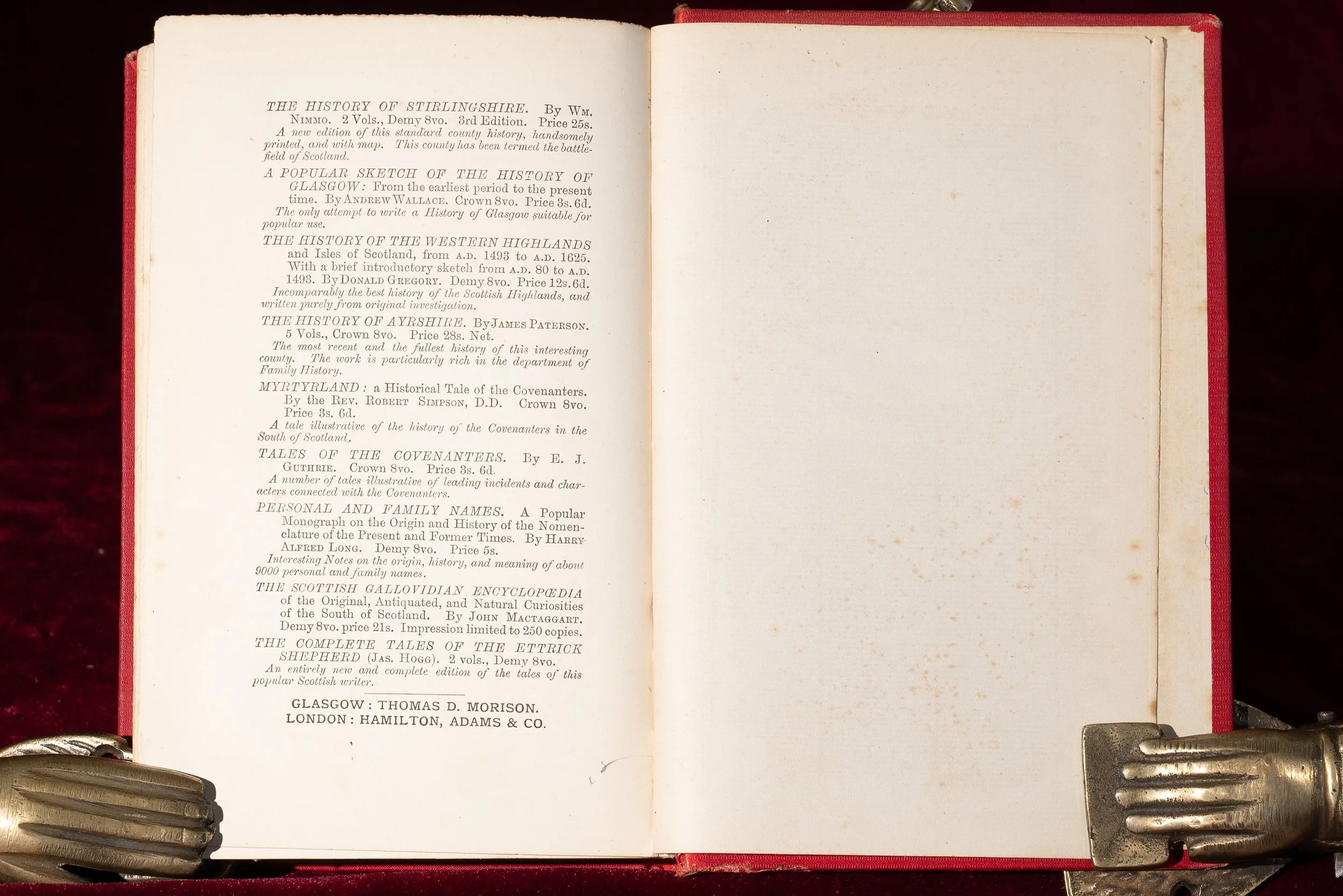 Image 9 of 10
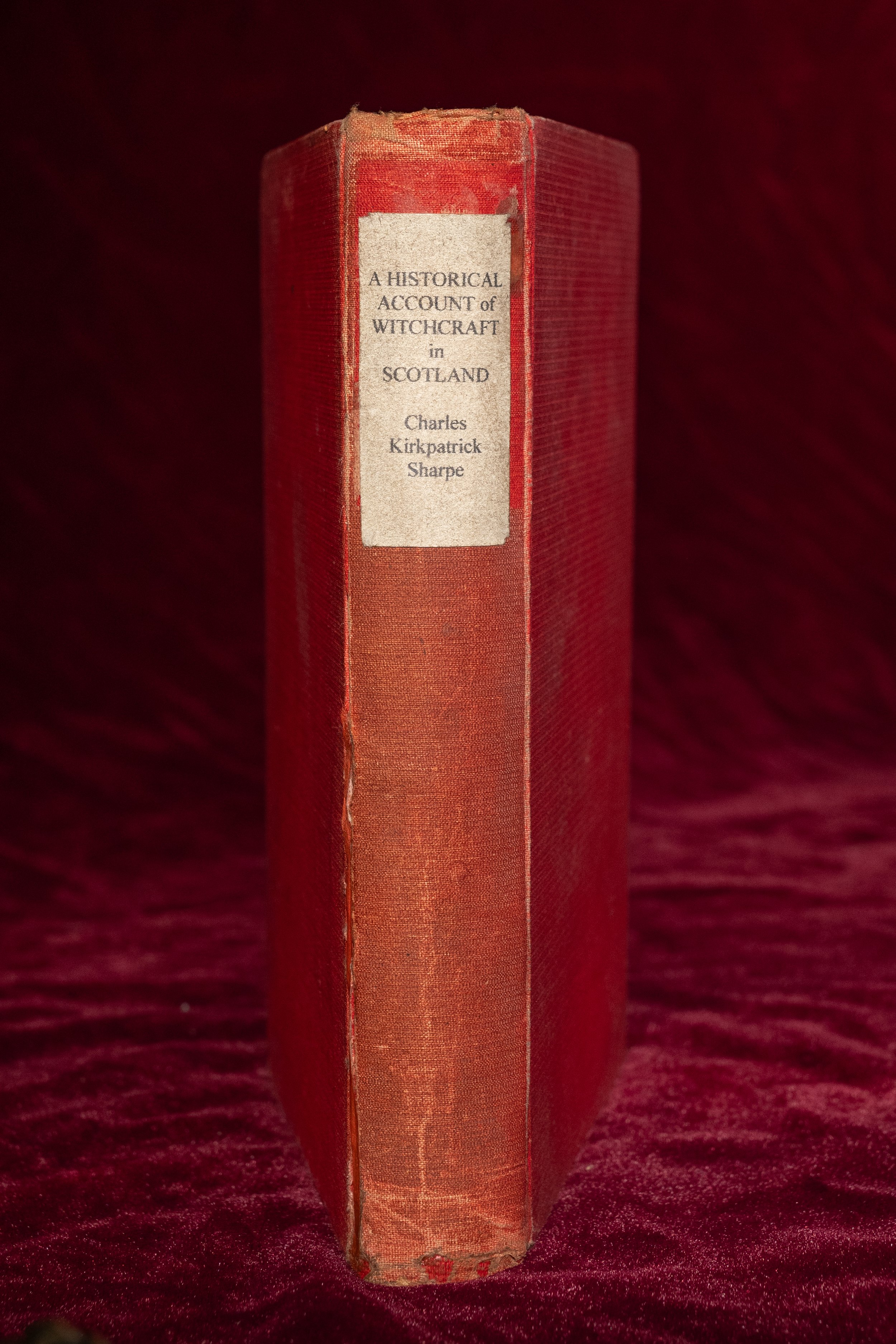 Image 10 of 10