When this book came out in November 1856, the reviewer for the Spectator could not see the point of it. Henry Morley had already written the lives of two sixteenth-century men of science, Palissy the potter and the physician Jerome Cardan. Choosing Cornelius Agrippa to complete the set, the reviewer wrote, “was scarcely judicious.” Agrippa was a magician, or was said to be.
Morley was thirty-four. He had trained in medicine, given it up and gone to write for Charles Dickens at Household Words. He would end as professor of English literature at University College London. He believed that people in the past had reasons for what they thought, and he put his argument into the subtitle: Agrippa was a doctor and a knight, “commonly known as a magician.” The common knowledge was legend. “I believe that there is here told for the first time the exact story of Cornelius Agrippa's life,” he wrote in the preface.
He tells it from Agrippa's own letters and books. He gave his English readers whole chapters on the Three Books of Occult Philosophy, and he even had the planetary squares and seals redrawn so that they could follow the argument. The only English translation of the Occult Philosophy had been printed in 1651 and was long out of reach. Morley put its contents back in front of the ordinary reader. A good deal of the Victorian occult revival began as reading, and some of that reading may well have been done here.
One chapter is headed “Cornelius Agrippa writes a treatise to prove woman the better half of man; in the same year he takes a wife.” The woodcut portrait on each title page is copied from the one Agrippa put in the first complete edition of his book on magic.
Both volumes are in the publisher's red-brown cloth. The details are below.
MORLEY, Henry (1822–1894). Cornelius Agrippa. The Life of Henry Cornelius Agrippa von Nettesheim, Doctor and Knight, Commonly Known as a Magician. London: Chapman and Hall, 193, Piccadilly, 1856. First edition. Two volumes.
Physical Description: Two volumes, small octavo, about 19 cm. I: xii, 304 pp.; II: vi, [2], 332 pp. Woodcut portrait of Agrippa on each title page; diagrams of magic squares and seals in the text of the first volume.
Binding: Publisher's red-brown ribbed cloth, the covers blocked in blind with an ornamental frame, spines lettered in gilt. Binder's ticket of Bone & Son, 76 Fleet Street, London, on the rear pastedown of the first volume.
Condition: Spine ends chipped, with loss at the head of both spines, the larger on the first volume. Cloth rubbed at the joints and corners. Remains of a removed bookplate on a front pastedown, and a few pencil notes on the endpapers. A red date stamp, JUL 14 1864, at the end of each volume. Hinges repaired and text block good.,

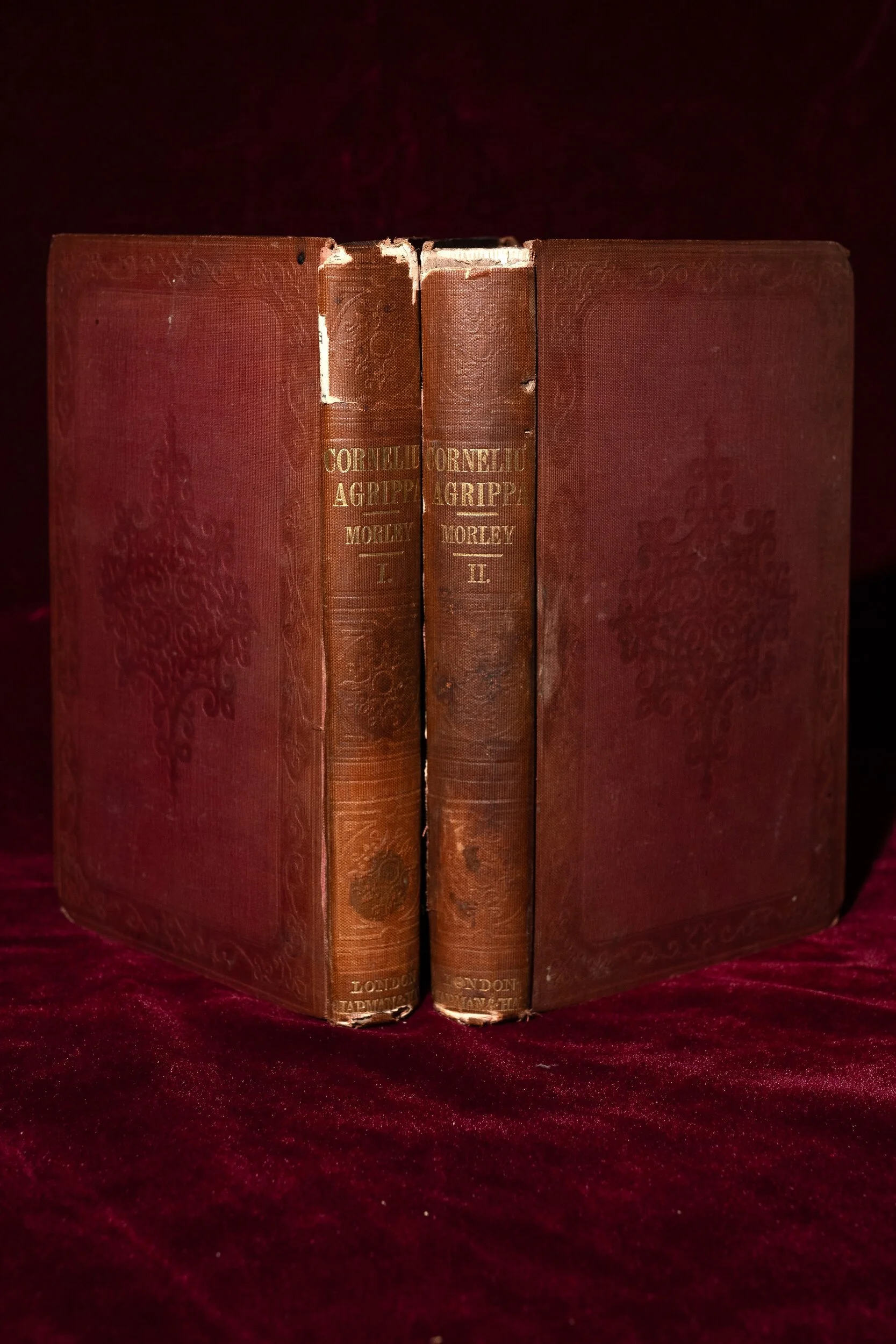 Image 1 of 22
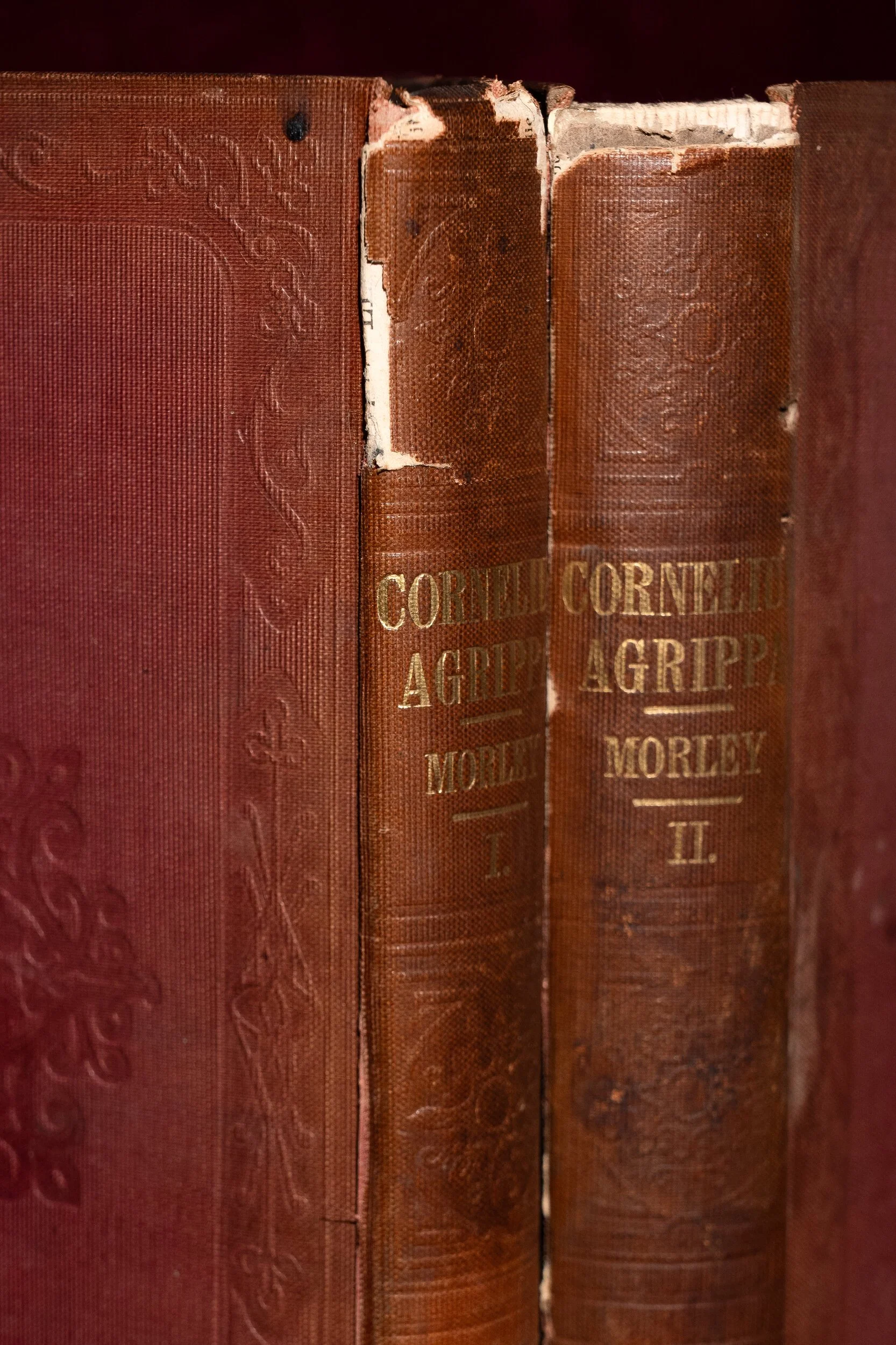 Image 2 of 22
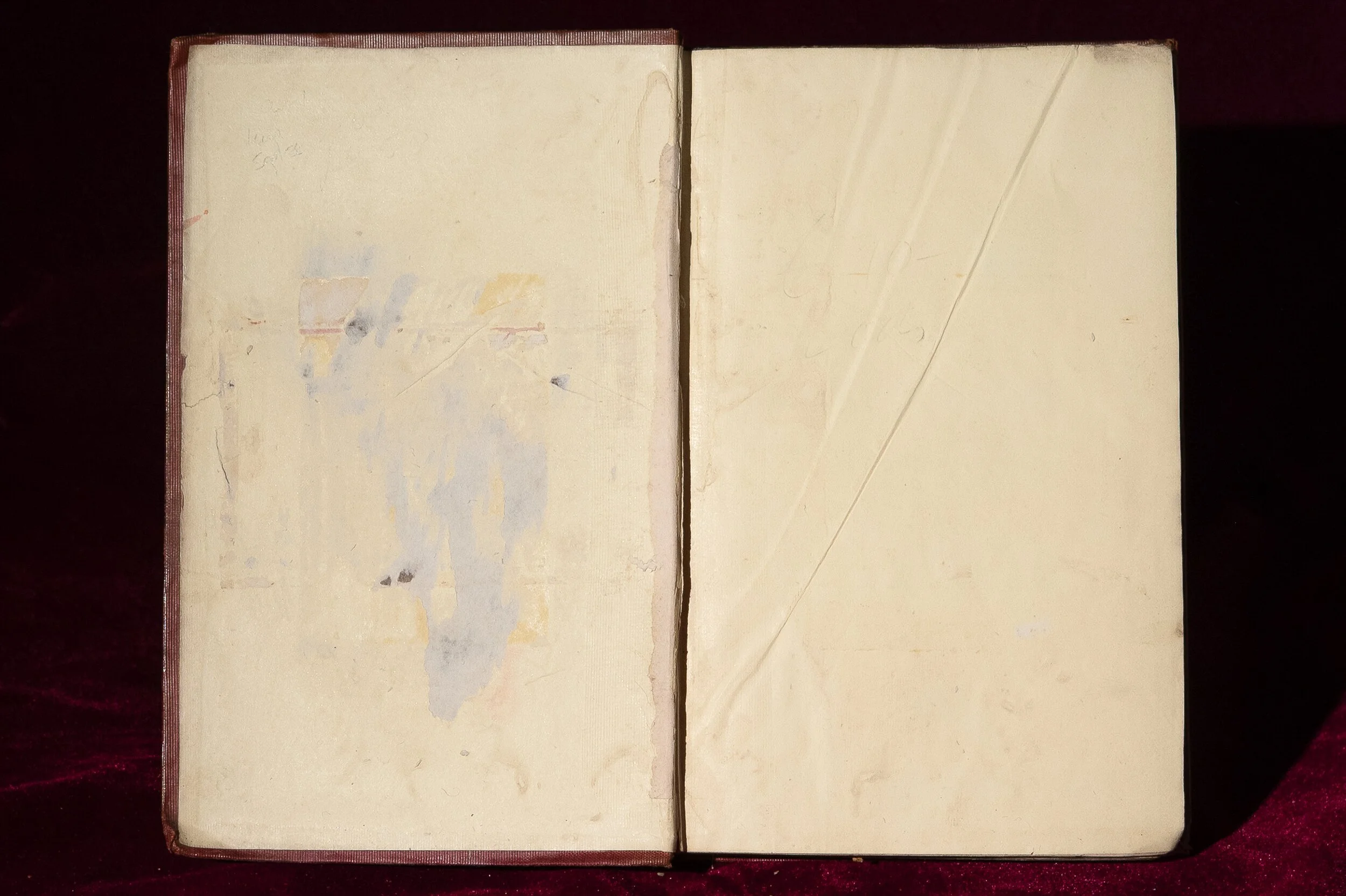 Image 3 of 22
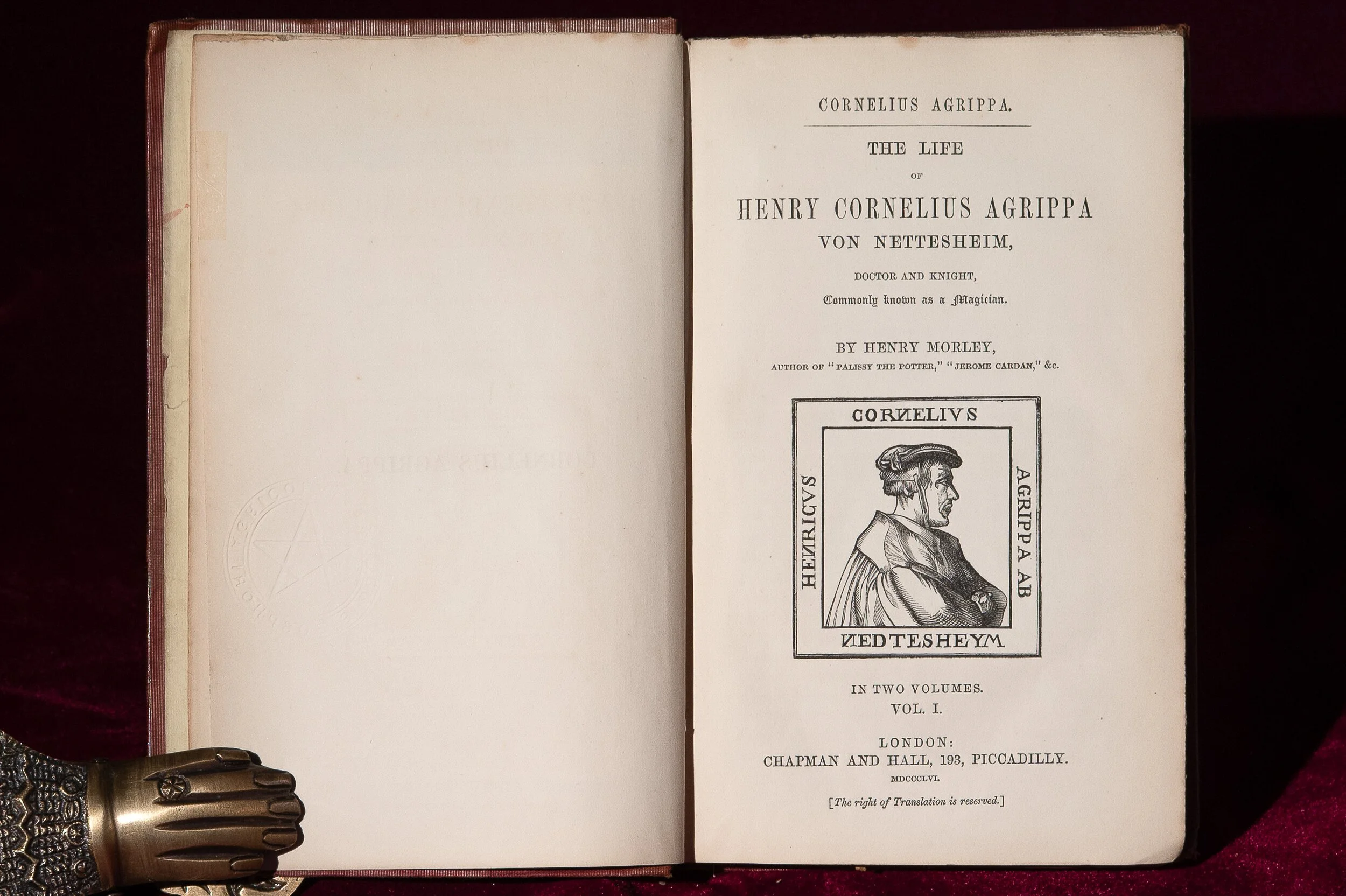 Image 4 of 22
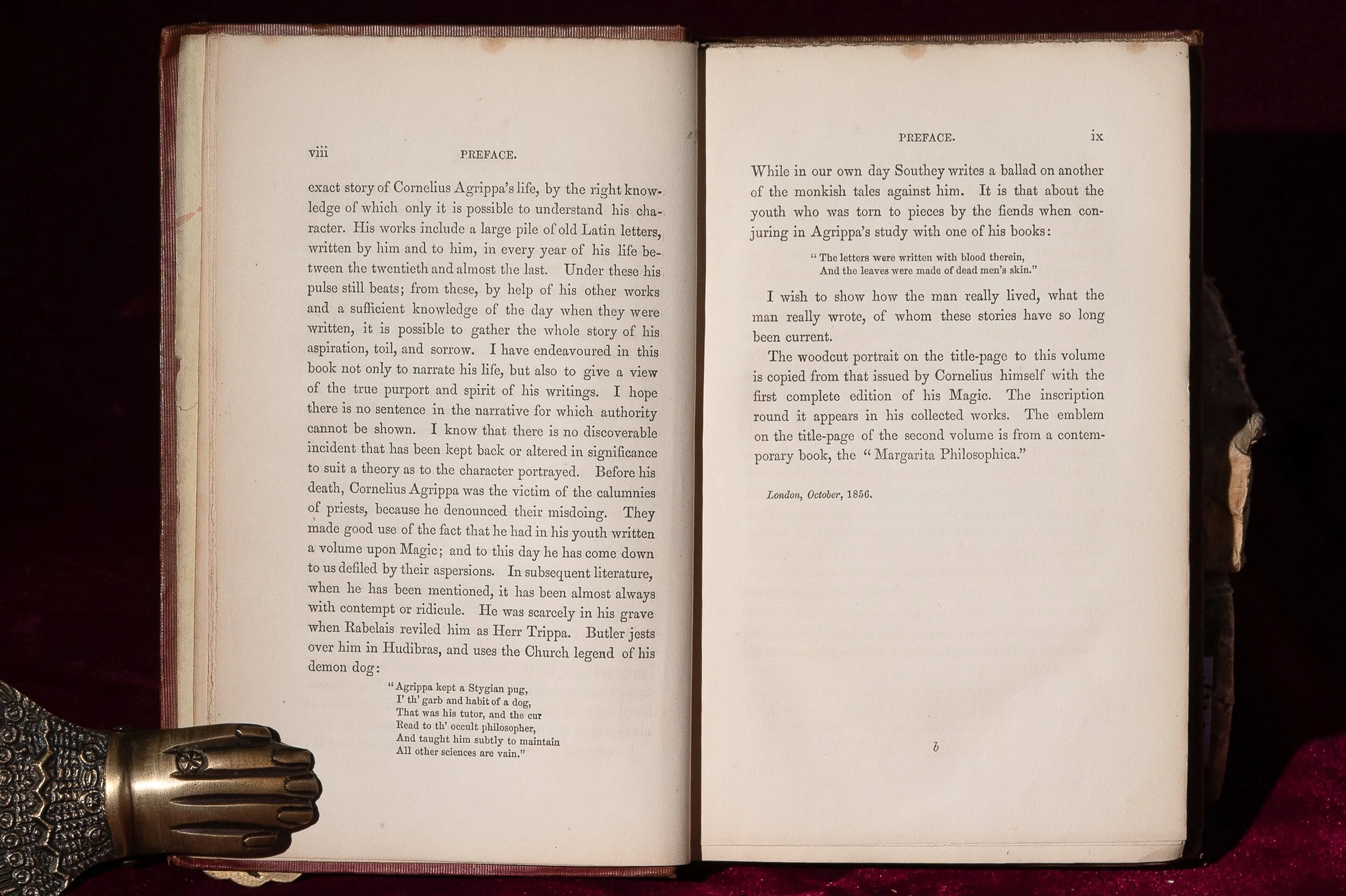 Image 5 of 22
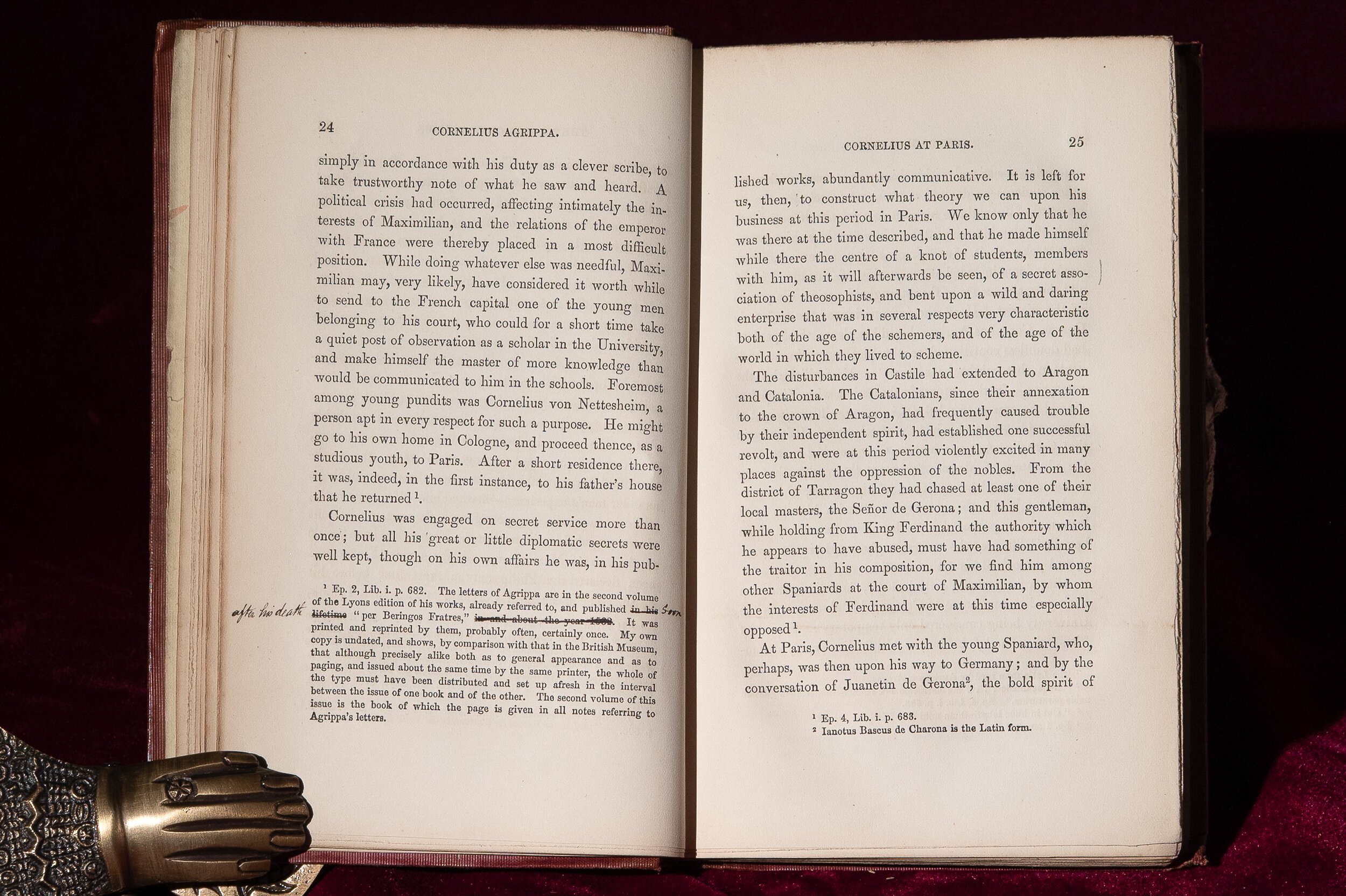 Image 6 of 22
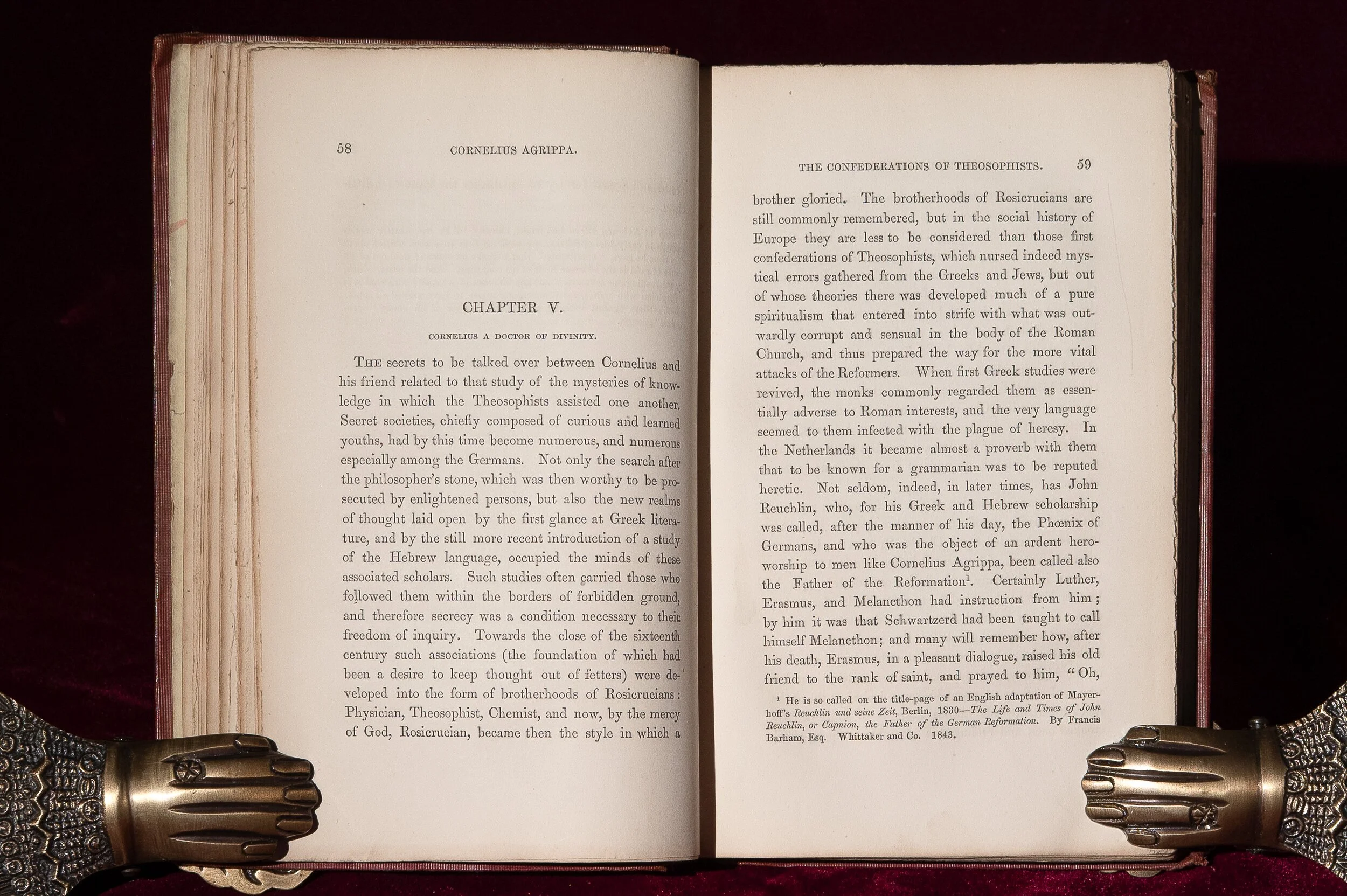 Image 7 of 22
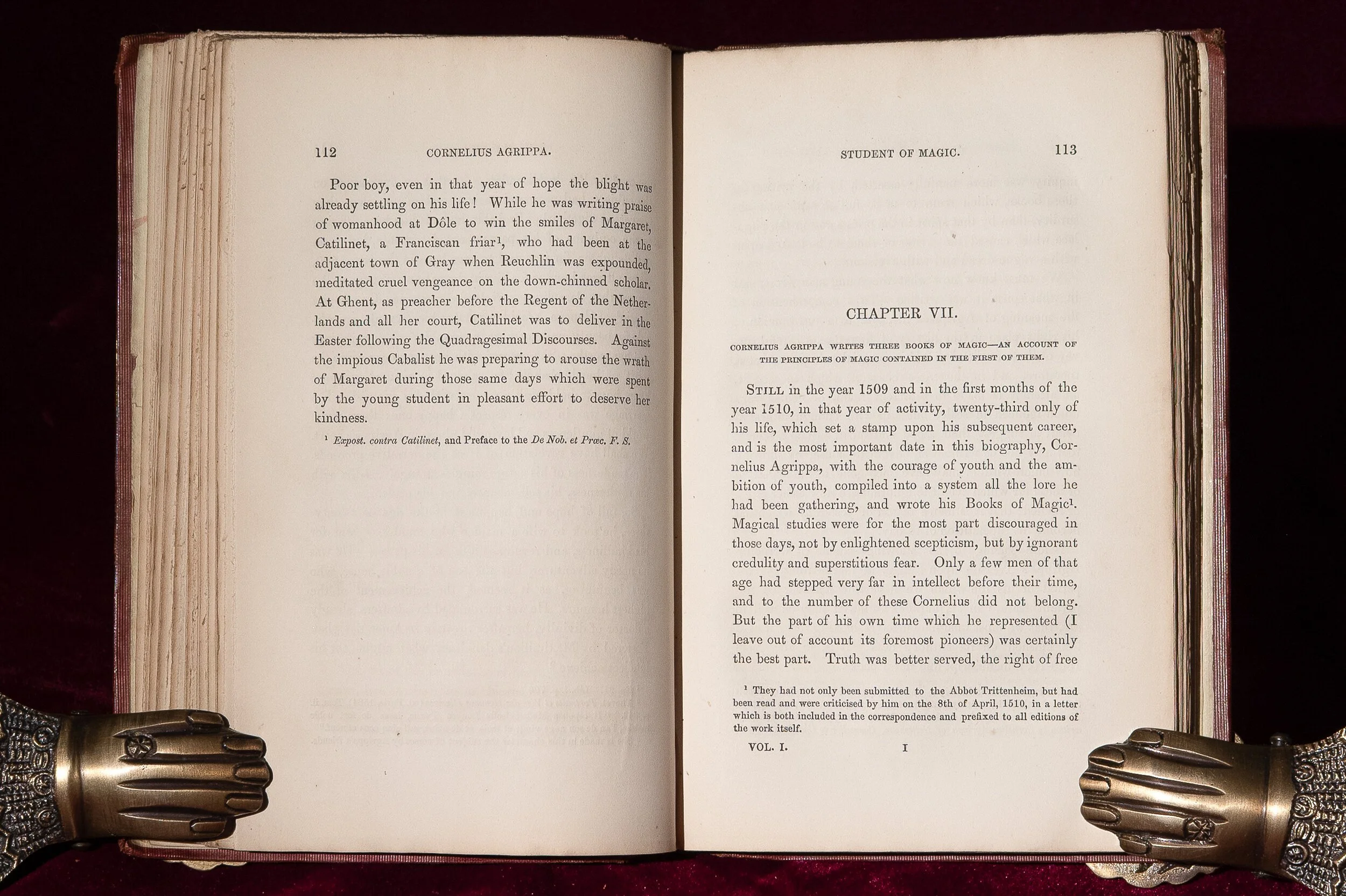 Image 8 of 22
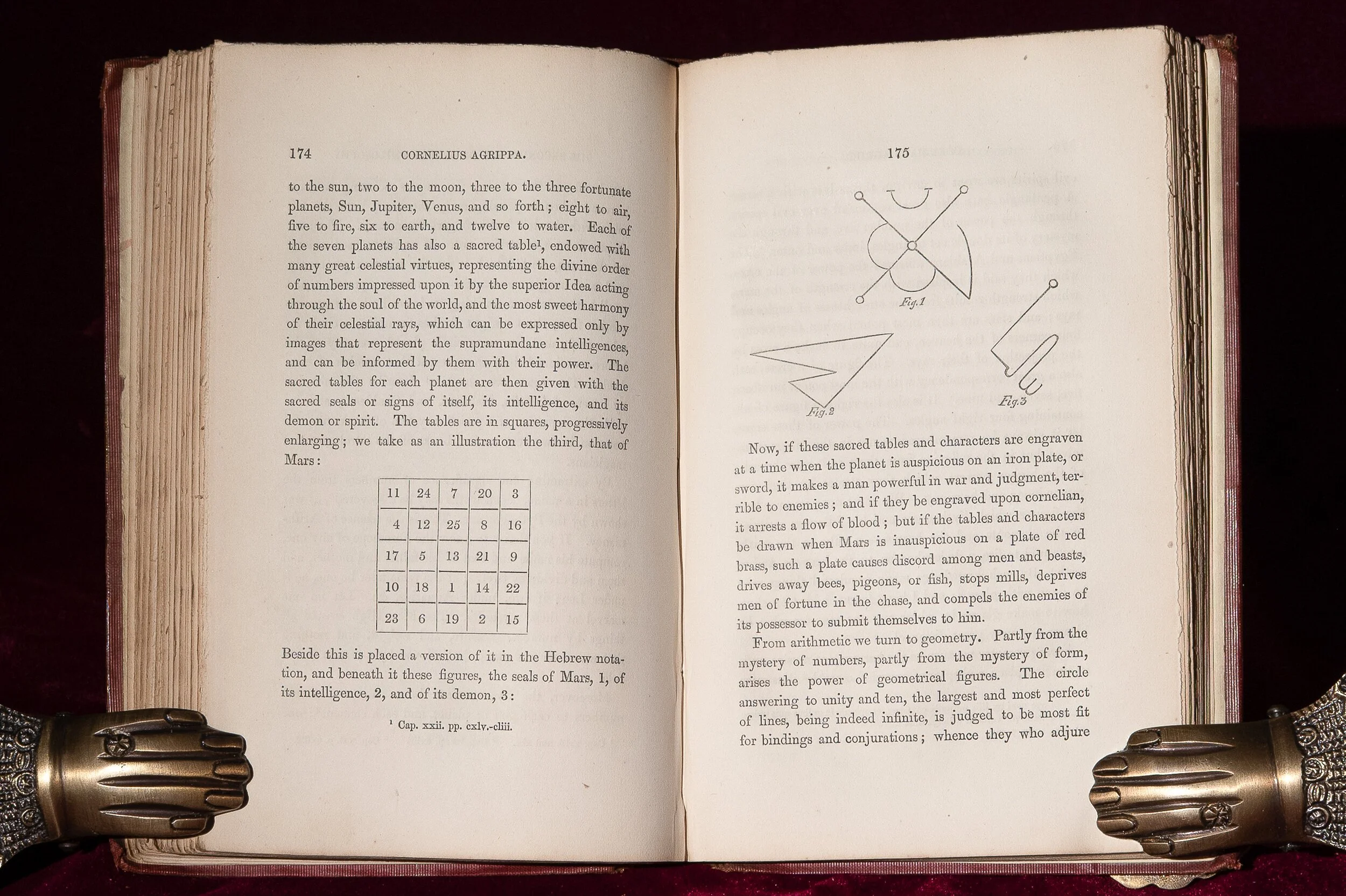 Image 9 of 22
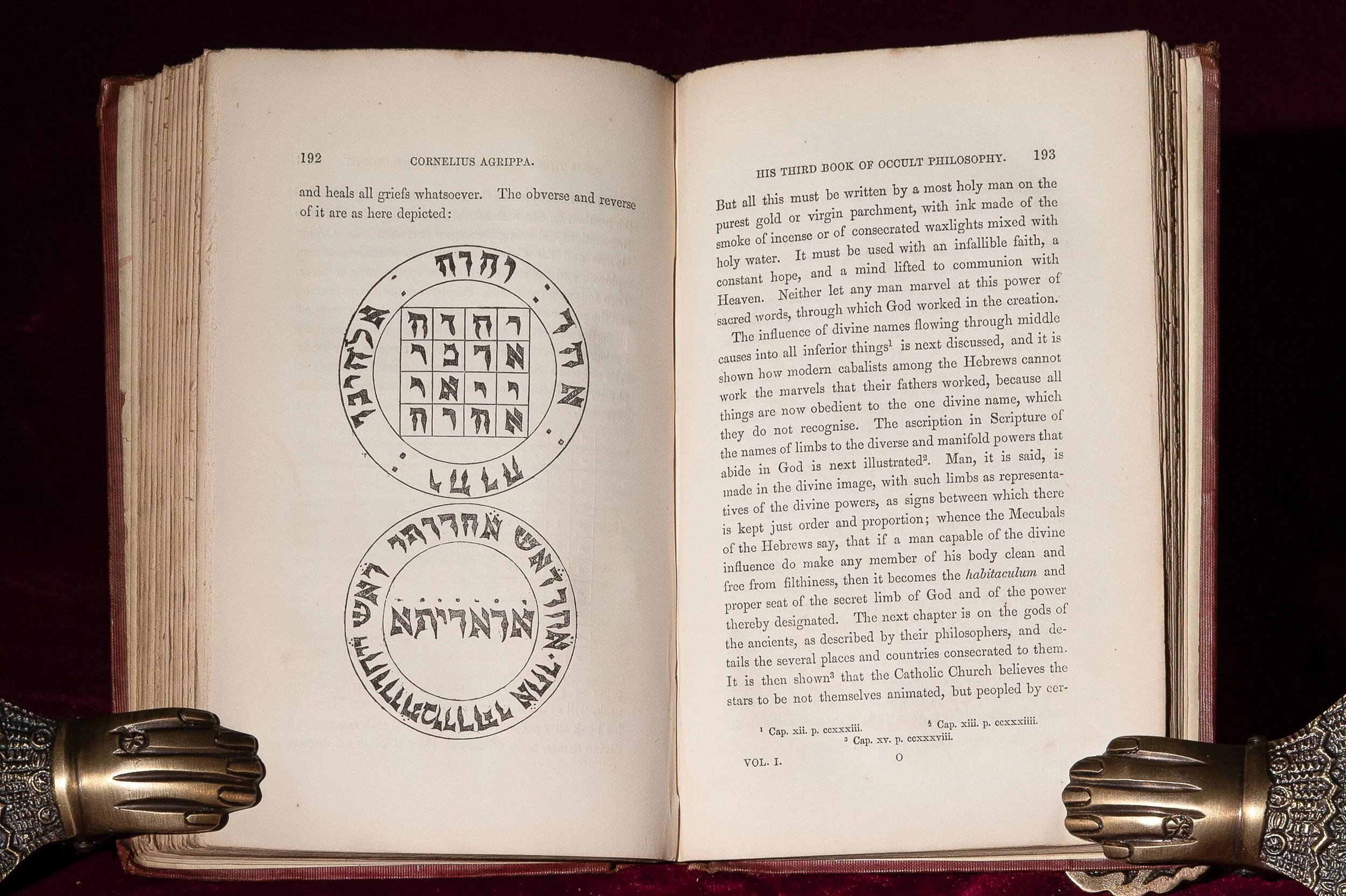 Image 10 of 22
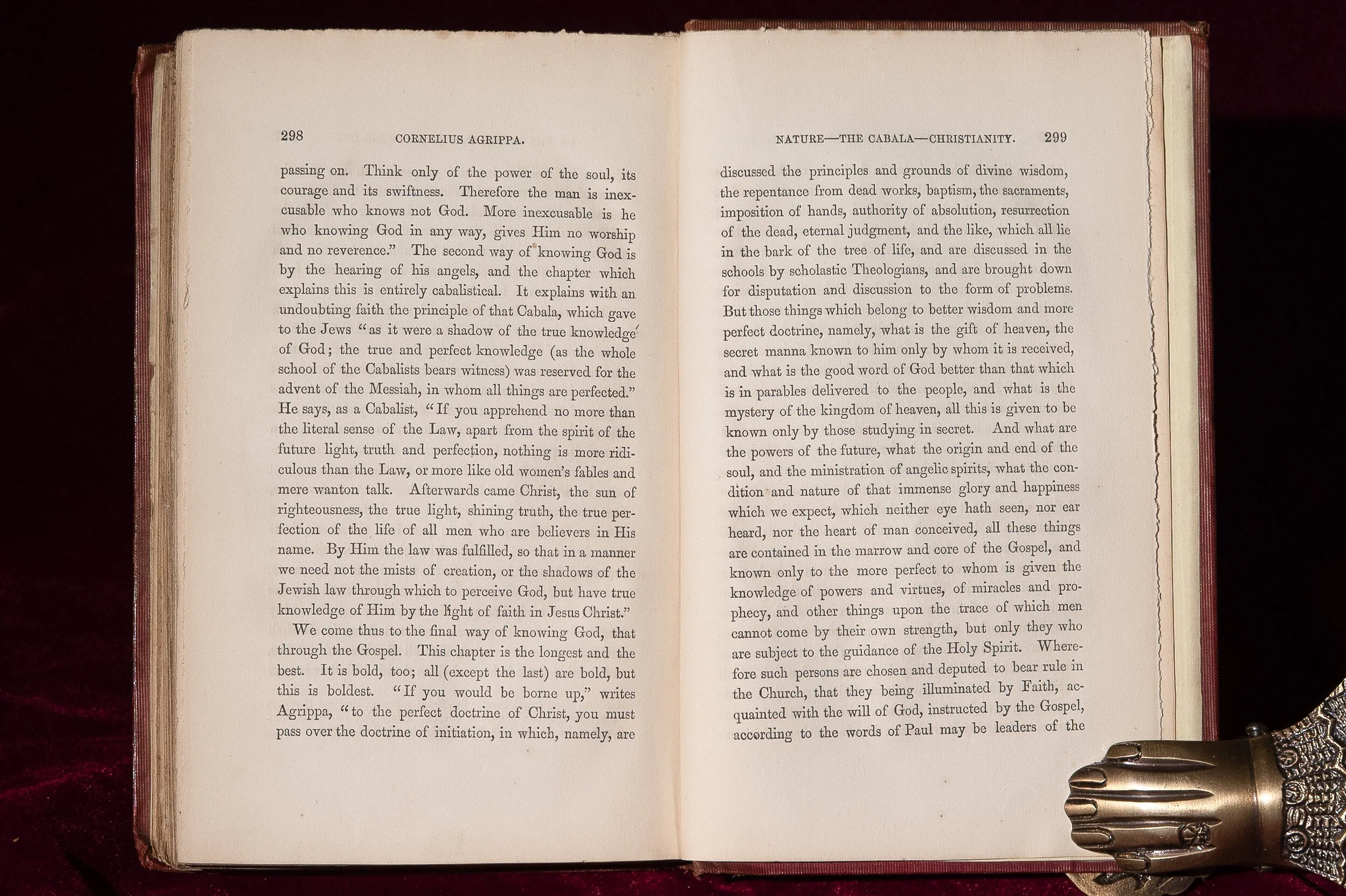 Image 11 of 22
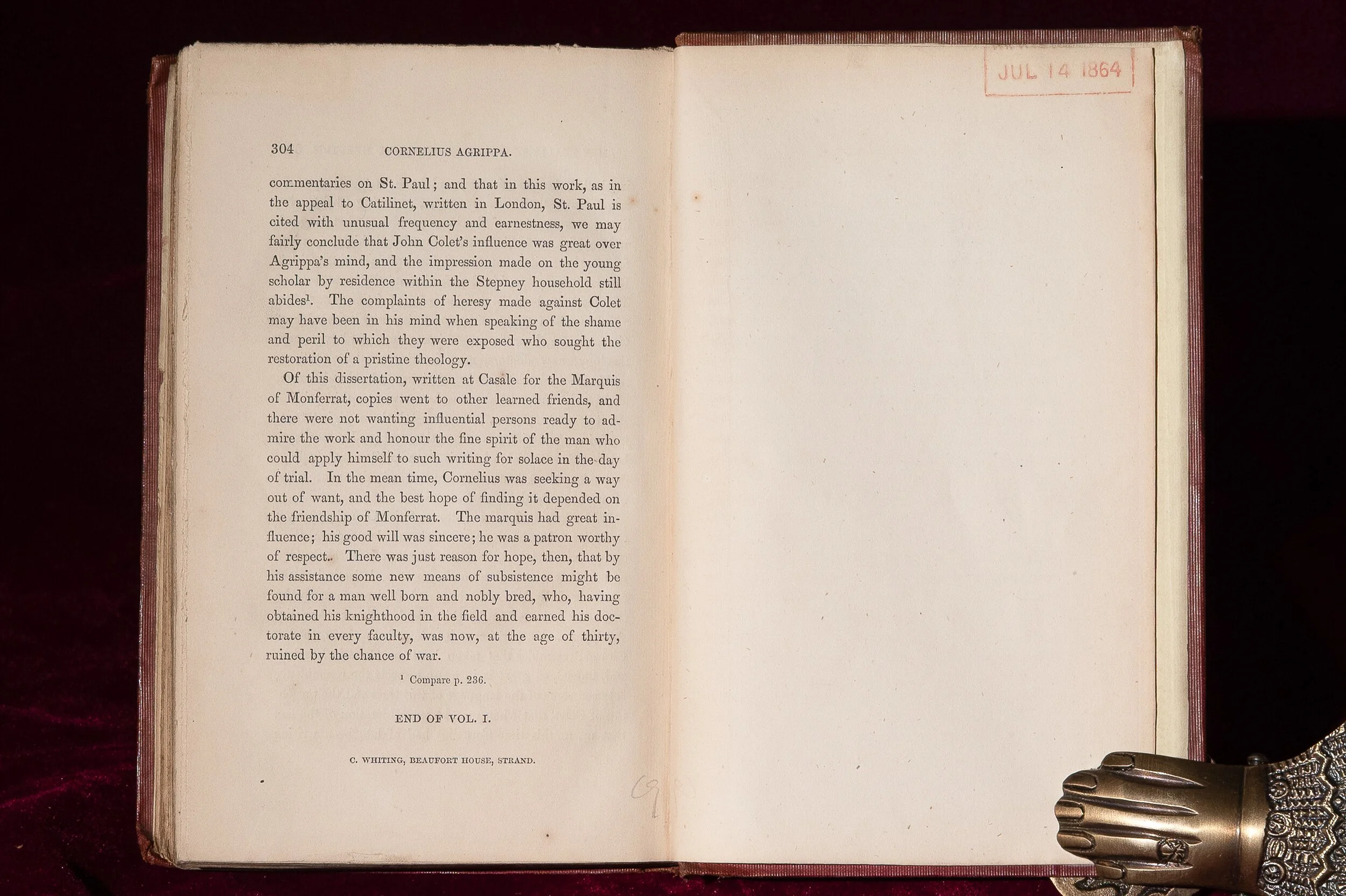 Image 12 of 22
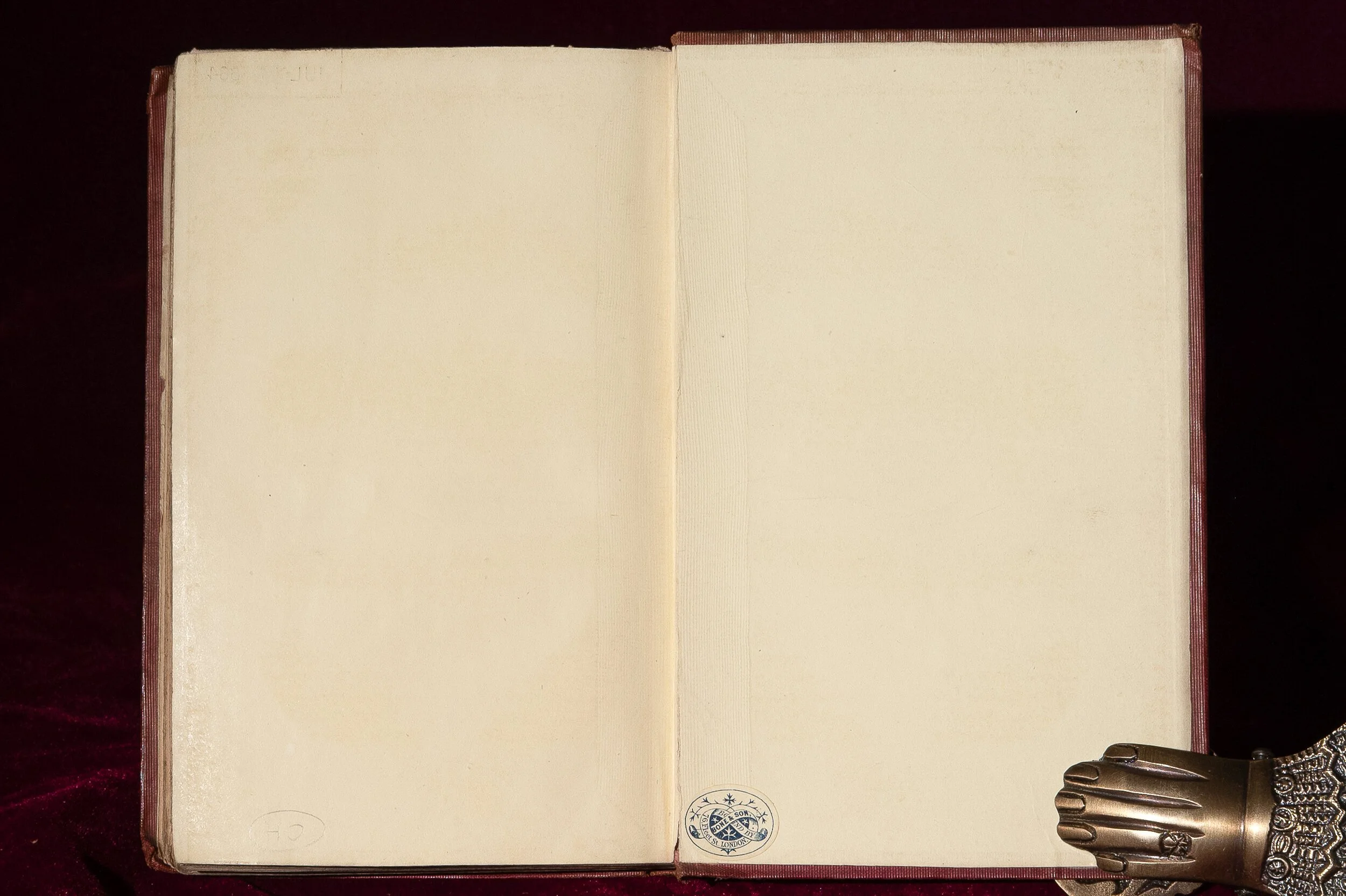 Image 13 of 22
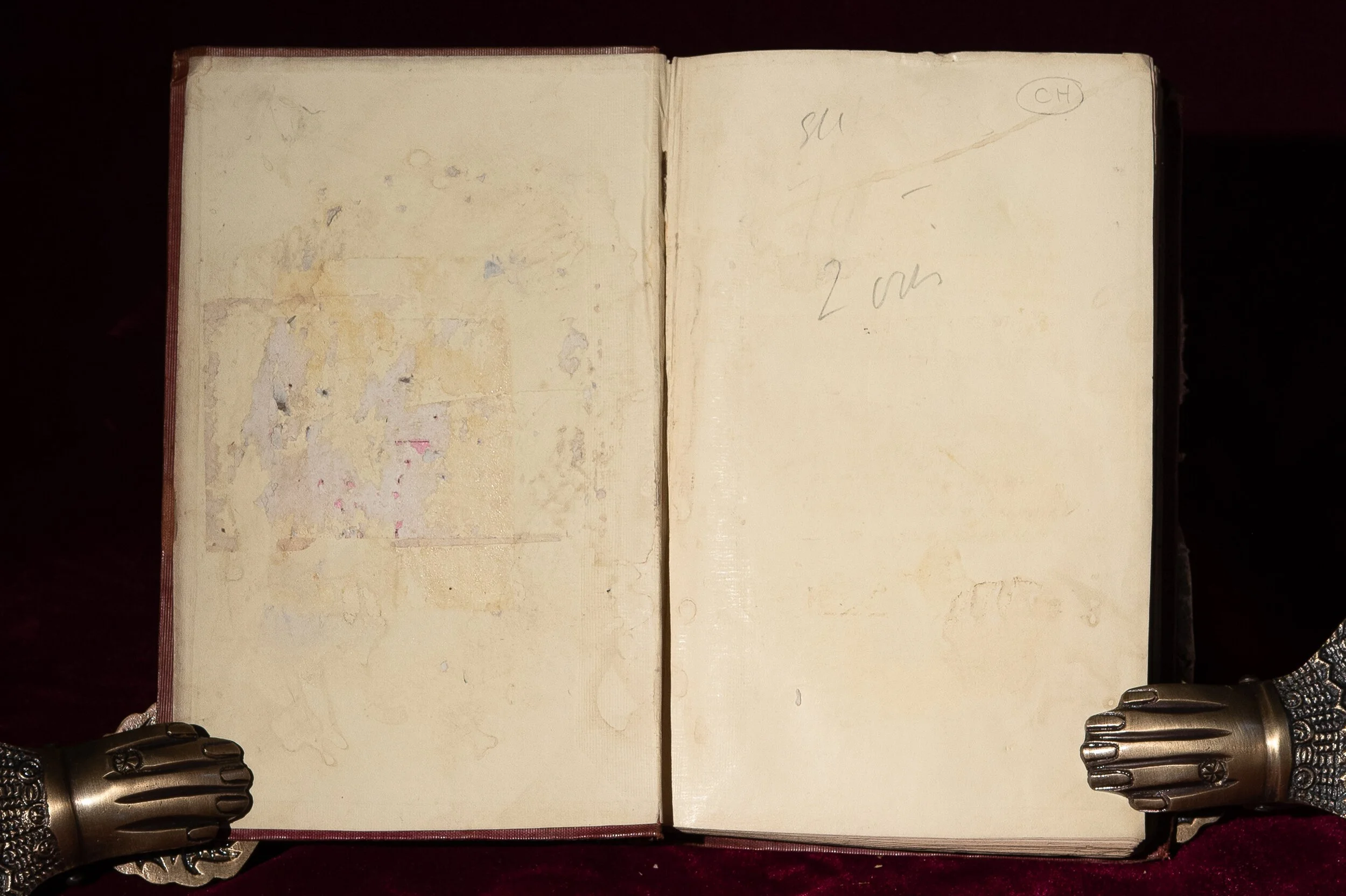 Image 14 of 22
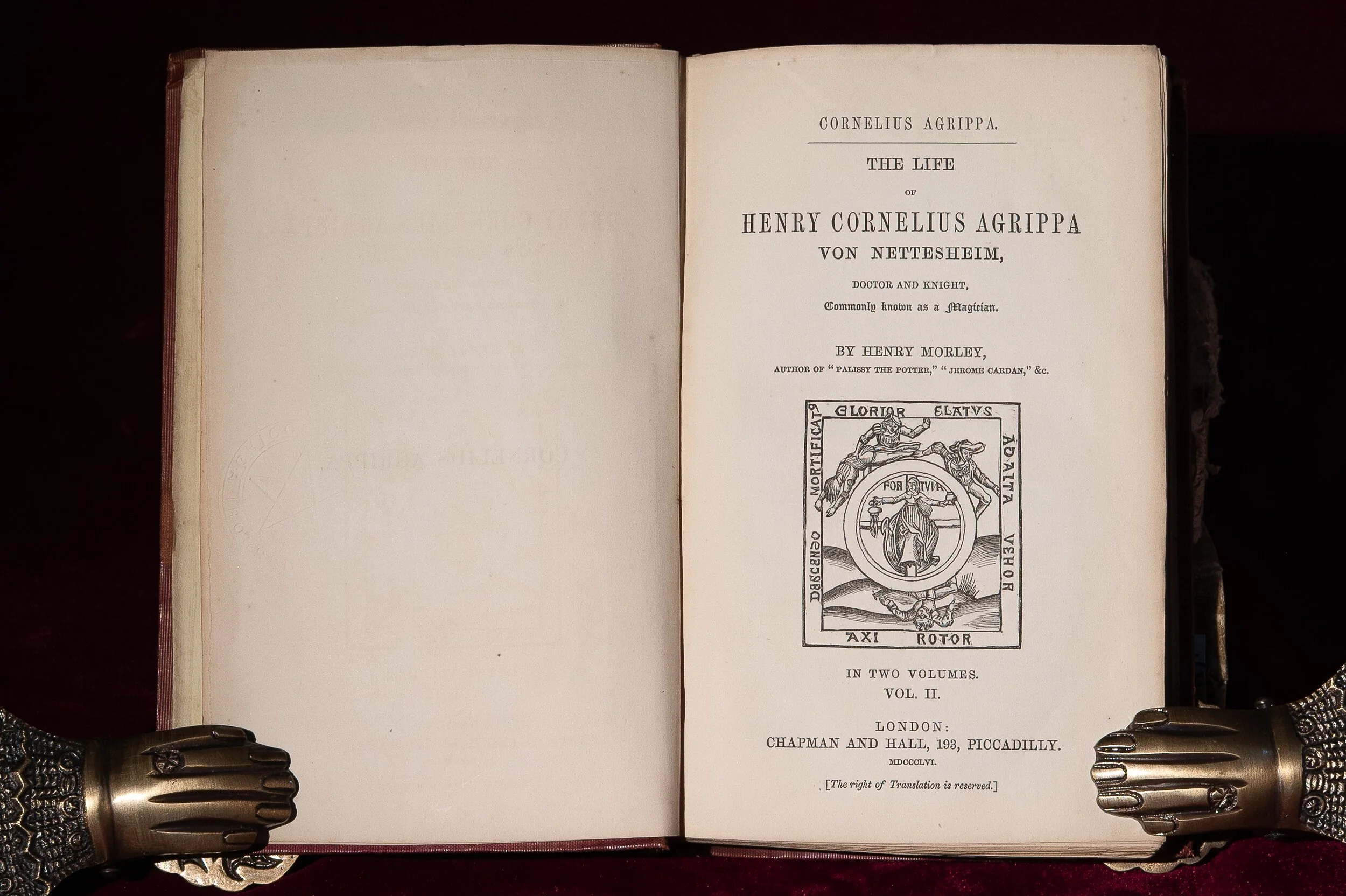 Image 15 of 22
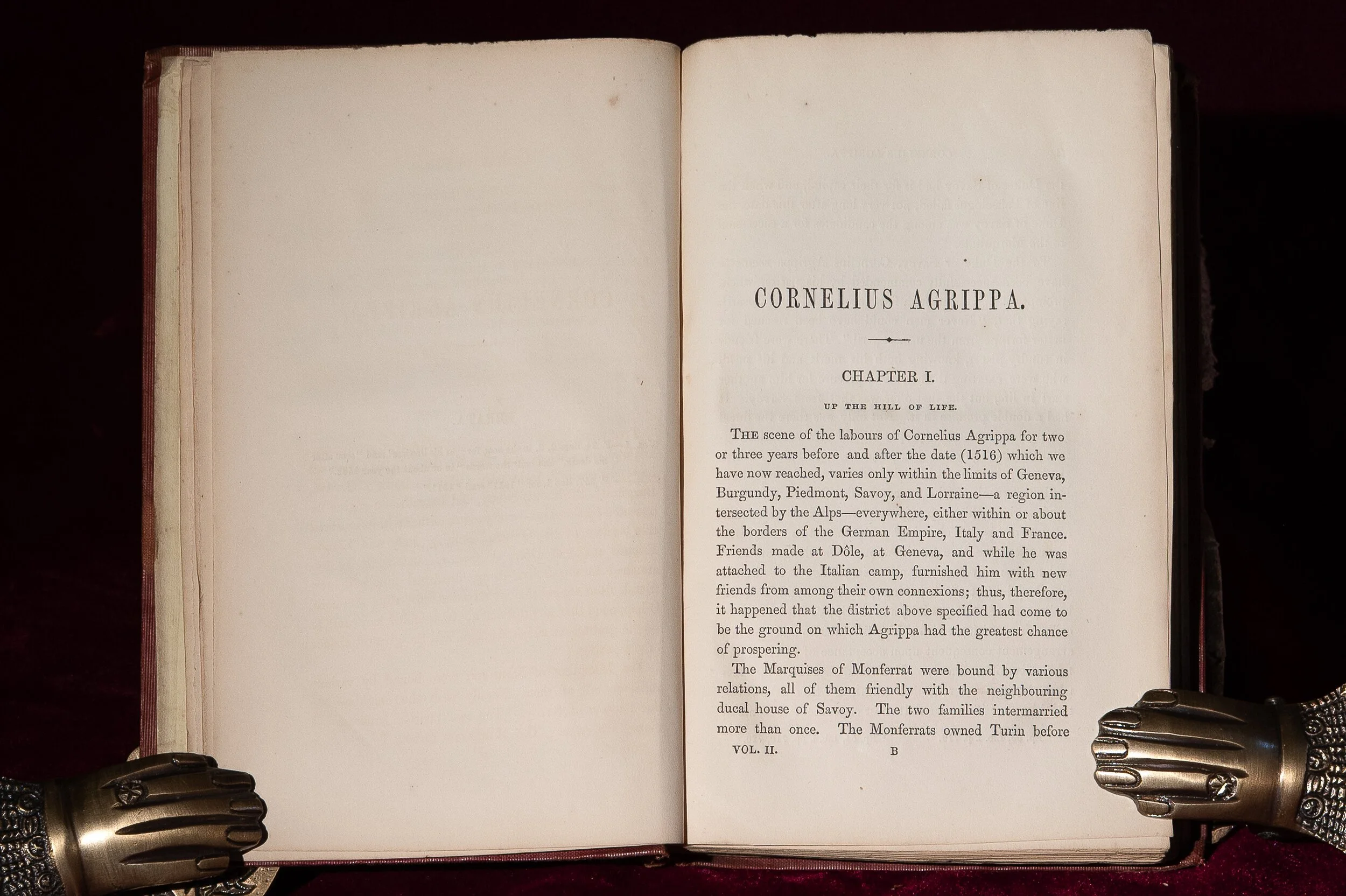 Image 16 of 22
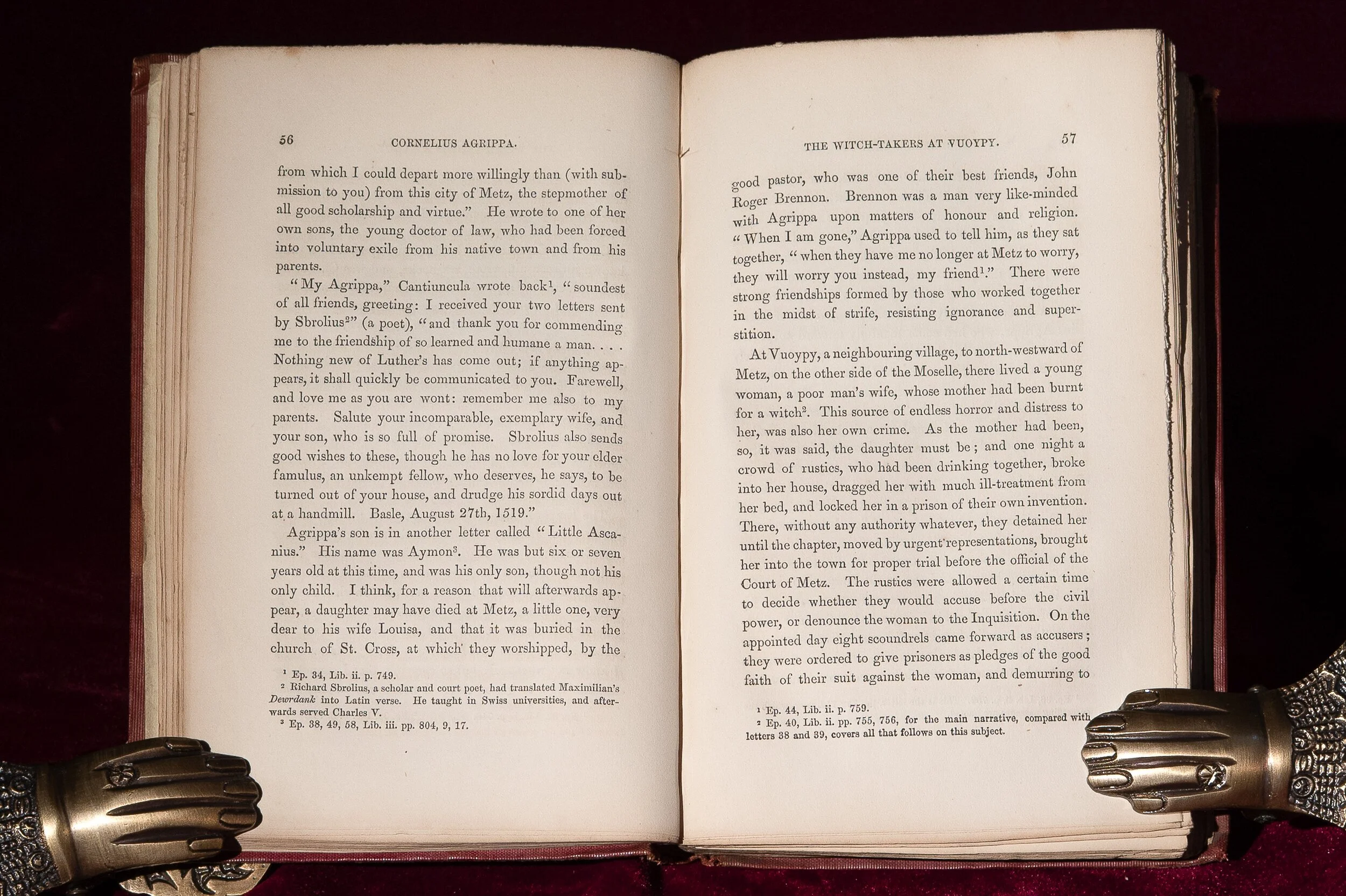 Image 17 of 22
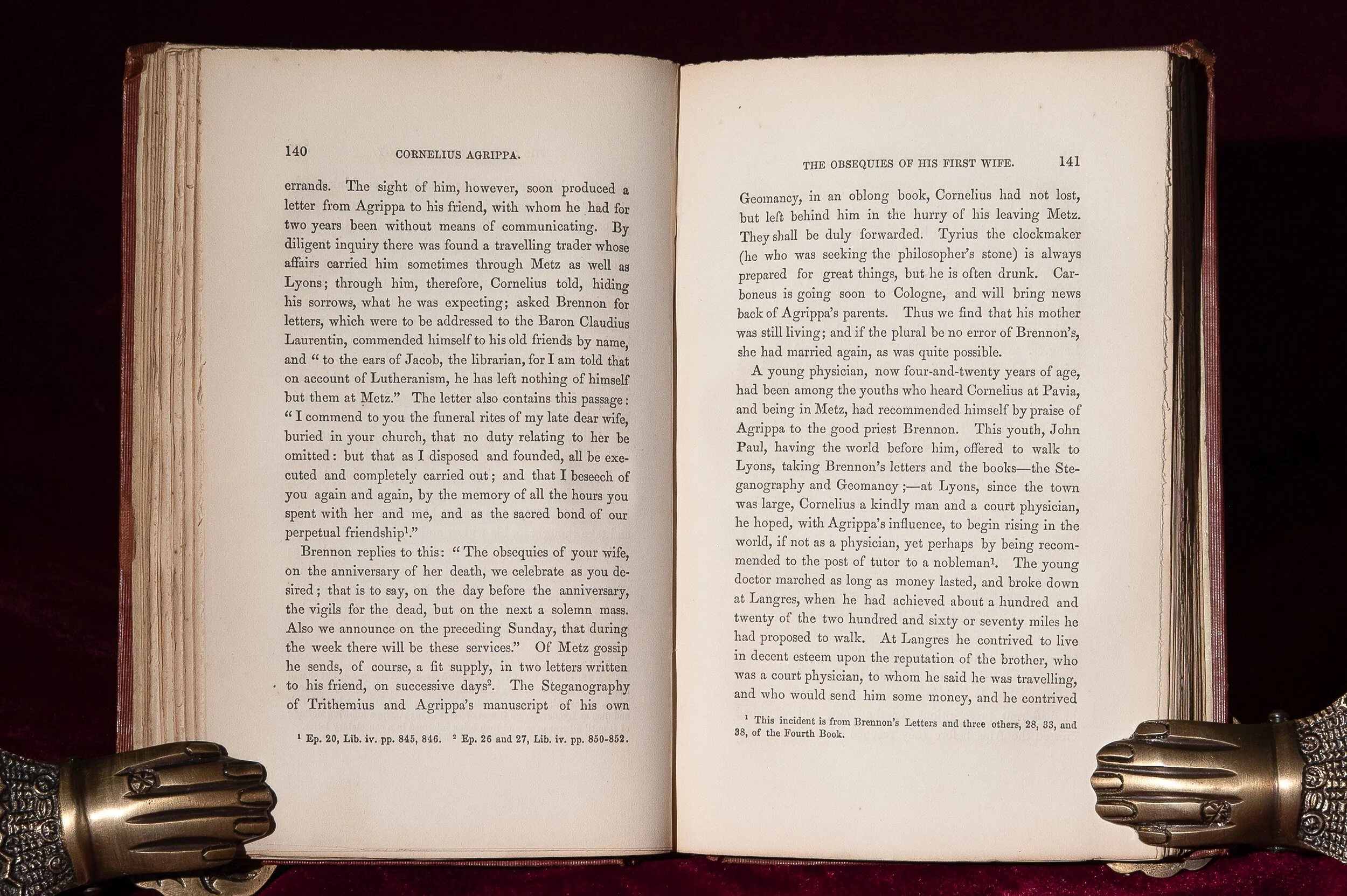 Image 18 of 22
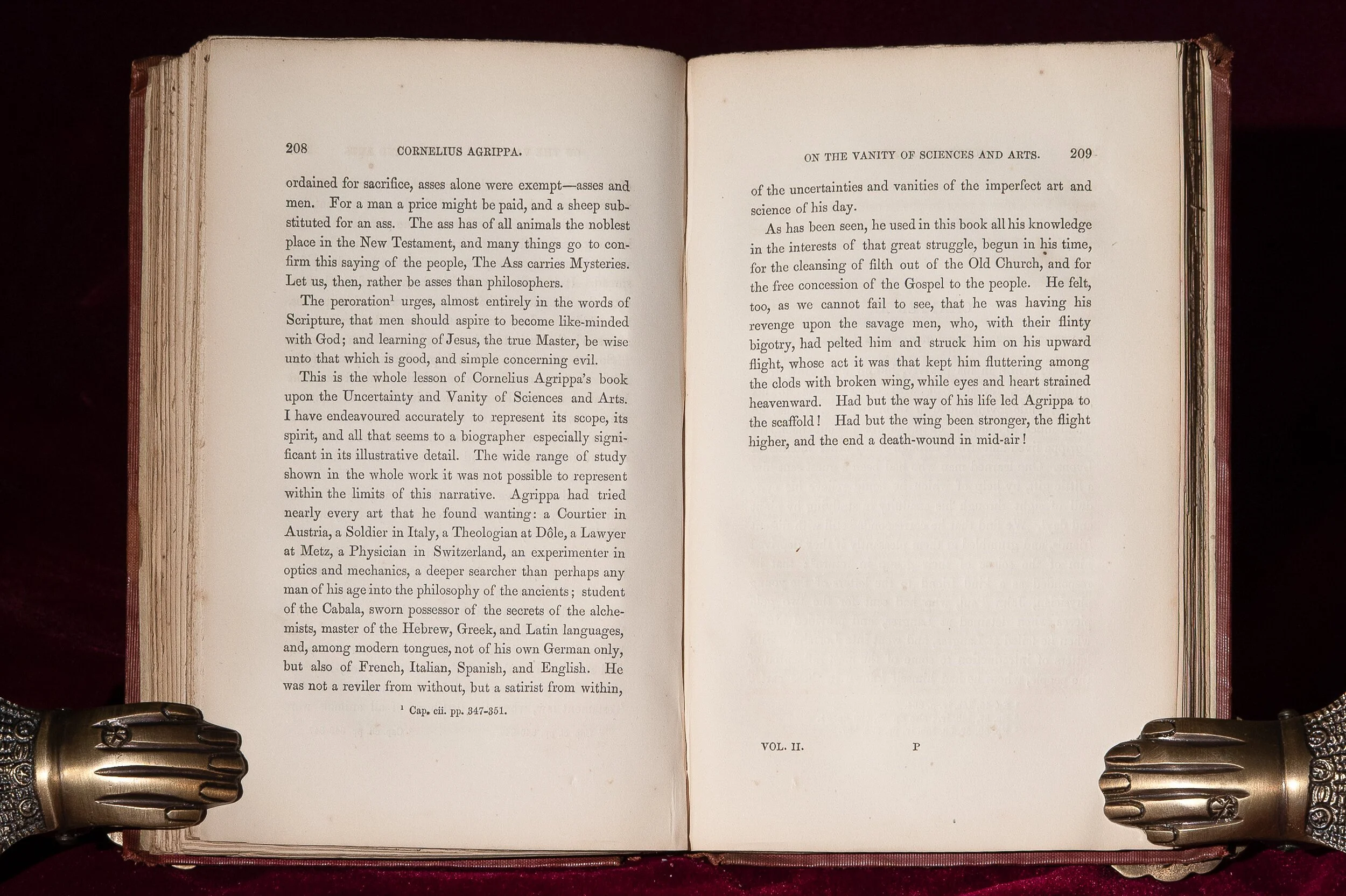 Image 19 of 22
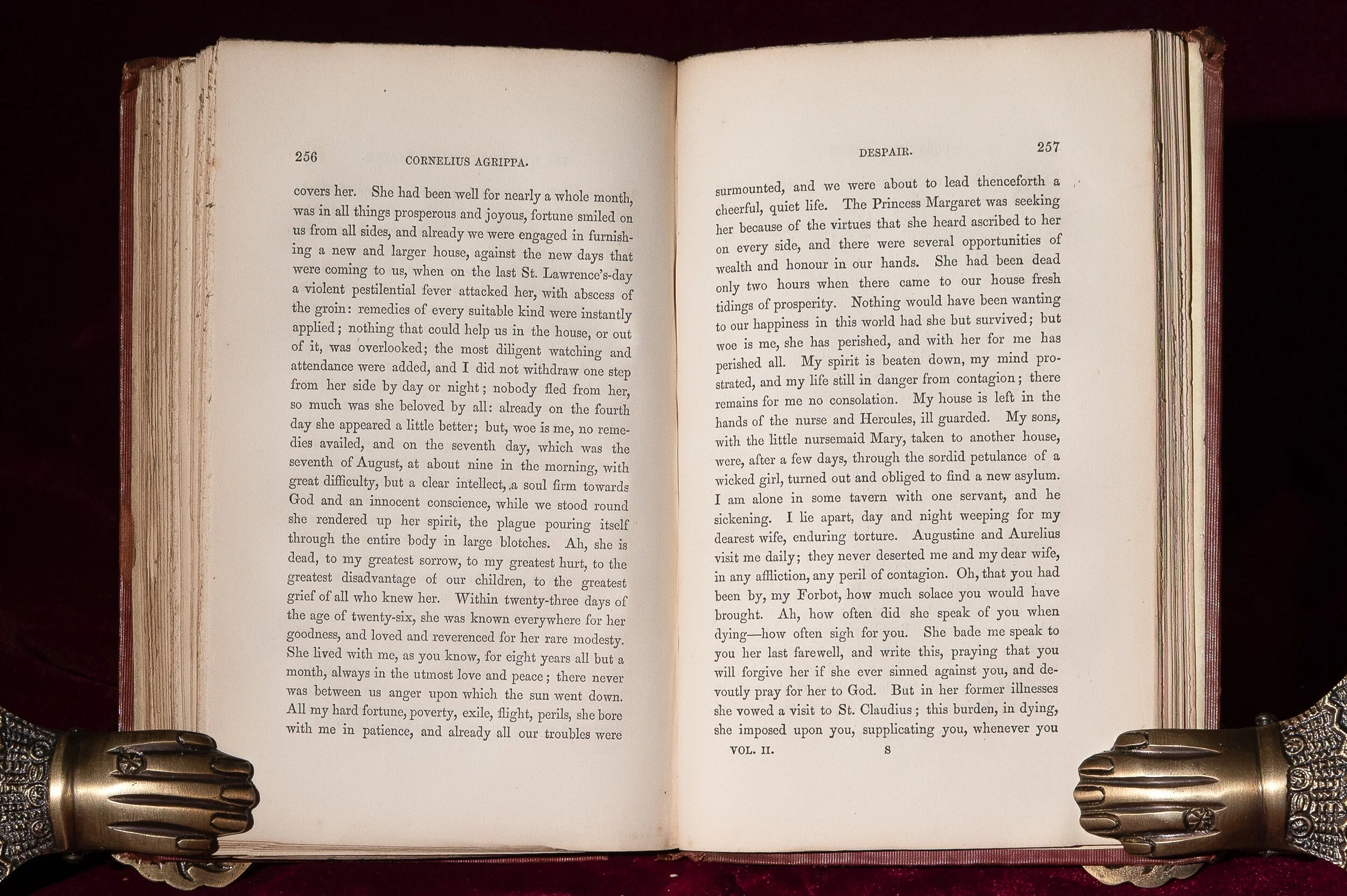 Image 20 of 22
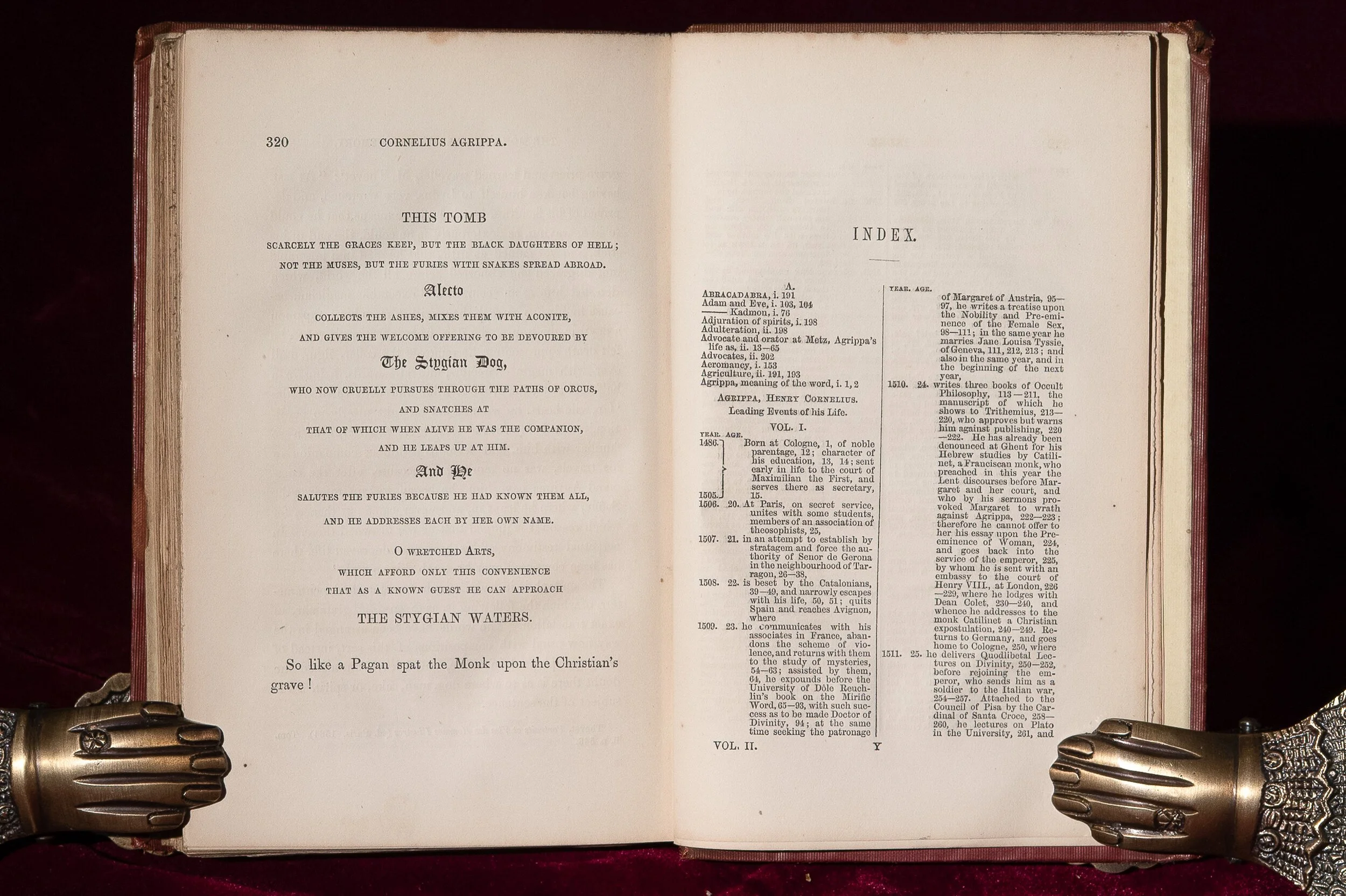 Image 21 of 22
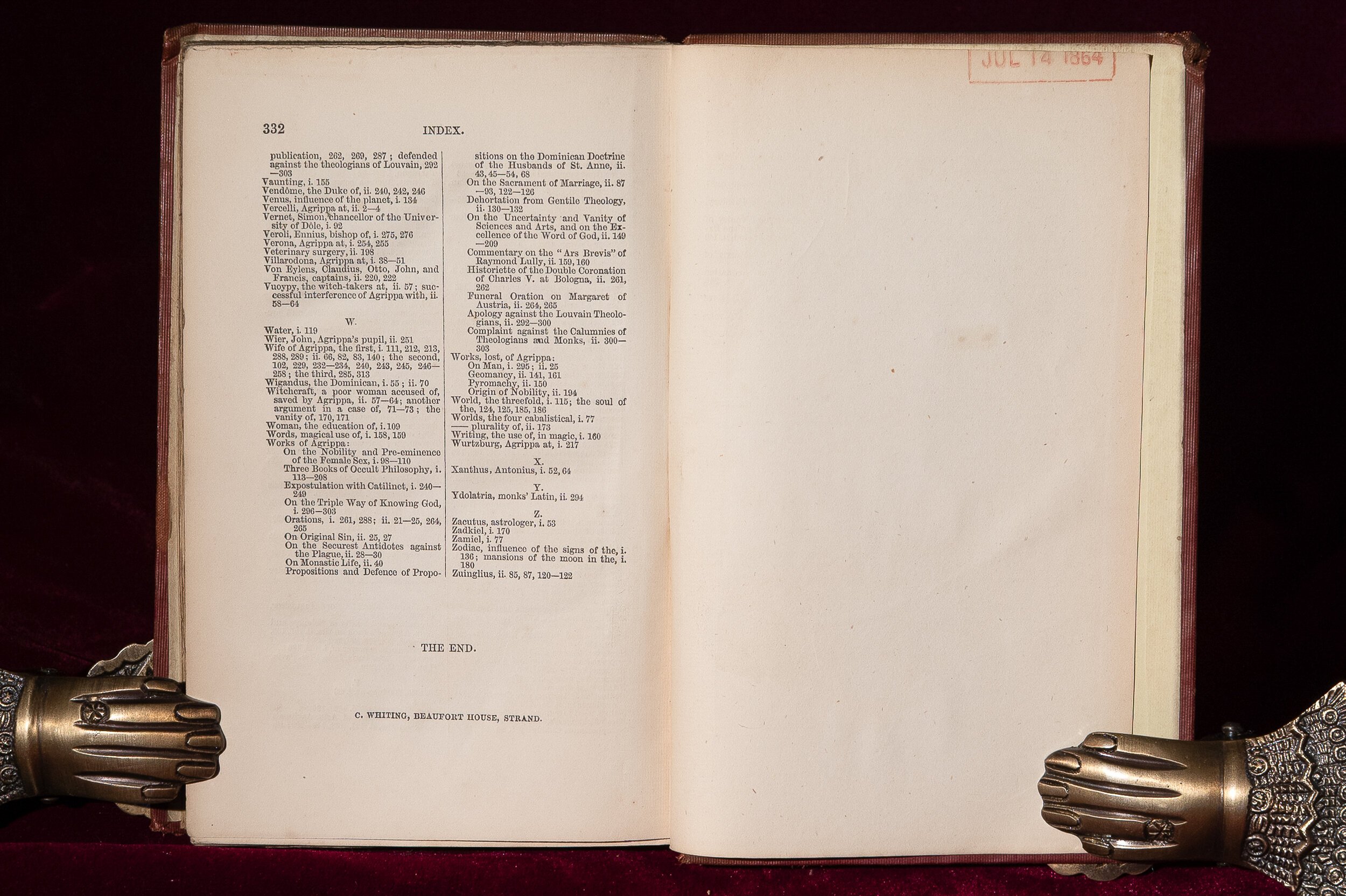 Image 22 of 22