A rare and fascinating "Book of Secrets" from the tail end of the Romantic era, bridging the gap between genuine occult philosophy and the burgeoning world of stage illusion and "Natural Magic." Printed in Kaschau (modern-day Košice, Slovakia), this manual compiles the chemical, electrical, galvanic, and magnetic secrets attributed to the greatest miracle-workers of the 18th century.
The title invokes a lineage of figures who blurred the line between mystic and showman, making this a key text for understanding how the public perceived "magic" in the age of Enlightenment:
Giuseppe Pinetti (1750-1800): The self-styled "Professor of Natural Magic" who revolutionized the performance of magic, moving it from the street fair to the royal theater.
Jacob Philadelphia (1735-1795): Perhaps the most esoteric figure listed. Born Jacob Meyer in Philadelphia, PA, he was a Jewish Kabbalist, physicist, and astrologer who wandered the courts of Europe (performing for Catherine the Great and Goethe). He represents the archetype of the "Wandering Jew" as a master of hidden wisdom, using scientific principles to simulate supernatural power.
Karl von Eckartshausen (1752-1803): While listed here among "jugglers," Eckartshausen was a profound Christian Theosophist and mystic, best known for The Cloud Upon the Sanctuary (which deeply influenced A.E. Waite and the Golden Dawn). His inclusion here highlights how the work of genuine mystics was often co-opted into the "Scientific Magic" genre.
The text itself is a testament to the 19th-century obsession with the "imponderables"—electricity, magnetism, and galvanism—which were seen as the scientific heirs to alchemy. It contains instructions for "surprising and easily performed" feats using chemical reactions and early electrical apparatus, effectively teaching the reader how to perform the miracles that were once the domain of the sorcerer.
In very good condition. The contemporary half-leather binding is solid, though showing expected wear to the spine and corners ("rubbed and bumped"). The front joint is scuffed but holding firm. The interior shows the characteristic browning of Central European paper stocks from this period, with some scattered spotting. The preliminary leaves (title page and intro) are darker, with some visible water staining to the margins, but the text remains fully legible throughout. A scarce survival of provincial magic publishing.
Magikon, oder die vorzüglichsten Zauberkünste der berühmtesten Taschenspieler Pinetti, Philadelphia, Enslin u. Eckartshausen. Kaschau: G. Wigand. Sm. 8°. XXIV, 324 pp. First edition of this rare collection of magic tricks. Contemporary half-leather binding with spine label and gilt spine; rubbed and bumped, front joint slightly scuffed. Internally lightly browned and spotting in places, preliminary leaves more heavily browned with light dampstaining to margins.
A rare and fascinating "Book of Secrets" from the tail end of the Romantic era, bridging the gap between genuine occult philosophy and the burgeoning world of stage illusion and "Natural Magic." Printed in Kaschau (modern-day Košice, Slovakia), this manual compiles the chemical, electrical, galvanic, and magnetic secrets attributed to the greatest miracle-workers of the 18th century.
The title invokes a lineage of figures who blurred the line between mystic and showman, making this a key text for understanding how the public perceived "magic" in the age of Enlightenment:
Giuseppe Pinetti (1750-1800): The self-styled "Professor of Natural Magic" who revolutionized the performance of magic, moving it from the street fair to the royal theater.
Jacob Philadelphia (1735-1795): Perhaps the most esoteric figure listed. Born Jacob Meyer in Philadelphia, PA, he was a Jewish Kabbalist, physicist, and astrologer who wandered the courts of Europe (performing for Catherine the Great and Goethe). He represents the archetype of the "Wandering Jew" as a master of hidden wisdom, using scientific principles to simulate supernatural power.
Karl von Eckartshausen (1752-1803): While listed here among "jugglers," Eckartshausen was a profound Christian Theosophist and mystic, best known for The Cloud Upon the Sanctuary (which deeply influenced A.E. Waite and the Golden Dawn). His inclusion here highlights how the work of genuine mystics was often co-opted into the "Scientific Magic" genre.
The text itself is a testament to the 19th-century obsession with the "imponderables"—electricity, magnetism, and galvanism—which were seen as the scientific heirs to alchemy. It contains instructions for "surprising and easily performed" feats using chemical reactions and early electrical apparatus, effectively teaching the reader how to perform the miracles that were once the domain of the sorcerer.
In very good condition. The contemporary half-leather binding is solid, though showing expected wear to the spine and corners ("rubbed and bumped"). The front joint is scuffed but holding firm. The interior shows the characteristic browning of Central European paper stocks from this period, with some scattered spotting. The preliminary leaves (title page and intro) are darker, with some visible water staining to the margins, but the text remains fully legible throughout. A scarce survival of provincial magic publishing.
Magikon, oder die vorzüglichsten Zauberkünste der berühmtesten Taschenspieler Pinetti, Philadelphia, Enslin u. Eckartshausen. Kaschau: G. Wigand. Sm. 8°. XXIV, 324 pp. First edition of this rare collection of magic tricks. Contemporary half-leather binding with spine label and gilt spine; rubbed and bumped, front joint slightly scuffed. Internally lightly browned and spotting in places, preliminary leaves more heavily browned with light dampstaining to margins.

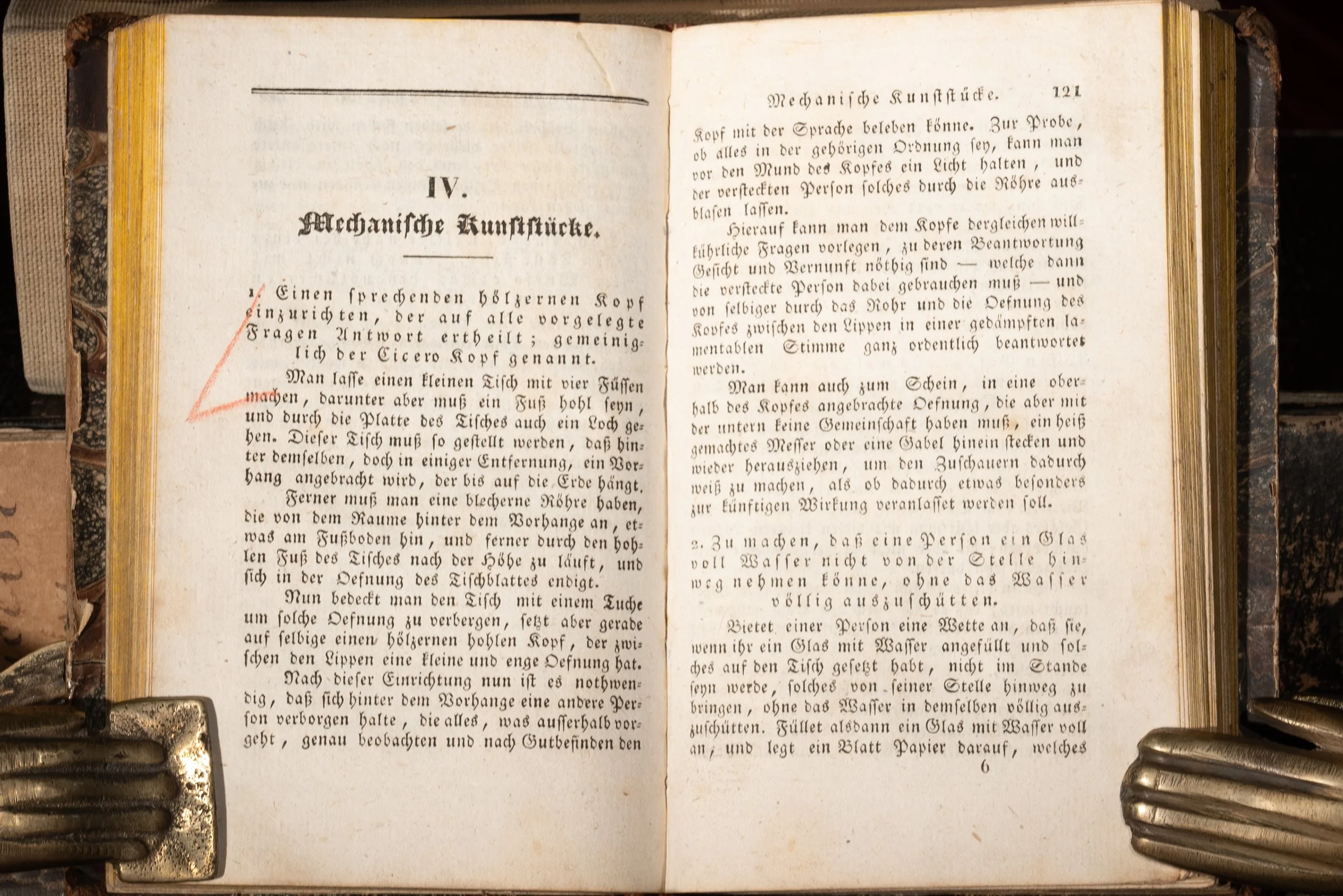 Image 1 of 9
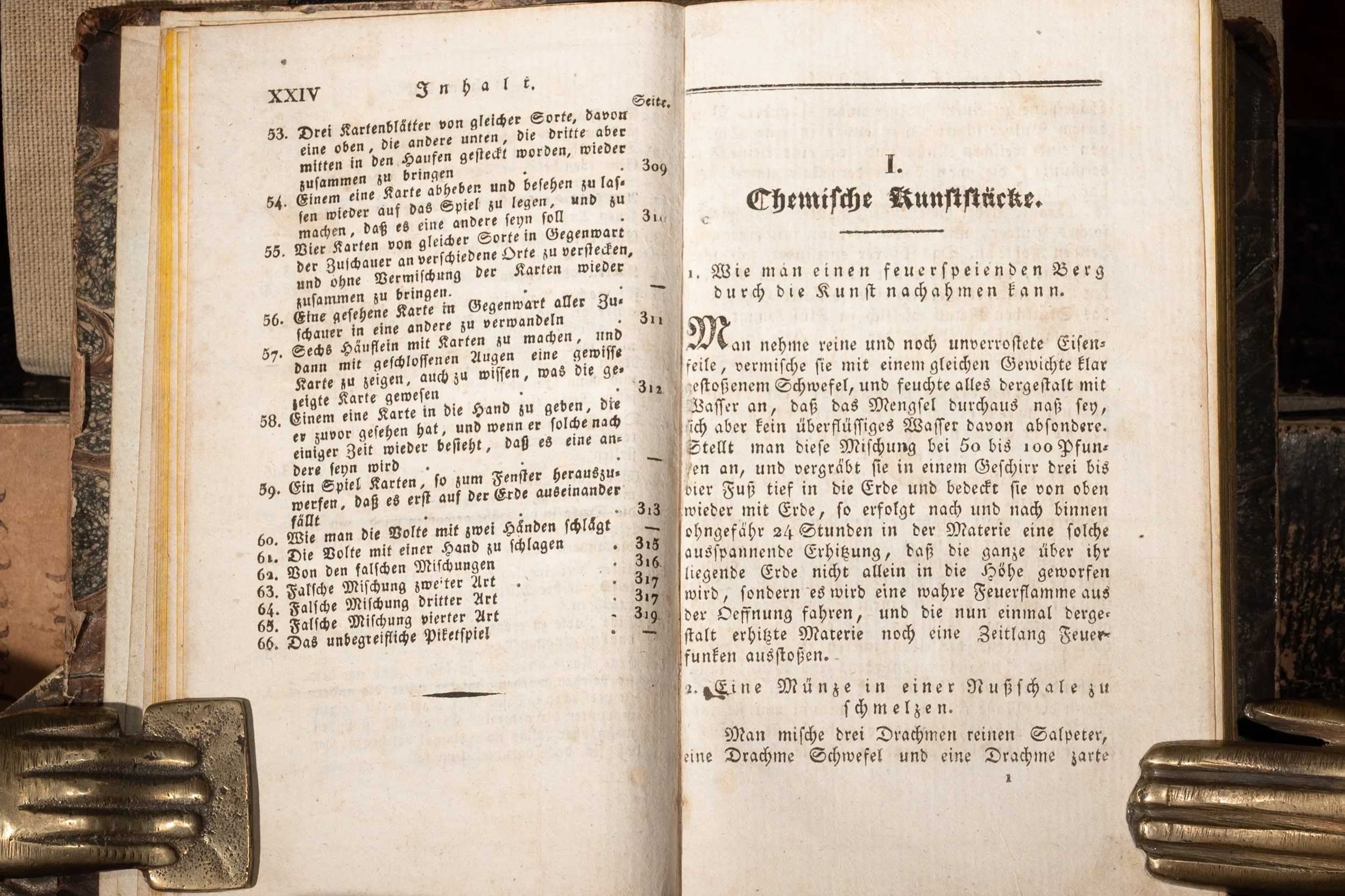 Image 2 of 9
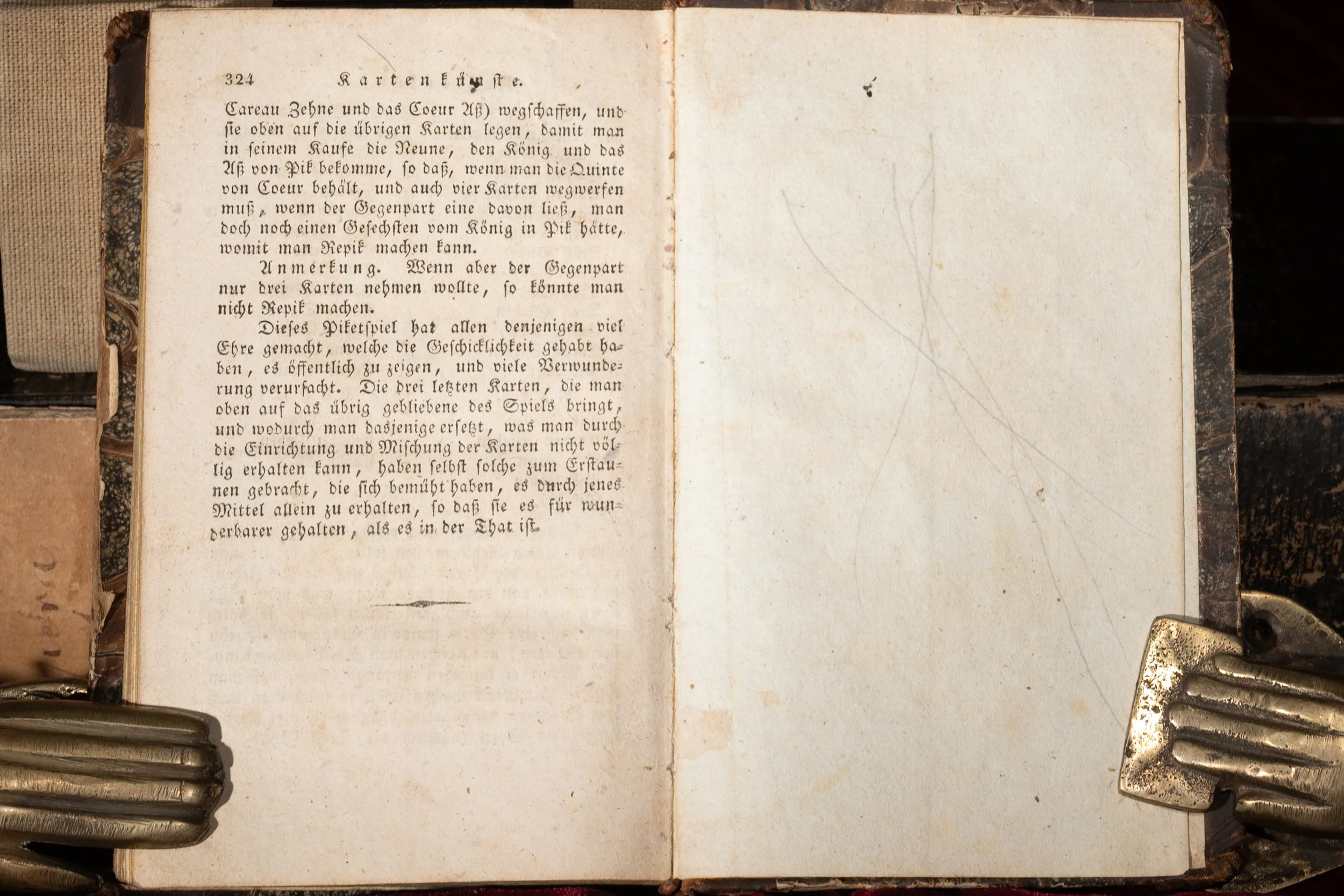 Image 3 of 9
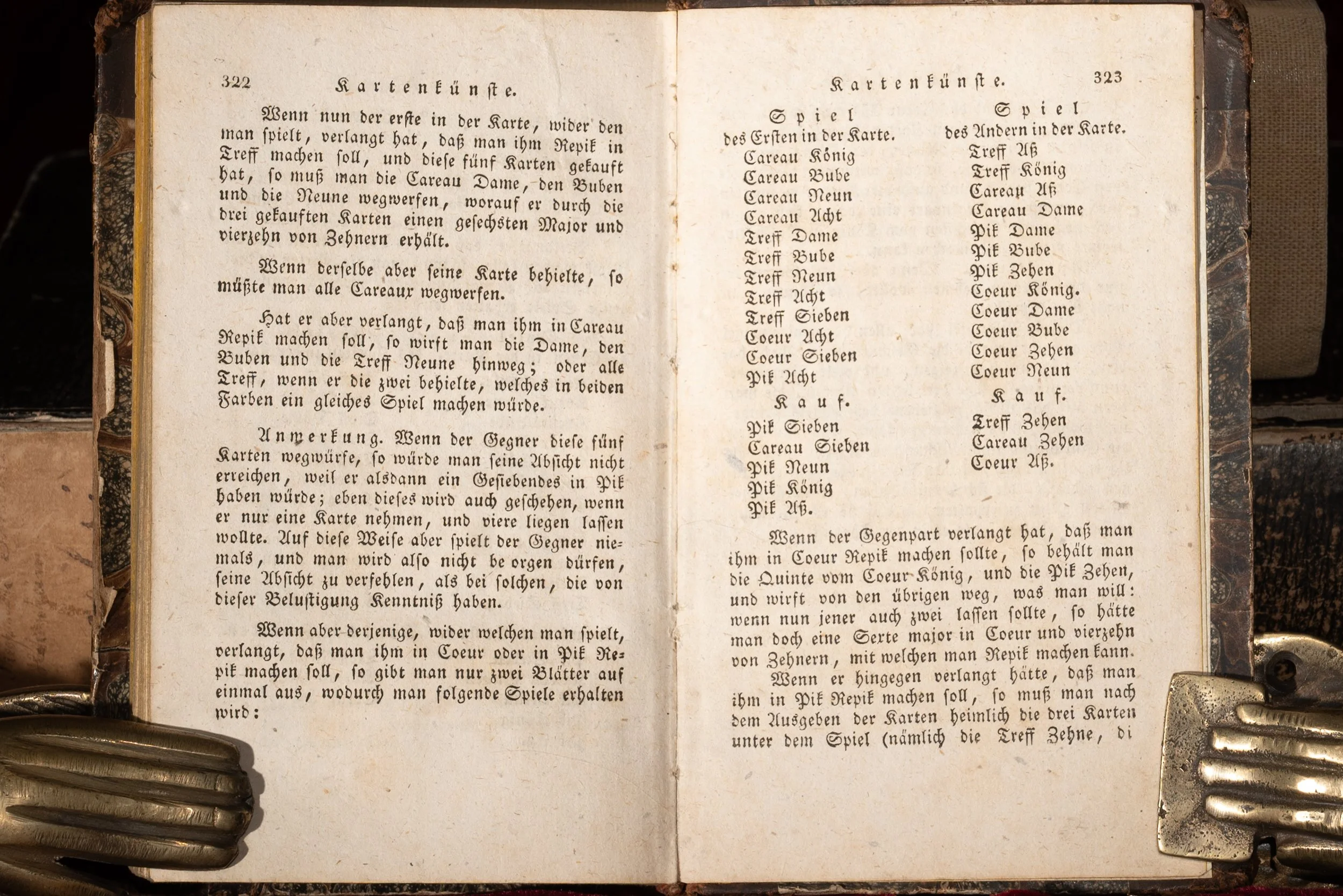 Image 4 of 9
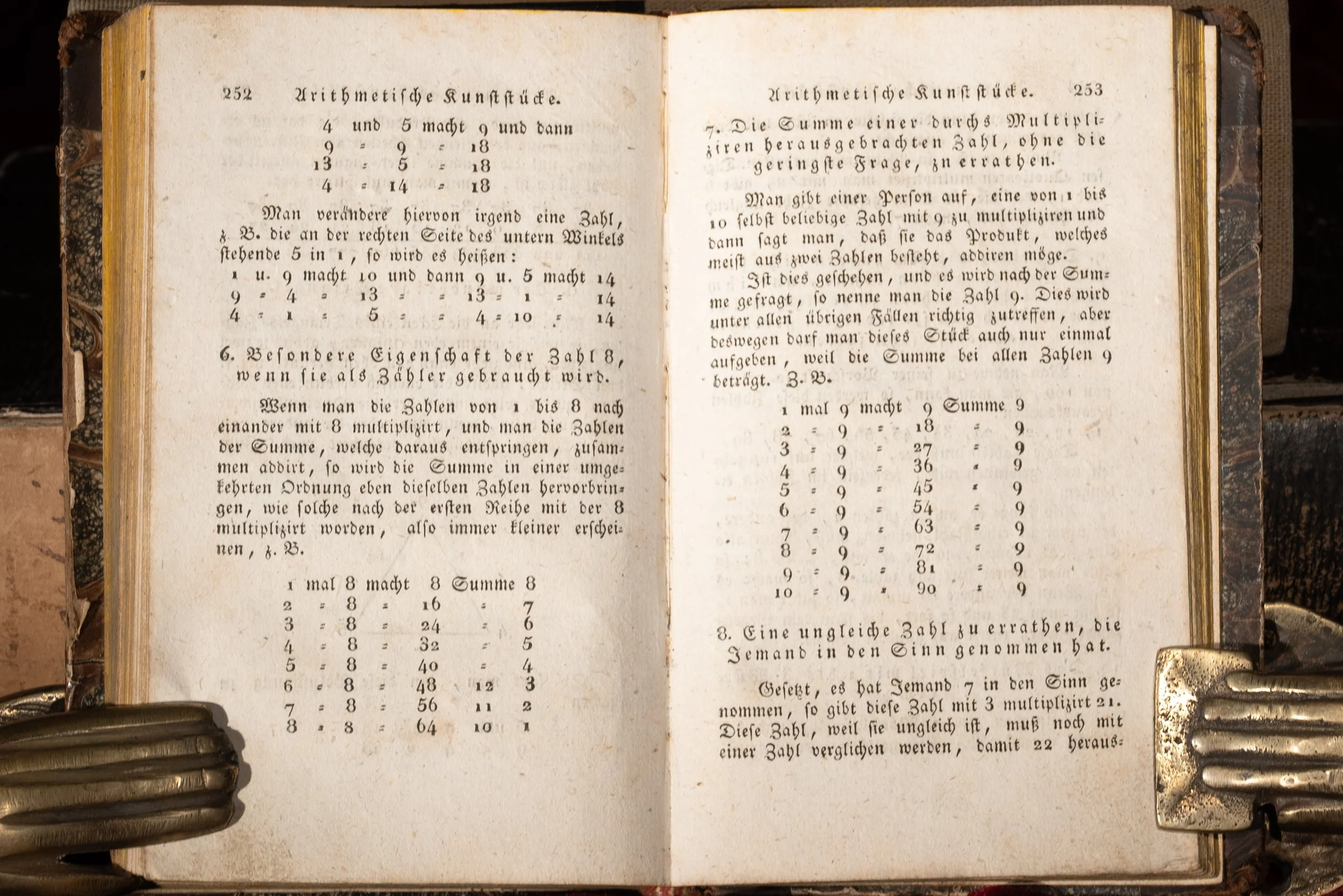 Image 5 of 9
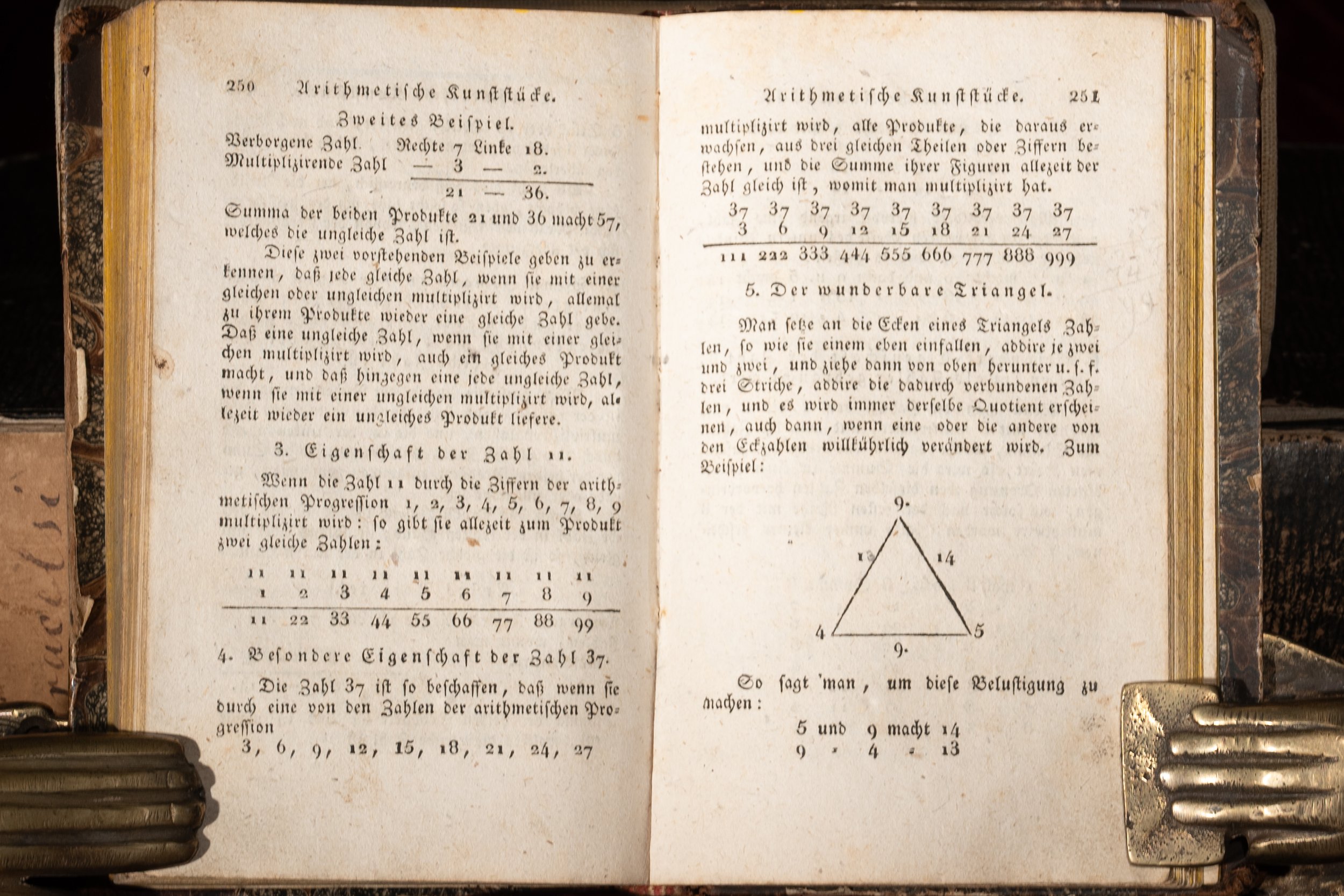 Image 6 of 9
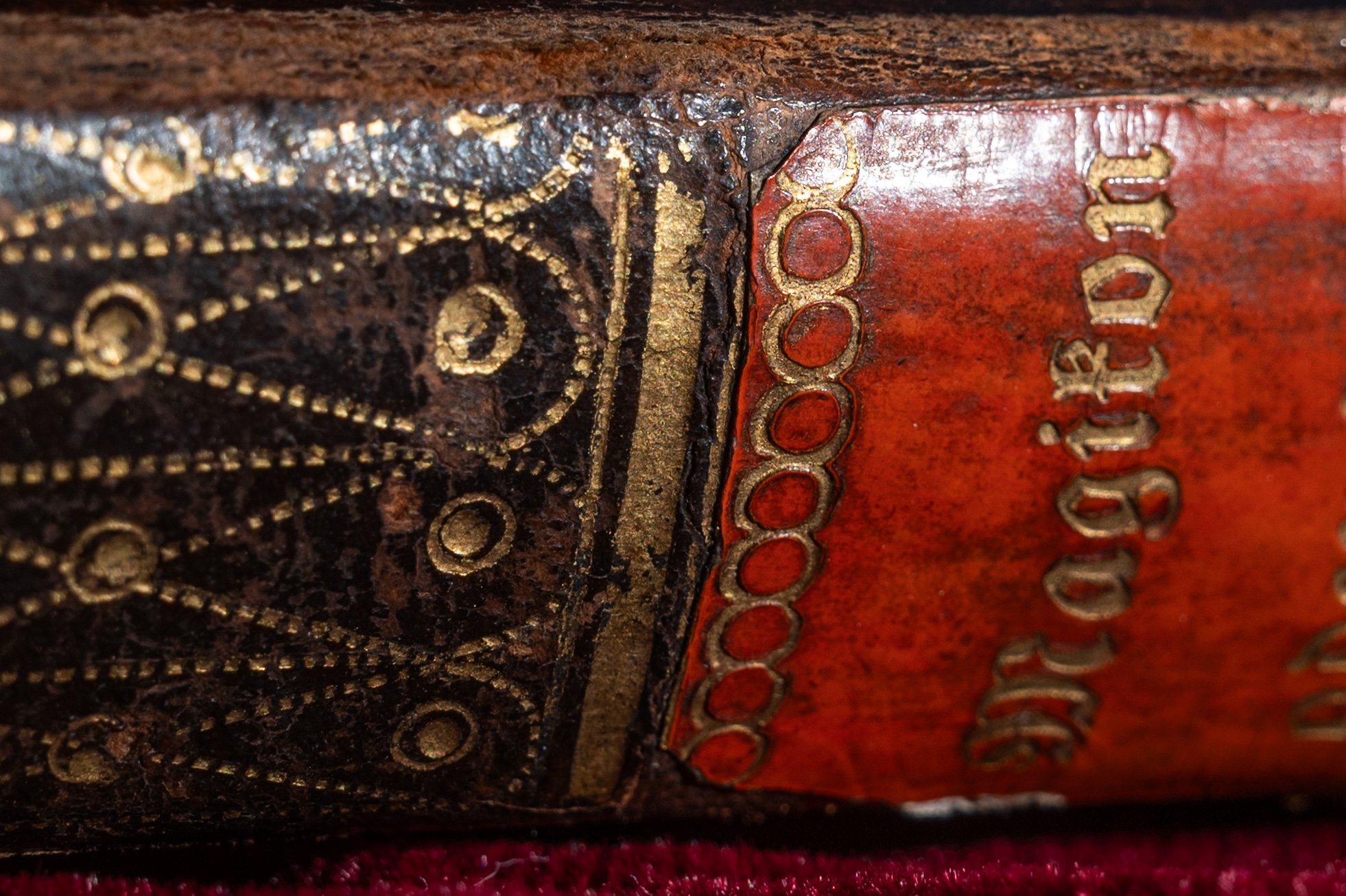 Image 7 of 9
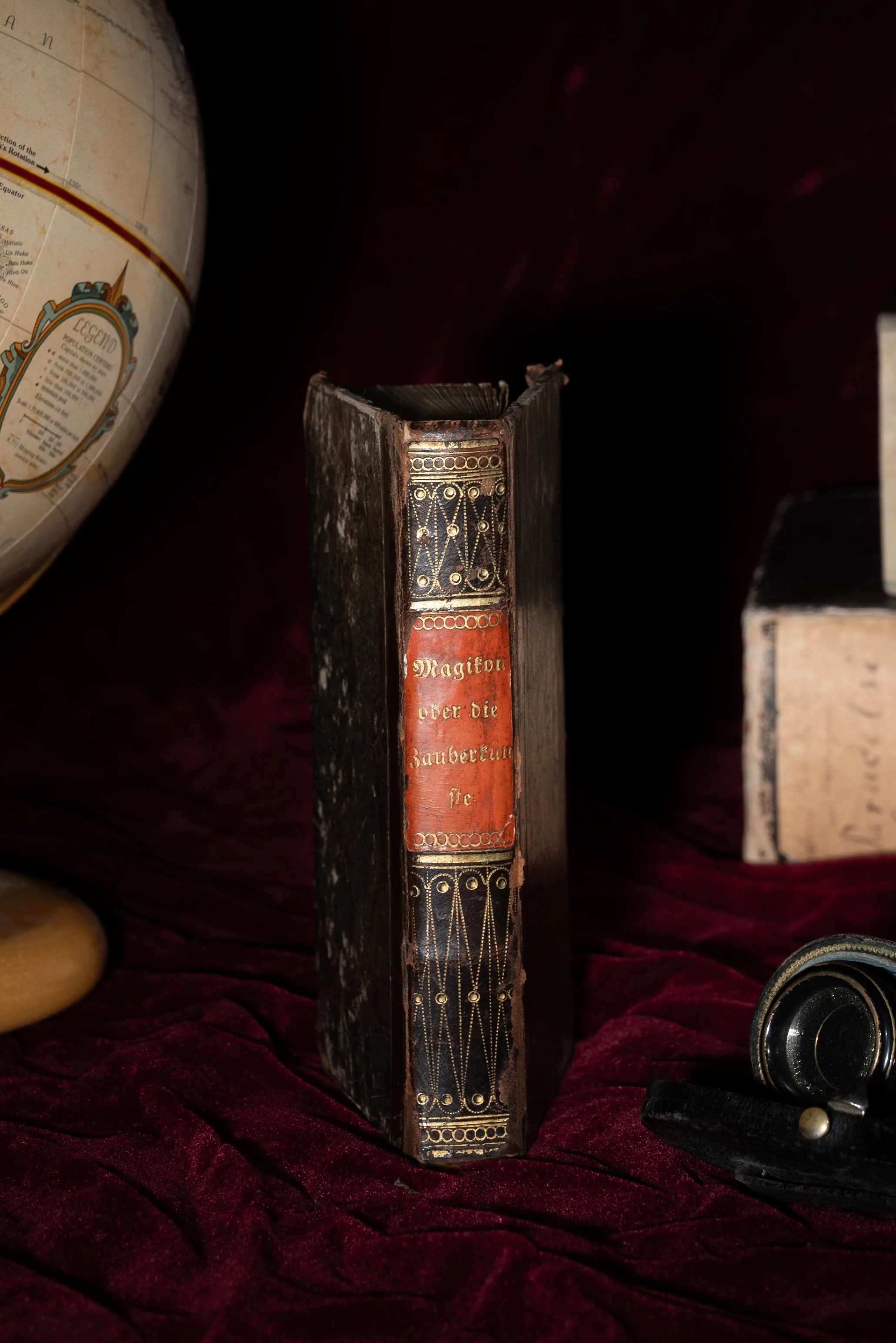 Image 8 of 9
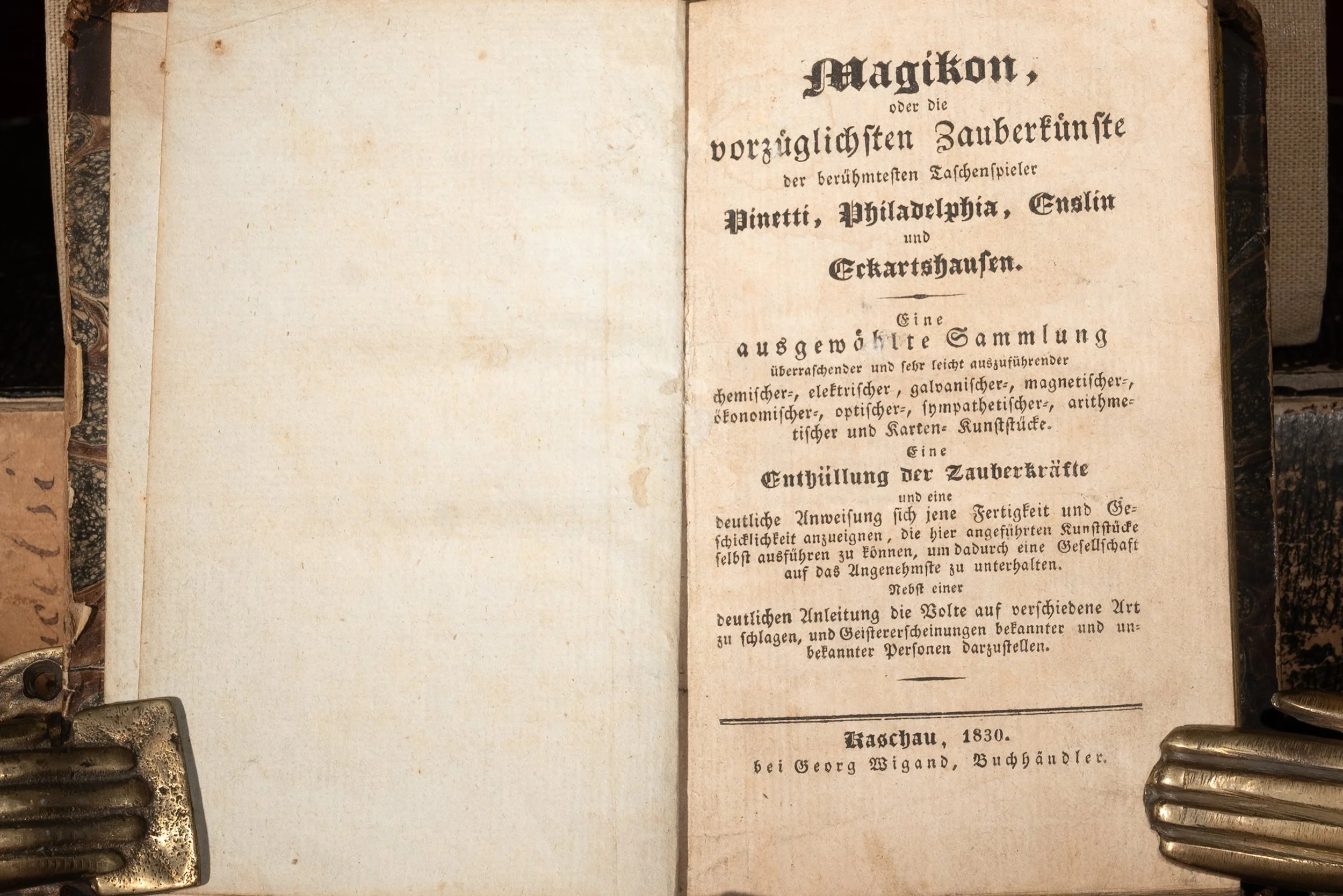 Image 9 of 9