A seminal work in the canon of Western Esotericism and German Romanticism. Jung-Stilling (1740–1817), a renowned ophthalmologist, economist, and mystic (and close associate of Goethe), wrote this treatise as a direct counter-argument to the materialism of the Enlightenment. He argues for the empirical reality of the spirit world, categorizing various forms of supernatural phenomena including "ahnen" (premonitions), "fernsehen" (clairvoyance), and contact with the dead.
Crucially, the book incorporates the emerging science of Animal Magnetism (Mesmerism) as a bridge between the physical and spiritual worlds. The famous frontispiece depicts the Weiße Frau (White Lady), a legendary ghost of the Hohenzollern dynasty said to haunt the Plassenburg and Berlin Stadtschloss, serving as Jung-Stilling's prime example of a revenant spirit. This work became a cornerstone for 19th-century occultism, heavily influencing Justinus Kerner (of Seeress of Prevorst fame) and later English and American Spiritualists.
JUNG-STILLING, Johann Heinrich. Theorie der Geister-Kunde, in einer Natur-, Vernunft- und Bibelmäsigen Beantwortung der Frage: Was von Ahnungen, Gesichten und Geistererscheinungen geglaubt und nicht geglaubt werden müße. [Theory of Pneumatology, in a Reply to the Question of What Ought to be Believed or Disbelieved Concerning Presentiments, Visions, and Apparitions According to Nature, Reason, and Scripture]. Nürnberg: im Verlag der Raw'schen Buchhandlung, 1808.
First Edition. 8vo. (205 x 125 mm). [2], xxviii, 376 pp. Complete with the striking engraved frontispiece depicting the "White Lady" (Agnes, Countess of Orlamünde). Bound in contemporary grey paper-covered boards (Pappe), manuscript paper label to spine.
Condition: A good, honest copy in its original or contemporary binding. The paper boards show wear, with rubbing to the surfaces and bumping/wear to the corners and spine ends (exposing some board). The text block is generally solid; as is typical for paper of this period, there is scattered foxing (stockfleckig) throughout, though the paper remains supple. Provenance:
Title page bears a purple library stamp: "BIBL. F.F..." (Likely Fürstlich Fürstenbergische Hofbibliothek, the Princely Library of Fürstenberg at Donaueschingen, a significant aristocratic collection).
Front flyleaf bears an early owner's inscription dated 1835.
Front pastedown bears a manuscript "souvenir" inscription (zum Andenken).
A seminal work in the canon of Western Esotericism and German Romanticism. Jung-Stilling (1740–1817), a renowned ophthalmologist, economist, and mystic (and close associate of Goethe), wrote this treatise as a direct counter-argument to the materialism of the Enlightenment. He argues for the empirical reality of the spirit world, categorizing various forms of supernatural phenomena including "ahnen" (premonitions), "fernsehen" (clairvoyance), and contact with the dead.
Crucially, the book incorporates the emerging science of Animal Magnetism (Mesmerism) as a bridge between the physical and spiritual worlds. The famous frontispiece depicts the Weiße Frau (White Lady), a legendary ghost of the Hohenzollern dynasty said to haunt the Plassenburg and Berlin Stadtschloss, serving as Jung-Stilling's prime example of a revenant spirit. This work became a cornerstone for 19th-century occultism, heavily influencing Justinus Kerner (of Seeress of Prevorst fame) and later English and American Spiritualists.
JUNG-STILLING, Johann Heinrich. Theorie der Geister-Kunde, in einer Natur-, Vernunft- und Bibelmäsigen Beantwortung der Frage: Was von Ahnungen, Gesichten und Geistererscheinungen geglaubt und nicht geglaubt werden müße. [Theory of Pneumatology, in a Reply to the Question of What Ought to be Believed or Disbelieved Concerning Presentiments, Visions, and Apparitions According to Nature, Reason, and Scripture]. Nürnberg: im Verlag der Raw'schen Buchhandlung, 1808.
First Edition. 8vo. (205 x 125 mm). [2], xxviii, 376 pp. Complete with the striking engraved frontispiece depicting the "White Lady" (Agnes, Countess of Orlamünde). Bound in contemporary grey paper-covered boards (Pappe), manuscript paper label to spine.
Condition: A good, honest copy in its original or contemporary binding. The paper boards show wear, with rubbing to the surfaces and bumping/wear to the corners and spine ends (exposing some board). The text block is generally solid; as is typical for paper of this period, there is scattered foxing (stockfleckig) throughout, though the paper remains supple. Provenance:
Title page bears a purple library stamp: "BIBL. F.F..." (Likely Fürstlich Fürstenbergische Hofbibliothek, the Princely Library of Fürstenberg at Donaueschingen, a significant aristocratic collection).
Front flyleaf bears an early owner's inscription dated 1835.
Front pastedown bears a manuscript "souvenir" inscription (zum Andenken).

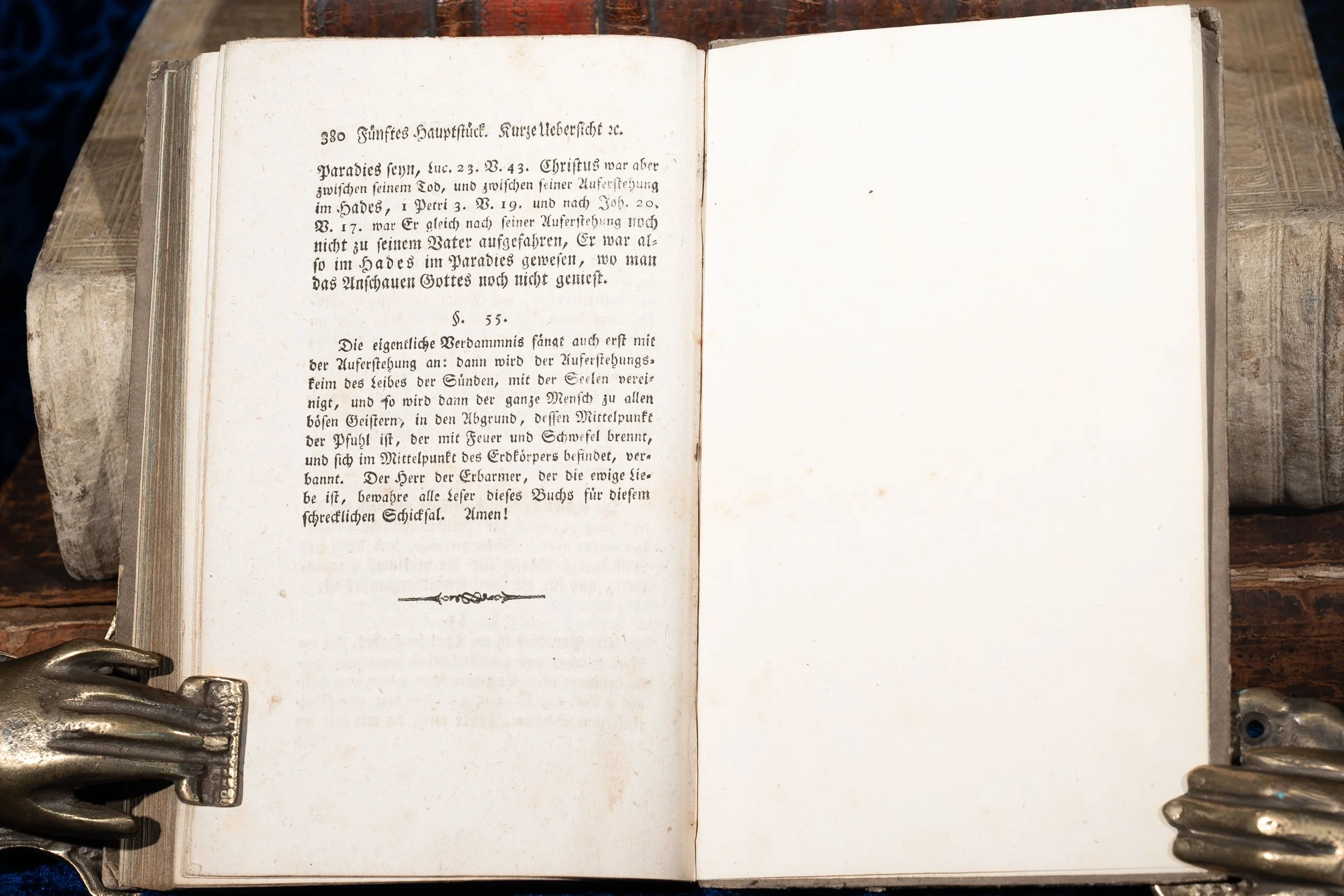 Image 1 of 10
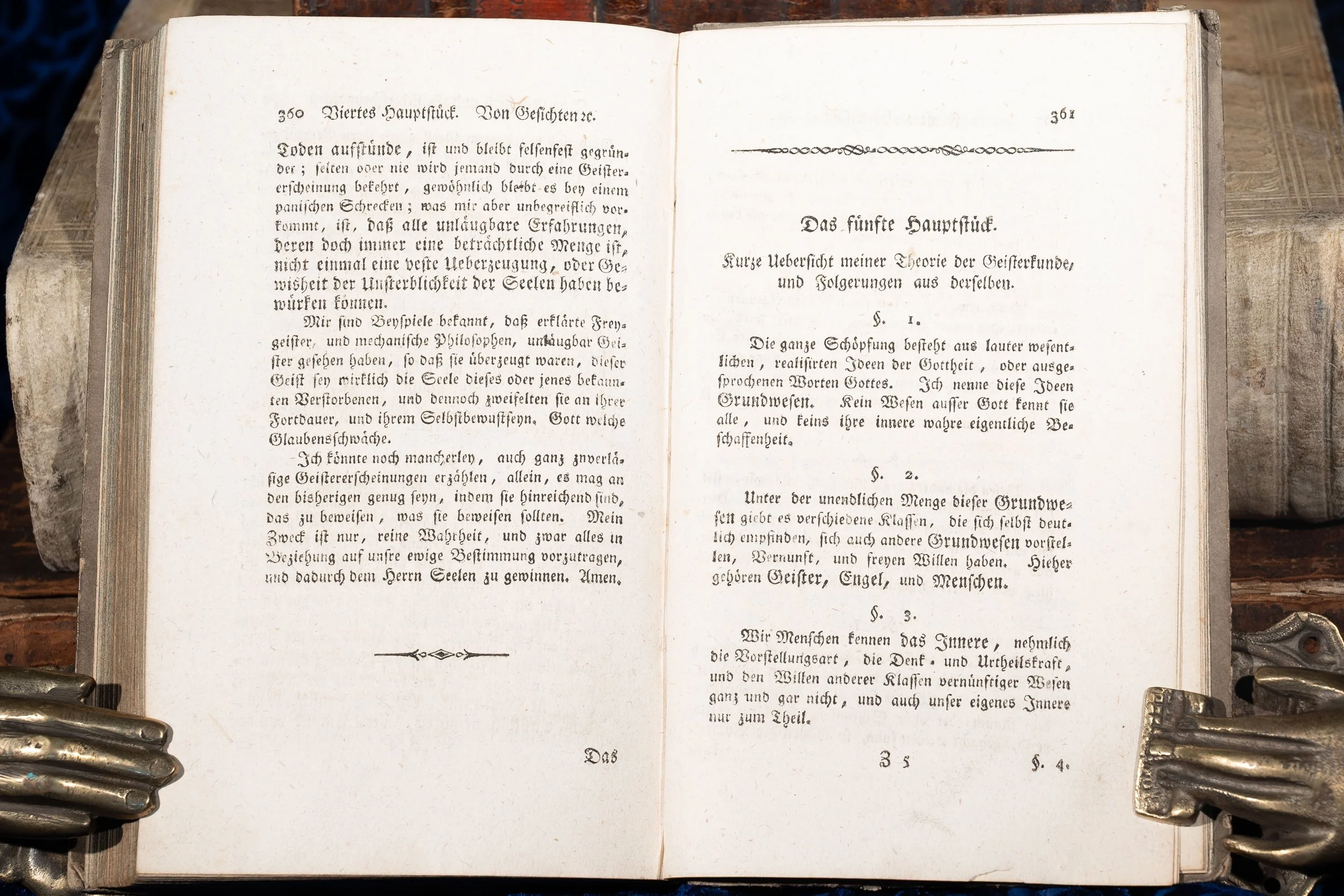 Image 2 of 10
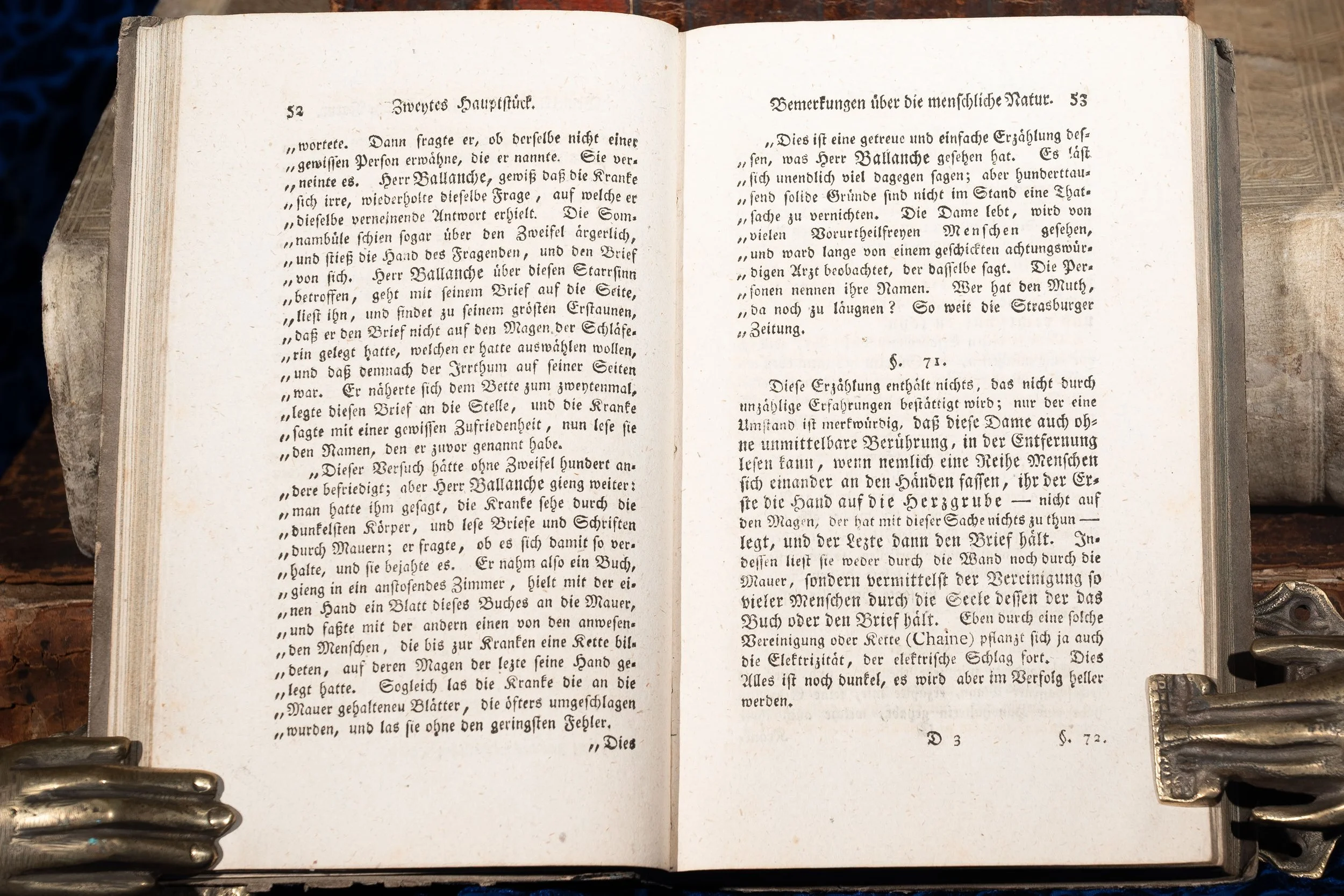 Image 3 of 10
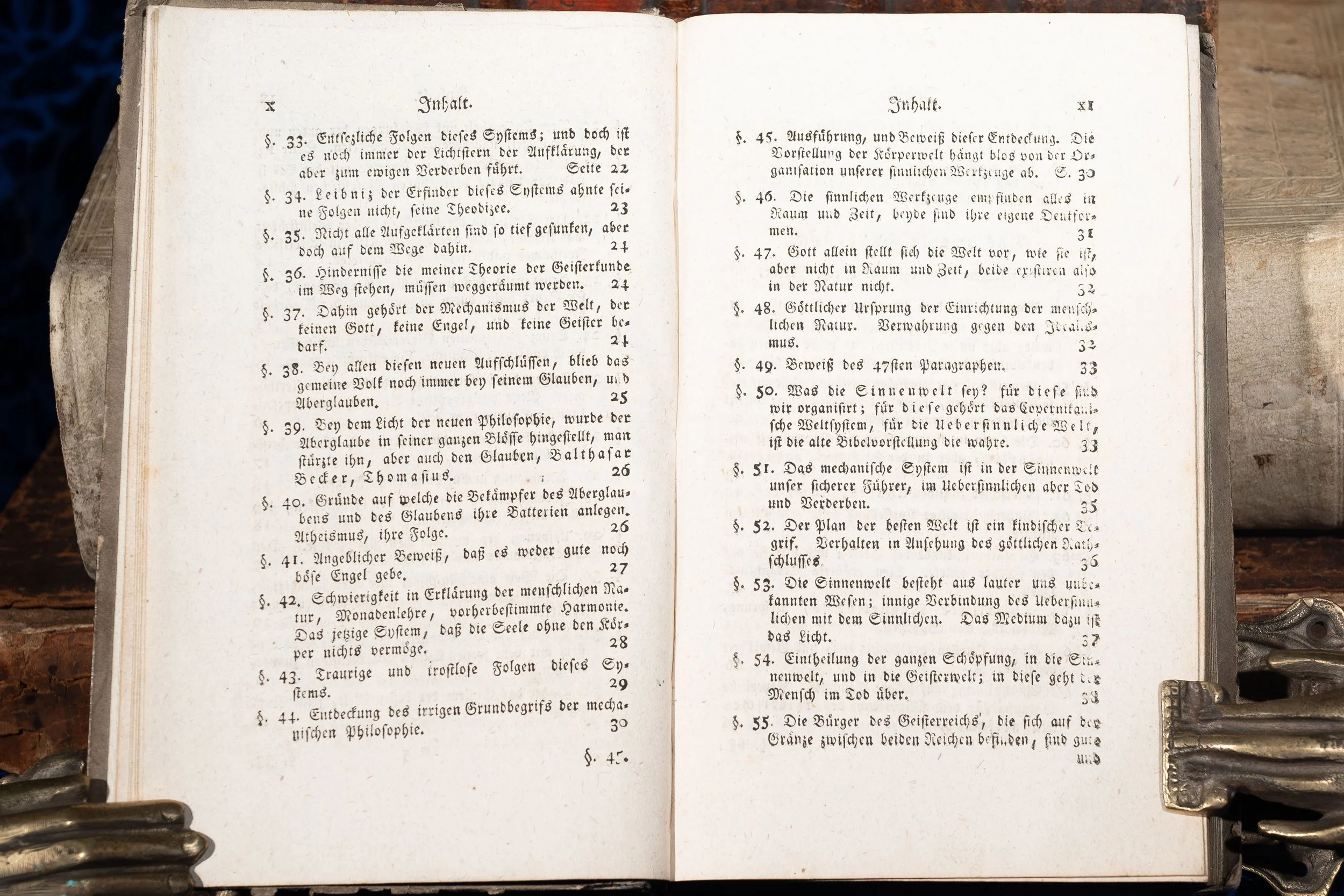 Image 4 of 10
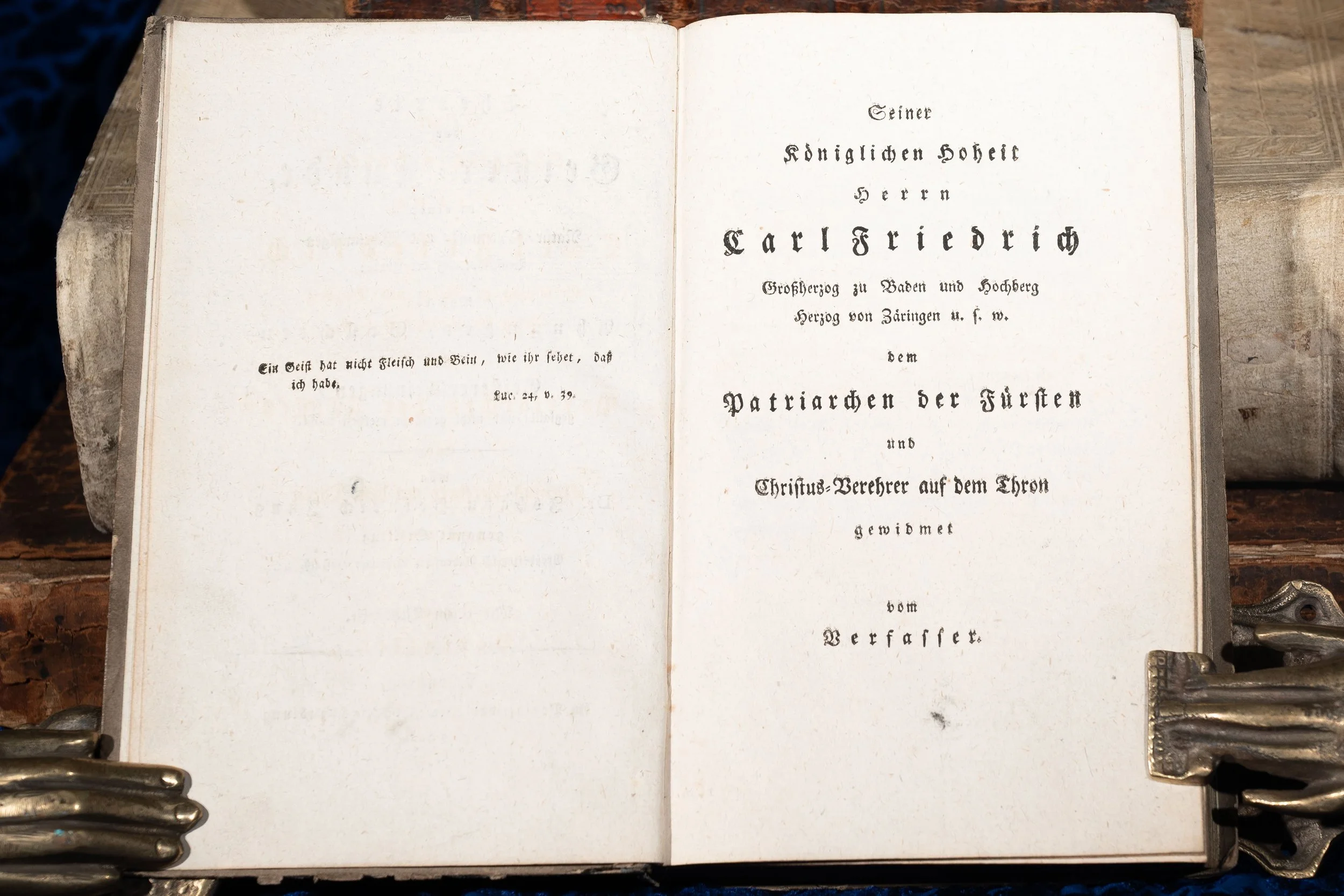 Image 5 of 10
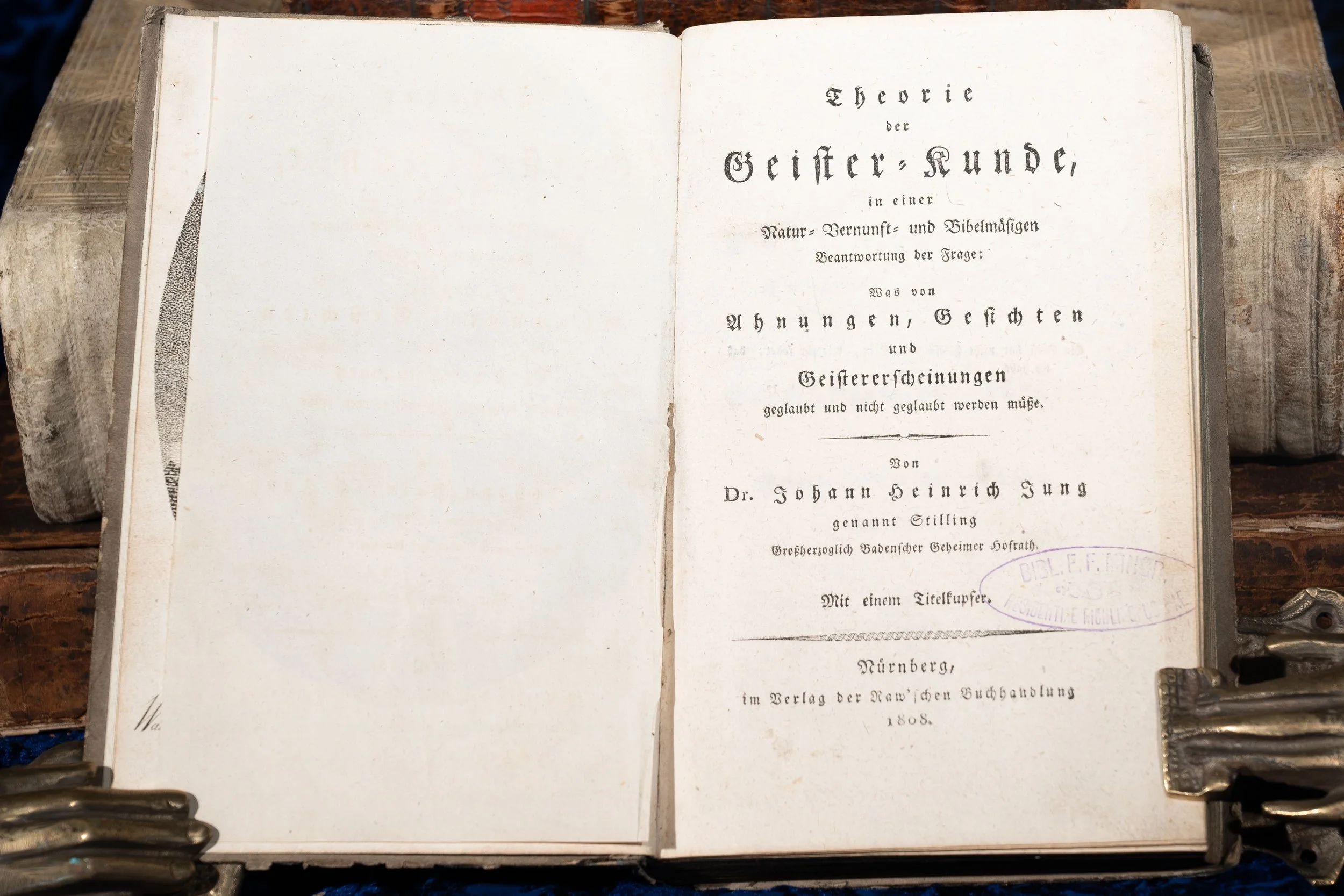 Image 6 of 10
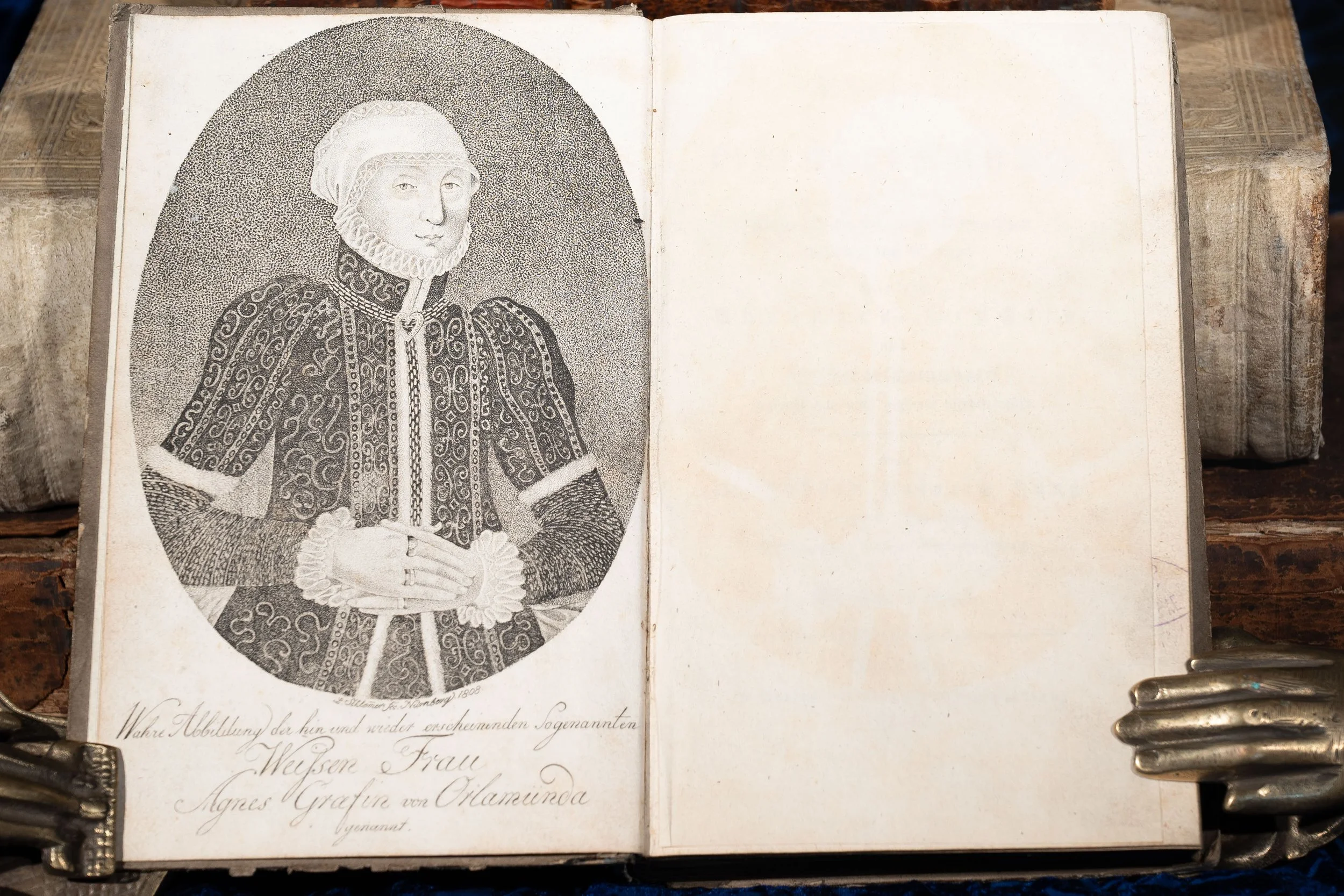 Image 7 of 10
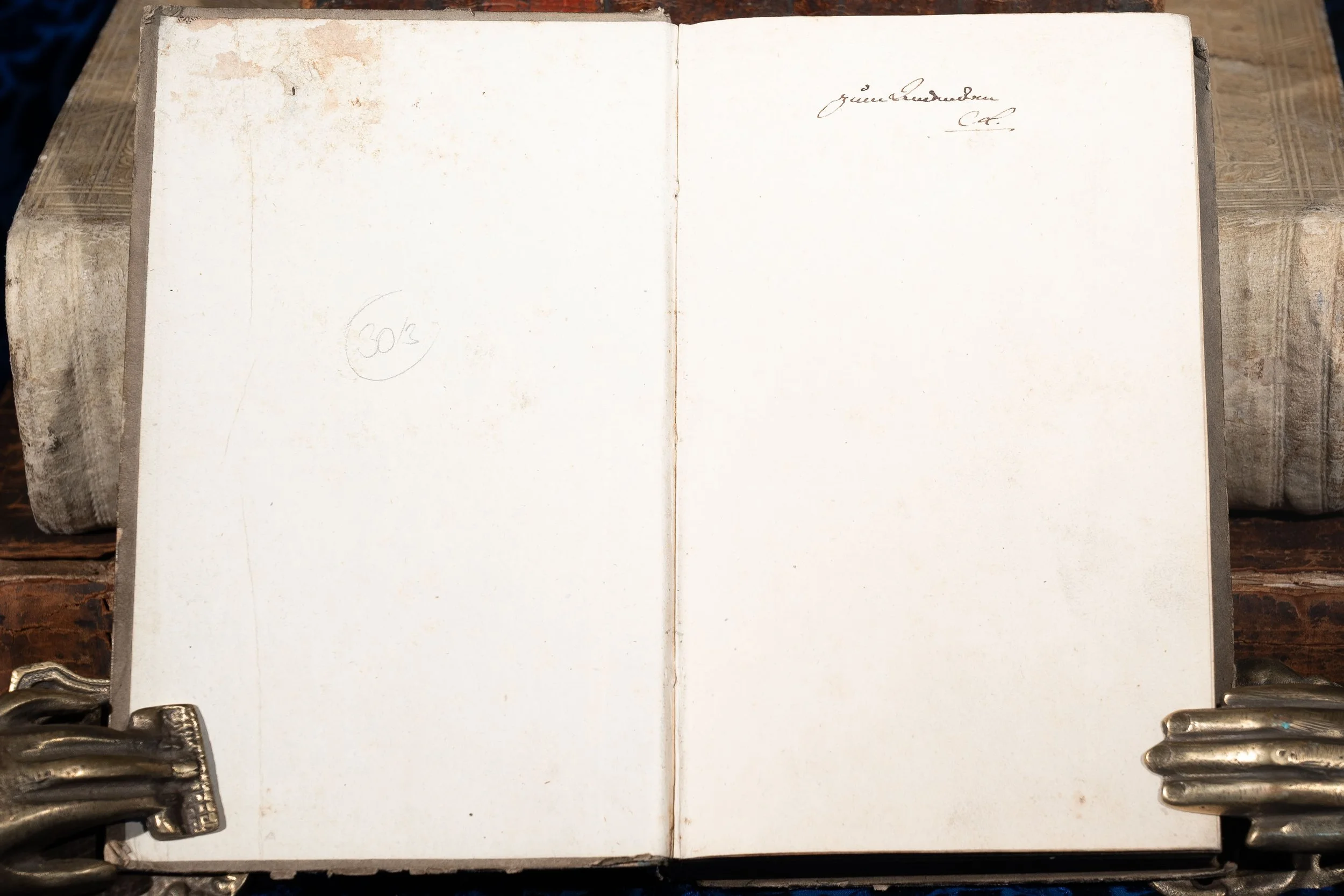 Image 8 of 10
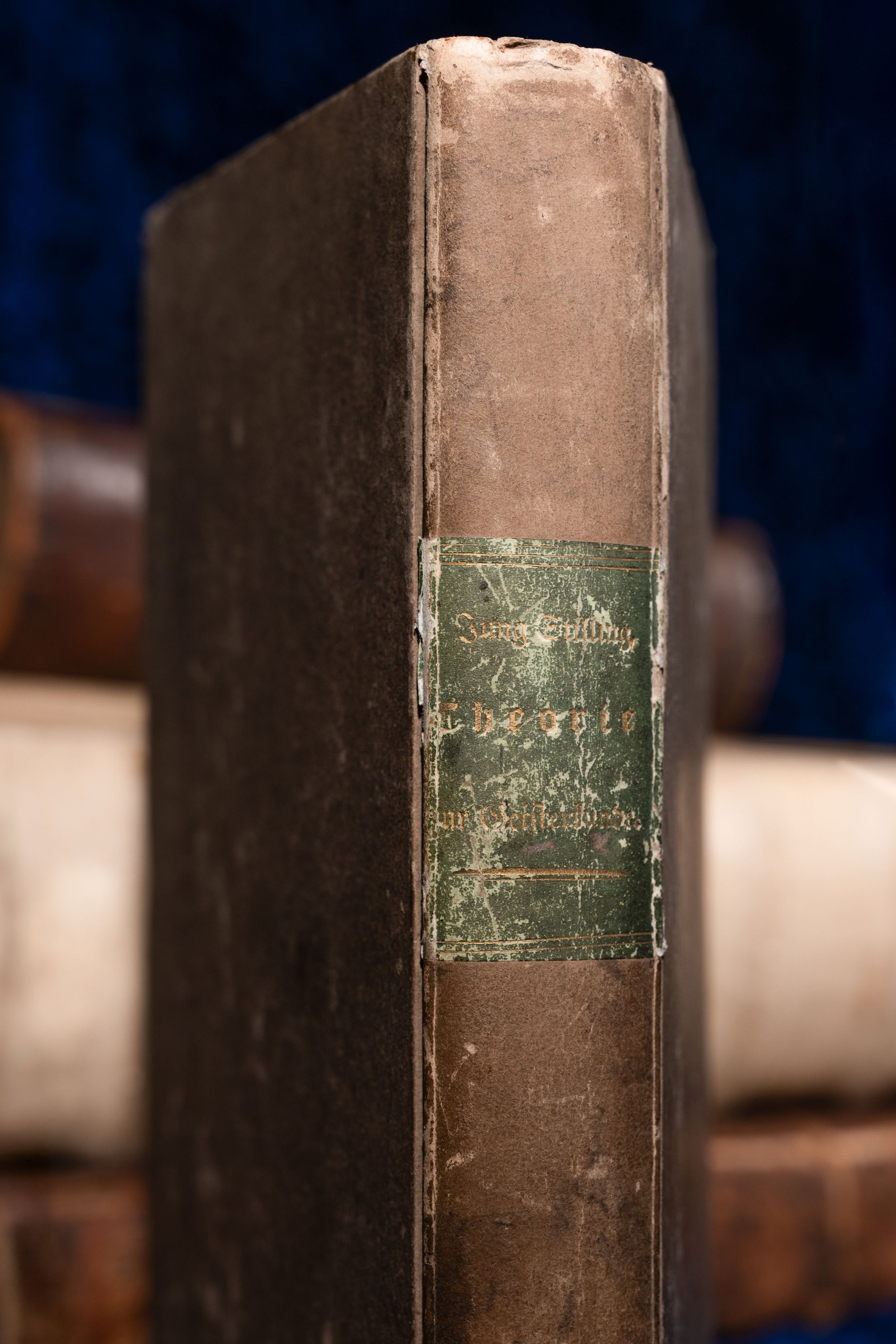 Image 9 of 10
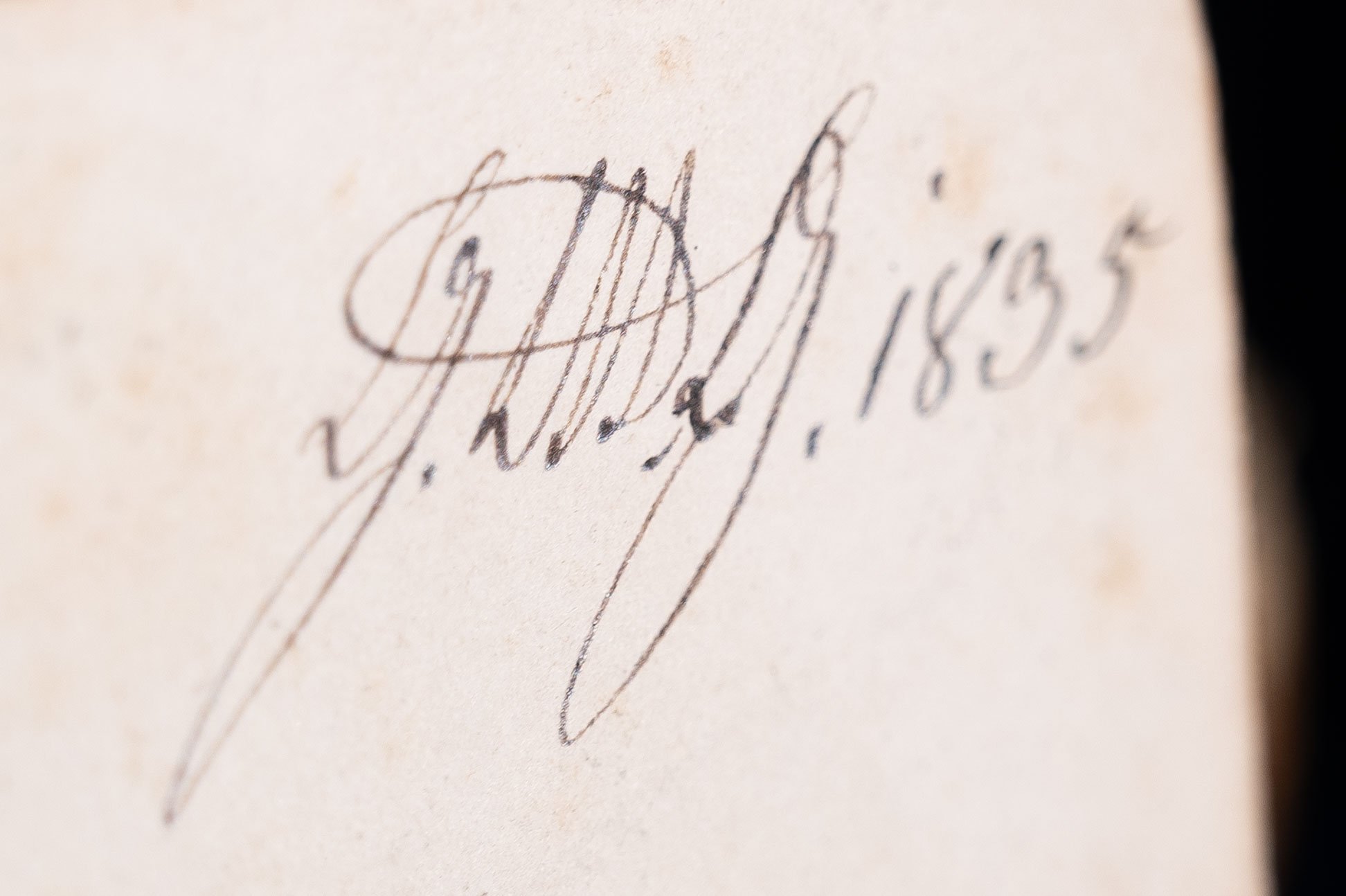 Image 10 of 10