The Historical Context: Published in 1795 during the anxious aftermath of the Reign of Terror (1793-1794), this anonymous pamphlet represents a significant early example of the anti-Jacobin conspiracy literature that would culminate in the major works of Abbé Augustin Barruel (Mémoires pour servir à l'histoire du Jacobinisme, 1797) and John Robison (Proofs of a Conspiracy, 1797). While ostensibly a political warning against French Jacobins, the text functions as a Catholic reactionary response to the Enlightenment, arguing that the French Revolution was not a spontaneous popular uprising but a calculated overthrow engineered by secret societies.
The Conspiracy Thesis: The pamphlet traces a genealogy from the dissolved Bavarian Illuminati (founded 1776 by Adam Weishaupt; suppressed by Bavarian government edicts 1784-1787) through Freemasonry to the Jacobin Terror. The anonymous author, who claims to have "served for several years in the sanctuary of a great prince's state cabinet" (p. 120), argues that Weishaupt's order did not vanish but went underground to orchestrate the decapitation of the French monarchy.
The Esoteric Connection: For the collector of Western Esotericism, this work represents the "Shadow" of the tradition, the paranoid counternarrative to Enlightenment Masonry. It contributes to what would become, through Barruel and Robison's widely-translated works, the foundational myth of the "Masonic Revolution": the claim that 1789 was not an organic historical event but a conspiracy decades in the making.
Key Arguments:
-The "Masonic Fruit": The title page motto—"By their fruits ye shall know them" (Matthew 7:16)—directly subverts Masonic apologetics. Where Masons claimed their "fruit" was brotherhood and charity, this author argues their true fruit is the guillotine. The Jacobins are described as "a criminal outgrowth of the Illuminati Order, just as this [the Illuminati] is a criminal outgrowth of Freemasonry" (pp. 8, 17).
-The Ancestry of Terror: The text purports to trace the ideological and organizational lineage of the Jacobins through Masonic lodges to the Illuminati Order, contributing to an emerging conspiracy narrative that would be systematized and widely disseminated by Barruel and Robison. This genealogical argument—Illuminati → Freemasonry → Jacobinism—would become the template for two centuries of counter-revolutionary conspiracy theories.
-Political Geography: The likely publication site of Augsburg is significant. This former Free Imperial City, a center of Catholic Counter-Reformation history, represented the front line of German anxieties about revolutionary contagion spreading eastward from France. Bavaria, having recently suppressed the Illuminati in its own territory, was particularly sensitive to claims of continued revolutionary infiltration.
Physical Evidence: This is an "unsophisticated" survival, a pocket-sized manual (9 × 14 cm) meant to be carried and consulted in secret by counter-revolutionaries, still in its original temporary wrappers. The interim binding and small format suggest urgent publication for clandestine circulation rather than a prestige imprint. It captures the paranoia of the era in its physical form: portable, anonymous, and ephemeral.
Provenance:
Kecskeméti Csapó Dániel (1768-1841): Hungarian linguist, educator, and polymath. Inscribed "K[ecskeméti] Cs[apó] D[ániel] Pest 1831" on inside front cover, indicating this book was still being actively consulted during the revolutionary waves of the 1830s (July Revolution 1830, Polish Uprising 1830-31). Csapó's continued interest in anti-Jacobin literature three decades after publication suggests the persistence of fears about secret revolutionary societies well into the Restoration era, particularly in the multi-ethnic Habsburg domains where conspiracy theories about Carbonari and other secret societies flourished.
Collection Context: Acquired from a specialized collection focused on the history of secret societies and Western Esotericism.
Rarity: Scarce in commerce. This appears to be the only edition of an anonymous Catholic polemic that Sandkühler describes as "a curious mixture of early political consulting and police signalment, two hundred pages in length; a small, pocket-sized volume" (Enzyklopädie und Emanzipation, 1988, p. 142).
Historical Significance: While not as widely disseminated as the later works of Barruel and Robison, this pamphlet represents the grass-roots, vernacular conspiracy literature that circulated in German-speaking Catholic territories during the formative period of modern conspiracy theory. It documents the immediate post-Terror moment when conservatives were constructing explanatory frameworks for the revolutionary violence they had witnessed. Within two years, these inchoate fears would crystallize into the systematic conspiracy theories of 1797 that would launch the "Illuminati Scare" in Britain and America (1797-1800) and permanently embed the Illuminati in Western conspiracy consciousness.
[ILLUMINATI CONSPIRACY] [ANTI-MASONIC] [COUNTER-REVOLUTIONARY LITERATURE]. Kennzeichen der Jakobiner [Characteristics of the Jacobins]. [Augsburg?]: s.n., 1795.
12mo (12°). 200 pp, [2] errata/blank. Binding: Contemporary blue-grey interim wrappers. Condition: Edges trimmed. Significant dampstain/tide-mark to the lower outer corner of the initial gatherings (approx. first 56 pages), affecting paper aesthetics but not legibility. Text block sound.
The Historical Context: Published in 1795 during the anxious aftermath of the Reign of Terror (1793-1794), this anonymous pamphlet represents a significant early example of the anti-Jacobin conspiracy literature that would culminate in the major works of Abbé Augustin Barruel (Mémoires pour servir à l'histoire du Jacobinisme, 1797) and John Robison (Proofs of a Conspiracy, 1797). While ostensibly a political warning against French Jacobins, the text functions as a Catholic reactionary response to the Enlightenment, arguing that the French Revolution was not a spontaneous popular uprising but a calculated overthrow engineered by secret societies.
The Conspiracy Thesis: The pamphlet traces a genealogy from the dissolved Bavarian Illuminati (founded 1776 by Adam Weishaupt; suppressed by Bavarian government edicts 1784-1787) through Freemasonry to the Jacobin Terror. The anonymous author, who claims to have "served for several years in the sanctuary of a great prince's state cabinet" (p. 120), argues that Weishaupt's order did not vanish but went underground to orchestrate the decapitation of the French monarchy.
The Esoteric Connection: For the collector of Western Esotericism, this work represents the "Shadow" of the tradition, the paranoid counternarrative to Enlightenment Masonry. It contributes to what would become, through Barruel and Robison's widely-translated works, the foundational myth of the "Masonic Revolution": the claim that 1789 was not an organic historical event but a conspiracy decades in the making.
Key Arguments:
-The "Masonic Fruit": The title page motto—"By their fruits ye shall know them" (Matthew 7:16)—directly subverts Masonic apologetics. Where Masons claimed their "fruit" was brotherhood and charity, this author argues their true fruit is the guillotine. The Jacobins are described as "a criminal outgrowth of the Illuminati Order, just as this [the Illuminati] is a criminal outgrowth of Freemasonry" (pp. 8, 17).
-The Ancestry of Terror: The text purports to trace the ideological and organizational lineage of the Jacobins through Masonic lodges to the Illuminati Order, contributing to an emerging conspiracy narrative that would be systematized and widely disseminated by Barruel and Robison. This genealogical argument—Illuminati → Freemasonry → Jacobinism—would become the template for two centuries of counter-revolutionary conspiracy theories.
-Political Geography: The likely publication site of Augsburg is significant. This former Free Imperial City, a center of Catholic Counter-Reformation history, represented the front line of German anxieties about revolutionary contagion spreading eastward from France. Bavaria, having recently suppressed the Illuminati in its own territory, was particularly sensitive to claims of continued revolutionary infiltration.
Physical Evidence: This is an "unsophisticated" survival, a pocket-sized manual (9 × 14 cm) meant to be carried and consulted in secret by counter-revolutionaries, still in its original temporary wrappers. The interim binding and small format suggest urgent publication for clandestine circulation rather than a prestige imprint. It captures the paranoia of the era in its physical form: portable, anonymous, and ephemeral.
Provenance:
Kecskeméti Csapó Dániel (1768-1841): Hungarian linguist, educator, and polymath. Inscribed "K[ecskeméti] Cs[apó] D[ániel] Pest 1831" on inside front cover, indicating this book was still being actively consulted during the revolutionary waves of the 1830s (July Revolution 1830, Polish Uprising 1830-31). Csapó's continued interest in anti-Jacobin literature three decades after publication suggests the persistence of fears about secret revolutionary societies well into the Restoration era, particularly in the multi-ethnic Habsburg domains where conspiracy theories about Carbonari and other secret societies flourished.
Collection Context: Acquired from a specialized collection focused on the history of secret societies and Western Esotericism.
Rarity: Scarce in commerce. This appears to be the only edition of an anonymous Catholic polemic that Sandkühler describes as "a curious mixture of early political consulting and police signalment, two hundred pages in length; a small, pocket-sized volume" (Enzyklopädie und Emanzipation, 1988, p. 142).
Historical Significance: While not as widely disseminated as the later works of Barruel and Robison, this pamphlet represents the grass-roots, vernacular conspiracy literature that circulated in German-speaking Catholic territories during the formative period of modern conspiracy theory. It documents the immediate post-Terror moment when conservatives were constructing explanatory frameworks for the revolutionary violence they had witnessed. Within two years, these inchoate fears would crystallize into the systematic conspiracy theories of 1797 that would launch the "Illuminati Scare" in Britain and America (1797-1800) and permanently embed the Illuminati in Western conspiracy consciousness.
[ILLUMINATI CONSPIRACY] [ANTI-MASONIC] [COUNTER-REVOLUTIONARY LITERATURE]. Kennzeichen der Jakobiner [Characteristics of the Jacobins]. [Augsburg?]: s.n., 1795.
12mo (12°). 200 pp, [2] errata/blank. Binding: Contemporary blue-grey interim wrappers. Condition: Edges trimmed. Significant dampstain/tide-mark to the lower outer corner of the initial gatherings (approx. first 56 pages), affecting paper aesthetics but not legibility. Text block sound.

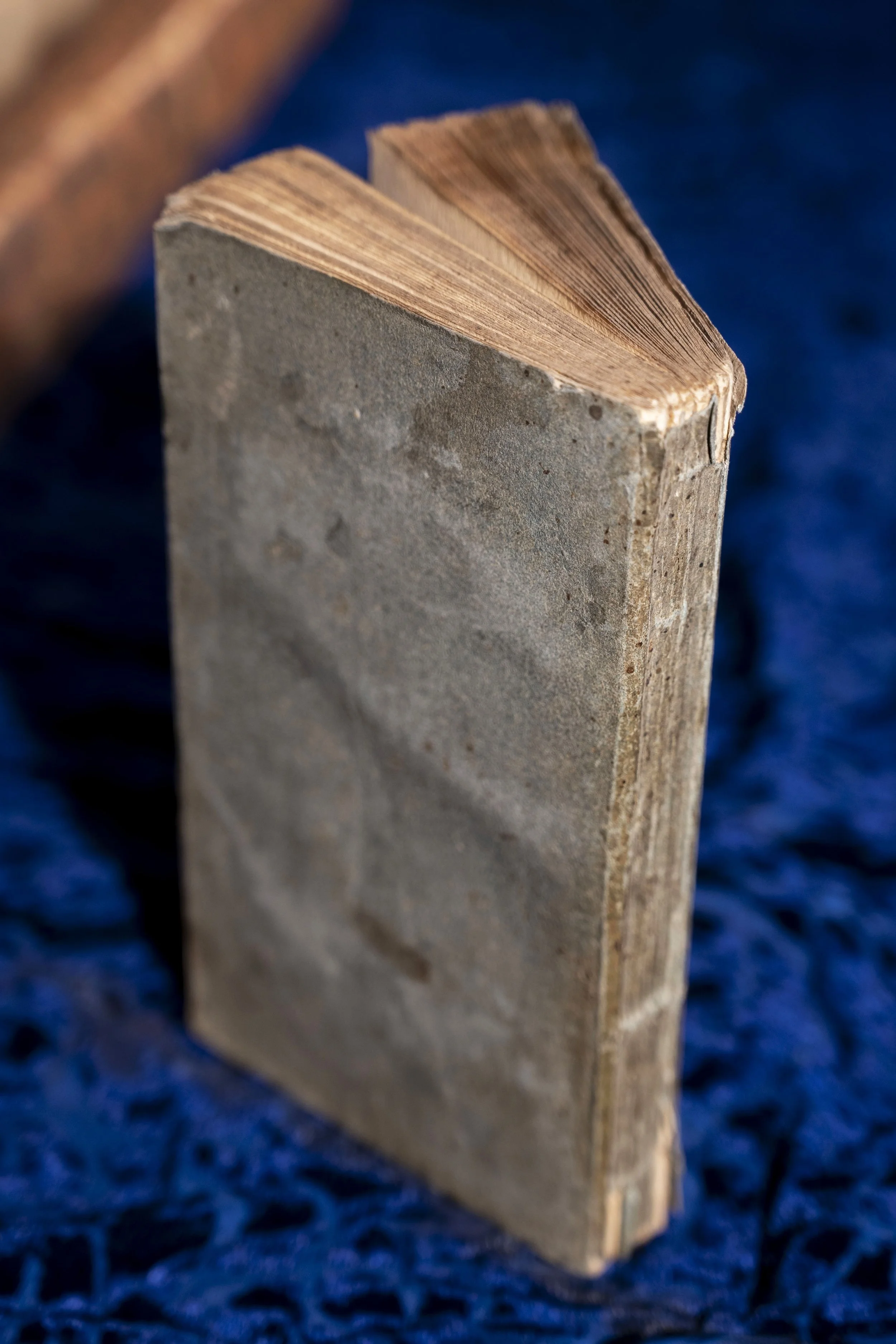 Image 1 of 8
 Image 2 of 8
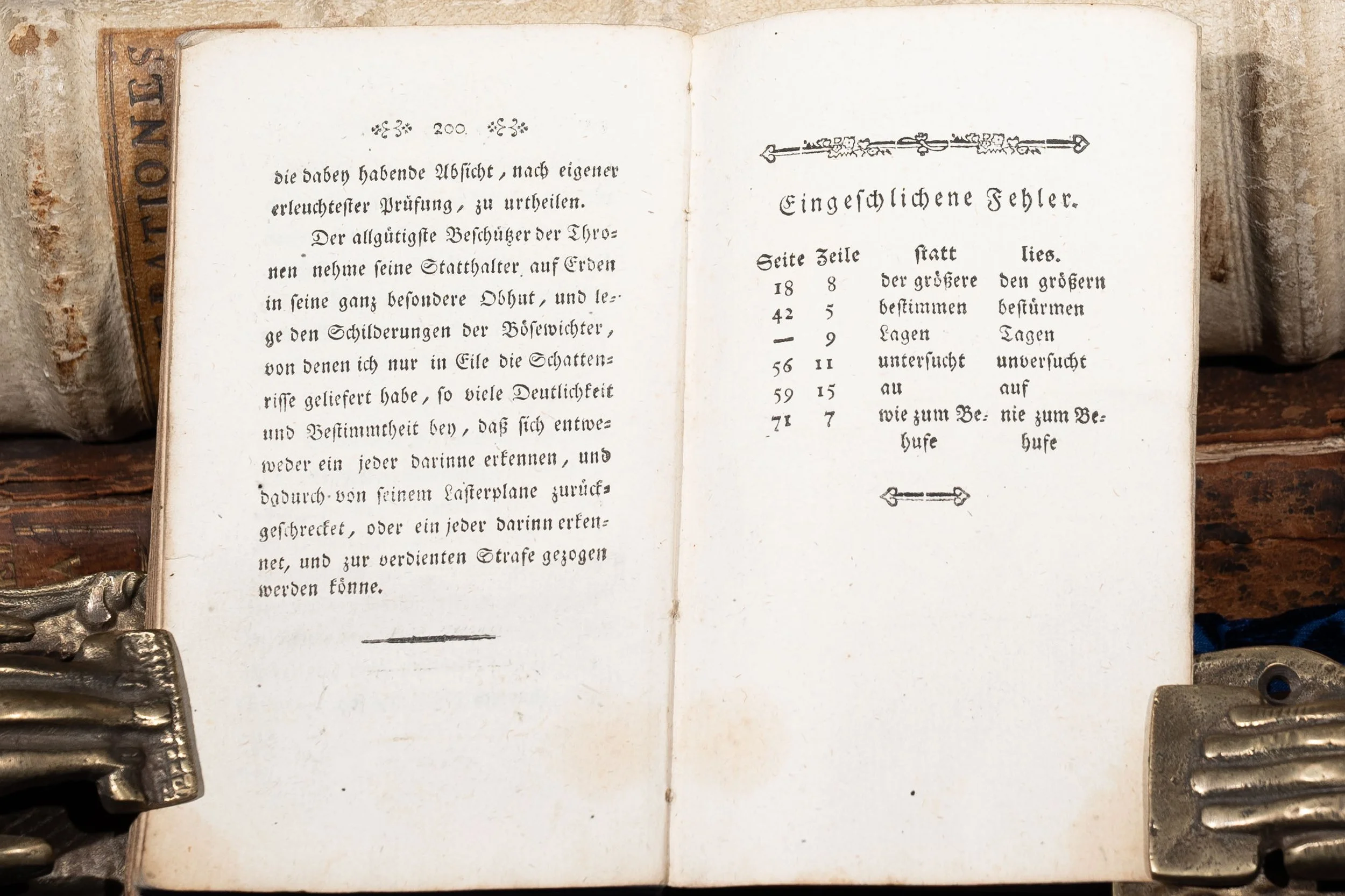 Image 3 of 8
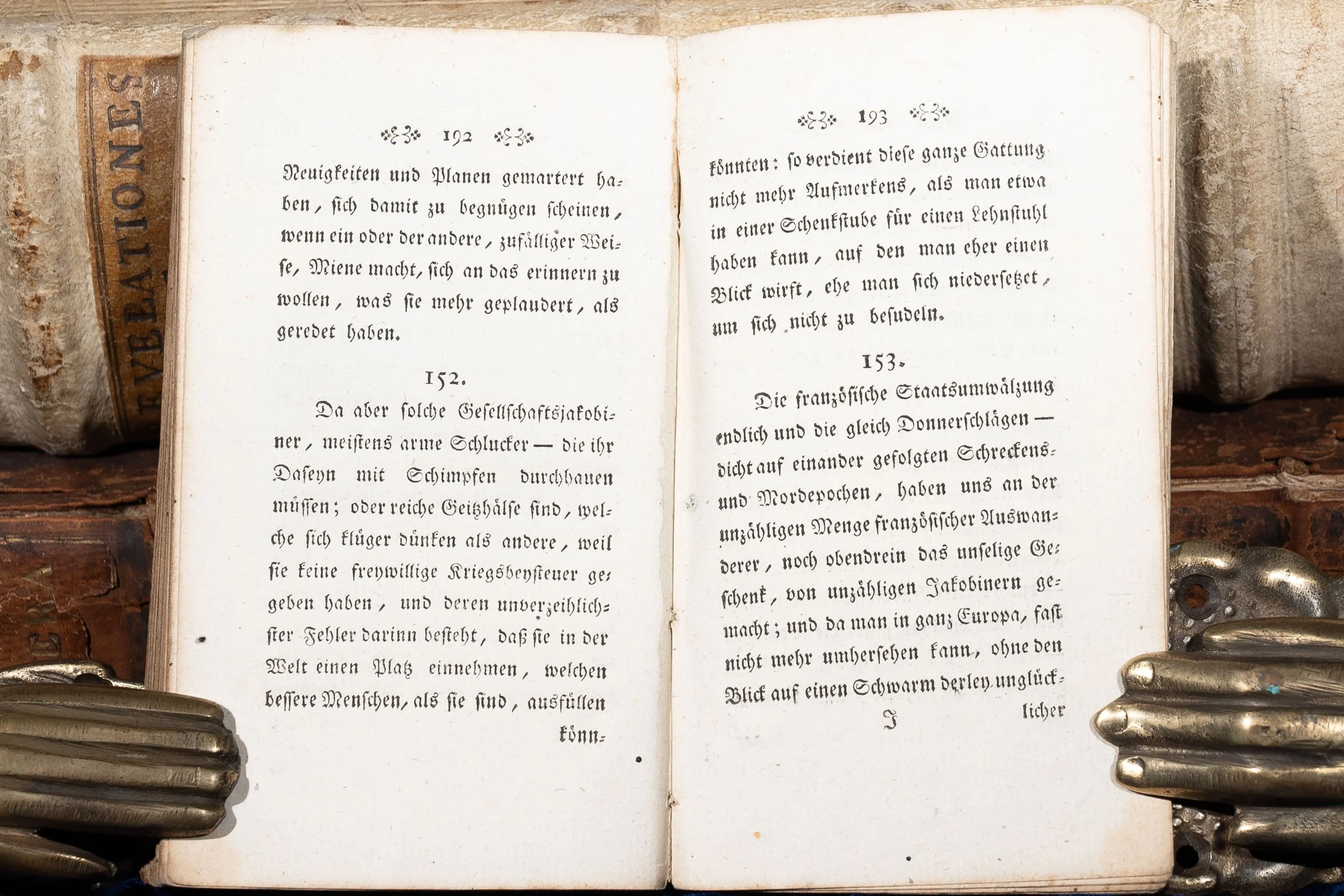 Image 4 of 8
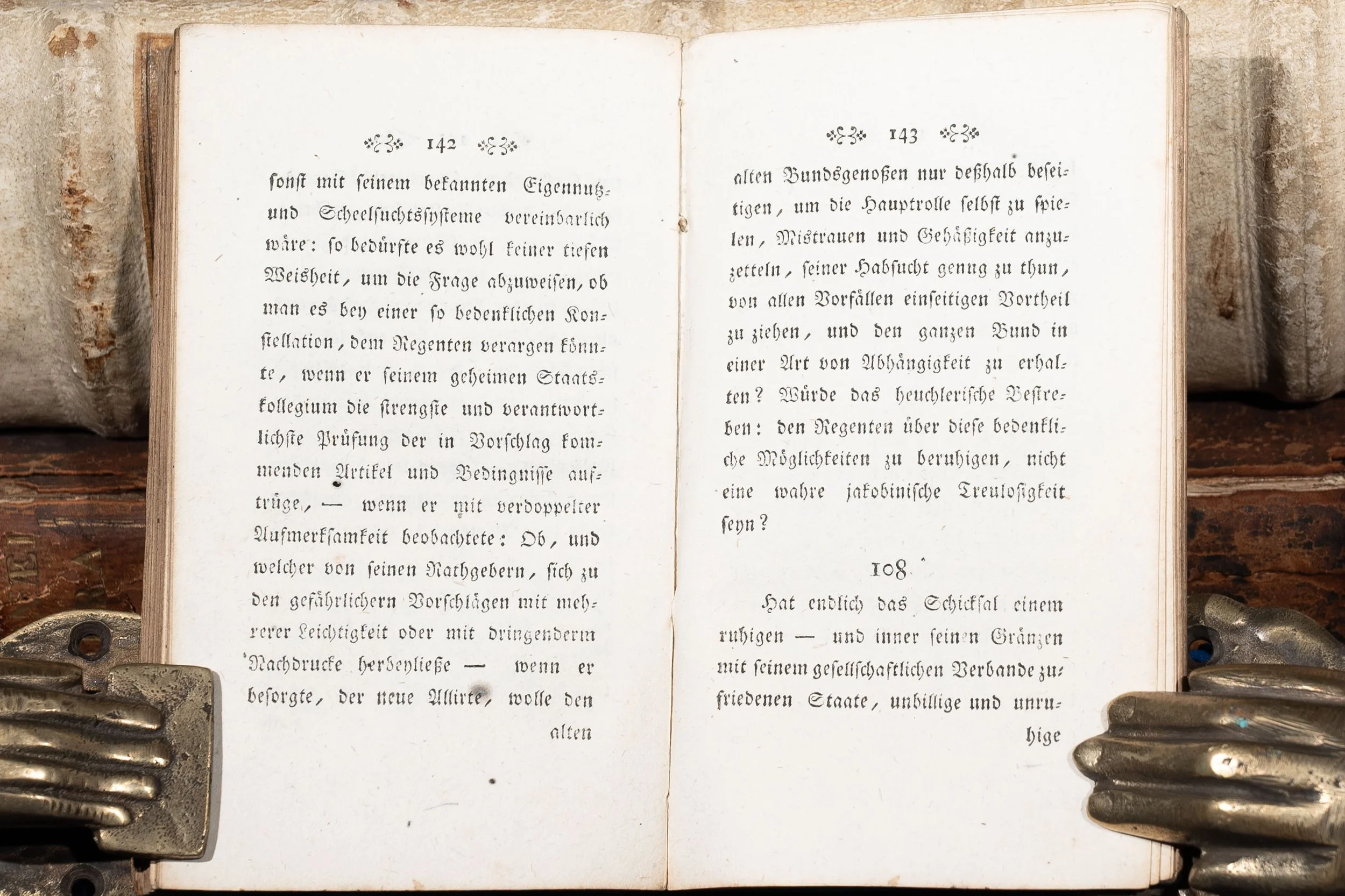 Image 5 of 8
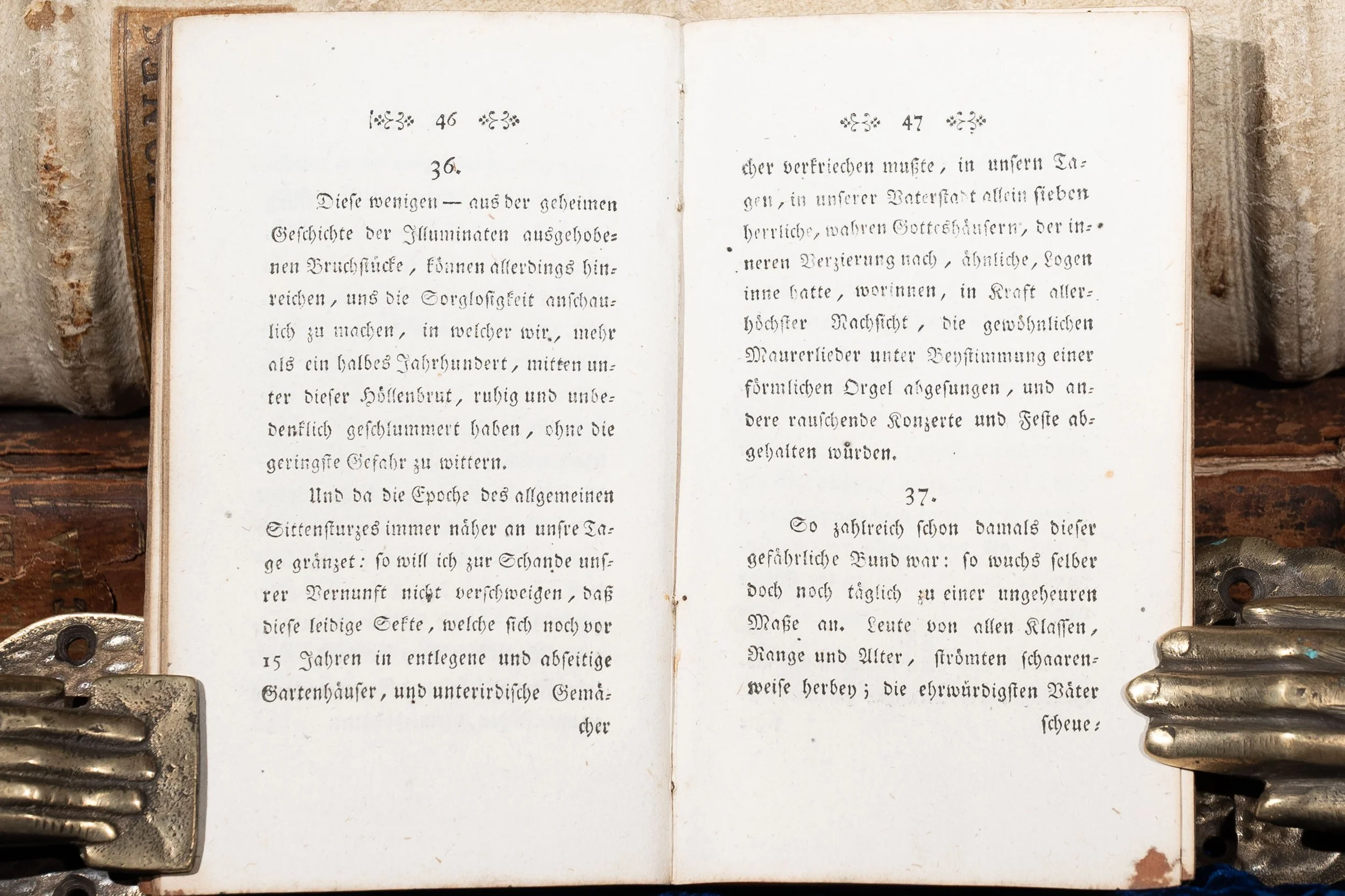 Image 6 of 8
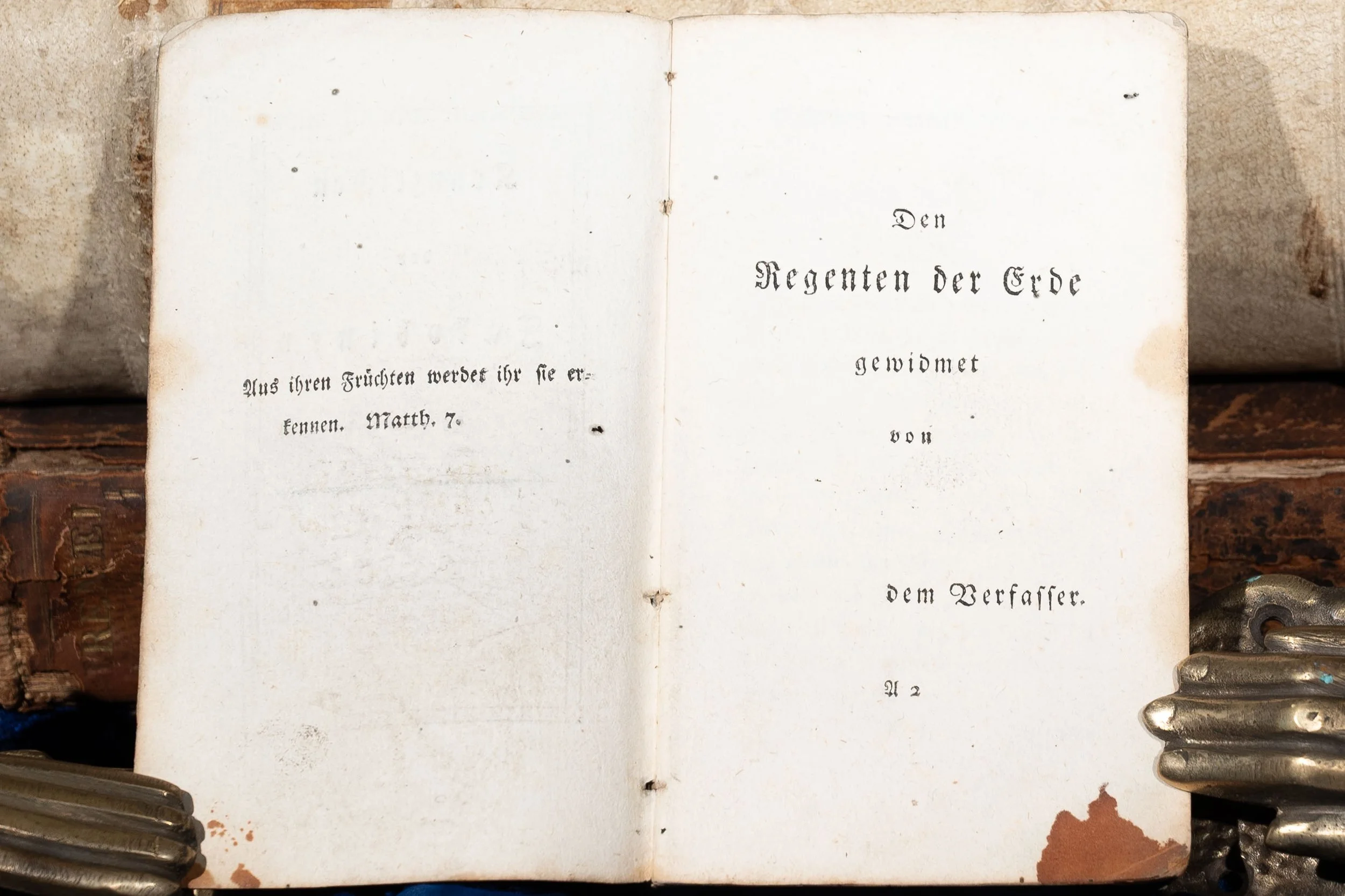 Image 7 of 8
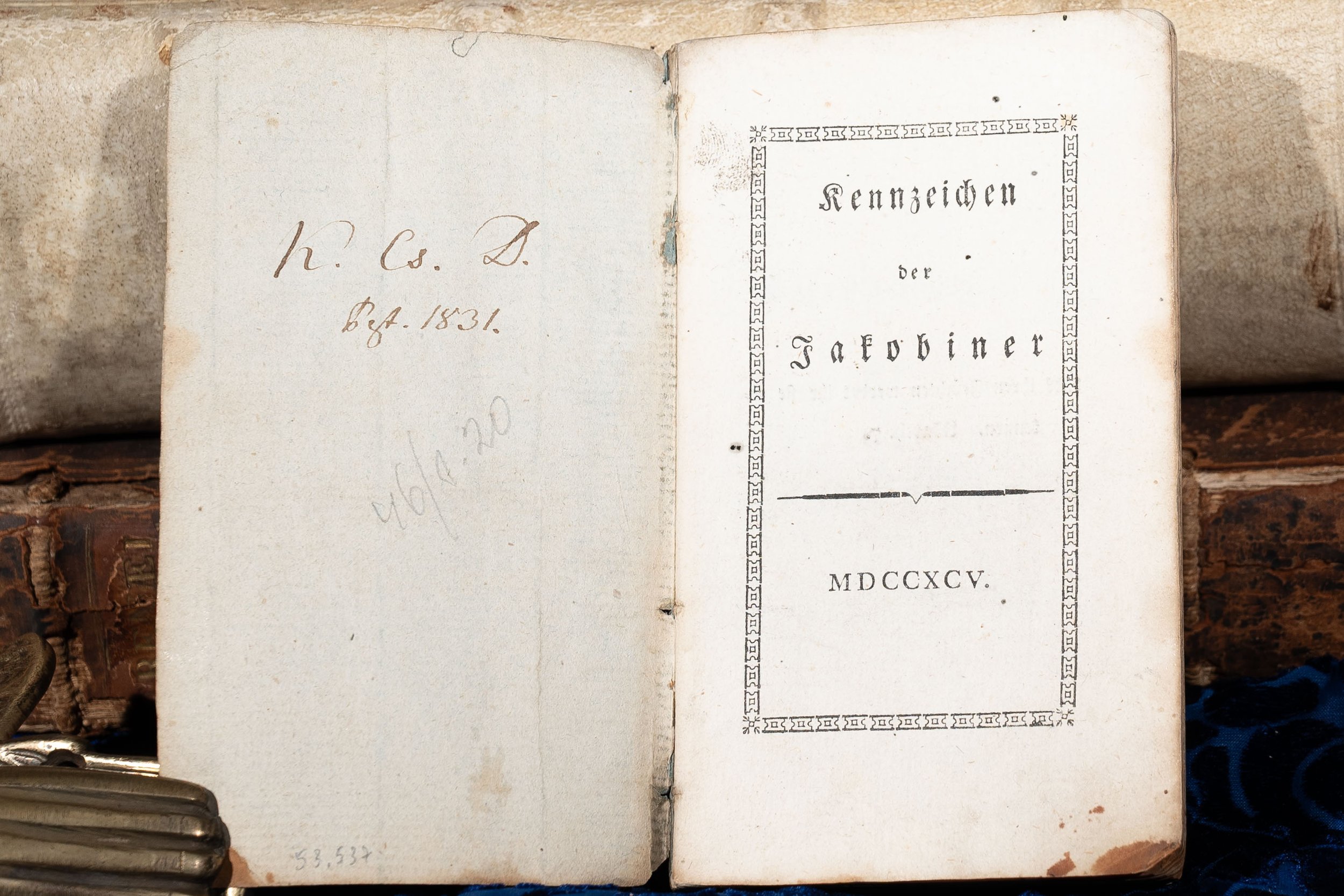 Image 8 of 8