1793 - The Enlightened Magus: Karl von Eckartshausen's "Other" Magic

$899.00

Karl von Eckartshausen (1752–1803) occupies a unique position in the history of Western Esotericism. Best known today for his mystical treatises, particularly Die Wolke über dem Heiligtum (The Cloud upon the Sanctuary, 1802), which influenced everyone from Louis-Claude de Saint-Martin to Éliphas Lévi to A.E. Waite, Eckartshausen was also a Bavarian court official, prolific author, and public intellectual who wrote extensively on natural sciences, pedagogy, and popular entertainment.

This 1793 treatise represents Eckartshausen's attempt to bridge the "two magics," the natural magic of legerdemain, optical illusions, and scientific demonstration, and the transcendent magic of invisible forces, magnetic fluids, and hidden correspondences. For Eckartshausen, both were pathways to understanding divine mysteries: one through the manipulation of natural laws, the other through their spiritual interpretation.

This work is not the "high magic" of his mature mystical period, but rather an example of late Enlightenment "rational wonder", the conviction that nature's secrets, properly understood, reveal both God's ingenuity and humanity's capacity to decode creation.

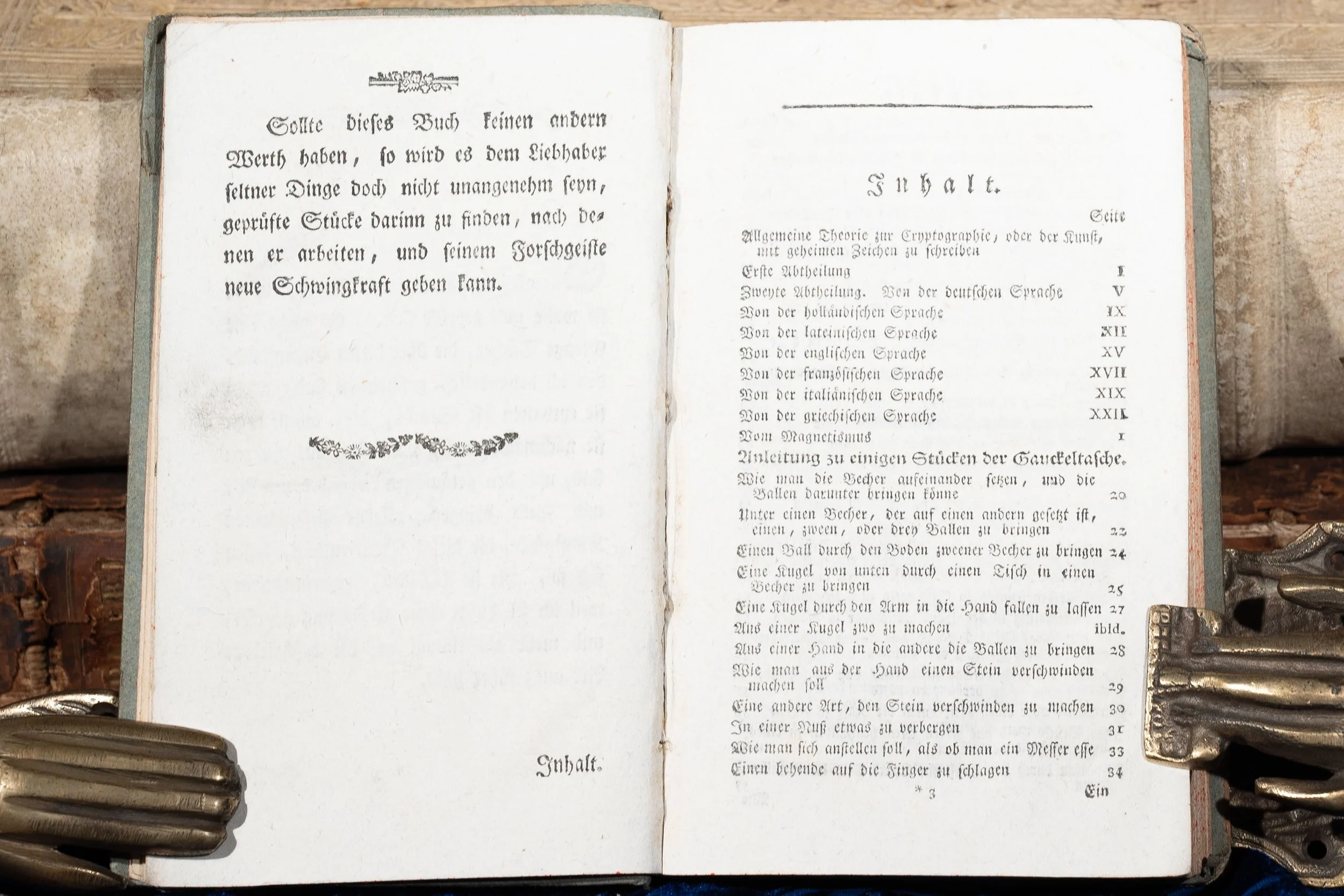
The work is divided into three distinct sections, each addressing a different facet of "natural magic":

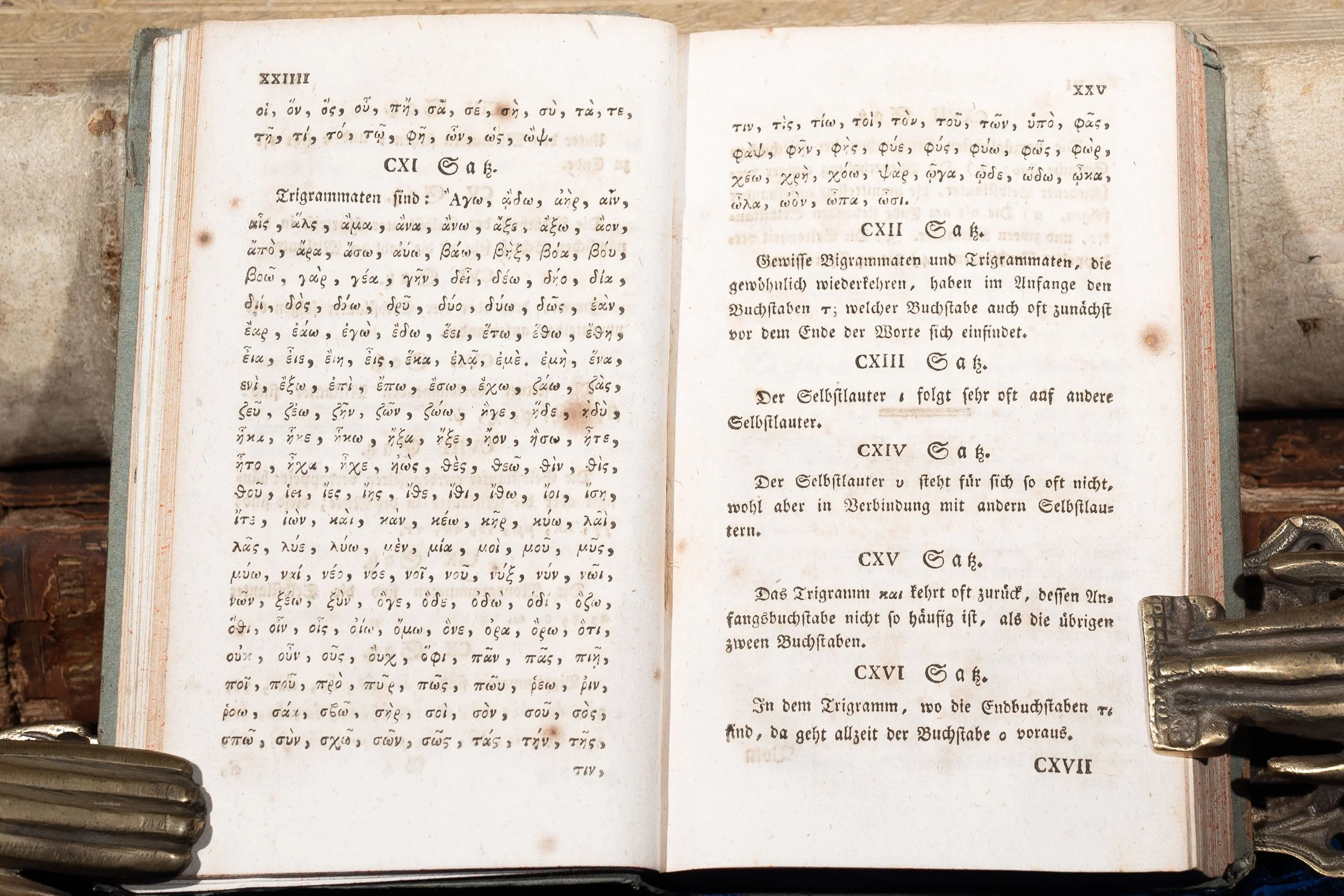
I. CRYPTOGRAPHY (pp. I–XXVI, Roman numerals): Allgemeine Theorie der Steganographie

A treatise on the "General Theory of Secret Writing" (Steganography). Eckartshausen provides detailed methods for encoding and deciphering messages using:

+ Cipher systems and substitution alphabets

+ Invisible inks and chemical methods

+ Geometric and mathematical codes

+ Methods for concealing messages in innocent-seeming texts

Published in 1793, just four years after the French Revolution and amid the turbulent political climate of Napoleonic Europe, such techniques were not mere parlor games. Secret communication was a survival skill for diplomats, revolutionaries, and anyone navigating dangerous political waters. Eckartshausen, as a Bavarian court official under the reactionary Elector Karl Theodor, was acutely aware of the need for secure communication.

The section reflects the Enlightenment conviction that secrets could be systematized, that even the occult art of hiding information could be reduced to rational principles.

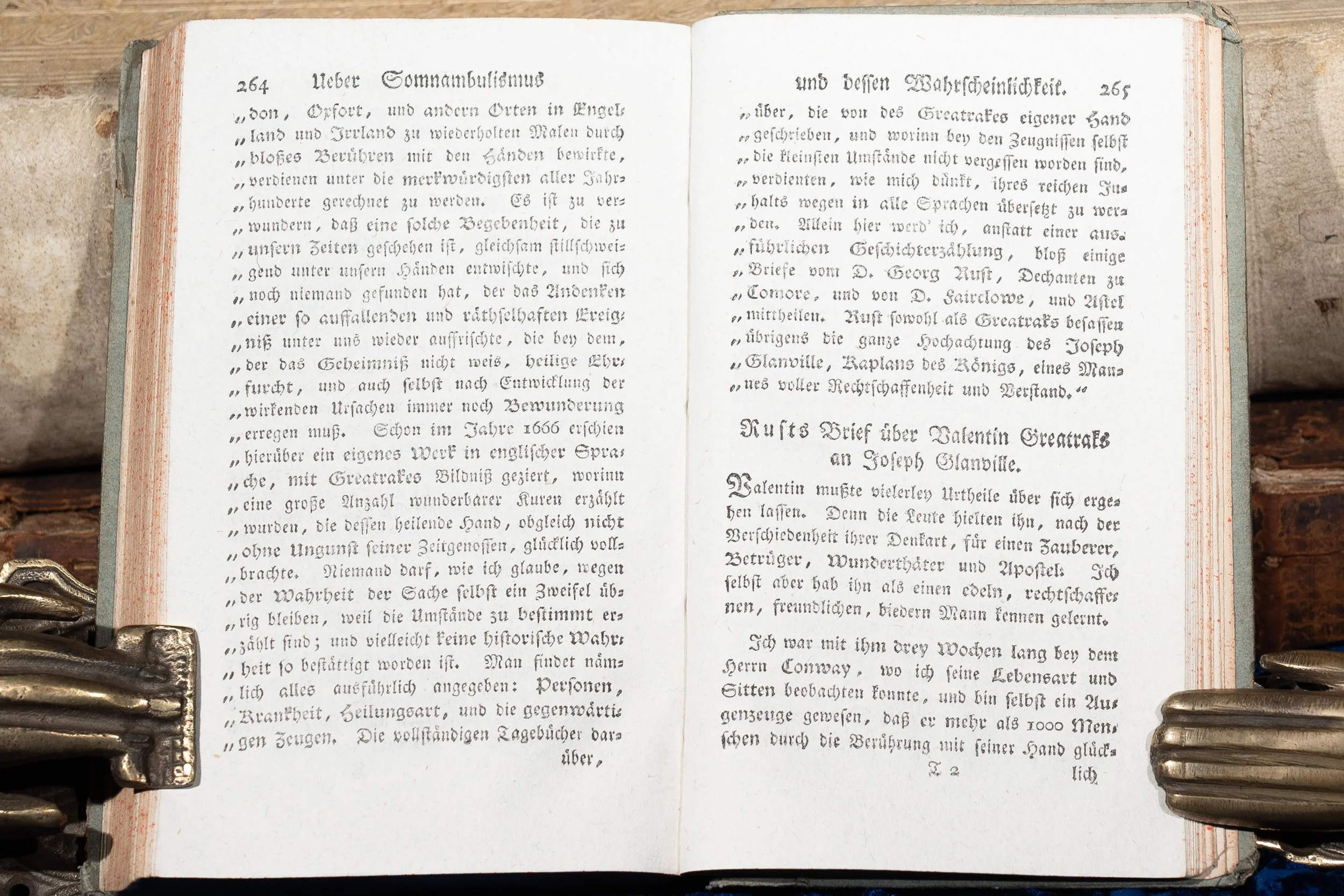
II. MAGNETISM (pp. 1–19, Arabic numerals): Vom Magnetismus

An examination of Animal Magnetism (Mesmerism) and somnambulism. By 1793, Mesmer's theories of an invisible magnetic fluid permeating all living things had scandalized and captivated Europe. Eckartshausen was deeply interested in the spiritual implications of magnetic phenomena, seeing them as empirical proof of invisible forces connecting mind, body, and cosmos.

This section addresses:

+ The theory of magnetic fluid and its properties

+ Techniques for inducing magnetic sleep (somnambulism)

+ The therapeutic and diagnostic potential of magnetism

+ The relationship between magnetic phenomena and spiritual experience

For Eckartshausen, Animal Magnetism was evidence of the invisible architecture of creation, a bridge between matter and spirit. This section represents his attempt to integrate Mesmer's controversial theories into a broader framework of natural philosophy.

As students of Western Esotericism know, Animal Magnetism became the Trojan Horse that smuggled spiritual experience back into materialist science. Eckartshausen was one of many German intellectuals who saw magnetic phenomena as vindication of the "magical universe" that Enlightenment rationalism had supposedly abolished.

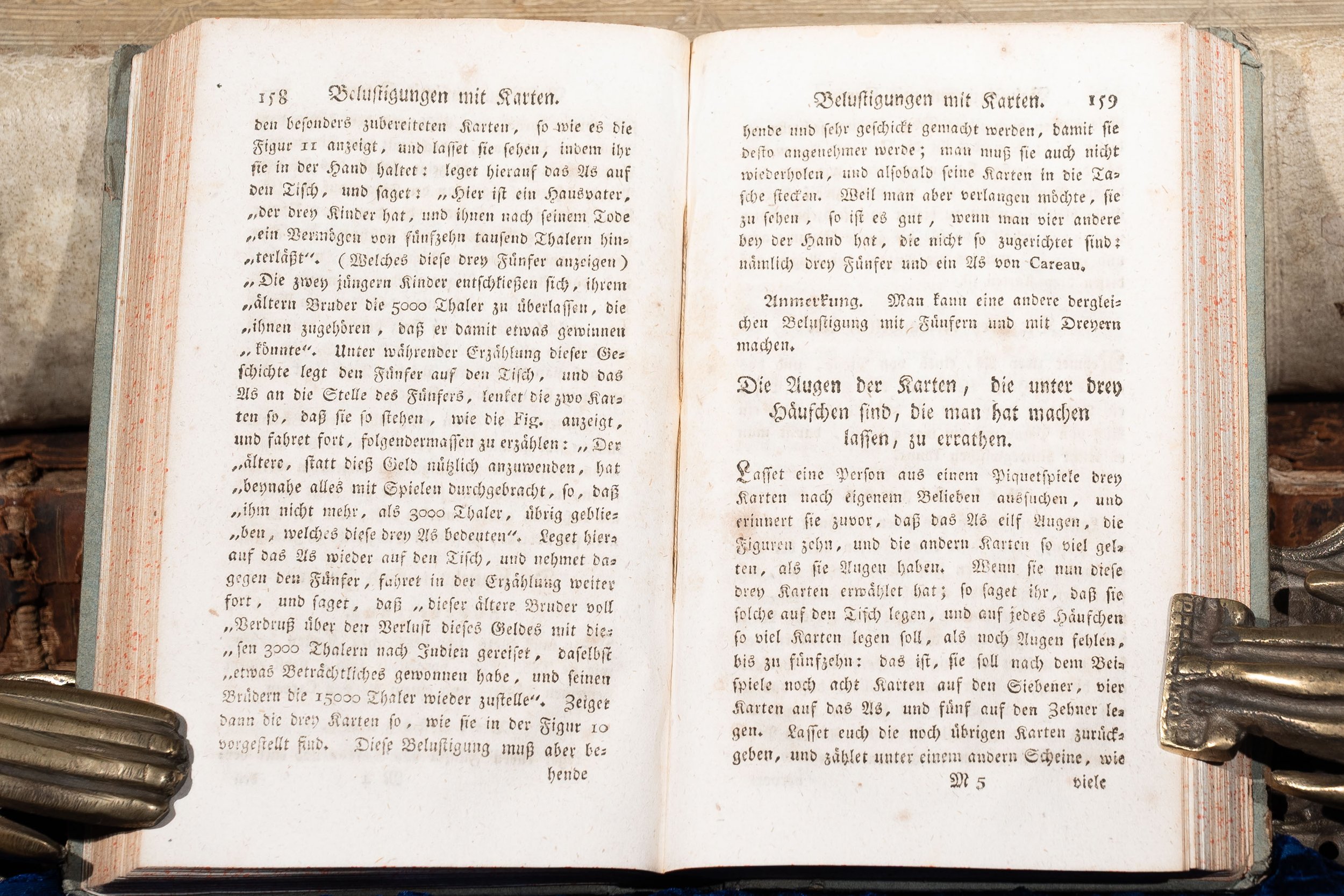
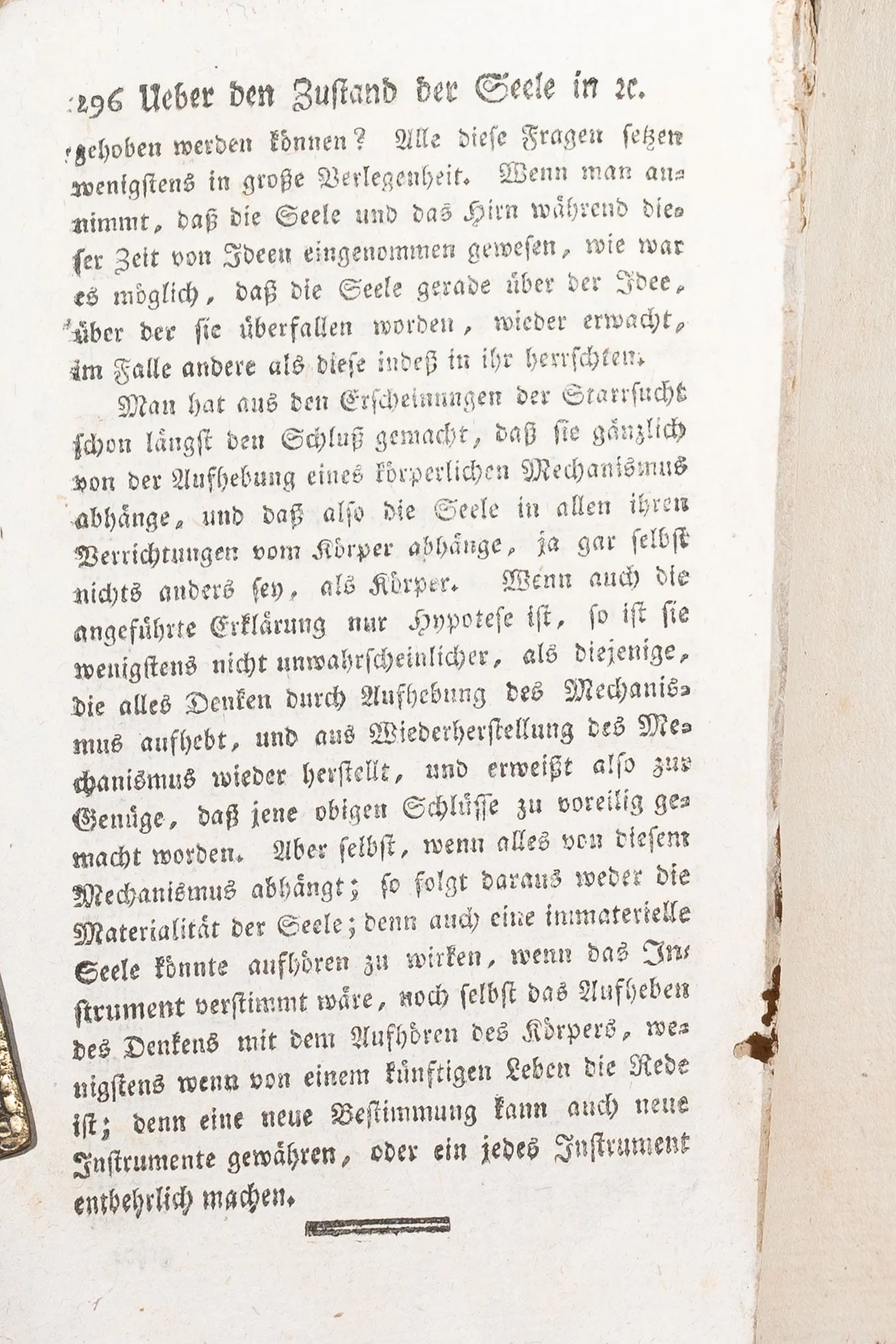
III. THE "GAUCKELTASCHE" (pp. 20–296): The Juggler's Bag - Natural Magic and Legerdemain

The longest and most entertaining section. The Gauckeltasche (literally "Juggler's Bag" or "Conjurer's Sack") was a common metaphor for the apparatus and tricks of stage magicians. This substantial treatise details:

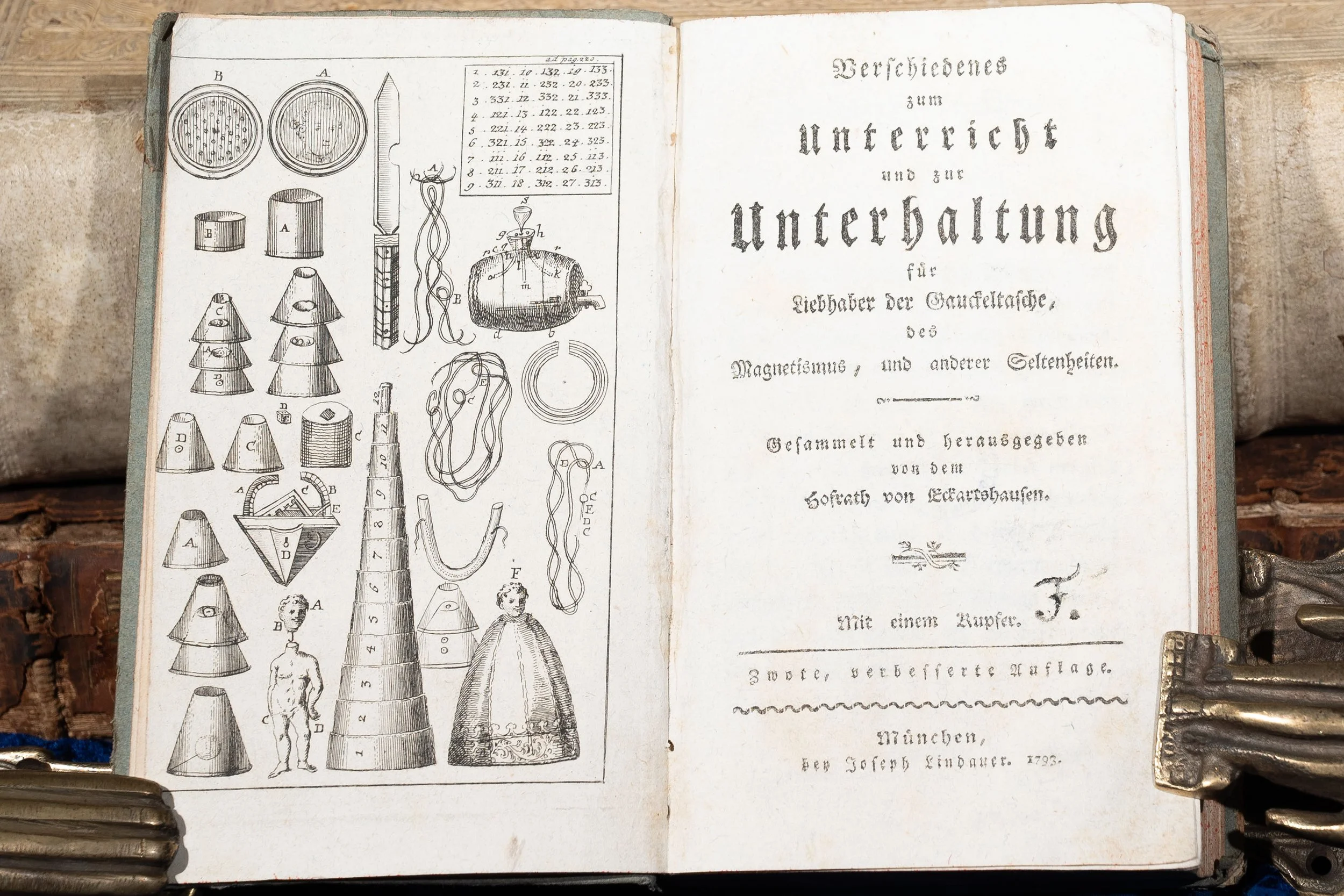
+ The Cups and Balls (Becherspiel) - detailed instructions for the classic conjuring trick depicted in the frontispiece

+ Card manipulations and sleight-of-hand techniques

+ Optical illusions using mirrors, lenses, and perspective

+ Chemical demonstrations and "magical" household recipes

+ Mechanical automata and self-moving devices

+ Amusing parlor tricks for social entertainment

Eckartshausen draws heavily from earlier compendia, particularly:

+ Simon Witgeest's Natürliches Zauber-Buch (Natural Magic Book)

+ Elias Piluland's Hocus Pocus (a pseudonymous collection of conjuring tricks)

However, Eckartshausen's presentation reflects his philosophical conviction that "natural magic" reveals divine ingenuity. Each trick is not mere deception, but a demonstration of natural law, a way to make visible the hidden mechanisms of creation. The stage magician becomes a kind of secular priest, revealing the wonders of nature to an astonished public.

This philosophy, that entertainment can be edifying, that wonder is a pathway to wisdom, would influence 19th-century stage magic and the rise of "scientific demonstration" as popular spectacle.

The Frontispiece: A Cabinet of Wonders

The engraved frontispiece is a delightful visual encyclopedia of Eckartshausen's interests. It depicts:

+ The Cups and Balls setup (the archetypal conjuring trick)

+ Optical cones and viewing devices for creating illusions

+ Magnetic apparatus for demonstrating invisible forces

+ Geometric instruments suggesting the mathematical basis of natural magic

This single image encapsulates Eckartshausen's vision: magic as applied natural philosophy, a fusion of science, art, and wonder.

Provenance: A Cold War Survival

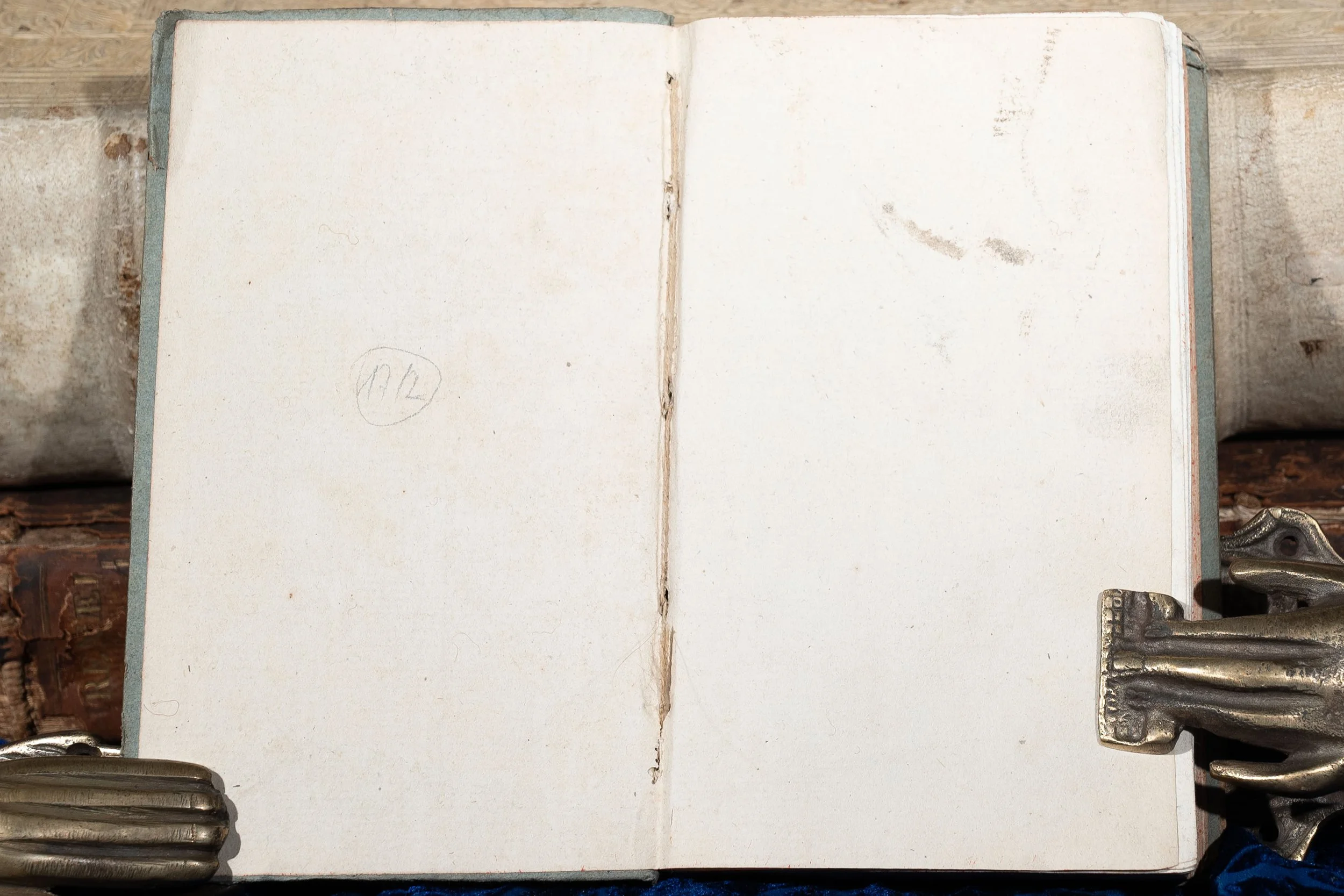
The verso of the front free endpaper bears the circular stamp of the Hungarian Ministry of People's Education Library (Népművelési Minisztérium ... Könyvtári), marked "Nem adható el" (Not for sale / Not transferrable).

This volume was held in a state institutional library in Communist Hungary (likely 1945-1989) before making its way to the West, presumably during or after the fall of the Iron Curtain. The presence of this stamp creates an additional layer of historical interest:

Eckartshausen wrote about secret codes and invisible forces in 1793, during one revolutionary era. This copy survived as state property during another revolutionary era (Soviet-dominated Eastern Europe), only to emerge into the free market after 1989. The book about hidden knowledge was itself hidden behind the Iron Curtain for decades.

ECKARTSHAUSEN, Karl von. Verschiedenes zum Unterricht und zur Unterhaltung für Liebhaber der Gauckeltasche, des Magnetismus, und anderer Seltenheiten. [Various Items for Instruction and Entertainment for Lovers of the Juggler's Bag, Magnetism, and Other Rarities]. Munich: Joseph Lindauer, 1793. The Magician's Bag: Eckartshausen's Rare Treatise on Natural Magic, Cryptography, and Animal Magnetism

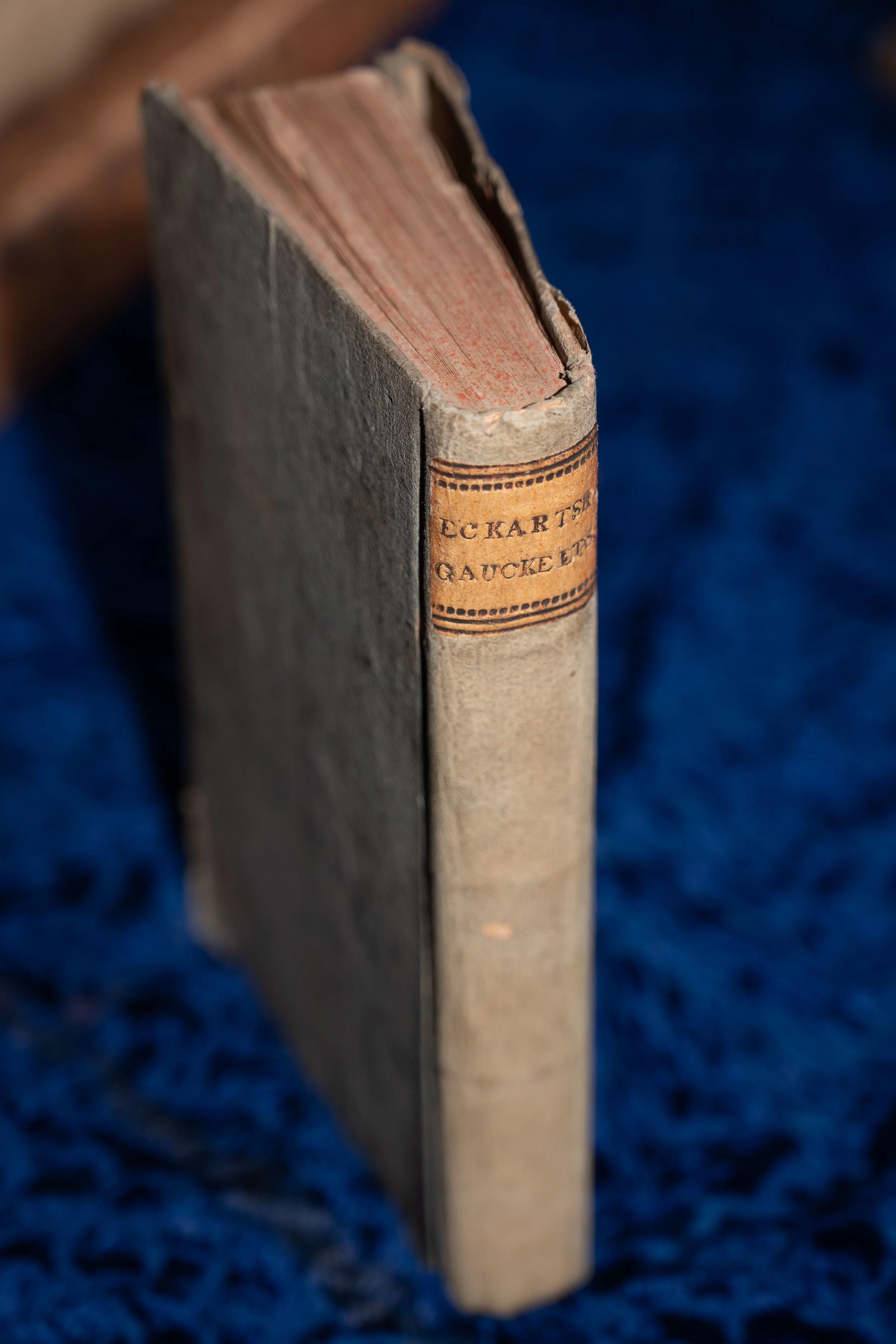
Second, improved edition ("Zwote, verbesserte Auflage"). Small Octavo (8vo). [16], XXVI, 296 pp., [1]. Complete with engraved frontispiece depicting scientific and magical apparatus, including the classical "Cups and Balls" (Becherspiel), optical instruments, and magnetic devices. Contemporary blue-grey interim paper wrappers (Interimsbroschur) with original printed paper spine label (chipped with losses). Edges trimmed and stained red.

Condition: A solid, honest copy in its original state. Contemporary blue-grey interim paper wrappers (Interimsbroschur) with original printed spine label present, though chipped with some loss to label. Spine ends and corners show wear consistent with the inherently fragile nature of interim bindings. Edges attractively trimmed and stained red. Internally, the text block is structurally sound. Paper shows scattered foxing and spotting typical of German paper stock from the 1790s, but remains entirely legible throughout. The engraved frontispiece is clean and well-preserved.

Provenance: Verso of front free endpaper bears the circular institutional stamp of the Hungarian Ministry of People's Education Library (Népművelési Minisztérium Könyvtári), marked "Nem adható el" (Not for sale/Not transferrable). Deaccessioned from a Communist-era Hungarian state library, likely post-1989.

References: VD 18 15299139 (Verzeichnis der im deutschen Sprachbereich erschienenen Drucke des 18. Jahrhunderts).

Rarity: While Eckartshausen's mystical works are relatively well-represented in institutional collections and commerce, his "popular" scientific and entertainment writings are significantly scarcer. This work appears infrequently in the marketplace.

Karl von Eckartshausen (1752–1803) occupies a unique position in the history of Western Esotericism. Best known today for his mystical treatises, particularly Die Wolke über dem Heiligtum (The Cloud upon the Sanctuary, 1802), which influenced everyone from Louis-Claude de Saint-Martin to Éliphas Lévi to A.E. Waite, Eckartshausen was also a Bavarian court official, prolific author, and public intellectual who wrote extensively on natural sciences, pedagogy, and popular entertainment.

This 1793 treatise represents Eckartshausen's attempt to bridge the "two magics," the natural magic of legerdemain, optical illusions, and scientific demonstration, and the transcendent magic of invisible forces, magnetic fluids, and hidden correspondences. For Eckartshausen, both were pathways to understanding divine mysteries: one through the manipulation of natural laws, the other through their spiritual interpretation.

This work is not the "high magic" of his mature mystical period, but rather an example of late Enlightenment "rational wonder", the conviction that nature's secrets, properly understood, reveal both God's ingenuity and humanity's capacity to decode creation.

The work is divided into three distinct sections, each addressing a different facet of "natural magic":

I. CRYPTOGRAPHY (pp. I–XXVI, Roman numerals): Allgemeine Theorie der Steganographie

A treatise on the "General Theory of Secret Writing" (Steganography). Eckartshausen provides detailed methods for encoding and deciphering messages using:

+ Cipher systems and substitution alphabets

+ Invisible inks and chemical methods

+ Geometric and mathematical codes

+ Methods for concealing messages in innocent-seeming texts

Published in 1793, just four years after the French Revolution and amid the turbulent political climate of Napoleonic Europe, such techniques were not mere parlor games. Secret communication was a survival skill for diplomats, revolutionaries, and anyone navigating dangerous political waters. Eckartshausen, as a Bavarian court official under the reactionary Elector Karl Theodor, was acutely aware of the need for secure communication.

The section reflects the Enlightenment conviction that secrets could be systematized, that even the occult art of hiding information could be reduced to rational principles.

II. MAGNETISM (pp. 1–19, Arabic numerals): Vom Magnetismus

An examination of Animal Magnetism (Mesmerism) and somnambulism. By 1793, Mesmer's theories of an invisible magnetic fluid permeating all living things had scandalized and captivated Europe. Eckartshausen was deeply interested in the spiritual implications of magnetic phenomena, seeing them as empirical proof of invisible forces connecting mind, body, and cosmos.

This section addresses:

+ The theory of magnetic fluid and its properties

+ Techniques for inducing magnetic sleep (somnambulism)

+ The therapeutic and diagnostic potential of magnetism

+ The relationship between magnetic phenomena and spiritual experience

For Eckartshausen, Animal Magnetism was evidence of the invisible architecture of creation, a bridge between matter and spirit. This section represents his attempt to integrate Mesmer's controversial theories into a broader framework of natural philosophy.

As students of Western Esotericism know, Animal Magnetism became the Trojan Horse that smuggled spiritual experience back into materialist science. Eckartshausen was one of many German intellectuals who saw magnetic phenomena as vindication of the "magical universe" that Enlightenment rationalism had supposedly abolished.

III. THE "GAUCKELTASCHE" (pp. 20–296): The Juggler's Bag - Natural Magic and Legerdemain

The longest and most entertaining section. The Gauckeltasche (literally "Juggler's Bag" or "Conjurer's Sack") was a common metaphor for the apparatus and tricks of stage magicians. This substantial treatise details:

+ The Cups and Balls (Becherspiel) - detailed instructions for the classic conjuring trick depicted in the frontispiece

+ Card manipulations and sleight-of-hand techniques

+ Optical illusions using mirrors, lenses, and perspective

+ Chemical demonstrations and "magical" household recipes

+ Mechanical automata and self-moving devices

+ Amusing parlor tricks for social entertainment

Eckartshausen draws heavily from earlier compendia, particularly:

+ Simon Witgeest's Natürliches Zauber-Buch (Natural Magic Book)

+ Elias Piluland's Hocus Pocus (a pseudonymous collection of conjuring tricks)

However, Eckartshausen's presentation reflects his philosophical conviction that "natural magic" reveals divine ingenuity. Each trick is not mere deception, but a demonstration of natural law, a way to make visible the hidden mechanisms of creation. The stage magician becomes a kind of secular priest, revealing the wonders of nature to an astonished public.

This philosophy, that entertainment can be edifying, that wonder is a pathway to wisdom, would influence 19th-century stage magic and the rise of "scientific demonstration" as popular spectacle.

The Frontispiece: A Cabinet of Wonders

The engraved frontispiece is a delightful visual encyclopedia of Eckartshausen's interests. It depicts:

+ The Cups and Balls setup (the archetypal conjuring trick)

+ Optical cones and viewing devices for creating illusions

+ Magnetic apparatus for demonstrating invisible forces

+ Geometric instruments suggesting the mathematical basis of natural magic

This single image encapsulates Eckartshausen's vision: magic as applied natural philosophy, a fusion of science, art, and wonder.

Provenance: A Cold War Survival

The verso of the front free endpaper bears the circular stamp of the Hungarian Ministry of People's Education Library (Népművelési Minisztérium ... Könyvtári), marked "Nem adható el" (Not for sale / Not transferrable).

This volume was held in a state institutional library in Communist Hungary (likely 1945-1989) before making its way to the West, presumably during or after the fall of the Iron Curtain. The presence of this stamp creates an additional layer of historical interest:

Eckartshausen wrote about secret codes and invisible forces in 1793, during one revolutionary era. This copy survived as state property during another revolutionary era (Soviet-dominated Eastern Europe), only to emerge into the free market after 1989. The book about hidden knowledge was itself hidden behind the Iron Curtain for decades.

ECKARTSHAUSEN, Karl von. Verschiedenes zum Unterricht und zur Unterhaltung für Liebhaber der Gauckeltasche, des Magnetismus, und anderer Seltenheiten. [Various Items for Instruction and Entertainment for Lovers of the Juggler's Bag, Magnetism, and Other Rarities]. Munich: Joseph Lindauer, 1793. The Magician's Bag: Eckartshausen's Rare Treatise on Natural Magic, Cryptography, and Animal Magnetism

Second, improved edition ("Zwote, verbesserte Auflage"). Small Octavo (8vo). [16], XXVI, 296 pp., [1]. Complete with engraved frontispiece depicting scientific and magical apparatus, including the classical "Cups and Balls" (Becherspiel), optical instruments, and magnetic devices. Contemporary blue-grey interim paper wrappers (Interimsbroschur) with original printed paper spine label (chipped with losses). Edges trimmed and stained red.

Condition: A solid, honest copy in its original state. Contemporary blue-grey interim paper wrappers (Interimsbroschur) with original printed spine label present, though chipped with some loss to label. Spine ends and corners show wear consistent with the inherently fragile nature of interim bindings. Edges attractively trimmed and stained red. Internally, the text block is structurally sound. Paper shows scattered foxing and spotting typical of German paper stock from the 1790s, but remains entirely legible throughout. The engraved frontispiece is clean and well-preserved.

Provenance: Verso of front free endpaper bears the circular institutional stamp of the Hungarian Ministry of People's Education Library (Népművelési Minisztérium Könyvtári), marked "Nem adható el" (Not for sale/Not transferrable). Deaccessioned from a Communist-era Hungarian state library, likely post-1989.

References: VD 18 15299139 (Verzeichnis der im deutschen Sprachbereich erschienenen Drucke des 18. Jahrhunderts).

Rarity: While Eckartshausen's mystical works are relatively well-represented in institutional collections and commerce, his "popular" scientific and entertainment writings are significantly scarcer. This work appears infrequently in the marketplace.