A significant and comprehensive treatise from the height of the German Enlightenment (Aufklärung), marking a pivotal moment in the transition from demonology to psychology. Justus Christian Hennings (1731-1815), Professor of Moral Philosophy at Jena, constructs a rigorous rationalist framework to dismantle the spiritualist crazes of the 18th century. Published just over a decade after Kant’s famous attack on Swedenborg (Träume eines Geistersehers, 1766), Hennings’ work sits at the center of the fierce "Geisterseher" (Ghost-seer) debate that captivated German intellectual life, influencing figures from Schiller to Goethe.
Hennings’ methodology is notably modern. Rather than dismissing visions as mere lies, he analyzes them as physiological and optical phenomena. He categorizes "supernatural" experiences as "deceptive sensations" (betrügliche Empfindungen) resulting from illness, mental instability, or external manipulation. Crucially, the text documents the intersection of technology and the occult; the inclusion of the Laterna Magica (Magic Lantern) woodcut on p. 169 serves as a technical exposé, revealing how projected images were used by charlatans to simulate apparitions. This linkage of optics and ghosts prefigures the "Phantasmagoria" shows that would sweep Europe a decade later.
For the historian of Western Esotericism, this work is indispensable not as a grimoire, but as a "negative catalog" of belief. In his attempt to explain away prophecies, second sight, and hauntings, Hennings provides a detailed inventory of the very folklore and esoteric practices he seeks to eradicate. It stands as a foundational text in the pre-history of parapsychology, documenting the moment when the "Spirit World" was relocated from the cosmos into the human mind.
HENNINGS, Justus Christian. Von Geistern und Geistersehern. Leipzig: in der Weygandschen Buchhandlung, 1780. First Edition. 8vo (20 x 13.5 cm). [12] leaves, 844 pp., [12] leaves. Illustrated with an engraved title vignette and one full-page woodcut (p. 169); two further minor text woodcuts unverified due to unopened leaves.
Condition: Original interim paperboards (Interims-Pappband) with handwritten spine title. An exceptional, uncut and largely unopened copy, preserving the original wide margins (deckle edges retained). Internally clean with only occasional light spotting typical of the paper stock. The unopened gatherings preclude verification of two minor diagrams, preserving the volume's pristine, "unread" state.
A significant and comprehensive treatise from the height of the German Enlightenment (Aufklärung), marking a pivotal moment in the transition from demonology to psychology. Justus Christian Hennings (1731-1815), Professor of Moral Philosophy at Jena, constructs a rigorous rationalist framework to dismantle the spiritualist crazes of the 18th century. Published just over a decade after Kant’s famous attack on Swedenborg (Träume eines Geistersehers, 1766), Hennings’ work sits at the center of the fierce "Geisterseher" (Ghost-seer) debate that captivated German intellectual life, influencing figures from Schiller to Goethe.
Hennings’ methodology is notably modern. Rather than dismissing visions as mere lies, he analyzes them as physiological and optical phenomena. He categorizes "supernatural" experiences as "deceptive sensations" (betrügliche Empfindungen) resulting from illness, mental instability, or external manipulation. Crucially, the text documents the intersection of technology and the occult; the inclusion of the Laterna Magica (Magic Lantern) woodcut on p. 169 serves as a technical exposé, revealing how projected images were used by charlatans to simulate apparitions. This linkage of optics and ghosts prefigures the "Phantasmagoria" shows that would sweep Europe a decade later.
For the historian of Western Esotericism, this work is indispensable not as a grimoire, but as a "negative catalog" of belief. In his attempt to explain away prophecies, second sight, and hauntings, Hennings provides a detailed inventory of the very folklore and esoteric practices he seeks to eradicate. It stands as a foundational text in the pre-history of parapsychology, documenting the moment when the "Spirit World" was relocated from the cosmos into the human mind.
HENNINGS, Justus Christian. Von Geistern und Geistersehern. Leipzig: in der Weygandschen Buchhandlung, 1780. First Edition. 8vo (20 x 13.5 cm). [12] leaves, 844 pp., [12] leaves. Illustrated with an engraved title vignette and one full-page woodcut (p. 169); two further minor text woodcuts unverified due to unopened leaves.
Condition: Original interim paperboards (Interims-Pappband) with handwritten spine title. An exceptional, uncut and largely unopened copy, preserving the original wide margins (deckle edges retained). Internally clean with only occasional light spotting typical of the paper stock. The unopened gatherings preclude verification of two minor diagrams, preserving the volume's pristine, "unread" state.

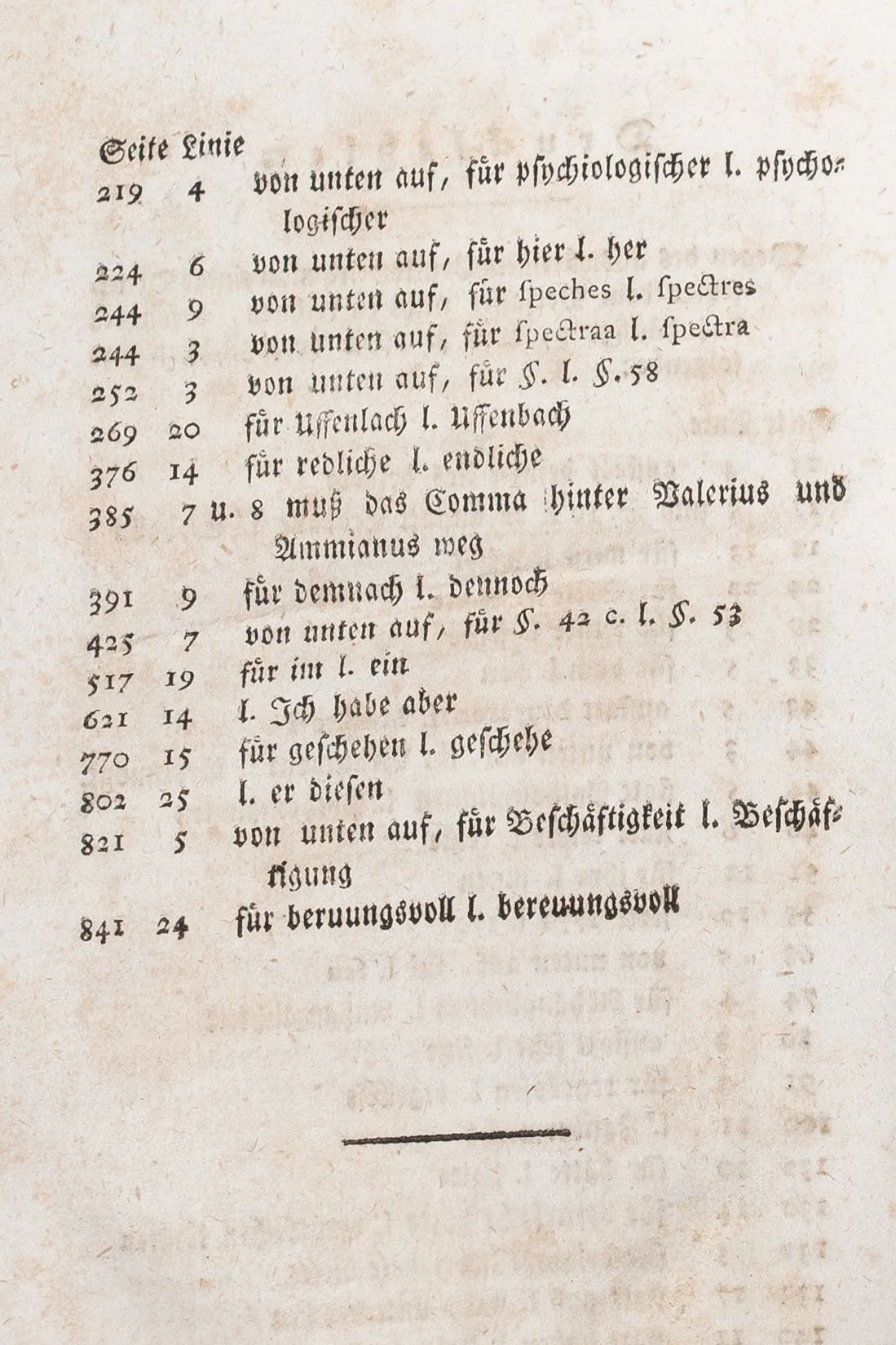 Image 1 of 11
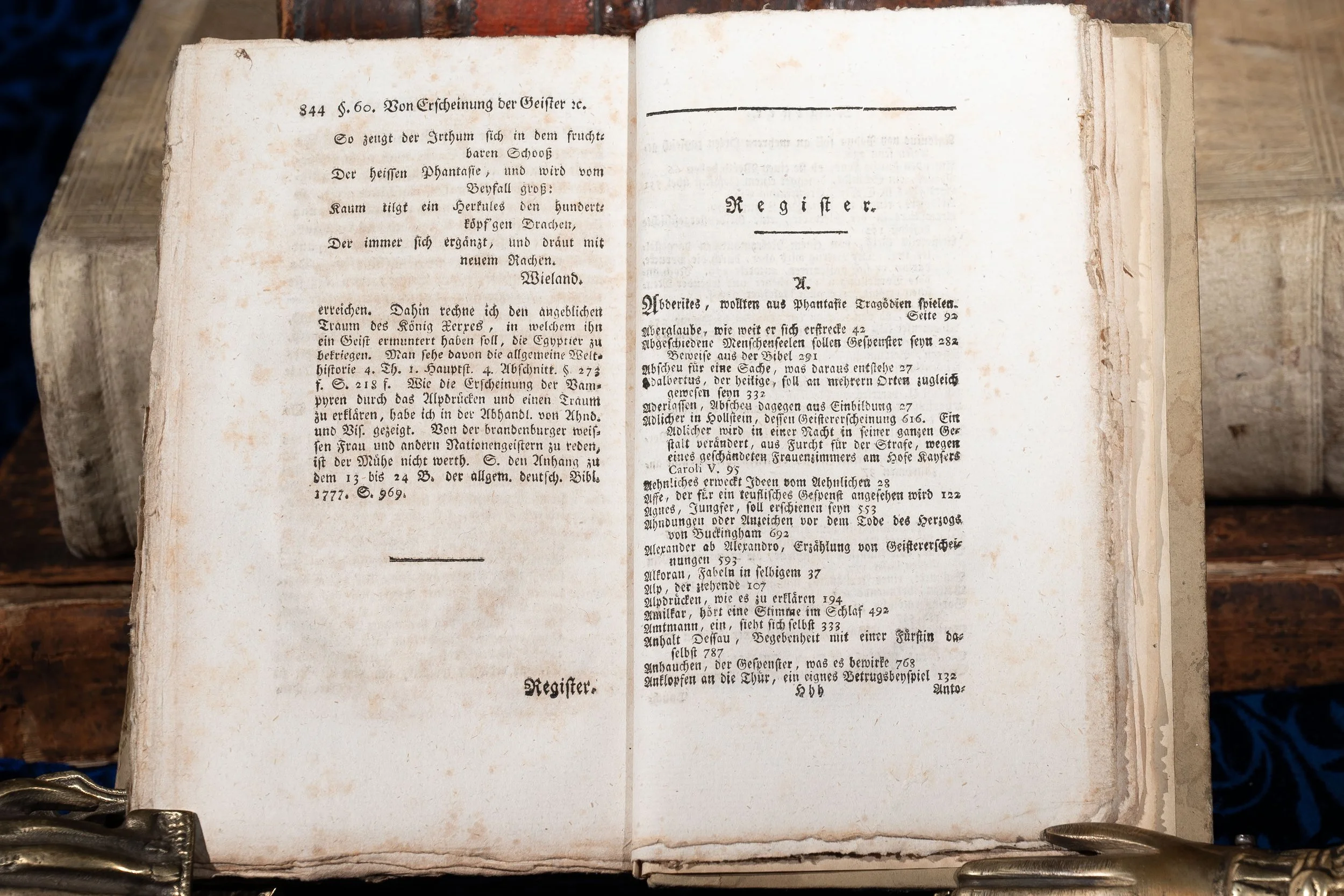 Image 2 of 11
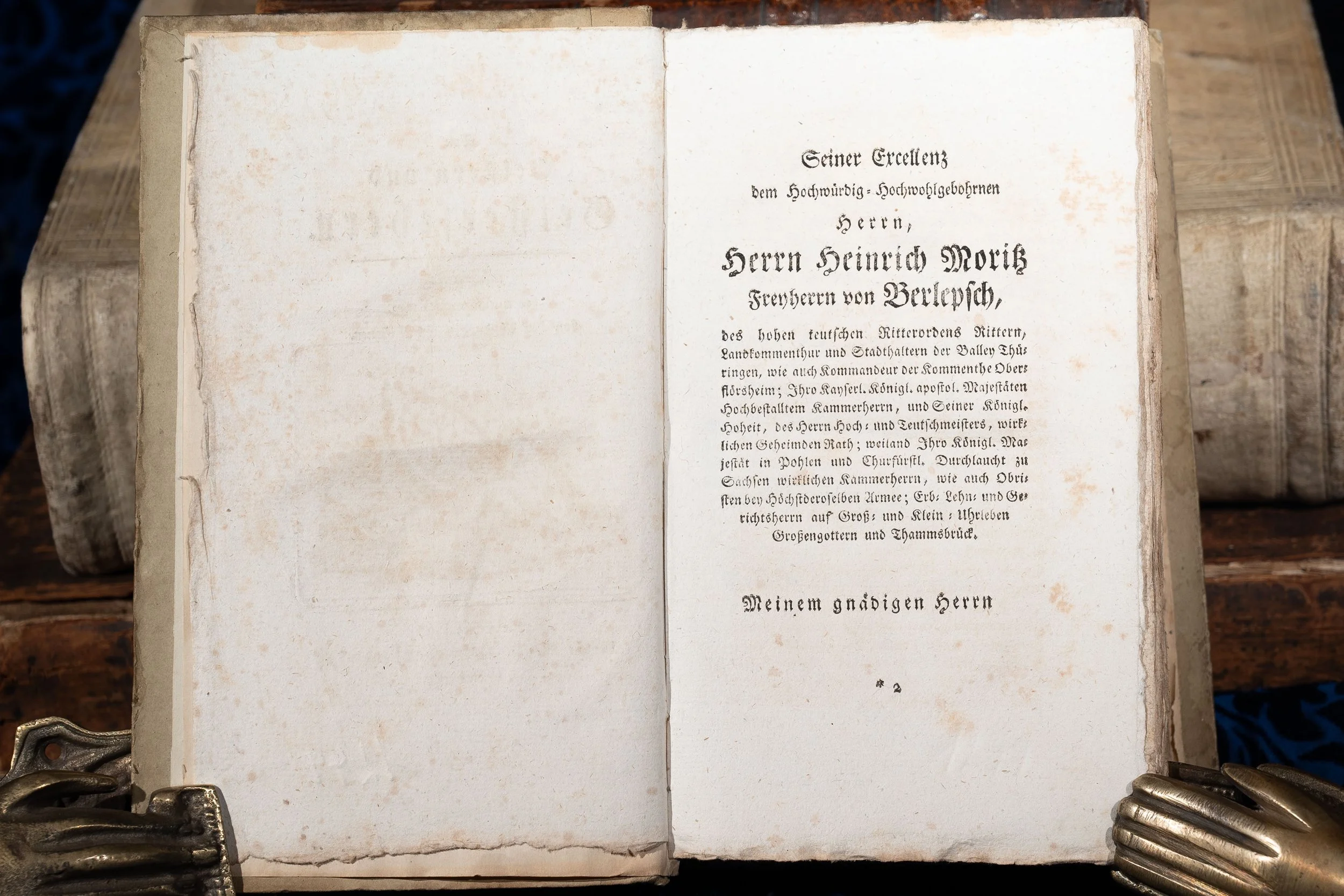 Image 3 of 11
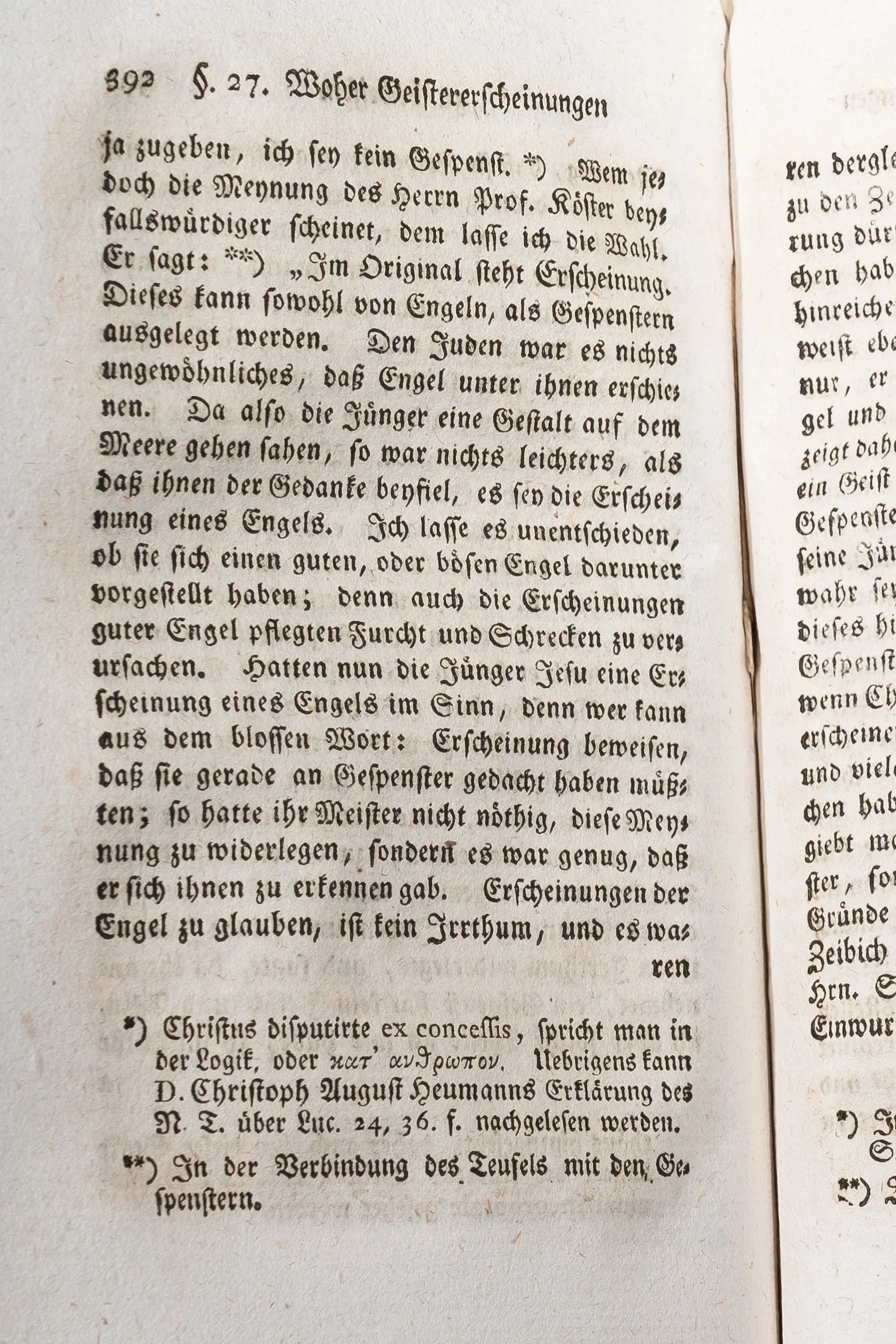 Image 4 of 11
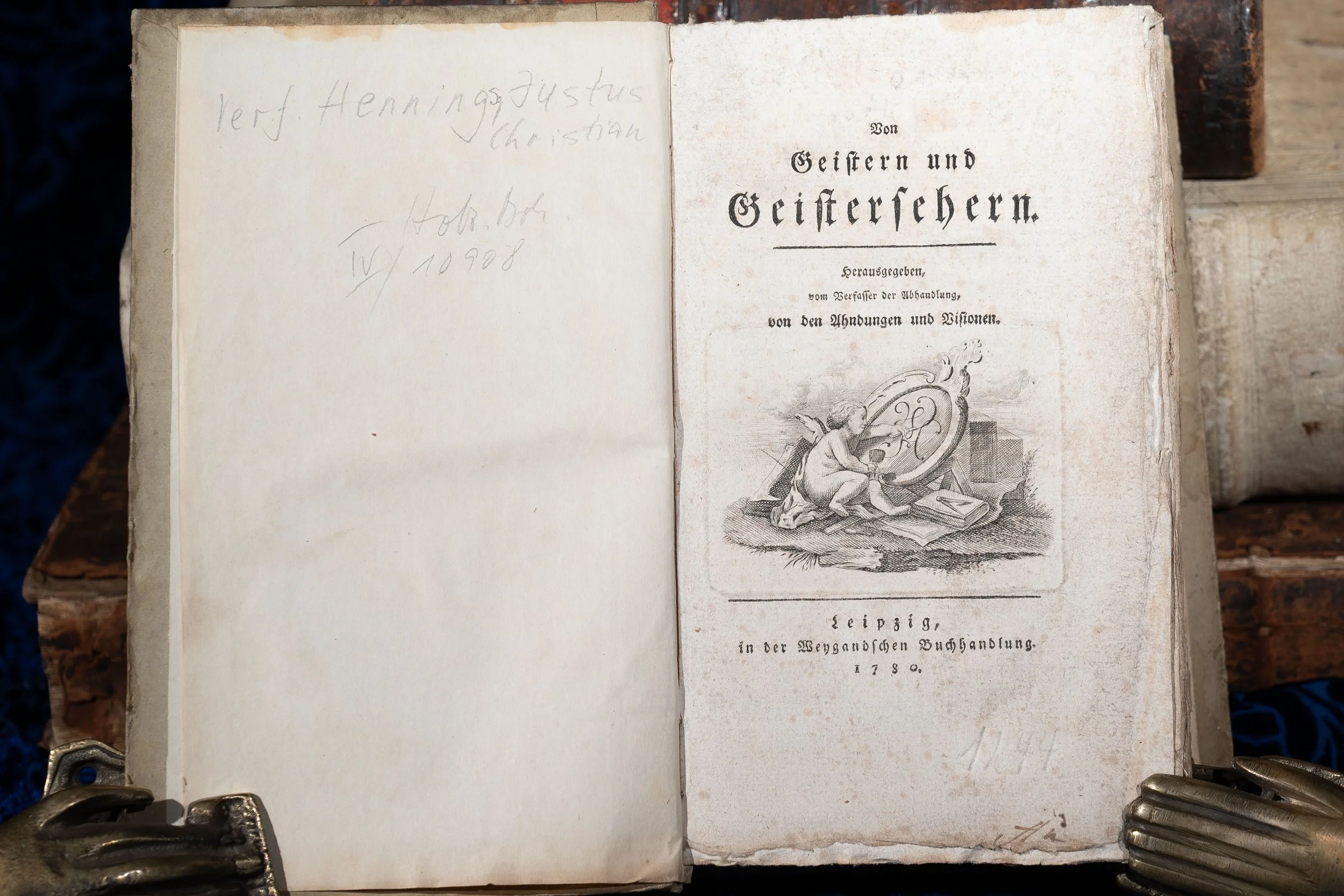 Image 5 of 11
 Image 6 of 11
 Image 7 of 11
 Image 8 of 11
 Image 9 of 11
 Image 10 of 11
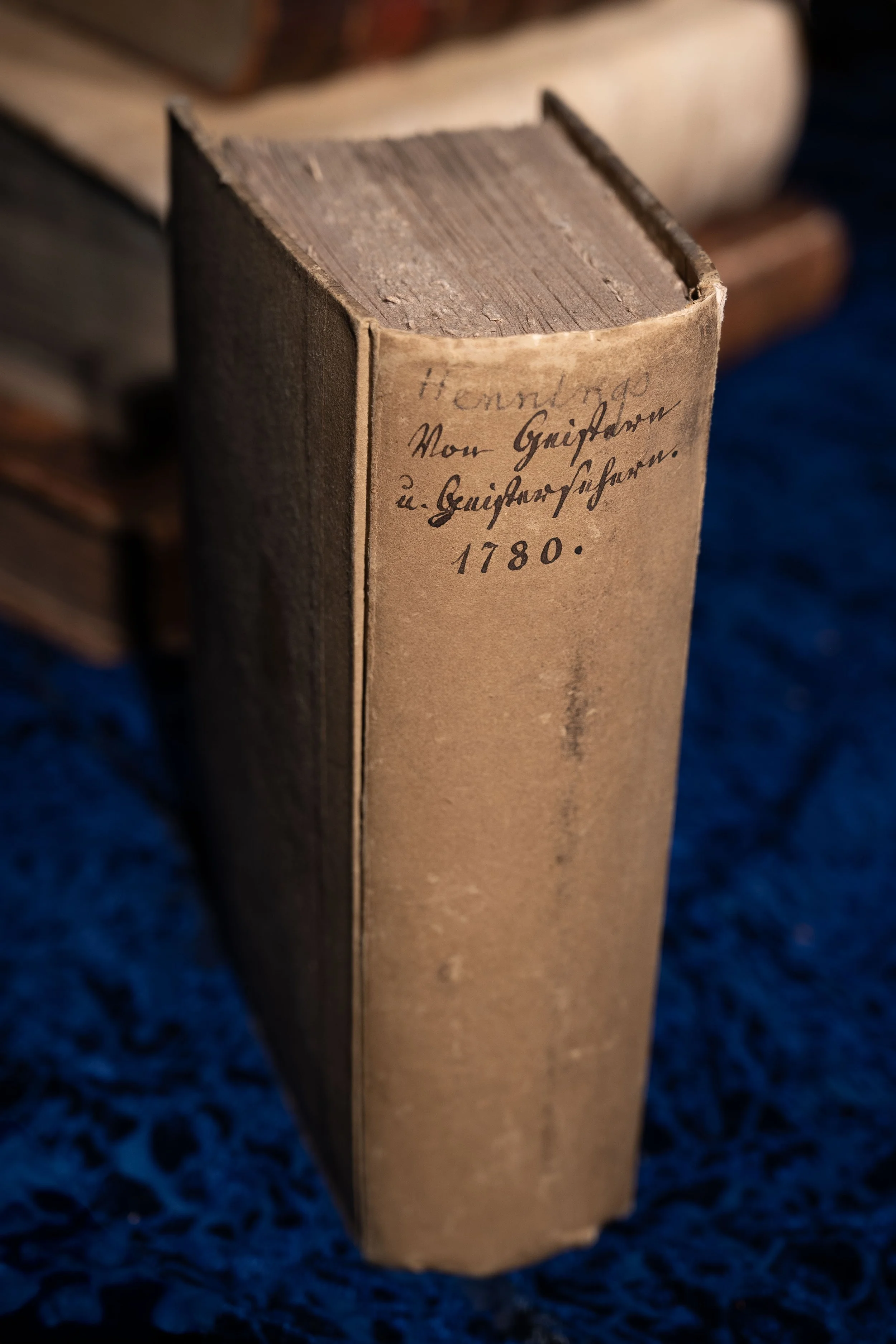 Image 11 of 11