André Morellet's Manuel des inquisiteurs turns a Latin handbook of inquisitorial procedure into a French abridgment intended to expose its methods. His source was the Directorium inquisitorum of the fourteenth-century inquisitor Nicolau Eymeric, enlarged by the canon lawyer Francisco Peña. Morellet arranged his extracts in the order of a trial, from denunciation to sentence.
A theologian and contributor to the Encyclopédie, Morellet had already spent a short spell in the Bastille for satire. Voltaire called him the abbé Mords-les, “Bite-them,” a pun on his name. The Manuel appeared in 1762, the year Jean Calas was executed in Toulouse and Voltaire began his campaign over the case. Its Lisbon imprint concealed the circumstances of its publication.
The abridgment describes interrogation and torture, with a section on sorcery and divination. These passages place it within the history of official responses to magic, while Morellet's selection shows how an Enlightenment critic used the Inquisition's procedures against it. He also included a short history of the Portuguese Inquisition drawn from Luis de Páramo.
This copy retains contemporary calf.
Provenance: Ink signature on the title page.
[MORELLET, André]. Le Manuel des inquisiteurs, à l'usage des inquisitions d'Espagne & de Portugal. Ou abrégé de l'ouvrage intitulé: Directorium inquisitorum, composé vers 1358 par Nicolas Eymeric, grand inquisiteur dans le royaume d'Arragon. On y a joint une courte histoire de l'établissement de l'Inquisition dans le royaume de Portugal, tirée du latin de Louis à Paramo. Lisbonne [false imprint], 1762. First edition.
Physical Description: Duodecimo (164 x 94 mm), 198 pp. Title page with a small typographic ornament. The history of the Portuguese Inquisition begins on page 169, and an editor's postscript closes the volume.
Binding: Contemporary full mottled calf, smooth spine gilt in compartments with a red morocco label, marbled endpapers.
Condition: Head of the spine chipped with the headband exposed, corners worn. Light toning and scattered spotting.
André Morellet's Manuel des inquisiteurs turns a Latin handbook of inquisitorial procedure into a French abridgment intended to expose its methods. His source was the Directorium inquisitorum of the fourteenth-century inquisitor Nicolau Eymeric, enlarged by the canon lawyer Francisco Peña. Morellet arranged his extracts in the order of a trial, from denunciation to sentence.
A theologian and contributor to the Encyclopédie, Morellet had already spent a short spell in the Bastille for satire. Voltaire called him the abbé Mords-les, “Bite-them,” a pun on his name. The Manuel appeared in 1762, the year Jean Calas was executed in Toulouse and Voltaire began his campaign over the case. Its Lisbon imprint concealed the circumstances of its publication.
The abridgment describes interrogation and torture, with a section on sorcery and divination. These passages place it within the history of official responses to magic, while Morellet's selection shows how an Enlightenment critic used the Inquisition's procedures against it. He also included a short history of the Portuguese Inquisition drawn from Luis de Páramo.
This copy retains contemporary calf.
Provenance: Ink signature on the title page.
[MORELLET, André]. Le Manuel des inquisiteurs, à l'usage des inquisitions d'Espagne & de Portugal. Ou abrégé de l'ouvrage intitulé: Directorium inquisitorum, composé vers 1358 par Nicolas Eymeric, grand inquisiteur dans le royaume d'Arragon. On y a joint une courte histoire de l'établissement de l'Inquisition dans le royaume de Portugal, tirée du latin de Louis à Paramo. Lisbonne [false imprint], 1762. First edition.
Physical Description: Duodecimo (164 x 94 mm), 198 pp. Title page with a small typographic ornament. The history of the Portuguese Inquisition begins on page 169, and an editor's postscript closes the volume.
Binding: Contemporary full mottled calf, smooth spine gilt in compartments with a red morocco label, marbled endpapers.
Condition: Head of the spine chipped with the headband exposed, corners worn. Light toning and scattered spotting.

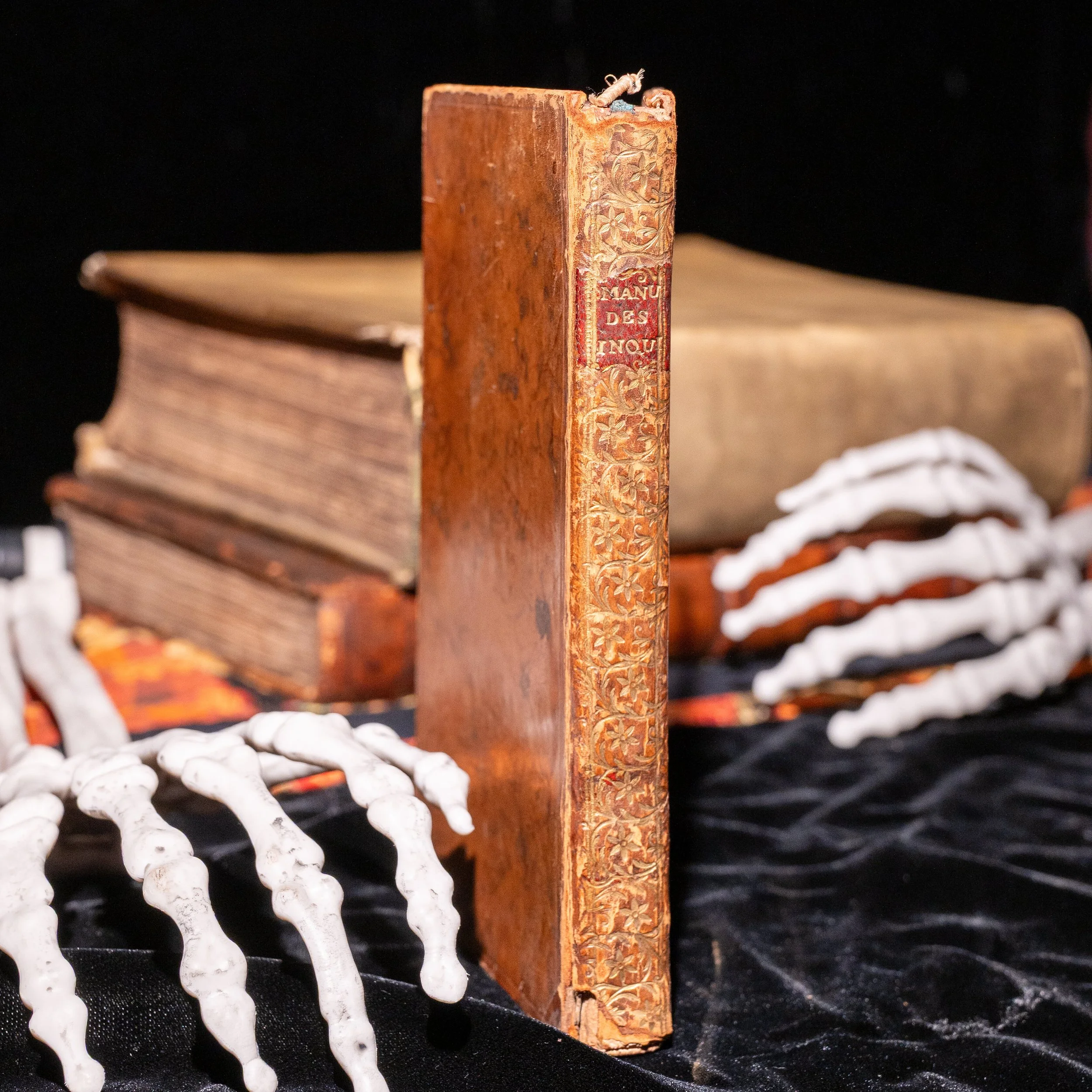 Image 1 of 10
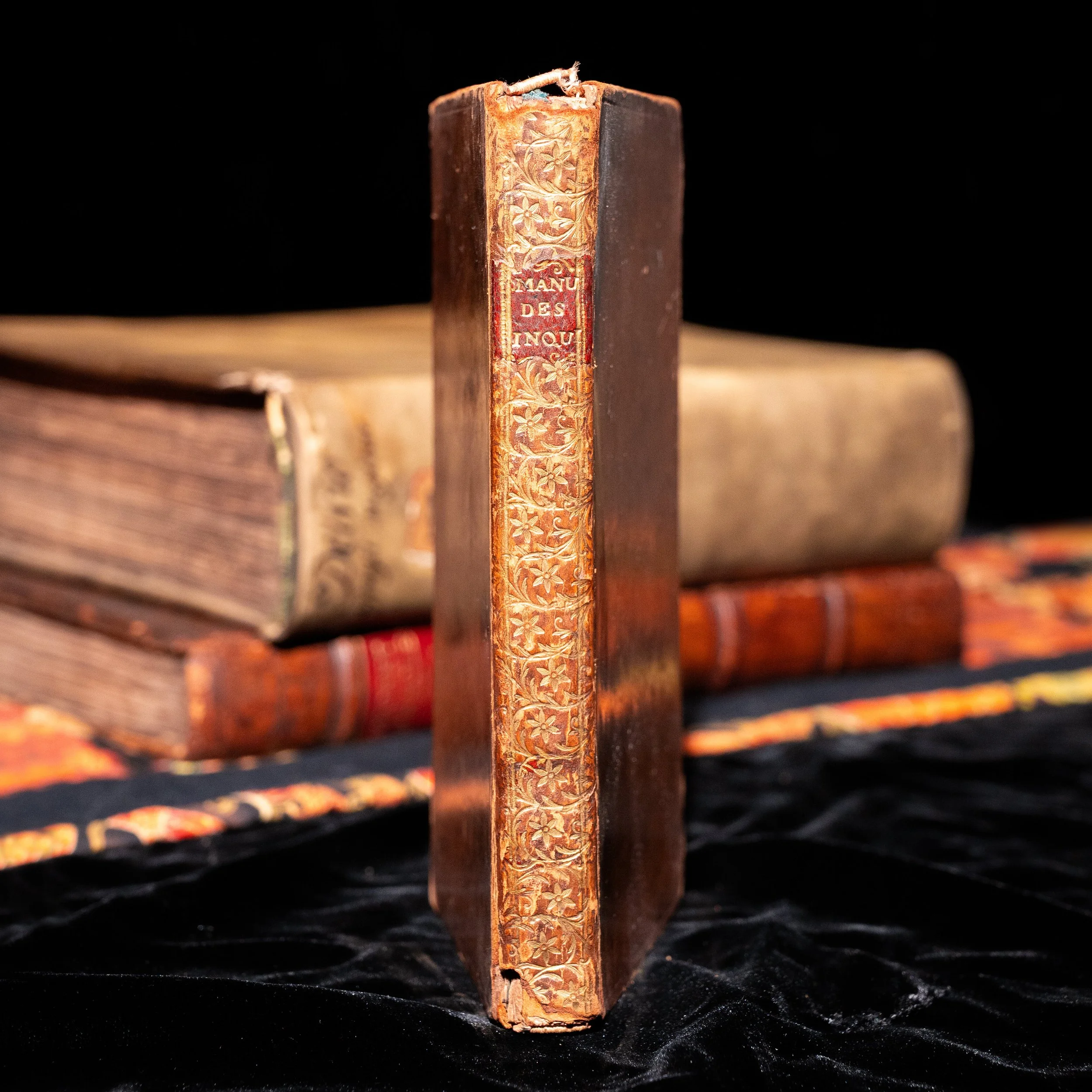 Image 2 of 10
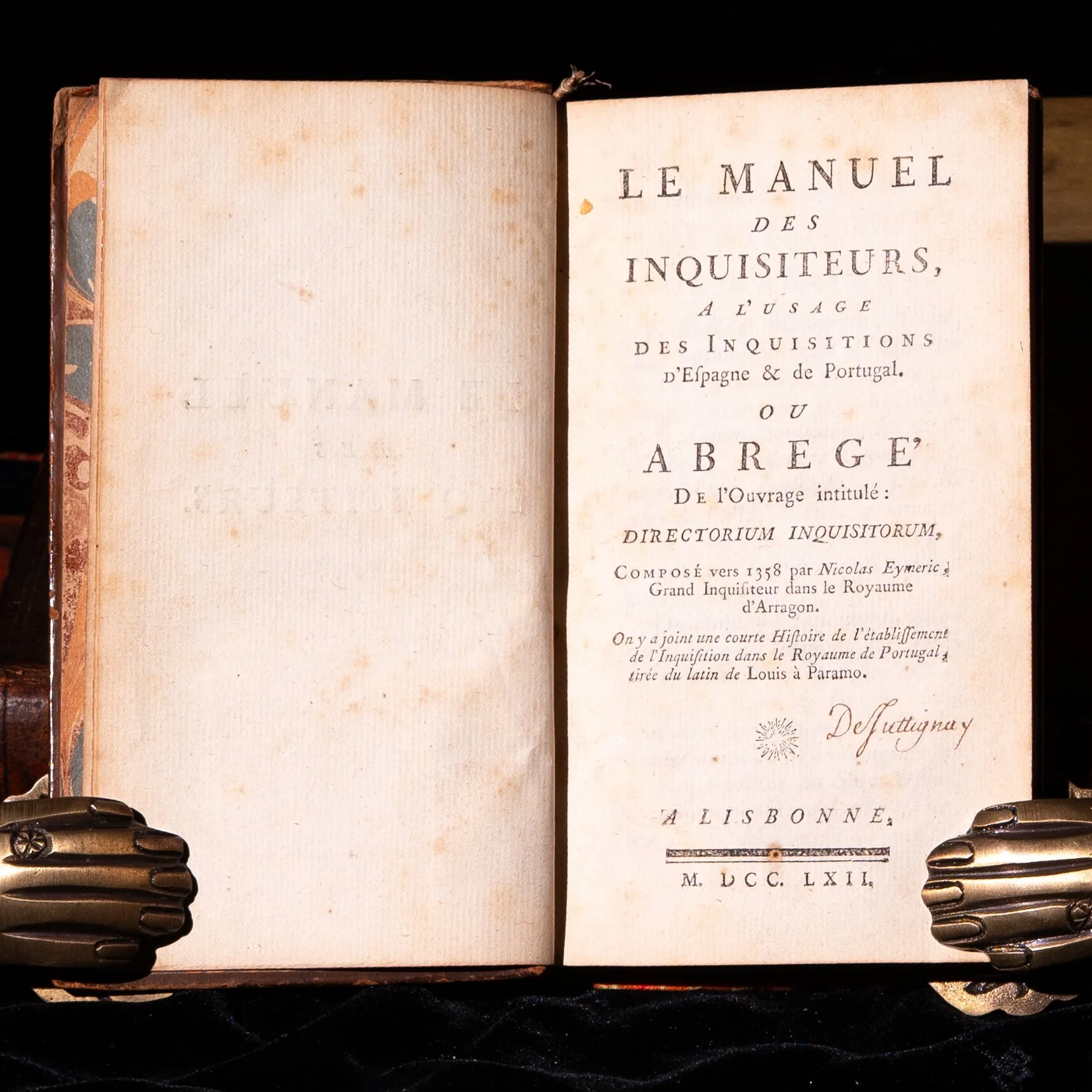 Image 3 of 10
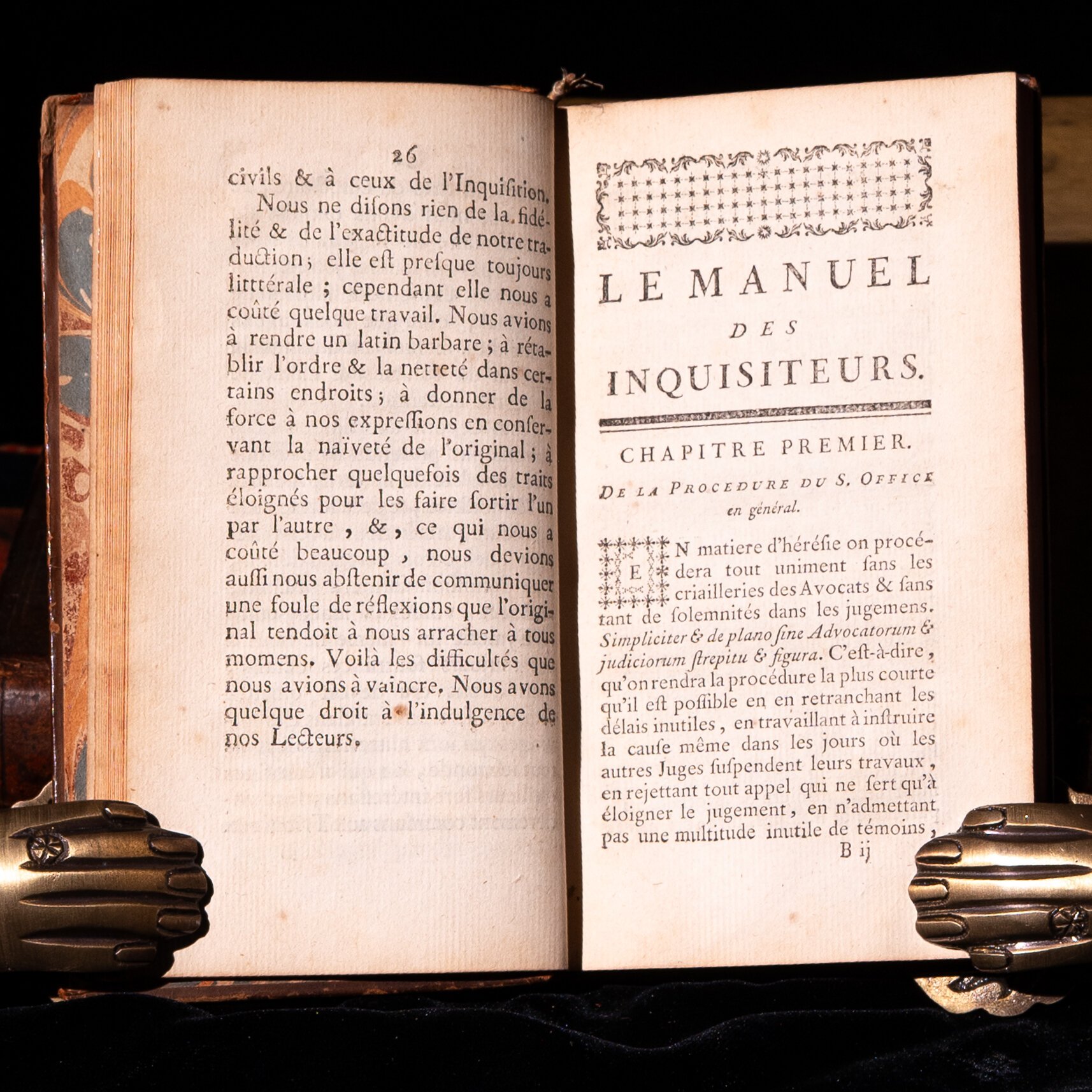 Image 4 of 10
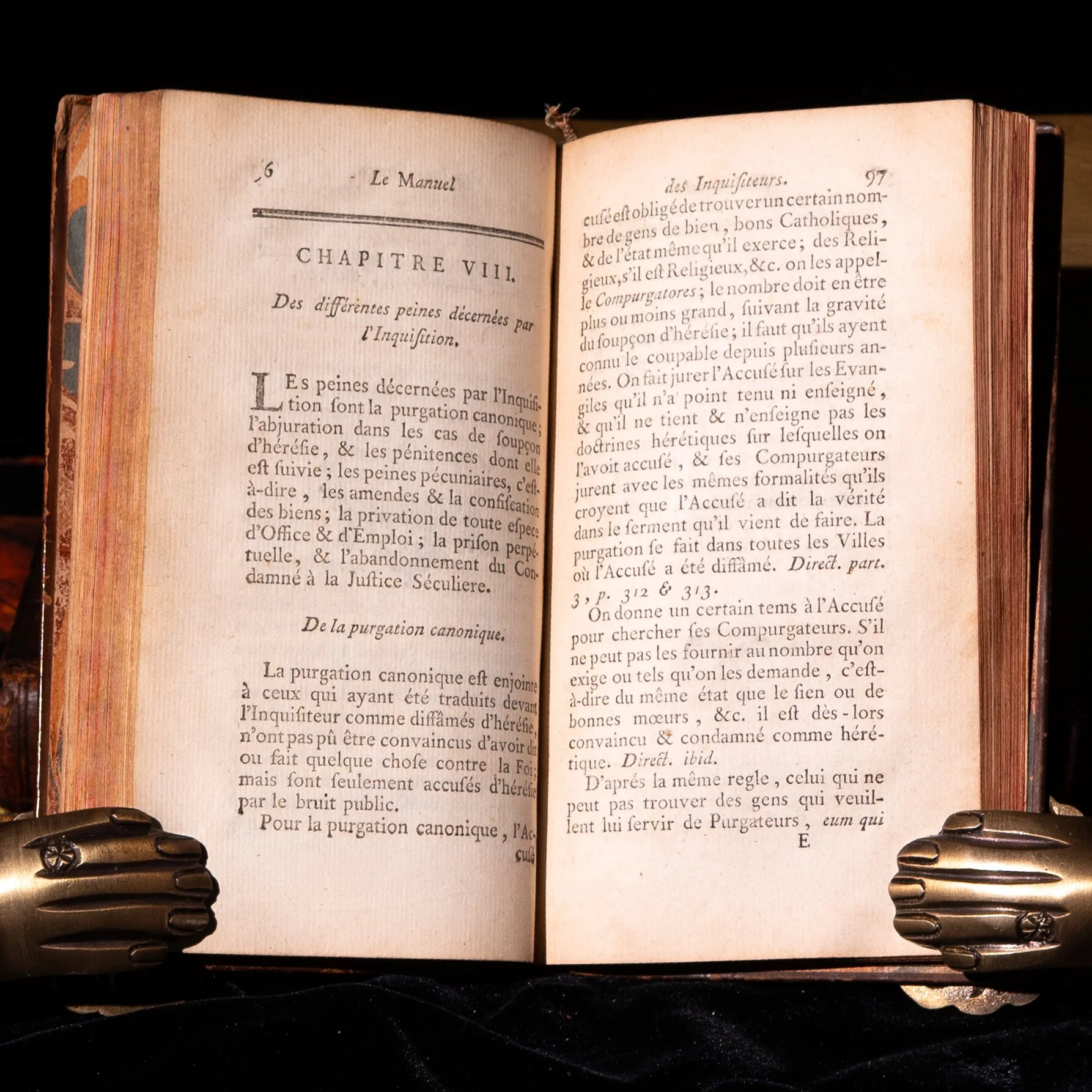 Image 5 of 10
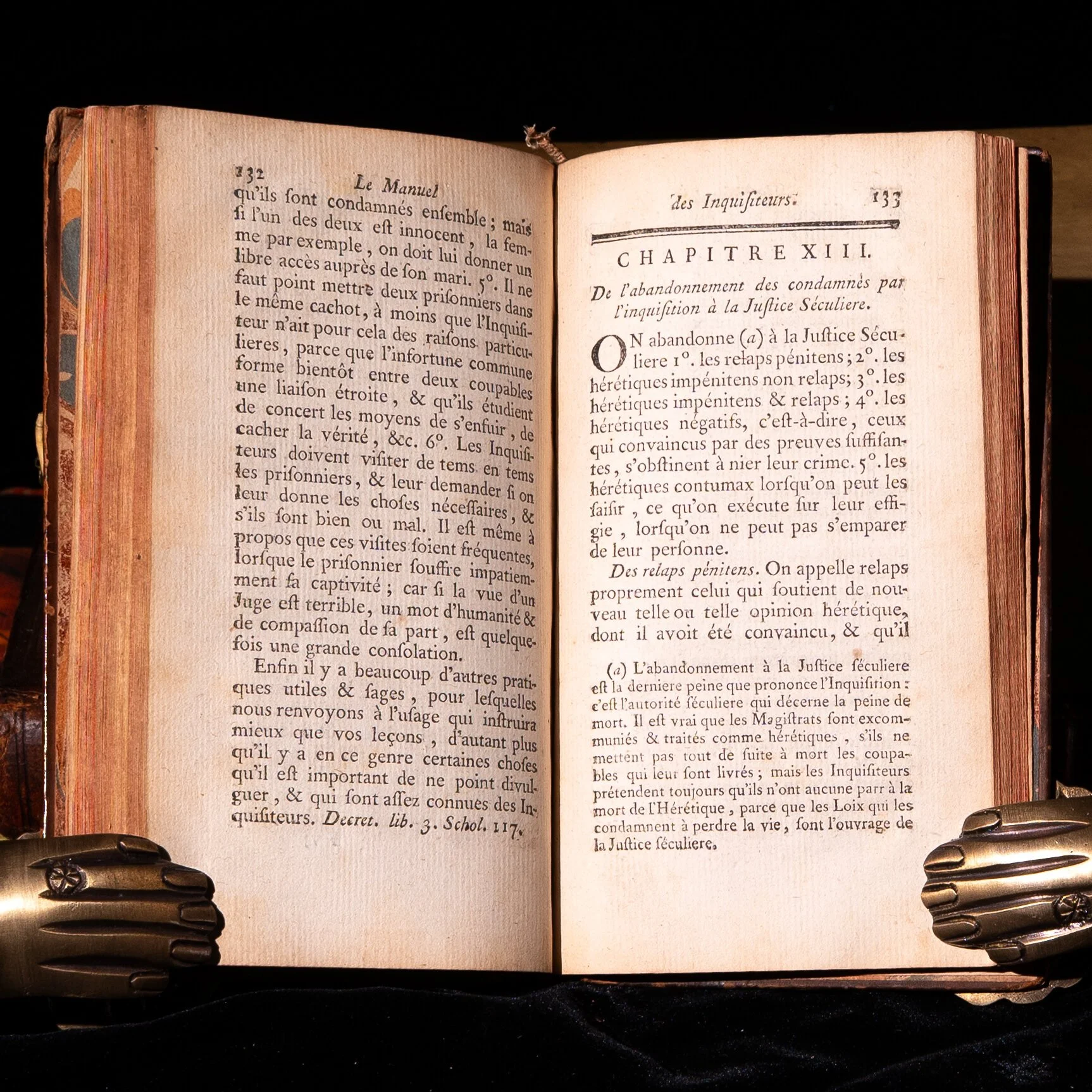 Image 6 of 10
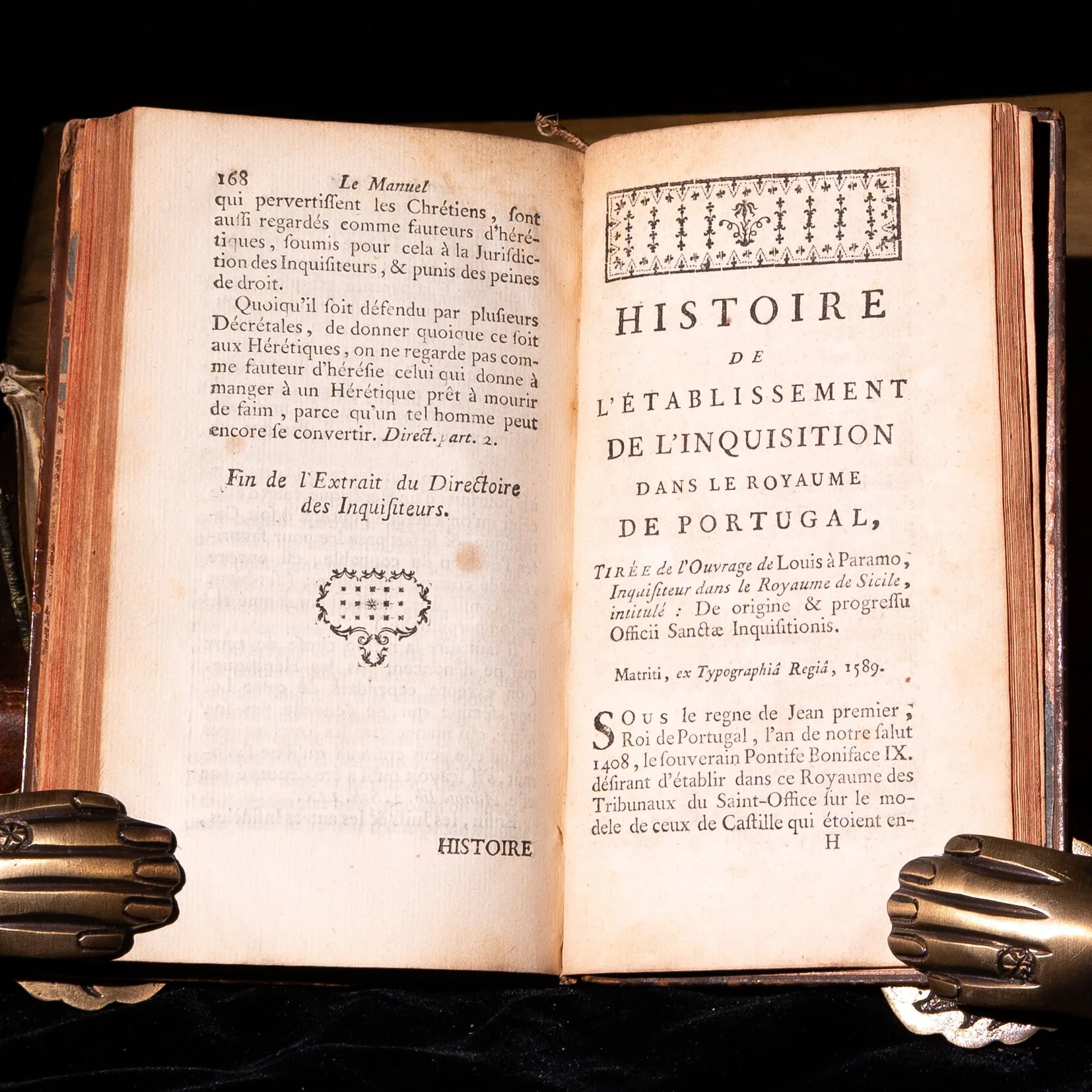 Image 7 of 10
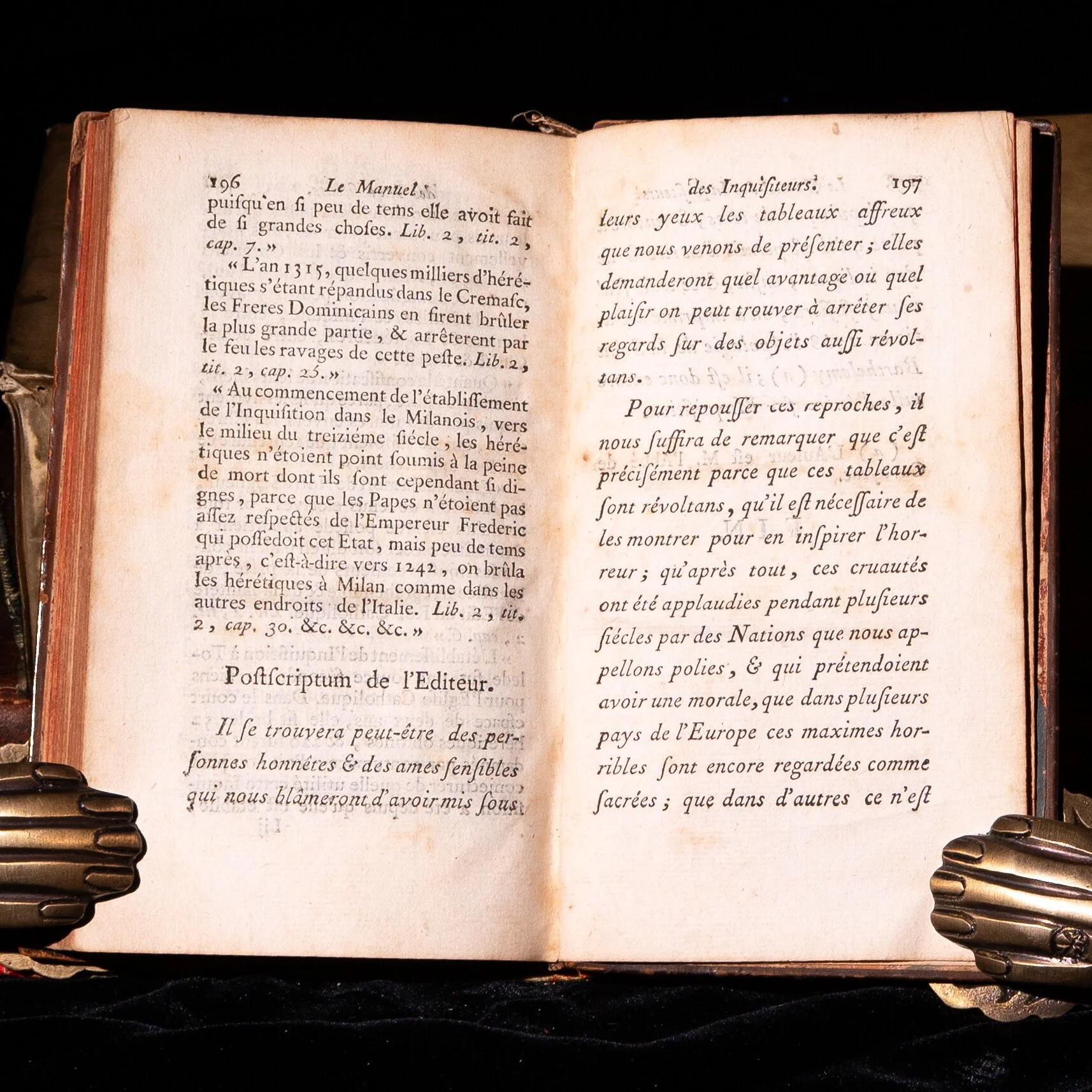 Image 8 of 10
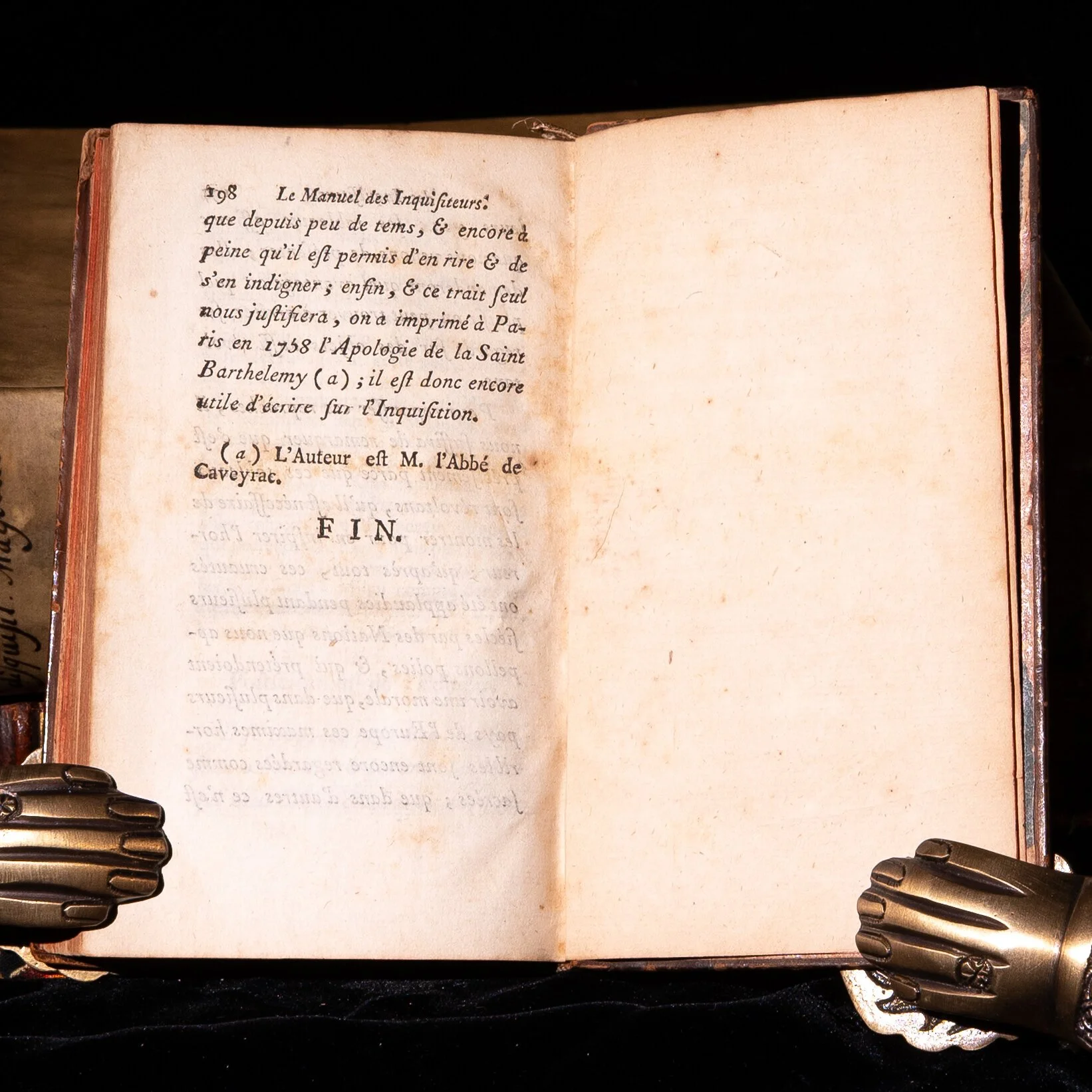 Image 9 of 10
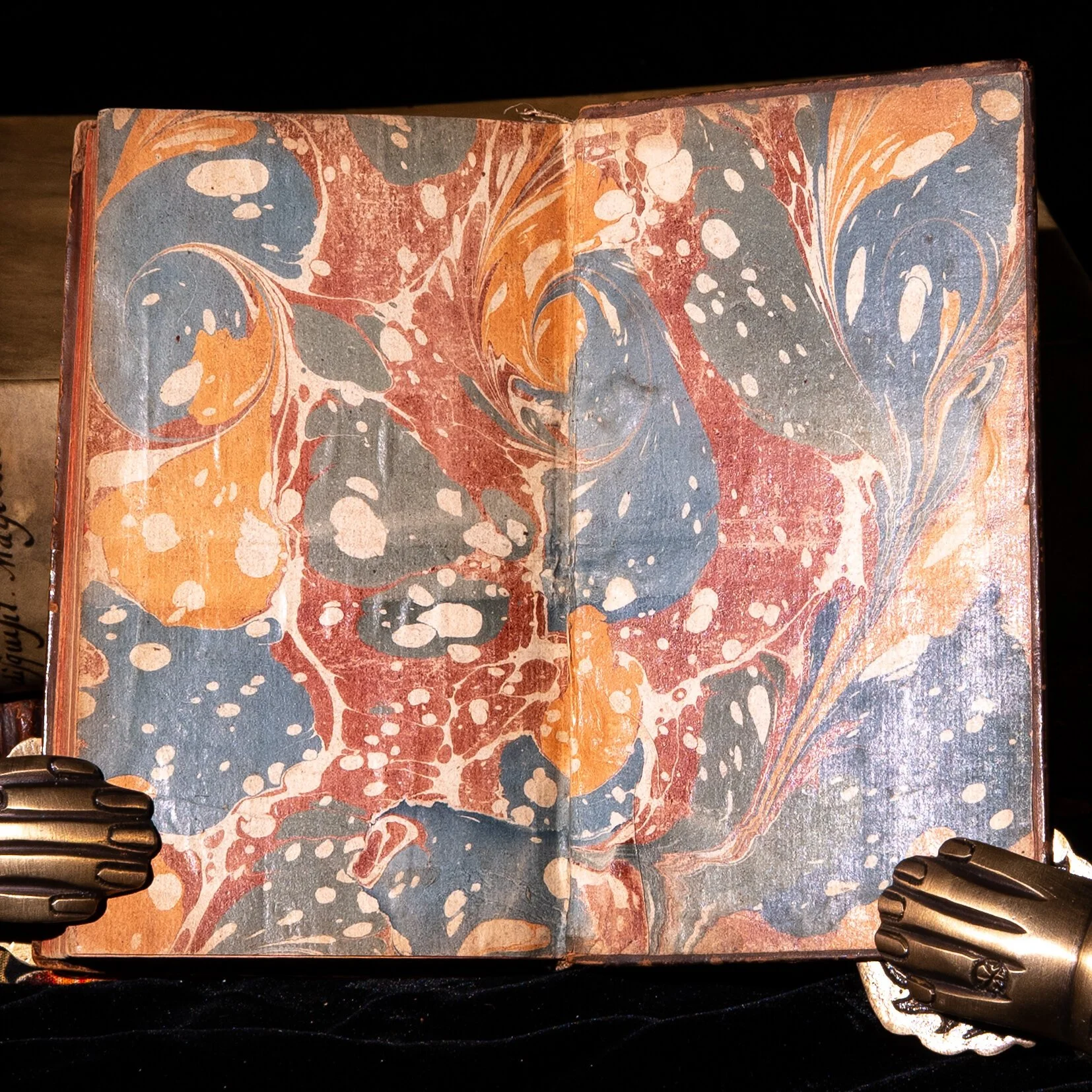 Image 10 of 10