First edition of this learned and critical history of talismans, amulets, and magical cures. Peter Friedrich Arpe (1682–1740), a German jurist and scholar of the University of Kiel, attempts to navigate the treacherous waters between superstition and scientific inquiry.
While Arpe ostensibly writes to categorize and critique these magical objects from a legal and rationalist perspective, the work is prized by occultists because it serves as one of the most comprehensive bibliographies of talismanic literature available from the period. Arpe provides a detailed "Recensione Scriptorum" (Review of Writers), summarizing and citing the works of Paracelsus, Agrippa, Gaffarel, and Campanella. He discusses the planetary seals, the medical efficacy of amulets, and the Gnostic "Abraxas" gems.
Because of his deep familiarity with the subject, and his refusal to dismiss all magic purely as devil-worship, Arpe was frequently accused of being a closet practitioner of the arts he described. The book was placed on the Index of Prohibited Books by the Catholic Church, cementing its reputation as a forbidden text.
This copy features the striking title page printed in red and black, adorned with an engraved vignette of Father Time (Saturn) with his scythe and hourglass, contemplating the ruins of antiquity: a fitting allegory for the study of ancient magical traditions.
Very Good condition. The decorative paper binding is tight and attractive, with the scale pattern remaining vibrant. The text block is crisp and bright, with the red and black inks of the title page showing strong contrast. A handsome, unsophisticated copy of this key bibliographic reference for the history of magic.
Arpe, Peter Friedrich. De Prodigiosis Naturae et Artis Operibus Talismanes et Amuleta Dictis. (On the Prodigious Works of Nature and Art Called Talismans and Amulets). Hamburg: Apud Christianum Liebezeit, 1717. Format: Small 8vo (Octavo). Collation: (10), 184, (36) pp. Binding: Contemporary (or near-contemporary) stiff wrappers covered in green scale-patterned decorative paper (Buntpapier). Dedicated to Duke Carl Friedrich of Schleswig-Holstein-Gottorp.
First edition of this learned and critical history of talismans, amulets, and magical cures. Peter Friedrich Arpe (1682–1740), a German jurist and scholar of the University of Kiel, attempts to navigate the treacherous waters between superstition and scientific inquiry.
While Arpe ostensibly writes to categorize and critique these magical objects from a legal and rationalist perspective, the work is prized by occultists because it serves as one of the most comprehensive bibliographies of talismanic literature available from the period. Arpe provides a detailed "Recensione Scriptorum" (Review of Writers), summarizing and citing the works of Paracelsus, Agrippa, Gaffarel, and Campanella. He discusses the planetary seals, the medical efficacy of amulets, and the Gnostic "Abraxas" gems.
Because of his deep familiarity with the subject, and his refusal to dismiss all magic purely as devil-worship, Arpe was frequently accused of being a closet practitioner of the arts he described. The book was placed on the Index of Prohibited Books by the Catholic Church, cementing its reputation as a forbidden text.
This copy features the striking title page printed in red and black, adorned with an engraved vignette of Father Time (Saturn) with his scythe and hourglass, contemplating the ruins of antiquity: a fitting allegory for the study of ancient magical traditions.
Very Good condition. The decorative paper binding is tight and attractive, with the scale pattern remaining vibrant. The text block is crisp and bright, with the red and black inks of the title page showing strong contrast. A handsome, unsophisticated copy of this key bibliographic reference for the history of magic.
Arpe, Peter Friedrich. De Prodigiosis Naturae et Artis Operibus Talismanes et Amuleta Dictis. (On the Prodigious Works of Nature and Art Called Talismans and Amulets). Hamburg: Apud Christianum Liebezeit, 1717. Format: Small 8vo (Octavo). Collation: (10), 184, (36) pp. Binding: Contemporary (or near-contemporary) stiff wrappers covered in green scale-patterned decorative paper (Buntpapier). Dedicated to Duke Carl Friedrich of Schleswig-Holstein-Gottorp.

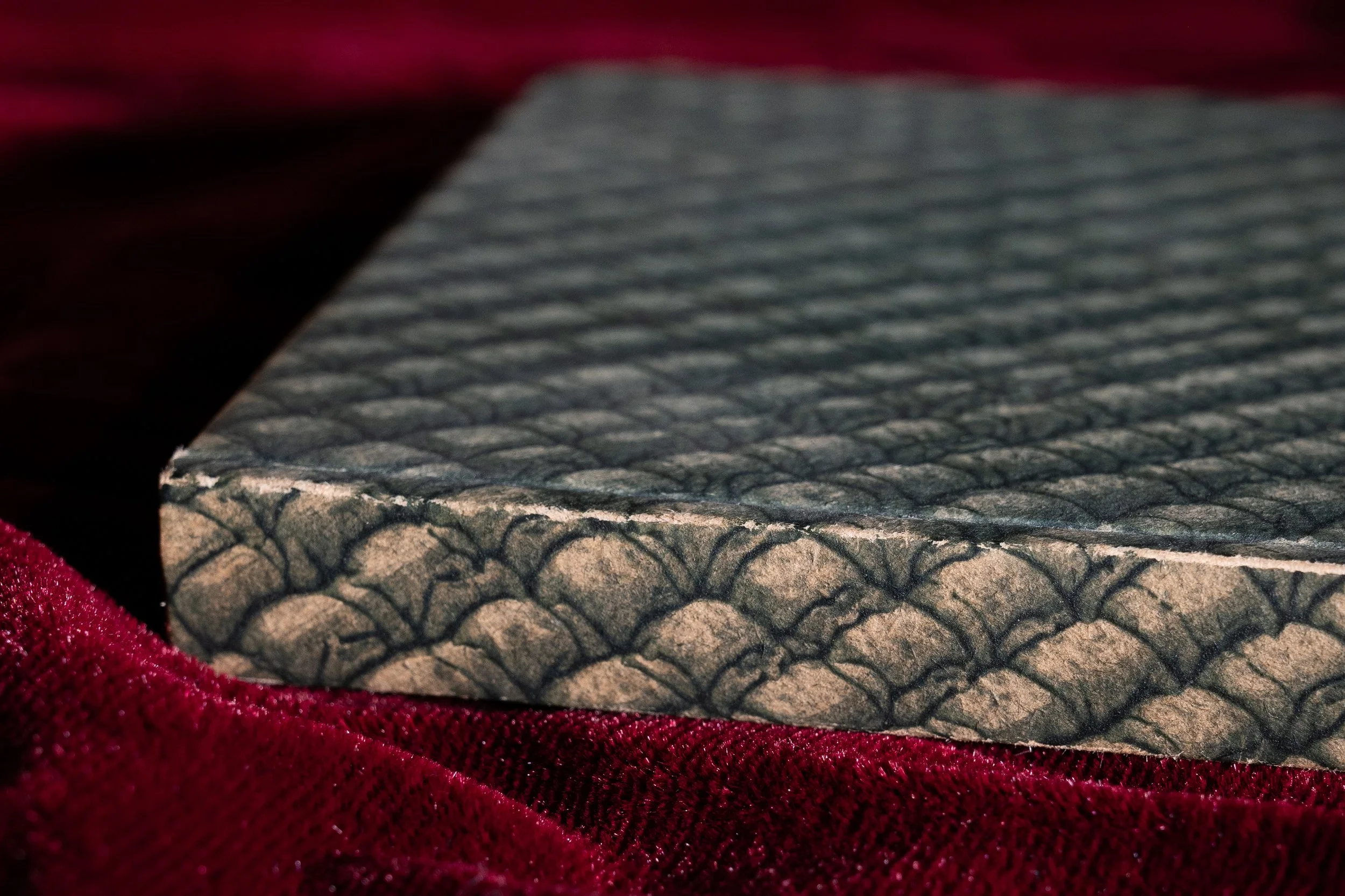 Image 1 of 13
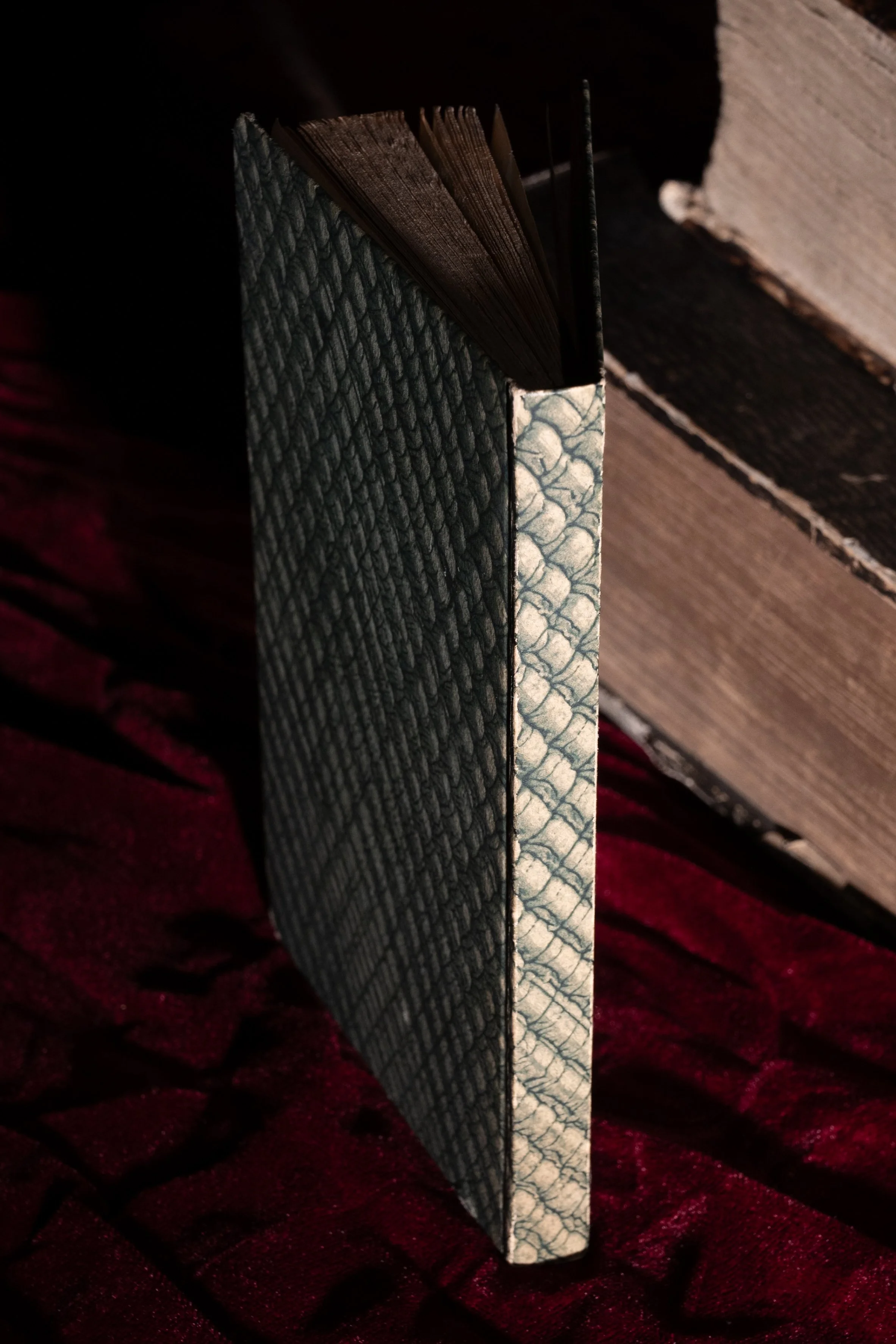 Image 2 of 13
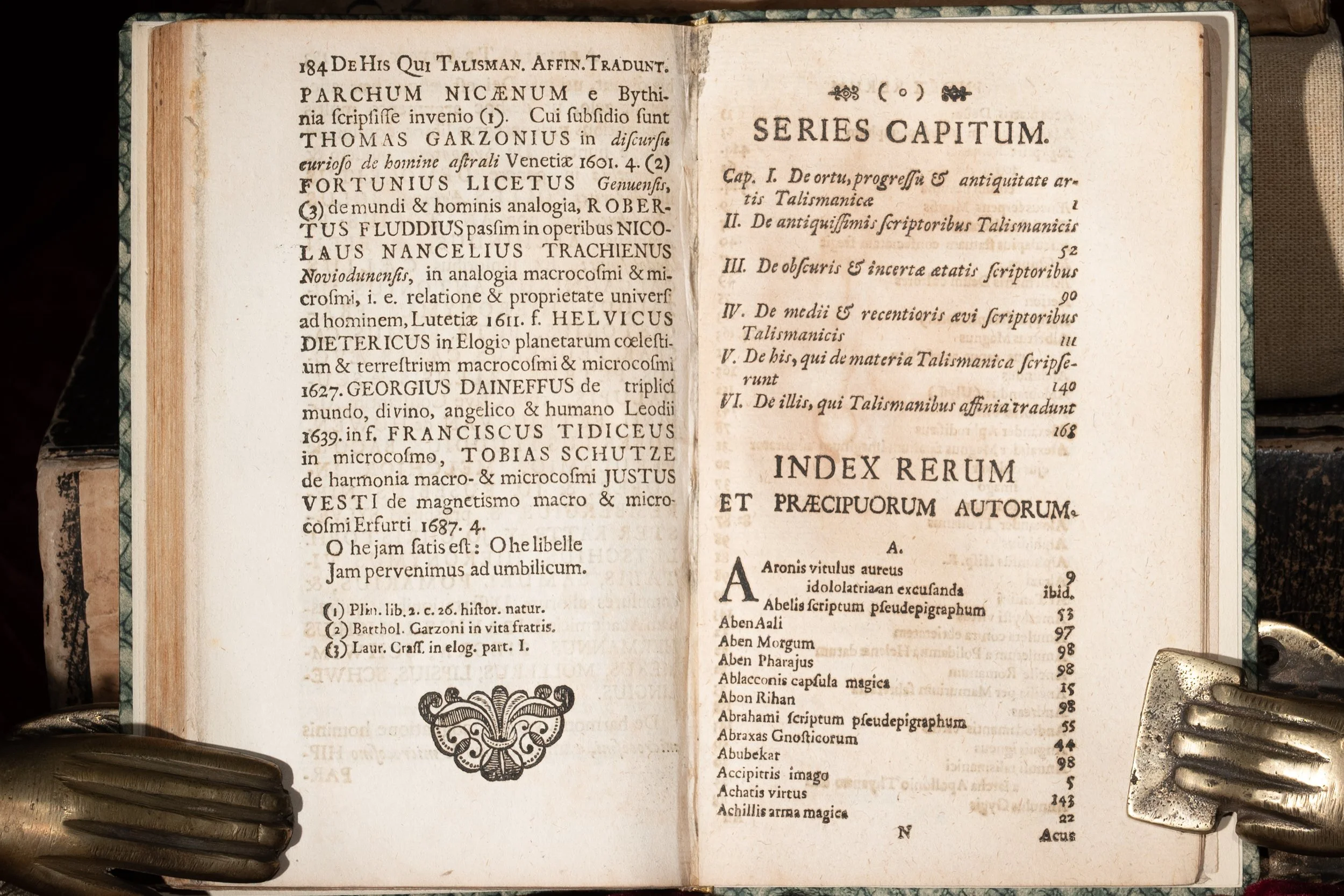 Image 3 of 13
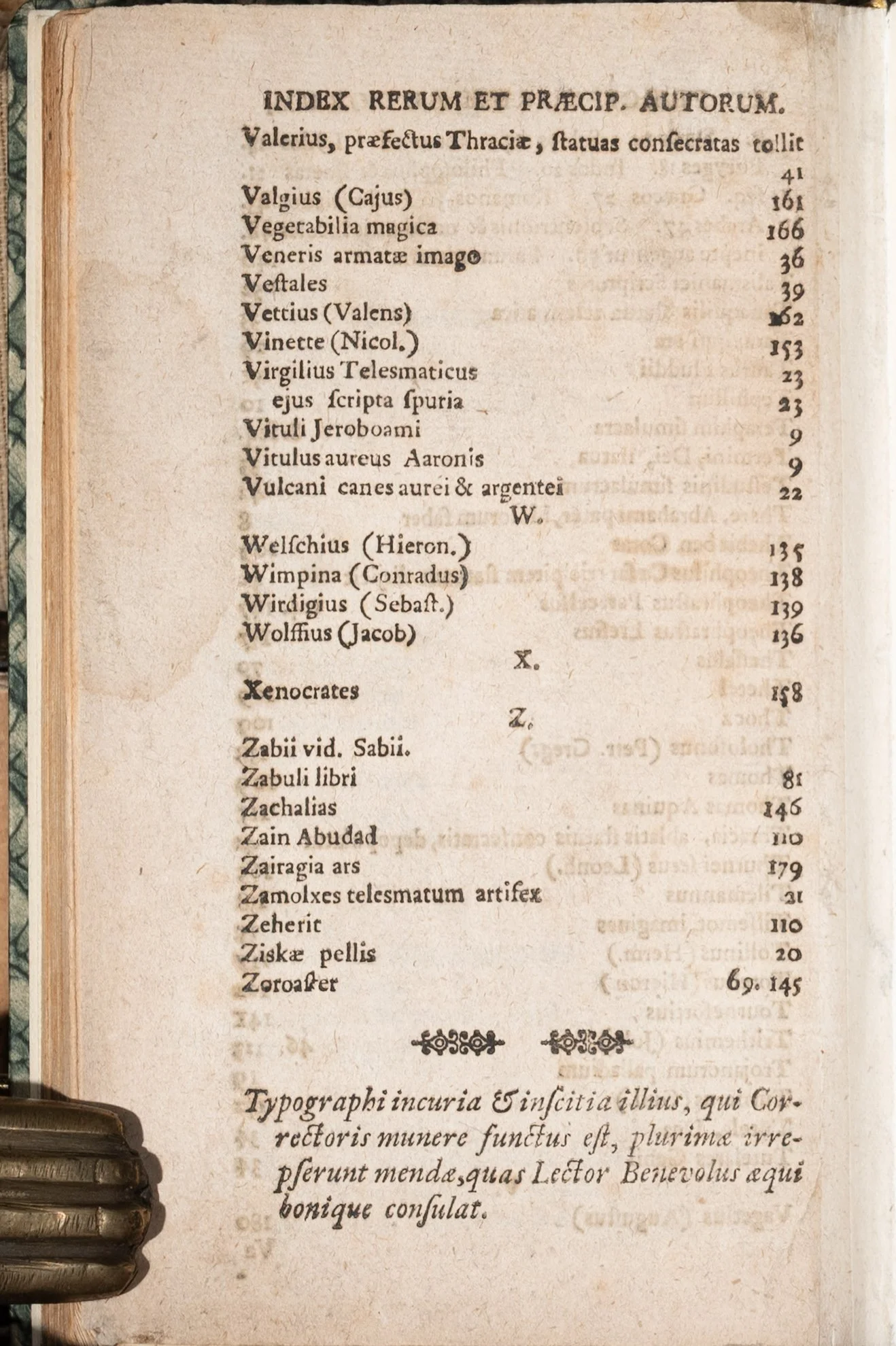 Image 4 of 13
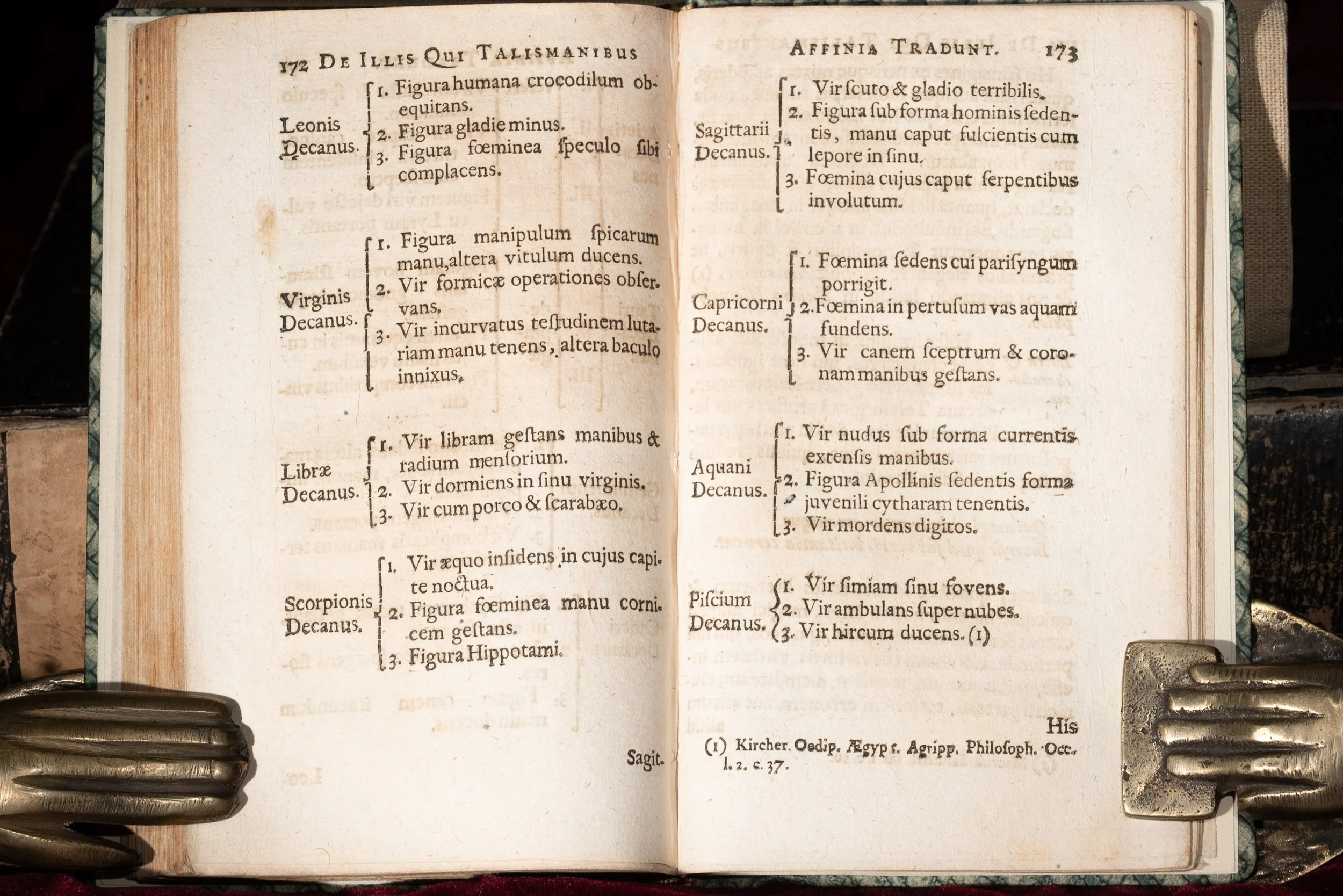 Image 5 of 13
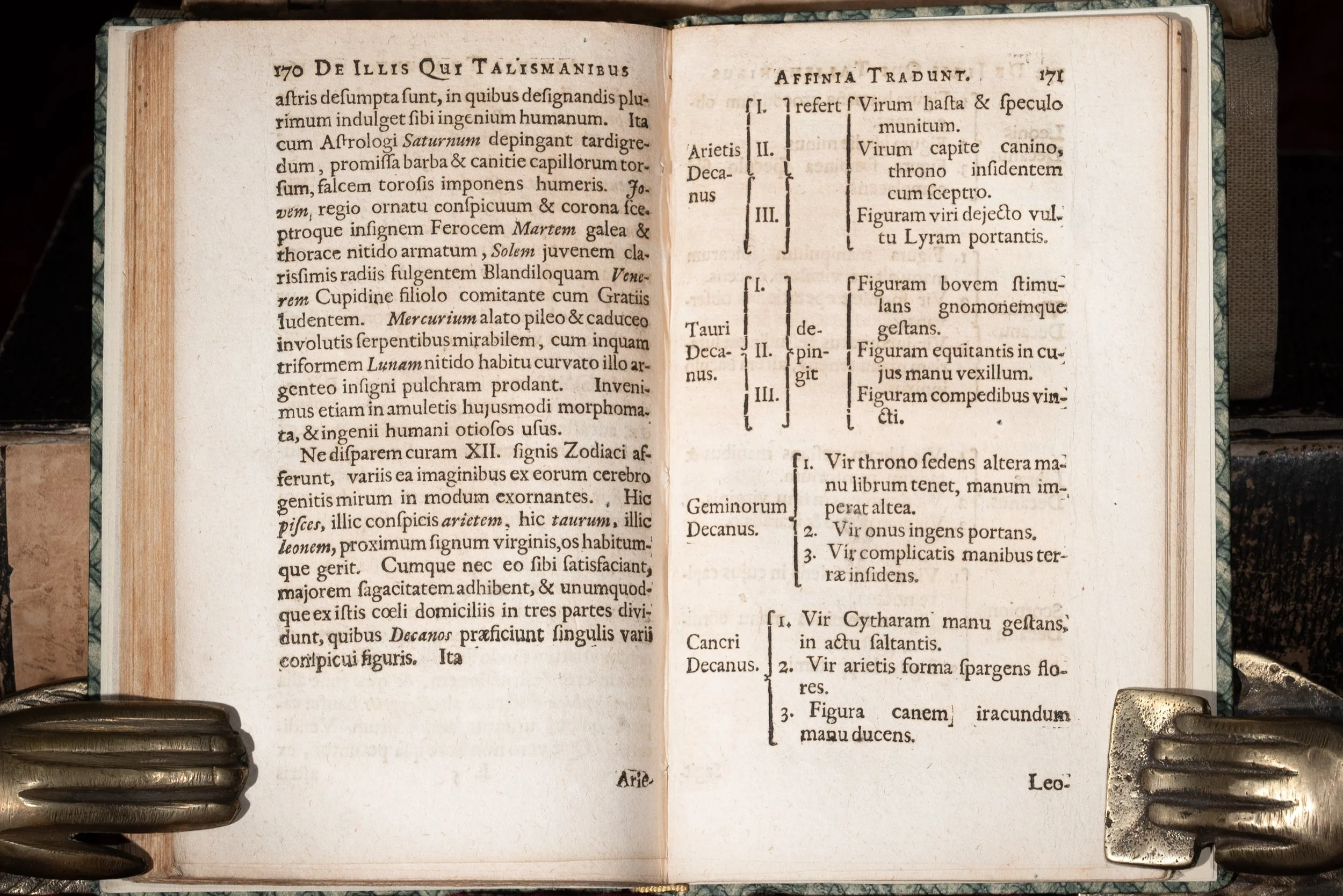 Image 6 of 13
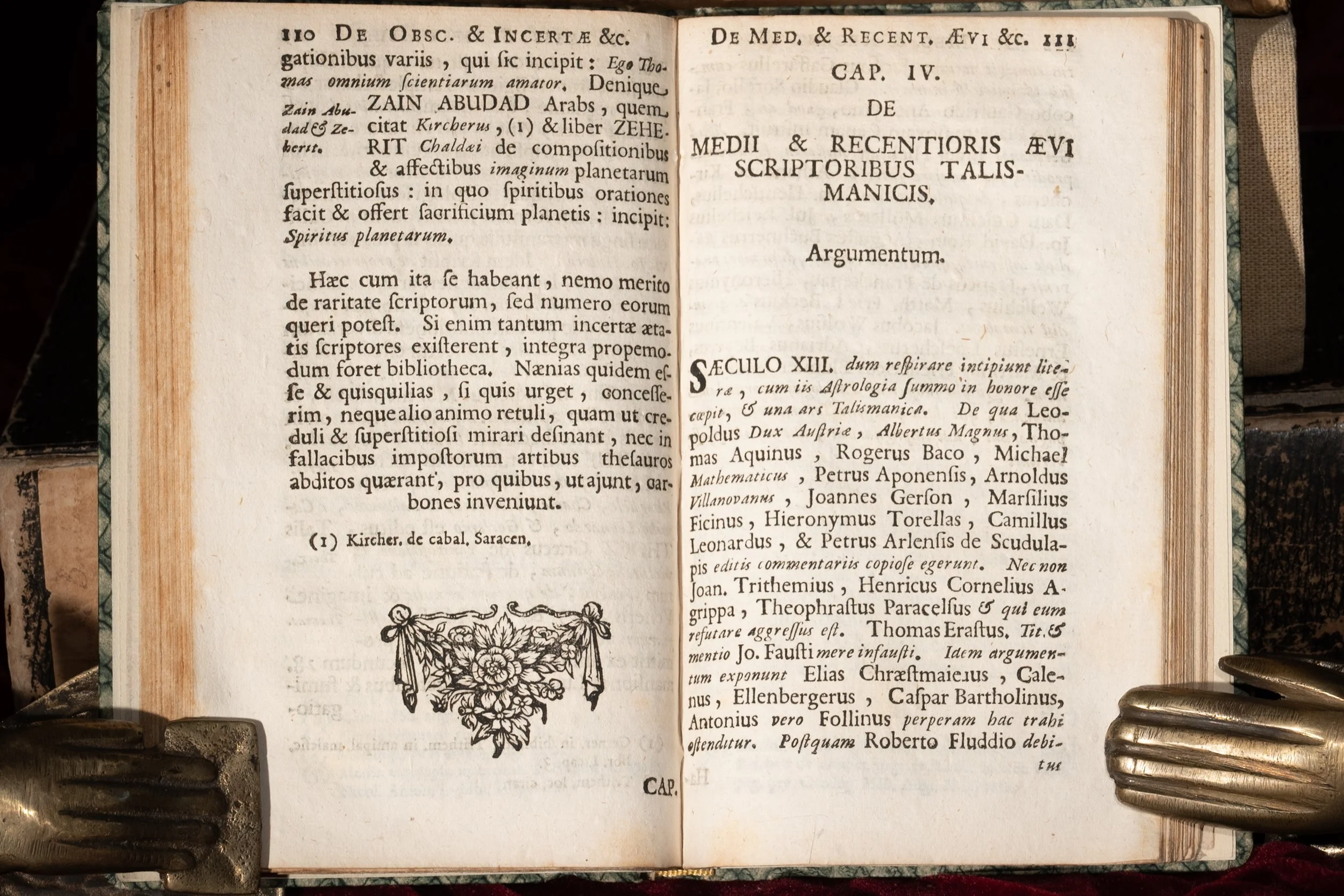 Image 7 of 13
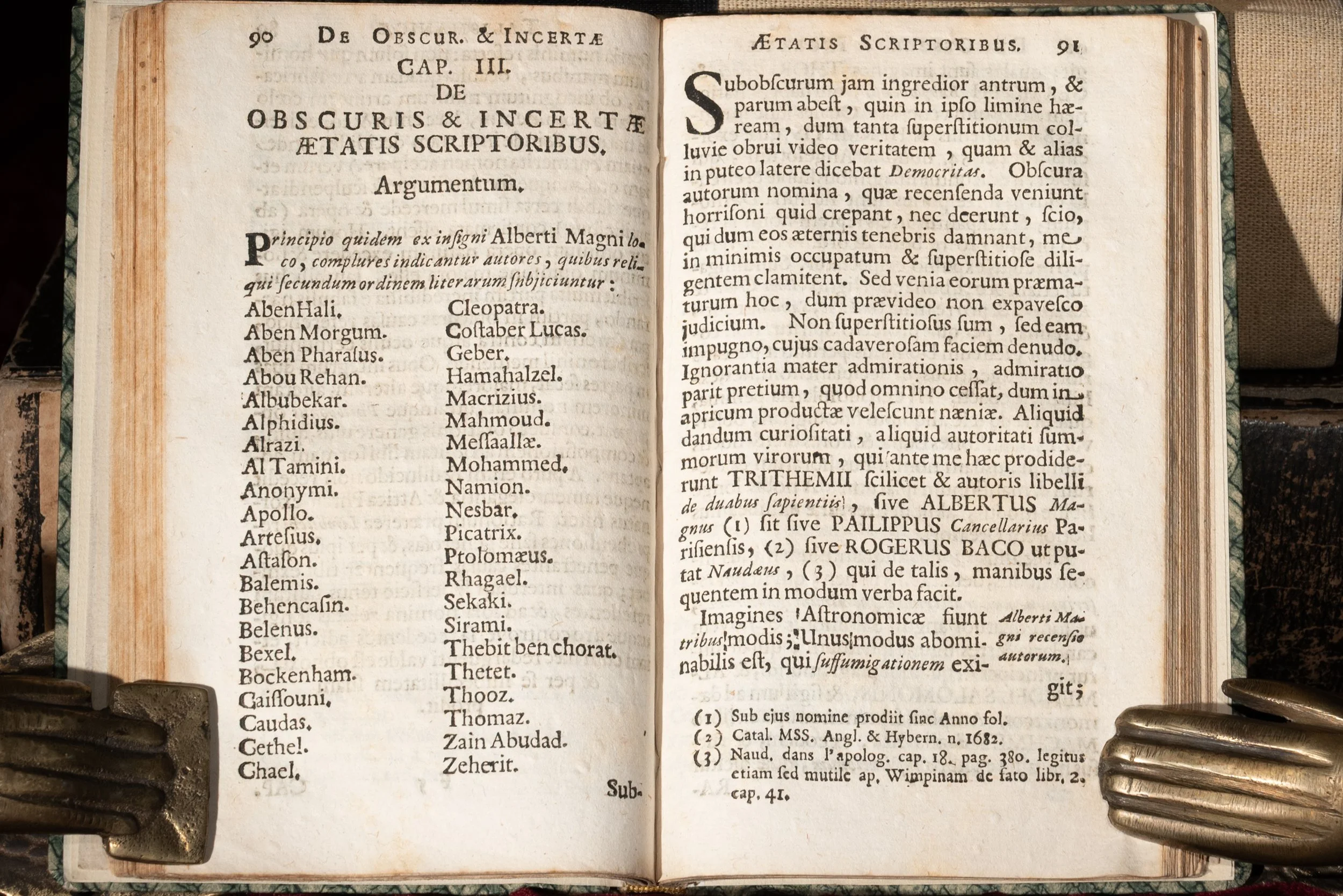 Image 8 of 13
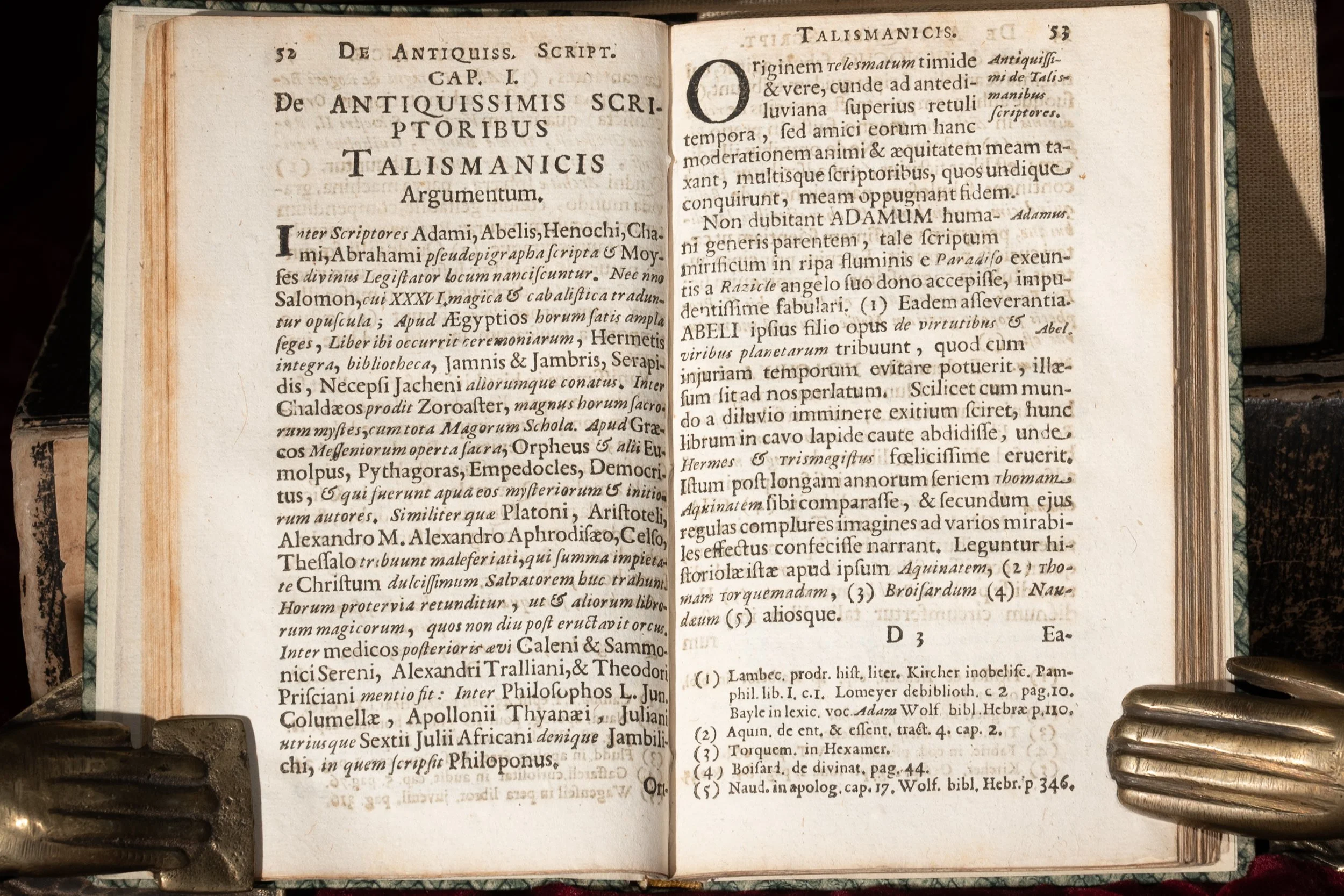 Image 9 of 13
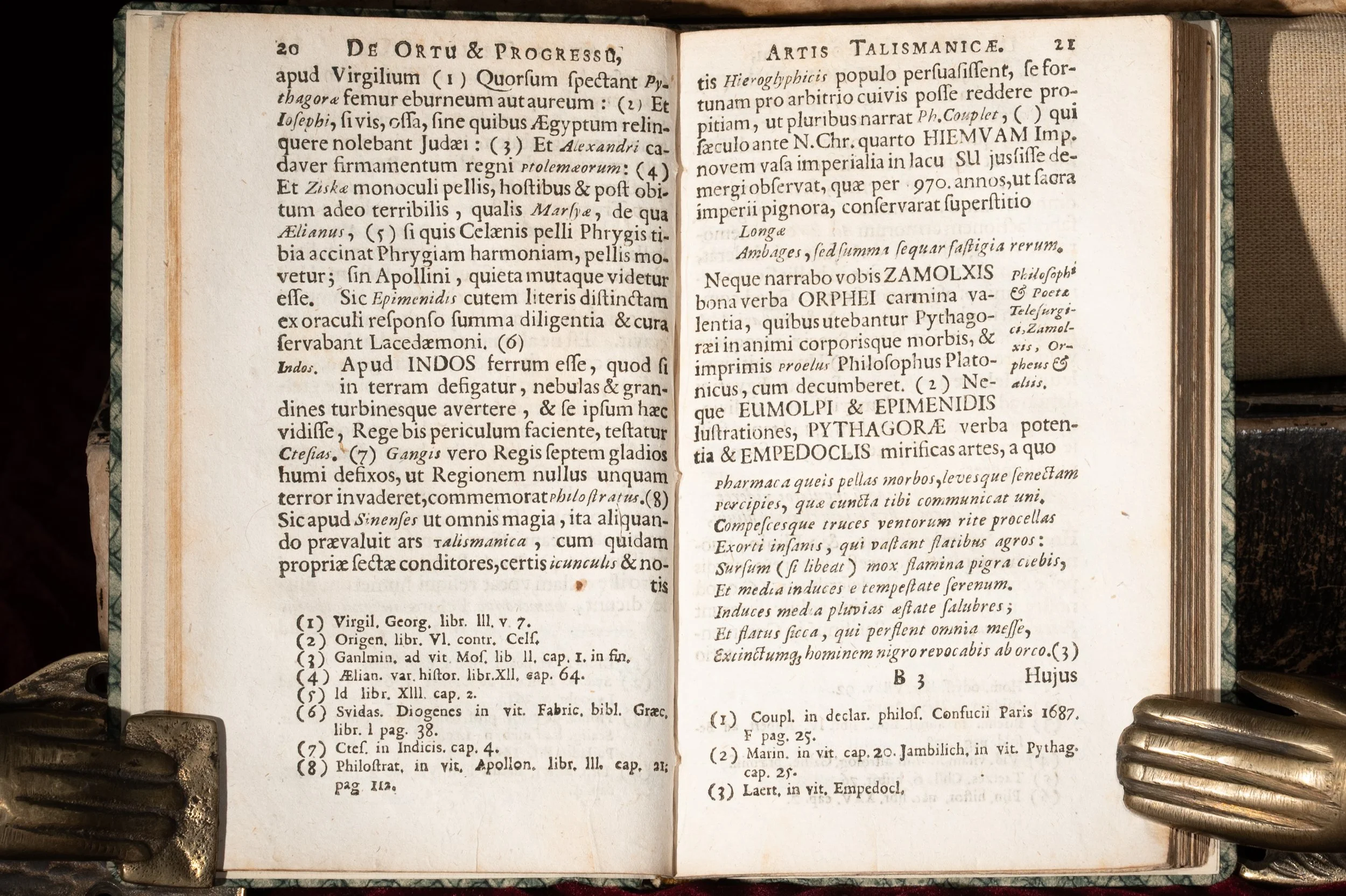 Image 10 of 13
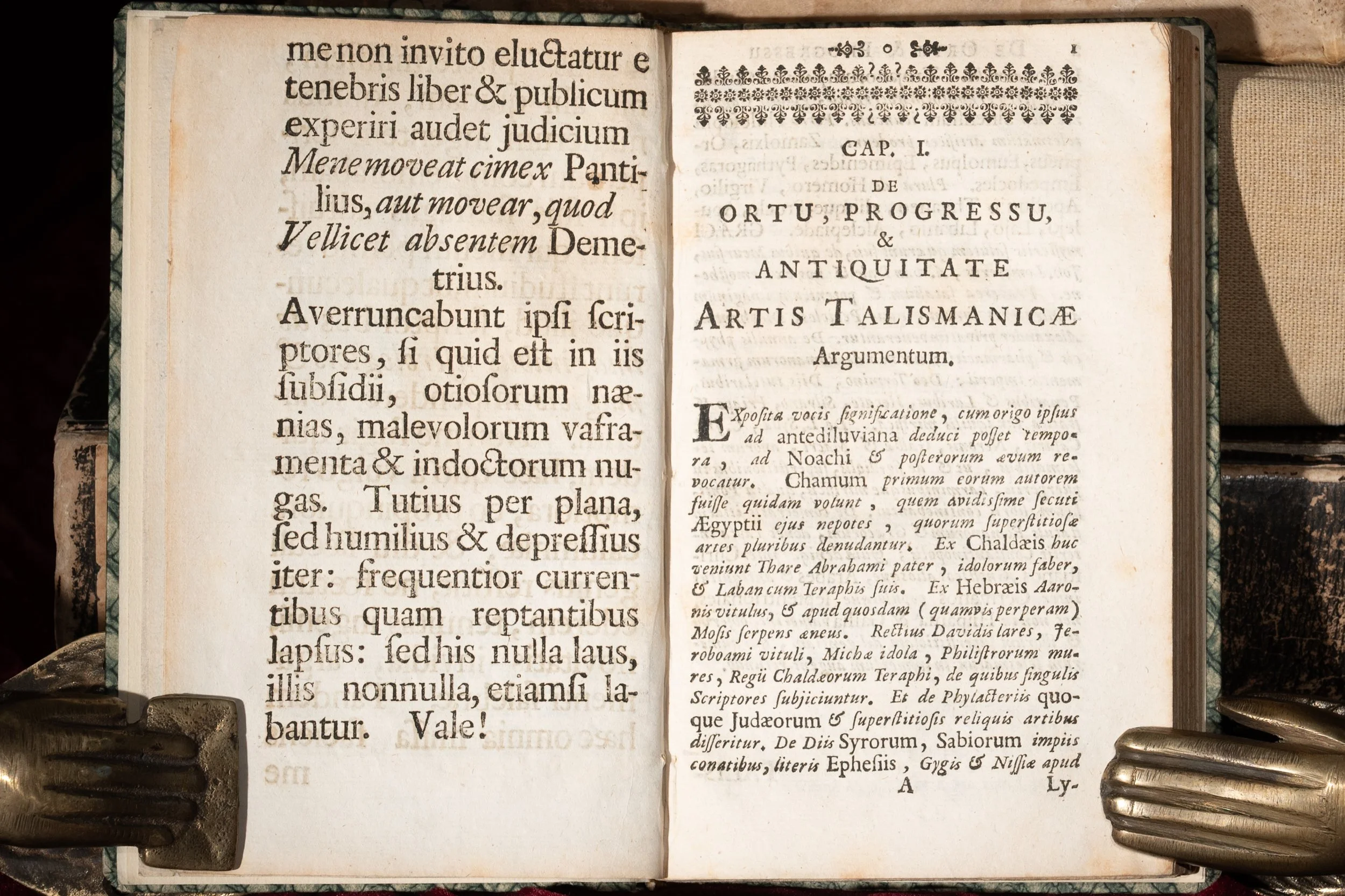 Image 11 of 13
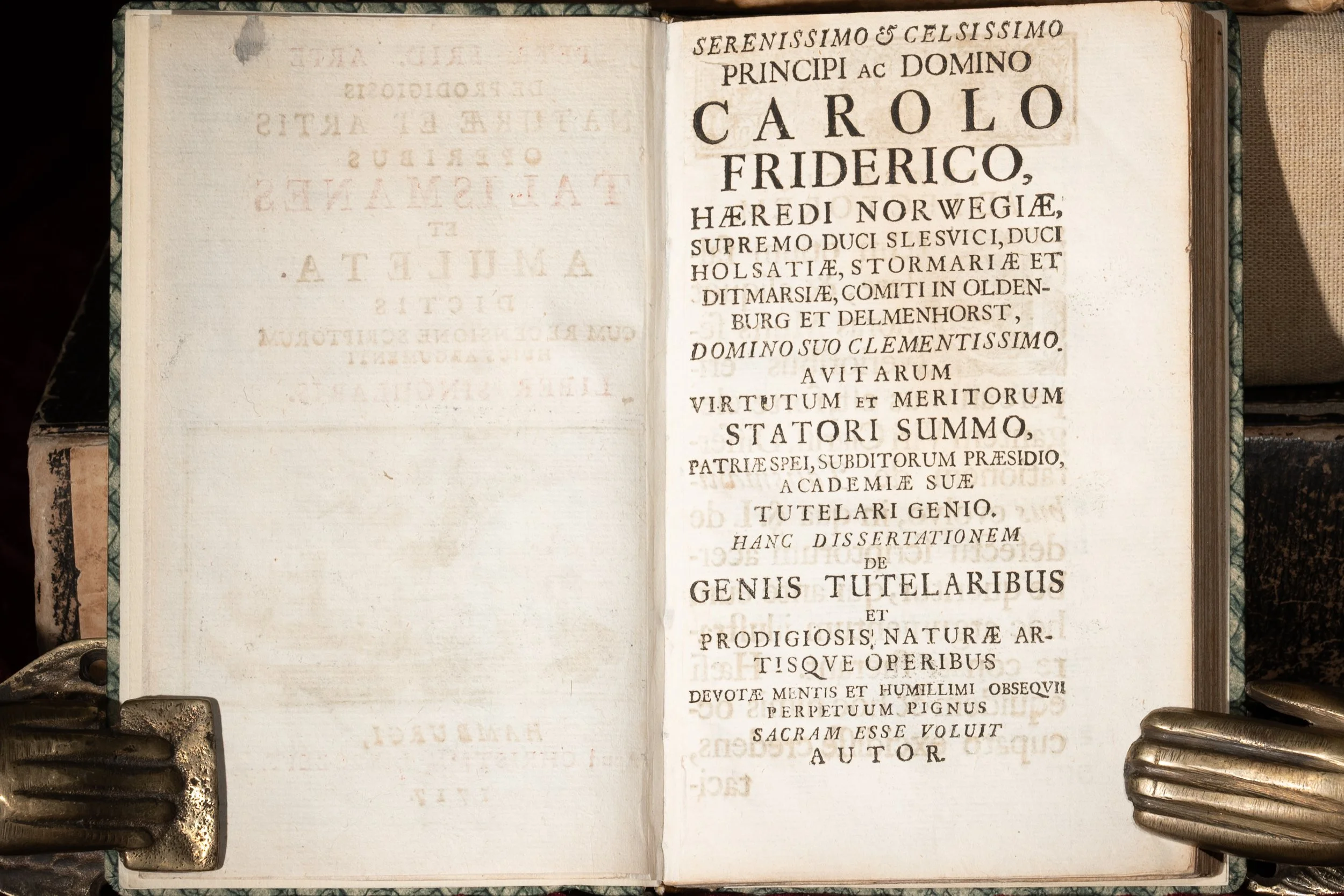 Image 12 of 13
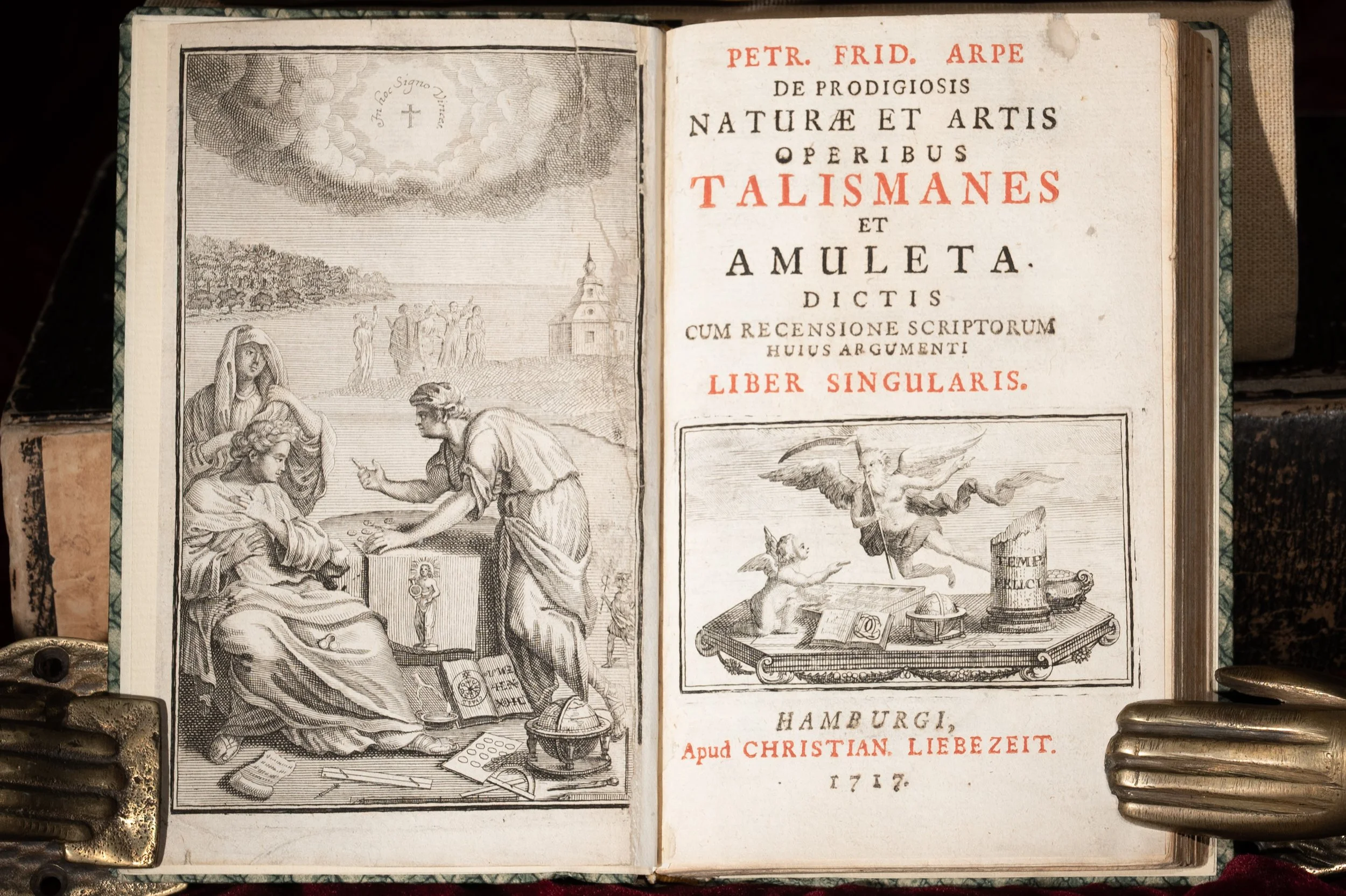 Image 13 of 13