This 1710 Leipzig treatise asks whether ghosts, sorcerers and witches exist. Carl Friedrich Romanus makes his position clear near the beginning: “we shall prove the existence of ghosts.” He proceeds through the opinions of earlier writers and the philosophical question of how a spirit could act on the material world.
On page 37 he argues that a spirit separate from a body can act upon matter and move it, and therefore can assume a body. These are the kinds of questions that make the book interesting to read beside accounts of apparitions: what would a spirit have to be capable of for a reported encounter to occur?
Christian Thomasius appears at the end of the historical review. Romanus quotes him accepting the existence of ghosts while allowing that fears could often arise from excessive imagination or human deceit. Romanus uses those concessions to challenge Thomasius’s consistency and claim possible agreement with his own position. The qualification inside the quotation is part of the dispute.
He ends with an appeal to scholarly civility, warning of opponents who have no sound answer but will not be quiet “until they have first struck with their horn.” For abuse, his promised response is “contempt and the measured punishment of silence.”
The seventy-three-page quarto is now in modern blue paste-paper boards. Its title has a conspicuous oil or grease stain, without loss of legibility, and an old ink inventory number. Browning and foxing are described below.
ROMANUS, Carl Friedrich [Carolo Friderico]. Schediasma polemicum expendens quaestionem an dentur spectra magi et sagae. Vulgo: Ob wahrhafft Gespenster, Zauberer und Hexen seyn?... [A Polemical Sketch Weighing the Question: Do Ghosts, Magi, and Witches Exist?... Together with a Historical Review of Many Opinions on This Matter.] Leipzig: Heirs of Brandenburg, 1710.
First Edition. 4to (19 × 16 cm). [1 leaf, title], 73 pp. Complete. Rebound in modern blue paste-paper boards.
Condition: Browning and foxing throughout. Oil or grease staining to the center and lower part of the title page, not affecting legibility; an old manuscript inventory number “19” in ink. Modern blue paste-paper boards. Complete.
This 1710 Leipzig treatise asks whether ghosts, sorcerers and witches exist. Carl Friedrich Romanus makes his position clear near the beginning: “we shall prove the existence of ghosts.” He proceeds through the opinions of earlier writers and the philosophical question of how a spirit could act on the material world.
On page 37 he argues that a spirit separate from a body can act upon matter and move it, and therefore can assume a body. These are the kinds of questions that make the book interesting to read beside accounts of apparitions: what would a spirit have to be capable of for a reported encounter to occur?
Christian Thomasius appears at the end of the historical review. Romanus quotes him accepting the existence of ghosts while allowing that fears could often arise from excessive imagination or human deceit. Romanus uses those concessions to challenge Thomasius’s consistency and claim possible agreement with his own position. The qualification inside the quotation is part of the dispute.
He ends with an appeal to scholarly civility, warning of opponents who have no sound answer but will not be quiet “until they have first struck with their horn.” For abuse, his promised response is “contempt and the measured punishment of silence.”
The seventy-three-page quarto is now in modern blue paste-paper boards. Its title has a conspicuous oil or grease stain, without loss of legibility, and an old ink inventory number. Browning and foxing are described below.
ROMANUS, Carl Friedrich [Carolo Friderico]. Schediasma polemicum expendens quaestionem an dentur spectra magi et sagae. Vulgo: Ob wahrhafft Gespenster, Zauberer und Hexen seyn?... [A Polemical Sketch Weighing the Question: Do Ghosts, Magi, and Witches Exist?... Together with a Historical Review of Many Opinions on This Matter.] Leipzig: Heirs of Brandenburg, 1710.
First Edition. 4to (19 × 16 cm). [1 leaf, title], 73 pp. Complete. Rebound in modern blue paste-paper boards.
Condition: Browning and foxing throughout. Oil or grease staining to the center and lower part of the title page, not affecting legibility; an old manuscript inventory number “19” in ink. Modern blue paste-paper boards. Complete.

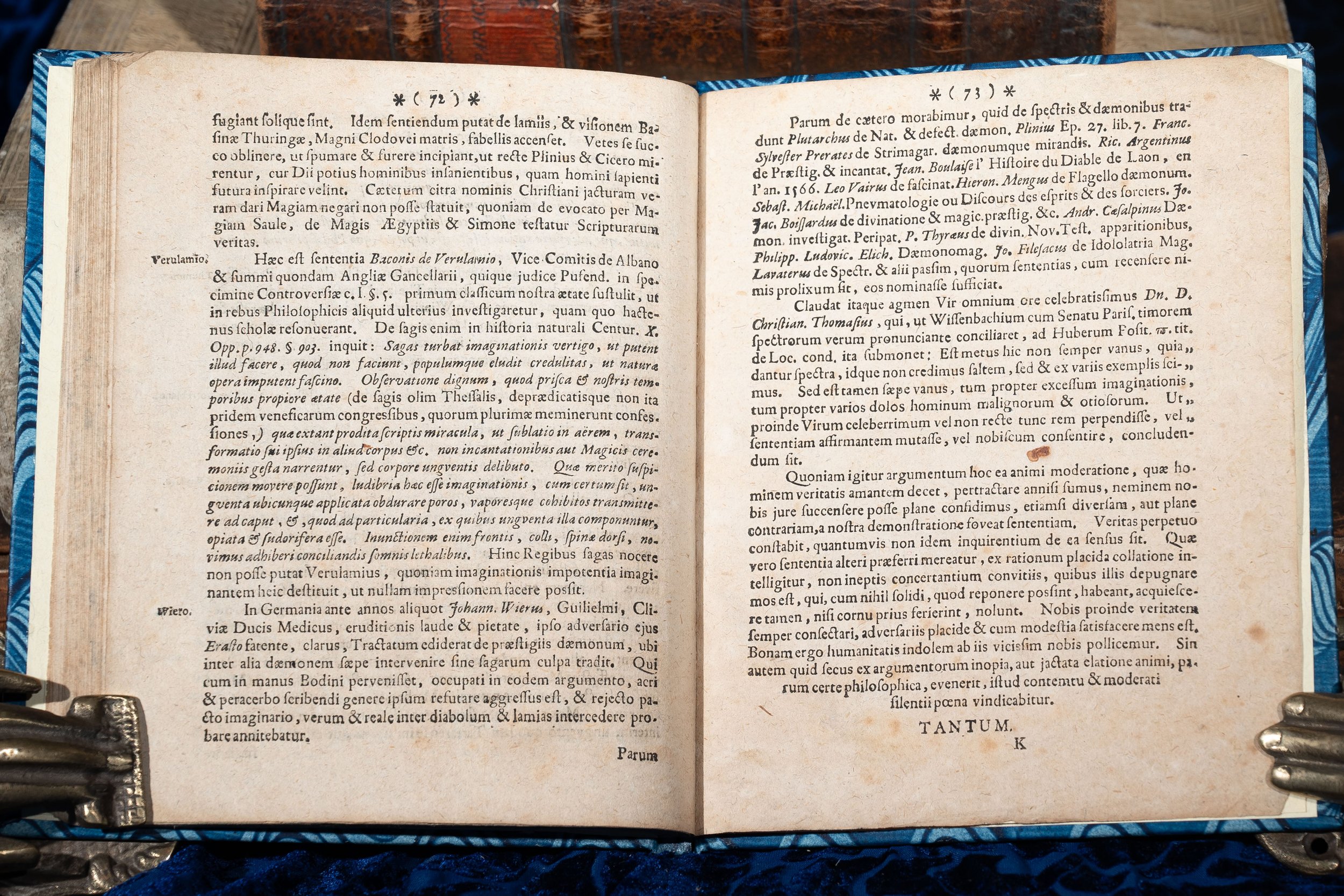 Image 1 of 7
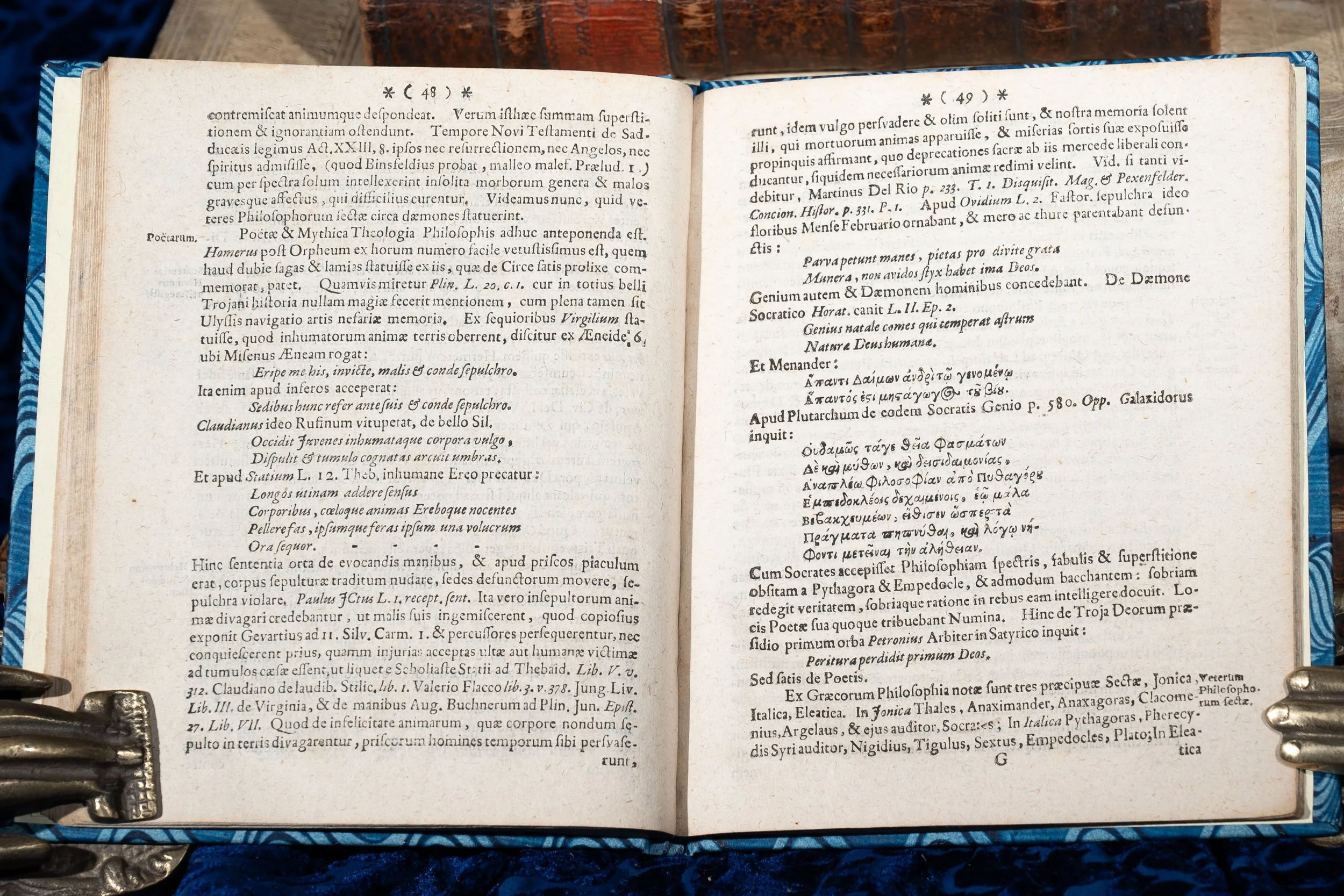 Image 2 of 7
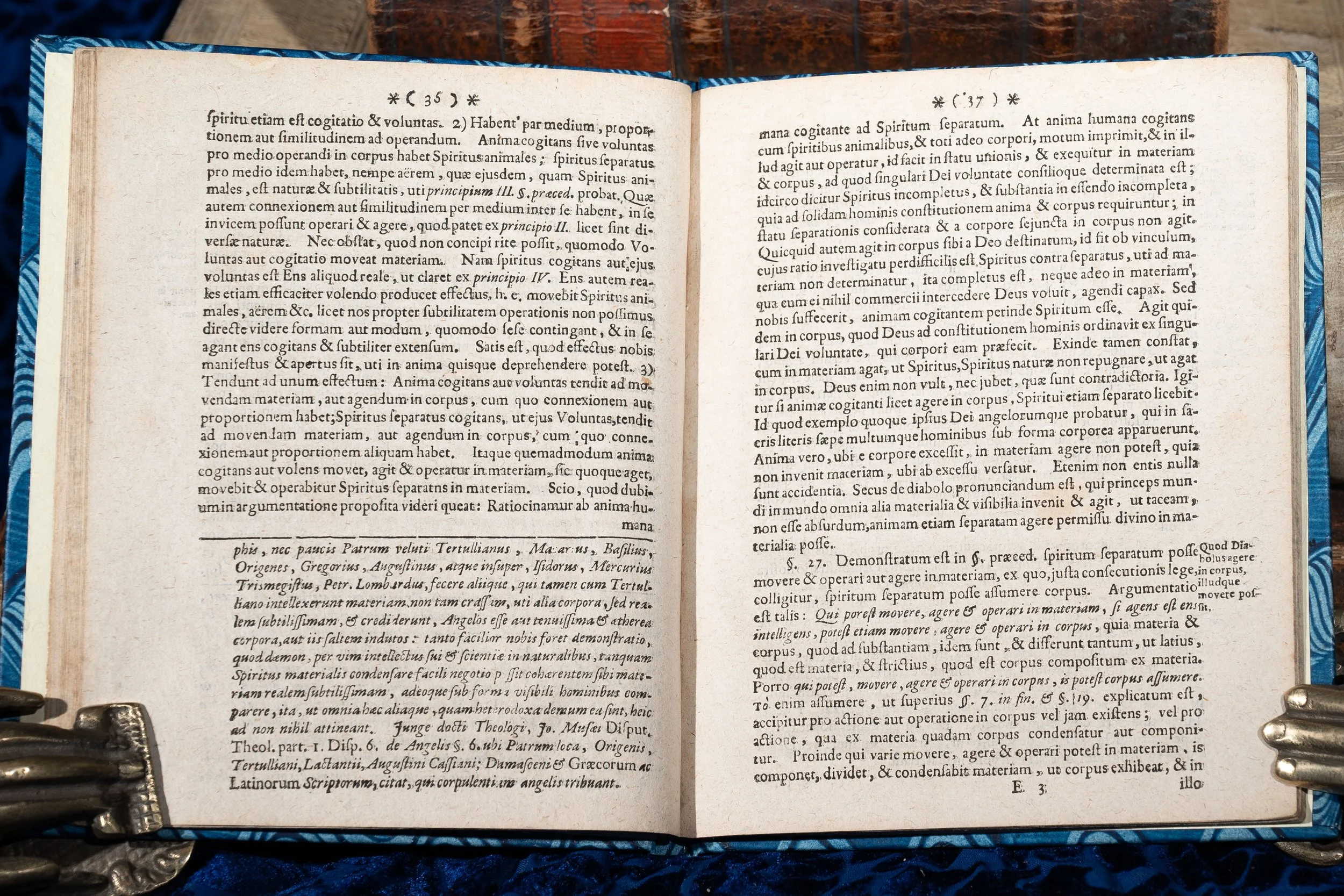 Image 3 of 7
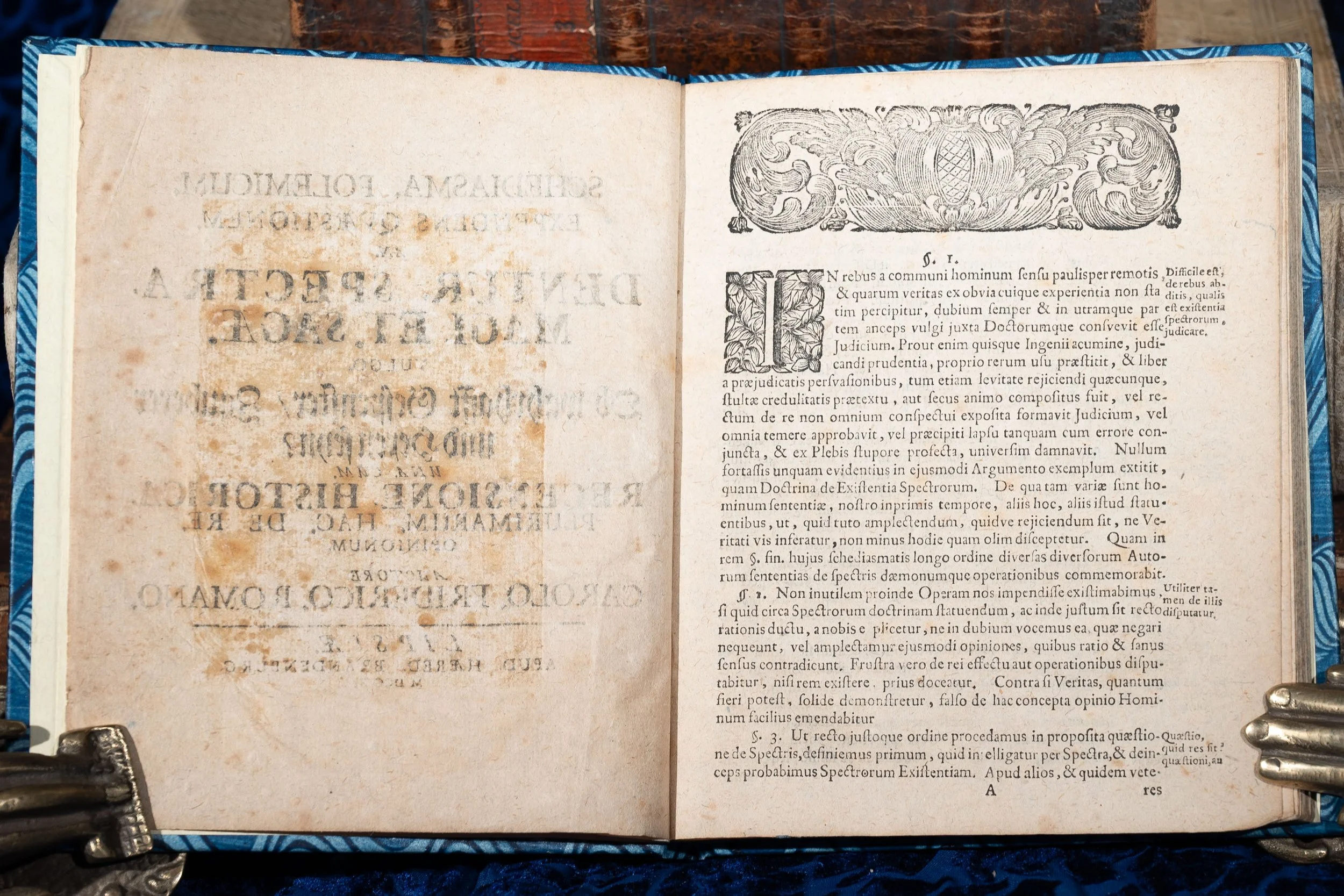 Image 4 of 7
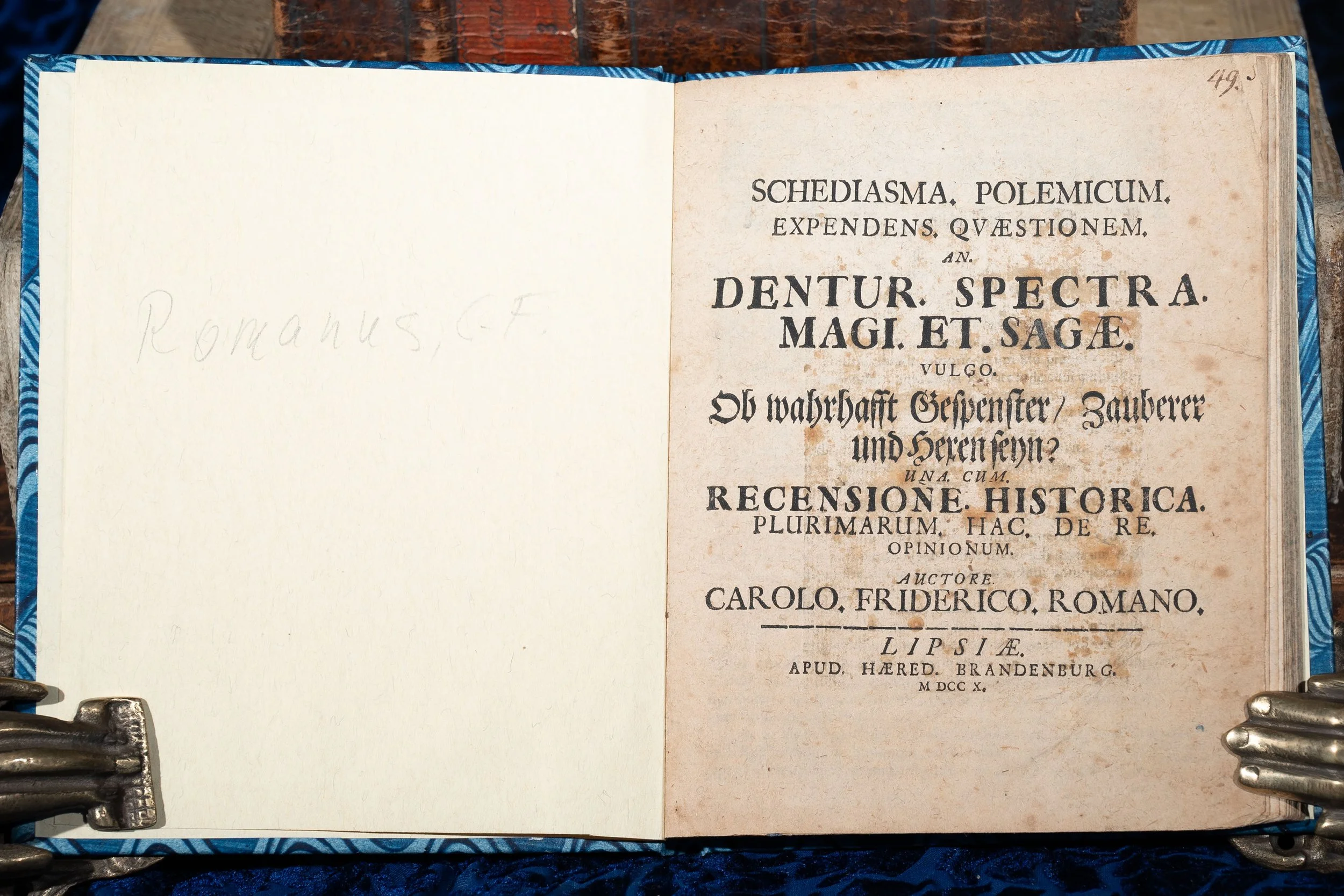 Image 5 of 7
 Image 6 of 7
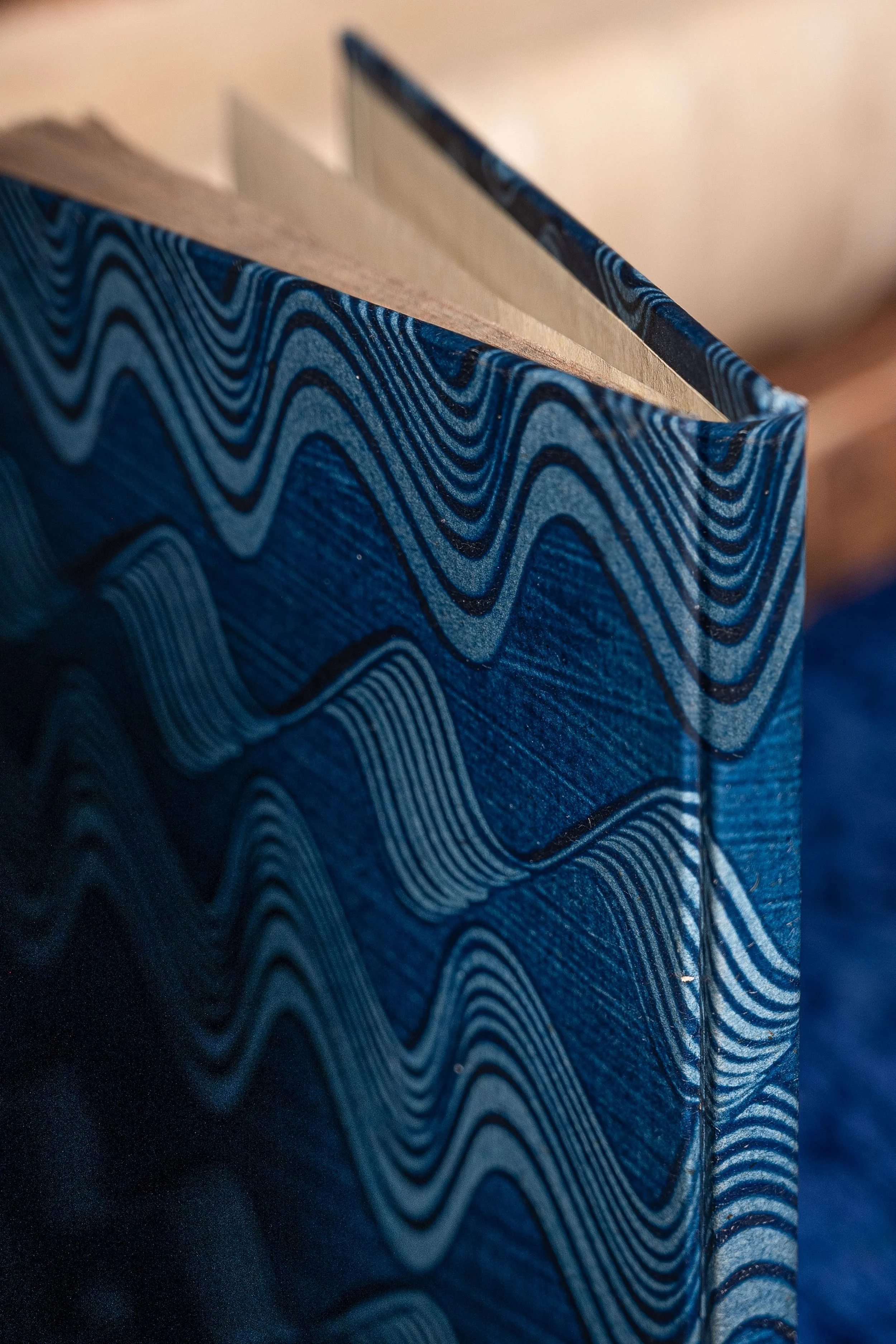 Image 7 of 7