For collectors and scholars of Western esotericism, the significance of Irenaeus’s Adversus Haereses can hardly be overstated. Irenaeus is the single most detailed surviving ancient witness to the Valentinian Gnostic system, including the elaborate cosmology of the Pleroma, the drama of Sophia’s fall, and the emanation of the Aeons, material that became foundational for the academic study of Gnosticism from the Renaissance through Hanegraaff’s reframing of it as a key current within the Western esoteric tradition. While Irenaeus wrote to refute, he had the heresiographer’s paradoxical gift: he preserved in meticulous, often sympathetic detail the very systems he wished to destroy. His account of the Valentinian Ogdoad, the Marcosian number-mysticism, and the Barbelo-Gnostic theogonies remain primary sources of first resort for anyone working on the ancient roots of esoteric thought. Grabe’s restoration of Greek readings in several key passages was a genuine contribution to the accuracy of this transmitted knowledge.
This is the editio princeps of Grabe’s Irenaeus, the first critical edition to restore a substantial portion of the lost Greek text of the Adversus Haereses, and a landmark in the textual history of a work that had survived for over a millennium almost entirely in a late antique Latin translation of sometimes questionable fidelity. Johann Ernst Grabe (1666–1711), a Prussian Lutheran who came to doubt the validity of Reformed orders, emigrated to England in 1697 on the advice of Philipp Jakob Spener and found in the Church of England the apostolic succession he sought. Settled at Oxford as chaplain of Christ Church, Grabe devoted the remainder of his short life to patristic and biblical scholarship of formidable scope. His Irenaeus drew on newly collated Greek fragments from Epiphanius and other patristic catena, and was printed at the Sheldonian Theatre at the expense of Thomas Bennet, the London bookseller whose shop at the Sign of the Half Moon in St. Paul’s Churchyard was a center of learned publishing. Harnack called it a “good” edition, high praise from that quarter, though it was soon eclipsed by the Benedictine Massuet edition of 1710.
The dedication to Frederick I of Prussia, the Elector of Brandenburg who had crowned himself King in Prussia just the year before, reflects Grabe’s continuing ties to his homeland and perhaps a certain scholarly diplomacy: a Königsberger by birth, presenting a Church Father to a new Protestant king, from the press of an ancient English university. The fine allegorical frontispiece, engraved by M. Burg, shows angels and the figure of Irenaeus himself subduing the multi-headed hydra of heresy, a visual program that would have pleased the volume’s anti-heretical purpose while appealing to the Baroque taste for learned allegory.
The provenance of the present copy is unusually clean and historically interesting. Robert Aston Coffin received this volume as a gift while still an Anglican at Christ Church in 1842, in the thick of the Oxford Movement’s most turbulent years. Three years later he would follow Newman into the Catholic Church, and within a decade he had become a Redemptorist, joining the order of Alphonsus Liguori, eventually serving as its English Provincial and finally as Bishop of Southwark. That a folio edition of the great anti-heretical Father should pass from an Oxford common room into the library of a Catholic religious order, via the hand of one of the Movement’s notable converts, captures something essential about the strange, productive traffic between Anglican high-church patristic scholarship and the Roman communion it sometimes led to. The Bishop Eton library label, with its Redemptorist attribution and subject classification (“S. Scriptura et SS. Patres”), is a small monument to the institutional afterlife of one man’s intellectual journey.
IRENAEUS, Saint, Bishop of Lyon (c. 130–c. 202 AD). Εἰρηναίου ἐπισκόπου Λουγδούνου… S. Irenaei Episcopi Lugdunensis Contra omnes Haereses Libri Quinque. Textus Graeci partem haud exiguam restituit; Latinam Versionem antiquissimam è quatuor MSS. Codicibus emendavit; Fragmenta aliorum Tractatuum deperditorum subjunxit; Omnia Notis Variorum, & suis illustravit Joannes Ernestus Grabe. Oxoniae: E Theatro Sheldoniano, Impensis Thomae Bennet, ad Insigne Lunae Falcatae in Coemeterio S. Pauli, Londini, Anno Domini MDCCII [1702].
Physical Description: Folio (approx. 40 × 25 cm). Engraved allegorical frontispiece by M. Burg depicting angels vanquishing the hydra of heresy, commissioned by Thomas Bennet and dated 1702. Title page with engraved vignette. Decorative headpieces and initials. Text in parallel Latin and Greek, with extensive passages in Hebrew. Includes Grabe’s Specimen Conjecturarum in Originem, Irenaeum, Epiphanium &c. (31 pp.) and Fragmenta Deperditorum with Greek and Latin in parallel columns. Index Locorum Scripturae. Errata leaf. Imprimatur dated February 7, 1701, by Ro. Mander, Vice-Chancellor of Oxford. Dedication to Frederick I, King of Prussia. ESTC T139640.
Binding: Contemporary full calf over pasteboard, spine with raised bands and gilt-lettered label (“IRENAEI OPERA”). Leather heavily worn throughout with significant cracking, especially along the joints. Exposed sewing cords visible at head and foot of spine. Boards remain attached; binding structurally sound despite cosmetic deterioration.
Condition: Text block appears clean with moderate age toning. Interior pages firm and generally bright in the images. Library stamps visible on title page (upper right). No obvious worming, tears, or significant staining visible in the images provided. The binding is the chief deficiency: the leather is heavily cracked and worn, with the calf mottled and flaking in places, though the volume holds together.
Provenance: 1. Manuscript inscription on front pastedown: “Amico optimo / Roberto Aston Coffin / Aed. Christi al: / d.d. / J.E.M. / a 1842.” A presentation inscription to Robert Aston Coffin (1819–1885), then a student at Christ Church, Oxford, from the initials J.E.M., dated 1842. Coffin, educated at Harrow and Christ Church, was a key figure in the Oxford Movement. He converted to Roman Catholicism in December 1845, two months after John Henry Newman. Ordained a Catholic priest in 1847, he joined the Congregation of the Most Holy Redeemer (Redemptorists) and rose to become Provincial of the English Redemptorists (1865–1882) before being appointed Bishop of Southwark by Pope Leo XIII in 1882, a position he held until his death.
2. Printed library label on front pastedown: “J.M.J.A. / BIBLIOTHECA Congr. SS. Redempt. / Domus ad B.M.V. sub titulo ANNUNTIATIONIS / BISHOP-ETON.” This is the library of the Redemptorist house at Bishop Eton, Liverpool, one of the principal Redemptorist foundations in England, where the volume almost certainly arrived via Coffin’s personal library or by bequest to the order he served for over three decades.
3. Printed subject classification label: “S. SCRIPTURA-ET-SS. PATRES.”
4. Library stamp(s) on title page (upper right corner).
5. Shelfmark notation in manuscript at upper left of title page.
For collectors and scholars of Western esotericism, the significance of Irenaeus’s Adversus Haereses can hardly be overstated. Irenaeus is the single most detailed surviving ancient witness to the Valentinian Gnostic system, including the elaborate cosmology of the Pleroma, the drama of Sophia’s fall, and the emanation of the Aeons, material that became foundational for the academic study of Gnosticism from the Renaissance through Hanegraaff’s reframing of it as a key current within the Western esoteric tradition. While Irenaeus wrote to refute, he had the heresiographer’s paradoxical gift: he preserved in meticulous, often sympathetic detail the very systems he wished to destroy. His account of the Valentinian Ogdoad, the Marcosian number-mysticism, and the Barbelo-Gnostic theogonies remain primary sources of first resort for anyone working on the ancient roots of esoteric thought. Grabe’s restoration of Greek readings in several key passages was a genuine contribution to the accuracy of this transmitted knowledge.
This is the editio princeps of Grabe’s Irenaeus, the first critical edition to restore a substantial portion of the lost Greek text of the Adversus Haereses, and a landmark in the textual history of a work that had survived for over a millennium almost entirely in a late antique Latin translation of sometimes questionable fidelity. Johann Ernst Grabe (1666–1711), a Prussian Lutheran who came to doubt the validity of Reformed orders, emigrated to England in 1697 on the advice of Philipp Jakob Spener and found in the Church of England the apostolic succession he sought. Settled at Oxford as chaplain of Christ Church, Grabe devoted the remainder of his short life to patristic and biblical scholarship of formidable scope. His Irenaeus drew on newly collated Greek fragments from Epiphanius and other patristic catena, and was printed at the Sheldonian Theatre at the expense of Thomas Bennet, the London bookseller whose shop at the Sign of the Half Moon in St. Paul’s Churchyard was a center of learned publishing. Harnack called it a “good” edition, high praise from that quarter, though it was soon eclipsed by the Benedictine Massuet edition of 1710.
The dedication to Frederick I of Prussia, the Elector of Brandenburg who had crowned himself King in Prussia just the year before, reflects Grabe’s continuing ties to his homeland and perhaps a certain scholarly diplomacy: a Königsberger by birth, presenting a Church Father to a new Protestant king, from the press of an ancient English university. The fine allegorical frontispiece, engraved by M. Burg, shows angels and the figure of Irenaeus himself subduing the multi-headed hydra of heresy, a visual program that would have pleased the volume’s anti-heretical purpose while appealing to the Baroque taste for learned allegory.
The provenance of the present copy is unusually clean and historically interesting. Robert Aston Coffin received this volume as a gift while still an Anglican at Christ Church in 1842, in the thick of the Oxford Movement’s most turbulent years. Three years later he would follow Newman into the Catholic Church, and within a decade he had become a Redemptorist, joining the order of Alphonsus Liguori, eventually serving as its English Provincial and finally as Bishop of Southwark. That a folio edition of the great anti-heretical Father should pass from an Oxford common room into the library of a Catholic religious order, via the hand of one of the Movement’s notable converts, captures something essential about the strange, productive traffic between Anglican high-church patristic scholarship and the Roman communion it sometimes led to. The Bishop Eton library label, with its Redemptorist attribution and subject classification (“S. Scriptura et SS. Patres”), is a small monument to the institutional afterlife of one man’s intellectual journey.
IRENAEUS, Saint, Bishop of Lyon (c. 130–c. 202 AD). Εἰρηναίου ἐπισκόπου Λουγδούνου… S. Irenaei Episcopi Lugdunensis Contra omnes Haereses Libri Quinque. Textus Graeci partem haud exiguam restituit; Latinam Versionem antiquissimam è quatuor MSS. Codicibus emendavit; Fragmenta aliorum Tractatuum deperditorum subjunxit; Omnia Notis Variorum, & suis illustravit Joannes Ernestus Grabe. Oxoniae: E Theatro Sheldoniano, Impensis Thomae Bennet, ad Insigne Lunae Falcatae in Coemeterio S. Pauli, Londini, Anno Domini MDCCII [1702].
Physical Description: Folio (approx. 40 × 25 cm). Engraved allegorical frontispiece by M. Burg depicting angels vanquishing the hydra of heresy, commissioned by Thomas Bennet and dated 1702. Title page with engraved vignette. Decorative headpieces and initials. Text in parallel Latin and Greek, with extensive passages in Hebrew. Includes Grabe’s Specimen Conjecturarum in Originem, Irenaeum, Epiphanium &c. (31 pp.) and Fragmenta Deperditorum with Greek and Latin in parallel columns. Index Locorum Scripturae. Errata leaf. Imprimatur dated February 7, 1701, by Ro. Mander, Vice-Chancellor of Oxford. Dedication to Frederick I, King of Prussia. ESTC T139640.
Binding: Contemporary full calf over pasteboard, spine with raised bands and gilt-lettered label (“IRENAEI OPERA”). Leather heavily worn throughout with significant cracking, especially along the joints. Exposed sewing cords visible at head and foot of spine. Boards remain attached; binding structurally sound despite cosmetic deterioration.
Condition: Text block appears clean with moderate age toning. Interior pages firm and generally bright in the images. Library stamps visible on title page (upper right). No obvious worming, tears, or significant staining visible in the images provided. The binding is the chief deficiency: the leather is heavily cracked and worn, with the calf mottled and flaking in places, though the volume holds together.
Provenance: 1. Manuscript inscription on front pastedown: “Amico optimo / Roberto Aston Coffin / Aed. Christi al: / d.d. / J.E.M. / a 1842.” A presentation inscription to Robert Aston Coffin (1819–1885), then a student at Christ Church, Oxford, from the initials J.E.M., dated 1842. Coffin, educated at Harrow and Christ Church, was a key figure in the Oxford Movement. He converted to Roman Catholicism in December 1845, two months after John Henry Newman. Ordained a Catholic priest in 1847, he joined the Congregation of the Most Holy Redeemer (Redemptorists) and rose to become Provincial of the English Redemptorists (1865–1882) before being appointed Bishop of Southwark by Pope Leo XIII in 1882, a position he held until his death.
2. Printed library label on front pastedown: “J.M.J.A. / BIBLIOTHECA Congr. SS. Redempt. / Domus ad B.M.V. sub titulo ANNUNTIATIONIS / BISHOP-ETON.” This is the library of the Redemptorist house at Bishop Eton, Liverpool, one of the principal Redemptorist foundations in England, where the volume almost certainly arrived via Coffin’s personal library or by bequest to the order he served for over three decades.
3. Printed subject classification label: “S. SCRIPTURA-ET-SS. PATRES.”
4. Library stamp(s) on title page (upper right corner).
5. Shelfmark notation in manuscript at upper left of title page.

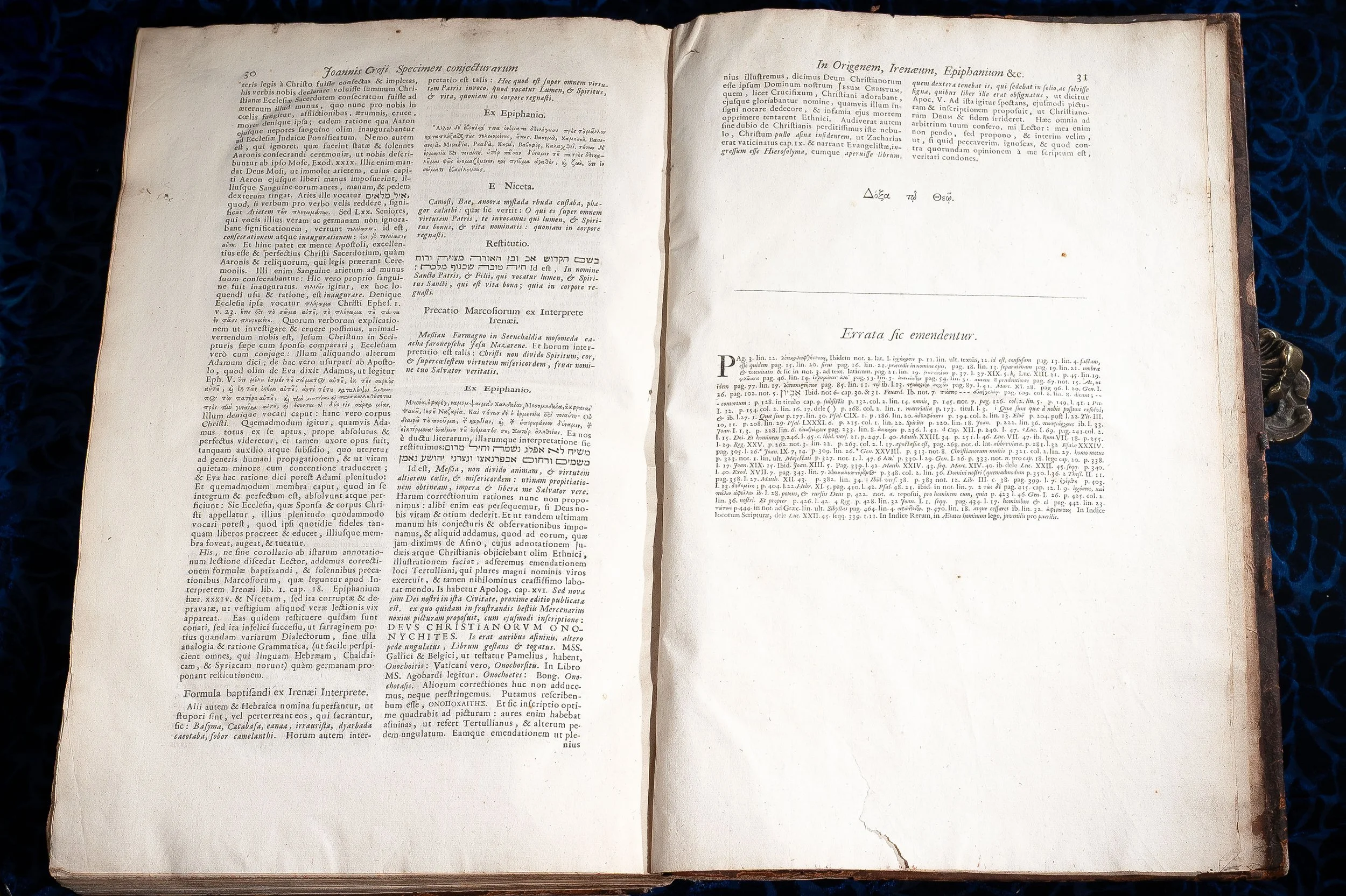 Image 1 of 11
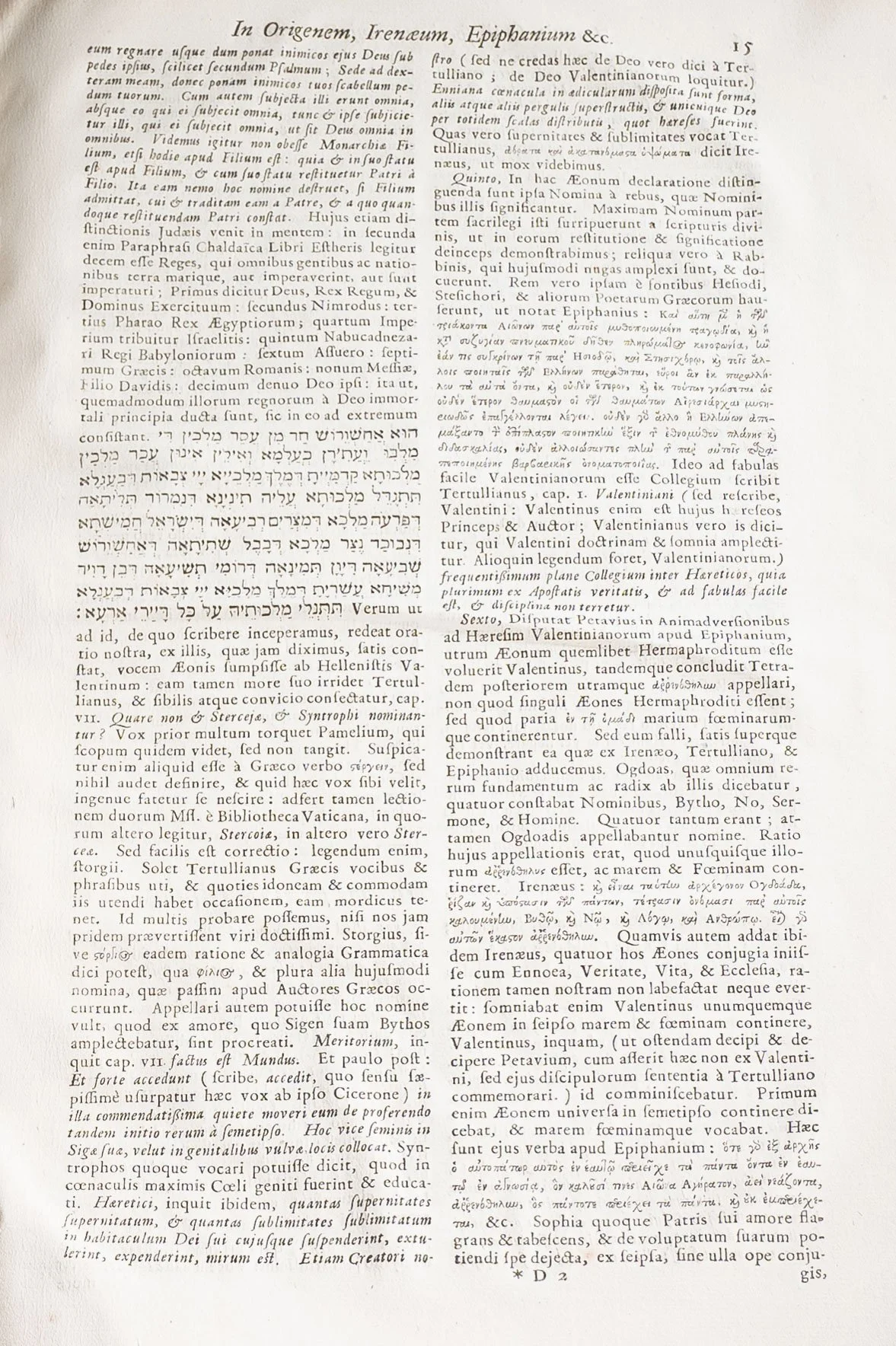 Image 2 of 11
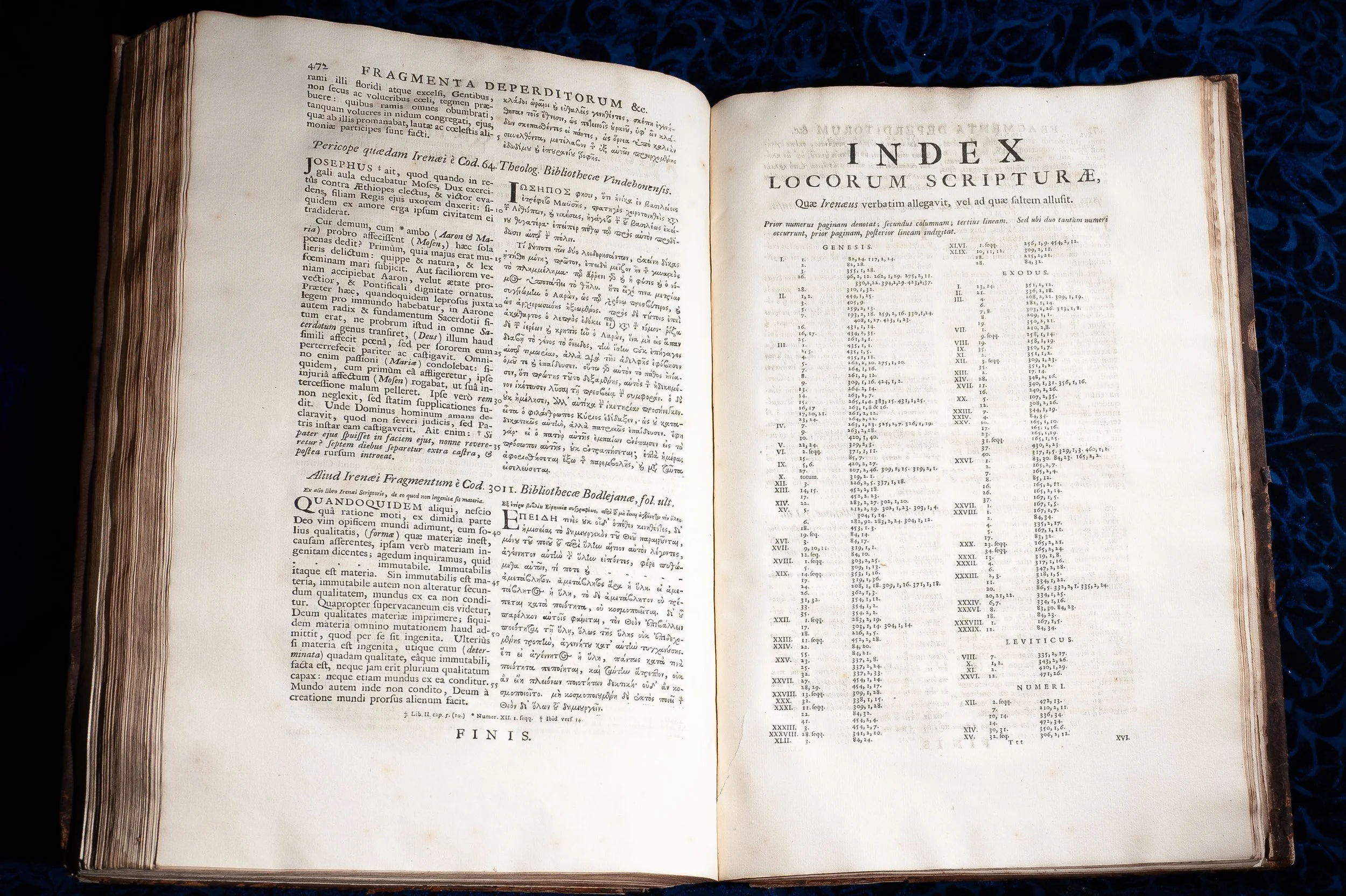 Image 3 of 11
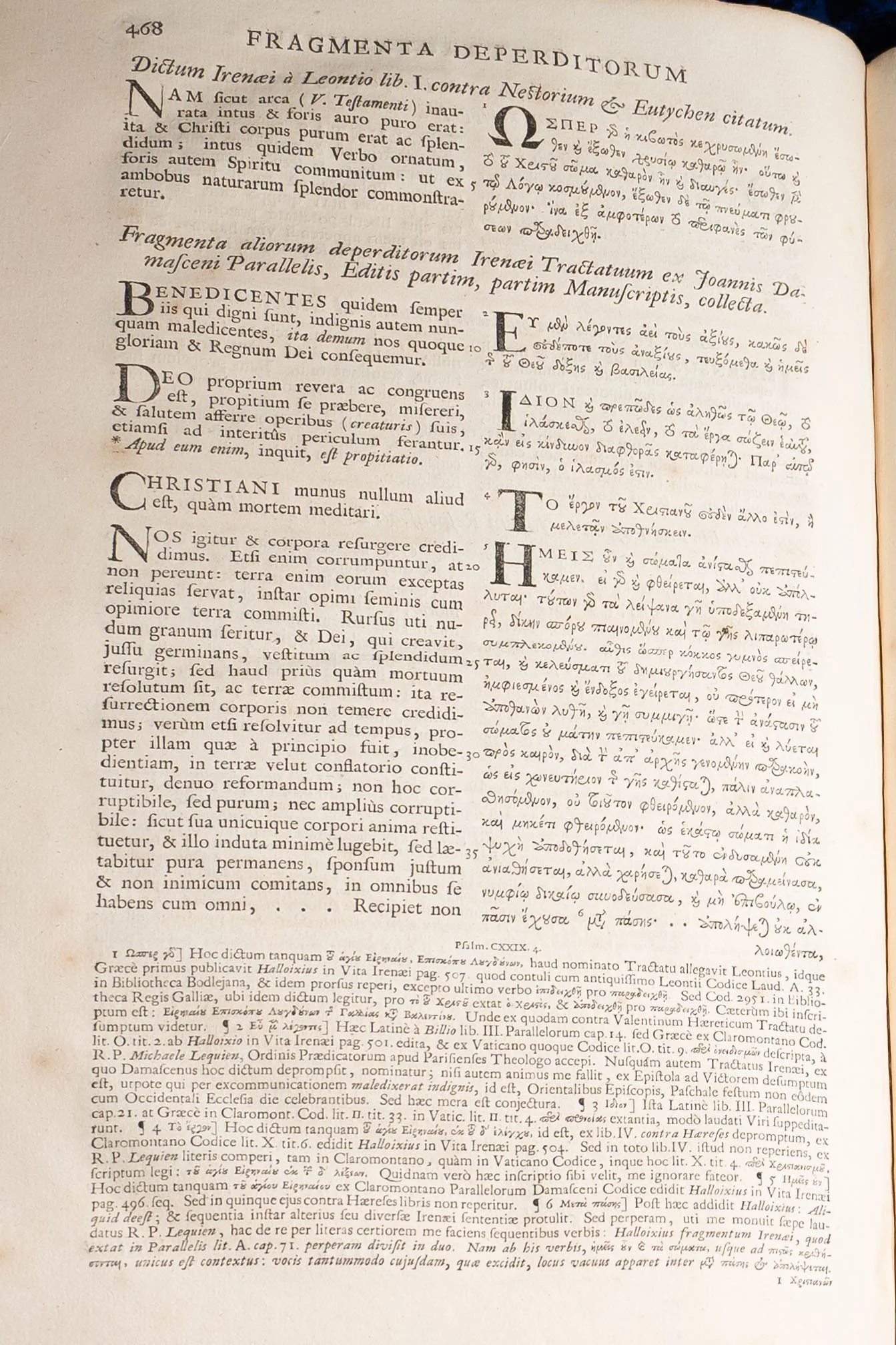 Image 4 of 11
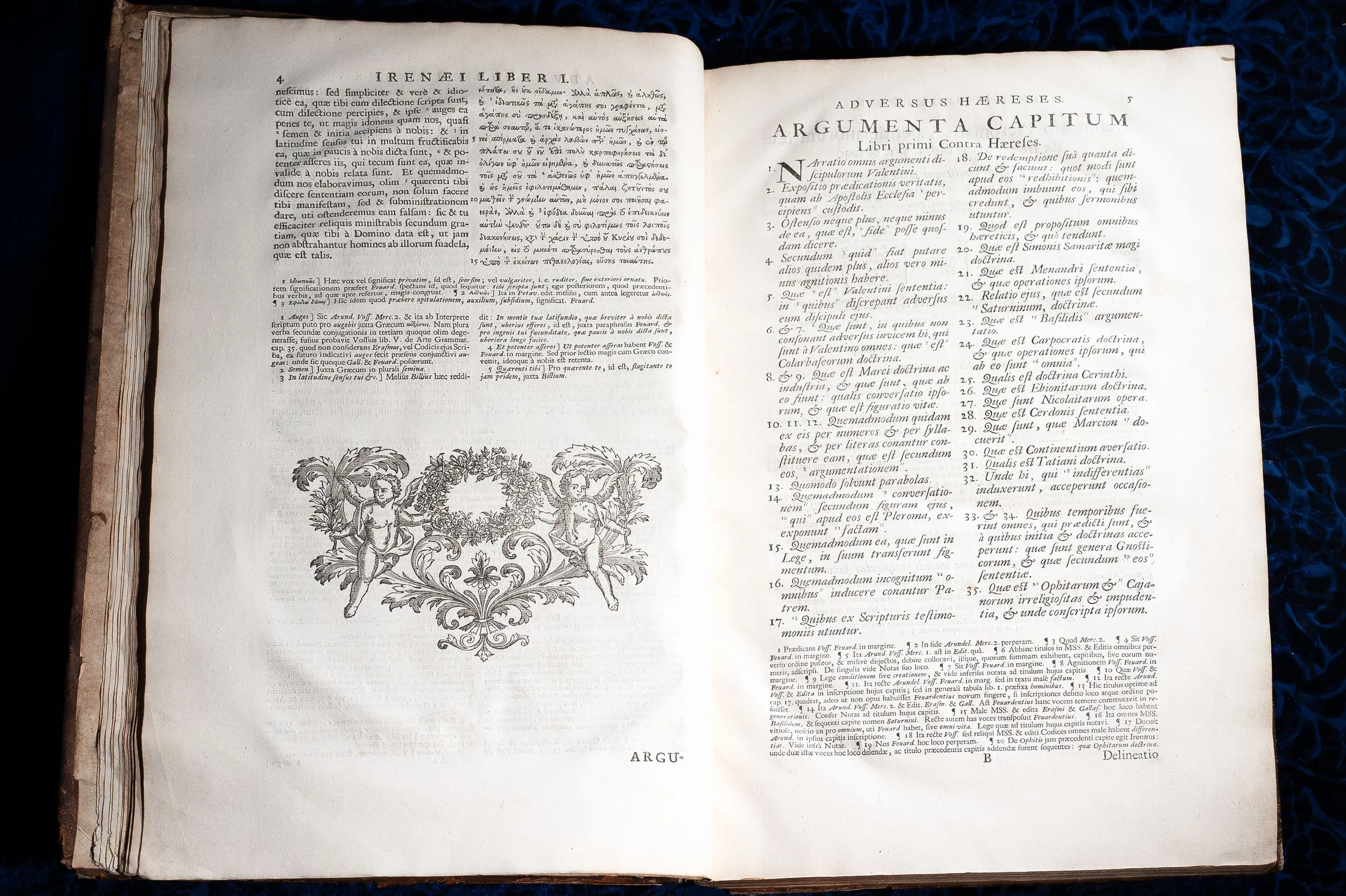 Image 5 of 11
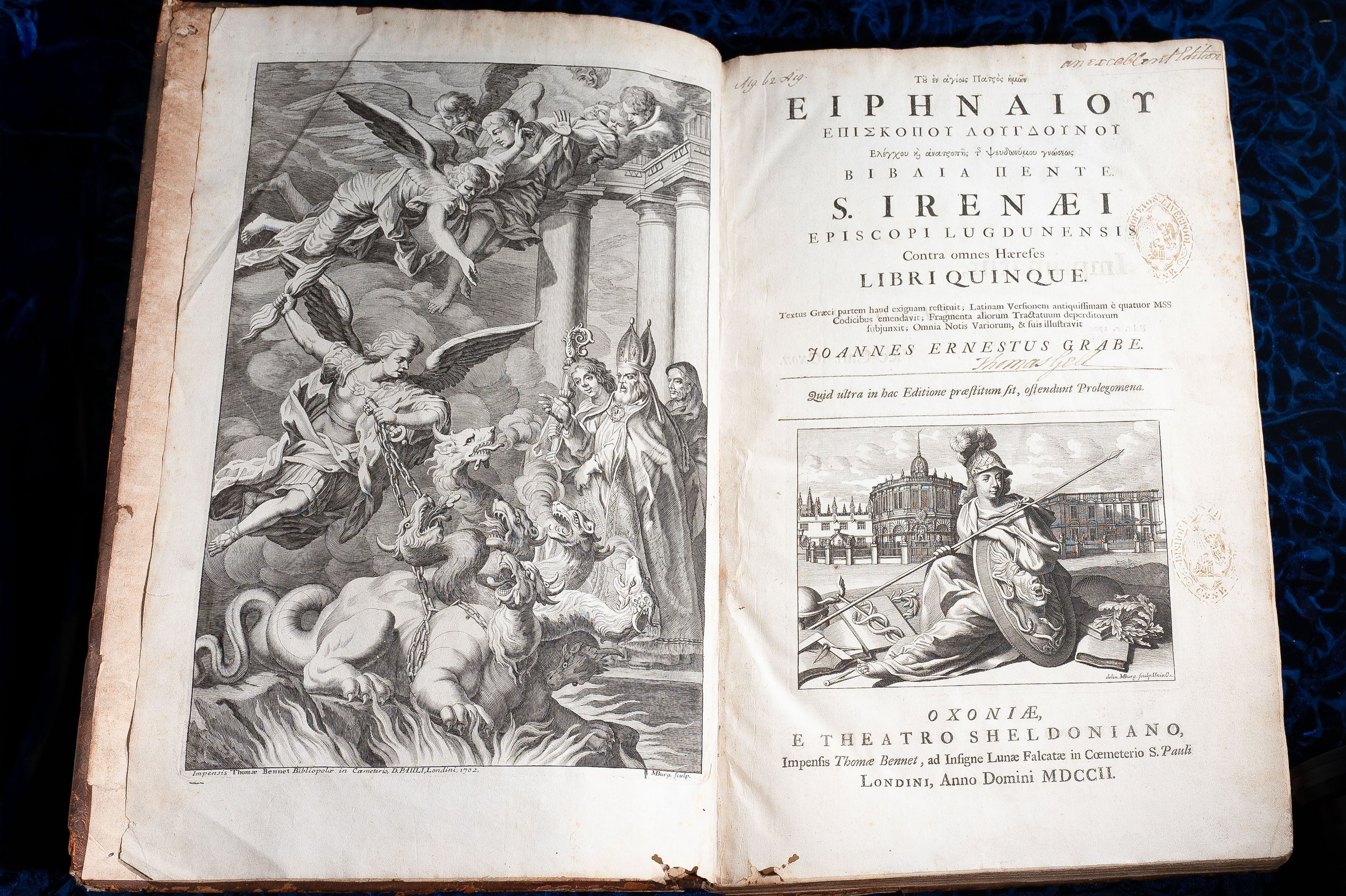 Image 6 of 11
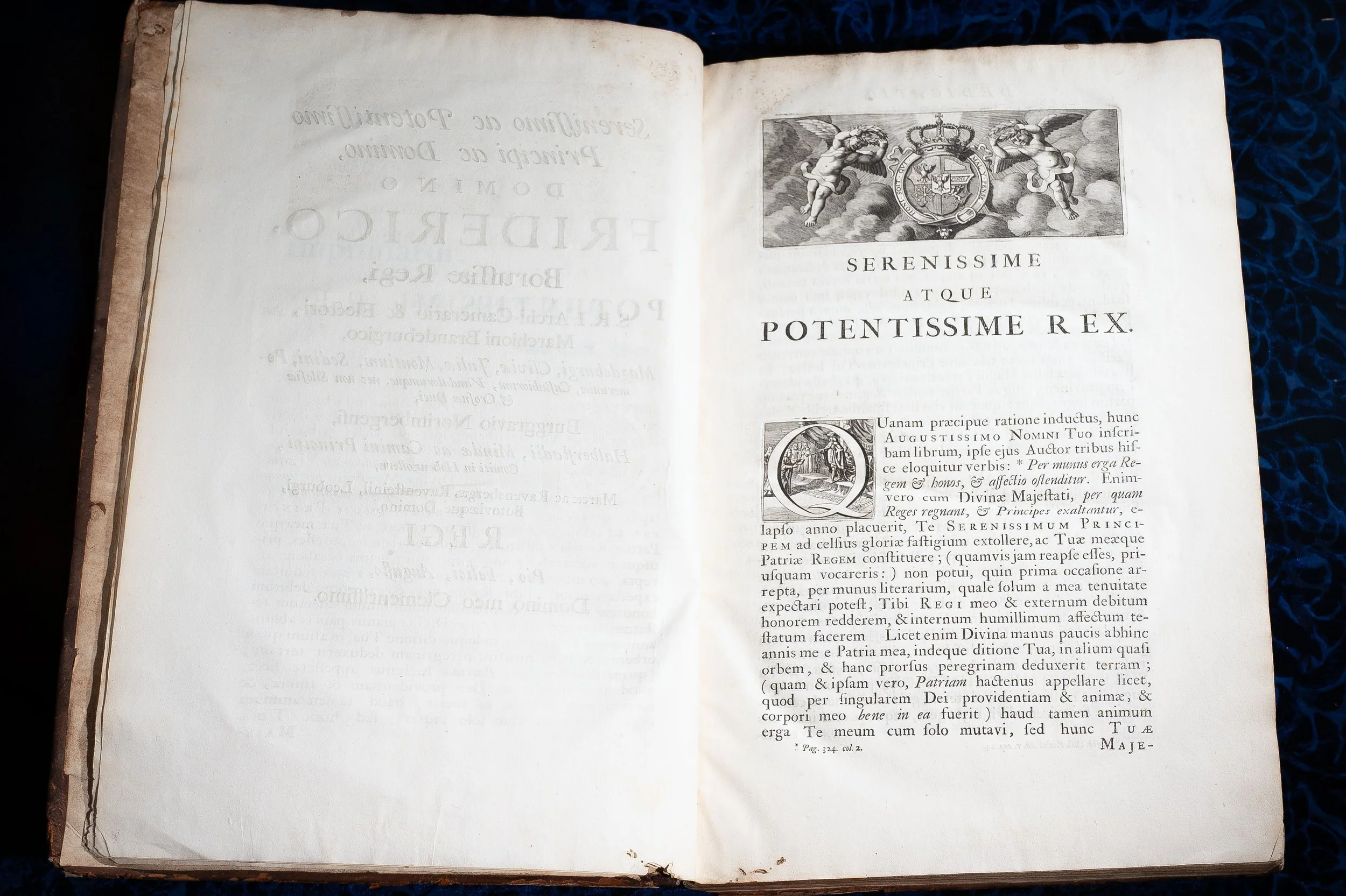 Image 7 of 11
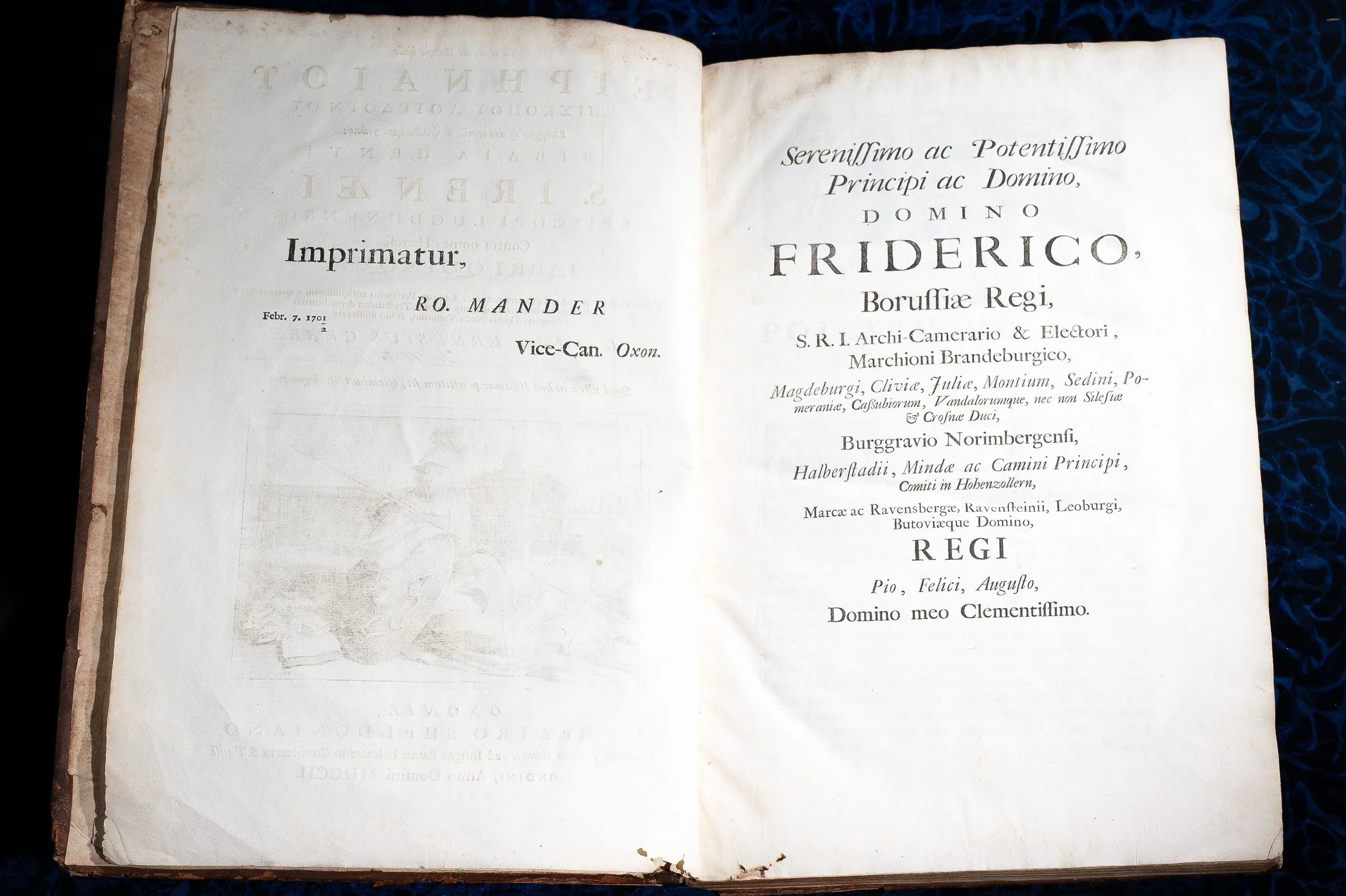 Image 8 of 11
 Image 9 of 11
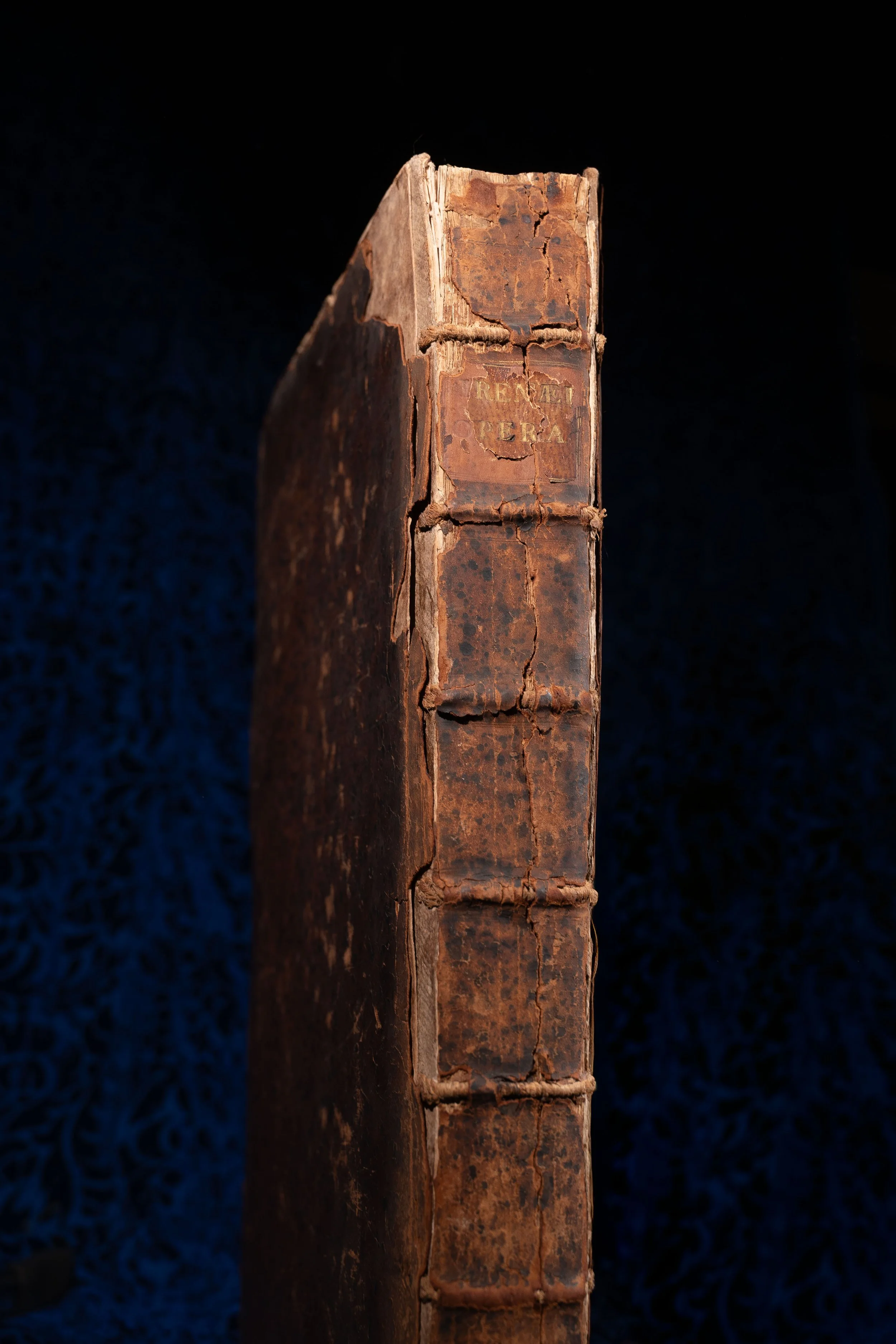 Image 10 of 11
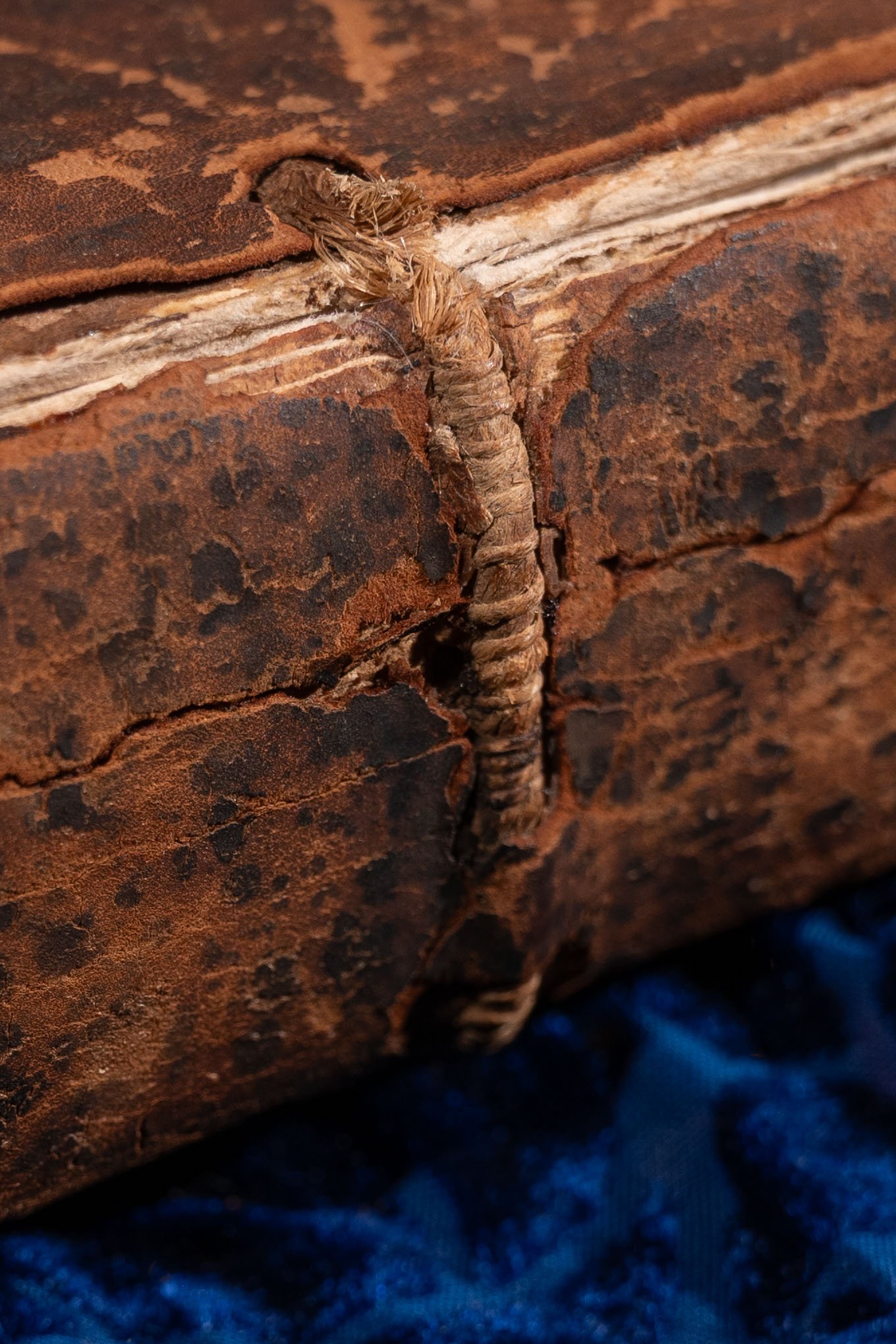 Image 11 of 11