Few books have been reprinted as relentlessly as the Propheties of Nostradamus. From the first partial edition of 1555 through some two hundred subsequent printings, every generation has found fresh reasons to consult the famously opaque quatrains of the Provençal physician-astrologer. This 1697 Lyon edition, a compact pocket-format volume printed by the widow of François Roux for the bookseller Jean Viret on the Rue Merciere, belongs to the long tradition of popular French printings that kept Nostradamus continuously in circulation from the sixteenth century onward. It contains the full text of all twelve Centuries (I–VII and VIII–XII), prefaced by the celebrated letter to Nostradamus’s son César, dated 1 March 1555, the same preface that has accompanied the Propheties since the very first edition.
The title page’s claim that the volume contains “three hundred [prophecies] that have never before been printed” is a marketing formula inherited from the earliest expanded editions and should not be taken literally. By 1697 the full corpus of 942 quatrains was well established, along with the supplementary Centuries XI and XII (which modern scholars generally regard as post-Nostradamian additions). The text here follows the standard late-seventeenth-century Lyon tradition, descending from the Benoist Rigaud lineage that had dominated Nostradamus printing since the canonical 1568 edition.
The engraved frontispiece is a particular asset. It depicts Nostradamus in his study, pen in hand, surrounded by the instruments of his dual vocation, books on shelves behind him, an armillary sphere beside him, with a verse caption that positions him as a mouthpiece of divine truth: “God uses my mouth here to announce the truth to you.” This image, which circulated in various forms across late-seventeenth- and early-eighteenth-century editions, became the standard visual representation of the prophet for popular audiences. It is frequently missing from surviving copies, having been removed for framing or simply lost to wear.
The Rue Merciere, where Jean Viret kept his shop, was the heart of the Lyon book trade, the same street where the Huguetan and Zetzner firms operated, and where many of the most important French books of the sixteenth and seventeenth centuries were sold. The royal permission, granted on 22 April 1697 and printed at the rear of the volume, names the Veuve de François Roux as the actual printer. This widow-printer arrangement was a common feature of the Lyon trade, where a deceased master’s widow could continue operating under his privilege.
The ownership inscriptions add a layer of human interest. Margueritte Guy’s name appears first and largest, suggesting the book was hers; her husband Frederic Gaudo carefully noted beneath it that it served “also for her spouse, me, Frederic Gaudo.” The date, 1706, places these owners within a generation of the book’s printing. We know nothing else about them, but the inscription tells us something about the social reach of Nostradamus at the turn of the eighteenth century: this was not a scholar’s book or a nobleman’s curiosity but a household possession, shared between spouses, consulted (one imagines) in times of uncertainty. The pocket format confirms this reading, it was made to be carried and read, not displayed.
Late-seventeenth-century Lyon pocket editions of the Propheties are uncommon but not rare in absolute terms. What distinguishes copies is condition, the presence of the frontispiece, and binding. This copy offers all three: the frontispiece intact, the contemporary mottled calf with gilt spine retaining its period character, and the appealing early provenance.
NOSTRADAMUS, Michel de (1503–1566). Les Propheties de Maitre Michel Nostradamus, dont il y en a trois cents qui n’ont jamais été imprimées. Ajoustées de nouveau par ledit Auteur. A Lyon, Chez Jean Viret, Ruë Merciere, au Coin de ruë Ferrandiere. M.DC.XCVII [1697]. Avec Permission.
Physical Description: 12mo (approx. 15 × 8.5 cm). [12], 179, [1] pp. Engraved frontispiece portrait of Nostradamus seated at his desk with armillary sphere and books, with four-line verse caption beneath (Dieu se sert icy de ma bouche / Pour t’anoncer la verité...). Woodcut ornamental vignette on title page. Woodcut headpiece to Preface. Royal Consentement and Permission (dated Lyon, 22 April 1697) at rear, granted to the Veuve de François Roux, printer, and signed Vaginay and Dulieu.
Binding: Contemporary mottled calf, spine gilt with floral and foliate tooling in compartments, gilt-lettered title (“PROPH. DE NOSTR.”), red edges. Binding rubbed and worn, particularly at extremities, but structurally sound.
Condition: Some foxing and browning throughout, as expected for a pocket-format book of this period. Engraved frontispiece present (often lacking in copies of this edition). Text legible and complete through Centurie XII, concluding with FIN on p. 179. Binding worn but holding firm; spine gilt still legible. A solid, honest copy.
Provenance: (1) Margueritte Guy and Frederic Gaudo, 1706. Ink ownership inscription to rear endpaper in a fine hand: “Margueritte Guy / .1.7.0.6. / aussy bien pour son / Epouse moy Frederic / Gaudo” [i.e., Margueritte Guy, 1706; also for her spouse, me, Frederic Gaudo]. Further ink inscription to front endpaper: “Frederic Gaudo / .1706.” with pen trials. Ink signature at foot of title page (“Guy Gaudo” or similar). The book appears to have belonged primarily to Margueritte Guy, with her husband noting his shared claim—a charming domestic detail recorded just nine years after publication. Neither name has been traced to known bibliophiles or historical figures.
Few books have been reprinted as relentlessly as the Propheties of Nostradamus. From the first partial edition of 1555 through some two hundred subsequent printings, every generation has found fresh reasons to consult the famously opaque quatrains of the Provençal physician-astrologer. This 1697 Lyon edition, a compact pocket-format volume printed by the widow of François Roux for the bookseller Jean Viret on the Rue Merciere, belongs to the long tradition of popular French printings that kept Nostradamus continuously in circulation from the sixteenth century onward. It contains the full text of all twelve Centuries (I–VII and VIII–XII), prefaced by the celebrated letter to Nostradamus’s son César, dated 1 March 1555, the same preface that has accompanied the Propheties since the very first edition.
The title page’s claim that the volume contains “three hundred [prophecies] that have never before been printed” is a marketing formula inherited from the earliest expanded editions and should not be taken literally. By 1697 the full corpus of 942 quatrains was well established, along with the supplementary Centuries XI and XII (which modern scholars generally regard as post-Nostradamian additions). The text here follows the standard late-seventeenth-century Lyon tradition, descending from the Benoist Rigaud lineage that had dominated Nostradamus printing since the canonical 1568 edition.
The engraved frontispiece is a particular asset. It depicts Nostradamus in his study, pen in hand, surrounded by the instruments of his dual vocation, books on shelves behind him, an armillary sphere beside him, with a verse caption that positions him as a mouthpiece of divine truth: “God uses my mouth here to announce the truth to you.” This image, which circulated in various forms across late-seventeenth- and early-eighteenth-century editions, became the standard visual representation of the prophet for popular audiences. It is frequently missing from surviving copies, having been removed for framing or simply lost to wear.
The Rue Merciere, where Jean Viret kept his shop, was the heart of the Lyon book trade, the same street where the Huguetan and Zetzner firms operated, and where many of the most important French books of the sixteenth and seventeenth centuries were sold. The royal permission, granted on 22 April 1697 and printed at the rear of the volume, names the Veuve de François Roux as the actual printer. This widow-printer arrangement was a common feature of the Lyon trade, where a deceased master’s widow could continue operating under his privilege.
The ownership inscriptions add a layer of human interest. Margueritte Guy’s name appears first and largest, suggesting the book was hers; her husband Frederic Gaudo carefully noted beneath it that it served “also for her spouse, me, Frederic Gaudo.” The date, 1706, places these owners within a generation of the book’s printing. We know nothing else about them, but the inscription tells us something about the social reach of Nostradamus at the turn of the eighteenth century: this was not a scholar’s book or a nobleman’s curiosity but a household possession, shared between spouses, consulted (one imagines) in times of uncertainty. The pocket format confirms this reading, it was made to be carried and read, not displayed.
Late-seventeenth-century Lyon pocket editions of the Propheties are uncommon but not rare in absolute terms. What distinguishes copies is condition, the presence of the frontispiece, and binding. This copy offers all three: the frontispiece intact, the contemporary mottled calf with gilt spine retaining its period character, and the appealing early provenance.
NOSTRADAMUS, Michel de (1503–1566). Les Propheties de Maitre Michel Nostradamus, dont il y en a trois cents qui n’ont jamais été imprimées. Ajoustées de nouveau par ledit Auteur. A Lyon, Chez Jean Viret, Ruë Merciere, au Coin de ruë Ferrandiere. M.DC.XCVII [1697]. Avec Permission.
Physical Description: 12mo (approx. 15 × 8.5 cm). [12], 179, [1] pp. Engraved frontispiece portrait of Nostradamus seated at his desk with armillary sphere and books, with four-line verse caption beneath (Dieu se sert icy de ma bouche / Pour t’anoncer la verité...). Woodcut ornamental vignette on title page. Woodcut headpiece to Preface. Royal Consentement and Permission (dated Lyon, 22 April 1697) at rear, granted to the Veuve de François Roux, printer, and signed Vaginay and Dulieu.
Binding: Contemporary mottled calf, spine gilt with floral and foliate tooling in compartments, gilt-lettered title (“PROPH. DE NOSTR.”), red edges. Binding rubbed and worn, particularly at extremities, but structurally sound.
Condition: Some foxing and browning throughout, as expected for a pocket-format book of this period. Engraved frontispiece present (often lacking in copies of this edition). Text legible and complete through Centurie XII, concluding with FIN on p. 179. Binding worn but holding firm; spine gilt still legible. A solid, honest copy.
Provenance: (1) Margueritte Guy and Frederic Gaudo, 1706. Ink ownership inscription to rear endpaper in a fine hand: “Margueritte Guy / .1.7.0.6. / aussy bien pour son / Epouse moy Frederic / Gaudo” [i.e., Margueritte Guy, 1706; also for her spouse, me, Frederic Gaudo]. Further ink inscription to front endpaper: “Frederic Gaudo / .1706.” with pen trials. Ink signature at foot of title page (“Guy Gaudo” or similar). The book appears to have belonged primarily to Margueritte Guy, with her husband noting his shared claim—a charming domestic detail recorded just nine years after publication. Neither name has been traced to known bibliophiles or historical figures.

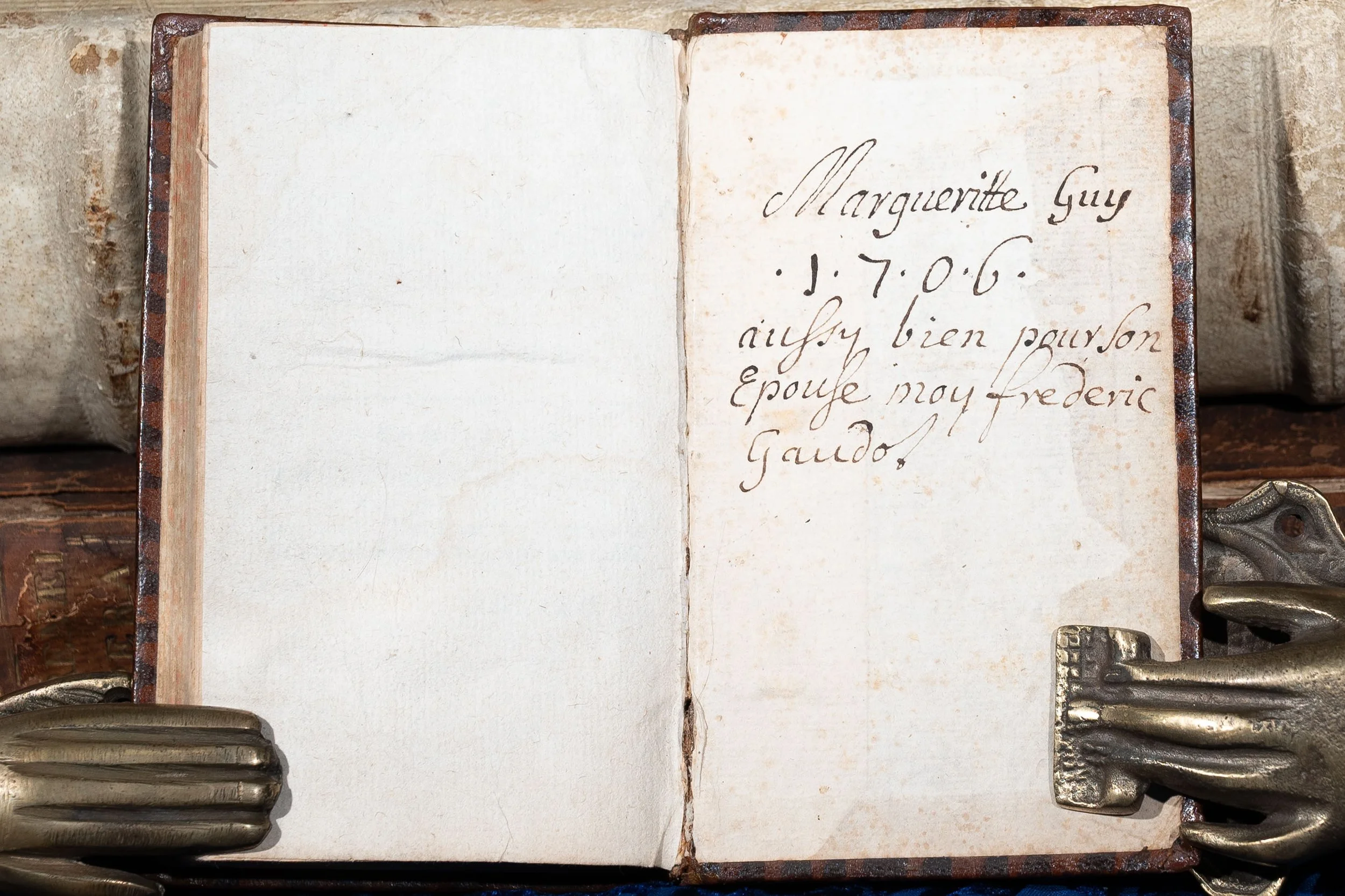 Image 1 of 12
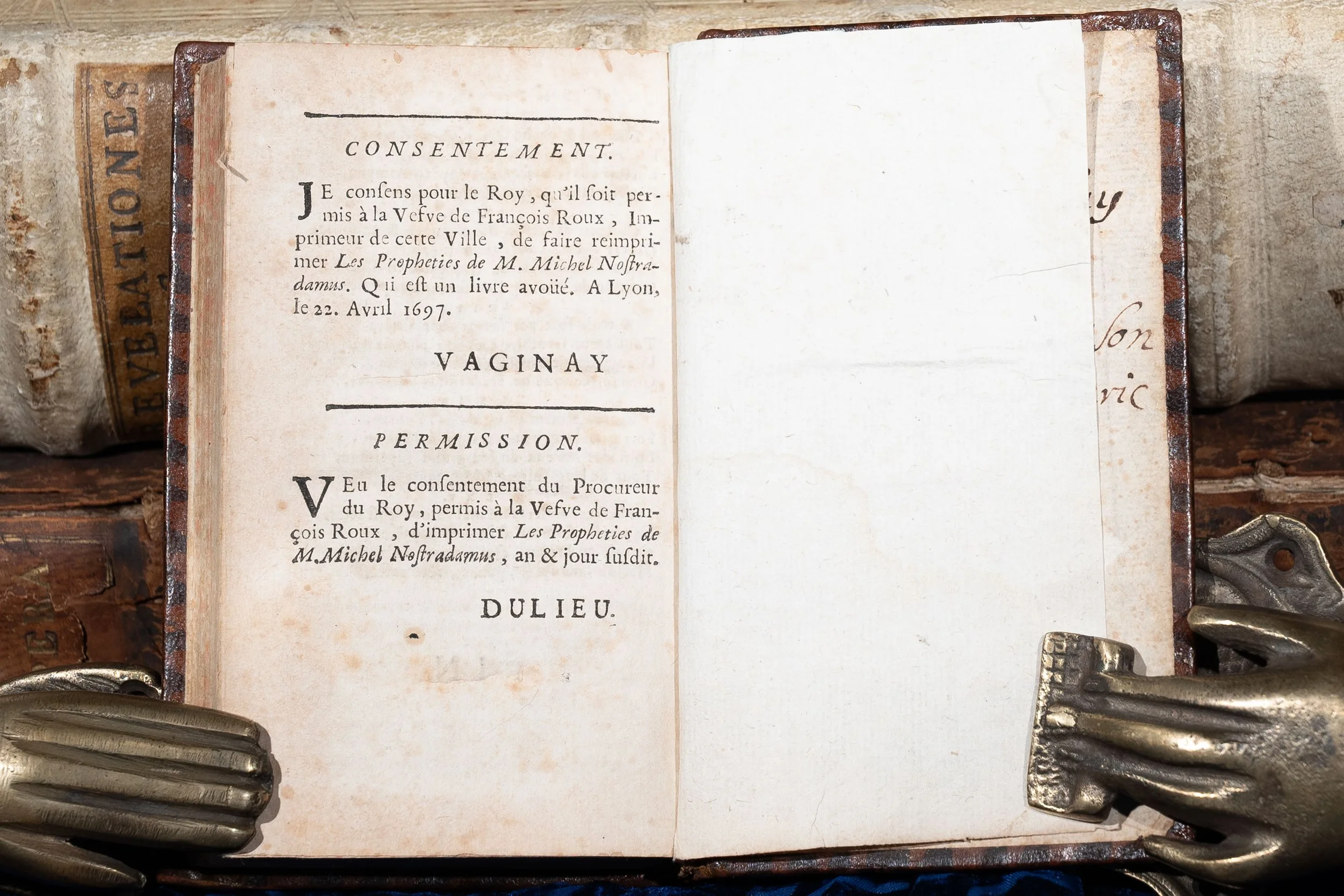 Image 2 of 12
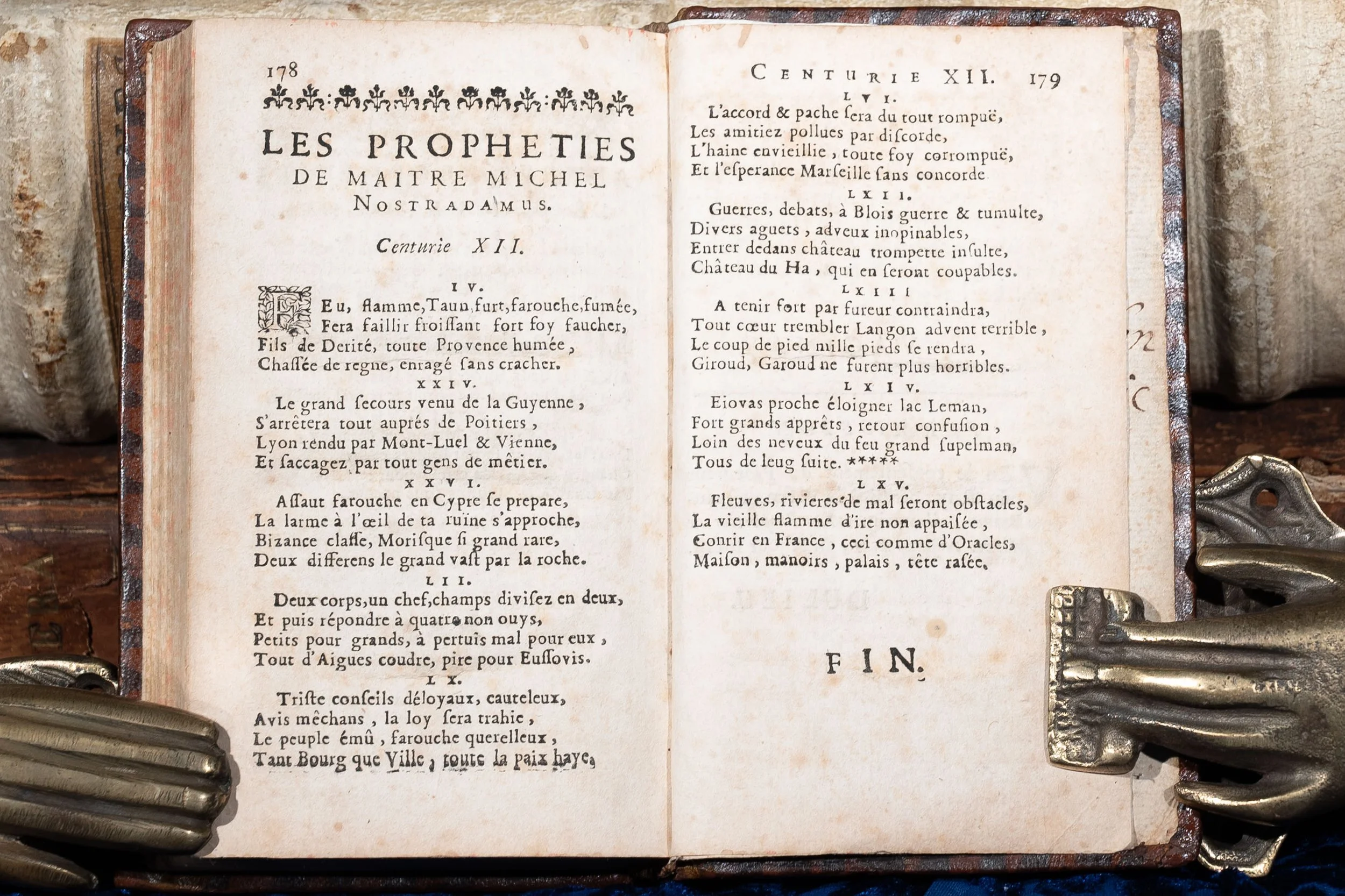 Image 3 of 12
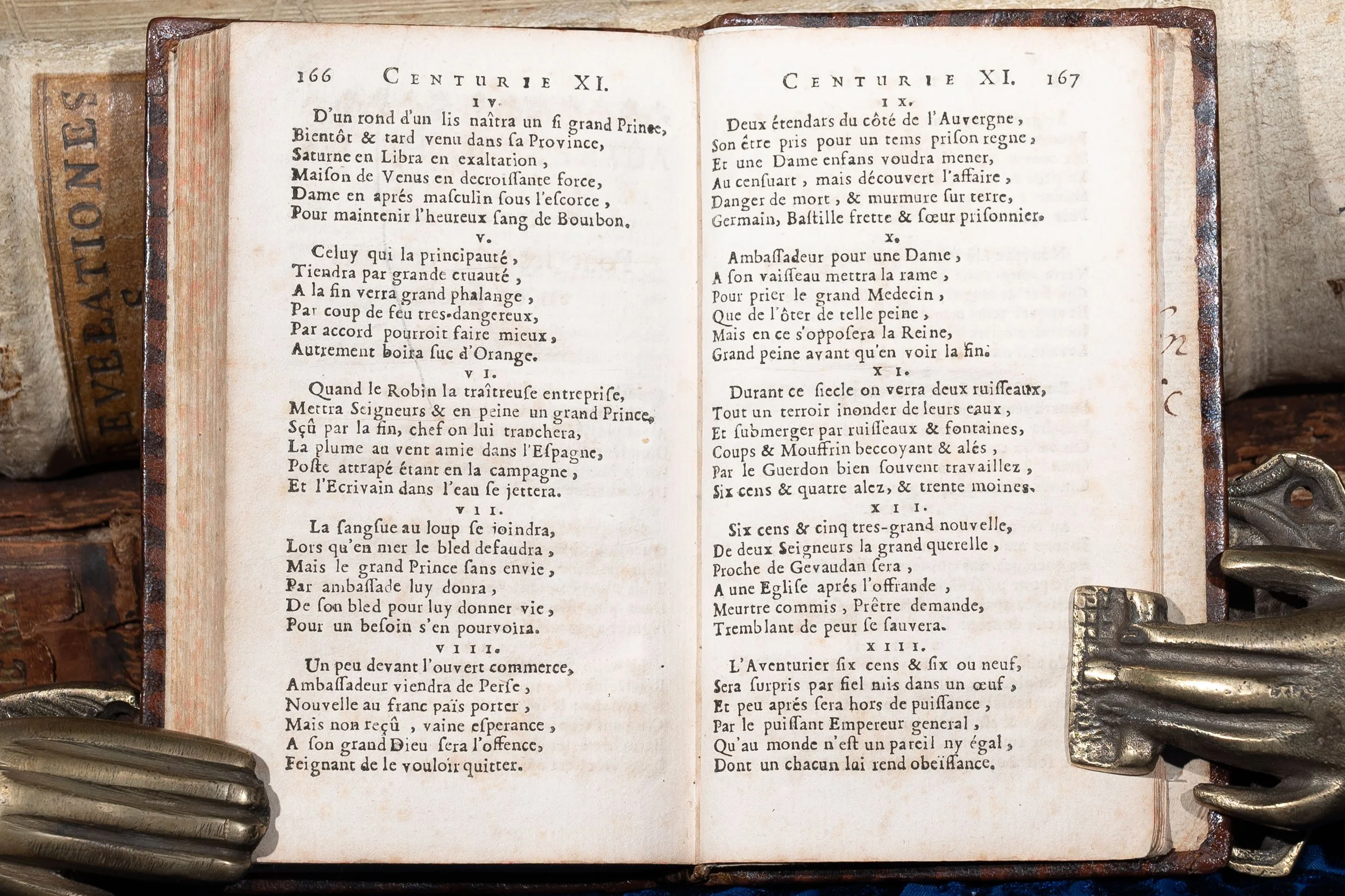 Image 4 of 12
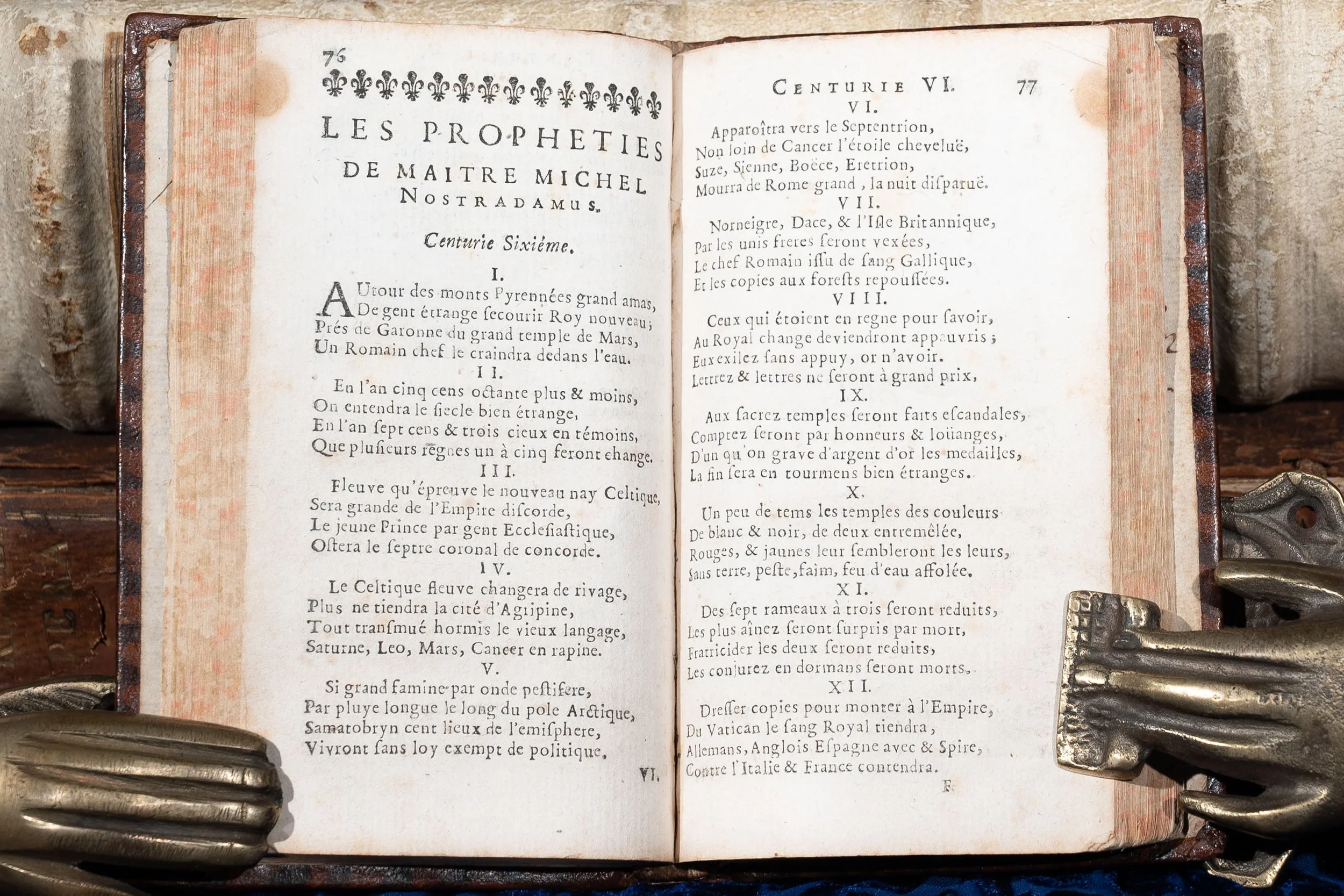 Image 5 of 12
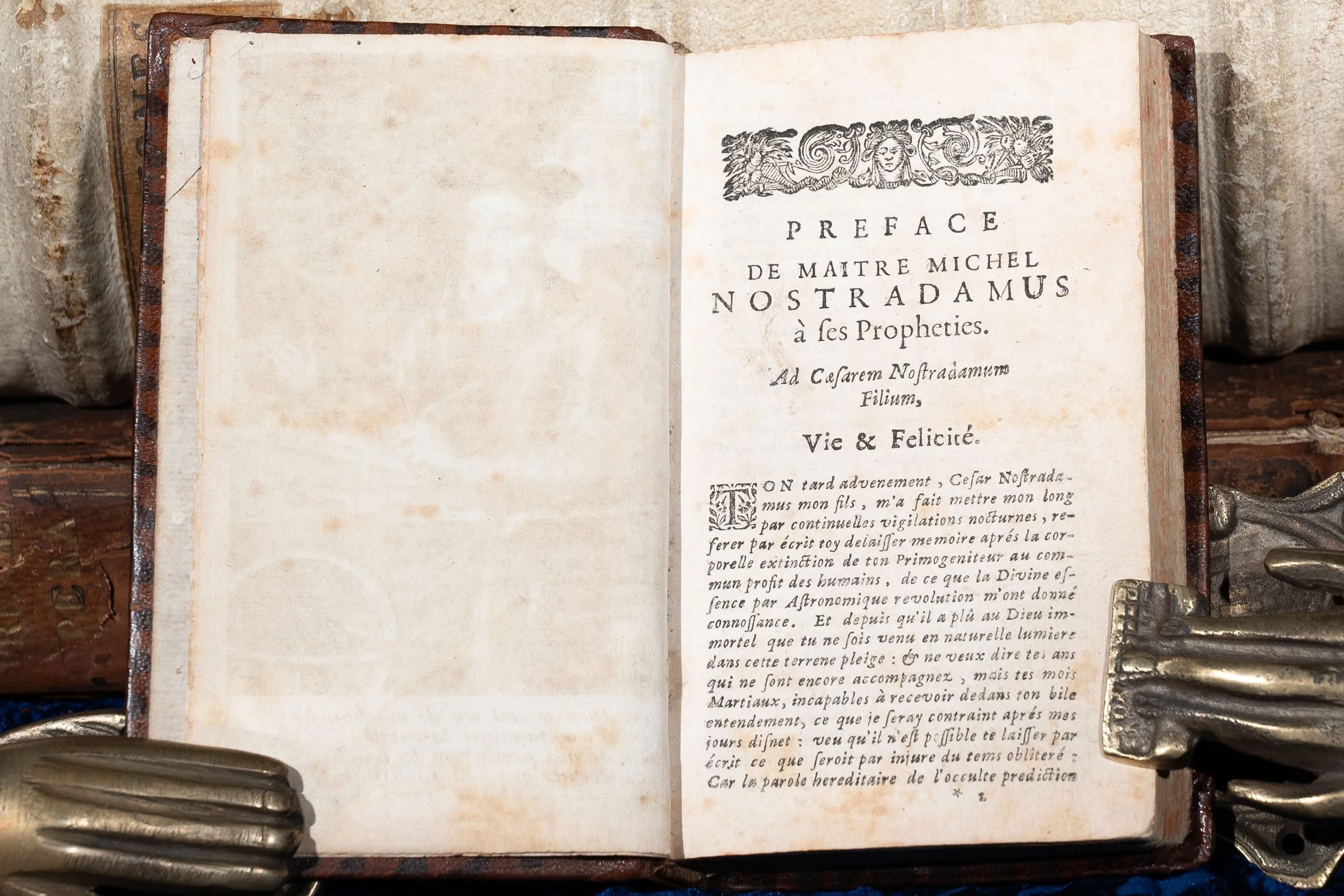 Image 6 of 12
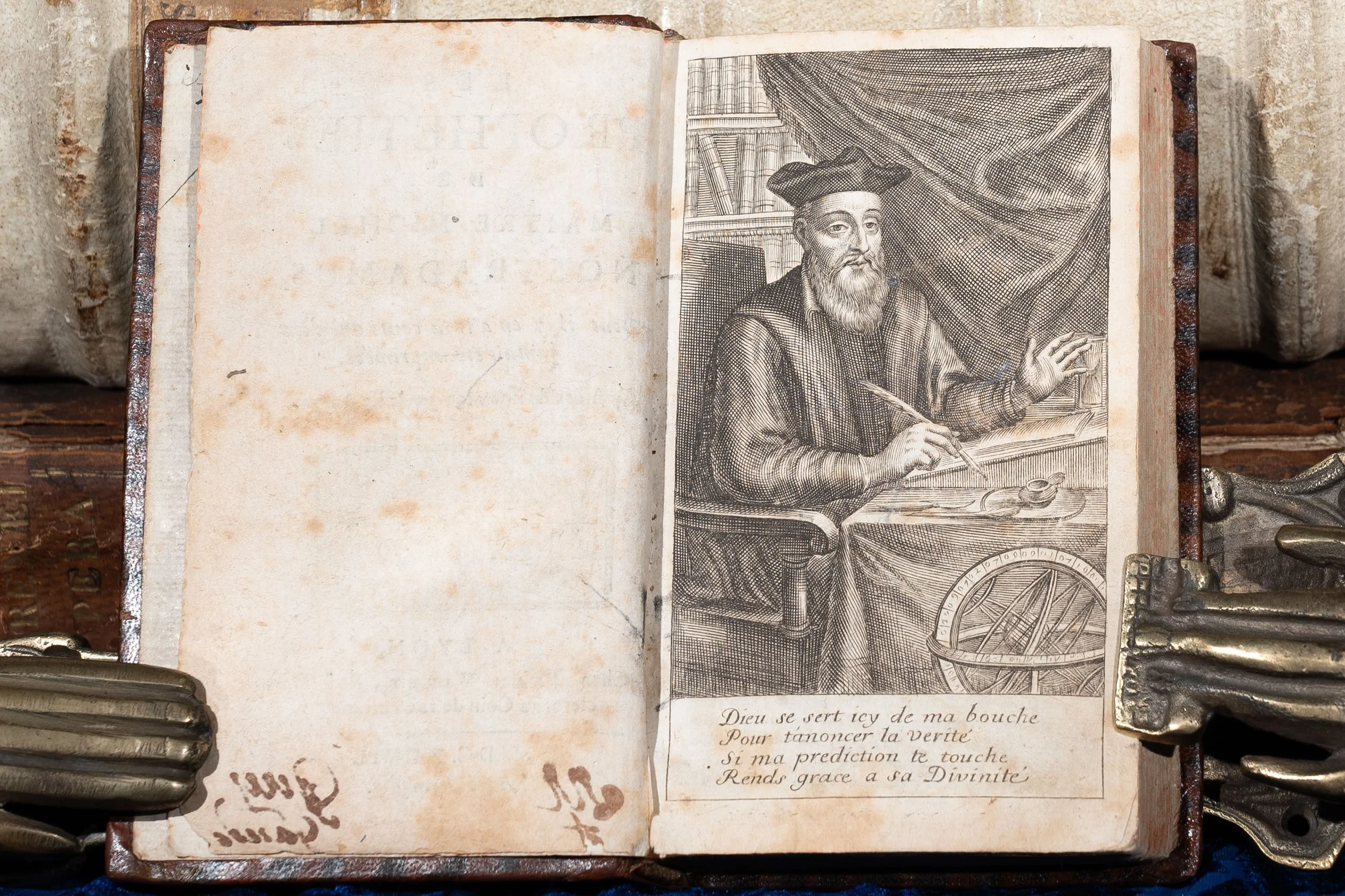 Image 7 of 12
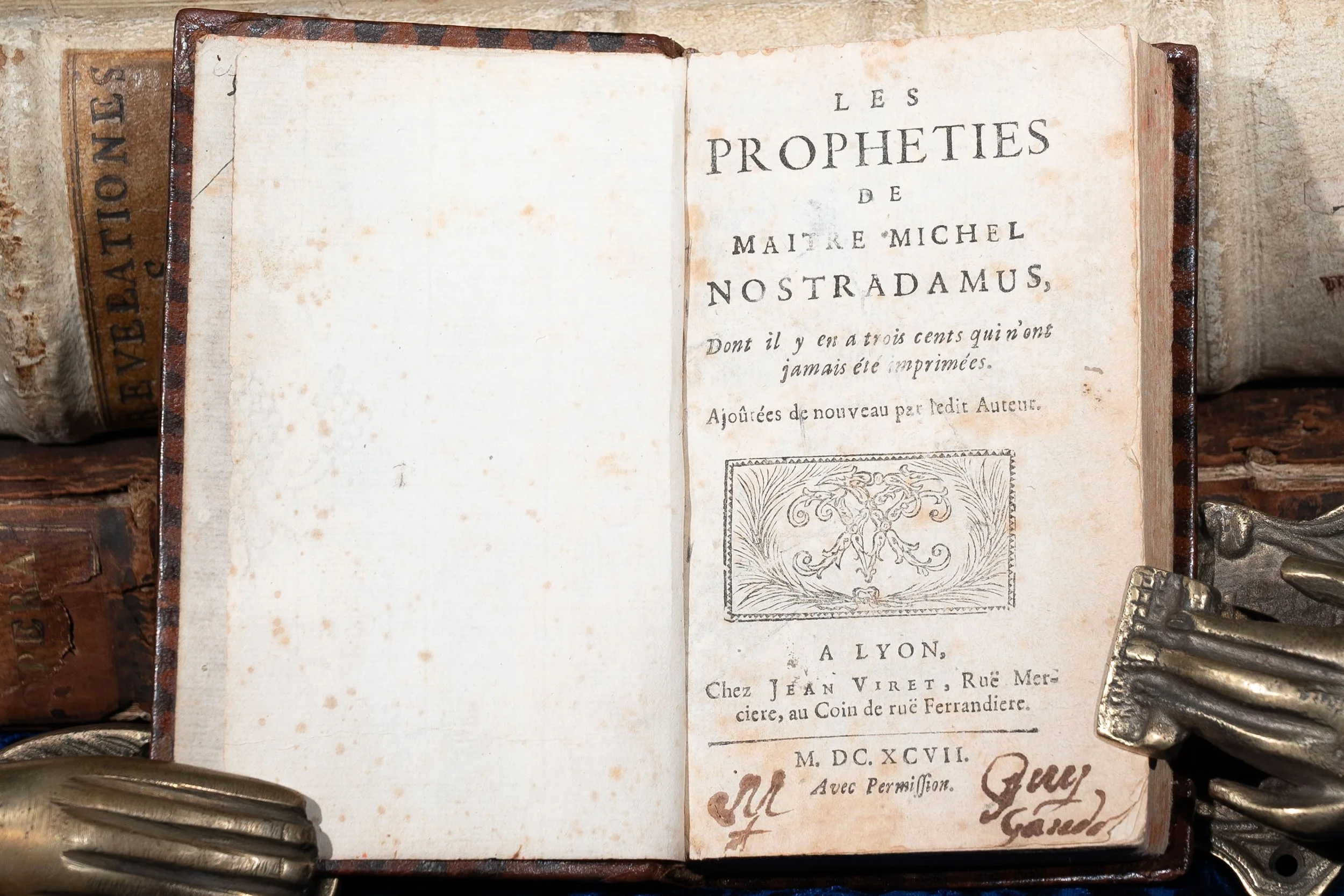 Image 8 of 12
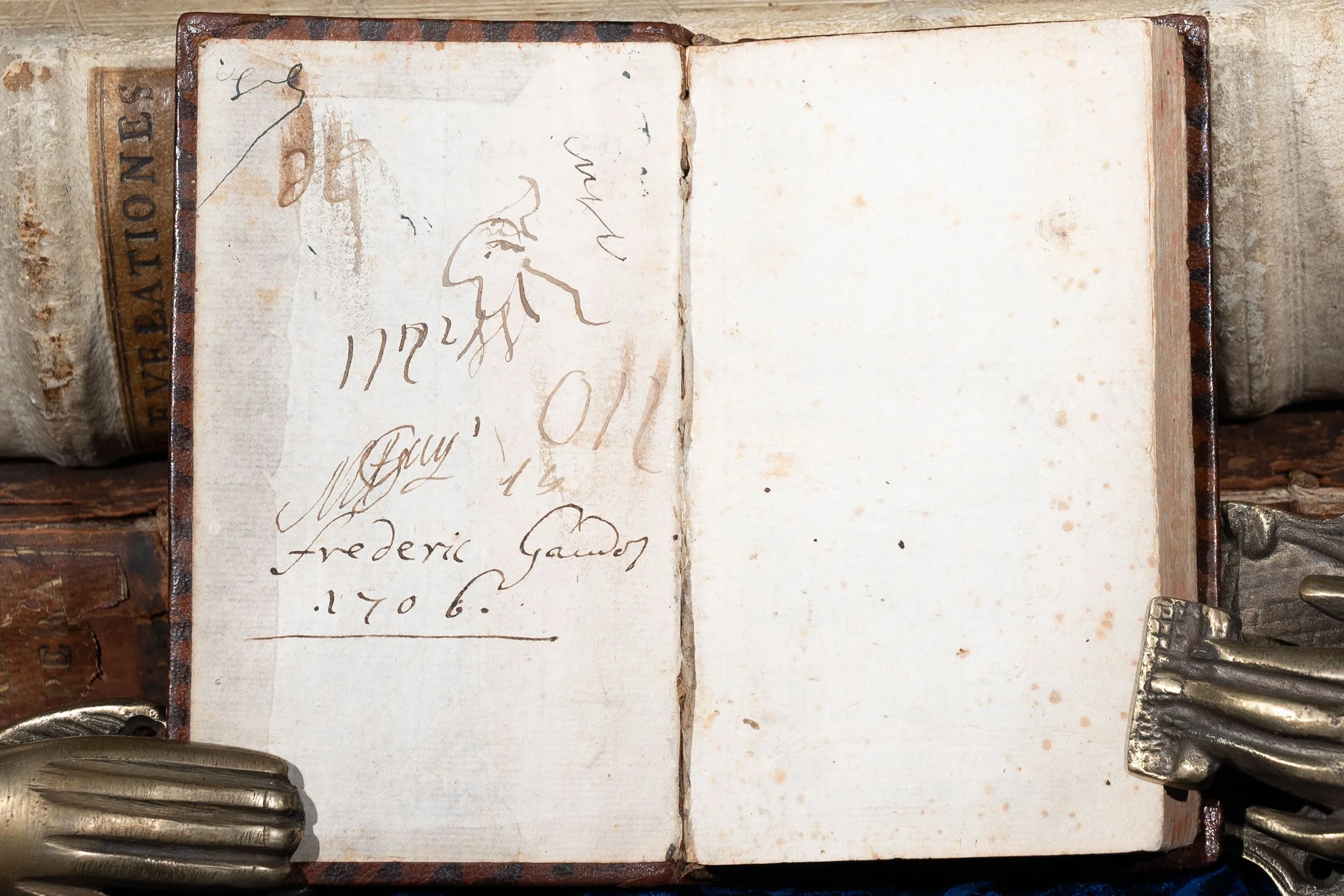 Image 9 of 12
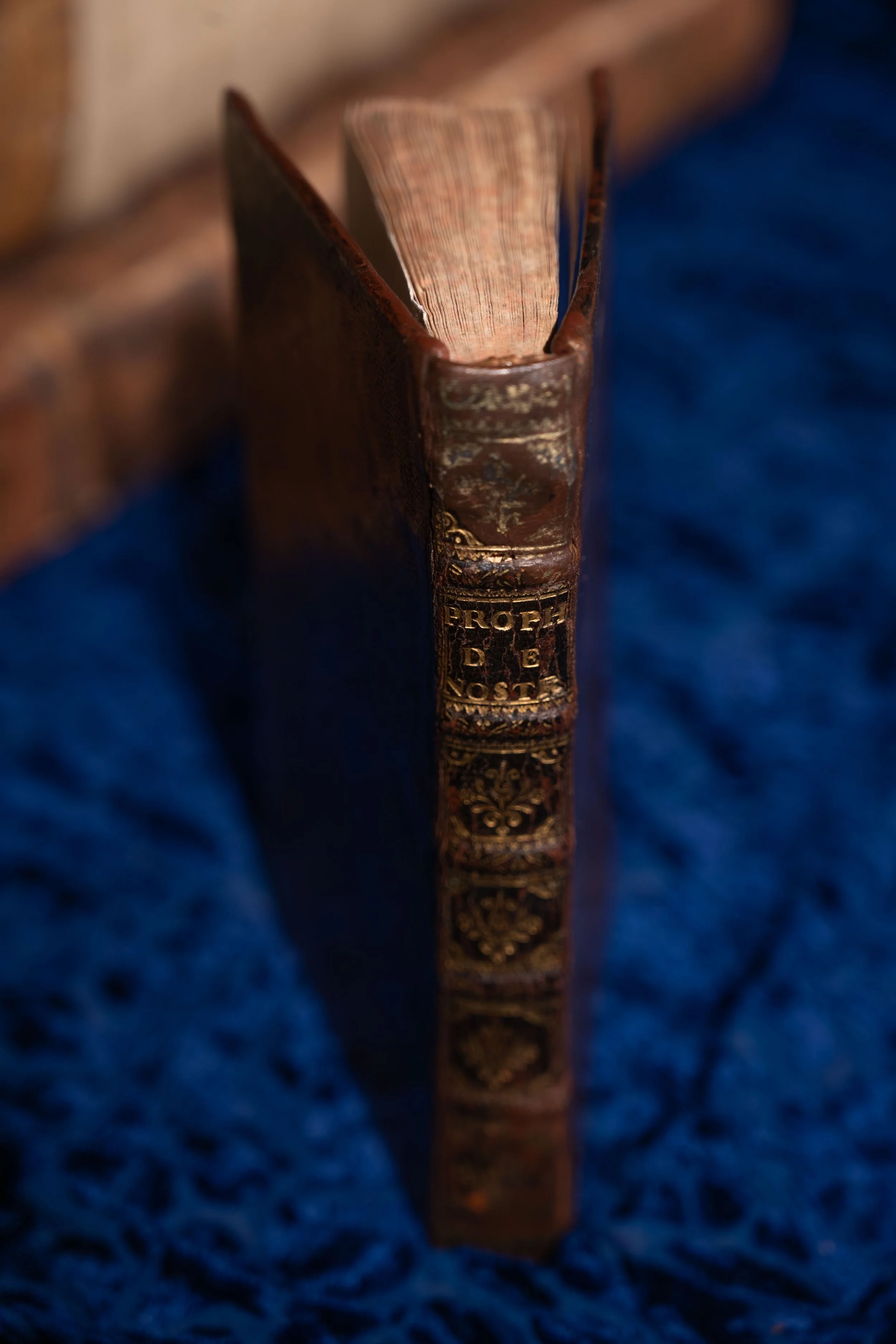 Image 10 of 12
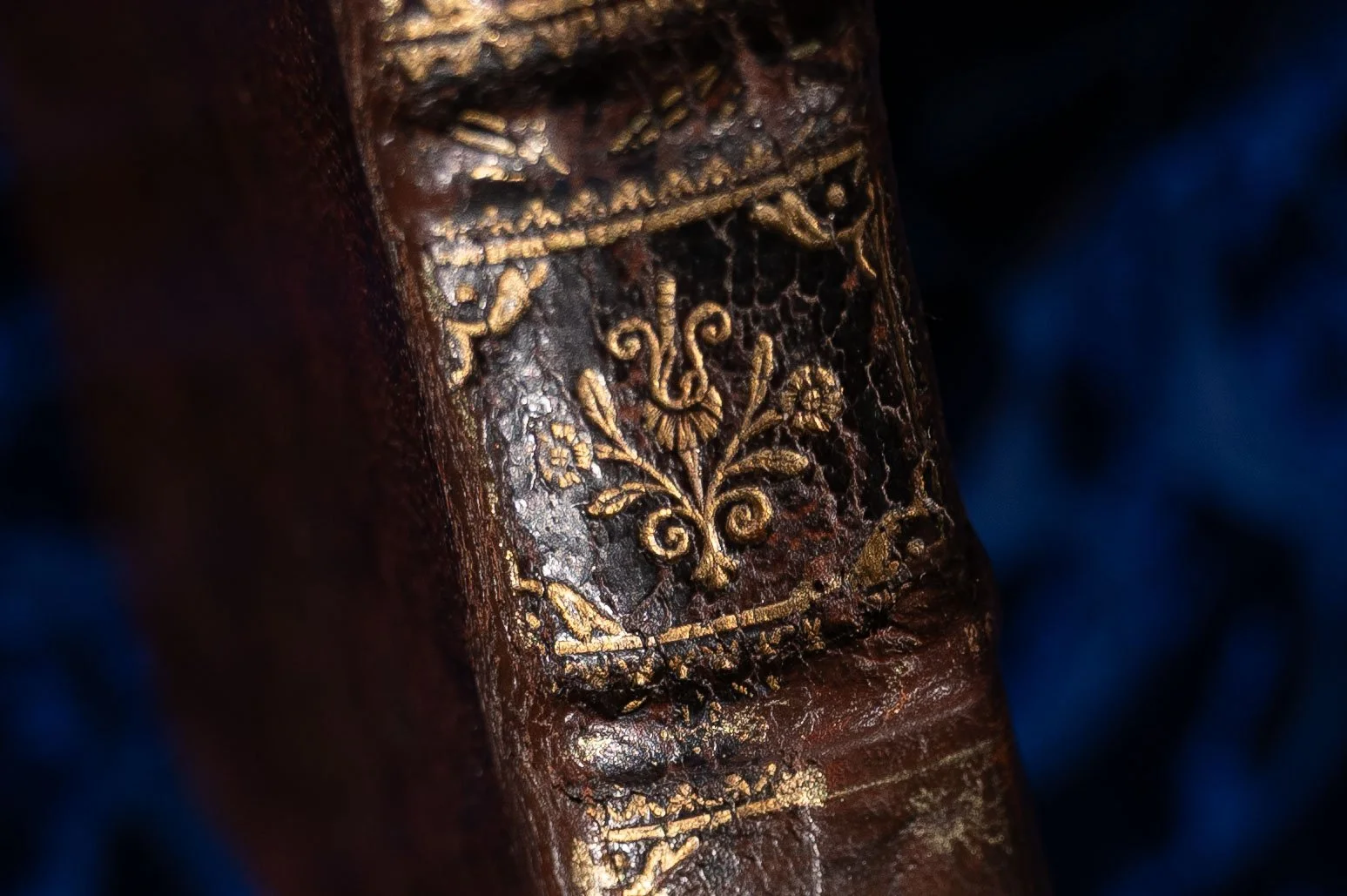 Image 11 of 12
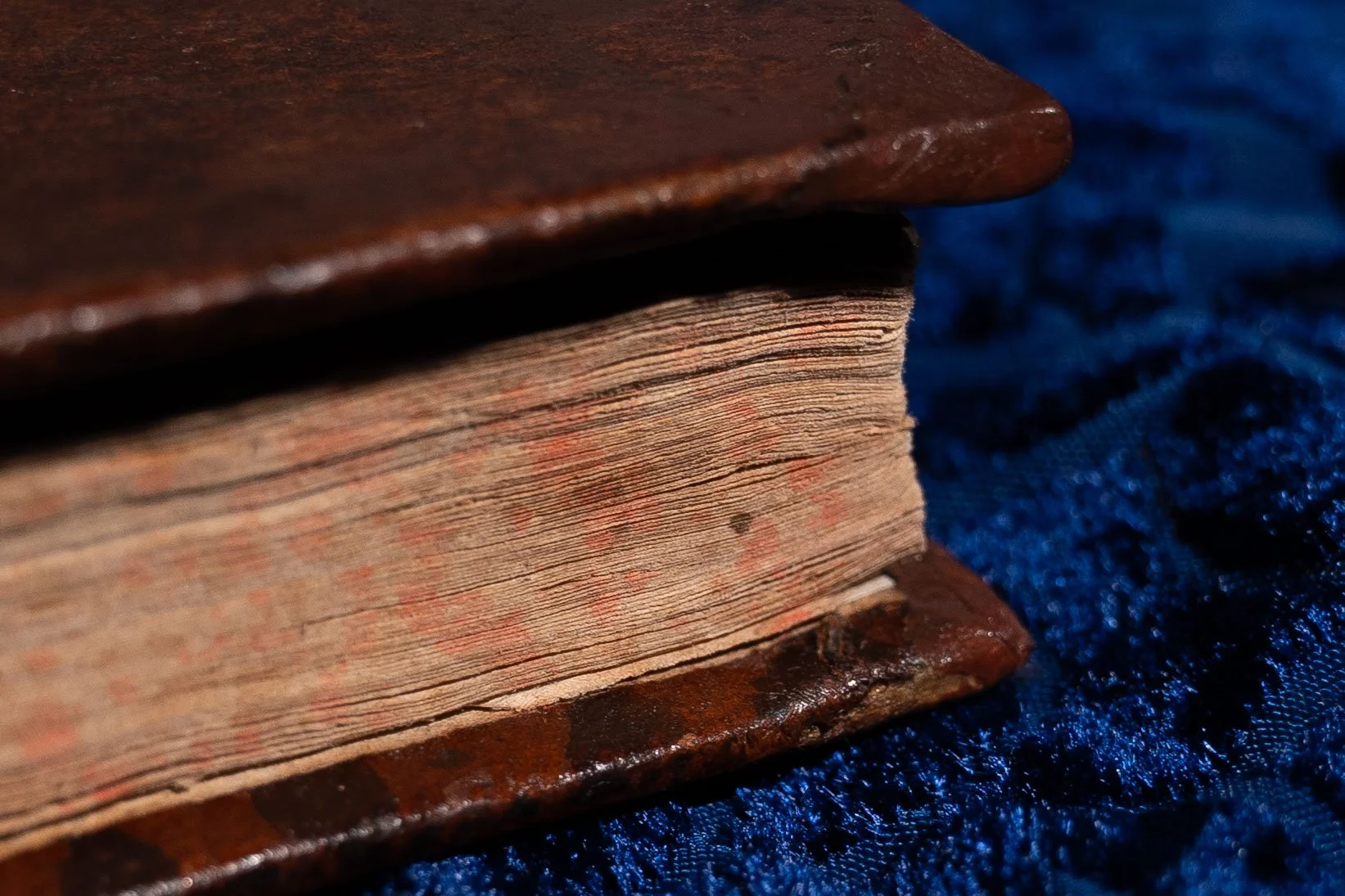 Image 12 of 12