Jacob Böhme, the shoemaker of Görlitz, wrote Aurora, or the Dawn Rising, in 1612 as his very first book, and it remains the founding work of German theosophy. The medieval German mystics, Eckhart and Tauler among them, had mapped the soul's union with God; Böhme attempted something stranger and more dangerous, an account of how God himself, and nature with him, comes to birth. Böhme was a tradesman with little formal learning who believed he had been granted, in a single flash of insight, a view straight into the heart of God and of nature. The result so alarmed the chief pastor of Görlitz that Böhme was forbidden to write at all; the manuscript circulated in secret and made him famous. More than a century later Hegel would call him "the first German philosopher," for daring to think these things in plain German rather than scholar's Latin.
Aurora tries to describe the inner life of God and the birth of the world through seven "qualities" or source-spirits, a churning, almost alchemical drama of desire, wrath, fire and love that forever give birth to one another. It is the spirit of Paracelsus turned into prayer: cosmology, theology and a kind of spiritual chemistry fused into one ecstatic and famously difficult book. Written in the same years as the Rosicrucian Chymical Wedding, it stands at the headwaters of nearly everything later called theosophy, and it left its mark on figures from Newton's circle to the Romantics, Novalis among them.
This is the Aurora as it appeared in the celebrated Amsterdam edition of 1682, the first time Böhme's writings were gathered together, edited by his Dutch disciple Johann Georg Gichtel. It opens with one of the great emblematic engravings of esoteric printing: a vast clock-wheel ringed with the letters of the alphabet and the hours, a radiant all-seeing eye at its centre, the whole revolving above the globe of the earth beneath an opened heaven. The designer of these celebrated figures remained anonymous for three centuries; only in 2002 was he identified, from a manuscript in the Bibliotheca Philosophica Hermetica, as Michael Andreae, a Riga-born alchemist, calligrapher, and devoted reader of Böhme working beside Gichtel in Amsterdam. A preface follows that patiently decodes the figure part by part, then a life of Böhme, and then the full text of the Aurora itself.
The volume is bound in contemporary vellum with the title lettered by hand on the spine, and it carries an unusually distinguished chain of Danish ownership. It bears the bookplate and 1904 note of the philosopher Anton Thomsen, who bought it at the estate sale of Professor L. Schat-Petersen; it later belonged to Ada Adler, editor of the Byzantine Suda and once called "the greatest woman philologist who ever lived"; and it passed by inheritance in 1947 to the church historian Bjørn Kornerup. An early hand has copied Böhme's own couplet onto the endpaper: "To whom time is as eternity, and eternity as time, he is freed from all strife." A cornerstone of the Western esoteric tradition, in an early and desirable printing, with a binding and a provenance worthy of it.
BÖHME, Jacob (1575-1624). Morgenröte im Aufgang (Aurora). In: Des Gottseligen Hocherleuchteten Jacob Böhmens Teutonici Philosophi Alle Theosophische Wercken. Amsterdam, 1682. First collected edition, edited by J. G. Gichtel; the Aurora (Part I) bound separately.
Physical Description: 8vo (15.4 x 9.7 cm). [146], [28], 360, [3] pp. Two engraved title pages and one full-page engraving, the figures designed by Michael Andreae, with engraved initials throughout; letterpress title dated Amsterdam 1682; "Vorbericht wegen der Figur" (explanation of the engraved title) and a Life of the author; the text of the Aurora to its Register, ending "ENDE" at Cap. 26. Gothic (Fraktur) type.
Binding: Contemporary vellum, manuscript title to spine ("Jac. Böhmens Aurora oder Morgenröthe im Aufgang. Amsterdam 1682"), edges stained red.
Condition: Paper lightly browned, the engraved title a little foxed at the edge; several early annotations in the text; an early ink signature to the letterpress title. Binding sound. A very good, complete copy.
Provenance: (1) Professor L. Schat-Petersen (estate sale). (2) Anton Thomsen (1877-1915), Danish philosopher, with his engraved bookplate and ink note dated 19 October 1904. (3) Ada Adler (1878-1946), classical philologist and editor of the Suda. (4) Bjørn Kornerup (1896-1957), church historian, by inheritance from Adler, 29 March 1947. With an early owner's manuscript Böhme couplet to the endpaper.
Jacob Böhme, the shoemaker of Görlitz, wrote Aurora, or the Dawn Rising, in 1612 as his very first book, and it remains the founding work of German theosophy. The medieval German mystics, Eckhart and Tauler among them, had mapped the soul's union with God; Böhme attempted something stranger and more dangerous, an account of how God himself, and nature with him, comes to birth. Böhme was a tradesman with little formal learning who believed he had been granted, in a single flash of insight, a view straight into the heart of God and of nature. The result so alarmed the chief pastor of Görlitz that Böhme was forbidden to write at all; the manuscript circulated in secret and made him famous. More than a century later Hegel would call him "the first German philosopher," for daring to think these things in plain German rather than scholar's Latin.
Aurora tries to describe the inner life of God and the birth of the world through seven "qualities" or source-spirits, a churning, almost alchemical drama of desire, wrath, fire and love that forever give birth to one another. It is the spirit of Paracelsus turned into prayer: cosmology, theology and a kind of spiritual chemistry fused into one ecstatic and famously difficult book. Written in the same years as the Rosicrucian Chymical Wedding, it stands at the headwaters of nearly everything later called theosophy, and it left its mark on figures from Newton's circle to the Romantics, Novalis among them.
This is the Aurora as it appeared in the celebrated Amsterdam edition of 1682, the first time Böhme's writings were gathered together, edited by his Dutch disciple Johann Georg Gichtel. It opens with one of the great emblematic engravings of esoteric printing: a vast clock-wheel ringed with the letters of the alphabet and the hours, a radiant all-seeing eye at its centre, the whole revolving above the globe of the earth beneath an opened heaven. The designer of these celebrated figures remained anonymous for three centuries; only in 2002 was he identified, from a manuscript in the Bibliotheca Philosophica Hermetica, as Michael Andreae, a Riga-born alchemist, calligrapher, and devoted reader of Böhme working beside Gichtel in Amsterdam. A preface follows that patiently decodes the figure part by part, then a life of Böhme, and then the full text of the Aurora itself.
The volume is bound in contemporary vellum with the title lettered by hand on the spine, and it carries an unusually distinguished chain of Danish ownership. It bears the bookplate and 1904 note of the philosopher Anton Thomsen, who bought it at the estate sale of Professor L. Schat-Petersen; it later belonged to Ada Adler, editor of the Byzantine Suda and once called "the greatest woman philologist who ever lived"; and it passed by inheritance in 1947 to the church historian Bjørn Kornerup. An early hand has copied Böhme's own couplet onto the endpaper: "To whom time is as eternity, and eternity as time, he is freed from all strife." A cornerstone of the Western esoteric tradition, in an early and desirable printing, with a binding and a provenance worthy of it.
BÖHME, Jacob (1575-1624). Morgenröte im Aufgang (Aurora). In: Des Gottseligen Hocherleuchteten Jacob Böhmens Teutonici Philosophi Alle Theosophische Wercken. Amsterdam, 1682. First collected edition, edited by J. G. Gichtel; the Aurora (Part I) bound separately.
Physical Description: 8vo (15.4 x 9.7 cm). [146], [28], 360, [3] pp. Two engraved title pages and one full-page engraving, the figures designed by Michael Andreae, with engraved initials throughout; letterpress title dated Amsterdam 1682; "Vorbericht wegen der Figur" (explanation of the engraved title) and a Life of the author; the text of the Aurora to its Register, ending "ENDE" at Cap. 26. Gothic (Fraktur) type.
Binding: Contemporary vellum, manuscript title to spine ("Jac. Böhmens Aurora oder Morgenröthe im Aufgang. Amsterdam 1682"), edges stained red.
Condition: Paper lightly browned, the engraved title a little foxed at the edge; several early annotations in the text; an early ink signature to the letterpress title. Binding sound. A very good, complete copy.
Provenance: (1) Professor L. Schat-Petersen (estate sale). (2) Anton Thomsen (1877-1915), Danish philosopher, with his engraved bookplate and ink note dated 19 October 1904. (3) Ada Adler (1878-1946), classical philologist and editor of the Suda. (4) Bjørn Kornerup (1896-1957), church historian, by inheritance from Adler, 29 March 1947. With an early owner's manuscript Böhme couplet to the endpaper.

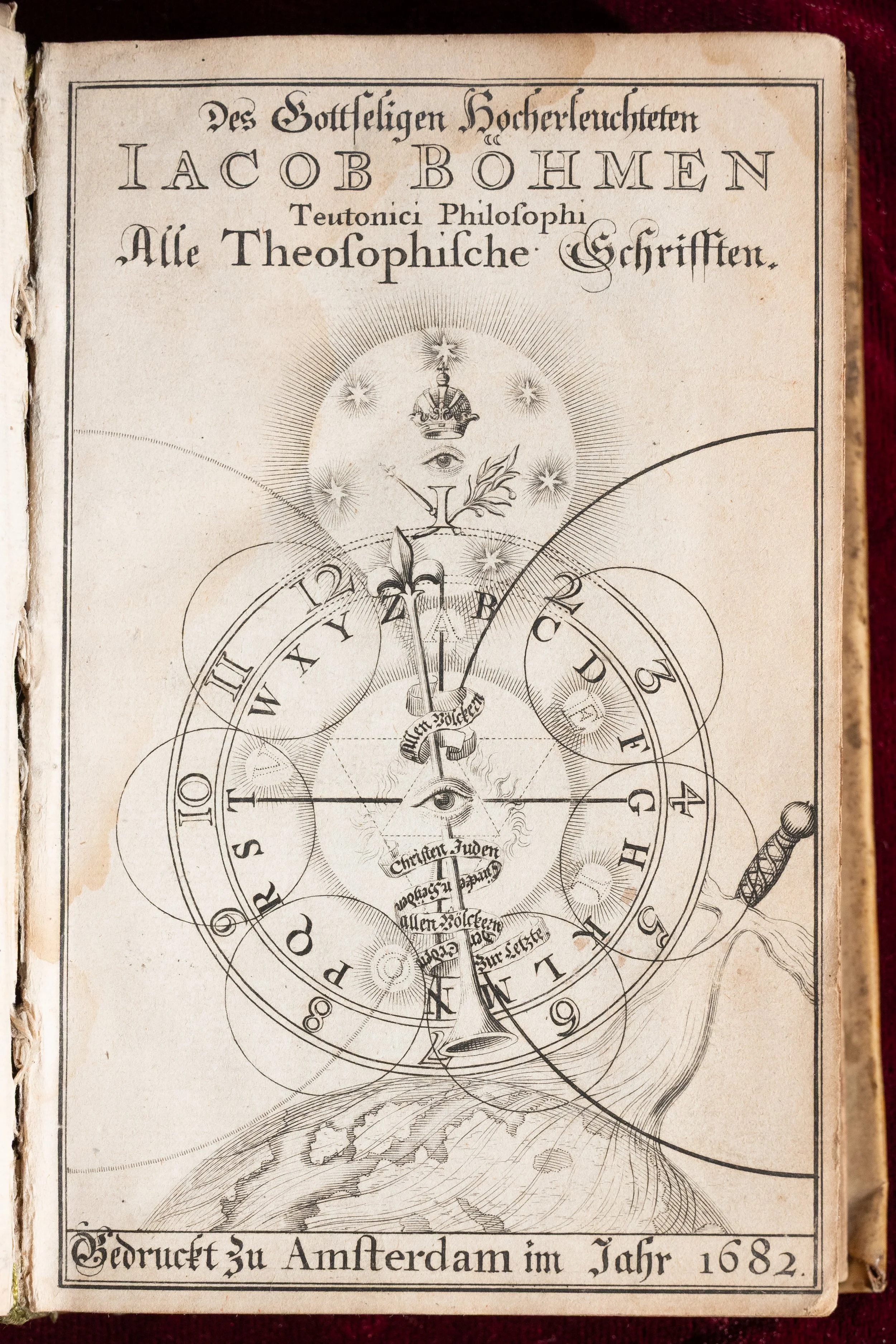 Image 1 of 15
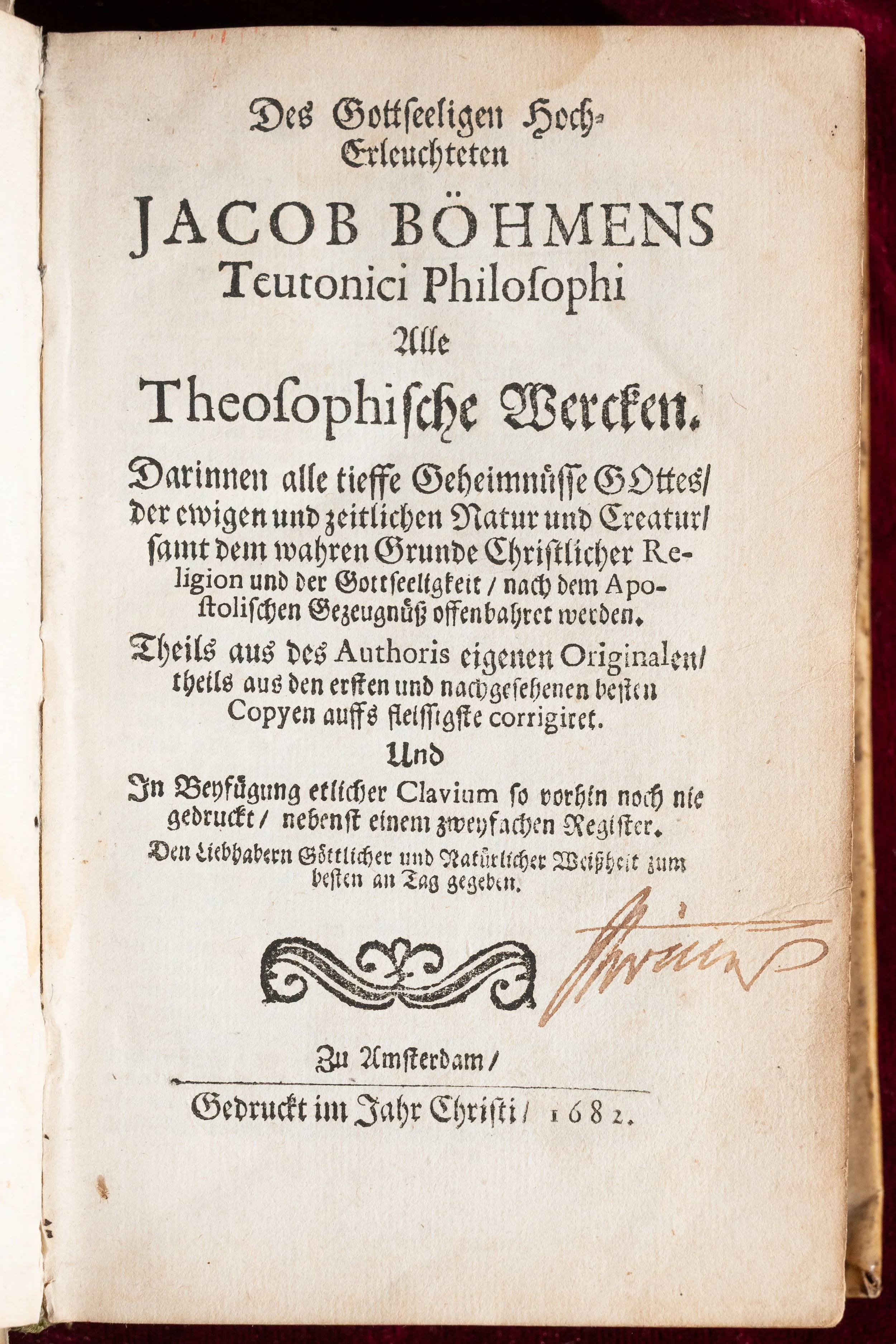 Image 2 of 15
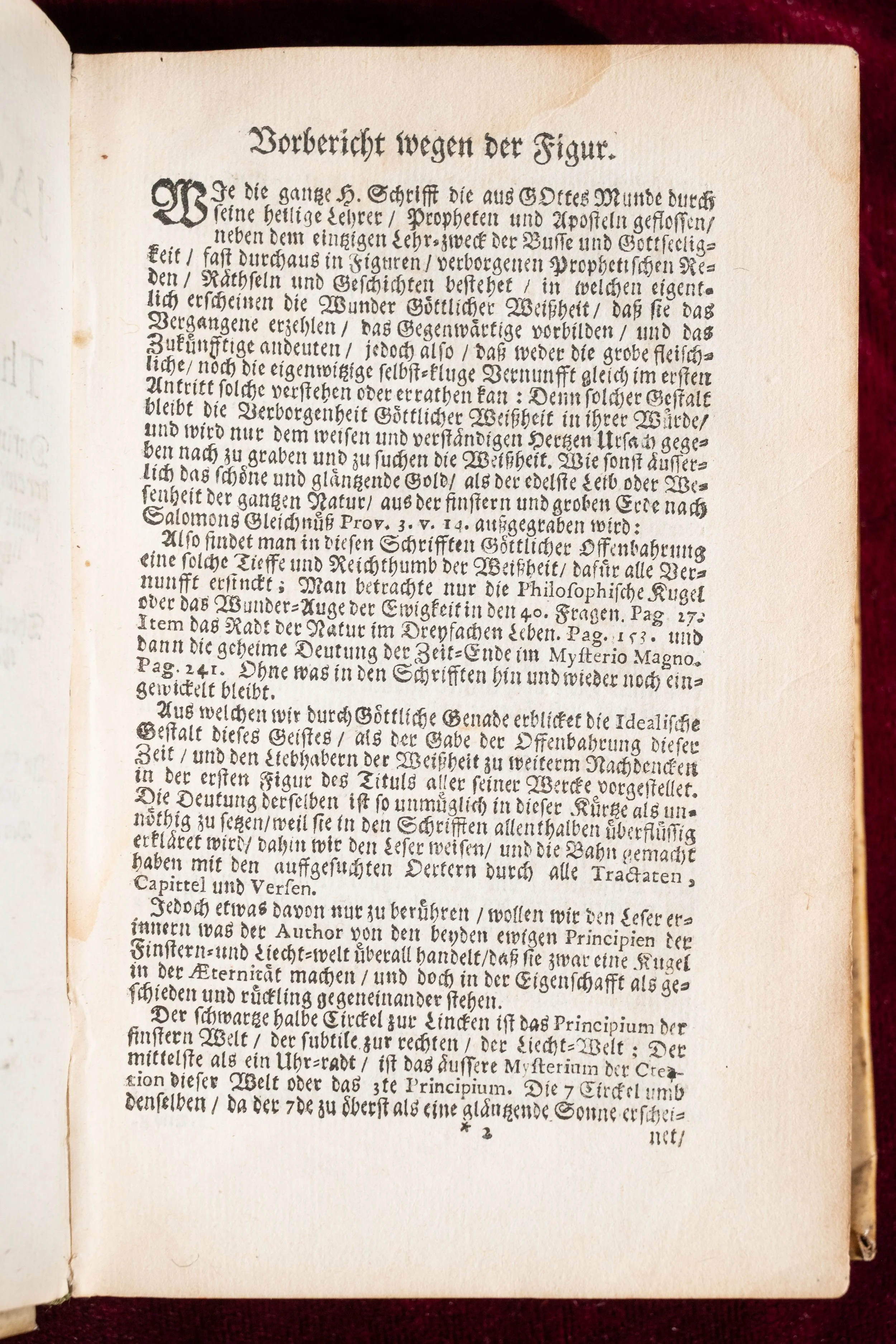 Image 3 of 15
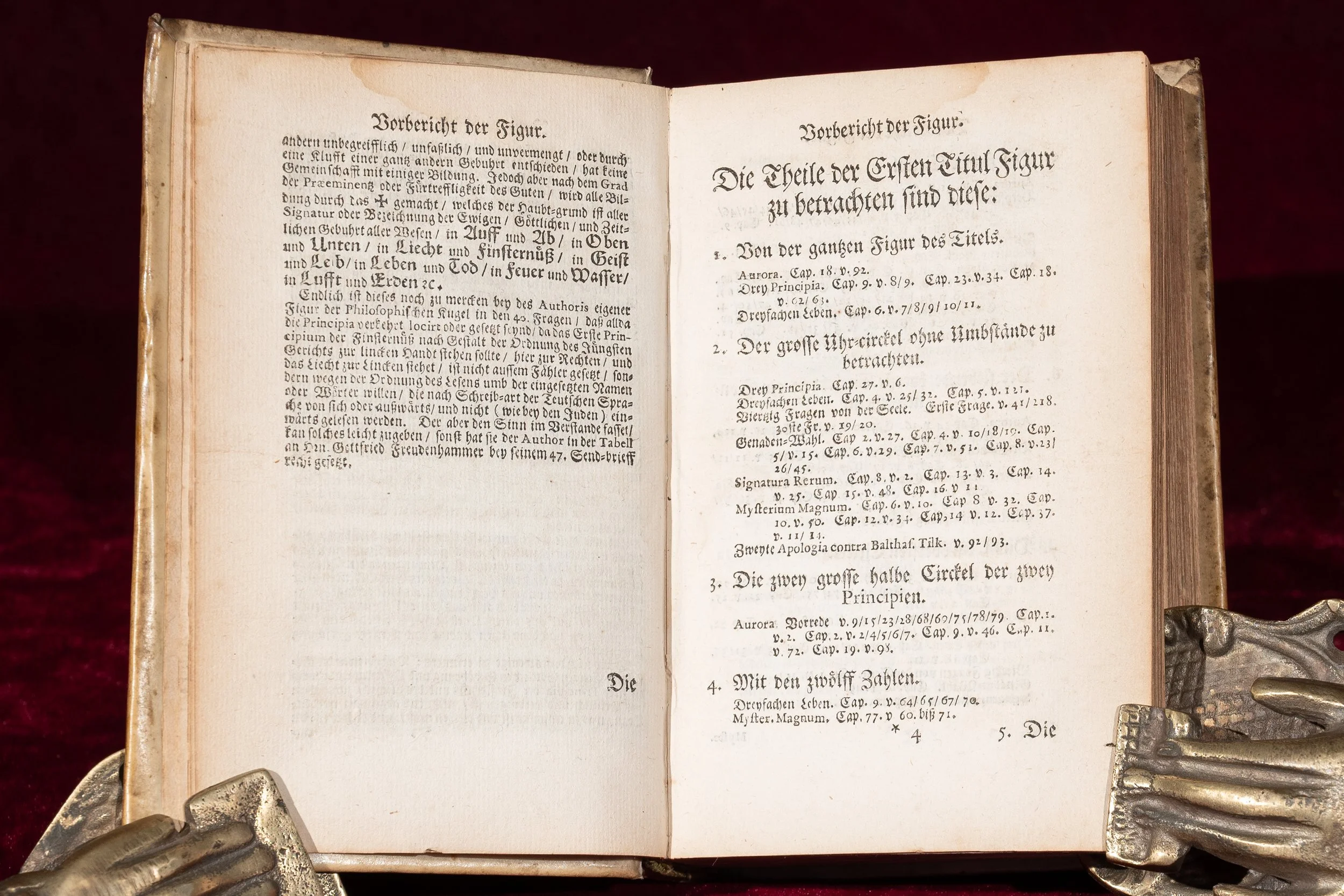 Image 4 of 15
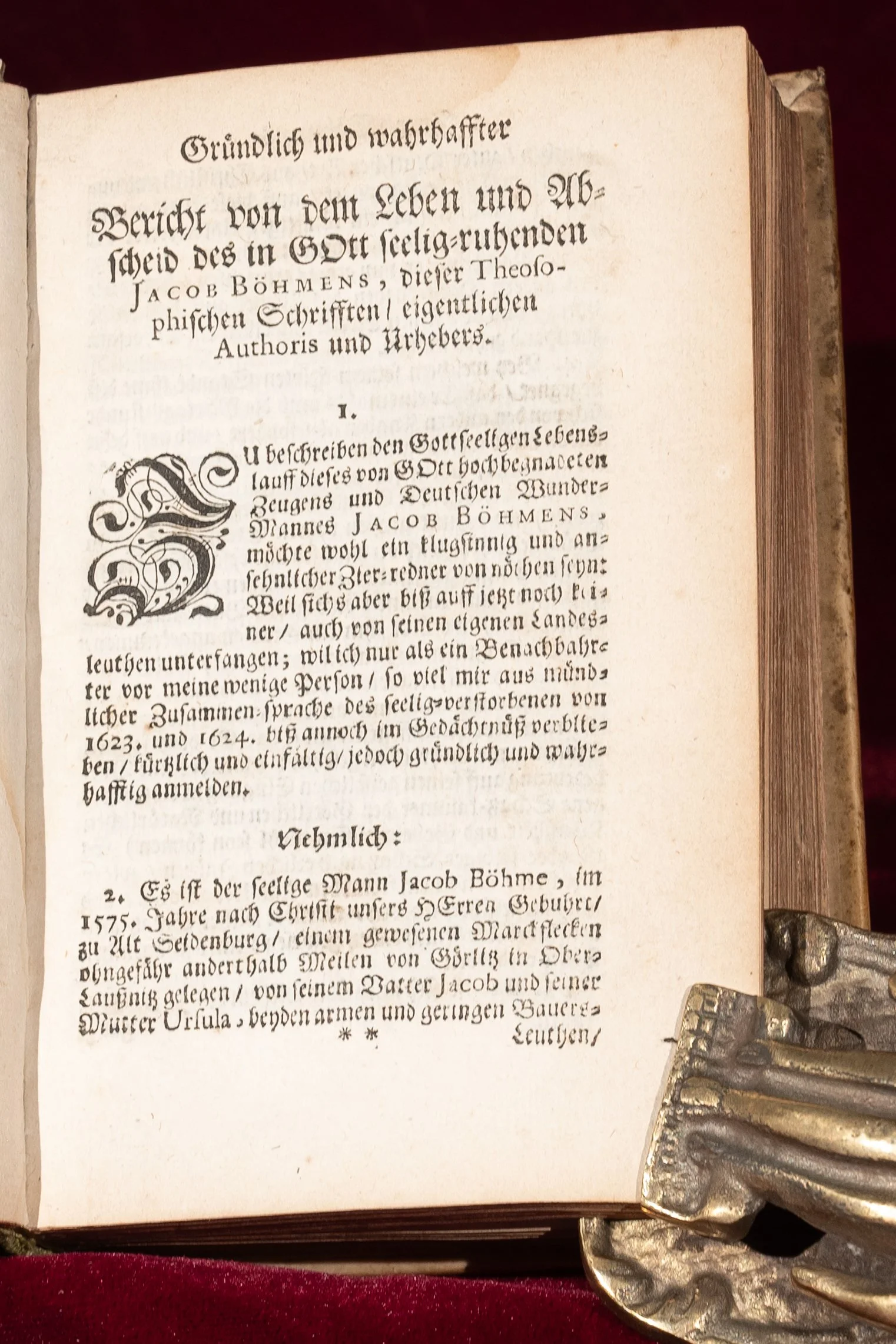 Image 5 of 15
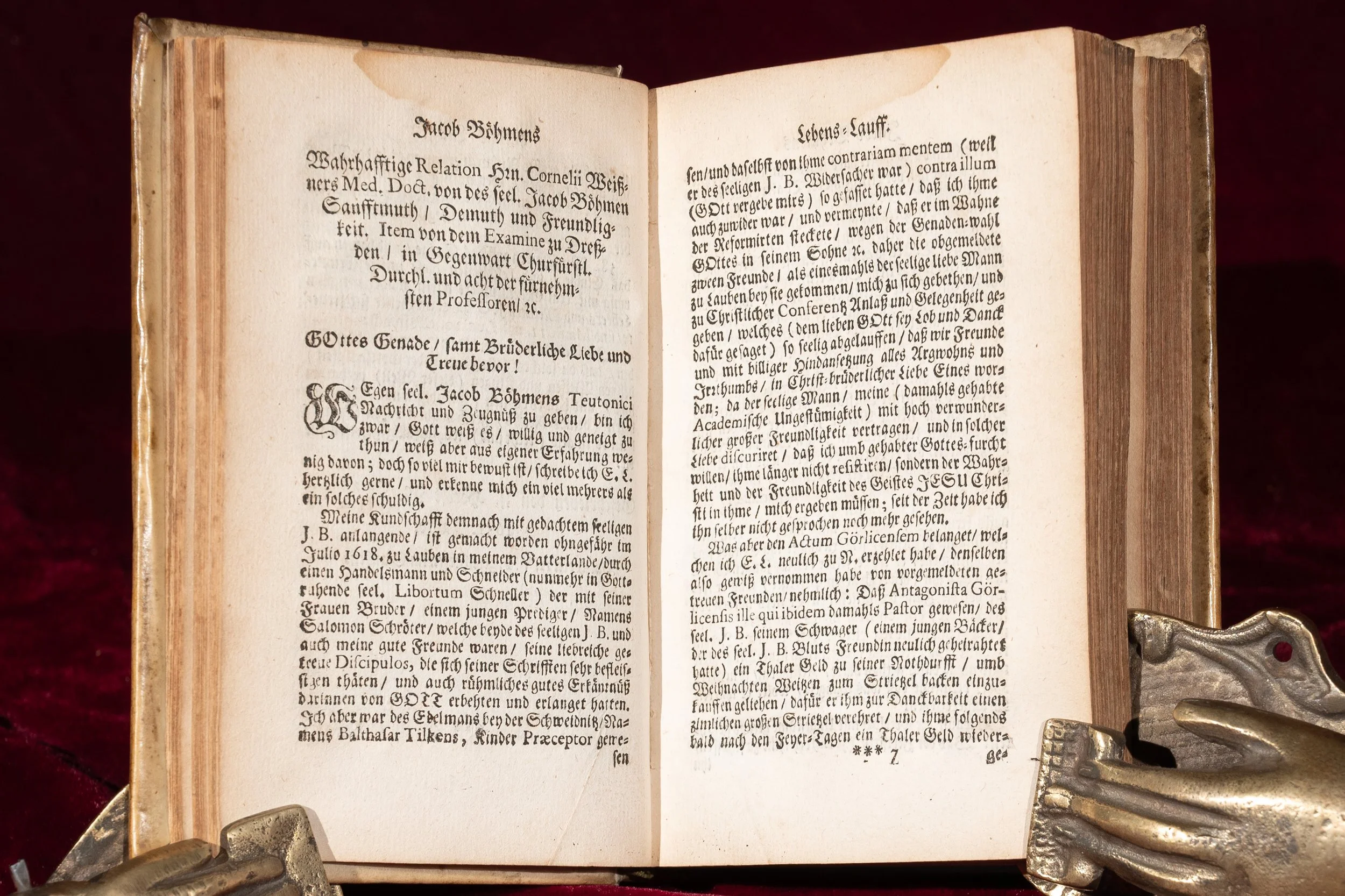 Image 6 of 15
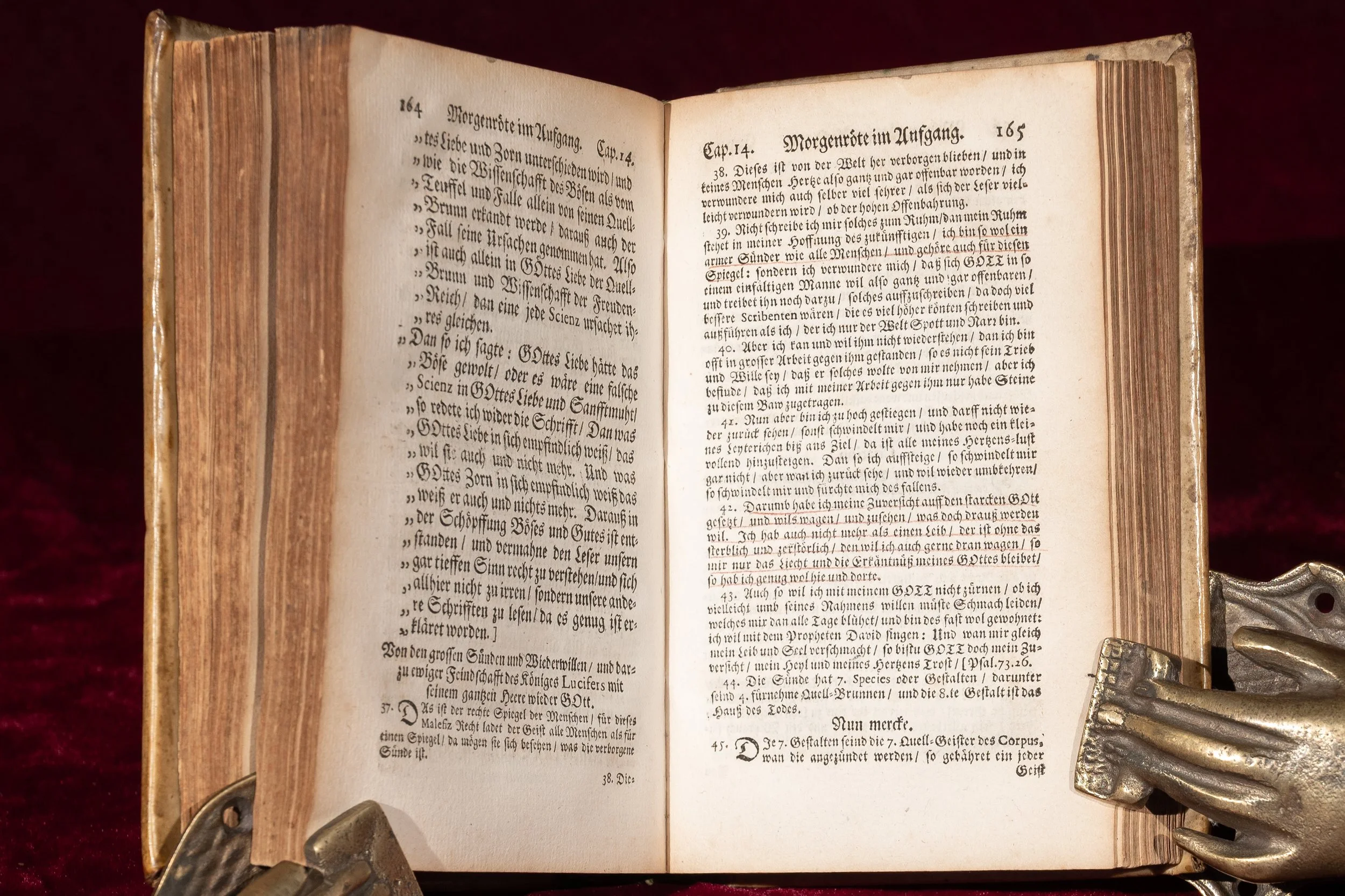 Image 7 of 15
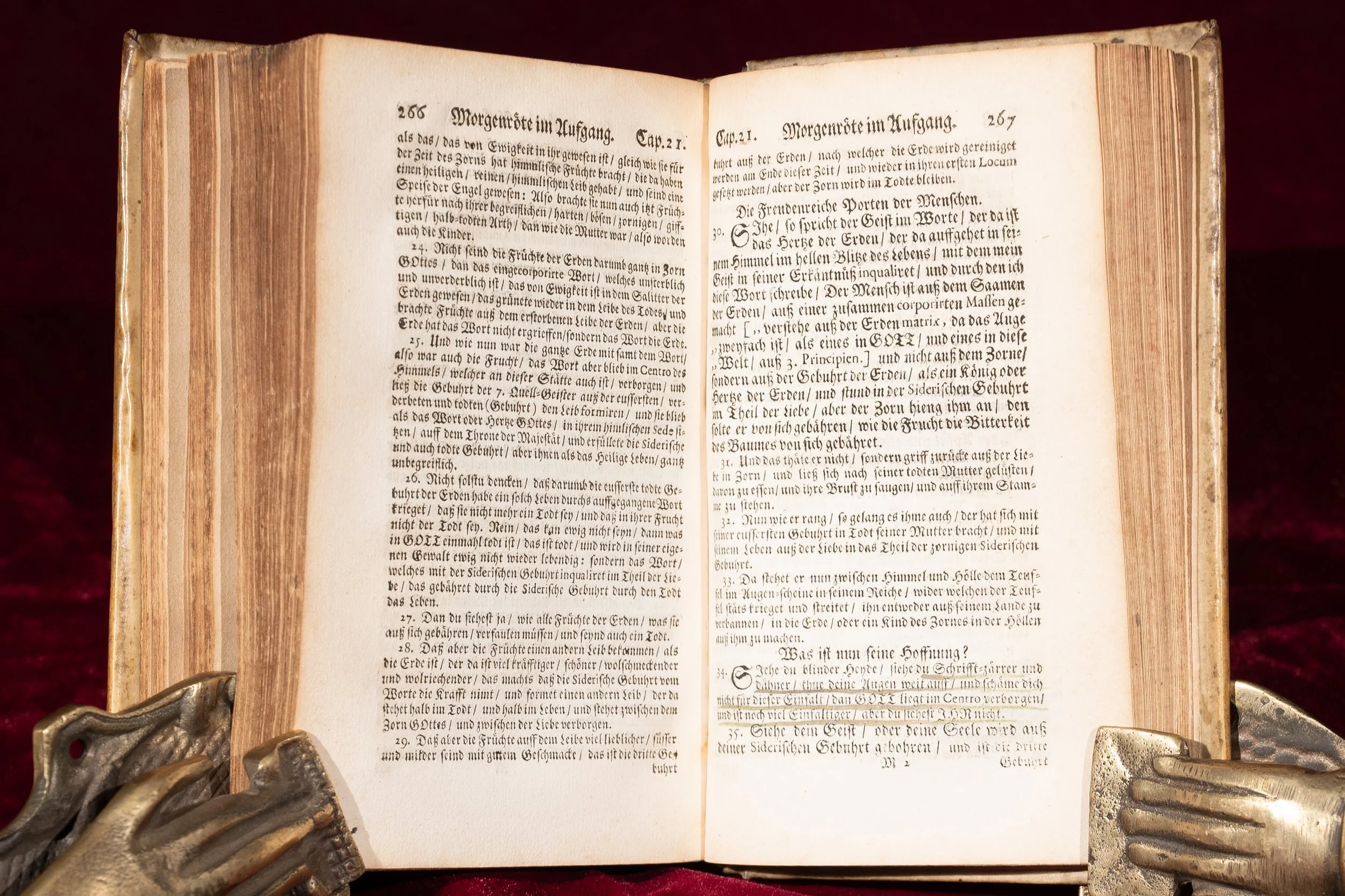 Image 8 of 15
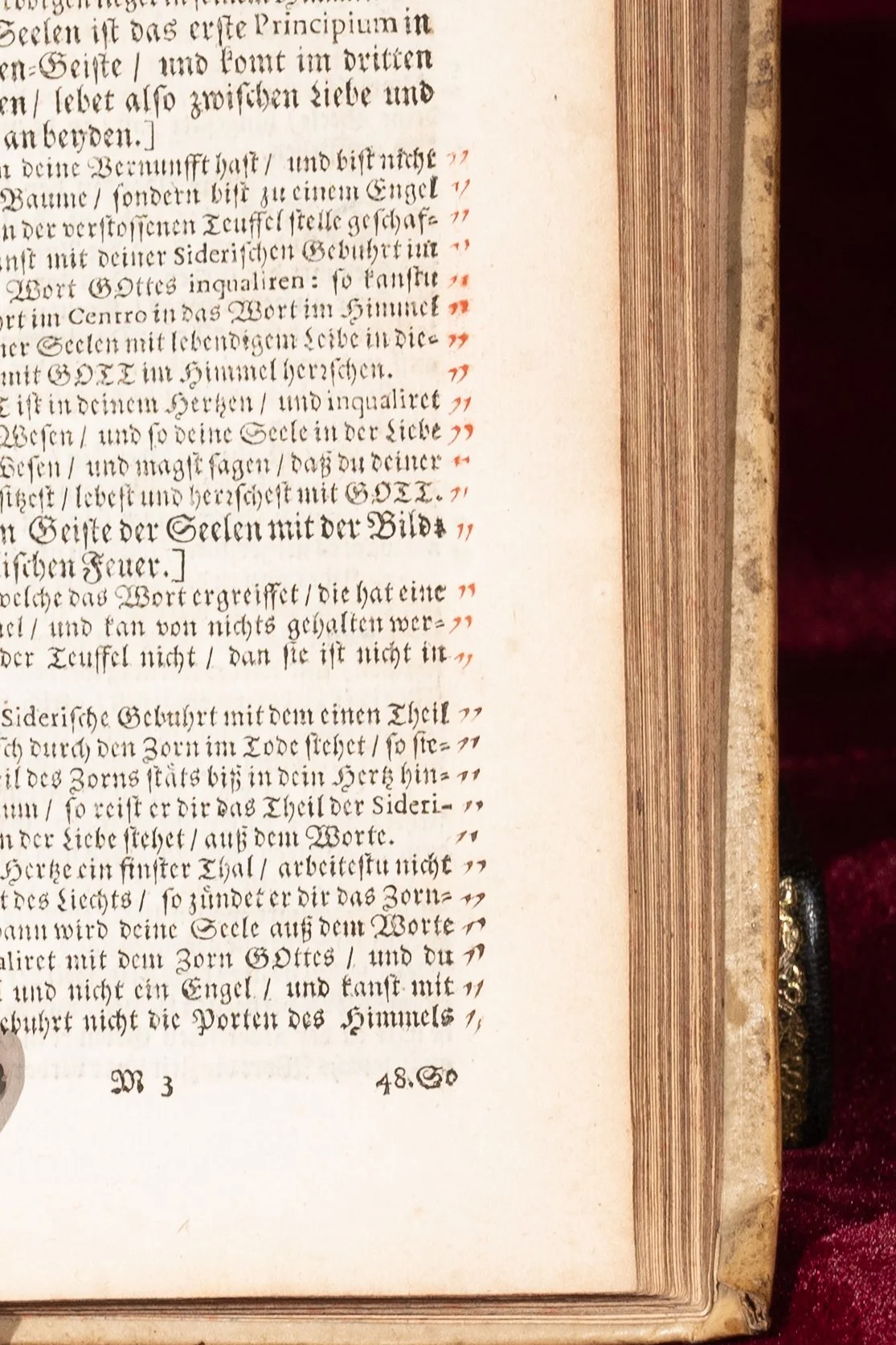 Image 9 of 15
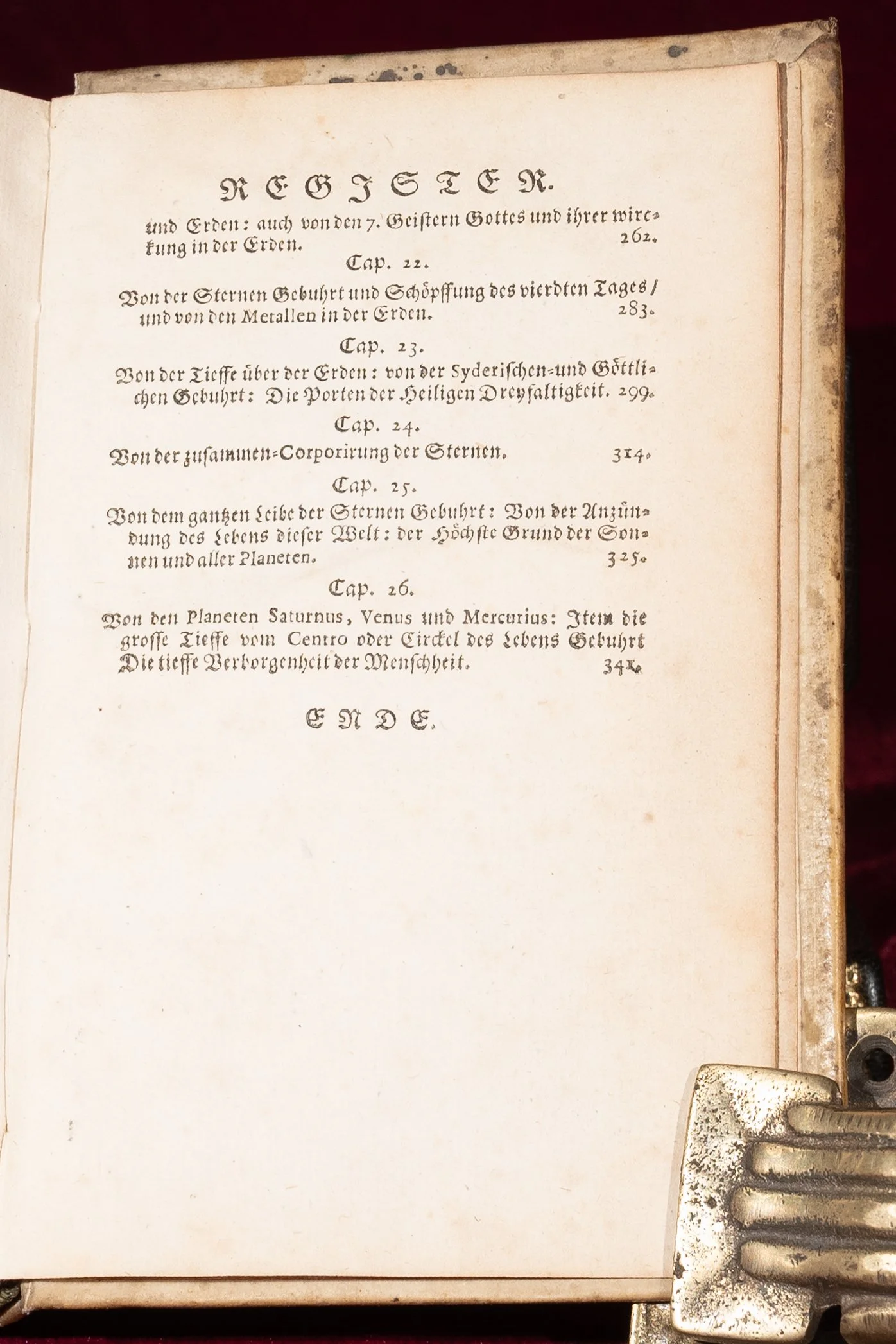 Image 10 of 15
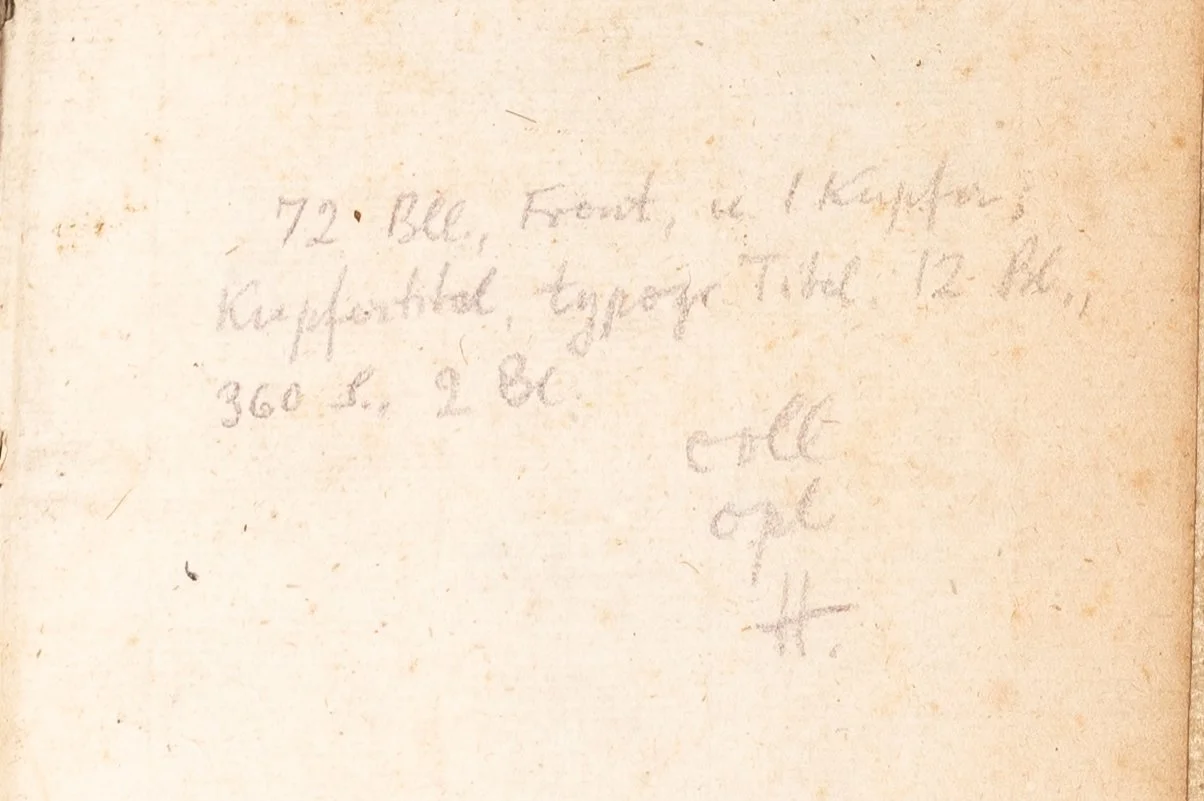 Image 11 of 15
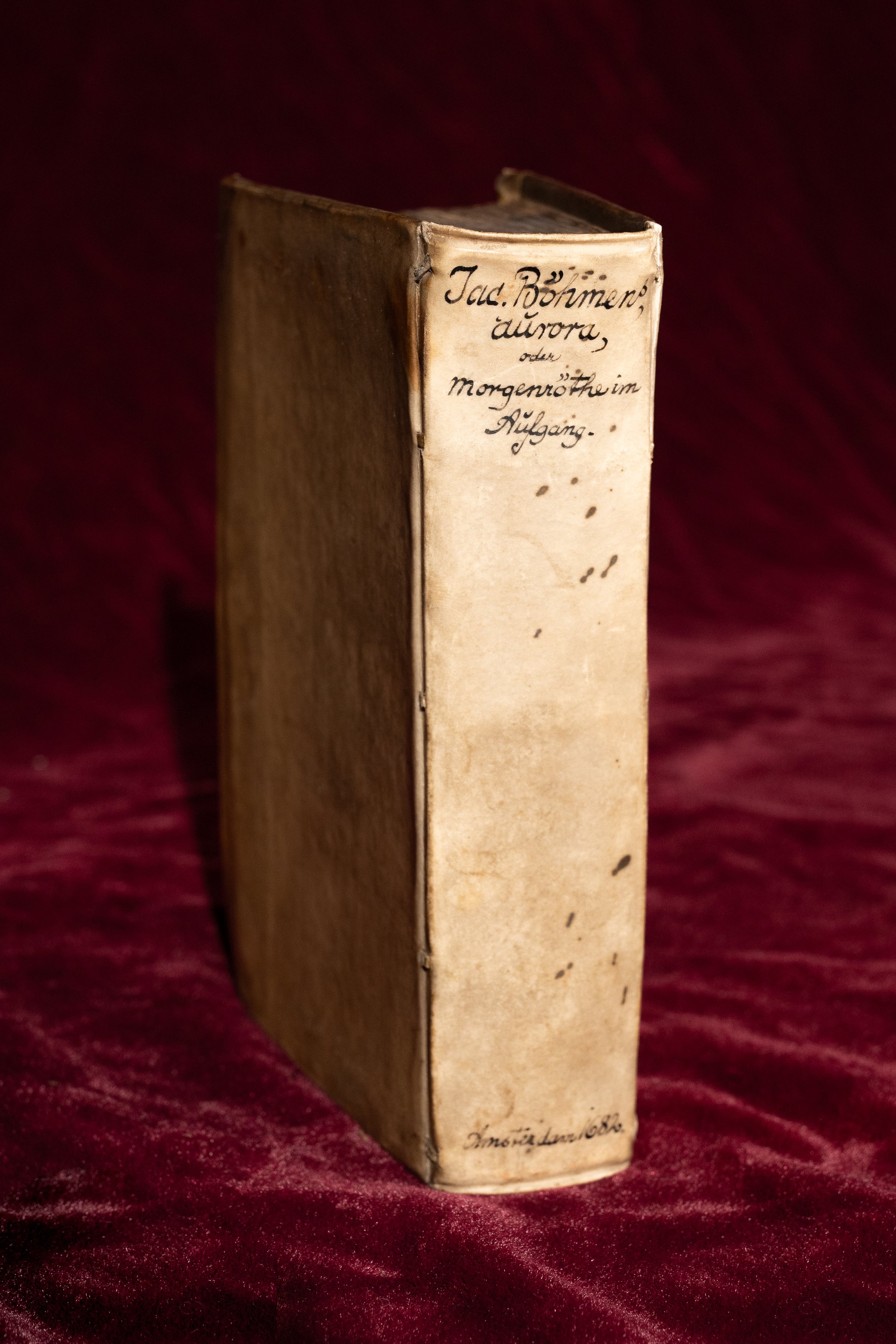 Image 12 of 15
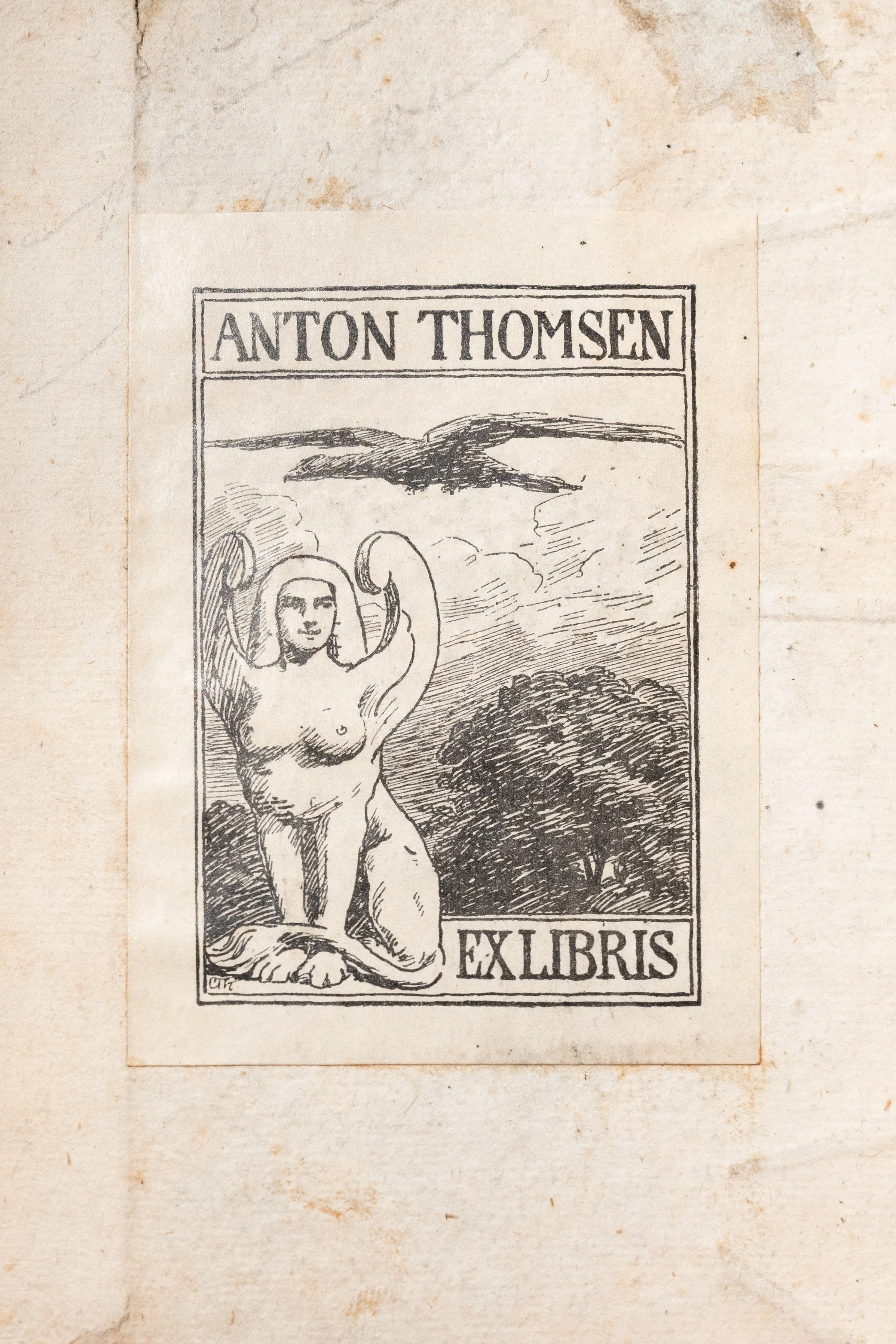 Image 13 of 15
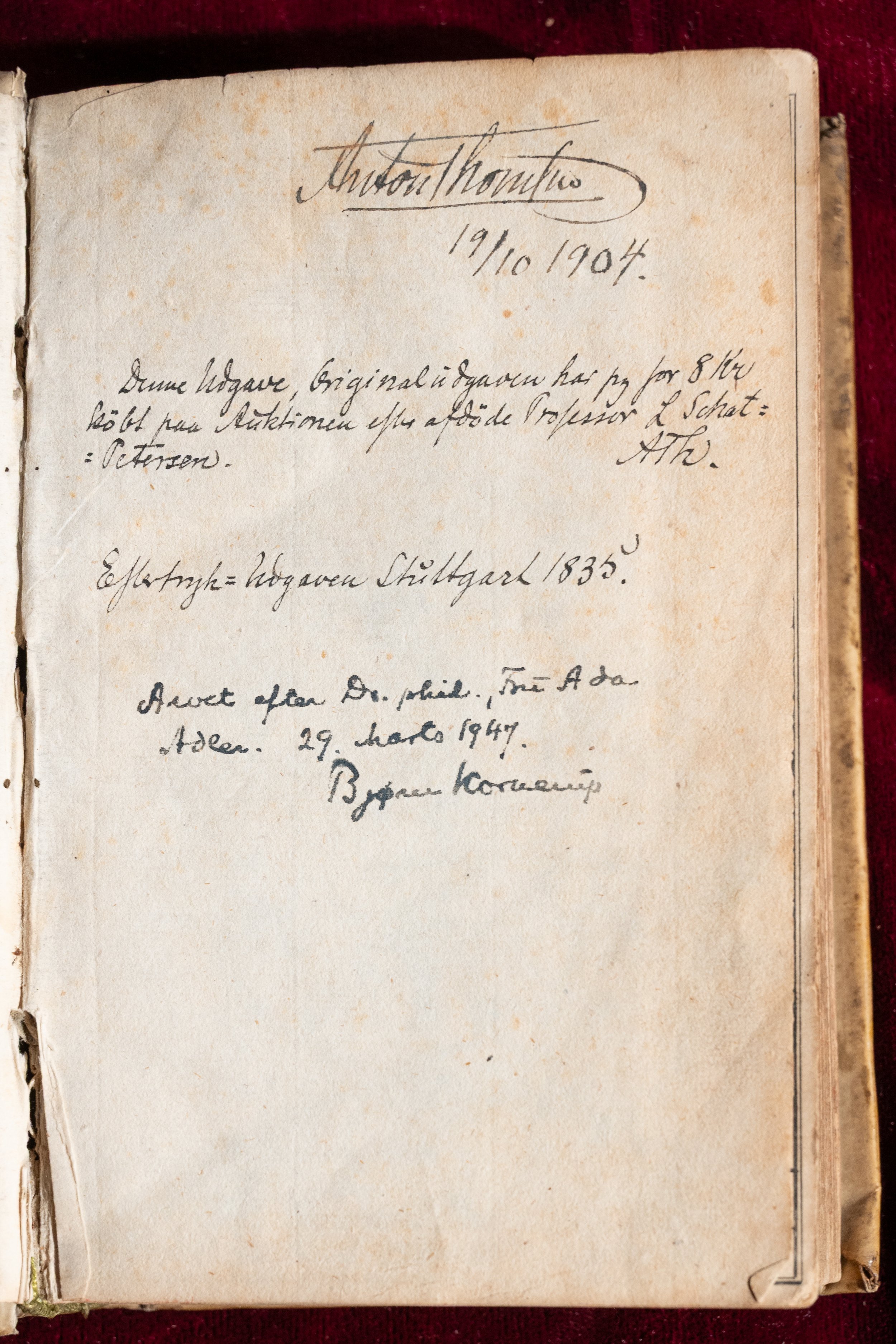 Image 14 of 15
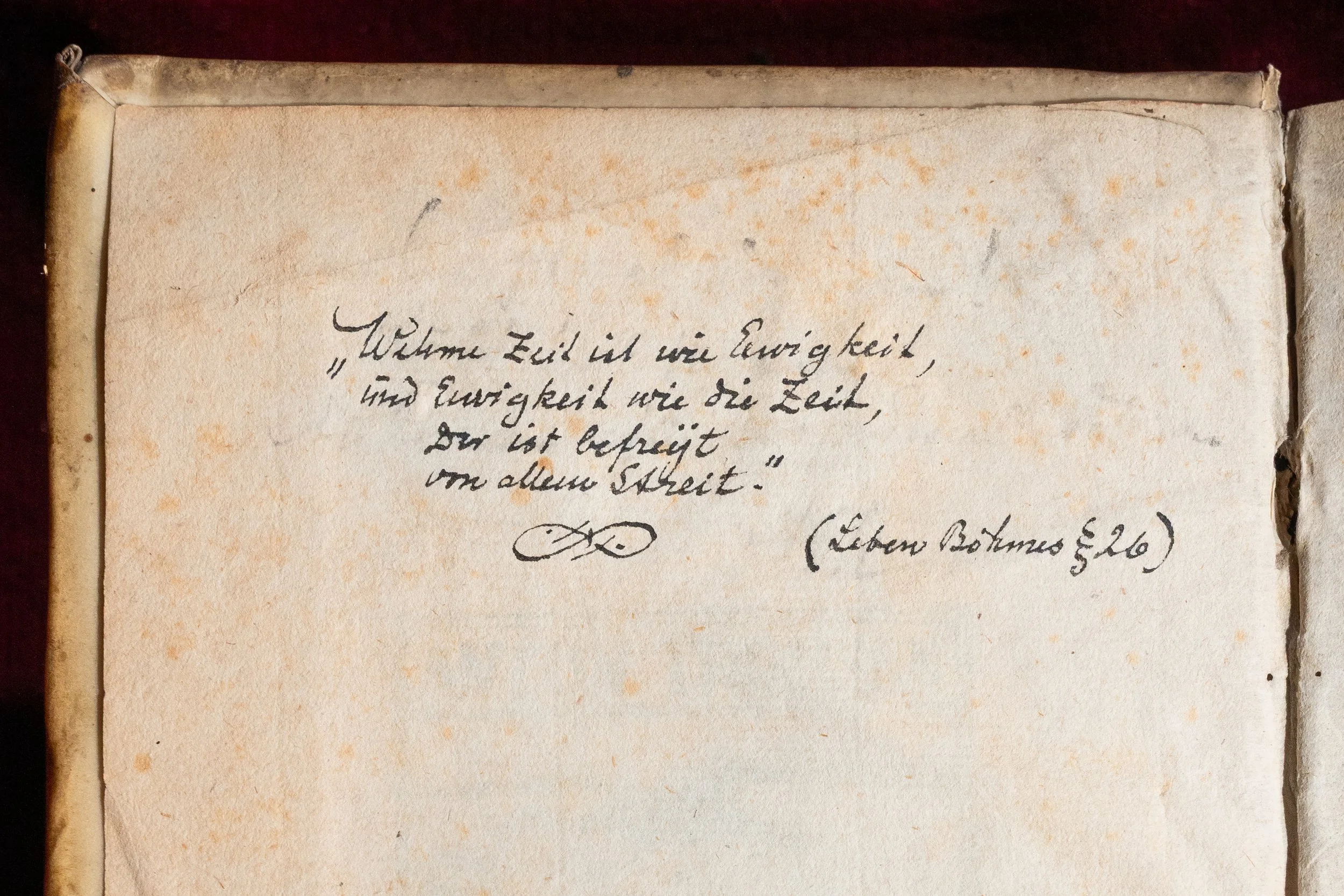 Image 15 of 15