The most substantial collected edition of the celestial revelations of St. Bridget of Sweden (Birgitta Birgersdotter, c. 1303–1373), produced under Bridgettine auspices in Counter-Reformation Bavaria. Birgitta’s Revelationes are among the most widely circulated visionary texts of the later Middle Ages, some seven hundred visions received over nearly thirty years, ranging from intimate mystical dialogues with Christ and the Virgin to pointed political interventions directed at popes and kings. Canonized in 1391 by Boniface IX, Birgitta was declared co-patroness of Europe in 2000, alongside Catherine of Siena and Edith Stein. Her revelations shaped devotional practice across Europe and exercised a remarkable influence on the iconography of the Nativity: her detailed vision of the infant Christ lying on clean swaddling clothes, emitting his own light, effectively rewrote how painters from the fifteenth century onward imagined the scene.
This 1680 Munich edition was prepared by Simon Hörmann, Prior and Confessor General of the Bridgettine house at Altomünster, the last surviving monastery of the Order in Germany. Altomünster’s Bridgettine community had been established in 1496 and would endure, astonishingly, through the secularization of 1803 (briefly dissolving and then reconstituting itself), surviving all the way until its final closure in 2015, at which point scholars discovered an essentially untouched medieval library of over five hundred volumes, described as “like entering a time capsule.” The present edition was thus produced at the institutional heart of German Bridgettine life, by a figure with both scholarly authority and pastoral investment in the text.
The scholarly apparatus is formidable. The text carries the recognition and defense of Cardinal Juan de Torquemada (Johannes de Turrecremata, 1388–1468), uncle of the more notorious Inquisitor, and himself a major figure in fifteenth-century ecclesiology, whose Defensorium argued for the orthodoxy of Birgitta’s visions against considerable skepticism. To this is added the extensive treatise De Visionibus, Revelationibus, et Apparitionibus by Consalvo Duranto (d. 1643), Bishop of Feretrano, which amounts to a systematic theology of visionary experience: its twelve chapters treat the nature of ecstasy and rapture, the criteria for distinguishing divine from demonic visions, and the evidentiary standards by which private revelations might be judged. Duranto’s notes, first published in the 1606 Roman edition and carried forward through the Antwerp (1611), Cologne (1628), and present Munich editions, effectively frame Birgitta’s visions within the Counter-Reformation’s careful management of mystical claims, the same intellectual territory that would preoccupy figures from Teresa of Ávila to the Bollandists.
The volume also includes the Bull of Canonization by Boniface IX, the Confirmation by Eugene IV (1433), the Regula Salvatoris (the Rule of the Bridgettine Order), the Sermo Angelicus, the Revelationes Extravagantes, lives of both Birgitta and her daughter St. Catherine, and the miracles performed at Birgitta’s tomb in Nola and Rome. The quadruple index, Biblical, Theological, Concionatory, and Verbal, is a substantial scholarly tool in its own right, designed to make the Revelationes serviceable for preachers as much as for contemplatives.
For scholars of Western esotericism, the interest here is less in the occult proper than in the broader history of visionary epistemology and the discernment of spirits, a problem that connects the Bridgettine revelations to traditions of prophetic authority, pneumatology, and the contested boundaries between sanctioned mysticism and heterodox inspiration. Duranto’s treatise is particularly valuable in this regard, offering a Counter-Reformation map of the territory between legitimate revelation and diabolical illusion that resonates across the period’s engagement with apparitions, prophecy, and what would eventually become the modern categories of the “paranormal.”
The printing history of Birgitta’s Revelationes is distinguished: the editio princeps was published at Lübeck by Bartholomaeus Ghotan in 1492, with woodcuts variously attributed to Dürer and the Master of the Bergmann Printing House, followed by editions at Nuremberg (1500–1521), Rome (1556, 1606, 1608), Antwerp (1611), and Cologne (1628). The present Munich edition, printed with the privilege of the Elector of Bavaria and based on the Roman exemplars, represents the culmination of the Duranto editorial tradition and the most heavily annotated and indexed version of the complete text produced in the seventeenth century.
As a physical object, the book is imposing: a thick small folio in its original Bavarian pigskin binding, retaining one of its two clasps, with fine woodcut ornaments and a striking red-and-black title page. The binding’s blind-stamped rolls and central devices are characteristic of south German monastic workshops of the period, and the volume’s heft and durability suggest it was built for institutional use, precisely the kind of copy that would have served a Bridgettine community for generations.
BRIDGET OF SWEDEN (Birgitta Suecica, c. 1303–1373). Revelationes Caelestes Seraphicae Matris S. Birgittae Suecae, Sponsae Christi Praeelectae, Ordinis Sponsi Sui SS. Salvatoris Fundatricis. Olim ab Eminentissimo Domino Ioanne Cardinale de Turrecremata recognitae & approbatae. A Reverendissimo Consalvo Duranto Episcopo Feretrano insigni Tractatu de Visionibus, Revelationibus, Apparitionibus, Ecstasi, & Raptu, ac plurimis Notis, eruditissimè illustratae. Opera F. Simonis Hörmann Bavari Ordinis SS. Salvatoris & S. Birgittae Prioris, & Confessoris Generalis in Altomünster. Munich: Sumptibus Joannis Wagneri, & Joannis Hermanni à Gelder, Bibliopolorum Monacensium. Typis Sebastiani Rauch. 1680.
Physical Description: Small folio (c. 8 × 13¼ inches). Title page printed in red and black. [24] pp. (including errata), 145, 863, [118] pp. Text in double columns with extensive marginal notations keyed alphabetically. Woodcut headpieces, tailpieces, and decorated initials throughout. Quadruple index: Biblical, Theological, Concionatory (homiletic), and Verbal.
Binding: Contemporary blind-stamped pigskin over wooden boards. Spine with raised bands and later paper title label. One of two original brass clasps present (the other wanting, with anchor plate remaining). Boards show typical roll-stamped foliate borders with central ornamental device.
Condition: Very good. Binding solid and structurally sound; pigskin shows age-toning and minor surface wear consistent with use, with some small losses at board edges and spine extremities. Text block clean and firm, with only occasional light foxing or minor spotting. Title page bright, with the red-and-black printing well preserved. A handsome, well-preserved copy.
The most substantial collected edition of the celestial revelations of St. Bridget of Sweden (Birgitta Birgersdotter, c. 1303–1373), produced under Bridgettine auspices in Counter-Reformation Bavaria. Birgitta’s Revelationes are among the most widely circulated visionary texts of the later Middle Ages, some seven hundred visions received over nearly thirty years, ranging from intimate mystical dialogues with Christ and the Virgin to pointed political interventions directed at popes and kings. Canonized in 1391 by Boniface IX, Birgitta was declared co-patroness of Europe in 2000, alongside Catherine of Siena and Edith Stein. Her revelations shaped devotional practice across Europe and exercised a remarkable influence on the iconography of the Nativity: her detailed vision of the infant Christ lying on clean swaddling clothes, emitting his own light, effectively rewrote how painters from the fifteenth century onward imagined the scene.
This 1680 Munich edition was prepared by Simon Hörmann, Prior and Confessor General of the Bridgettine house at Altomünster, the last surviving monastery of the Order in Germany. Altomünster’s Bridgettine community had been established in 1496 and would endure, astonishingly, through the secularization of 1803 (briefly dissolving and then reconstituting itself), surviving all the way until its final closure in 2015, at which point scholars discovered an essentially untouched medieval library of over five hundred volumes, described as “like entering a time capsule.” The present edition was thus produced at the institutional heart of German Bridgettine life, by a figure with both scholarly authority and pastoral investment in the text.
The scholarly apparatus is formidable. The text carries the recognition and defense of Cardinal Juan de Torquemada (Johannes de Turrecremata, 1388–1468), uncle of the more notorious Inquisitor, and himself a major figure in fifteenth-century ecclesiology, whose Defensorium argued for the orthodoxy of Birgitta’s visions against considerable skepticism. To this is added the extensive treatise De Visionibus, Revelationibus, et Apparitionibus by Consalvo Duranto (d. 1643), Bishop of Feretrano, which amounts to a systematic theology of visionary experience: its twelve chapters treat the nature of ecstasy and rapture, the criteria for distinguishing divine from demonic visions, and the evidentiary standards by which private revelations might be judged. Duranto’s notes, first published in the 1606 Roman edition and carried forward through the Antwerp (1611), Cologne (1628), and present Munich editions, effectively frame Birgitta’s visions within the Counter-Reformation’s careful management of mystical claims, the same intellectual territory that would preoccupy figures from Teresa of Ávila to the Bollandists.
The volume also includes the Bull of Canonization by Boniface IX, the Confirmation by Eugene IV (1433), the Regula Salvatoris (the Rule of the Bridgettine Order), the Sermo Angelicus, the Revelationes Extravagantes, lives of both Birgitta and her daughter St. Catherine, and the miracles performed at Birgitta’s tomb in Nola and Rome. The quadruple index, Biblical, Theological, Concionatory, and Verbal, is a substantial scholarly tool in its own right, designed to make the Revelationes serviceable for preachers as much as for contemplatives.
For scholars of Western esotericism, the interest here is less in the occult proper than in the broader history of visionary epistemology and the discernment of spirits, a problem that connects the Bridgettine revelations to traditions of prophetic authority, pneumatology, and the contested boundaries between sanctioned mysticism and heterodox inspiration. Duranto’s treatise is particularly valuable in this regard, offering a Counter-Reformation map of the territory between legitimate revelation and diabolical illusion that resonates across the period’s engagement with apparitions, prophecy, and what would eventually become the modern categories of the “paranormal.”
The printing history of Birgitta’s Revelationes is distinguished: the editio princeps was published at Lübeck by Bartholomaeus Ghotan in 1492, with woodcuts variously attributed to Dürer and the Master of the Bergmann Printing House, followed by editions at Nuremberg (1500–1521), Rome (1556, 1606, 1608), Antwerp (1611), and Cologne (1628). The present Munich edition, printed with the privilege of the Elector of Bavaria and based on the Roman exemplars, represents the culmination of the Duranto editorial tradition and the most heavily annotated and indexed version of the complete text produced in the seventeenth century.
As a physical object, the book is imposing: a thick small folio in its original Bavarian pigskin binding, retaining one of its two clasps, with fine woodcut ornaments and a striking red-and-black title page. The binding’s blind-stamped rolls and central devices are characteristic of south German monastic workshops of the period, and the volume’s heft and durability suggest it was built for institutional use, precisely the kind of copy that would have served a Bridgettine community for generations.
BRIDGET OF SWEDEN (Birgitta Suecica, c. 1303–1373). Revelationes Caelestes Seraphicae Matris S. Birgittae Suecae, Sponsae Christi Praeelectae, Ordinis Sponsi Sui SS. Salvatoris Fundatricis. Olim ab Eminentissimo Domino Ioanne Cardinale de Turrecremata recognitae & approbatae. A Reverendissimo Consalvo Duranto Episcopo Feretrano insigni Tractatu de Visionibus, Revelationibus, Apparitionibus, Ecstasi, & Raptu, ac plurimis Notis, eruditissimè illustratae. Opera F. Simonis Hörmann Bavari Ordinis SS. Salvatoris & S. Birgittae Prioris, & Confessoris Generalis in Altomünster. Munich: Sumptibus Joannis Wagneri, & Joannis Hermanni à Gelder, Bibliopolorum Monacensium. Typis Sebastiani Rauch. 1680.
Physical Description: Small folio (c. 8 × 13¼ inches). Title page printed in red and black. [24] pp. (including errata), 145, 863, [118] pp. Text in double columns with extensive marginal notations keyed alphabetically. Woodcut headpieces, tailpieces, and decorated initials throughout. Quadruple index: Biblical, Theological, Concionatory (homiletic), and Verbal.
Binding: Contemporary blind-stamped pigskin over wooden boards. Spine with raised bands and later paper title label. One of two original brass clasps present (the other wanting, with anchor plate remaining). Boards show typical roll-stamped foliate borders with central ornamental device.
Condition: Very good. Binding solid and structurally sound; pigskin shows age-toning and minor surface wear consistent with use, with some small losses at board edges and spine extremities. Text block clean and firm, with only occasional light foxing or minor spotting. Title page bright, with the red-and-black printing well preserved. A handsome, well-preserved copy.

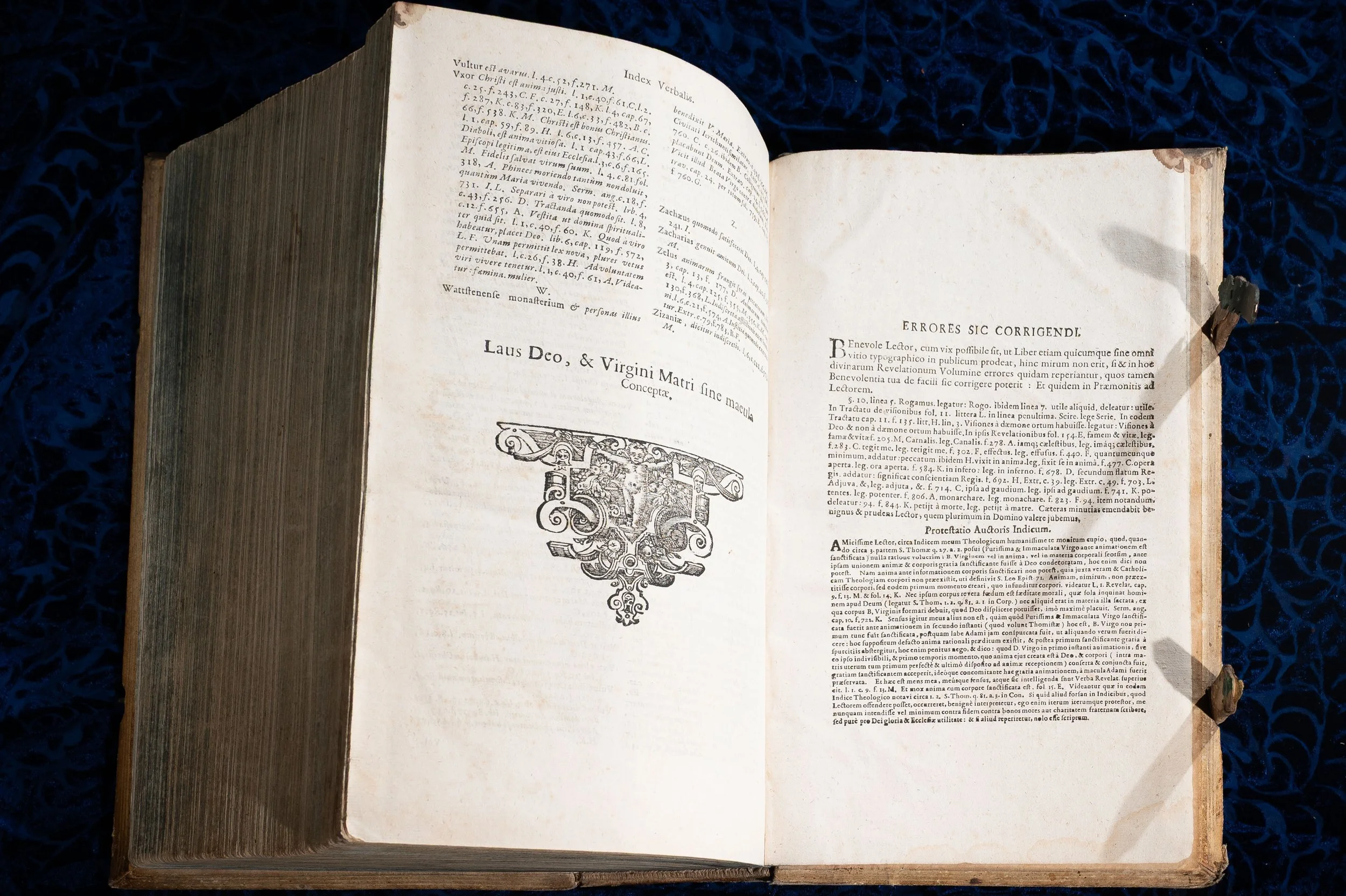 Image 1 of 15
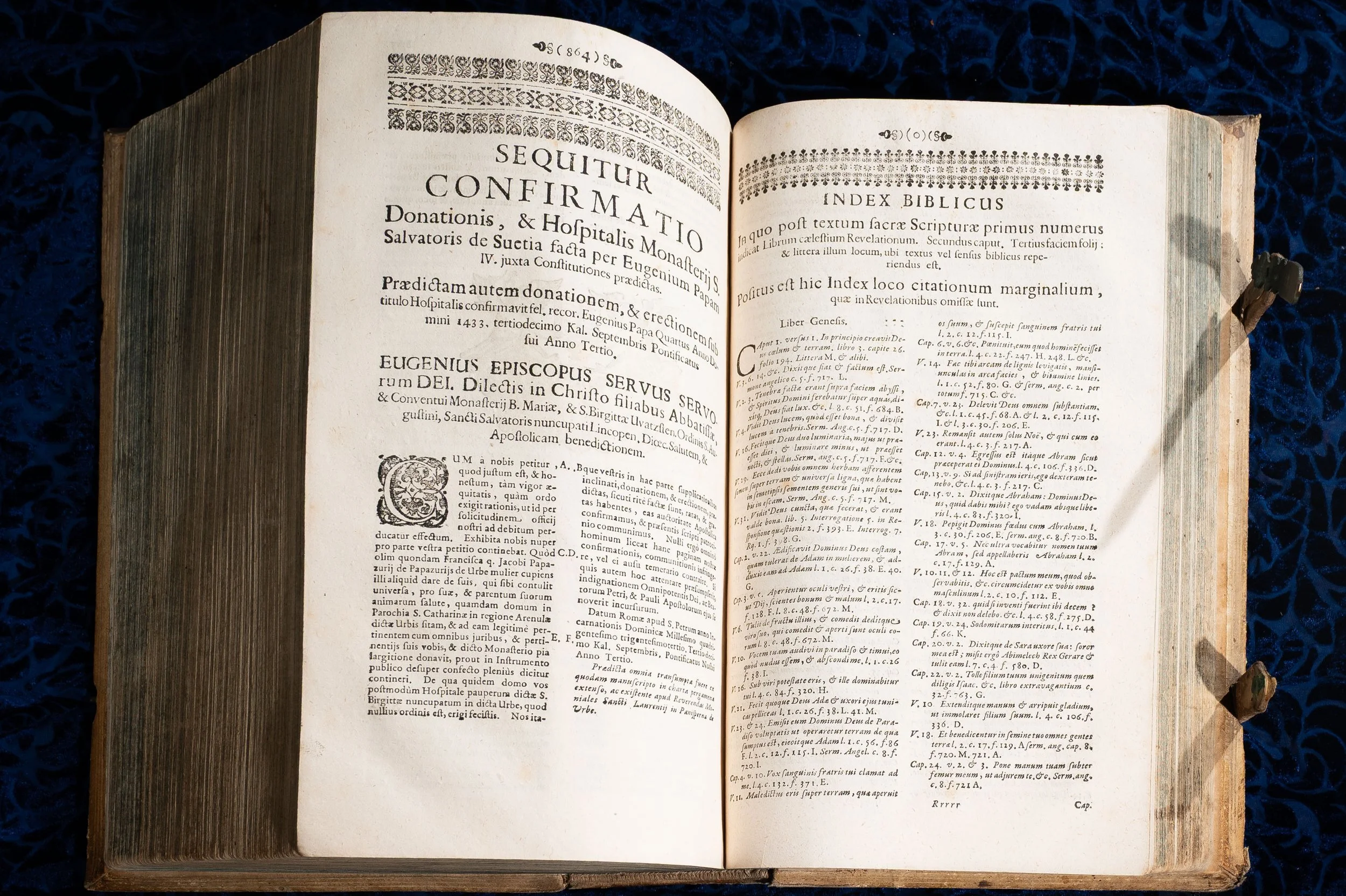 Image 2 of 15
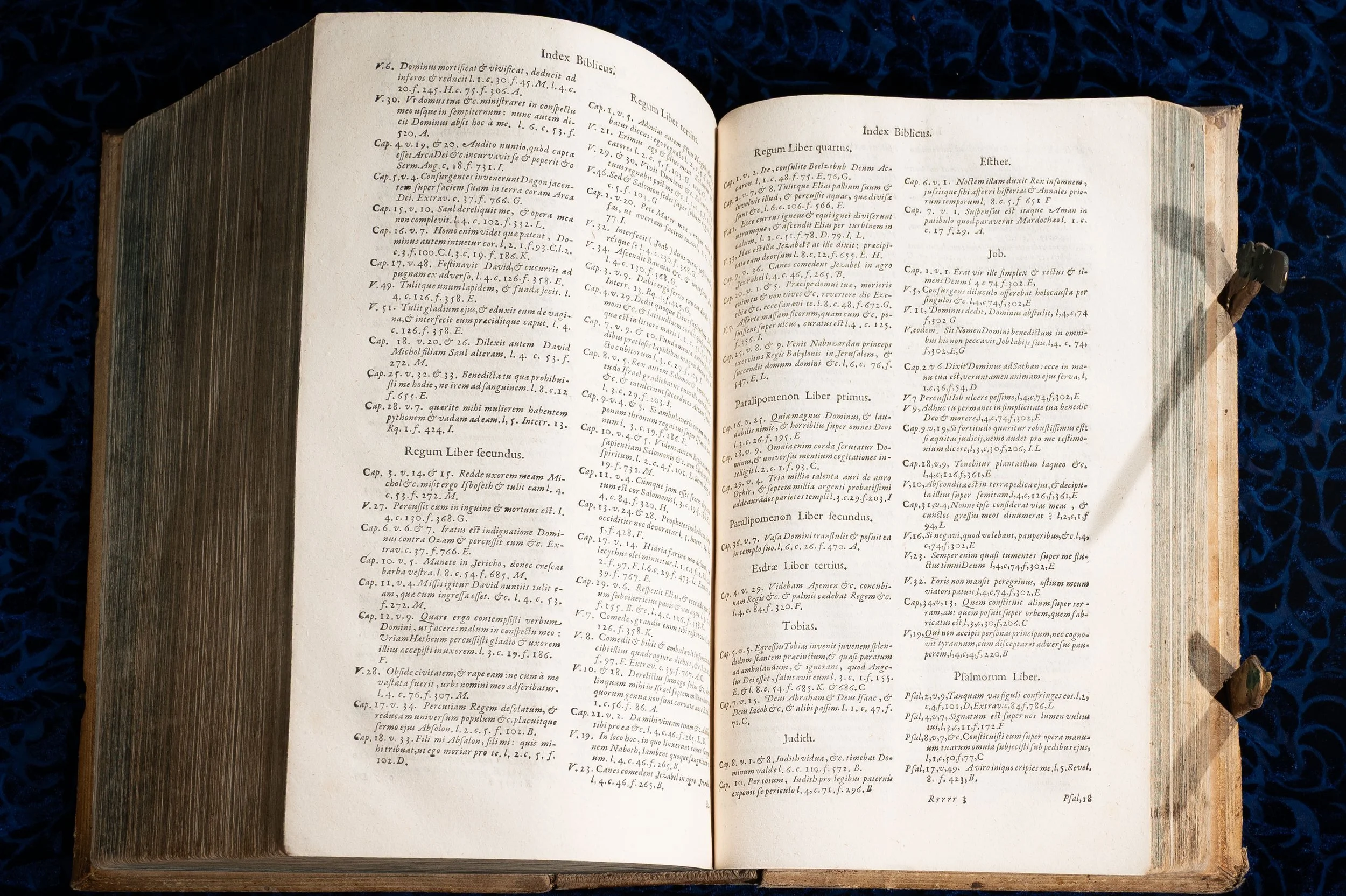 Image 3 of 15
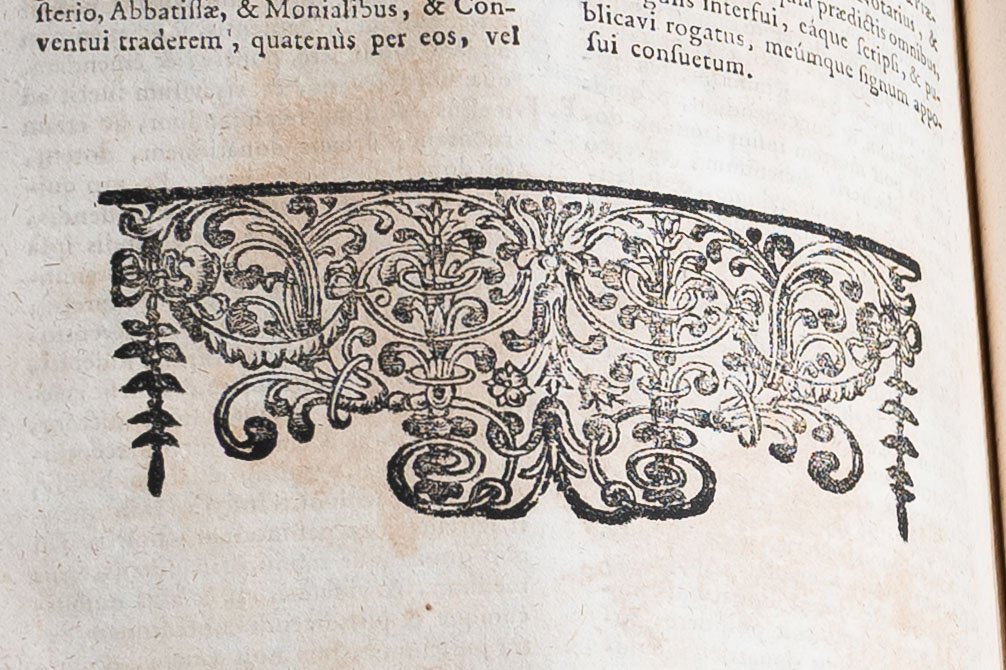 Image 4 of 15
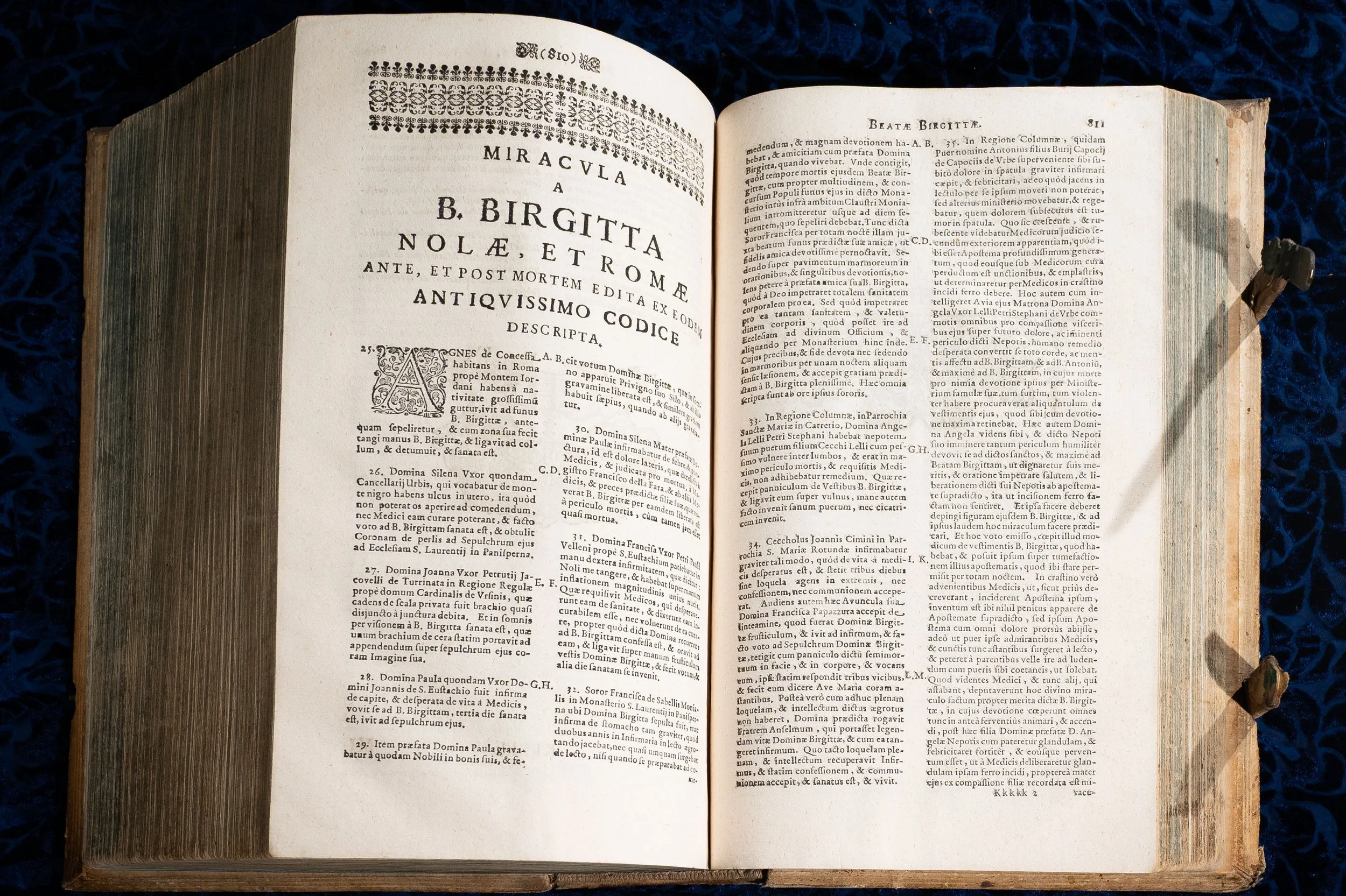 Image 5 of 15
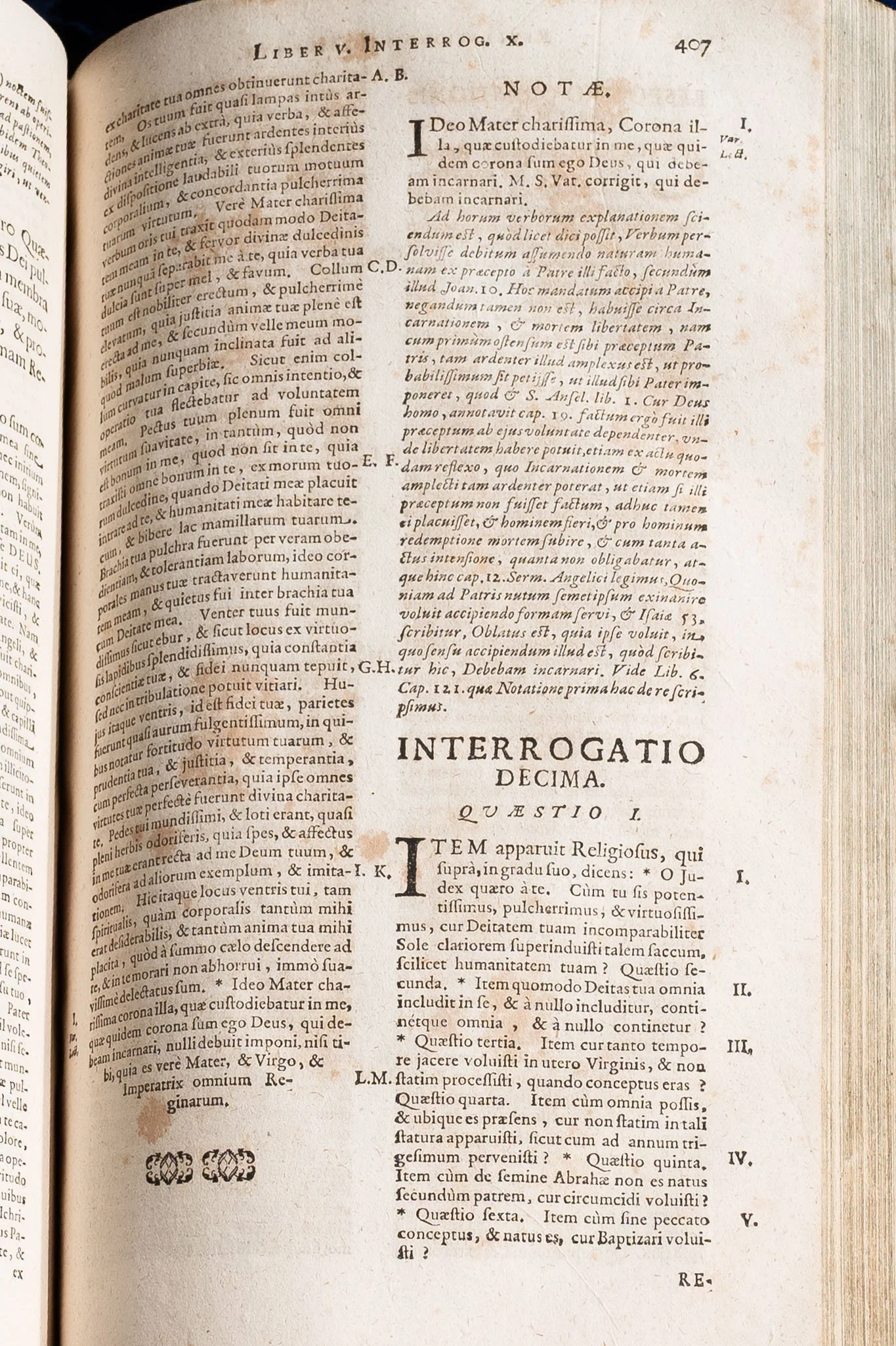 Image 6 of 15
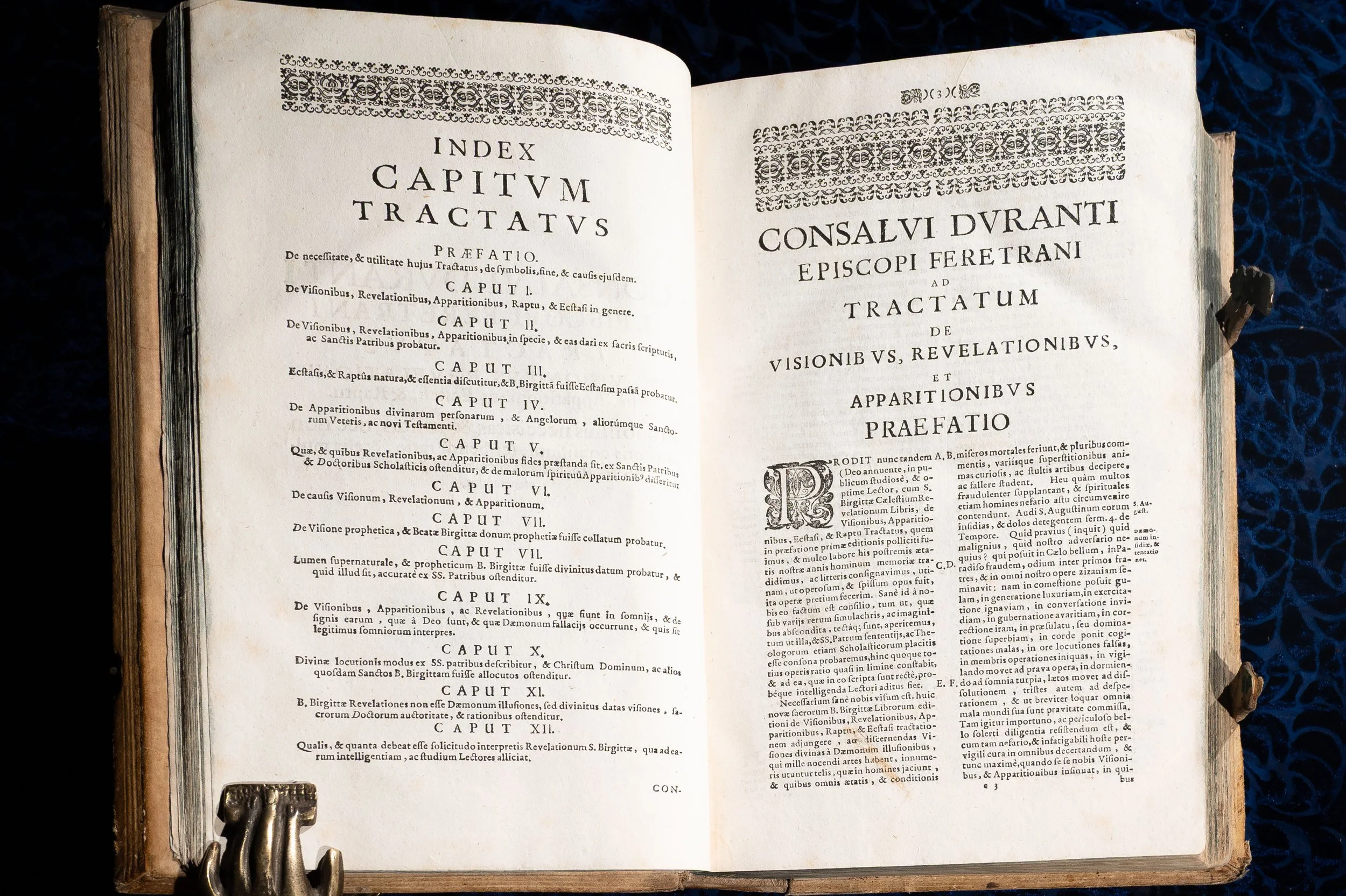 Image 7 of 15
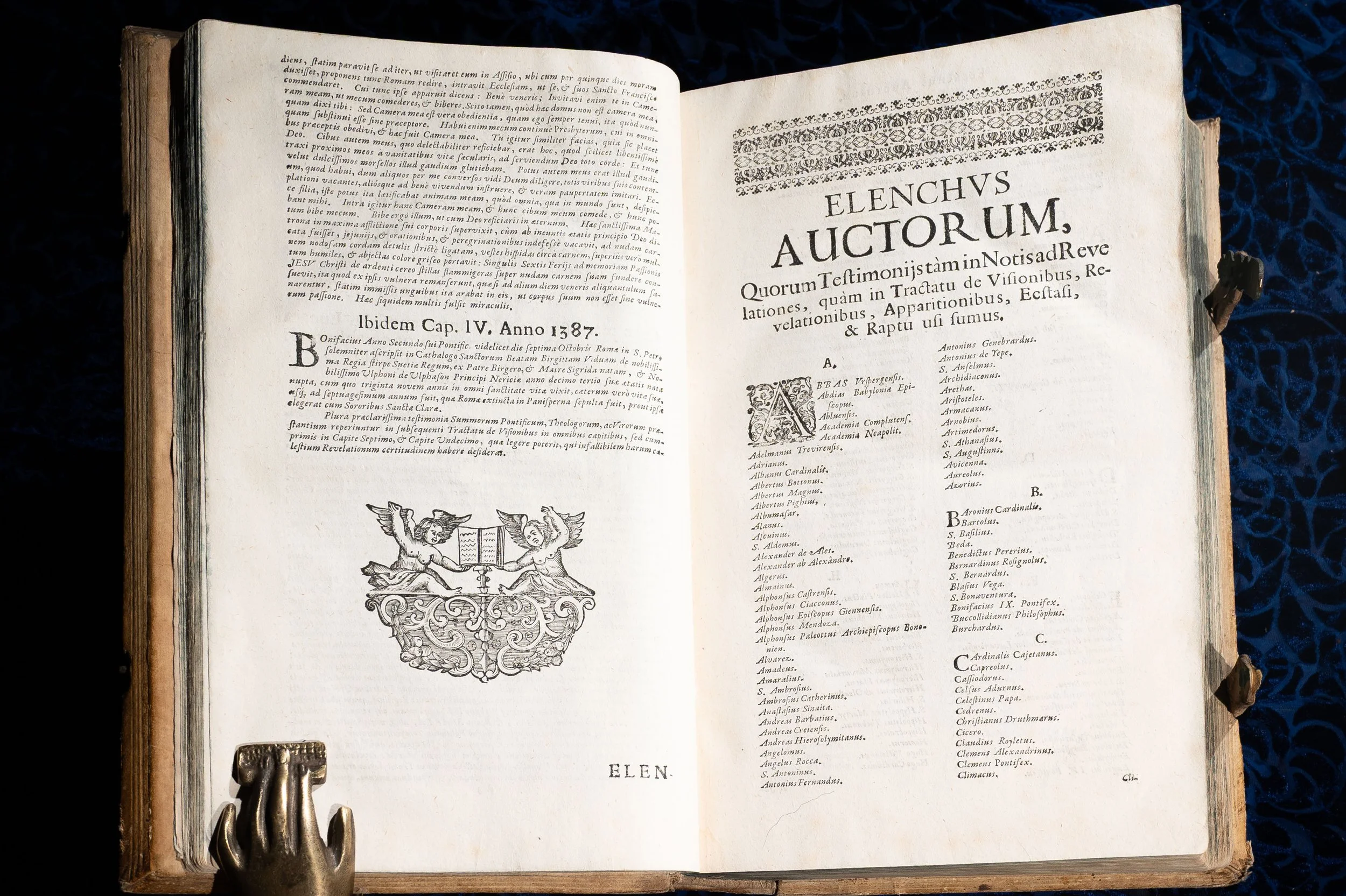 Image 8 of 15
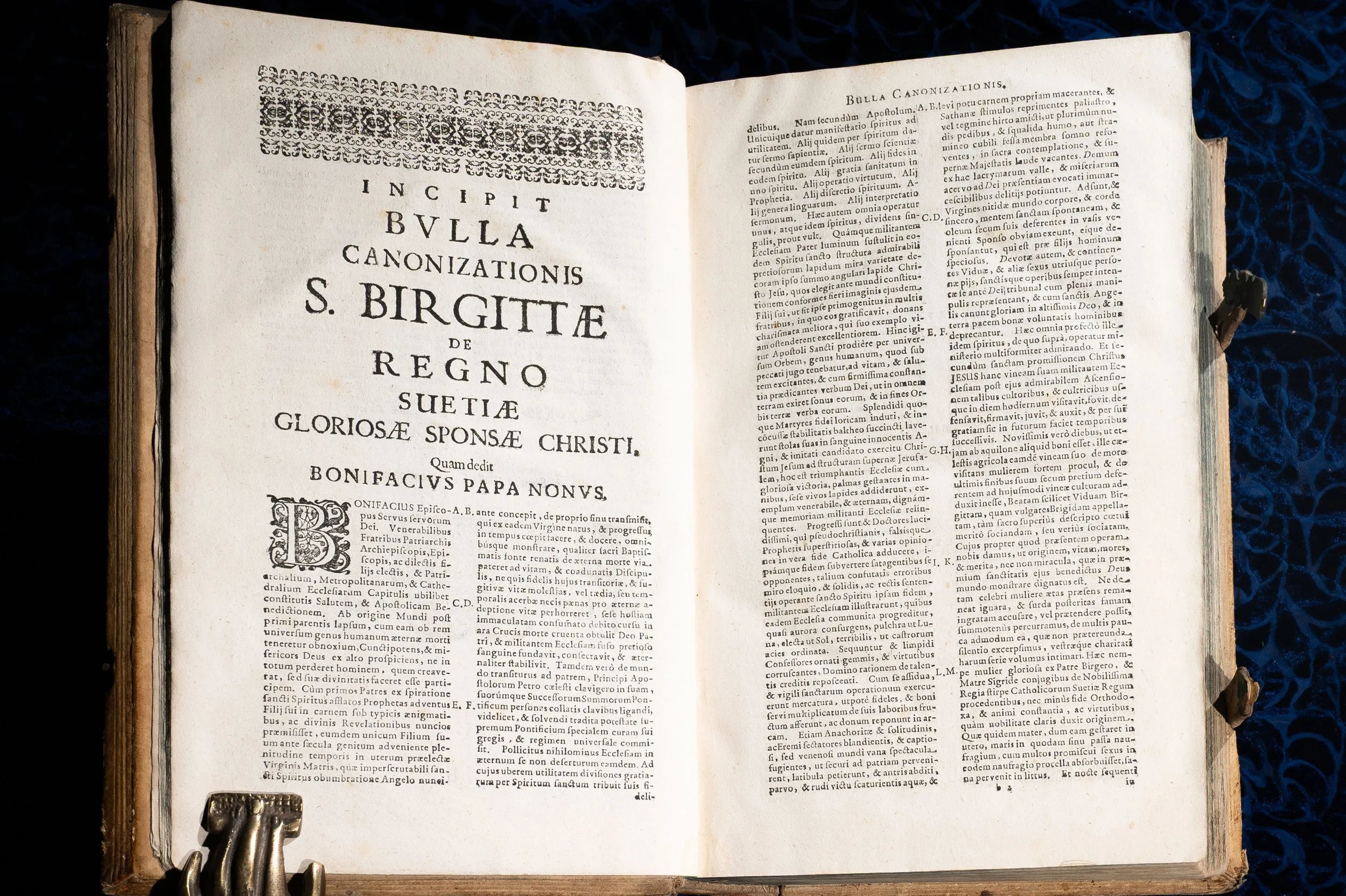 Image 9 of 15
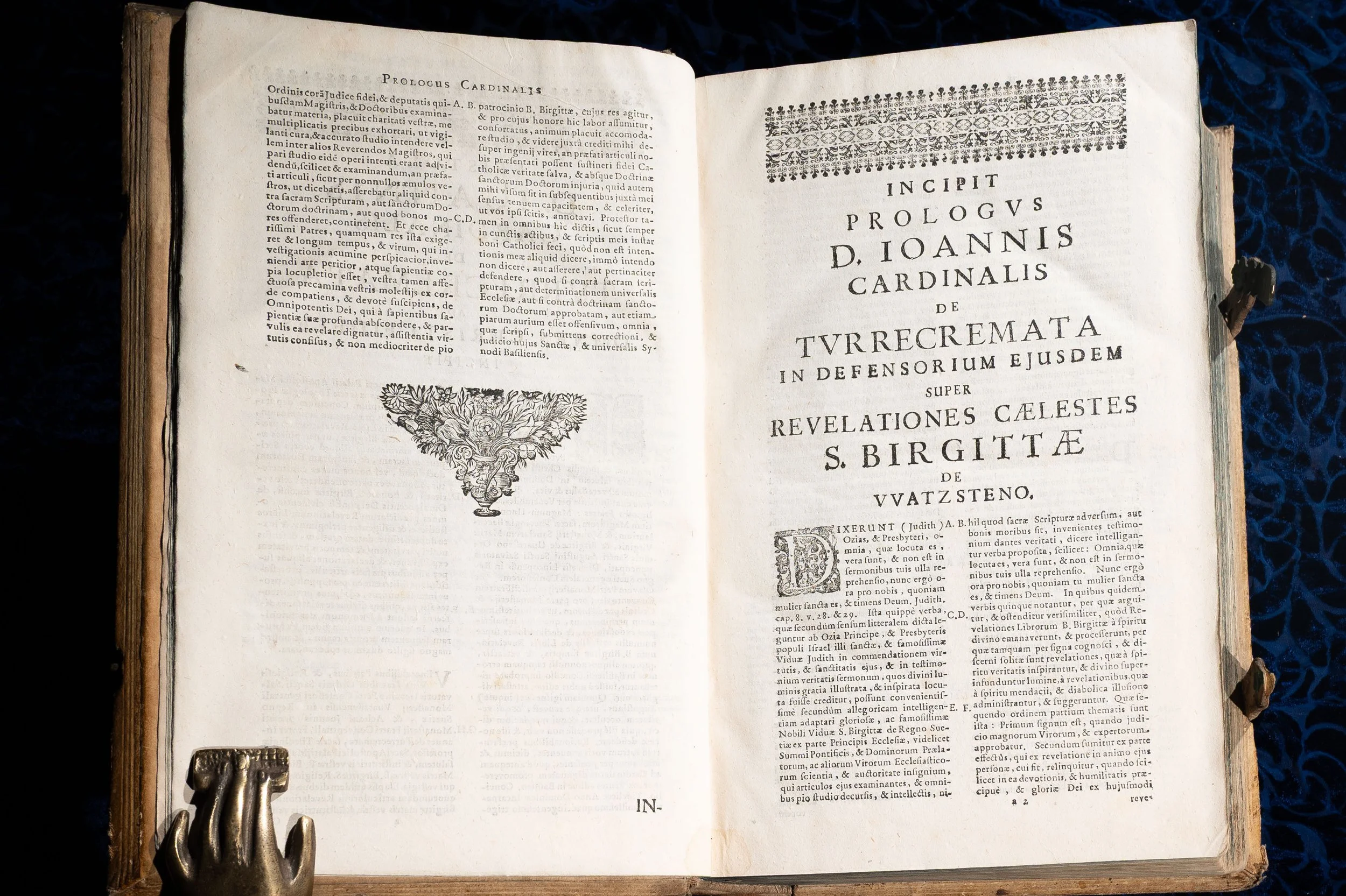 Image 10 of 15
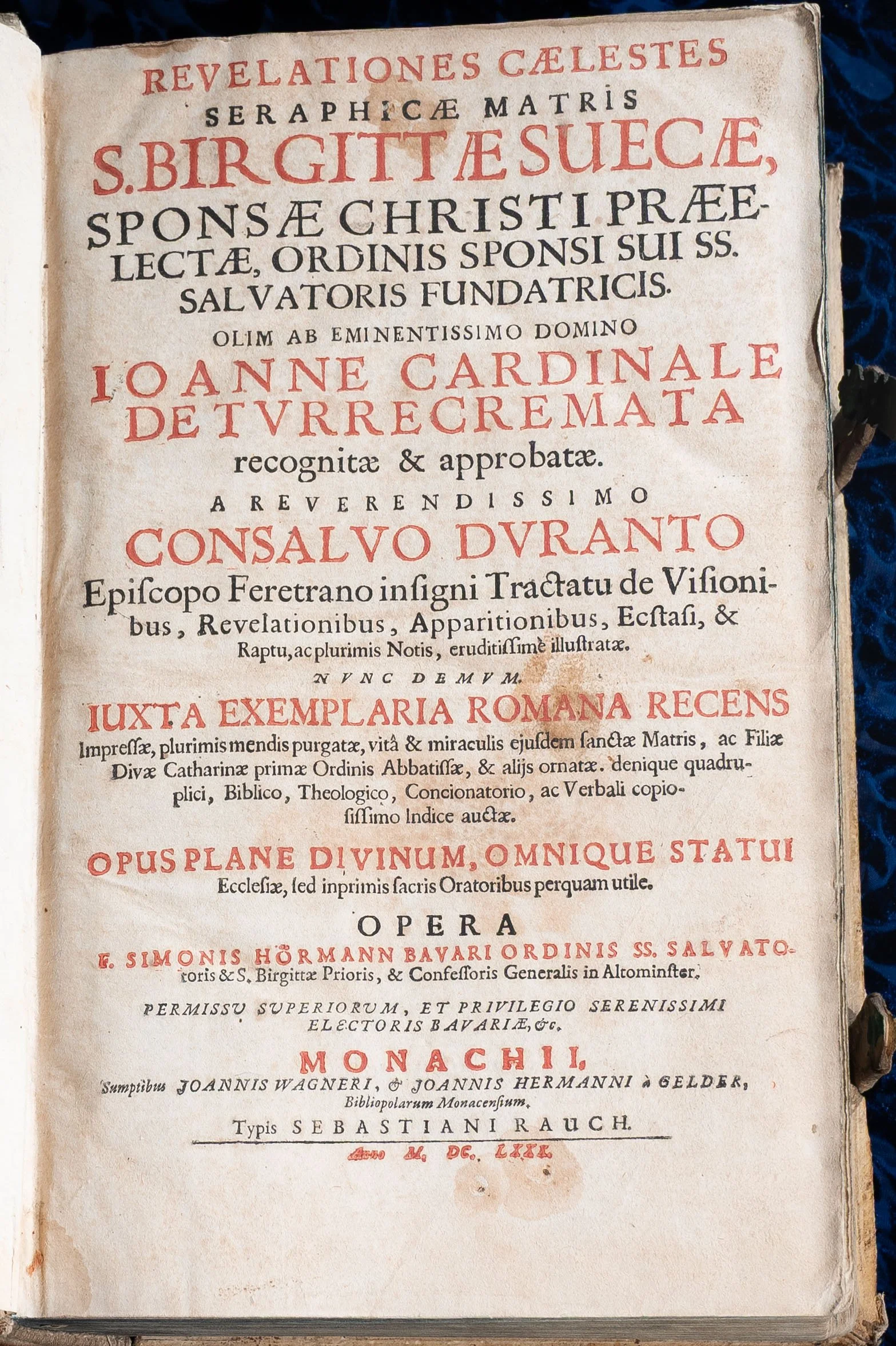 Image 11 of 15
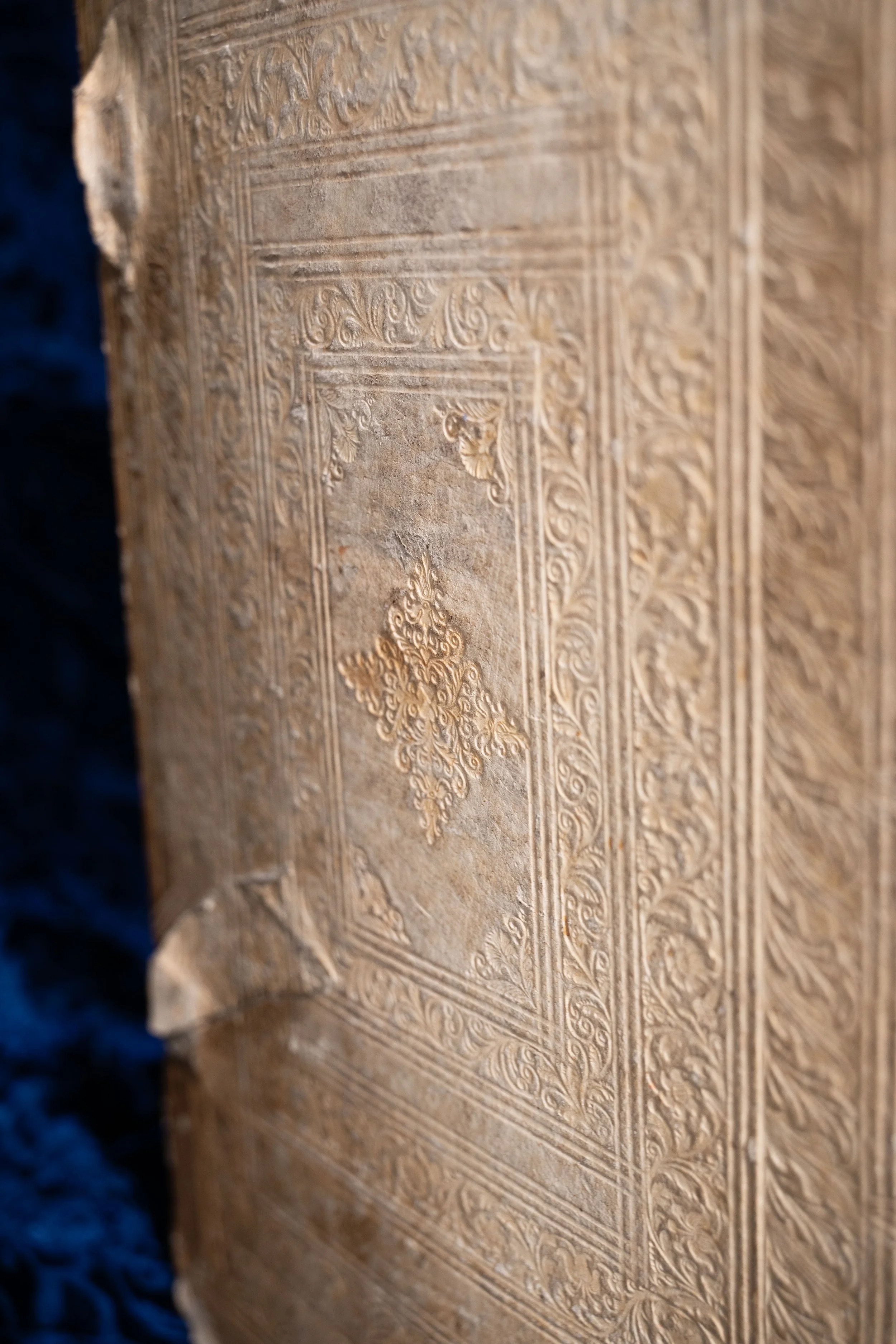 Image 12 of 15
 Image 13 of 15
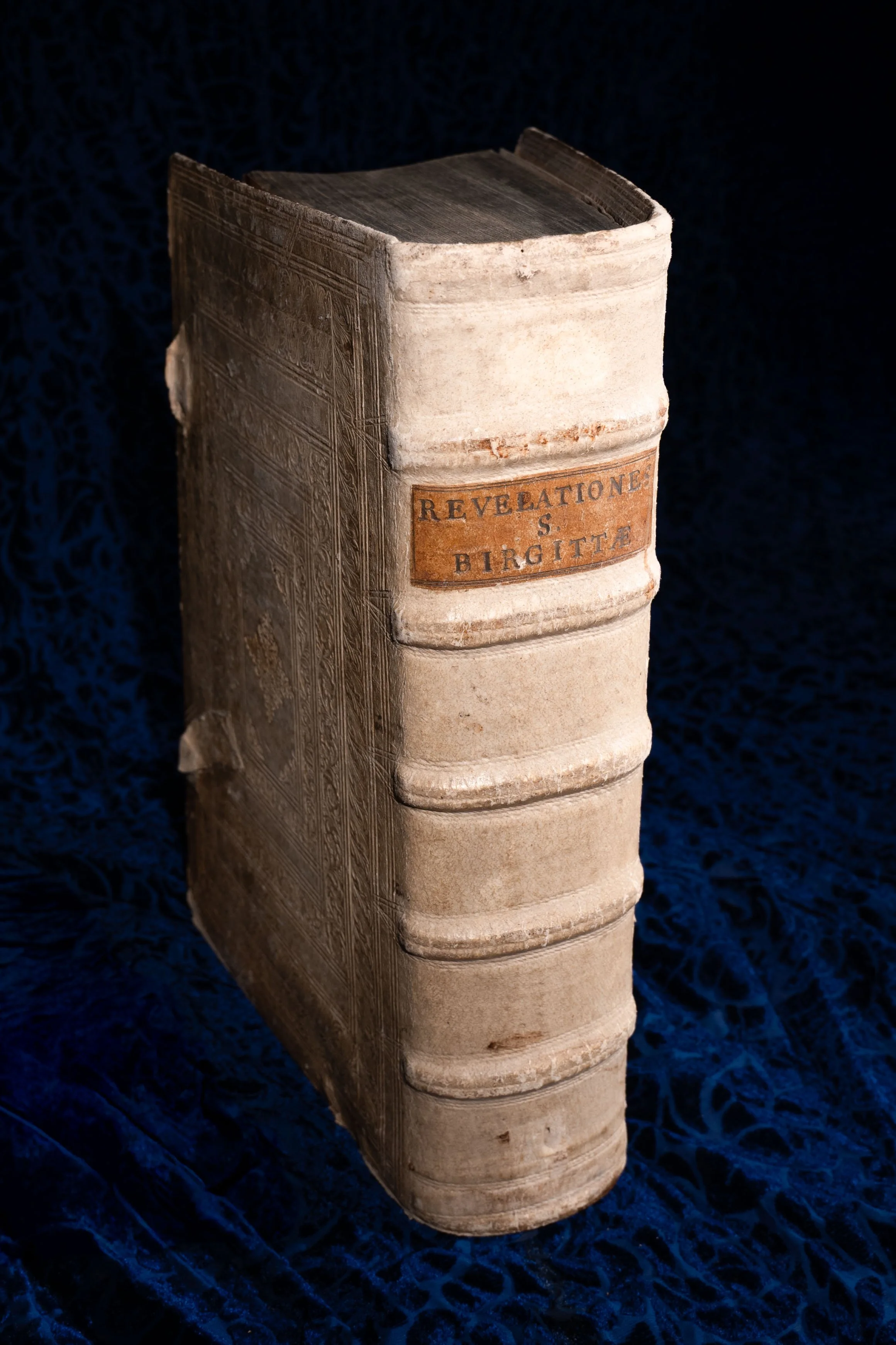 Image 14 of 15
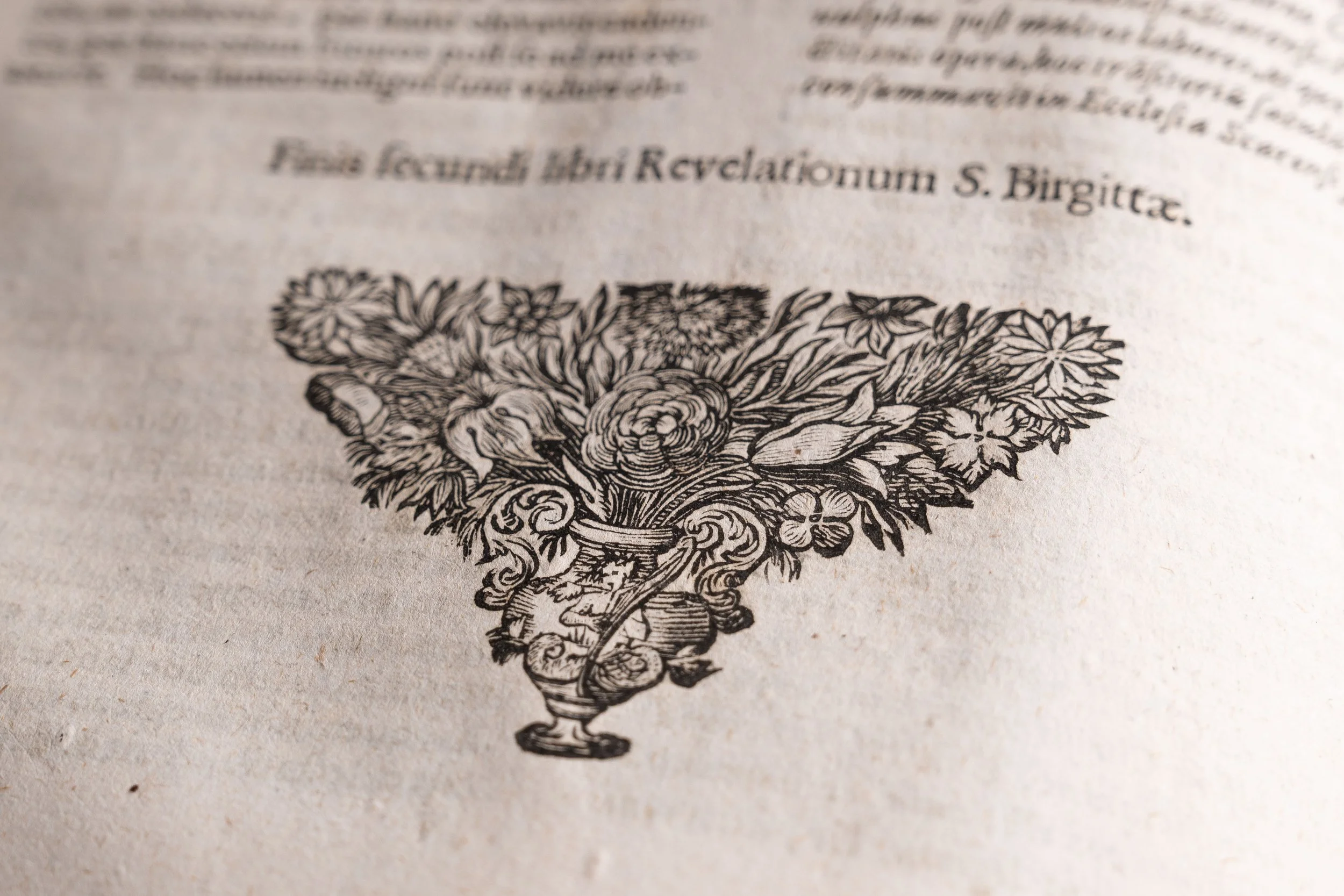 Image 15 of 15