The front flyleaf of this 1676 compendium of alchemical medicine records a purchase in Zurich on September 28, 1680: 10 Batzen for the unbound book and another 3 for the binding. An early reader left an assessment on the same leaf: “Cardiluci ist nüt vil nütz.” Cardilucius is not much use. The handwritten index at the back is a useful qualification to the review at the front. Someone took the trouble to make the book easier to consult.
Johannes Hiskias Cardilucius’s Magnalia medico-chymica reworks the Wunder Artzney, a collection of recipes first printed in 1586 under Paracelsus’s name, though probably not written by him. Cardilucius explains and expands the material for readers interested in preparing medicines through chemical processes. His commentary makes an older, difficult text usable for a later generation of practitioners. The work offers a way into the continuing appeal of Paracelsian medicine in seventeenth-century Germany.
The final thirty-two pages contain a German translation of the Introitus apertus ad occlusum regis palatium, “An Open Entrance to the Closed Palace of the King.” First printed in Latin in 1667, this influential alchemical treatise appeared under the name Eirenaeus Philalethes, now identified with George Starkey. Here it sits beside Cardilucius’s medical-alchemical recipes, giving a reader access to two different kinds of alchemical writing within the same small volume.
The annotations make room for other concerns as well: lightning near Zurich in September 1685 and a property transaction near Dillingen dated March 6, 1785. The latter came a century after the purchase inscription. The book preserves these small, personal interruptions to the printed alchemy, from a blunt verdict to the weather outside. Faded notes remain on the contemporary vellum covers; the hands and dated entries are described separately in the provenance record.
CARDILUCIUS, Johannes Hiskias (1630–1697). Magnalia Medico-Chymica, Oder Die höchste Artzney- und Feurkünstige Geheimnisse: Wie nemlich mit dem Circulato maiori & minori oder dem Universal aceto mercuriali, und spiritu vini tartarisato die herzlichsten Artzneyen zum langen Leben und Heilung der unheilsamen Kranckheiten zu machen… Nuremberg: Wolfgang Moritz Endter and Johann Andreæ Endter's Heirs, 1676.
Provenance: Purchase inscription on the front flyleaf, Zurich, September 28, 1680, recording 10 Batzen for the unbound book and 3 for binding, apparently from the Thurneysen and/or Bodmer shop. The same or a closely related hand gives the assessment “Cardiluci ist nüt vil nütz.” Further entries include lightning near Zurich in September 1685 and an owner-compiled index on the rear endpaper. A later inscription dated March 6, 1785, records a property transaction near Dillingen for 25 Gulden payable at Martinmas. Additional notes on the covers and endpapers are partly legible.
Physical Description: Octavo. [24] ff., 409 pp., [15] ff., 32 pp. With woodcut diagrams.
Binding: Contemporary vellum over boards, soiled and darkened. Manuscript notations in an early hand on both covers, substantially faded on the rear board. Remnants of ties on back cover.
Condition: Some spotting throughout; partly slightly worm-eaten. Flyleaves and endpapers with extensive manuscript entries in at least one early hand. Title page lightly browned but legible. Binding sound.
The front flyleaf of this 1676 compendium of alchemical medicine records a purchase in Zurich on September 28, 1680: 10 Batzen for the unbound book and another 3 for the binding. An early reader left an assessment on the same leaf: “Cardiluci ist nüt vil nütz.” Cardilucius is not much use. The handwritten index at the back is a useful qualification to the review at the front. Someone took the trouble to make the book easier to consult.
Johannes Hiskias Cardilucius’s Magnalia medico-chymica reworks the Wunder Artzney, a collection of recipes first printed in 1586 under Paracelsus’s name, though probably not written by him. Cardilucius explains and expands the material for readers interested in preparing medicines through chemical processes. His commentary makes an older, difficult text usable for a later generation of practitioners. The work offers a way into the continuing appeal of Paracelsian medicine in seventeenth-century Germany.
The final thirty-two pages contain a German translation of the Introitus apertus ad occlusum regis palatium, “An Open Entrance to the Closed Palace of the King.” First printed in Latin in 1667, this influential alchemical treatise appeared under the name Eirenaeus Philalethes, now identified with George Starkey. Here it sits beside Cardilucius’s medical-alchemical recipes, giving a reader access to two different kinds of alchemical writing within the same small volume.
The annotations make room for other concerns as well: lightning near Zurich in September 1685 and a property transaction near Dillingen dated March 6, 1785. The latter came a century after the purchase inscription. The book preserves these small, personal interruptions to the printed alchemy, from a blunt verdict to the weather outside. Faded notes remain on the contemporary vellum covers; the hands and dated entries are described separately in the provenance record.
CARDILUCIUS, Johannes Hiskias (1630–1697). Magnalia Medico-Chymica, Oder Die höchste Artzney- und Feurkünstige Geheimnisse: Wie nemlich mit dem Circulato maiori & minori oder dem Universal aceto mercuriali, und spiritu vini tartarisato die herzlichsten Artzneyen zum langen Leben und Heilung der unheilsamen Kranckheiten zu machen… Nuremberg: Wolfgang Moritz Endter and Johann Andreæ Endter's Heirs, 1676.
Provenance: Purchase inscription on the front flyleaf, Zurich, September 28, 1680, recording 10 Batzen for the unbound book and 3 for binding, apparently from the Thurneysen and/or Bodmer shop. The same or a closely related hand gives the assessment “Cardiluci ist nüt vil nütz.” Further entries include lightning near Zurich in September 1685 and an owner-compiled index on the rear endpaper. A later inscription dated March 6, 1785, records a property transaction near Dillingen for 25 Gulden payable at Martinmas. Additional notes on the covers and endpapers are partly legible.
Physical Description: Octavo. [24] ff., 409 pp., [15] ff., 32 pp. With woodcut diagrams.
Binding: Contemporary vellum over boards, soiled and darkened. Manuscript notations in an early hand on both covers, substantially faded on the rear board. Remnants of ties on back cover.
Condition: Some spotting throughout; partly slightly worm-eaten. Flyleaves and endpapers with extensive manuscript entries in at least one early hand. Title page lightly browned but legible. Binding sound.

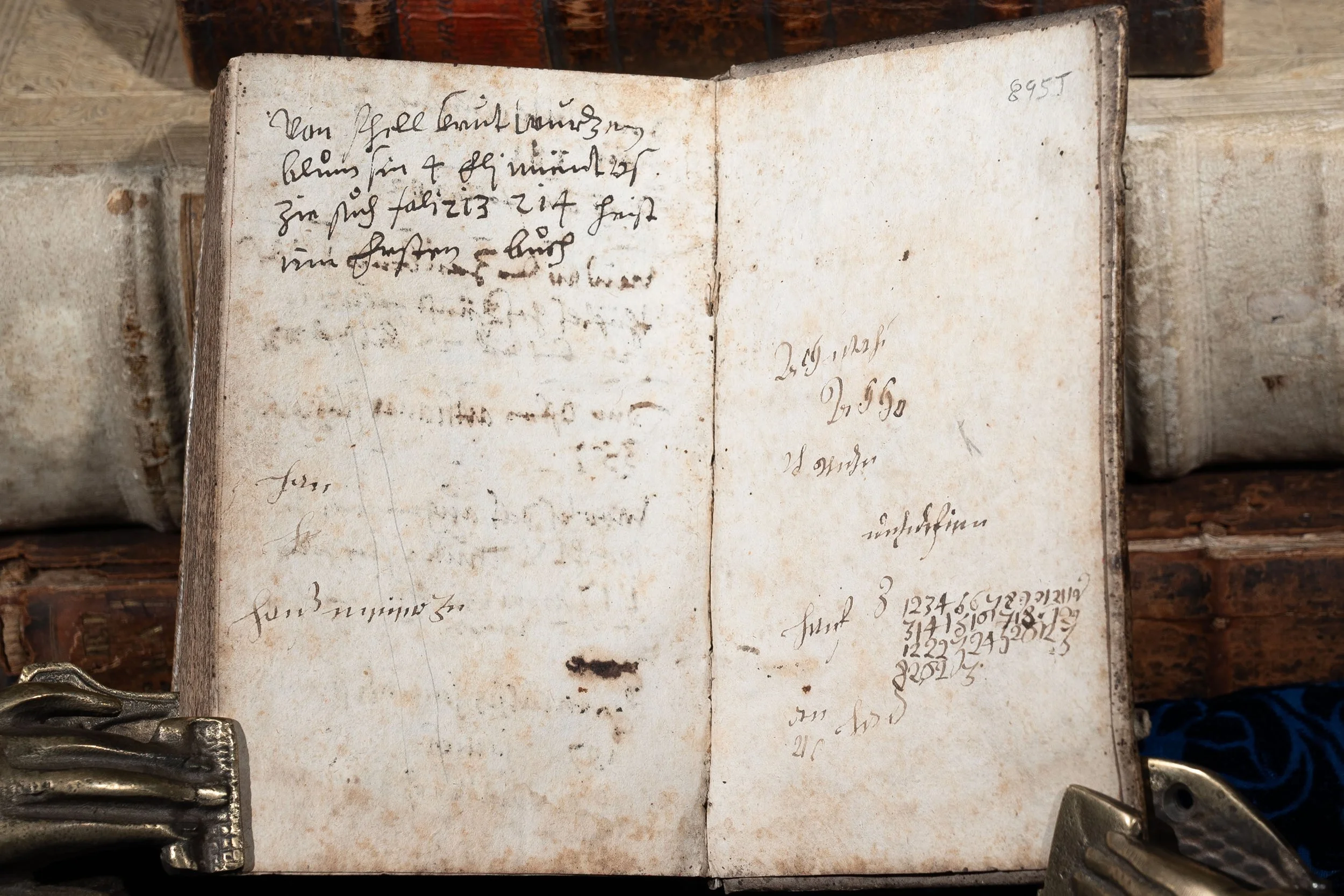 Image 1 of 11
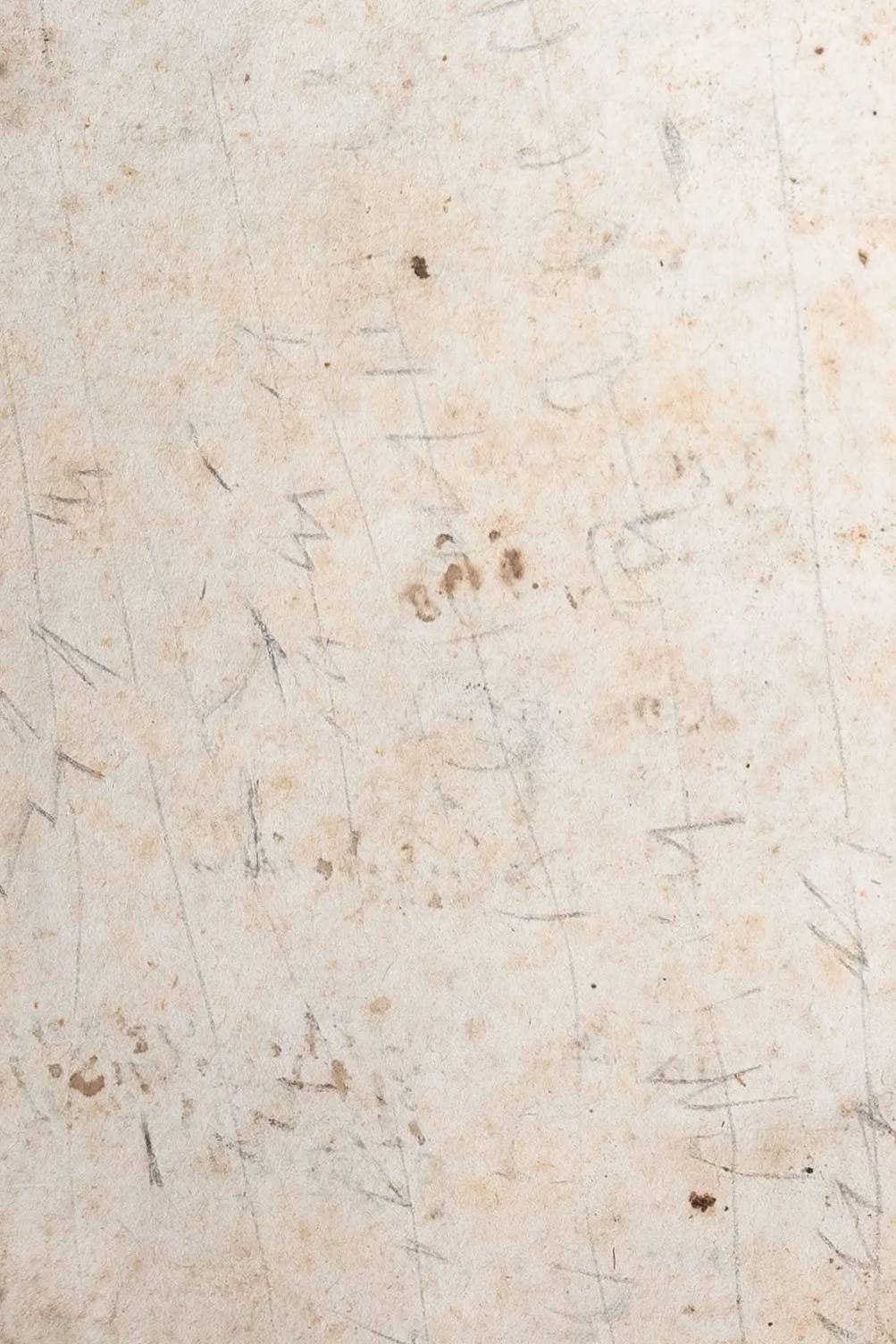 Image 2 of 11
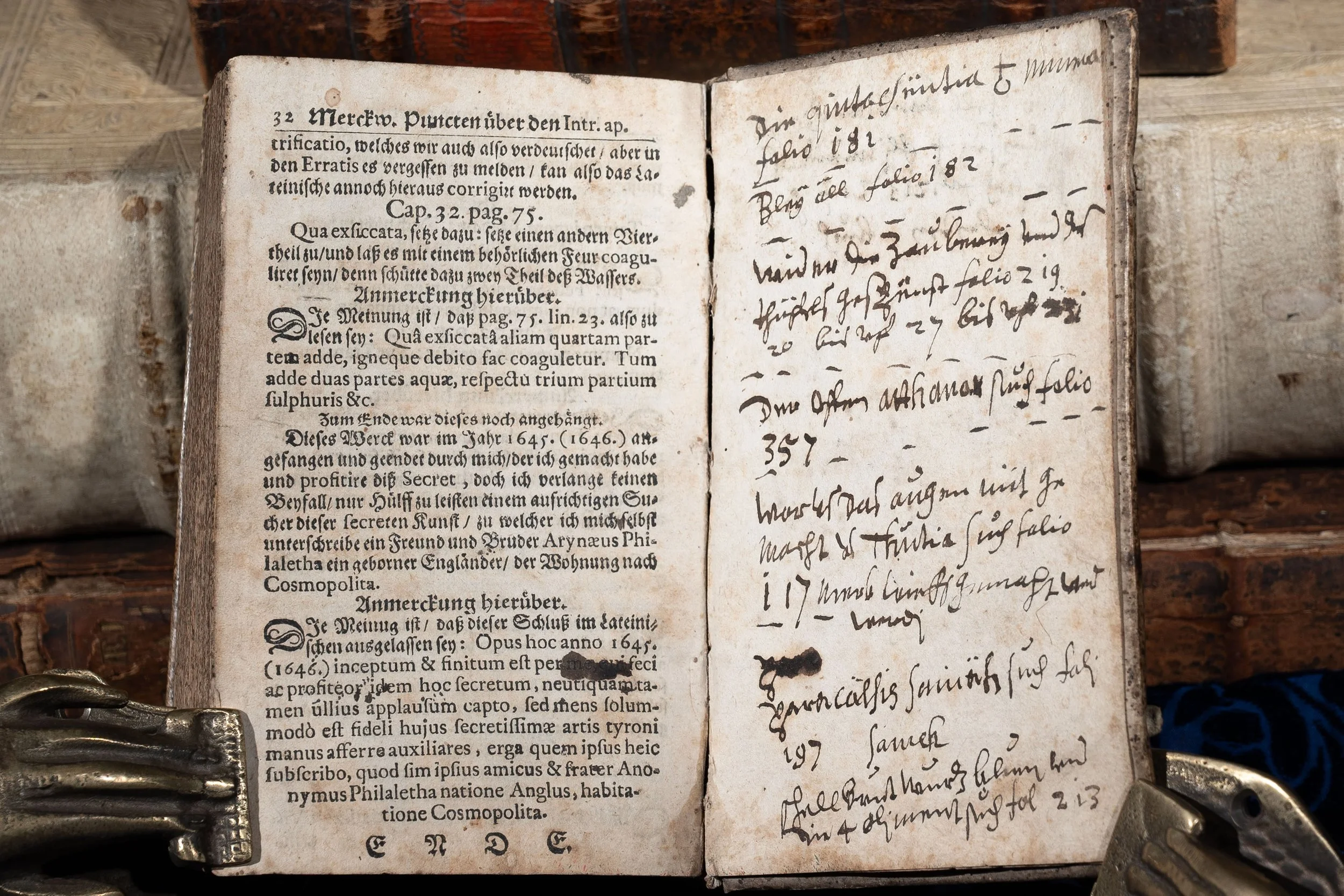 Image 3 of 11
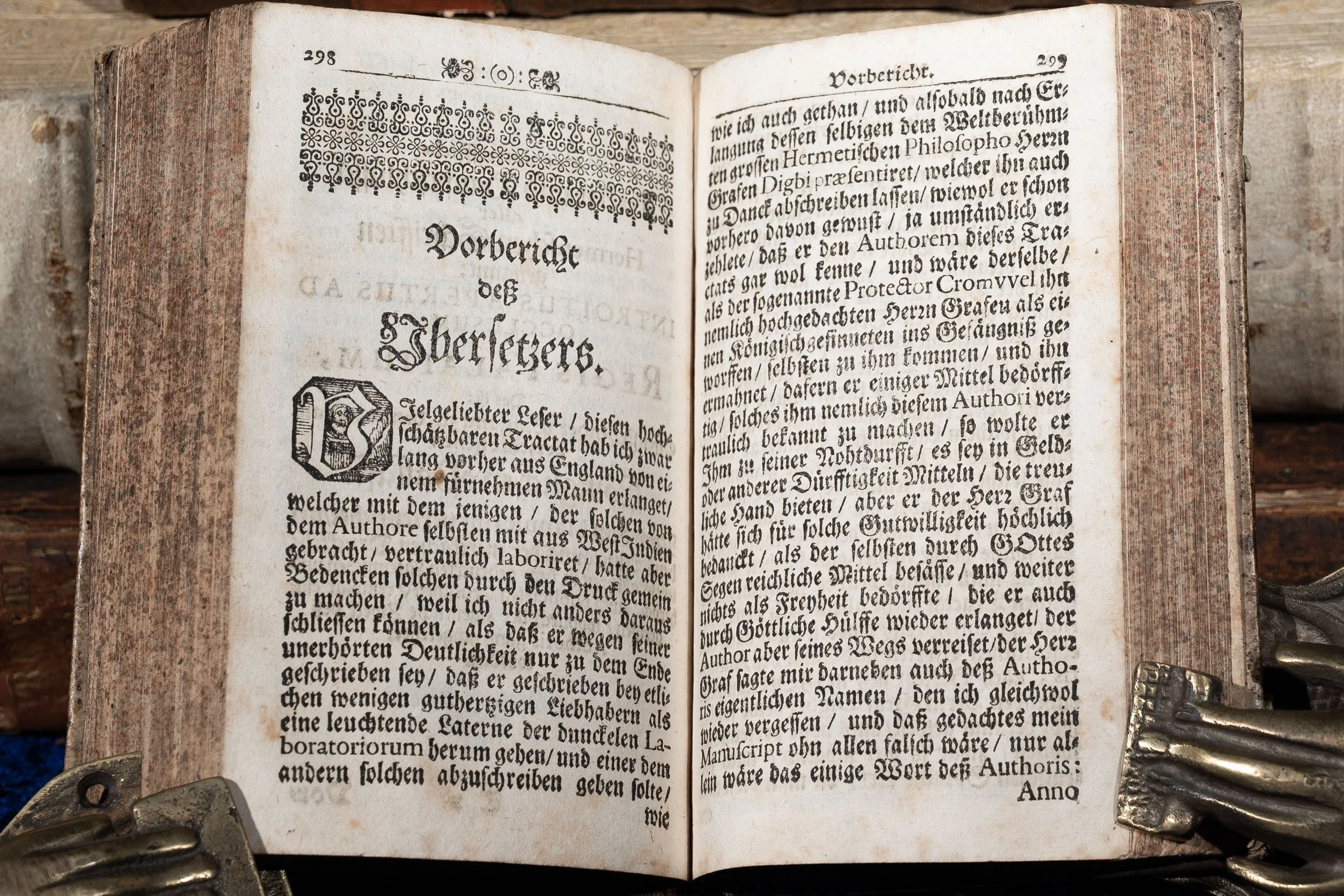 Image 4 of 11
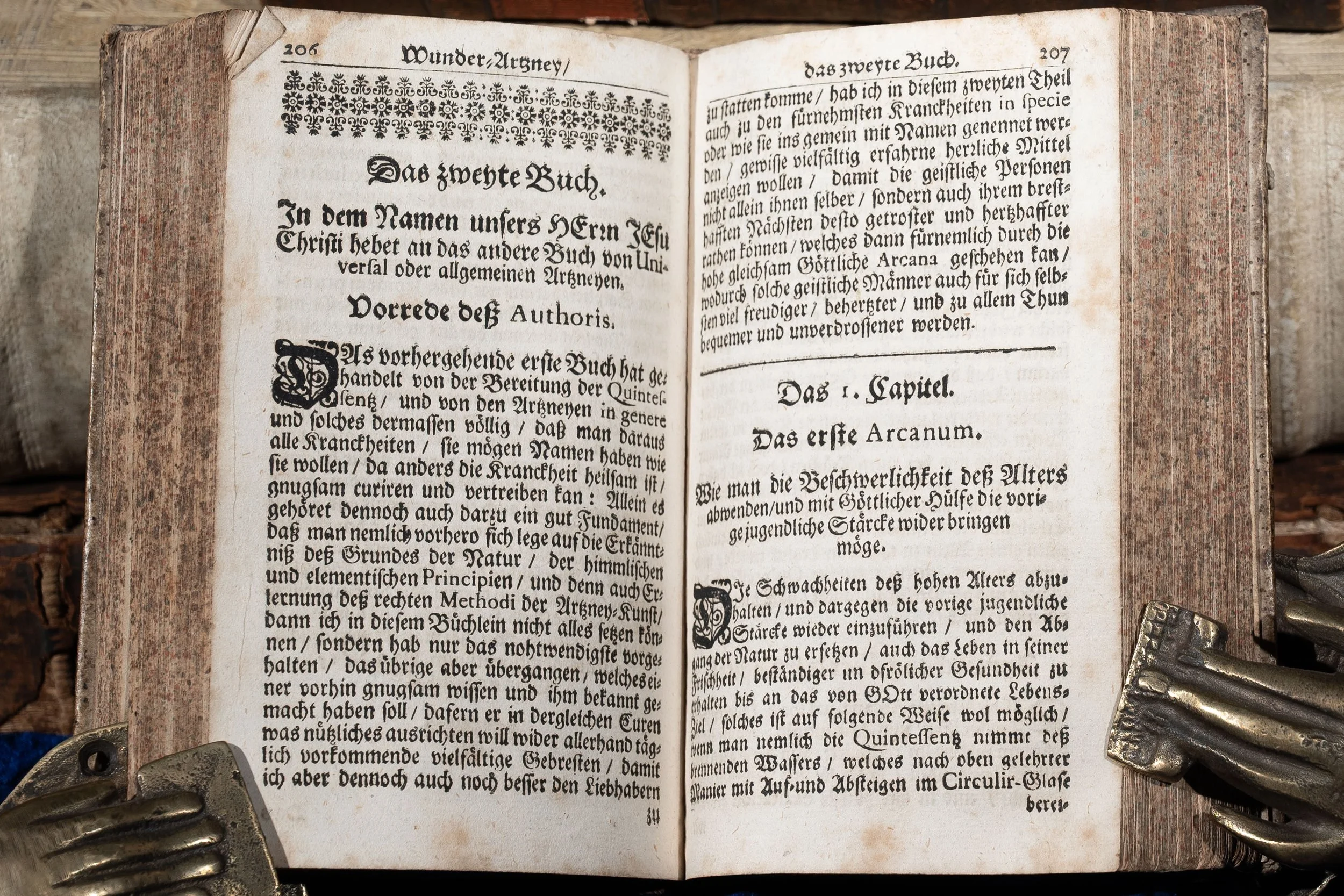 Image 5 of 11
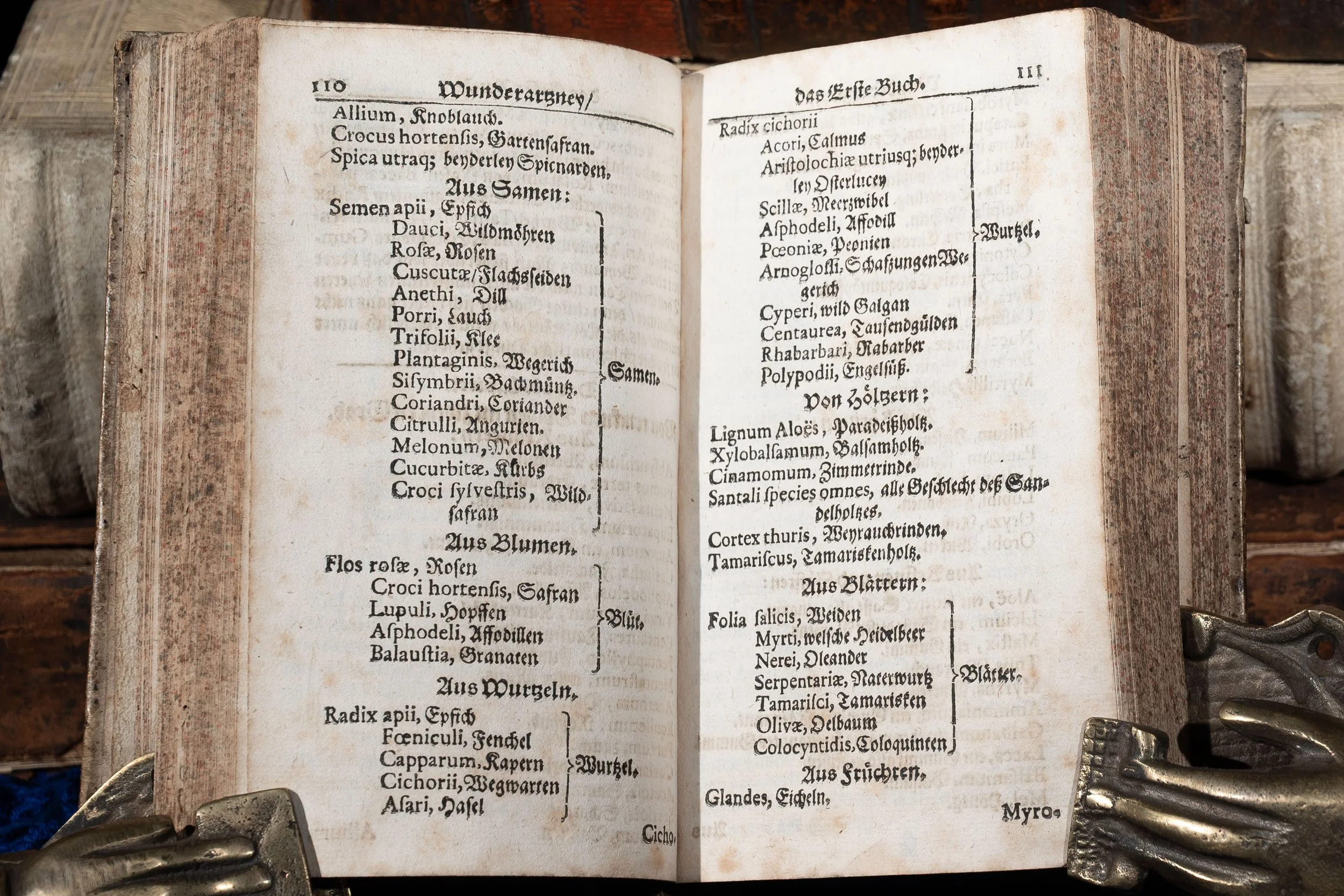 Image 6 of 11
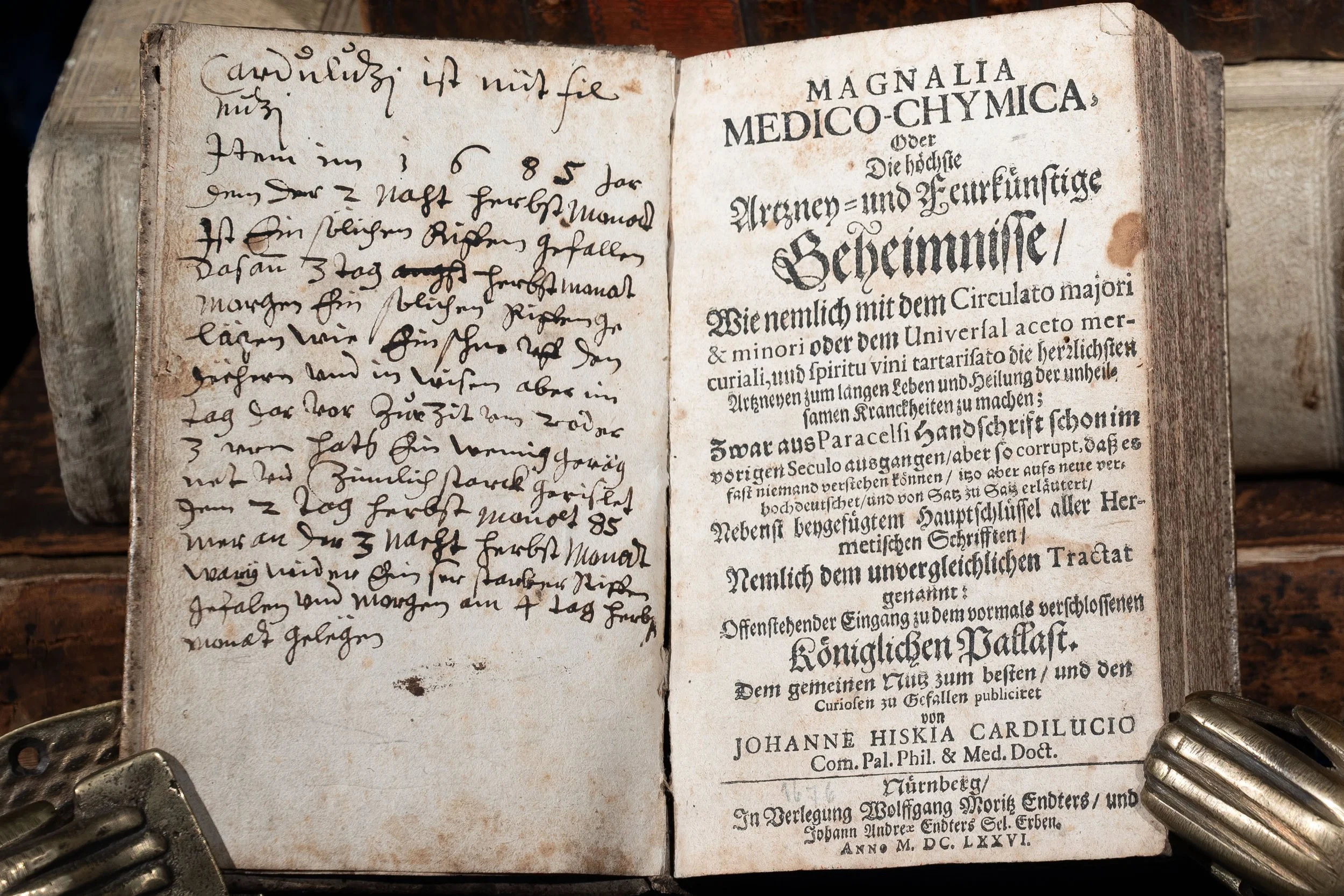 Image 7 of 11
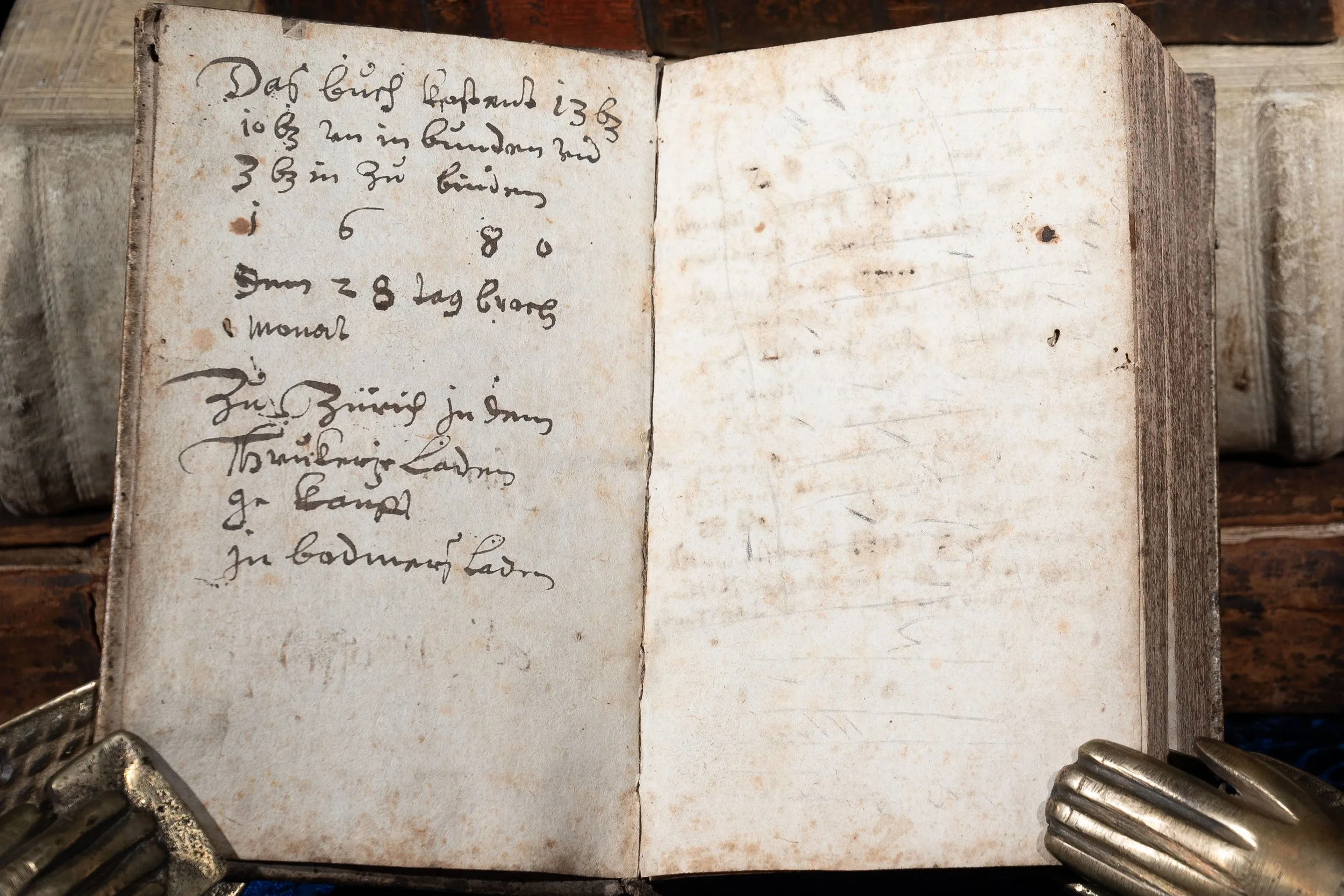 Image 8 of 11
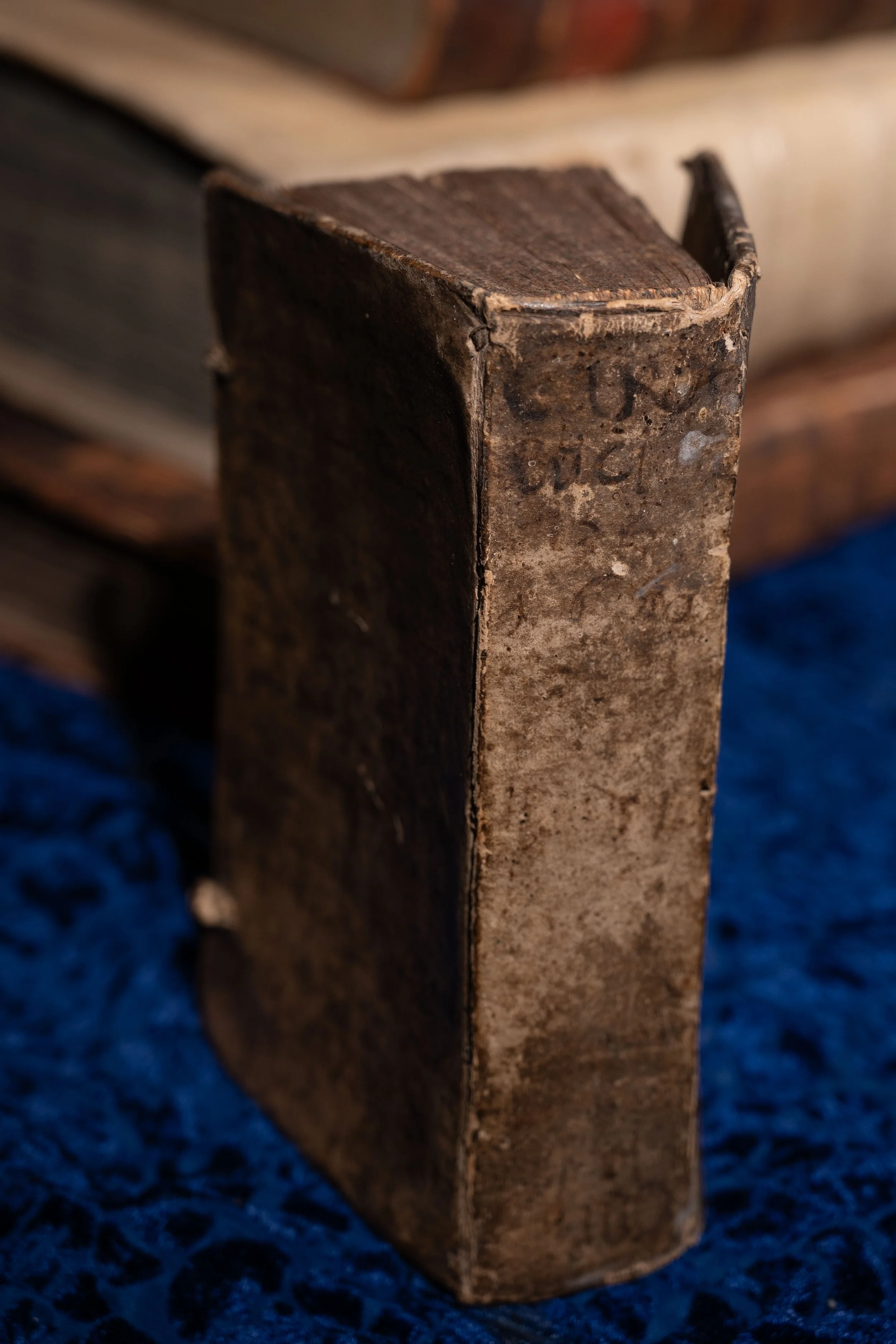 Image 9 of 11
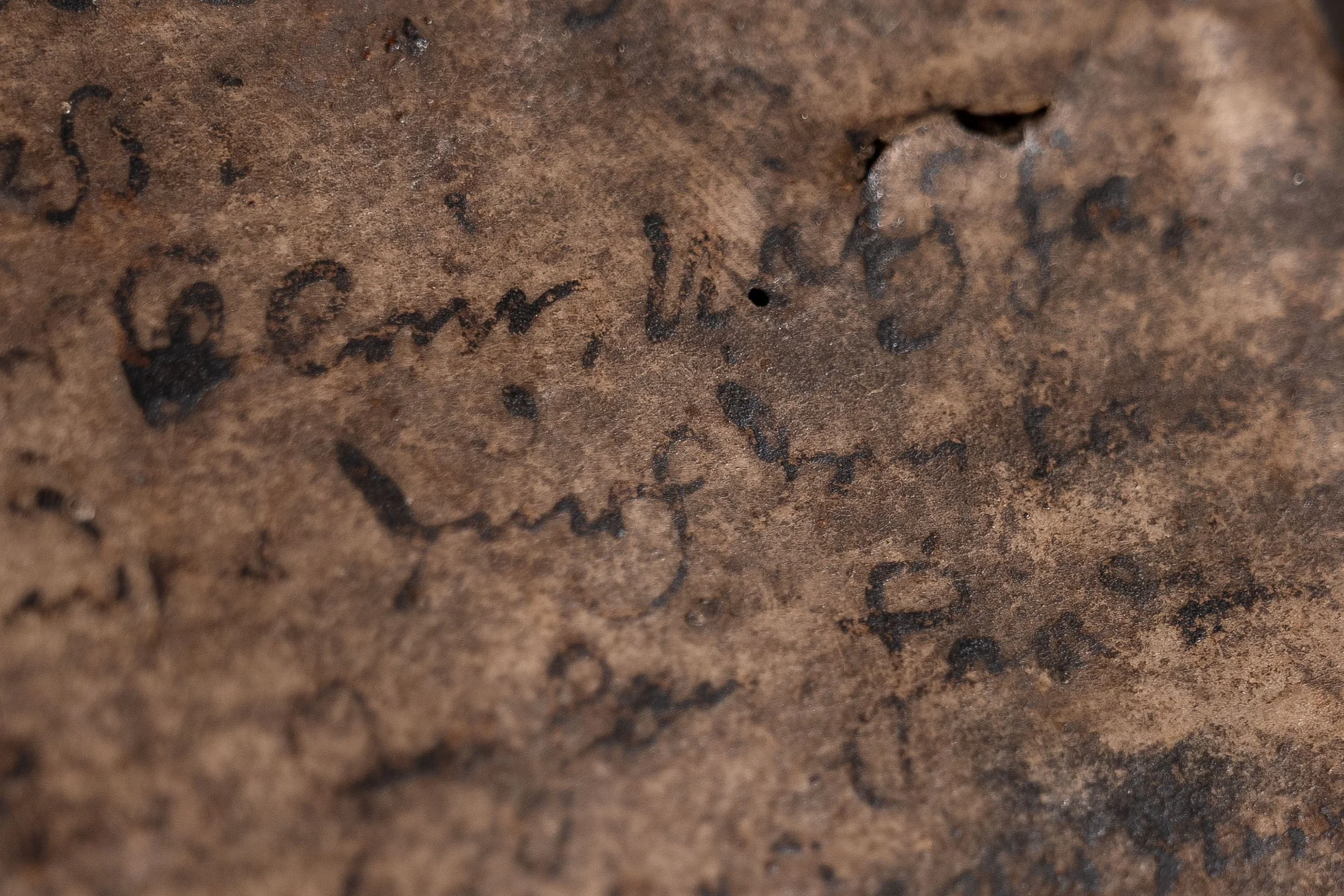 Image 10 of 11
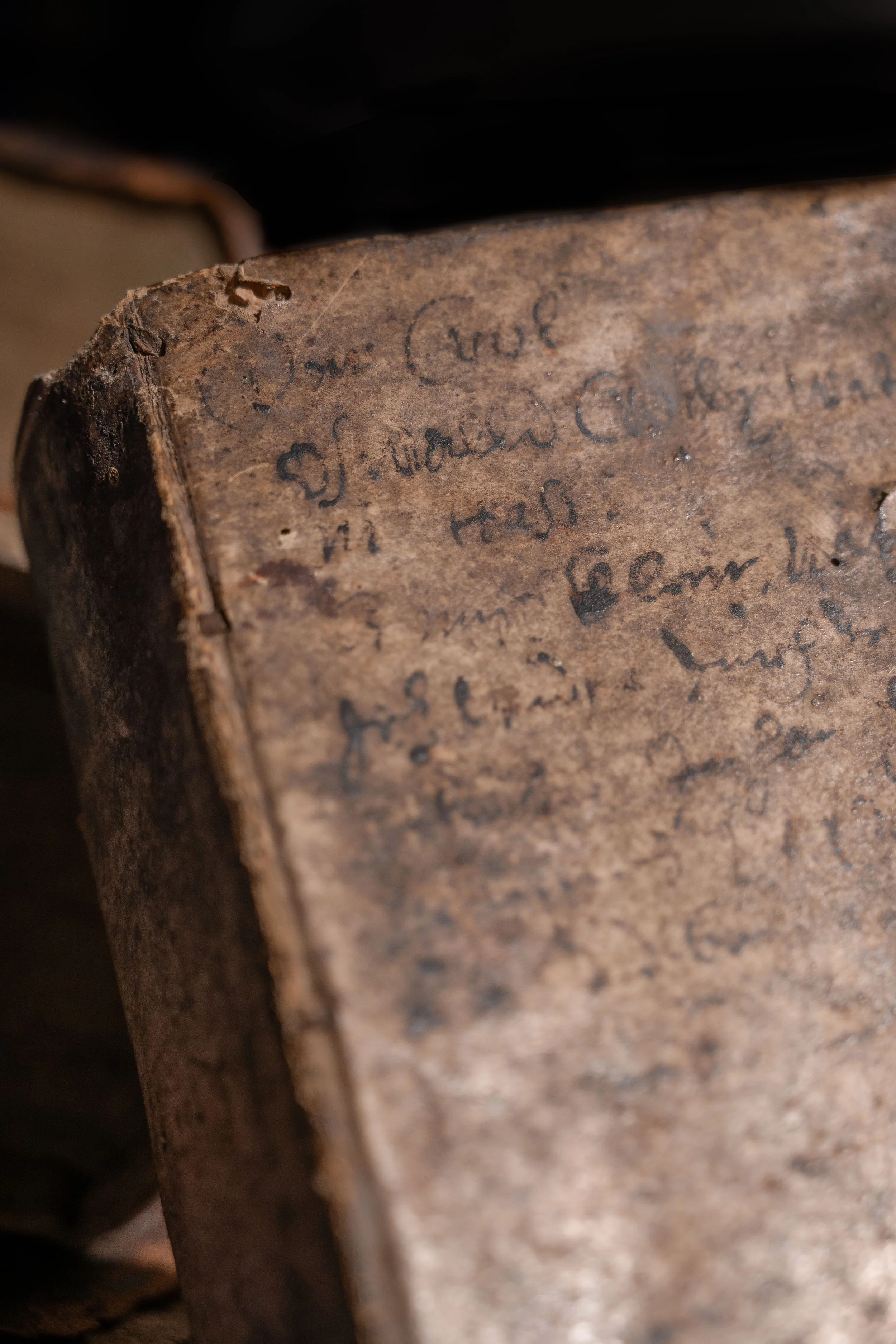 Image 11 of 11