In 1473 a Genoese noblewoman of twenty-six knelt down to make her confession, but couldn’t go through with it. By the account in this book she was struck, there in front of the priest, by the love of God and by the sight of her own failings, both at once and with such force that she got up and went home. Caterina Fieschi had been married off at sixteen to Giuliano Adorno. The marriage was not a happy one. After her failed confession she gave herself to the sick at the Pammatone, the great hospital of Genoa. She nursed there for the rest of her life.
A small circle formed around her. Her confessor, Cattaneo Marabotto, and a lawyer named Ettore Vernazza kept a record of what she said, and after her death in 1510 it became the Vita mirabile, first printed at Genoa in 1551. It has three parts: her Life, a Treatise on Purgatory, and a Dialogue between the Soul and the Body.
The treatise is why she is still read. For Catherine, purgatory was a state. The soul sees what it is and how far it stands from God, and the pain of seeing both together is the fire. Benedict XVI put her teaching into a few brief words in 2011: “This is purgatory: an inner fire.” Four centuries after her death Friedrich von Hügel built his two-volume study The Mystical Element of Religion on her. Heaven, purgatory and hell, he wrote, “are states alone, and begin already here.” It sounds like a modern sentence.
This is the Genoa edition of 1667, the seventh by its own count. Its title page calls her “Beata,” eight years before Rome beatified her. Genoa had long since made up its mind. The volume also adds Raffaele Soprani's Life of Suor Tommasa Fiesca, a Dominican nun of the same family who wrote a treatise on the seven steps of divine love. It is in its first plain paper boards.
[ANONYMOUS; Cattaneo MARABOTTO and Ettore VERNAZZA, compilers]. Vita mirabile, e dottrina santa della Beata Caterina Fiesca Adorna. Nella quale si contiene una utile, e cattolica dimostratione, e dichiaratione del Purgatorio. Con un Dialogo trà l'Anima, & il Corpo, composto dalla medesima. Nuovamente in questa settima impressione migliorata, & accresciuta. [With:] SOPRANI, Raffaele. Vita della venerabile Suor Tommasa Fiesca. Genoa: Benedetto Celle, for the bookseller Giuseppe Bottari, 1667.
Physical Description: Octavo. [4] leaves, 363 pp.; the Life of Suor Tommasa Fiesca 18 pp.
Binding: Contemporary plain paper boards (cartonnato muto). The sewing loose.
Condition: Boards worn. The last leaf lacking its lower outer corner, with loss to a few lines. Otherwise in fair condition with significant worming, especially in the early pages. A heavily read copy.
Provenance: Early shelf marks in ink at the head of the title page.

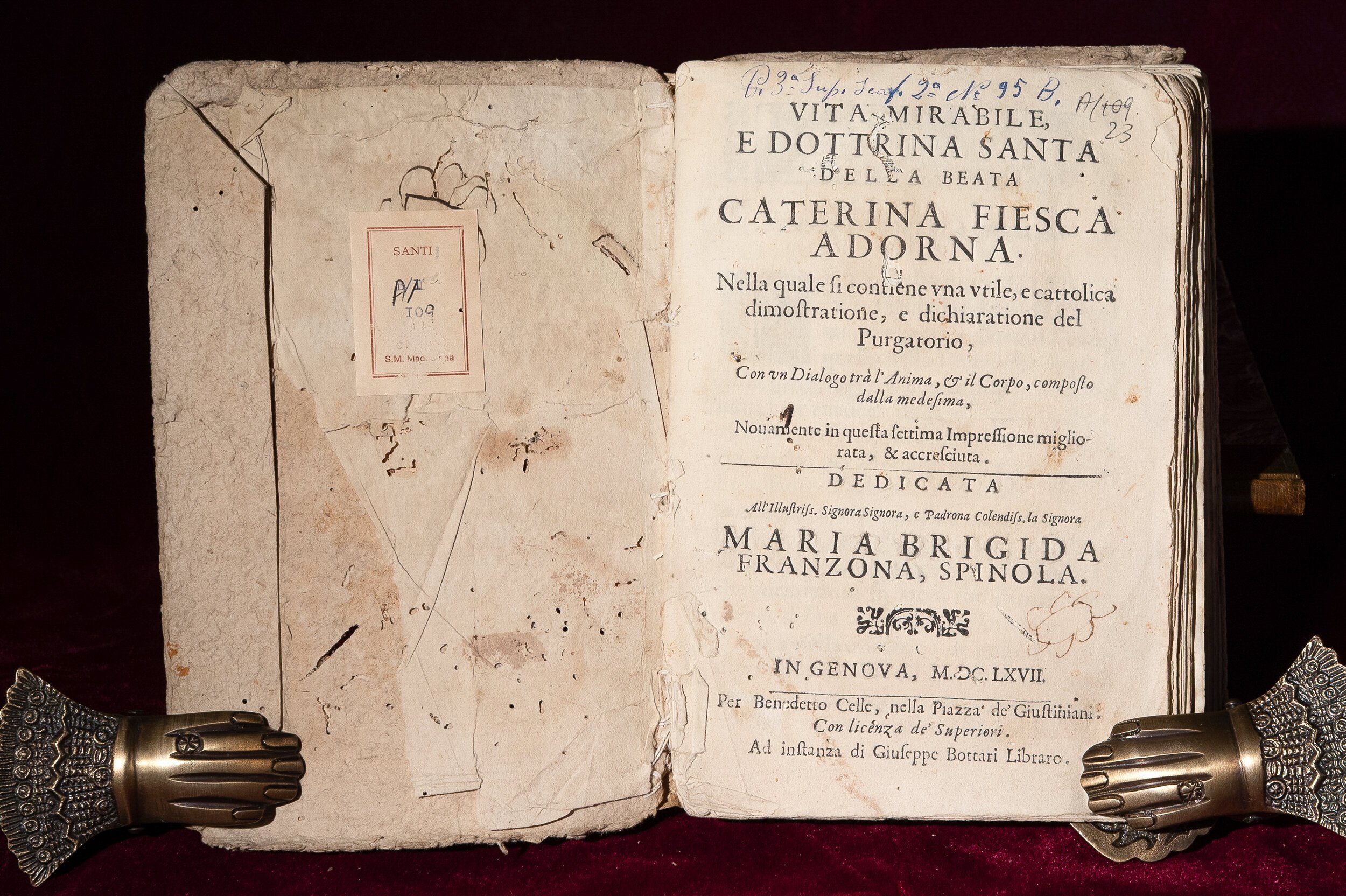 Image 1 of 16
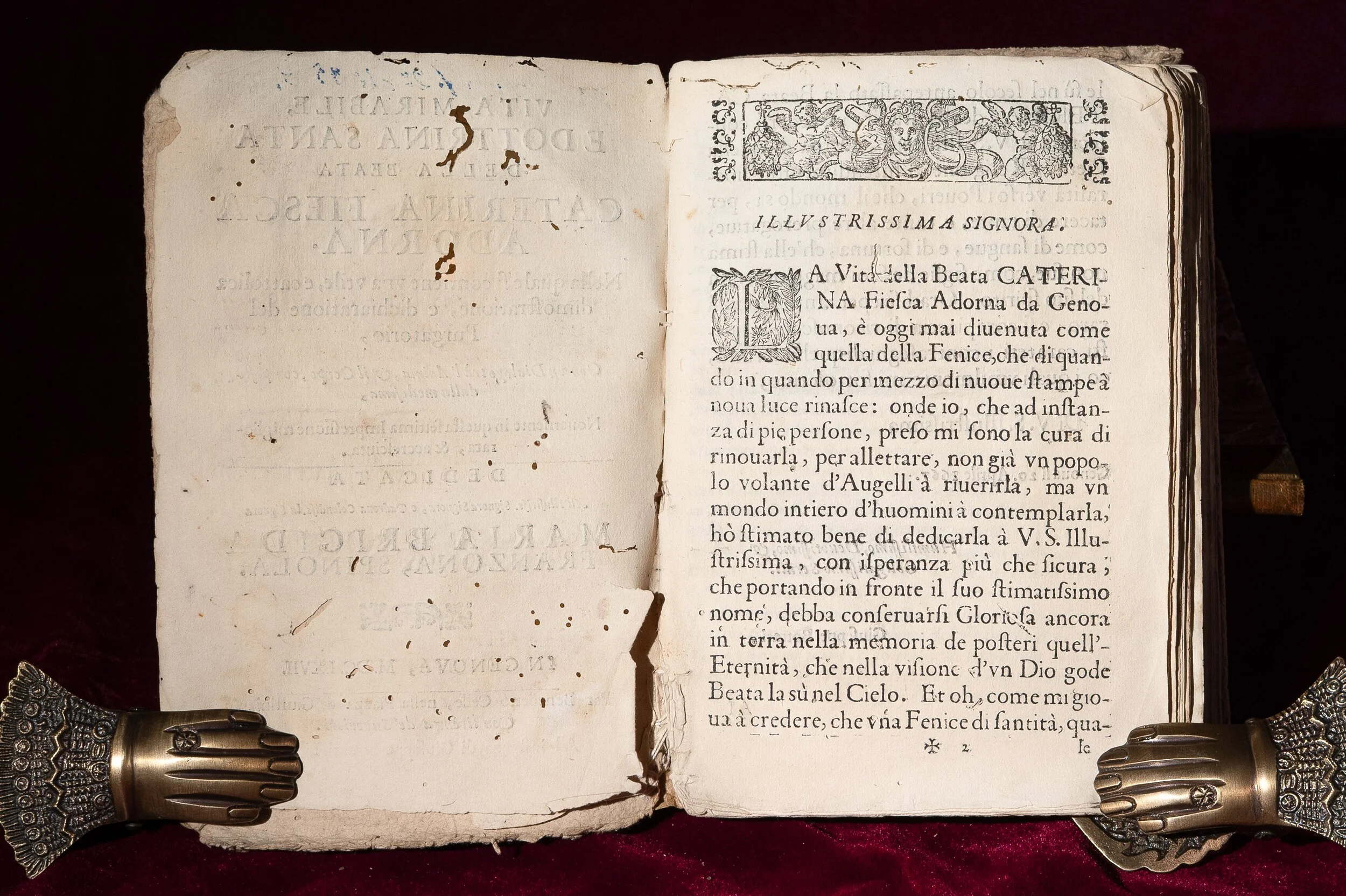 Image 2 of 16
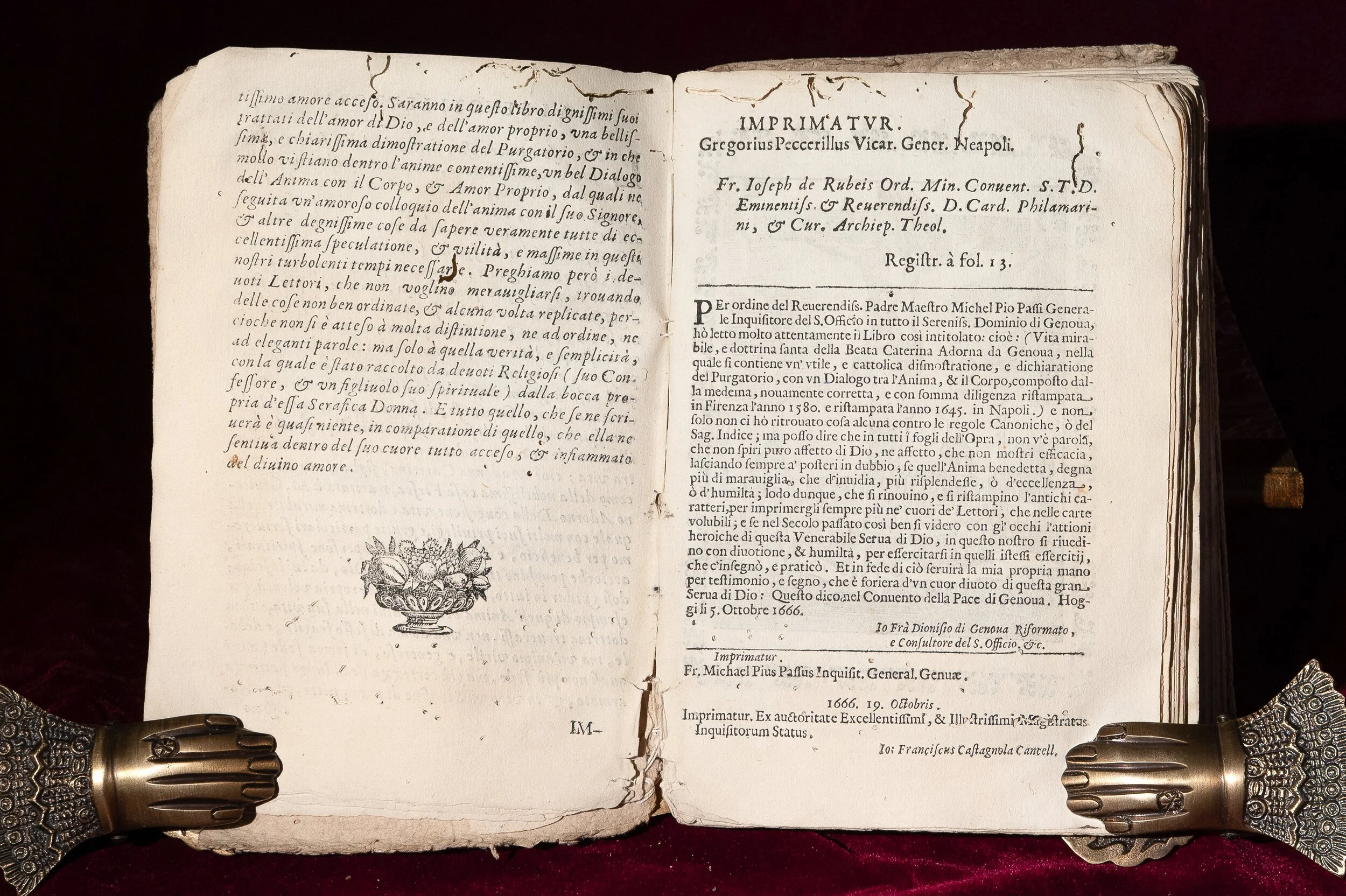 Image 3 of 16
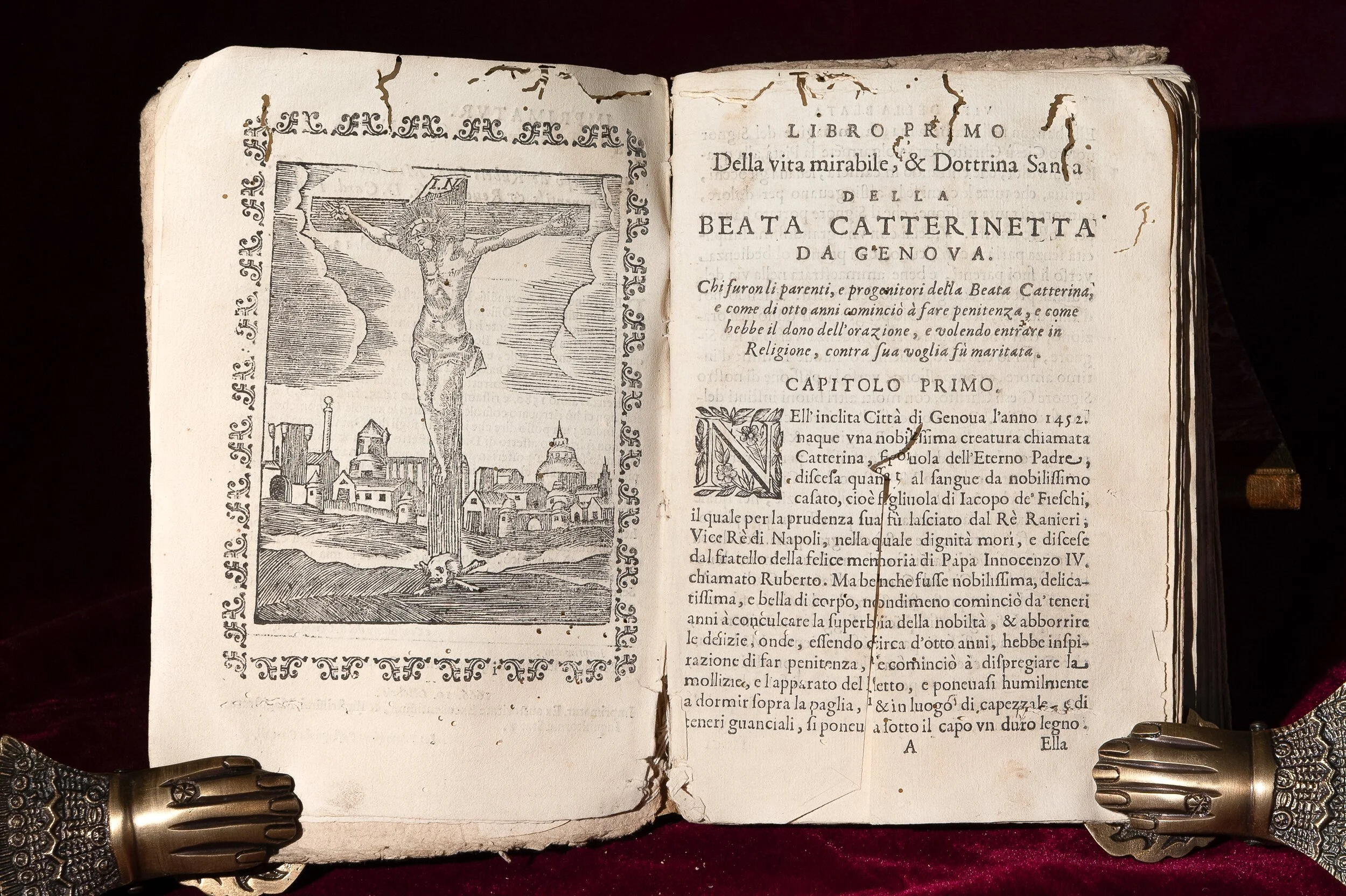 Image 4 of 16
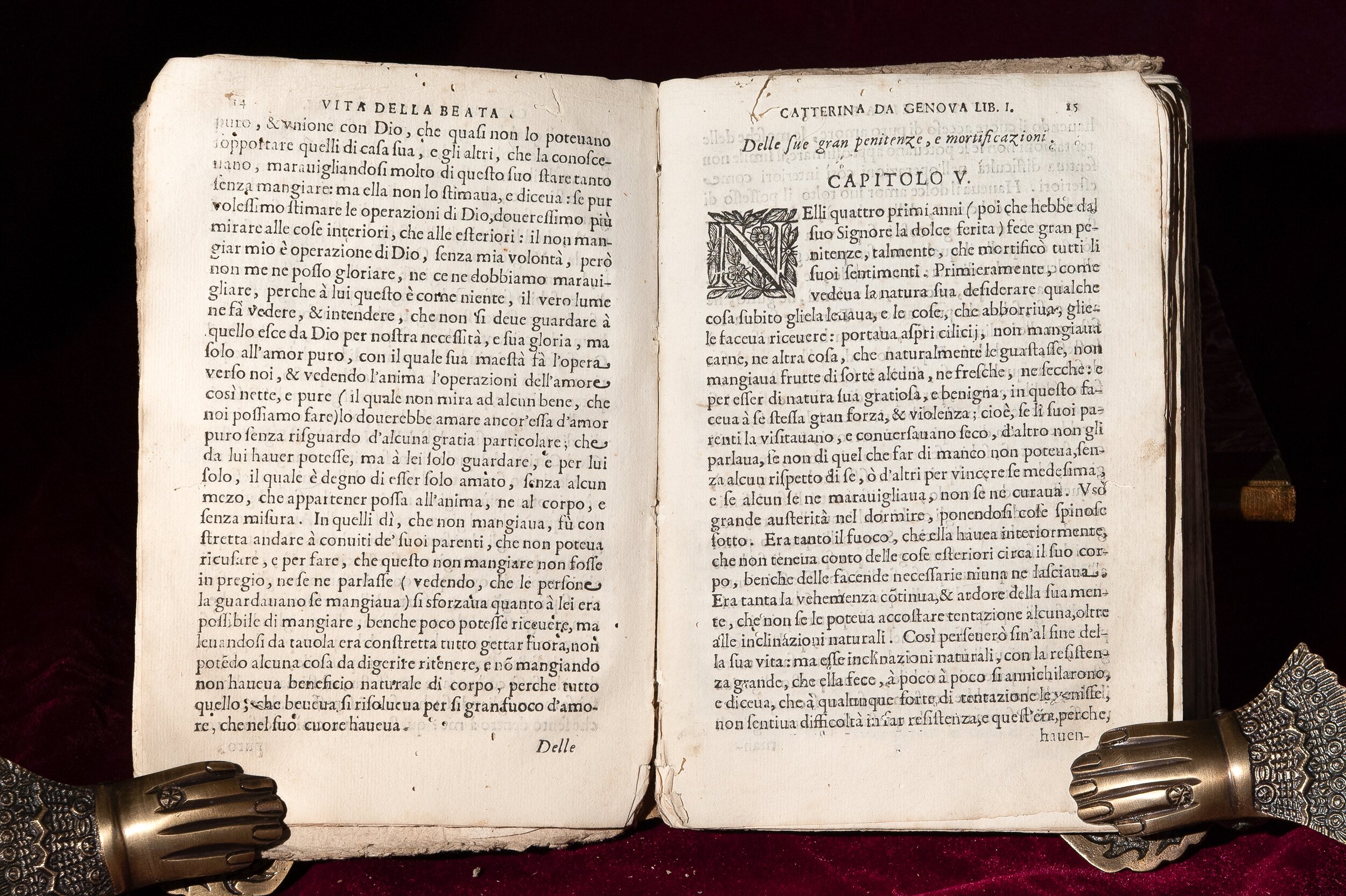 Image 5 of 16
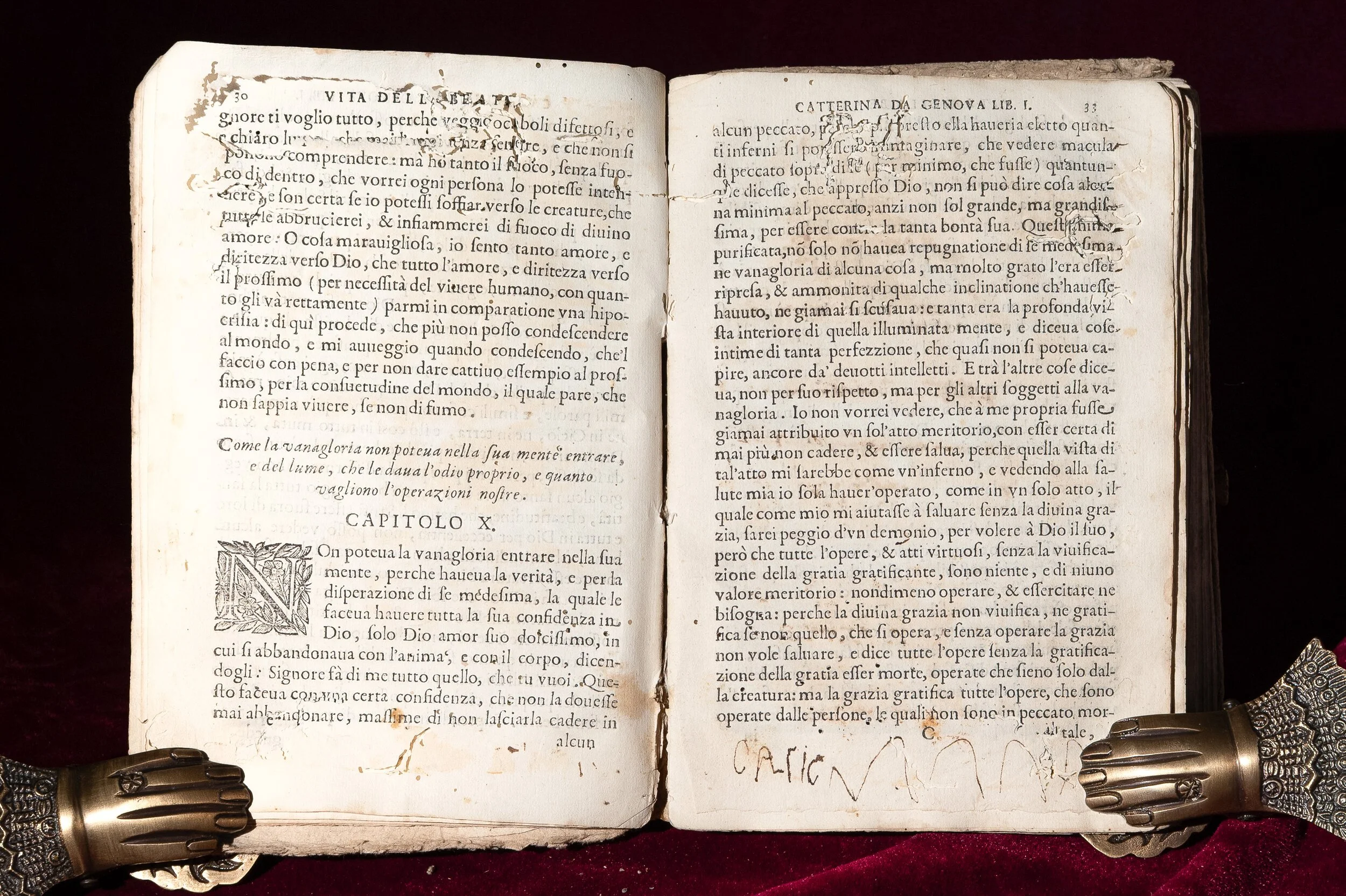 Image 6 of 16
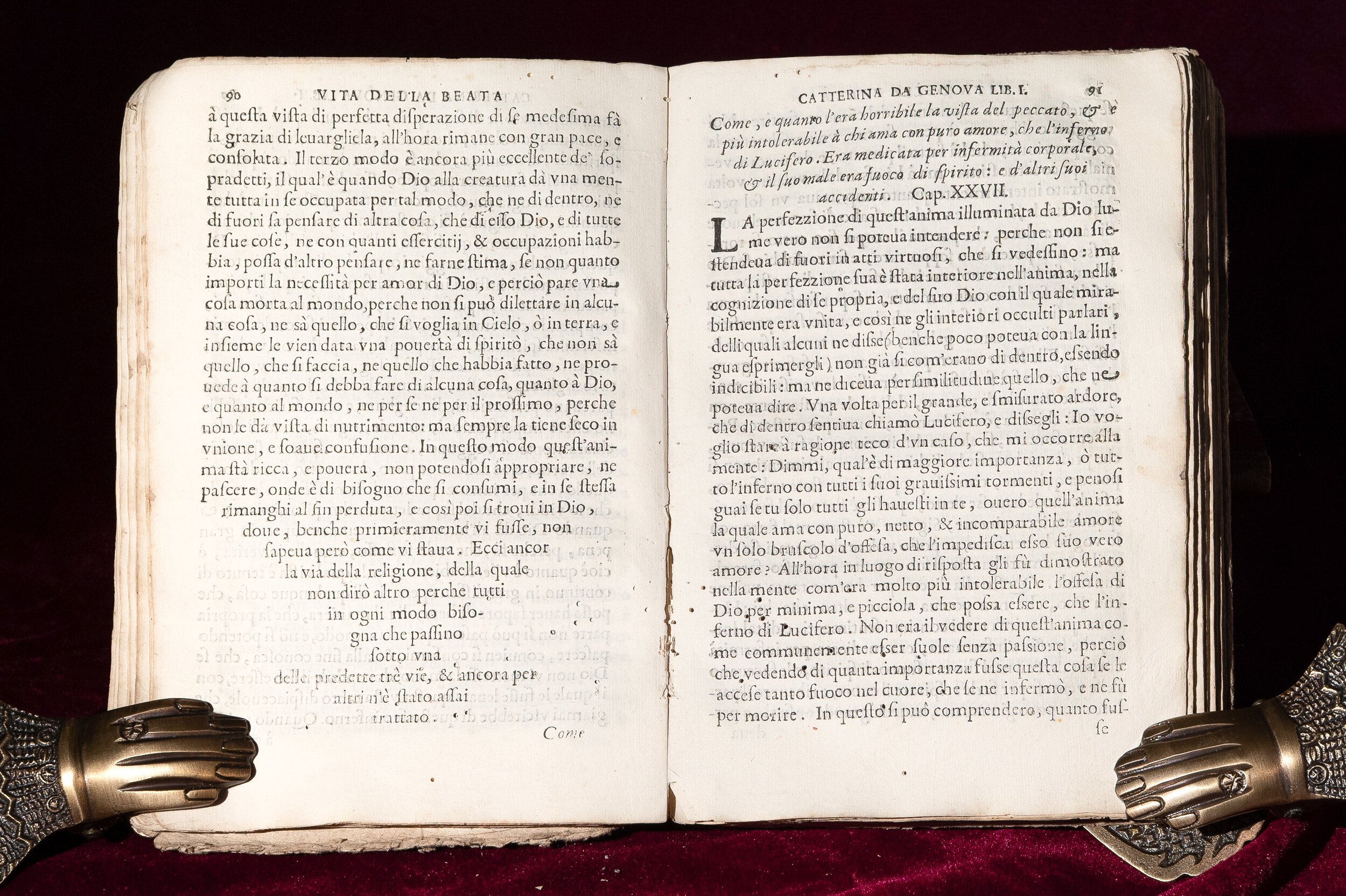 Image 7 of 16
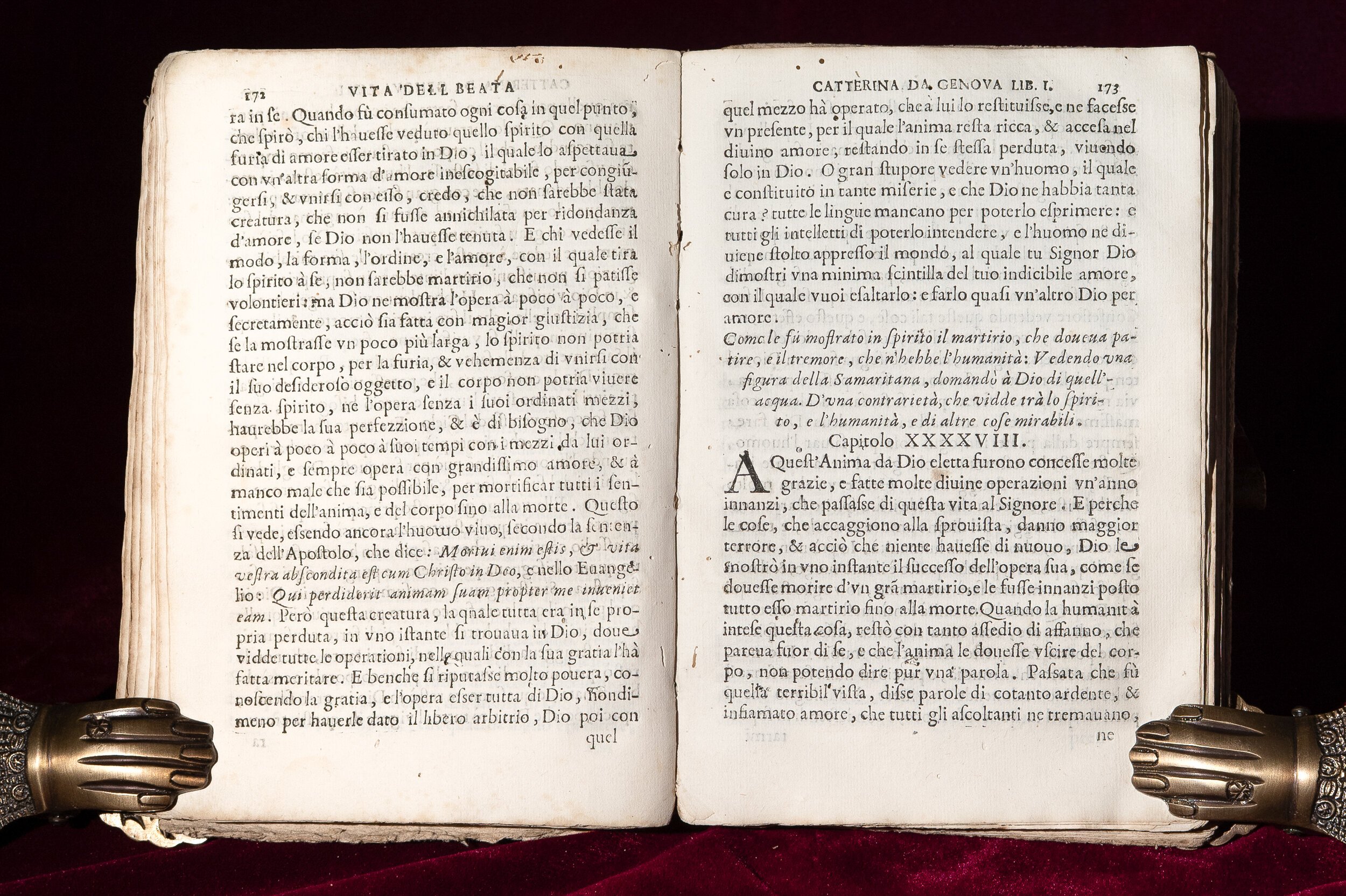 Image 8 of 16
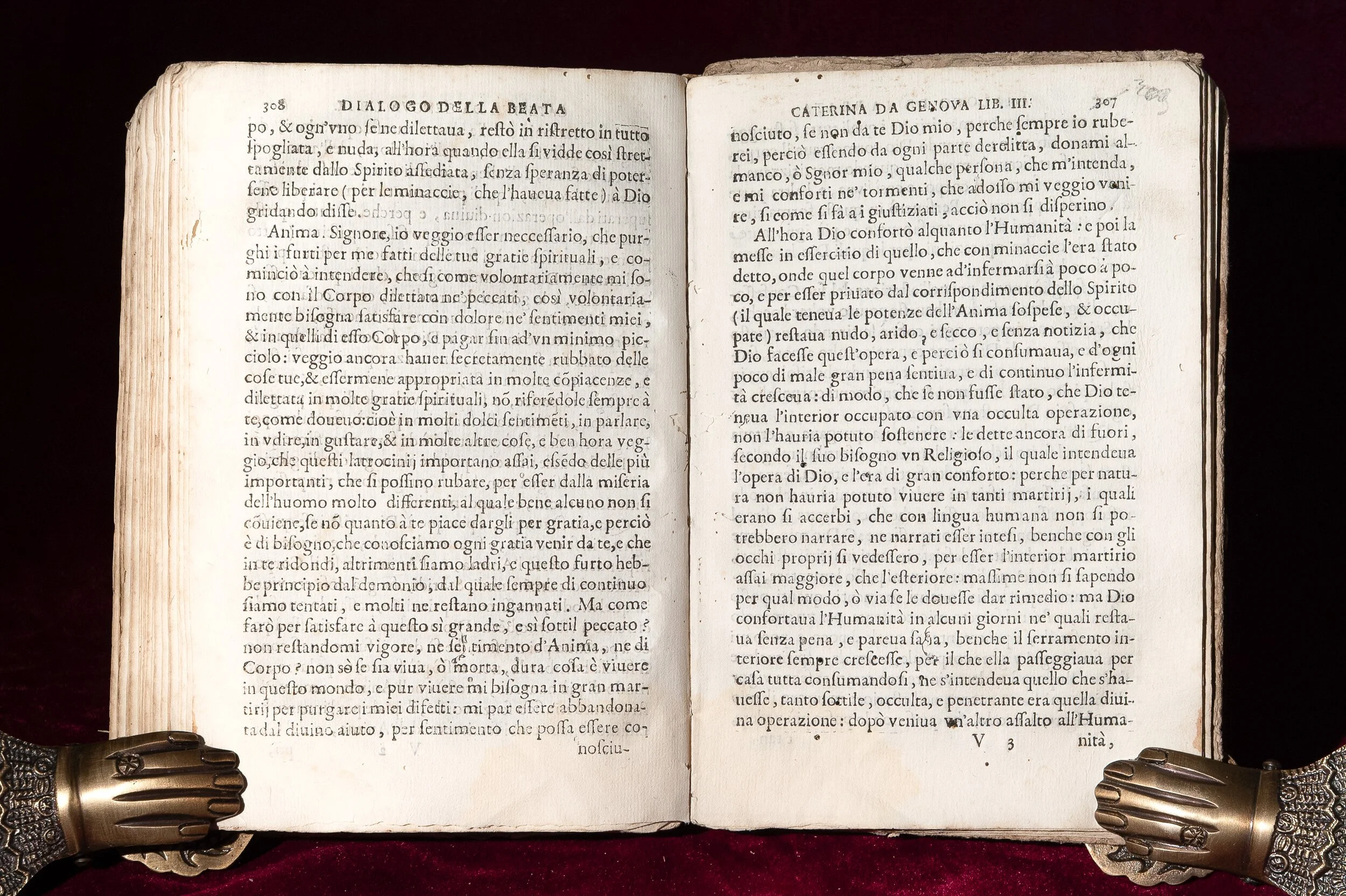 Image 9 of 16
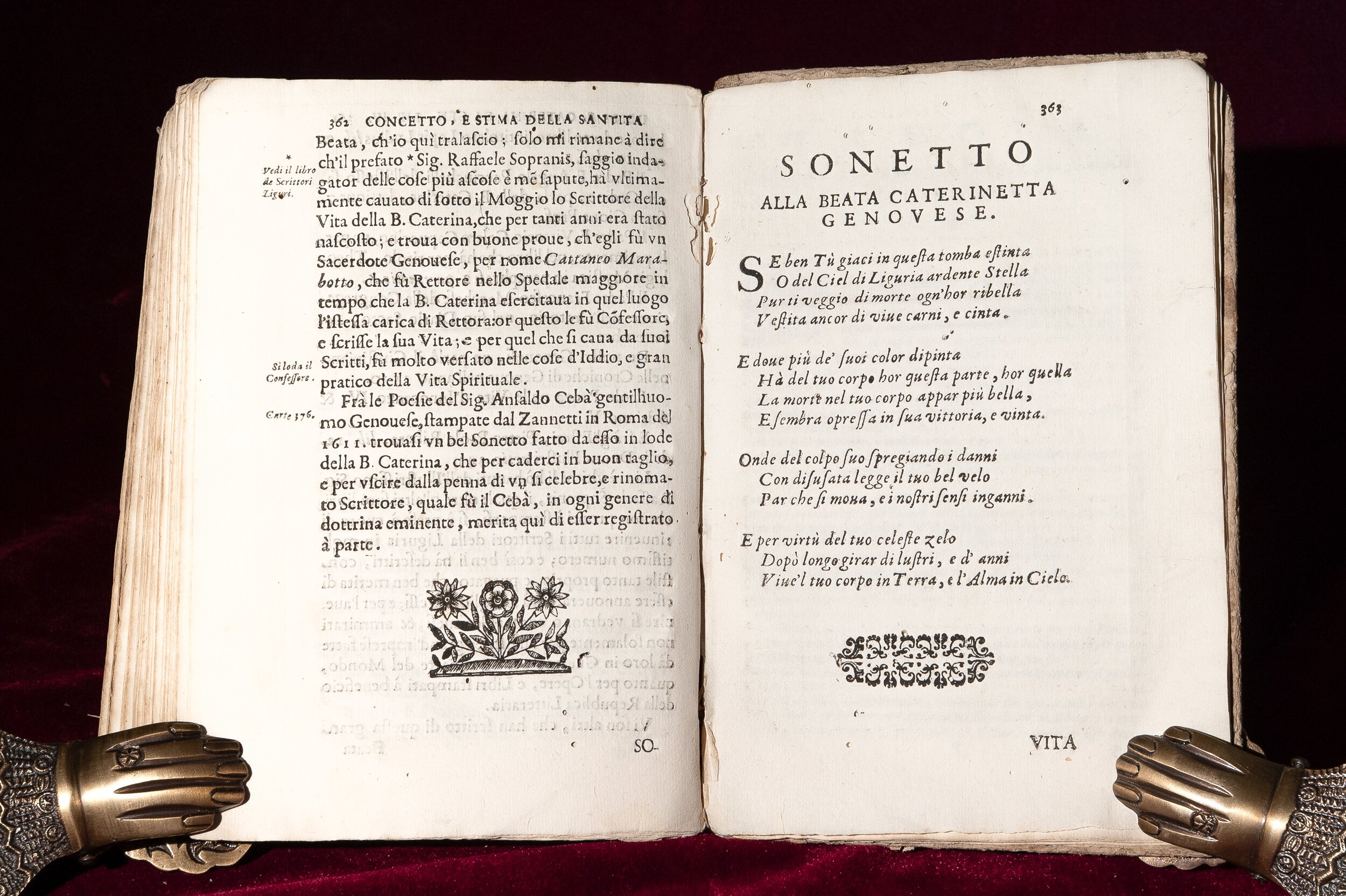 Image 10 of 16
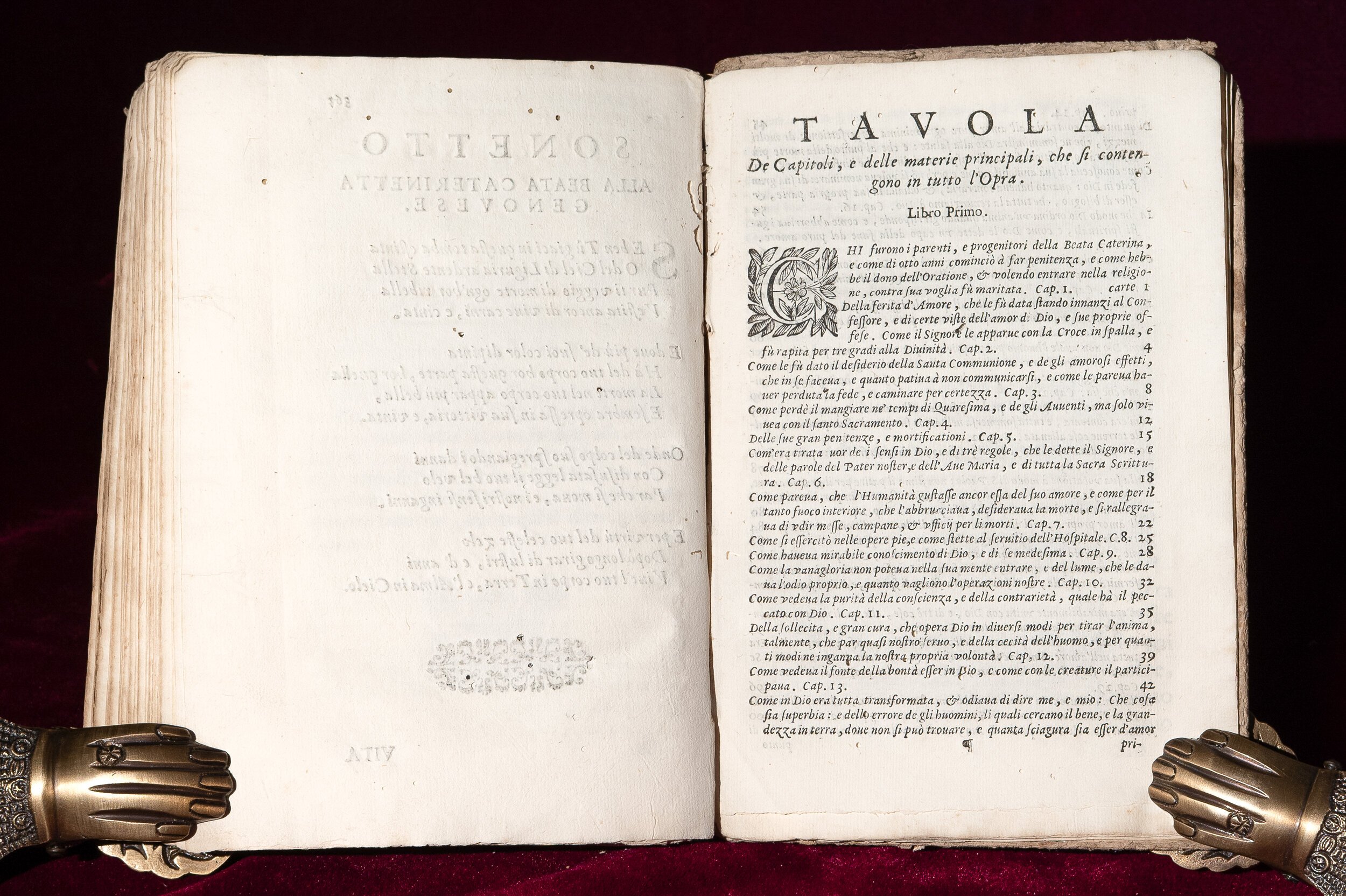 Image 11 of 16
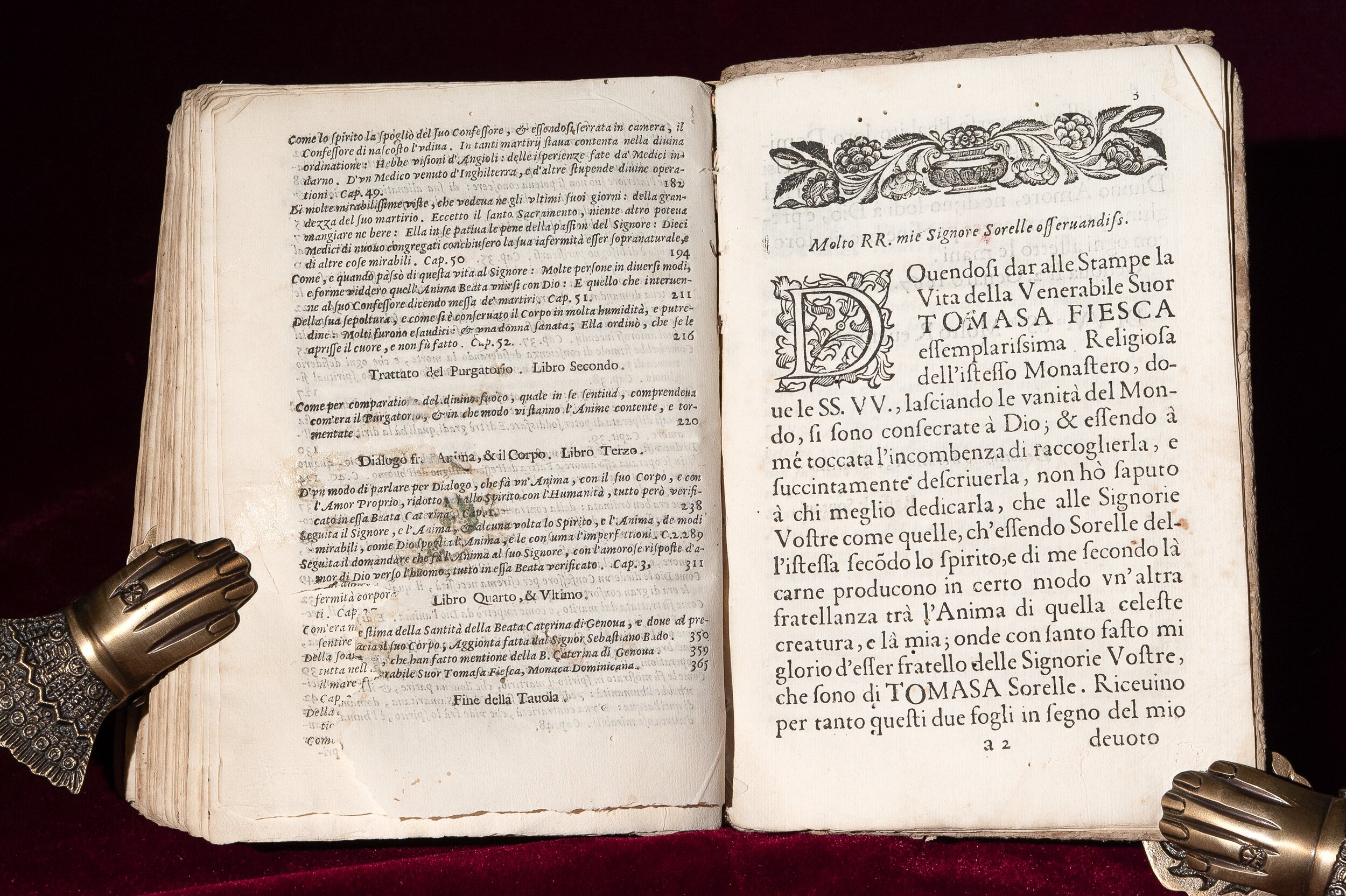 Image 12 of 16
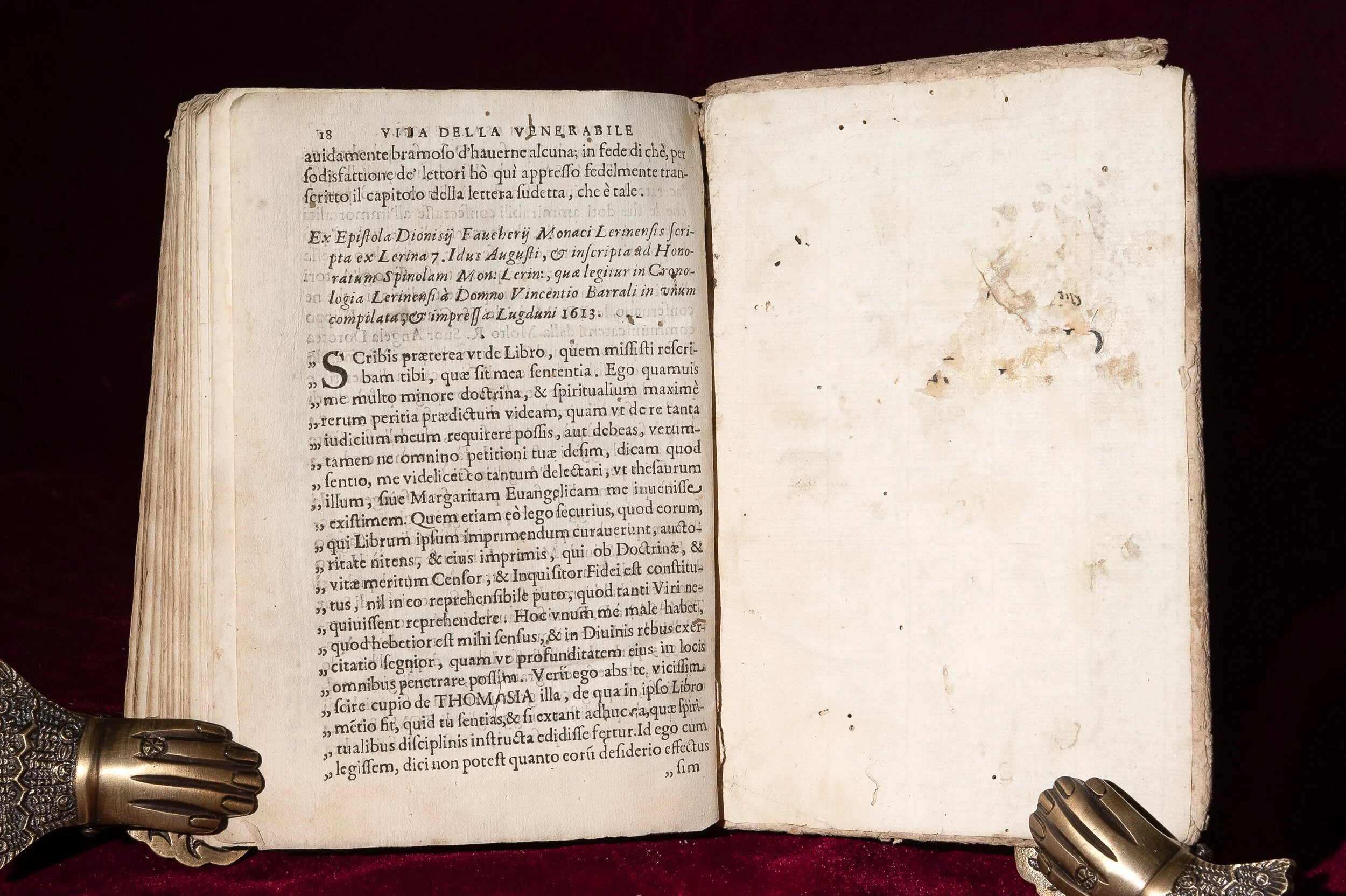 Image 13 of 16
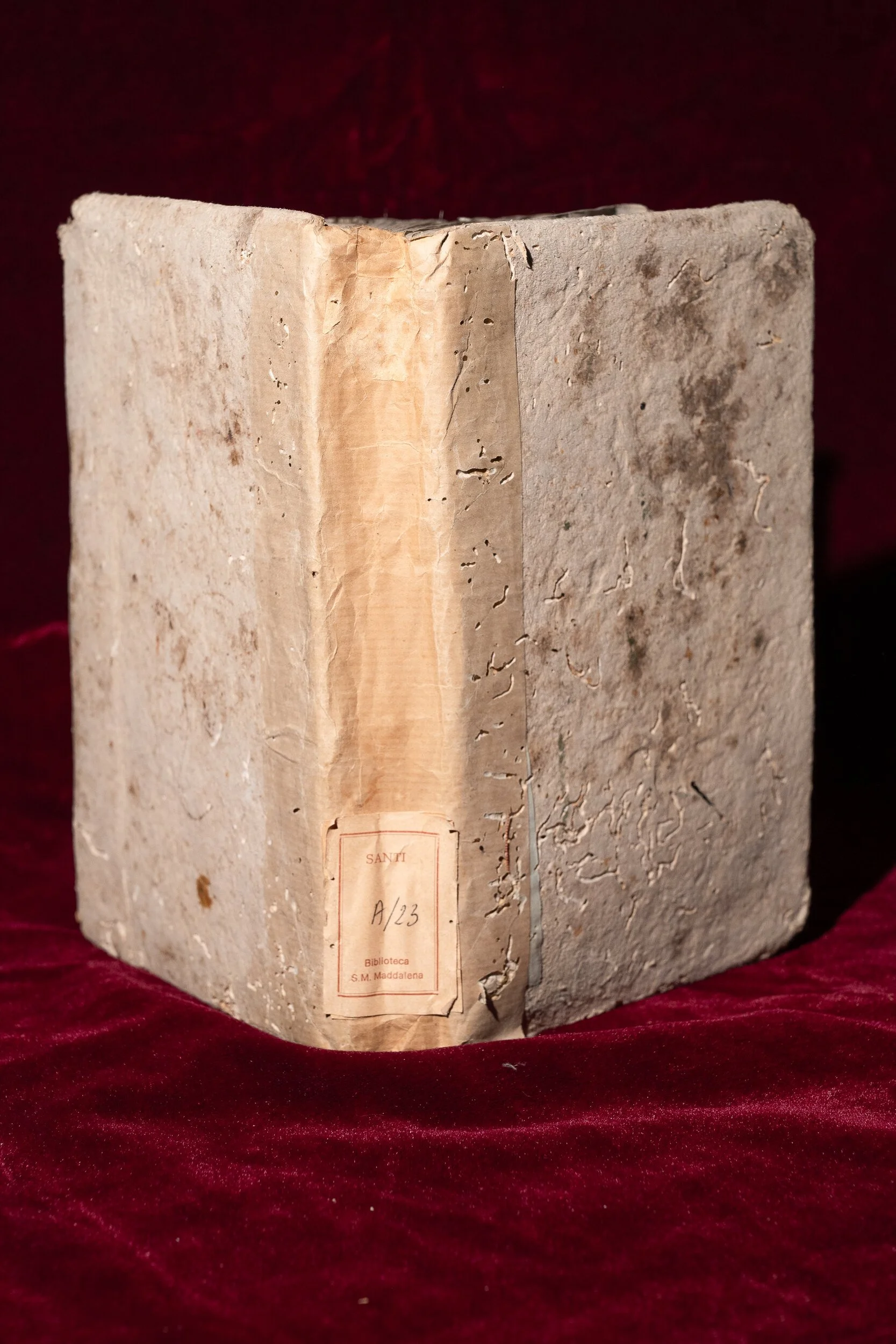 Image 14 of 16
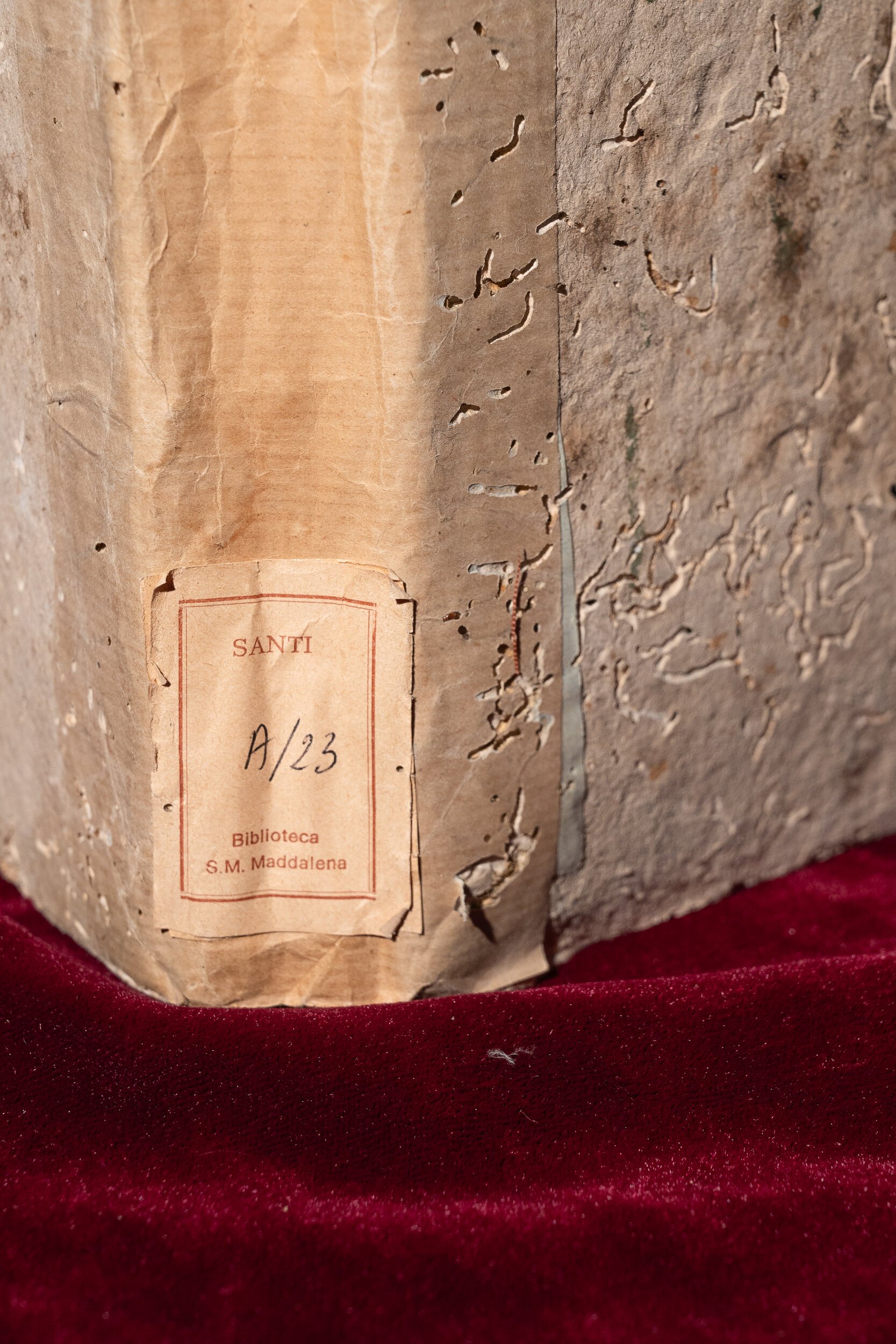 Image 15 of 16
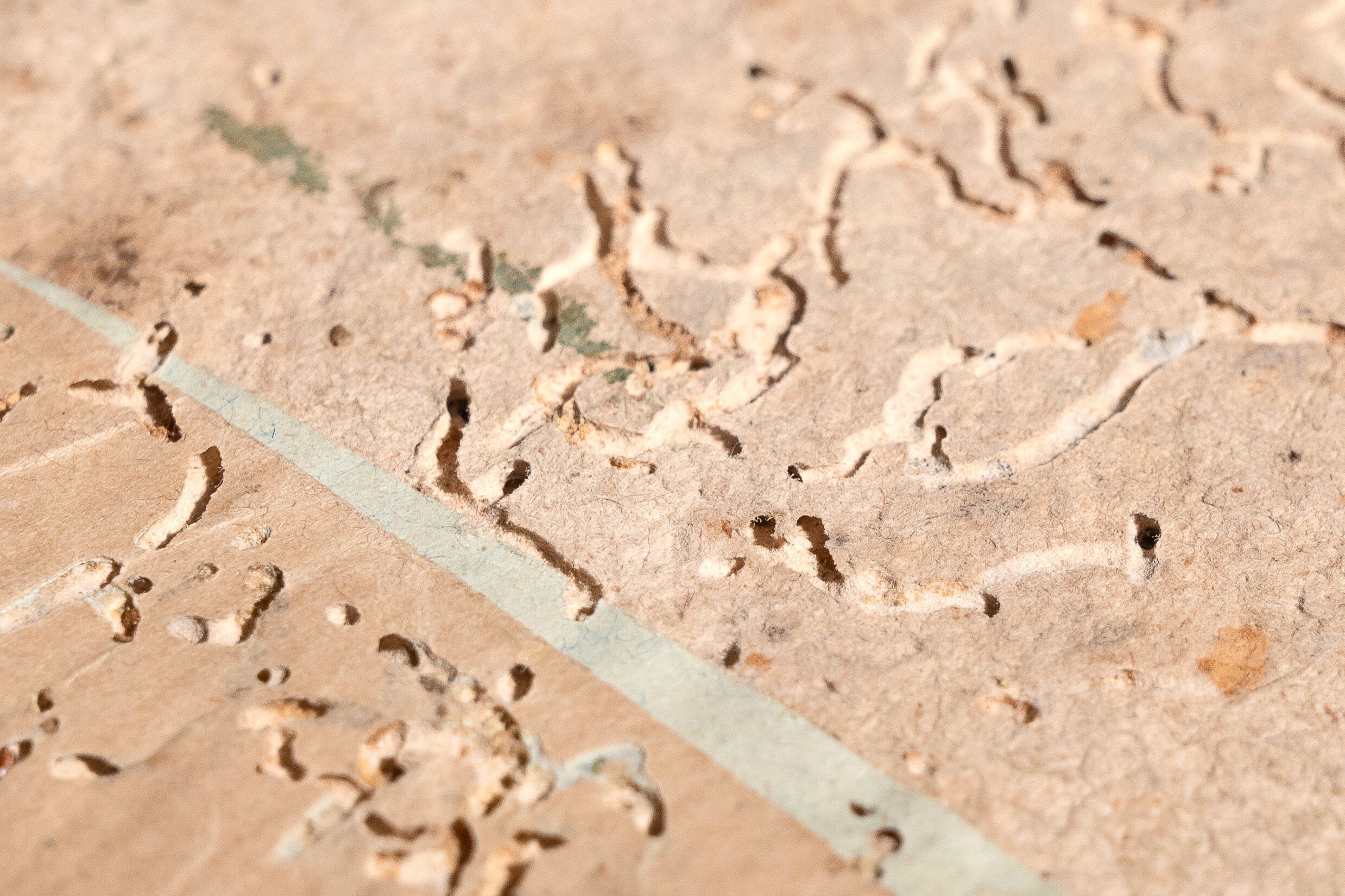 Image 16 of 16