The definitive Latin edition of Goclenius's treatise on physiognomy and chiromancy, enlarged from the first edition of 1625 with the addition of a second part of case studies and practical observations. A key text in the Western esoteric tradition, the work sits at the nexus of Renaissance natural magic, medical astrology, and the emerging culture of empirical observation: Goclenius reads the body as a microcosmic text inscribed by celestial forces, a signature theology that links him directly to the Paracelsian and Hermeticist currents of the sixteenth and early seventeenth centuries. For collectors of Western esotericism, this is one of the few early modern chiromantic works that attempts a genuinely systematic, theorized framework rather than merely cataloguing folk prognostications, and its rarity in commerce makes it a significant acquisition.
Rudolph Goclenius the Younger (1572–1621), physician and professor of physics, astronomy, and medicine at the University of Marburg, was among the most prominent defenders of occult natural philosophy in his generation, famous and infamous for his advocacy of the Paracelsian "weapon salve," a sympathetic cure that provoked fierce controversy across confessional lines. His chiromantic and physiognomic work, published posthumously, presents divination as a legitimate branch of natural philosophy rather than mere superstition.
The work is illustrated with sixteen woodcuts, including detailed chiromantic hand diagrams accompanying specific case studies, among them the palm of a Swedish nobleman from Linköping, beheaded in 1598. The volume retains its original dedication to Charles Philip, Duke of Finland (1601–1622), youngest son of Charles IX of Sweden. A second part, with its own title page, gathers Memorabilia Experimenta et Observationes Chiromanticae, further case observations with chiromantic judgments. The text concludes with a full errata leaf.
GOCLENIUS, Rudolph (the Younger). Physiognomica et Chiromantica Specialia, hactenus tanquam secretissima suppressa, nunc vero primum... in lucem emissa... Nunc denuo recognita... [with:] Memorabilia Experimenta, et Observationes Chiromanticae, cum speciali judicio, hactenus a nemine visa. Hamburg: Johann Naumann, 1661. Octavo (158 × 95 mm). 280, [2] pp., title printed in red and black with woodcut printer's device ("Supra Sidera Tellus"), 16 woodcuts in text, woodcut head- and tailpieces. Contemporary brown calf, spine with raised bands and gilt ornamental tooling in compartments. Binding worn, leather rubbed and flaking on boards, spine darkened; text lightly browned, occasional minor spotting. Armorial bookplate of Leonhard [?]obaan to front pastedown; early ink ownership inscription to title page (partially legible). A good, complete copy in its first binding.
The definitive Latin edition of Goclenius's treatise on physiognomy and chiromancy, enlarged from the first edition of 1625 with the addition of a second part of case studies and practical observations. A key text in the Western esoteric tradition, the work sits at the nexus of Renaissance natural magic, medical astrology, and the emerging culture of empirical observation: Goclenius reads the body as a microcosmic text inscribed by celestial forces, a signature theology that links him directly to the Paracelsian and Hermeticist currents of the sixteenth and early seventeenth centuries. For collectors of Western esotericism, this is one of the few early modern chiromantic works that attempts a genuinely systematic, theorized framework rather than merely cataloguing folk prognostications, and its rarity in commerce makes it a significant acquisition.
Rudolph Goclenius the Younger (1572–1621), physician and professor of physics, astronomy, and medicine at the University of Marburg, was among the most prominent defenders of occult natural philosophy in his generation, famous and infamous for his advocacy of the Paracelsian "weapon salve," a sympathetic cure that provoked fierce controversy across confessional lines. His chiromantic and physiognomic work, published posthumously, presents divination as a legitimate branch of natural philosophy rather than mere superstition.
The work is illustrated with sixteen woodcuts, including detailed chiromantic hand diagrams accompanying specific case studies, among them the palm of a Swedish nobleman from Linköping, beheaded in 1598. The volume retains its original dedication to Charles Philip, Duke of Finland (1601–1622), youngest son of Charles IX of Sweden. A second part, with its own title page, gathers Memorabilia Experimenta et Observationes Chiromanticae, further case observations with chiromantic judgments. The text concludes with a full errata leaf.
GOCLENIUS, Rudolph (the Younger). Physiognomica et Chiromantica Specialia, hactenus tanquam secretissima suppressa, nunc vero primum... in lucem emissa... Nunc denuo recognita... [with:] Memorabilia Experimenta, et Observationes Chiromanticae, cum speciali judicio, hactenus a nemine visa. Hamburg: Johann Naumann, 1661. Octavo (158 × 95 mm). 280, [2] pp., title printed in red and black with woodcut printer's device ("Supra Sidera Tellus"), 16 woodcuts in text, woodcut head- and tailpieces. Contemporary brown calf, spine with raised bands and gilt ornamental tooling in compartments. Binding worn, leather rubbed and flaking on boards, spine darkened; text lightly browned, occasional minor spotting. Armorial bookplate of Leonhard [?]obaan to front pastedown; early ink ownership inscription to title page (partially legible). A good, complete copy in its first binding.

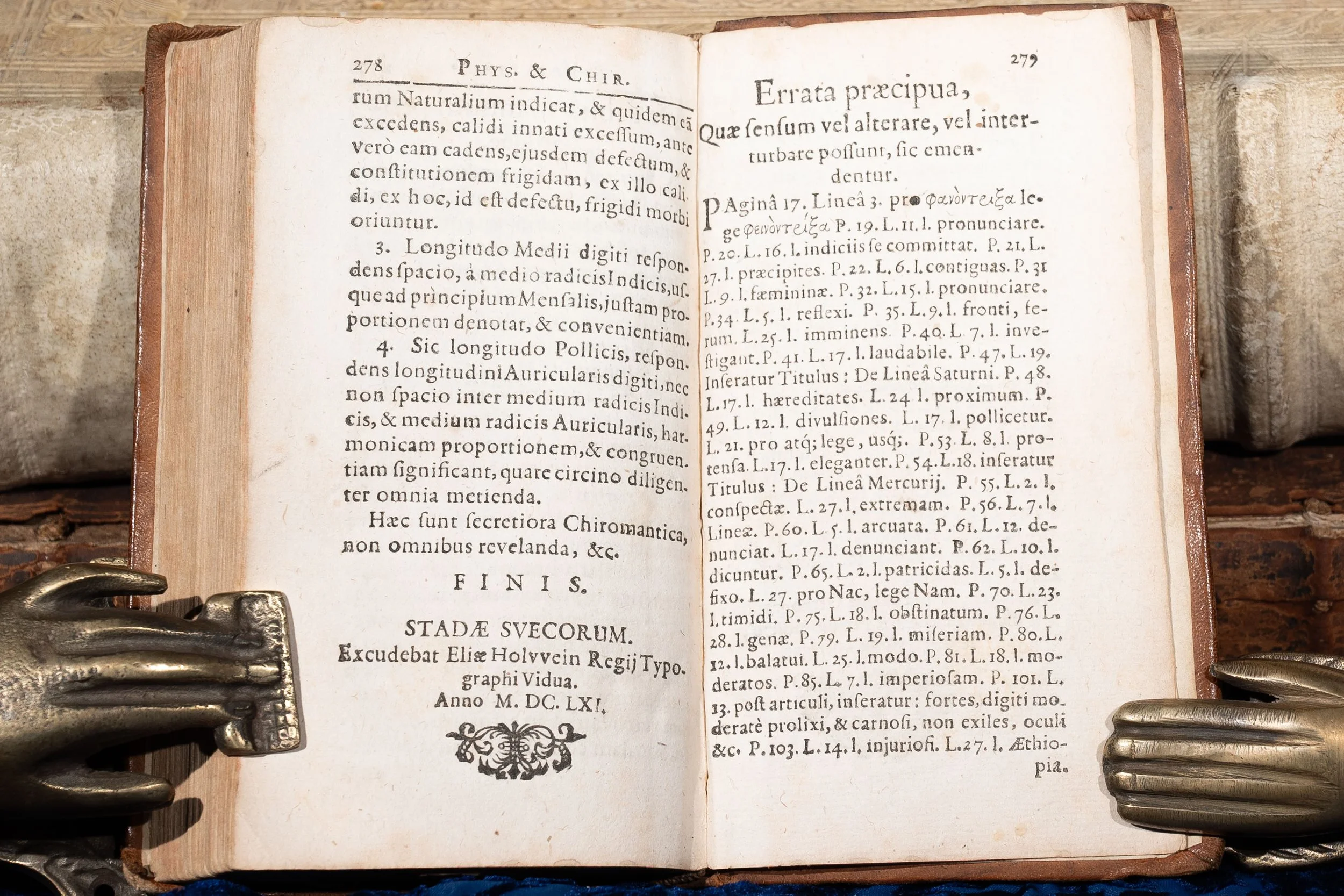 Image 1 of 12
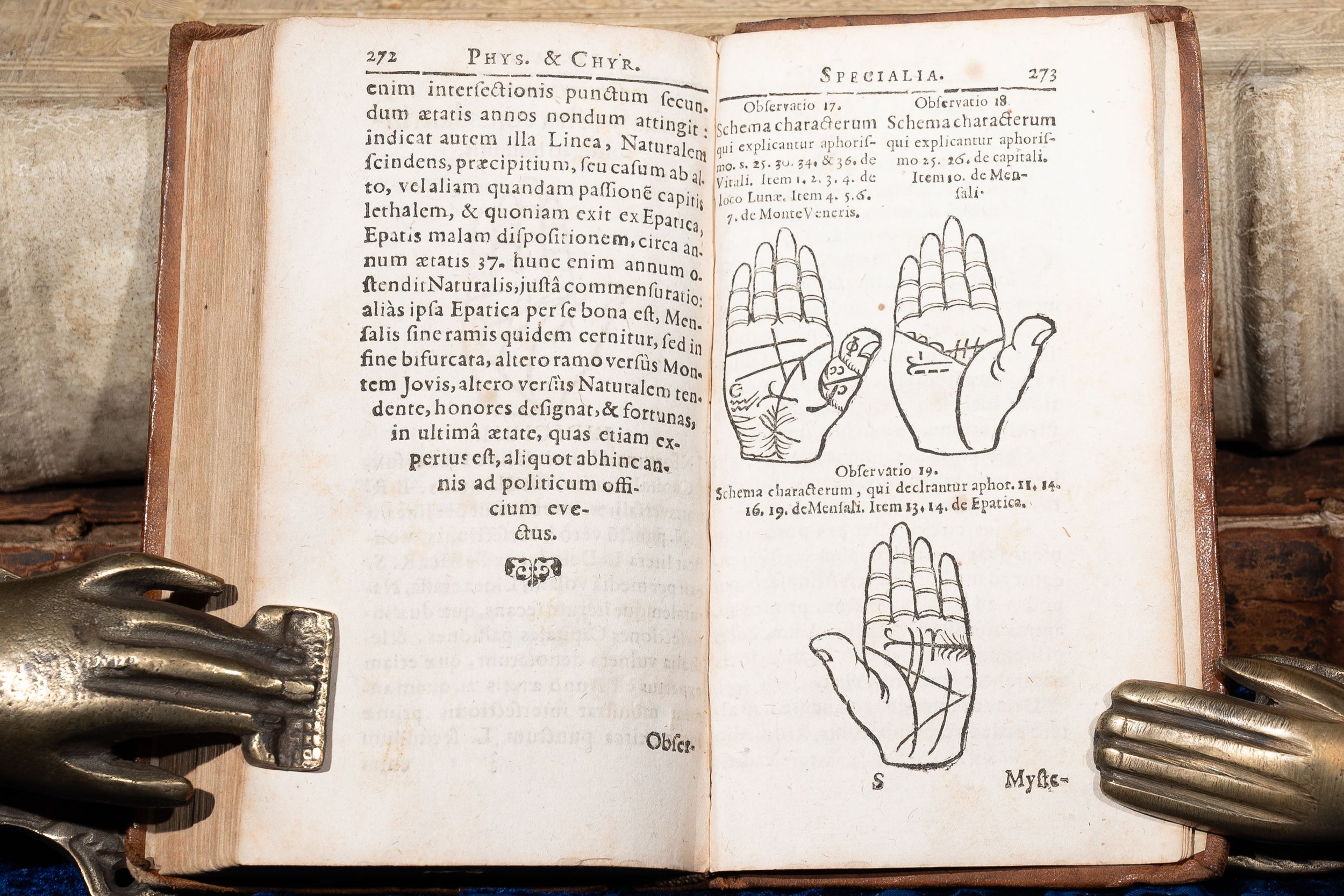 Image 2 of 12
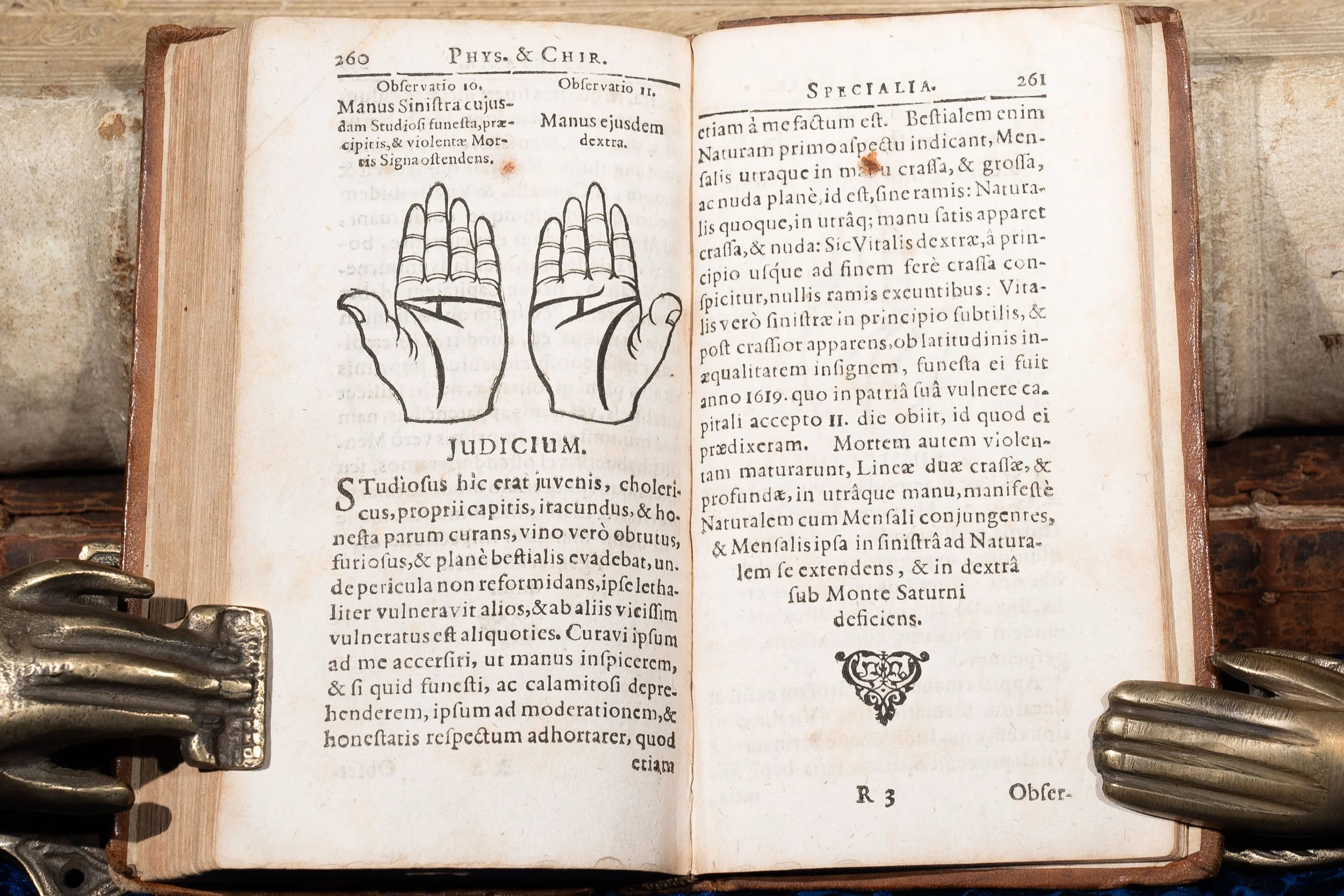 Image 3 of 12
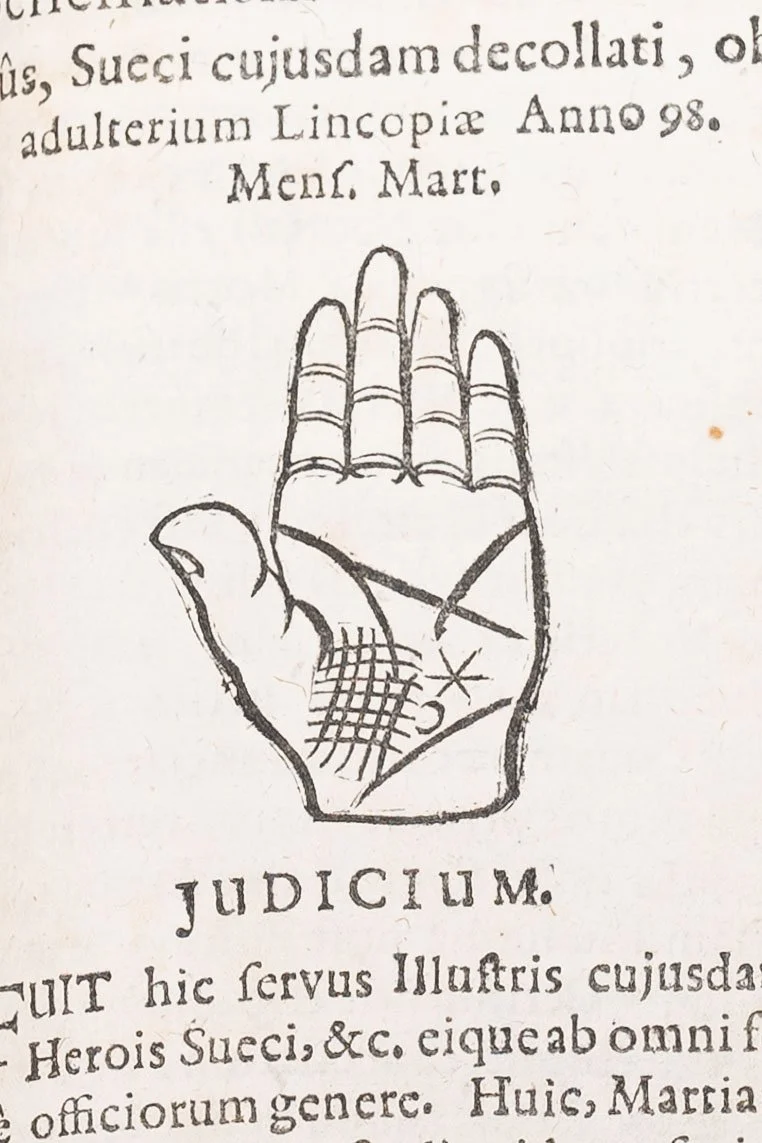 Image 4 of 12
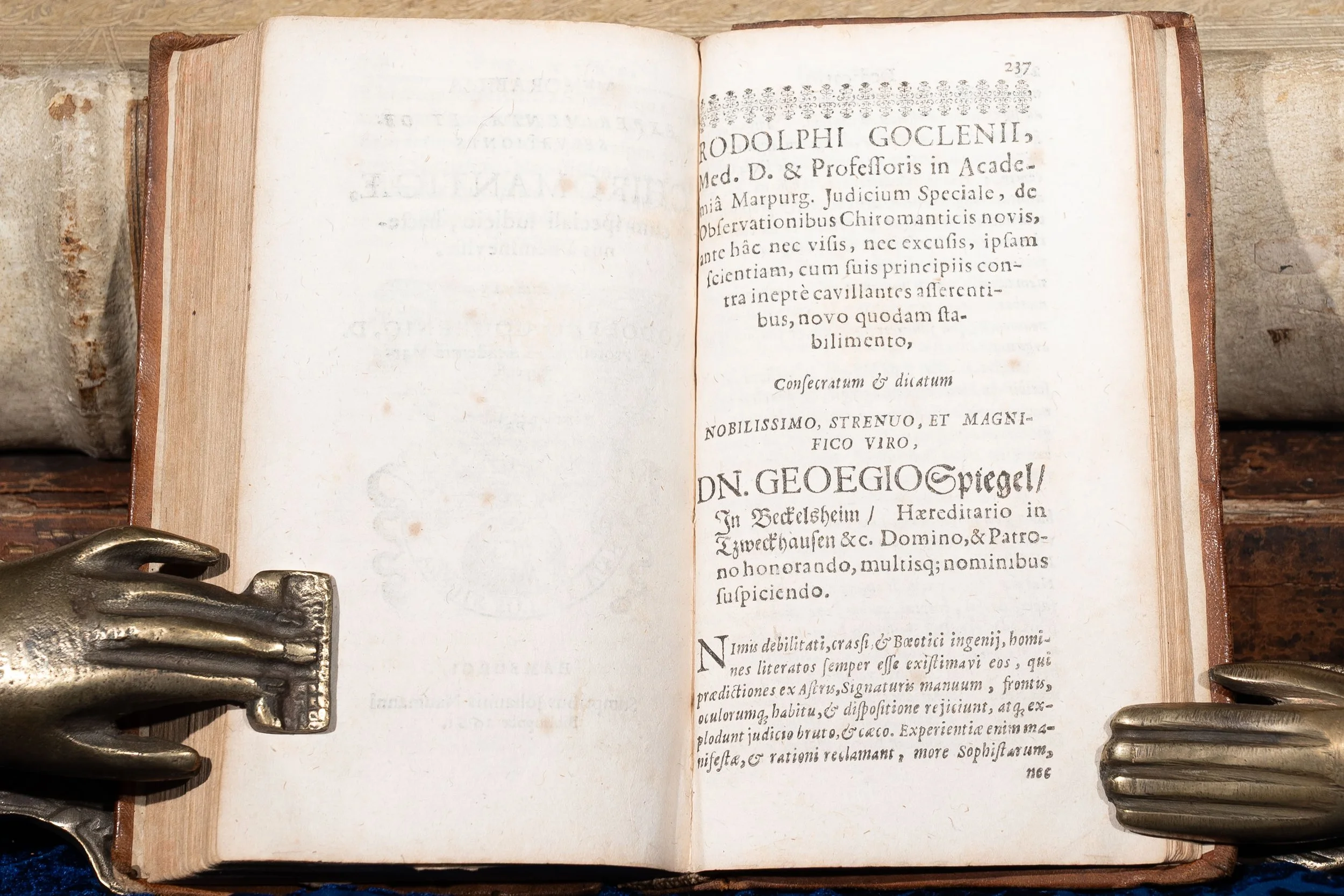 Image 5 of 12
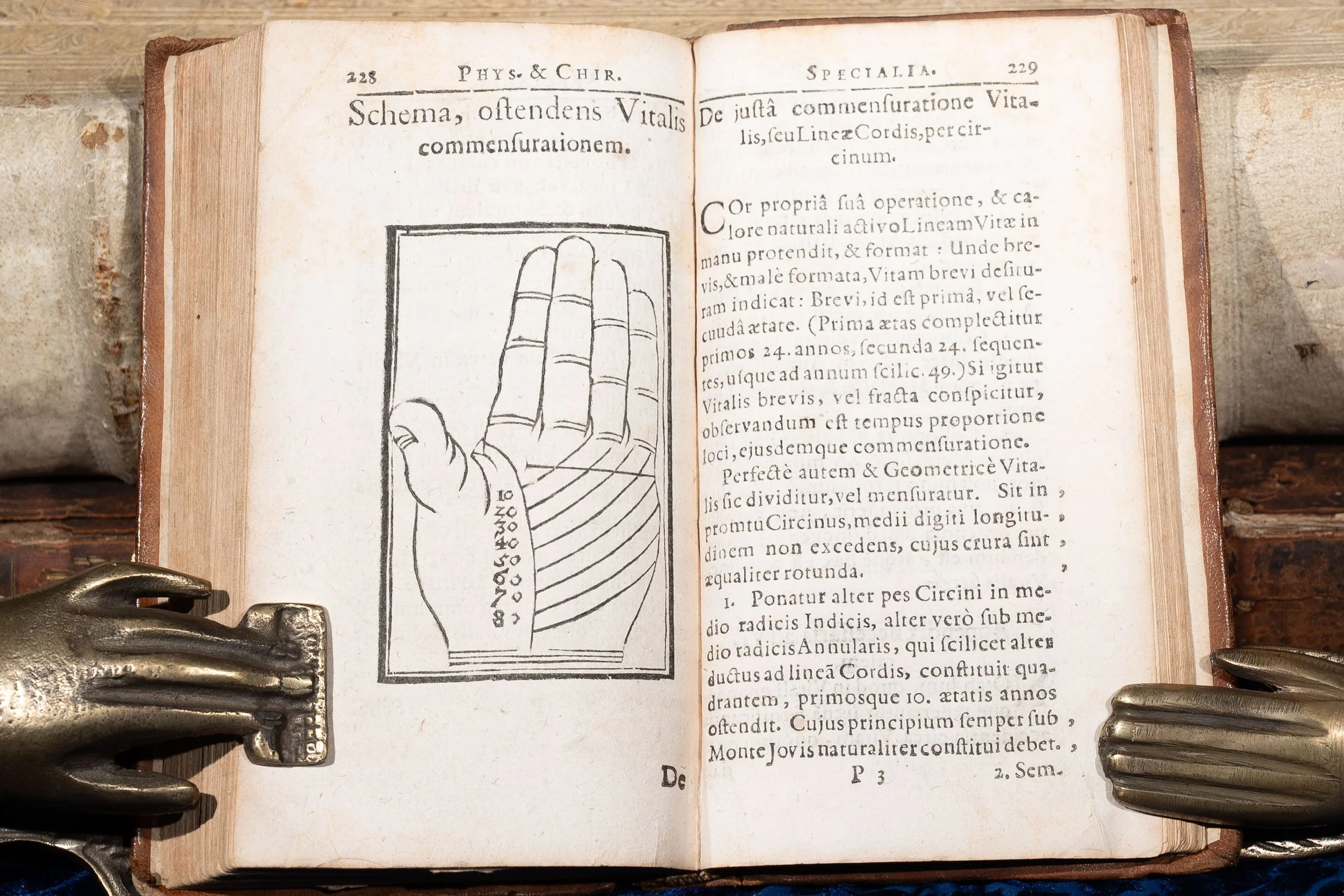 Image 6 of 12
 Image 7 of 12
 Image 8 of 12
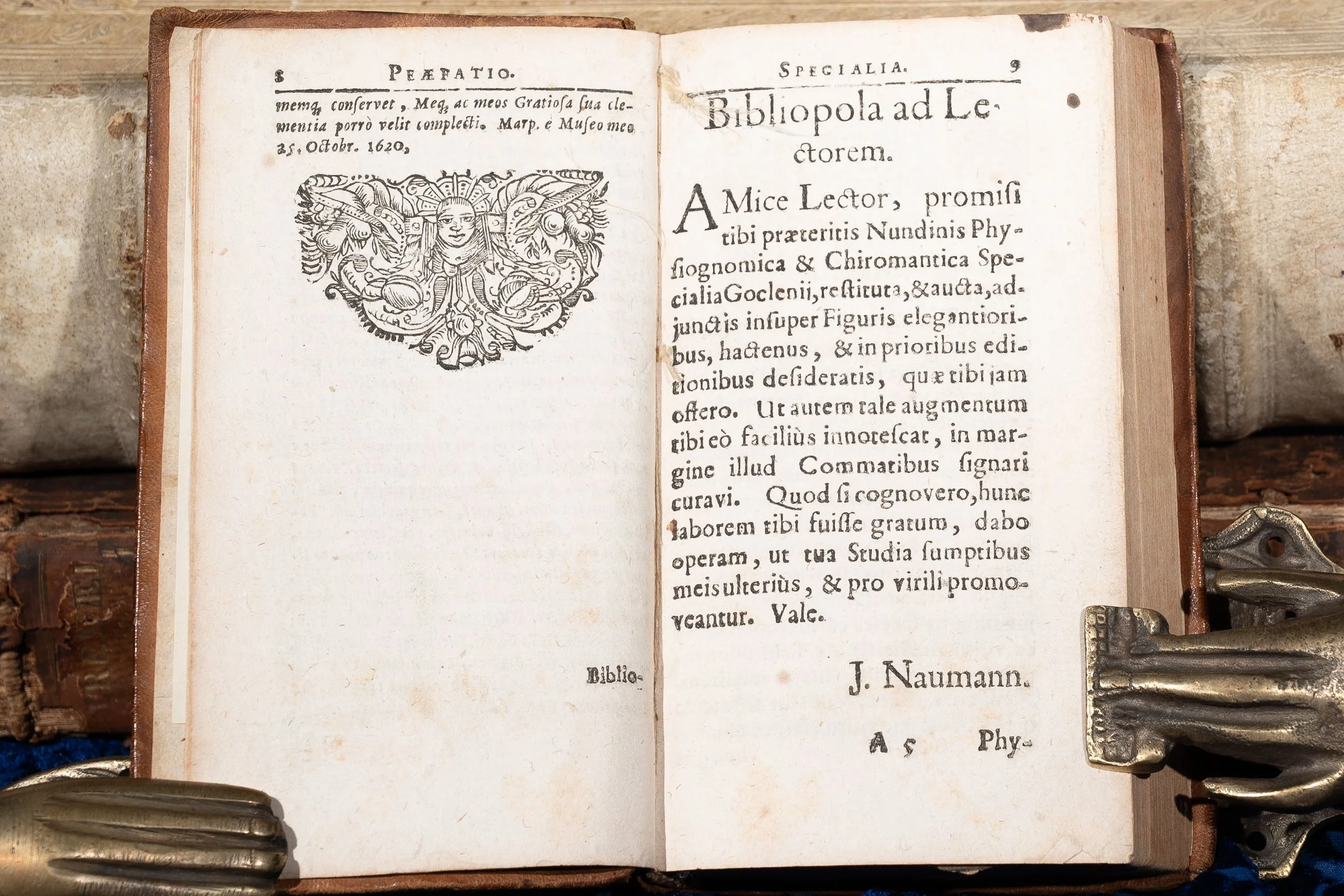 Image 9 of 12
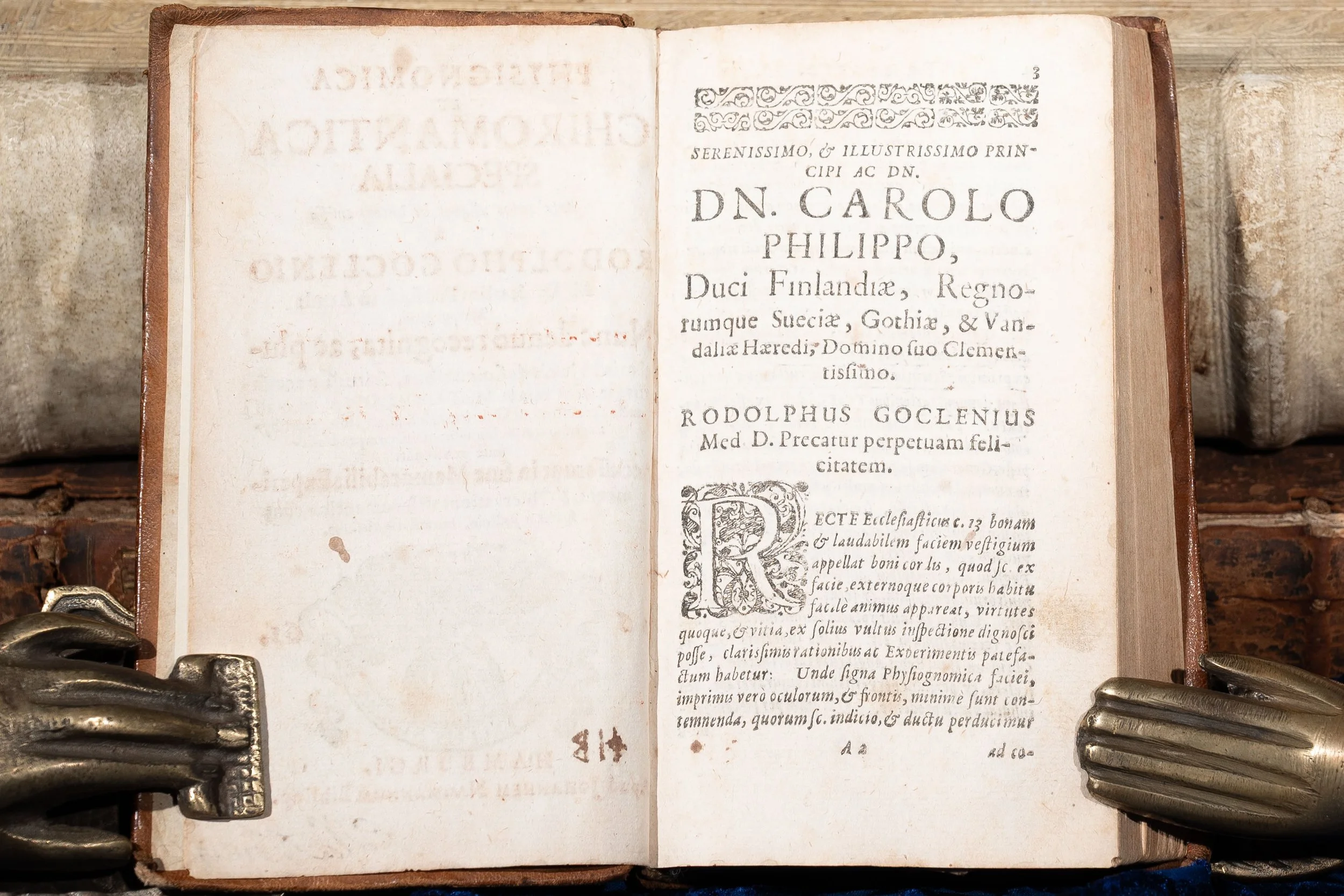 Image 10 of 12
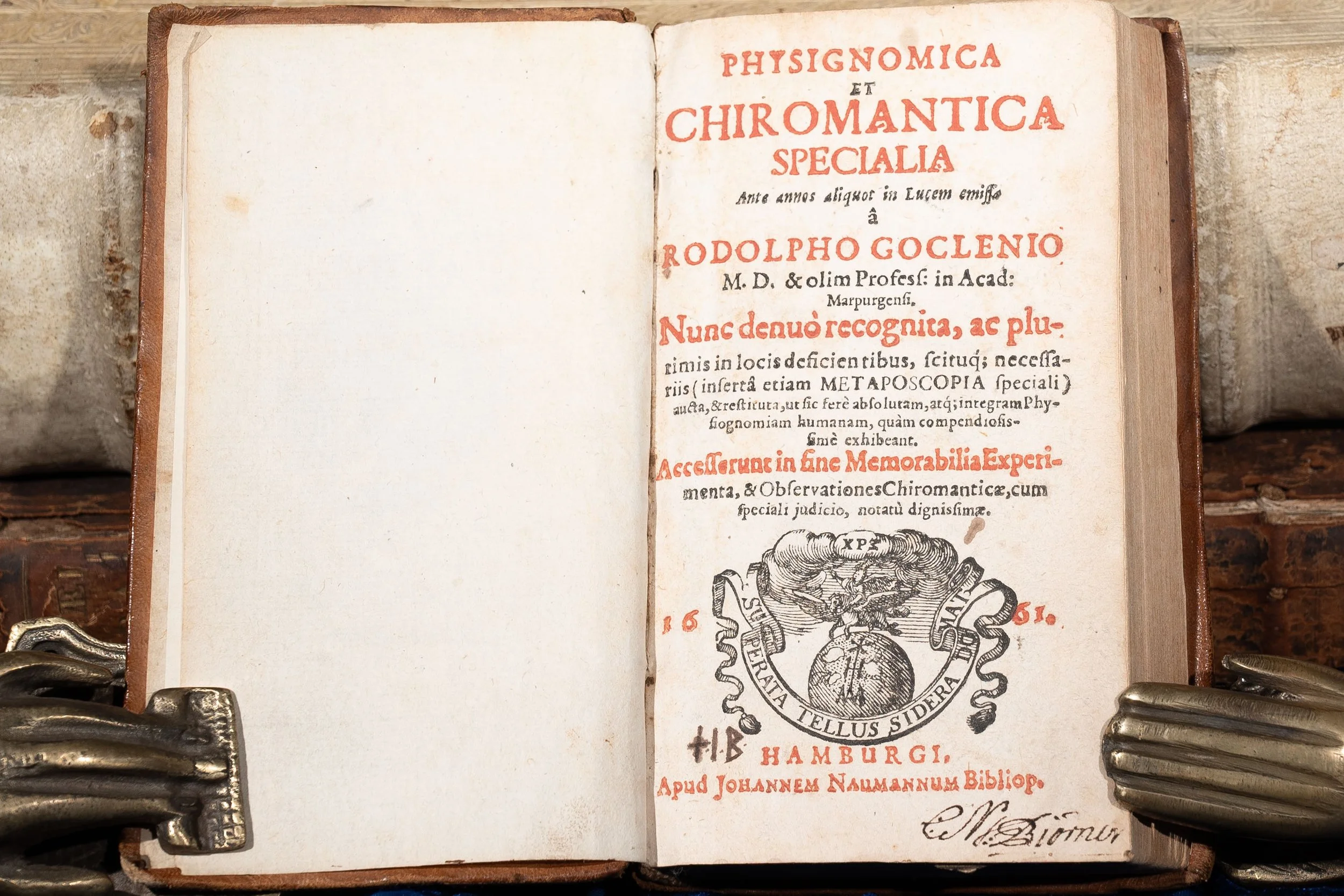 Image 11 of 12
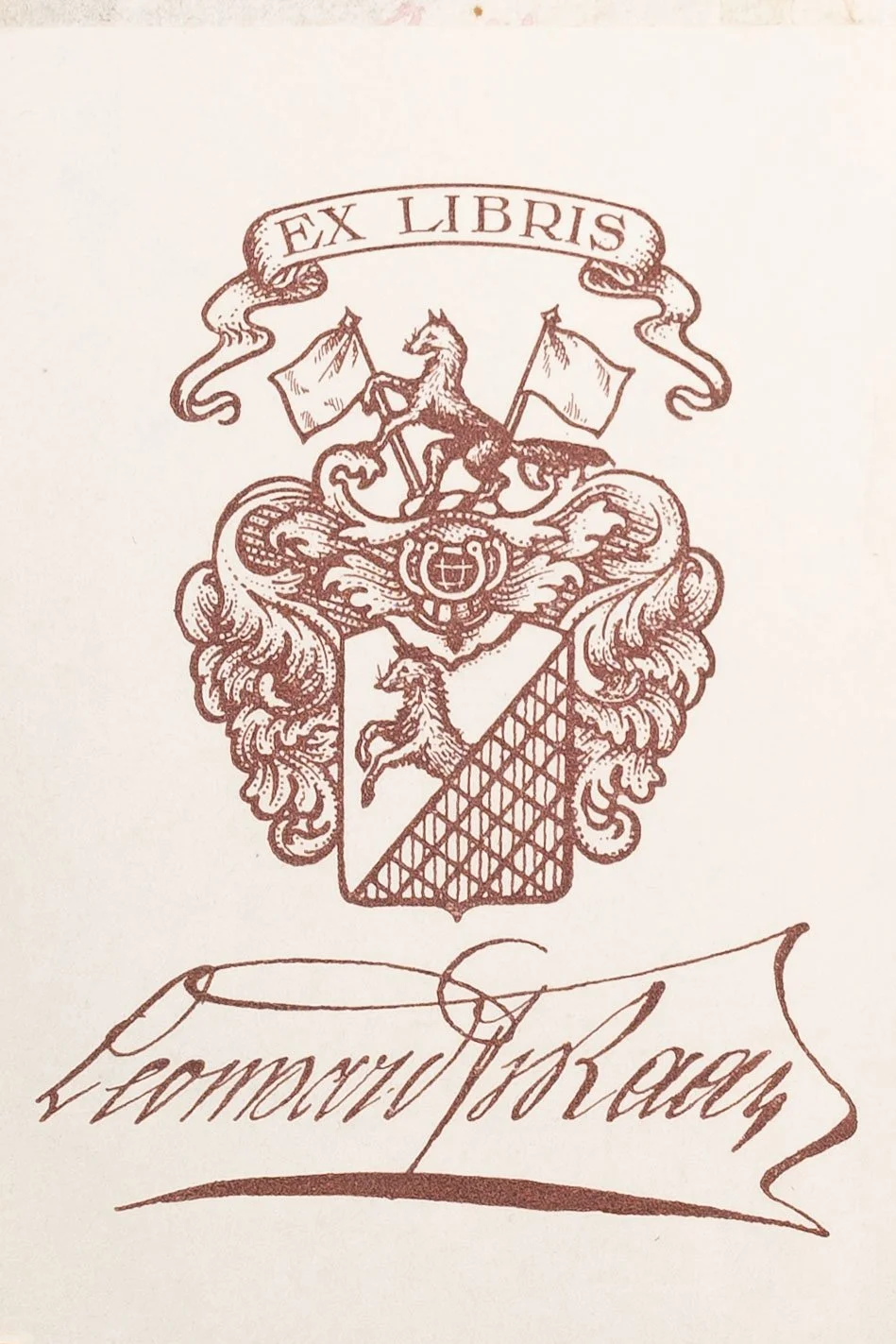 Image 12 of 12