Digby's discourse is one of the more entertaining artifacts of seventeenth-century natural philosophy. The premise is simple and, to a modern ear, thoroughly mad: a wound could be healed not by treating the wound itself but by applying a vitriol-based preparation to the weapon that caused it. That the idea was taken seriously, and seriously debated, by some of the better minds of Digby's generation says a great deal about the still-permeable boundary between natural philosophy and what later centuries would call occultism. The powder of sympathy operated, in Digby's framing, through a mechanistic theory of sympathetic action at a distance, indebted as much to the "weapon salve" tradition of Paracelsus and van Helmont as to Digby's own corpuscular philosophy. It was, in other words, an attempt to give magical practice a respectable physical explanation, a move characteristic of the transitional moment in which Digby lived.
Digby himself was a figure who seems almost deliberately designed to resist categorization. Courtier, privateer, diplomat, Catholic convert, alchemist, founding member of the Royal Society, book collector of considerable ambition, and author of an unlicensed memoir about his courtship of his wife so scandalous that even his friends were embarrassed: he moved between the worlds of learning, politics, and adventure with a confidence that sometimes bordered on recklessness. His time at Montpellier, where ill health drove him to take the waters, produced the discourse reprinted here, which proved to be among his most widely circulated works, appearing in French, English, German, Dutch, and Latin editions well into the eighteenth century.
For scholars of Western esotericism, Digby's text sits at a particularly interesting node: the point where Paracelsian sympathetic magic, corpuscular natural philosophy, and the emerging experimental method converge and strain against one another. The "powder of sympathy" is neither straightforwardly occult nor straightforwardly scientific, and the discourse's popularity across confessional and national boundaries speaks to the broad appetite for this kind of boundary-crossing natural knowledge in the seventeenth century.
This is the second German edition of Sir Kenelm Digby's celebrated discourse on the Powder of Sympathy, first delivered before an audience at Montpellier in 1657 and published in French the following year. The German translation, rendered by one M. A. Hupka, first appeared in 1660; this Frankfurt printing of 1661 by Balthasar Christoph Wust is the second.
The final leaves of this copy carry a publisher's list of thirty-seven titles available from Wust, with a note that seven more are currently in press. The list includes items ranging from political tracts on the English Civil War and the Neapolitan revolts to a polyglot dictionary and a "Venetianischer Spiegel." It offers a useful snapshot of the Frankfurt book trade at mid-century, and of the intellectual company in which Digby's discourse was expected to find its readership.
DIGBY, Kenelm. Eröffnung unterschiedlicher Heimlichkeiten der Natur/ Worbey viel scharffsinnige/ kluge/ wolerwogene Reden von nützlichen Dingen/ jederman dienlich/ die gleiche Artung der Natur entdeckende/ klar und ausführlich beygefüget/ und vornemlich von einem wunderbaren Geheimnuss in Heilungen der Wunden/ ohne Berührung/ vermög dess Vitrioli, durch die Sympathiam, Discurssweise gehalten in einer hochansehnlichen Versammlung zu Montpelier in Franckreich/ Durch den Hochwolgebohrnen Herrn Grafen/ Herrn Kenelm Digby, Rittern/ und der Königin in Gross-Britannien Cantzlern/ &c. Ubersetzt von M. A. Hupka. Zum zweytenmal Gedruckt. Frankfurt/Main: Balthasar Christoph Wust, 1661. 8vo. (6), 131, (5) pp. Engraved frontispiece wanting (present in facsimile). Modern marbled boards, dark brown/black with a smooth, tight spine. A neat, unpretentious rebinding.
Browned throughout, as is typical for the paper stock of mid-seventeenth-century Frankfurt printing. Title page toned with minor spotting. The text block appears firm and complete. Wants the engraved frontispiece (supplied in facsimile, per dealer). Small stain visible to front free endpaper.
Provenance: Old ownership inscription in ink to front free endpaper, reading "C.W. Ekelund" or similar. Small stamp or mark visible above the inscription, partially effaced.
Digby's discourse is one of the more entertaining artifacts of seventeenth-century natural philosophy. The premise is simple and, to a modern ear, thoroughly mad: a wound could be healed not by treating the wound itself but by applying a vitriol-based preparation to the weapon that caused it. That the idea was taken seriously, and seriously debated, by some of the better minds of Digby's generation says a great deal about the still-permeable boundary between natural philosophy and what later centuries would call occultism. The powder of sympathy operated, in Digby's framing, through a mechanistic theory of sympathetic action at a distance, indebted as much to the "weapon salve" tradition of Paracelsus and van Helmont as to Digby's own corpuscular philosophy. It was, in other words, an attempt to give magical practice a respectable physical explanation, a move characteristic of the transitional moment in which Digby lived.
Digby himself was a figure who seems almost deliberately designed to resist categorization. Courtier, privateer, diplomat, Catholic convert, alchemist, founding member of the Royal Society, book collector of considerable ambition, and author of an unlicensed memoir about his courtship of his wife so scandalous that even his friends were embarrassed: he moved between the worlds of learning, politics, and adventure with a confidence that sometimes bordered on recklessness. His time at Montpellier, where ill health drove him to take the waters, produced the discourse reprinted here, which proved to be among his most widely circulated works, appearing in French, English, German, Dutch, and Latin editions well into the eighteenth century.
For scholars of Western esotericism, Digby's text sits at a particularly interesting node: the point where Paracelsian sympathetic magic, corpuscular natural philosophy, and the emerging experimental method converge and strain against one another. The "powder of sympathy" is neither straightforwardly occult nor straightforwardly scientific, and the discourse's popularity across confessional and national boundaries speaks to the broad appetite for this kind of boundary-crossing natural knowledge in the seventeenth century.
This is the second German edition of Sir Kenelm Digby's celebrated discourse on the Powder of Sympathy, first delivered before an audience at Montpellier in 1657 and published in French the following year. The German translation, rendered by one M. A. Hupka, first appeared in 1660; this Frankfurt printing of 1661 by Balthasar Christoph Wust is the second.
The final leaves of this copy carry a publisher's list of thirty-seven titles available from Wust, with a note that seven more are currently in press. The list includes items ranging from political tracts on the English Civil War and the Neapolitan revolts to a polyglot dictionary and a "Venetianischer Spiegel." It offers a useful snapshot of the Frankfurt book trade at mid-century, and of the intellectual company in which Digby's discourse was expected to find its readership.
DIGBY, Kenelm. Eröffnung unterschiedlicher Heimlichkeiten der Natur/ Worbey viel scharffsinnige/ kluge/ wolerwogene Reden von nützlichen Dingen/ jederman dienlich/ die gleiche Artung der Natur entdeckende/ klar und ausführlich beygefüget/ und vornemlich von einem wunderbaren Geheimnuss in Heilungen der Wunden/ ohne Berührung/ vermög dess Vitrioli, durch die Sympathiam, Discurssweise gehalten in einer hochansehnlichen Versammlung zu Montpelier in Franckreich/ Durch den Hochwolgebohrnen Herrn Grafen/ Herrn Kenelm Digby, Rittern/ und der Königin in Gross-Britannien Cantzlern/ &c. Ubersetzt von M. A. Hupka. Zum zweytenmal Gedruckt. Frankfurt/Main: Balthasar Christoph Wust, 1661. 8vo. (6), 131, (5) pp. Engraved frontispiece wanting (present in facsimile). Modern marbled boards, dark brown/black with a smooth, tight spine. A neat, unpretentious rebinding.
Browned throughout, as is typical for the paper stock of mid-seventeenth-century Frankfurt printing. Title page toned with minor spotting. The text block appears firm and complete. Wants the engraved frontispiece (supplied in facsimile, per dealer). Small stain visible to front free endpaper.
Provenance: Old ownership inscription in ink to front free endpaper, reading "C.W. Ekelund" or similar. Small stamp or mark visible above the inscription, partially effaced.

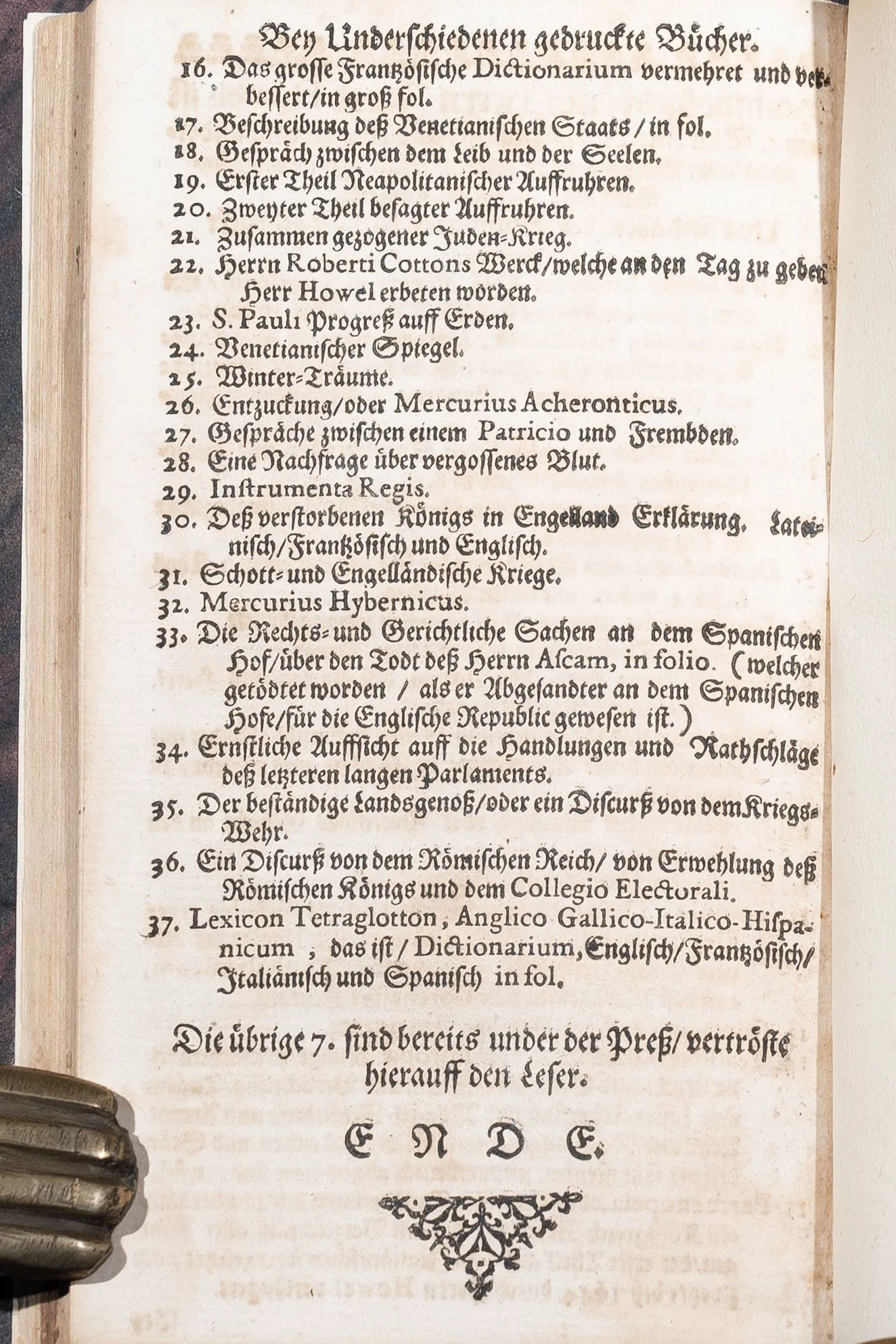 Image 1 of 10
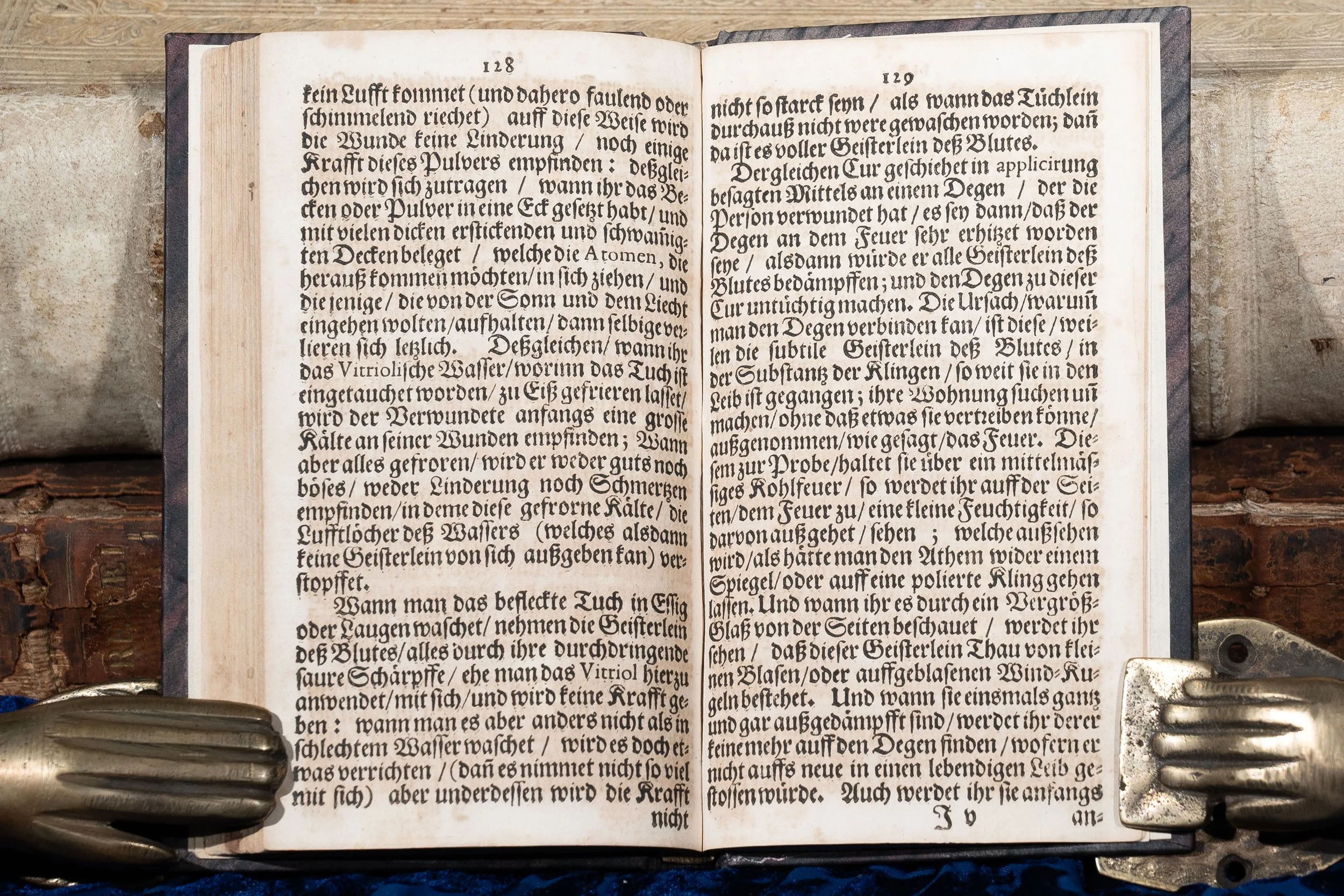 Image 2 of 10
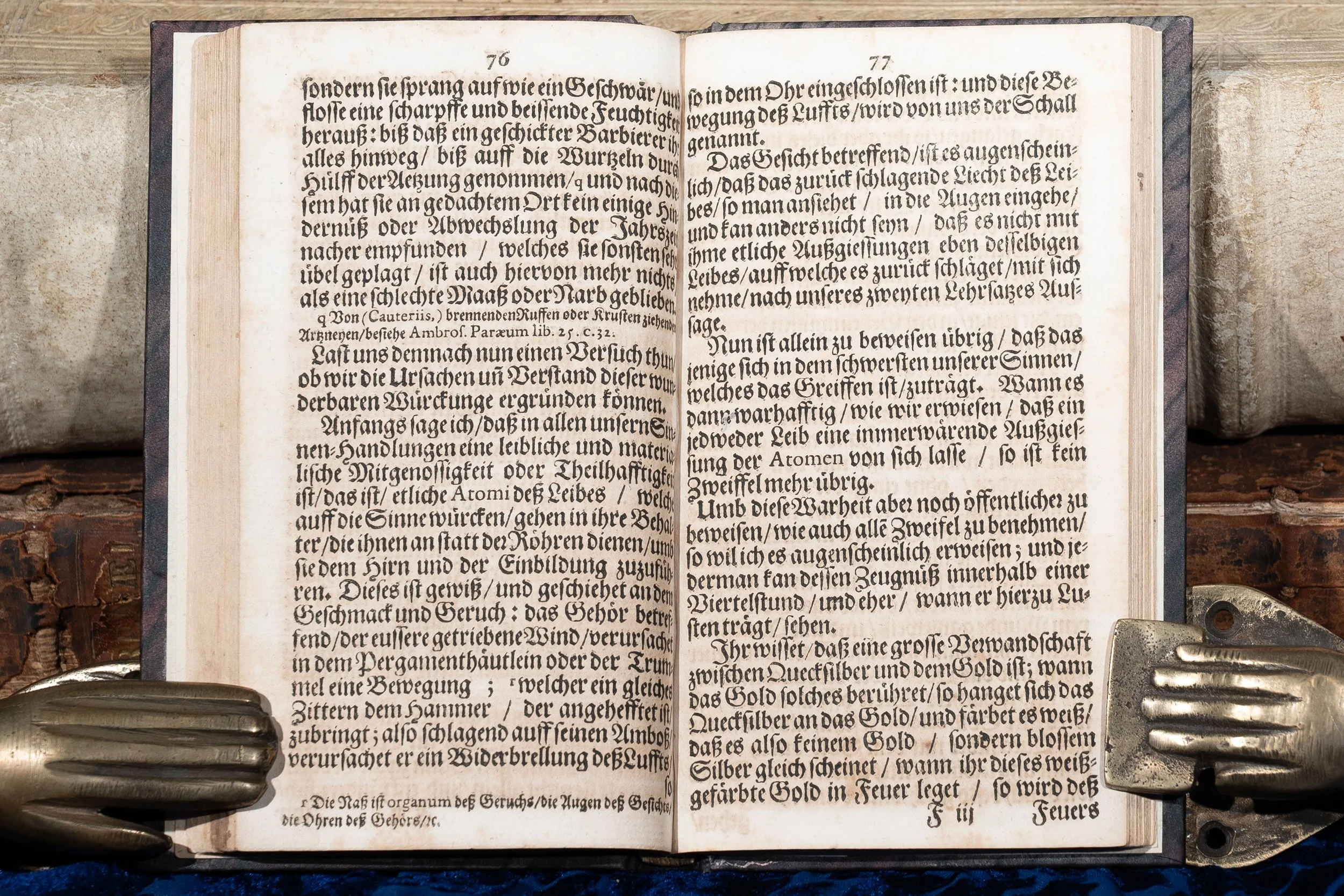 Image 3 of 10
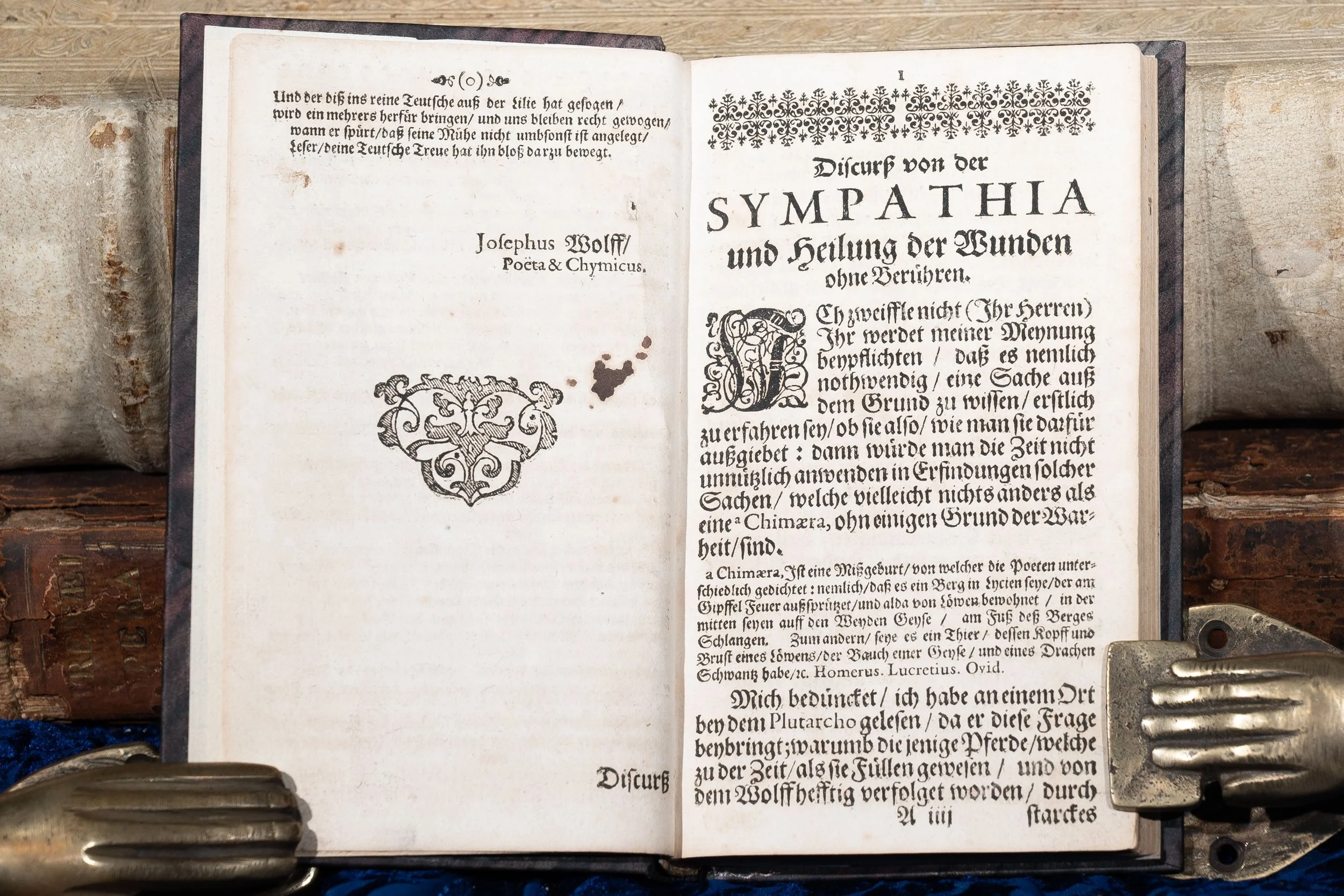 Image 4 of 10
 Image 5 of 10
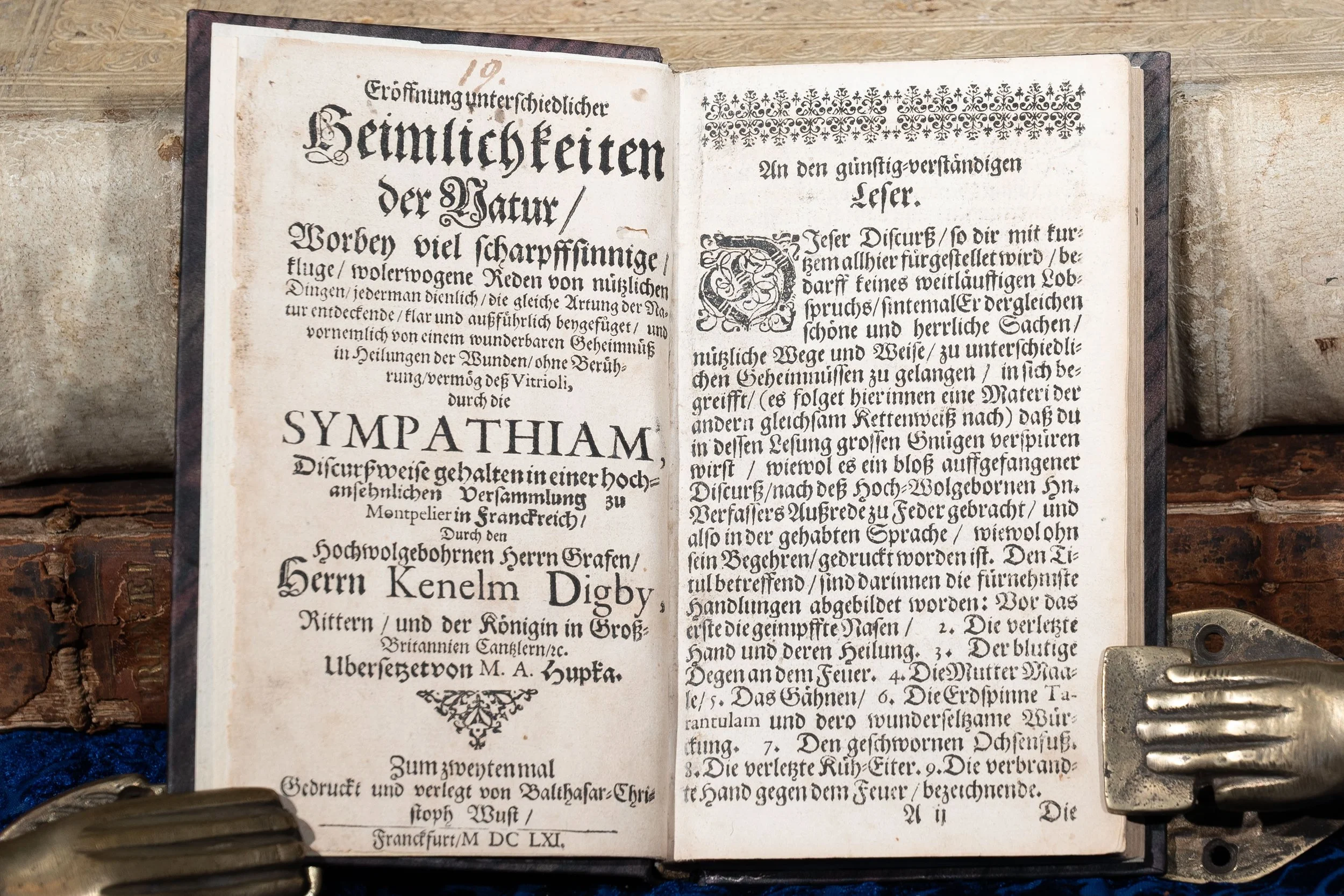 Image 6 of 10
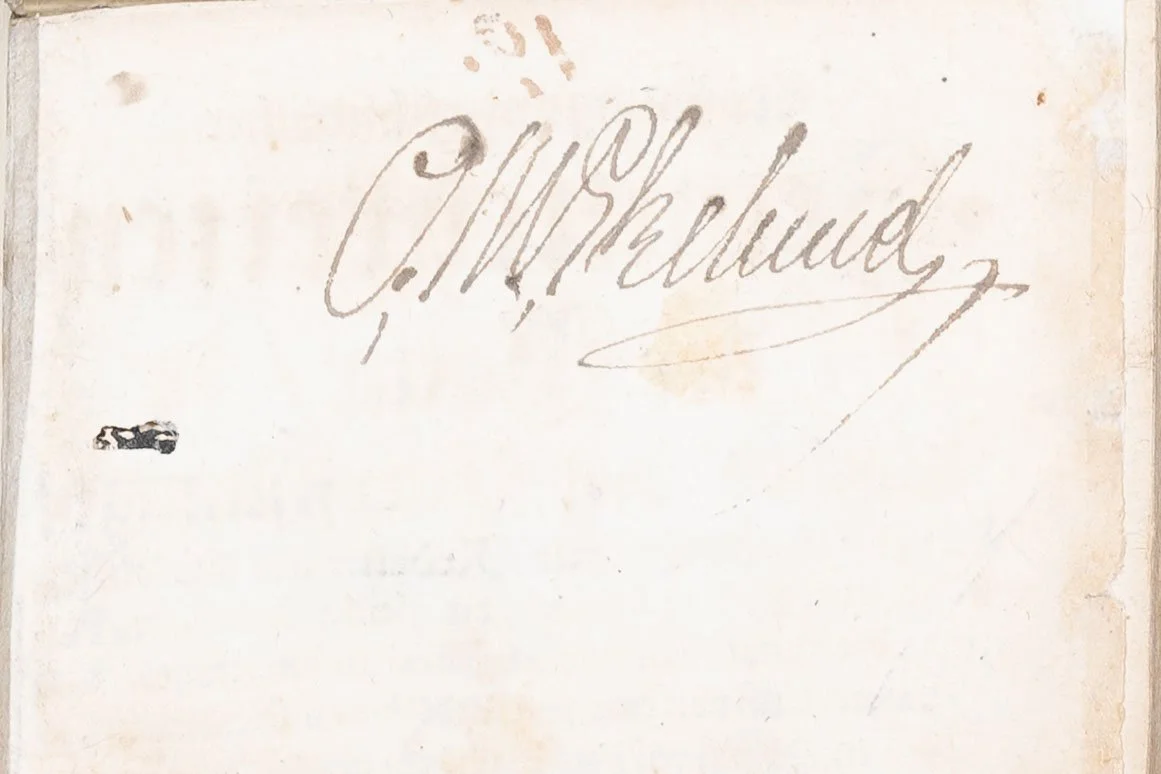 Image 7 of 10
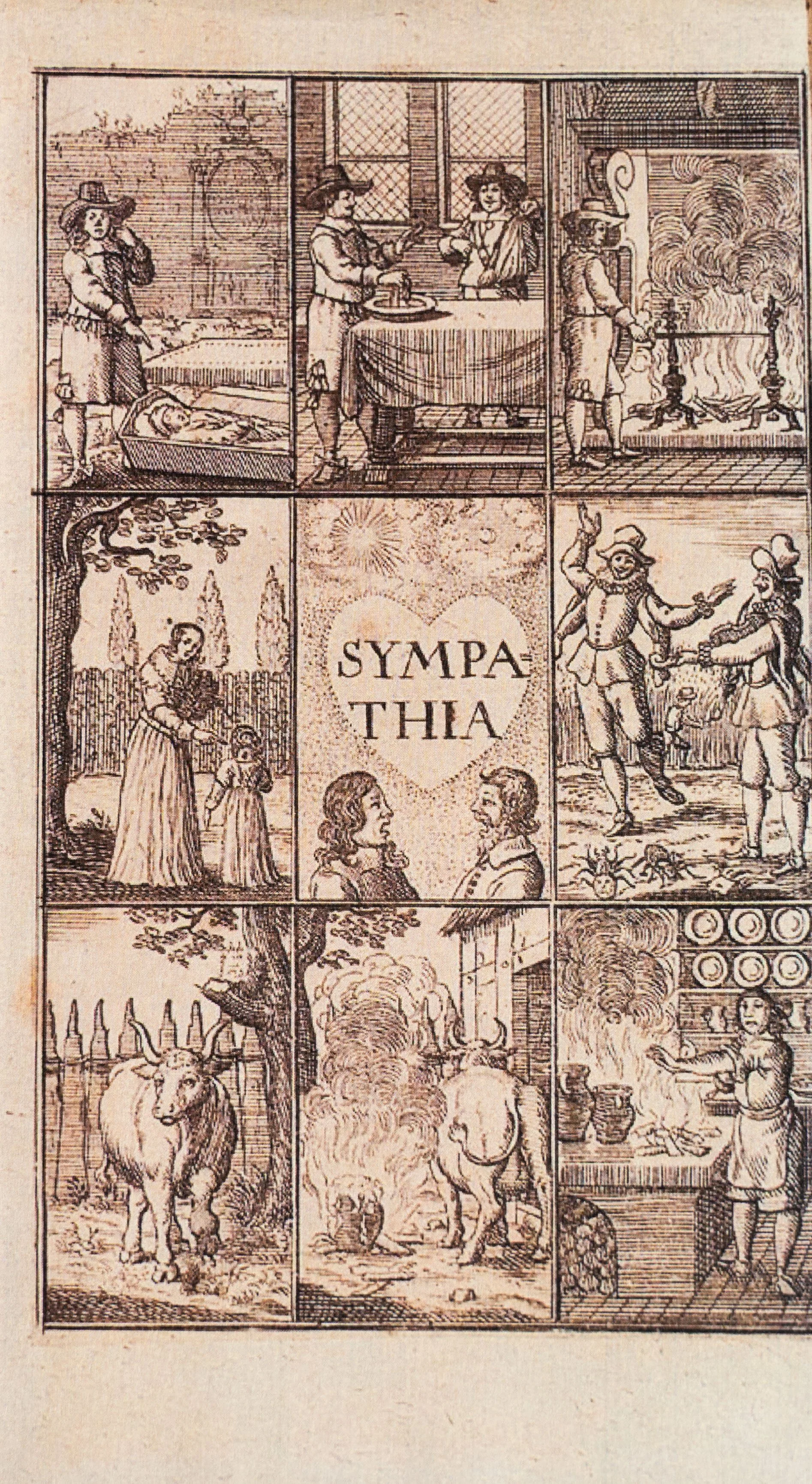 Image 8 of 10
 Image 9 of 10
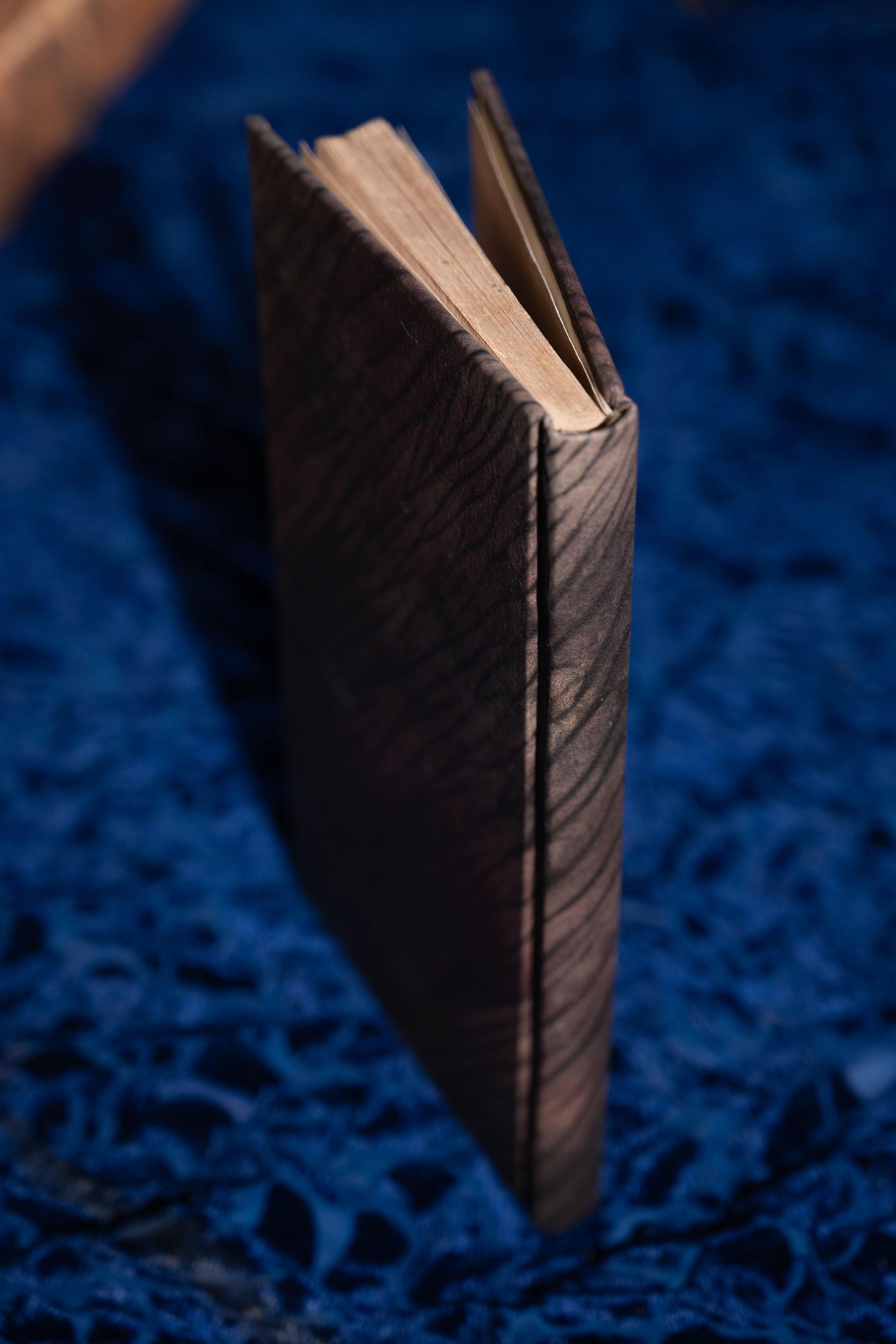 Image 10 of 10