If the Theatrum Chemicum is the single most important anthology of alchemical texts ever published, and it is, then Volume 3 is its practical heart. Where the first two volumes lean toward the philosophical defense and juridical legitimation of the alchemical art, Volume 3 assembles a dense concentration of the medieval and pseudo-classical texts that working alchemists actually consulted: recipes, processes, furnace designs, and the accumulated operational lore of a tradition stretching from the pseudo-Aristotelian De perfecto magisterio through the pseudo-Lullian and pseudo-Villanovan corpora to the genuinely influential practical writings of Joannes de Rupescissa and Joannis Isaaci Hollandi.
The elenchus of Volume 3 reads like a syllabus for the serious student of late medieval chymistry. Among its contents: several texts attributed to Arnaldus de Villanova, including the Lumen Luminum (a perennial favorite among alchemical practitioners); Raymundus Lullus’s Praxis Universalis Magni Operis and Clavicula; Rupescissa’s Liber de Confectione Veri Lapidis Philosophorum and Liber Lucis; the Secreta Alchemiae Magnalia attributed to Thomas Aquinas; Giovanni Aurelio Augurello’s Chrysopoeia, a verse treatise on gold-making dedicated to Pope Leo X; and the celebrated De Lapide Philosophico of Lambspringk, rendered from German verse into Latin. A number of anonymous medieval tracts appear here for the first time in print, drawn from manuscript sources. That many of the named attributions are pseudepigraphic is, for the historian, rather the point: this is the alchemical canon as the seventeenth century understood it, the texts that formed the working library of practitioners from Strasbourg to Cambridge.
This 1659 printing represents the third and final edition of Volume 3, issued as part of the complete reissue of the Theatrum Chemicum (1659–1661) by the heirs of Eberhard Zetzner. It is this six-volume edition that Isaac Newton purchased in 1669 and whose margins he famously covered with annotations. The Zetzner house had by then been issuing and reissuing the Theatrum across three generations, a publishing project spanning nearly sixty years and growing from three volumes in 1602 to six by 1661, accumulating over two hundred treatises in some four thousand pages of Latin text. The 1659 reprint of Volume 3 includes the tract De magni lapidis sive benedicti compositione et operatione, a text on the composition and operation of the Philosopher’s Stone that was absent from the original 1602 edition and first added in the 1613 reissue.
The woodcut illustrations are of particular interest. The full-page furnace diagrams accompanying Rupescissa’s Liber Lucis and Hollandi’s Operum Mineralium show the furnus physicus in cross-section with labeled components, working diagrams, not decorative conceits. Smaller in-text cuts depict alembics, receivers, and sublimation vessels. The folding Coelum Philosophicum maps planetary spheres, zodiacal correspondences, the four elements, and cardinal directions onto the stages of the alchemical work, a compact piece of Renaissance cosmological-alchemical synthesis that repays close study. These illustrations place the volume in the practical tradition of alchemical technical drawing that runs from Brunschwig’s Liber de Arte Distillandi through Libavius’s Alchemia.
Complete sets of the Theatrum Chemicum are genuinely scarce; alchemical books, which often lived in laboratories rather than libraries, fared poorly over the centuries. Even individual volumes appear infrequently. The 1659 edition is the most commonly encountered of the three printings, but “most common” is a relative term for a seventeenth-century Latin alchemical compendium of this scale.
ZETZNER, Eberhard, heirs of, publisher. Theatrum Chemicum, praecipuos selectorum auctorum tractatus de Chemiae et Lapidis Philosophici antiquitate, veritate, jure, praestantia, & operationibus continens... Singulis voluminibus, suo auctorum et librorum catalogo primis pagellis: rerum verò & verborum indice postremis annexo. Volumen Tertium. Argentorati [Strasbourg]: Sumptibus Heredum Eberh. Zetzneri, 1659.
Physical Description: 8vo (17.5 × 11 cm). 859, [13] pp. Woodcut printer’s device to title page (“Scientiae Immutabilis”); engraved initials throughout. Two full-page woodcut illustrations of alchemical furnaces and apparatus in the Operum Mineralium of Joannis Isaaci Hollandi, with numerous smaller in-text woodcut figures of vessels, alembics, and laboratory equipment. One folding plate with text: Coelum Philosophicum. Additional woodcut head- and tailpieces, including decorative tailpiece at FINIS.
Binding: Full vellum with gilt-decorated boards and red edges.
Condition: Rubbing, bumping, soiling, and general wear to boards and spine. Boards slightly bowed. Hole in vellum covering the spine. Remnants of a removed seal to front endpapers. Some browning and spotting throughout, as expected for the period. Text and illustrations clean and legible; binding solid. A good, honest working copy in very good condition overall.
Provenance: Remnants of a removed seal to front endpapers.
If the Theatrum Chemicum is the single most important anthology of alchemical texts ever published, and it is, then Volume 3 is its practical heart. Where the first two volumes lean toward the philosophical defense and juridical legitimation of the alchemical art, Volume 3 assembles a dense concentration of the medieval and pseudo-classical texts that working alchemists actually consulted: recipes, processes, furnace designs, and the accumulated operational lore of a tradition stretching from the pseudo-Aristotelian De perfecto magisterio through the pseudo-Lullian and pseudo-Villanovan corpora to the genuinely influential practical writings of Joannes de Rupescissa and Joannis Isaaci Hollandi.
The elenchus of Volume 3 reads like a syllabus for the serious student of late medieval chymistry. Among its contents: several texts attributed to Arnaldus de Villanova, including the Lumen Luminum (a perennial favorite among alchemical practitioners); Raymundus Lullus’s Praxis Universalis Magni Operis and Clavicula; Rupescissa’s Liber de Confectione Veri Lapidis Philosophorum and Liber Lucis; the Secreta Alchemiae Magnalia attributed to Thomas Aquinas; Giovanni Aurelio Augurello’s Chrysopoeia, a verse treatise on gold-making dedicated to Pope Leo X; and the celebrated De Lapide Philosophico of Lambspringk, rendered from German verse into Latin. A number of anonymous medieval tracts appear here for the first time in print, drawn from manuscript sources. That many of the named attributions are pseudepigraphic is, for the historian, rather the point: this is the alchemical canon as the seventeenth century understood it, the texts that formed the working library of practitioners from Strasbourg to Cambridge.
This 1659 printing represents the third and final edition of Volume 3, issued as part of the complete reissue of the Theatrum Chemicum (1659–1661) by the heirs of Eberhard Zetzner. It is this six-volume edition that Isaac Newton purchased in 1669 and whose margins he famously covered with annotations. The Zetzner house had by then been issuing and reissuing the Theatrum across three generations, a publishing project spanning nearly sixty years and growing from three volumes in 1602 to six by 1661, accumulating over two hundred treatises in some four thousand pages of Latin text. The 1659 reprint of Volume 3 includes the tract De magni lapidis sive benedicti compositione et operatione, a text on the composition and operation of the Philosopher’s Stone that was absent from the original 1602 edition and first added in the 1613 reissue.
The woodcut illustrations are of particular interest. The full-page furnace diagrams accompanying Rupescissa’s Liber Lucis and Hollandi’s Operum Mineralium show the furnus physicus in cross-section with labeled components, working diagrams, not decorative conceits. Smaller in-text cuts depict alembics, receivers, and sublimation vessels. The folding Coelum Philosophicum maps planetary spheres, zodiacal correspondences, the four elements, and cardinal directions onto the stages of the alchemical work, a compact piece of Renaissance cosmological-alchemical synthesis that repays close study. These illustrations place the volume in the practical tradition of alchemical technical drawing that runs from Brunschwig’s Liber de Arte Distillandi through Libavius’s Alchemia.
Complete sets of the Theatrum Chemicum are genuinely scarce; alchemical books, which often lived in laboratories rather than libraries, fared poorly over the centuries. Even individual volumes appear infrequently. The 1659 edition is the most commonly encountered of the three printings, but “most common” is a relative term for a seventeenth-century Latin alchemical compendium of this scale.
ZETZNER, Eberhard, heirs of, publisher. Theatrum Chemicum, praecipuos selectorum auctorum tractatus de Chemiae et Lapidis Philosophici antiquitate, veritate, jure, praestantia, & operationibus continens... Singulis voluminibus, suo auctorum et librorum catalogo primis pagellis: rerum verò & verborum indice postremis annexo. Volumen Tertium. Argentorati [Strasbourg]: Sumptibus Heredum Eberh. Zetzneri, 1659.
Physical Description: 8vo (17.5 × 11 cm). 859, [13] pp. Woodcut printer’s device to title page (“Scientiae Immutabilis”); engraved initials throughout. Two full-page woodcut illustrations of alchemical furnaces and apparatus in the Operum Mineralium of Joannis Isaaci Hollandi, with numerous smaller in-text woodcut figures of vessels, alembics, and laboratory equipment. One folding plate with text: Coelum Philosophicum. Additional woodcut head- and tailpieces, including decorative tailpiece at FINIS.
Binding: Full vellum with gilt-decorated boards and red edges.
Condition: Rubbing, bumping, soiling, and general wear to boards and spine. Boards slightly bowed. Hole in vellum covering the spine. Remnants of a removed seal to front endpapers. Some browning and spotting throughout, as expected for the period. Text and illustrations clean and legible; binding solid. A good, honest working copy in very good condition overall.
Provenance: Remnants of a removed seal to front endpapers.

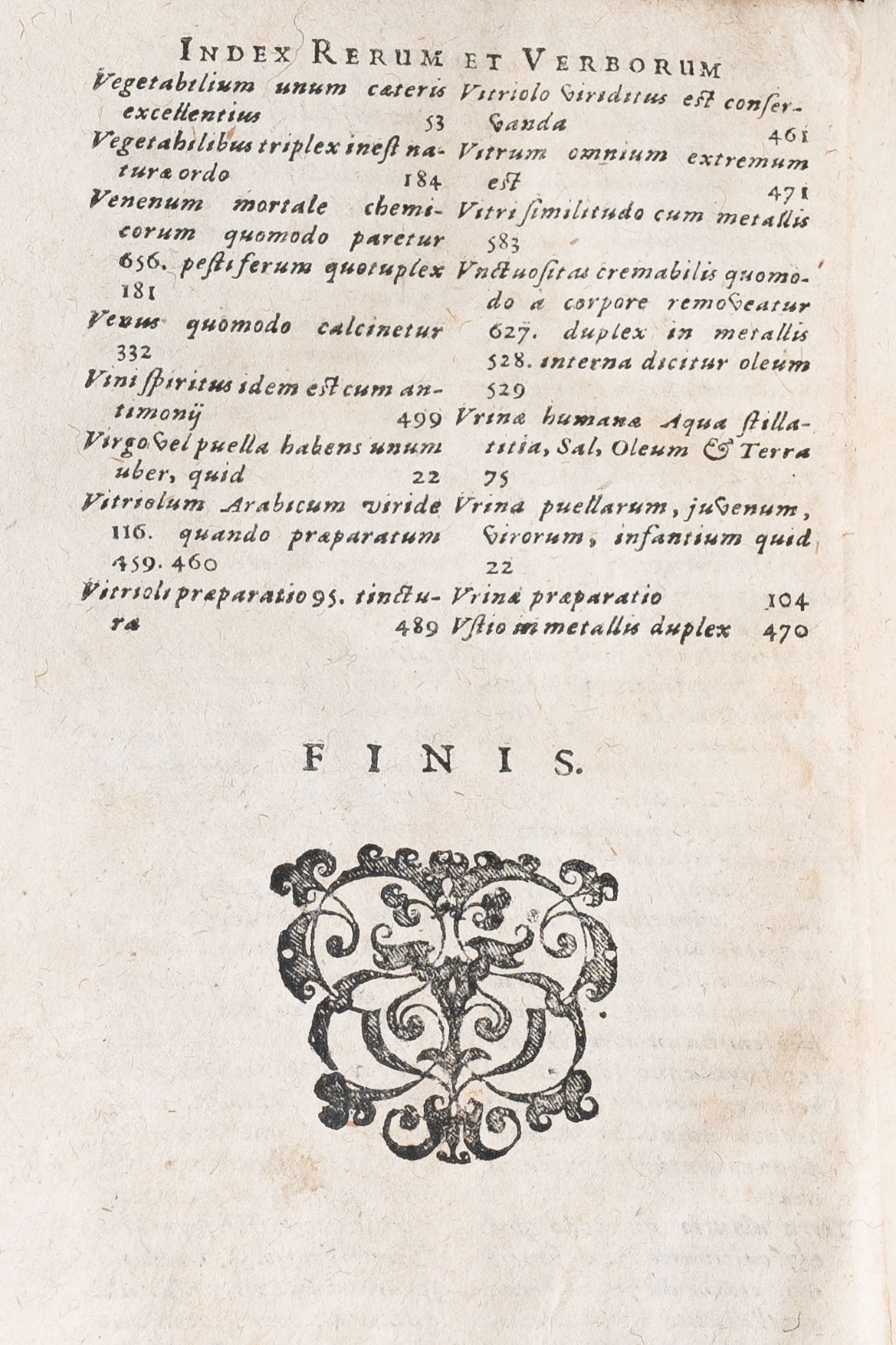 Image 1 of 11
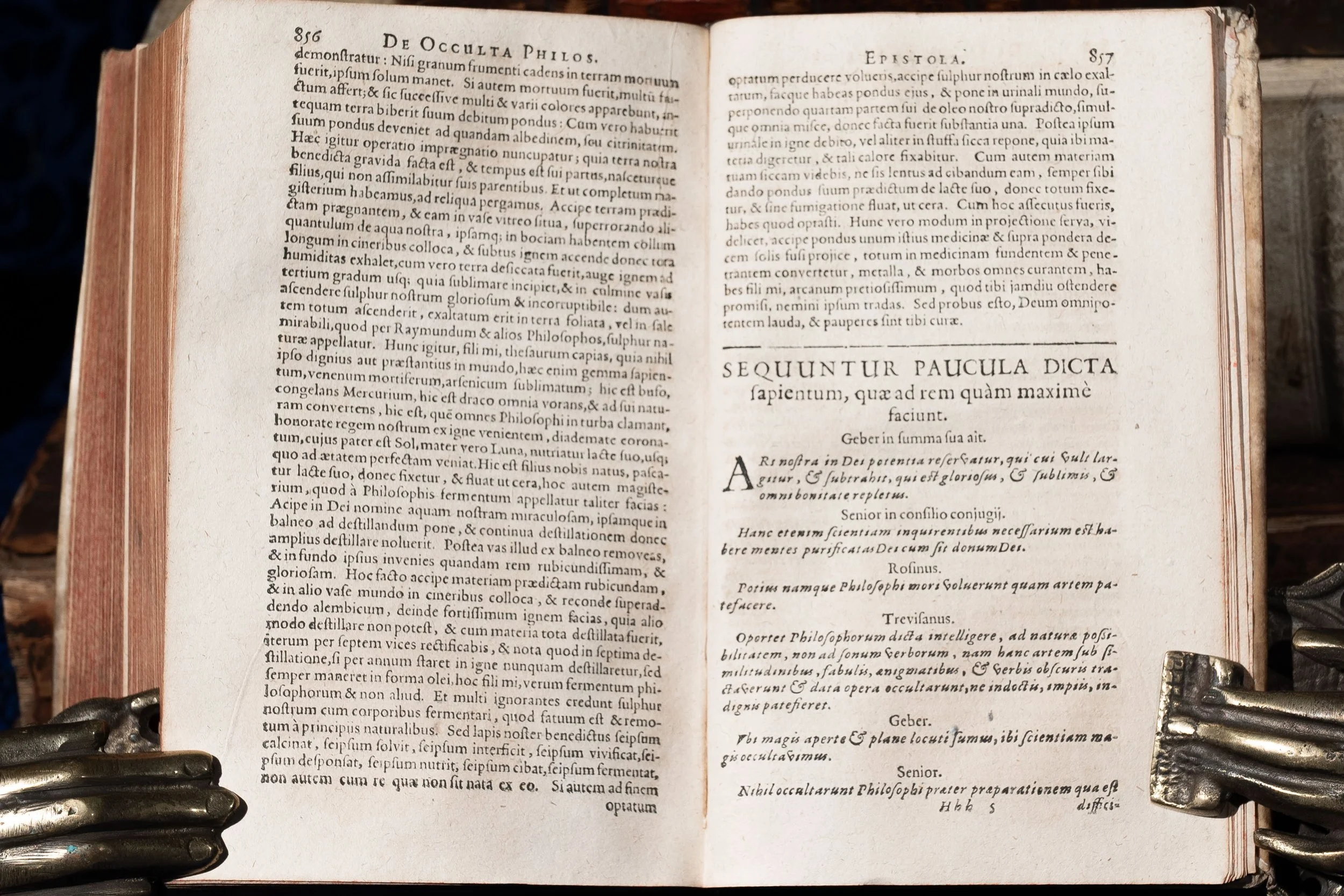 Image 2 of 11
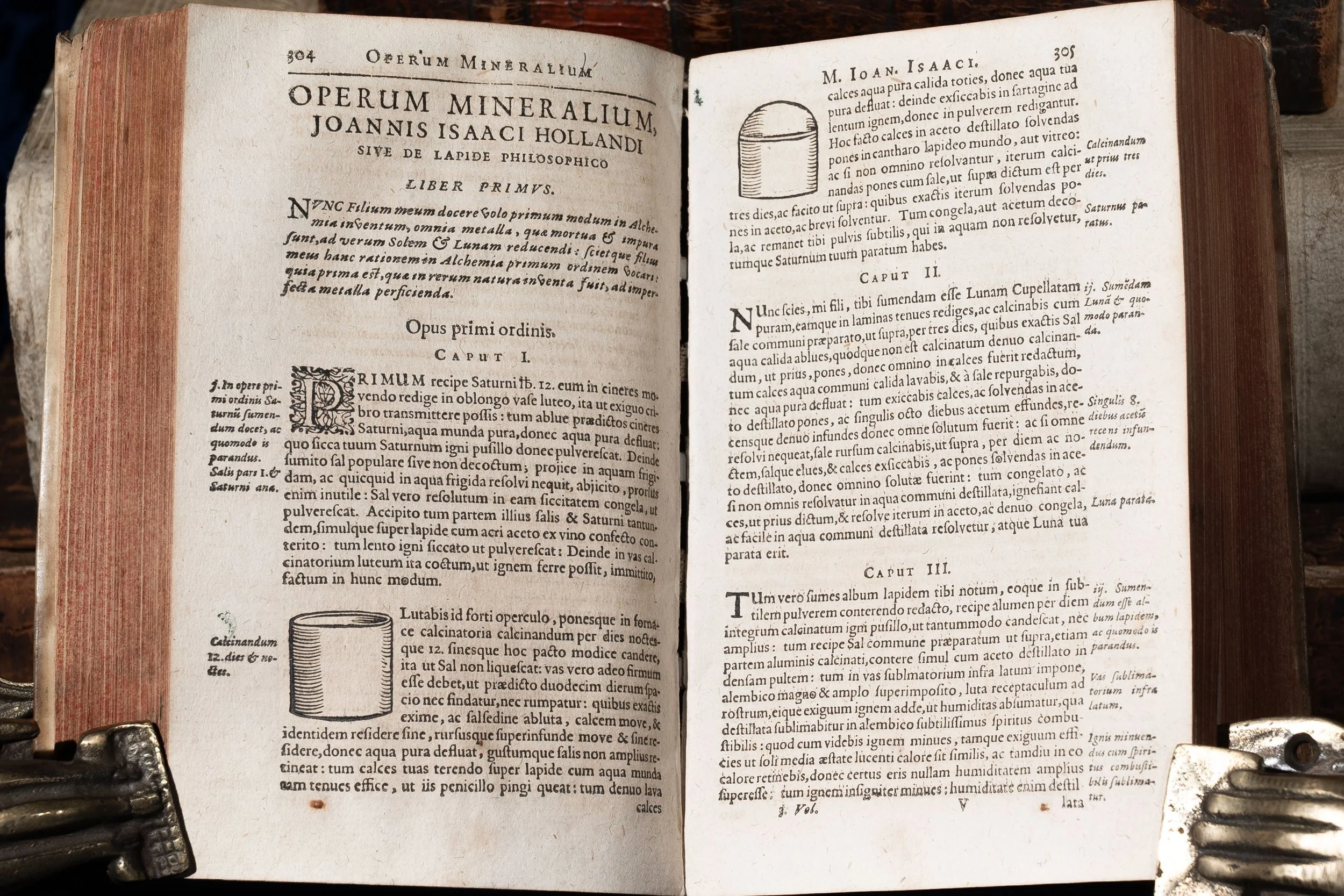 Image 3 of 11
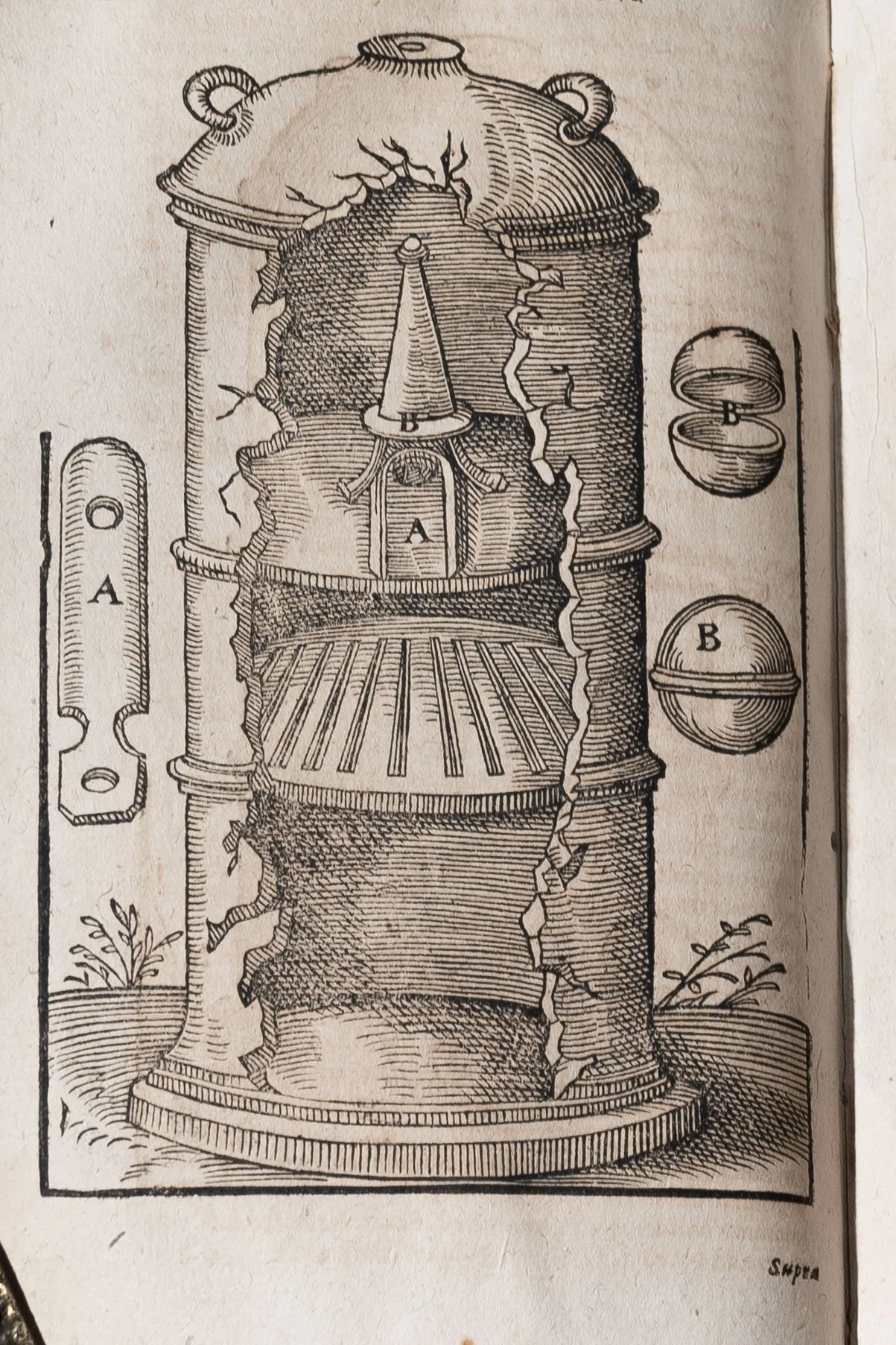 Image 4 of 11
 Image 5 of 11
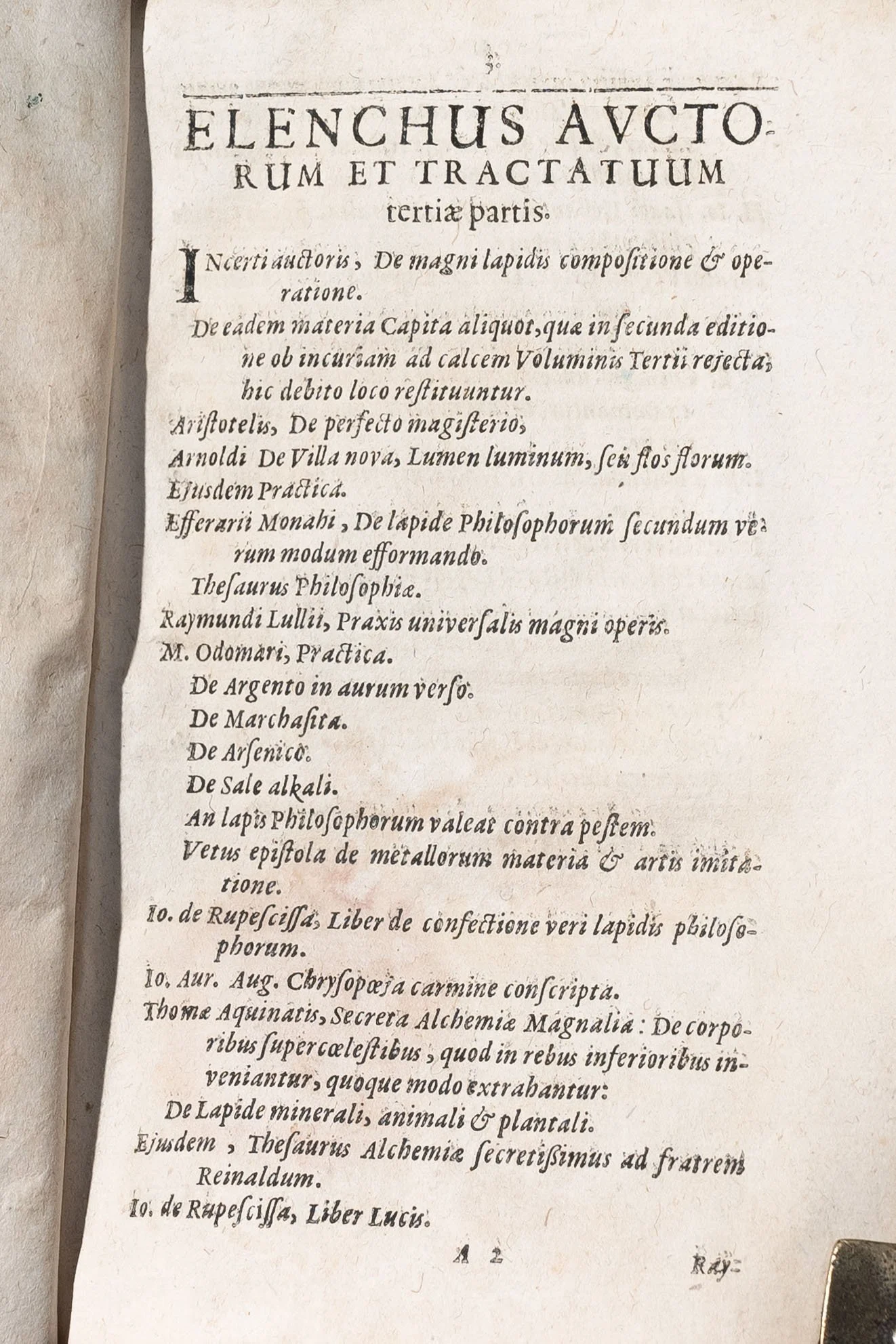 Image 6 of 11
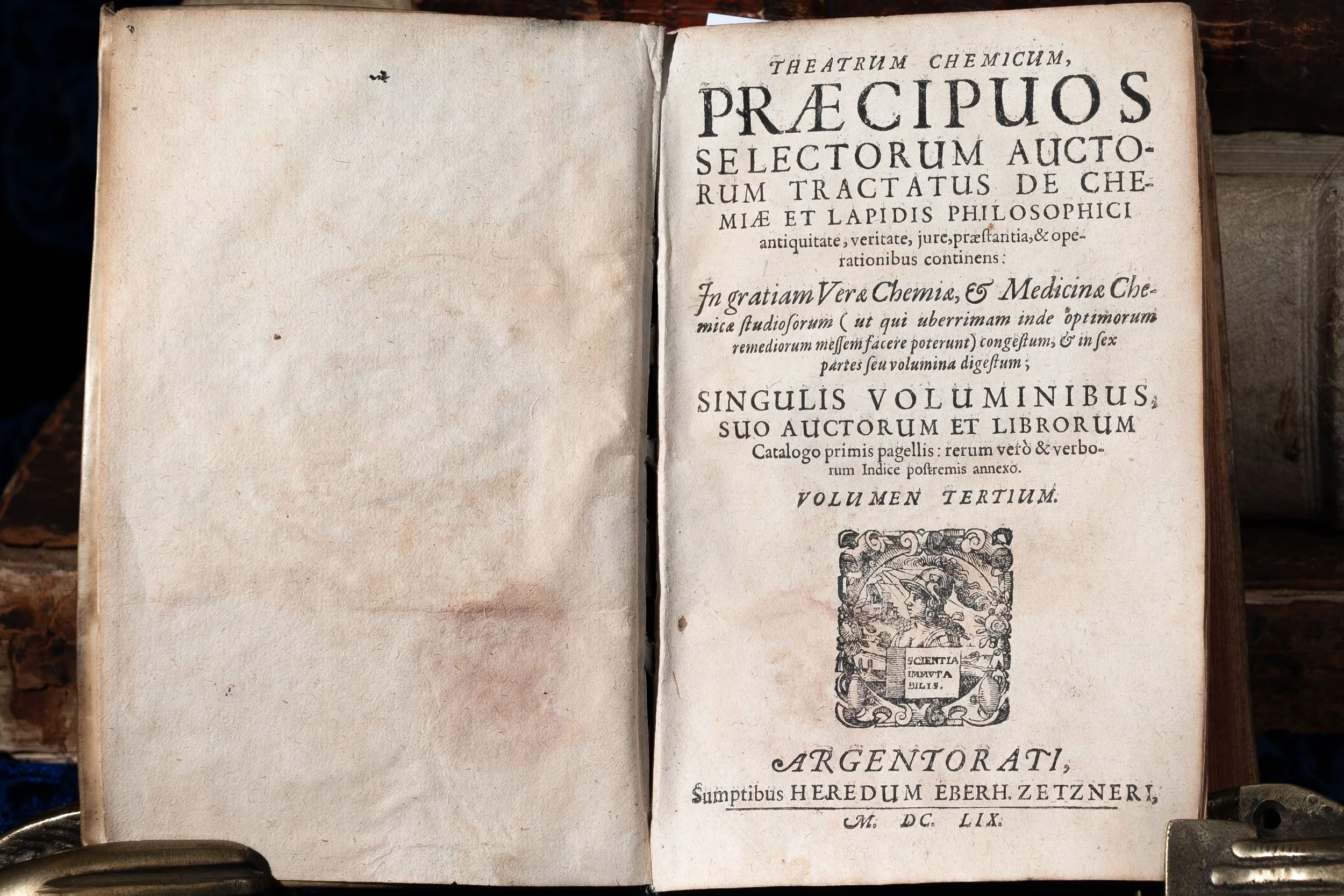 Image 7 of 11
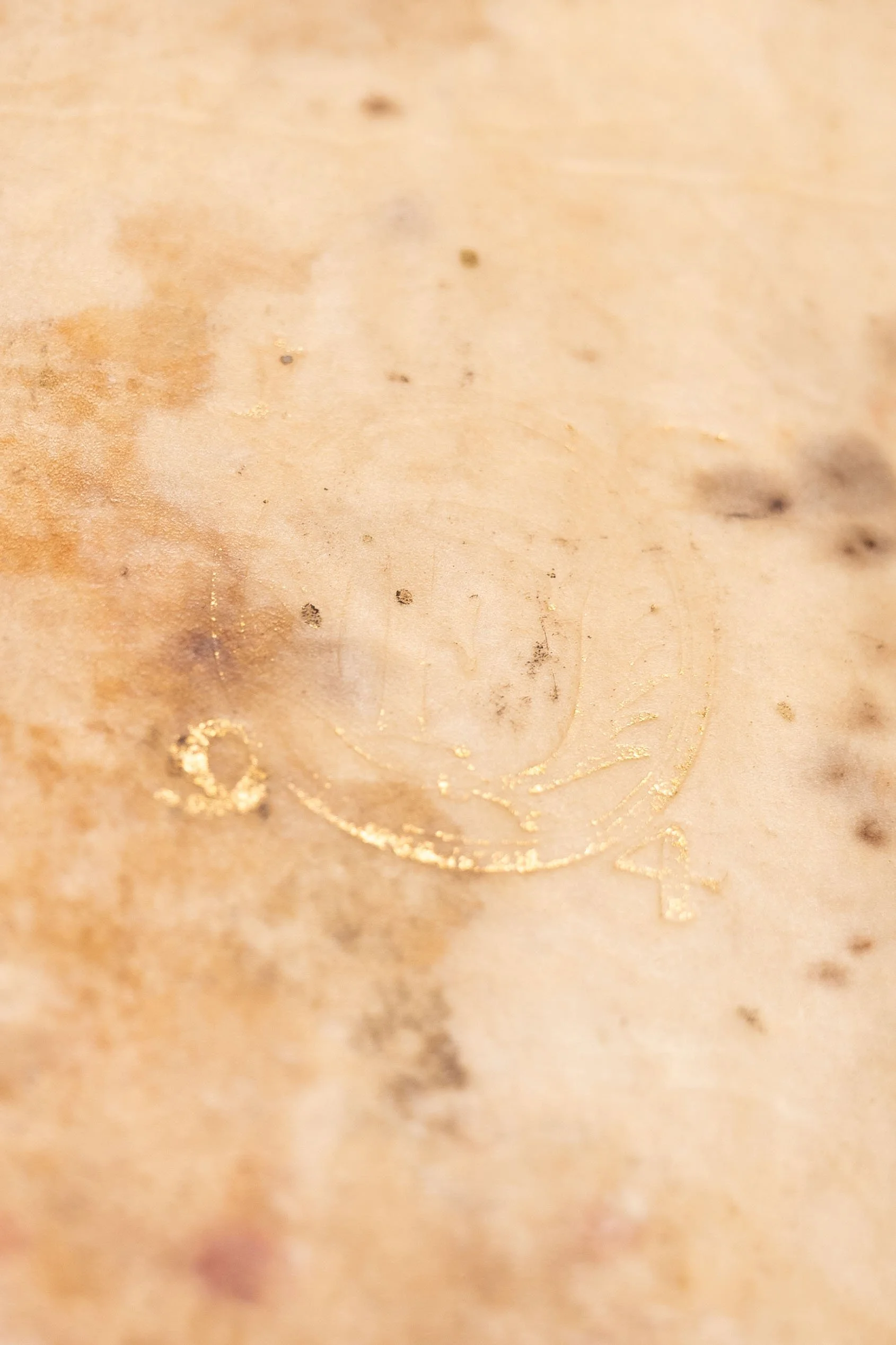 Image 8 of 11
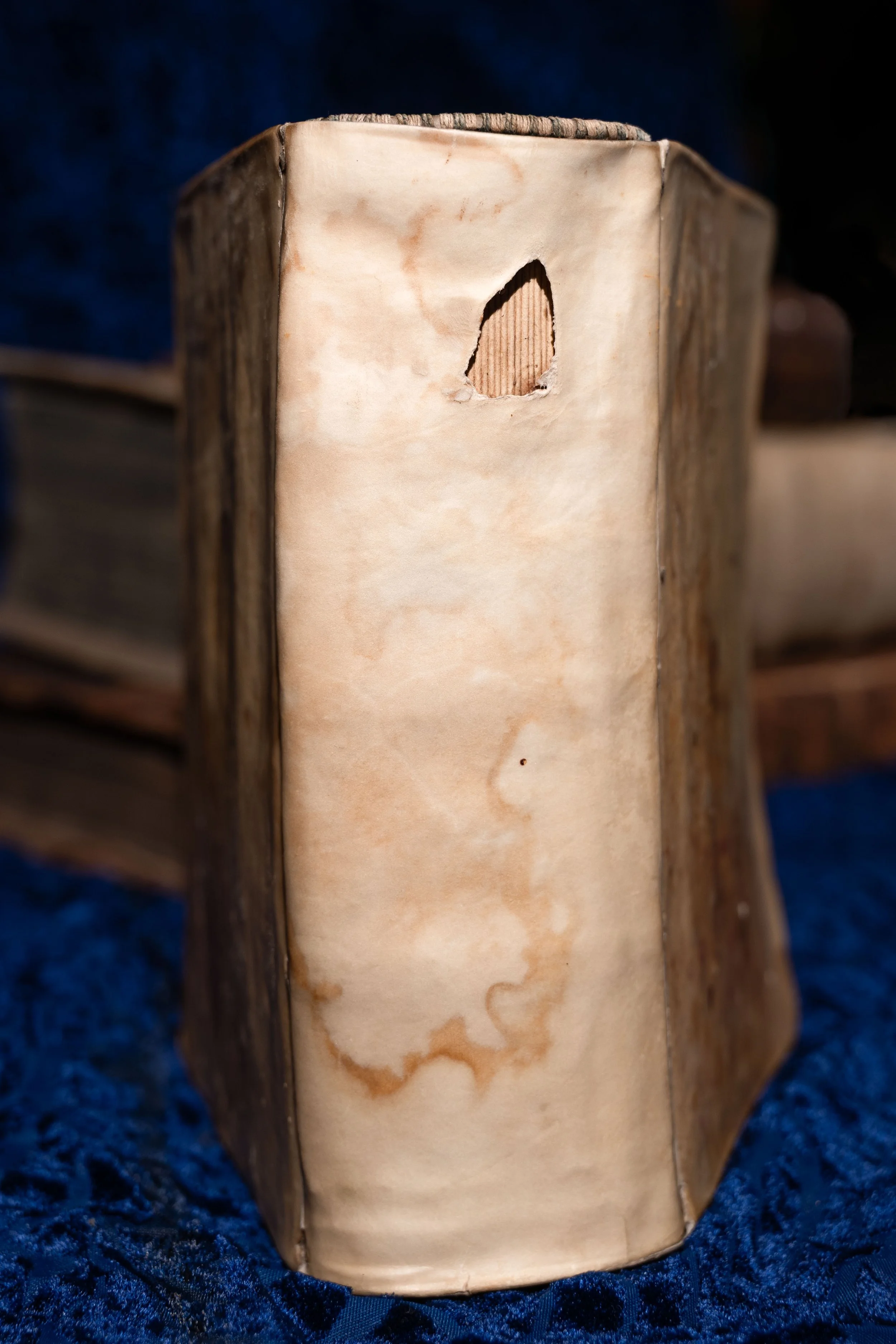 Image 9 of 11
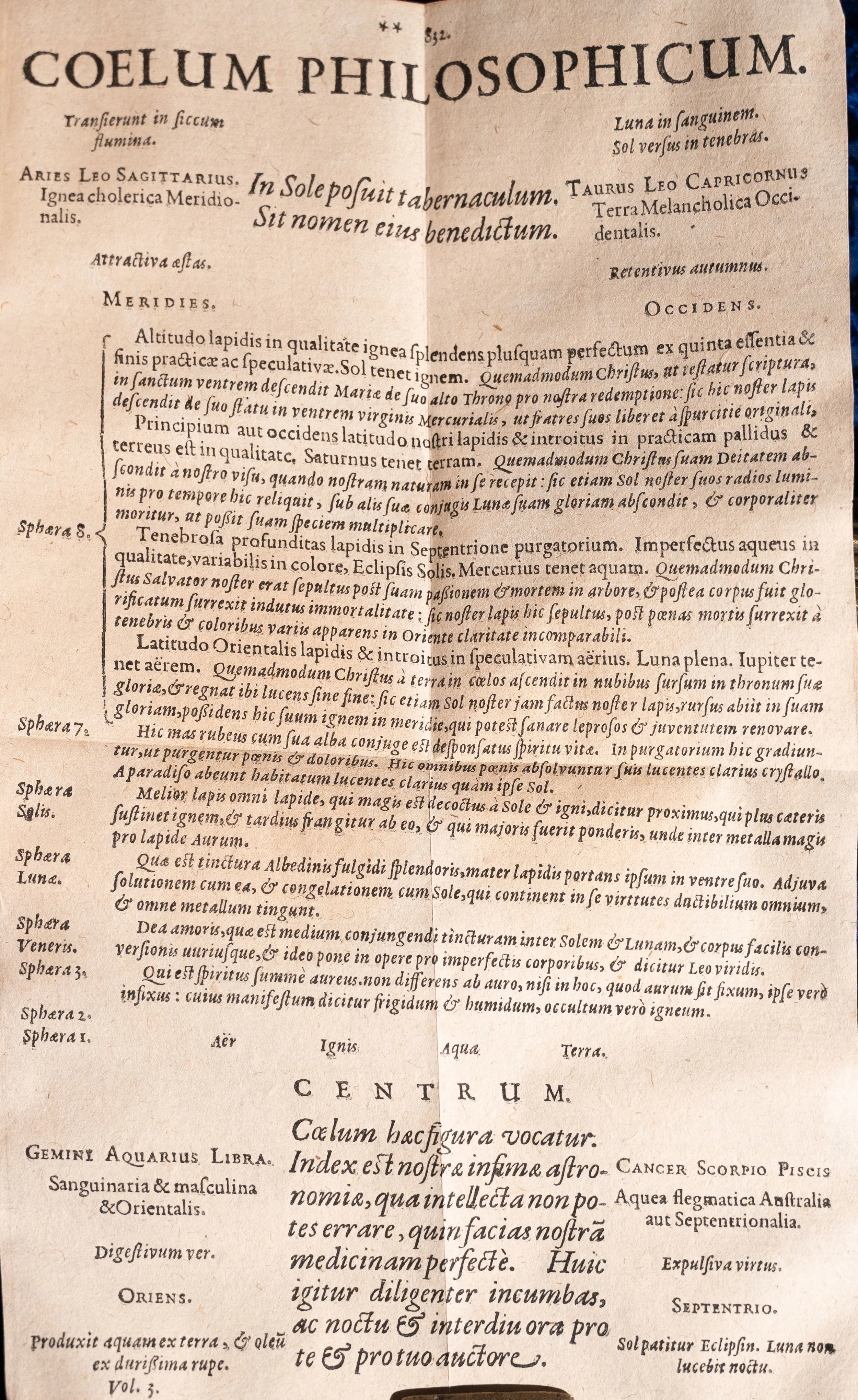 Image 10 of 11
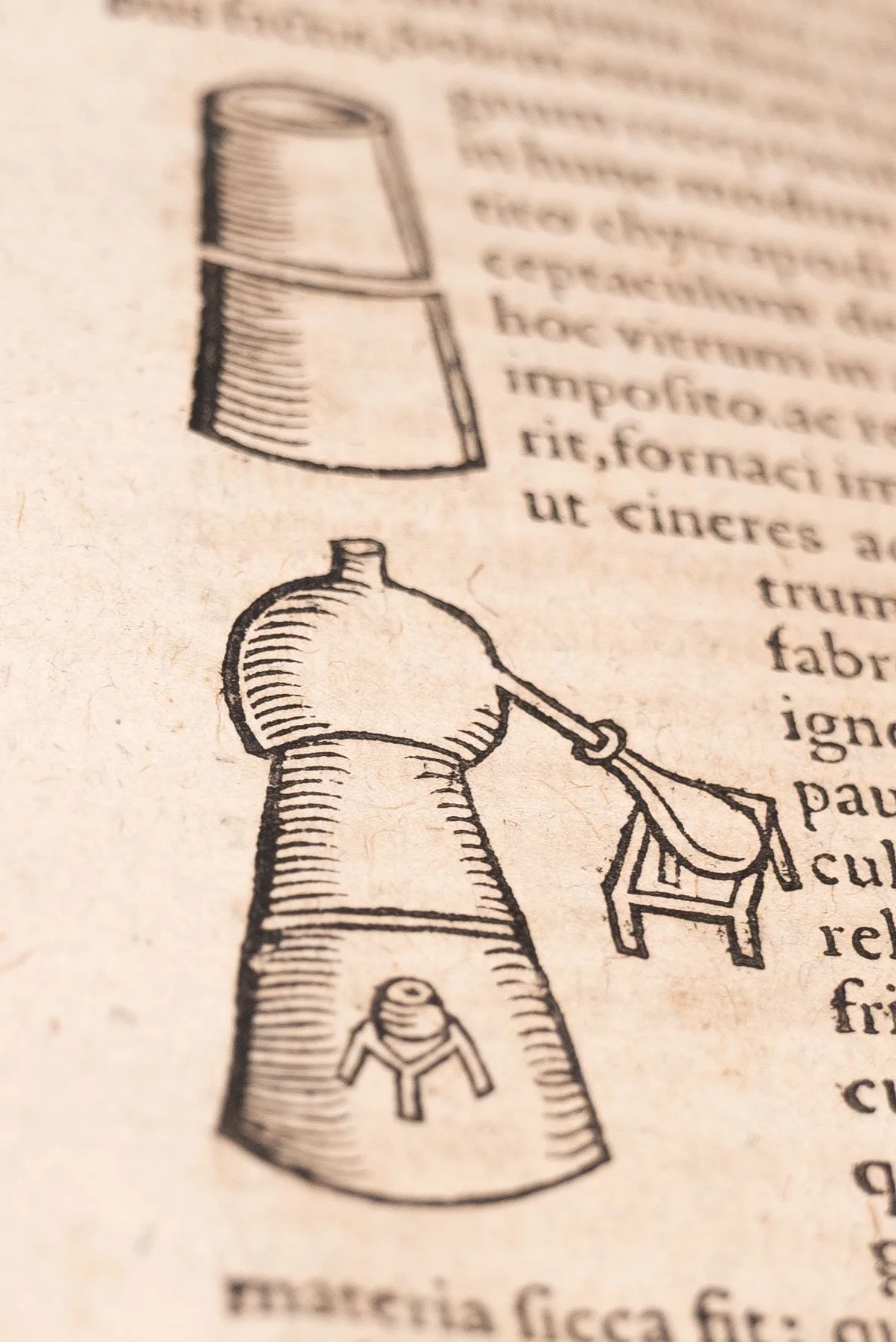 Image 11 of 11