In a few places across these two massive folios a librarian's stamp reads Withdrawn. The Library of the Medical and Chirurgical Faculty of Maryland was only clearing its shelves, as medical libraries do. There is something poignant to it all the same. The medical faculties of Europe spent the better part of a century trying and failing to discharge Paracelsus.
He gave them cause. Theophrastus Bombastus von Hohenheim took up the post of city physician at Basel in 1527 and before the year was out had thrown Avicenna's Canon, the textbook on which every licensed physician in Europe had been examined, onto the students' St. John's Day bonfire. He lectured in German where the statutes said Latin. He admitted barber-surgeons to rooms reserved for gowned doctors. He held that a physician who had never stood in a mine, or attended a birth, or dressed a wound with his own hands knew nothing worth knowing, and he said so at a volume that made him unemployable in one city after another. Basel was rid of him inside two years. He spent the rest of his life on the road and died at Salzburg in 1541.
What he left behind outlasted the grudge. The rule that the dose makes the poison is his. It is still the first thing taught in toxicology. So is the argument that diseases are specific things arriving from outside the body and requiring specific remedies, set against a humoral orthodoxy that read every illness as the patient's own imbalance. So is the practice of preparing medicines chemically rather than merely compounding herbs, which is where pharmacology starts. He described the wasting sickness of miners as a disease of the trade and the air in it rather than a punishment sent by the spirits of the mountain. Whatever the faculties thought of the man, the profession quietly took the method. Much of his work remained in manuscript when he died, although the Great Surgery had appeared in 1536. The manuscripts lay scattered among patrons and disciples for a generation before a circle of physician-alchemists went hunting for them, and the search culminated in Johann Huser's Basel edition of 1589 to 1591. That text flowed into the volumes offered here: the Geneva edition of 1658, prepared by the physician Friedrich Bitiskius for Jean Antoine and Samuel de Tournes. It is the most comprehensive Latin collected edition of Paracelsus ever produced, and the form in which Europe outside the German lands read him for the next two centuries. The contents range across his medical, alchemical and magical writings. The Paragranum and the Paramirum, where the physician's four pillars are philosophy, astronomy, alchemy and virtue. The doctrine of the tria prima, salt, sulfur and mercury, the three principles out of which all bodies are composed, which governed chymical thinking for a century and a half. The Chirurgia Magna and the Chirurgia Minor, the surgical works that made his reputation while he lived and that a medical library would have had every reason to keep on the shelf. The treatises on the diseases of miners, on the mineral waters, on tartar and the stone, on the invisible diseases. And the magical works, the Archidoxis magica with its planetary sigils and its talismans cast for particular ailments and particular hours. Several of the magical treatises are of debated authenticity, hung on the master's name by enthusiastic followers, which is itself a measure of what that name was worth by then.This set has the three parts bound in two worn volumes. The engraved portrait of Paracelsus after Tintoretto that should face the first title is lacking. The first title page carries an old repair. The bindings are dry and cracked along the spines, with rubbing to the edges of the boards, and the withdrawal stamps appear in a few places across both volumes. The set offers the collected Latin texts in two substantial folios, without the portrait.
Provenance: (1) Bookplate of the Walter Ralph Steiner Memorial Collection, Library of the Medical and Chirurgical Faculty of Maryland, Baltimore. Walter Ralph Steiner (1870–1942) was a Maryland-born, Johns Hopkins-trained Hartford physician and a devoted historian of medicine. (2) Withdrawal stamps of the same library.
PARACELSUS (Theophrastus Bombastus von Hohenheim, 1493/94–1541); Friedrich BITISKIUS, editor. Aur. Philip. Theoph. Paracelsi Bombast ab Hohenheim, medici et philosophi celeberrimi, chemicorumque principis, Opera omnia medico-chemico-chirurgica, tribus voluminibus comprehensa. Editio novissima et emendatissima, ad Germanica & Latina exemplaria accuratissime collata. Geneva: sumptibus Ioan. Antonii & Samuelis de Tournes, 1658.
Physical Description: Folio, three parts bound in two volumes, each part with its own divisional title page and its own index. Titles printed in red and black with large engraved devices; woodcut and engraved diagrams, tables and sigils throughout, most densely in the Archidoxis magica. Engraved portrait frontispiece after Tintoretto lacking.
Condition: Title page of the first volume with an old repair. Bindings dry and cracked along the spines, with rubbing to the edges of the boards. Institutional withdrawal stamps in a few places in both volumes.
References: Sudhoff 381–383. Caillet 8283. Ferguson II, 169. Krivatsy 8560. Bibliotheca Osleriana 528. Verginelli, Bibliotheca Hermetica, 243–244.
In a few places across these two massive folios a librarian's stamp reads Withdrawn. The Library of the Medical and Chirurgical Faculty of Maryland was only clearing its shelves, as medical libraries do. There is something poignant to it all the same. The medical faculties of Europe spent the better part of a century trying and failing to discharge Paracelsus.
He gave them cause. Theophrastus Bombastus von Hohenheim took up the post of city physician at Basel in 1527 and before the year was out had thrown Avicenna's Canon, the textbook on which every licensed physician in Europe had been examined, onto the students' St. John's Day bonfire. He lectured in German where the statutes said Latin. He admitted barber-surgeons to rooms reserved for gowned doctors. He held that a physician who had never stood in a mine, or attended a birth, or dressed a wound with his own hands knew nothing worth knowing, and he said so at a volume that made him unemployable in one city after another. Basel was rid of him inside two years. He spent the rest of his life on the road and died at Salzburg in 1541.
What he left behind outlasted the grudge. The rule that the dose makes the poison is his. It is still the first thing taught in toxicology. So is the argument that diseases are specific things arriving from outside the body and requiring specific remedies, set against a humoral orthodoxy that read every illness as the patient's own imbalance. So is the practice of preparing medicines chemically rather than merely compounding herbs, which is where pharmacology starts. He described the wasting sickness of miners as a disease of the trade and the air in it rather than a punishment sent by the spirits of the mountain. Whatever the faculties thought of the man, the profession quietly took the method. Much of his work remained in manuscript when he died, although the Great Surgery had appeared in 1536. The manuscripts lay scattered among patrons and disciples for a generation before a circle of physician-alchemists went hunting for them, and the search culminated in Johann Huser's Basel edition of 1589 to 1591. That text flowed into the volumes offered here: the Geneva edition of 1658, prepared by the physician Friedrich Bitiskius for Jean Antoine and Samuel de Tournes. It is the most comprehensive Latin collected edition of Paracelsus ever produced, and the form in which Europe outside the German lands read him for the next two centuries. The contents range across his medical, alchemical and magical writings. The Paragranum and the Paramirum, where the physician's four pillars are philosophy, astronomy, alchemy and virtue. The doctrine of the tria prima, salt, sulfur and mercury, the three principles out of which all bodies are composed, which governed chymical thinking for a century and a half. The Chirurgia Magna and the Chirurgia Minor, the surgical works that made his reputation while he lived and that a medical library would have had every reason to keep on the shelf. The treatises on the diseases of miners, on the mineral waters, on tartar and the stone, on the invisible diseases. And the magical works, the Archidoxis magica with its planetary sigils and its talismans cast for particular ailments and particular hours. Several of the magical treatises are of debated authenticity, hung on the master's name by enthusiastic followers, which is itself a measure of what that name was worth by then.This set has the three parts bound in two worn volumes. The engraved portrait of Paracelsus after Tintoretto that should face the first title is lacking. The first title page carries an old repair. The bindings are dry and cracked along the spines, with rubbing to the edges of the boards, and the withdrawal stamps appear in a few places across both volumes. The set offers the collected Latin texts in two substantial folios, without the portrait.
Provenance: (1) Bookplate of the Walter Ralph Steiner Memorial Collection, Library of the Medical and Chirurgical Faculty of Maryland, Baltimore. Walter Ralph Steiner (1870–1942) was a Maryland-born, Johns Hopkins-trained Hartford physician and a devoted historian of medicine. (2) Withdrawal stamps of the same library.
PARACELSUS (Theophrastus Bombastus von Hohenheim, 1493/94–1541); Friedrich BITISKIUS, editor. Aur. Philip. Theoph. Paracelsi Bombast ab Hohenheim, medici et philosophi celeberrimi, chemicorumque principis, Opera omnia medico-chemico-chirurgica, tribus voluminibus comprehensa. Editio novissima et emendatissima, ad Germanica & Latina exemplaria accuratissime collata. Geneva: sumptibus Ioan. Antonii & Samuelis de Tournes, 1658.
Physical Description: Folio, three parts bound in two volumes, each part with its own divisional title page and its own index. Titles printed in red and black with large engraved devices; woodcut and engraved diagrams, tables and sigils throughout, most densely in the Archidoxis magica. Engraved portrait frontispiece after Tintoretto lacking.
Condition: Title page of the first volume with an old repair. Bindings dry and cracked along the spines, with rubbing to the edges of the boards. Institutional withdrawal stamps in a few places in both volumes.
References: Sudhoff 381–383. Caillet 8283. Ferguson II, 169. Krivatsy 8560. Bibliotheca Osleriana 528. Verginelli, Bibliotheca Hermetica, 243–244.

 Image 1 of 9
 Image 2 of 9
 Image 3 of 9
 Image 4 of 9
 Image 5 of 9
 Image 6 of 9
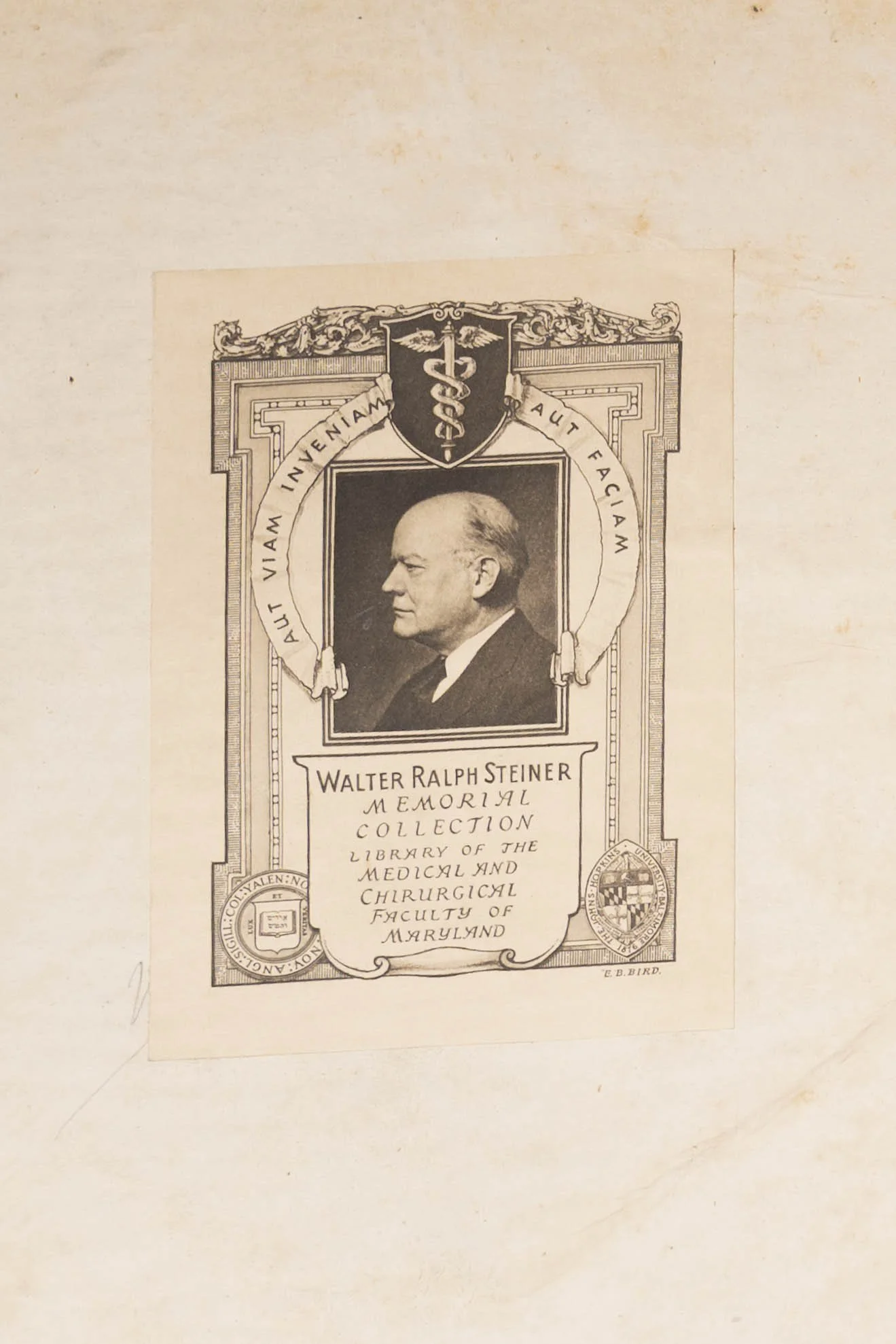 Image 7 of 9
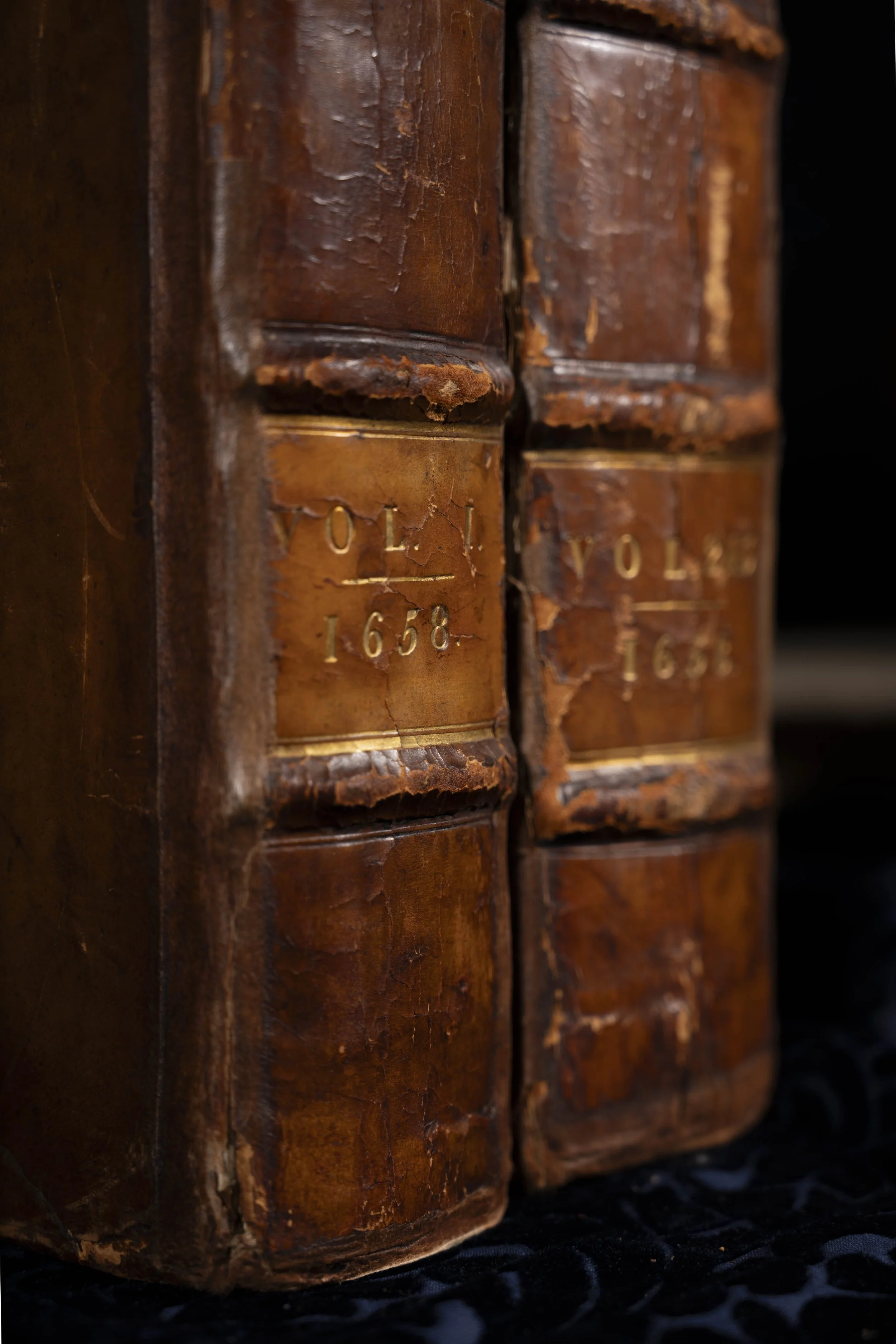 Image 8 of 9
 Image 9 of 9