When should the physician fear for his patient, and when may he hope? For two thousand years learned medicine had an answer: watch the critical days. Hippocrates and Galen taught that diseases turn at fixed intervals, and Renaissance physicians tied those intervals to the heavens, above all to the Moon, whose quarters were believed to govern the crises of fevers. This handsome volume from Padua is one of the fullest treatments of that doctrine ever written, by a man superbly placed to write it: Andrea Argoli (1570-1657), professor of mathematics at Padua in the university where Galileo had taught a generation before, knight of St. Mark by grace of the Venetian Senate, and author of the ephemerides on which half the astrologers of Europe depended. Here he unites the two halves of his learning, the physician's and the astrologer's, into a complete system of astrological medicine: how to erect the figure for the moment a patient takes to bed (the famous decumbiture of the title), how to time the crisis by the Moon's motion, and how to read aggravation, improvement, and the hour favorable for treatment from the chart.
The glory of the book is its second part, and it is the reason collectors hunt this edition. Argoli demonstrates the doctrine on real patients, and not anonymous ones: 126 square horoscope diagrams march through the text, casting the nativities and sickbed figures of the great men of his age. Pope Urban VIII is here, Galileo's prosecutor, his birth figure of 1568 set beside the fatal solar revolution of 1644, with Argoli's postmortem verdict that the year's revolution "was unlucky," Saturn pressing on the Sun, the significator of life. Cardinals Facchinetti and Piatti receive the same treatment. So, most memorably, does Federico, the young prince of Urbino, whose case reads like a novella: enamored of an actress, entertained by a comedian in the evening, and found dead in his bed the next morning in 1623, a death Argoli traces to epilepsy and to Mercury's fatal commerce with Mars. Casting the horoscopes of popes was dangerous work in the seventeenth century, the kind of astrology that papal bulls had expressly forbidden, and Argoli prudently published his papal charts only after their subjects were safely dead.
The volume carries two further distinctions. It is dedicated in a grand opening epistle to Christina, Queen of the Swedes, Goths, and Vandals, the most intellectually voracious woman in Europe, patroness of Descartes and later, in her Roman exile, of alchemists; the dedication's meditation on the divine force "by which all things live and are moved" sets the tone of pious natural philosophy under which seventeenth-century astrology sheltered. And buried in its discussions, as Caillet noted long ago, is one of the early printed acknowledgments of William Harvey's discovery of the circulation of the blood, announced only in 1628: the old astrological medicine and the new experimental physiology meeting between the same covers.
This copy is in its original dress, full speckled calf of the period, the spine richly gilt in compartments with floral tools, red-speckled edges, the gilt now mellow and the leather honestly worn: joints and corners rubbed, the head of the spine chipped, one spine ornament re-glued. Internally it is a good, complete copy with the full index, browned in places as Italian paper of this date always is, with some damp staining and a light tide-mark at the foot. The first edition appeared at Padua in 1639; this revised issue of 1652, enlarged in its second part and in the author's own words "almost new," is the desirable one, and it does not appear often in commerce in contemporary bindings.
ARGOLI, Andrea (1570-1657). Andreae Argoli D. Marci Serenissimo annuente Senatu Equitis, In Patavino Lyceo Mathematicas scientias profitentis, De diebus criticis et aegrorum decubitu libri duo. Ab Auctore denuo recogniti, ac altera parte auctiores, paeneque novi. Padua [Patavii]: apud Paulum Frambottum, 1652 (the second part with its own title page, Typis Pauli Frambotti, dated 1651). Revised and much-enlarged second edition.
Physical Description: 4to. Two parts in one volume, 371 pp. plus index ("Rerum," ending FINIS); woodcut sun device on the first title, woodcut printer's device on the second, woodcut initials; 126 square astrological diagrams in the text (nativities, decumbitures, and revolutions), with additional letterpress tables and worked schemata.
Binding: Contemporary full speckled calf, spine gilt in compartments with floral centerpieces and scrollwork corner-pieces, gilt-lettered direct, red-speckled edges.
Condition: Binding worn from use: joints, corners, and board edges rubbed, head and tail of spine chipped, one raised-band ornament re-glued; the structure sound. Internally good and complete: browning and scattered damp stains, a light tide-mark at the lower margin of some leaves, the diagrams sharp throughout.
When should the physician fear for his patient, and when may he hope? For two thousand years learned medicine had an answer: watch the critical days. Hippocrates and Galen taught that diseases turn at fixed intervals, and Renaissance physicians tied those intervals to the heavens, above all to the Moon, whose quarters were believed to govern the crises of fevers. This handsome volume from Padua is one of the fullest treatments of that doctrine ever written, by a man superbly placed to write it: Andrea Argoli (1570-1657), professor of mathematics at Padua in the university where Galileo had taught a generation before, knight of St. Mark by grace of the Venetian Senate, and author of the ephemerides on which half the astrologers of Europe depended. Here he unites the two halves of his learning, the physician's and the astrologer's, into a complete system of astrological medicine: how to erect the figure for the moment a patient takes to bed (the famous decumbiture of the title), how to time the crisis by the Moon's motion, and how to read aggravation, improvement, and the hour favorable for treatment from the chart.
The glory of the book is its second part, and it is the reason collectors hunt this edition. Argoli demonstrates the doctrine on real patients, and not anonymous ones: 126 square horoscope diagrams march through the text, casting the nativities and sickbed figures of the great men of his age. Pope Urban VIII is here, Galileo's prosecutor, his birth figure of 1568 set beside the fatal solar revolution of 1644, with Argoli's postmortem verdict that the year's revolution "was unlucky," Saturn pressing on the Sun, the significator of life. Cardinals Facchinetti and Piatti receive the same treatment. So, most memorably, does Federico, the young prince of Urbino, whose case reads like a novella: enamored of an actress, entertained by a comedian in the evening, and found dead in his bed the next morning in 1623, a death Argoli traces to epilepsy and to Mercury's fatal commerce with Mars. Casting the horoscopes of popes was dangerous work in the seventeenth century, the kind of astrology that papal bulls had expressly forbidden, and Argoli prudently published his papal charts only after their subjects were safely dead.
The volume carries two further distinctions. It is dedicated in a grand opening epistle to Christina, Queen of the Swedes, Goths, and Vandals, the most intellectually voracious woman in Europe, patroness of Descartes and later, in her Roman exile, of alchemists; the dedication's meditation on the divine force "by which all things live and are moved" sets the tone of pious natural philosophy under which seventeenth-century astrology sheltered. And buried in its discussions, as Caillet noted long ago, is one of the early printed acknowledgments of William Harvey's discovery of the circulation of the blood, announced only in 1628: the old astrological medicine and the new experimental physiology meeting between the same covers.
This copy is in its original dress, full speckled calf of the period, the spine richly gilt in compartments with floral tools, red-speckled edges, the gilt now mellow and the leather honestly worn: joints and corners rubbed, the head of the spine chipped, one spine ornament re-glued. Internally it is a good, complete copy with the full index, browned in places as Italian paper of this date always is, with some damp staining and a light tide-mark at the foot. The first edition appeared at Padua in 1639; this revised issue of 1652, enlarged in its second part and in the author's own words "almost new," is the desirable one, and it does not appear often in commerce in contemporary bindings.
ARGOLI, Andrea (1570-1657). Andreae Argoli D. Marci Serenissimo annuente Senatu Equitis, In Patavino Lyceo Mathematicas scientias profitentis, De diebus criticis et aegrorum decubitu libri duo. Ab Auctore denuo recogniti, ac altera parte auctiores, paeneque novi. Padua [Patavii]: apud Paulum Frambottum, 1652 (the second part with its own title page, Typis Pauli Frambotti, dated 1651). Revised and much-enlarged second edition.
Physical Description: 4to. Two parts in one volume, 371 pp. plus index ("Rerum," ending FINIS); woodcut sun device on the first title, woodcut printer's device on the second, woodcut initials; 126 square astrological diagrams in the text (nativities, decumbitures, and revolutions), with additional letterpress tables and worked schemata.
Binding: Contemporary full speckled calf, spine gilt in compartments with floral centerpieces and scrollwork corner-pieces, gilt-lettered direct, red-speckled edges.
Condition: Binding worn from use: joints, corners, and board edges rubbed, head and tail of spine chipped, one raised-band ornament re-glued; the structure sound. Internally good and complete: browning and scattered damp stains, a light tide-mark at the lower margin of some leaves, the diagrams sharp throughout.

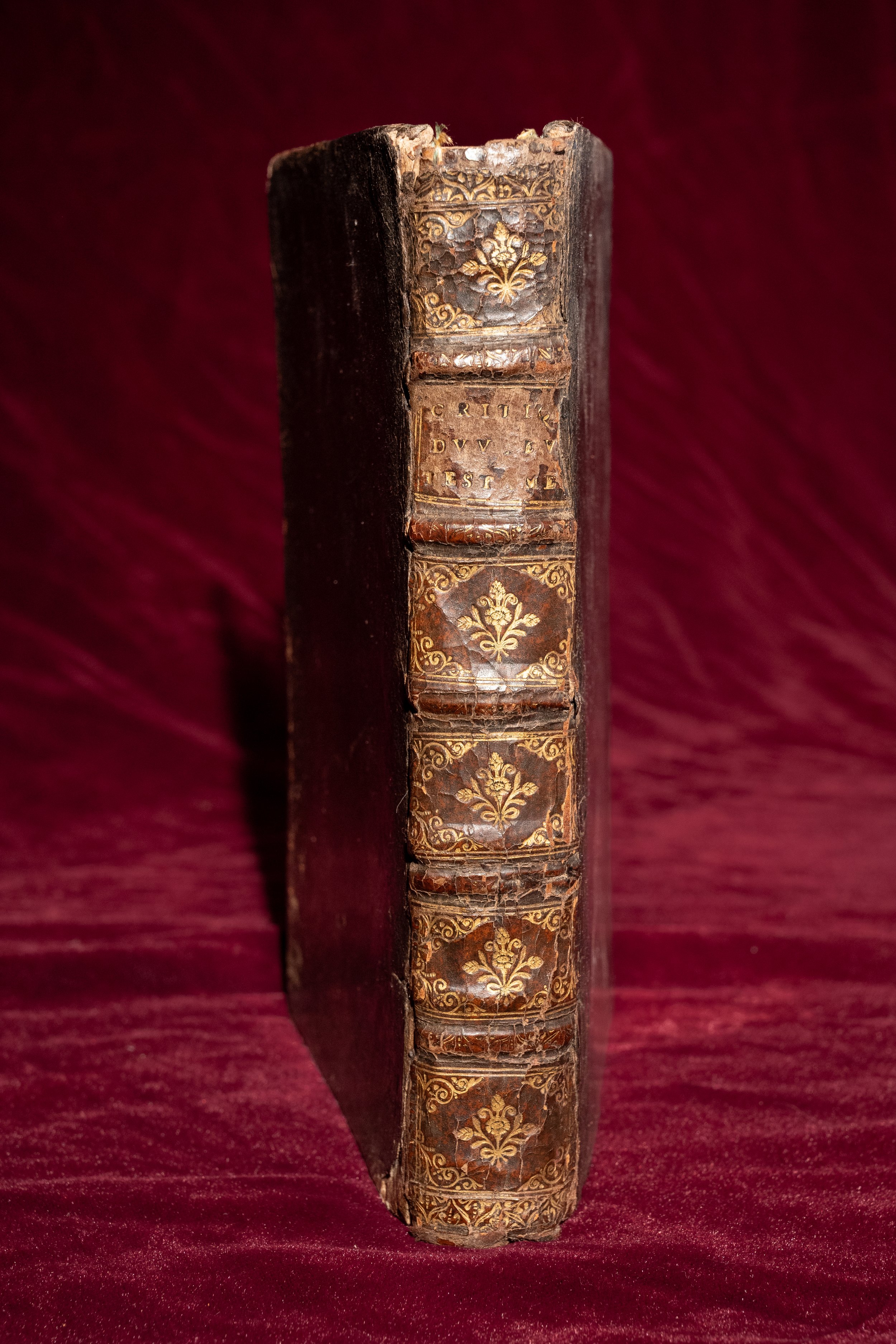 Image 1 of 11
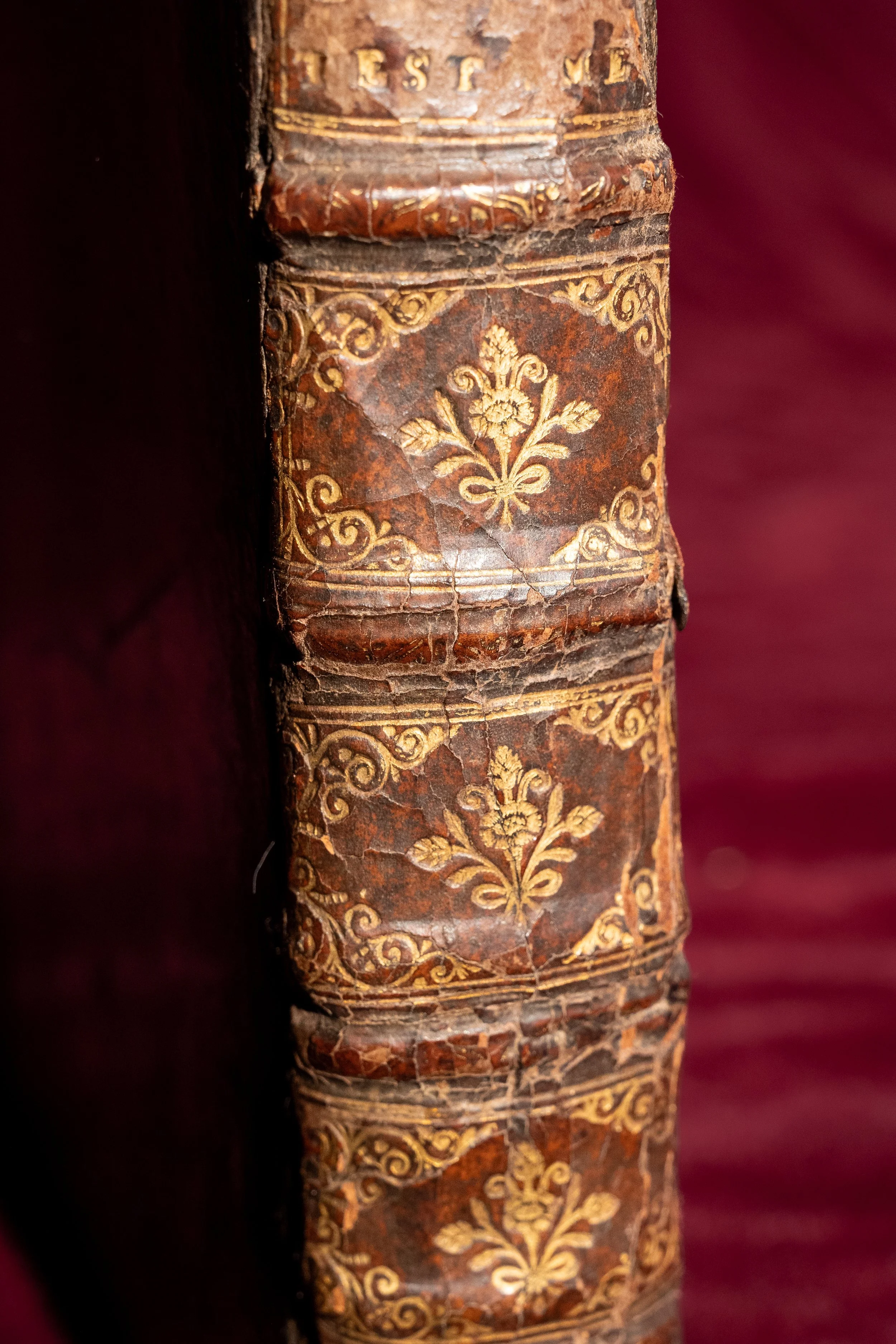 Image 2 of 11
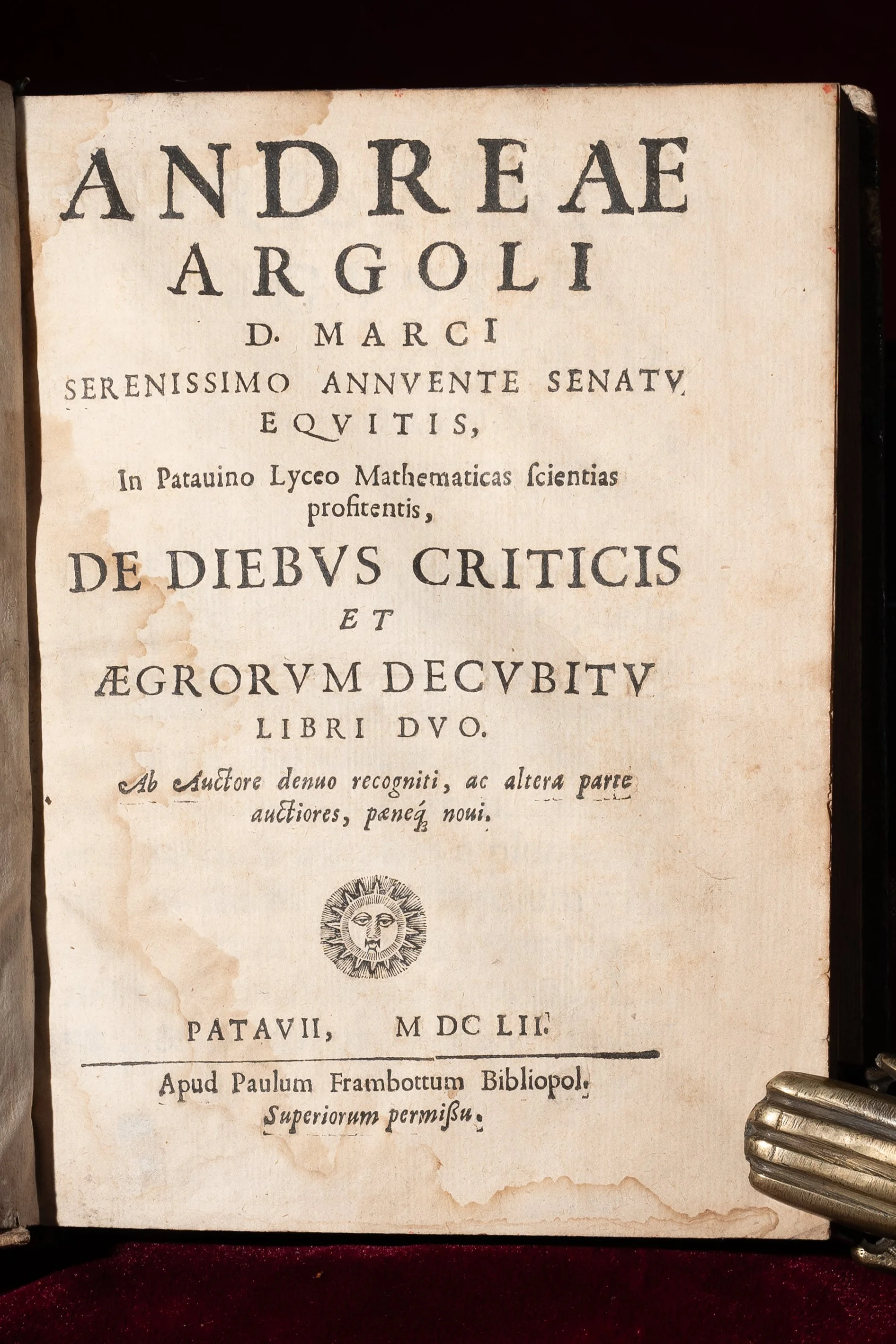 Image 3 of 11
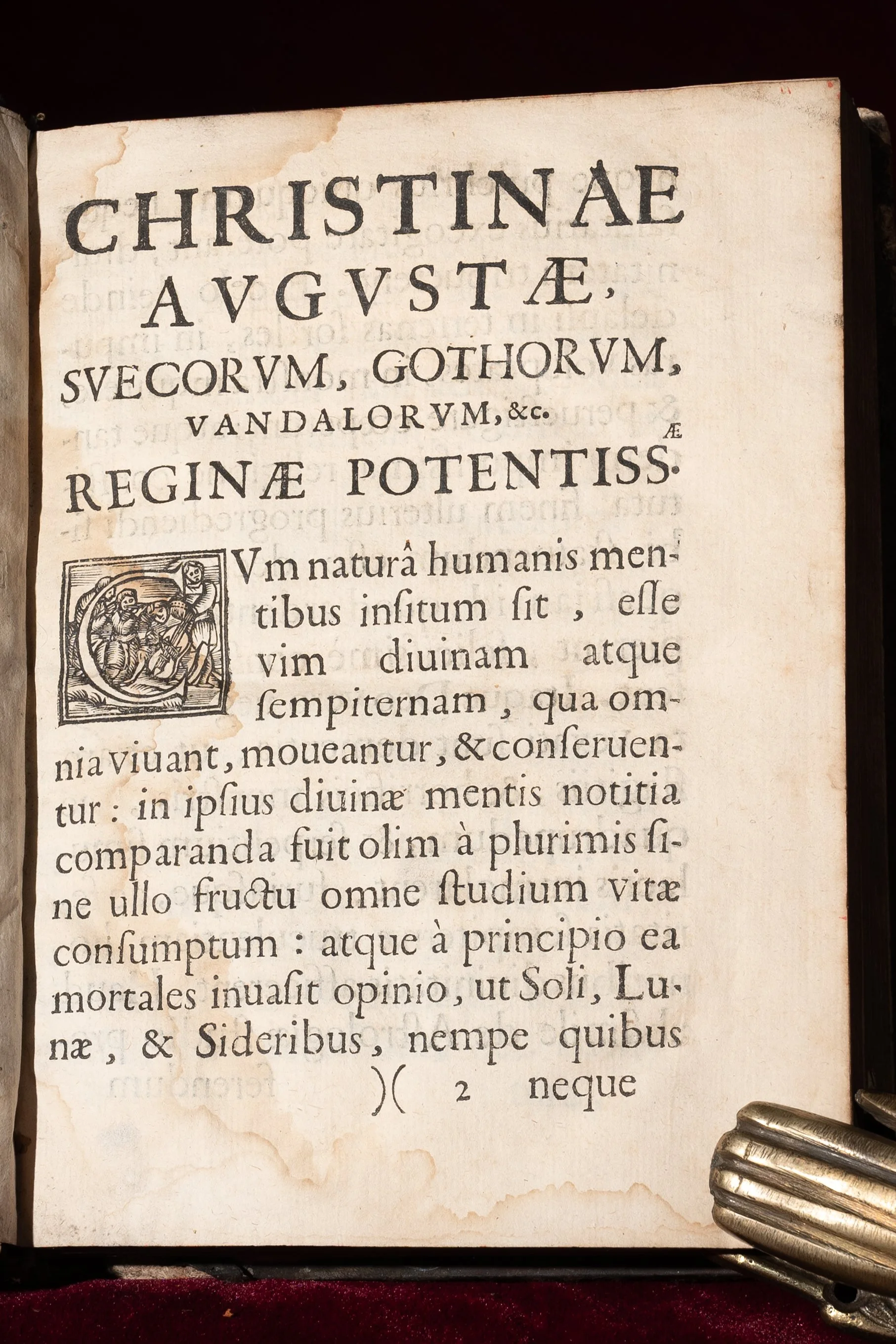 Image 4 of 11
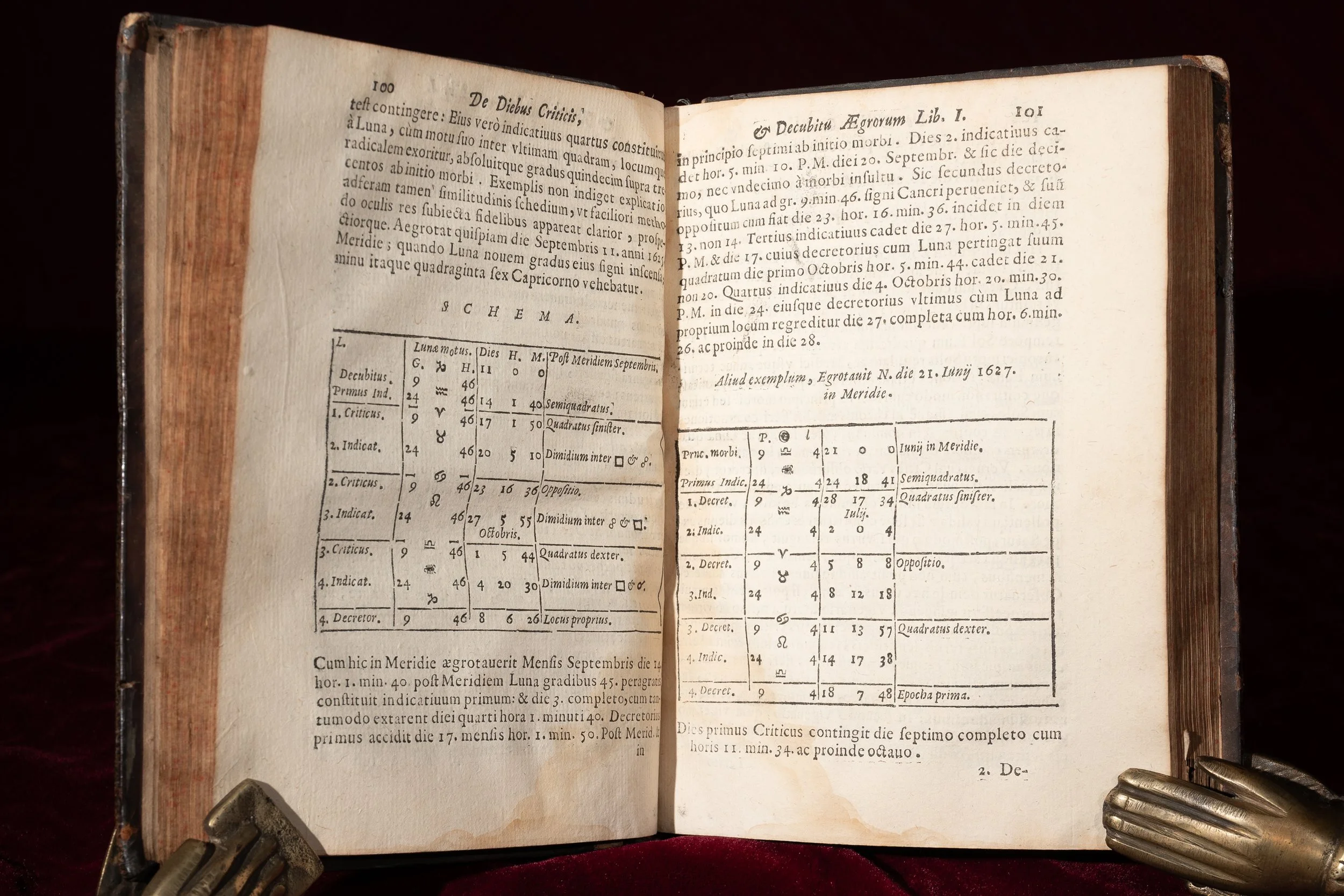 Image 5 of 11
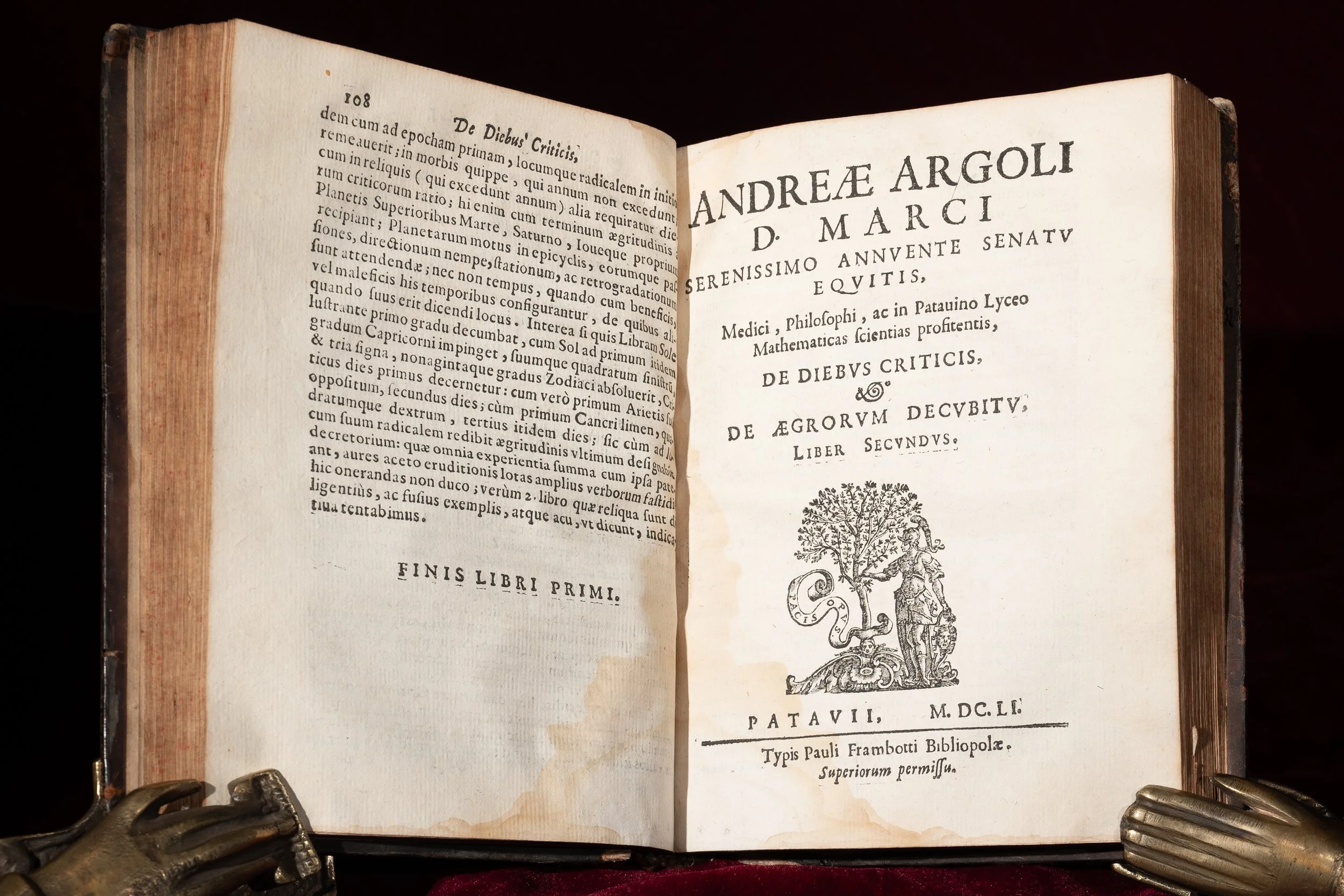 Image 6 of 11
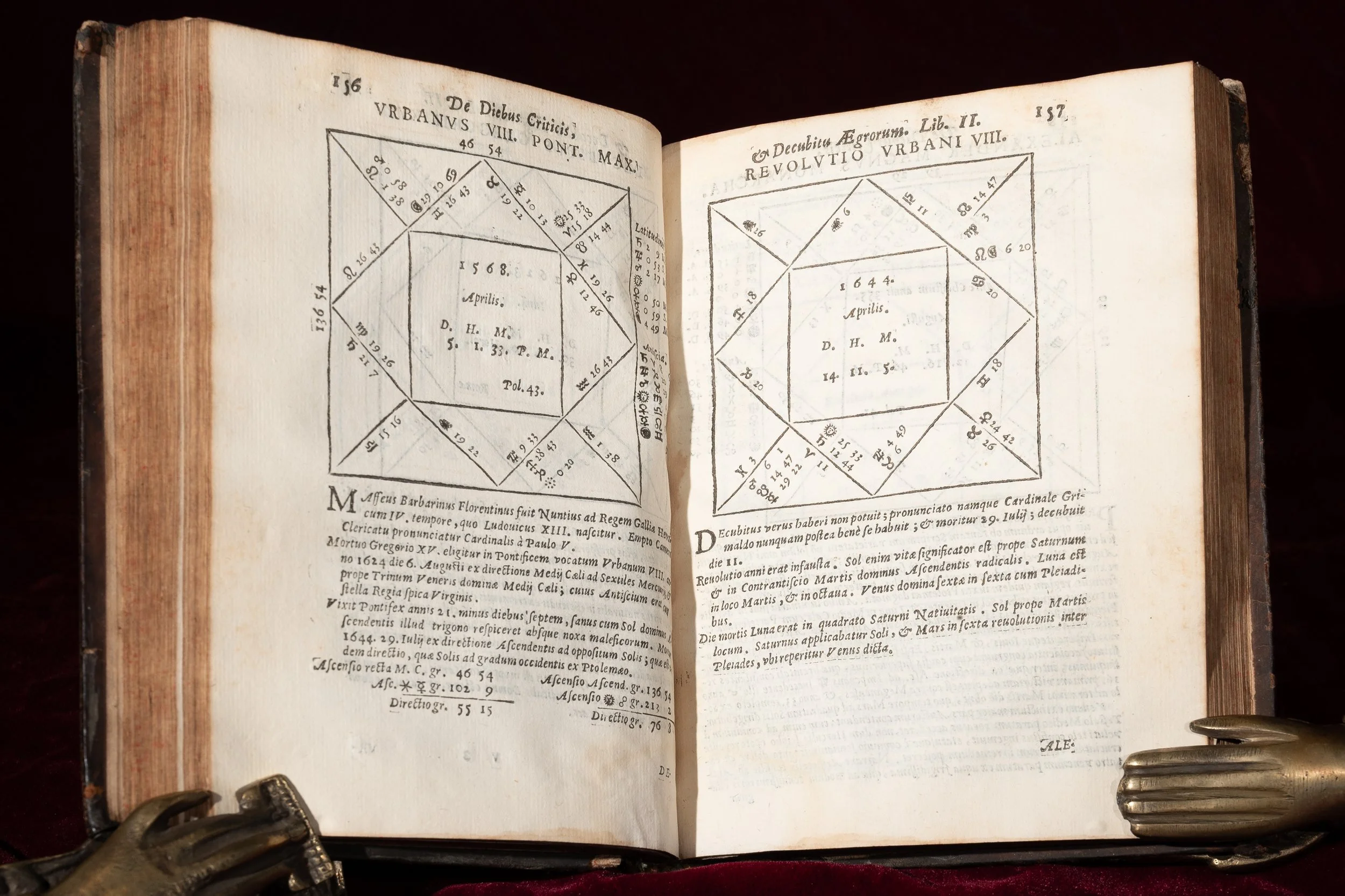 Image 7 of 11
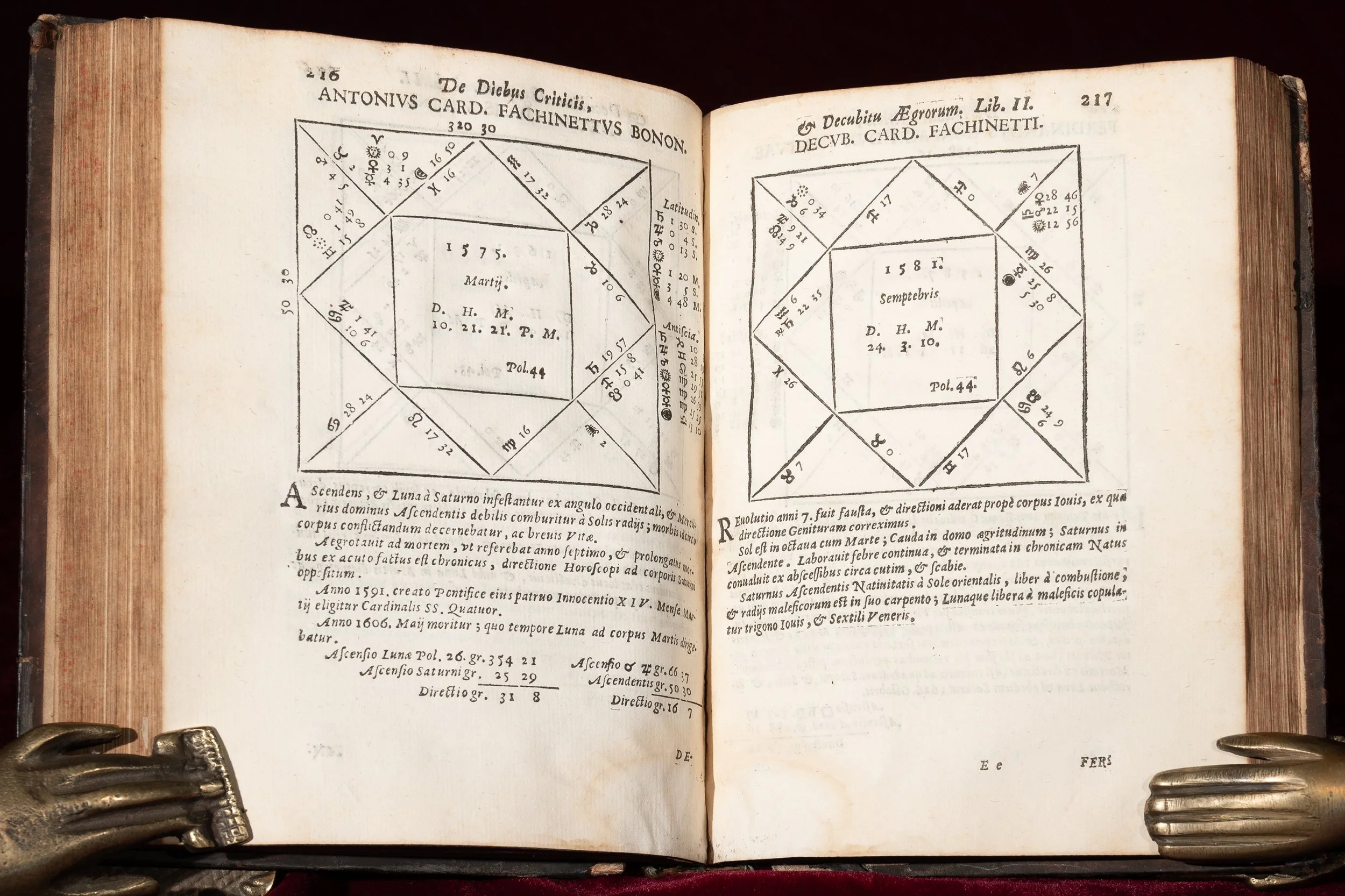 Image 8 of 11
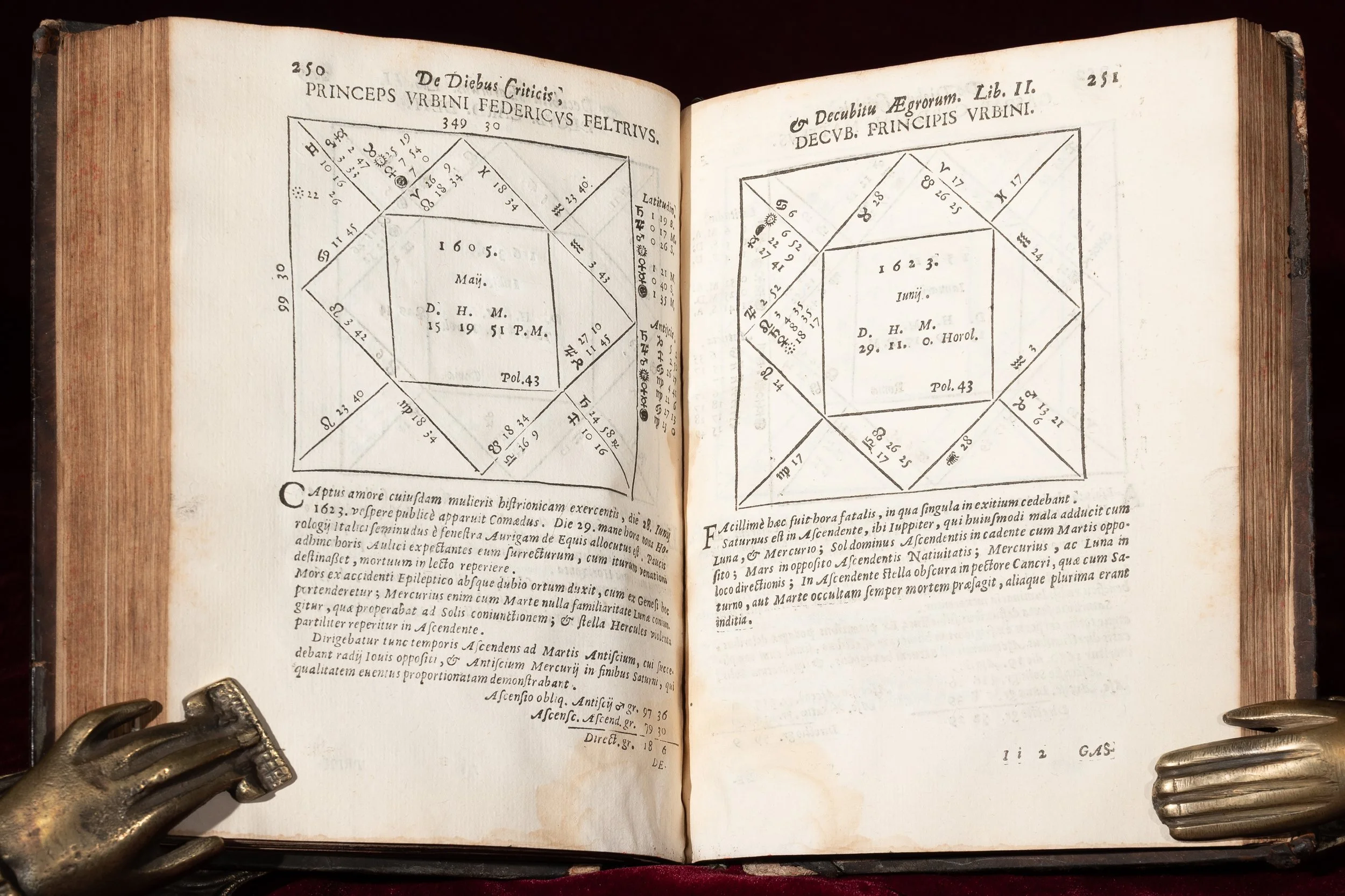 Image 9 of 11
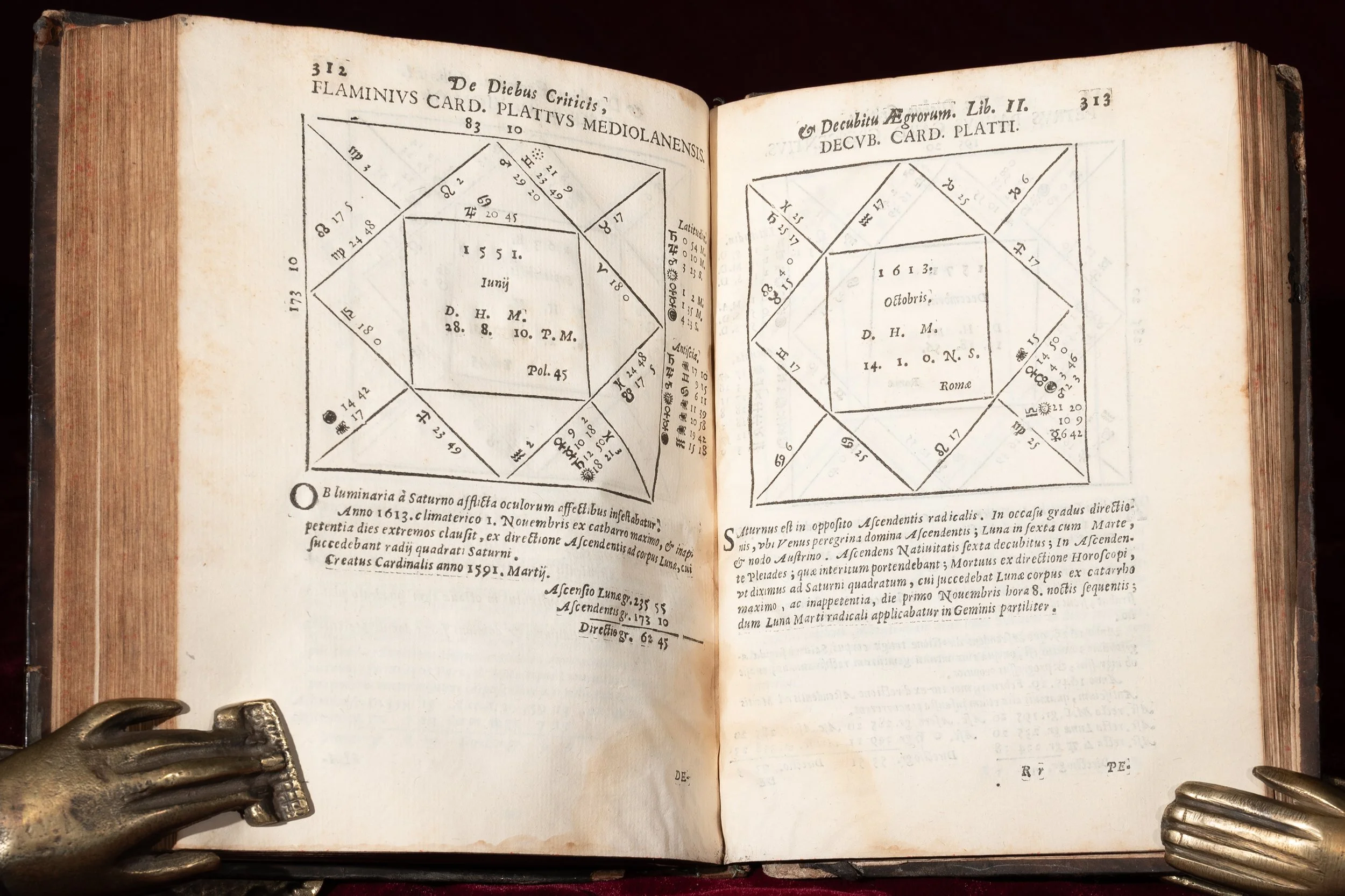 Image 10 of 11
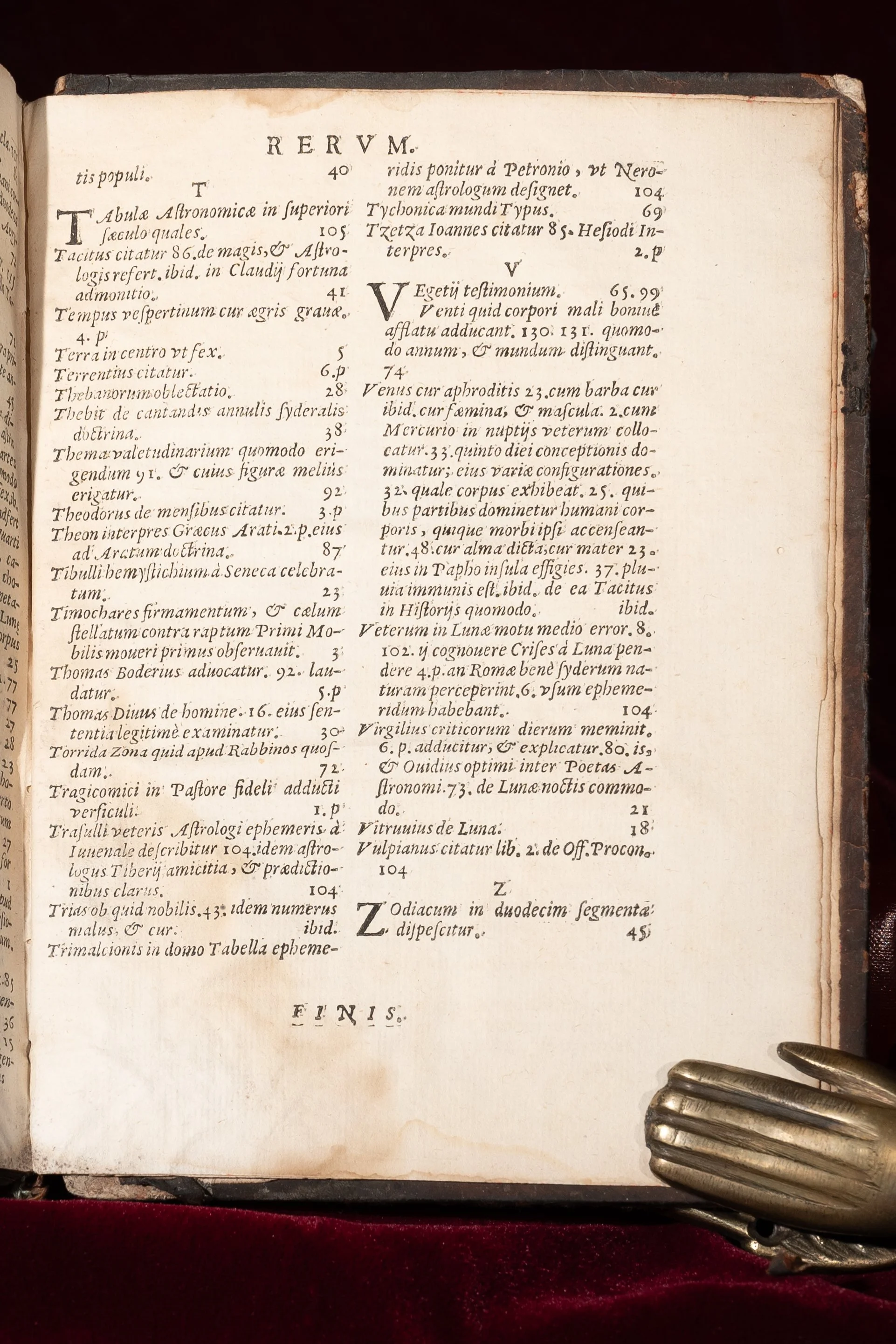 Image 11 of 11