A charming, pocket-sized edition of the single most influential book on "Natural Magic" of the early modern era. While theologians like Del Rio were busy condemning magic as demonic, the Neapolitan polymath Giambattista della Porta (1535–1615) was redefining it as the highest form of natural philosophy: the manipulation of the occult (hidden) properties of nature through science.
First published in four books in 1558 and expanded to twenty in 1589, Magiae Naturalis is a vast compendium of Renaissance curiosity, covering everything from serious experimentation to household tricks. It contains the first literary description of the camera obscura (Book XVII on Optics), as well as treatises on:
Transmutation of Metals (Alchemy).
Cryptography (Secret writing).
Perfumes and Cosmetics (often cited as the origin of "Kitchen Witchcraft").
Magnetism (The Lodestone).
Gunpowder and Fireworks.
This Leiden edition, printed by Peter Leffen, is prized for its compact utility; it was designed to be carried in the pocket of a student or traveling scholar. It features a distinct engraved title page (dated 1650) depicting the author's experiments, and is illustrated throughout with woodcuts of alchemical furnaces, distillation apparatus, and optical diagrams.
Good to Excellent condition. The later calf binding has been neatly rebacked, preserving the integrity of the volume, though the extremities remain rubbed. The interior features interesting provenance evidence with old ink annotations on the pastedowns and a wax seal, suggesting active use by a previous owner.
Della Porta, Giambattista. Magiae Naturalis Libri Viginti. (Natural Magic in Twenty Books). Lugd. Batavorum (Leiden): Apud Petrum Leffen, 1651. Format: Small 12mo (approx. 135 x 80 mm). (16), 670, (22) pp. Binding: Later full calf, neatly rebacked. Provenance: Old ink notes covering both pastedowns; tiny bookplate and wax seal opposite the engraved title.
A charming, pocket-sized edition of the single most influential book on "Natural Magic" of the early modern era. While theologians like Del Rio were busy condemning magic as demonic, the Neapolitan polymath Giambattista della Porta (1535–1615) was redefining it as the highest form of natural philosophy: the manipulation of the occult (hidden) properties of nature through science.
First published in four books in 1558 and expanded to twenty in 1589, Magiae Naturalis is a vast compendium of Renaissance curiosity, covering everything from serious experimentation to household tricks. It contains the first literary description of the camera obscura (Book XVII on Optics), as well as treatises on:
Transmutation of Metals (Alchemy).
Cryptography (Secret writing).
Perfumes and Cosmetics (often cited as the origin of "Kitchen Witchcraft").
Magnetism (The Lodestone).
Gunpowder and Fireworks.
This Leiden edition, printed by Peter Leffen, is prized for its compact utility; it was designed to be carried in the pocket of a student or traveling scholar. It features a distinct engraved title page (dated 1650) depicting the author's experiments, and is illustrated throughout with woodcuts of alchemical furnaces, distillation apparatus, and optical diagrams.
Good to Excellent condition. The later calf binding has been neatly rebacked, preserving the integrity of the volume, though the extremities remain rubbed. The interior features interesting provenance evidence with old ink annotations on the pastedowns and a wax seal, suggesting active use by a previous owner.
Della Porta, Giambattista. Magiae Naturalis Libri Viginti. (Natural Magic in Twenty Books). Lugd. Batavorum (Leiden): Apud Petrum Leffen, 1651. Format: Small 12mo (approx. 135 x 80 mm). (16), 670, (22) pp. Binding: Later full calf, neatly rebacked. Provenance: Old ink notes covering both pastedowns; tiny bookplate and wax seal opposite the engraved title.

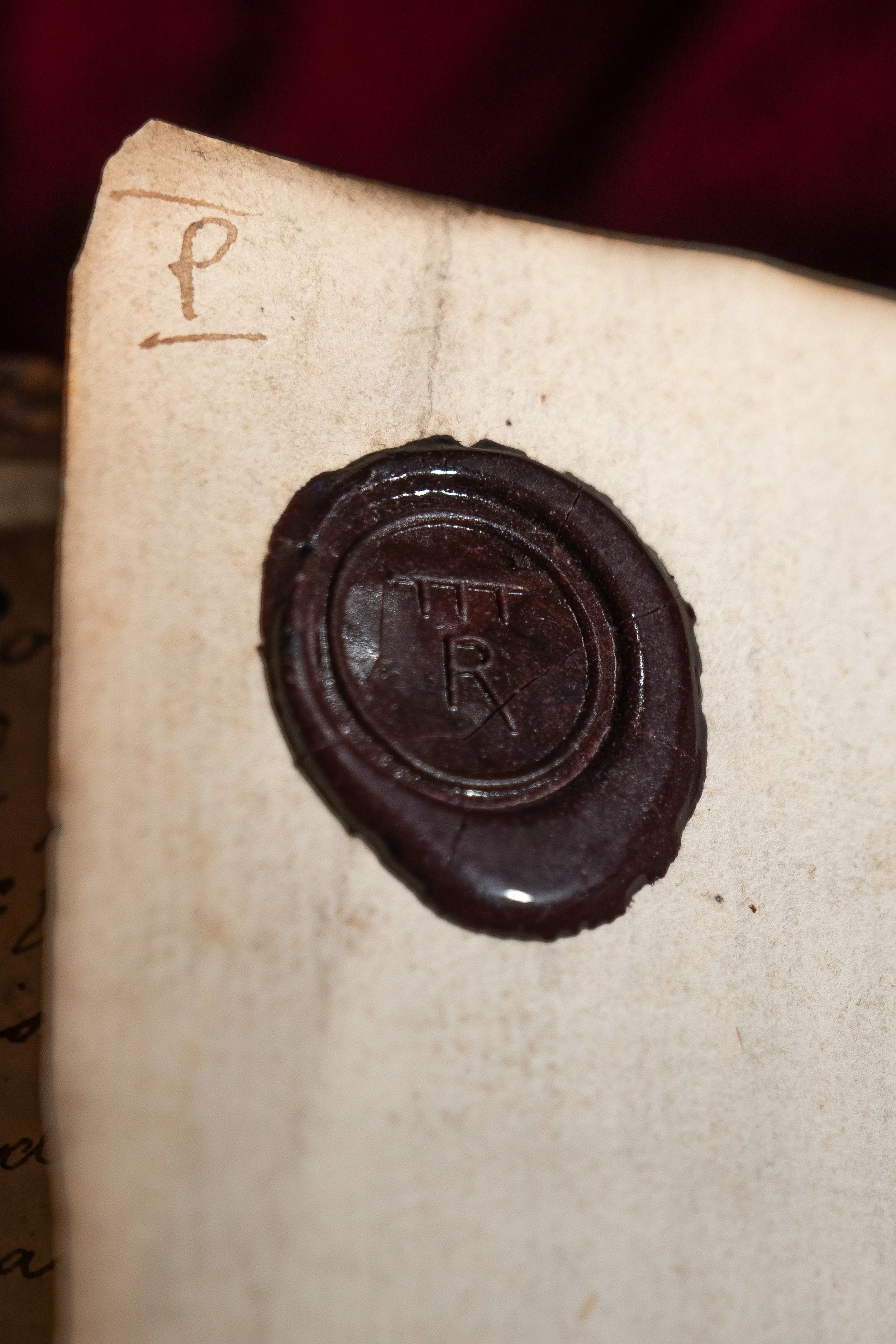 Image 1 of 20
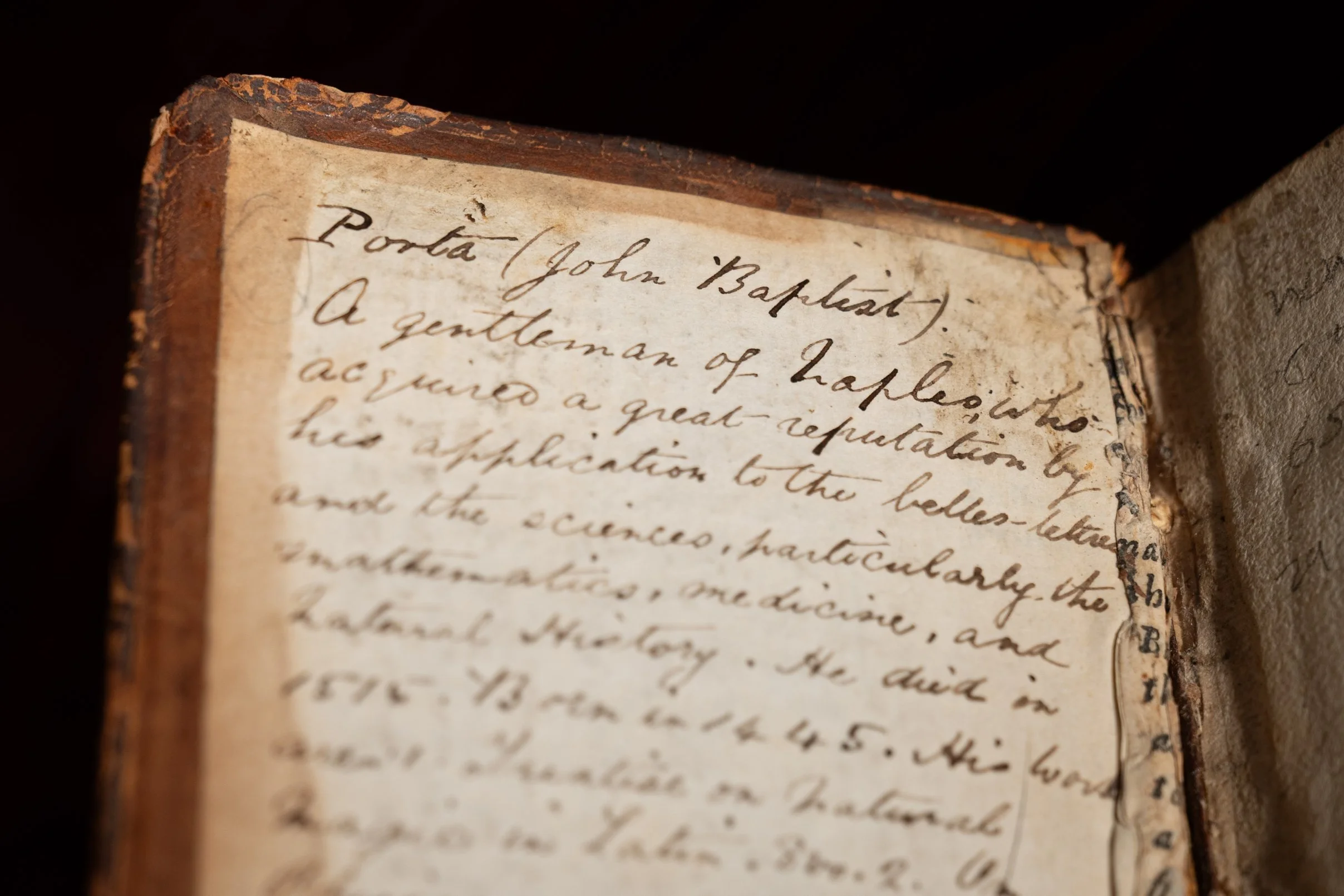 Image 2 of 20
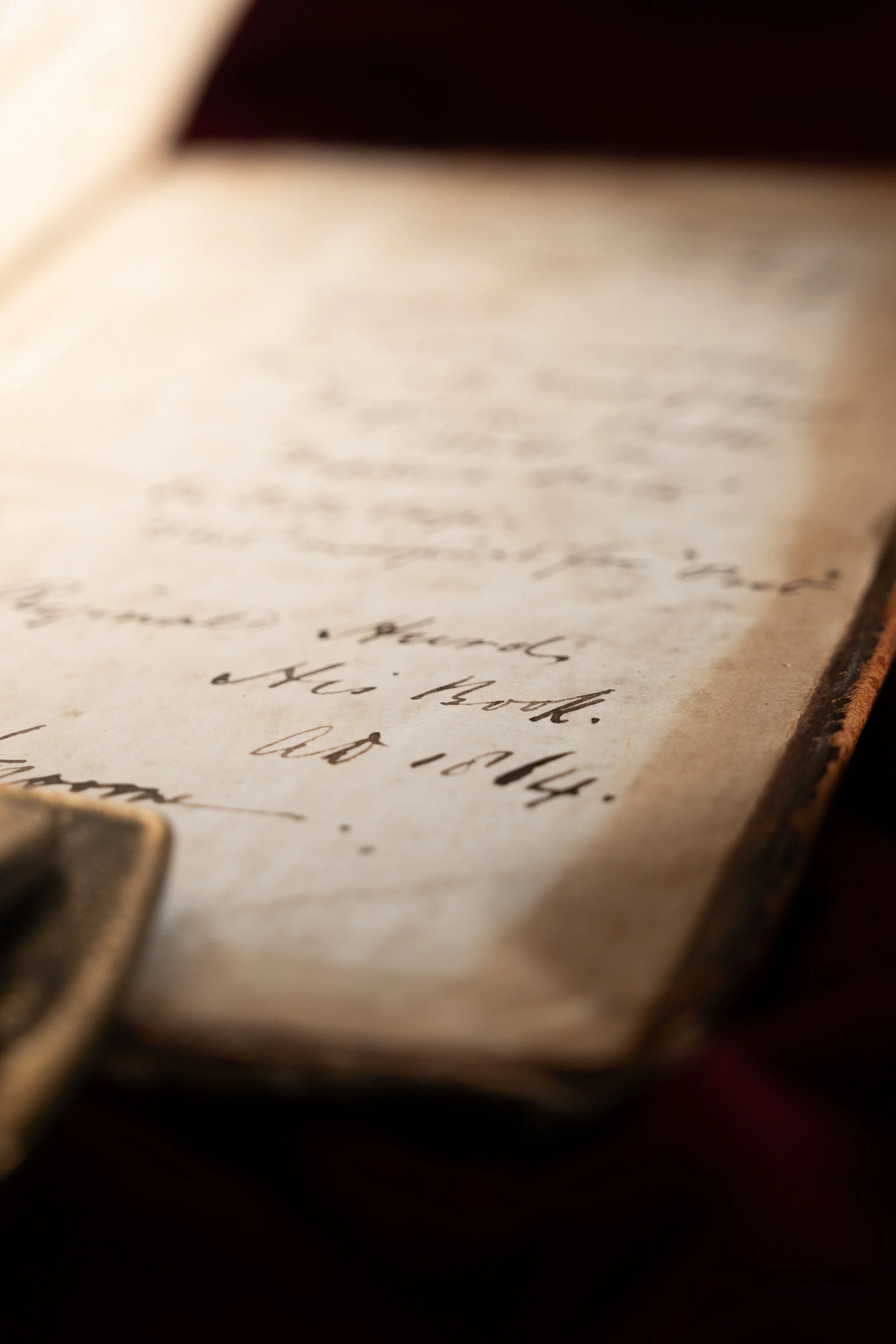 Image 3 of 20
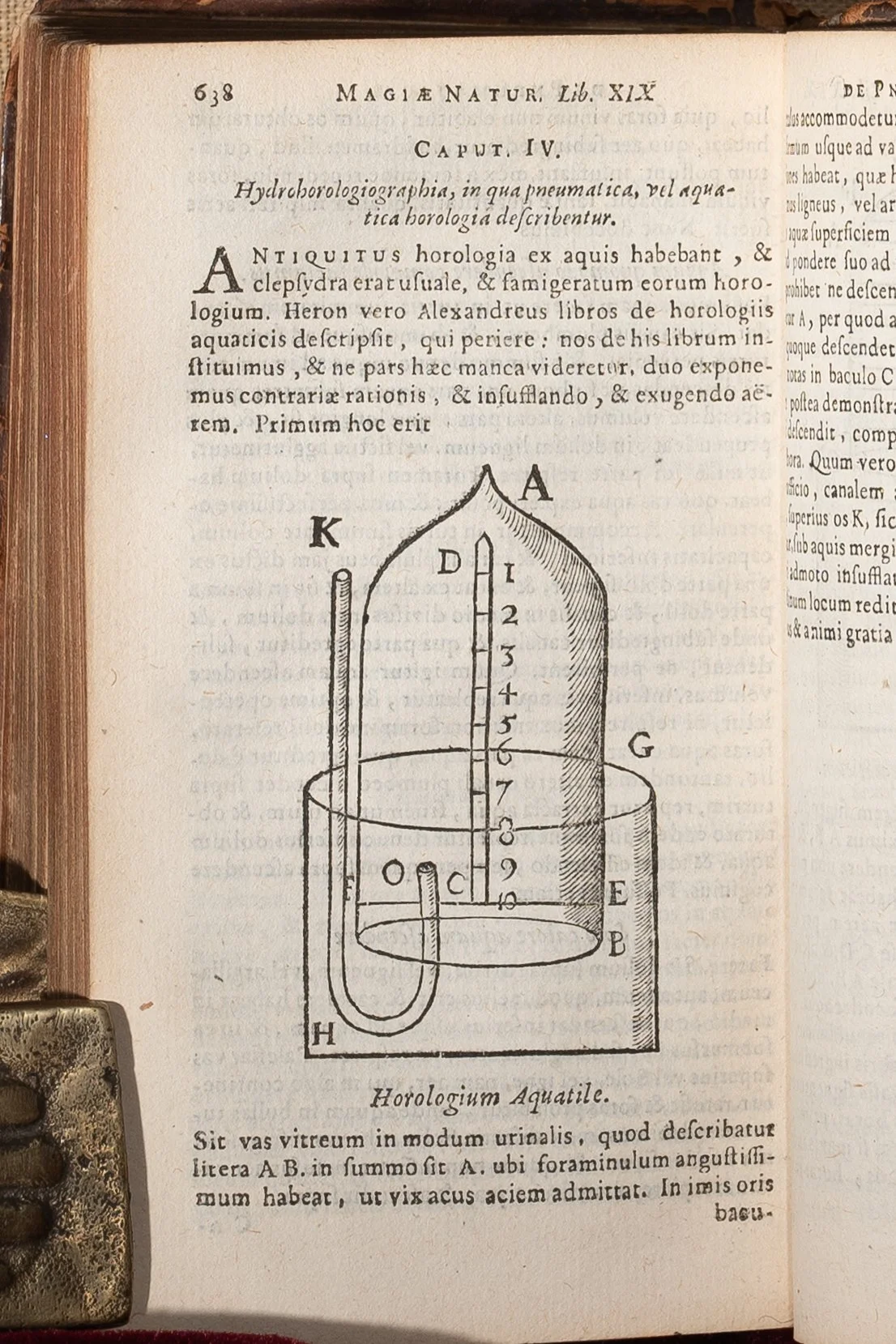 Image 4 of 20
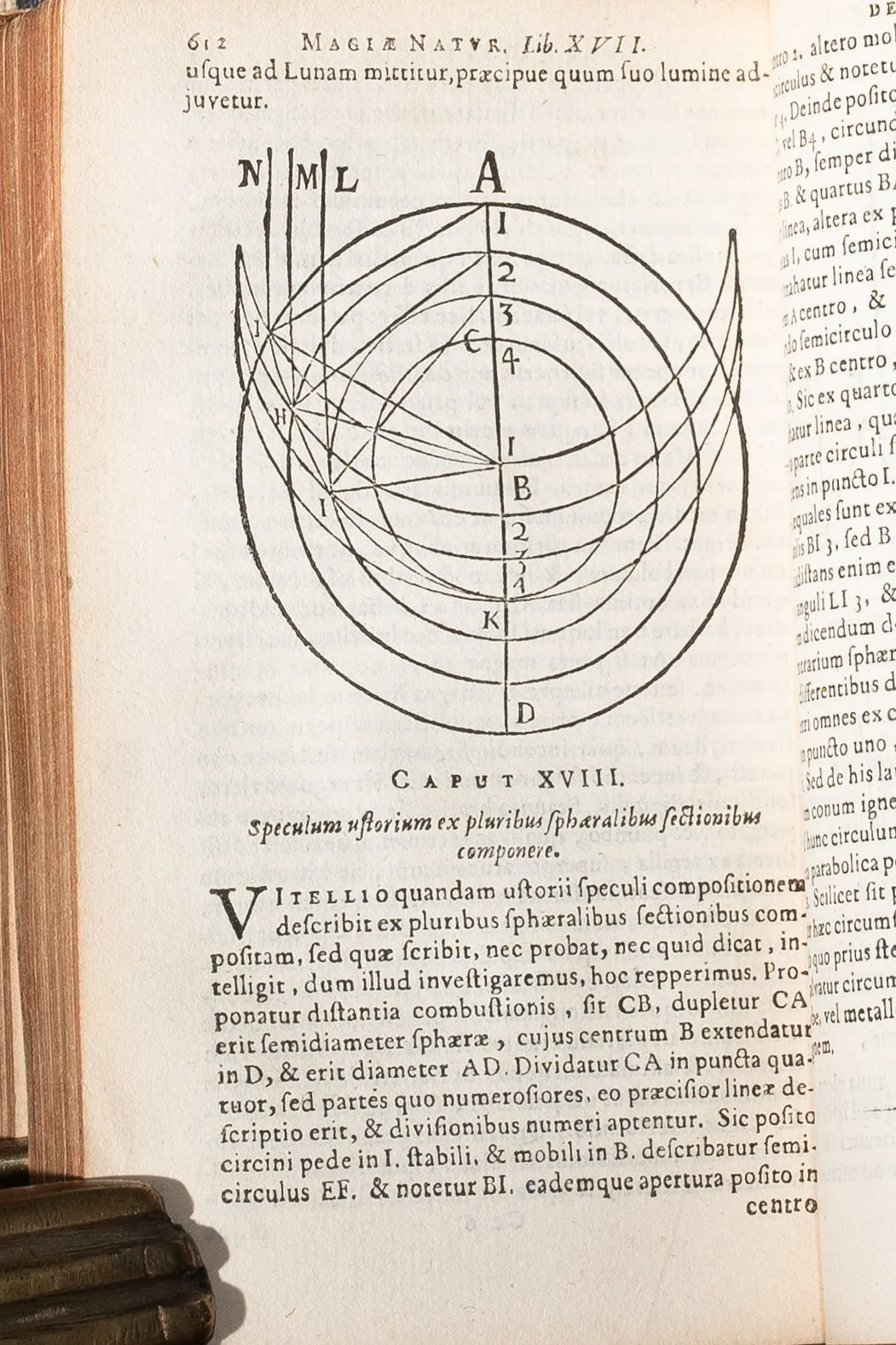 Image 5 of 20
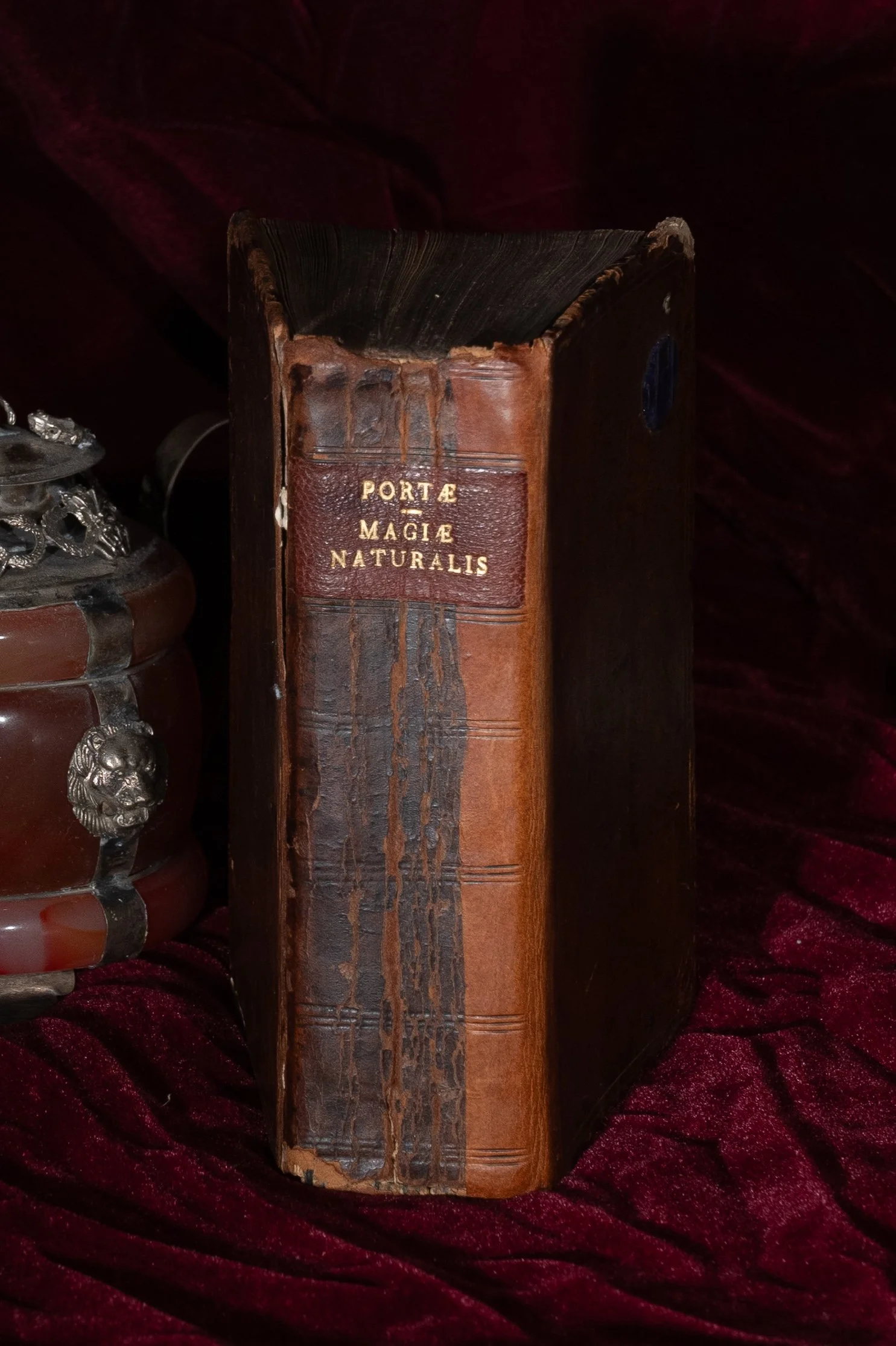 Image 6 of 20
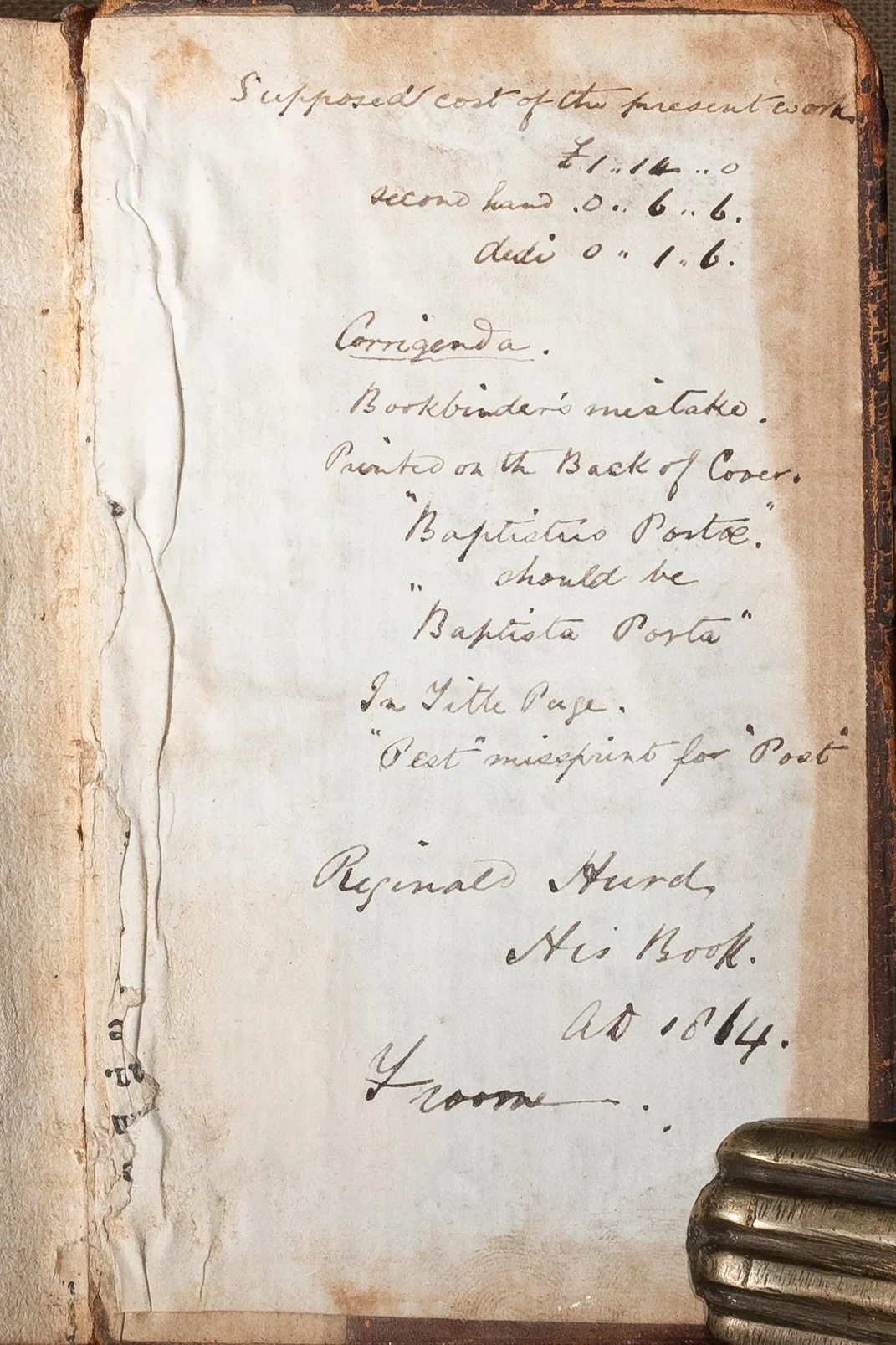 Image 7 of 20
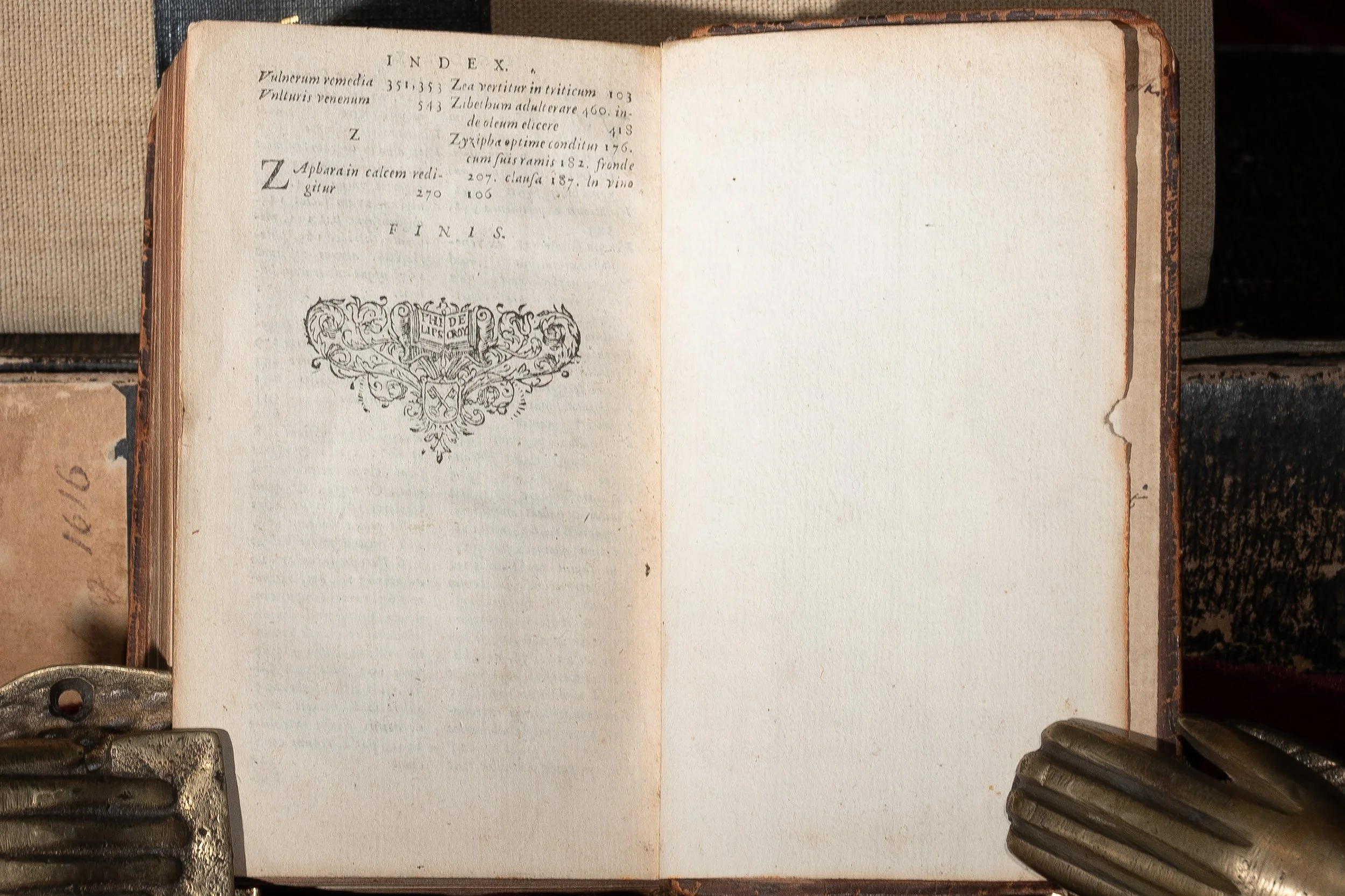 Image 8 of 20
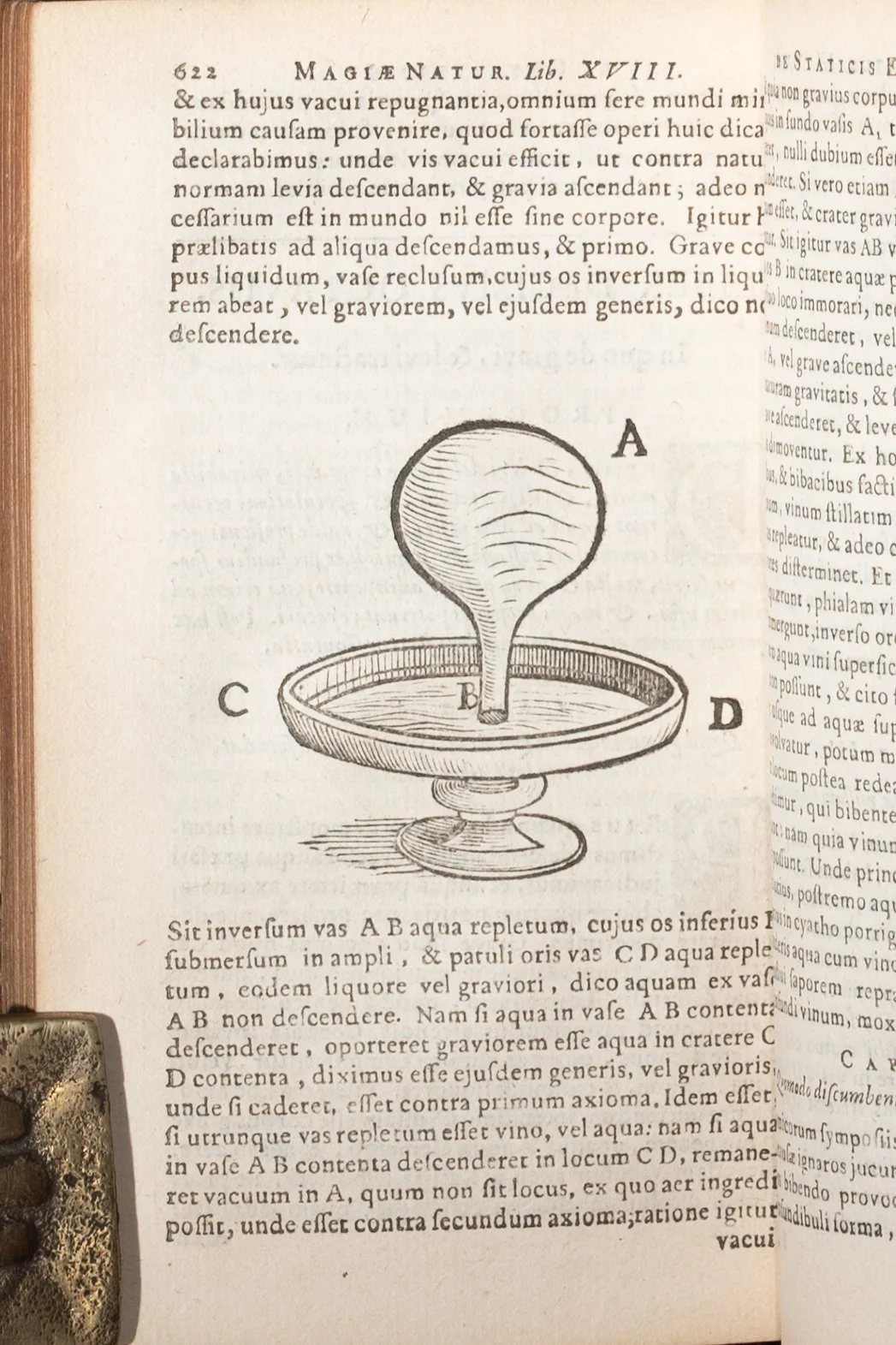 Image 9 of 20
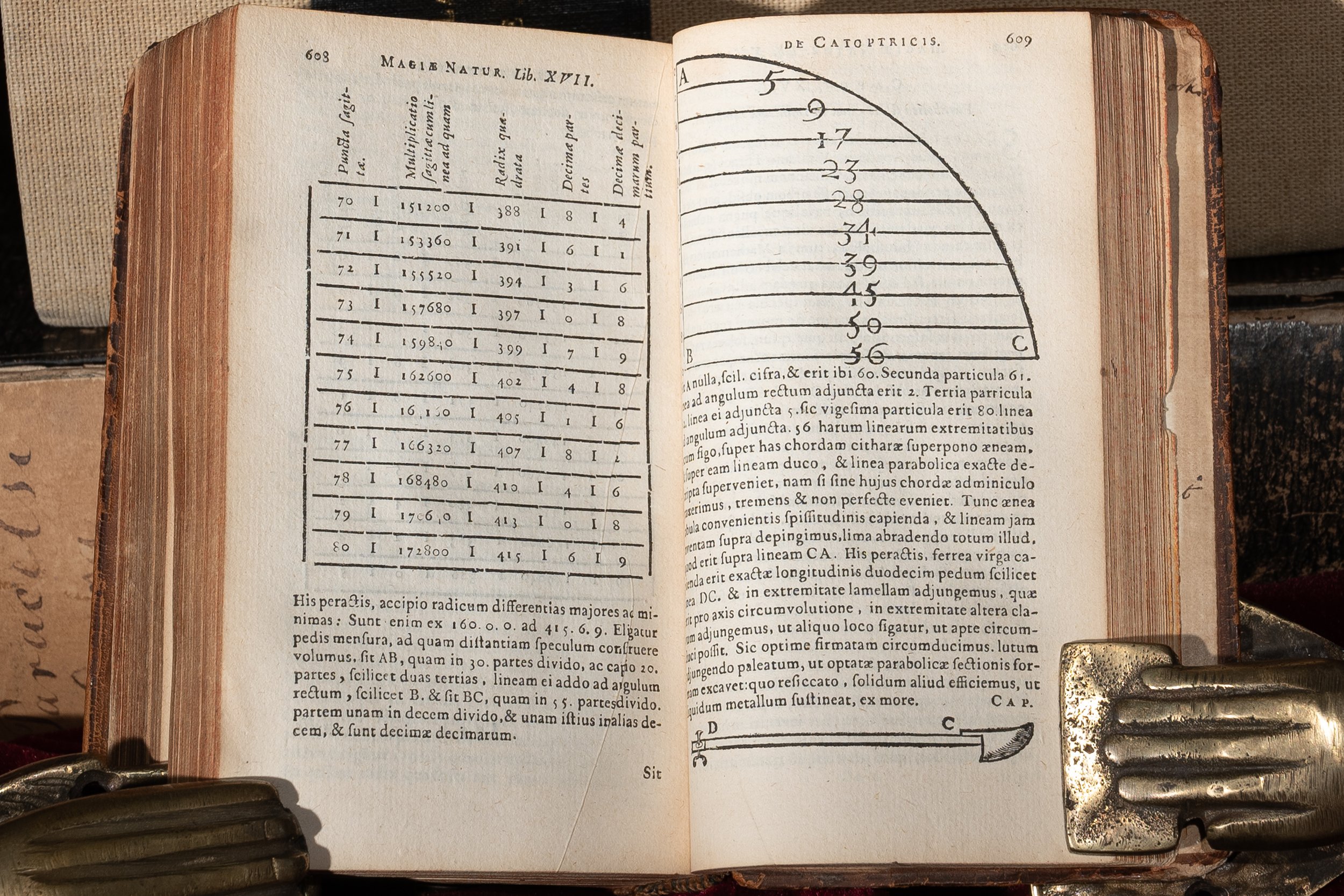 Image 10 of 20
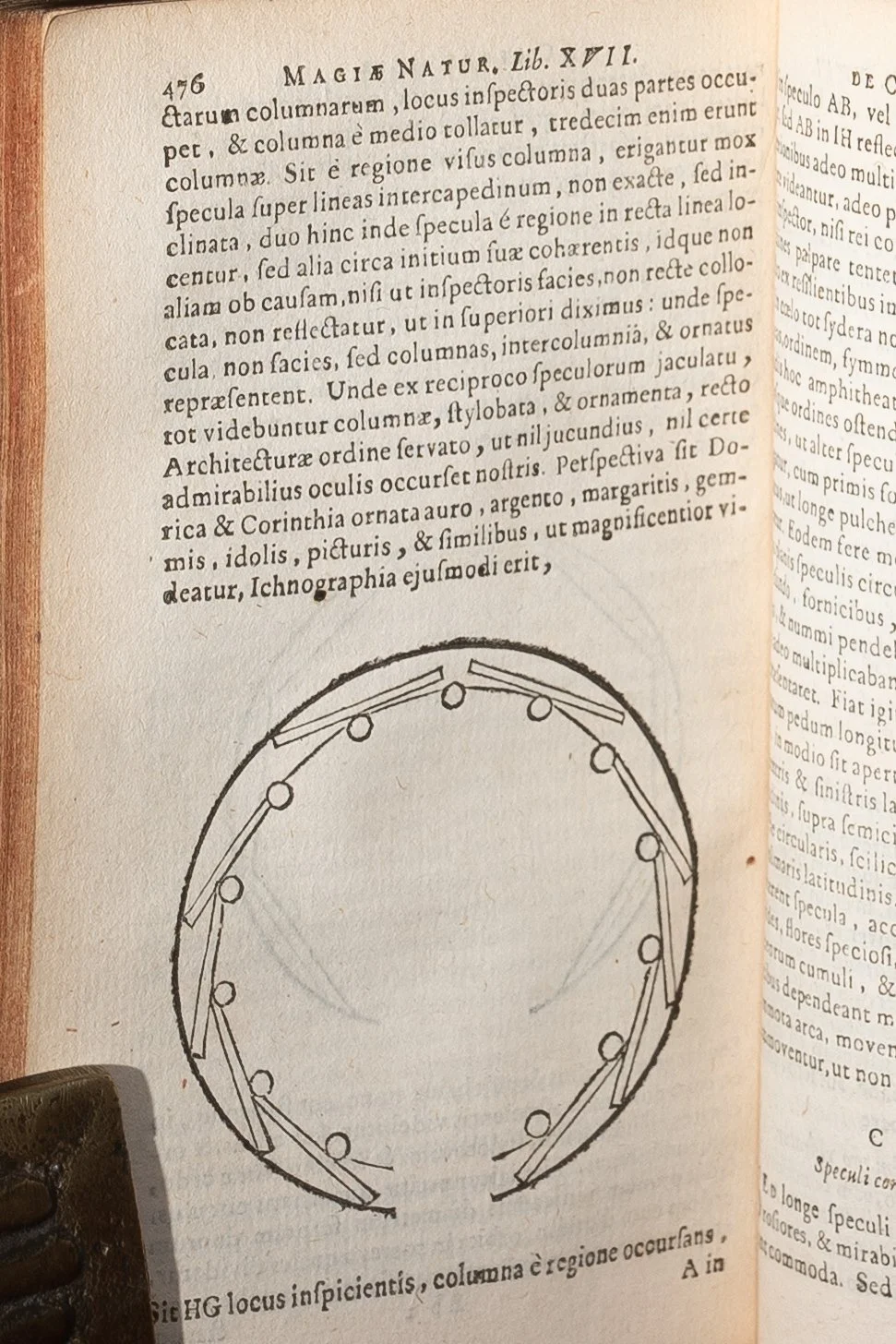 Image 11 of 20
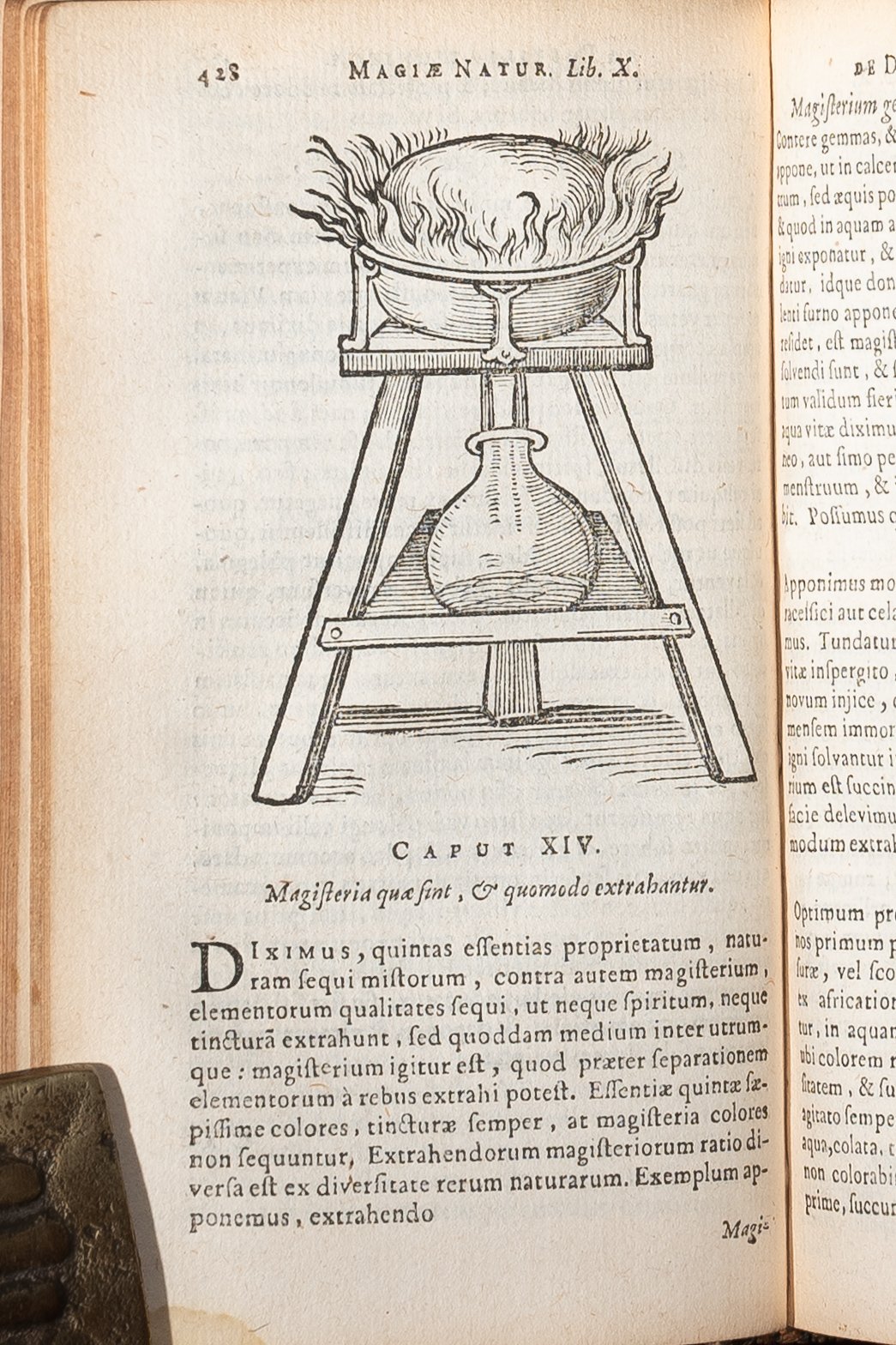 Image 12 of 20
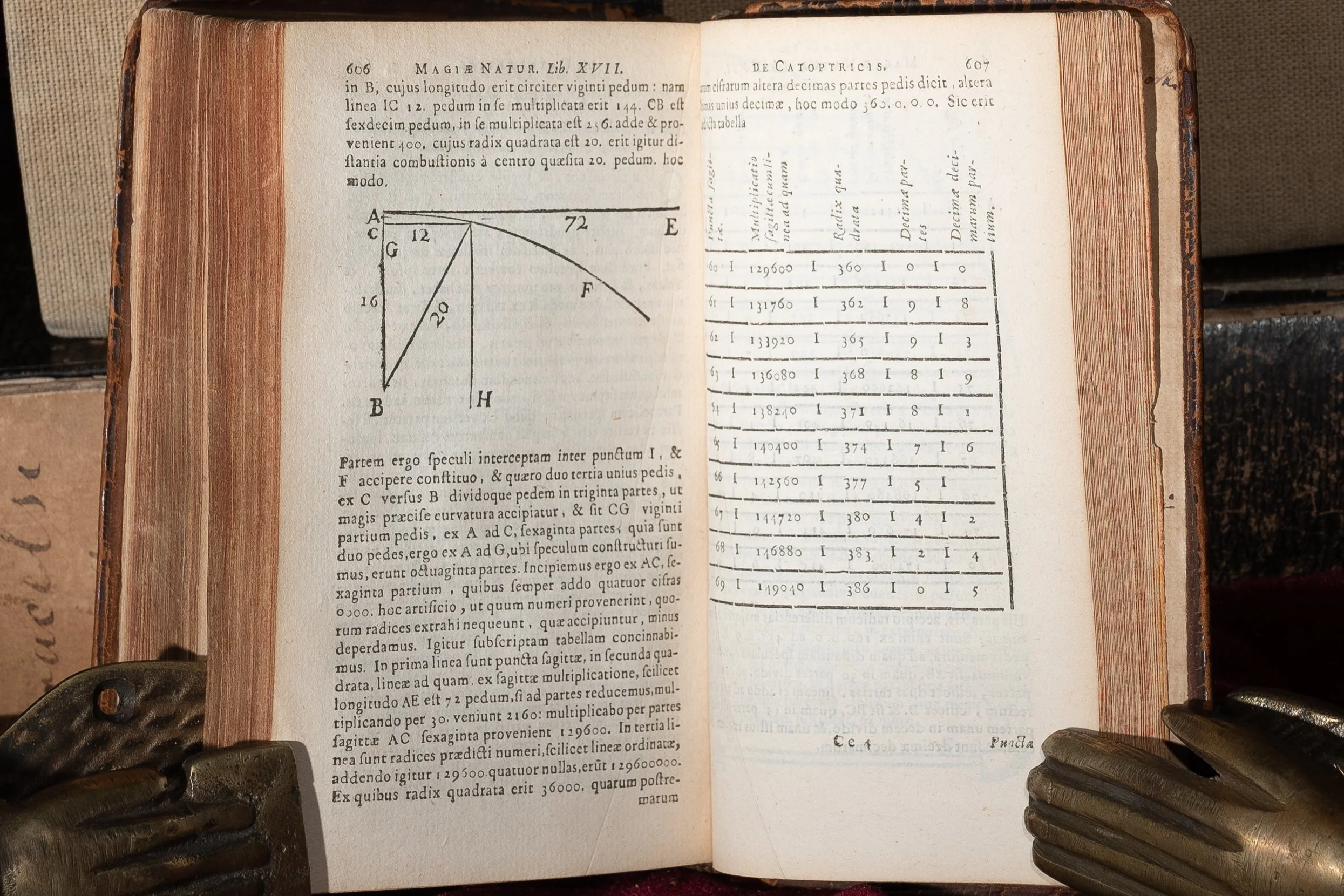 Image 13 of 20
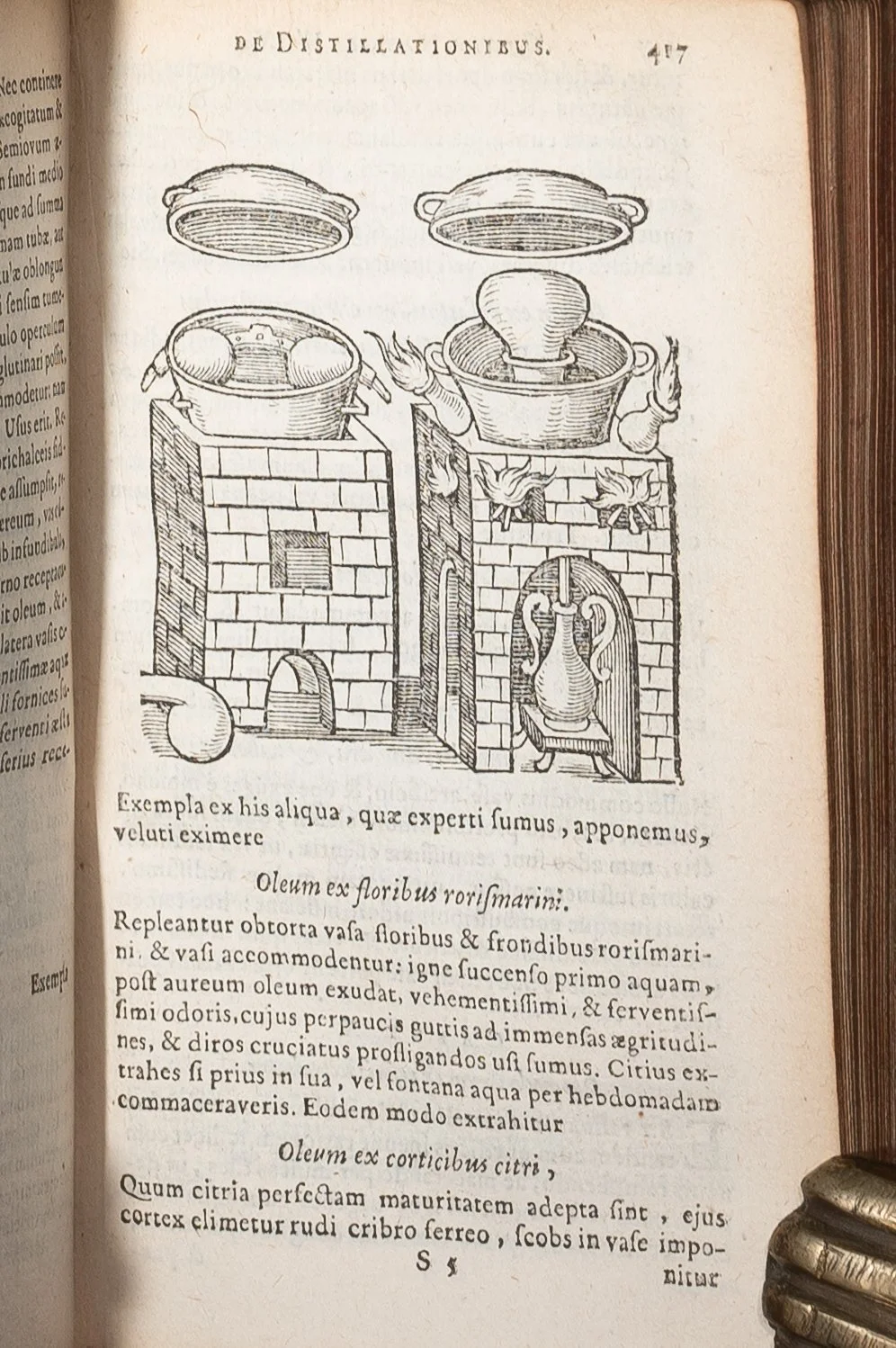 Image 14 of 20
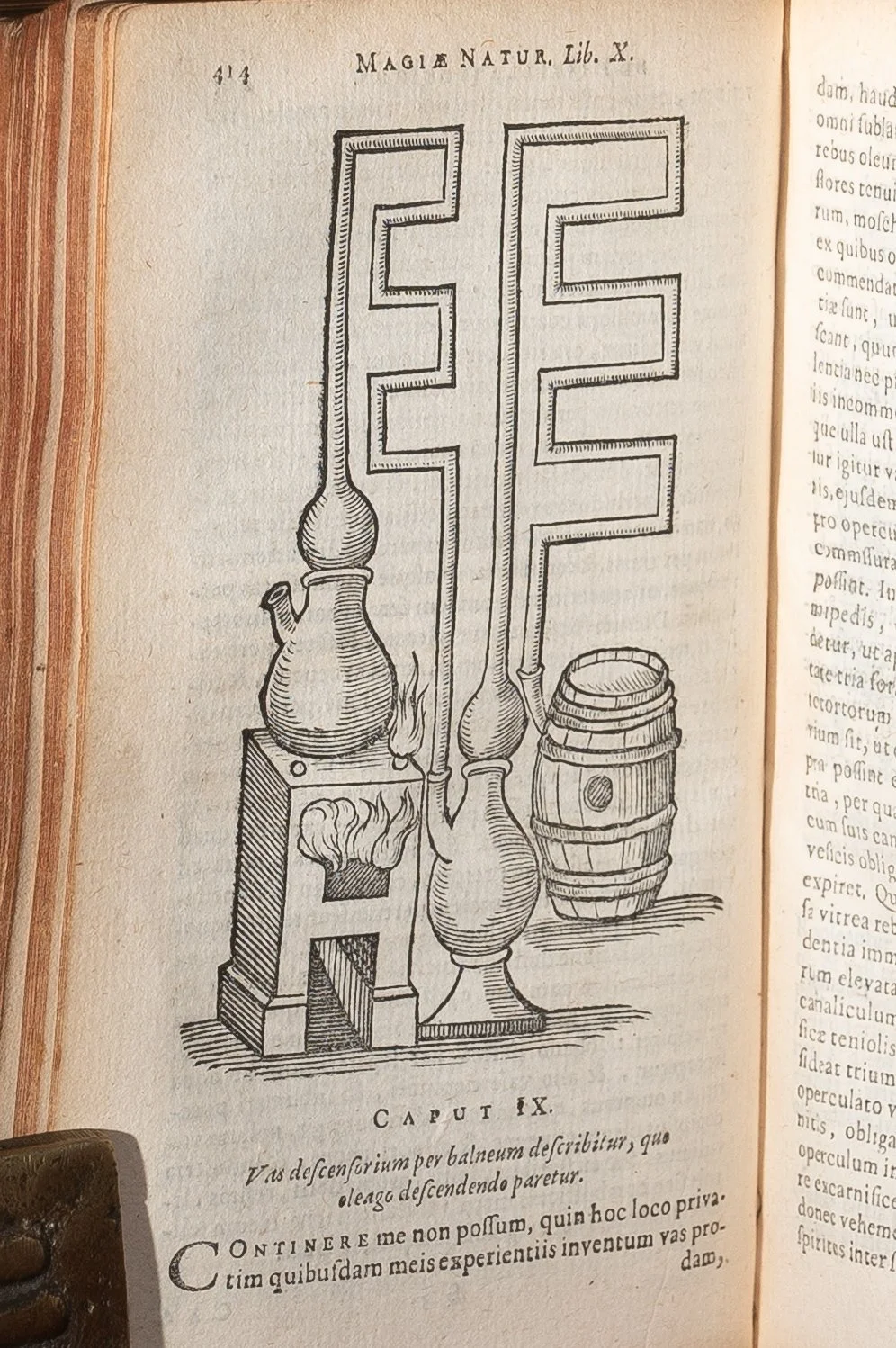 Image 15 of 20
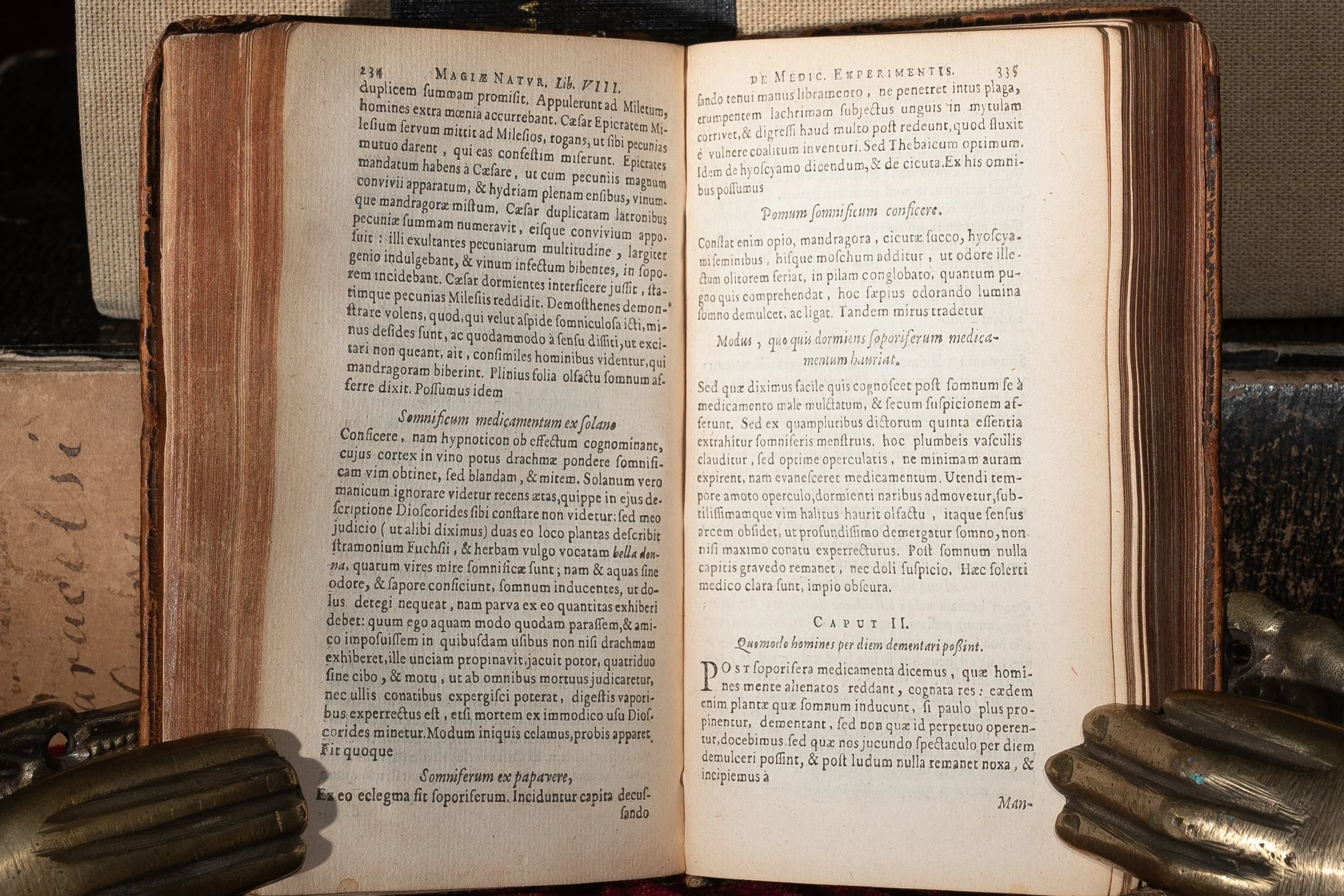 Image 16 of 20
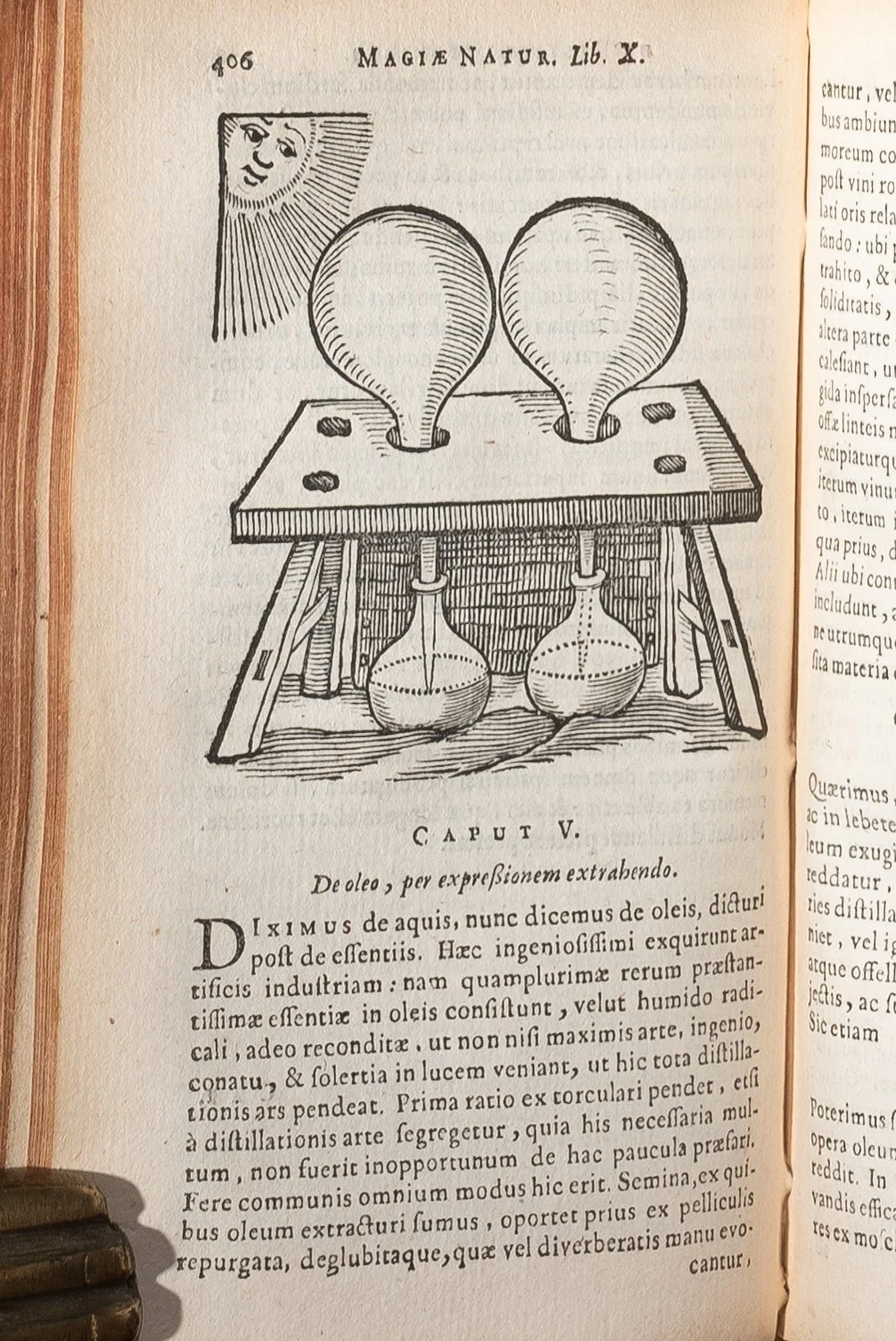 Image 17 of 20
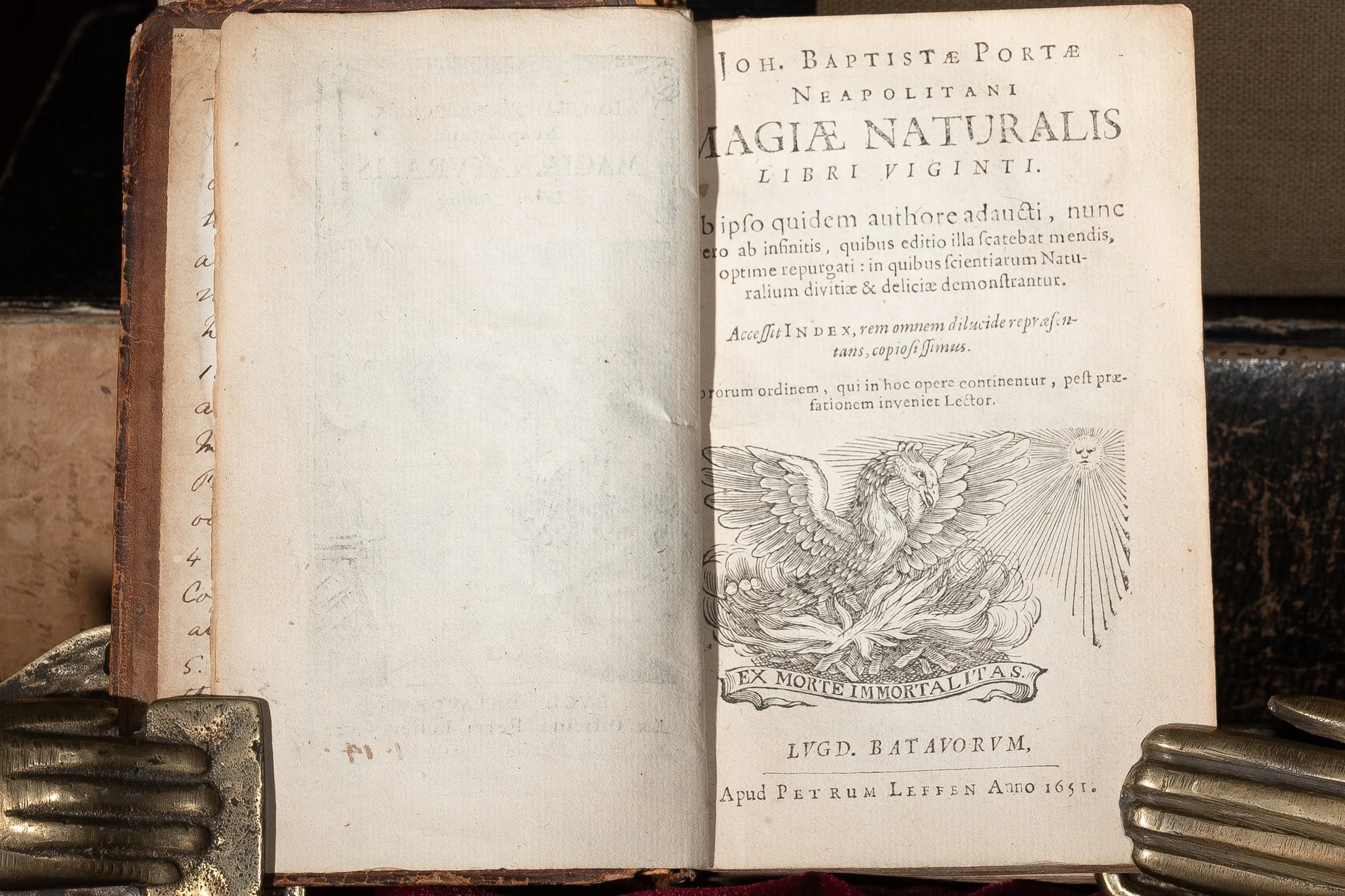 Image 18 of 20
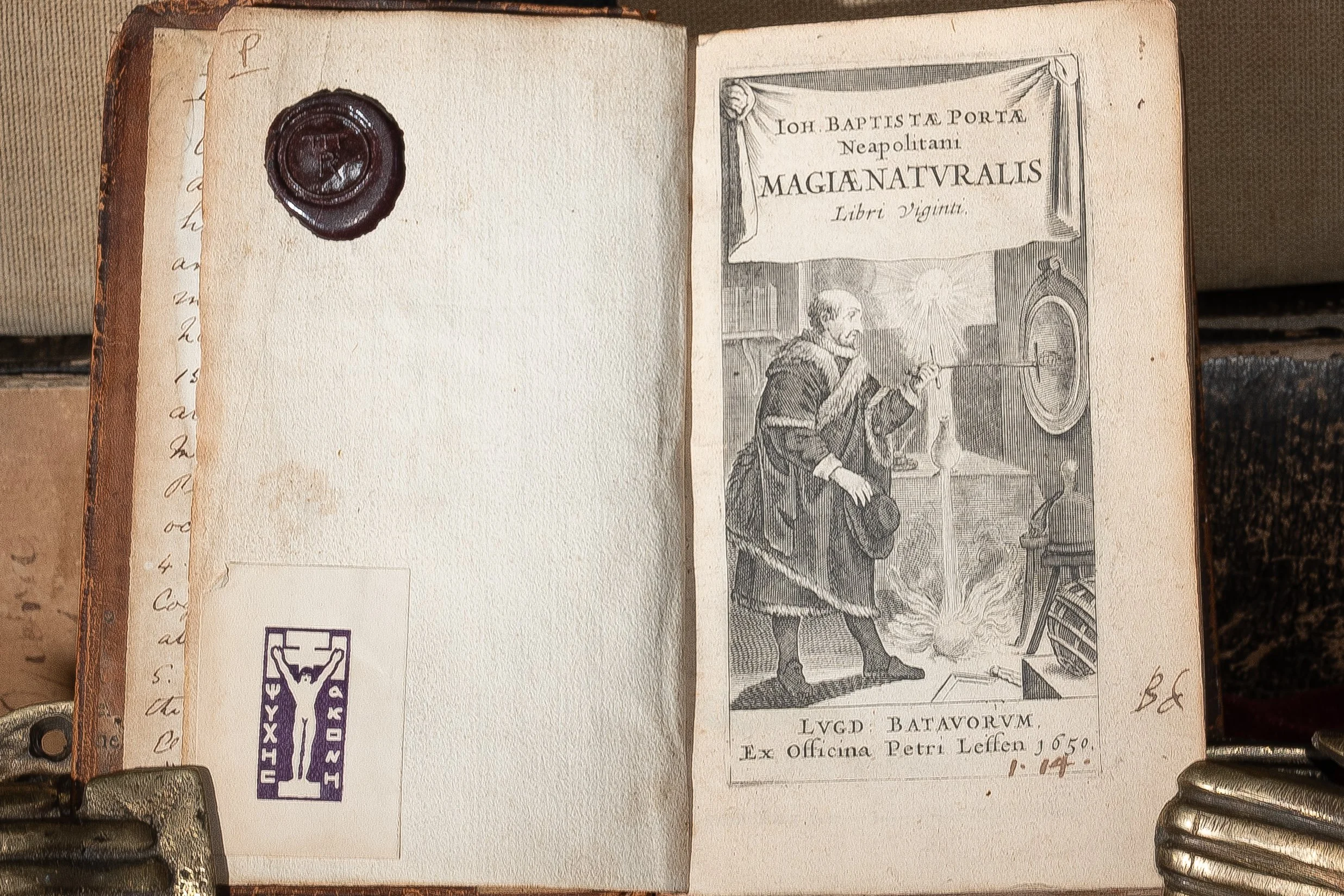 Image 19 of 20
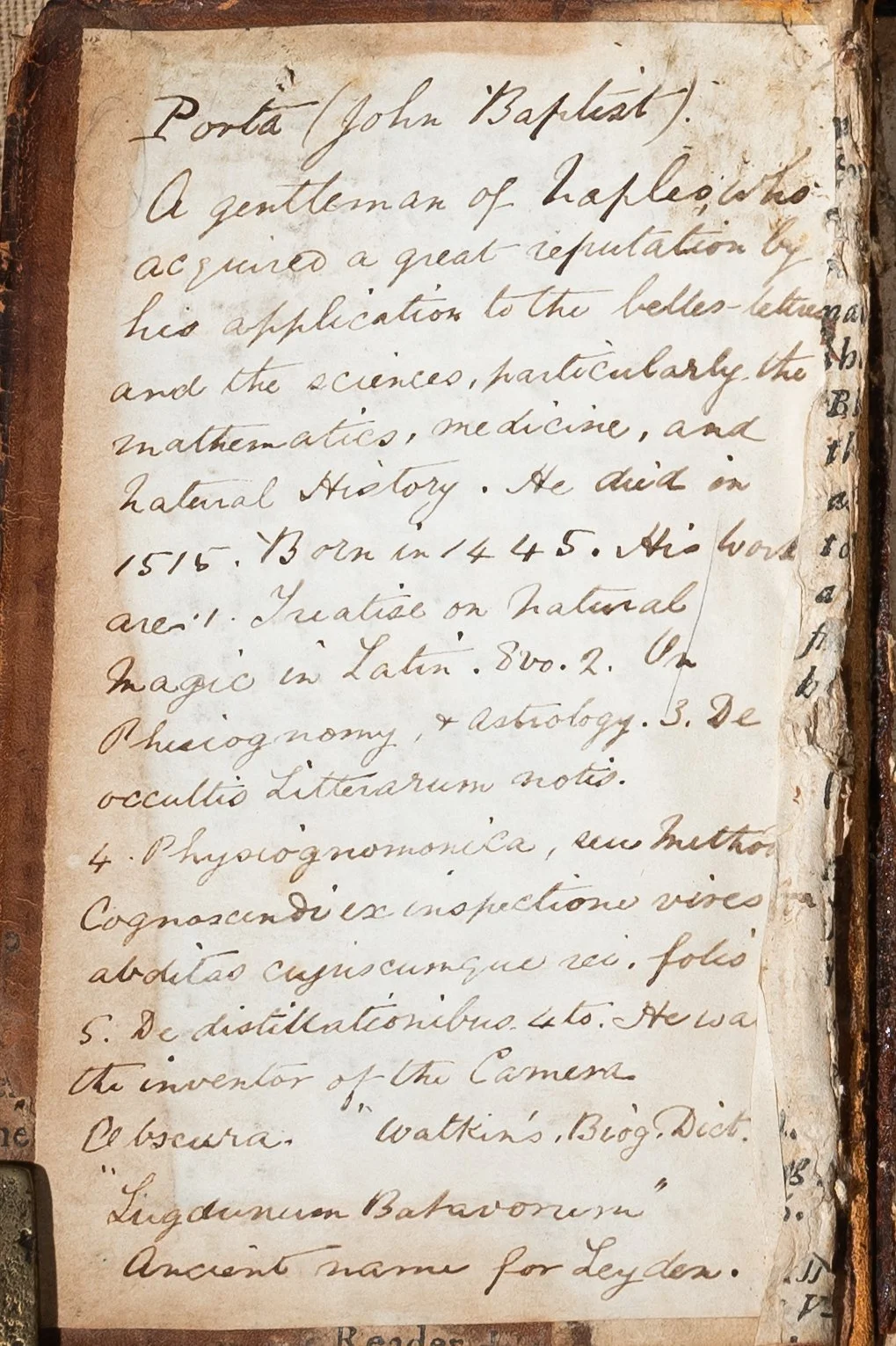 Image 20 of 20