A significant volume from the authoritative Huser edition of Paracelsus, containing his most important esoteric, anthropological, and magical writings.
While Paracelsus (1493–1541) is often celebrated by historians of science as the "Luther of Medicine" for his rejection of Galenic theory, his reputation among occultists rests on the work explicitly collected in this volume. This volume gathers the "Philosophical Books" (Parts 8–10), which move beyond physical ailments to address the metaphysical structure of the universe.
Most notably, this volume contains the Philosophia Sagax , closely associated with (and often identified as) the Astronomia Magna, Paracelsus’s great, unfinished masterpiece on the "Light of Nature." In this text, he outlines the relationship between the Macrocosm (the universe) and the Microcosm (humanity), detailing how the "sidereal body" within man connects to the stars. It is a foundational text for understanding the Renaissance view of natural magic and the spiritual potential of the alchemist.
Also included within these parts are the controversial Prognostications: prophetic texts illustrated with woodcuts (present here) depicting the corruption of the Papacy. These images place Paracelsus within the broader spiritual and reformist tensions of the era, illustrating his radical, non-conformist stance.
This 1603 Frankfurt printing is a reissue of Johannes Huser’s definitive Basel edition (1589–1591). Huser is widely regarded as the most important figure in Paracelsian bibliography; he scoured Europe for original manuscripts to replace the corrupted pirated editions that had flooded the market, making this text the closest we can get to the Bombast’s original voice.
An essential volume for any collection focusing on Alchemy, German Mysticism, or the Western Esoteric Tradition.
PARACELSUS (Theophrastus Bombast von Hohenheim). Achter [–Zehender] Theil der Bücher und Schrifften [Parts 8, 9, and 10 bound in one]. Edited by Johannes Huser. Frankfurt am Main: Johann Wechel’s Heirs (Z. Palthenius), 1603.
Description: Quarto (22 x 17.5 cm). Three parts bound in one volume, comprising the eighth, ninth, and tenth sections of the Huser collected edition. Bound in attractive 19th-century half leather over marbled paper boards; spine with raised bands and gilt-lettered red morocco label ("PARACELSUS / 3").
Illustrated with several woodcuts, including numerous magical sigils and prophetic figures of the Papacy. Condition: Binding solid with light rubbing to extremities. Contents heavily browned and foxed throughout (characteristic of Frankfurt paper stocks of this period). The folding table is severed; the 12-leaf index at the rear of Part 10 is trimmed close at the margins. Provenance: Library stamp of the Kolleg St. Ludwig (Franciscan) on title and dedication leaves.
Bibliographic References: VD 17 12:165543B; Sudhoff 255; Krivatsy 8556.
A significant volume from the authoritative Huser edition of Paracelsus, containing his most important esoteric, anthropological, and magical writings.
While Paracelsus (1493–1541) is often celebrated by historians of science as the "Luther of Medicine" for his rejection of Galenic theory, his reputation among occultists rests on the work explicitly collected in this volume. This volume gathers the "Philosophical Books" (Parts 8–10), which move beyond physical ailments to address the metaphysical structure of the universe.
Most notably, this volume contains the Philosophia Sagax , closely associated with (and often identified as) the Astronomia Magna, Paracelsus’s great, unfinished masterpiece on the "Light of Nature." In this text, he outlines the relationship between the Macrocosm (the universe) and the Microcosm (humanity), detailing how the "sidereal body" within man connects to the stars. It is a foundational text for understanding the Renaissance view of natural magic and the spiritual potential of the alchemist.
Also included within these parts are the controversial Prognostications: prophetic texts illustrated with woodcuts (present here) depicting the corruption of the Papacy. These images place Paracelsus within the broader spiritual and reformist tensions of the era, illustrating his radical, non-conformist stance.
This 1603 Frankfurt printing is a reissue of Johannes Huser’s definitive Basel edition (1589–1591). Huser is widely regarded as the most important figure in Paracelsian bibliography; he scoured Europe for original manuscripts to replace the corrupted pirated editions that had flooded the market, making this text the closest we can get to the Bombast’s original voice.
An essential volume for any collection focusing on Alchemy, German Mysticism, or the Western Esoteric Tradition.
PARACELSUS (Theophrastus Bombast von Hohenheim). Achter [–Zehender] Theil der Bücher und Schrifften [Parts 8, 9, and 10 bound in one]. Edited by Johannes Huser. Frankfurt am Main: Johann Wechel’s Heirs (Z. Palthenius), 1603.
Description: Quarto (22 x 17.5 cm). Three parts bound in one volume, comprising the eighth, ninth, and tenth sections of the Huser collected edition. Bound in attractive 19th-century half leather over marbled paper boards; spine with raised bands and gilt-lettered red morocco label ("PARACELSUS / 3").
Illustrated with several woodcuts, including numerous magical sigils and prophetic figures of the Papacy. Condition: Binding solid with light rubbing to extremities. Contents heavily browned and foxed throughout (characteristic of Frankfurt paper stocks of this period). The folding table is severed; the 12-leaf index at the rear of Part 10 is trimmed close at the margins. Provenance: Library stamp of the Kolleg St. Ludwig (Franciscan) on title and dedication leaves.
Bibliographic References: VD 17 12:165543B; Sudhoff 255; Krivatsy 8556.

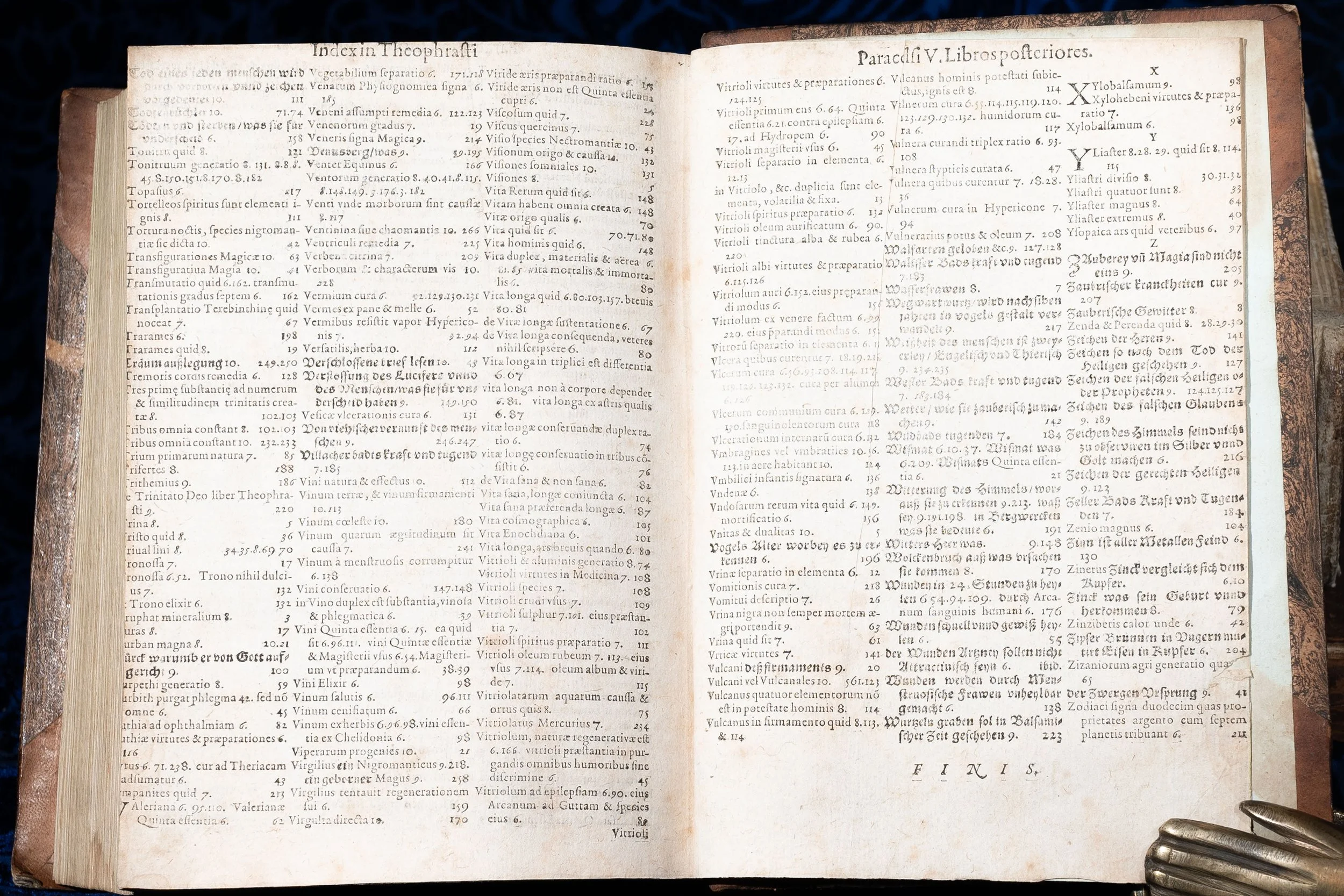 Image 1 of 24
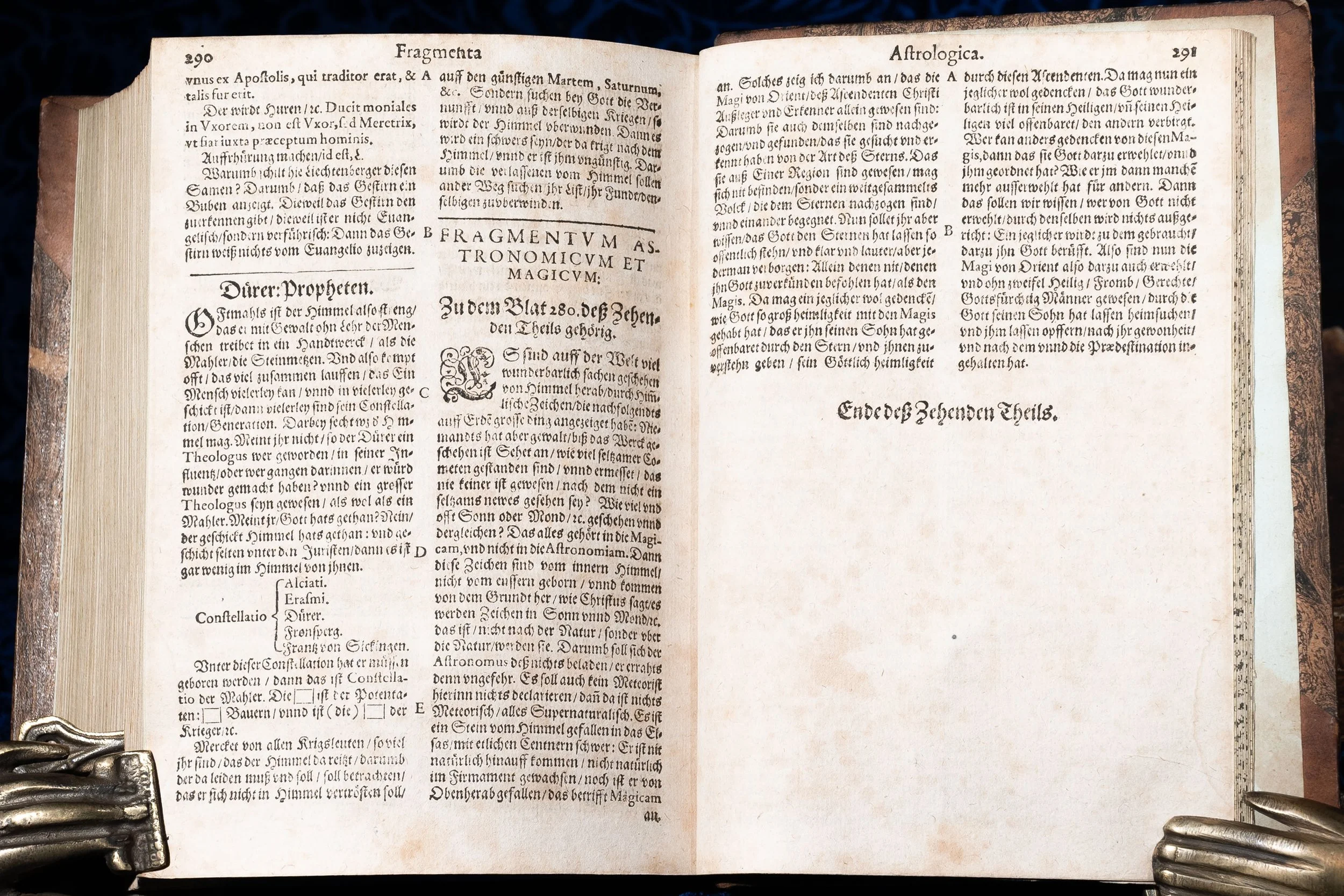 Image 2 of 24
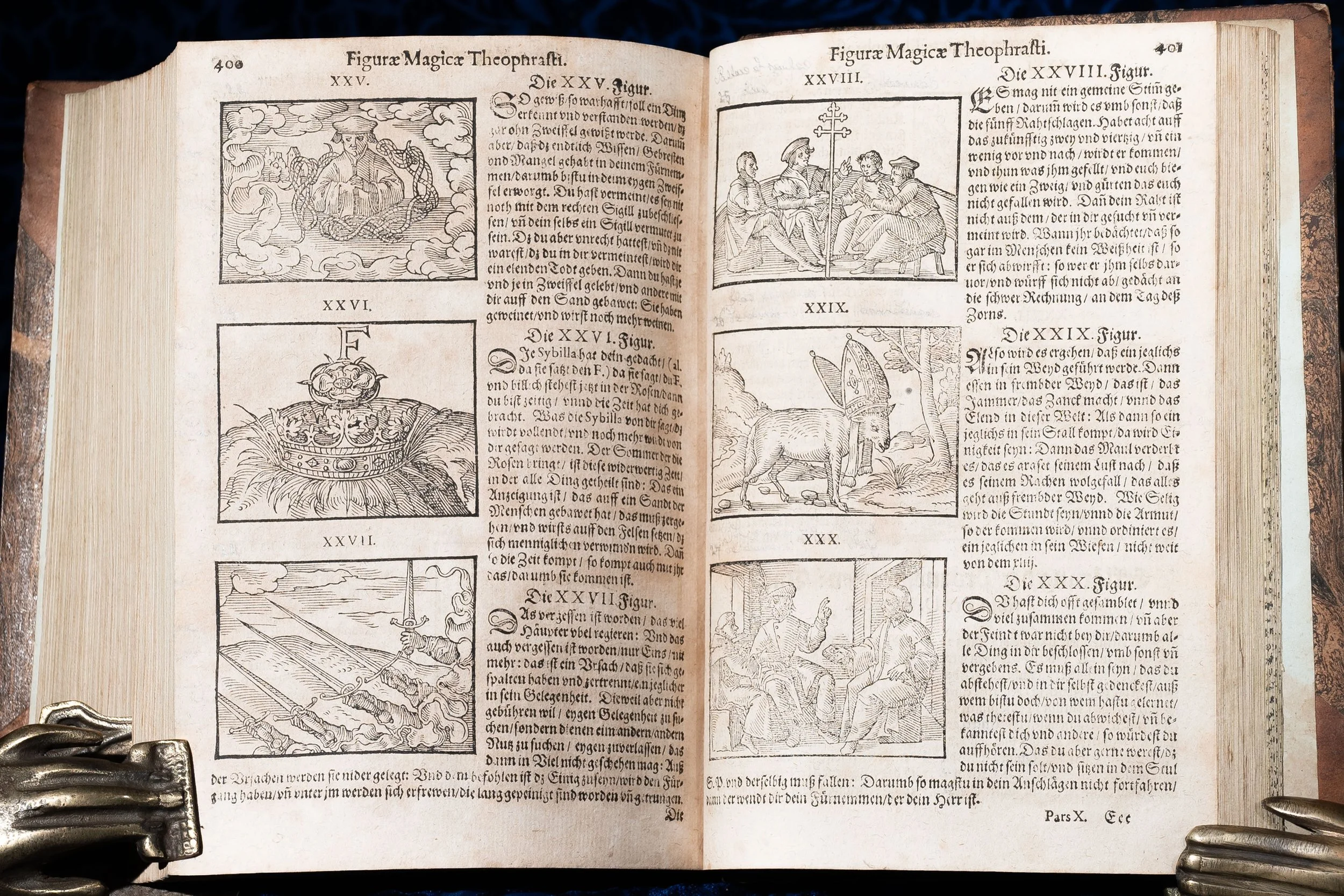 Image 3 of 24
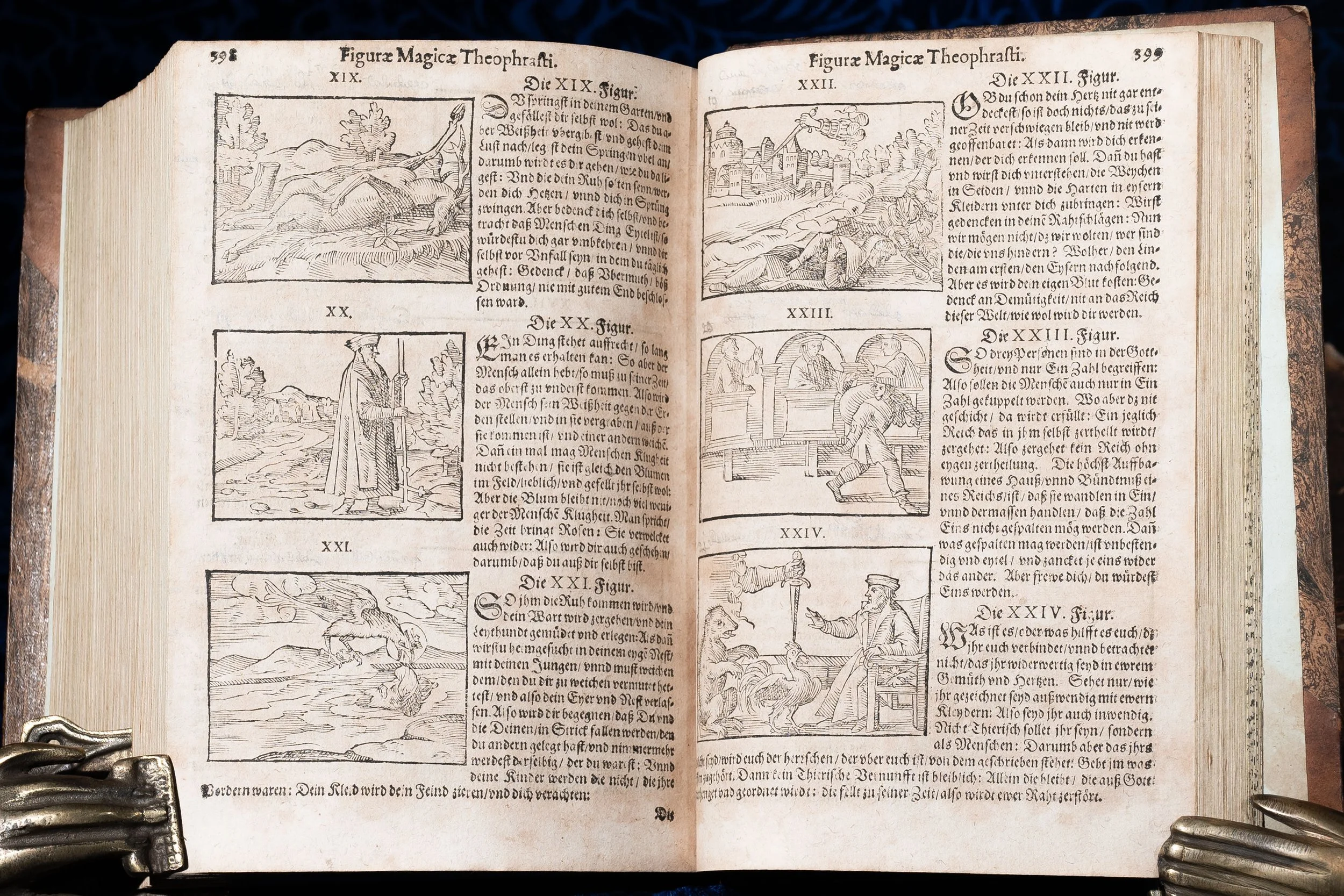 Image 4 of 24
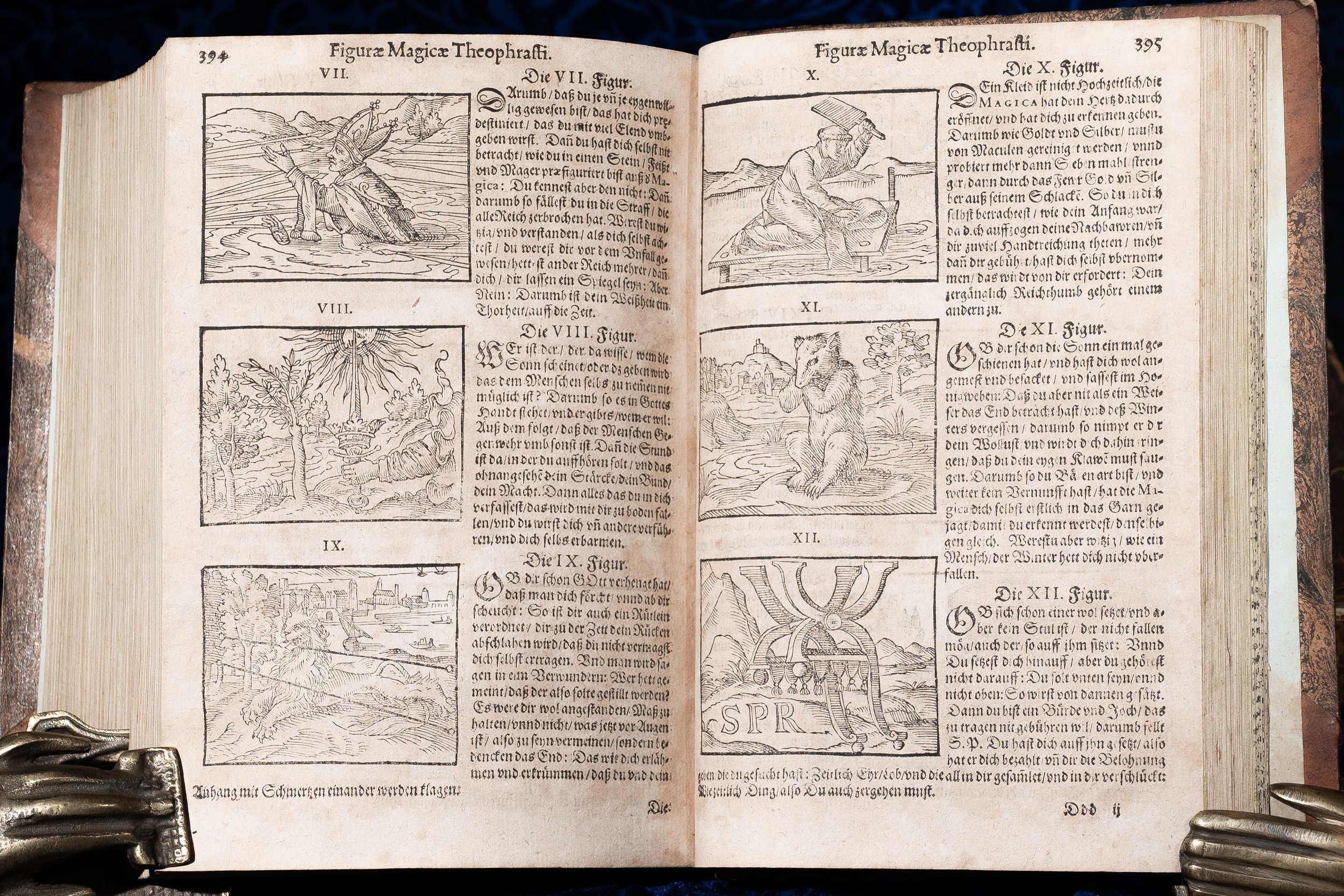 Image 5 of 24
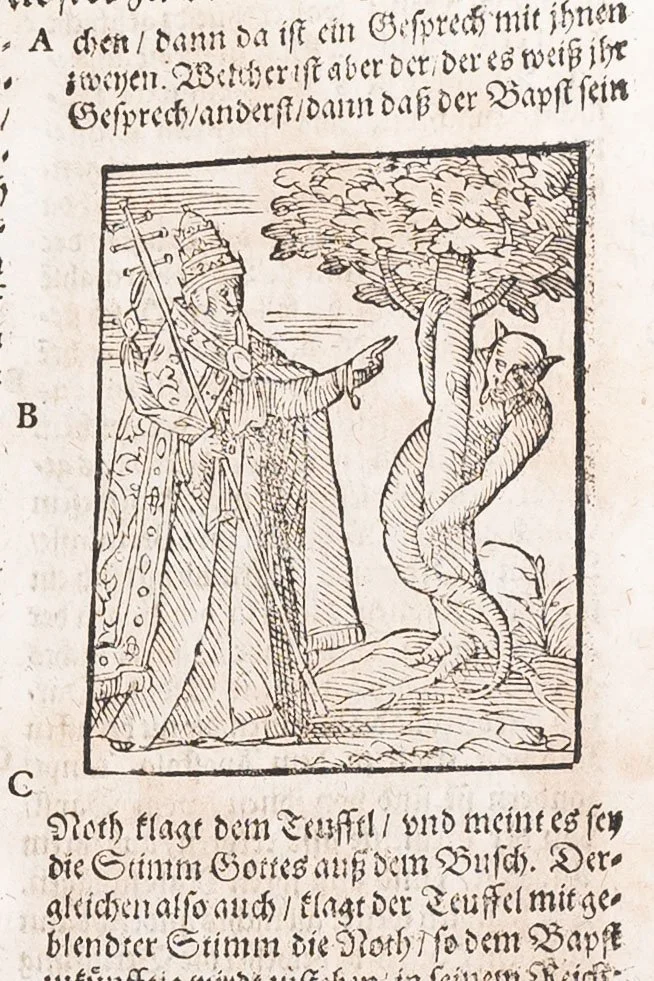 Image 6 of 24
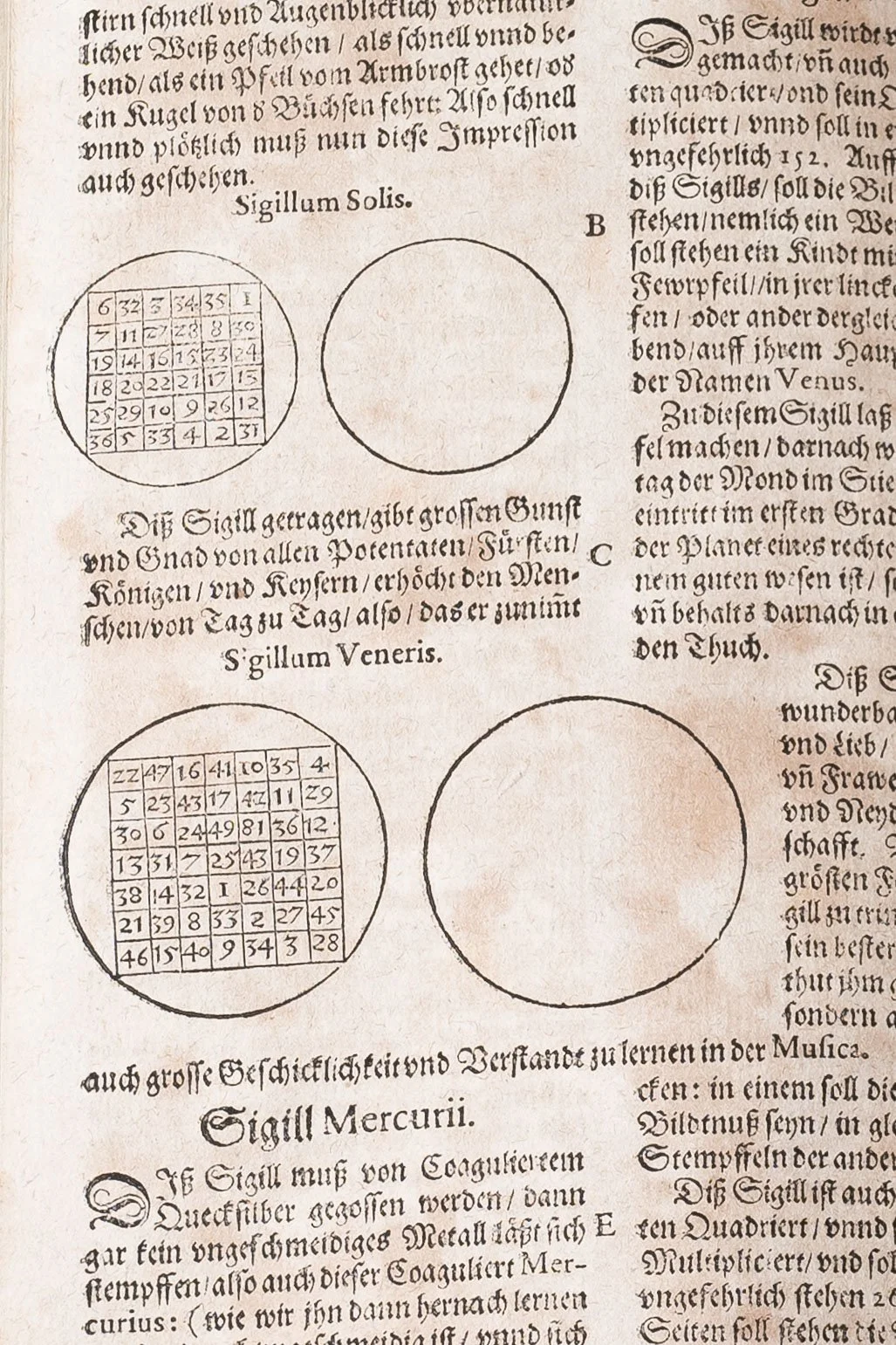 Image 7 of 24
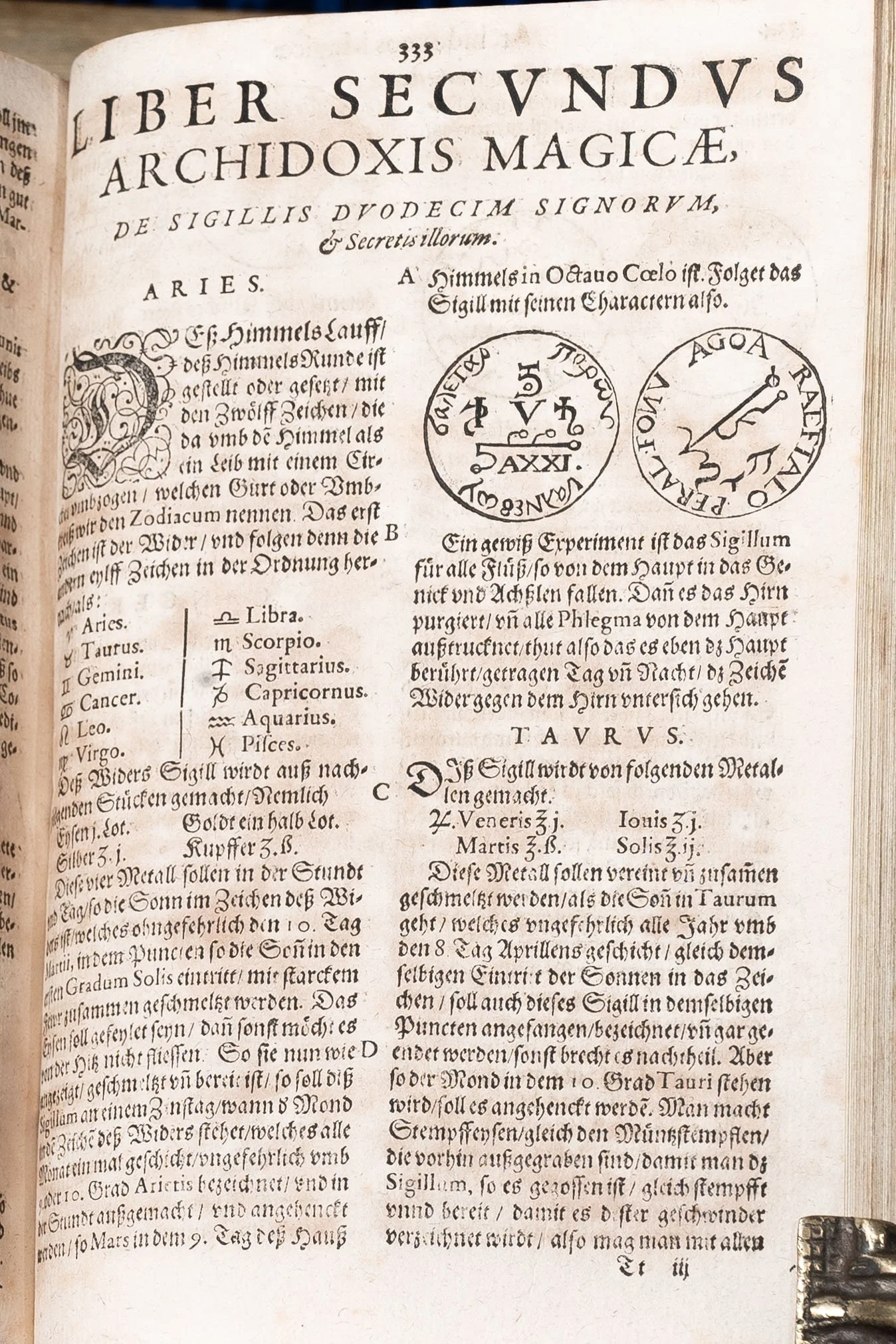 Image 8 of 24
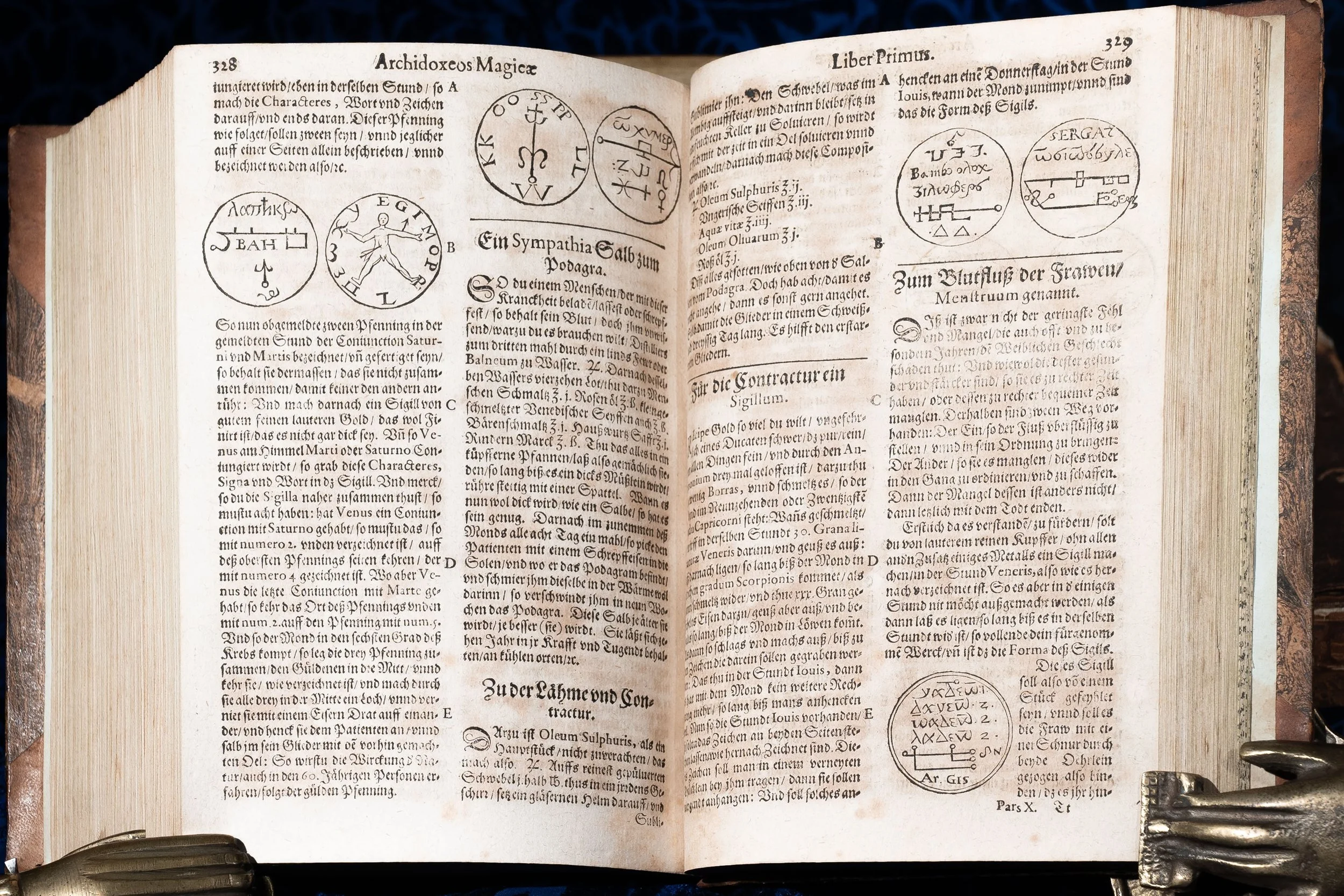 Image 9 of 24
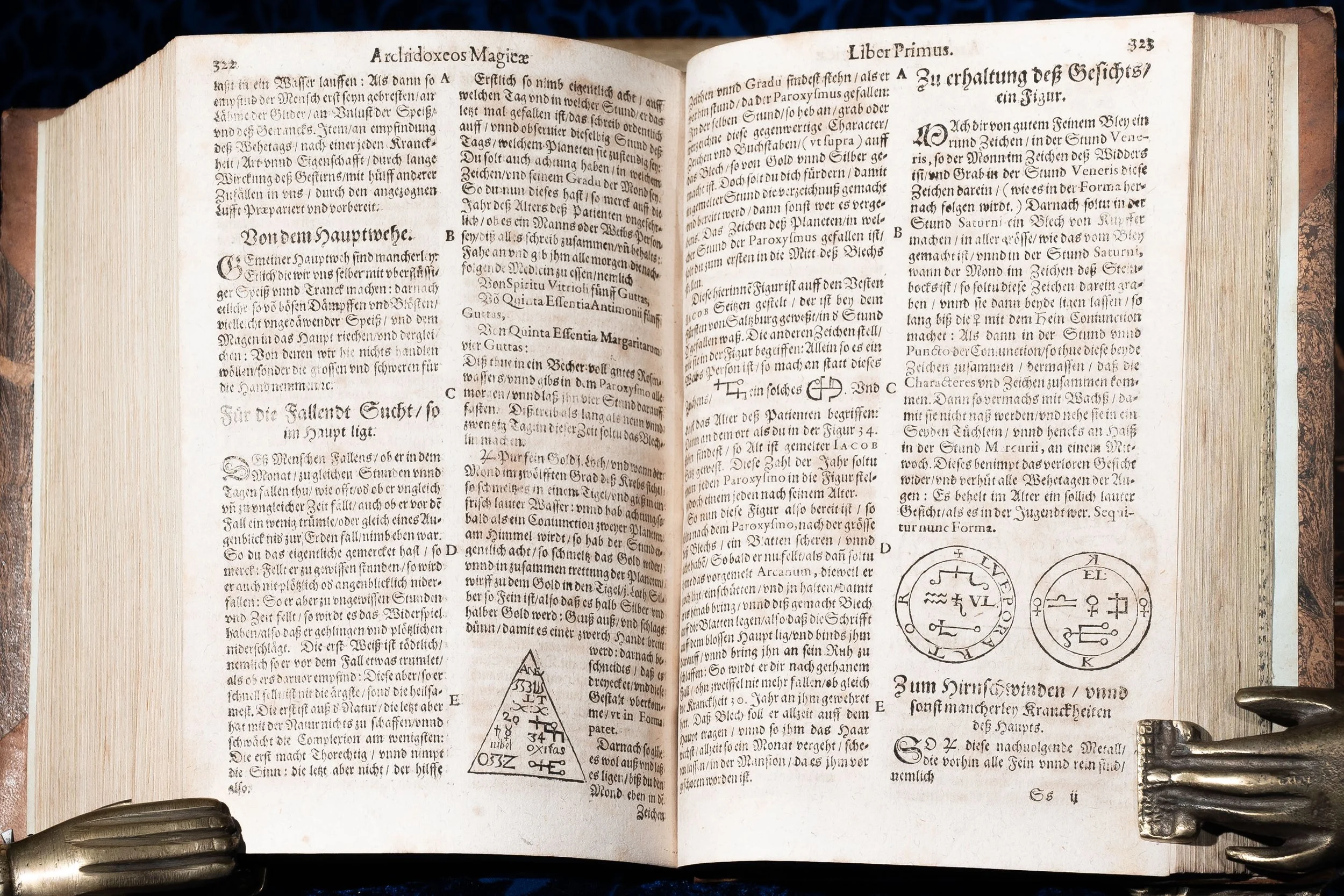 Image 10 of 24
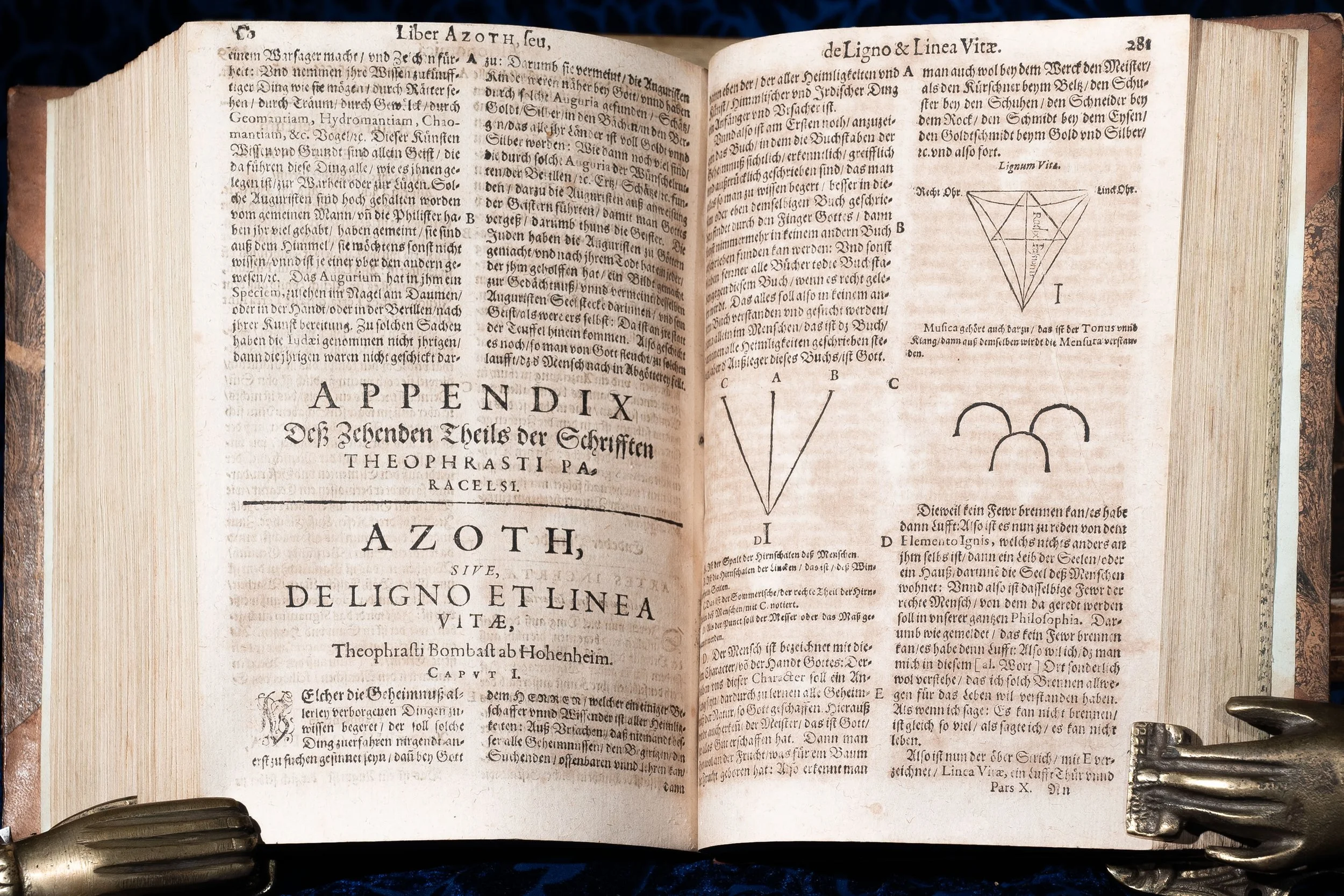 Image 11 of 24
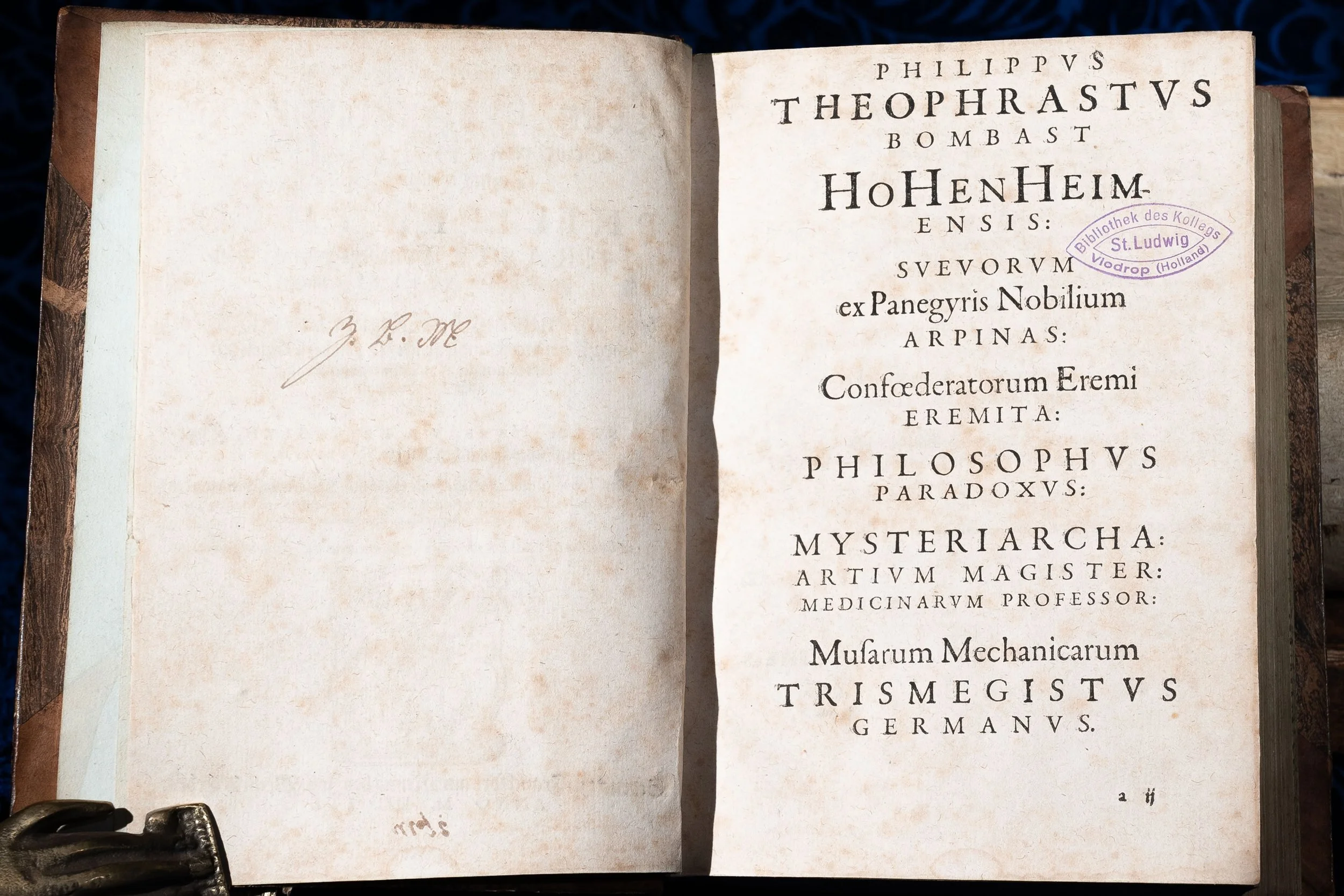 Image 12 of 24
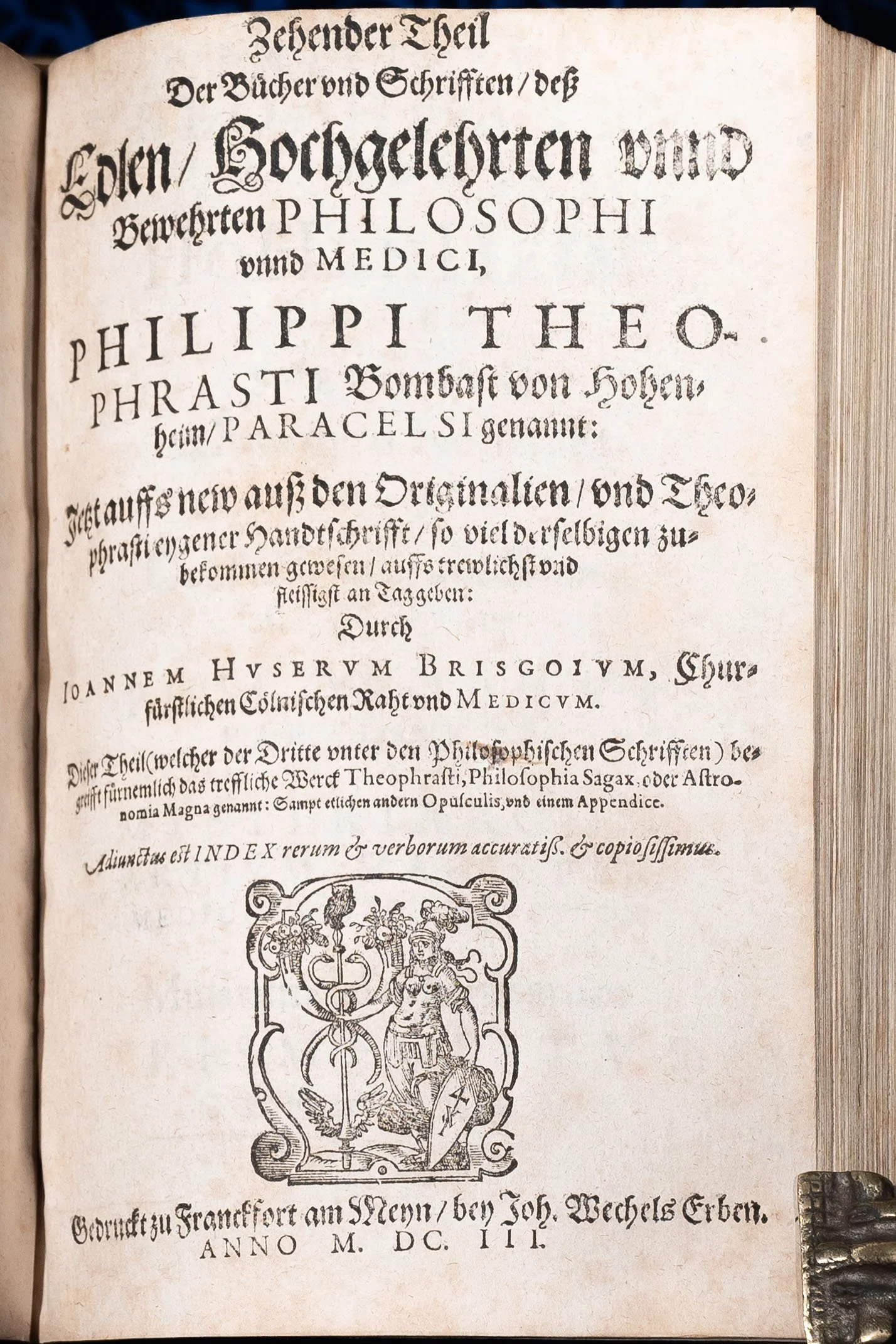 Image 13 of 24
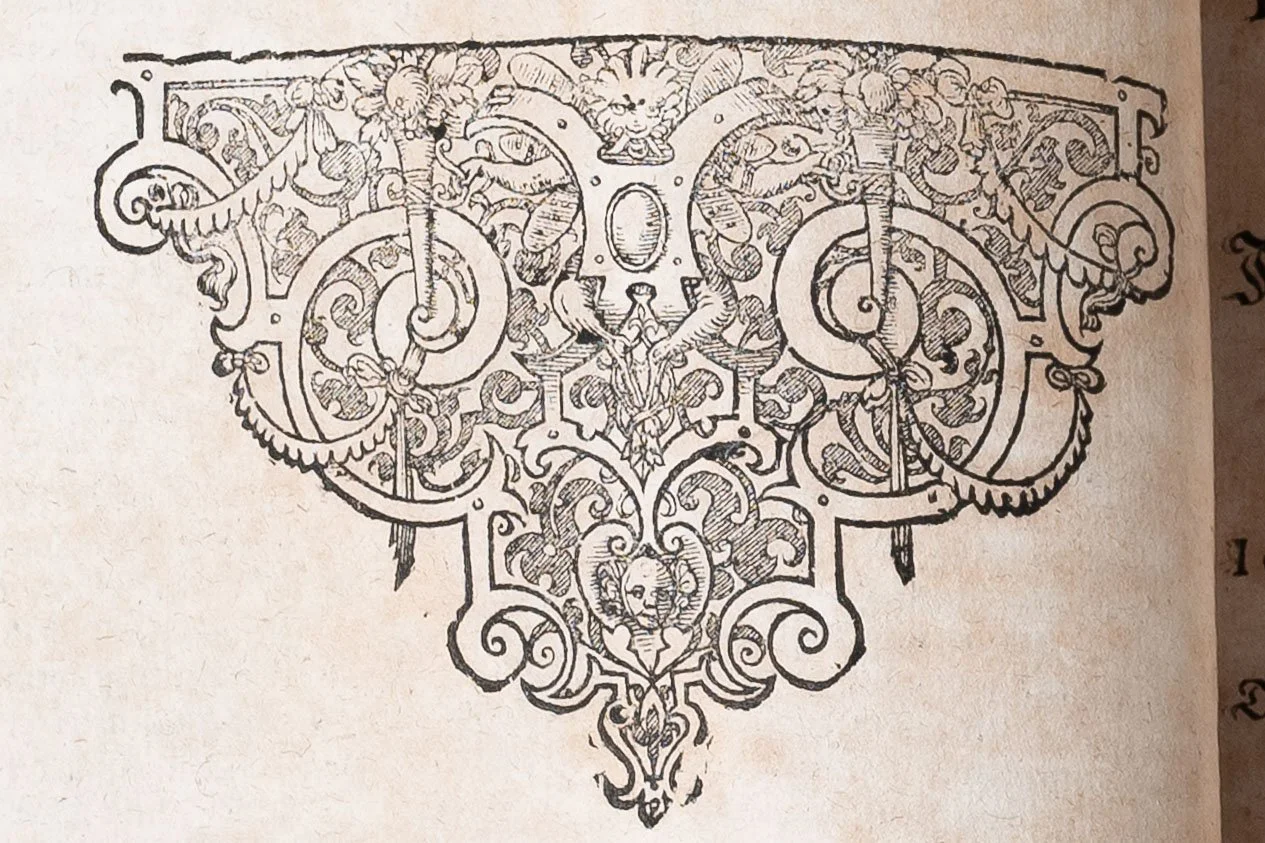 Image 14 of 24
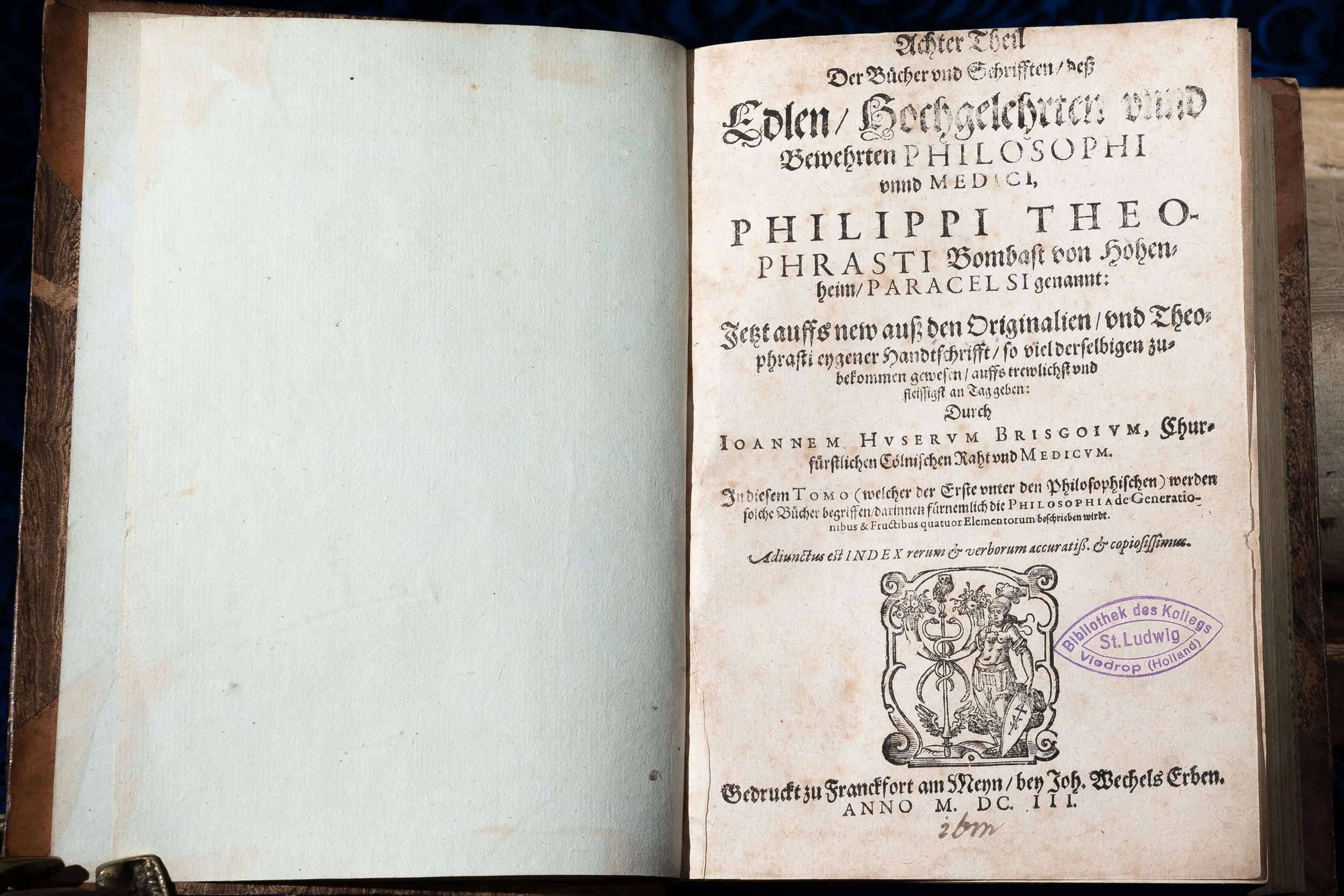 Image 15 of 24
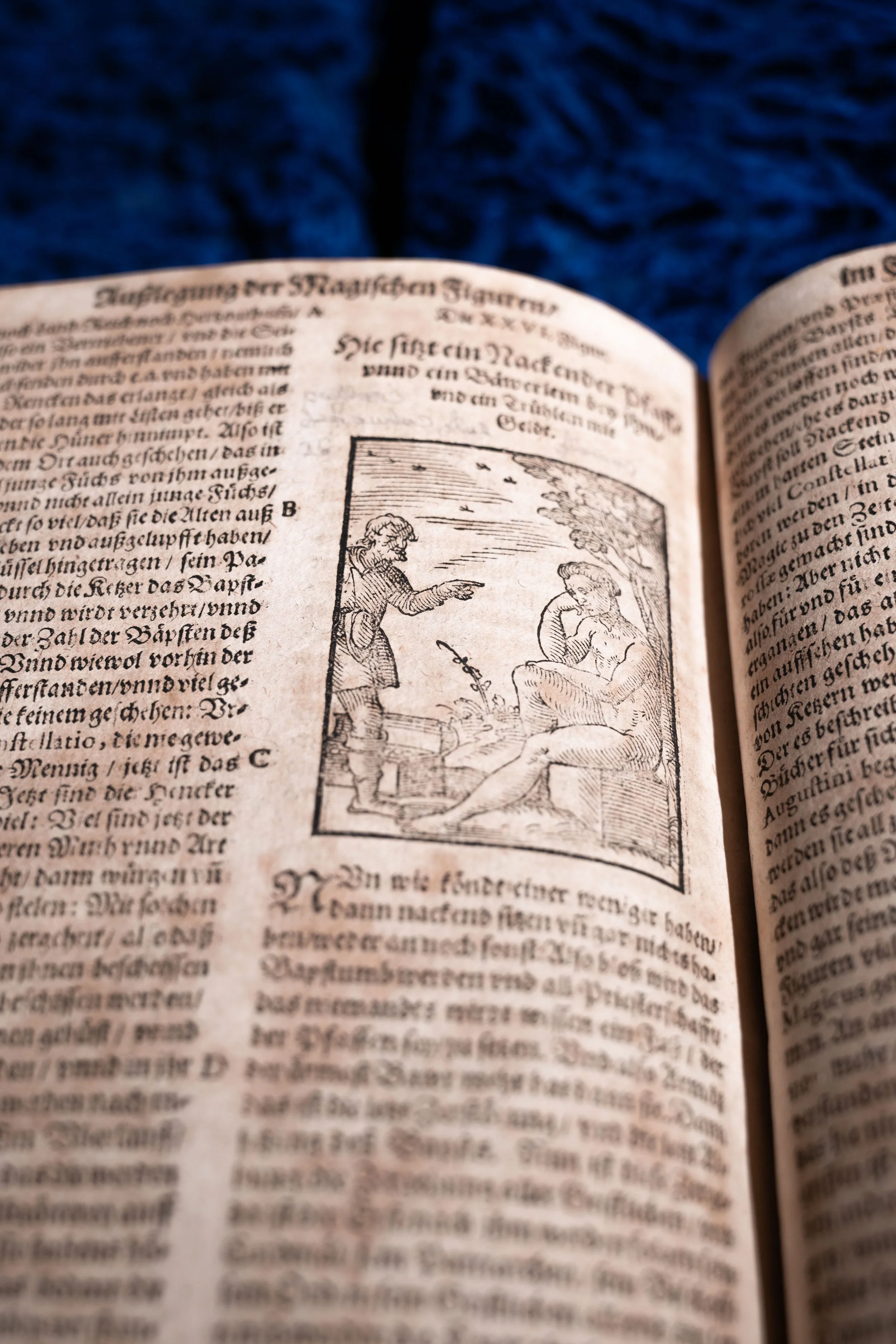 Image 16 of 24
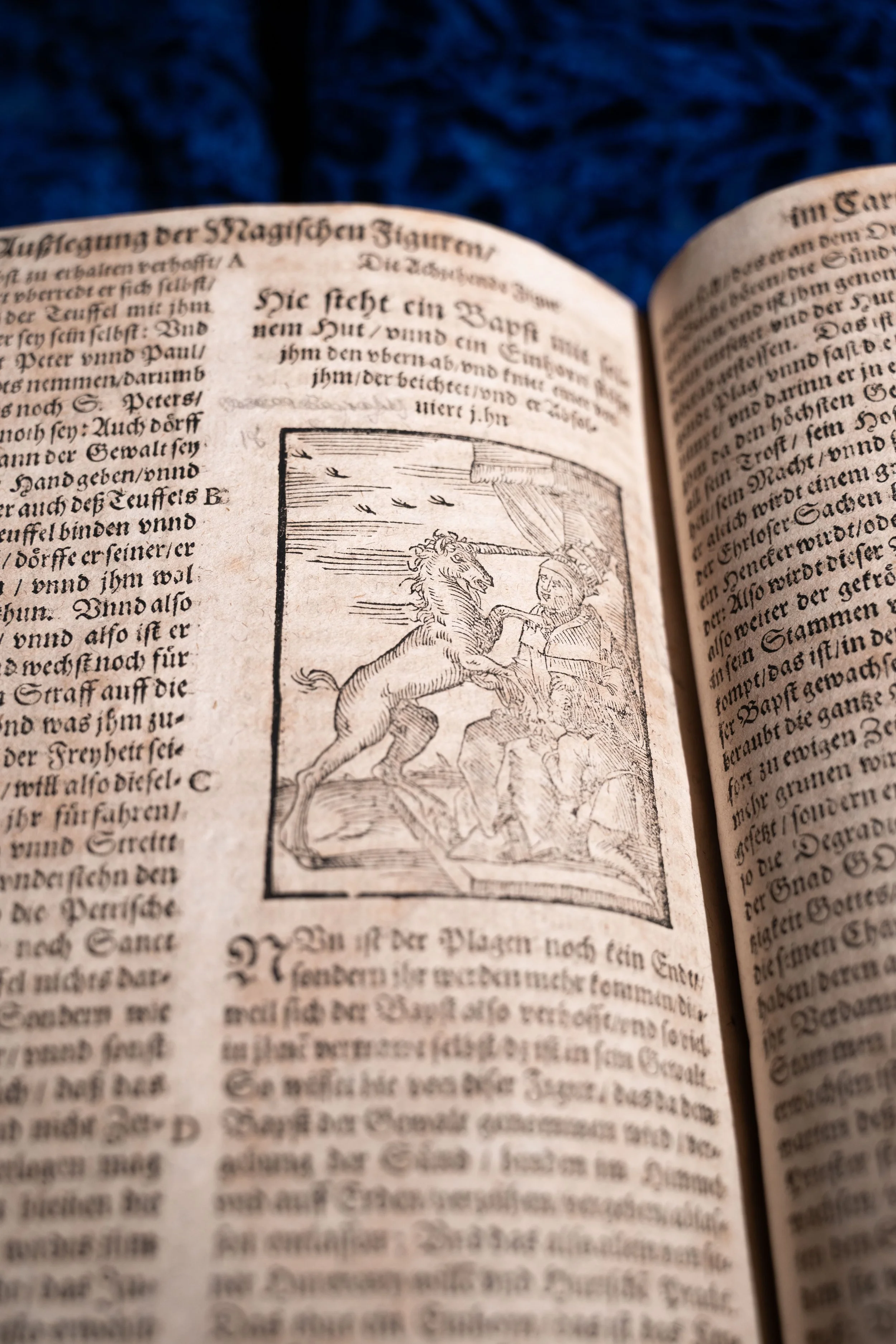 Image 17 of 24
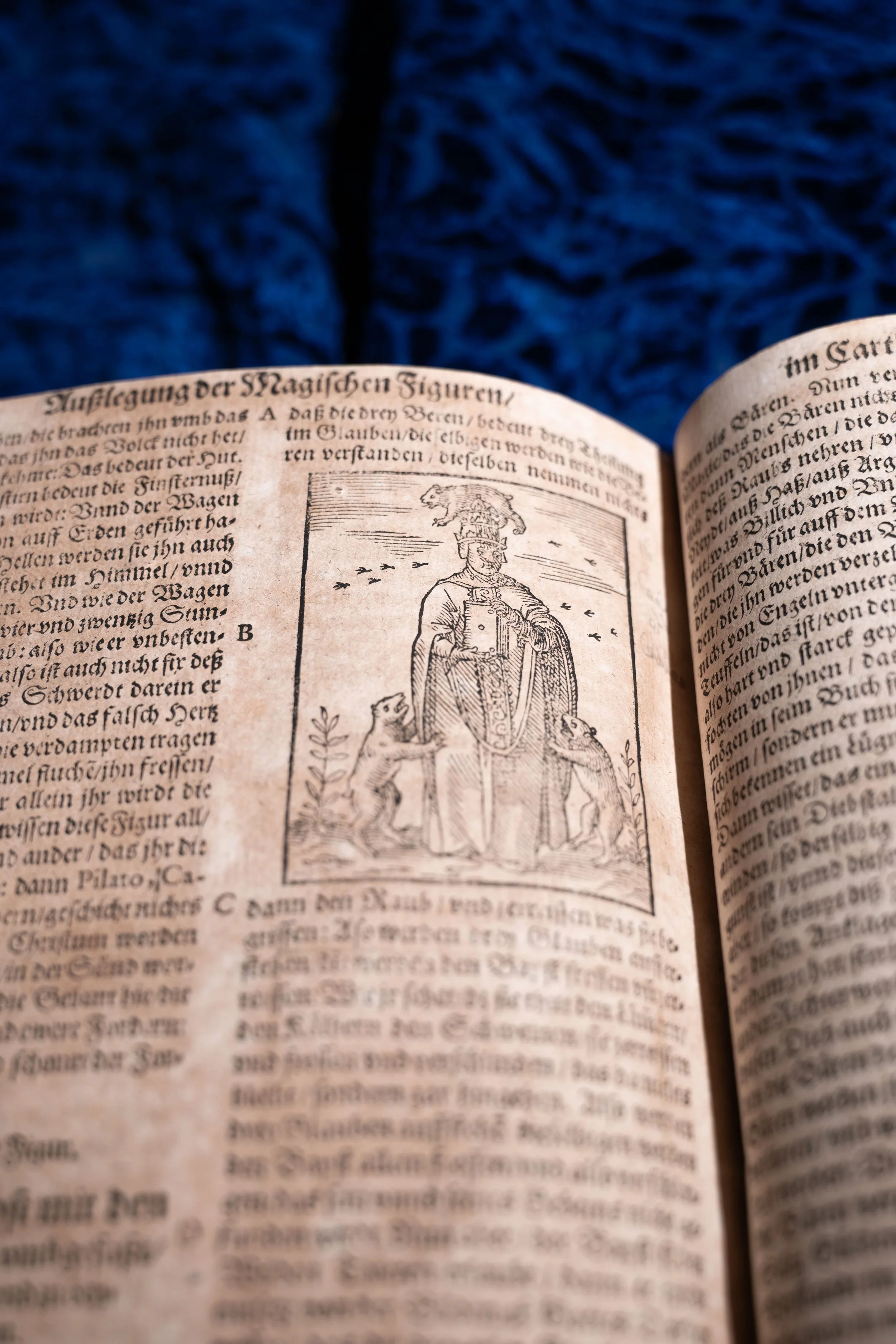 Image 18 of 24
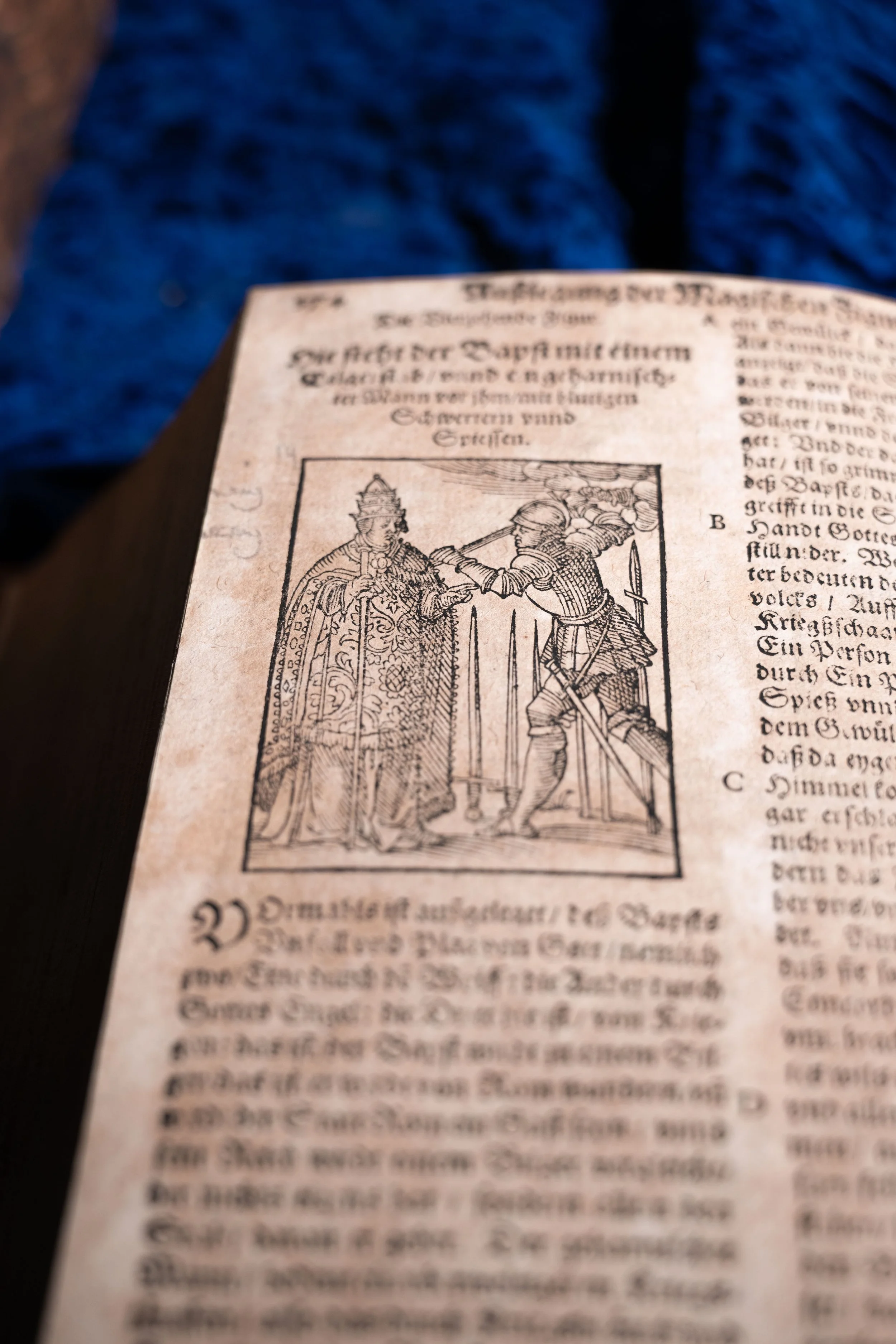 Image 19 of 24
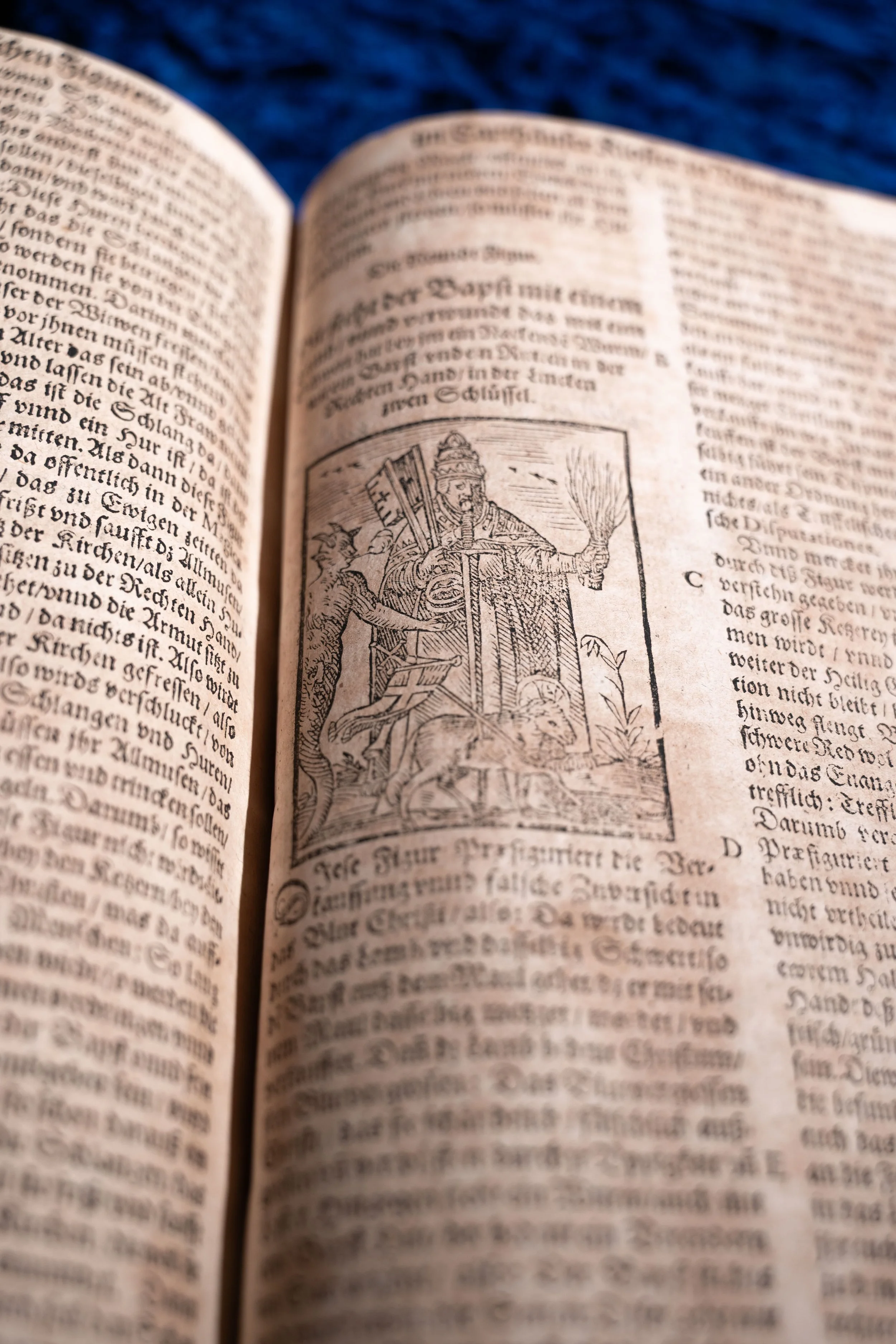 Image 20 of 24
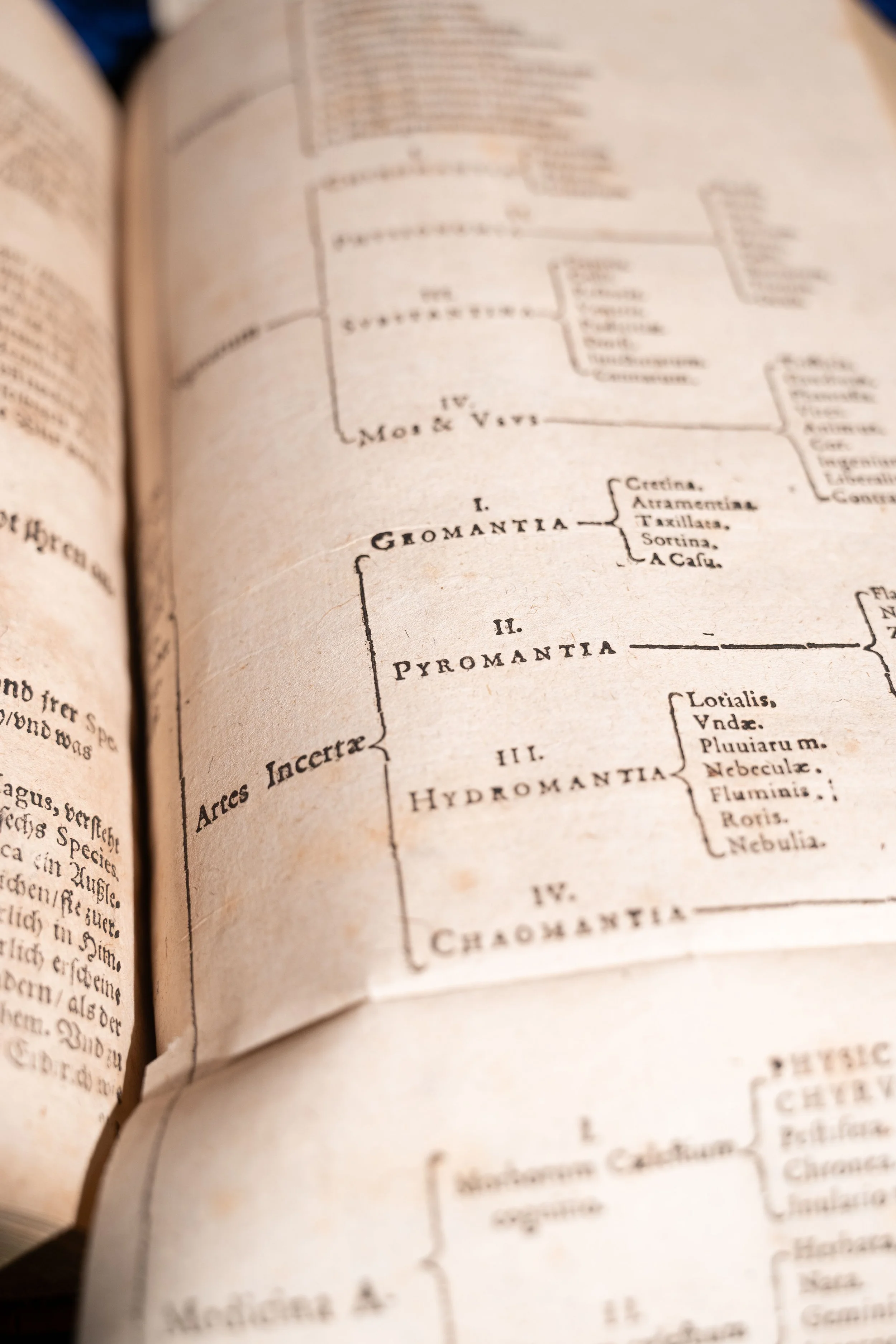 Image 21 of 24
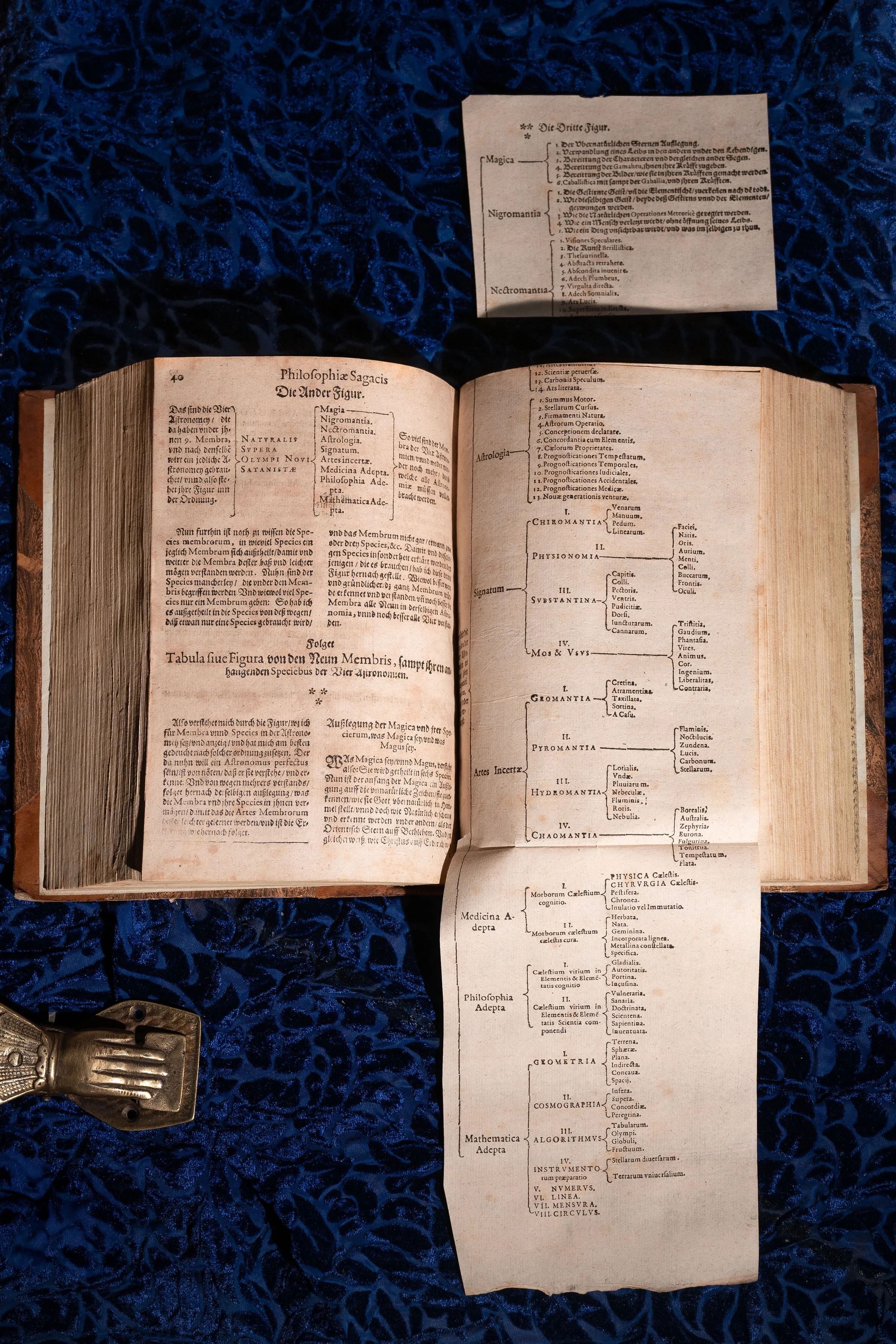 Image 22 of 24
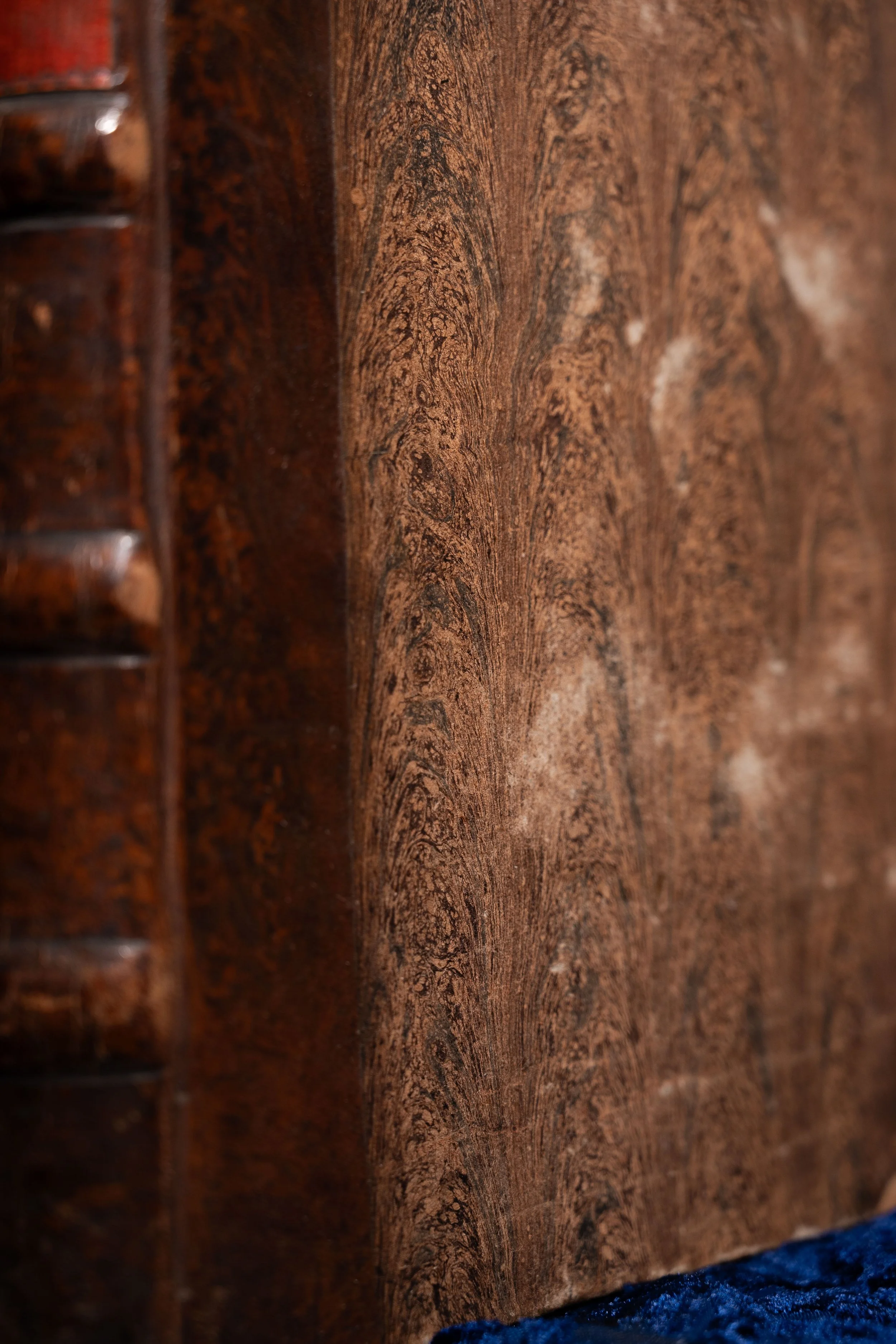 Image 23 of 24
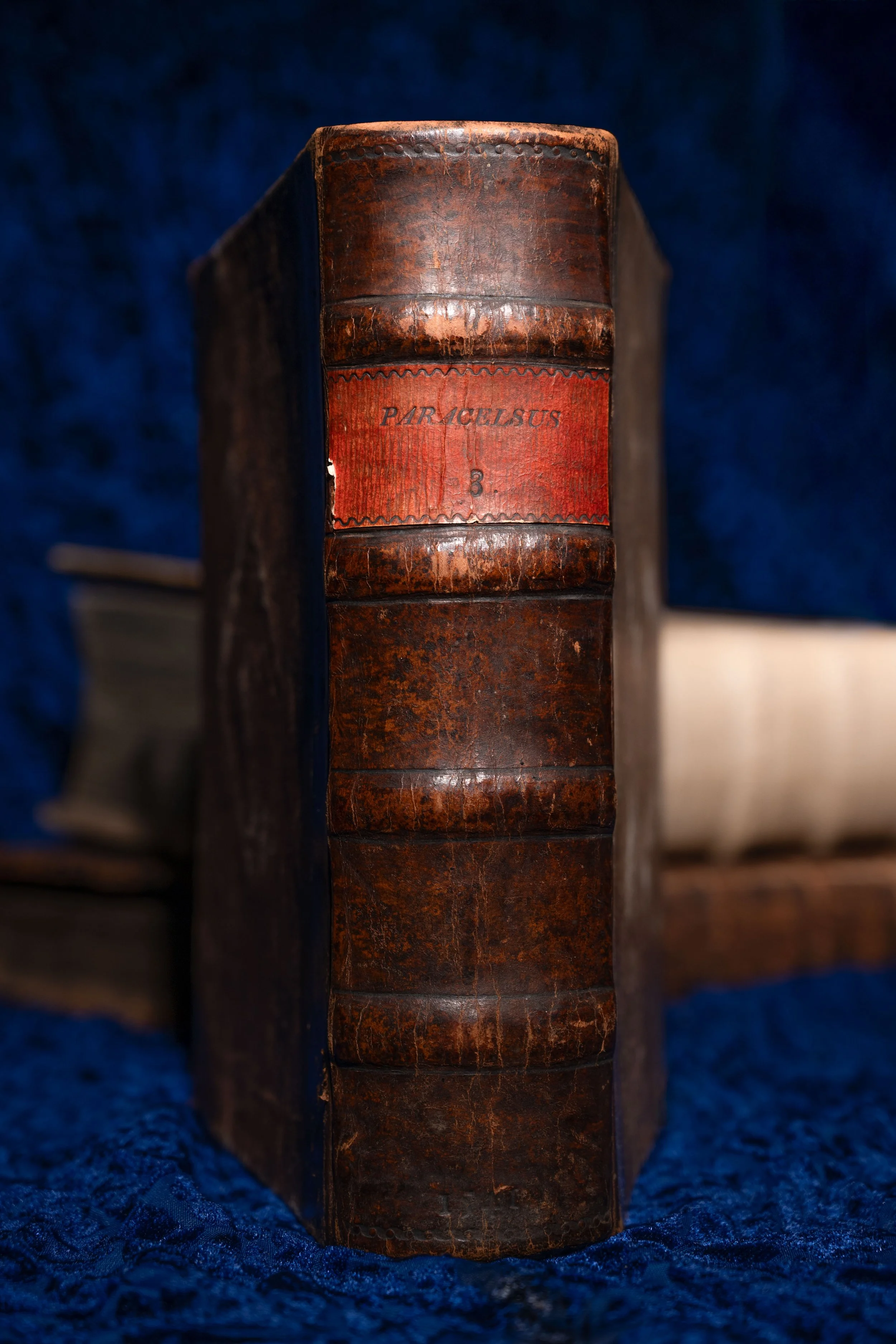 Image 24 of 24