An attractive and well-preserved mid-16th-century legal treatise on civil valuation and taxation, retaining its original utilitarian vellum binding. The title page features the printer’s device of the Gadaldino press: a winged figure poised upon a tortoise, a visual formulation of the humanist maxim Festina Lente ("Make haste slowly"), widely employed in Renaissance emblematic culture and later absorbed into Hermetic and alchemical visual vocabularies. The text is further ornamented with woodcut tailpieces in the grotesque style.
While juridical in content, this volume exemplifies the administrative and intellectual infrastructure of the late Renaissance, the legal and economic frameworks within which early modern scholars, astrologers, physicians, and occult philosophers operated. Such works formed an essential part of the working libraries of educated professionals, providing the practical context alongside which esoteric and philosophical texts circulated.
FESTASIO, Niccolò (Nicolaus Festasius Mutinensis). Tractatus de aestimo, et collectis. Copiosissimoque Indice Alfabetico, ac numeris Summariisq additis exornatus, & auctus. Mutinae (Modena): Apud Paulum Gadaldinum & Fratres, 1569.
Format: Octavo (158 × 105 mm). Collation: A–X^8. Complete. Foliation: [1] ff. 164, [15; Index] [1]. Binding: Contemporary limp vellum, manuscript title in brown ink to spine.
Condition: Contemporary limp vellum showing characteristic creasing and age-toning; manuscript spine title legible. Internally clean with light, even toning; paper crisp.
Provenance: Front pastedown with early Italian shelf mark ("Scanzia Prima"), indicating placement within an organized institutional or professional library. The rear flyleaf bears a contemporary or slightly later manuscript memorandum in Italian, beginning "Ricord...", written in a rapid professional hand and recording a legal obligation to "give and show" a document, clear evidence of active use by a working jurist.
An attractive and well-preserved mid-16th-century legal treatise on civil valuation and taxation, retaining its original utilitarian vellum binding. The title page features the printer’s device of the Gadaldino press: a winged figure poised upon a tortoise, a visual formulation of the humanist maxim Festina Lente ("Make haste slowly"), widely employed in Renaissance emblematic culture and later absorbed into Hermetic and alchemical visual vocabularies. The text is further ornamented with woodcut tailpieces in the grotesque style.
While juridical in content, this volume exemplifies the administrative and intellectual infrastructure of the late Renaissance, the legal and economic frameworks within which early modern scholars, astrologers, physicians, and occult philosophers operated. Such works formed an essential part of the working libraries of educated professionals, providing the practical context alongside which esoteric and philosophical texts circulated.
FESTASIO, Niccolò (Nicolaus Festasius Mutinensis). Tractatus de aestimo, et collectis. Copiosissimoque Indice Alfabetico, ac numeris Summariisq additis exornatus, & auctus. Mutinae (Modena): Apud Paulum Gadaldinum & Fratres, 1569.
Format: Octavo (158 × 105 mm). Collation: A–X^8. Complete. Foliation: [1] ff. 164, [15; Index] [1]. Binding: Contemporary limp vellum, manuscript title in brown ink to spine.
Condition: Contemporary limp vellum showing characteristic creasing and age-toning; manuscript spine title legible. Internally clean with light, even toning; paper crisp.
Provenance: Front pastedown with early Italian shelf mark ("Scanzia Prima"), indicating placement within an organized institutional or professional library. The rear flyleaf bears a contemporary or slightly later manuscript memorandum in Italian, beginning "Ricord...", written in a rapid professional hand and recording a legal obligation to "give and show" a document, clear evidence of active use by a working jurist.

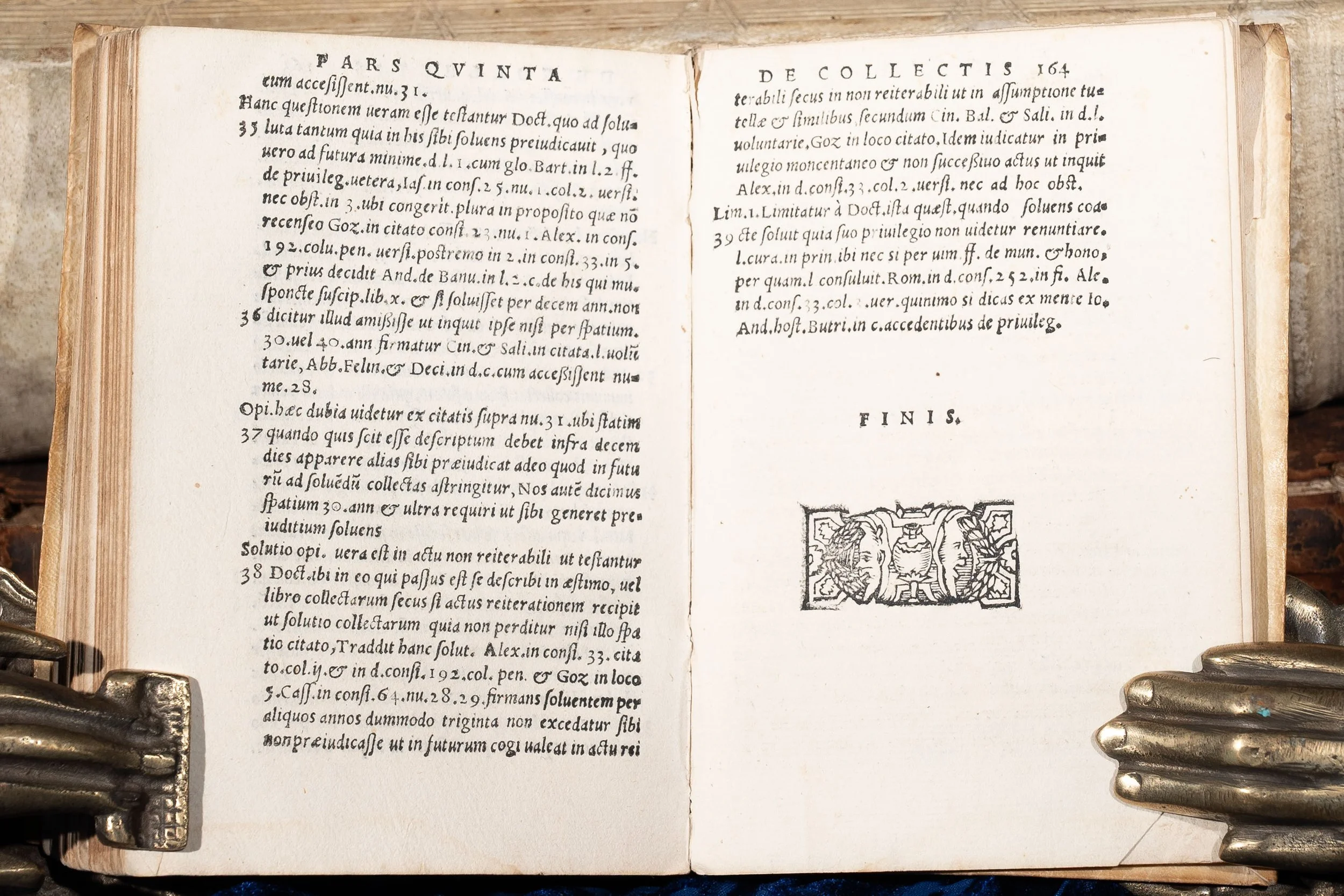 Image 1 of 8
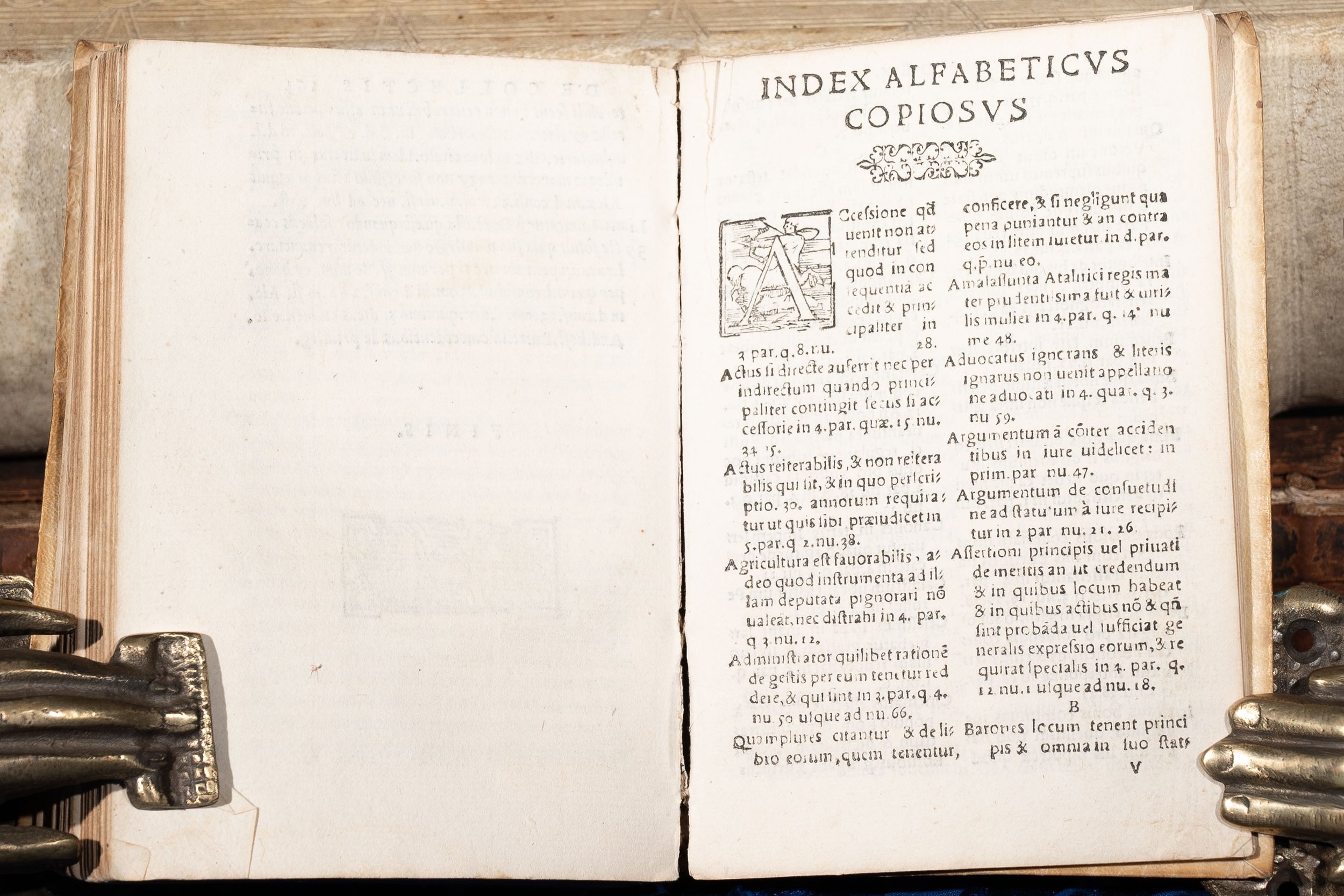 Image 2 of 8
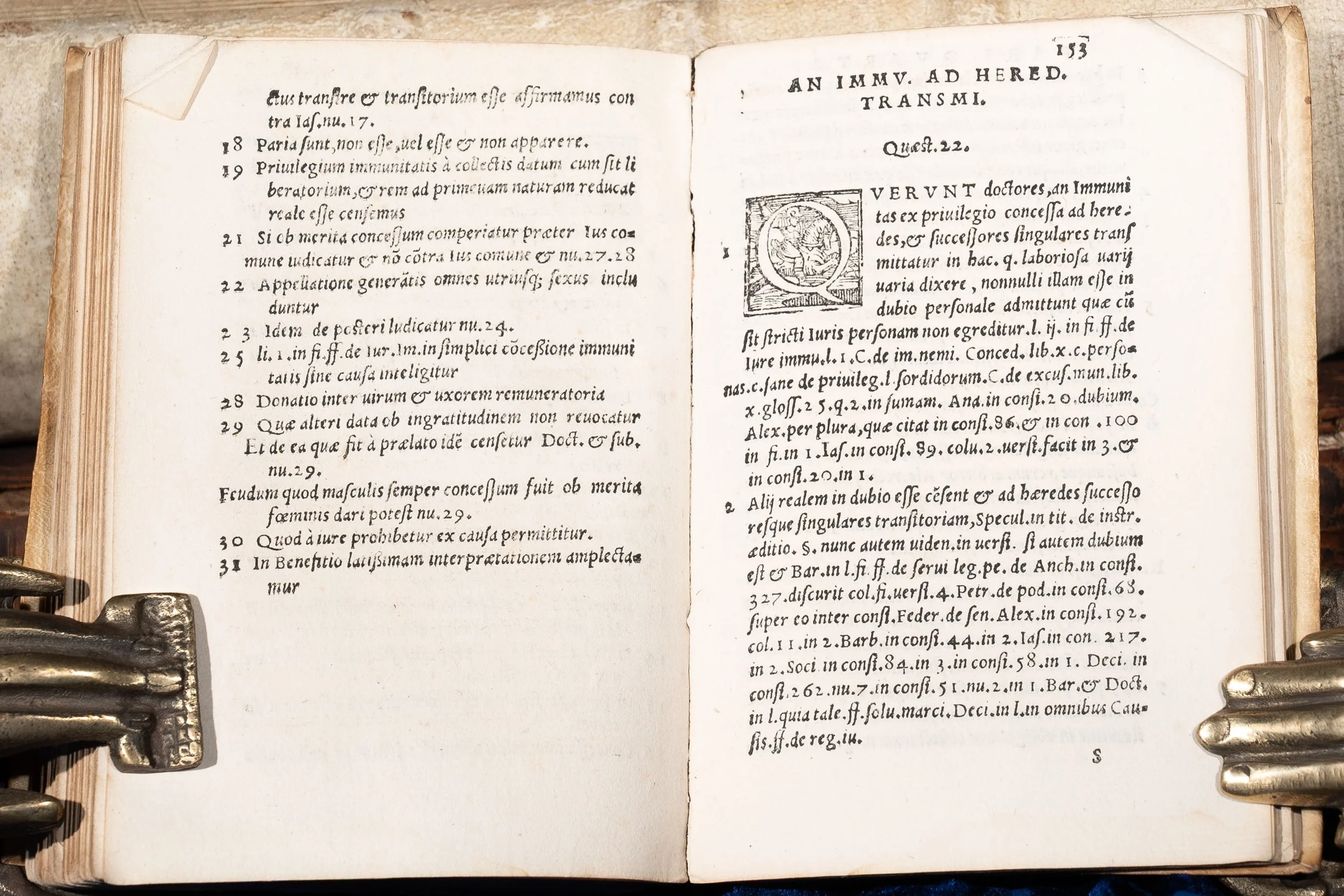 Image 3 of 8
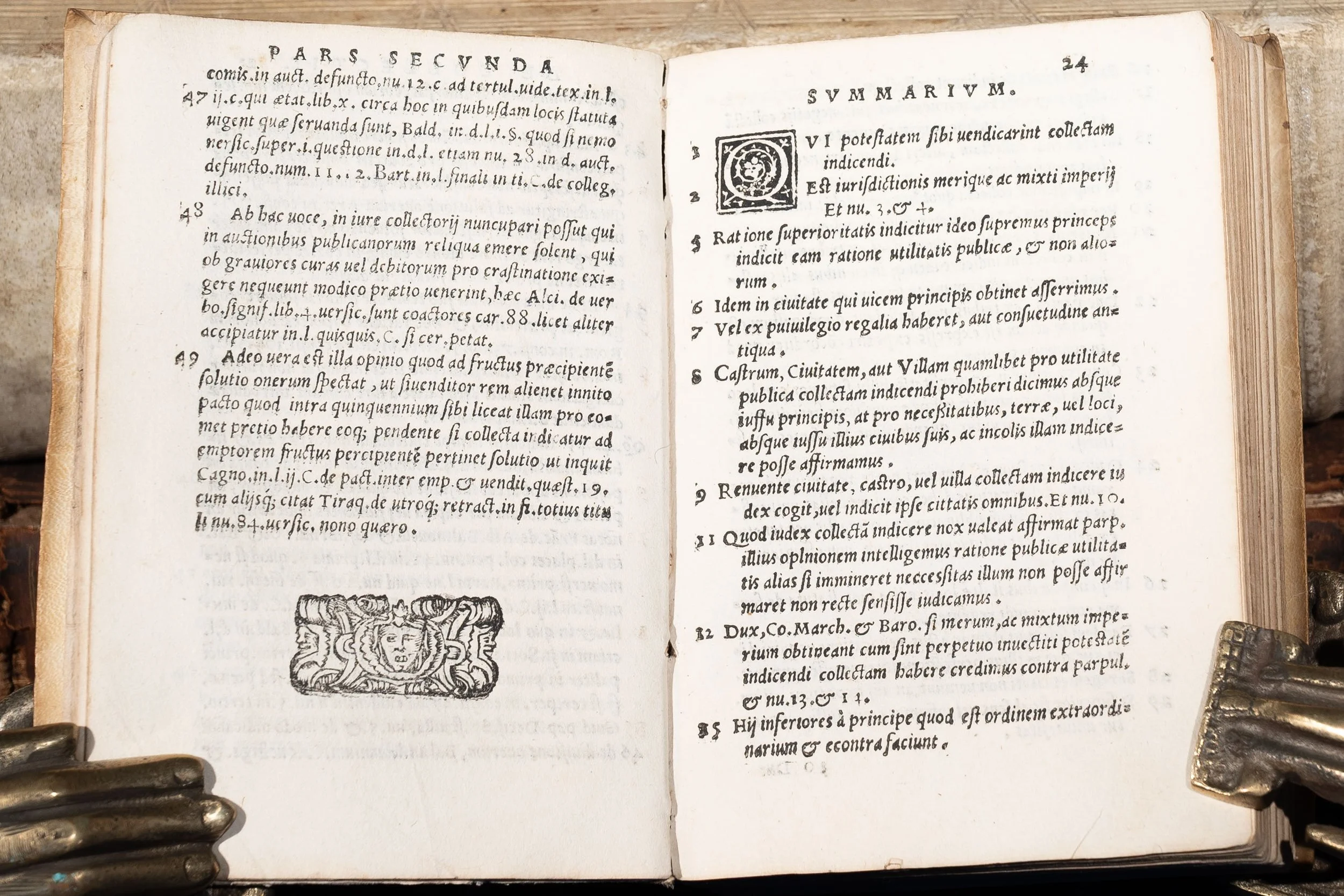 Image 4 of 8
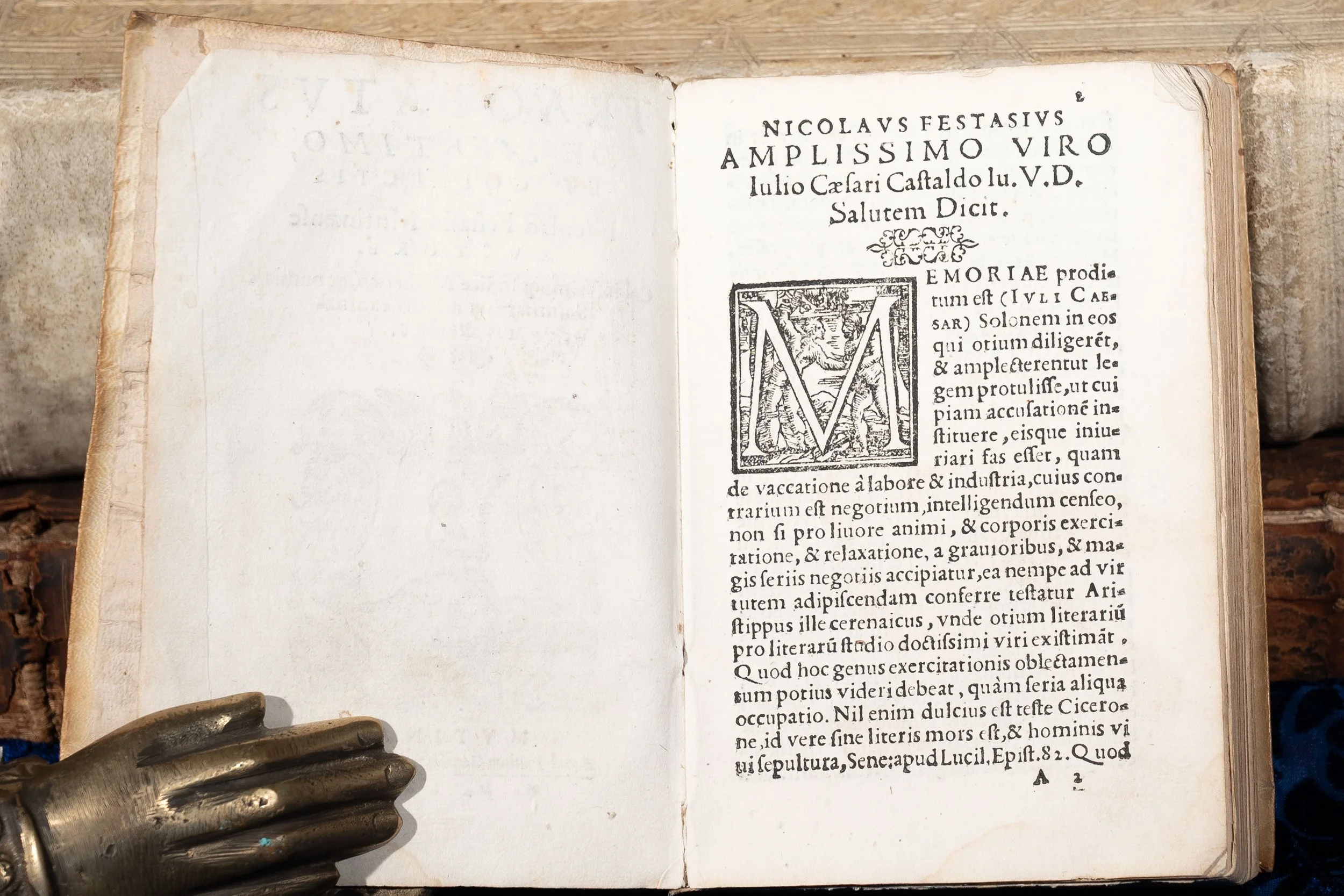 Image 5 of 8
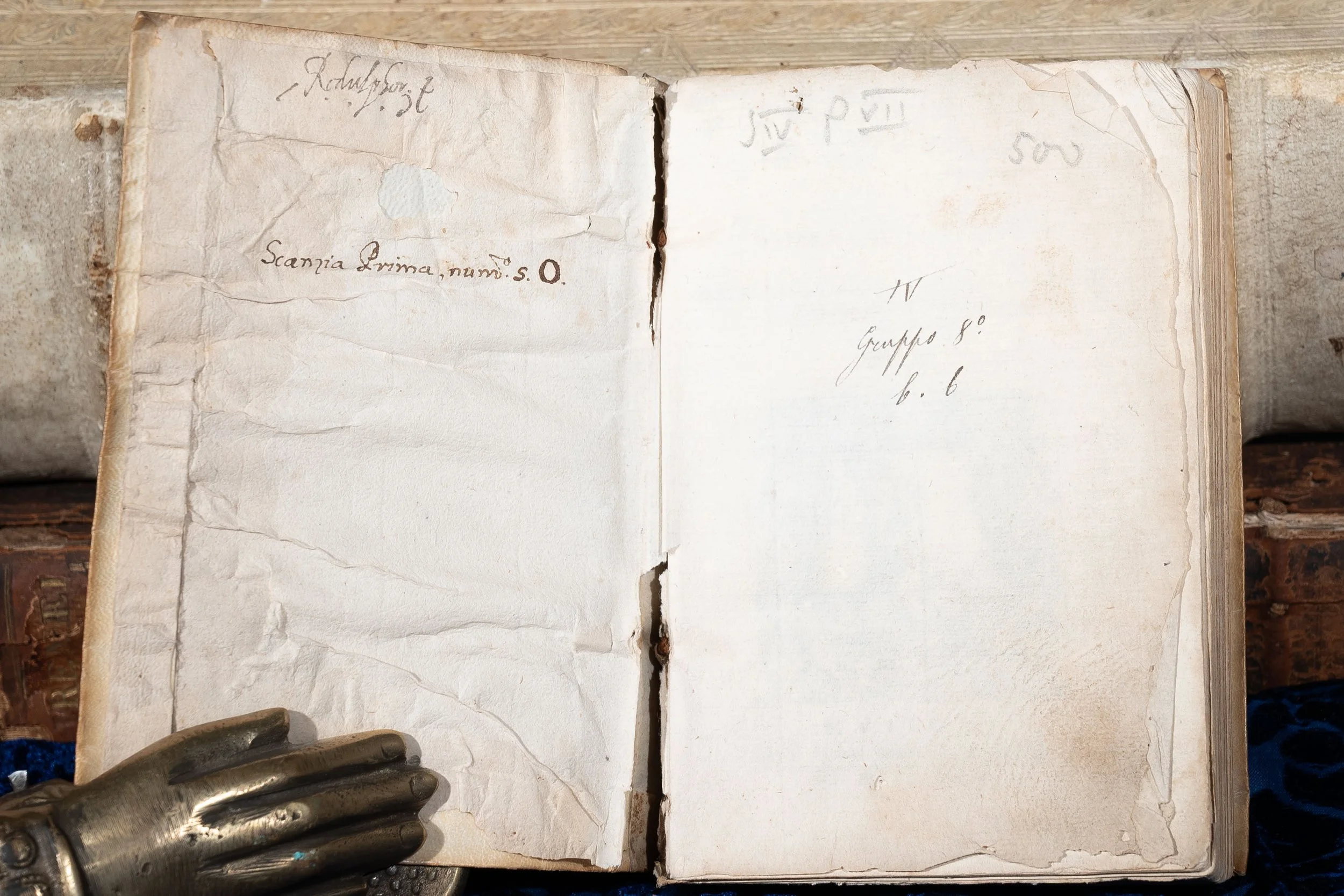 Image 6 of 8
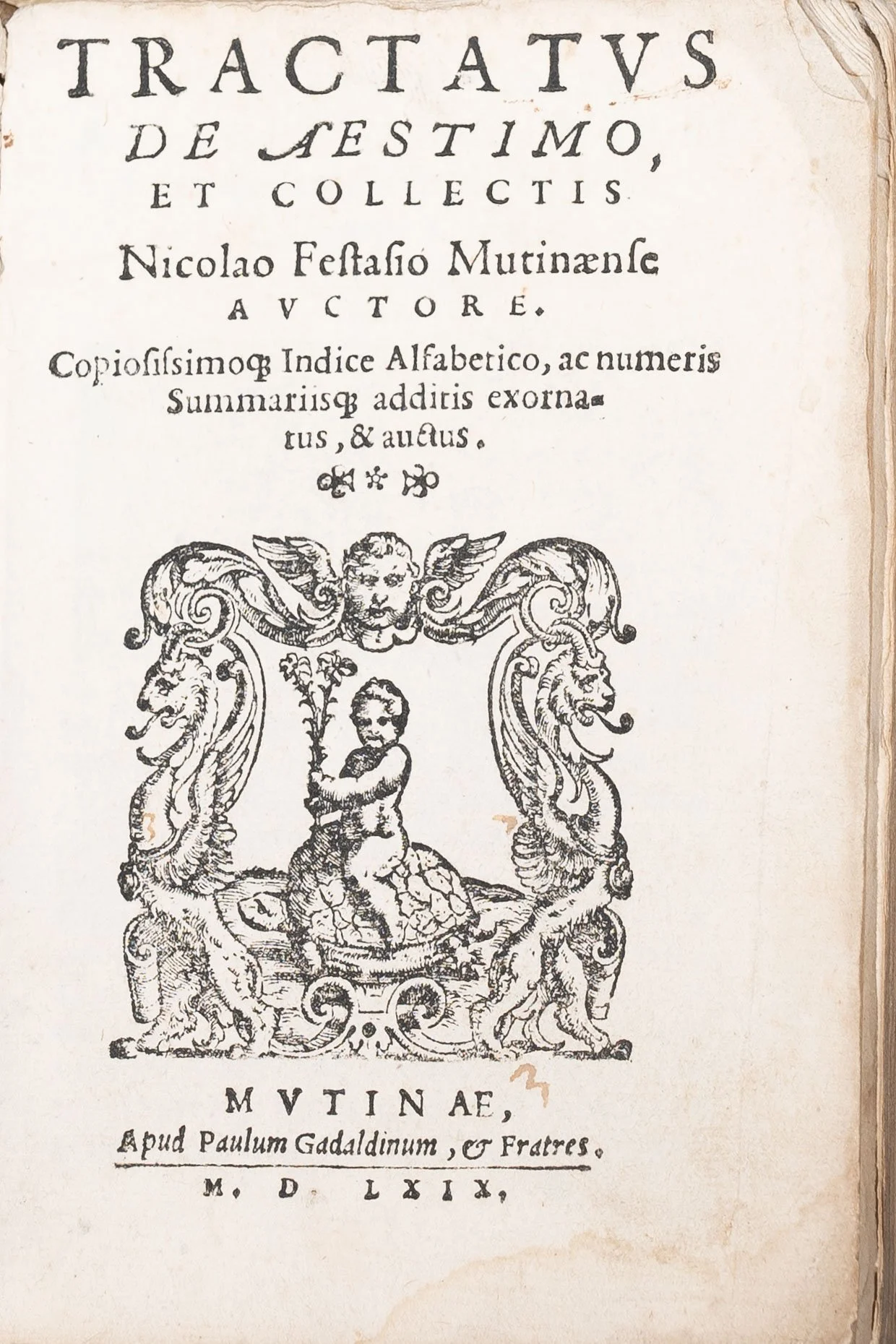 Image 7 of 8
 Image 8 of 8