Johannes Garcaeus finished his treatise on the celestial globe in March 1564 and dated it like this: "I finished this treatise in the Year of the Messiah 1564, on the very day of the spring equinox, which fell on the tenth of March at 11 hours, 4 minutes, and 9 seconds in the evening."
Garcaeus was born at Wittenberg in 1530, the son of a Lutheran pastor who was a friend of Melanchthon. He studied theology under Melanchthon and mathematics under Caspar Peucer, Melanchthon's son-in-law. He taught at Greifswald, and in 1561 he went to Brandenburg on the Havel as pastor and superintendent of the New Town, where he stayed until his death in 1574. He kept computing all the while. A later book of his cast the horoscopes of some four hundred of his contemporaries. One of them, Landgrave Wilhelm IV of Hesse, was a capable astronomer himself, and he found his own death set down for April 1579. He wrote in the margin that God had numbered all the days of his life. He lived another thirteen years.
At Wittenberg, astronomy was next door to theology. Melanchthon rebuilt the university curriculum so that the mathematical sciences led the student upward to the Creator, and both title pages here carry a woodcut armillary sphere over a Psalm verse. "The heavens declare the glory of God," says one. The first treatise in this volume teaches how to find the rising and setting of any fixed star at any moment you please, with seven folding tables to do the heavy arithmetic. The second teaches the use of the celestial globe and closes with a canon of the fixed stars and what he calls a "historical and poetical calendar" of them. Both are first editions. Garcaeus computed from the new Copernican data, and he admired the man who supplied it. He called Copernicus "the outstanding artificer of our age."
The stars of Scripture get their hearing as well. Where the text takes up Kimah and Kesil, the Pleiades and Orion that God names to Job out of the whirlwind, an early reader has written both words in the margin in Hebrew, with the vowel points. Beneath them is a stack of references to the great Hebrew dictionaries: Pagninus, Sebastian Münster, Buxtorf. The Buxtorf citation places the hand after 1607. Someone read this book with a shelf of lexicons open beside it, checking the astronomy against the Hebrew Bible word by word.
An inscription at the head of the title page and an engraved bookplate inside the front cover place this copy in the Benedictine imperial abbey of Saints Ulrich and Afra in Augsburg, which kept one of the great monastic libraries of Germany. The monks had paid for a printing press there in the 1470s. So a Wittenberg textbook by a Lutheran pastor ended up on the shelves of a Catholic abbey. When the abbey was dissolved in the secularization, its books passed to the Bavarian state, and the copy carries the stamp of the Royal District Library of Augsburg. The old shelfmark, Math 323, is still pasted to the spine.
The cover is vellum from a fifteenth-century missal, in gothic script ruled in red, folded around the boards with overlapping fore-edges in the Spanish manner. The Gospel runs across the spine and the front cover, the widow's son at Nain sitting up at the words "Young man, I say to you, arise" (Luke 7). The back cover opens with a large red initial and an Epistle, Paul bowing his knees to the Father (Ephesians 3). Binders of the period used superseded service books as raw material all the time. The results are rarely this legible.
Garcaeus planned the work in three parts. The first, on time-reckoning proper, appeared separately in 1563 and is not present. The second and third parts, offered here, were published together in 1565 and are complete as issued, each with its separate title, dedication and register. Both are held by German institutional libraries, and they seldom appear in commerce.
GARCAEUS, Johannes, the younger (1530–1574). Secundus tractatus de tempore, sive de ortu et occasu stellarum fixarum ad quodlibet temporis momentum. [Bound with, as issued:] Tertius tractatus de usu globi astriferi. Wittenberg: Johannes Crato [Johann Krafft the Elder], 1565. First editions of both parts.
Physical Description: Two parts in one volume, small octavo (15.5 x 10.5 cm). [8] leaves, 215 pages; [8] leaves, 106 pages, [2] leaves, the last a blank. Woodcut armillary sphere to each title, seven typographic folding tables, woodcut ornament at the colophon. Parts two and three of a three-part work; the first part, published separately in 1563, is not present.
Binding: Contemporary binding of vellum manuscript waste: a leaf of a fifteenth-century German missal in gothic script with red rubrics covering the boards, overlapping fore-edges in the Spanish manner, edges stained blue, ties removed. Early ink title and paper shelfmark label (Math 323) to spine.
Condition: Worming, heavy to the endpapers, to the preliminaries of both parts with small losses to the titles and dedication leaves, and to the margins of roughly the first ten leaves, occasionally touching a letter; light browning and scattered spotting; early red underlining in places; minor creasing to a few of the folding tables, all seven of which are present.
Provenance: The Benedictine imperial abbey of SS. Ulrich and Afra, Augsburg (ink inscription to title; fragmentary engraved bookplate to pastedown); the Royal District Library, Augsburg (stamp to title); abbey and library shelfmark Math 323 to spine. Hebrew and Latin marginalia of a learned seventeenth-century reader.

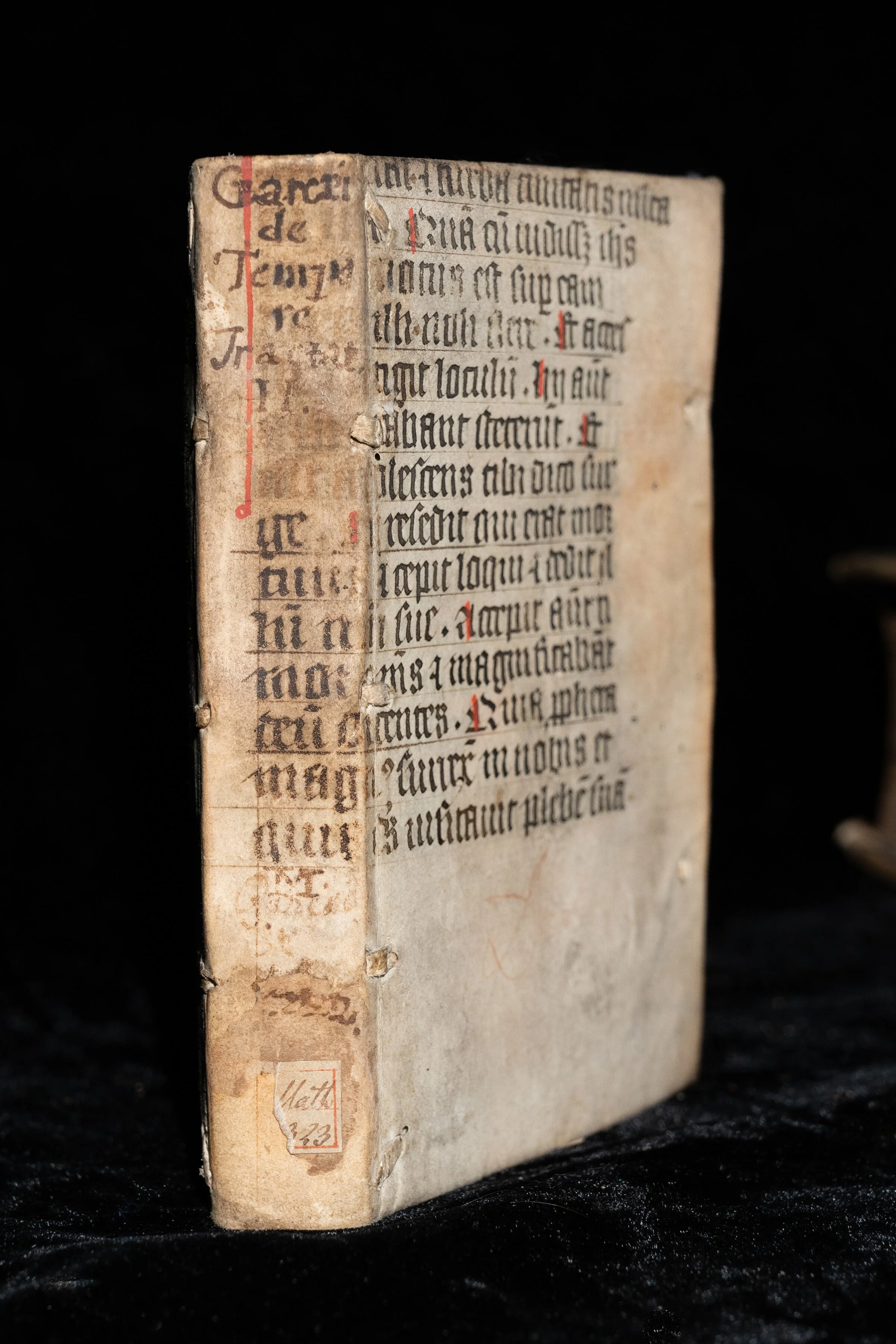 Image 1 of 28
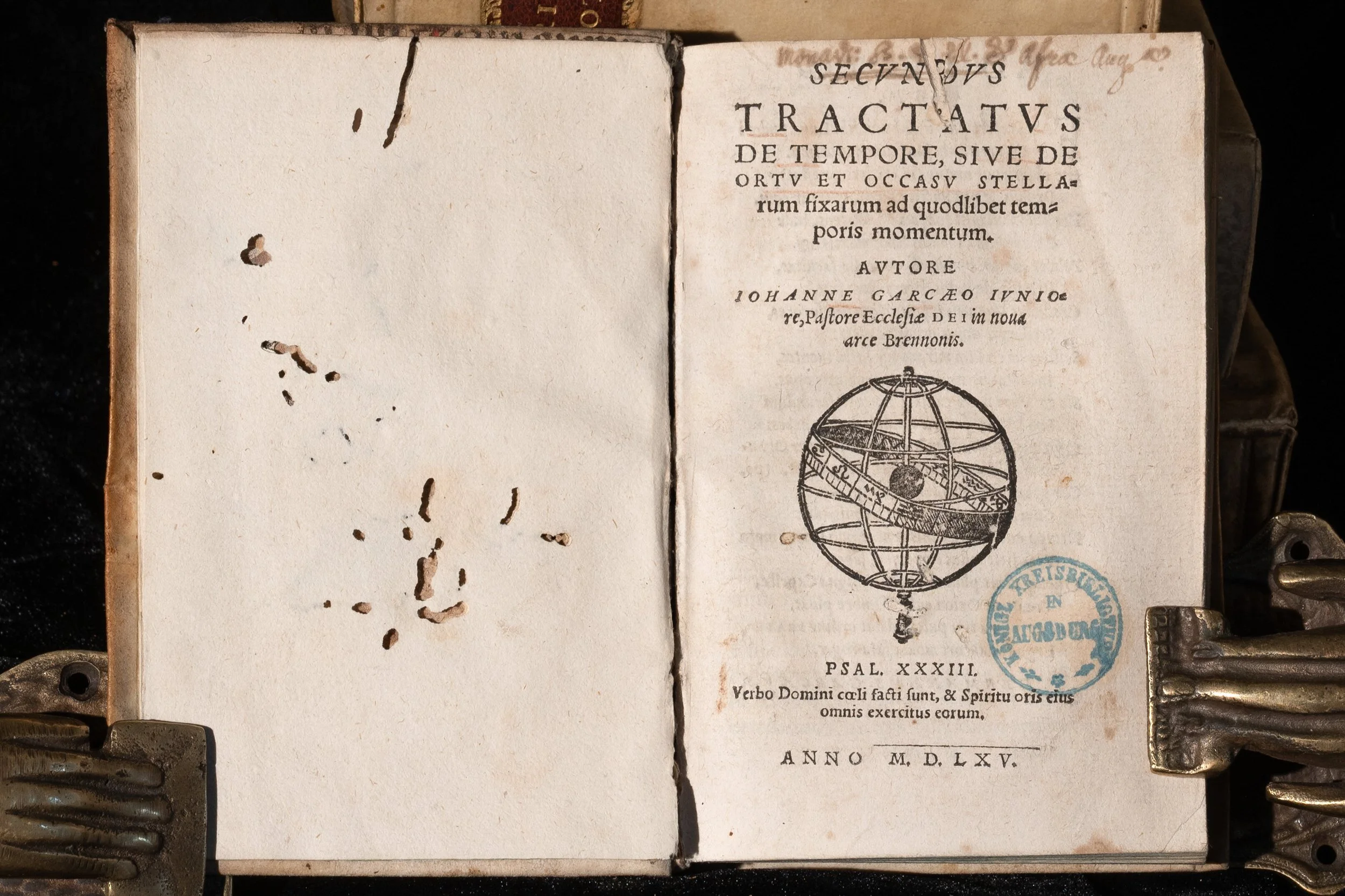 Image 2 of 28
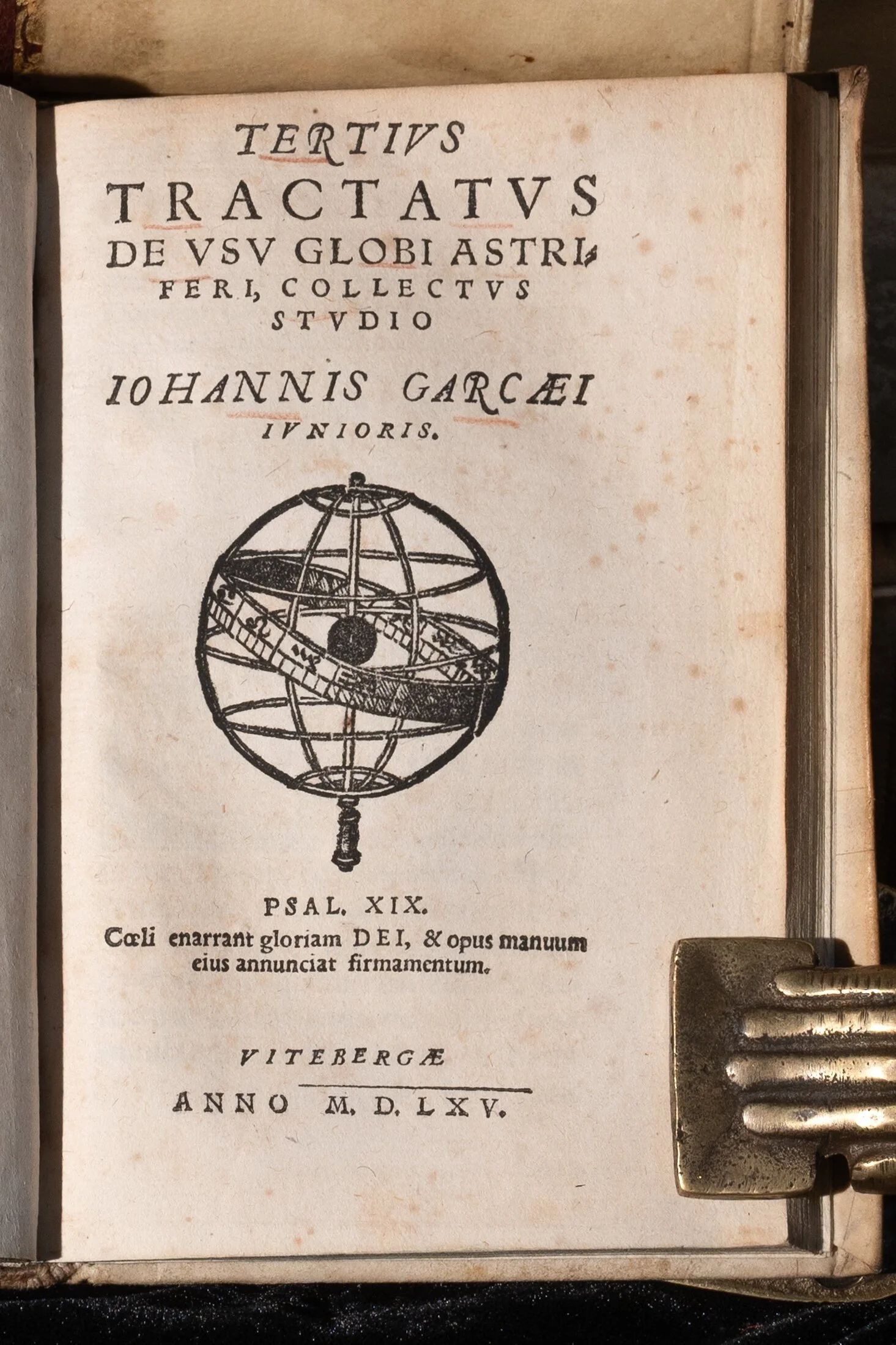 Image 3 of 28
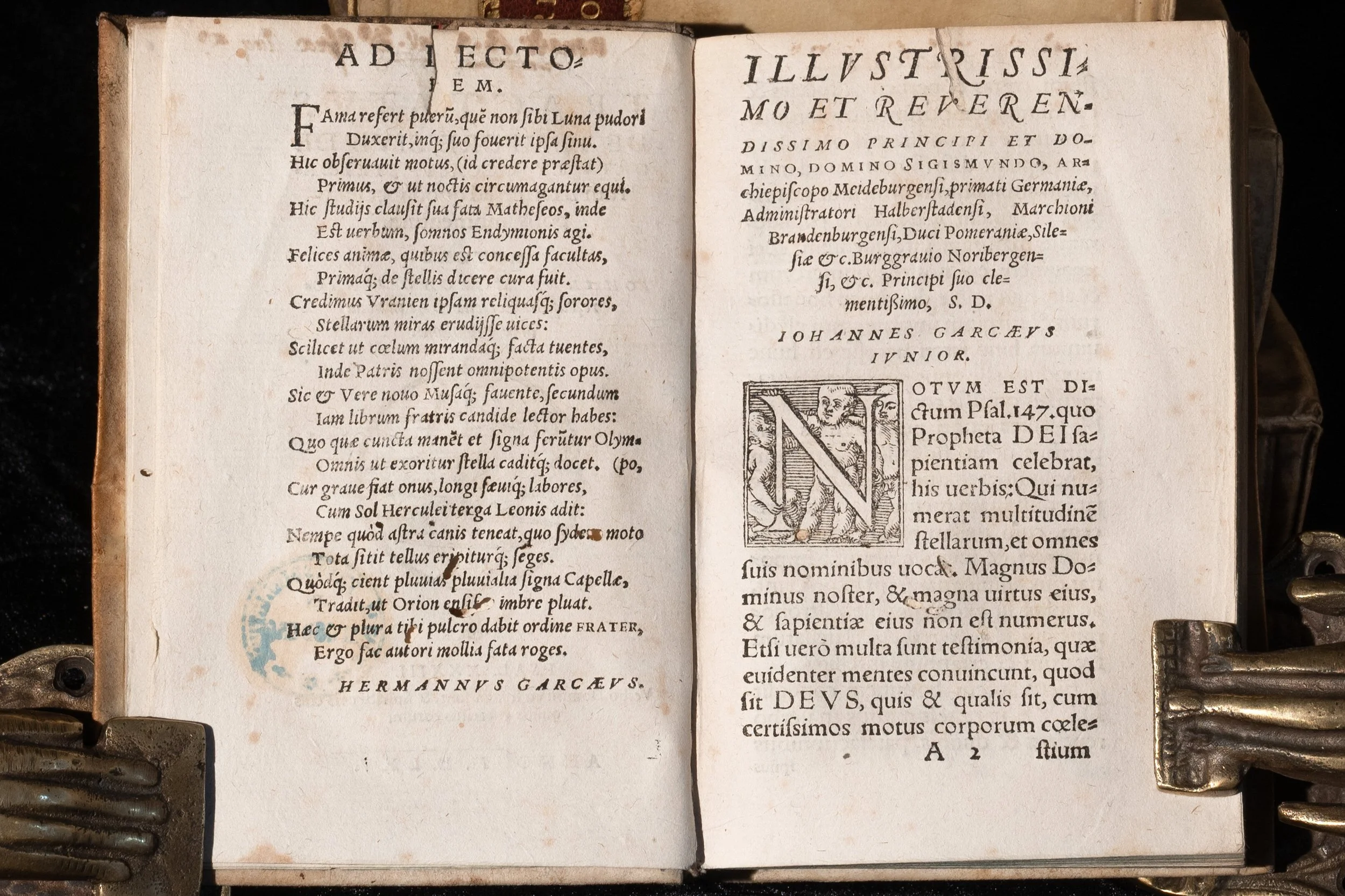 Image 4 of 28
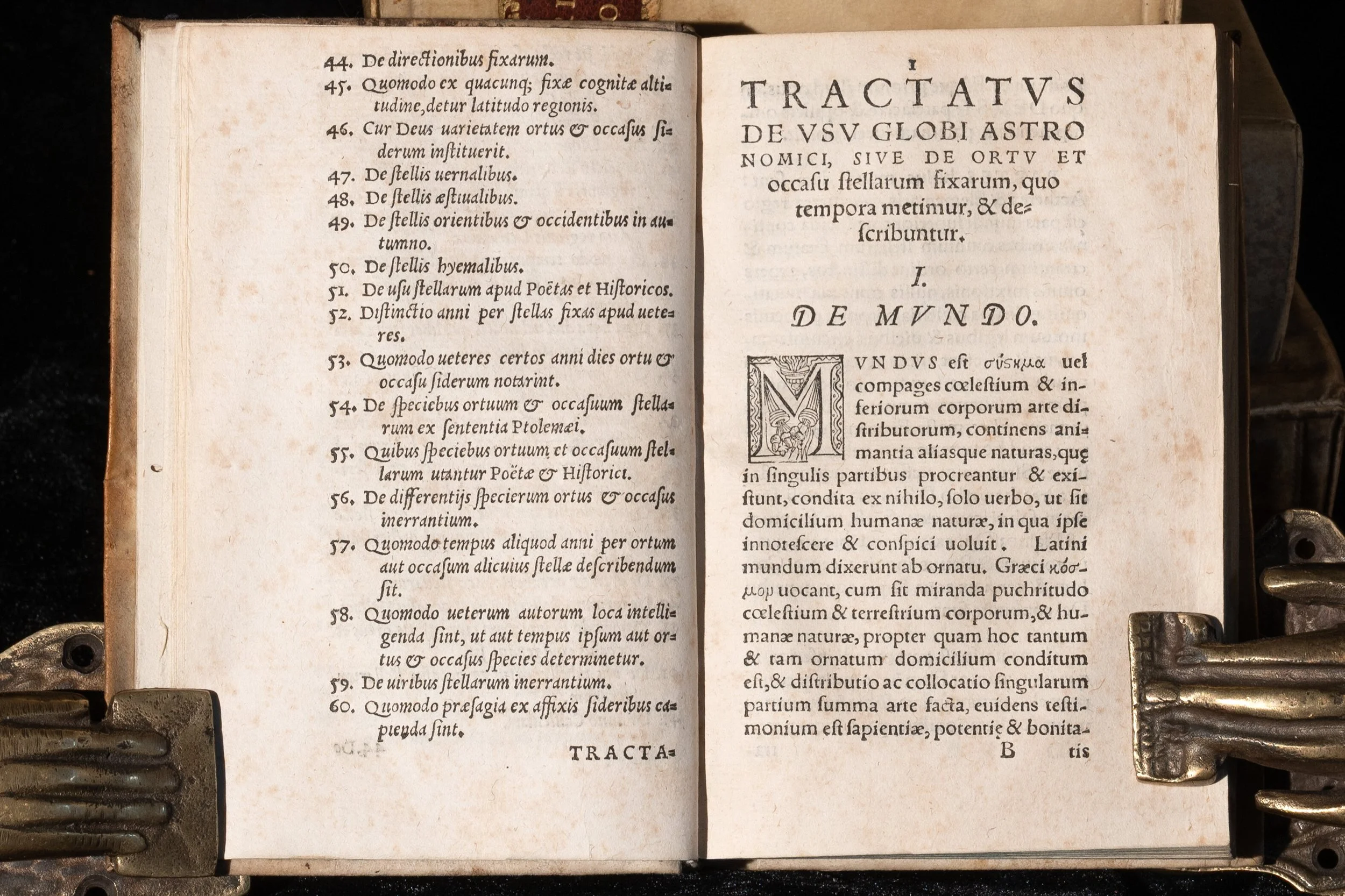 Image 5 of 28
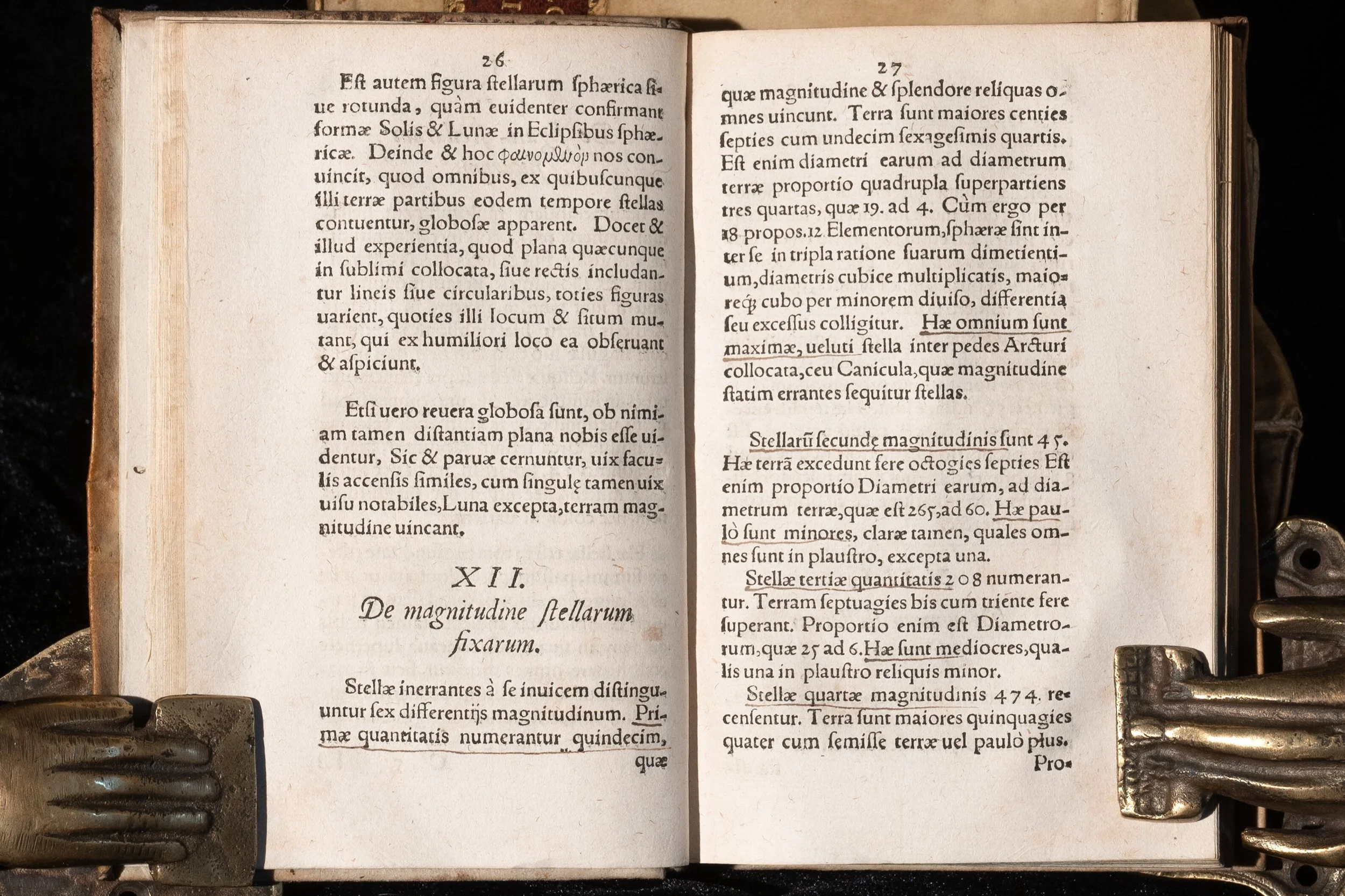 Image 6 of 28
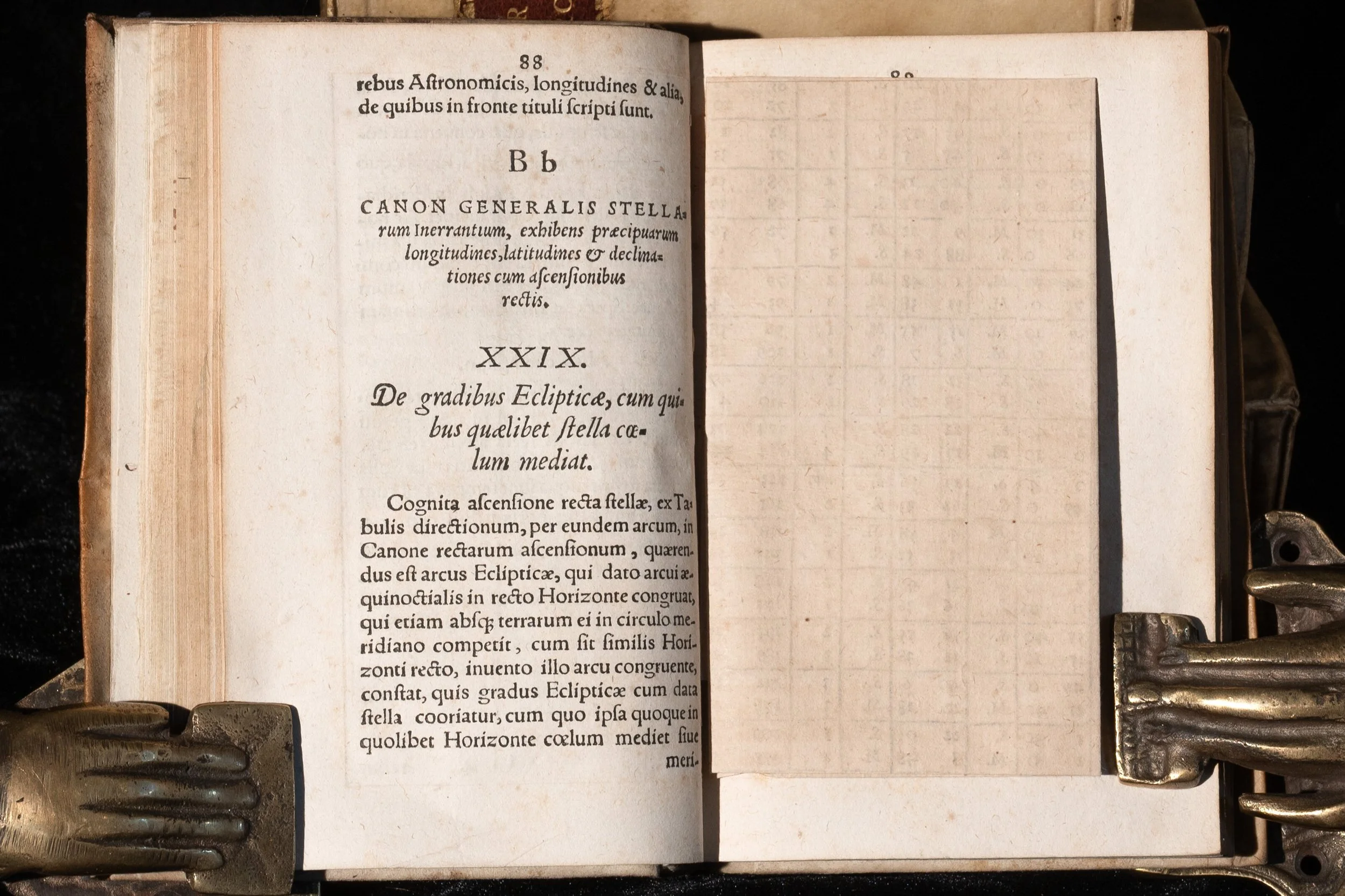 Image 7 of 28
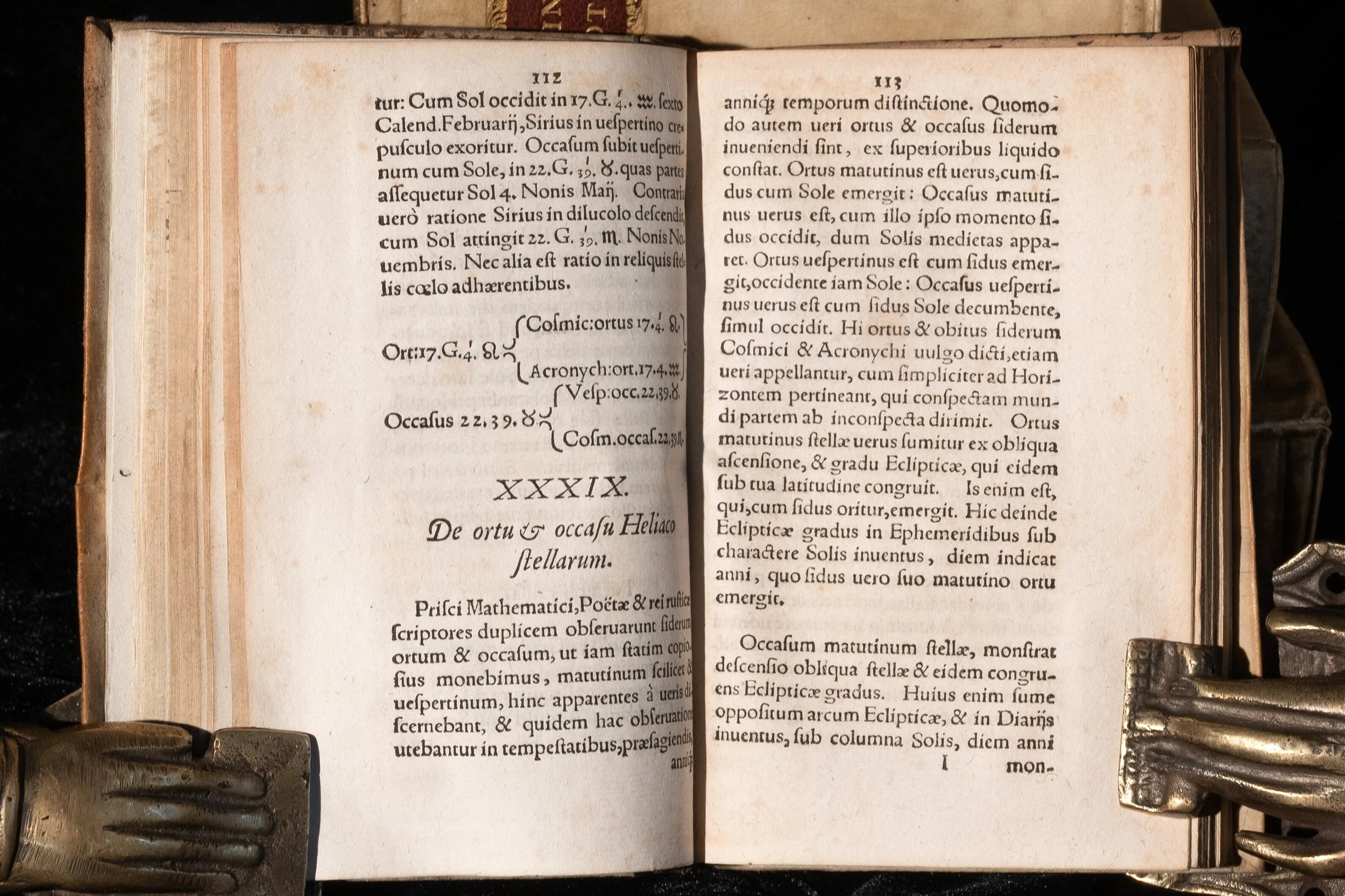 Image 8 of 28
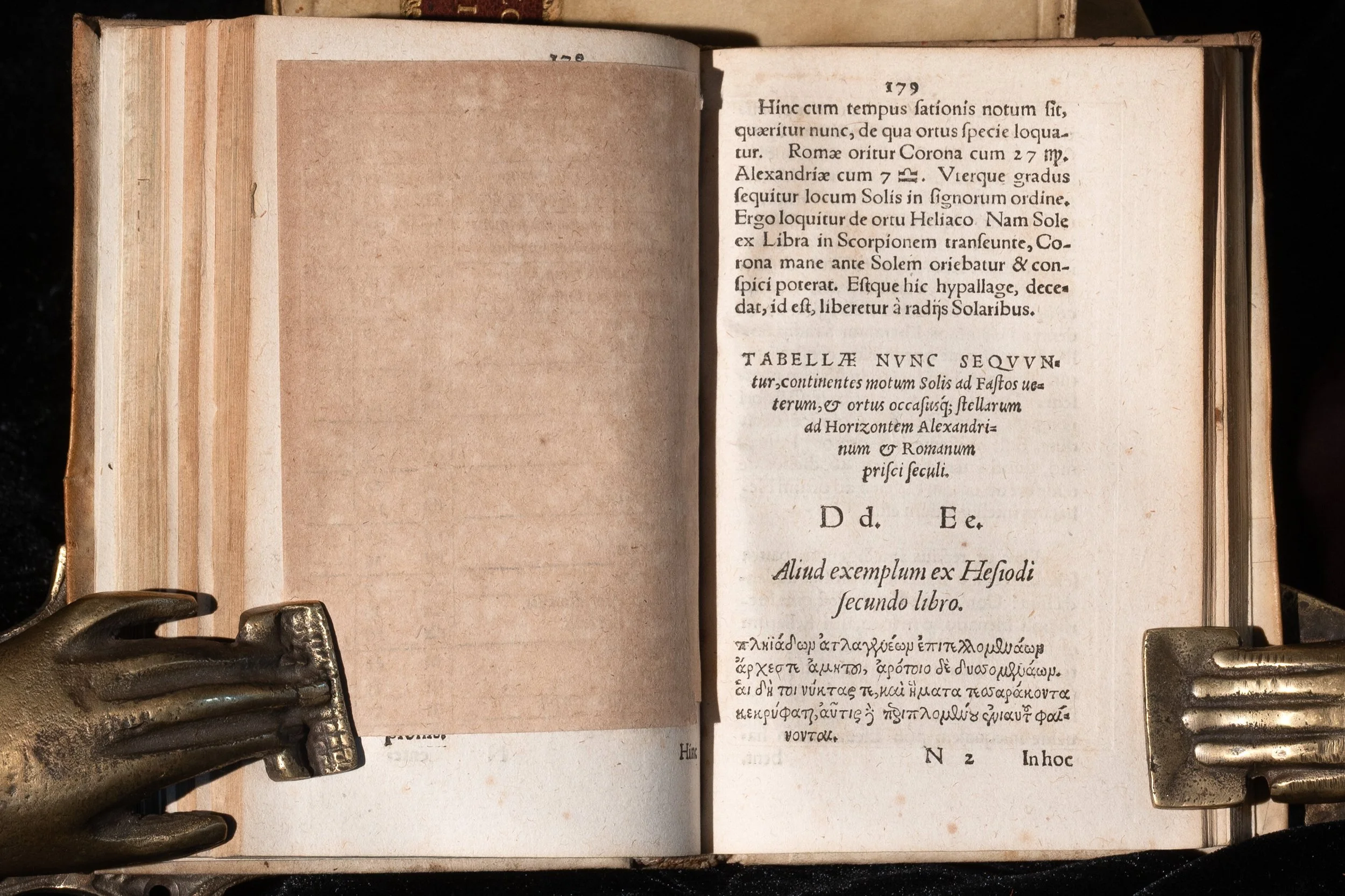 Image 9 of 28
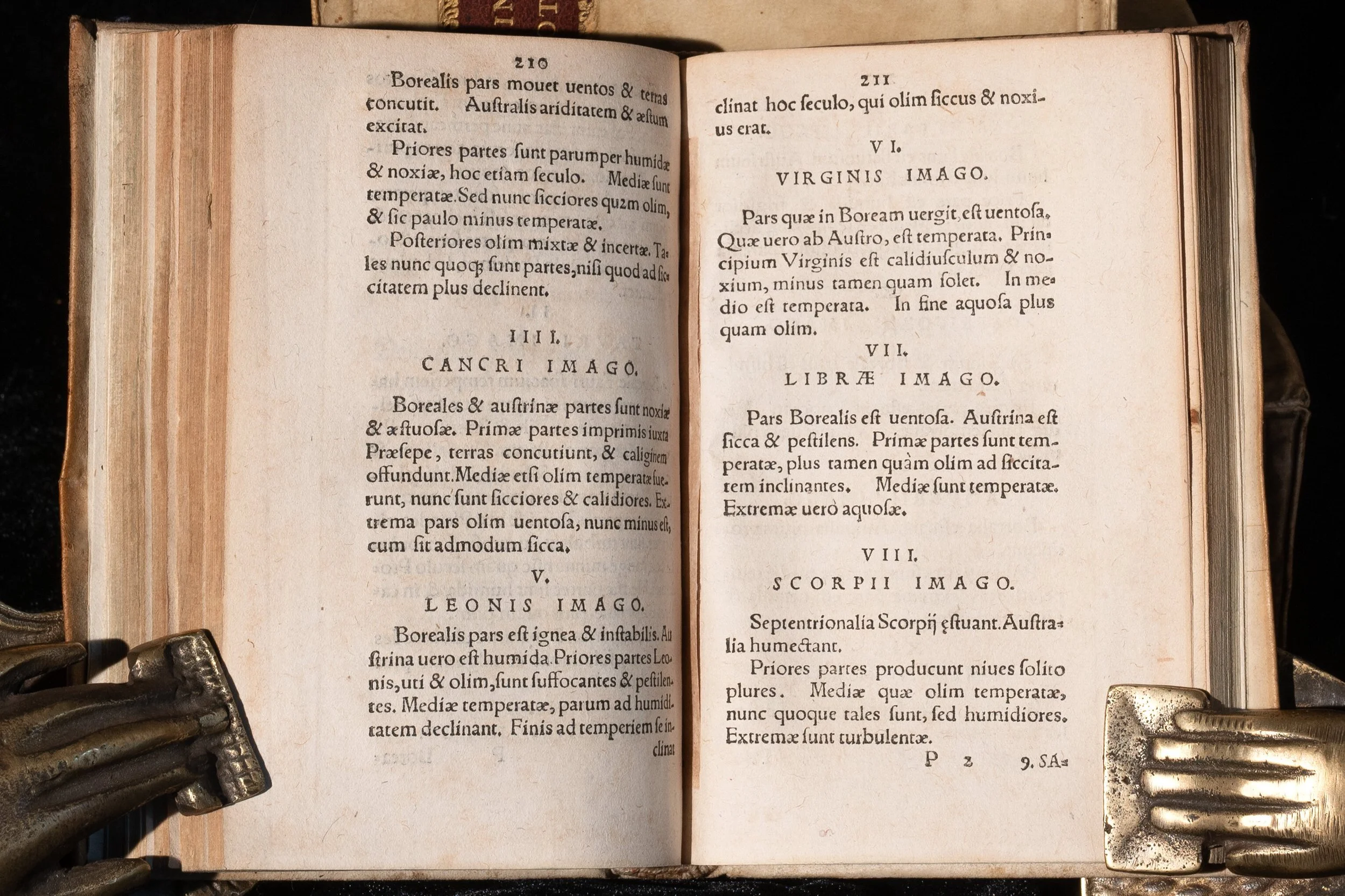 Image 10 of 28
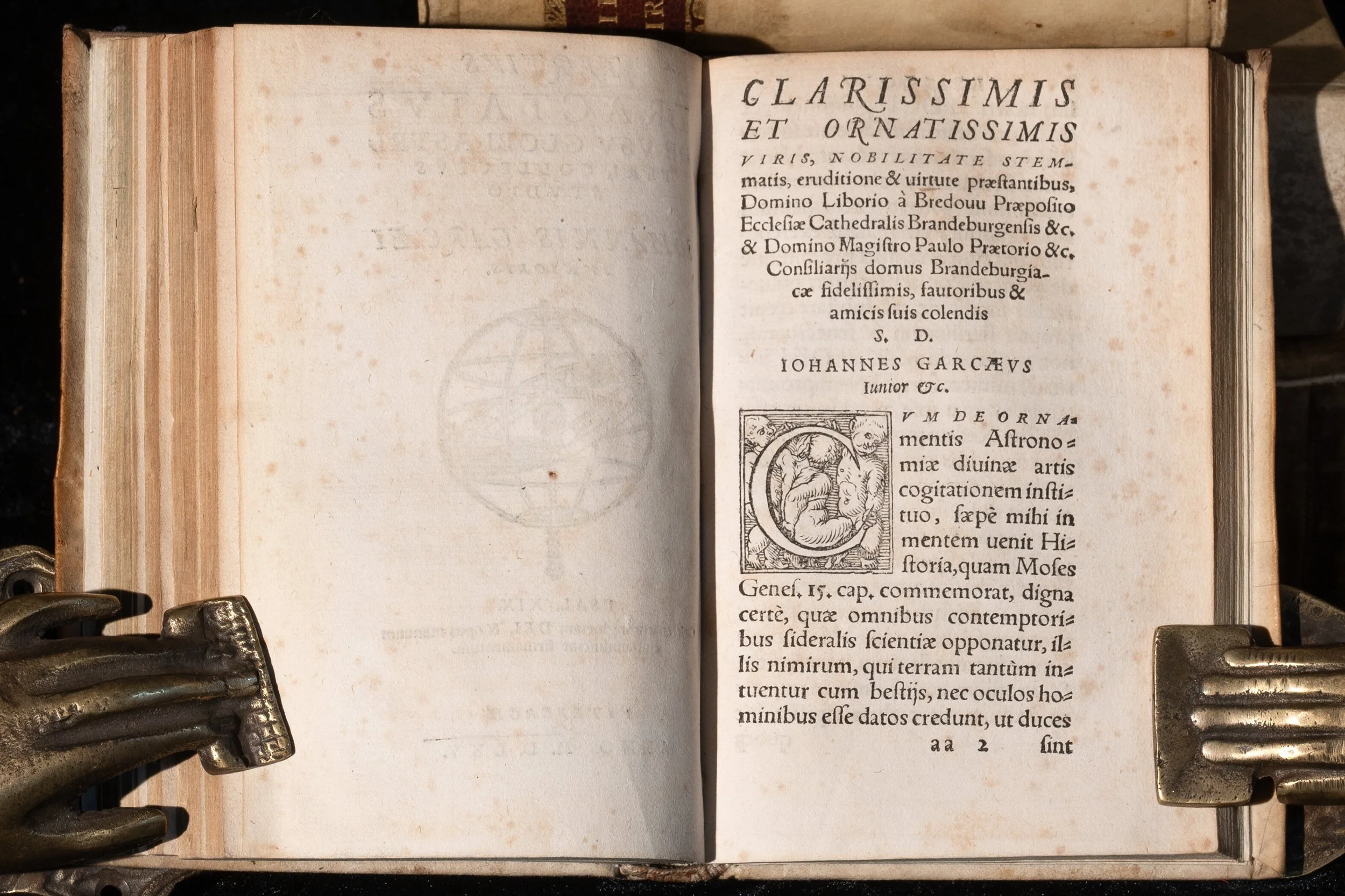 Image 11 of 28
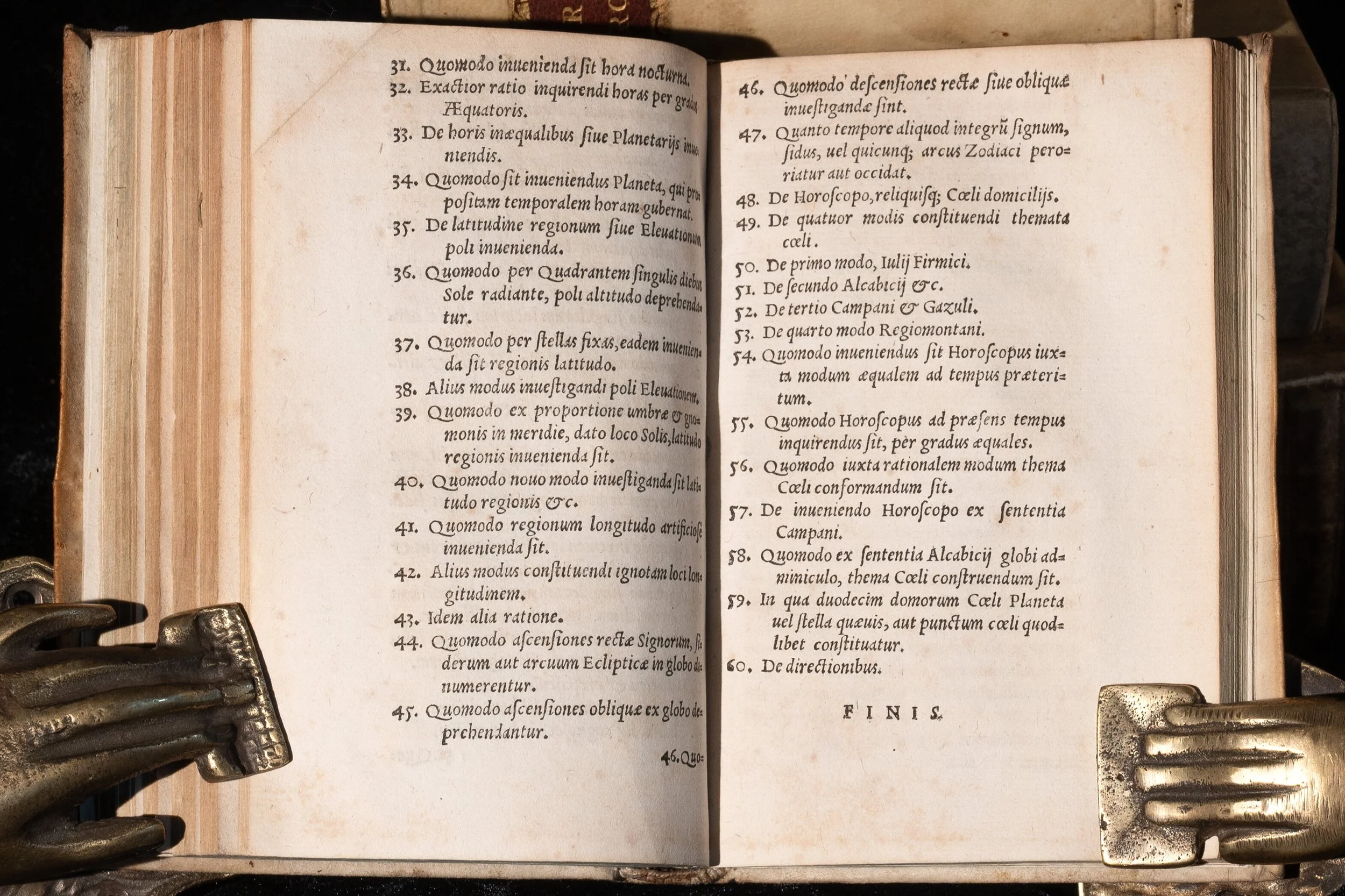 Image 12 of 28
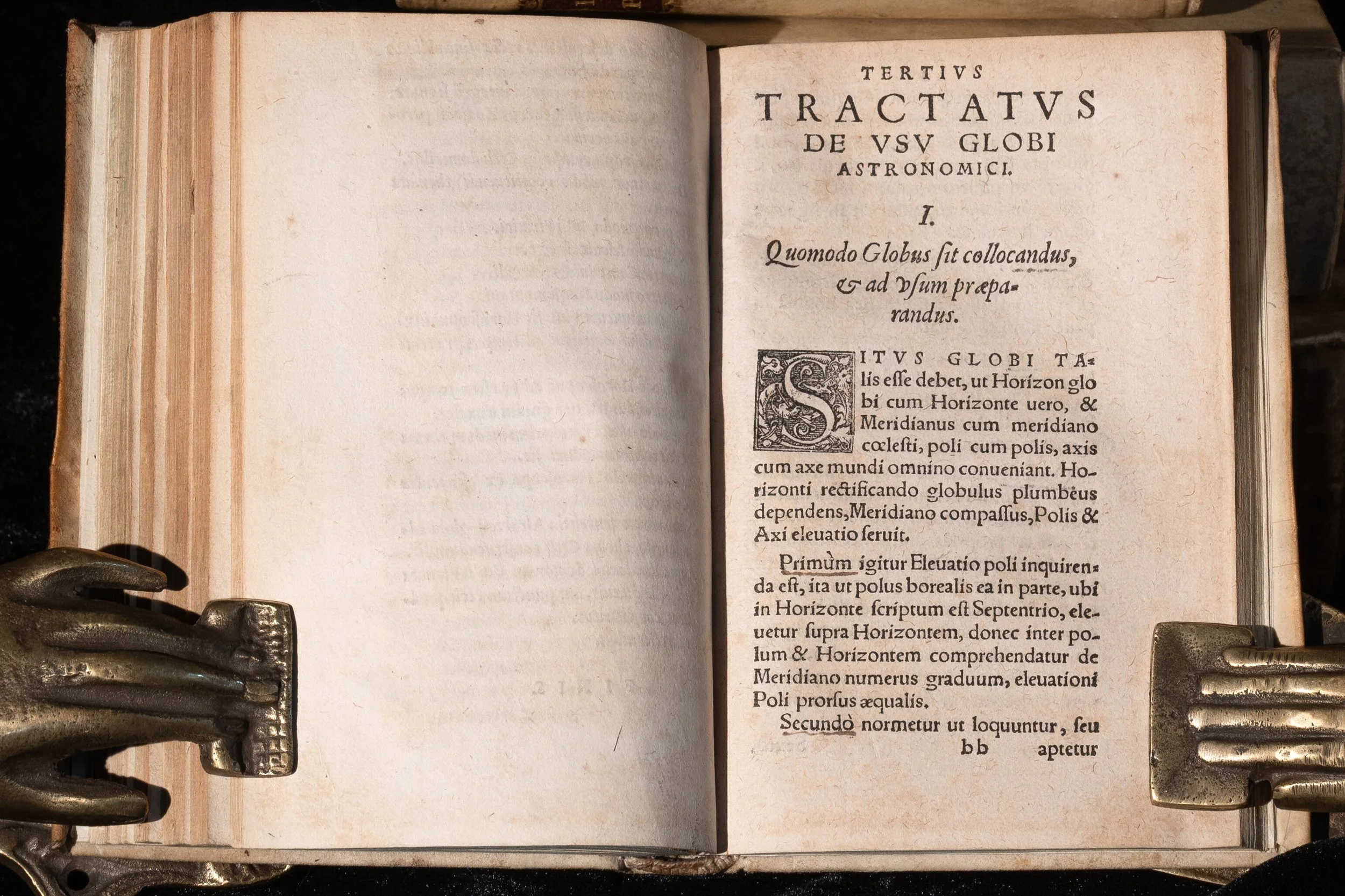 Image 13 of 28
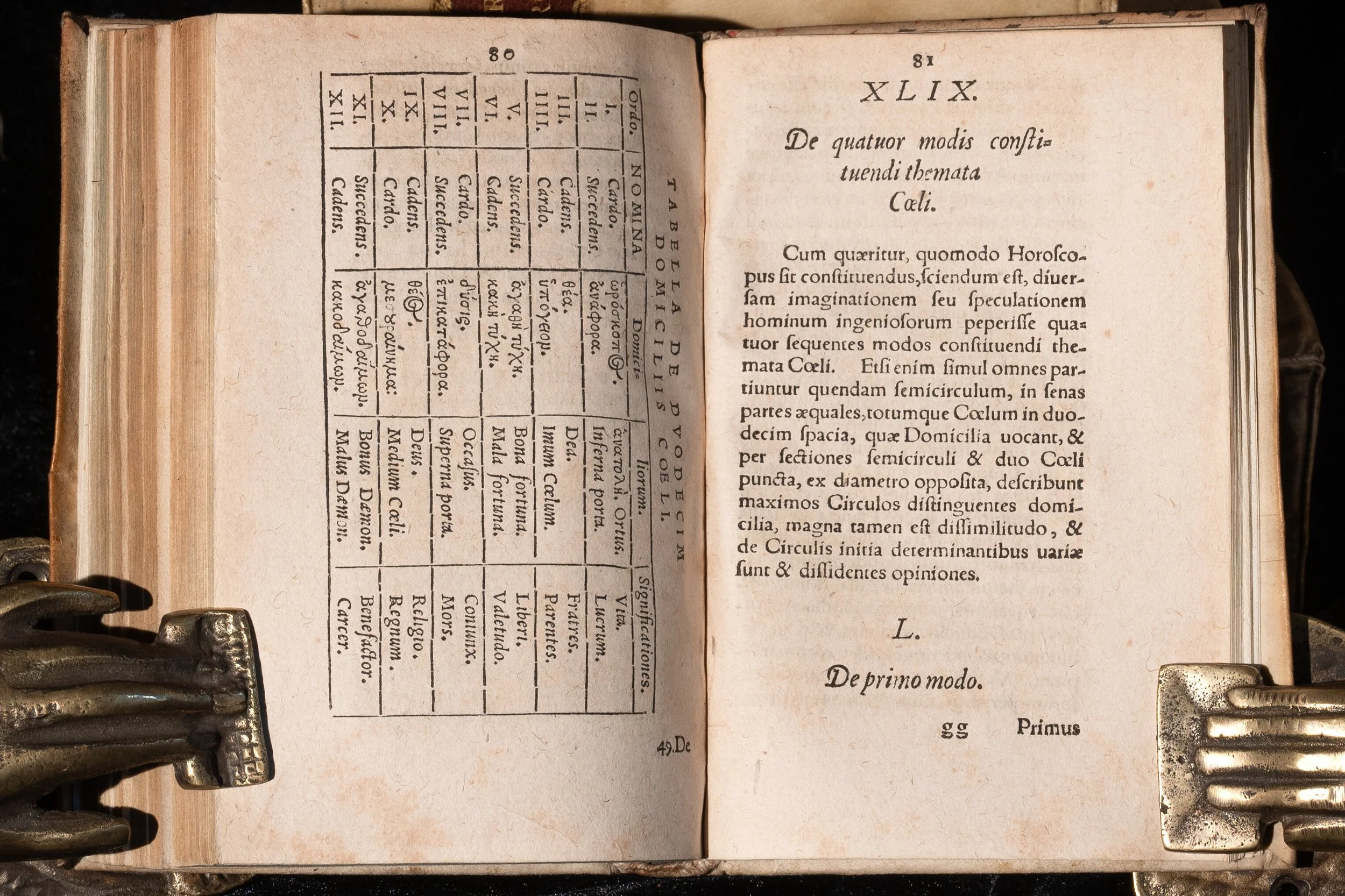 Image 14 of 28
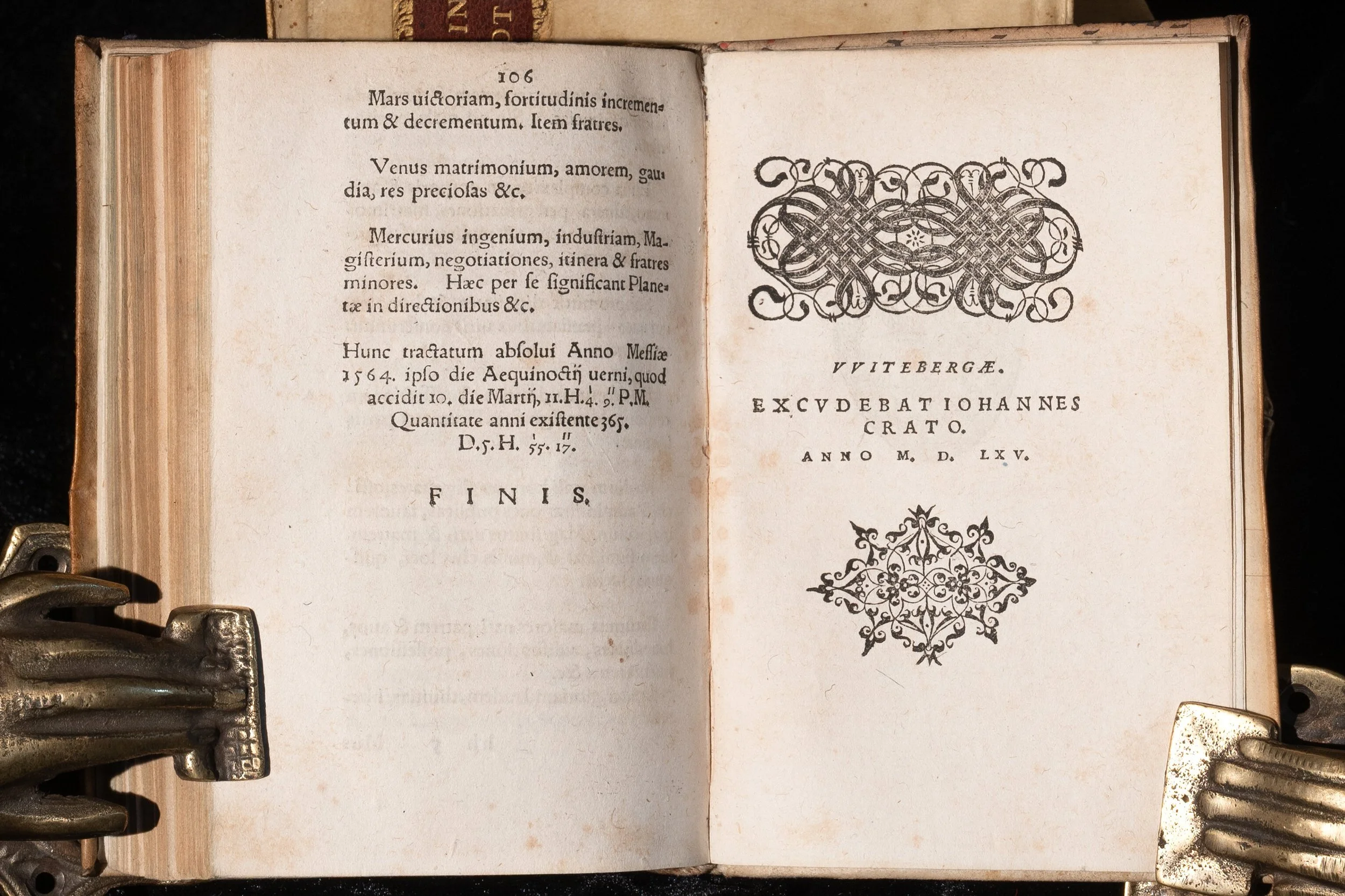 Image 15 of 28
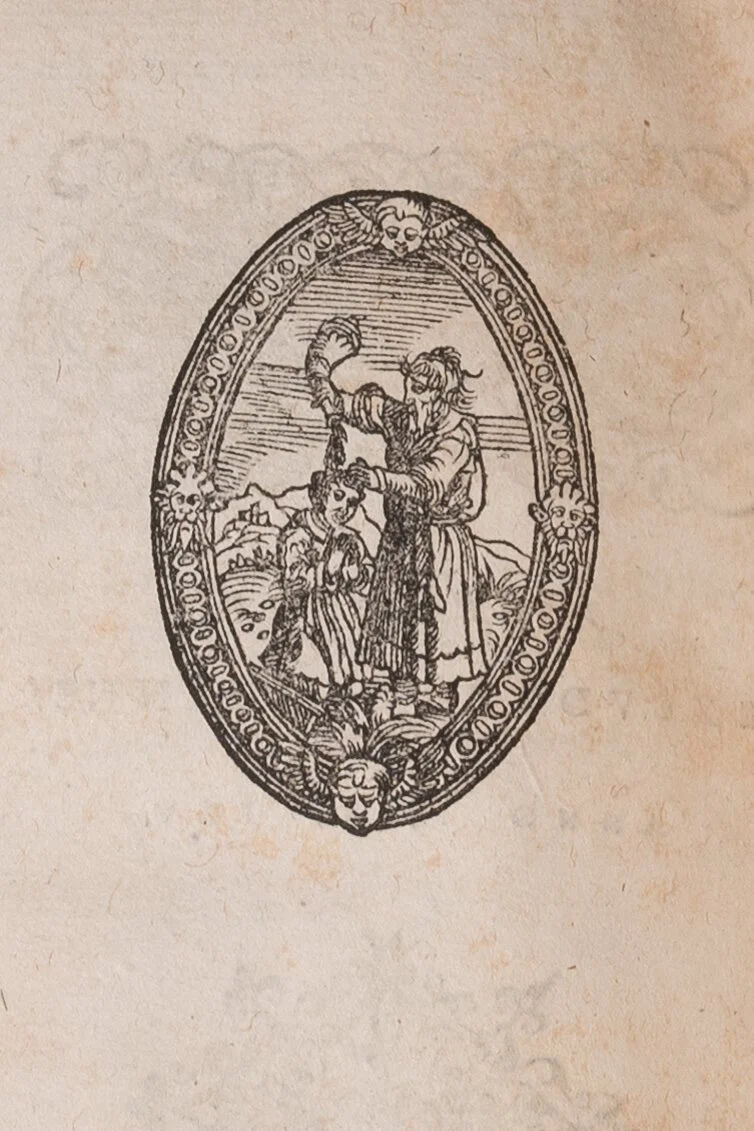 Image 16 of 28
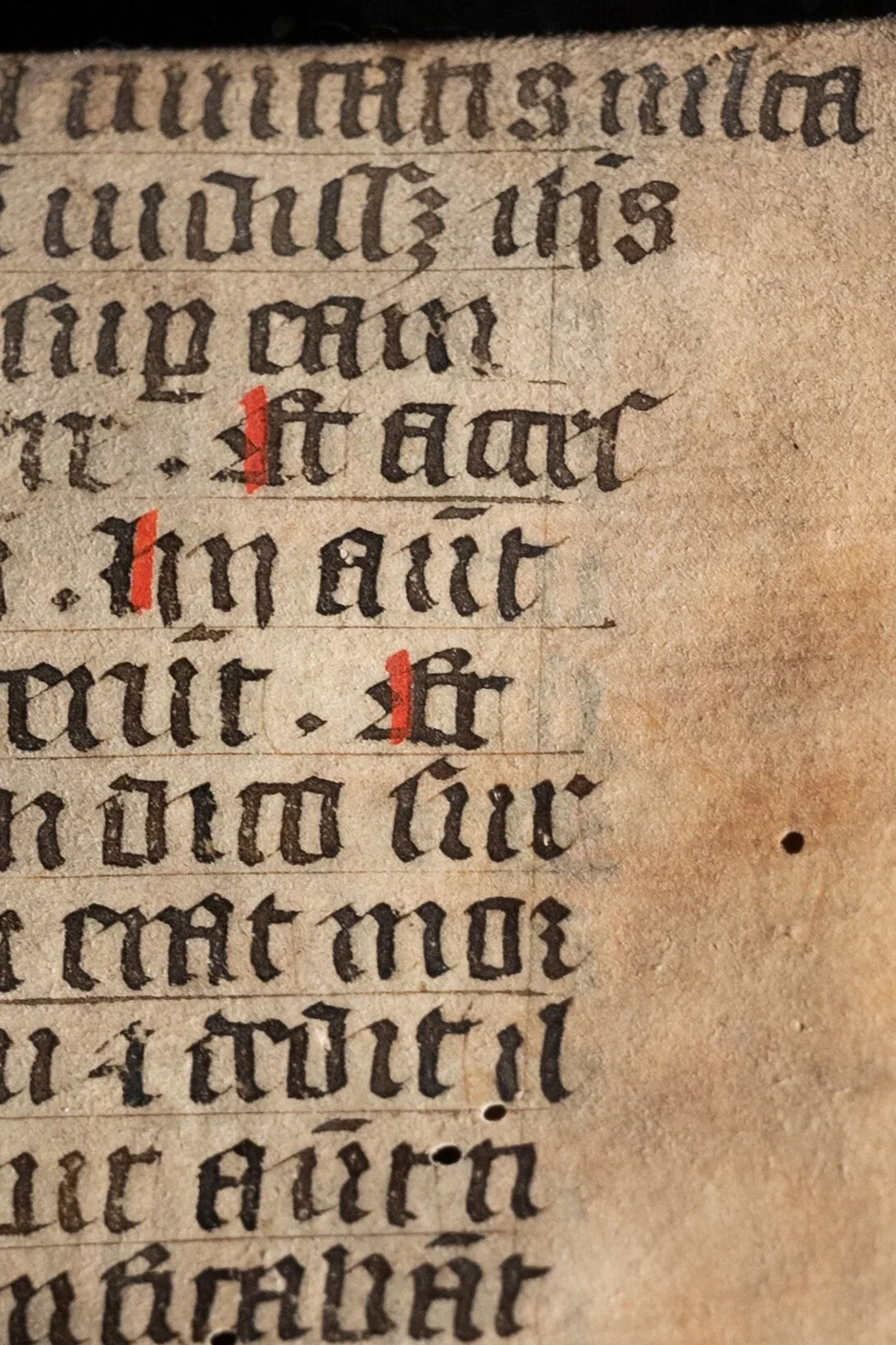 Image 17 of 28
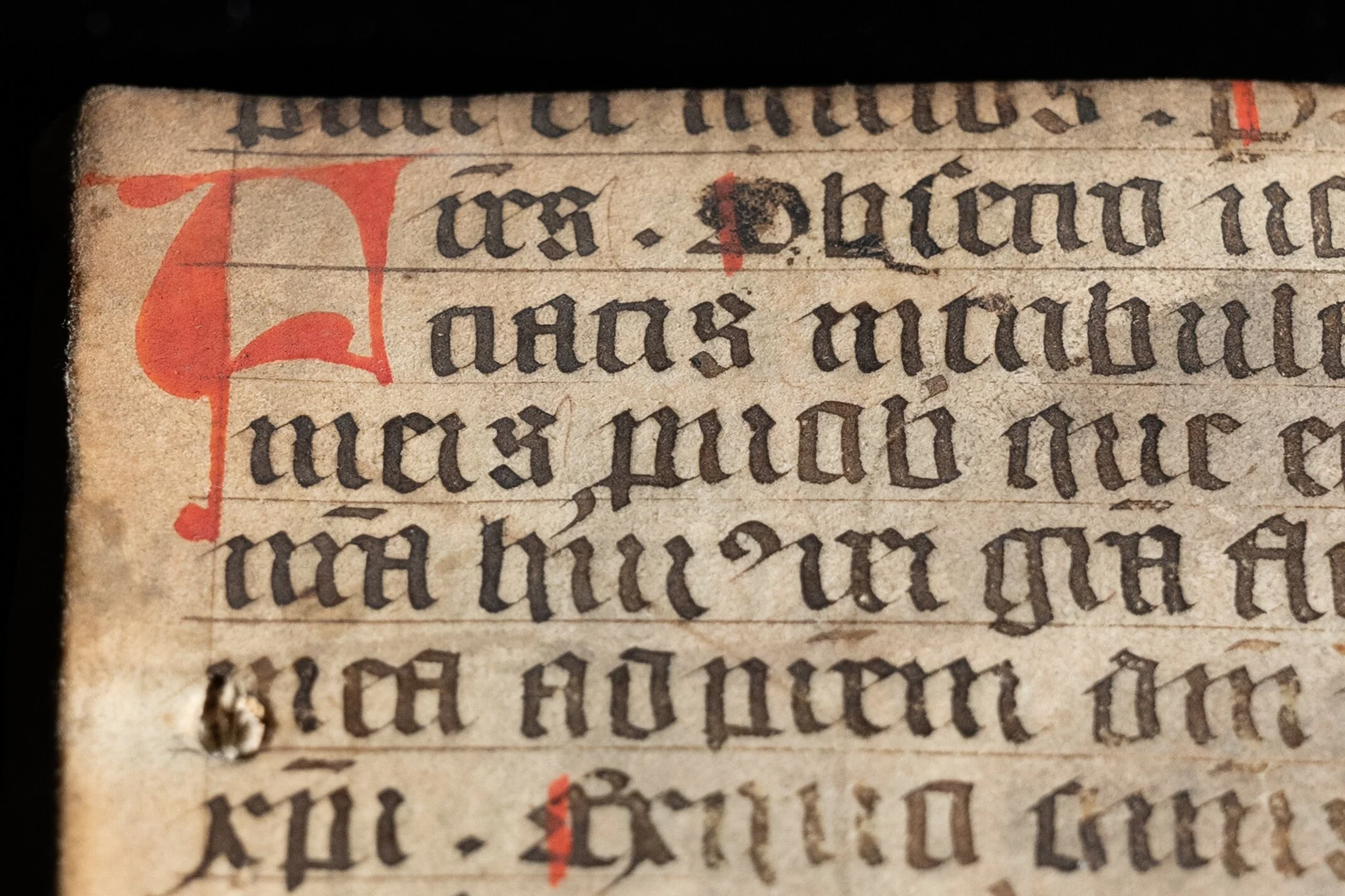 Image 18 of 28
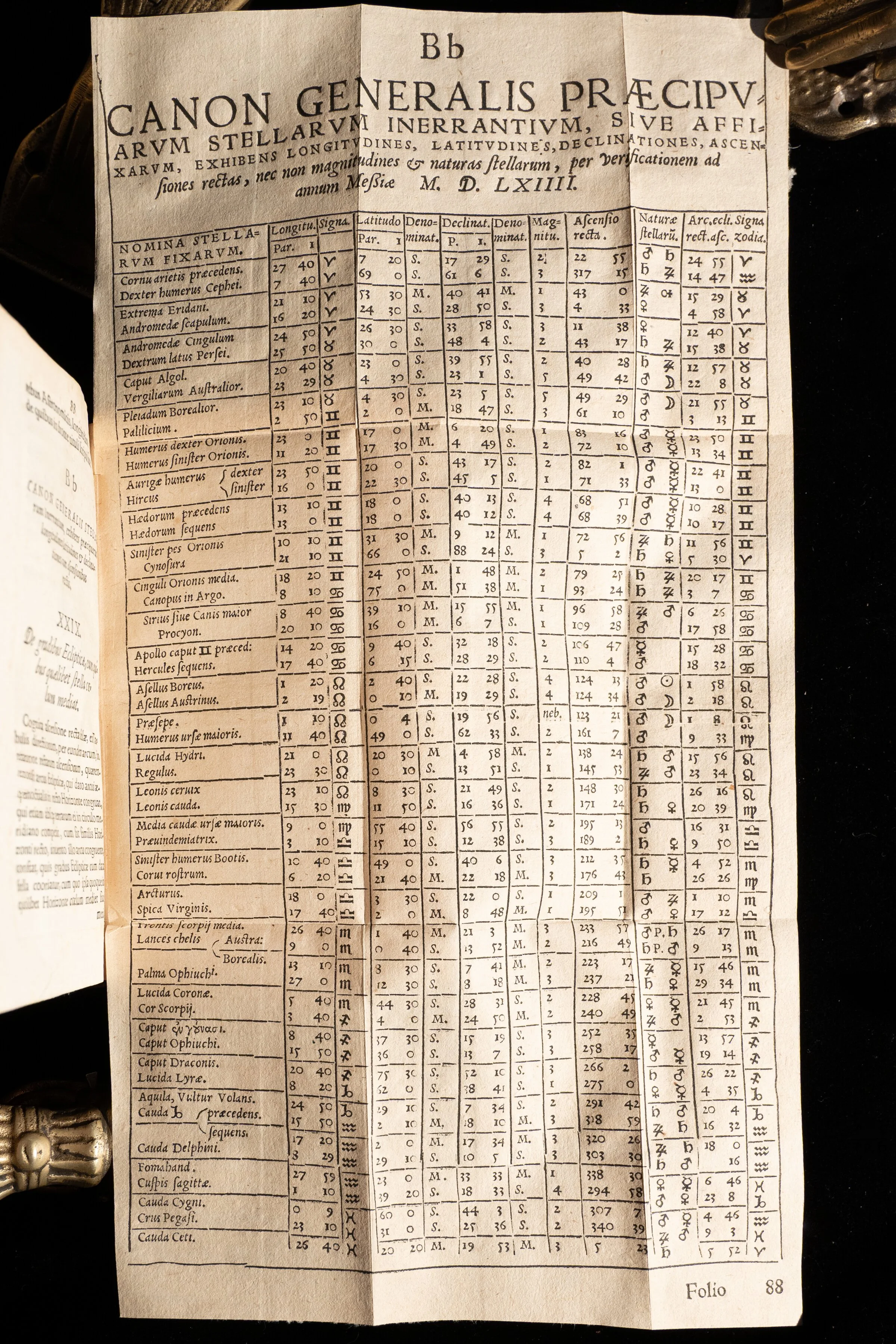 Image 19 of 28
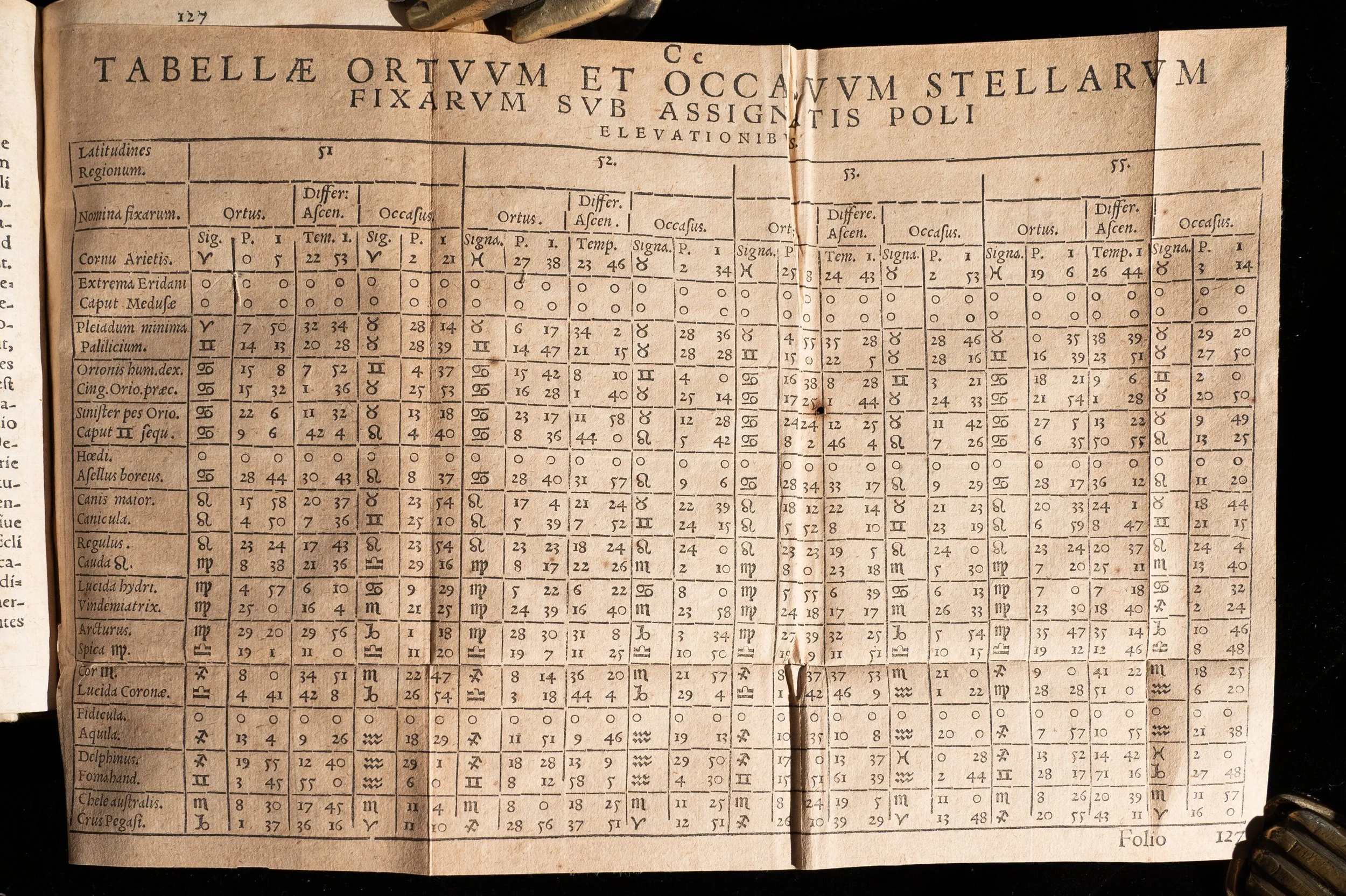 Image 20 of 28
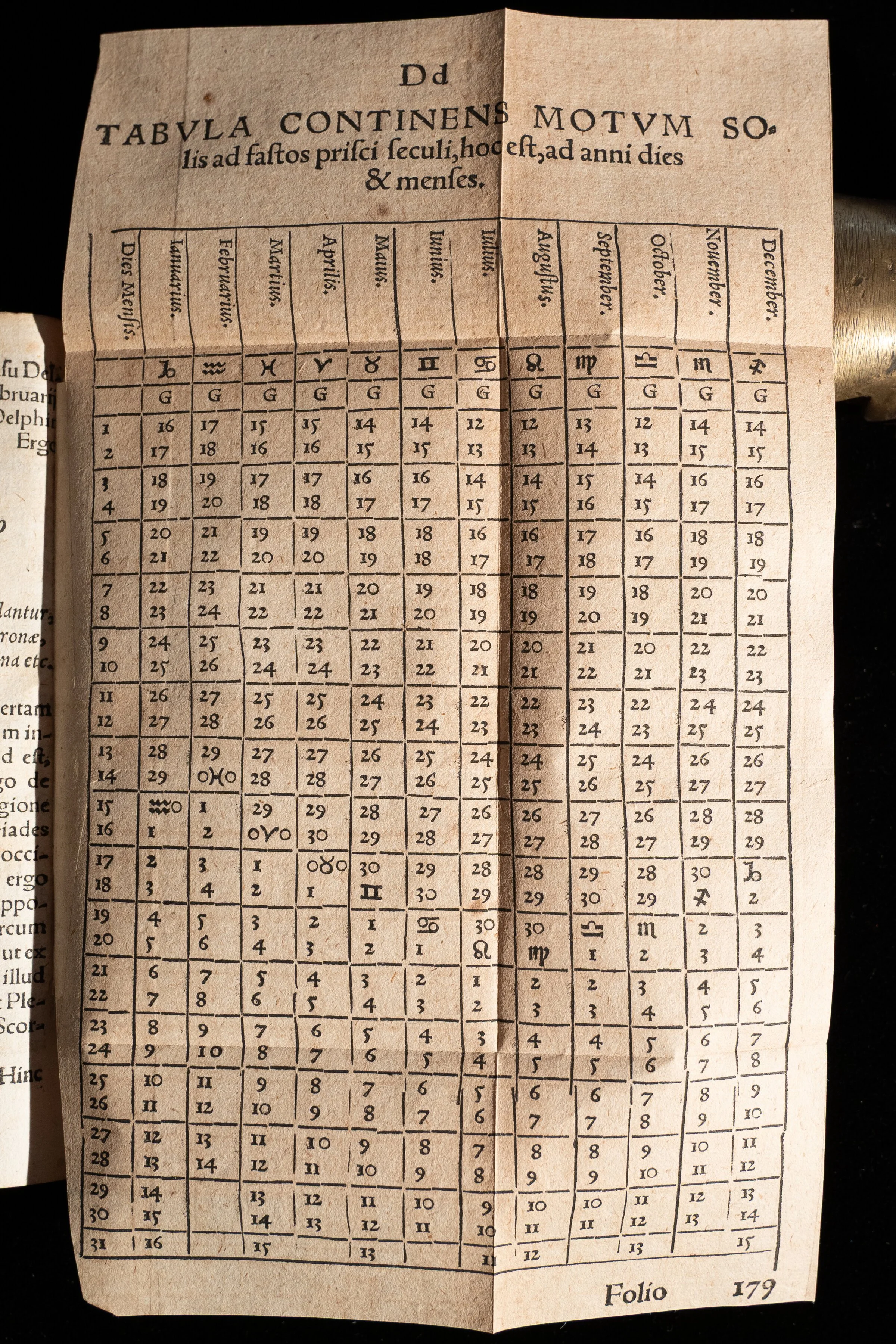 Image 21 of 28
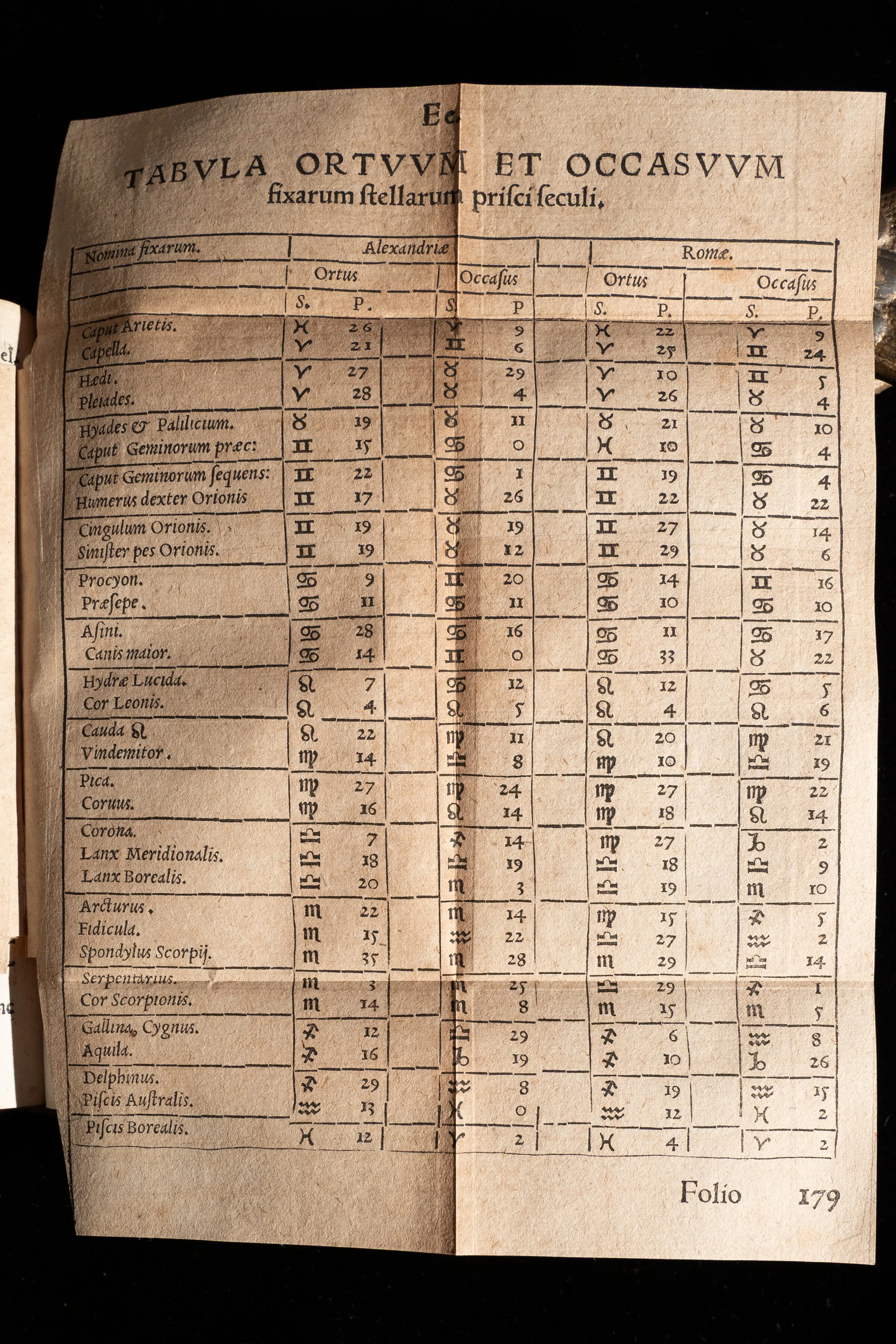 Image 22 of 28
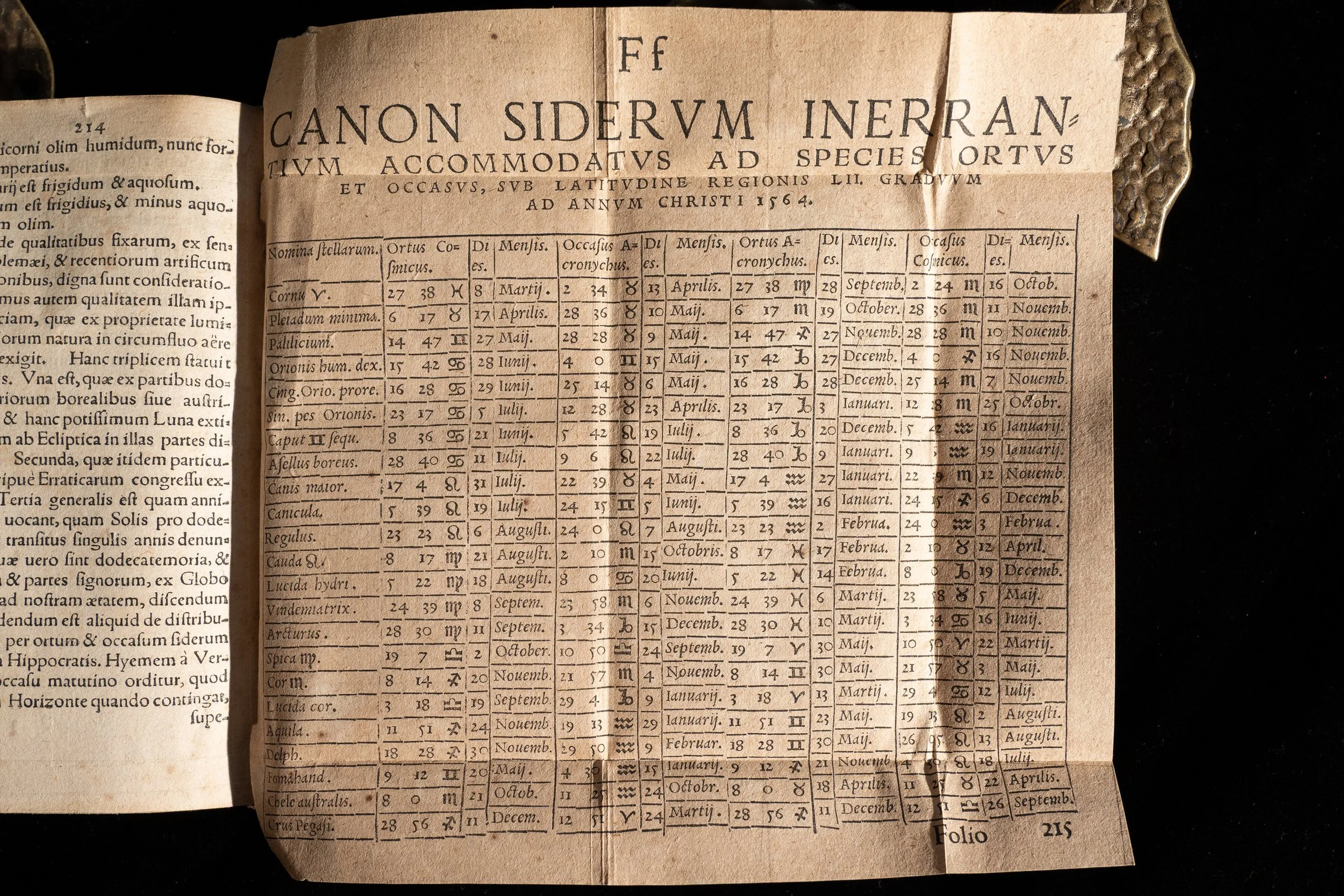 Image 23 of 28
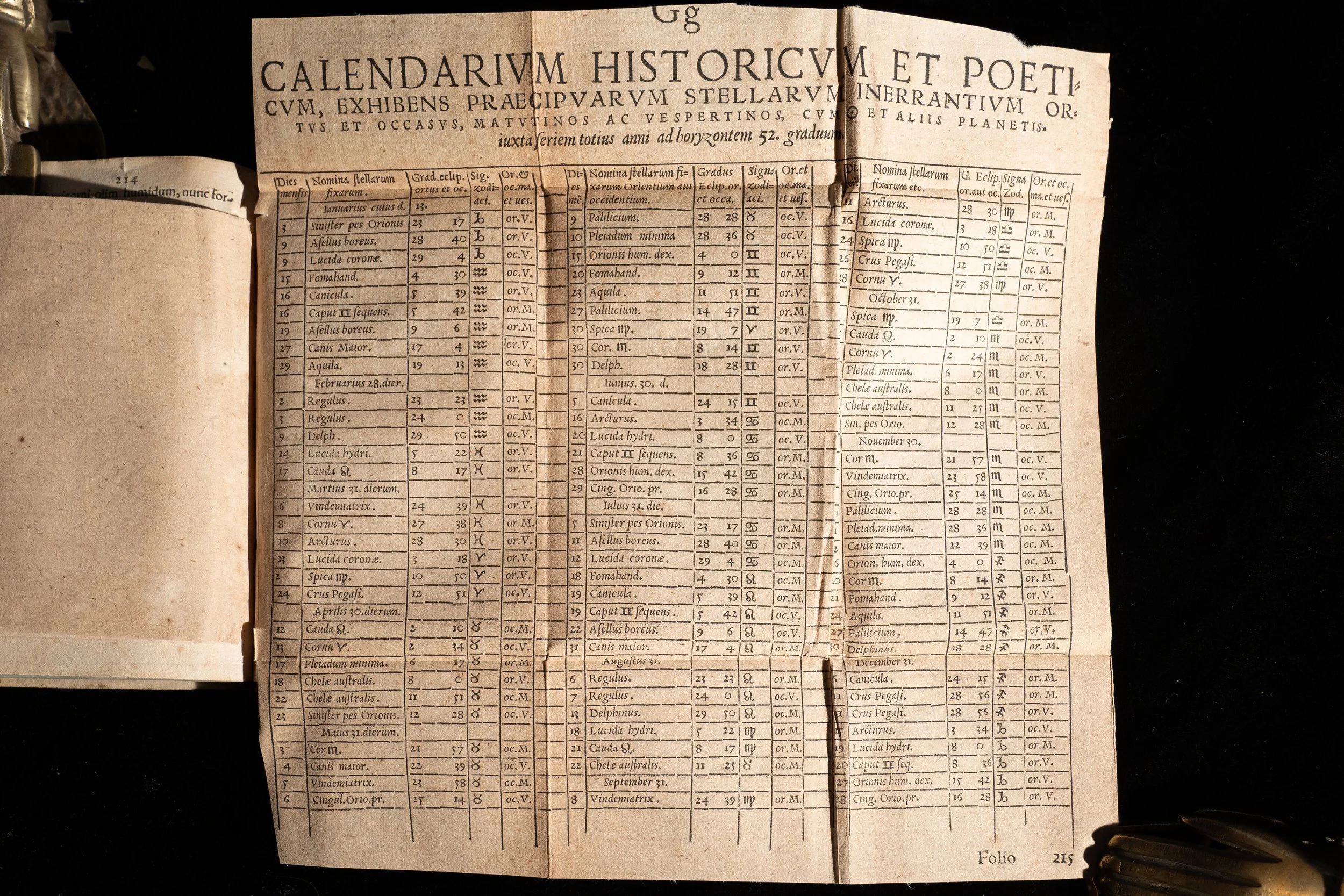 Image 24 of 28
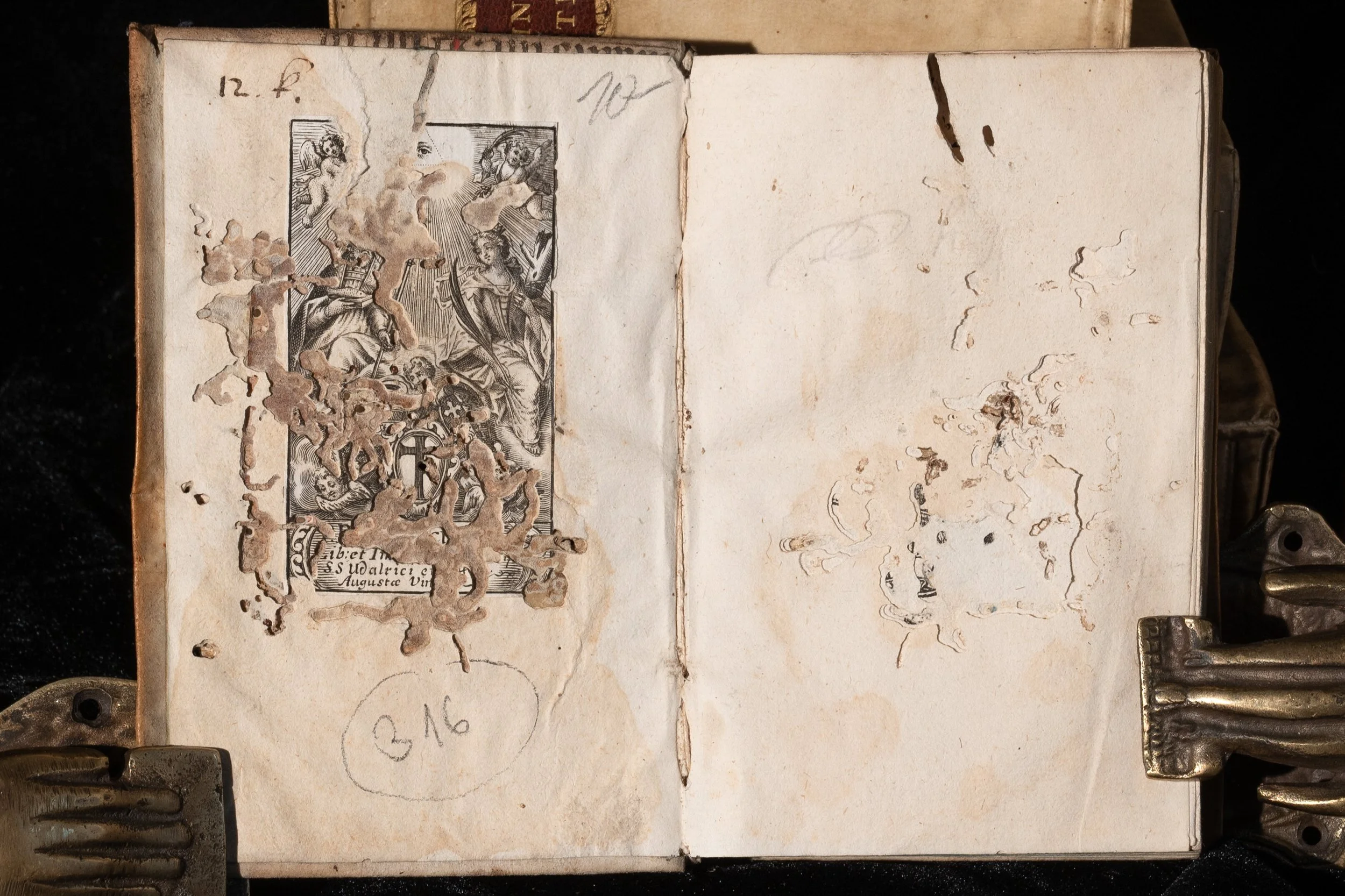 Image 25 of 28
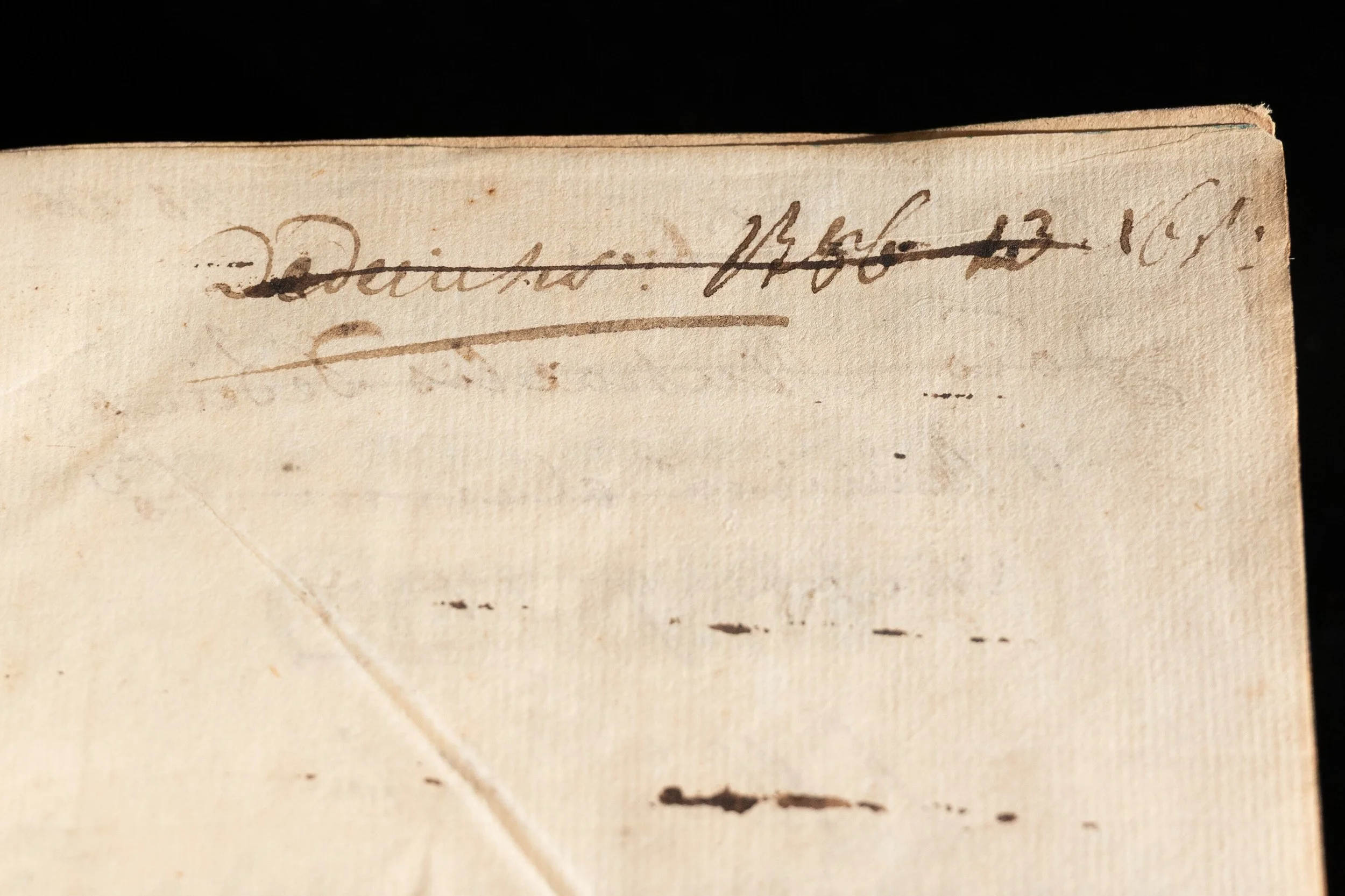 Image 26 of 28
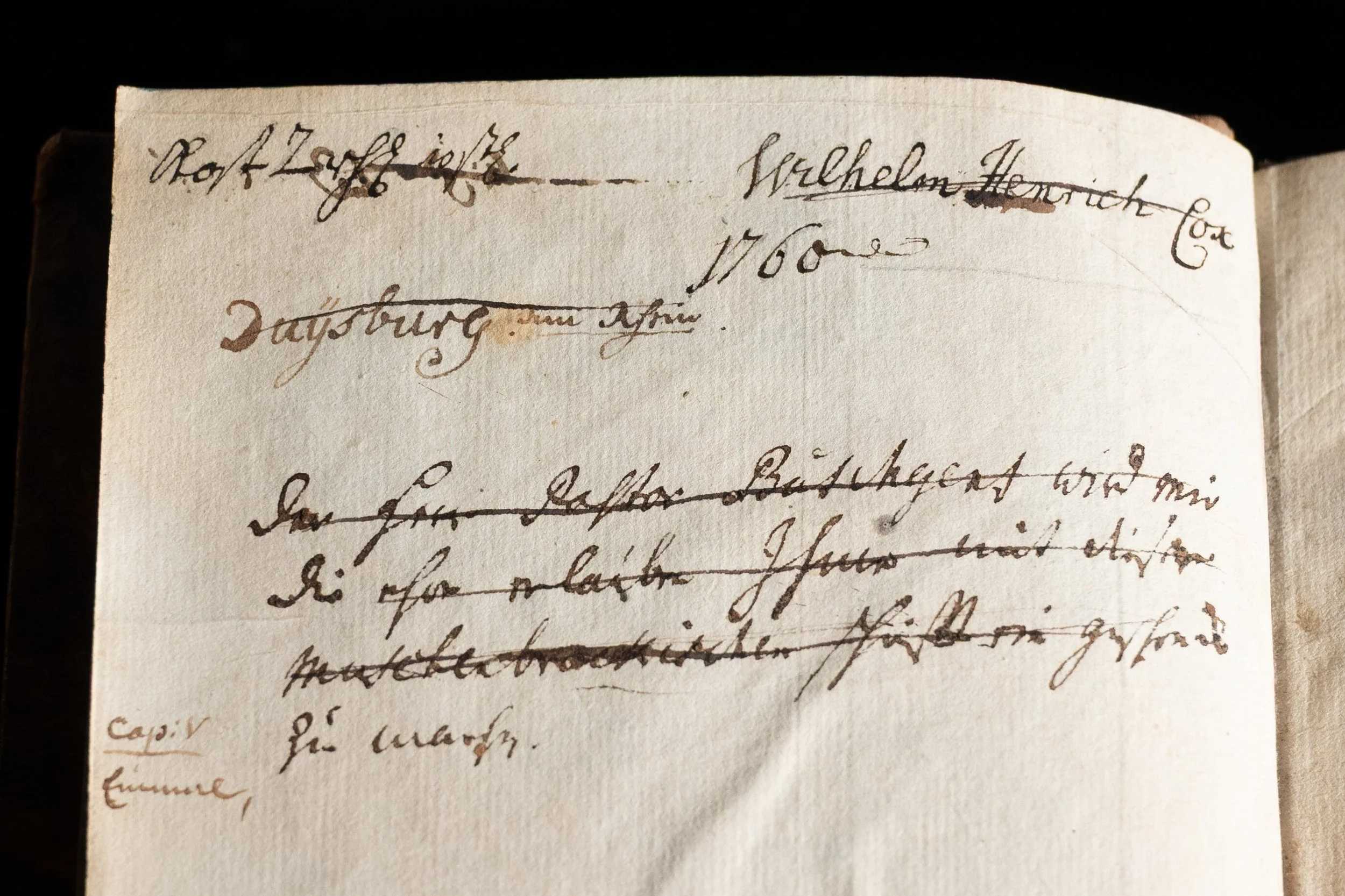 Image 27 of 28
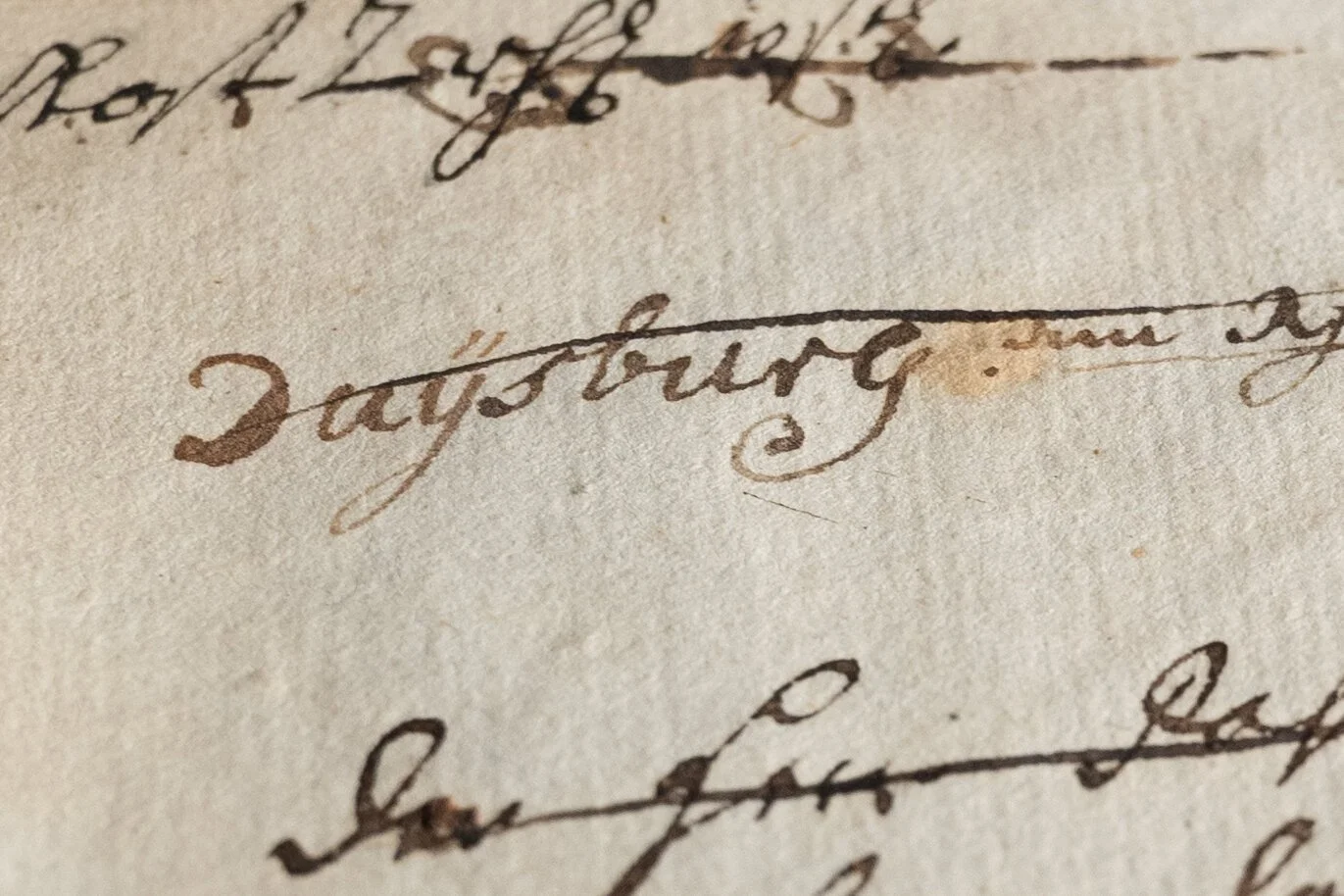 Image 28 of 28