A striking 16th-century copy of the works of Joannes Stobaeus, the 5th-century Macedonian compiler who serves as one of the most vital sources for the reconstruction of the Hermetic Tradition.
While Stobaeus intended his massive Anthologion as an educational manual for his son, preserving extracts from over 500 Greek authors, his greatest legacy for the occultist is the preservation of the "Stobaean Hermetica." Stobaeus is the sole source for nearly thirty excerpts of the writings of Hermes Trismegistus that do not appear in the standard Corpus Hermeticum, including the dialogues between Hermes and Ammon, and the renowned Kore Kosmou (The Virgin of the World): a text fundamental to understanding the Egyptian influence on Neoplatonism.
This edition, printed in Basel by Nicolaus Brylinger, is the Epitome (abridgment) prepared by Conrad Lycosthenes (1518–1561). Lycosthenes was a fascinating figure in his own right: a Protestant encyclopedist best known for his Prodigiorum ac Ostentorum Chronicon (Chronicle of Prodigies and Omens), a key text in the history of teratology and fortean phenomena.
The Censorship: This copy offers a fascinating glimpse into the "Intellectual War" of the 16th century. Because Lycosthenes was a Protestant (and the probable brother-in-law of Zwingli), his name was placed on the Catholic Index of Prohibited Books. However, the text of Stobaeus was considered too valuable to destroy. Therefore, as seen on this title page, Catholic owners (likely the Jesuit College noted in the inscription) would systematically obliterate the name of the "heretical" editor while preserving the "pagan" wisdom of the text itself.
Condition: Very Good. The contemporary binding is robust and visually appealing, with the manuscript spine title remaining dark and legible. The text block is crisp. The title page bears the heavy period ink censorship mentioned above, which is a desirable feature for collectors of "Prohibited Books" and Reformation history.
Stobaeus, Ioannes. Epitome Sententiarum, sive Locorum Communium. (Epitome of Sentences, or Commonplaces). Basel: Nicolaus Brylinger, 1557. Format: Small 8vo (Octavo). Collation: (16), 637, (3) pp. Binding: Contemporary full pigskin (or vellum) over boards, featuring a hand-lettered manuscript title to the spine ("Ioan: Stobaei | Epitome | Sententiarum"). Provenance:
Title page features the inscription of a Jesuit College ("Collegii..."), typical of the Counter-Reformation era.
The name of the editor (Conrad Lycosthenes) has been heavily censored (crossed out) in ink on the title page and in the preface.
Ownership signature of "Petri Monforti" (?).
A striking 16th-century copy of the works of Joannes Stobaeus, the 5th-century Macedonian compiler who serves as one of the most vital sources for the reconstruction of the Hermetic Tradition.
While Stobaeus intended his massive Anthologion as an educational manual for his son, preserving extracts from over 500 Greek authors, his greatest legacy for the occultist is the preservation of the "Stobaean Hermetica." Stobaeus is the sole source for nearly thirty excerpts of the writings of Hermes Trismegistus that do not appear in the standard Corpus Hermeticum, including the dialogues between Hermes and Ammon, and the renowned Kore Kosmou (The Virgin of the World): a text fundamental to understanding the Egyptian influence on Neoplatonism.
This edition, printed in Basel by Nicolaus Brylinger, is the Epitome (abridgment) prepared by Conrad Lycosthenes (1518–1561). Lycosthenes was a fascinating figure in his own right: a Protestant encyclopedist best known for his Prodigiorum ac Ostentorum Chronicon (Chronicle of Prodigies and Omens), a key text in the history of teratology and fortean phenomena.
The Censorship: This copy offers a fascinating glimpse into the "Intellectual War" of the 16th century. Because Lycosthenes was a Protestant (and the probable brother-in-law of Zwingli), his name was placed on the Catholic Index of Prohibited Books. However, the text of Stobaeus was considered too valuable to destroy. Therefore, as seen on this title page, Catholic owners (likely the Jesuit College noted in the inscription) would systematically obliterate the name of the "heretical" editor while preserving the "pagan" wisdom of the text itself.
Condition: Very Good. The contemporary binding is robust and visually appealing, with the manuscript spine title remaining dark and legible. The text block is crisp. The title page bears the heavy period ink censorship mentioned above, which is a desirable feature for collectors of "Prohibited Books" and Reformation history.
Stobaeus, Ioannes. Epitome Sententiarum, sive Locorum Communium. (Epitome of Sentences, or Commonplaces). Basel: Nicolaus Brylinger, 1557. Format: Small 8vo (Octavo). Collation: (16), 637, (3) pp. Binding: Contemporary full pigskin (or vellum) over boards, featuring a hand-lettered manuscript title to the spine ("Ioan: Stobaei | Epitome | Sententiarum"). Provenance:
Title page features the inscription of a Jesuit College ("Collegii..."), typical of the Counter-Reformation era.
The name of the editor (Conrad Lycosthenes) has been heavily censored (crossed out) in ink on the title page and in the preface.
Ownership signature of "Petri Monforti" (?).

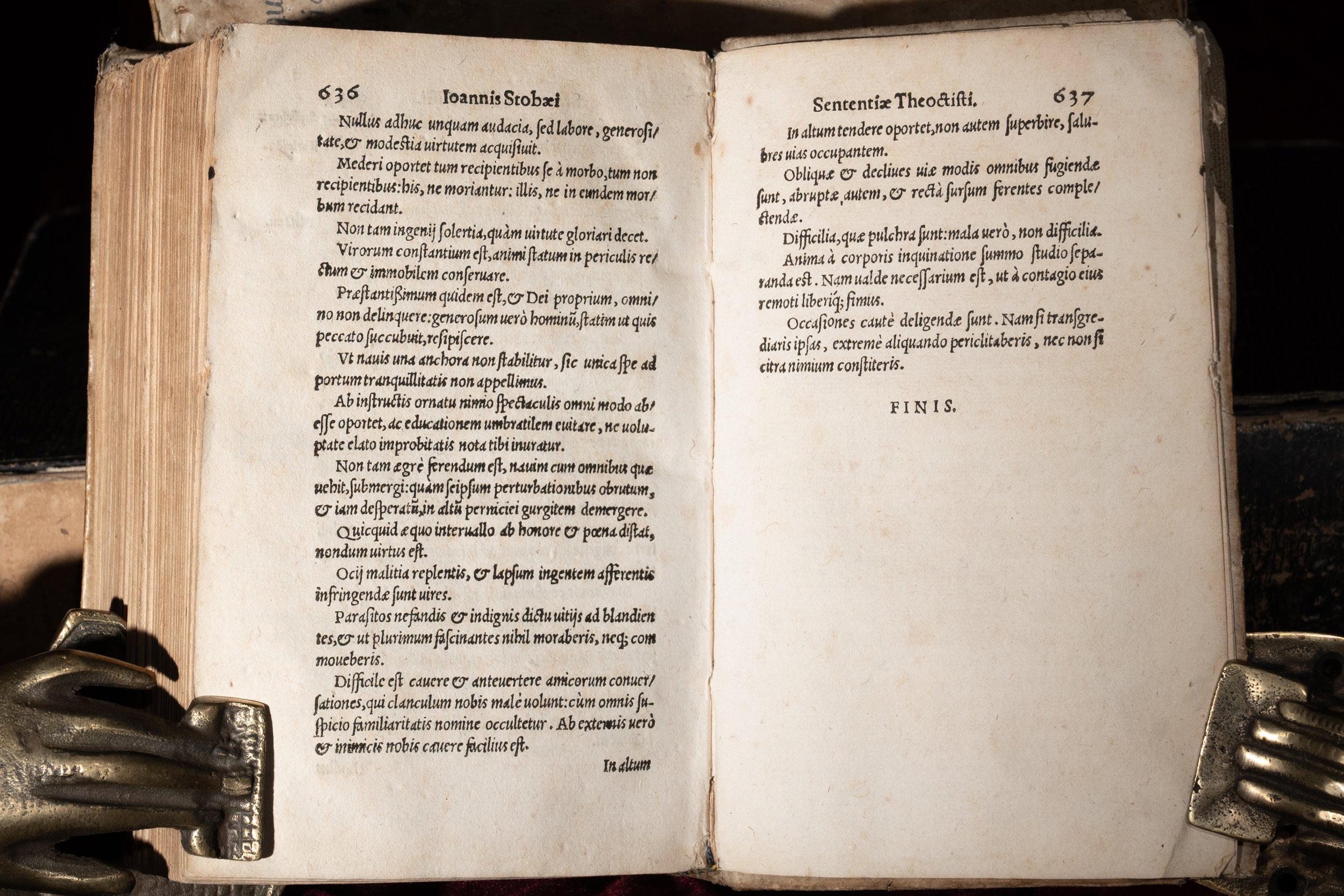 Image 1 of 8
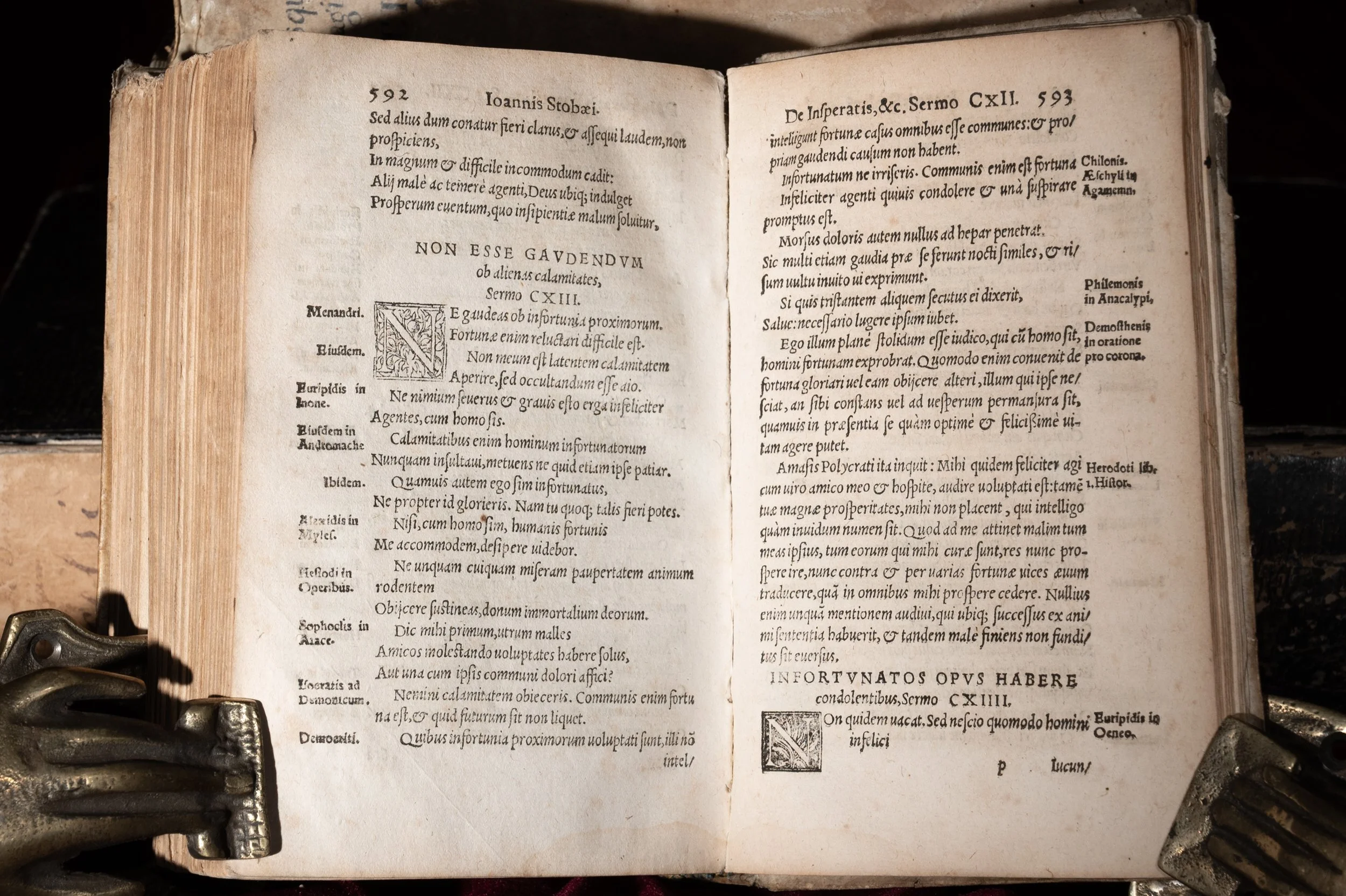 Image 2 of 8
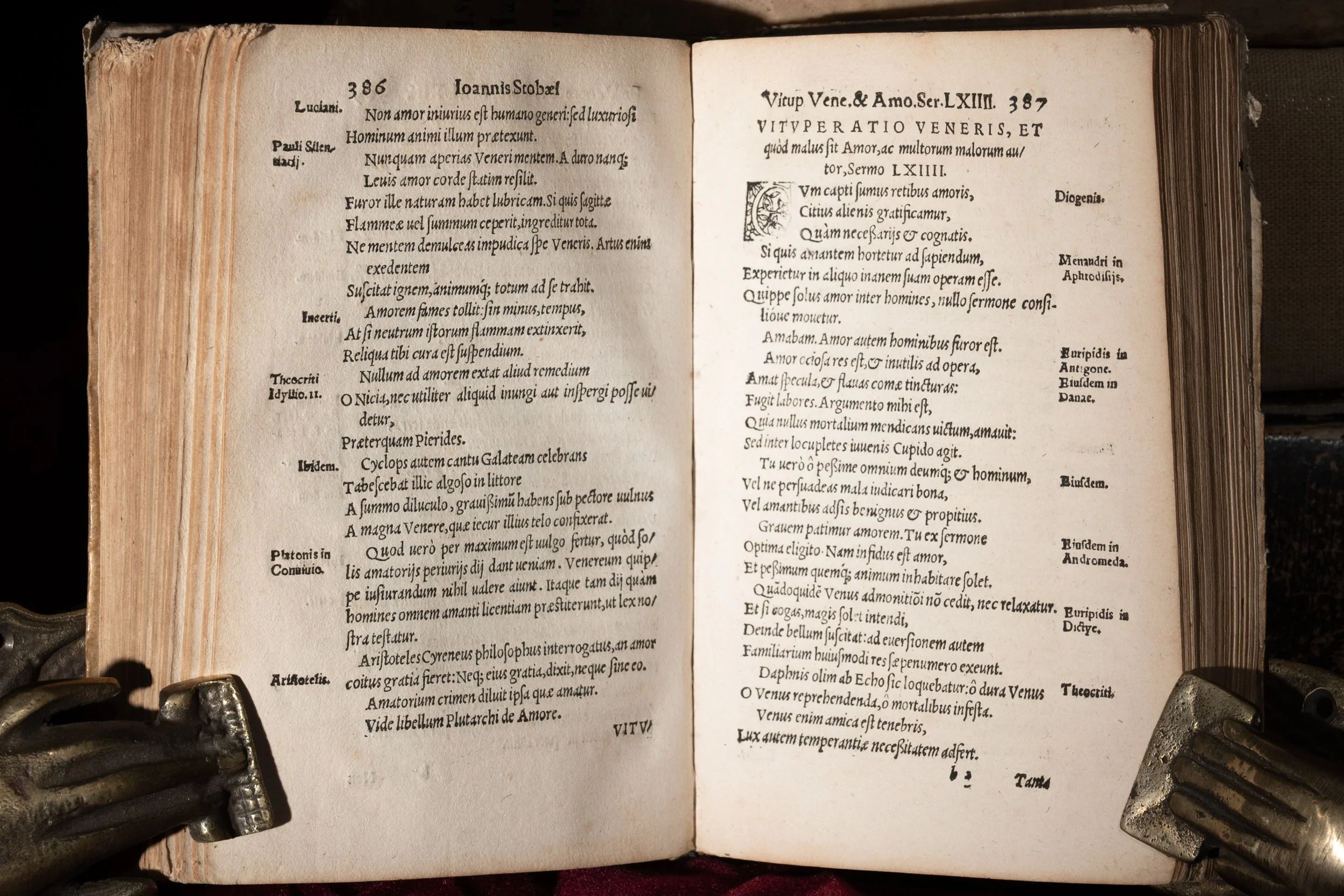 Image 3 of 8
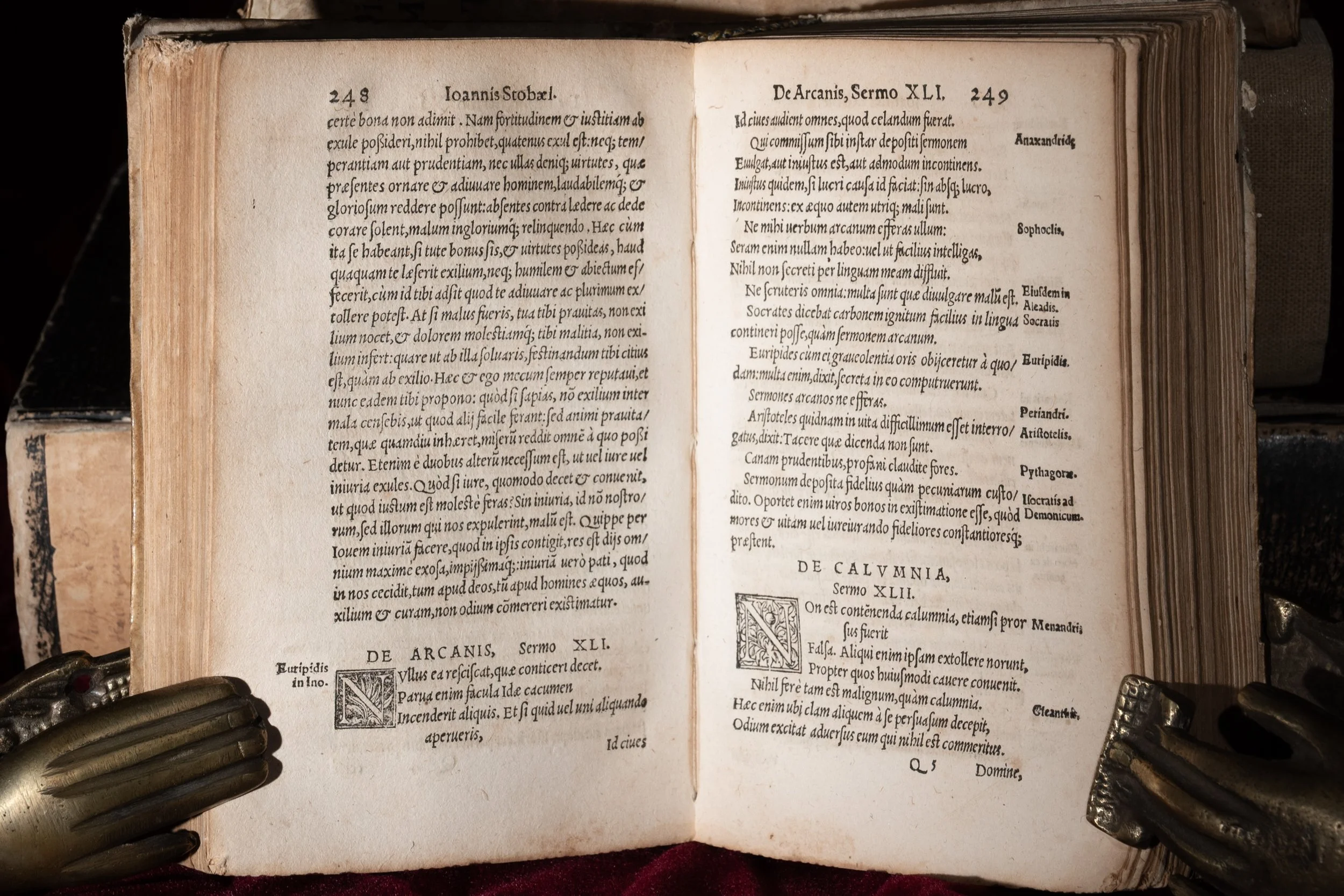 Image 4 of 8
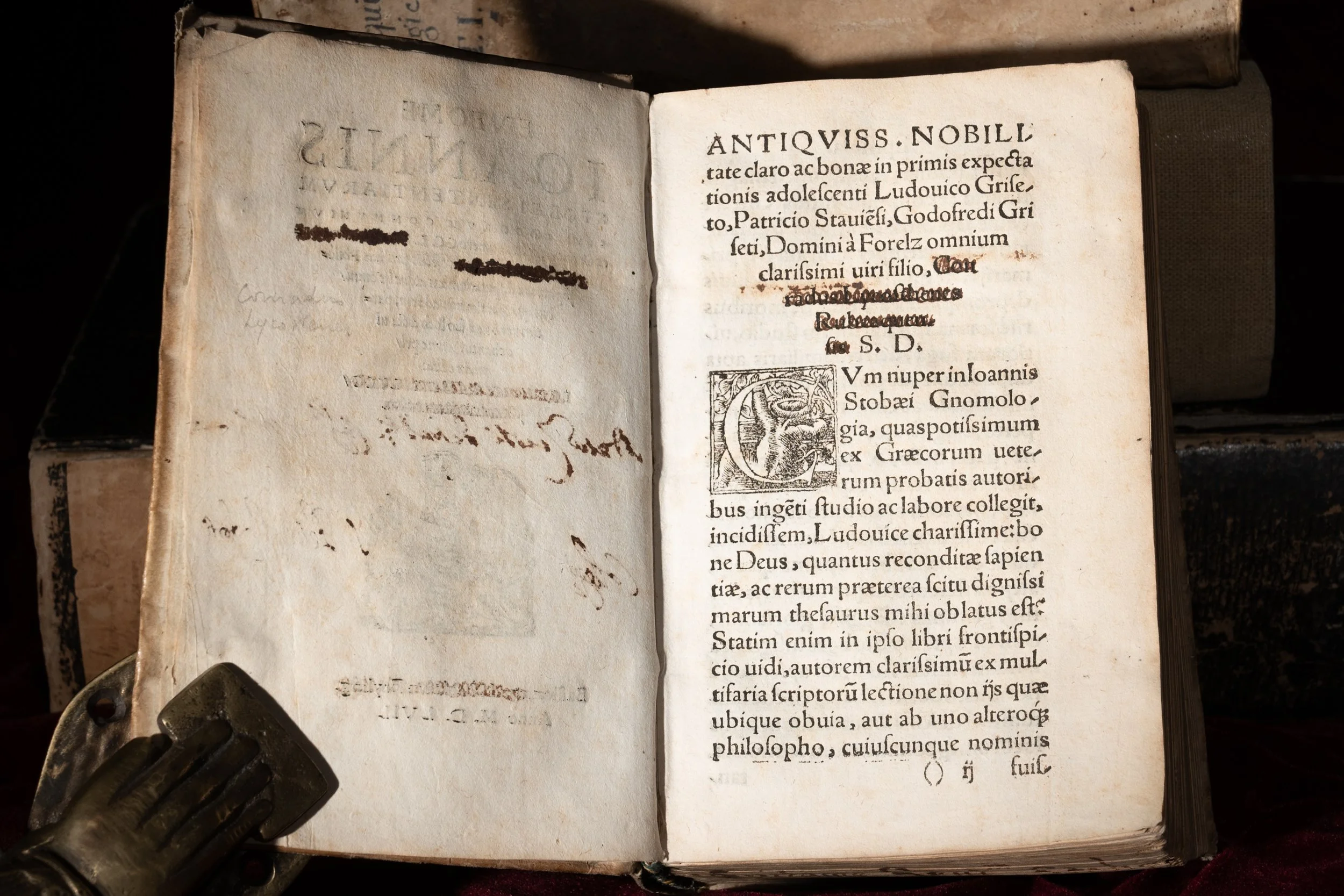 Image 5 of 8
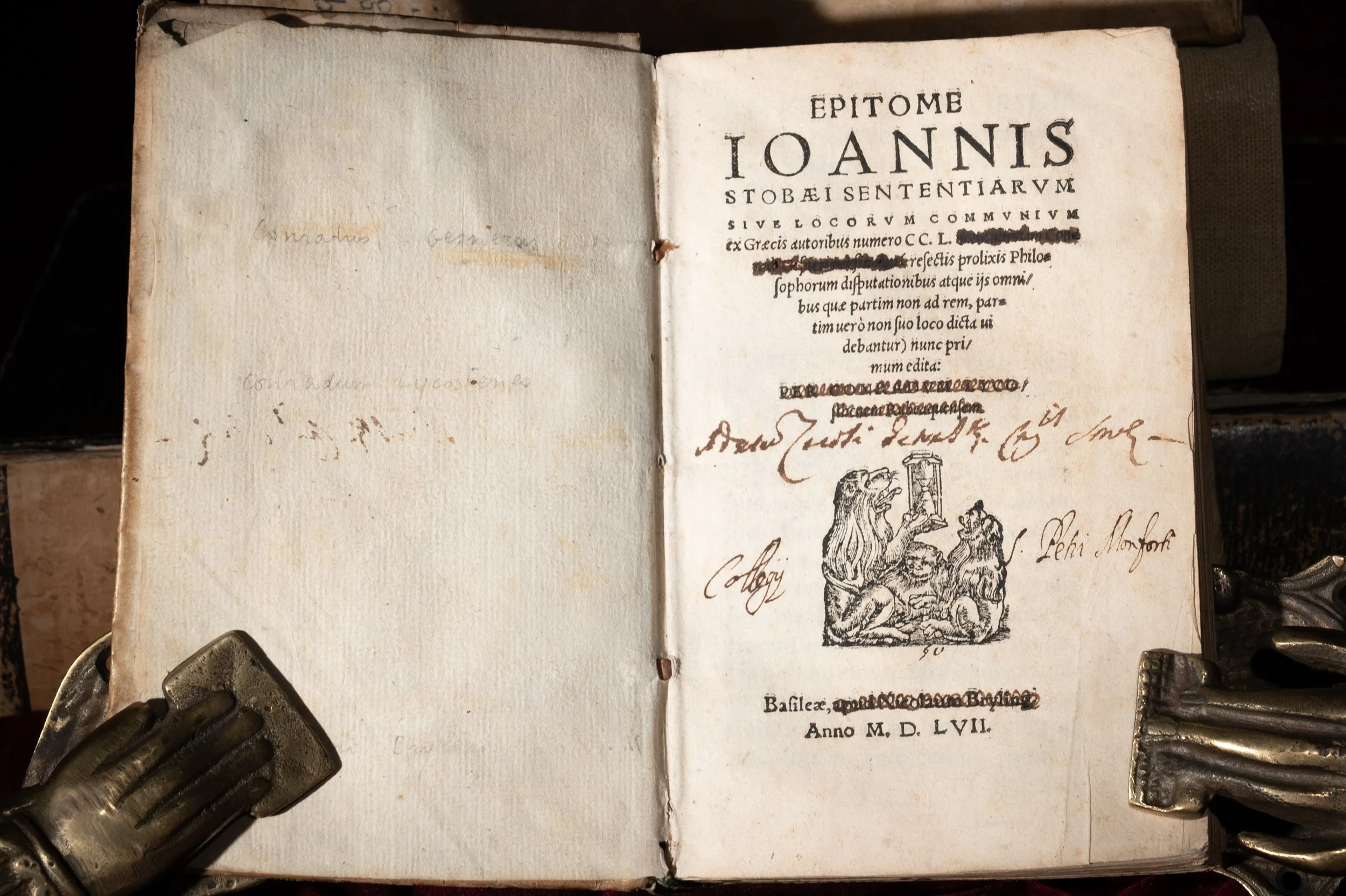 Image 6 of 8
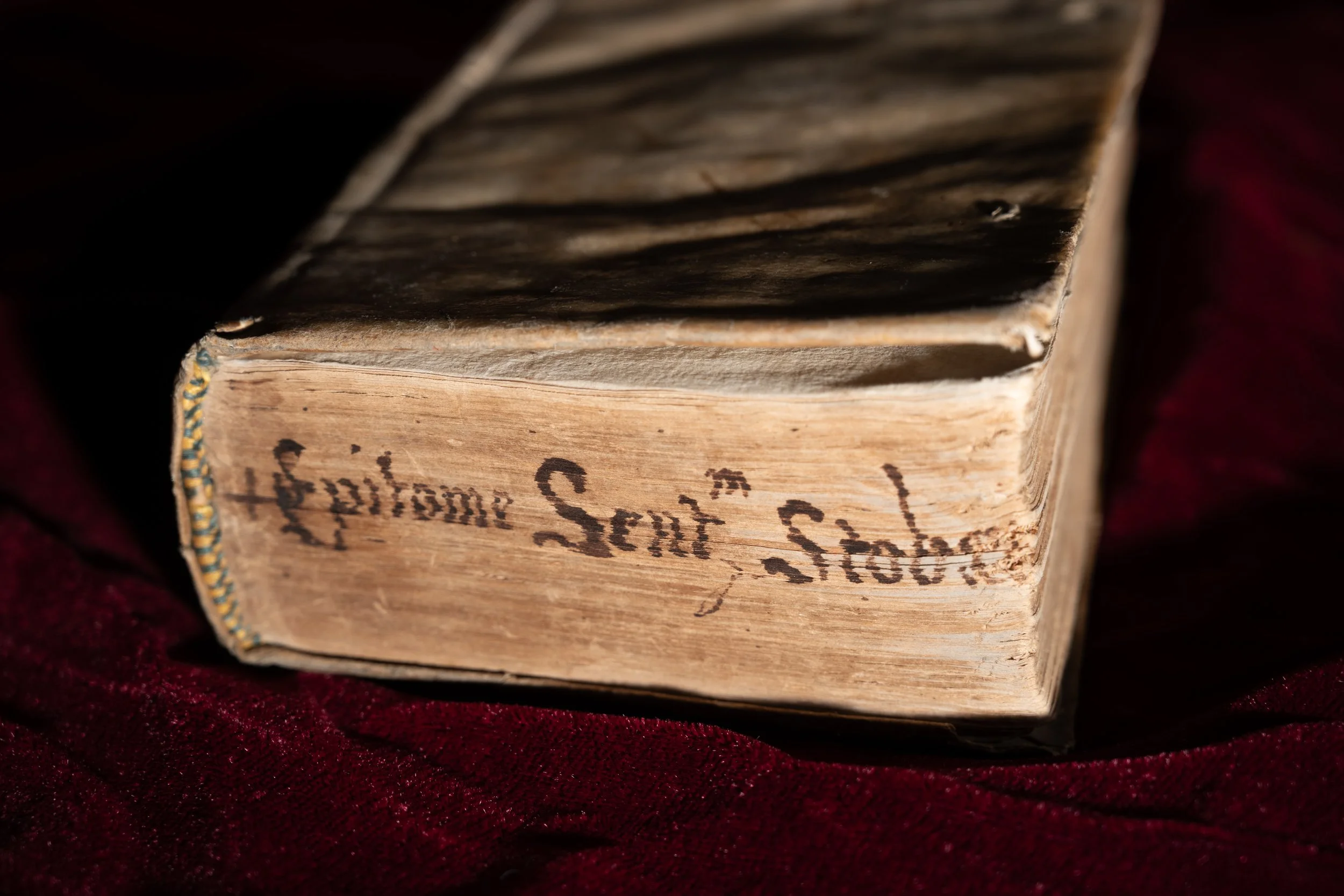 Image 7 of 8
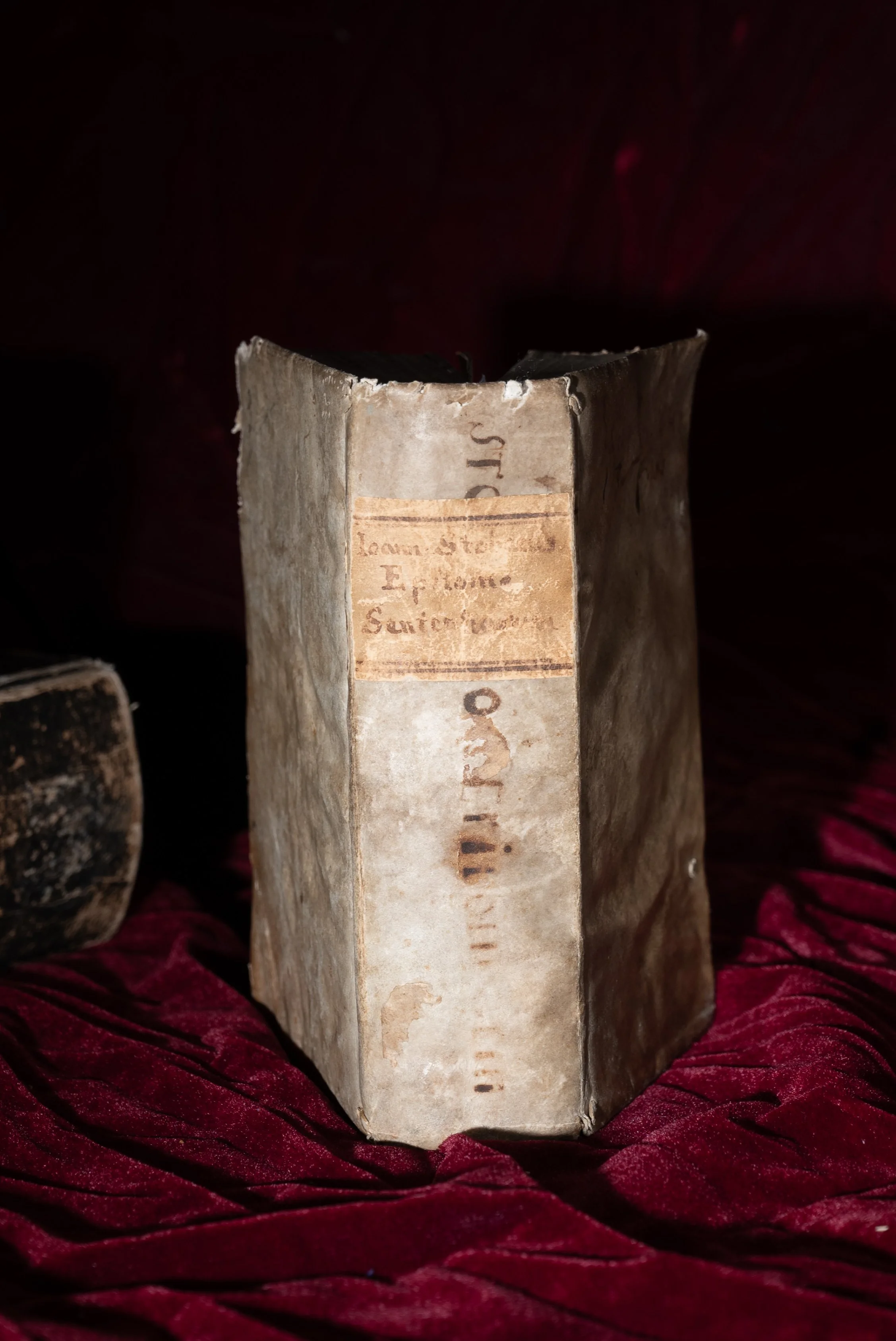 Image 8 of 8