This Sammelband is a quietly remarkable survival: the foundational texts of Renaissance Hermeticism, bound in their original German pigskin, paired with a humanist commentary on Tacitus's Germania. The combination is not accidental. It documents, in a single physical object, the moment when Florentine Neoplatonism crossed the Alps and took root in the intellectual culture of Protestant Germany.
The heart of the volume is the 1532 Basel edition of the Hermetic corpus in Marsilio Ficino's Latin translation. When Ficino completed his version of the Pimander in 1463, famously at Cosimo de' Medici's insistence and before even finishing Plato, he launched what Frances Yates called "the Hermetic tradition" into the mainstream of European thought. The text before us represents that tradition's second generation: no longer a Florentine manuscript treasure but a printed book issuing from the Basel presses, available to any German scholar with a few florins and an interest in the prisca theologia. This edition gathers not only the Pimander and Asclepius but also the essential supporting texts: Iamblichus's De Mysteriis Aegyptiorum, the key treatise on theurgy and the philosophical defense of ritual magic, and Proclus's De Sacrificio et Magia and De Anima et Daemone. Together they constitute the full Renaissance apparatus for understanding the ancient theology supposedly handed down from Egypt through Hermes, Orpheus, and Pythagoras to Plato.
That this corpus should be printed at Basel is significant. By the 1530s, the Swiss city had become the northern center for the diffusion of Italian Renaissance learning, its presses (Froben, Bebel, Isengrin) serving as the engine by which humanist scholarship reached German readers. The Hermetica traveled the same route as Erasmus's editions of the Church Fathers: southward in inspiration, northward in dissemination. The colophon bears the "Palma Bebeliana" device, linking this edition to the Bebel printing network even under Isengrin's imprint. The absence of this particular edition from Caillet, Duveen, and Ferguson, the standard bibliographies of alchemical and occult printing, suggests that historians of esotericism have sometimes neglected the Basel transmission in favor of the more frequently encountered Lyon and Paris editions. This is a gap worth correcting; the German-speaking reception of the Hermetica was formative for later figures from Agrippa to the Rosicrucian manifestos.
The Willichius bound at the front provides an instructive counterpoint. Jodocus Willich (1501–1552) was rector of the University of Frankfurt an der Oder, a friend of Melanchthon, and a representative figure of Lutheran humanism. His commentary on Tacitus's Germania belongs to a broader sixteenth-century project of recovering ancient testimony about the German peoples, a project with obvious confessional resonance in the Reformation era, when German identity was being actively constructed against Rome. The title page advertises supplementary treatises on German beer and amber, but these do not appear in the volume; what does appear is Willich's treatise on the Swabian river (Suevi fluminis), correcting ancient geographers. The fine woodcut portrait, showing Willich at forty-nine in scholarly dress, is dated 1550, the year before publication.
The binding tells its own story. Contemporary German alum-tawed pigskin over beveled wooden boards, blind-tooled with foliate rolls, retaining both original brass clasps in working order: this is the standard dress of a sixteenth-century German scholar's library, built to endure hard use and frequent consultation. That the spine bears Willich's name and the date 1551 rather than any reference to Hermes suggests that the original owner organized his library by the first-bound item, or perhaps that classical philology provided respectable cover for more recondite interests. The manuscript shelf-mark "250" visible on the fore-edge indicates systematic library organization at some point in the book's history.
Here, then, is Ficino's Egypt shelved alongside Tacitus's Germany, Hermetic theology bound up with Germanic antiquarianism, the prisca theologia in the same boards as Protestant humanism. For scholars of Western esotericism, this is primary-source material of the first order: not merely a text but an artifact documenting how these ideas circulated, who read them, and in what company they were kept. Copies of the Hermetic corpus in contemporary German bindings, unbroken and unsophisticated, are genuinely uncommon; that this one preserves its clasps, its structure, and its original Sammelband configuration makes it an object of real interest.
WILLICHIUS, Jodocus. In Cornelii Taciti Equitis Romani Germaniam Commentaria. Autore D. Iodoco Vuillichio Reselliano. Insertae sunt et Historiae. Zythi Germanici contra multos scriptores. Succini contra plerosq;. Suevi fluminis contra omnes Geographos. Eodem autore. Frankfurt an der Oder: Johann Eichorn, 1551.
[BOUND WITH:]
[HERMES TRISMEGISTUS]; IAMBLICHUS; PROCLUS. Mercurii Trismegisti Pymander, de potestate et sapientia dei. Eiusdem Asclepius, de voluntate dei. Opuscula sanctissimis mysterijs, ac verè coelestibus oraculis illustrissima. Iamblichus de mysterijs Aegyptiorum, Chaldaeorum, & Assyriorum. Proclus in Platonicum Alcibiadem, de anima & daemone. Idem de sacrificio & magia. Basel: Michael Isengrin, August 1532. Two works in one volume, octavo (16.5 × 11 cm). Willichius: [168] leaves, unpaginated; woodcut portrait of the author on title verso, dated 1550, within circular border with legend "IODOCVS WILLICHIVS DOCTOR AETATIS SVAE XLIX." Hermetica: A–Ff⁸; 480 pp., [2] leaves, pagination with typical errors; woodcut printer's device ("Palma Beb.") at colophon.
Contemporary German blind-tooled alum-tawed pigskin over beveled wooden boards. Covers with elaborate blind-stamped panels featuring foliate rolls. Spine with four raised bands; manuscript title "WILLICHIVS" in ink to upper compartments, additional manuscript notation "Tacit:" visible mid-spine, and date "MDLI" at tail. Two original brass clasps on leather straps, catching to pins on front board; both fully functional. Small hole in leather covering on spine. Binding tight; pigskin supple with cream patina, slightly dust-soiled. Willichius title page with marginal fraying and old repair to inner gutter with transparent archival tape; verso shows residue from removed stamps. Text evenly browned. Hermetica title page lightly stained with pale manuscript initials "F H" at foot; leaf E4 (pp. 71/72) with hole in text area from original paper flaw affecting two lines; very light foxing throughout, some browning. Text block generally crisp.
Provenance: Modern ownership inscription on front free endpaper: "Matthias Theodor Kloft, 19. VI. 2008." Earlier bookplate present but illegible. Stamp residue on Willichius title verso. No marginalia observed.
This Sammelband is a quietly remarkable survival: the foundational texts of Renaissance Hermeticism, bound in their original German pigskin, paired with a humanist commentary on Tacitus's Germania. The combination is not accidental. It documents, in a single physical object, the moment when Florentine Neoplatonism crossed the Alps and took root in the intellectual culture of Protestant Germany.
The heart of the volume is the 1532 Basel edition of the Hermetic corpus in Marsilio Ficino's Latin translation. When Ficino completed his version of the Pimander in 1463, famously at Cosimo de' Medici's insistence and before even finishing Plato, he launched what Frances Yates called "the Hermetic tradition" into the mainstream of European thought. The text before us represents that tradition's second generation: no longer a Florentine manuscript treasure but a printed book issuing from the Basel presses, available to any German scholar with a few florins and an interest in the prisca theologia. This edition gathers not only the Pimander and Asclepius but also the essential supporting texts: Iamblichus's De Mysteriis Aegyptiorum, the key treatise on theurgy and the philosophical defense of ritual magic, and Proclus's De Sacrificio et Magia and De Anima et Daemone. Together they constitute the full Renaissance apparatus for understanding the ancient theology supposedly handed down from Egypt through Hermes, Orpheus, and Pythagoras to Plato.
That this corpus should be printed at Basel is significant. By the 1530s, the Swiss city had become the northern center for the diffusion of Italian Renaissance learning, its presses (Froben, Bebel, Isengrin) serving as the engine by which humanist scholarship reached German readers. The Hermetica traveled the same route as Erasmus's editions of the Church Fathers: southward in inspiration, northward in dissemination. The colophon bears the "Palma Bebeliana" device, linking this edition to the Bebel printing network even under Isengrin's imprint. The absence of this particular edition from Caillet, Duveen, and Ferguson, the standard bibliographies of alchemical and occult printing, suggests that historians of esotericism have sometimes neglected the Basel transmission in favor of the more frequently encountered Lyon and Paris editions. This is a gap worth correcting; the German-speaking reception of the Hermetica was formative for later figures from Agrippa to the Rosicrucian manifestos.
The Willichius bound at the front provides an instructive counterpoint. Jodocus Willich (1501–1552) was rector of the University of Frankfurt an der Oder, a friend of Melanchthon, and a representative figure of Lutheran humanism. His commentary on Tacitus's Germania belongs to a broader sixteenth-century project of recovering ancient testimony about the German peoples, a project with obvious confessional resonance in the Reformation era, when German identity was being actively constructed against Rome. The title page advertises supplementary treatises on German beer and amber, but these do not appear in the volume; what does appear is Willich's treatise on the Swabian river (Suevi fluminis), correcting ancient geographers. The fine woodcut portrait, showing Willich at forty-nine in scholarly dress, is dated 1550, the year before publication.
The binding tells its own story. Contemporary German alum-tawed pigskin over beveled wooden boards, blind-tooled with foliate rolls, retaining both original brass clasps in working order: this is the standard dress of a sixteenth-century German scholar's library, built to endure hard use and frequent consultation. That the spine bears Willich's name and the date 1551 rather than any reference to Hermes suggests that the original owner organized his library by the first-bound item, or perhaps that classical philology provided respectable cover for more recondite interests. The manuscript shelf-mark "250" visible on the fore-edge indicates systematic library organization at some point in the book's history.
Here, then, is Ficino's Egypt shelved alongside Tacitus's Germany, Hermetic theology bound up with Germanic antiquarianism, the prisca theologia in the same boards as Protestant humanism. For scholars of Western esotericism, this is primary-source material of the first order: not merely a text but an artifact documenting how these ideas circulated, who read them, and in what company they were kept. Copies of the Hermetic corpus in contemporary German bindings, unbroken and unsophisticated, are genuinely uncommon; that this one preserves its clasps, its structure, and its original Sammelband configuration makes it an object of real interest.
WILLICHIUS, Jodocus. In Cornelii Taciti Equitis Romani Germaniam Commentaria. Autore D. Iodoco Vuillichio Reselliano. Insertae sunt et Historiae. Zythi Germanici contra multos scriptores. Succini contra plerosq;. Suevi fluminis contra omnes Geographos. Eodem autore. Frankfurt an der Oder: Johann Eichorn, 1551.
[BOUND WITH:]
[HERMES TRISMEGISTUS]; IAMBLICHUS; PROCLUS. Mercurii Trismegisti Pymander, de potestate et sapientia dei. Eiusdem Asclepius, de voluntate dei. Opuscula sanctissimis mysterijs, ac verè coelestibus oraculis illustrissima. Iamblichus de mysterijs Aegyptiorum, Chaldaeorum, & Assyriorum. Proclus in Platonicum Alcibiadem, de anima & daemone. Idem de sacrificio & magia. Basel: Michael Isengrin, August 1532. Two works in one volume, octavo (16.5 × 11 cm). Willichius: [168] leaves, unpaginated; woodcut portrait of the author on title verso, dated 1550, within circular border with legend "IODOCVS WILLICHIVS DOCTOR AETATIS SVAE XLIX." Hermetica: A–Ff⁸; 480 pp., [2] leaves, pagination with typical errors; woodcut printer's device ("Palma Beb.") at colophon.
Contemporary German blind-tooled alum-tawed pigskin over beveled wooden boards. Covers with elaborate blind-stamped panels featuring foliate rolls. Spine with four raised bands; manuscript title "WILLICHIVS" in ink to upper compartments, additional manuscript notation "Tacit:" visible mid-spine, and date "MDLI" at tail. Two original brass clasps on leather straps, catching to pins on front board; both fully functional. Small hole in leather covering on spine. Binding tight; pigskin supple with cream patina, slightly dust-soiled. Willichius title page with marginal fraying and old repair to inner gutter with transparent archival tape; verso shows residue from removed stamps. Text evenly browned. Hermetica title page lightly stained with pale manuscript initials "F H" at foot; leaf E4 (pp. 71/72) with hole in text area from original paper flaw affecting two lines; very light foxing throughout, some browning. Text block generally crisp.
Provenance: Modern ownership inscription on front free endpaper: "Matthias Theodor Kloft, 19. VI. 2008." Earlier bookplate present but illegible. Stamp residue on Willichius title verso. No marginalia observed.

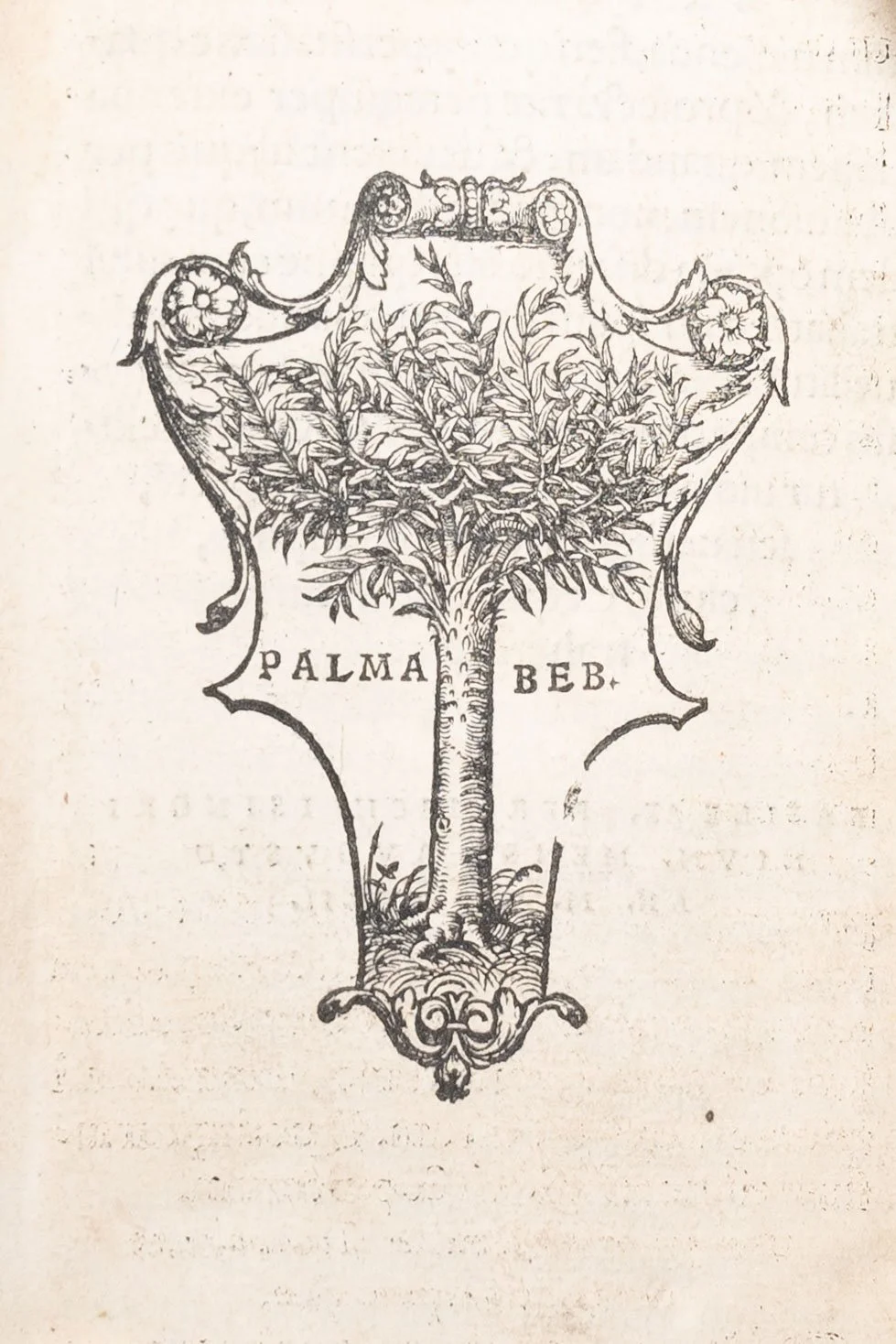 Image 1 of 12
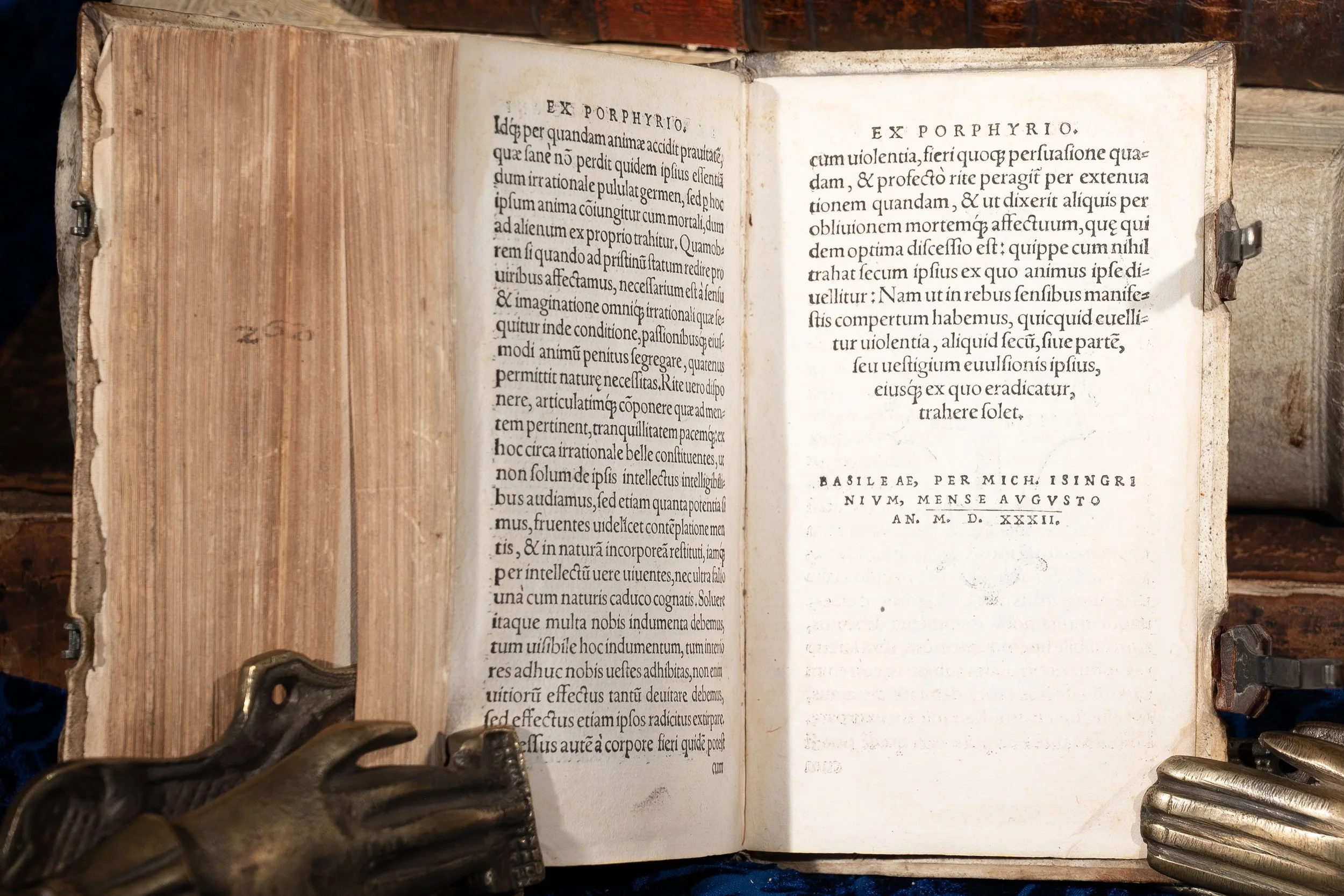 Image 2 of 12
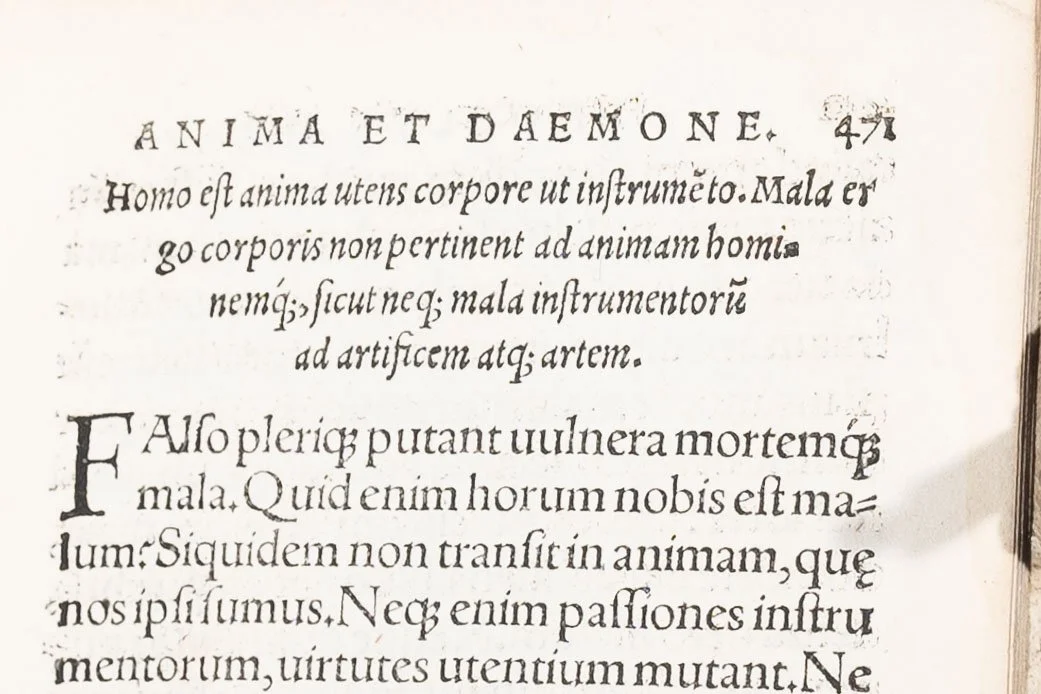 Image 3 of 12
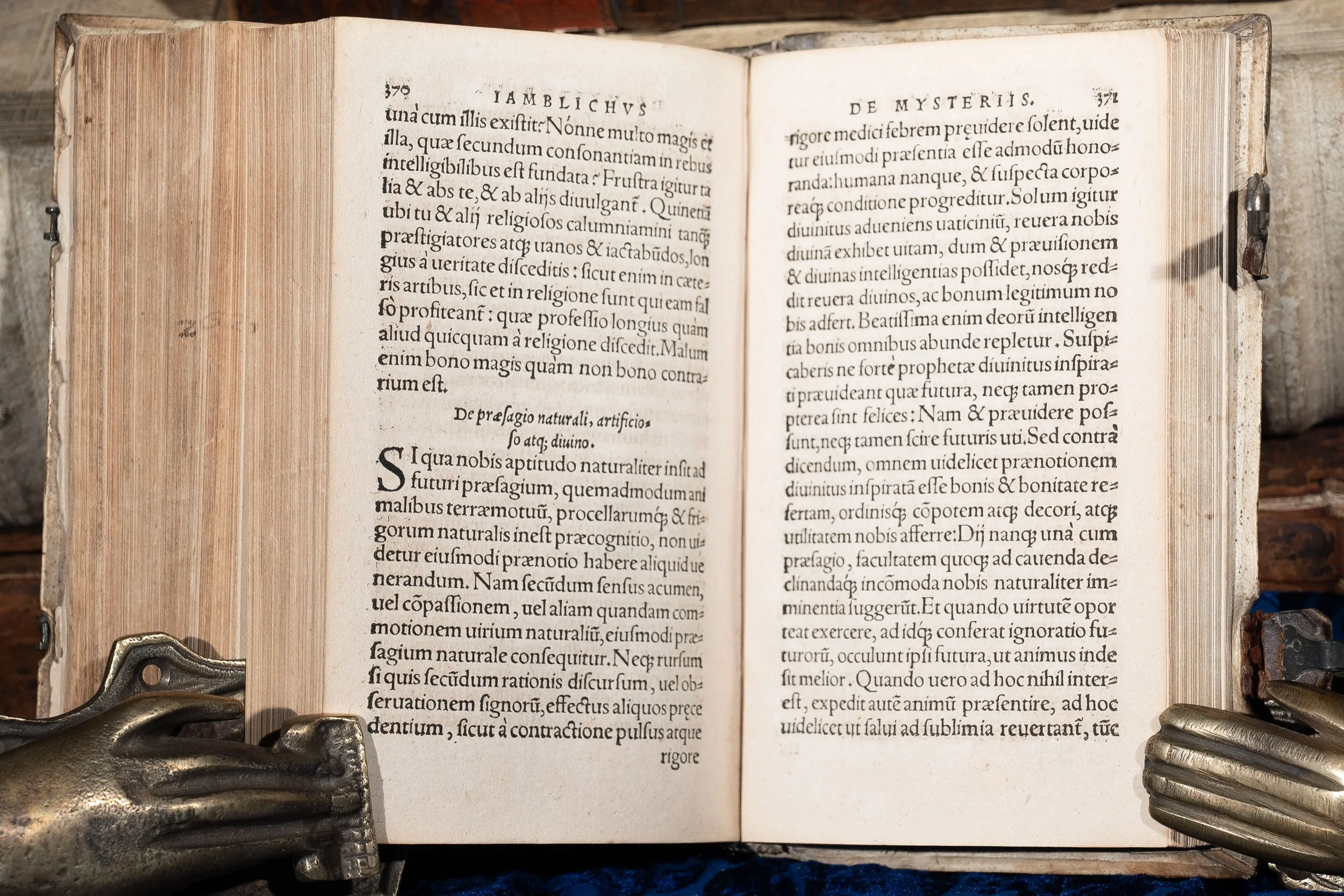 Image 4 of 12
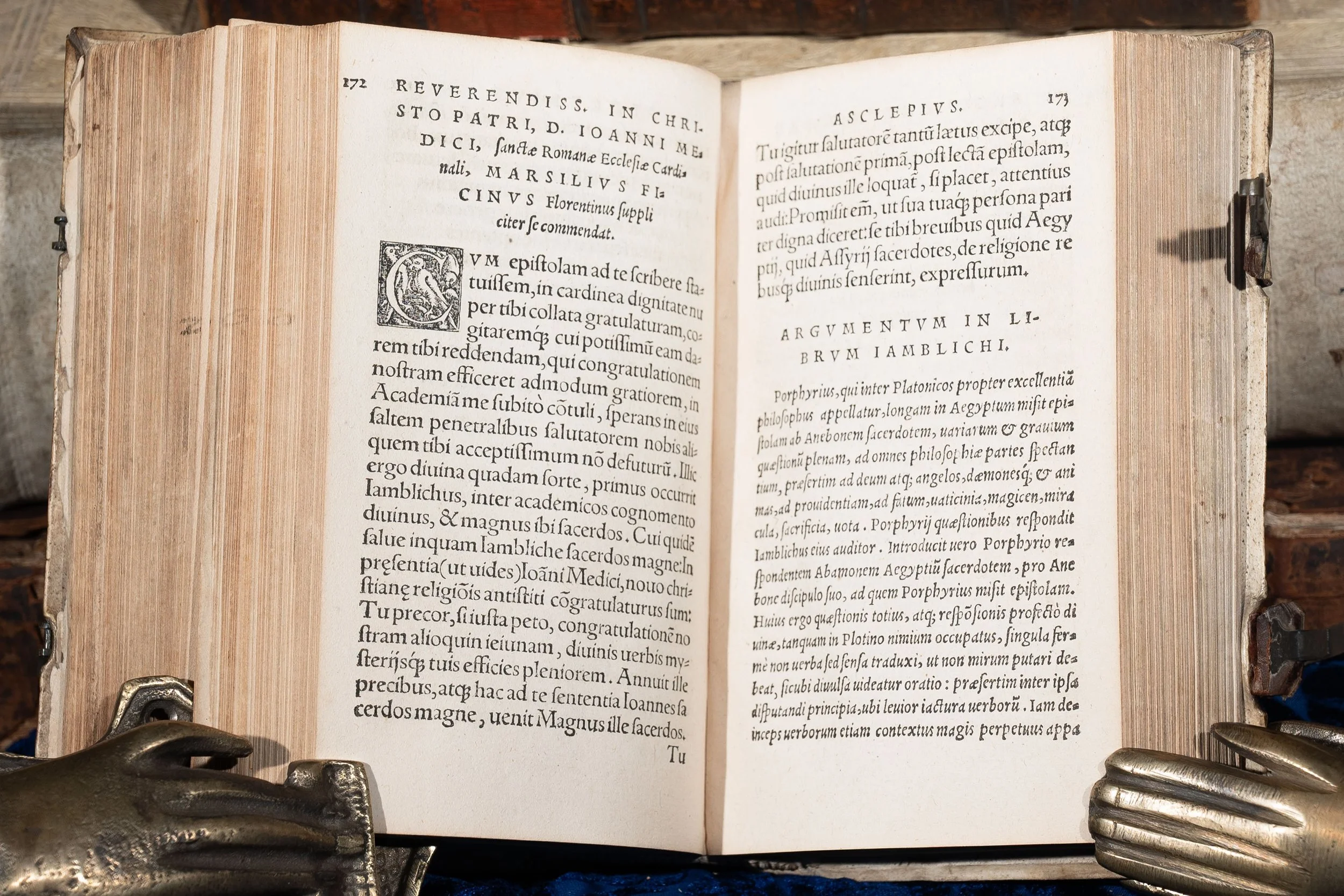 Image 5 of 12
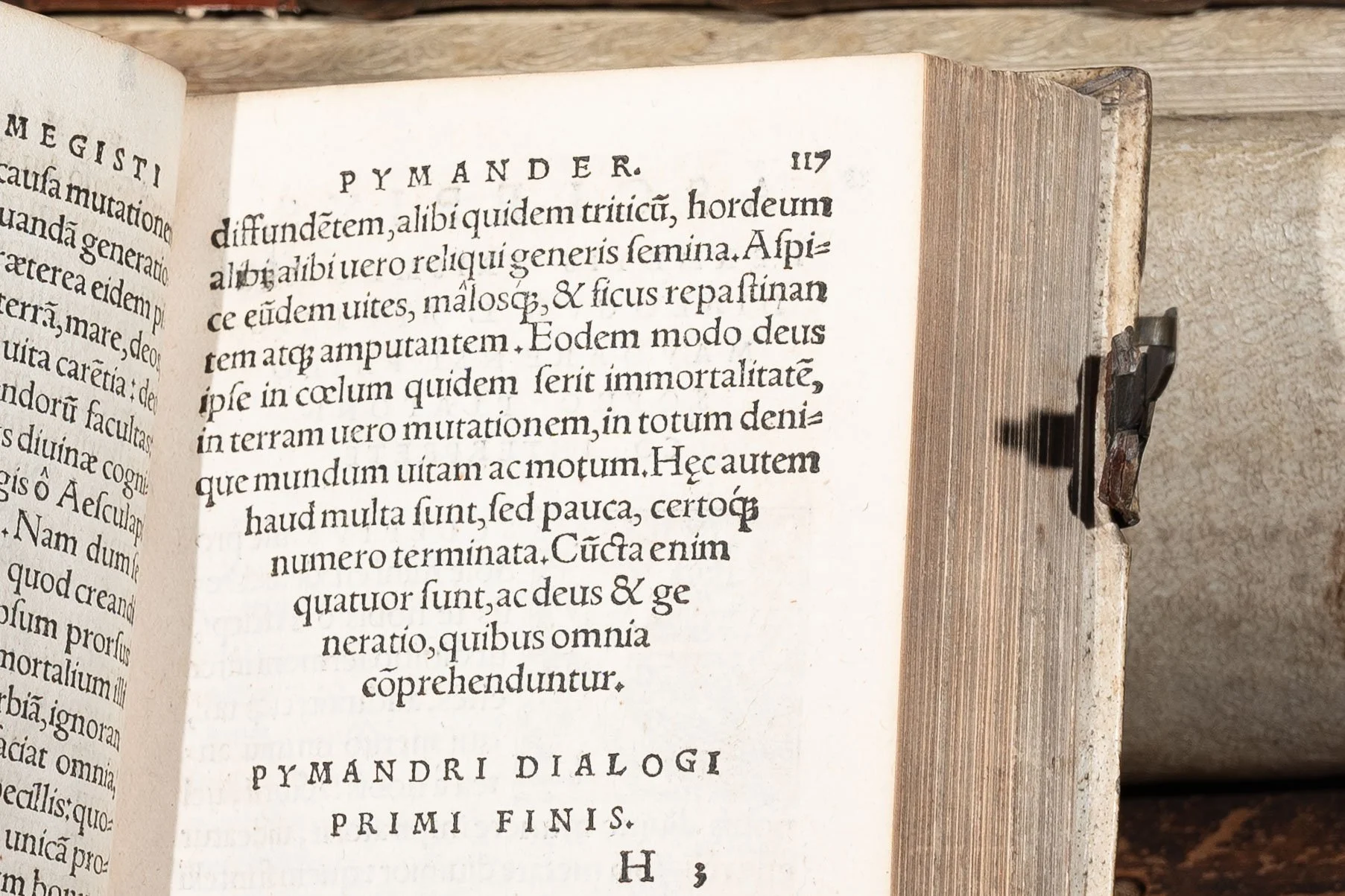 Image 6 of 12
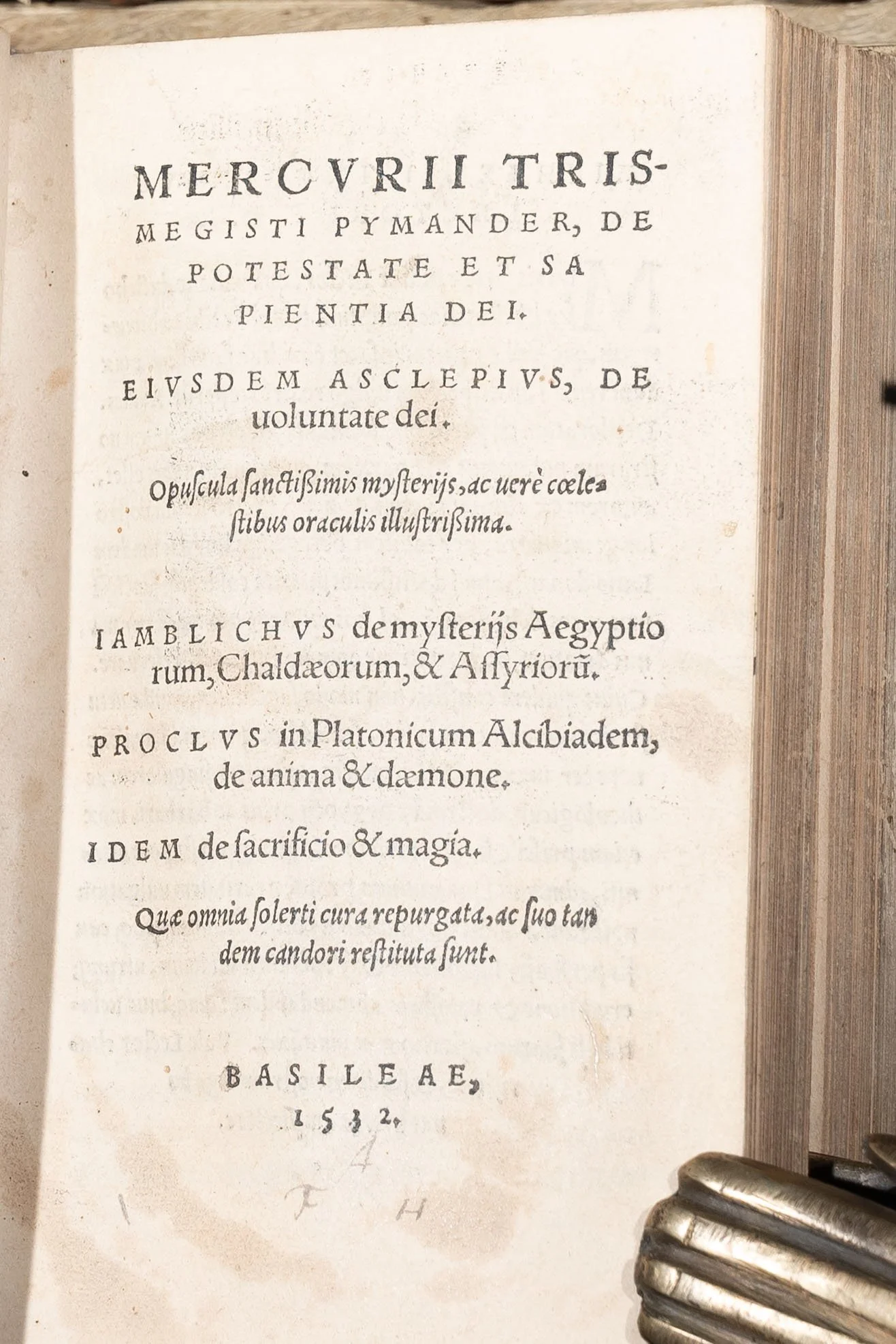 Image 7 of 12
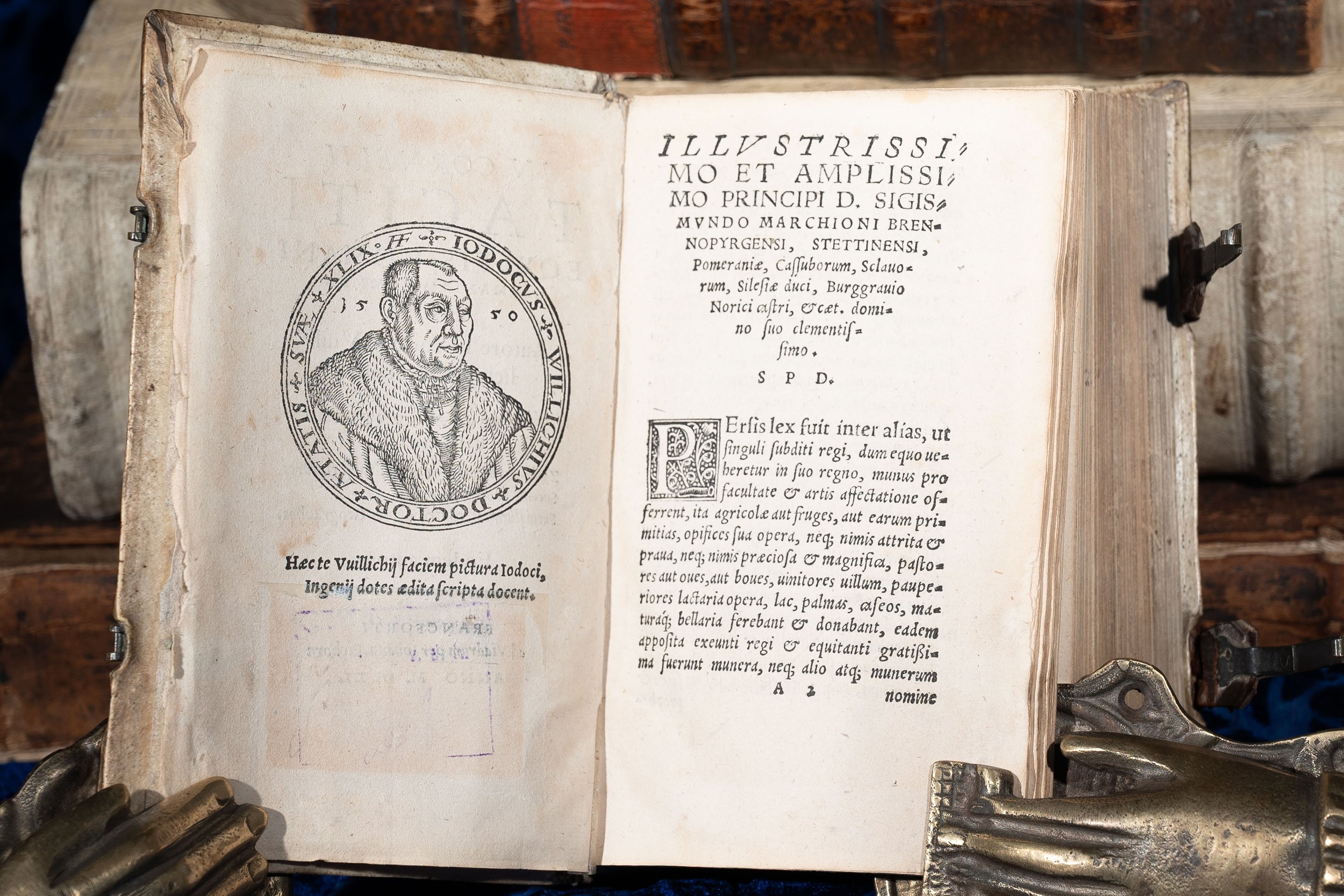 Image 8 of 12
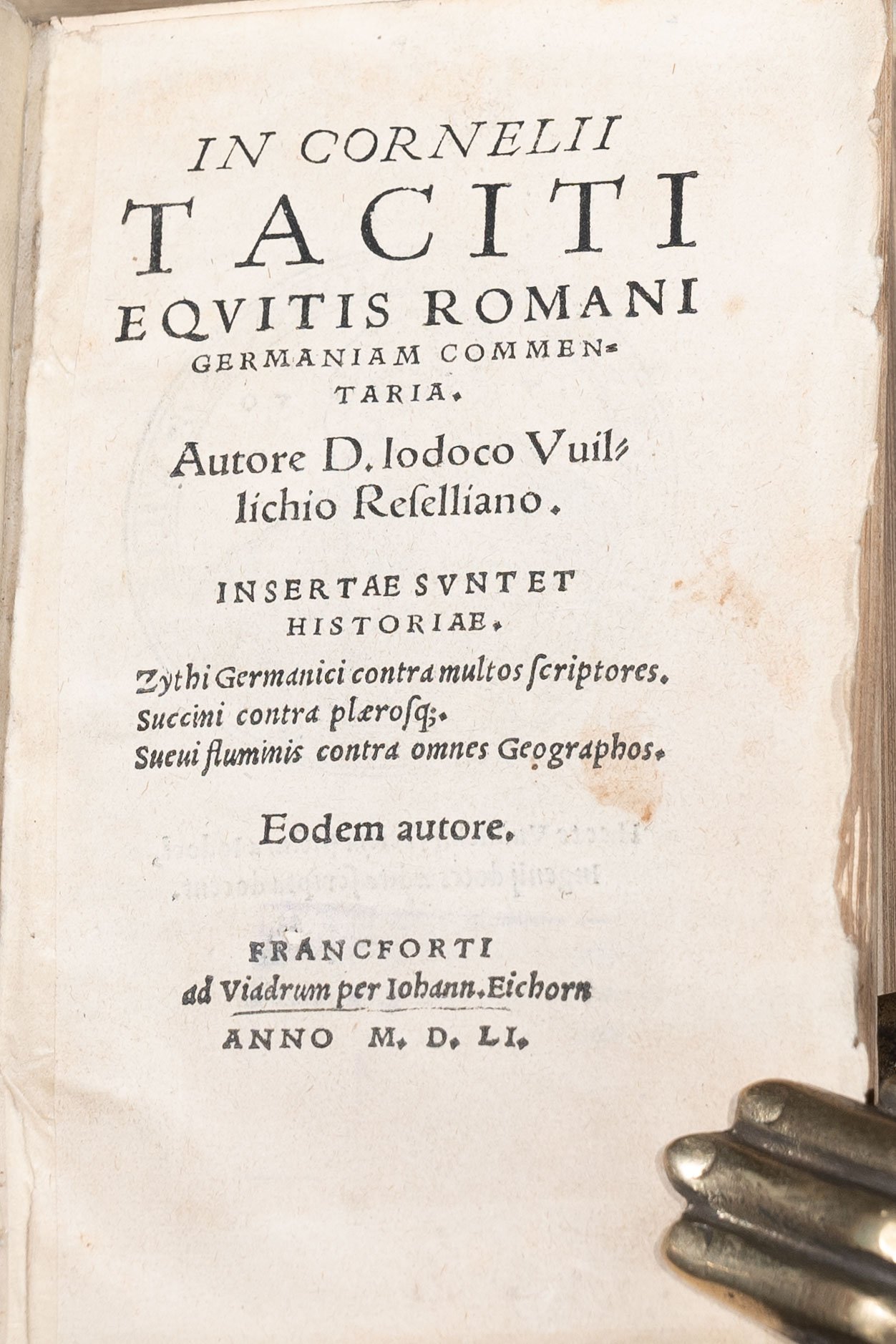 Image 9 of 12
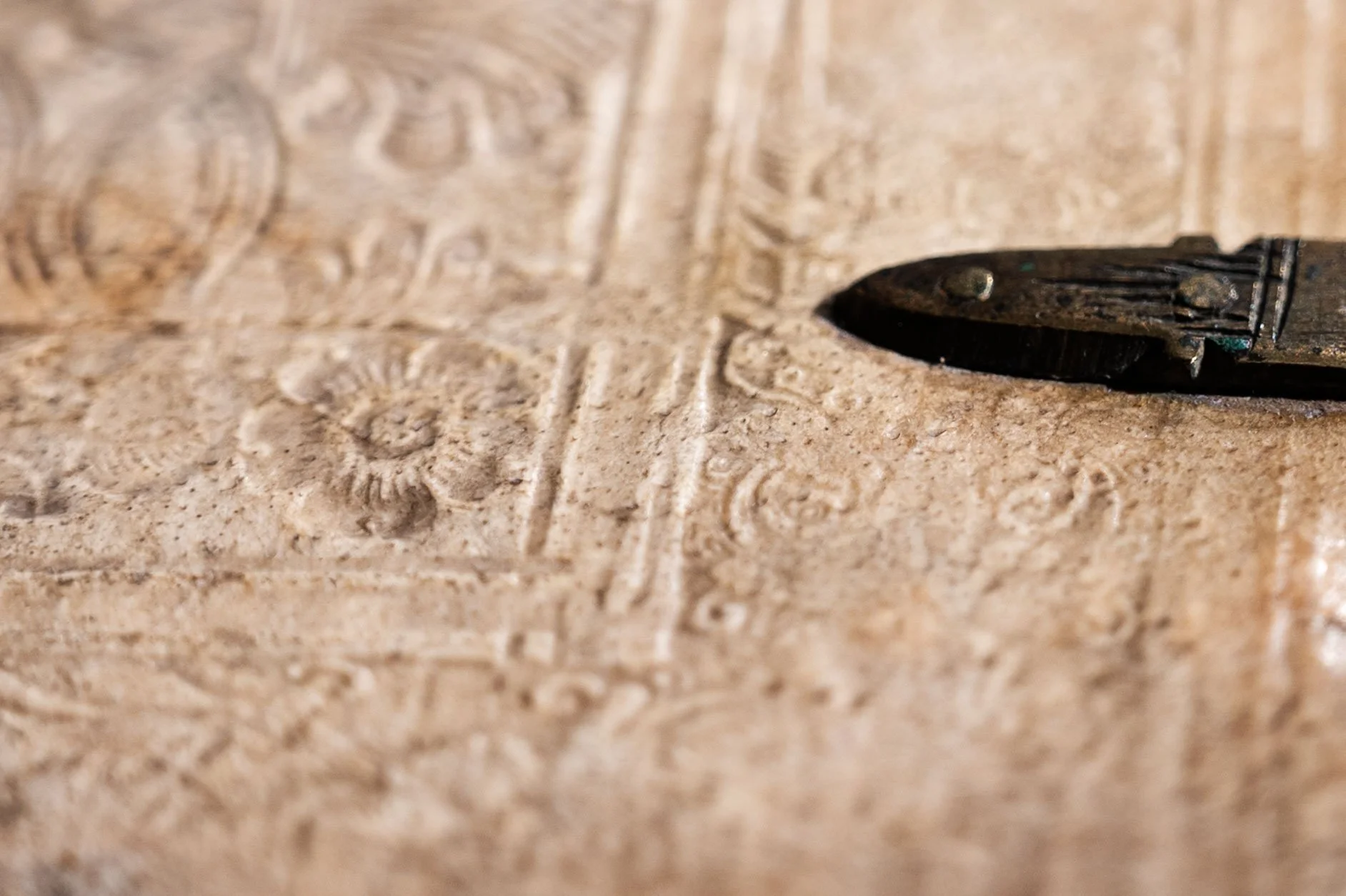 Image 10 of 12
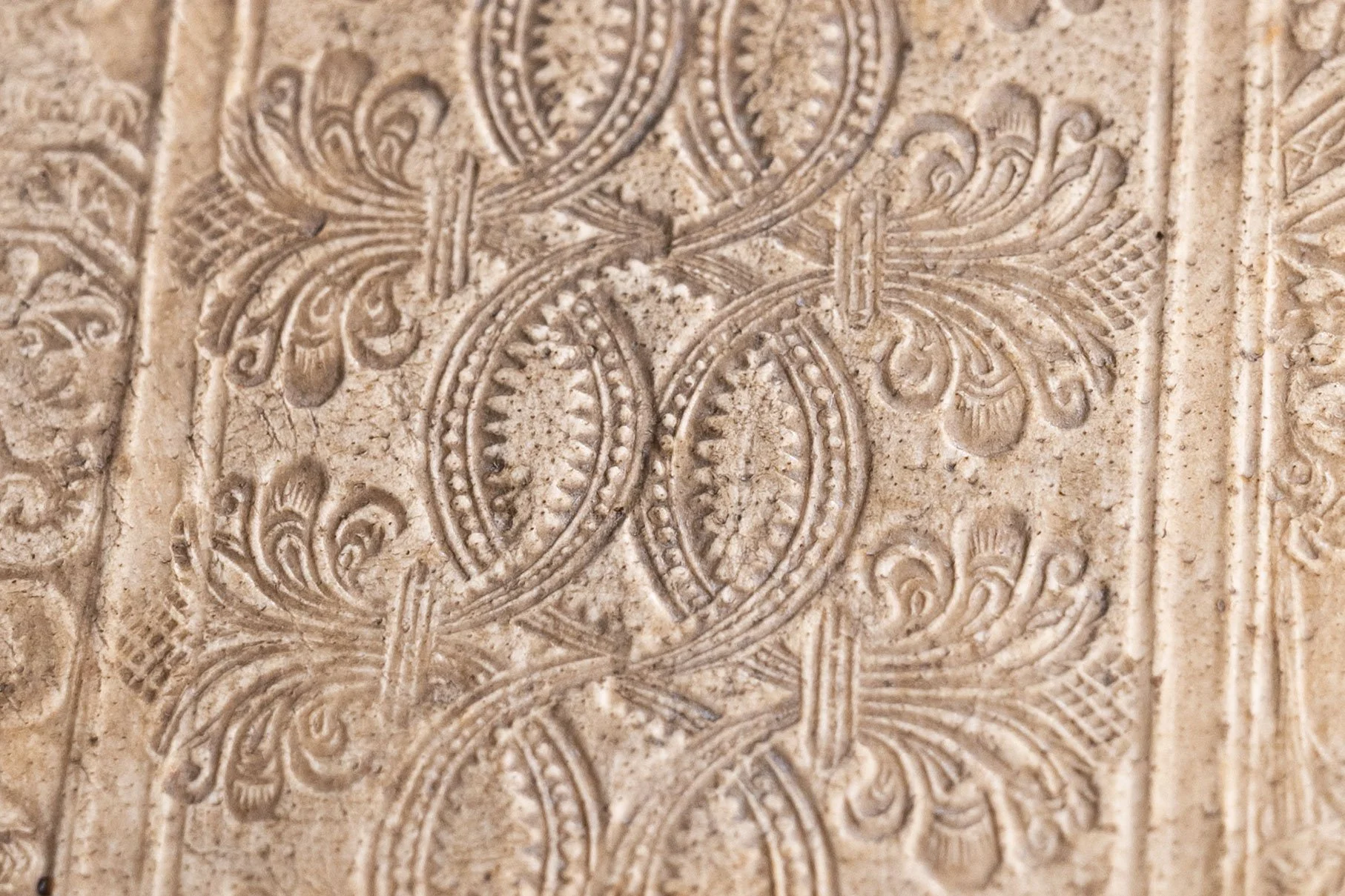 Image 11 of 12
 Image 12 of 12