If the study of Western esotericism can be said to have a single indispensable text, this is it. Agrippa’s De Occulta Philosophia is the work against which all subsequent magical, Hermetic, and Kabbalistic writing in the Western tradition must be measured. It is the book that defined what learned magic meant for the Renaissance and everything that came after it. No serious collection in the field is complete without a copy, and no serious scholar of the tradition can avoid reckoning with it.
First composed around 1509–1510 and circulated in manuscript to the encouragement of the great cryptographer-abbot Johannes Trithemius, the work was extensively revised and expanded before its first printing at Cologne in 1533, an event complicated by the Dominican inquisitor Conrad Köllin’s denunciation of the book as heretical. Agrippa’s synthesis is architecturally ambitious: three books mapping the three worlds of the Kabbalists. The first treats natural or elemental magic, charting the occult sympathies and antipathies threading through the material world. The second ascends to celestial magic, the realm of number, proportion, and astral influence, populated by those famous woodcuts of the human body inscribed within geometric figures that remain among the most recognizable images in the history of esotericism. The third book rises to intellectual or ceremonial magic, grounded in Christian Kabbalah, angelology, and divine names, culminating in the name of Jesus as the supreme theurgical key.
What gives the work its enduring stature is not any single doctrine but the sheer comprehensiveness of the synthesis. Agrippa drew on Ficino’s spiritual magic, Pico’s Christian Kabbalah, Reuchlin’s De Verbo Mirifico, Trithemian angel-magic, Plinian natural history, Neoplatonic metaphysics, and the Hermetic corpus, and wove them into a coherent system that aspired to account for every level of reality from stones to seraphim. The result became, as it has been justly described, the indispensable handbook of Renaissance magia and cabala. John Dee studied it with the intensity of a man memorizing scripture. Giordano Bruno reworked its cosmology. The tradition of practical grimoire magic that flourished from the sixteenth century onward is unthinkable without Agrippa’s framework of correspondences, seals, names, and planetary hierarchies. When the occult revival of the nineteenth century sought to reconstruct a ceremonial tradition, it returned again and again to this source.
The present copy is the 1550 edition bearing the imprint of the Beringos brothers at Lyon, a reputable firm active in the mid-sixteenth century who issued a range of humanist, philosophical, and literary texts. C. F. Mayer (Bio-bibliography 230.7) notes that the printer and place of publication given on this edition may be spurious, a not unusual feature of books that had attracted the attention of ecclesiastical censors. The De Occulta Philosophia had been placed on the Index of Prohibited Books by 1550, which lends a certain irony to the Beringos motto on the title page: BONA FIDE.
This is the handy octavo format, printed in italic type, which represents the work’s passage from the substantial quarto of the 1533 first edition into a more portable format suited to wider circulation. The folding table of Hebrew Tziruph permutations, visible at the rear of this copy, exemplifies the typographic challenge the work posed: Agrippa’s system demanded Hebrew type, astrological symbols, planetary seals, geometric diagrams, and tables of correspondences, all within a single volume. That the Beringos press managed this in octavo is itself a minor feat of mid-century printing.
The cornerstone of any collection in Western esotericism.
AGRIPPA VON NETTESHEIM, Heinrich Cornelius (1486–1535). Henrici Cor. Agrippae ab Nettesheym a consiliis et archivis inditiarii sacrae Caesareae maiestatis, De Occulta Philosophia Libri III. Lugduni [Lyon]: Apud Godefridum, & Marcellum, Beringos, fratres, 1550. Physical Description: 8vo (ca. 189 × 118 mm). [20], 586 pp., [2] ff. Signatures: a⁸, b², a-z⁸, A-O⁸. Title page with printer’s device (“BONA FIDE” motto within cartouche of clasped hands), woodcut initials throughout, numerous woodcut illustrations, tables, and diagrams in the text, including folding table of Hebrew Tziruph letter permutations. Printer’s device at rear (“SINE FRAUDE” within ornamental wreath). Printed in italic type. Binding: Nineteenth-century half calf over marbled boards. Spine with raised bands and red morocco label lettered in gilt: “H. AGRIPPA / DE OCCULTA / PHILOSOPHIA.” Edges sprinkled red.
A good, sound copy. Binding worn at extremities with some scuffing and surface loss to the boards; joints cracked but holding firmly. Text block is clean and well-preserved with good margins. Title page lightly toned. Folding Tziruph table present and intact, with old fold reinforcement visible.
Provenance: Early ownership signature on the title page, partially obscured by the device, reading “Alexr Murray” (or similar).
If the study of Western esotericism can be said to have a single indispensable text, this is it. Agrippa’s De Occulta Philosophia is the work against which all subsequent magical, Hermetic, and Kabbalistic writing in the Western tradition must be measured. It is the book that defined what learned magic meant for the Renaissance and everything that came after it. No serious collection in the field is complete without a copy, and no serious scholar of the tradition can avoid reckoning with it.
First composed around 1509–1510 and circulated in manuscript to the encouragement of the great cryptographer-abbot Johannes Trithemius, the work was extensively revised and expanded before its first printing at Cologne in 1533, an event complicated by the Dominican inquisitor Conrad Köllin’s denunciation of the book as heretical. Agrippa’s synthesis is architecturally ambitious: three books mapping the three worlds of the Kabbalists. The first treats natural or elemental magic, charting the occult sympathies and antipathies threading through the material world. The second ascends to celestial magic, the realm of number, proportion, and astral influence, populated by those famous woodcuts of the human body inscribed within geometric figures that remain among the most recognizable images in the history of esotericism. The third book rises to intellectual or ceremonial magic, grounded in Christian Kabbalah, angelology, and divine names, culminating in the name of Jesus as the supreme theurgical key.
What gives the work its enduring stature is not any single doctrine but the sheer comprehensiveness of the synthesis. Agrippa drew on Ficino’s spiritual magic, Pico’s Christian Kabbalah, Reuchlin’s De Verbo Mirifico, Trithemian angel-magic, Plinian natural history, Neoplatonic metaphysics, and the Hermetic corpus, and wove them into a coherent system that aspired to account for every level of reality from stones to seraphim. The result became, as it has been justly described, the indispensable handbook of Renaissance magia and cabala. John Dee studied it with the intensity of a man memorizing scripture. Giordano Bruno reworked its cosmology. The tradition of practical grimoire magic that flourished from the sixteenth century onward is unthinkable without Agrippa’s framework of correspondences, seals, names, and planetary hierarchies. When the occult revival of the nineteenth century sought to reconstruct a ceremonial tradition, it returned again and again to this source.
The present copy is the 1550 edition bearing the imprint of the Beringos brothers at Lyon, a reputable firm active in the mid-sixteenth century who issued a range of humanist, philosophical, and literary texts. C. F. Mayer (Bio-bibliography 230.7) notes that the printer and place of publication given on this edition may be spurious, a not unusual feature of books that had attracted the attention of ecclesiastical censors. The De Occulta Philosophia had been placed on the Index of Prohibited Books by 1550, which lends a certain irony to the Beringos motto on the title page: BONA FIDE.
This is the handy octavo format, printed in italic type, which represents the work’s passage from the substantial quarto of the 1533 first edition into a more portable format suited to wider circulation. The folding table of Hebrew Tziruph permutations, visible at the rear of this copy, exemplifies the typographic challenge the work posed: Agrippa’s system demanded Hebrew type, astrological symbols, planetary seals, geometric diagrams, and tables of correspondences, all within a single volume. That the Beringos press managed this in octavo is itself a minor feat of mid-century printing.
The cornerstone of any collection in Western esotericism.
AGRIPPA VON NETTESHEIM, Heinrich Cornelius (1486–1535). Henrici Cor. Agrippae ab Nettesheym a consiliis et archivis inditiarii sacrae Caesareae maiestatis, De Occulta Philosophia Libri III. Lugduni [Lyon]: Apud Godefridum, & Marcellum, Beringos, fratres, 1550. Physical Description: 8vo (ca. 189 × 118 mm). [20], 586 pp., [2] ff. Signatures: a⁸, b², a-z⁸, A-O⁸. Title page with printer’s device (“BONA FIDE” motto within cartouche of clasped hands), woodcut initials throughout, numerous woodcut illustrations, tables, and diagrams in the text, including folding table of Hebrew Tziruph letter permutations. Printer’s device at rear (“SINE FRAUDE” within ornamental wreath). Printed in italic type. Binding: Nineteenth-century half calf over marbled boards. Spine with raised bands and red morocco label lettered in gilt: “H. AGRIPPA / DE OCCULTA / PHILOSOPHIA.” Edges sprinkled red.
A good, sound copy. Binding worn at extremities with some scuffing and surface loss to the boards; joints cracked but holding firmly. Text block is clean and well-preserved with good margins. Title page lightly toned. Folding Tziruph table present and intact, with old fold reinforcement visible.
Provenance: Early ownership signature on the title page, partially obscured by the device, reading “Alexr Murray” (or similar).

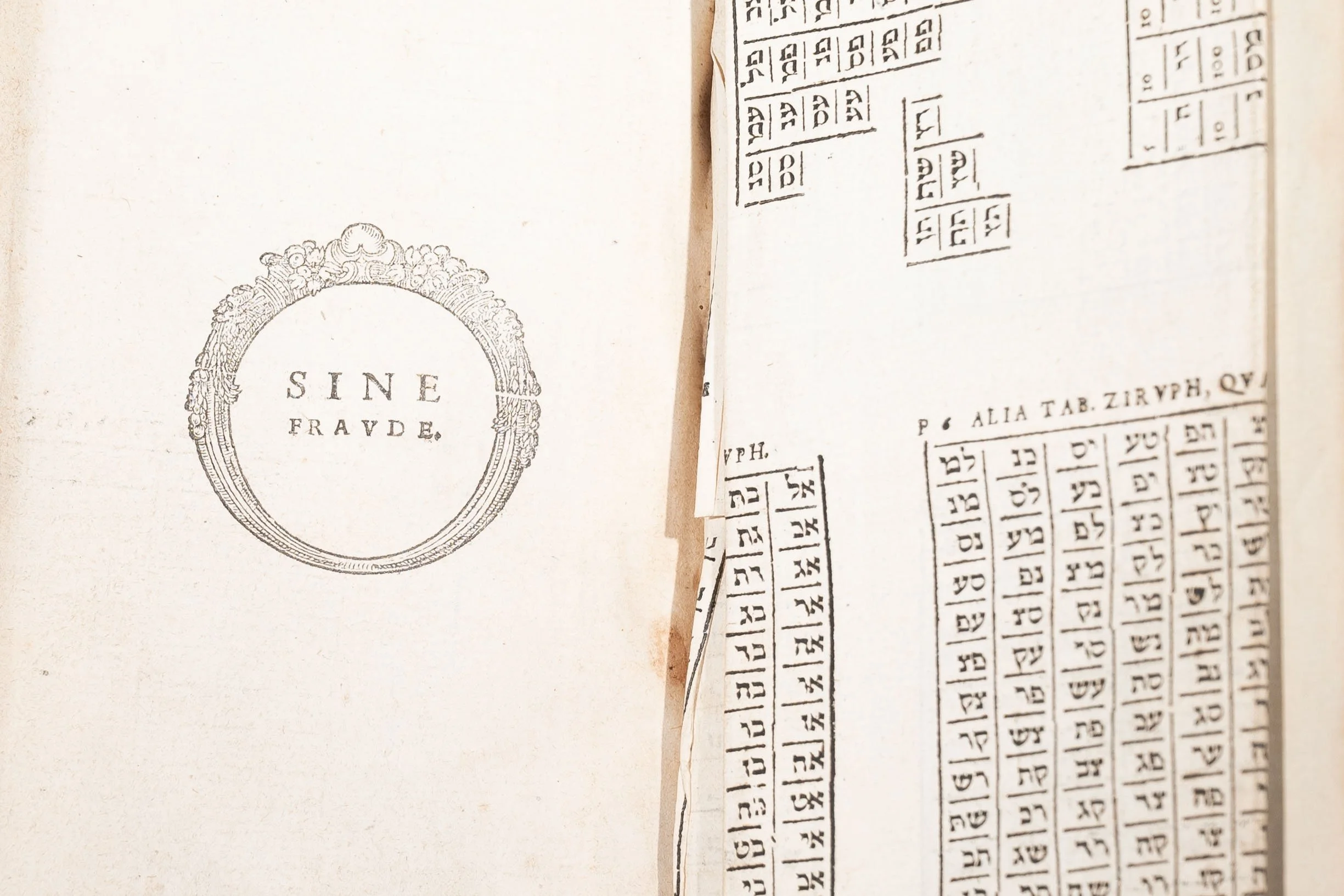 Image 1 of 20
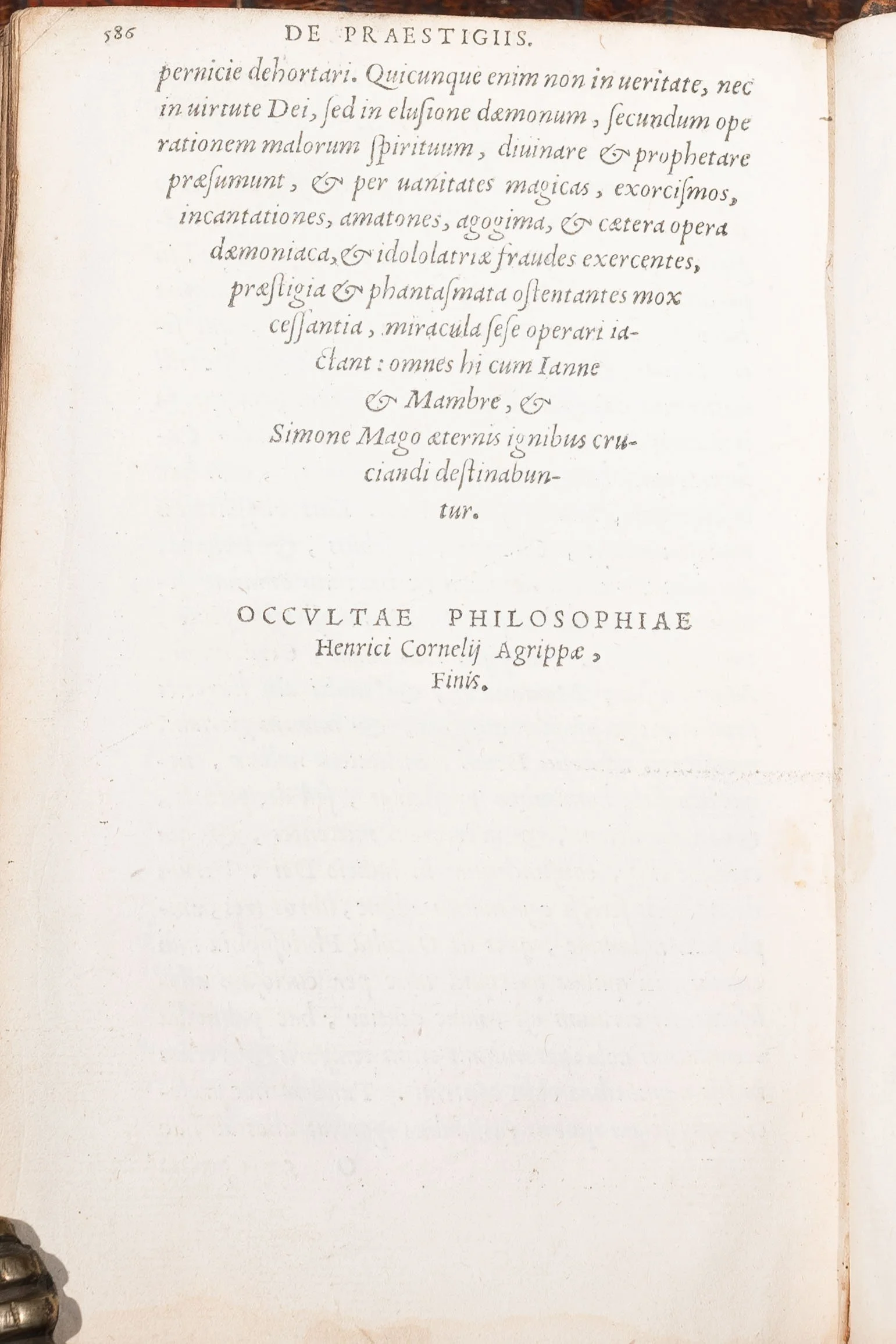 Image 2 of 20
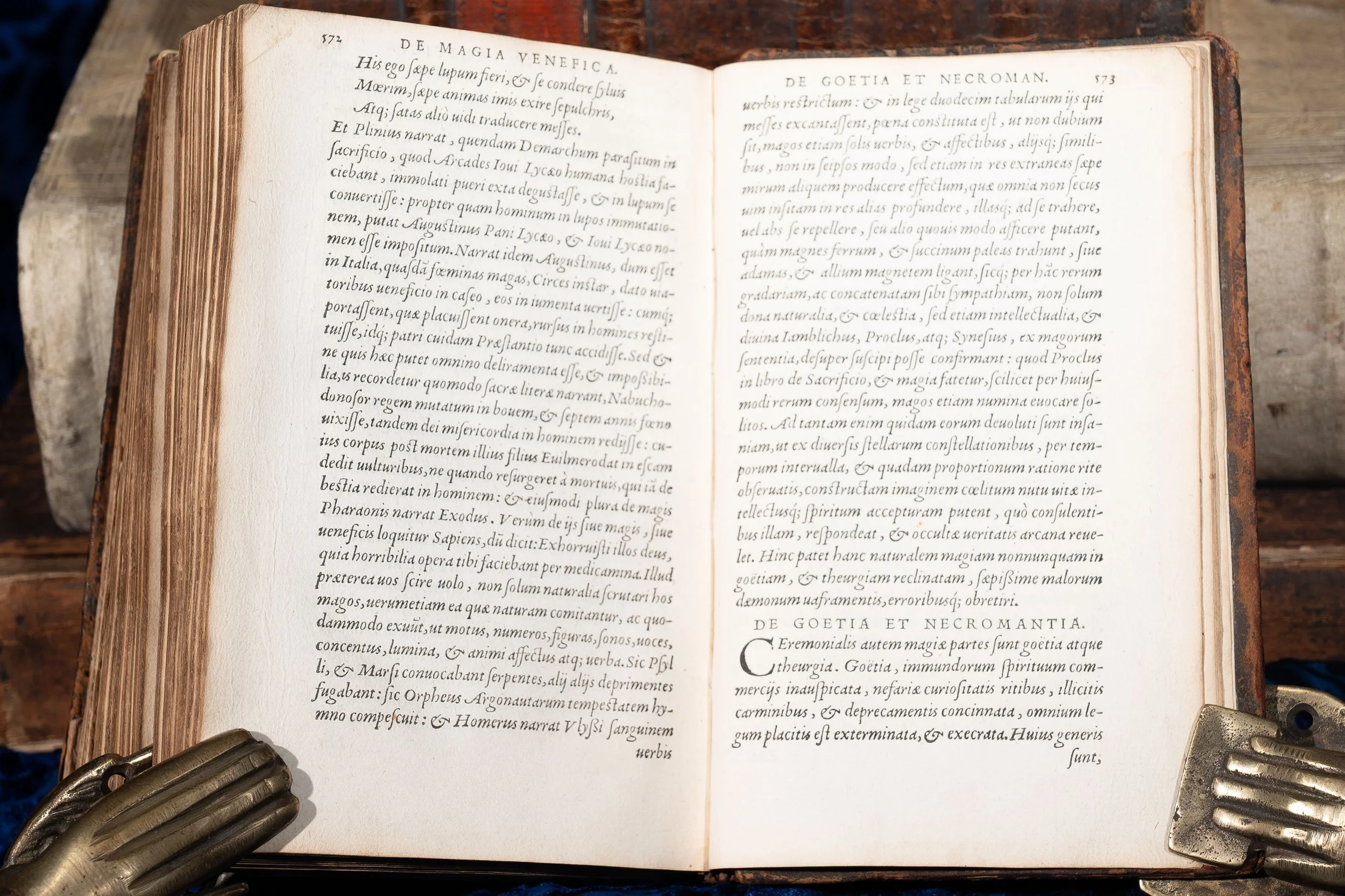 Image 3 of 20
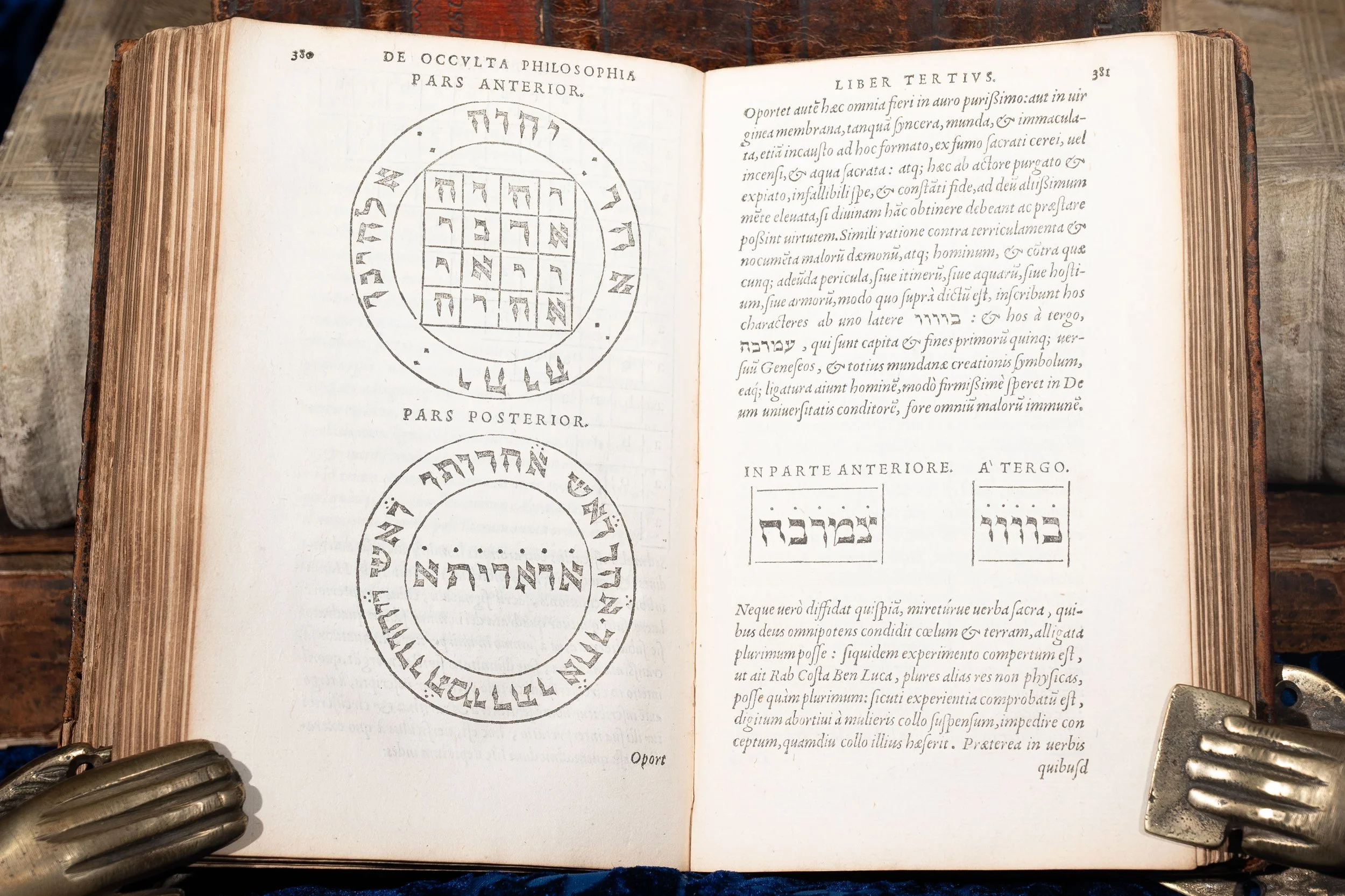 Image 4 of 20
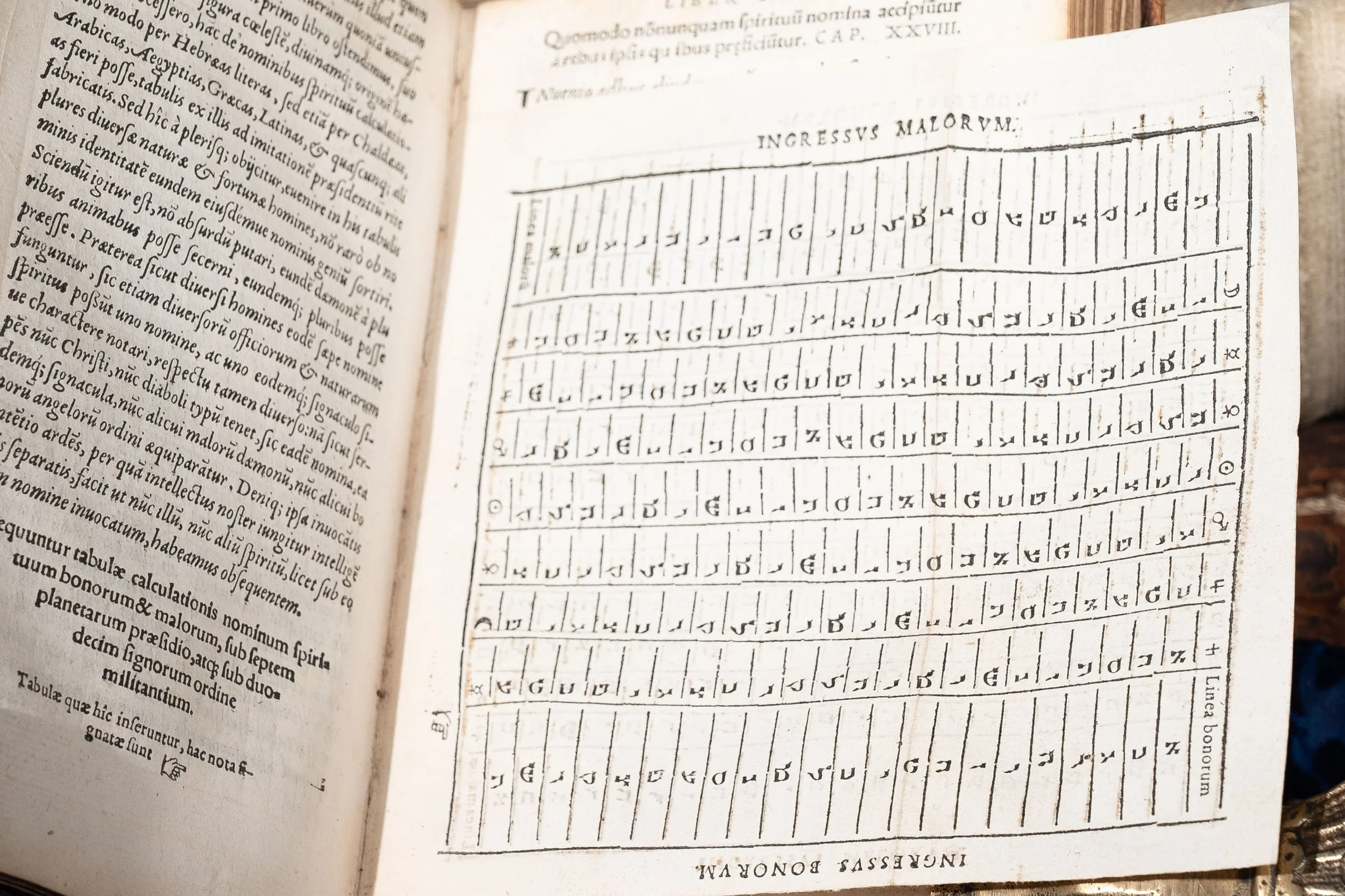 Image 5 of 20
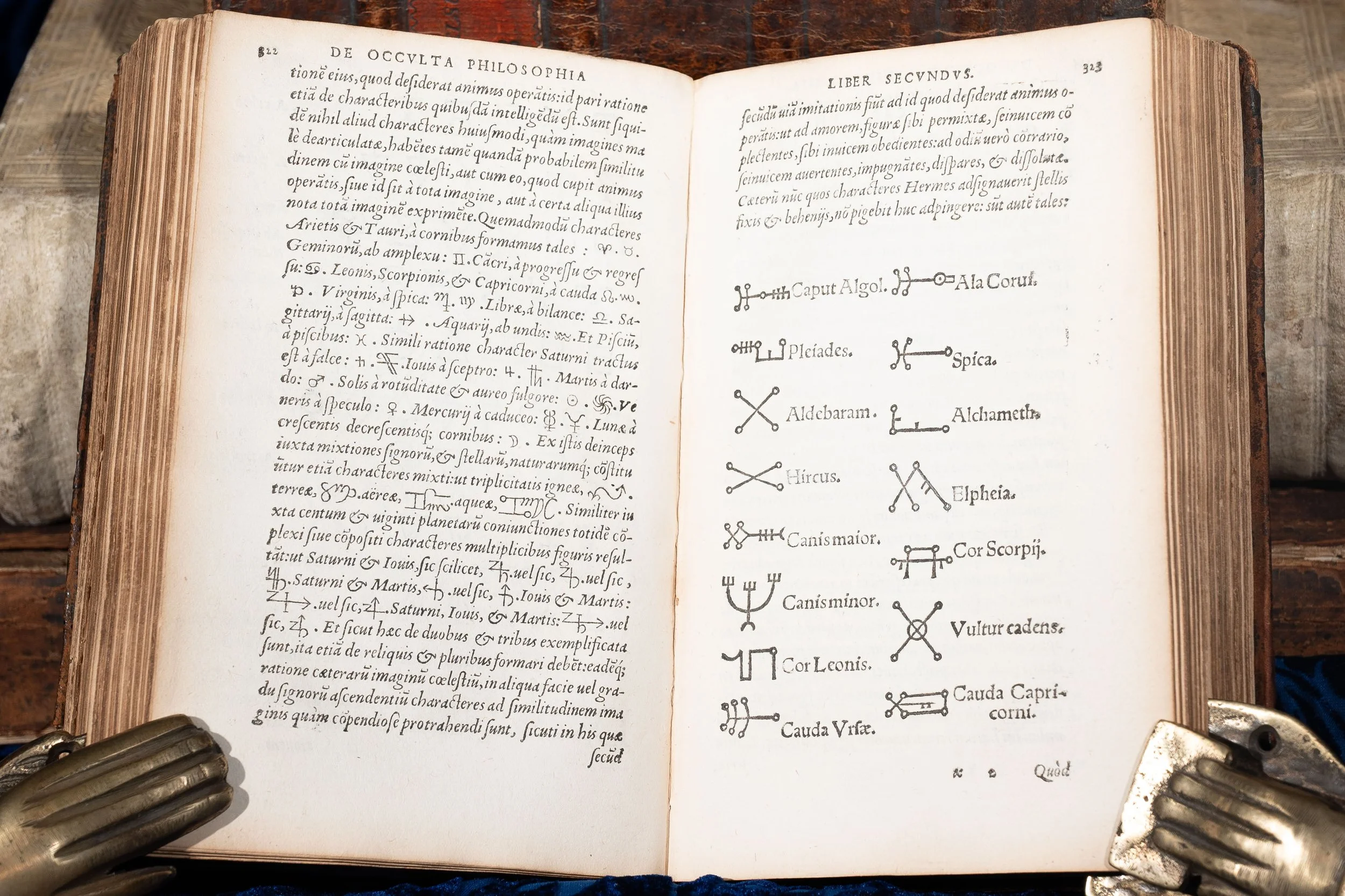 Image 6 of 20
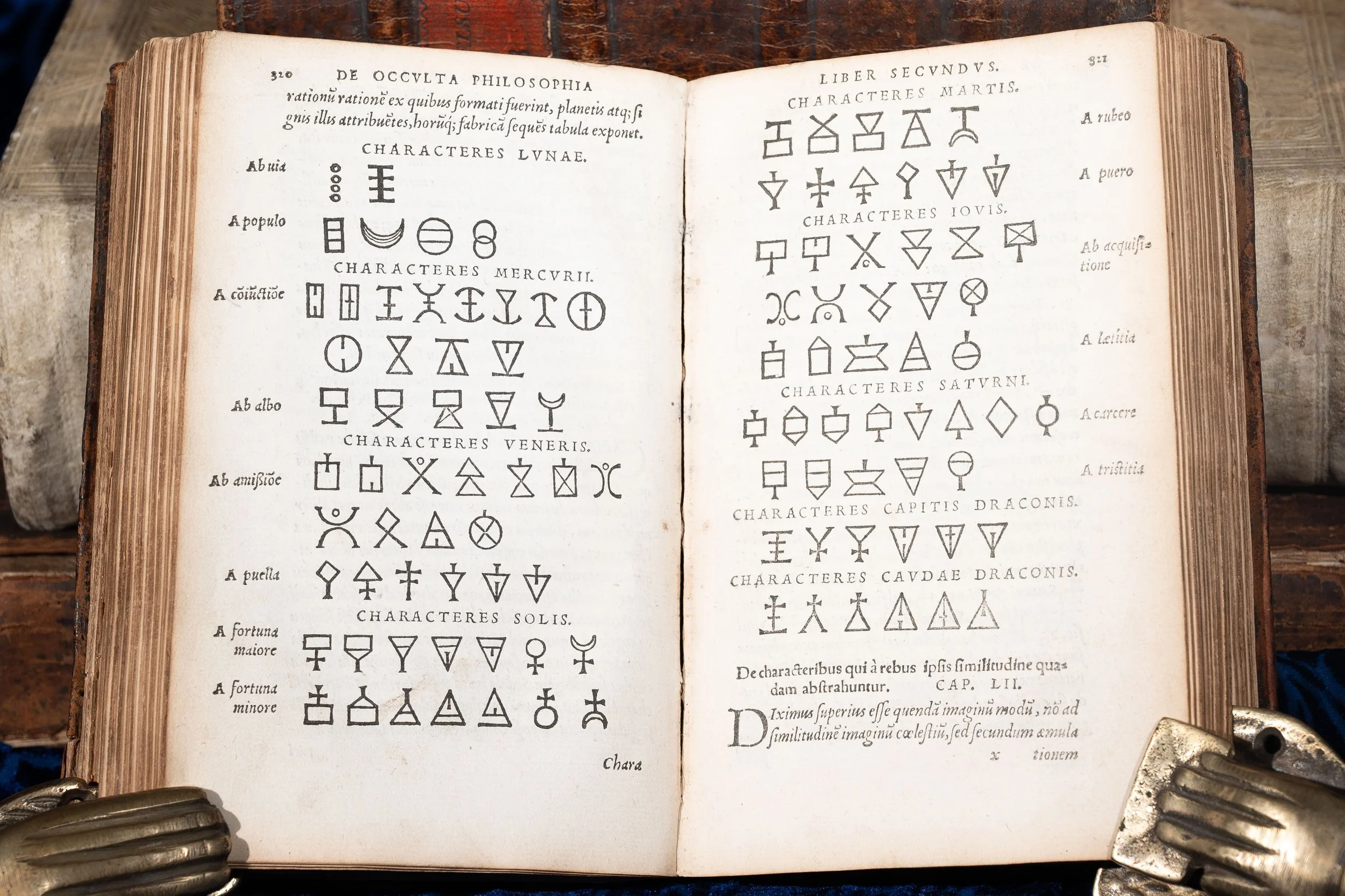 Image 7 of 20
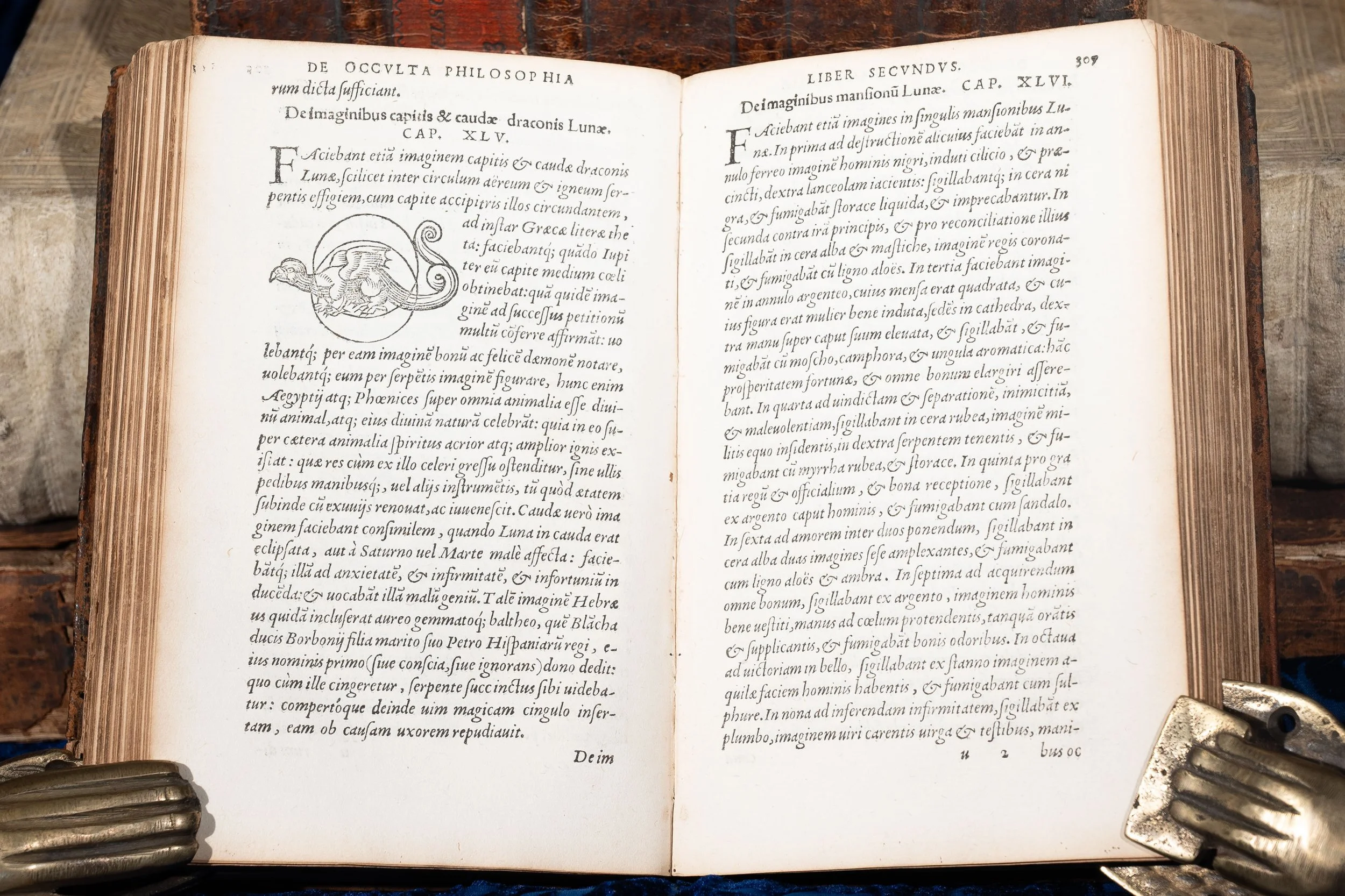 Image 8 of 20
 Image 9 of 20
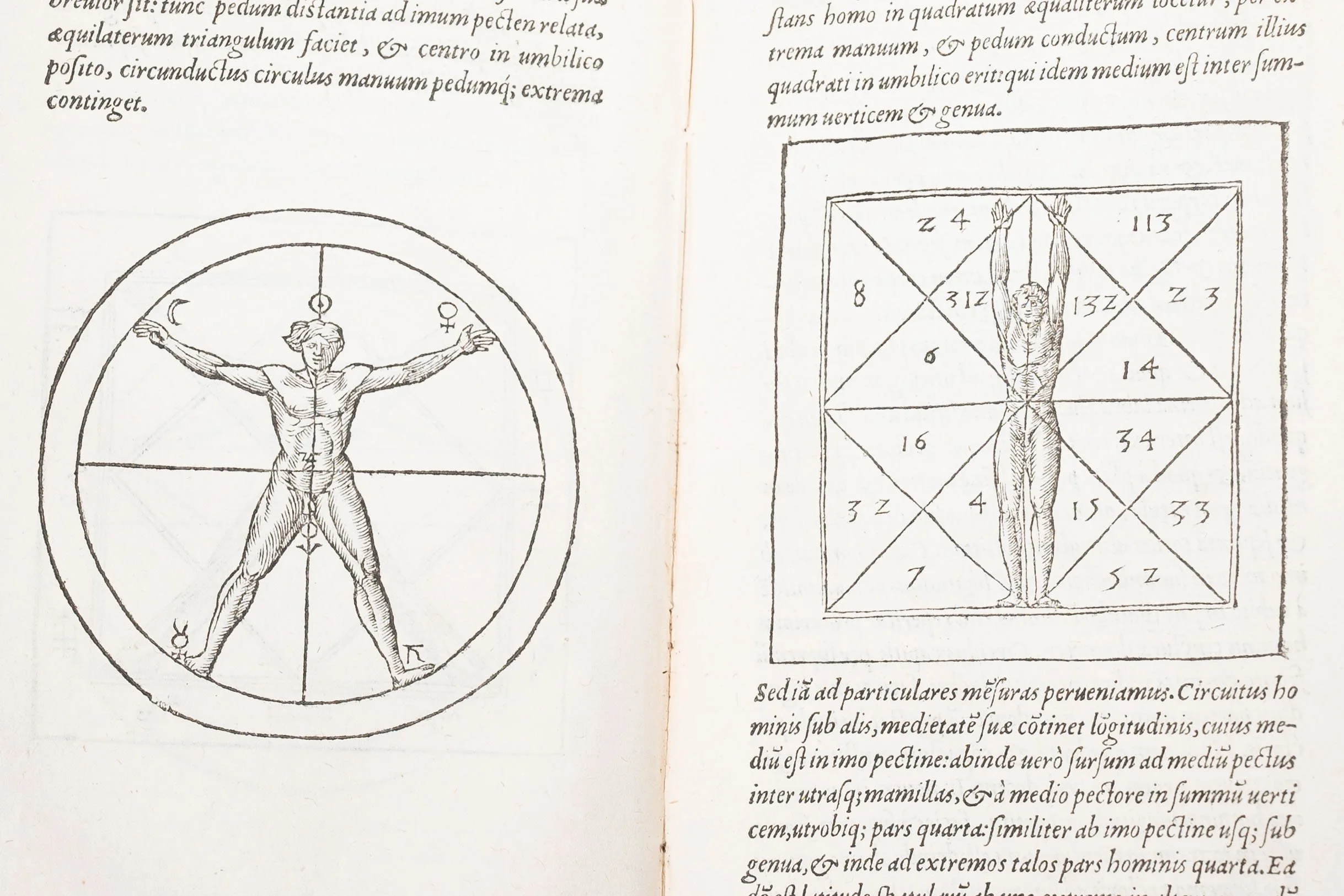 Image 10 of 20
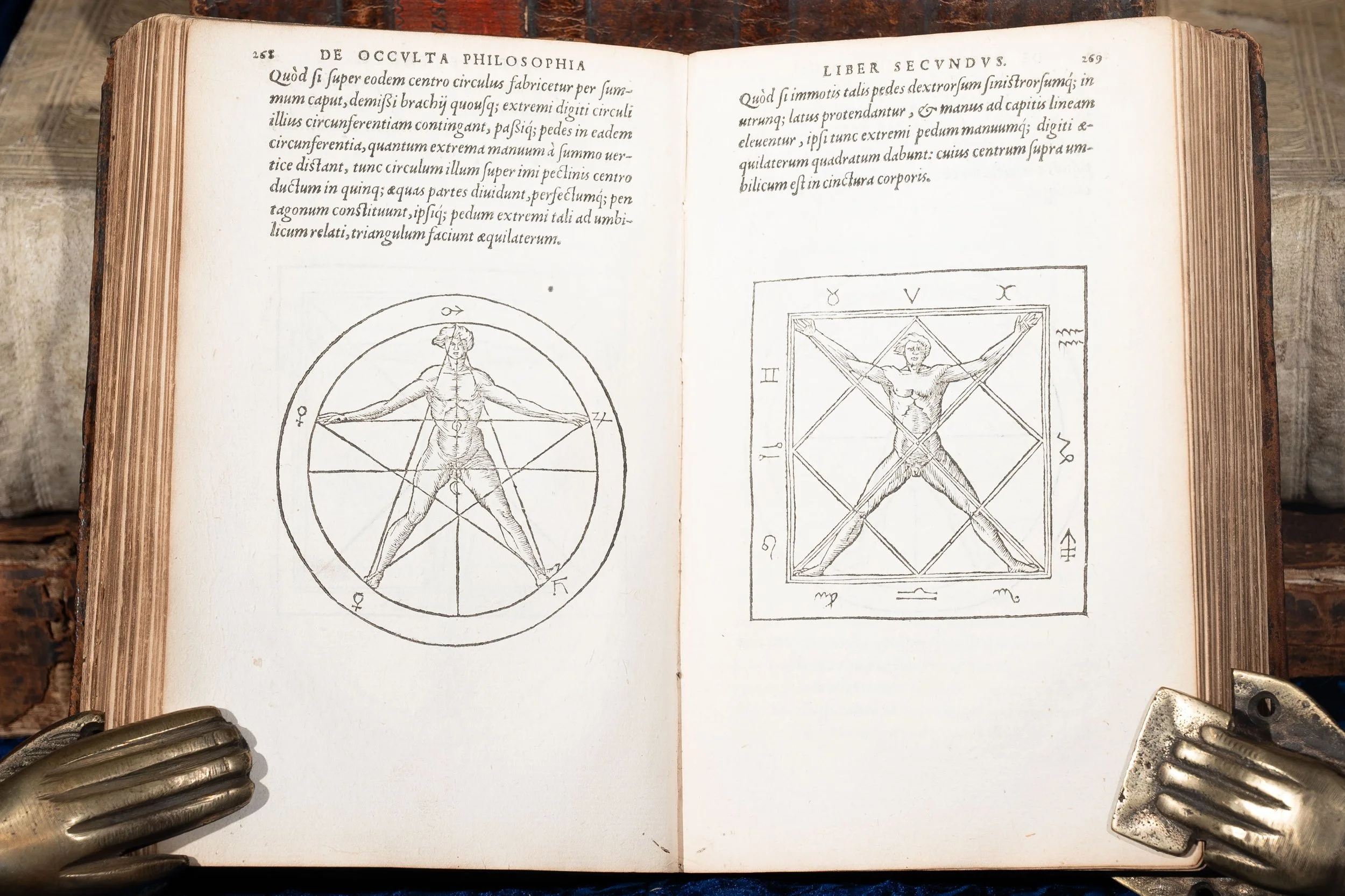 Image 11 of 20
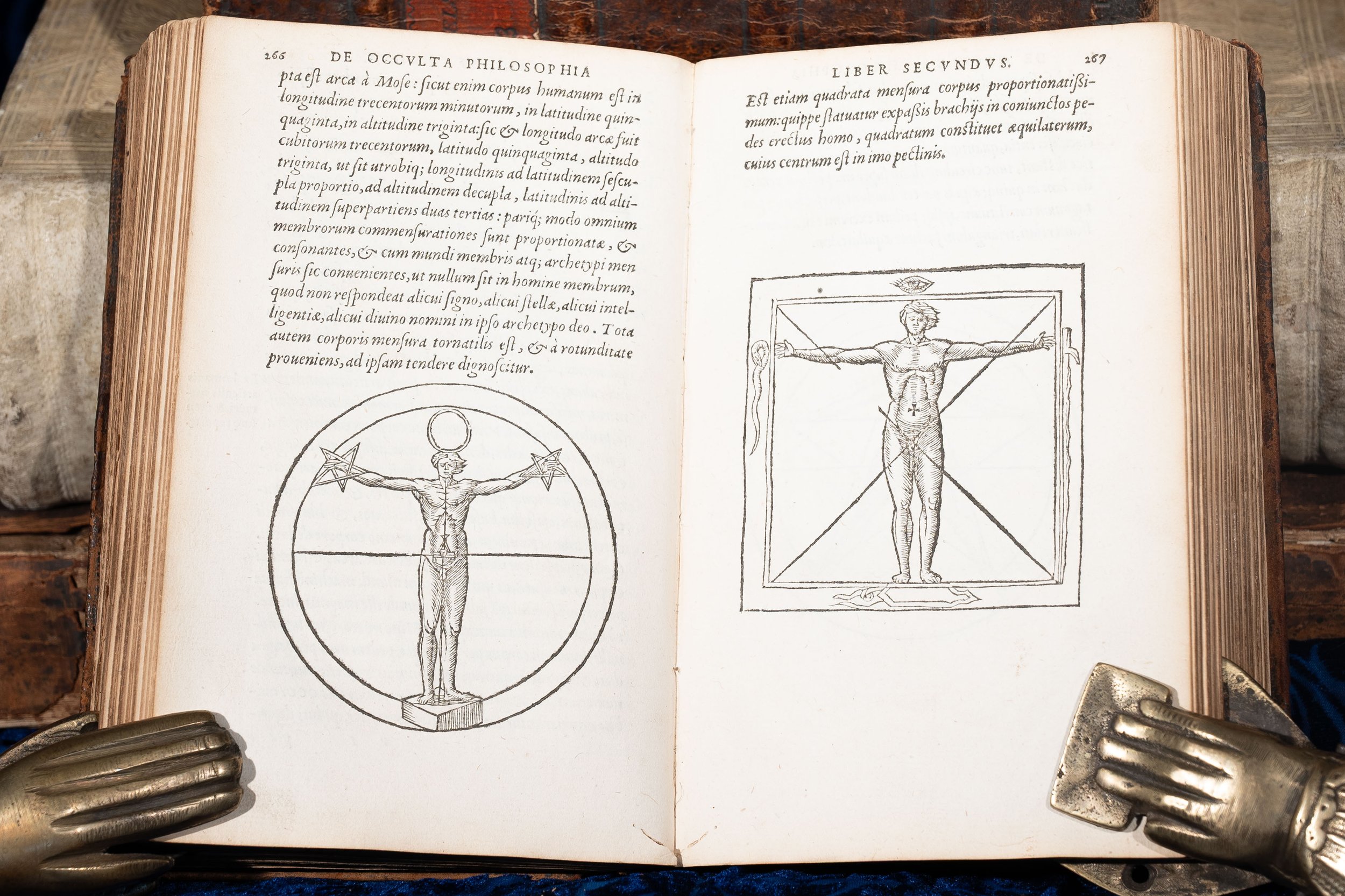 Image 12 of 20
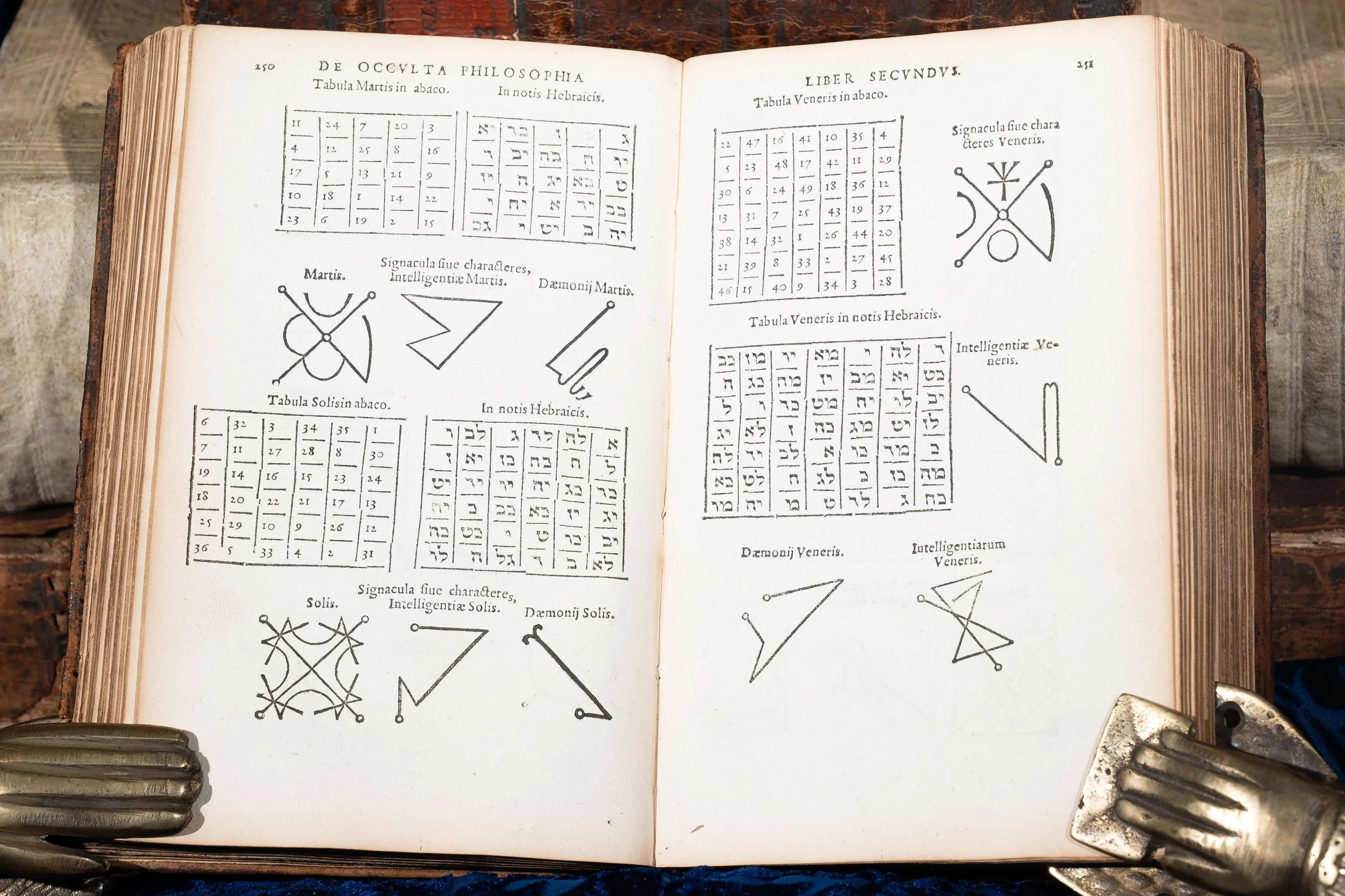 Image 13 of 20
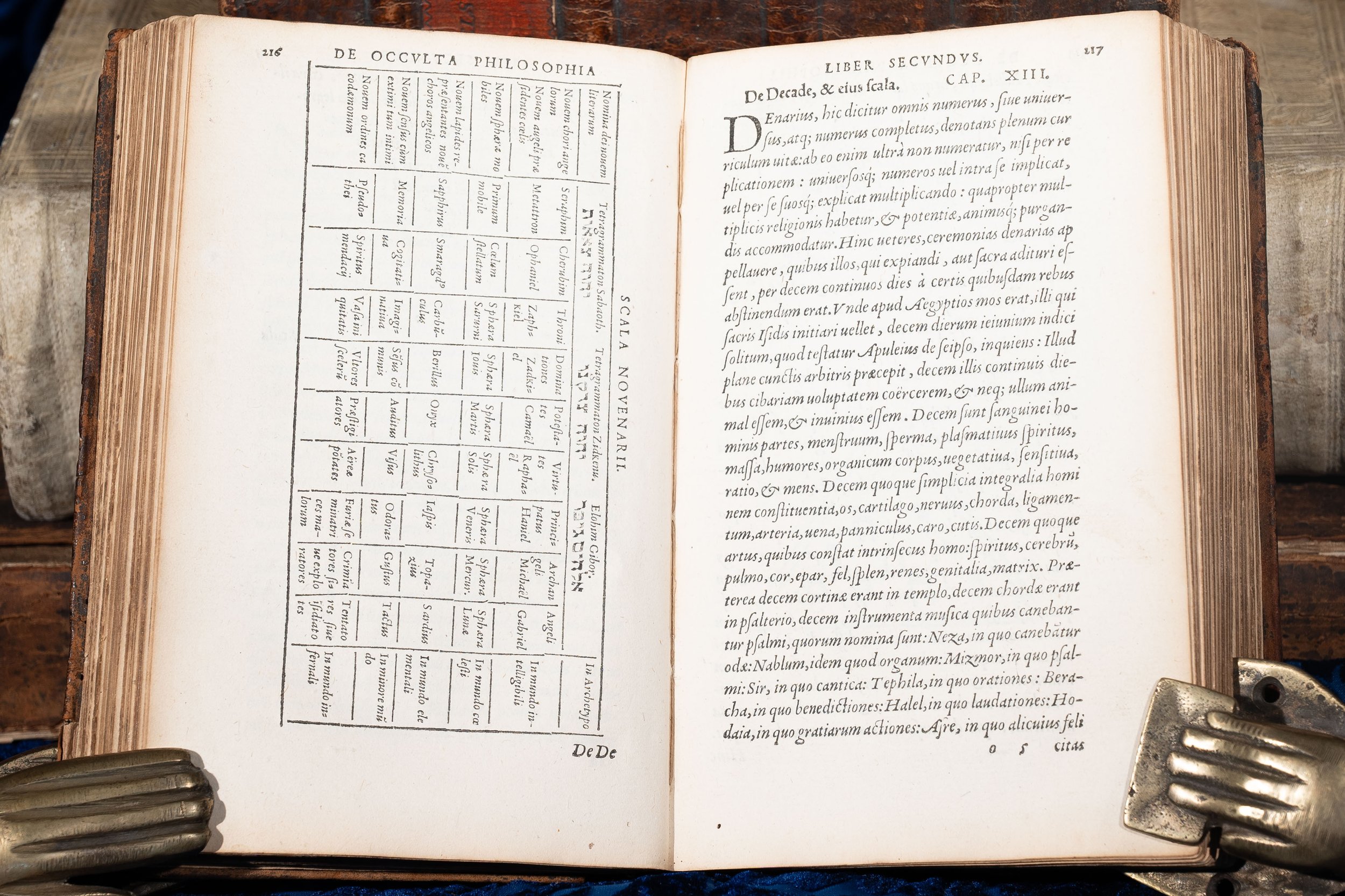 Image 14 of 20
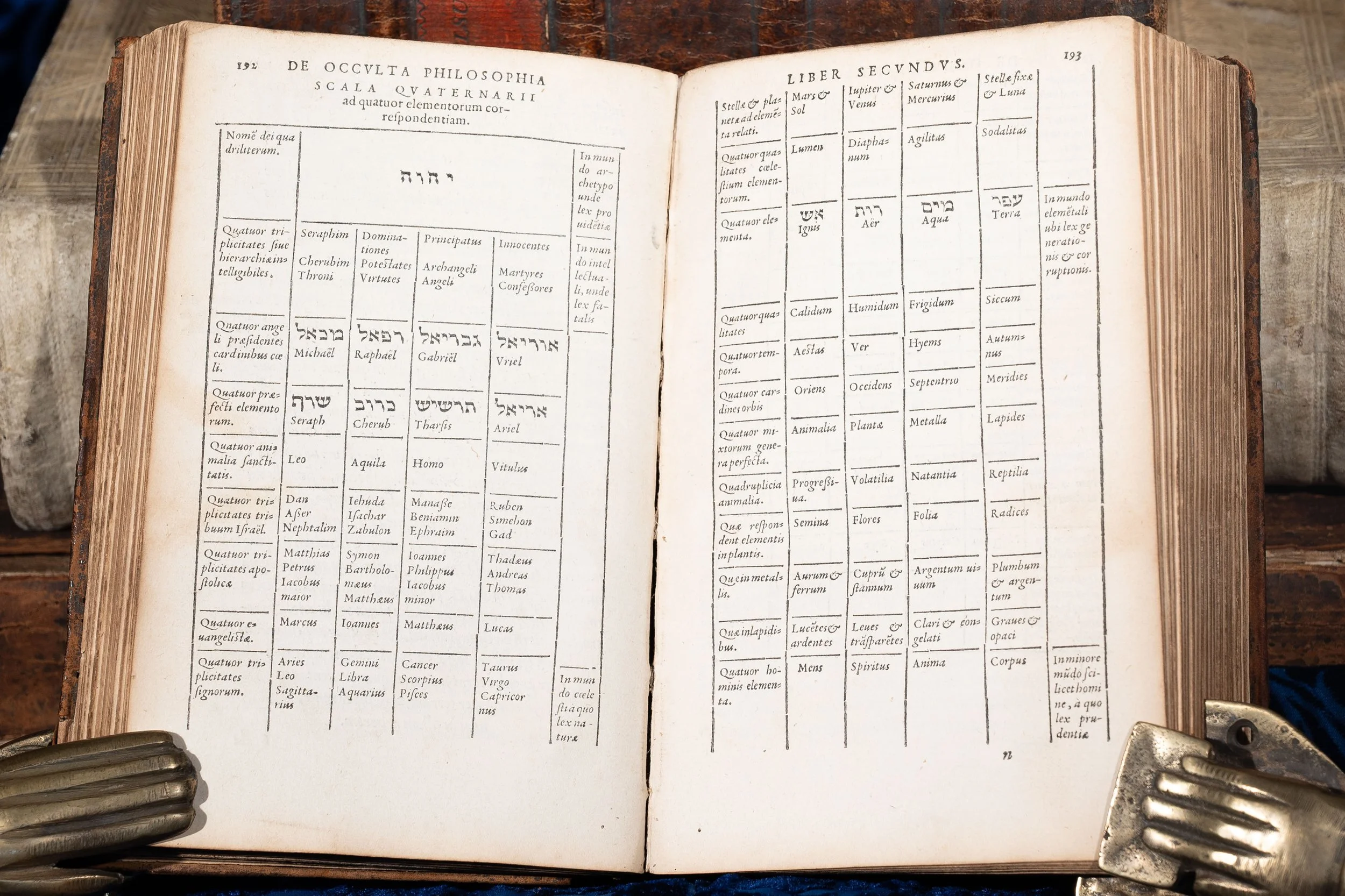 Image 15 of 20
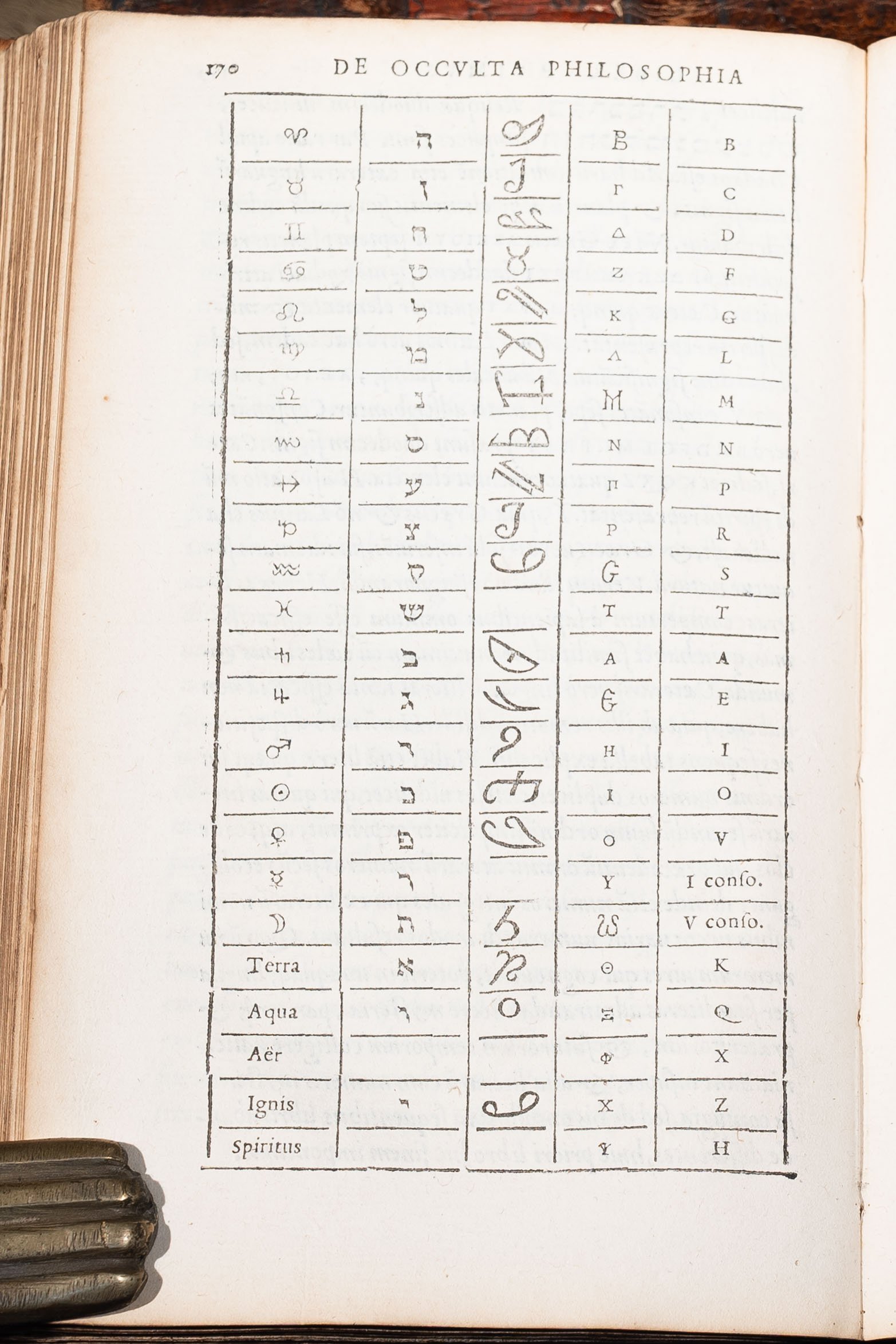 Image 16 of 20
 Image 17 of 20
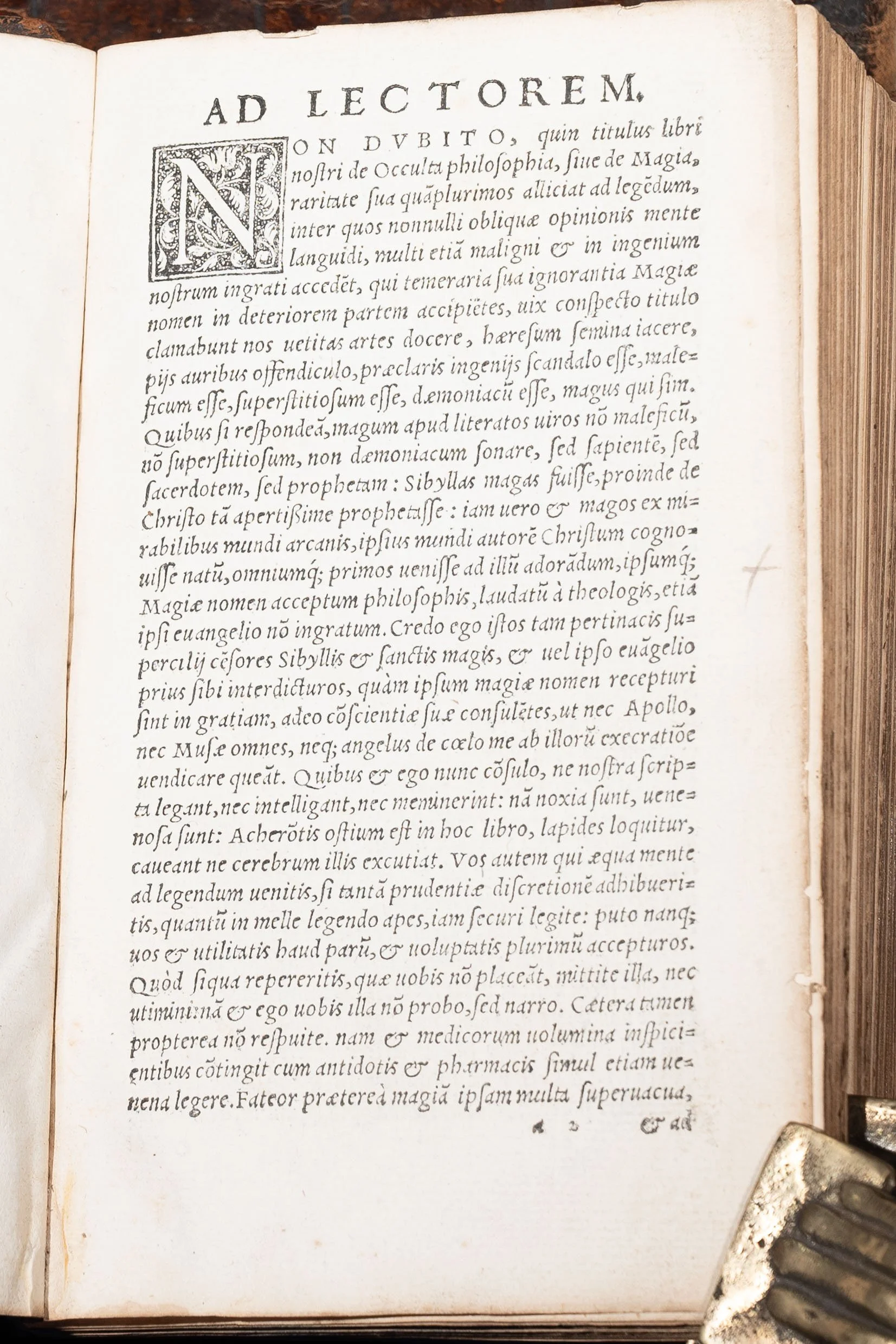 Image 18 of 20
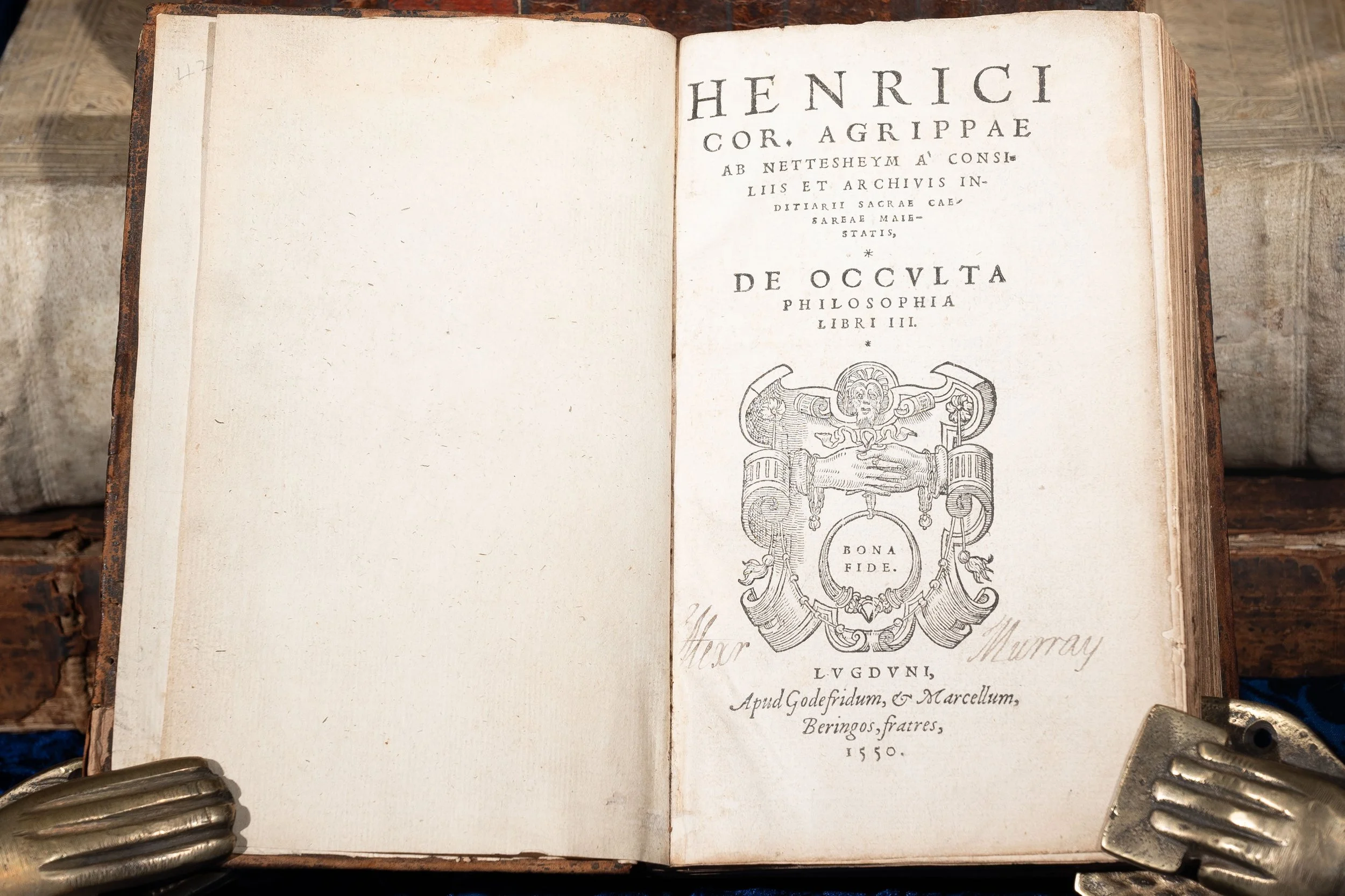 Image 19 of 20
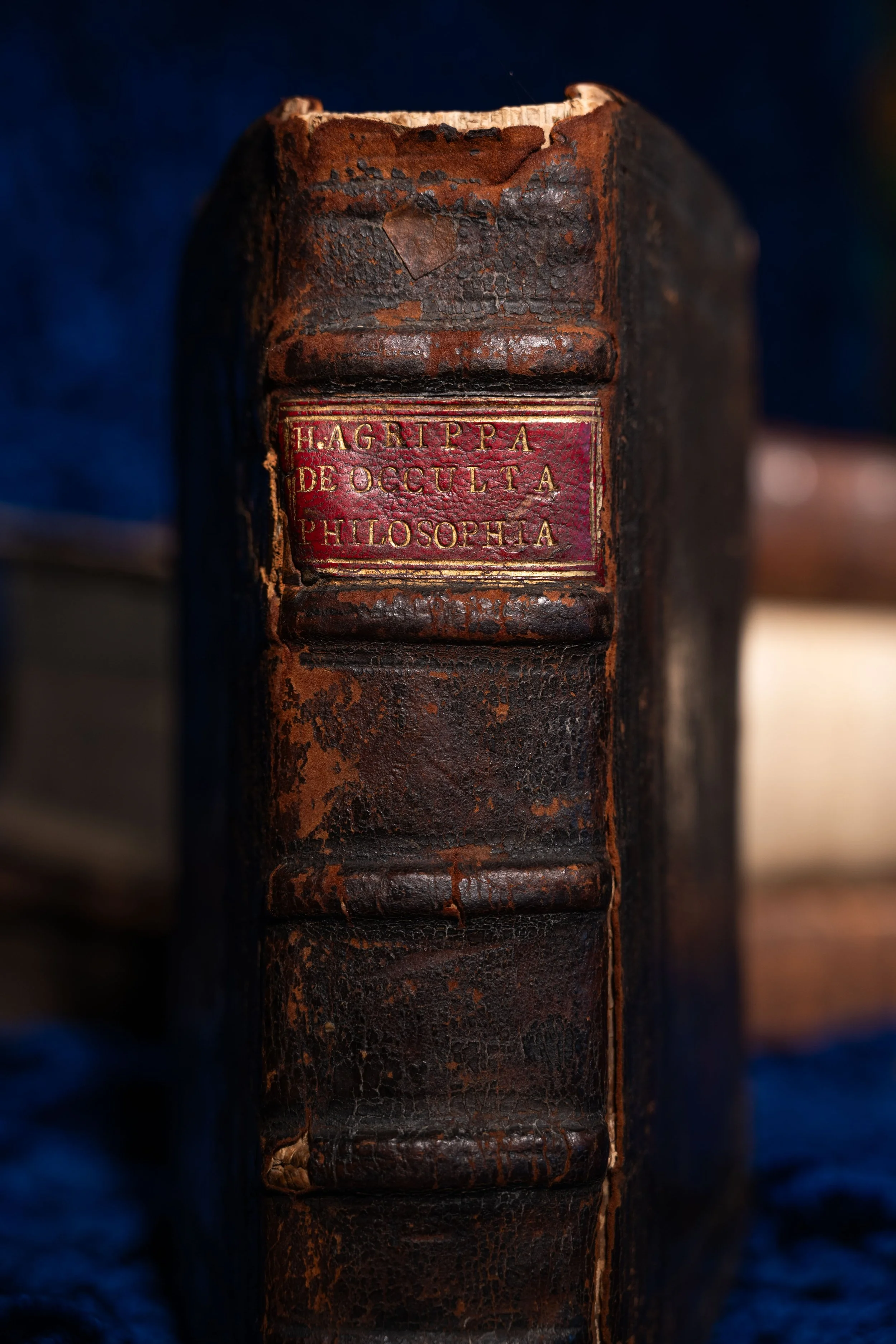 Image 20 of 20