The printer had just finished Saint Bernard’s collected works when an old manuscript supplied sermons and short treatises absent from the printed editions of Lyon and Paris. The Venetian shop at the sign of Hope issued them as a supplement in 1550, a year after the main edition. “We have set these beside the rest of his works,” the printer wrote, “like a limb cut from the body.” This two-volume set includes that supplement, bound at the front of the second volume.
Bernard of Clairvaux (1090–1153), the Cistercian monk and founding abbot of Clairvaux, wrote sermons and letters while intervening in the religious politics of his age. He supported Innocent II during a papal schism and preached the Second Crusade. Readers called him Doctor Mellifluus, the honey-flowing teacher. The second volume’s title goes a little further: “mellitissimus,” “most honeyed.”
The first volume includes his sermons on the biblical Song of Songs, continued after his death by Gilbert of Hoyland. It also lists In Praise of the New Knighthood, written for Hugh de Payens, the first Master of the Knights Templar. Bernard helped draw up the order’s Rule. The second volume prints his letters, treatises and early Lives.
One of those Lives describes a demon that preyed on a knight’s wife “with incredible lust.” In the account, Bernard gave her his staff to keep in her bed, then excommunicated the demon before a congregation holding lighted candles. The Malleus Maleficarum later retold the episode as a remedy against incubi.
The bindings retain blind-tooled calf and metal clasp fittings, with replaced spines. “D. BERN.” is inked across the fore-edges, a form of titling used when books were shelved with their spines facing inward. An early inscription on the first title page and the supplement’s title records monastic ownership and the use of the books by Brother Antonius Rebellus.
BERNARD OF CLAIRVAUX, Saint. D. Bernardi doctoris melliflui ac primi abbatis Claraeuallensis coenobii opera quatenus in hunc usque diem extare noscuntur, omnia accuratissima recognitione & solerti collatione ad fidem exemplarium permultae antiquitatis restituta natiuae integritati. Quae nostra haec editio praeter superiores nunc primum typis euulgat, nosse licebit ex catalogo & appendice. Venetiis: ad signum Spei, 1549. [Second volume:] D. Bernardi doctoris mellitissimi ac primi abbatis Claraeuallensis coenobii operum tomus secundus. Venetiis: ad signum Spei, 1549. Bound with, preceding the second volume: Opuscula quaedam, et sermones D. Bernardi Claraeuallensis coenobii abbatis primi, quae nec in Lugdunensibus, neque in Parisiensibus impressionibus reperiuntur, nuperrime autem in quodam uetustissimo exemplari inuenta, suis operibus nunc per me excusis addita. Venetiis: ad signum Spei, 1550. The Venetian edition of the collected works in two volumes, with its separately issued supplement of 1550.
Physical Description: Two volumes, quarto, 8 1/2 x 6 inches (21.5 x 15 cm), each about 2 1/2 inches (6.5 cm) thick. Volume one: title, catalog of works, dedicatory letter of Franciscus Comestor of the Sorbonne to Louis de Rye, bishop of Geneva, an index of Scripture passages and an index of sentences, then 451 numbered leaves, followed by the table to Gilbert's sermons and a final blank. Volume two: the 1550 supplement, 45 numbered leaves and three unnumbered leaves of index; then the title of the second volume and 485 numbered leaves, ending with epitaphs of Bernard, his metrical testament and a short errata. The woodcut device of the sign of Hope on all three title pages: Hope turns her face to the sun among chests and bales, framed by Psalm 39, "Blessed is the man whose hope is the Lord, and who has not looked to vanities and lying follies." Text in two columns with printed side-notes and woodcut initials.
Binding: Contemporary calf over boards, blind-tooled with roll borders, including a roll of portrait medallions. Hinged metal clasps and catches. Rebacked in brown calf with raised bands. Edges stained red, with "D. BERN." inked in large letters across the fore-edge of each volume.
Condition: Rebacked. Covers scuffed and rubbed, with surface losses to the leather, heaviest around the clasp plates; corners worn. One volume keeps both of its clasps; on the other, a clasp is half broken. Damp staining to the lower margins of the first and last leaves of both volumes. Lower outer corners of the title leaves and facing blanks chipped, without loss of text. Small wormholes through the title and early leaves of the first volume, two of them in the woodcut device, and worm tracks across the final blank. An ink blot over one woodcut initial in the 1550 supplement. A few early ink marks: a note in the margin of the catalog of works, a cross in the Assumption sermons, underlining in the letters. Otherwise a clean, crisp text.
Provenance: Sixteenth-century inscription below the imprint on the first title page, "Coenobij Costensis, usu[m] uero obtinet Frater Antoni[us] Rebellus" ("Of the monastery of Costa; Brother Antonius Rebellus holds it for his use"), repeated on the title of the 1550 supplement. An early flourished signature on the first title page and on the front blank of the second volume. Later pencil marks "39-40-TEO" and "151" on the front endleaves of the second volume.

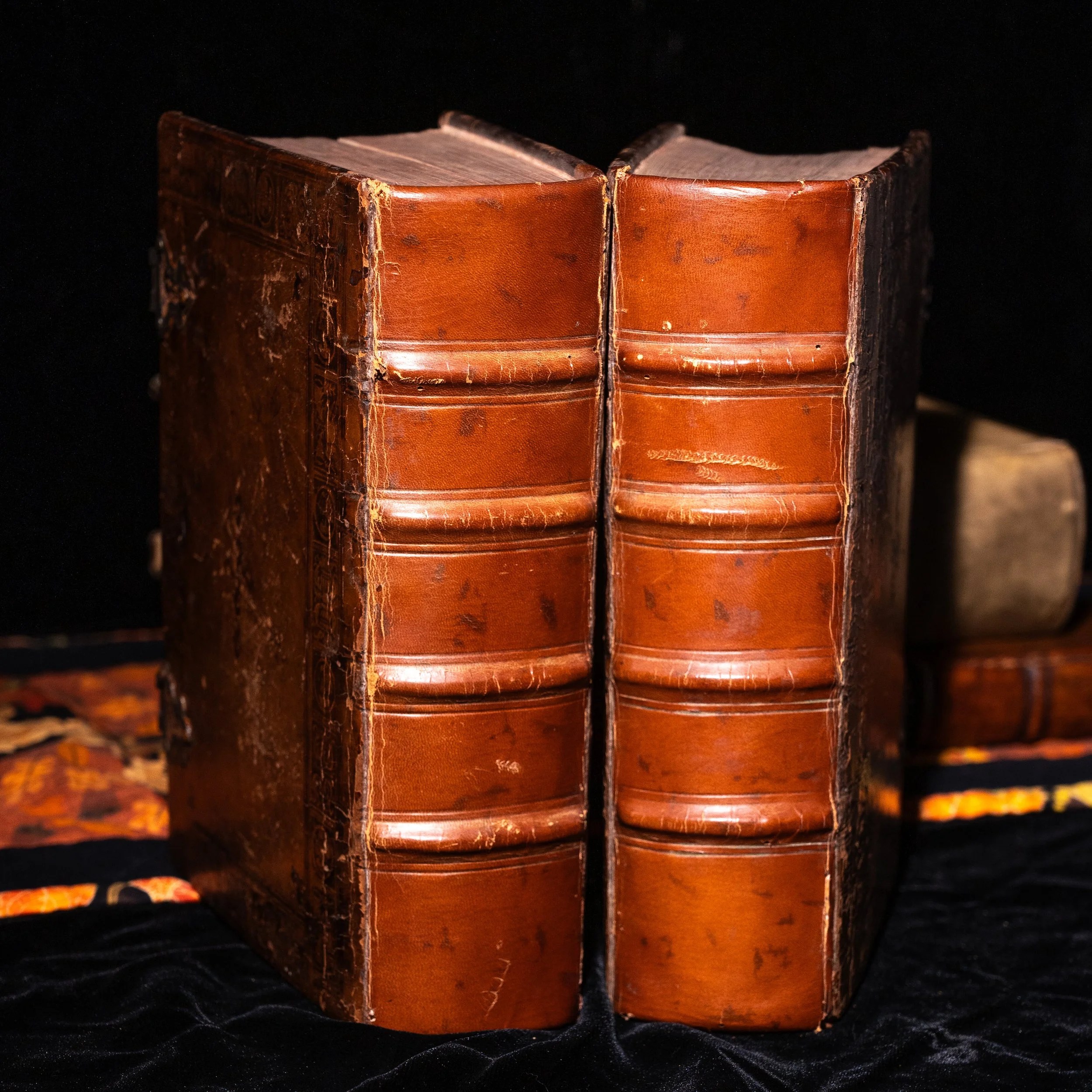 Image 1 of 26
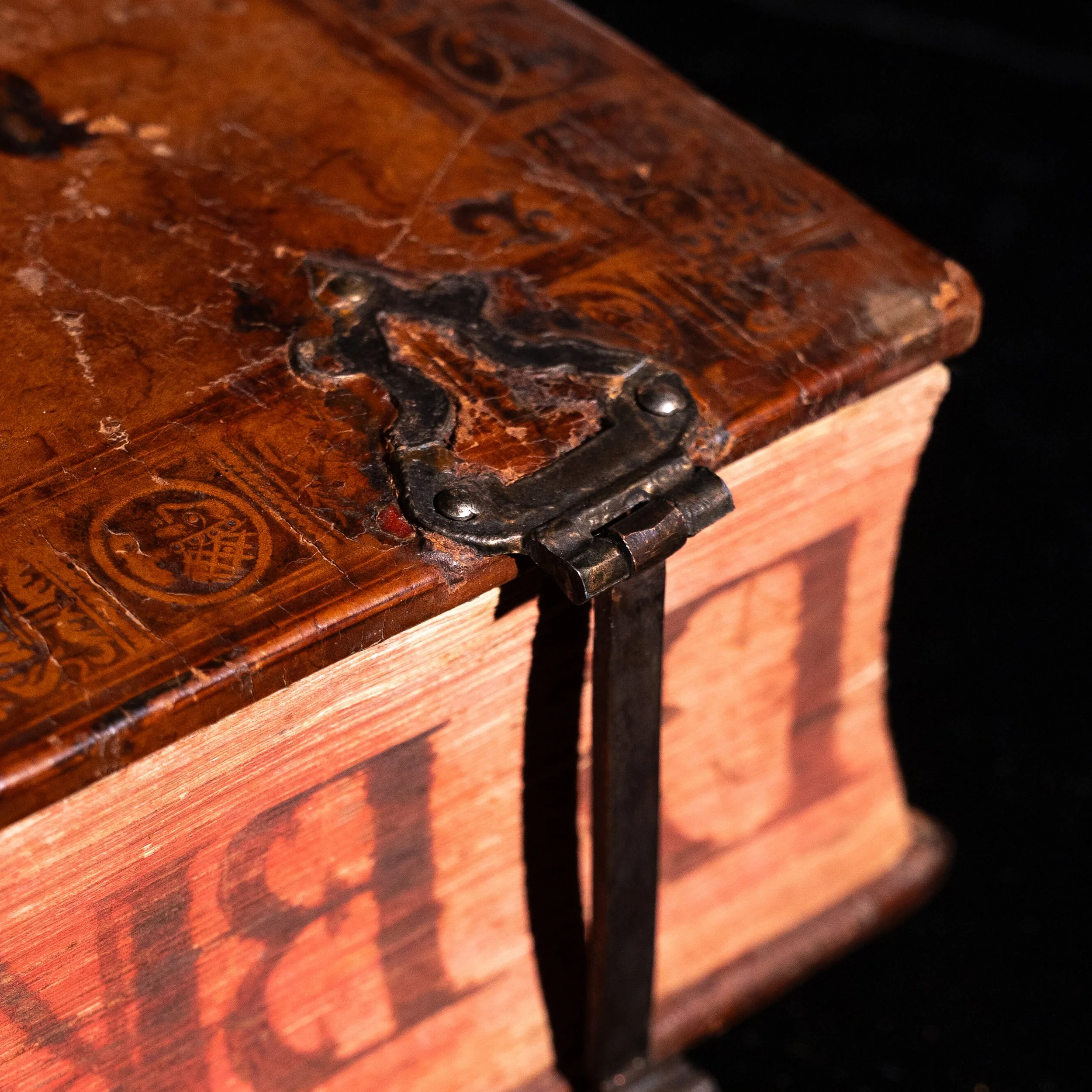 Image 2 of 26
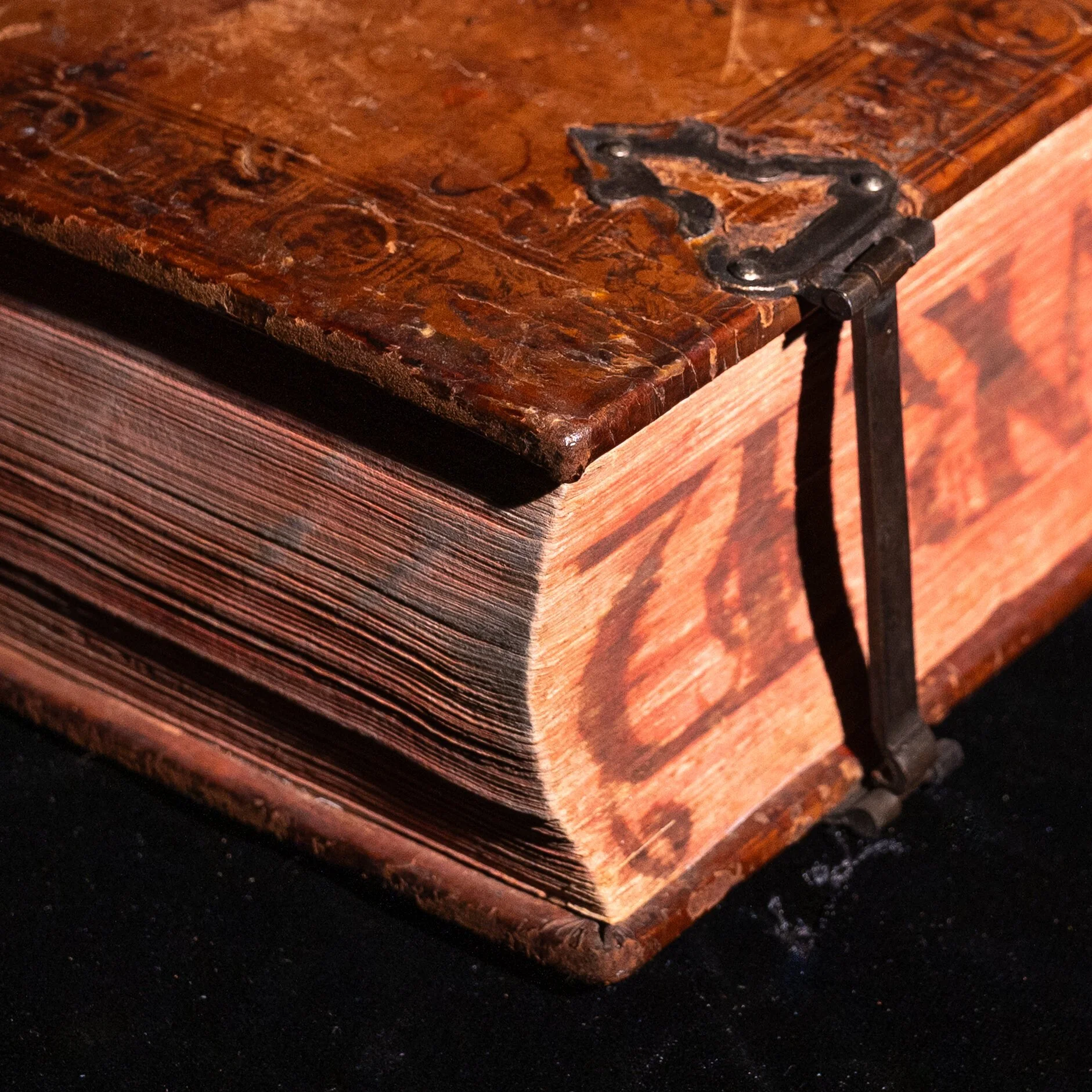 Image 3 of 26
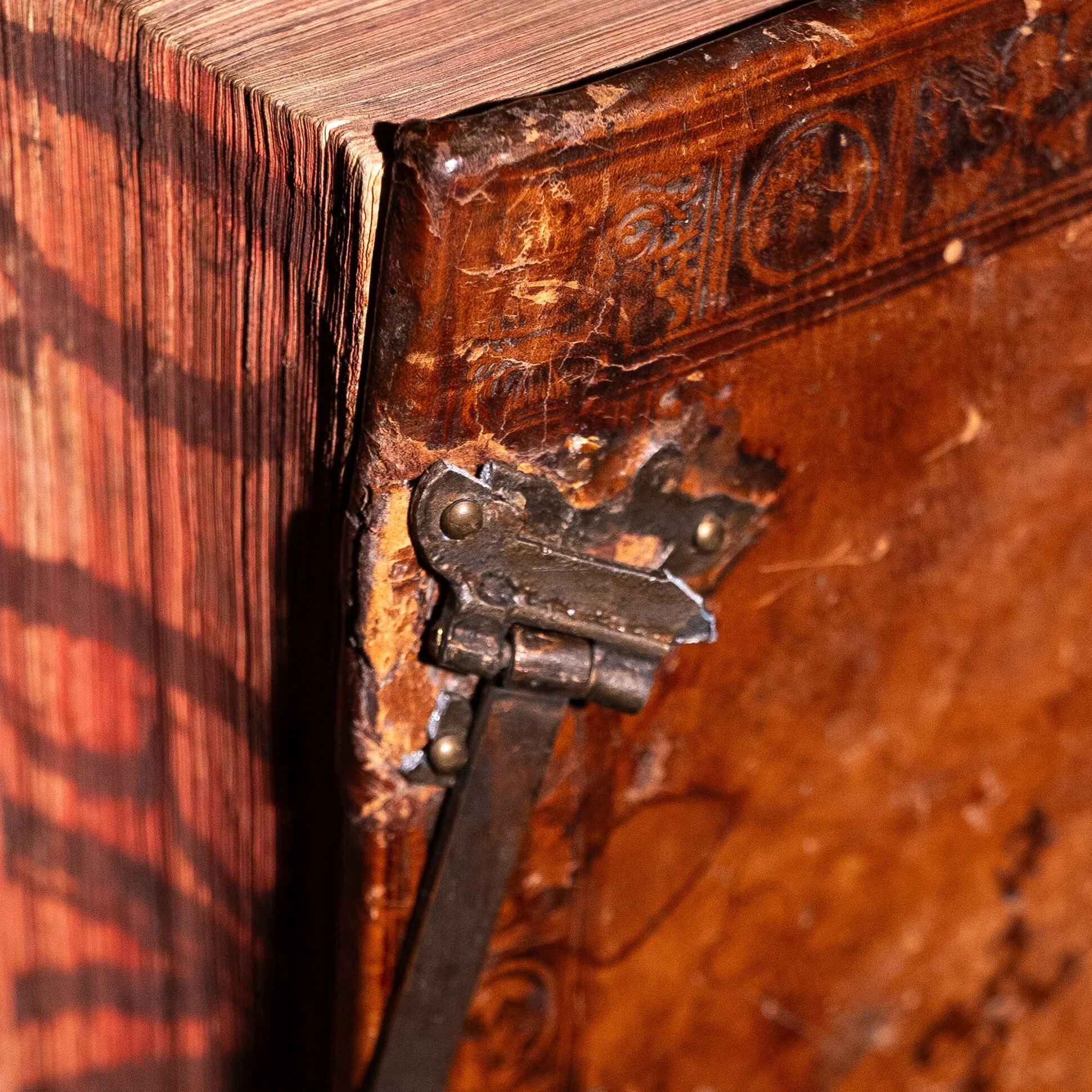 Image 4 of 26
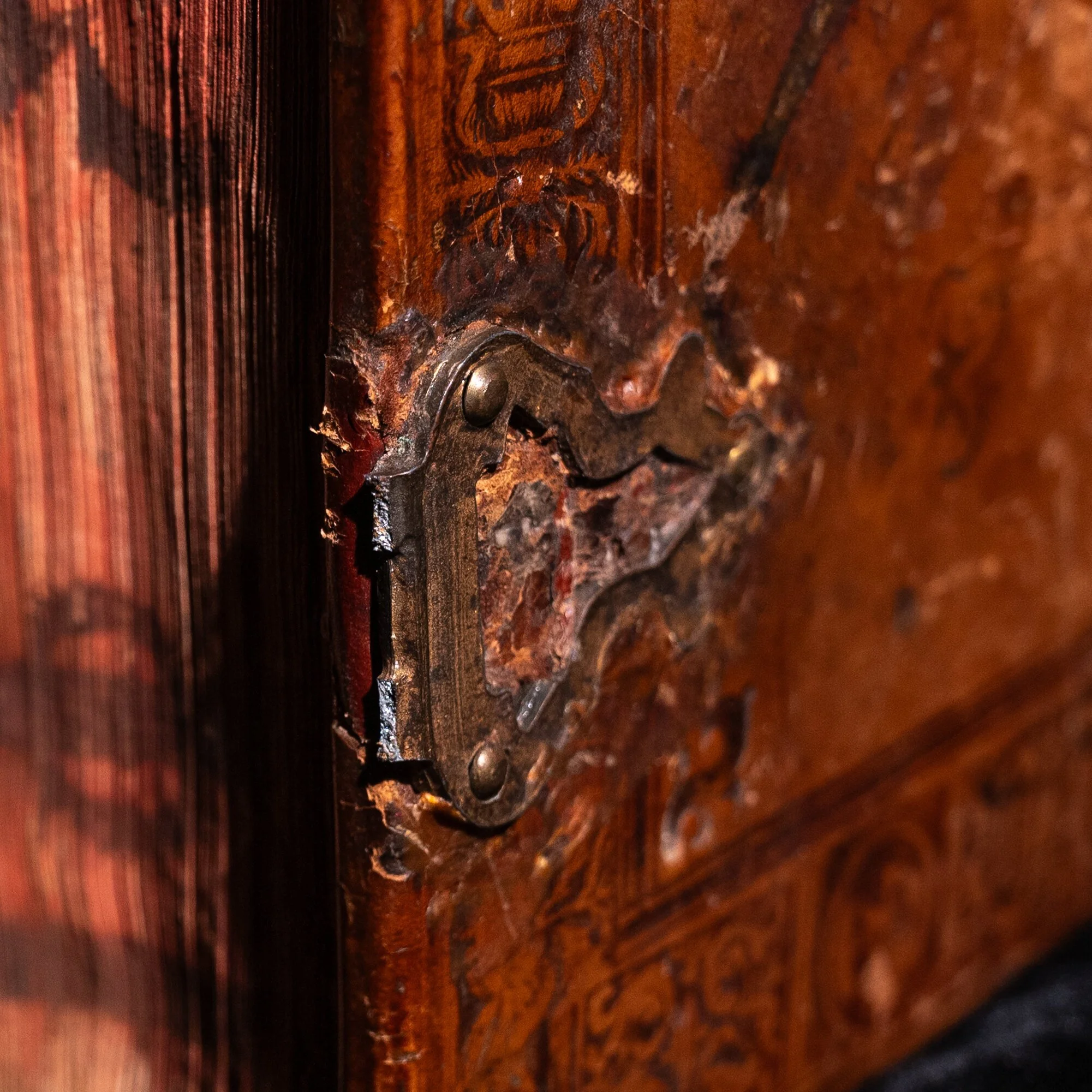 Image 5 of 26
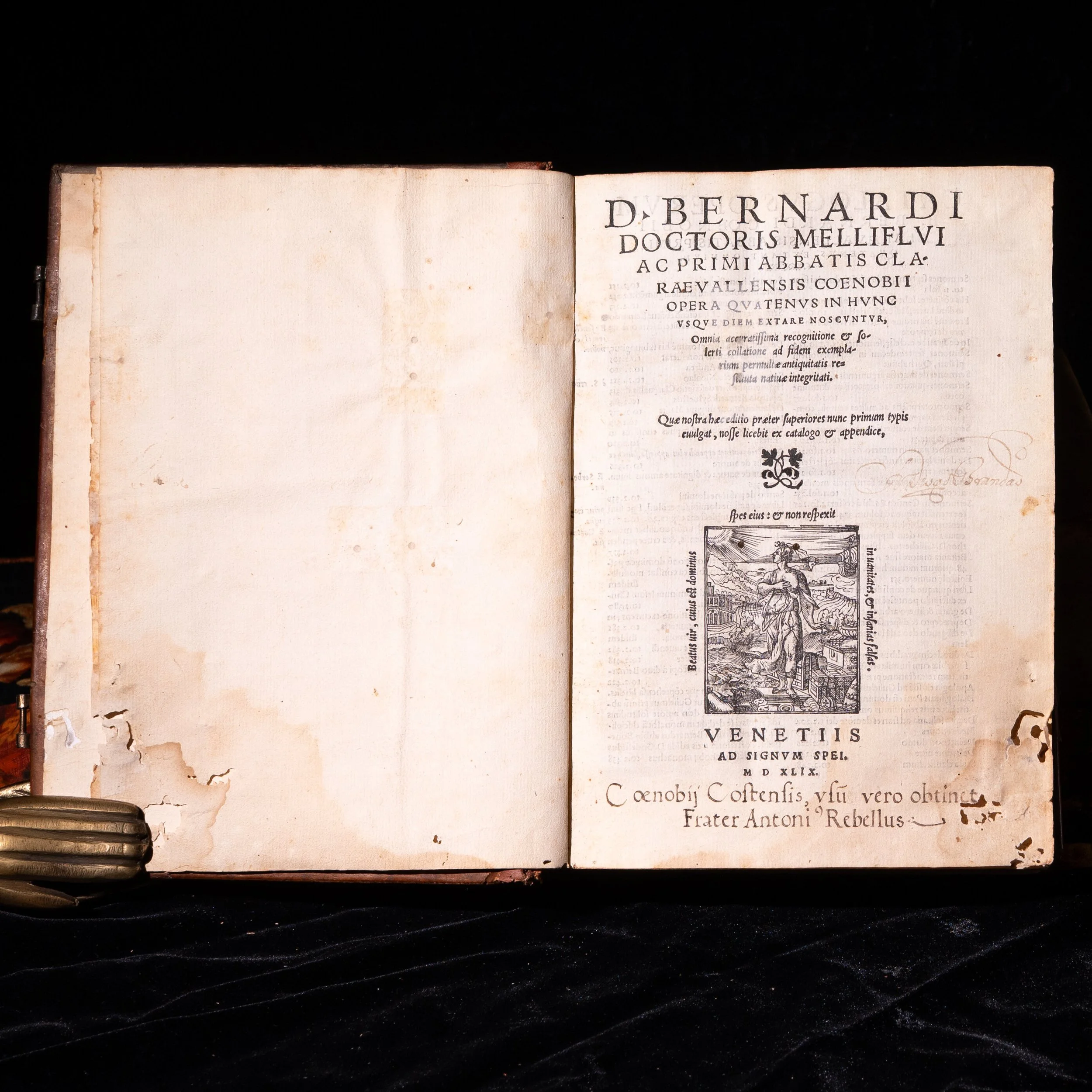 Image 6 of 26
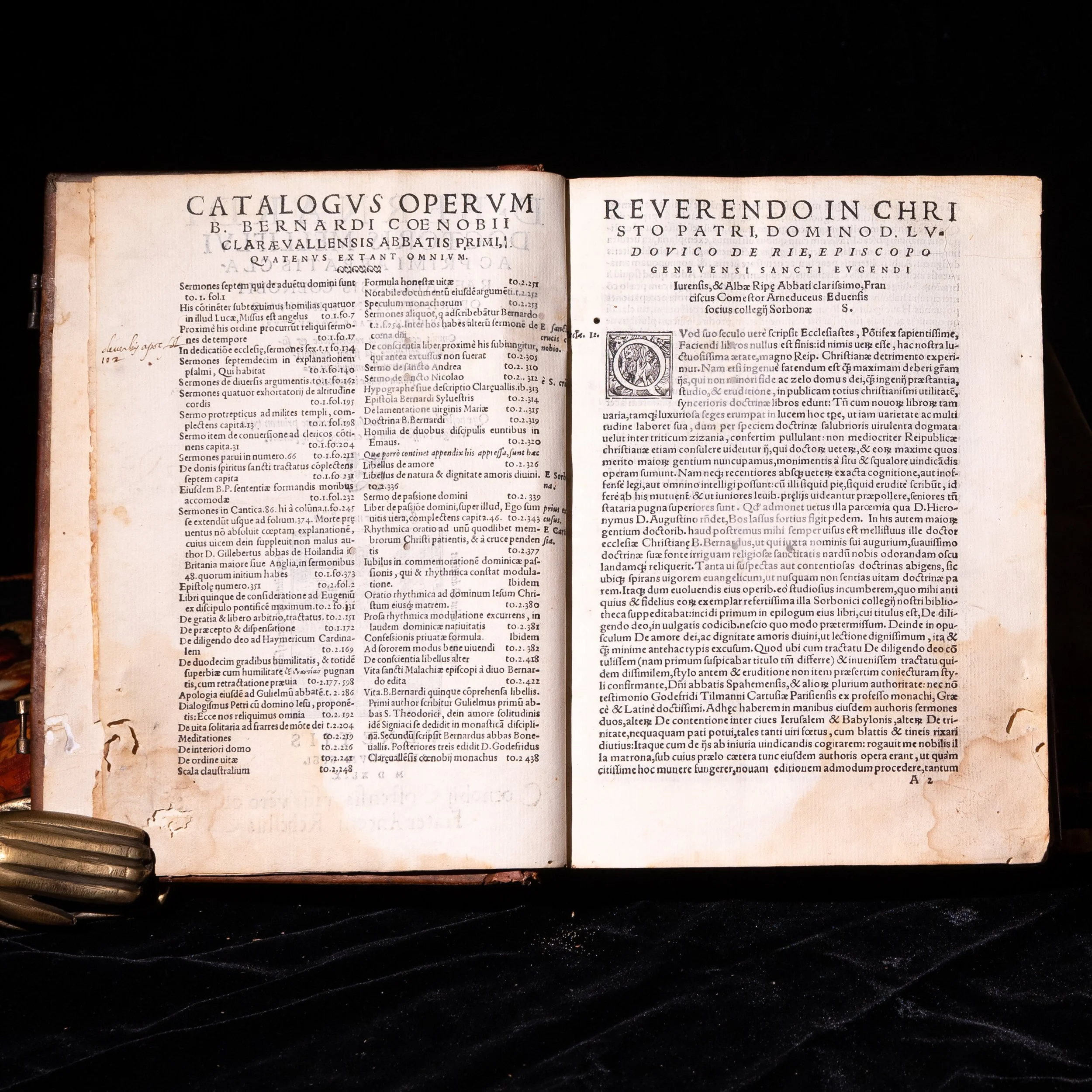 Image 7 of 26
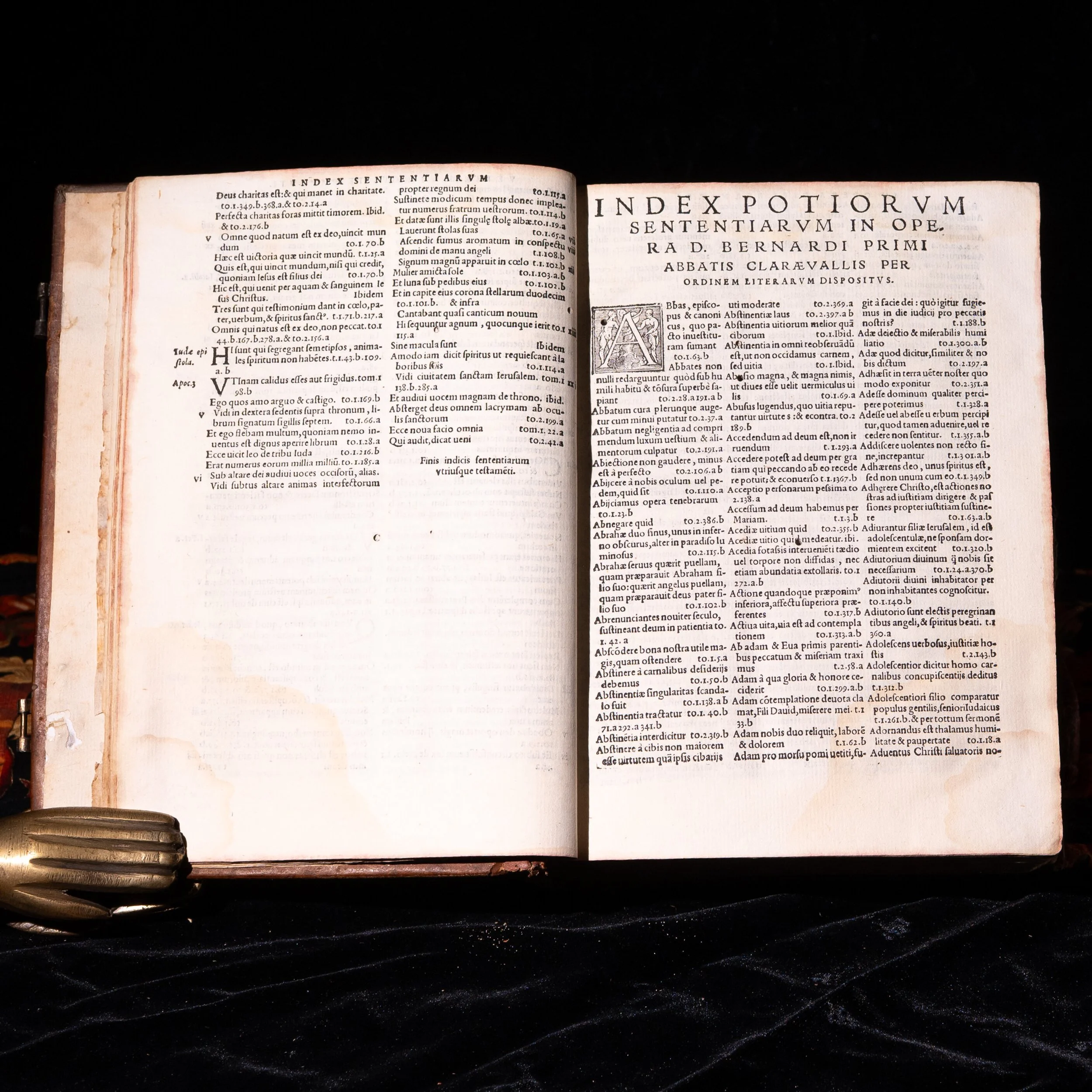 Image 8 of 26
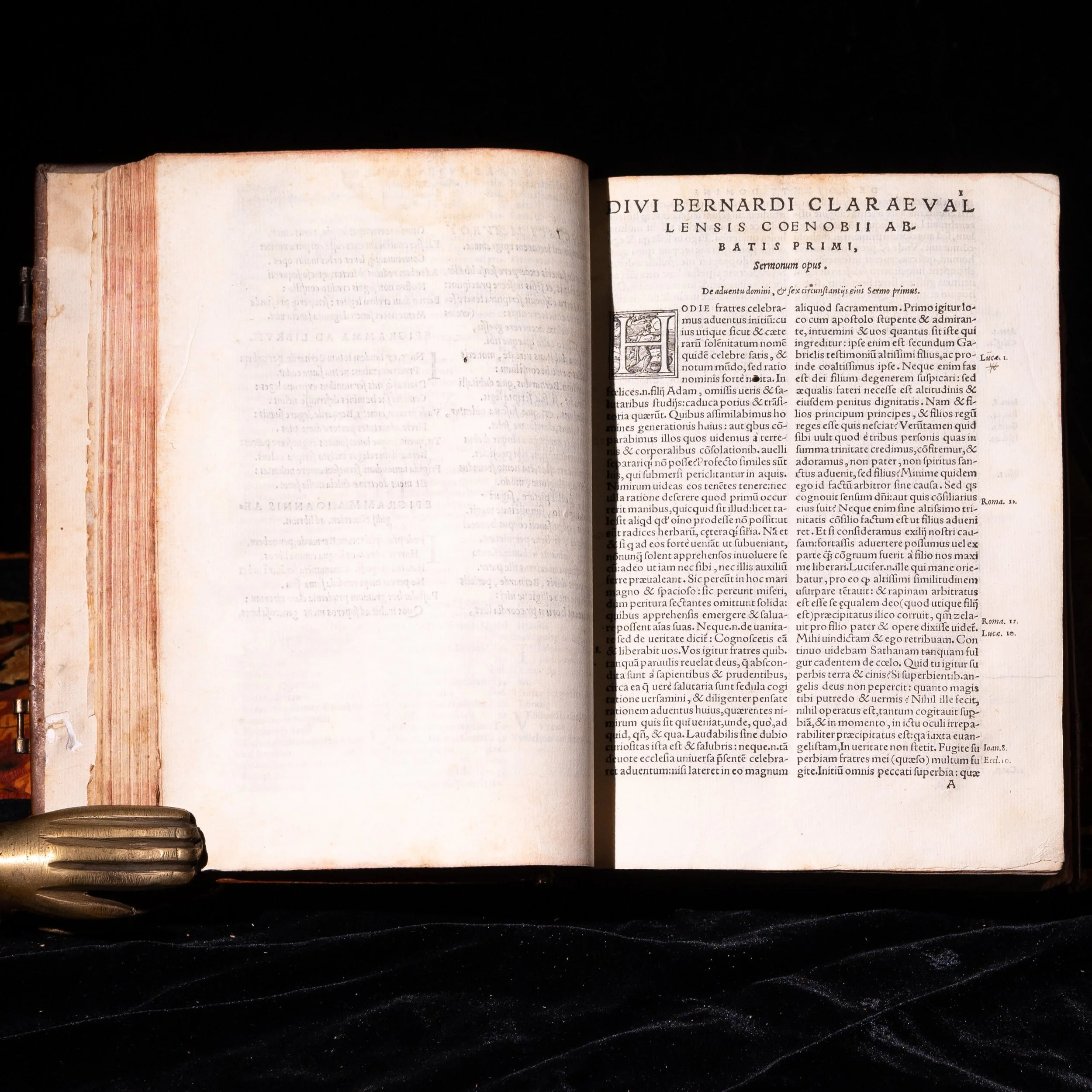 Image 9 of 26
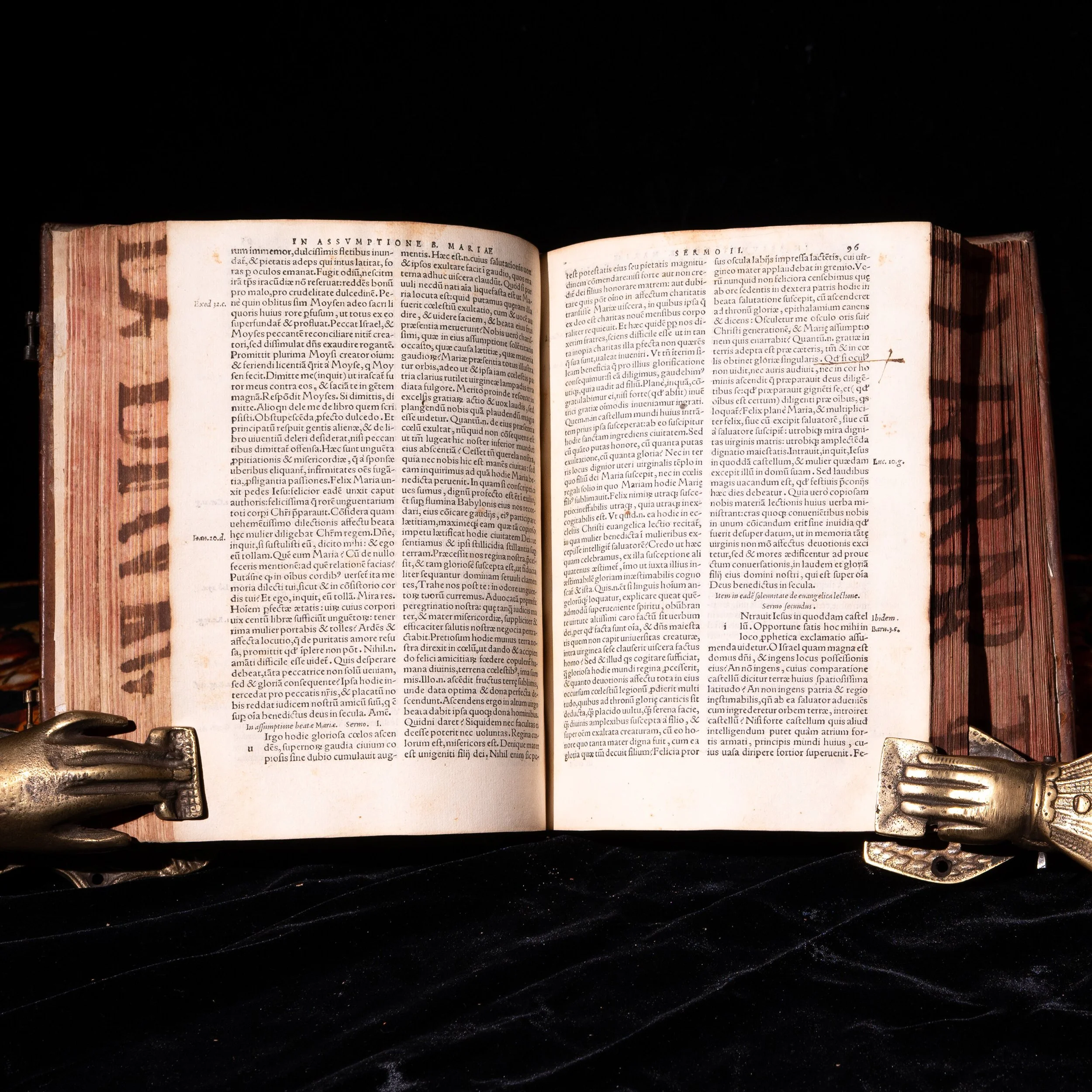 Image 10 of 26
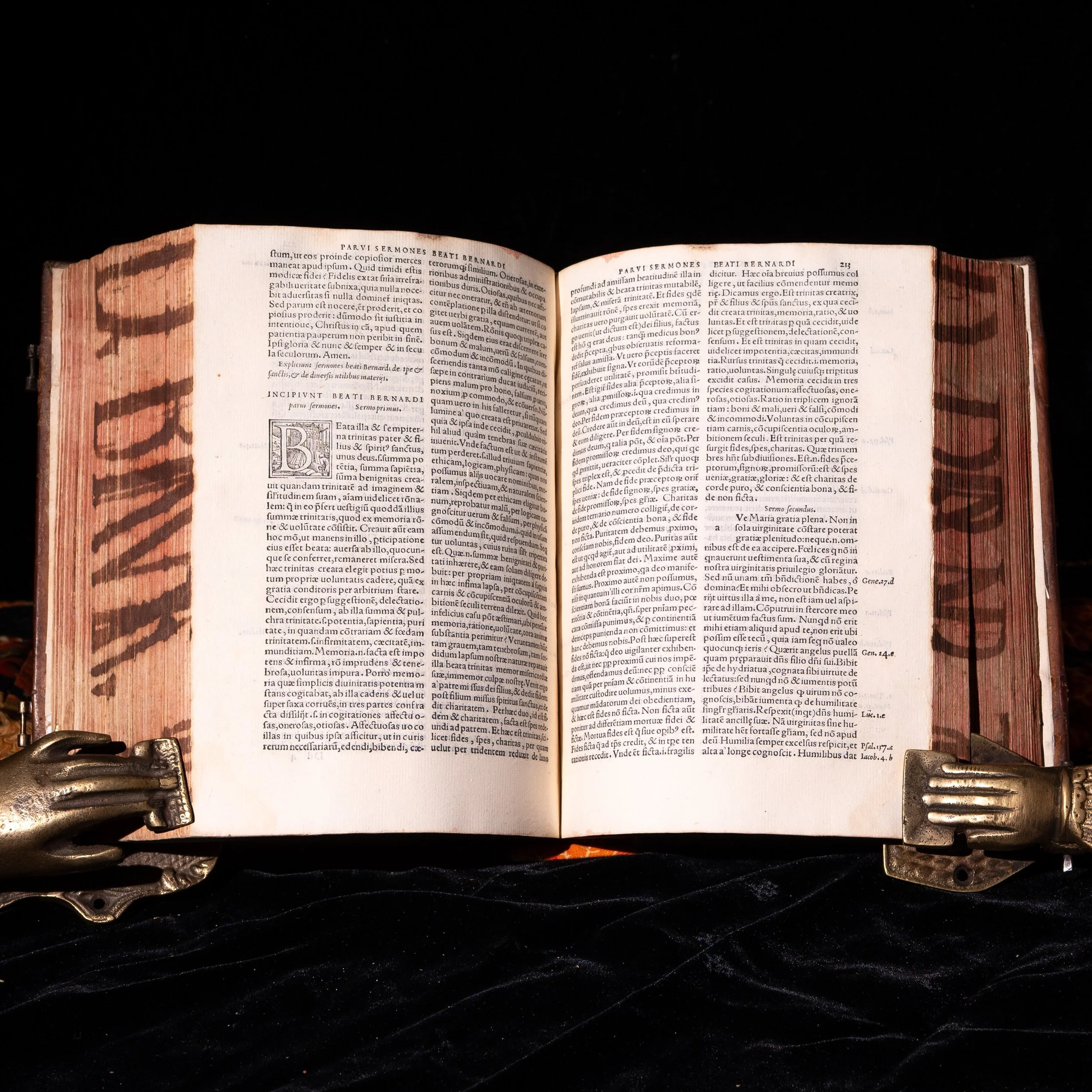 Image 11 of 26
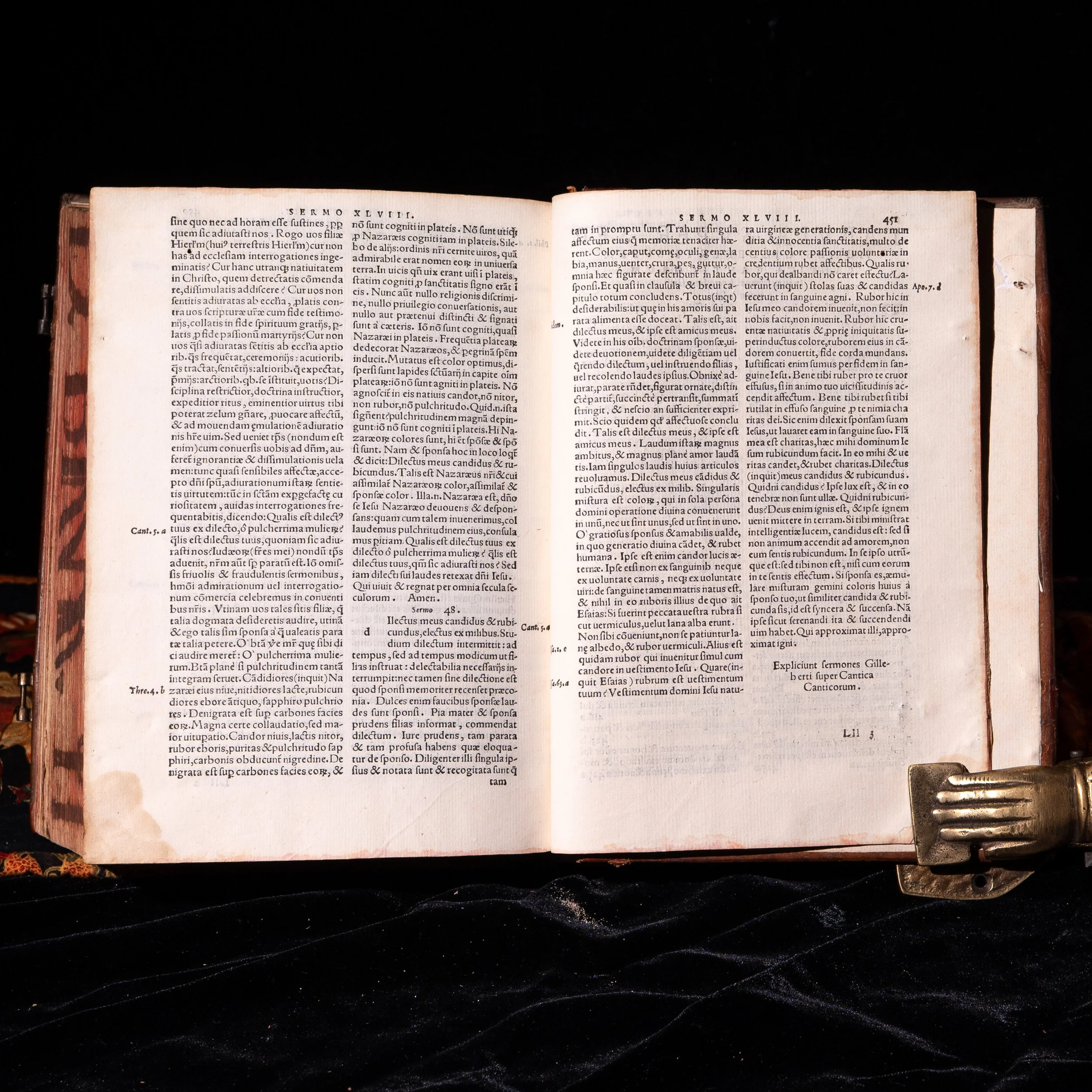 Image 12 of 26
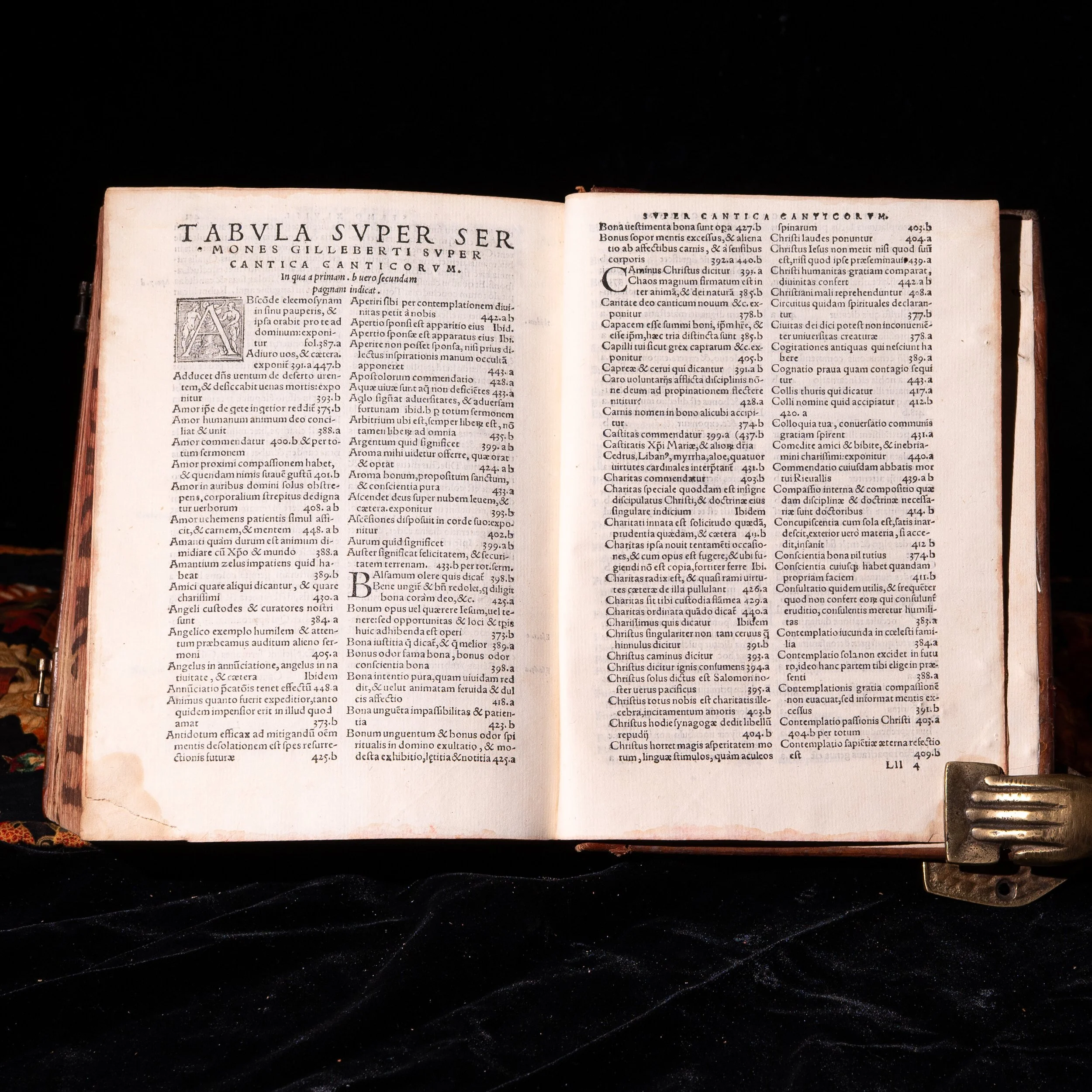 Image 13 of 26
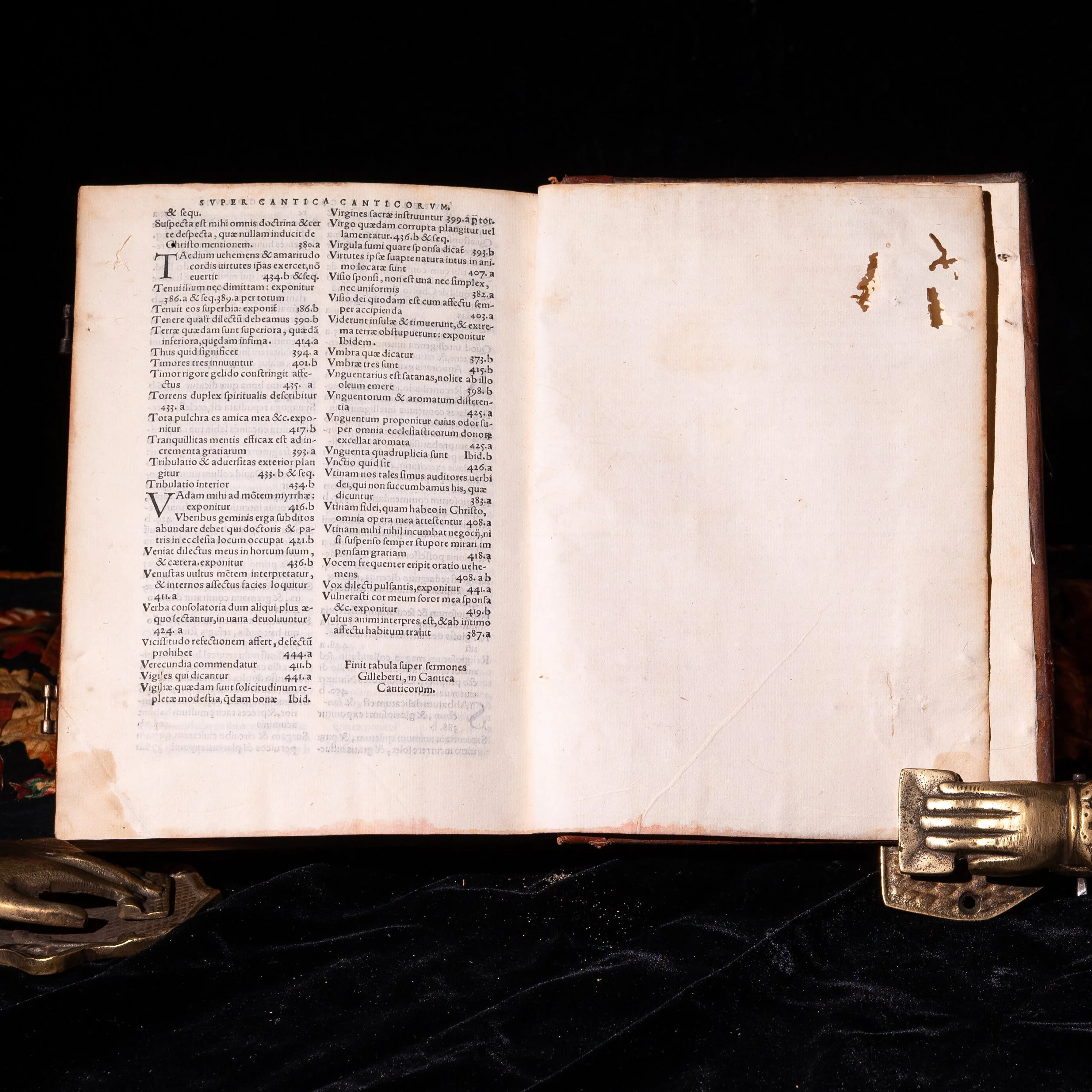 Image 14 of 26
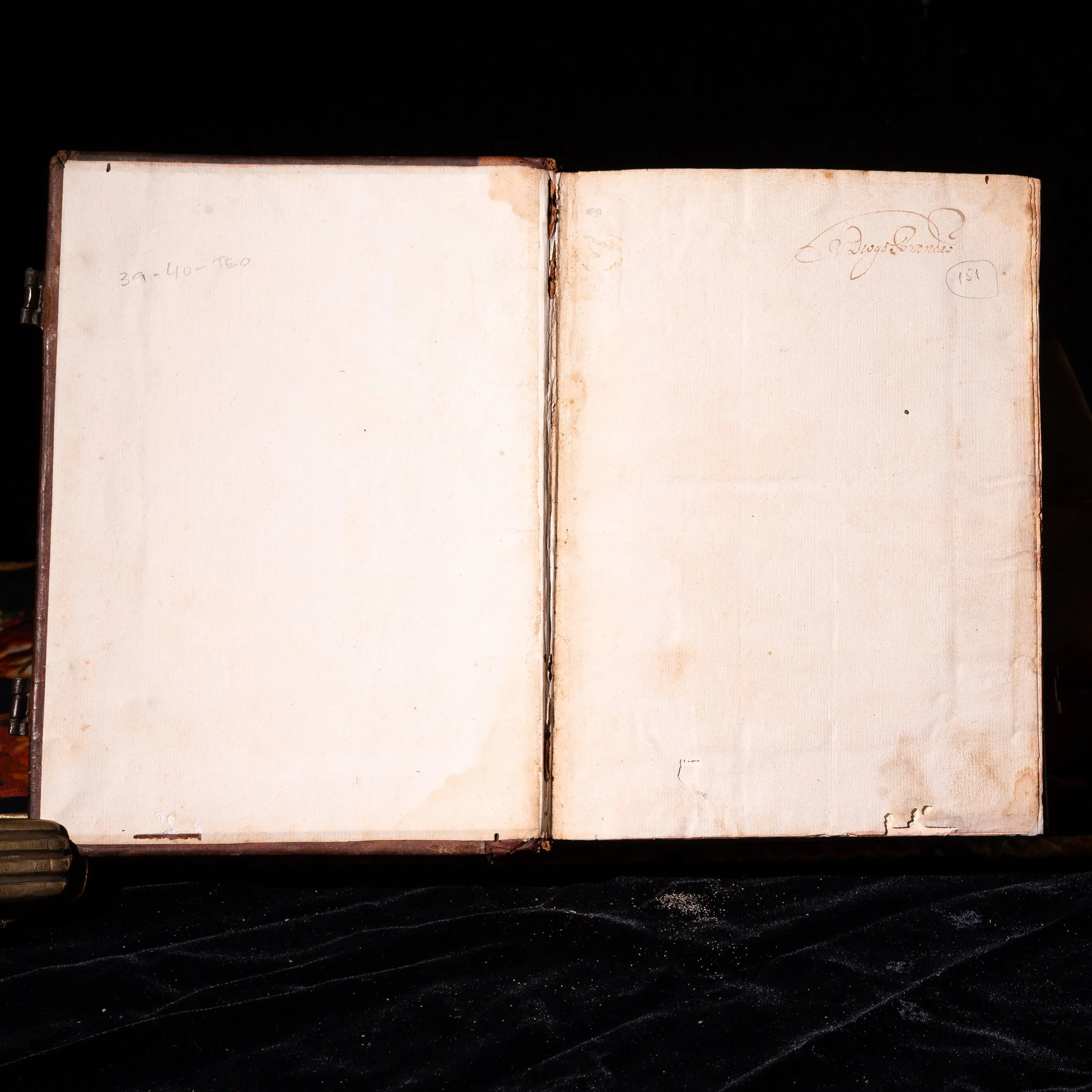 Image 15 of 26
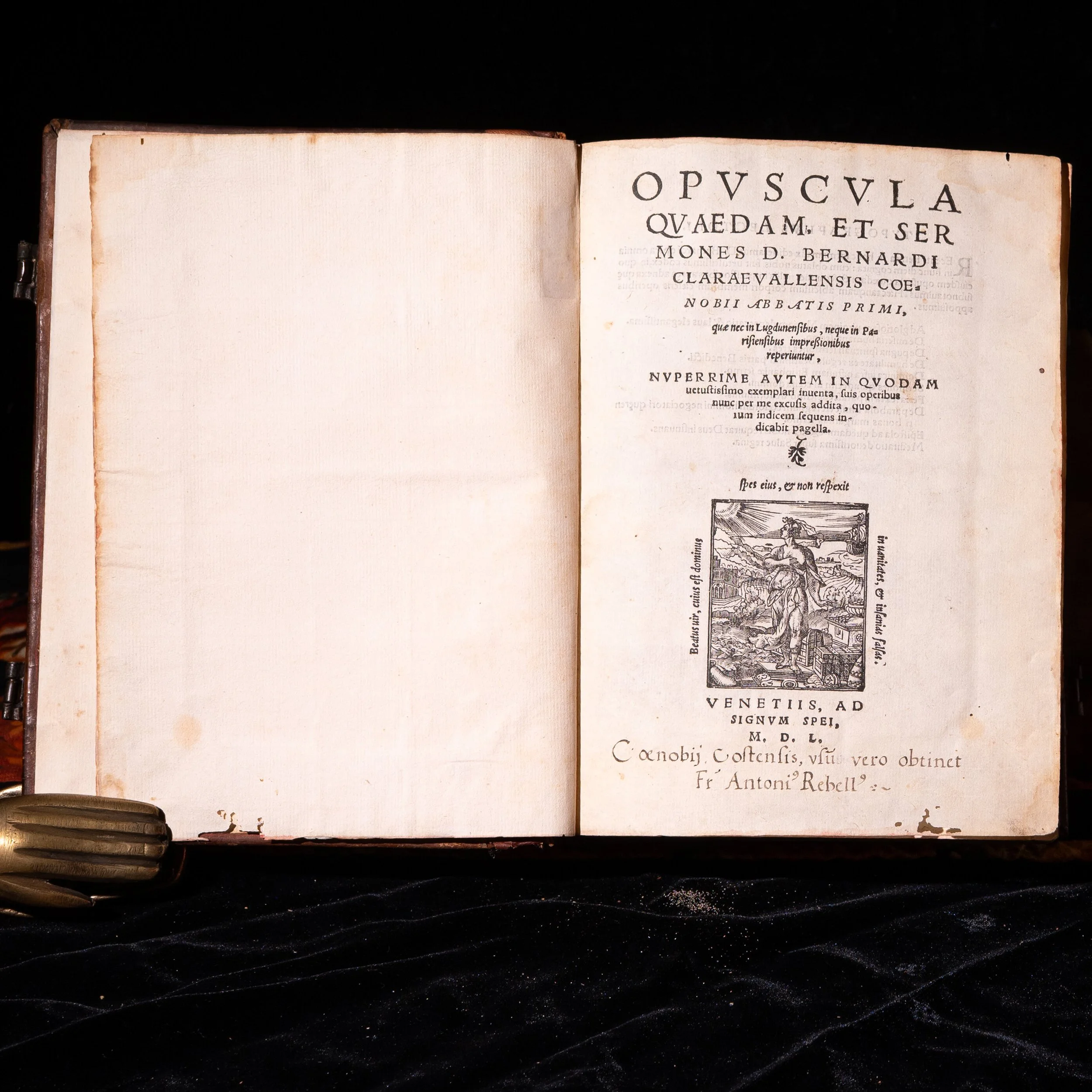 Image 16 of 26
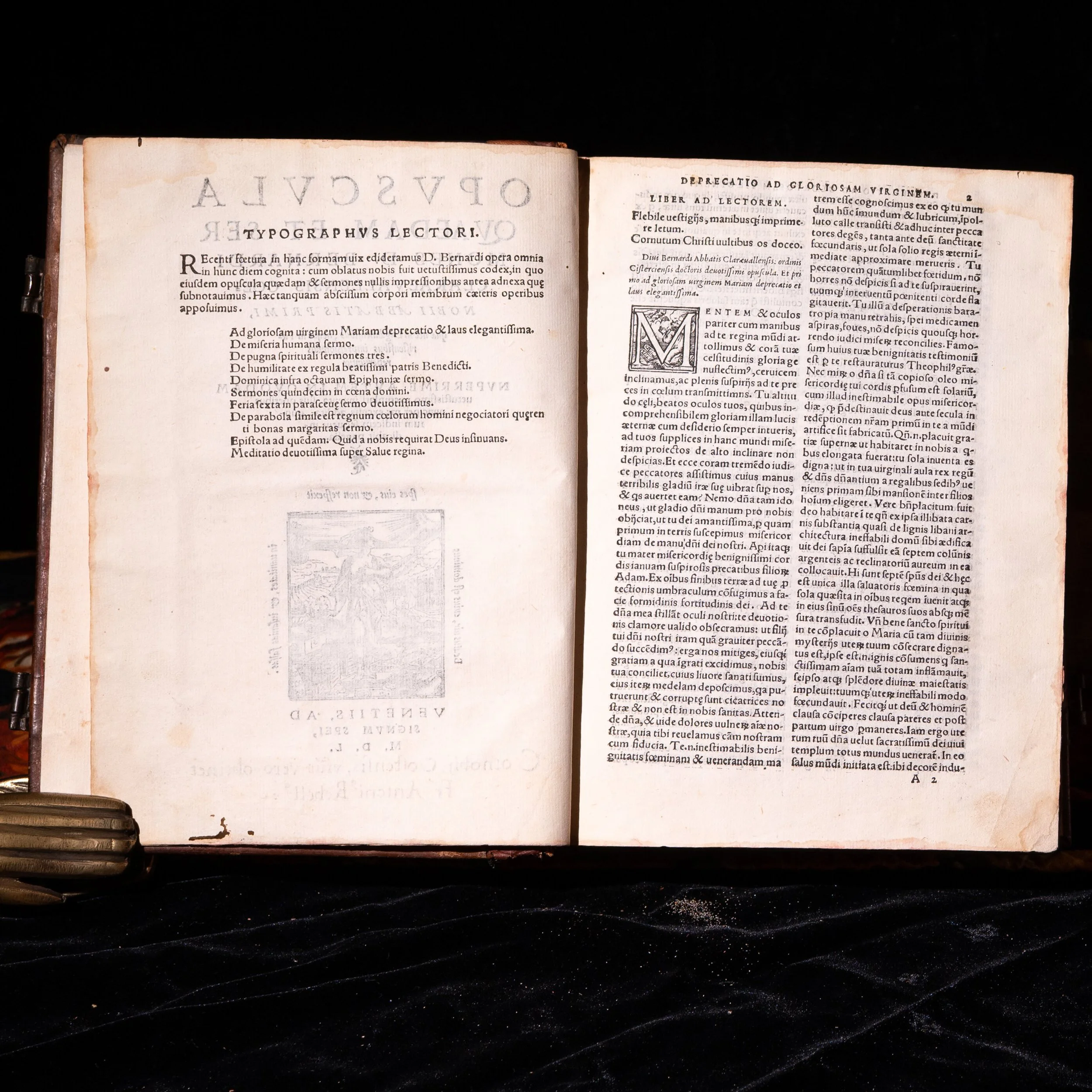 Image 17 of 26
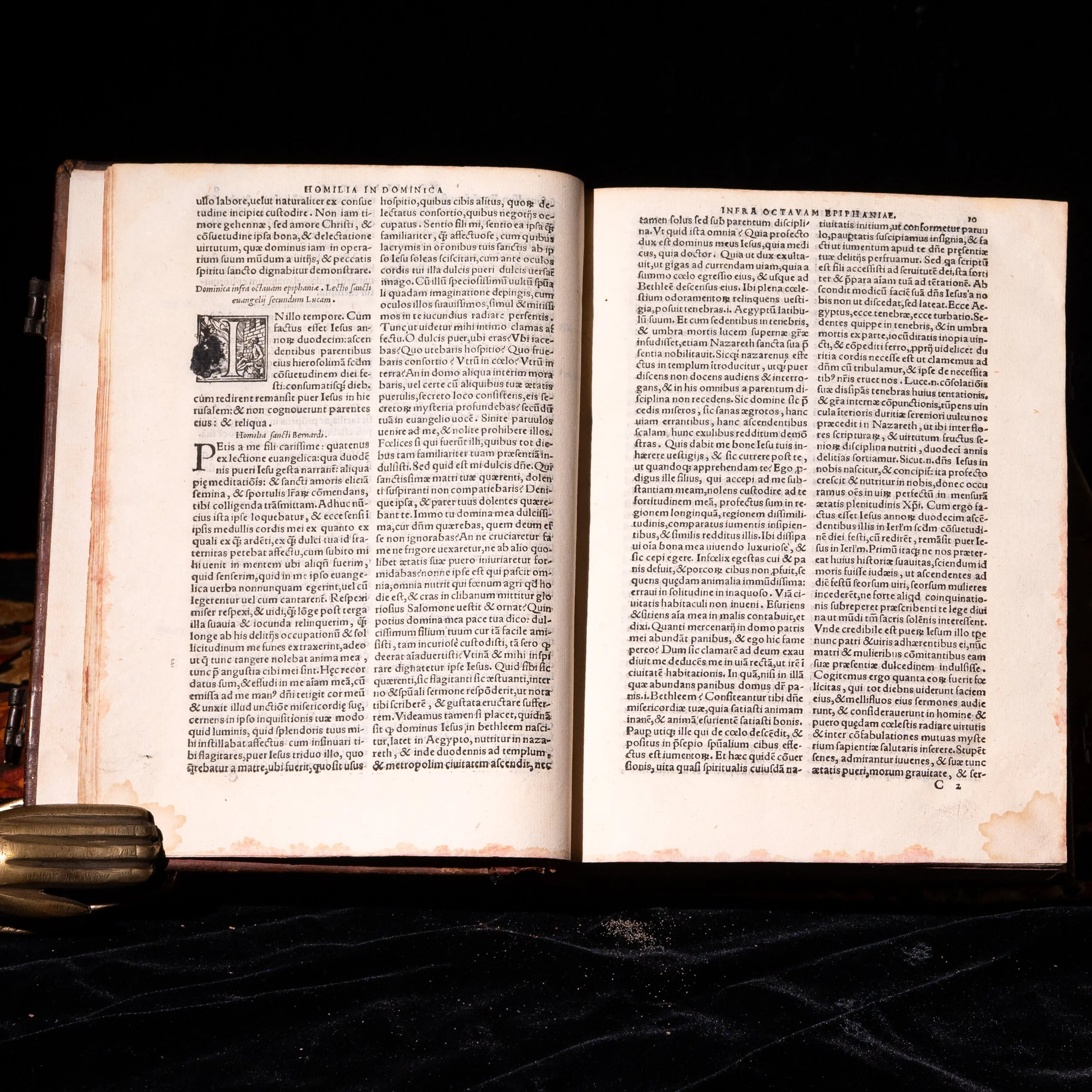 Image 18 of 26
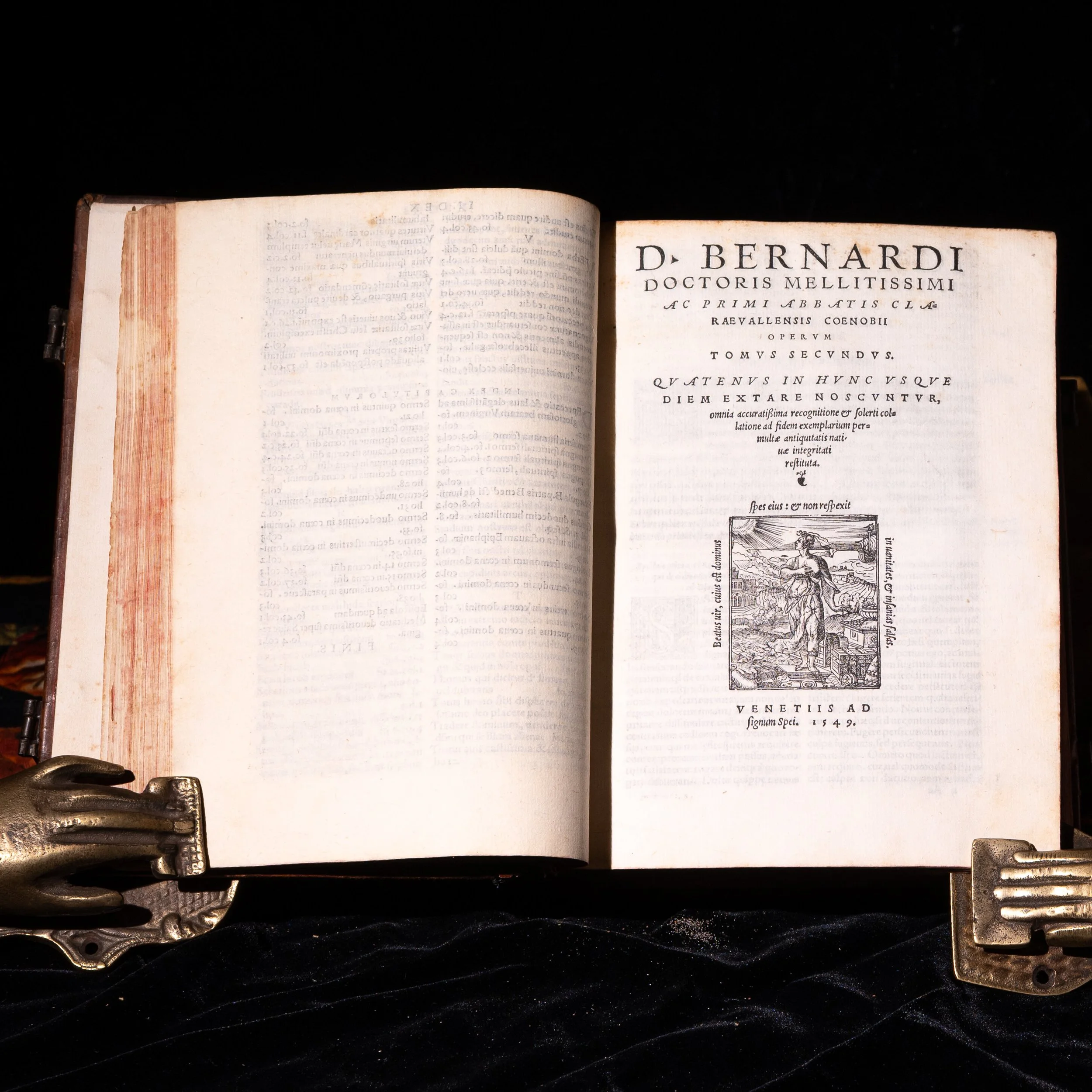 Image 19 of 26
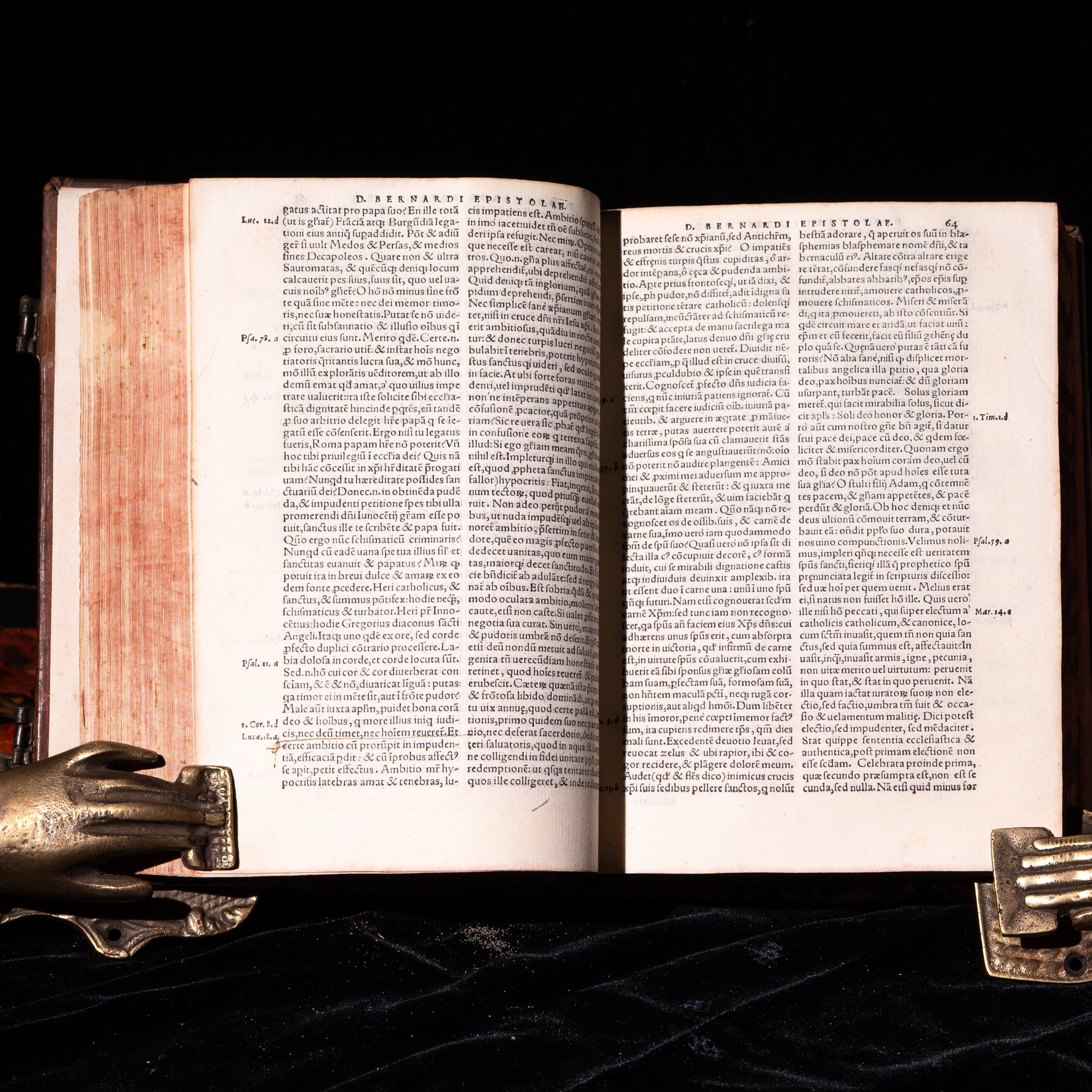 Image 20 of 26
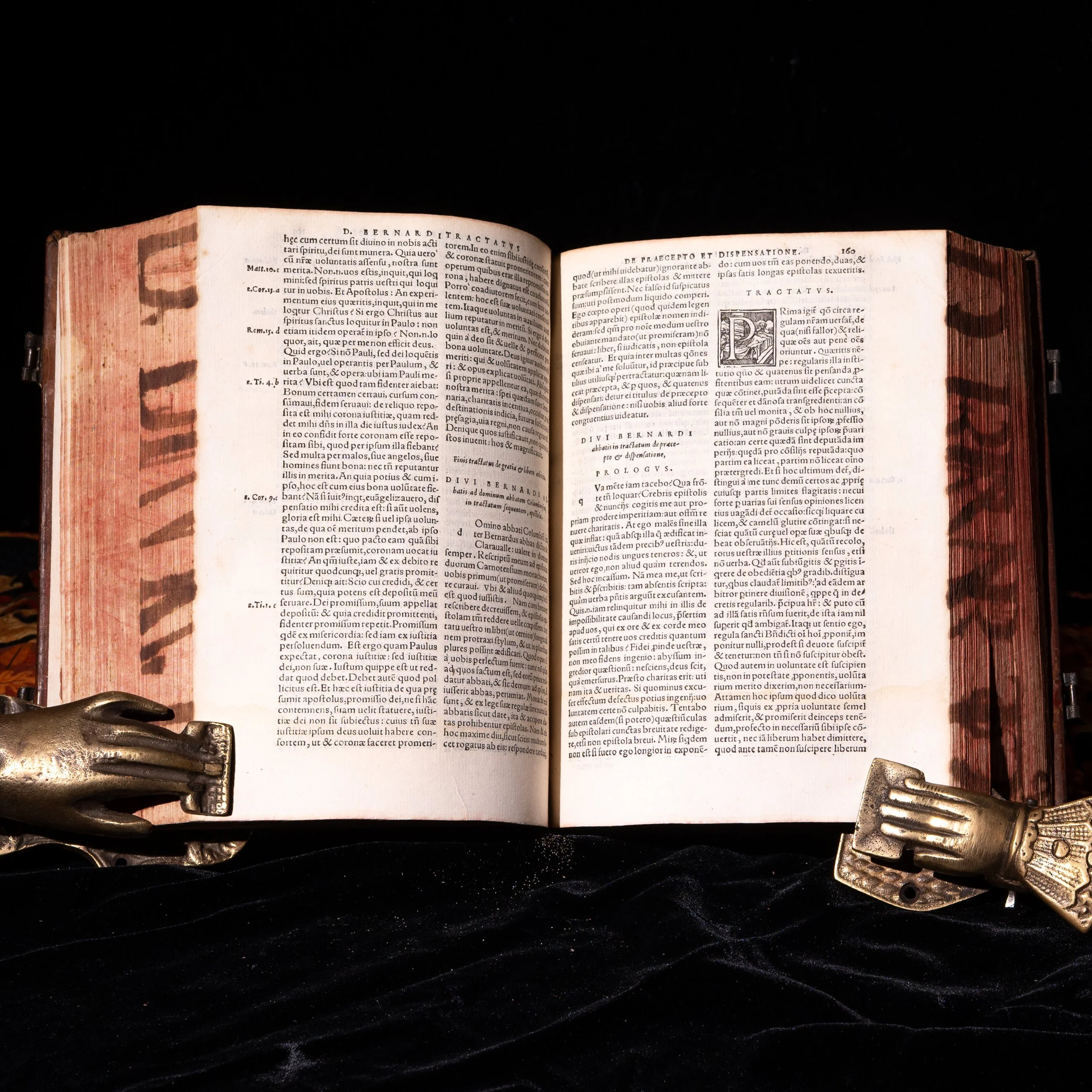 Image 21 of 26
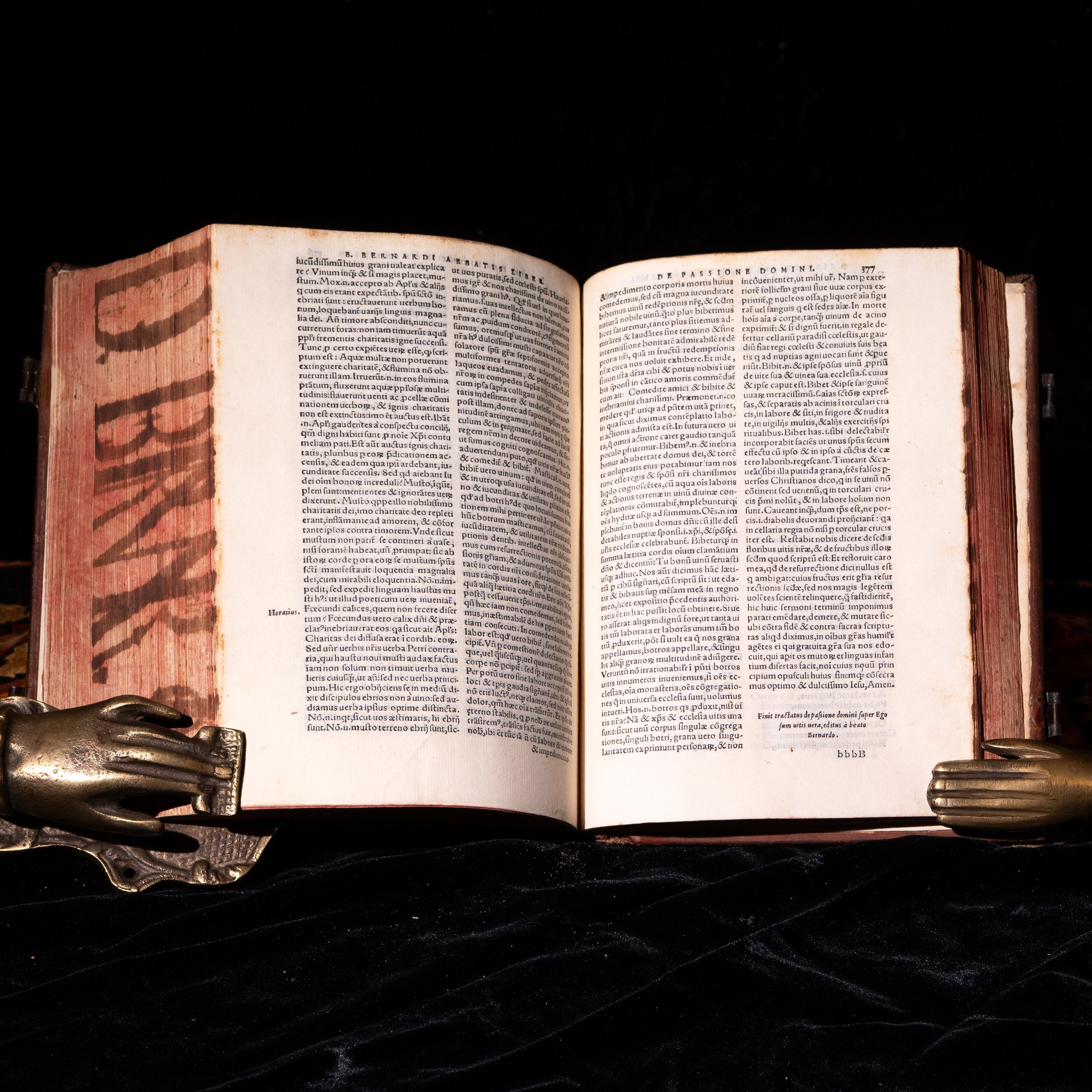 Image 22 of 26
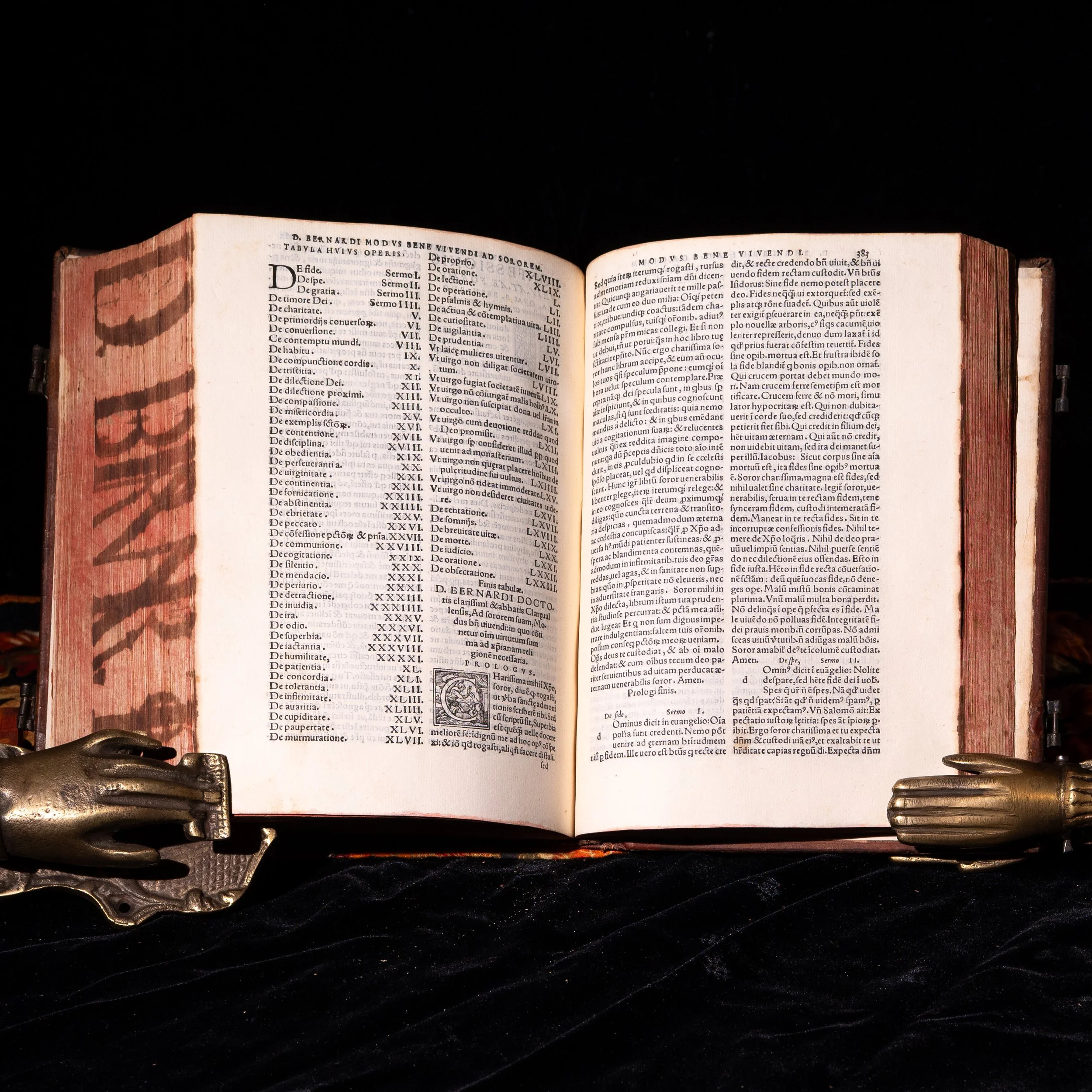 Image 23 of 26
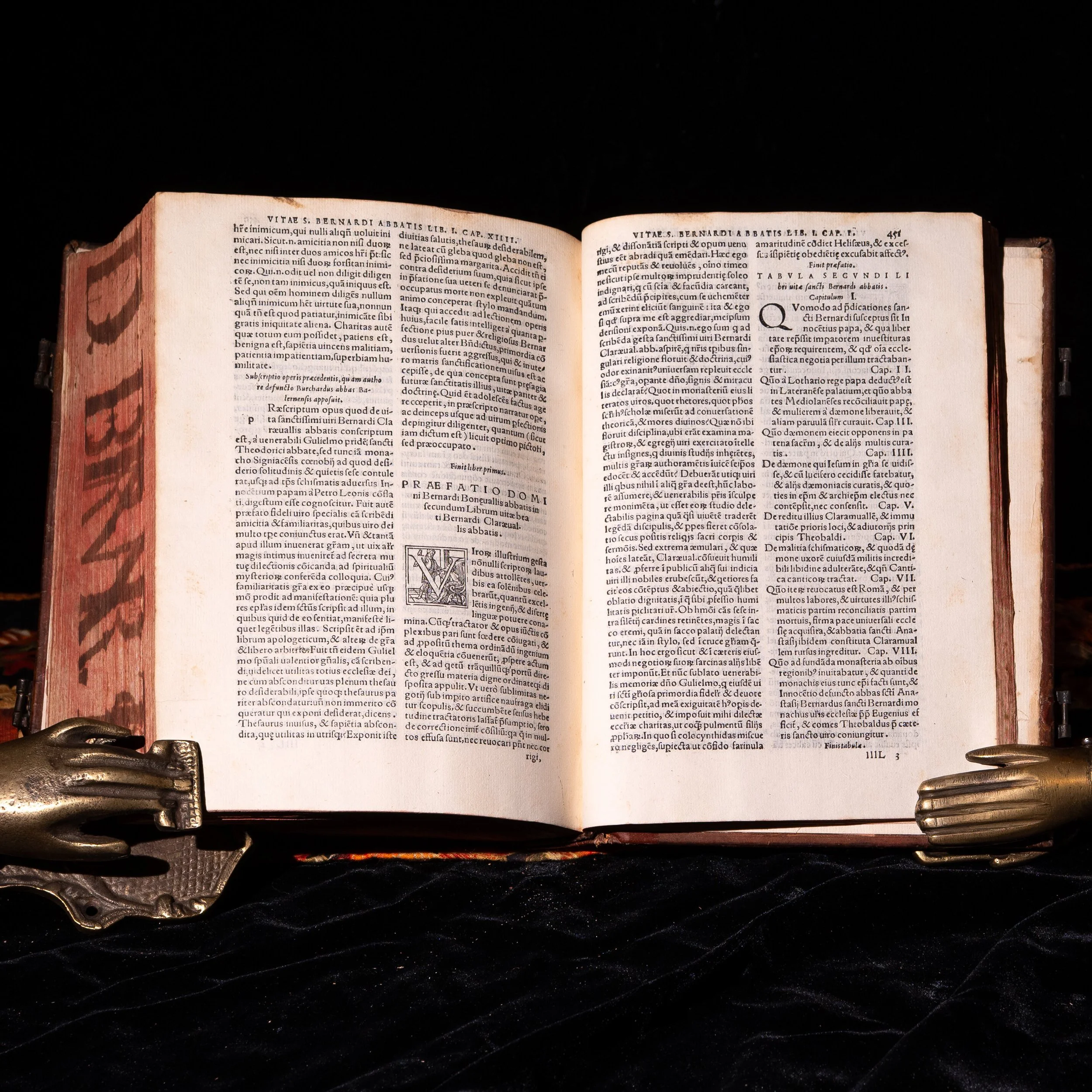 Image 24 of 26
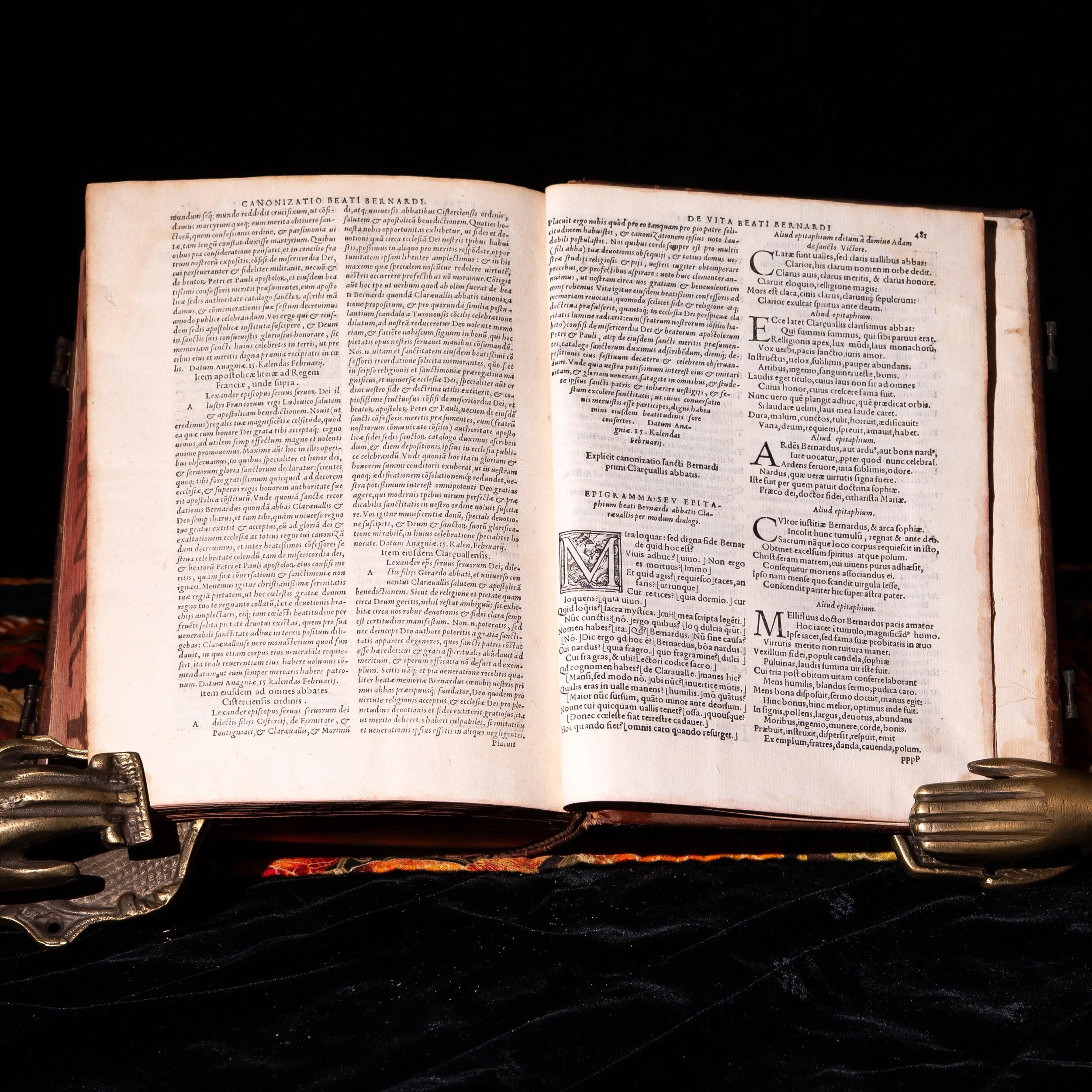 Image 25 of 26
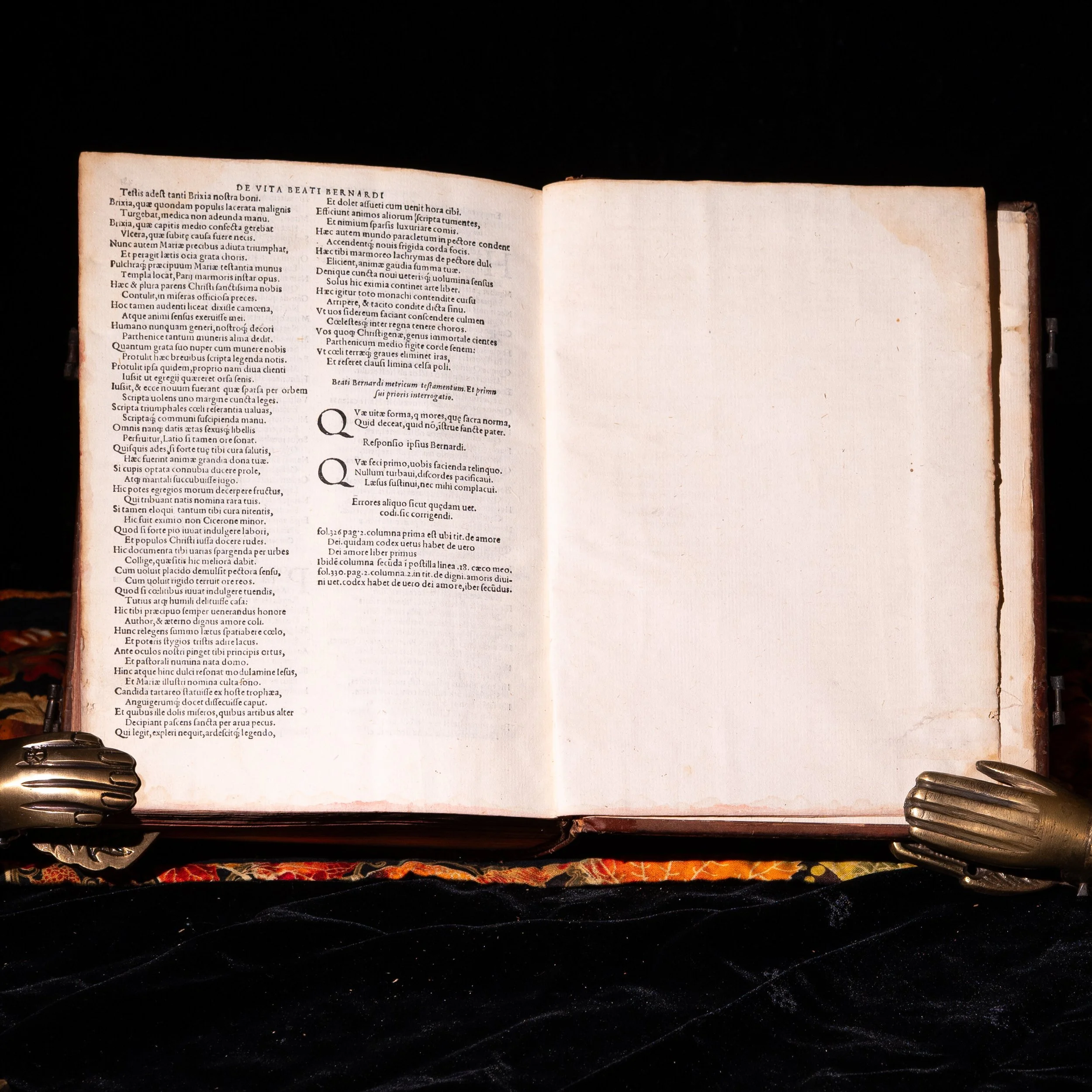 Image 26 of 26