Against Heresies is the oldest full account we have of what the ancient Gnostics taught. Irenaeus, the bishop of Lyon, wrote it around the year 180 to refute them, and to refute them he first had to explain them. He explained them so thoroughly that his book remained the main source for their teachings until the twentieth century.
Irenaeus grew up in Smyrna, on the coast of Asia Minor, where as a boy he listened to the old bishop Polycarp, who had known the apostle John. He went west to Gaul as a priest of the church at Lyon and became its bishop after the persecution of 177 killed his predecessor. In Lyon he met teachers who offered Christians a hidden knowledge, or gnosis, that was passed on only to initiates. Irenaeus called it “knowledge falsely so called” and wrote five books against it.
The first of the five books lays out the Gnostic systems one school at a time. The Valentinians taught that thirty Aeons came forth in pairs from an unknowable Depth, and that the grief of the last of them, Sophia, became the stuff of the material world. Simon Magus, the magician of the Book of Acts, traveled with a woman named Helen and called her the first thought of his mind. The followers of Basilides counted 365 heavens and named their ruler Abraxas, because the Greek letters of that name add up to 365. Marcus made the wine turn purple in the cup during his rites. The Carpocratians kept painted images of Jesus, which they crowned and set up beside images of Pythagoras, Plato and Aristotle.
For centuries, anyone curious about the Gnostics had to go to Irenaeus and the Church Fathers who followed him, because almost none of the Gnostics’ own writings were available. Jung found Basilides and Abraxas there. He attributed his Seven Sermons to the Dead, written in 1916, to Basilides and made Abraxas their central figure. Then in 1945 a jar of Coptic manuscripts was dug up at Nag Hammadi in Egypt, and the Gnostics could finally be read in their own words. One of those manuscripts, the Secret Book of John, tells the same story of Barbelo and the ignorant creator that Irenaeus summarized in his first book, closely enough to show that he was working from a Gnostic text like it. The Gospel of Judas, which Irenaeus mentions by name, surfaced in another Coptic manuscript and was published in 2006.
Irenaeus wrote in Greek, and the Greek is lost apart from passages quoted by later writers. The whole work survives only in an early and very literal Latin translation. Erasmus was the first to put that translation into print, with Johann Froben at Basel in 1526, “comparing the oldest manuscripts as far as was possible,” as his title says. This is the Froben press’s 1548 edition of Erasmus’s text, with the printer’s caduceus device on the title page.
Bound with it is a second Froben book, the orations of Gregory of Nazianzus. Gregory was a fourth-century bishop whom the Greek church calls “the Theologian.” His Theological Orations, preached at Constantinople in 380, are classic statements of the doctrine of the Trinity. This edition gives thirty of his orations in the Latin of Willibald Pirckheimer of Nuremberg, who was Dürer’s closest friend and the subject of his engraved portrait of 1524. Pirckheimer died in December 1530, and the book came out at Basel the following September with a prefatory letter by Erasmus. Its opening Life of Gregory is headed “a Bilibaldo Pirckheymero in Latinum versa,” turned into Latin by Willibald Pirckheimer.
The two books have been together a long time, in a binding of wooden boards that still carries the catches for its clasps. A paper label on the spine reads “SS. Patres,” the Holy Fathers, and shows that the volume once stood in an institutional library. An early owner signed the title page as pastor and lector, that is, a preacher and teacher. Best of all, readers left old ink notes in the margins of both works. The boards and the text have wormholes throughout and the clasps are gone. Full details are below.
· · ·
IRENAEUS of Lyon (c. 130–c. 202). Opus eruditissimum Divi Irenaei Episcopi Lugdunensis in quinque libros digestum... [edited by Desiderius Erasmus]. Basel: Froben, 1548. Bound with: GREGORY of Nazianzus (c. 329–390). Orationes XXX [in the Latin translation of Willibald Pirckheimer]. Basel: Froben, 1531.
Physical Description: Two works in one volume, folio. Irenaeus: title, (10), 338, (2), (22), (2) pp. Gregory: (8), 304, 126, (2) pp. Woodcut printer's device on the title; woodcut initials.
Binding: Early wooden boards with clasp catches, clasps lacking; spine later covered in calf, with a paper shelf label "SS. Patres / Fol. / II / No 15."
Condition: Wormholes throughout, in the boards and the text; clasps missing; early ink marginalia.
Provenance: Early ownership inscription on the title of a pastor and lector (name only partly legible). Institutional shelf label on the spine.
Further reading: Irenaeus, Against Heresies, trans. Alexander Roberts and William Rambaut, Ante-Nicene Fathers, vol. 1 (1885), online at New Advent. Robert M. Grant, Irenaeus of Lyons (London: Routledge, 1997).

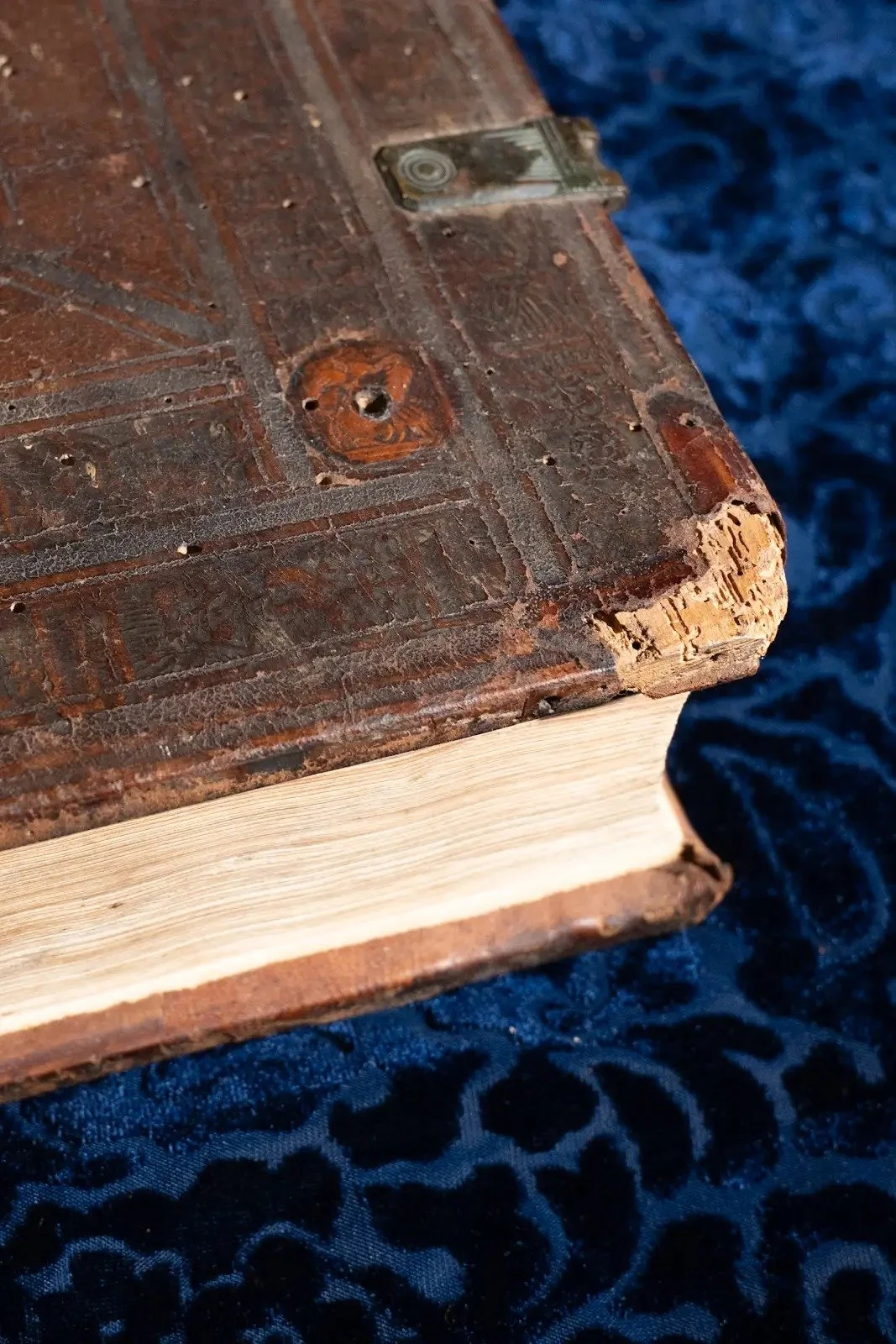 Image 1 of 29
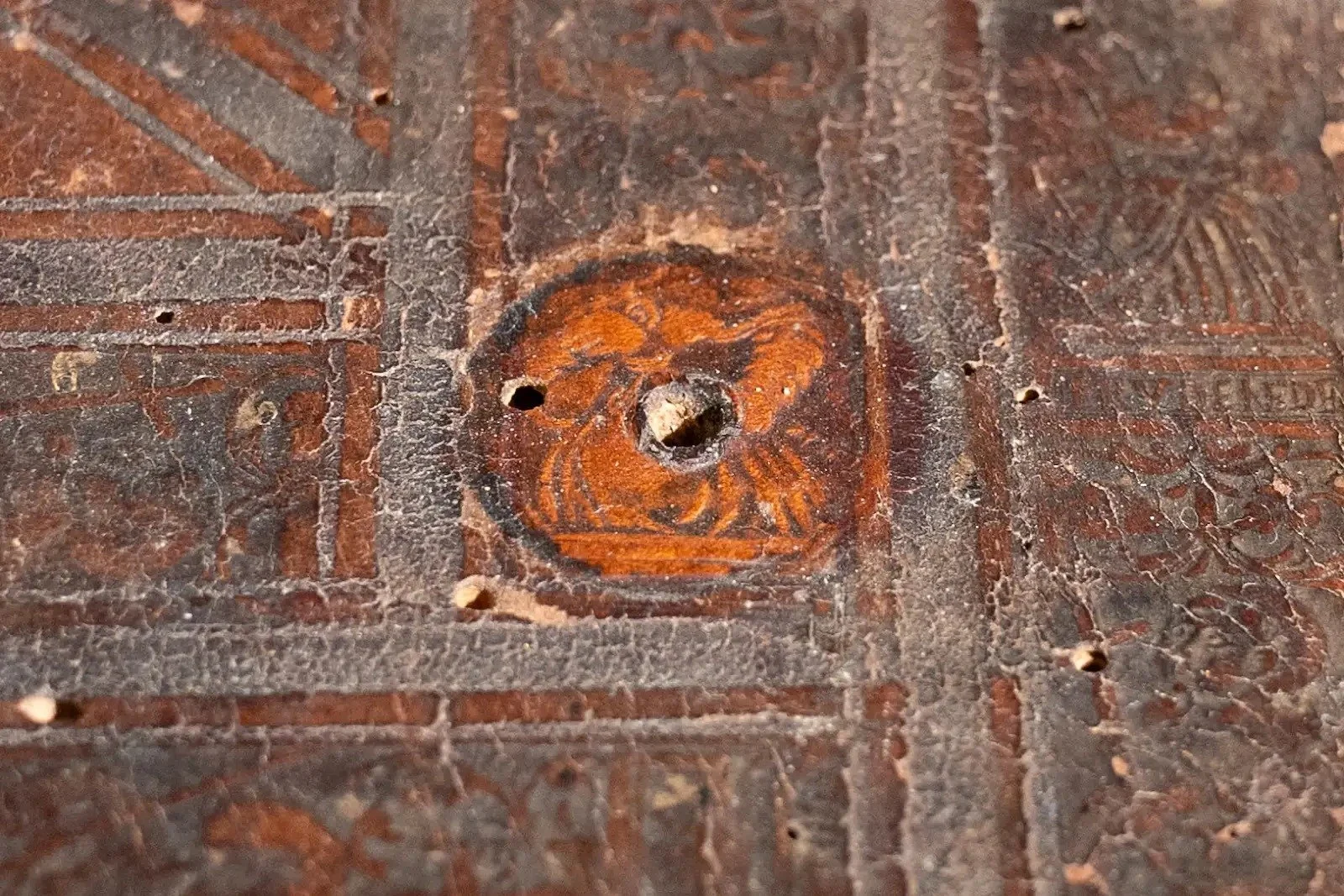 Image 2 of 29
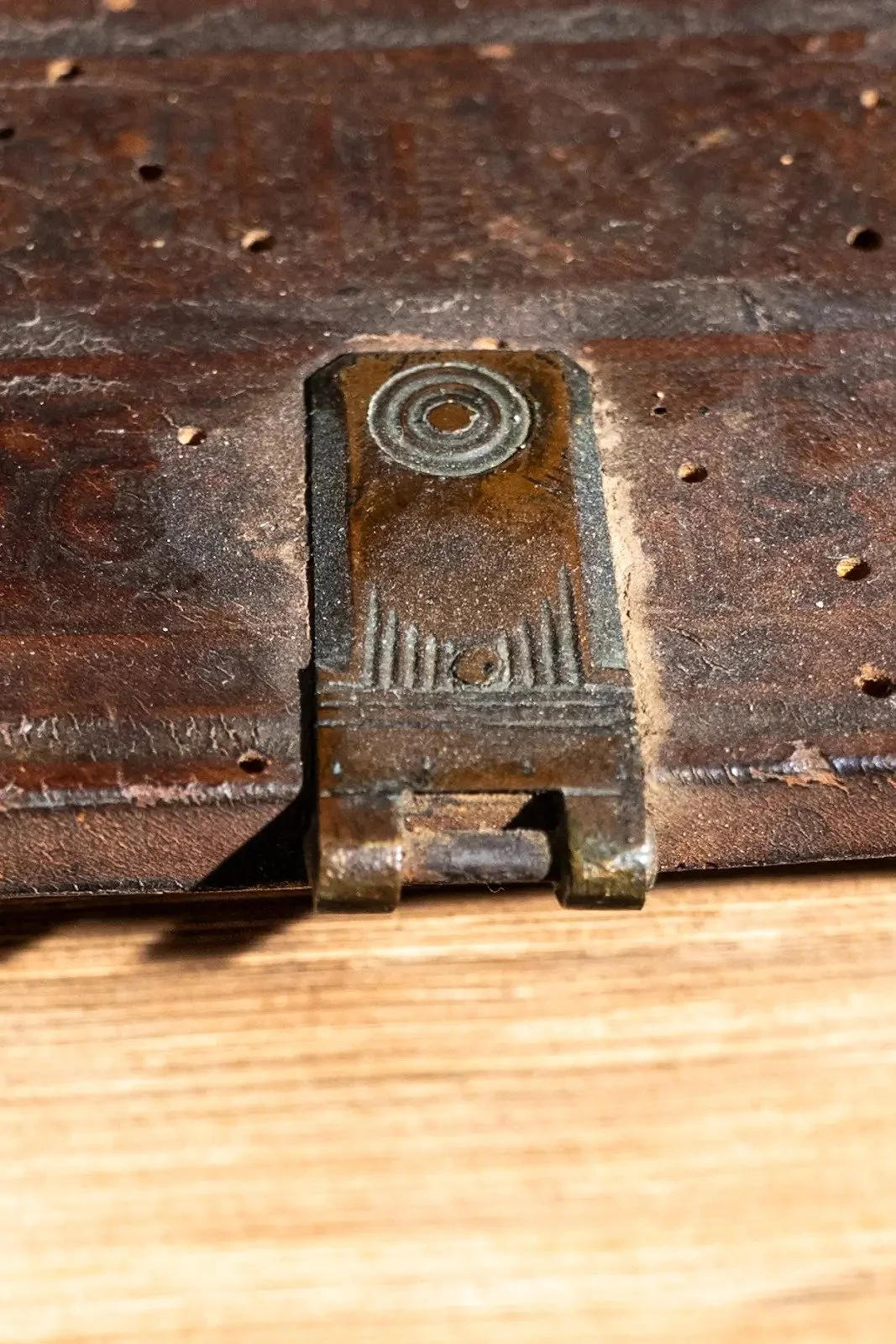 Image 3 of 29
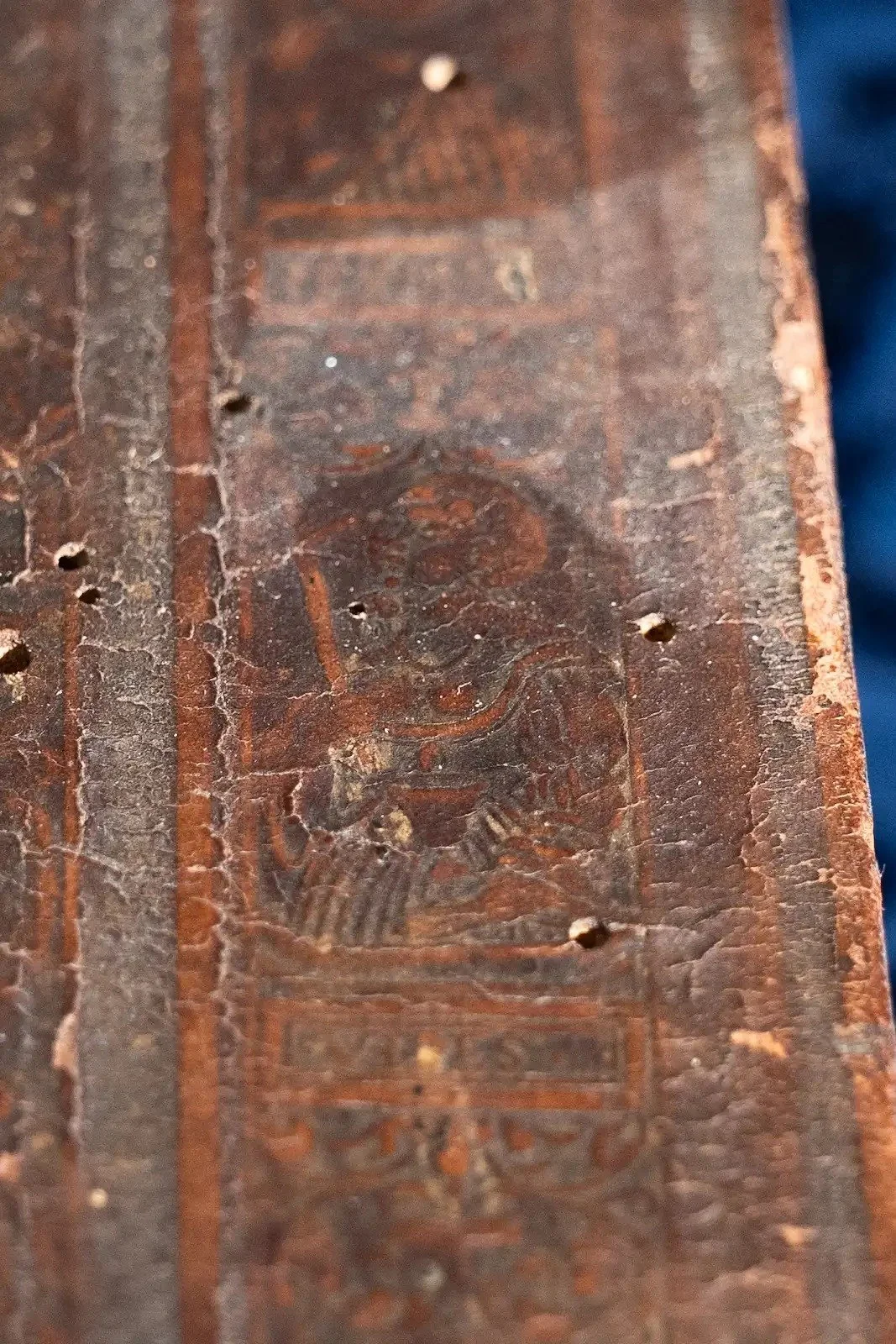 Image 4 of 29
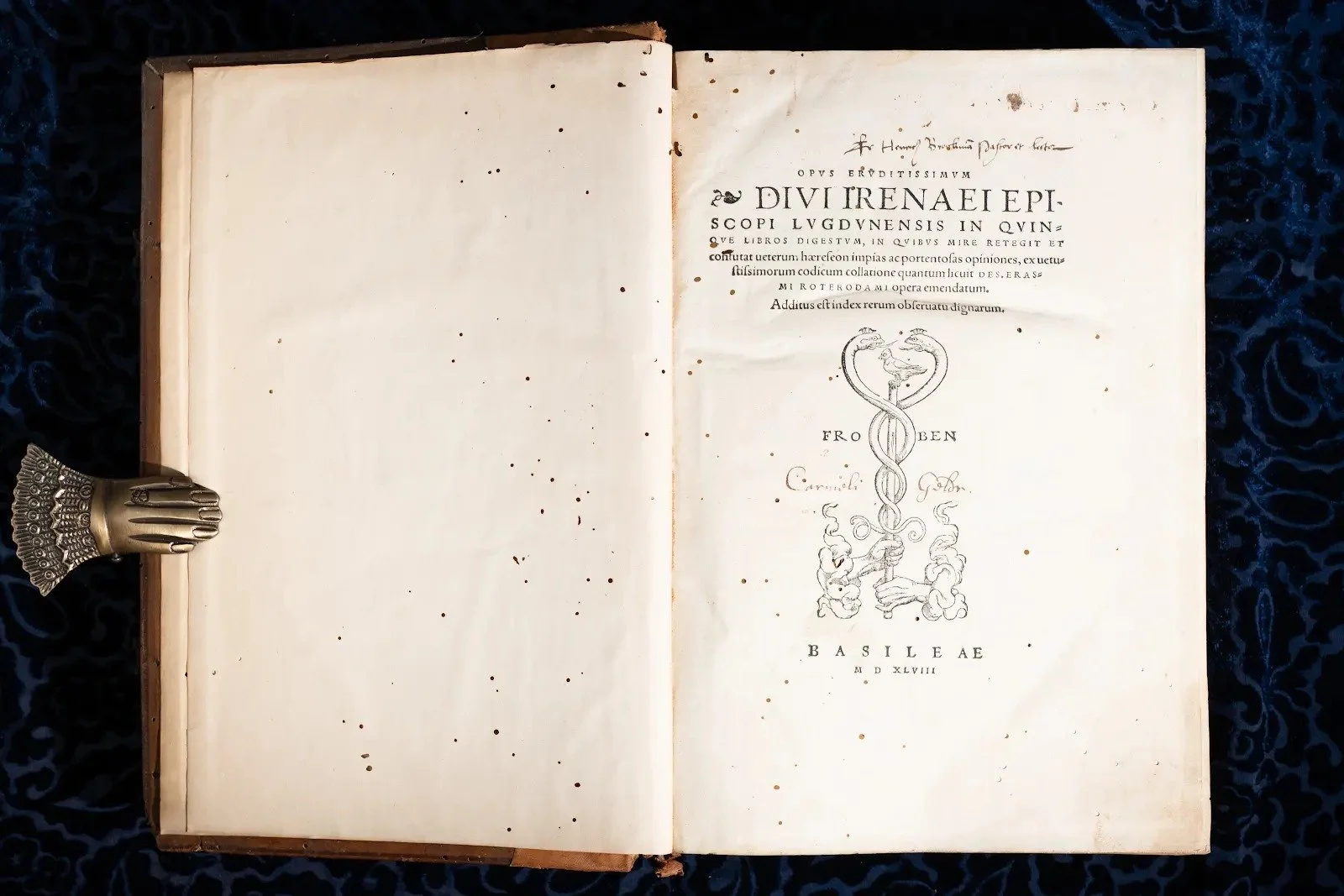 Image 5 of 29
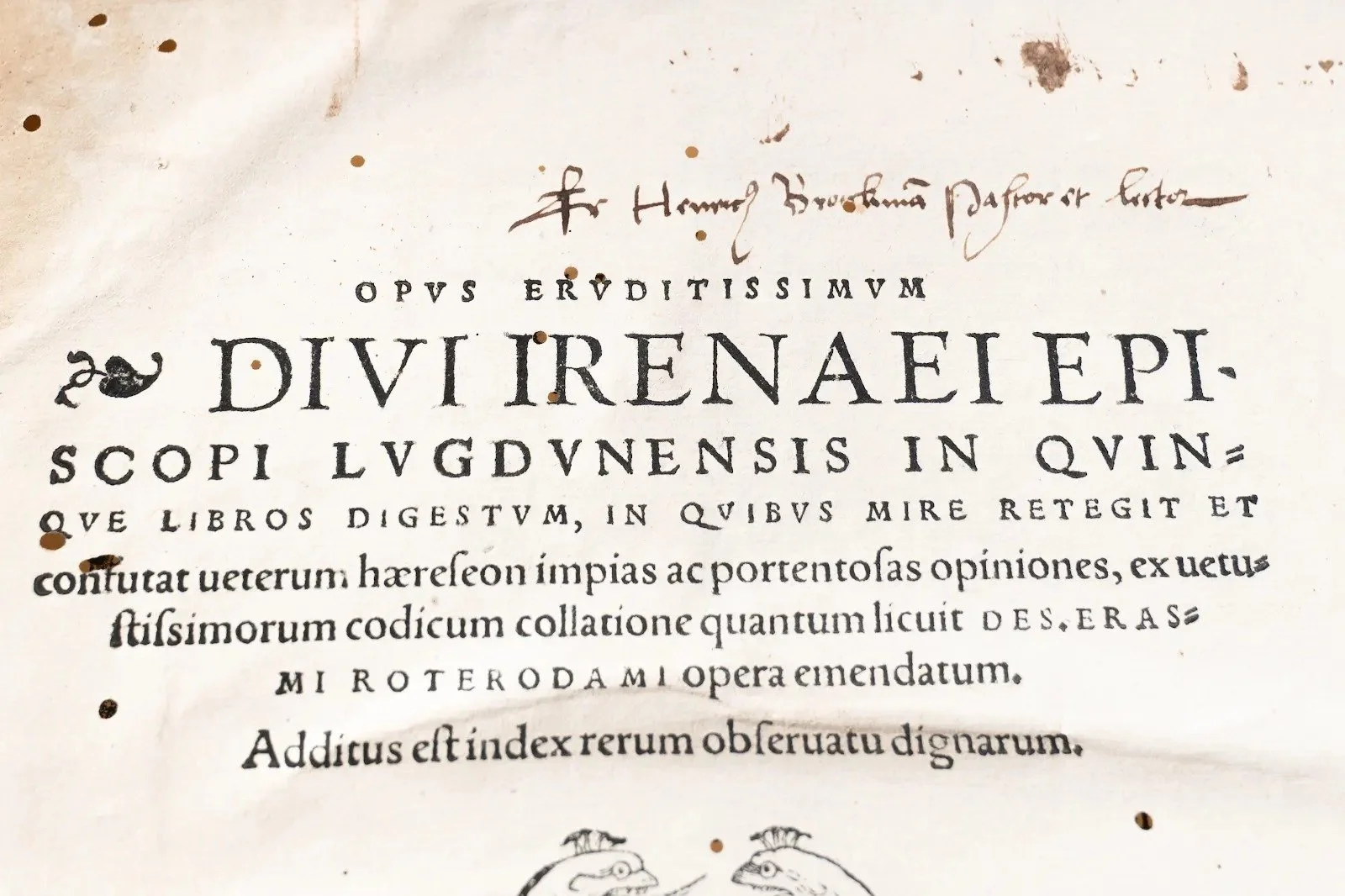 Image 6 of 29
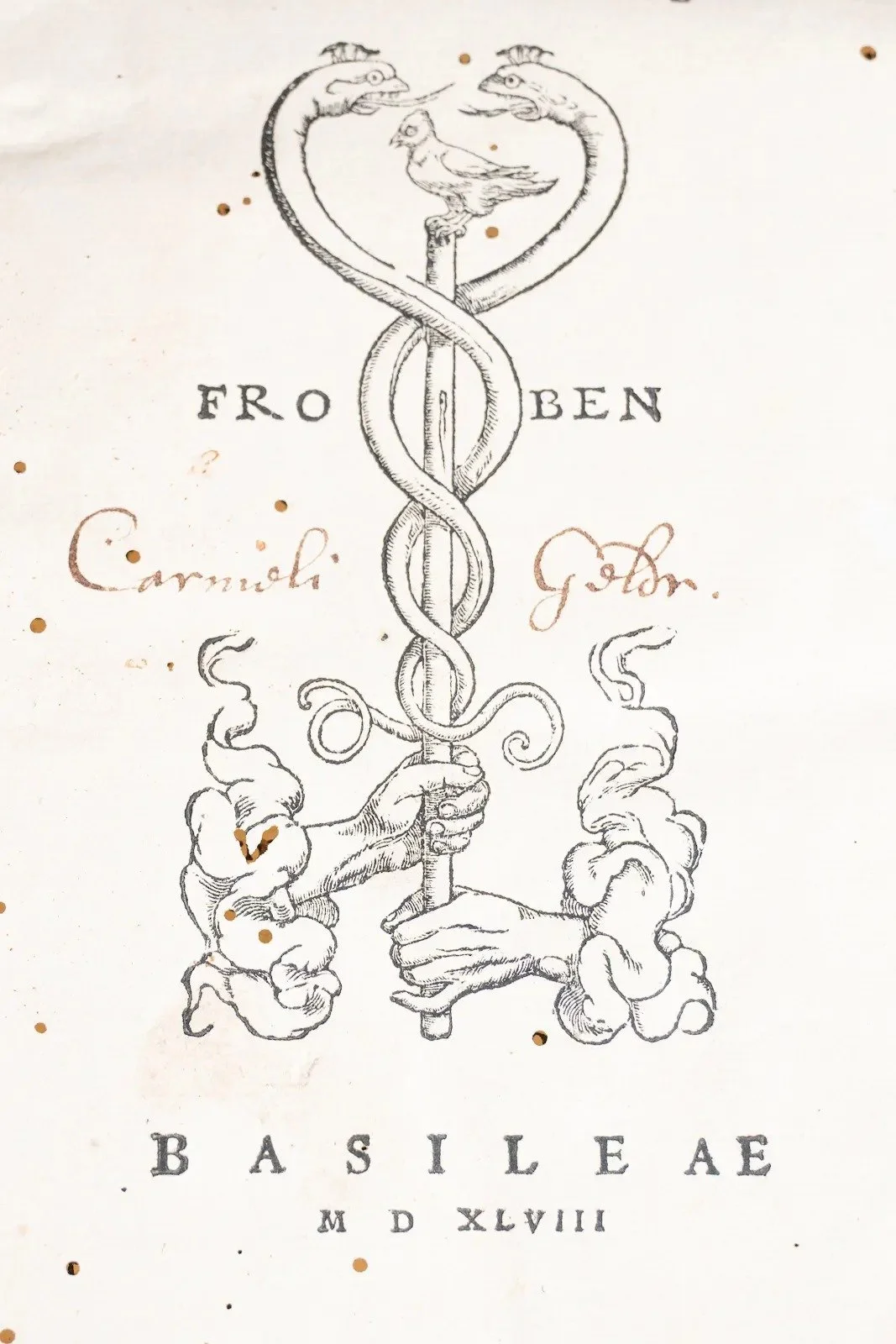 Image 7 of 29
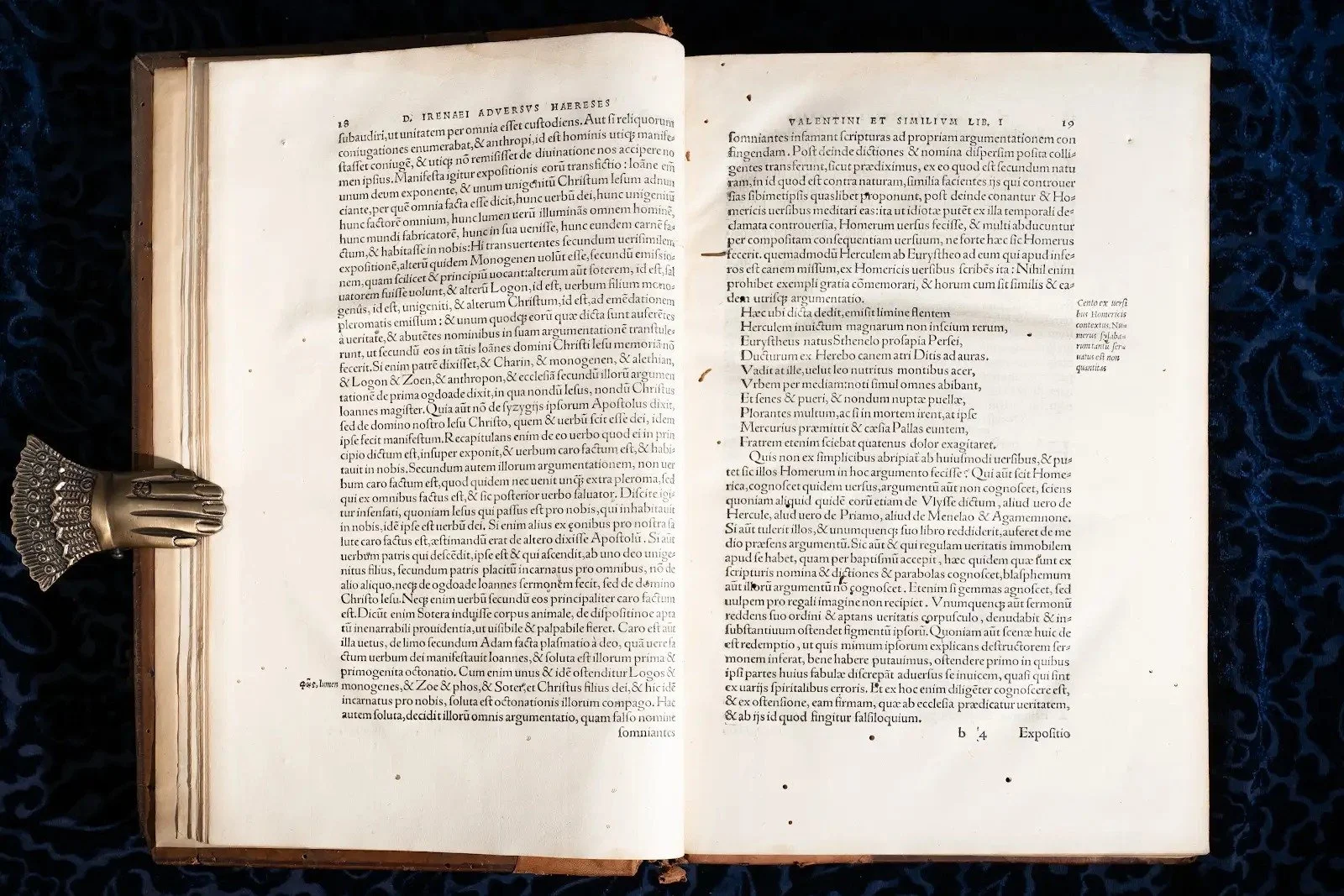 Image 8 of 29
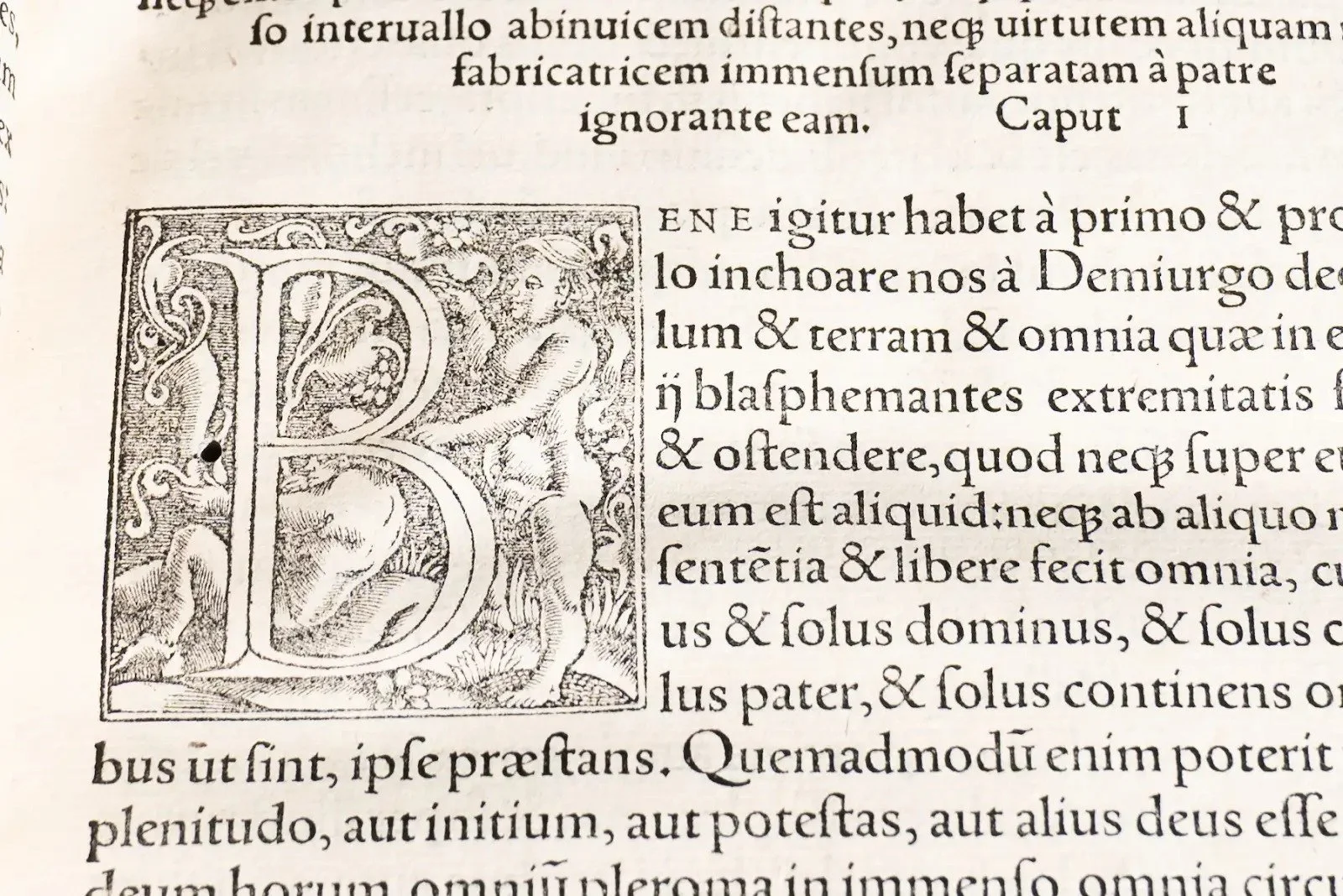 Image 9 of 29
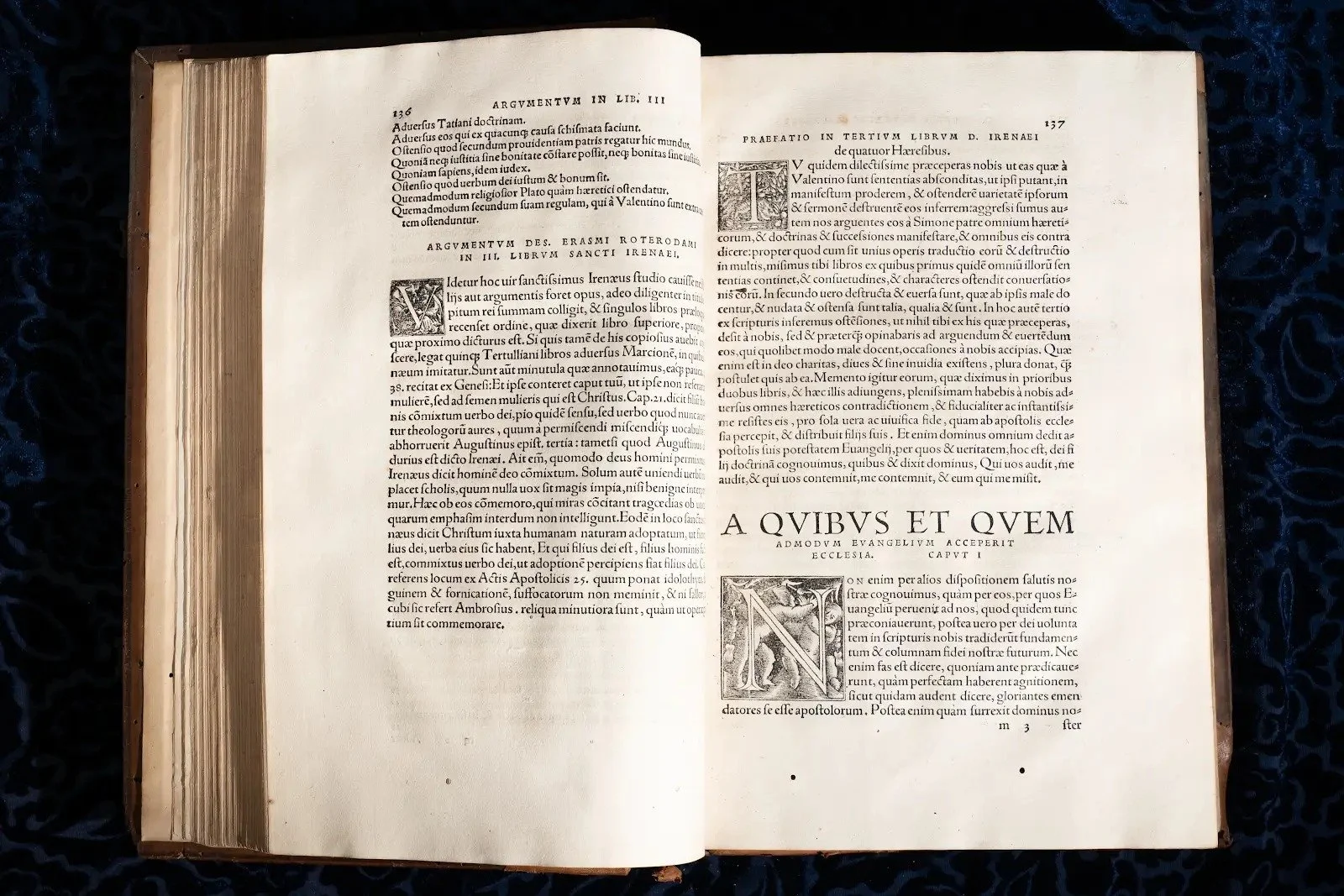 Image 10 of 29
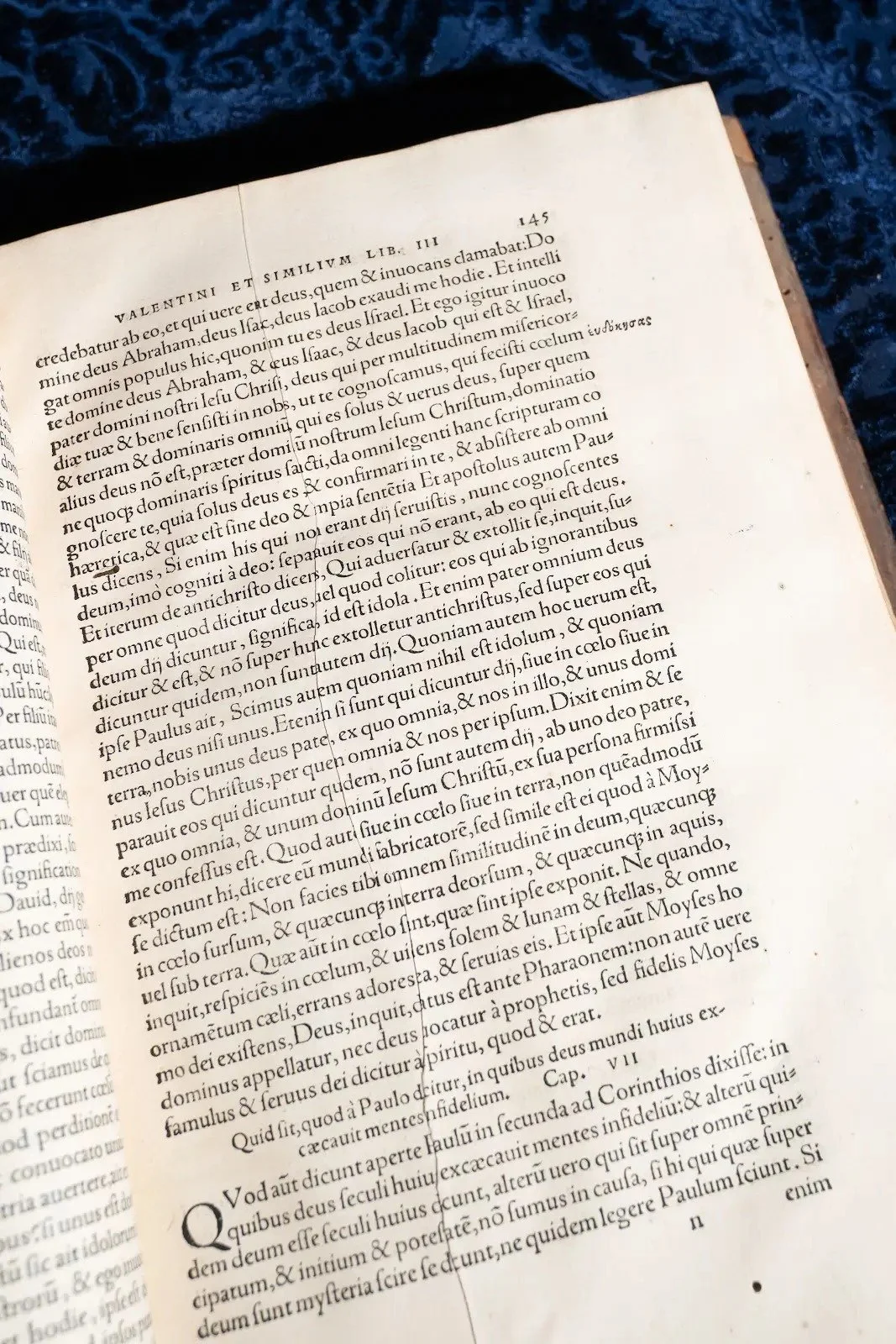 Image 11 of 29
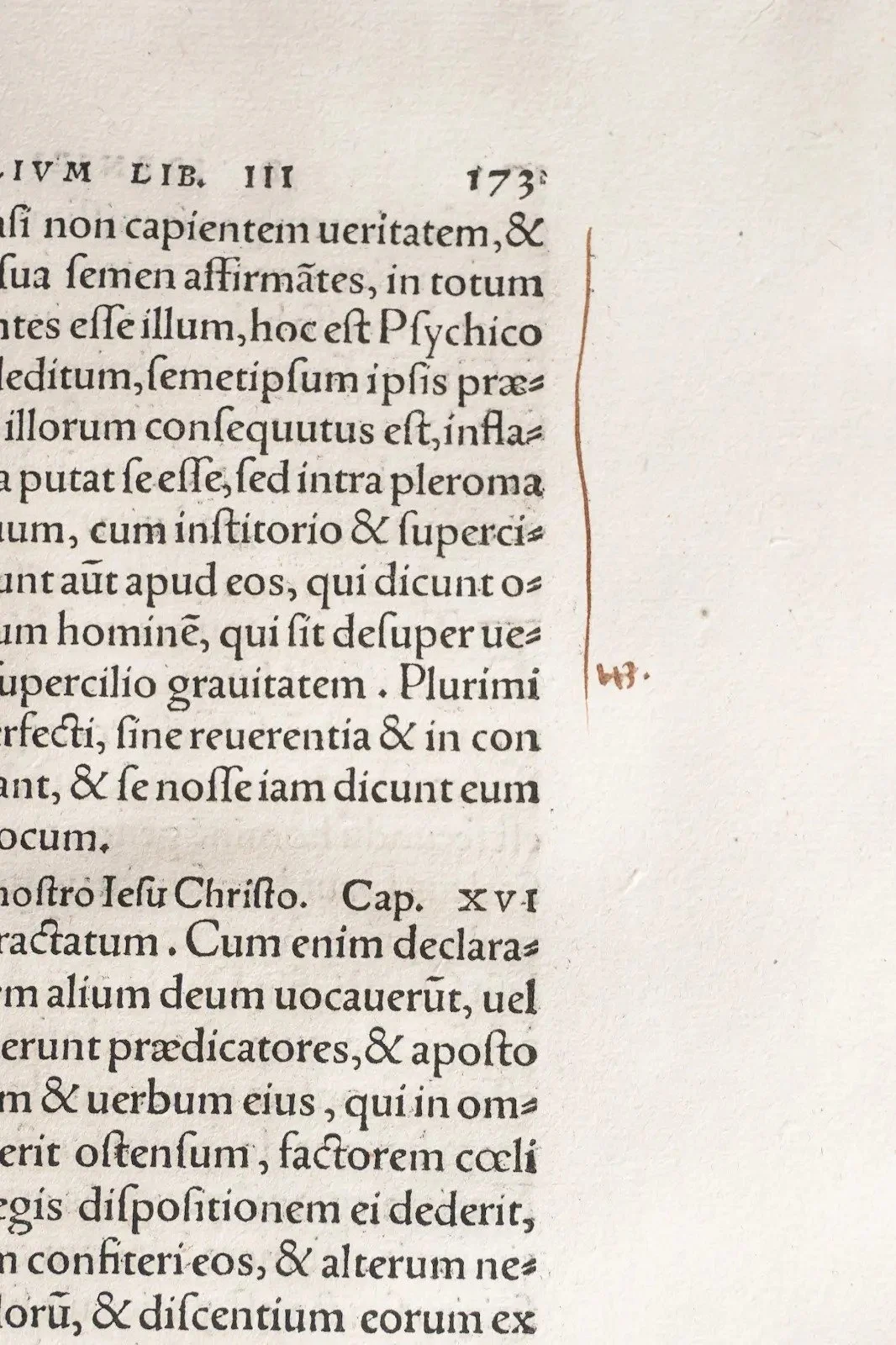 Image 12 of 29
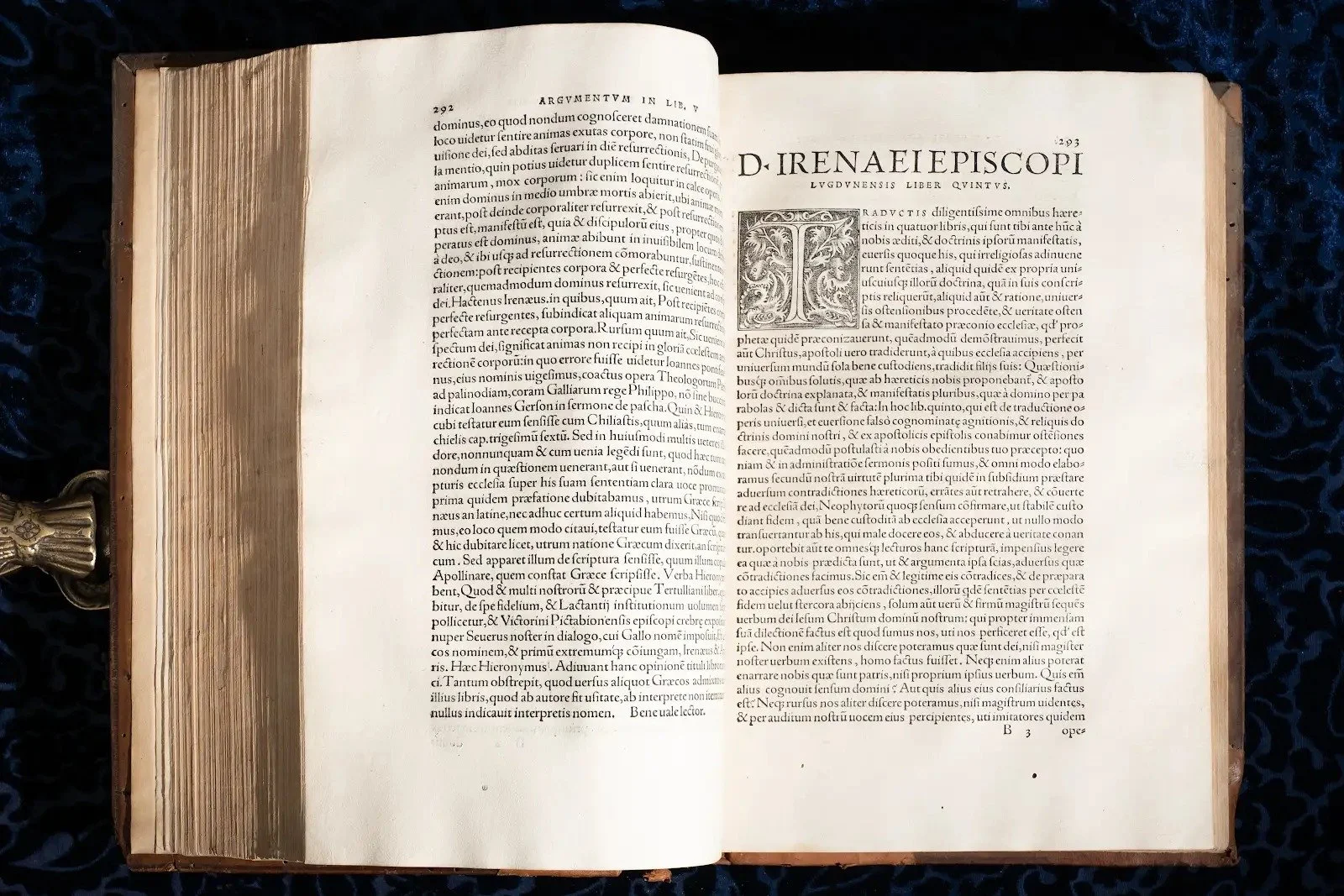 Image 13 of 29
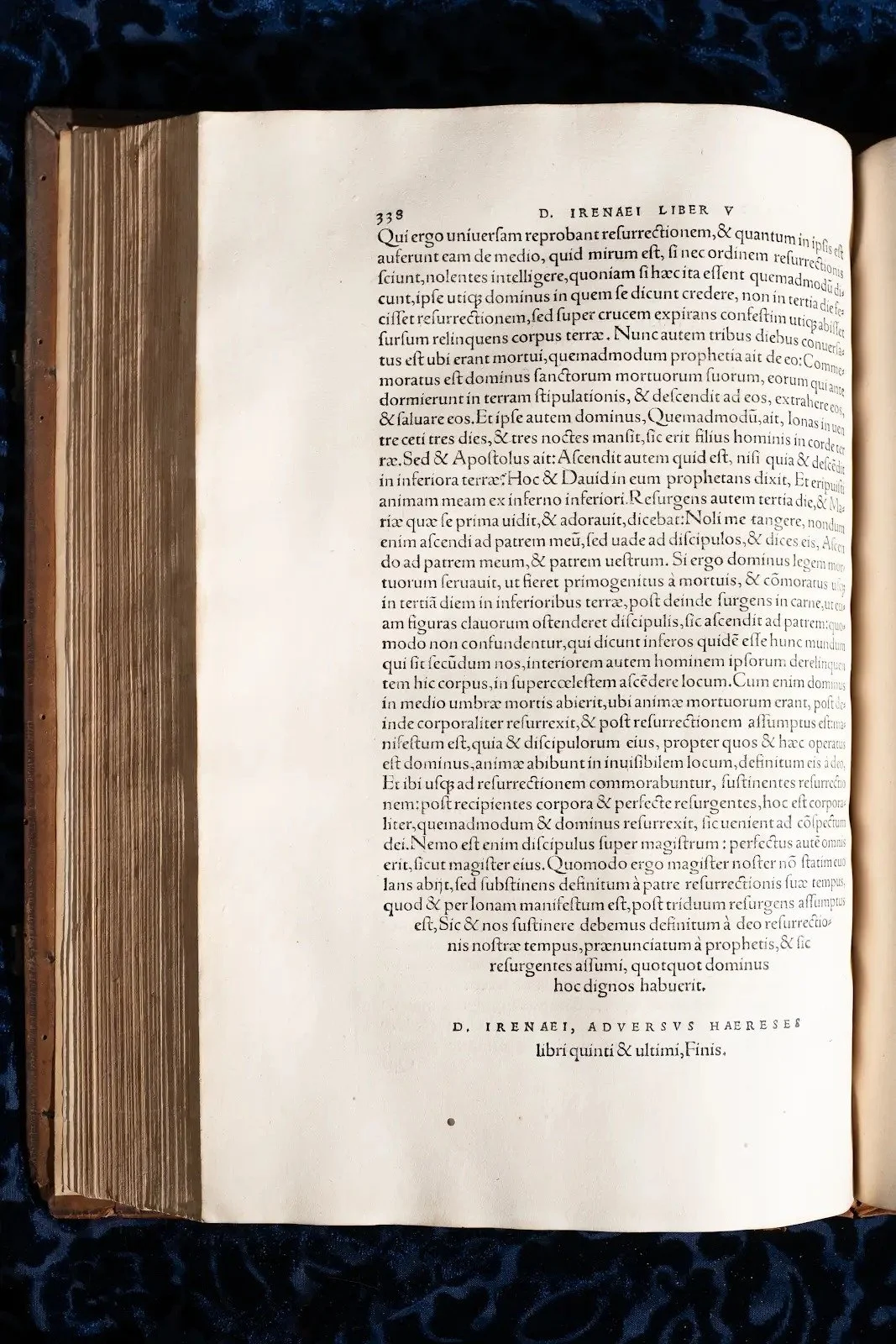 Image 14 of 29
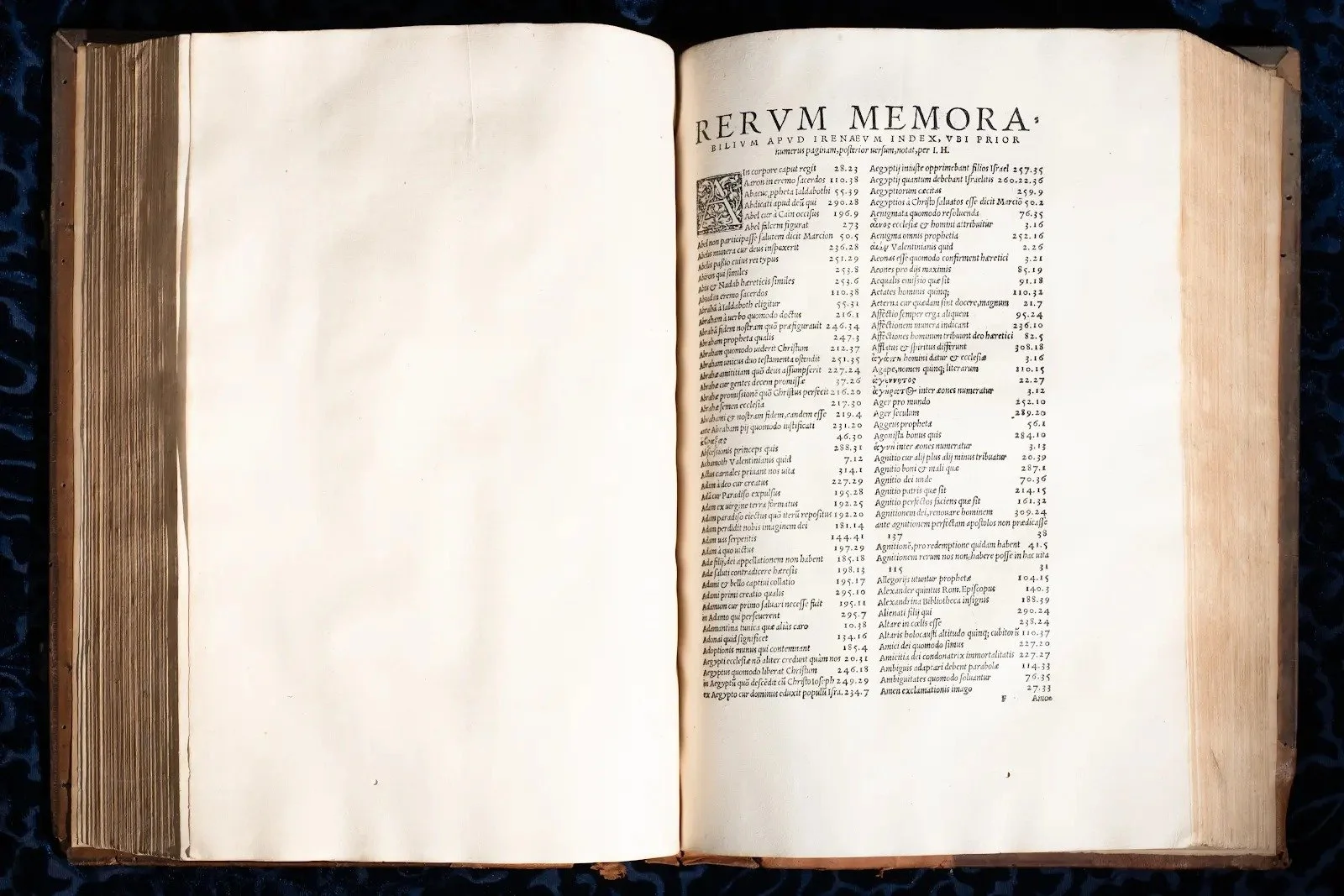 Image 15 of 29
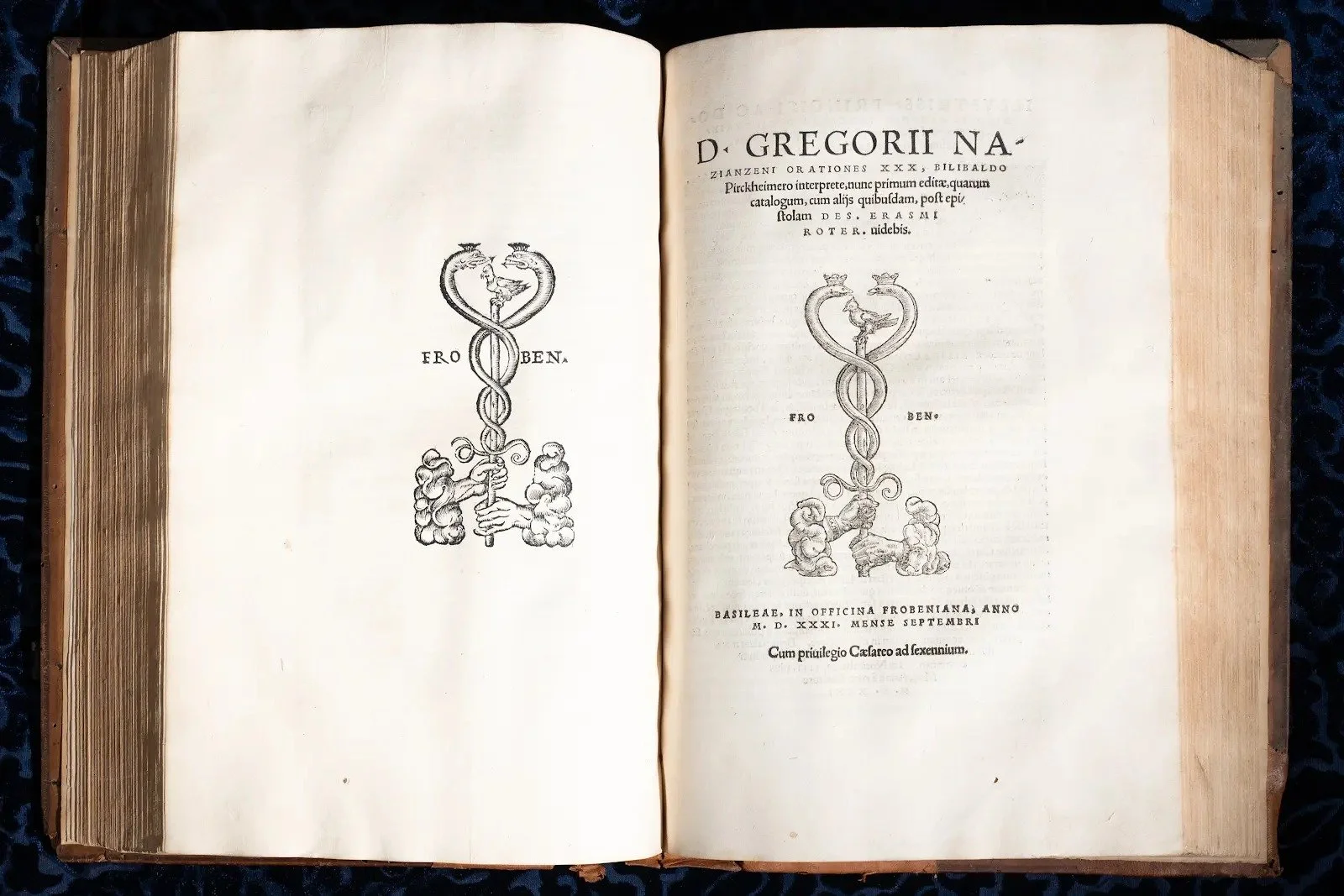 Image 16 of 29
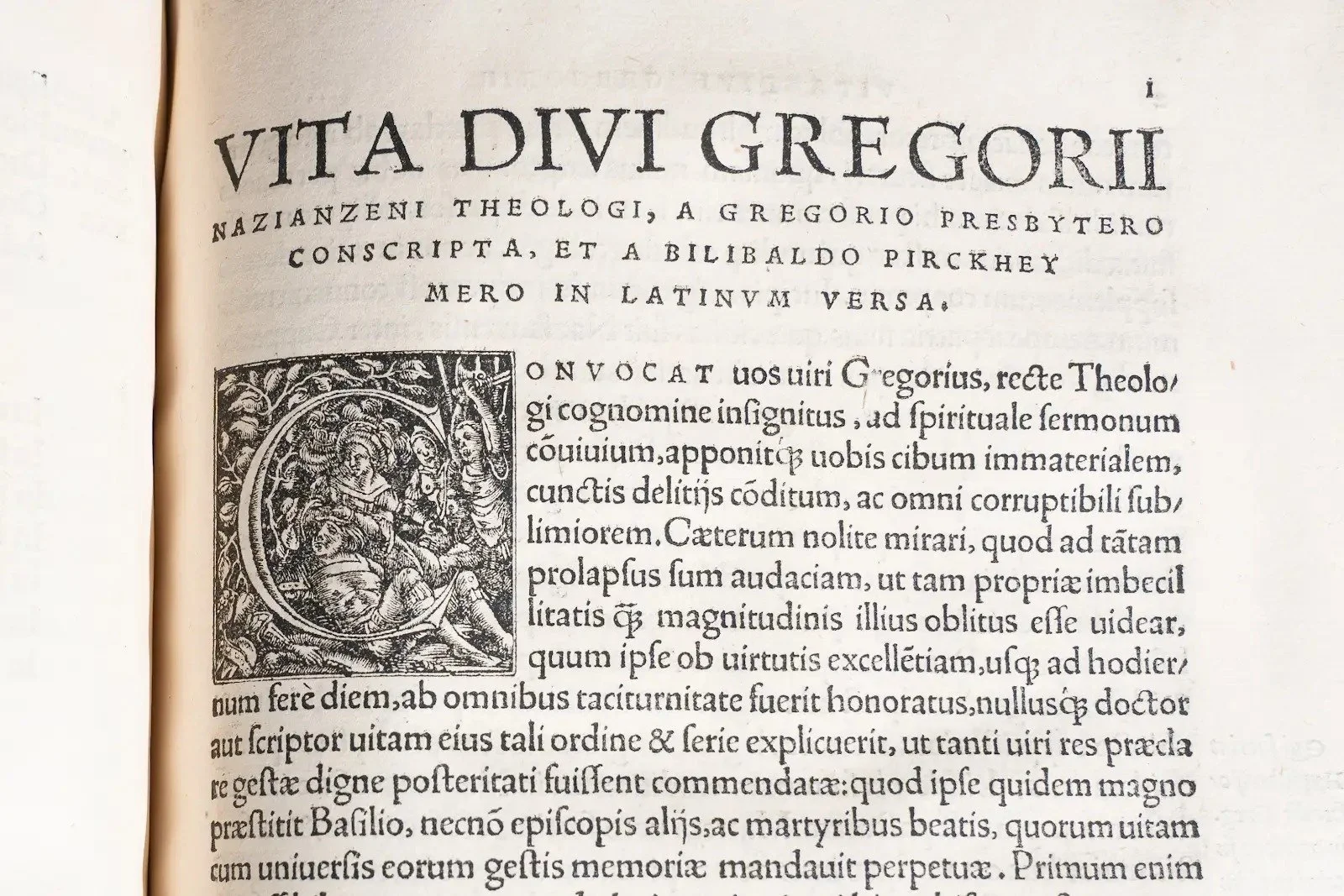 Image 17 of 29
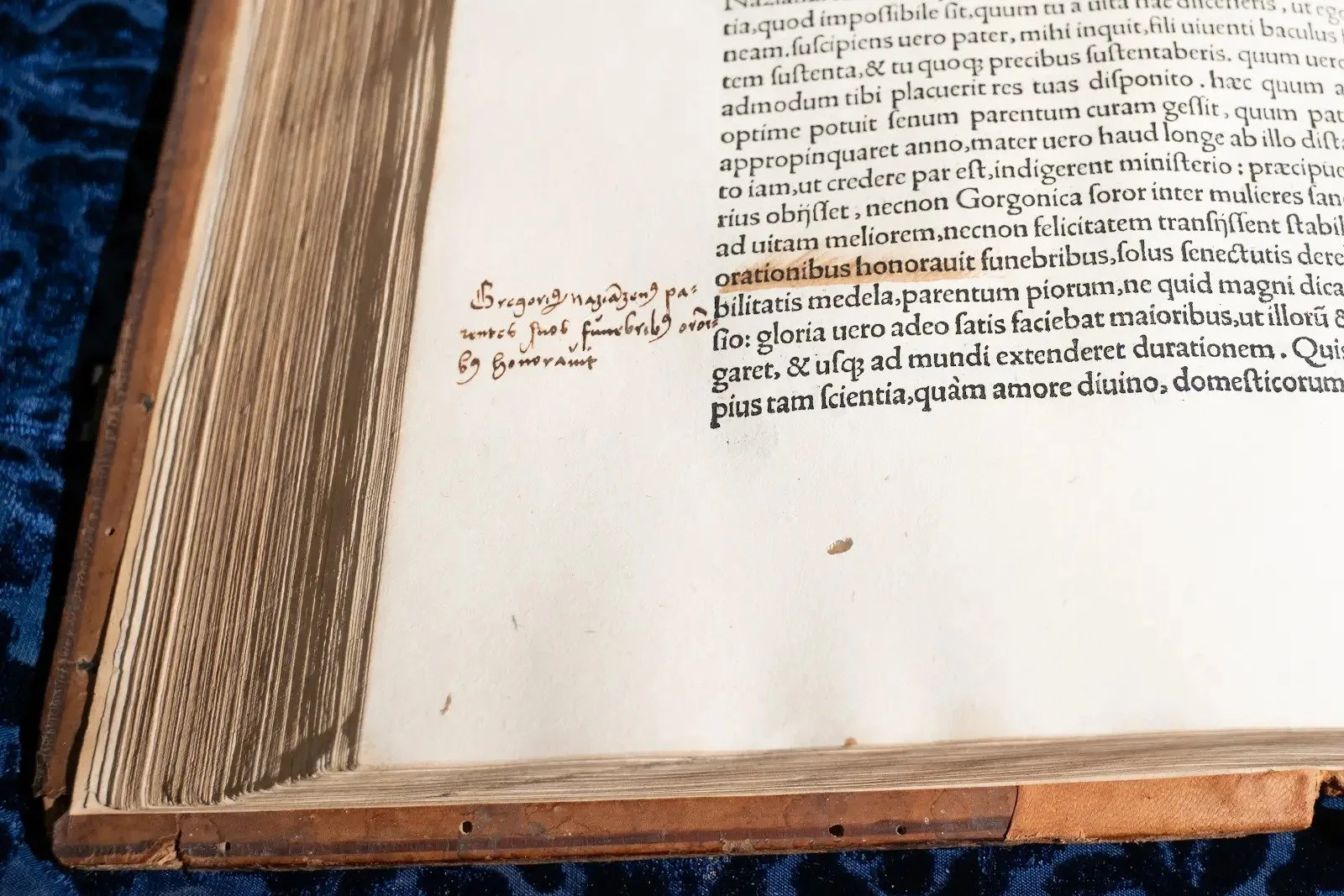 Image 18 of 29
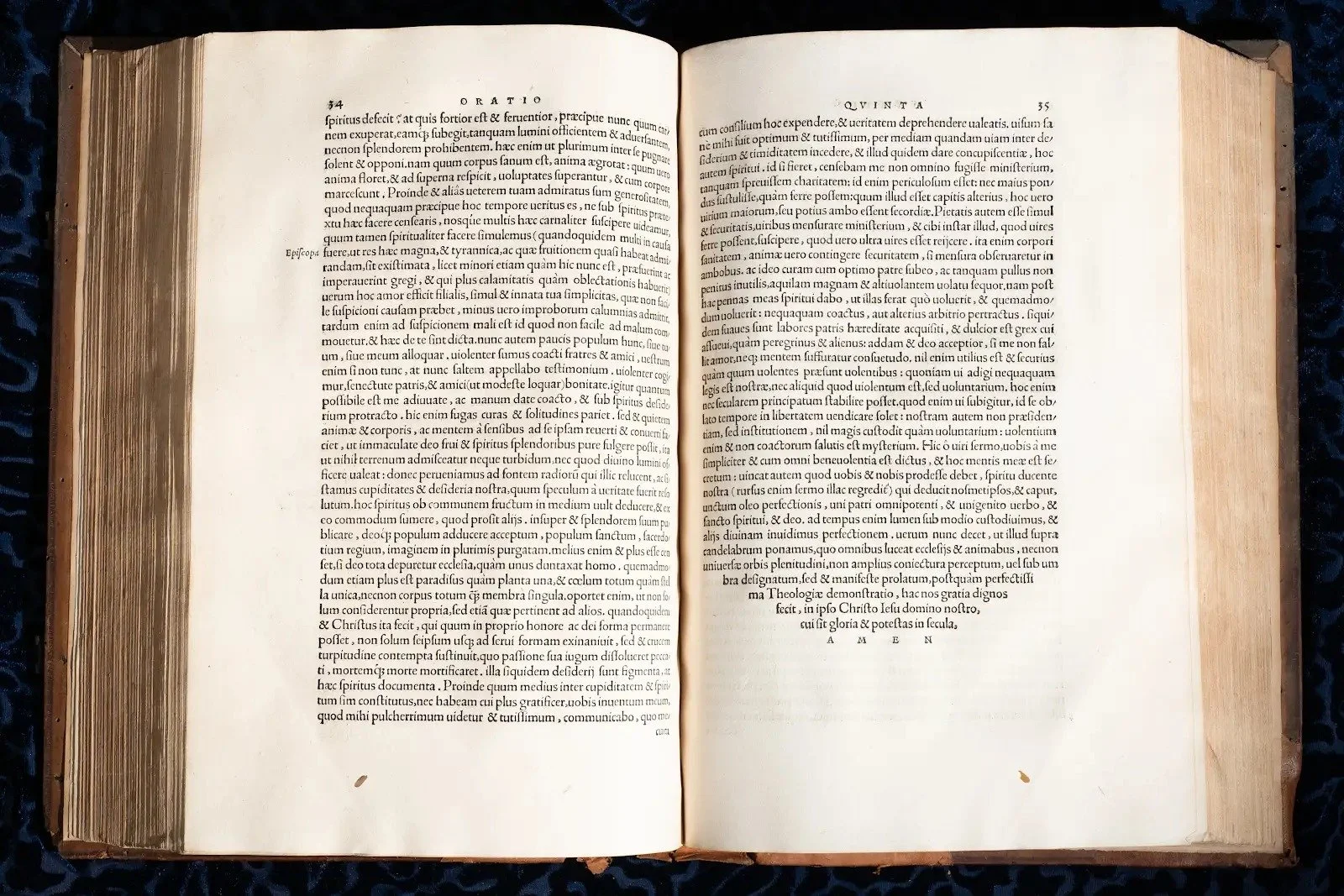 Image 19 of 29
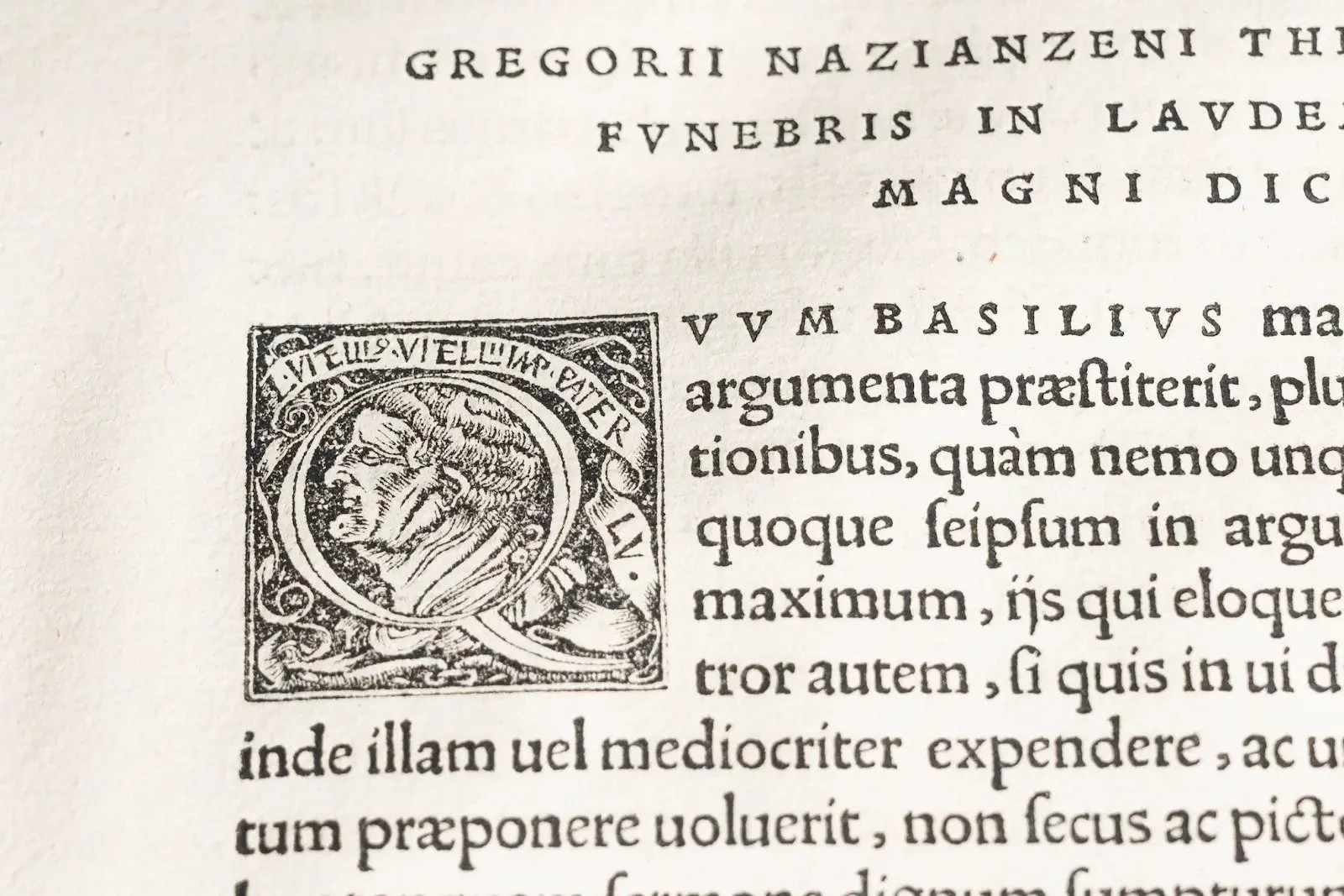 Image 20 of 29
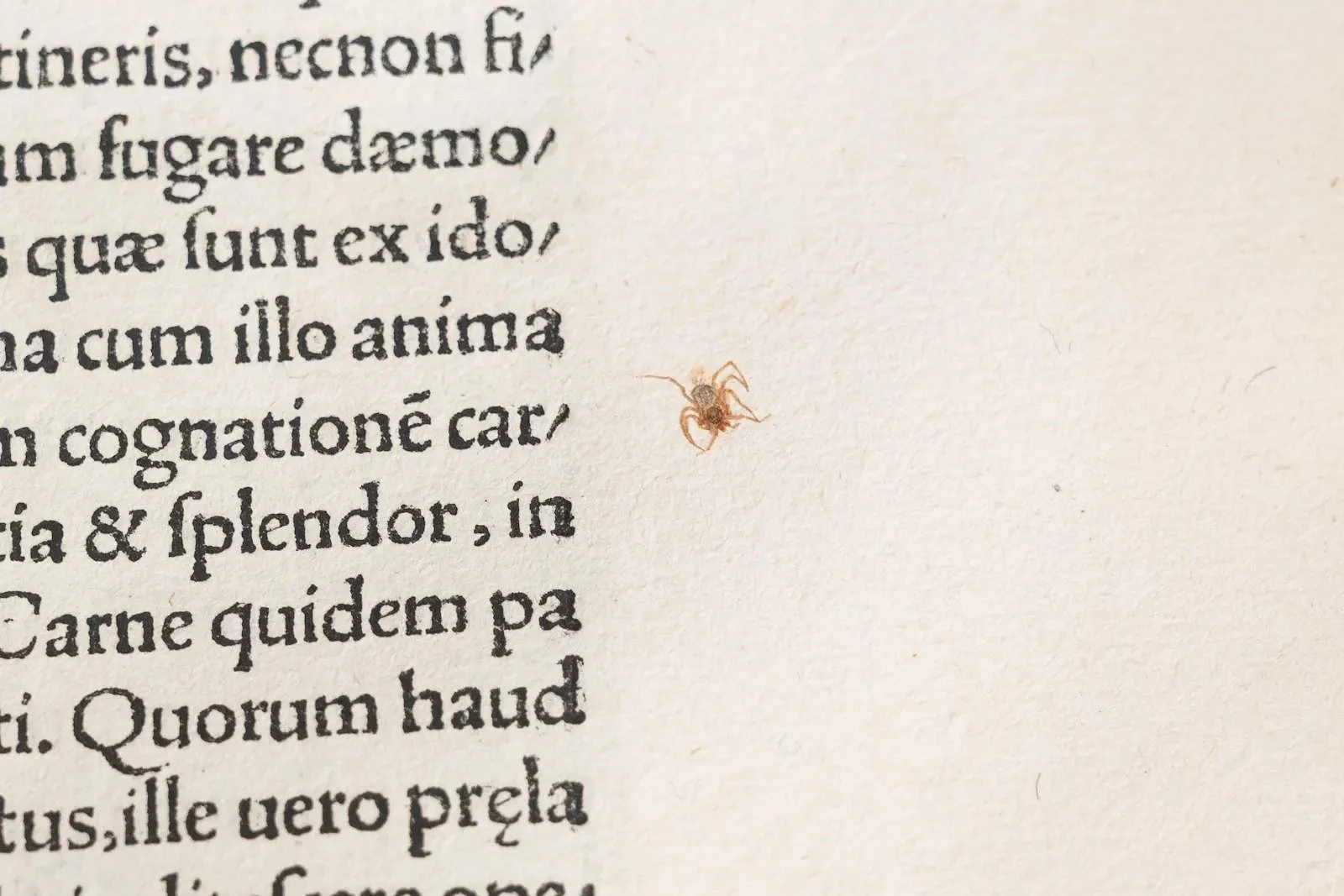 Image 21 of 29
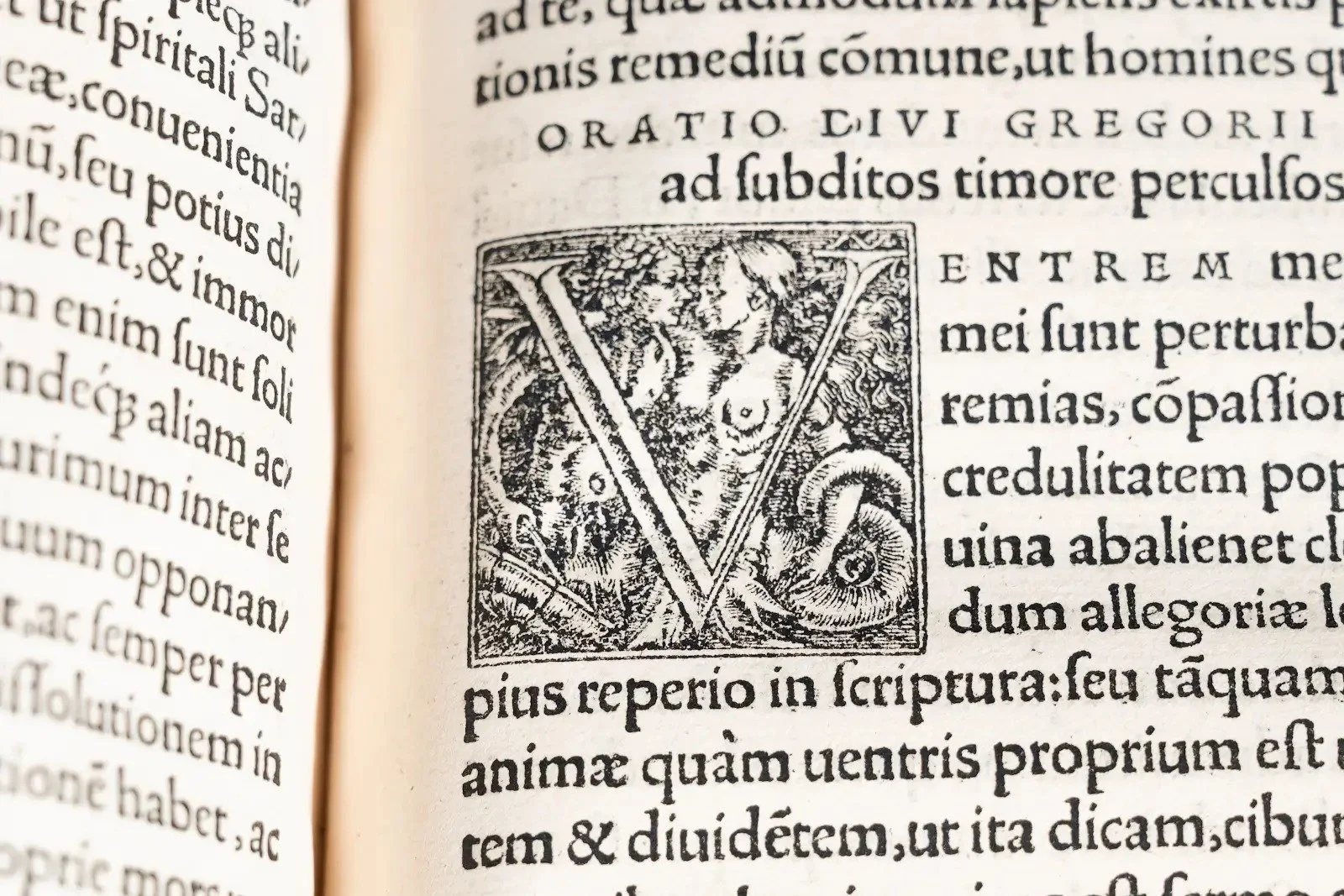 Image 22 of 29
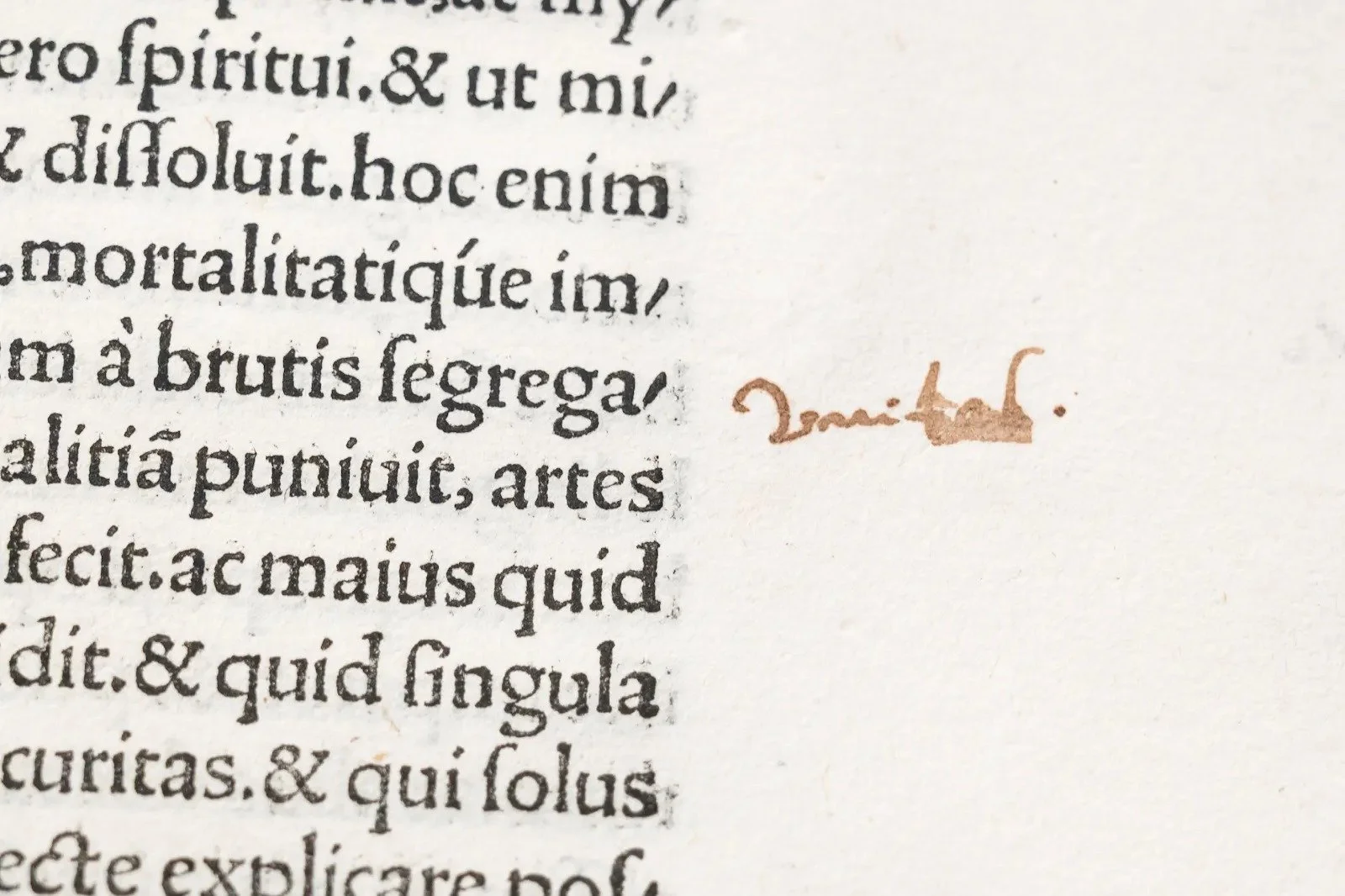 Image 23 of 29
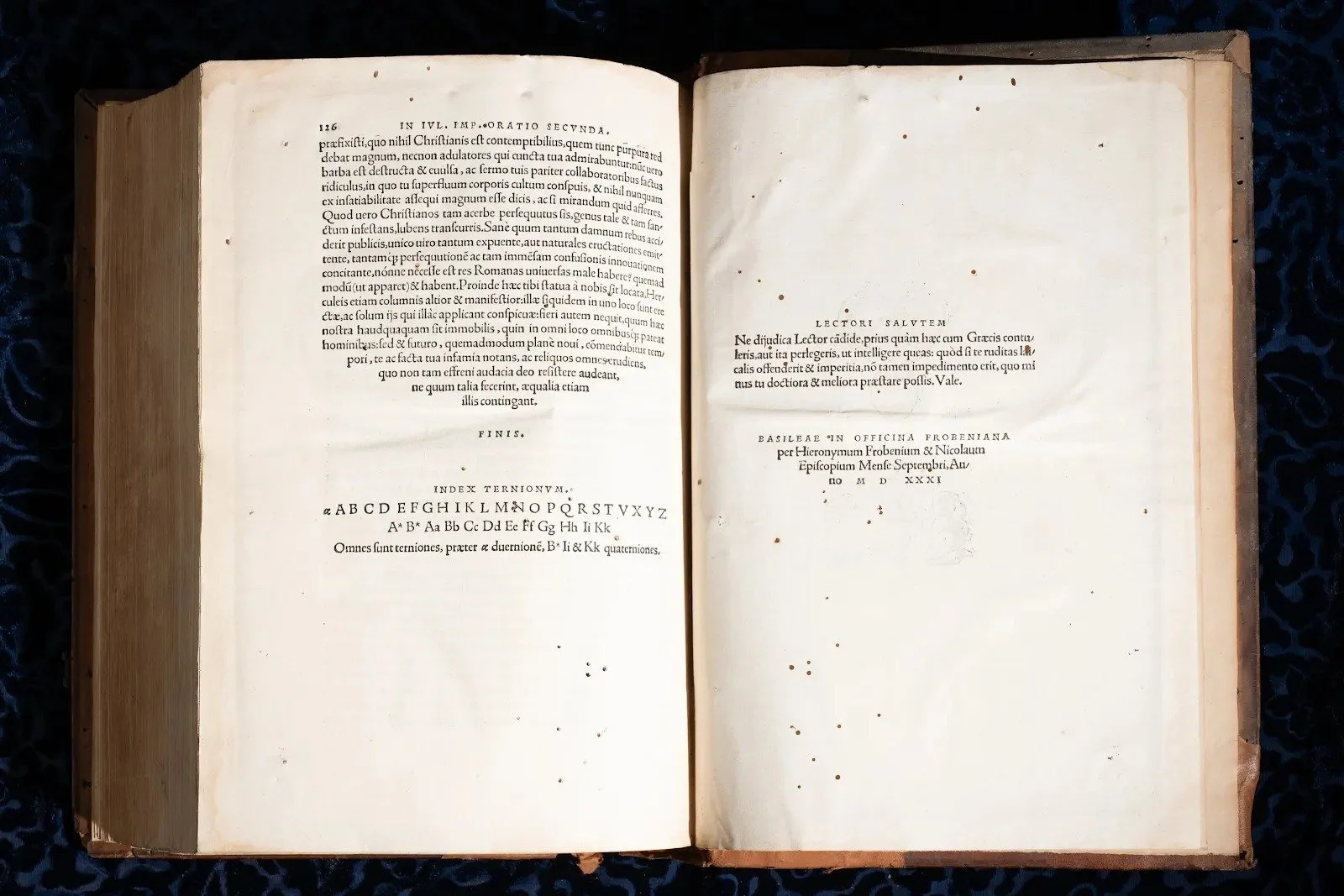 Image 24 of 29
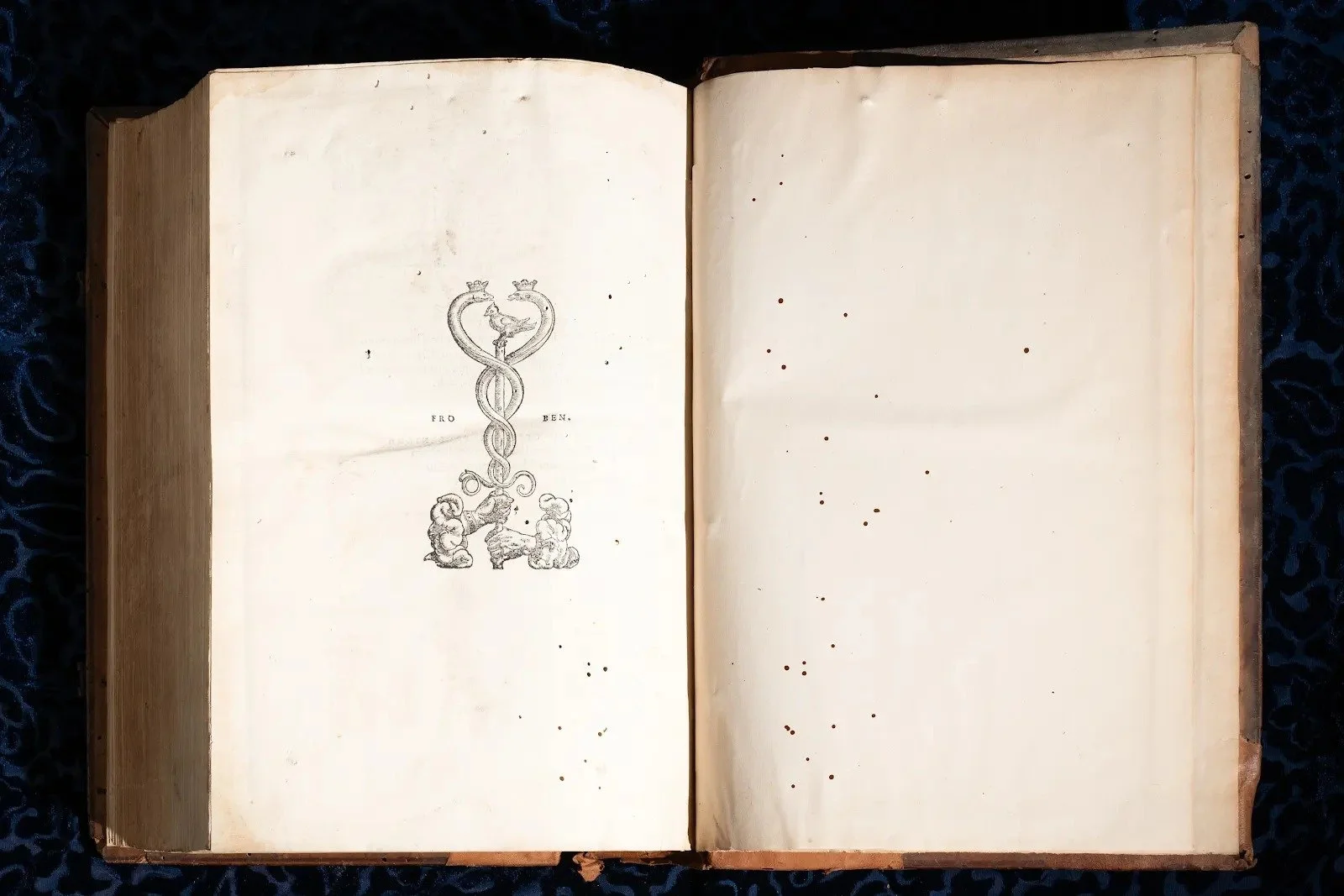 Image 25 of 29
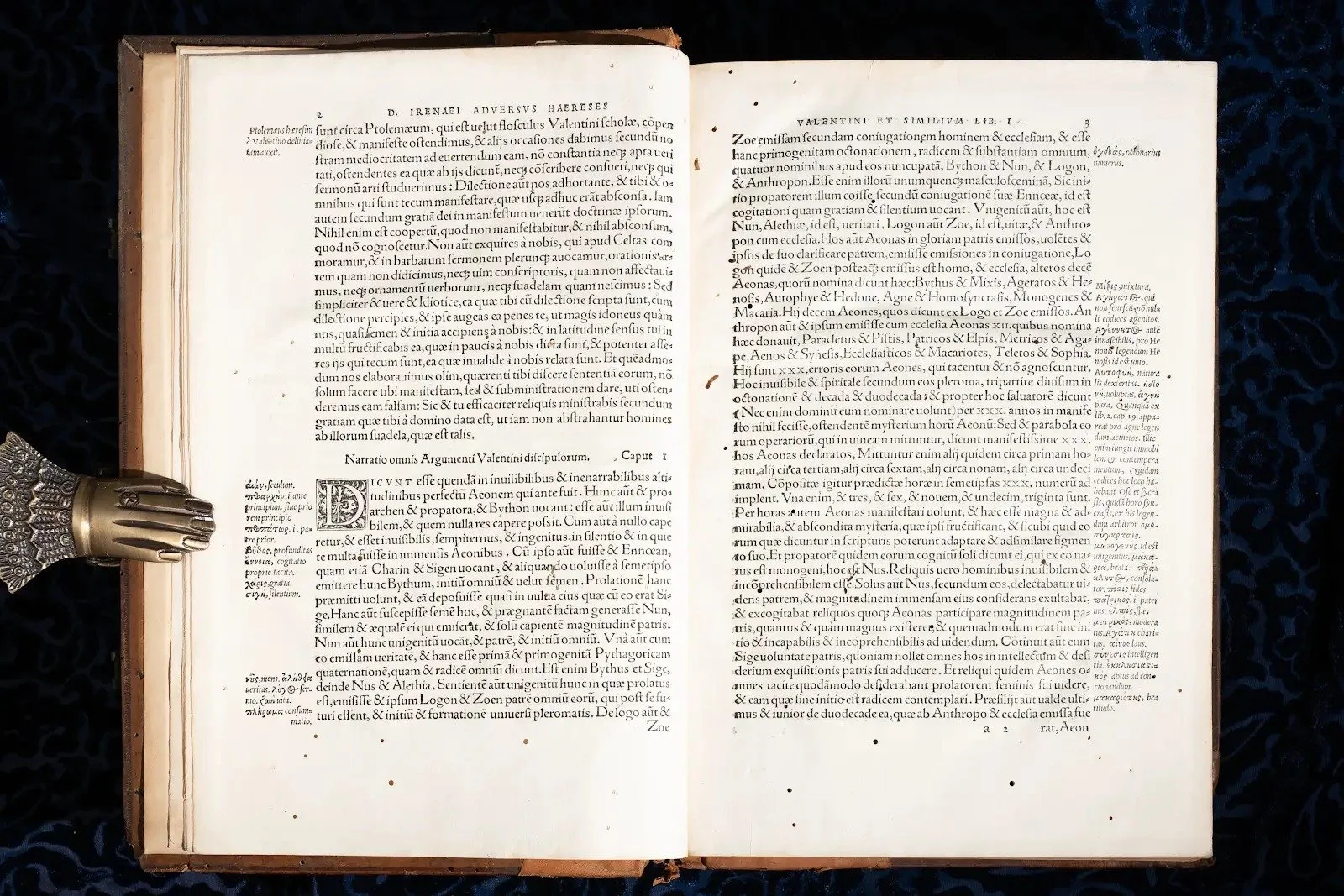 Image 26 of 29
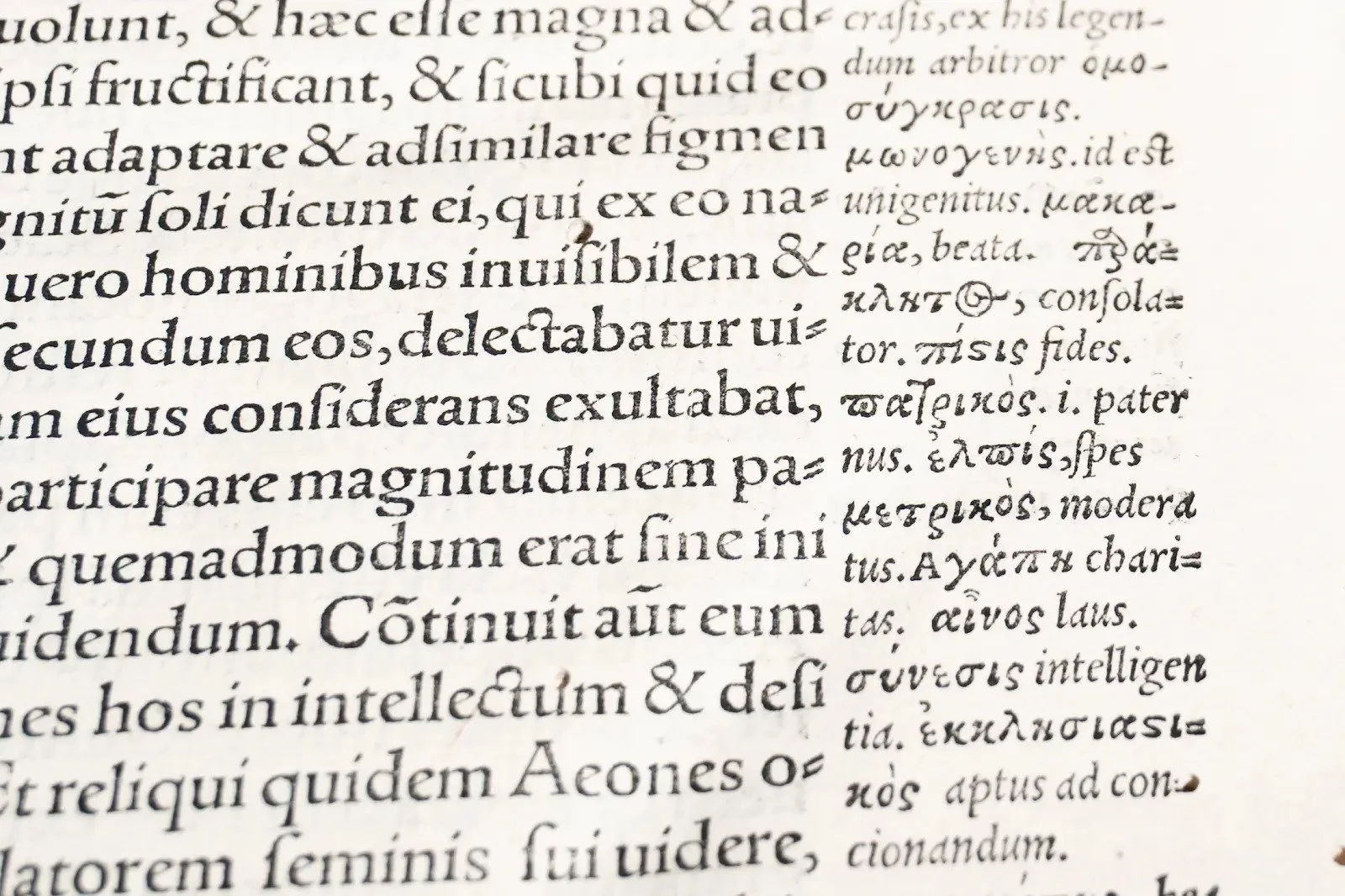 Image 27 of 29
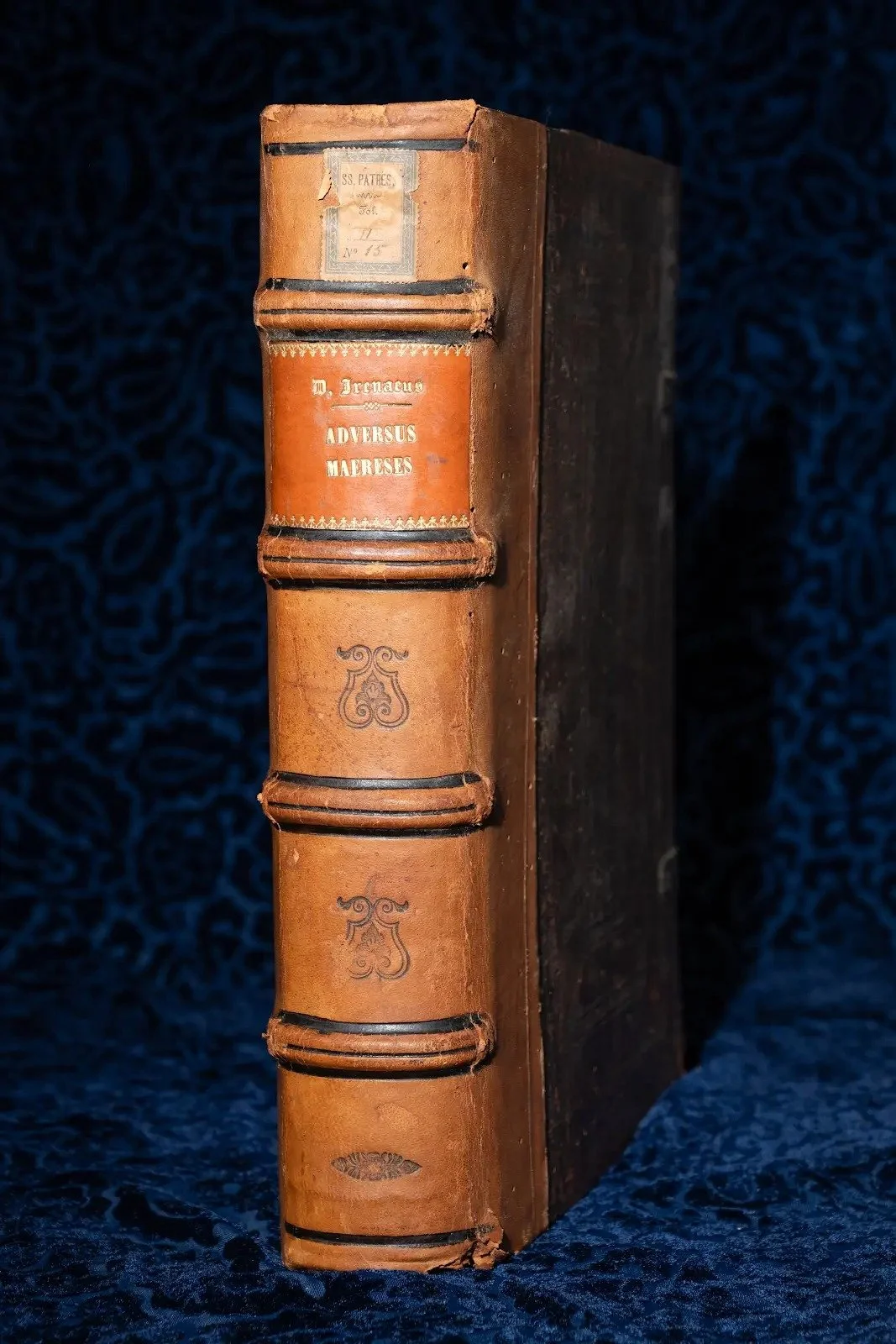 Image 28 of 29
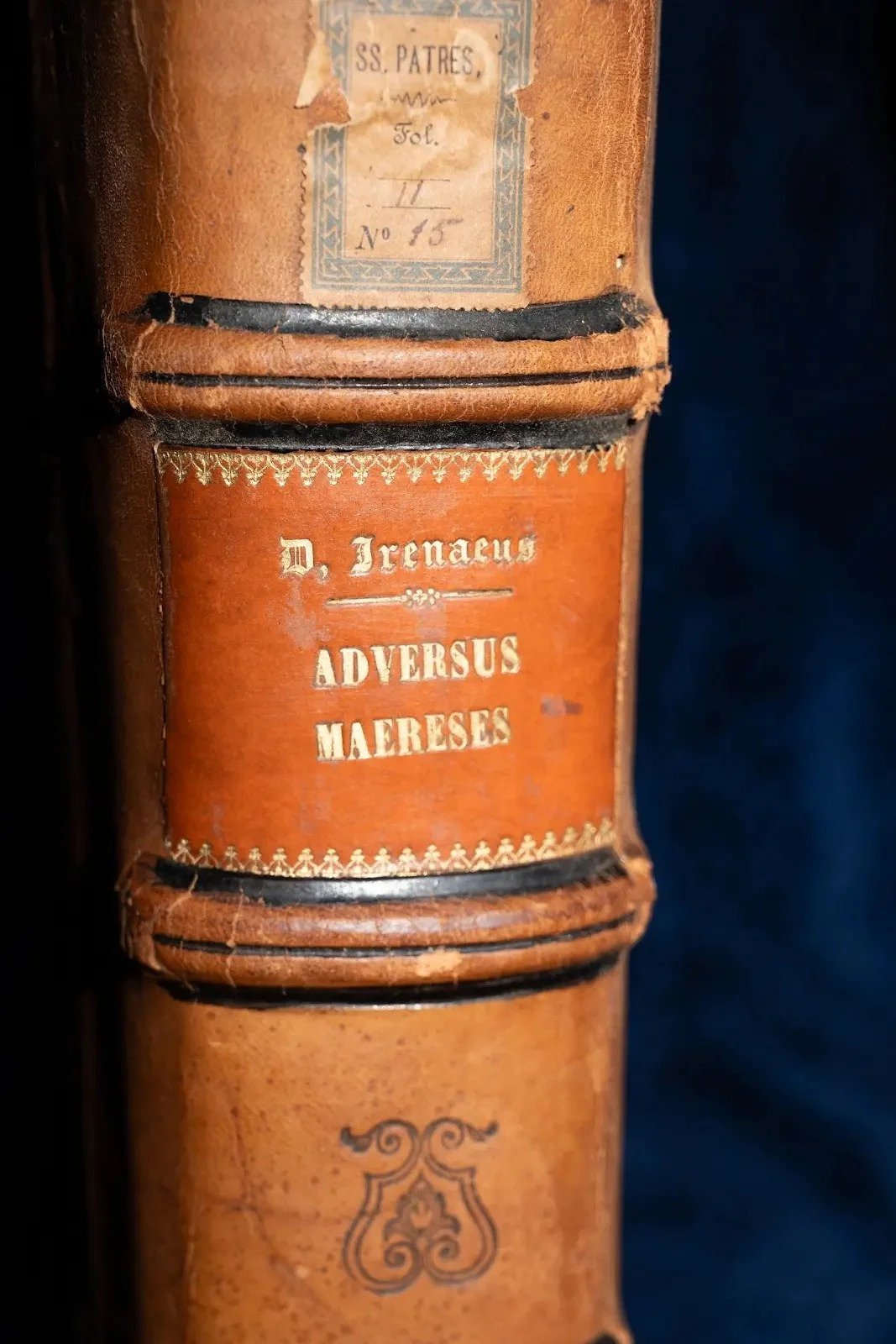 Image 29 of 29